16 Plus Size Hairstyles Over 50 That Balance What a Mirror Shows
Sixteen hairstyles for plus-size women over 50, each judged on whether they balance your frame. Volume placement, length zones, and what to ask your stylist.
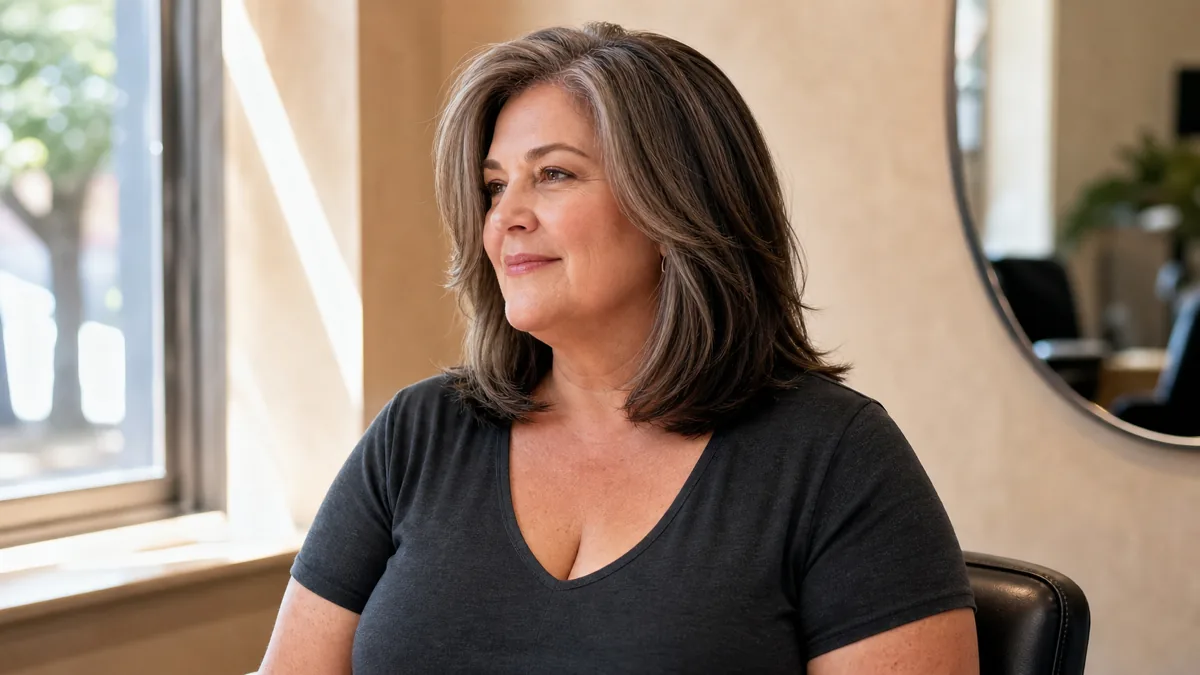
Booking an appointment soon? Save this page. It is easier to skim in the chair than to remember.
At a glance
Works
- Collarbone-length layers that land at the body's narrowing point and draw the eye past the jaw
- Long side-swept bangs at any base length, because the diagonal line narrows a wide forehead without adding volume
- A layered shoulder-length style with the sides swept back to open up the neck and jaw area
Depends
- A chin-length bob, which elongates a round face if the line sits above the widest point but brackets it if the bob ends land right at the cheeks
- A shoulder-length shag, where the fringe narrows the forehead but the side volume needs daily blow-dry control on a round face
- A pixie with crown volume, which reads powerful on broad shoulders when the top stays lifted but reads shrunk if it goes flat
Skip
- Any blunt chin-length cut on very full cheeks, because the horizontal line frames the widest part of the face
- Long flat hair with no wave or layers, which pulls the face down and exposes thinning on a plus-size frame
- A very short flat-on-top pixie without crown height, where the head reads small against broader shoulders
Your body has proportions. Your hair has a shape. The question is whether the shape works with the proportions or fights them.
Most lists of hairstyles for plus-size women say "flattering" without explaining what that means. Here it means one thing: visual balance between your head, your neck, and your shoulders.
A stylist who can see your hair and your frame in person outranks anything written here. What this guide does is narrow the field before you book.
1. Collarbone-Length Layers
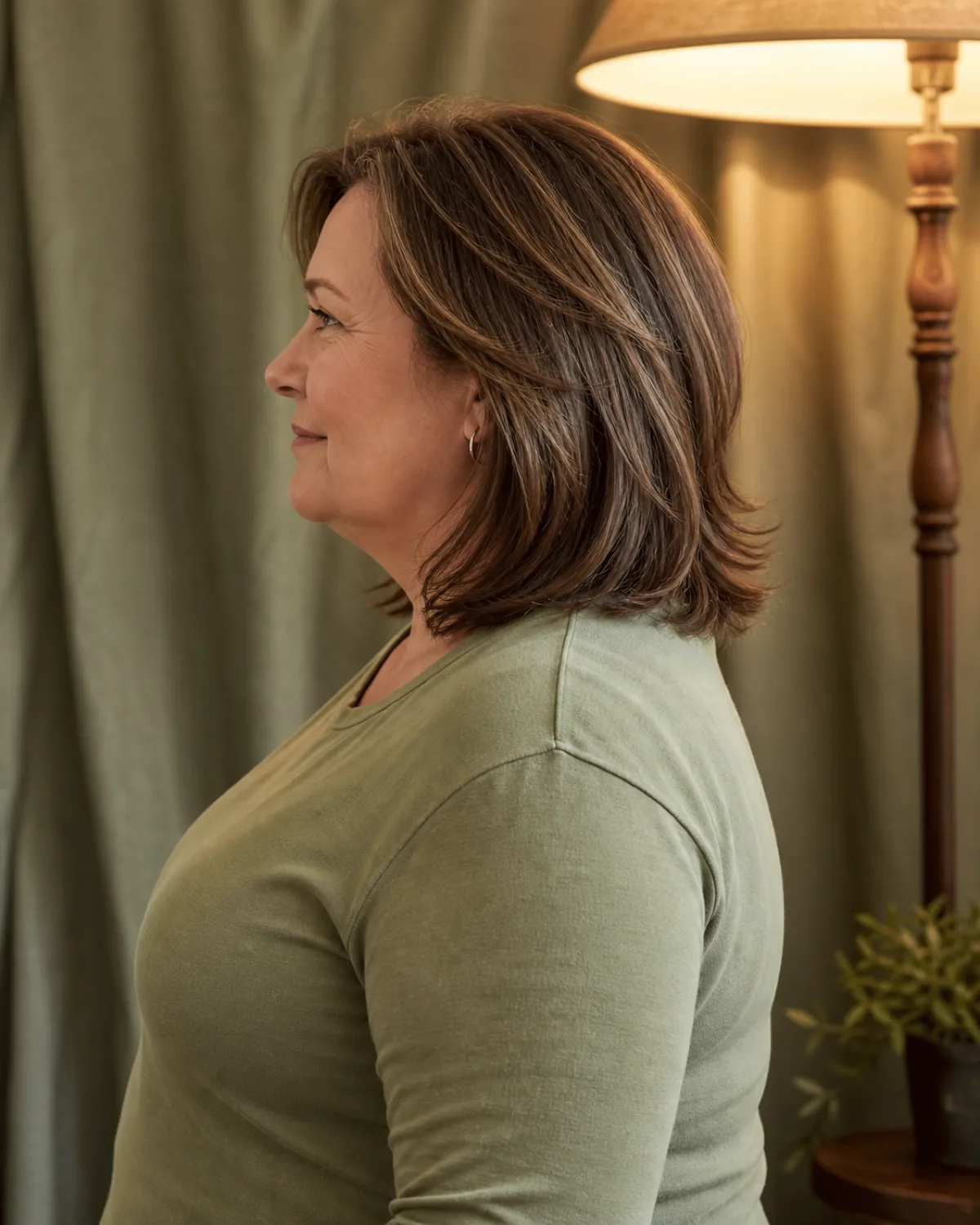
The layers here start at the chin and graduate to the collarbone. From the side, you can see how the graduated lengths create movement without bulk sitting at any single line.
- Collarbone length hits at the body's narrowing point, which visually elongates the torso
- Layers starting at the chin prevent the hair from forming a single horizontal line at the widest part of the face
- Works on most densities because the graduated fall gives even fine hair the appearance of body
- If your neck is short, this length can compress the space between your jaw and shoulders. Test by pulling your hair to collarbone length in the mirror before committing
2. Long Bob With a Center Part
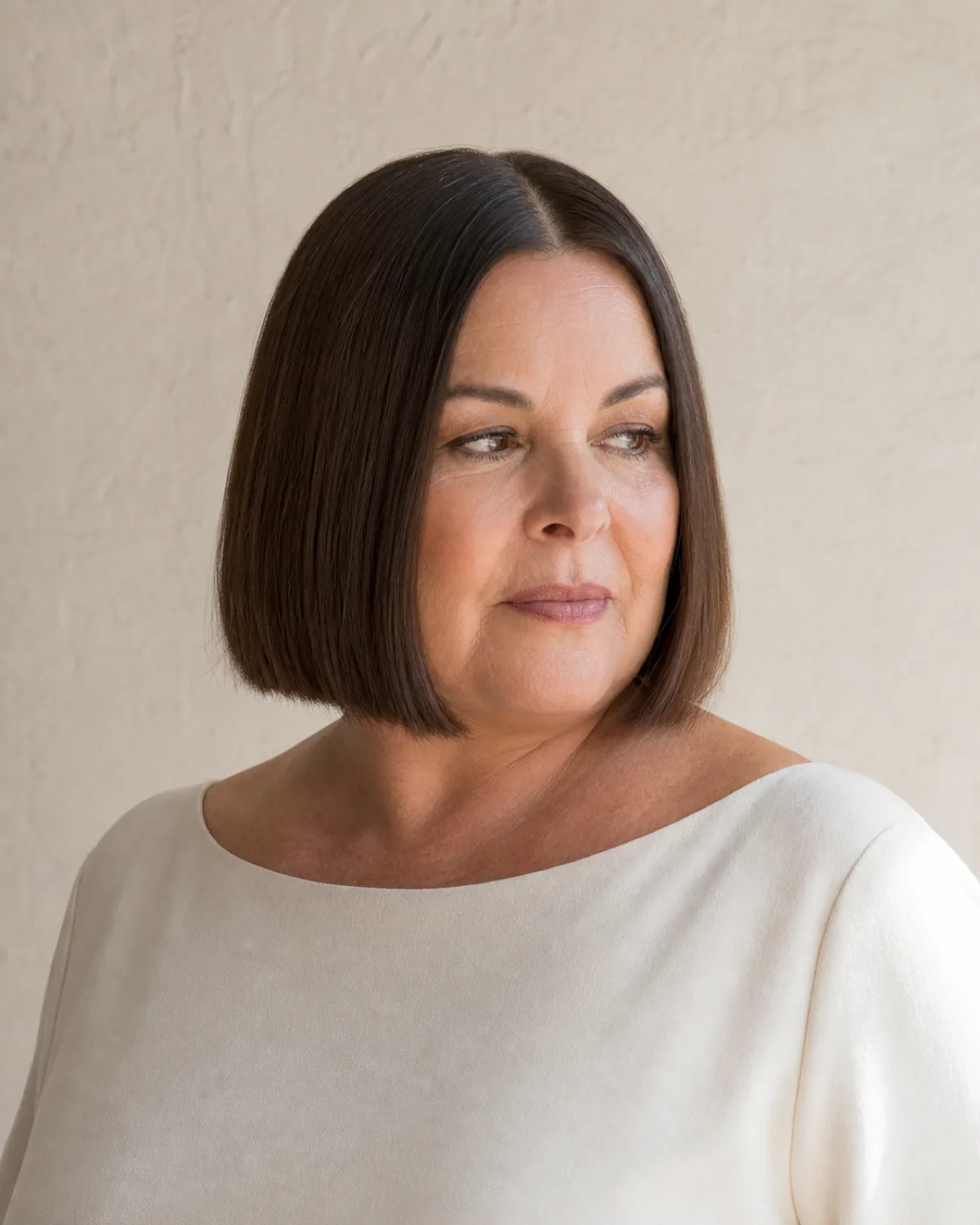
The center part runs straight back from the forehead and the blunt ends sit evenly at the chin. The symmetry reads calmer on a full face than a heavy one-sided sweep.
- A center part splits the visual weight evenly, which reduces the width-emphasis that a deep side part can create on a round face
- The blunt chin-length line creates a vertical frame that draws the eye downward past the jaw
- This only works if your hair holds an edge. Fine hair that goes wispy at the ends will lose the clean line that makes this cut balance a fuller face
- Ask your stylist about internal texturing if your hair is thick. The outside stays blunt, but internal layers prevent the bob from sitting too heavy on the sides
3. Face-Framing Layers Around a Wider Jaw
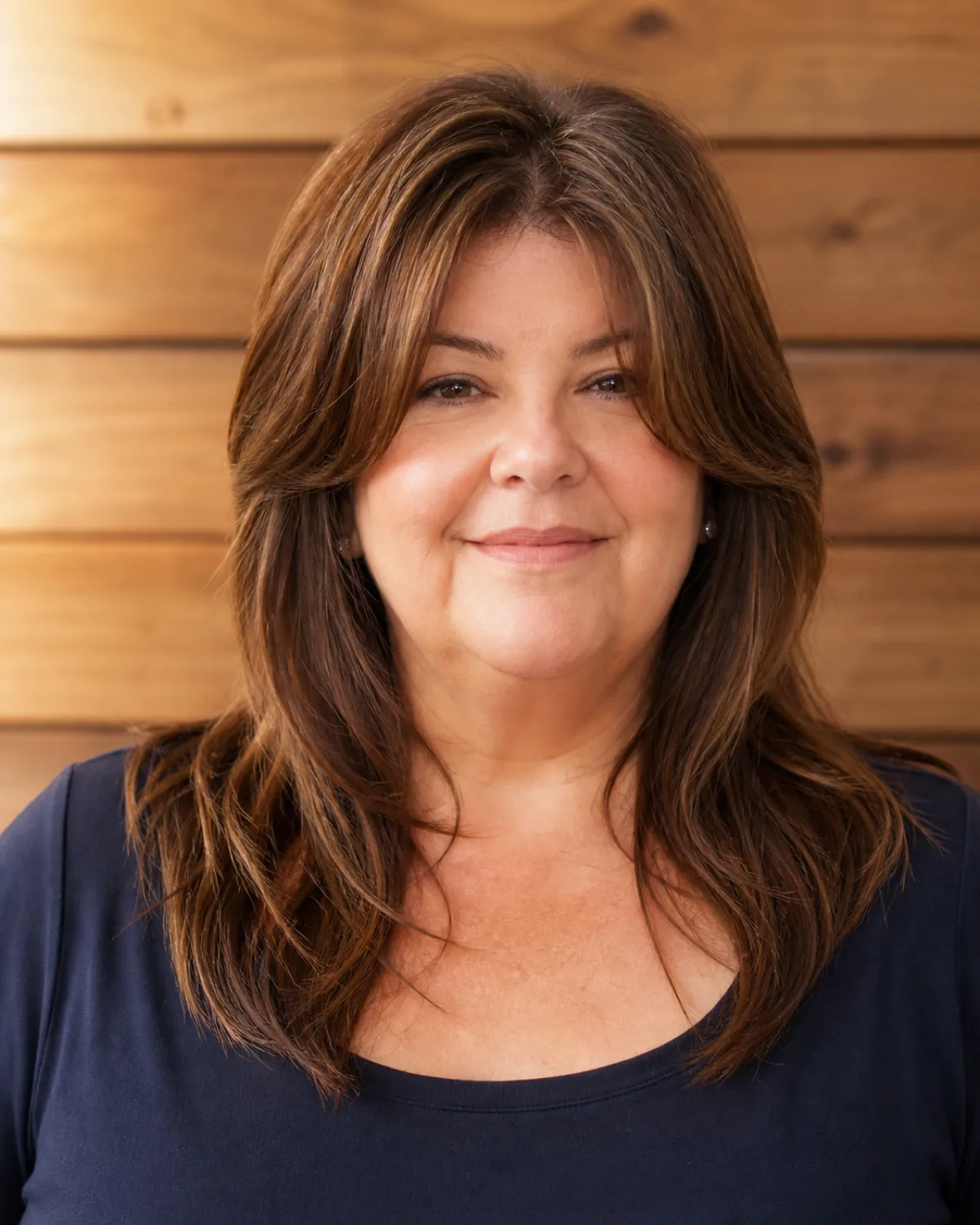
The shorter pieces sit above the cheekbones while the main length falls past the shoulders. Two distinct lengths are visible, and the shorter pieces frame the jaw without sitting at its widest point.
- Face-framing layers are the most commonly recommended cut for plus-size women. The difference between the ones that work and the ones that do not is where the shortest layer lands
- If the shortest layer sits at the widest point of the face, it brackets that width. It needs to land above it
- The longer back length adds a vertical pull that counterbalances the face-framing width
- Bring a photo showing where you want the shortest pieces to fall. "Face-framing" means different things to different stylists
4. Shoulder-Length Shag
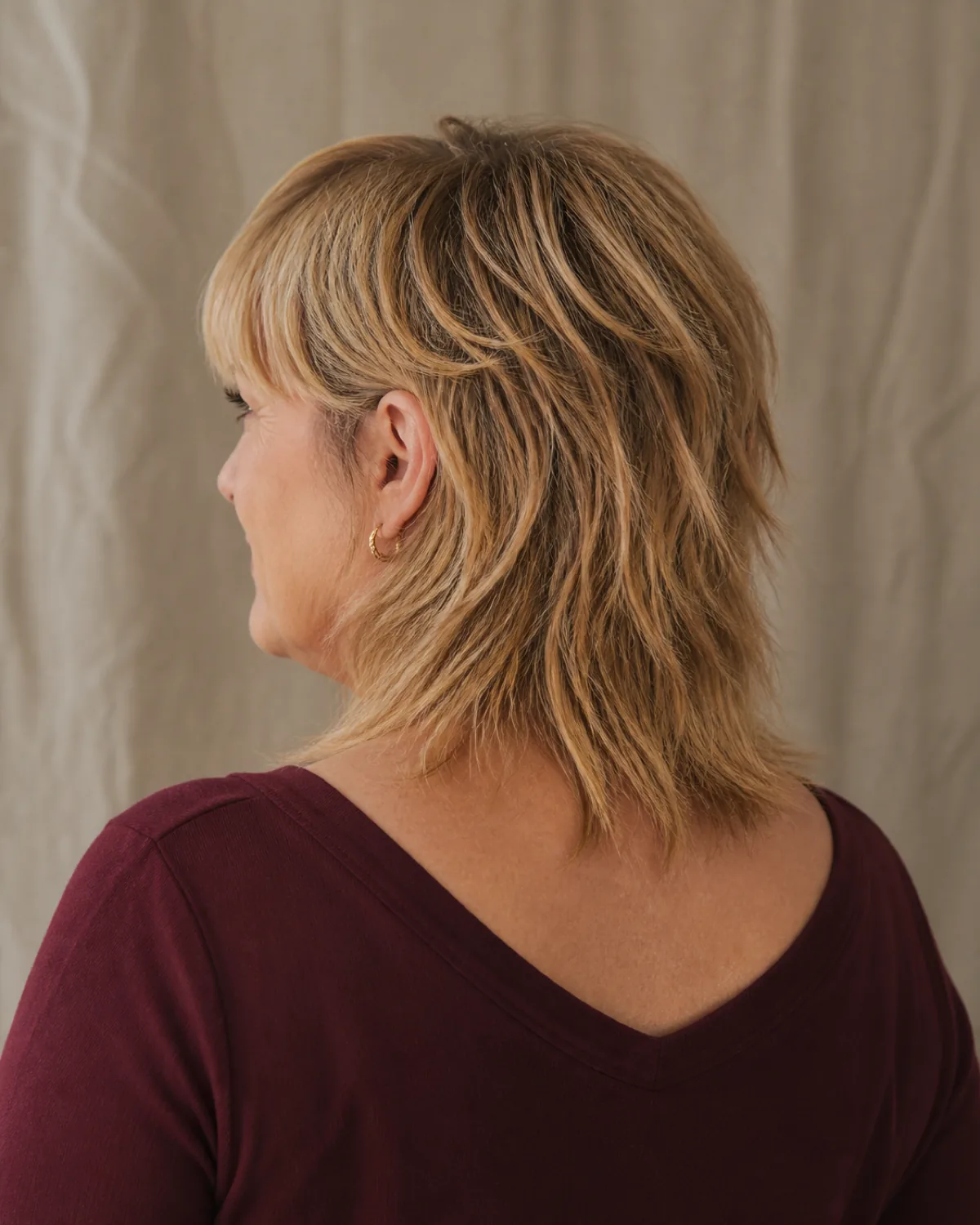
The choppy disconnected layers are visible at multiple lengths from crown to shoulder. The heavy fringe is partially visible from this back angle, and the texture reads as intentional rather than neglected.
- A shag reads effortless because it is designed to look unstructured. The fringe narrows the forehead, which helps on a round face
- The volume at the sides is the risk. On a full face, side volume echoes the face's width. You will need to control the sides with a blow-dry or by tucking behind the ears
- This cut suits medium to thick hair better than fine. Fine hair in a shag can read sparse rather than textured
- Ask your stylist to keep the heaviest layers at the crown and thin out the sides so the volume sits on top, not at the widest point
Where to start
Find your situation, skip ahead
Your face is round and full and you want your hair to make it read longer
Go for a cut with a vertical pull. A center-parted lob, A-line bob, or anything with a diagonal fringe.
02 Long Bob With a Center Part08 A-Line Bob07 Long Side-Swept Bangs
Your hair is fine and thinning and you worry short hair will show too much scalp
Stay at shoulder length with internal layers. Length preserves coverage and layers create movement that fakes density.
01 Collarbone-Length Layers15 Feathered Layers on Medium-Length Hair10 Layered Shoulder-Length With Swept-Back Sides
You want to go short but you are not sure a pixie will suit a fuller build
Start with a textured bixie. It keeps jaw coverage so you can test short without full commitment.
11 Textured Pixie Bob (Bixie)05 Pixie With Volume at the Crown14 Stacked Short Bob
5. Pixie With Volume at the Crown
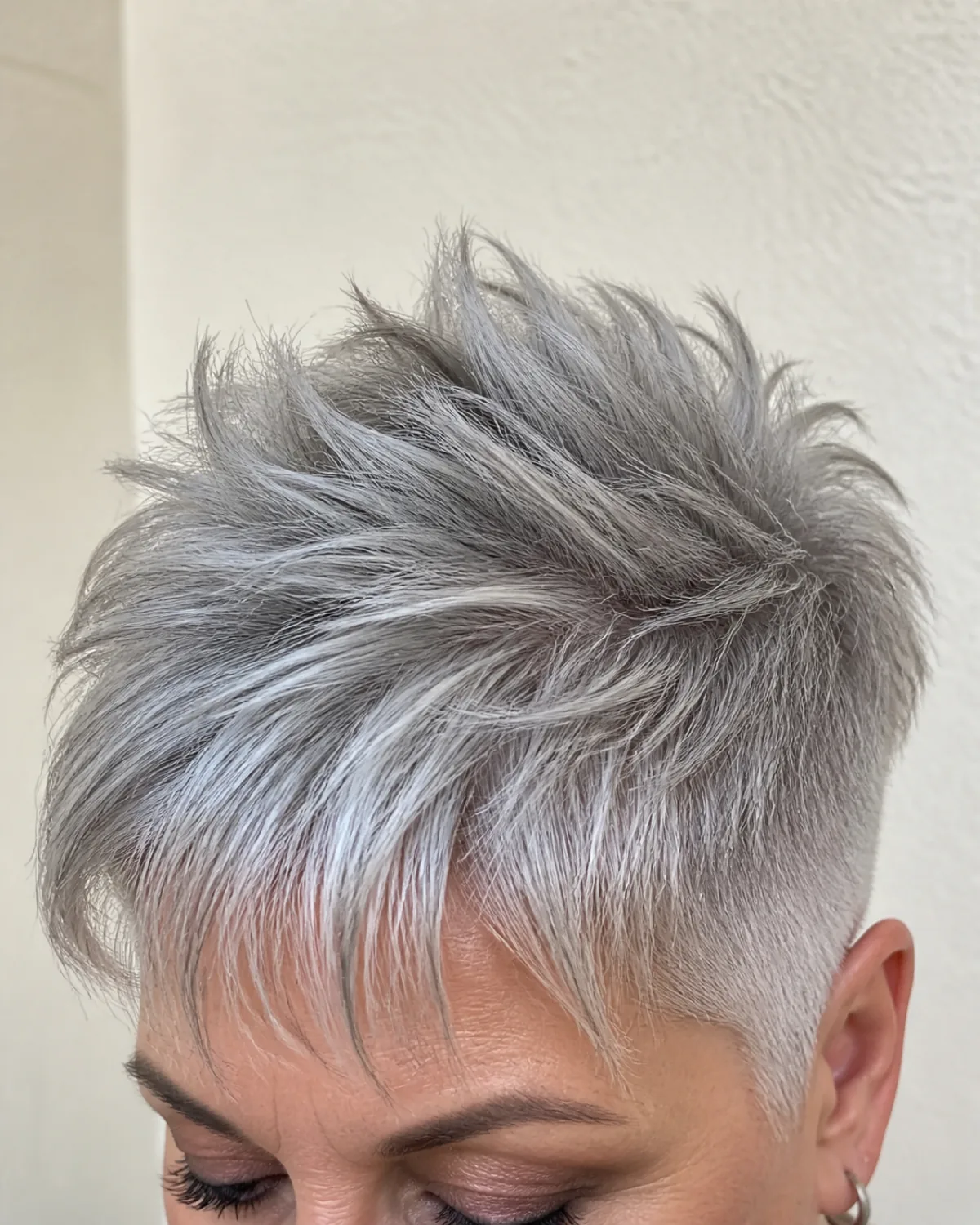
The crown carries significantly more length than the tapered sides. The height difference is unmistakable, with the crown pieces standing with natural lift while the sides taper to almost nothing.
- A pixie on a fuller figure can look striking because the contrast between a small head and broader shoulders reads as deliberate proportion play
- The key is crown height. Flat on top on a wide frame reads shrunk. The lifted crown extends the head-to-shoulder ratio upward
- If your crown is thinning, this cut advertises the problem rather than solving it. The single-zone focus only works when there is enough hair at the crown to sustain the lift
- This is a commitment cut. It grows out fast and the proportional effect disappears within three weeks without a trim
6. Chin-Length Bob With Side Bangs

The side fringe sweeps from a deep part across the forehead, and the bob ends sit at the chin. The sweeping diagonal of the fringe breaks the symmetry of a round face.
- The side fringe introduces a diagonal line that visually narrows the forehead and adds asymmetric interest
- Chin length creates a vertical line along the jaw, which is the elongating mechanism
- This is risky on very full cheeks. If your face is widest at the cheeks, a chin-length bob can bracket exactly what it was meant to narrow. The bob needs to sit either above or below the widest point
- Ask your stylist to angle the bob slightly shorter in the back. A straight-across chin bob is more likely to sit at the widest point than one with a gentle A-line
7. Long Side-Swept Bangs
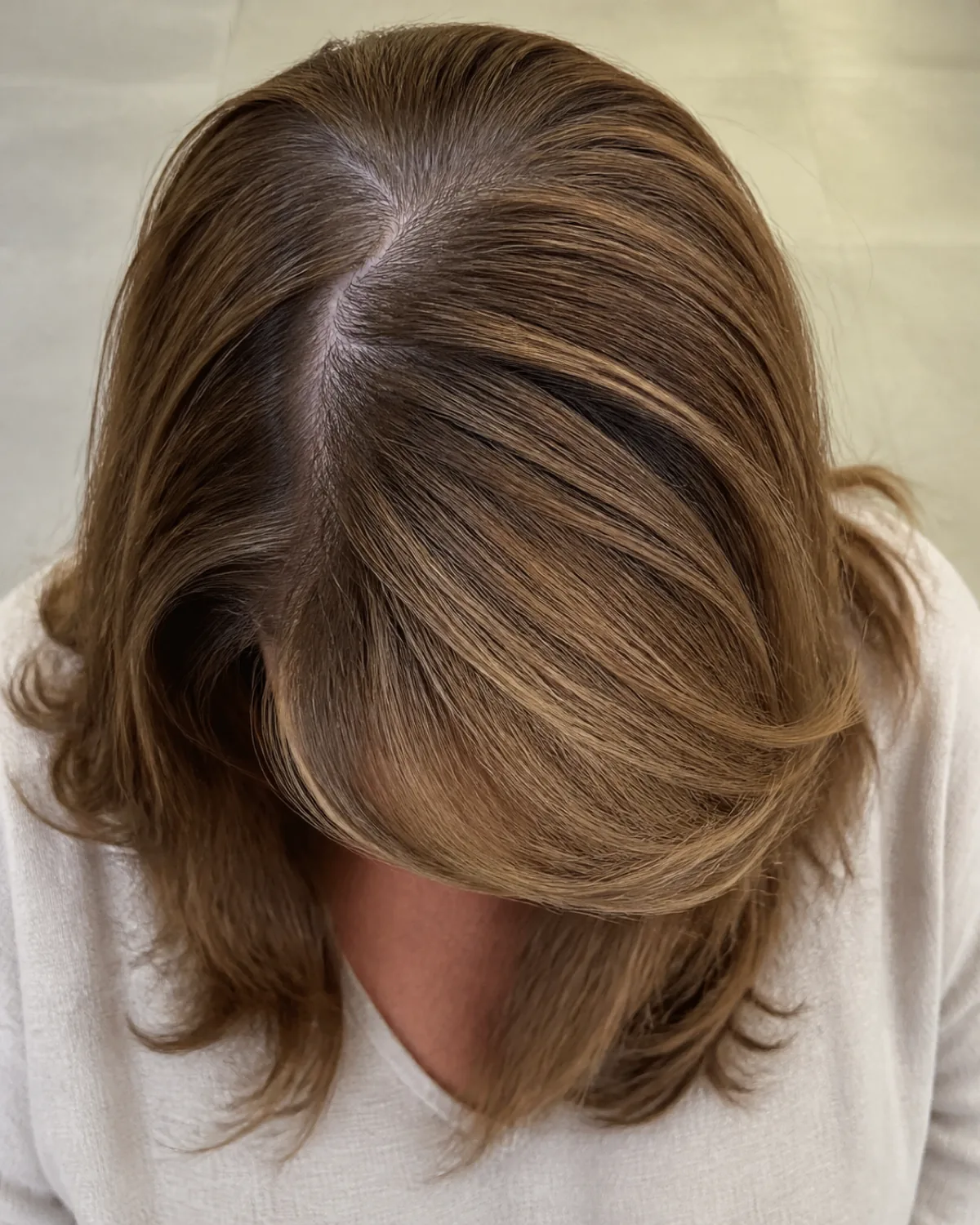
The deep side part is sharp and clear, and the long fringe pieces sweep in a diagonal direction. The sweep is unmistakable from this overhead angle, showing how the diagonal cuts across a wide forehead.
- This is the most portable addition on this list. Side-swept bangs work at any base length from pixie to past the shoulders
- The diagonal line visually narrows a wide forehead, and the asymmetry adds visual interest without adding volume
- They work on round, square, and heart-shaped faces because the diagonal breaks the symmetry regardless of where the face is widest
- Ask for the bangs to be cut long enough that they can tuck behind the ear when you want them out of the way. Short side bangs limit your styling options
8. A-Line Bob
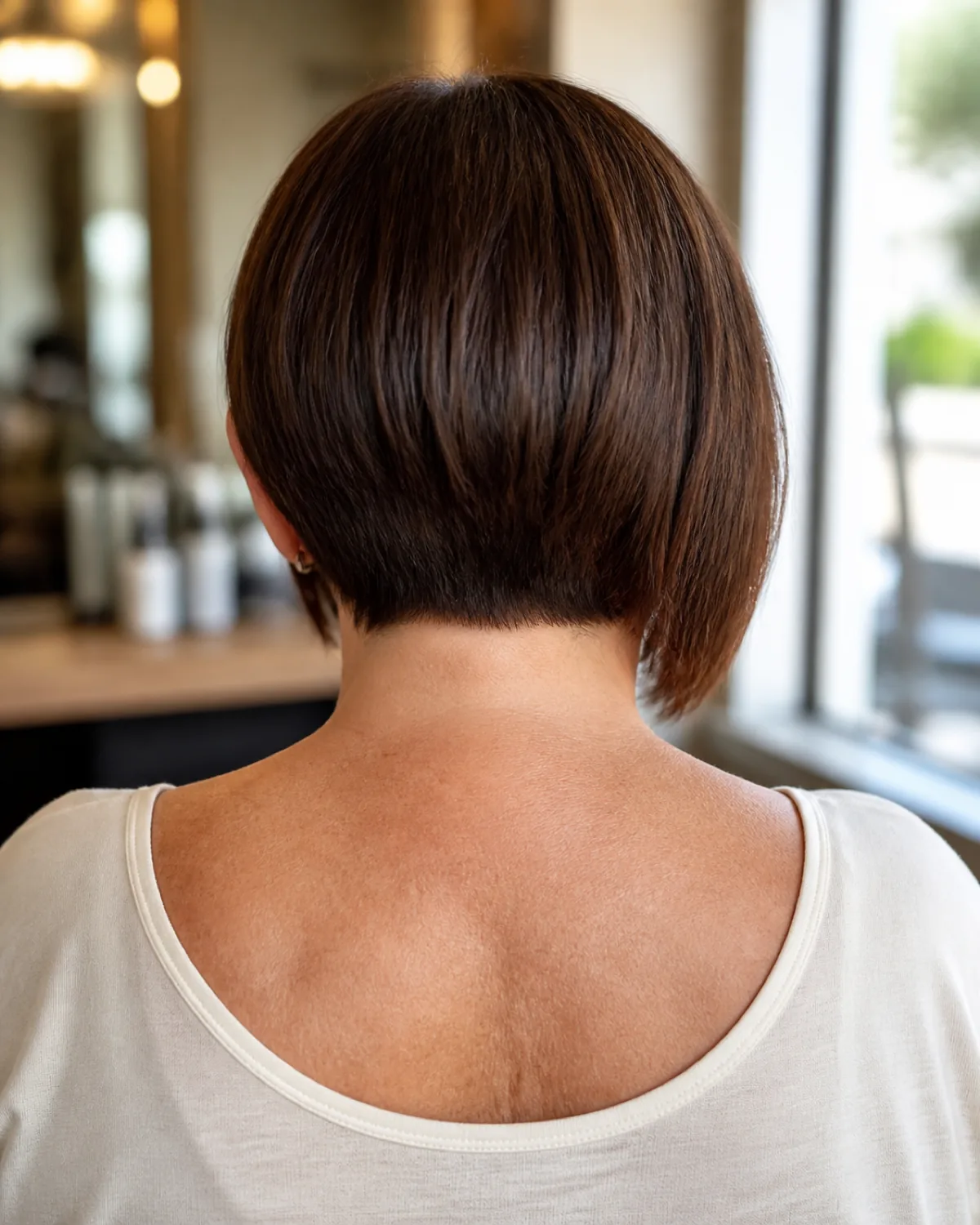
The angular line of the cut is clearly readable from behind: shorter at the nape, angling down to longer at the front. The back clears the nape cleanly.
- The A-line angle pulls the eye forward and down, which elongates the face from the profile view
- On a fuller frame, the back needs to clear the nape. Too much bulk sitting at the back of the neck cancels the slimming angle
- This cut works well on round faces because the longer front pieces create a vertical line beside the jaw
- The angle should be subtle, not dramatic. A steep A-line can read dated. Ask your stylist for a graduated angle of about one to two inches difference between back and front
9. Soft Curtain Bangs on Medium Hair
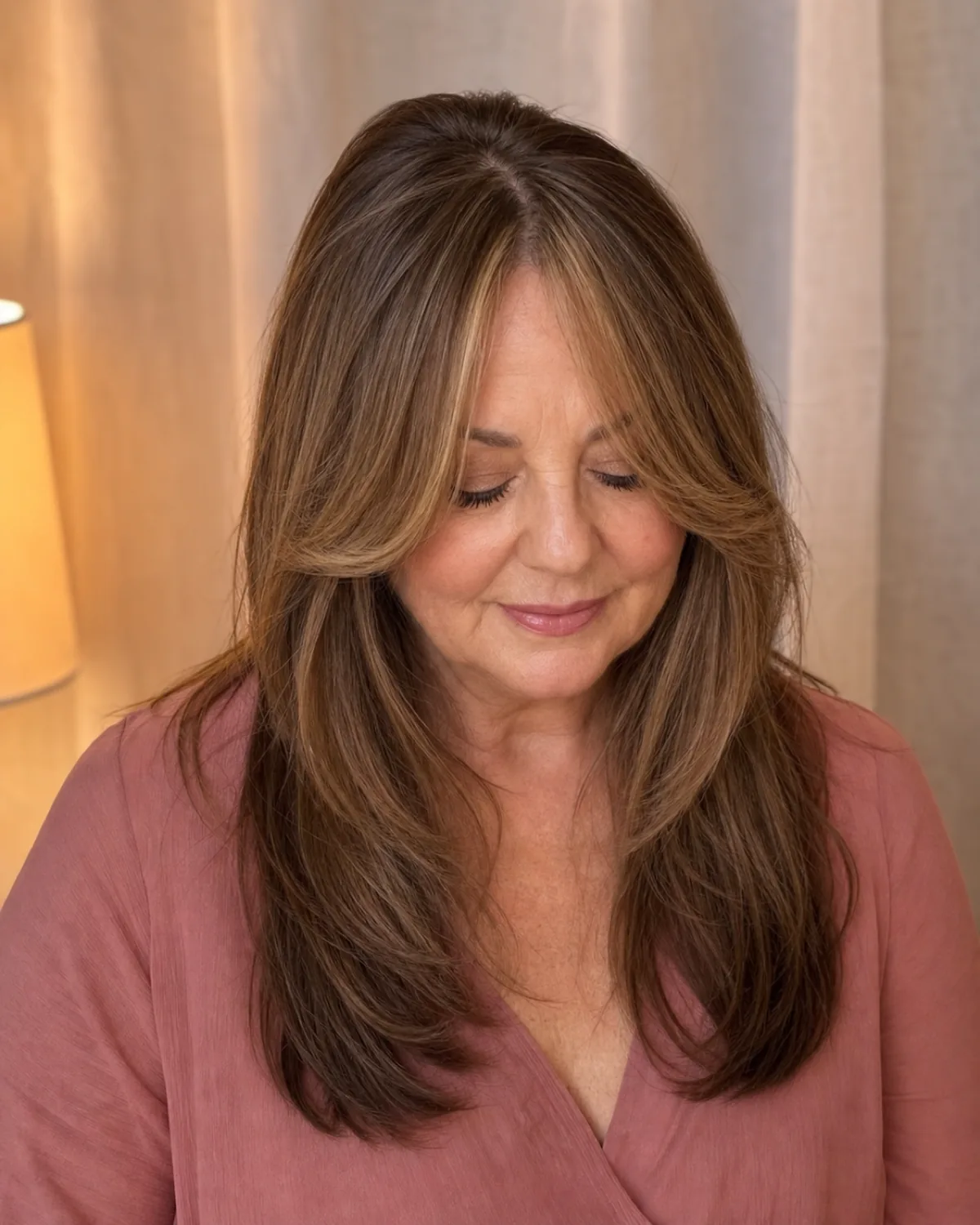
The curtain bangs are parted slightly off-center, with feathered pieces falling on either side of the cheekbones. They frame and soften the forehead without the commitment of a full blunt fringe.
- Curtain bangs work on most face shapes with a fuller build because they add a soft frame without adding width
- The feathered edges are essential. Blunt curtain bangs on a round face can look heavy. The feathering creates a tapered edge that reads lighter
- These require styling. They do not air-dry well on fine hair and will need a round brush or a velcro roller to hold their shape
- Ask your stylist to cut them slightly longer than you think you want. Curtain bangs that are too short sit on the forehead rather than framing it
10. Layered Shoulder-Length With Swept-Back Sides
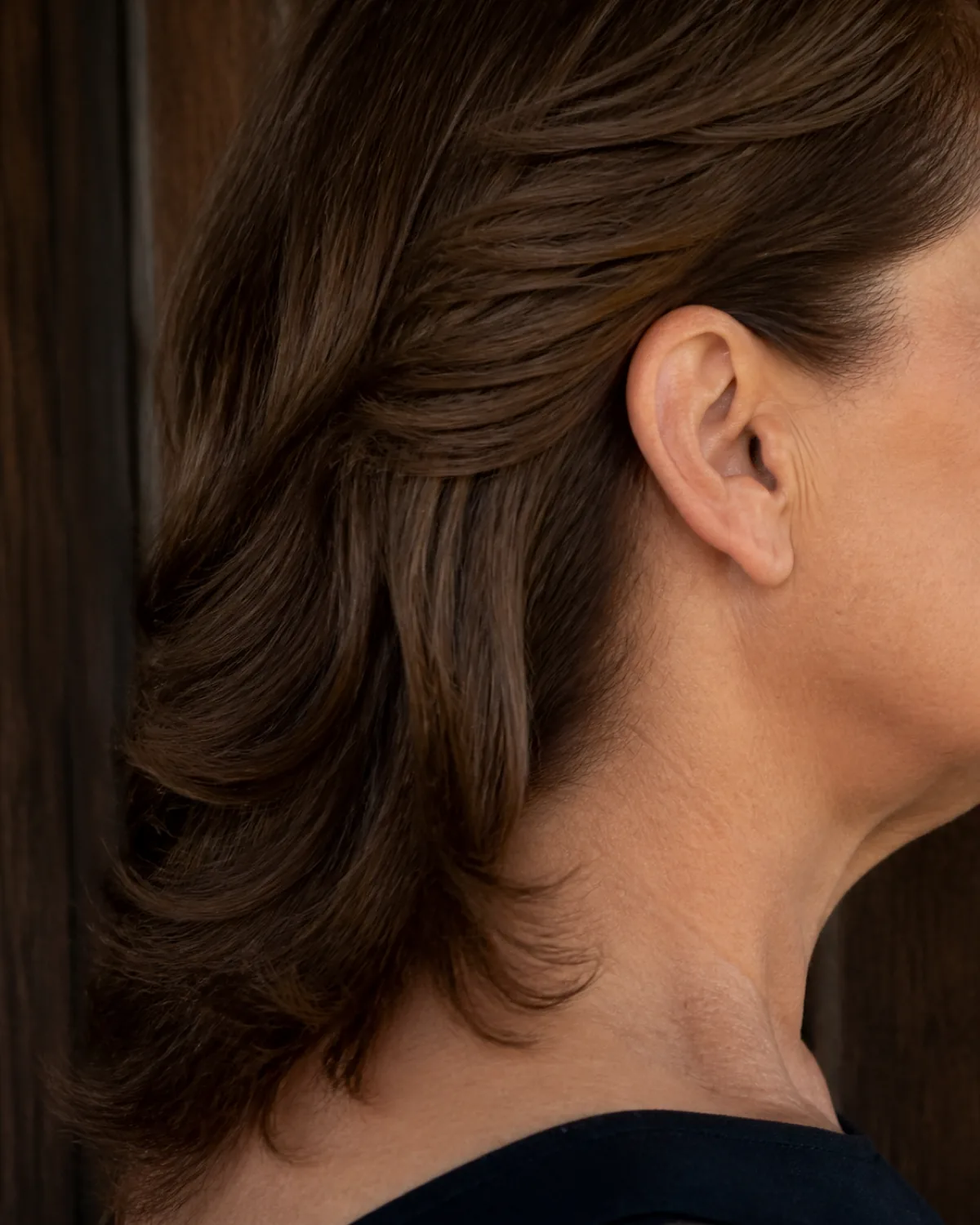
The hair is swept back behind the ear, exposing the jawline and neck. The layers starting at ear level are visible, and the open neck area shows how tucking the sides back changes the proportions.
- Sweeping the sides back opens up the neck and jaw area, which gives a fuller face more vertical real estate between the chin and the shoulders
- This only works if your hair has enough body to hold the sweep. Flat, fine hair will slide forward within an hour
- The layers need to start at the ear to allow the sweep to sit naturally. Layers that start below the ear are too heavy to tuck
- A light hairspray or texturizing spray behind the ears keeps the sweep in place without looking stiff
11. Textured Pixie Bob (Bixie)
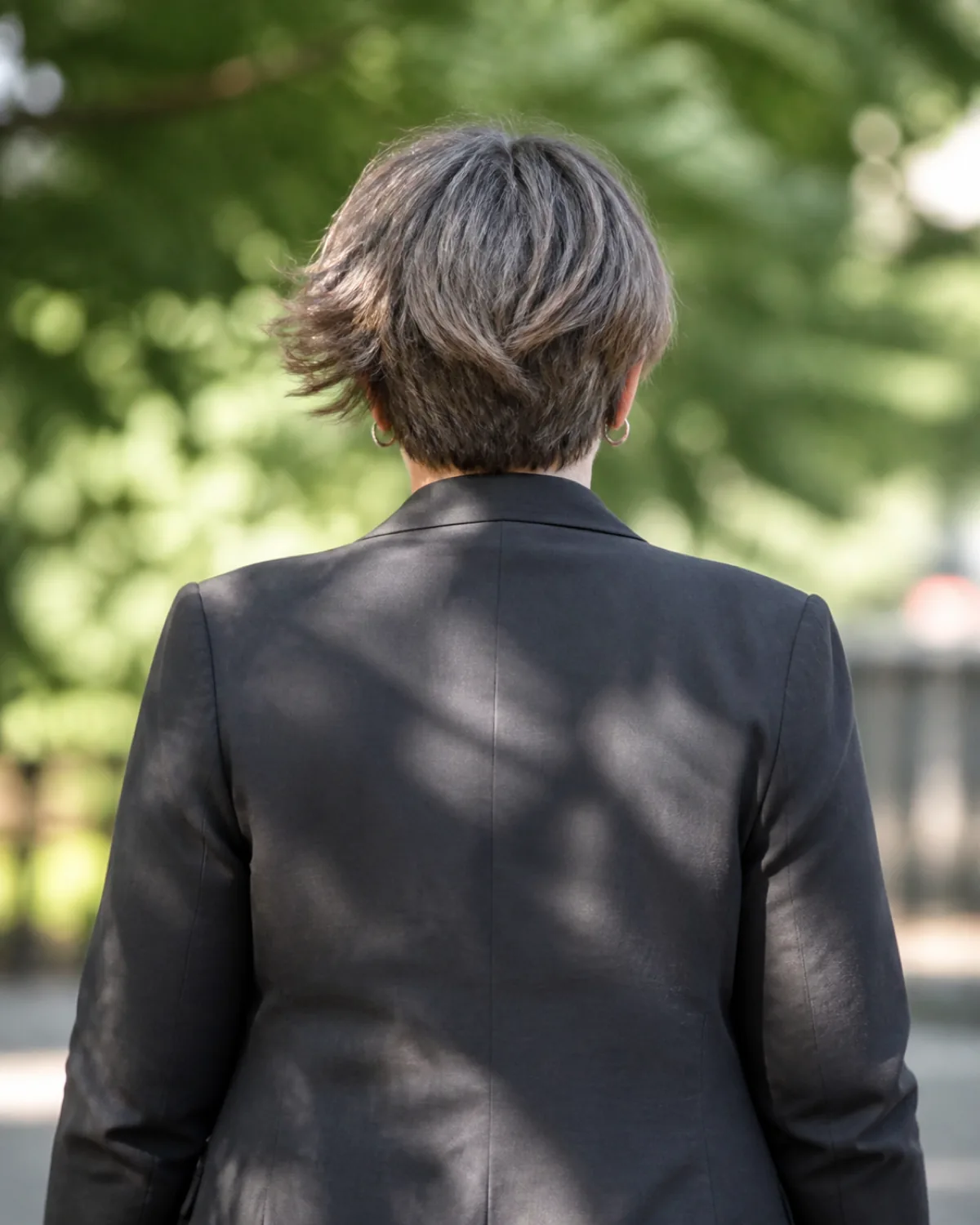
The bixie sits between the ears and the jaw, heavily textured with choppy pieces that create an uneven, intentionally messy perimeter. The texture is clearly intentional.
- The bixie is a safer short cut than a full pixie because it keeps coverage around the ears and jaw. On a fuller frame, that coverage matters
- Texture is essential. Without it, a bixie sits flat and looks like an overgrown pixie that needs a trim
- This cut works well as a transition cut. If you want to go shorter, the bixie lets you test the proportions before committing to a pixie
- Ask your stylist to texturize with point-cutting rather than thinning shears. Point-cutting creates a more natural choppy edge on short hair
12. Wispy Side-Parted Bob
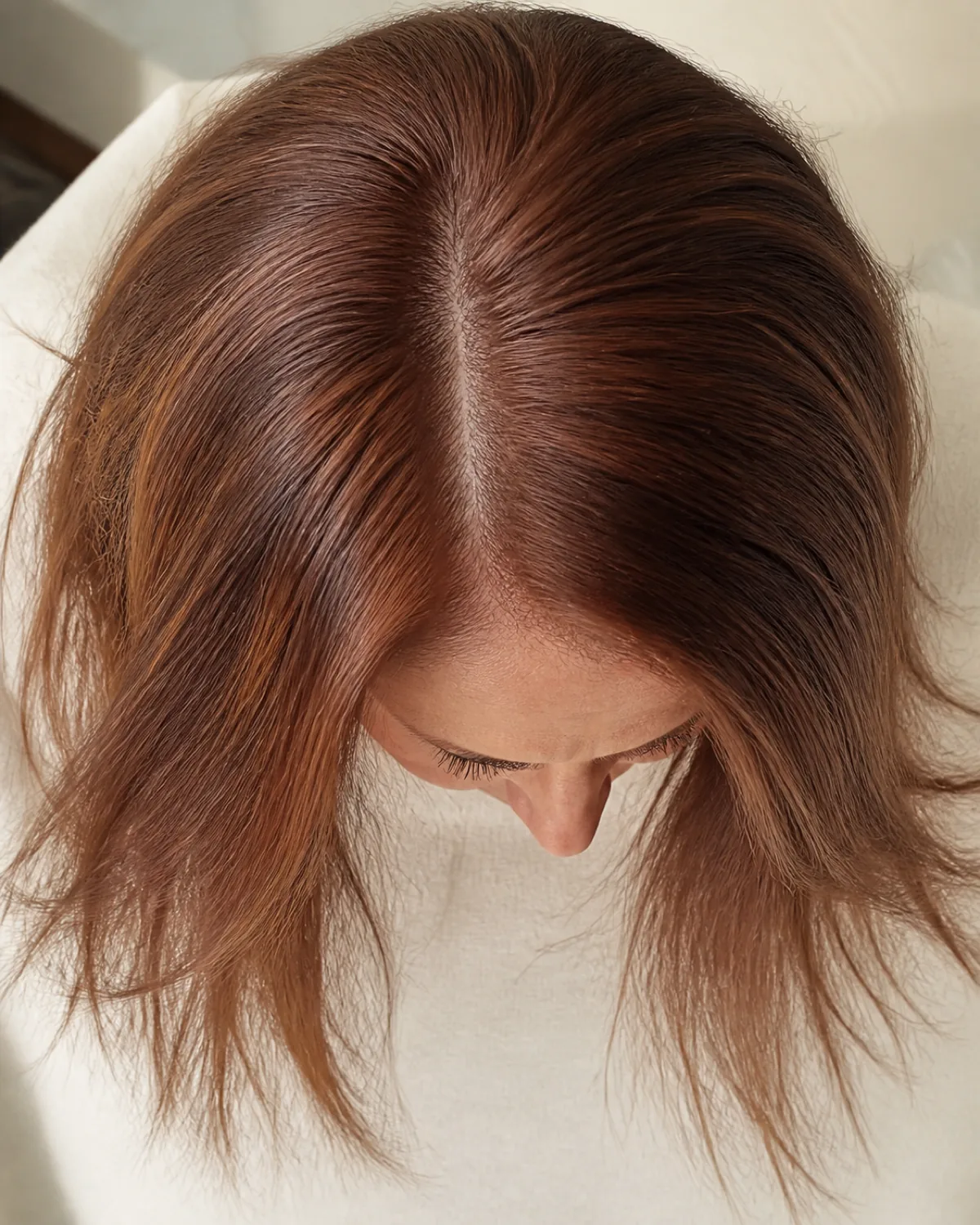
The wispy ends taper to near-transparency at the tips. Individual strands are visible at the tips, showing the intentional thinning that prevents the bob from looking helmet-like.
- Wispy ends soften the perimeter of a bob and prevent it from forming a solid horizontal line at the chin. On a round face, that solid line is the problem
- Wispy only reads intentional if the rest of the cut has structure. If the whole cut is wispy, it reads neglected rather than designed
- Ask your stylist for internal thinning at the ends rather than overall thinning. The body of the bob should stay full for coverage, with only the last inch tapered
- This cut suits medium to fine hair. Thick hair that is thinned at the ends can puff outward rather than tapering, which adds width instead of reducing it
13. Long Waves Below the Shoulders
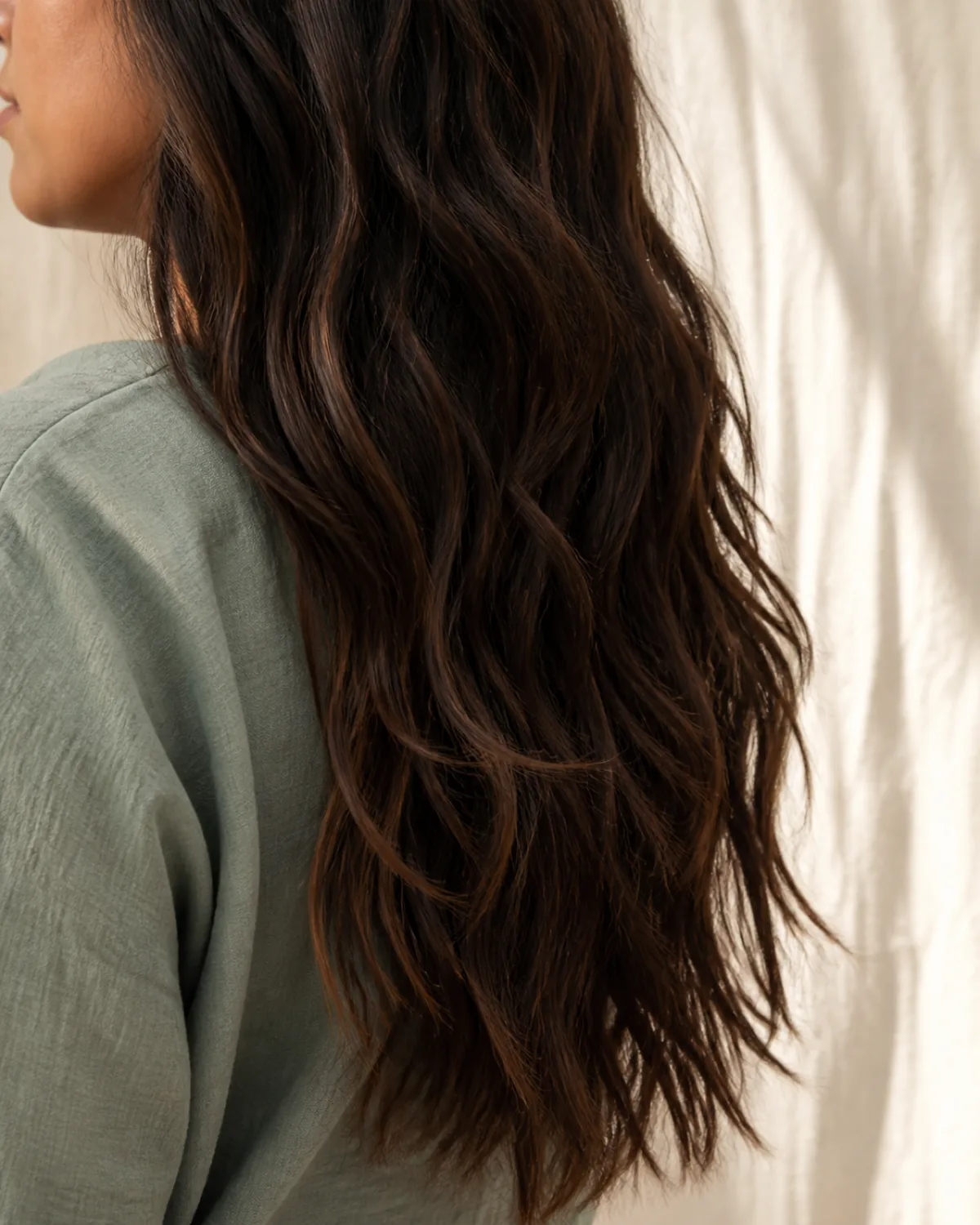
The loose natural waves create movement and prevent the length from hanging flat. The ends resolve into individual strands with good density.
- Long hair on a plus-size frame over 50 works when it has movement. The wave prevents the hair from pulling the face downward, which flat, straight long hair does
- If your hair is thinning, length exposes the density drop. The thinner the ends look, the less this cut balances a fuller frame
- Waves do not have to be natural. A large-barrel wave tool or overnight braids can add enough bend to keep the length from going flat
- The maintenance question is honest: long hair over 50 requires more upkeep to look intentional. If your answer to "will you style it?" is no, consider shoulder length instead
14. Stacked Short Bob
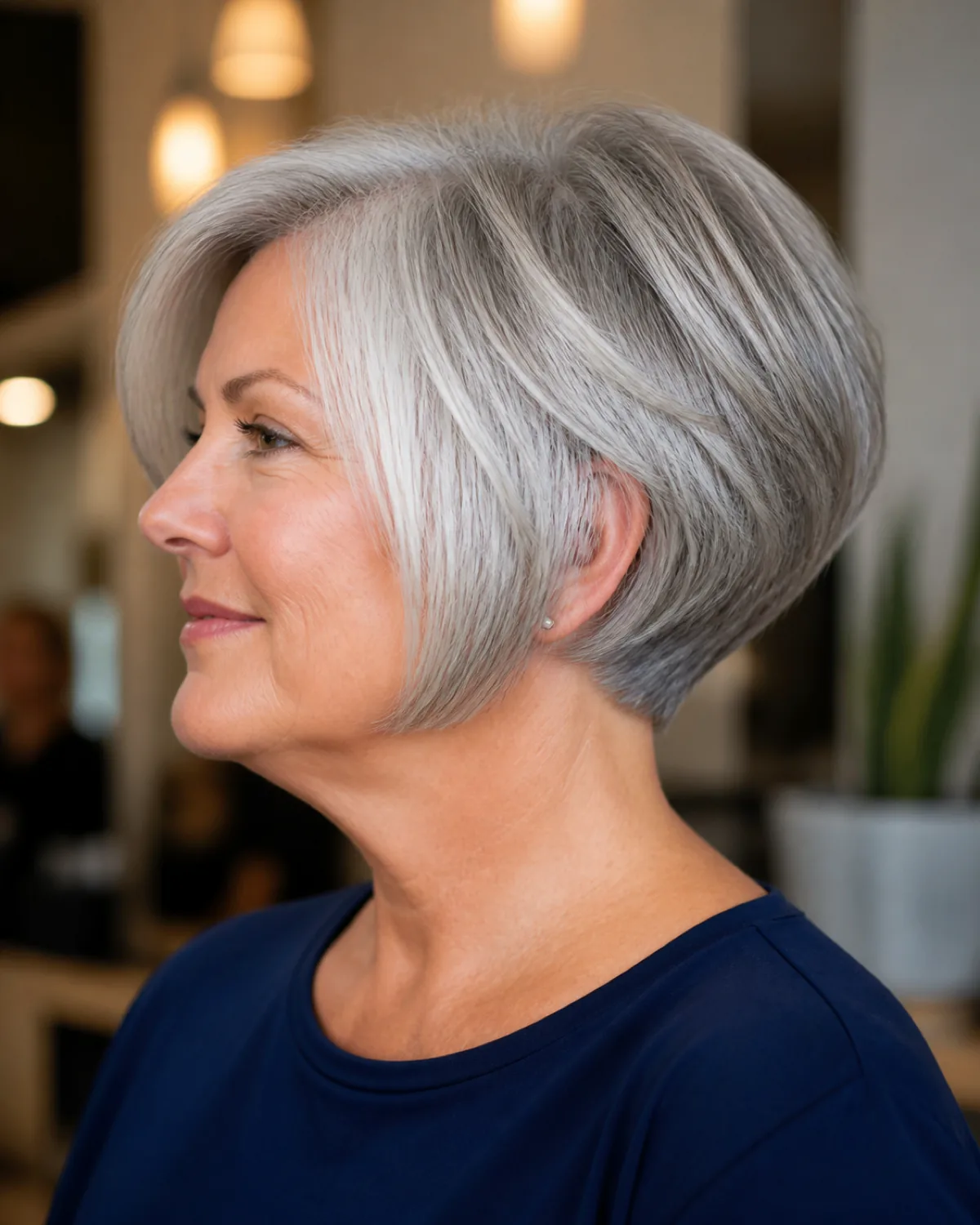
The graduated layers at the nape build outward, creating a rounded volume at the back of the head. The front pieces are longer and sweep toward the chin. The stacking is clearly visible from this profile.
- Stacking builds volume at the back of the head, which balances a round face by extending the silhouette backward rather than outward at the sides
- This cut works on round faces because the backward volume compensates for the face's width without adding side bulk
- On a square jaw, the front pieces need to pass the chin. If they stop at the jaw, they frame the square corners
- The stacking requires maintenance. Graduated bobs lose their shape faster than blunt bobs because the layered back grows out unevenly. Budget for trims every five to six weeks
15. Feathered Layers on Medium-Length Hair
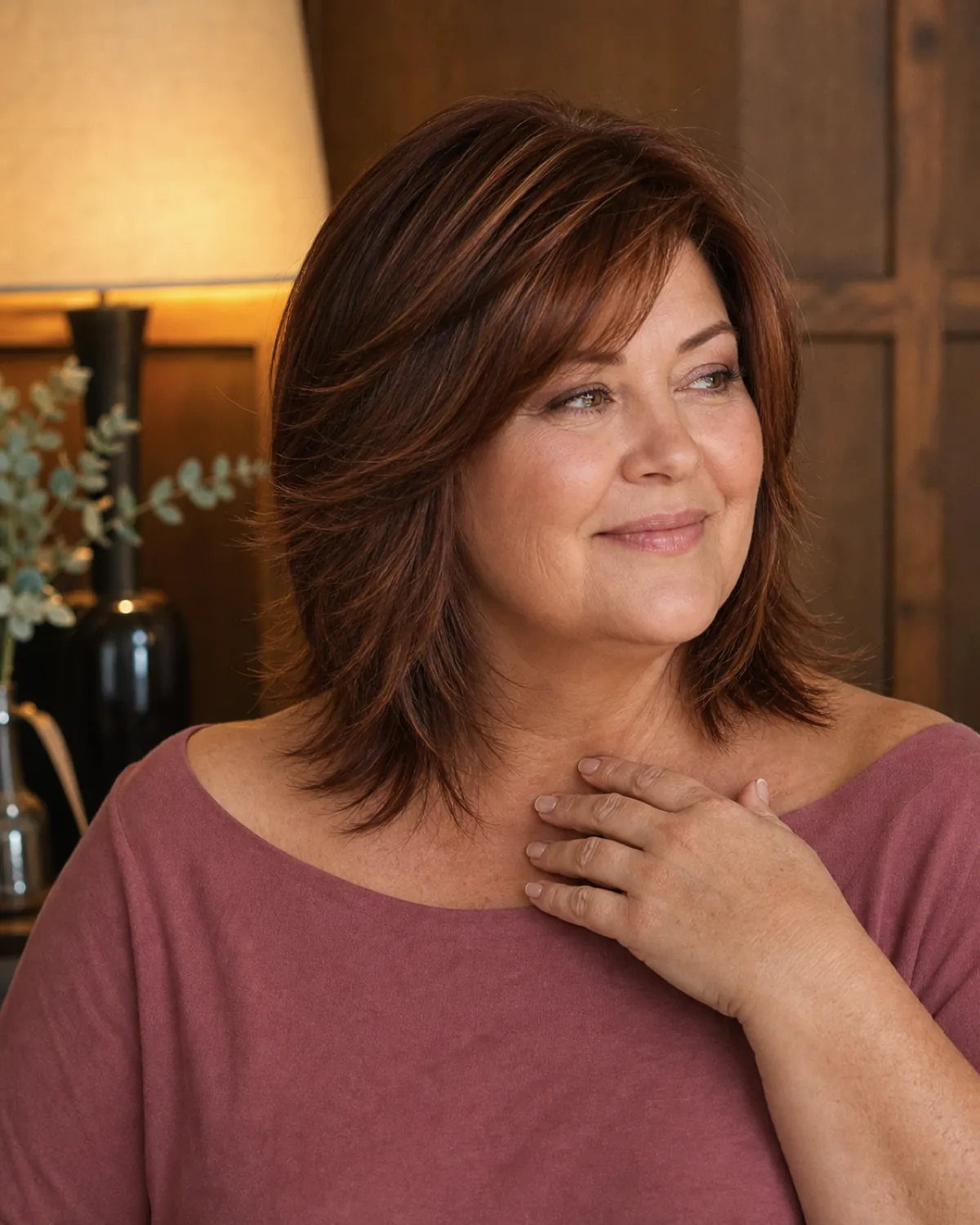
The feathered ends taper gradually rather than ending in a blunt line. The feathered tips are visible around the jaw and shoulders, creating a soft tapered edge that removes weight from the perimeter without removing coverage.
- Feathering removes weight from the ends without removing coverage, which keeps density visible on fine or medium hair
- On a full face, feathered ends around the jaw prevent the cut from boxing the face the way blunt ends do
- Feathering works best on hair that has some natural movement. On very straight, thick hair, feathered ends can stick outward rather than lying in a tapered line
- Ask your stylist to razor-cut the ends if your hair is medium-textured. Razor-cutting creates a more natural taper than scissors on hair that already has some softness
16. Asymmetric Long Bob
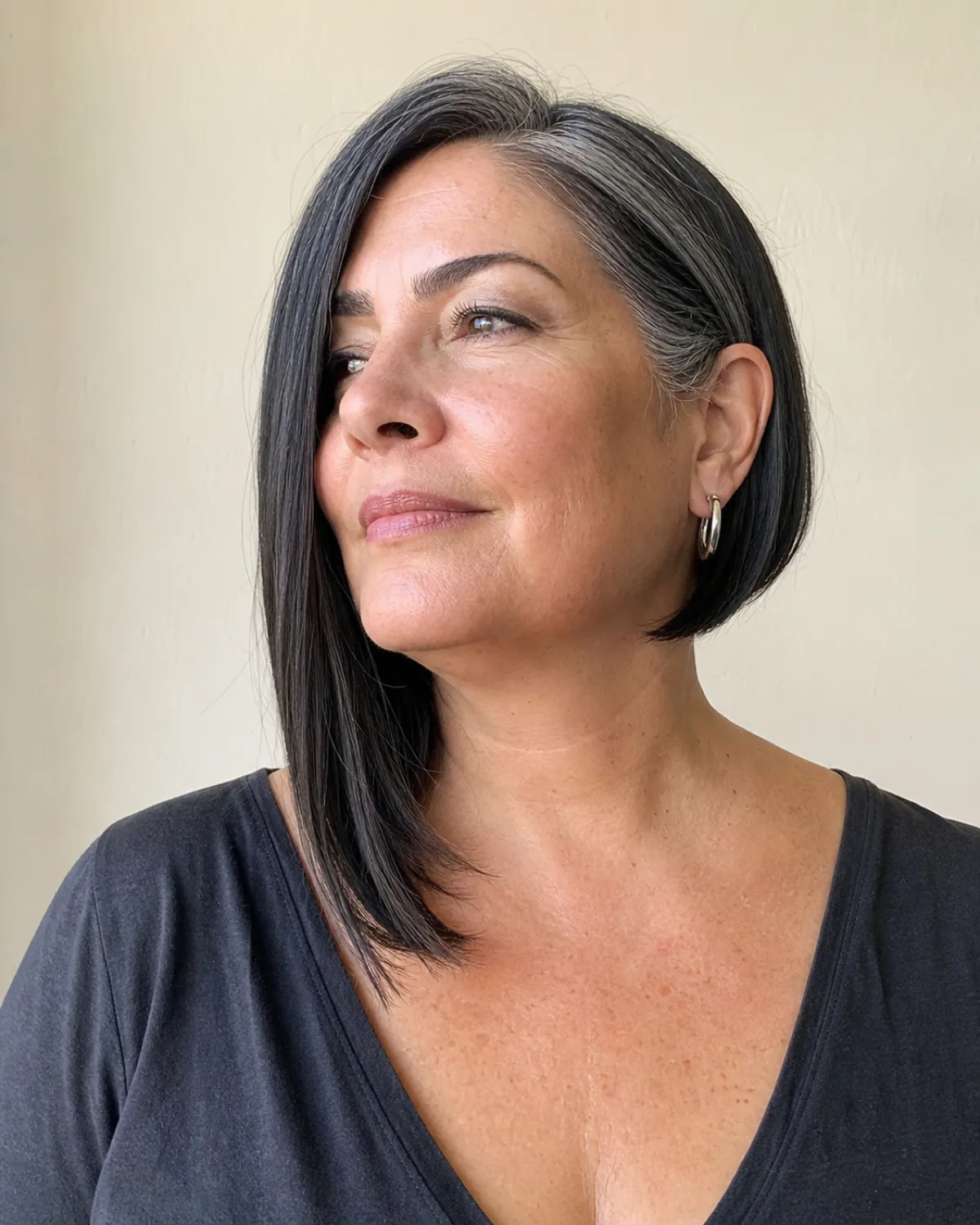
The asymmetry is clearly visible: the side facing the camera falls to the collarbone while the far side sits at the jaw. The diagonal line created by the length difference is the structural feature.
- Asymmetry breaks the round shape of a fuller face by introducing a diagonal. A symmetrical cut echoes the face's roundness, while an asymmetric one disrupts it
- The longer side should fall on the side you want to elongate. If your face is fuller on one side, the longer hair on that side creates a counterbalance
- Maintenance is higher because growth shows unevenly. When the short side grows out, the asymmetry flattens and the cut reads like a badly grown-out bob
- Ask your stylist for a one-to-two-inch difference between the sides. More than that can read dramatic in a way that calls attention to the asymmetry rather than letting it work quietly
Where the checkable claims come from
- Face Shapes and Hairstyles — Healthline
- Hair diameter, color and density changes with age — Birch, Messenger & Messenger, British Journal of Dermatology (2001)
- Graduation vs. Elevation: The Subtle Distinction That Impacts Every Cut — Above Shears
Keep this one
Save it for the appointment
Pin the image above to the board you actually open before a salon visit. This guide is written to be re-read, not read once.
Tonight, before you close this tab
- Stand in front of a mirror and note where your face is widest, at the cheeks, at the jaw, or at the temples, because your shortest layer should land above that line
- Hold your hair back flat on top and then lift it with your fingers at the crown to see how much crown height changes your proportions
- Check your neck length by measuring from your jawline to where your collar sits, because short-neck and long-neck cuts are different
- Bring a full-body photo to your stylist so they can see the proportions between your head, shoulders and torso
- Write down whether your hair air-dries with any wave or movement, because that determines which of these sixteen cuts you can maintain daily