9 Haircuts for Round Faces Over 50: Medium and Long Lengths That Slim
Nine medium and long haircuts judged for round faces over 50. Each one rated by whether it lengthens, narrows, or works against your bone structure.

Booking an appointment soon? Save this page. It is easier to skim in the chair than to remember.
At a glance
Works
- A below-chin lob with a centre part on thick straight hair because the vertical part line and the length past the chin both counter width
- An A-line bob on straight thick hair because the diagonal from short nape to longer front reads as length on a round face
- Long layers starting below the cheekbone because the longest pieces frame the jaw without widening the mid-face
Depends
- A deep side sweep only if the hair has enough density to hold the sweep across the forehead, otherwise it falls flat and exposes the part
- Crown volume layers only if you can blow-dry the root zone, because on fine hair the crown flattens within an hour
- A textured wave cut only if the hair has natural wave or enough density for internal movement, because on fine straight hair the texture drops by afternoon
Skip
- One-length long hair on fine or thinning hair because the centre of the scalp shows through and the weight cannot hold the side sweep
- A blunt collarbone cut on thick curly hair because the blunt perimeter traps volume and puffs outward at the sides
- A shag with a disconnected fringe on fine straight hair because the disconnected pieces separate and look sparse rather than textured
A round face measures roughly equal in width and length. Short haircuts can narrow it, but the harder question is whether you can keep length and still change the proportion.
You can. The catch is that length alone does nothing. What matters is where the weight line sits, whether the layers start above or below your cheekbone, and how the perimeter falls against your jaw.
These nine are judged by who they slim and who they widen. Not sure of your face shape? Start here. Want short options? See short cuts for round faces.
1. The Below-Chin Lob with a Centre Part

A one-length bob that ends two inches past the chin, parted at or near the centre. The vertical line of the centre part runs straight down the face and counteracts the width that defines a round shape. The length past the chin extends the visual reading of the face downward.
- Works on straight to slightly wavy hair with medium to thick density because the blunt line needs enough hair to look full at the ends
- The centre part is the structural move here, not the length alone; the part creates a vertical axis that divides the face into two narrower halves
- Falls flat on fine hair because the single-length ends thin out and the face shape takes over
- Ask your stylist to keep the perimeter truly blunt with no texturizing at the tips, because tapered ends on a lob this simple look accidental
2. Long Layers Starting Below the Cheekbone
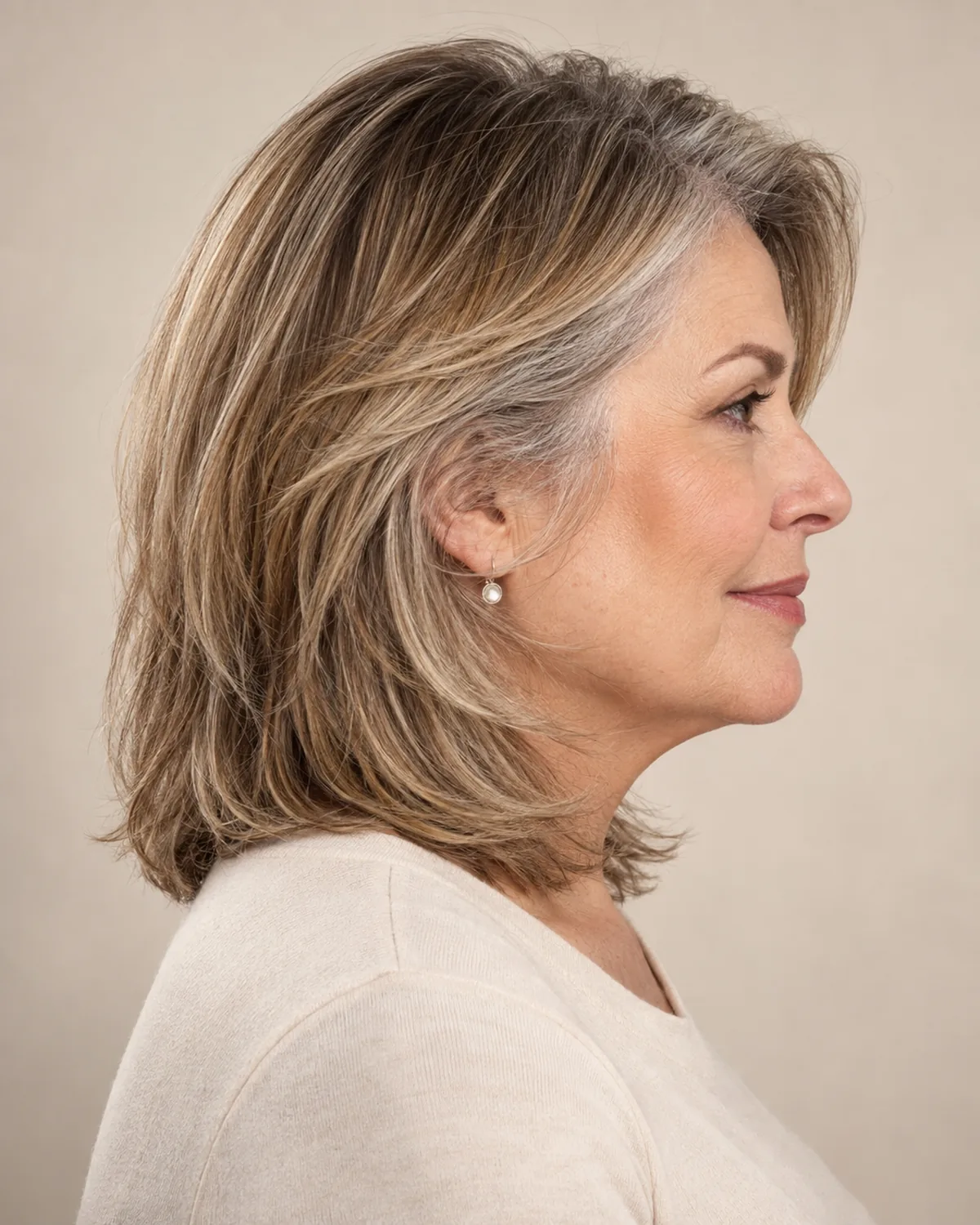
Layers that begin below the cheekbone and cascade to the collarbone. The key is where the shortest layer sits: below the cheekbone means the widest point of the face is not interrupted by a layer ending right at it. The longest pieces frame the jaw and draw the eye down.
- Suits medium to thick hair because the layers need enough density to read as distinct steps rather than gaps
- On fine hair the layers can separate and expose the scalp at the sides, which reintroduces the width you were trying to remove
- Ask your stylist where the first layer will start and measure it against your cheekbone before they cut; one inch higher changes the whole effect
- This is a good option if you also want to explore medium shaggy layers but need a cleaner shape
Where to start
Find your situation, skip ahead
Your hair is thick and straight and you want a cut that slims without sacrificing length
Start with the below-chin lob or the A-line bob. Both use geometry to create a vertical or diagonal line that counters roundness.
01 The Below-Chin Lob with a Centre Part04 A-Line Bob (Front Longer, Back Shorter)
Your hair is medium density with some wave and you want face-framing movement
Look at the long layers below the cheekbone or the textured waves. Both add movement around the jaw without adding width at the widest point.
02 Long Layers Starting Below the Cheekbone09 Collarbone-Length Textured Waves
You want to keep your hair long and just need one structural change to narrow your face
A deep side part with no layers is the most minimal option, but only if your hair is thick enough to hang heavy on one side.
3. The Deep Side Sweep on a Medium Bob
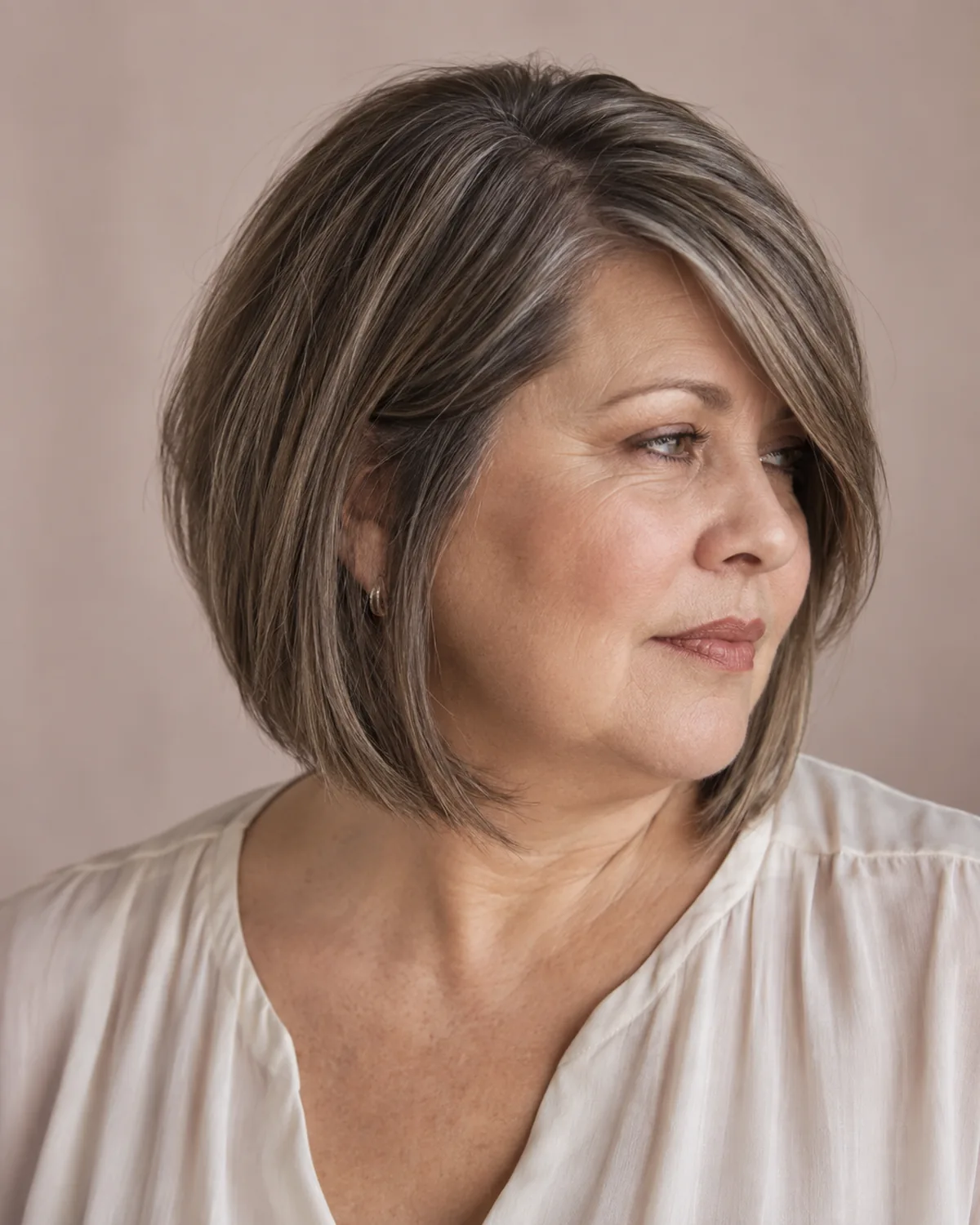
A chin-to-shoulder bob with a deep side part and one long sweeping piece that crosses the forehead diagonally from the part to the opposite temple. The diagonal line reads as length on a round face. The sweep covers the wider half of the forehead and shifts the visual centre of gravity off axis.
- Works on straight to wavy hair with enough density to hold the sweep in place throughout the day
- The deep part is what makes this different from a standard bob; a centre part on the same cut would frame the width equally on both sides
- On fine hair the sweep falls flat within hours and the part line shows through, which removes the asymmetry
- If you like the idea of bangs after 50, this deep sweep is a less-committed alternative that achieves a similar forehead-narrowing effect
4. A-Line Bob (Front Longer, Back Shorter)
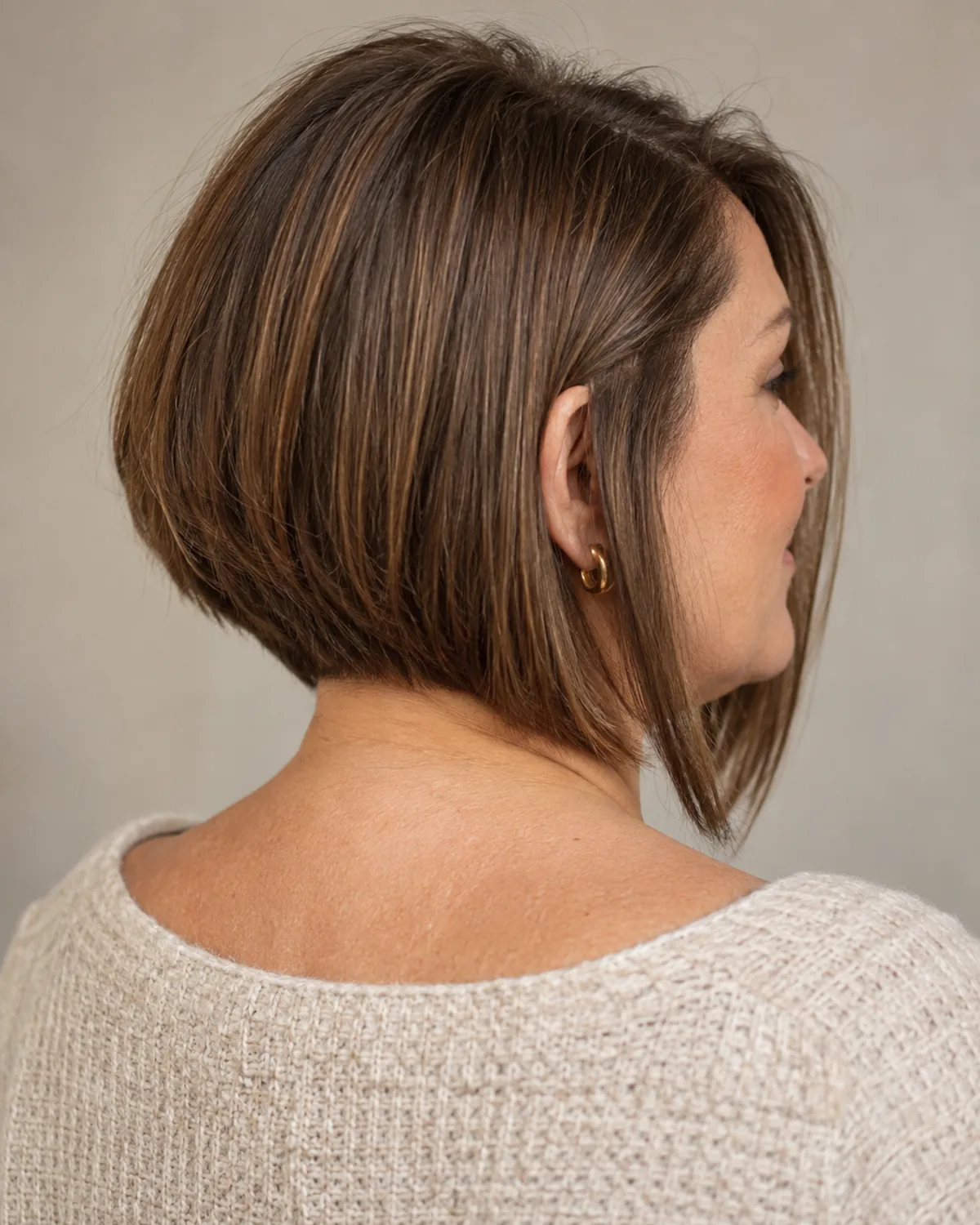
An angled bob that is shorter at the nape and longer at the front, with the front pieces reaching toward the collarbone. The A-line creates a diagonal that reads as forward motion and length. On a round face, that diagonal line counters the circular outline.
- Works best on straight and thick hair because the angle depends on the hair falling in a clean line from back to front
- The graduation at the nape is the structural signature; it should be clean enough that a stylist could identify the cut from behind alone
- On curly hair the A-line angle bounces up and the intended diagonal disappears; the front and back end up reading as the same length
- Ask your stylist how steep they intend the angle; a subtle two-inch difference reads intentional, while a dramatic six-inch drop can look unbalanced
5. Side-Parted Long Layers with Volume at the Crown
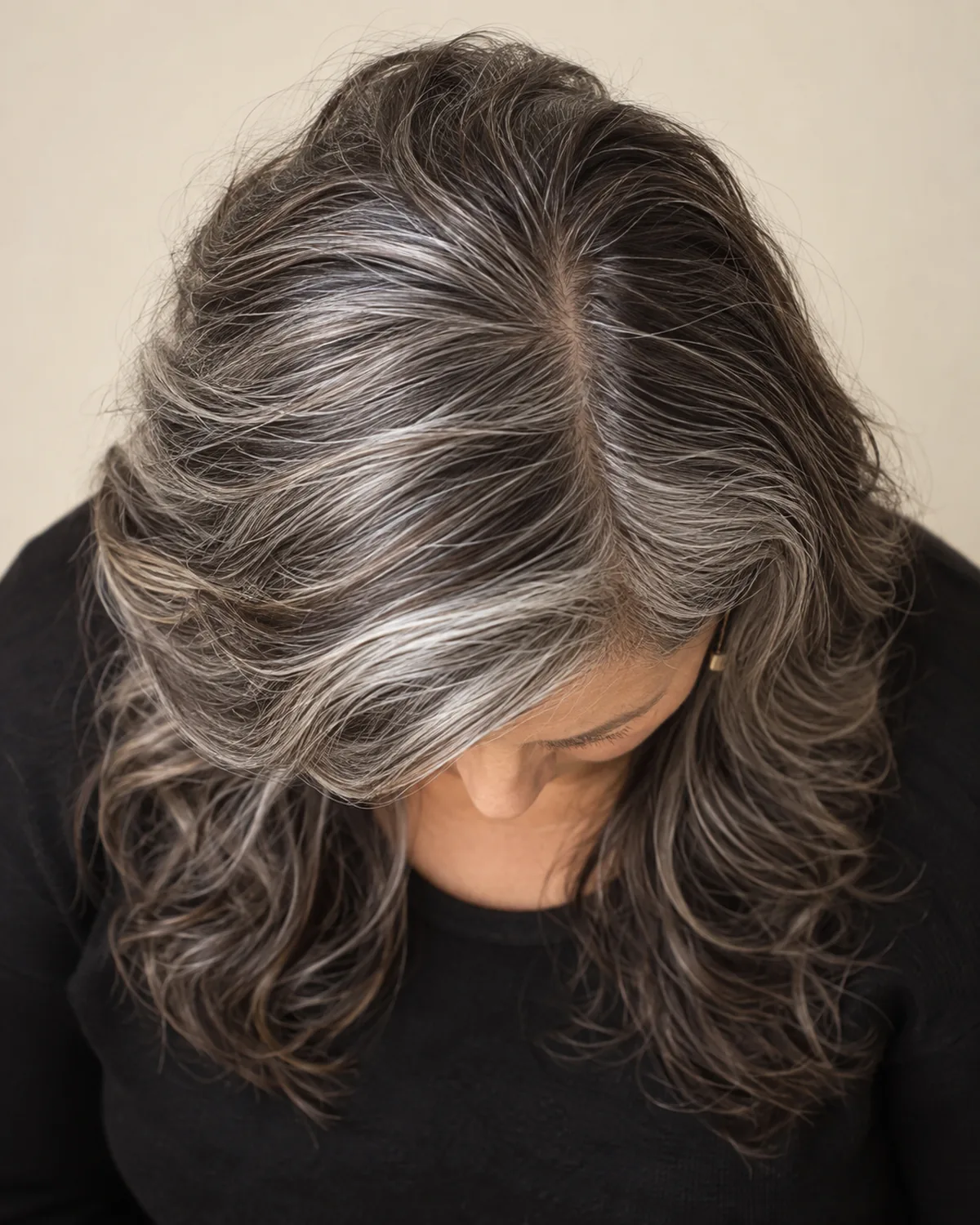
Long hair with layers starting at the crown and a deep side part. The side part breaks the symmetry of a round face while the crown volume adds height. That vertical height reshapes the proportion from a circle toward an oval.
- Suits thick and wavy hair because the natural texture supports the volume at the crown without blow-drying
- On fine hair the crown flattens within an hour and the round shape returns as though the cut never happened
- The side part does more work than the layers; switching from a centre to a deep side part on existing long hair can test the effect before you commit to layers
- Ask your stylist to layer from the crown down rather than from the chin, so the shortest pieces lift at the top rather than adding width at the mid-face
6. Medium Shag with Disconnected Fringe
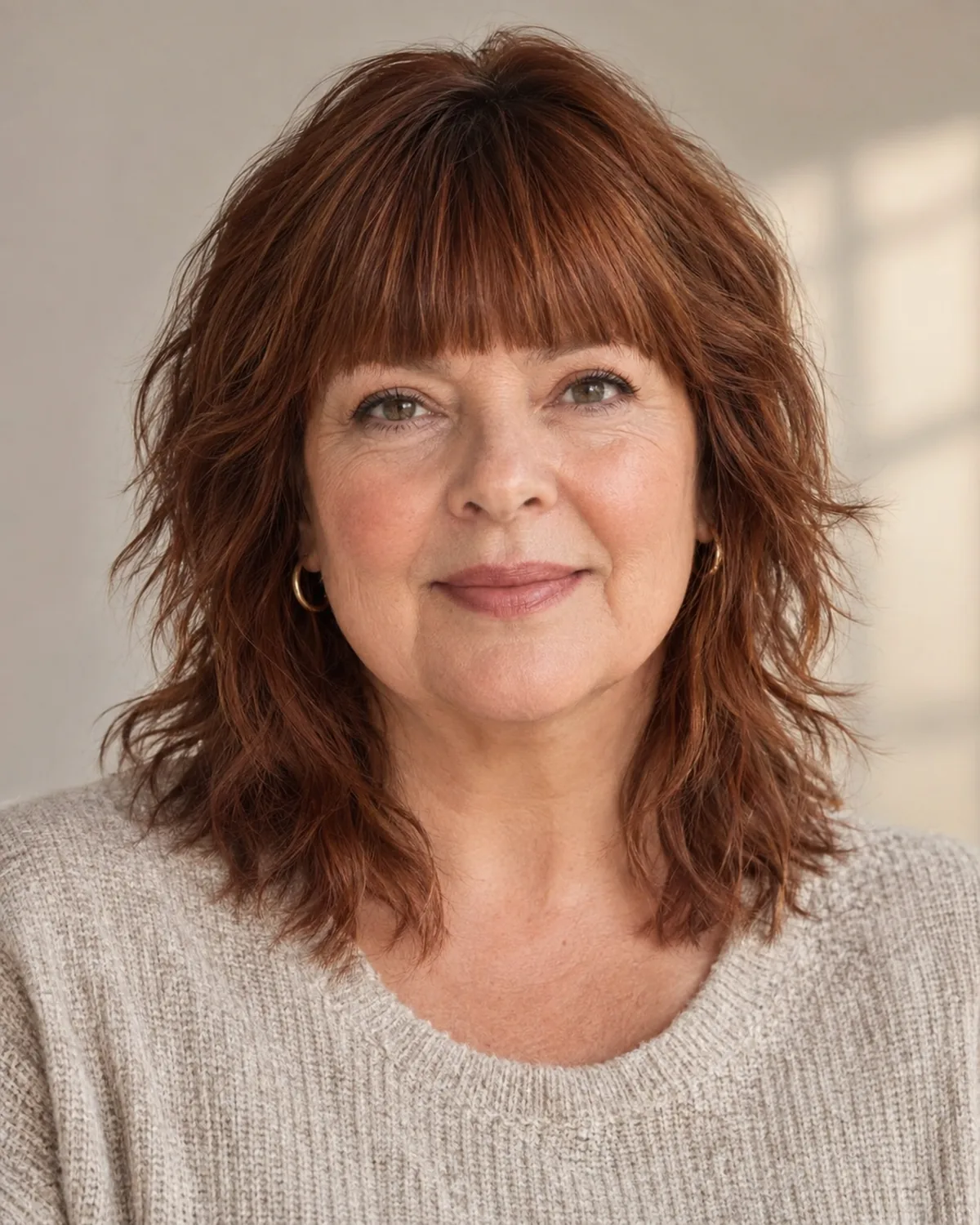
A textured shag at collarbone length with a blunt fringe cut separately from the layers. The fringe draws a horizontal line high on the face while the shag layers add vertical movement below. Those two competing lines break the uniform roundness.
- Works on thick or wavy hair because the texture fills the disconnected layers and gives them dimension
- The fringe must be blunt and sit at or just above the brow; a wispy fringe at this position loses the horizontal line that does the structural work
- On fine straight hair the disconnected pieces look sparse rather than textured, and the fringe separates to show the forehead beneath
- This cut combines two techniques and requires a stylist who understands disconnection; bring a photo showing the fringe and the shag as separate systems
7. Blunt Cut with Face-Framing Pieces
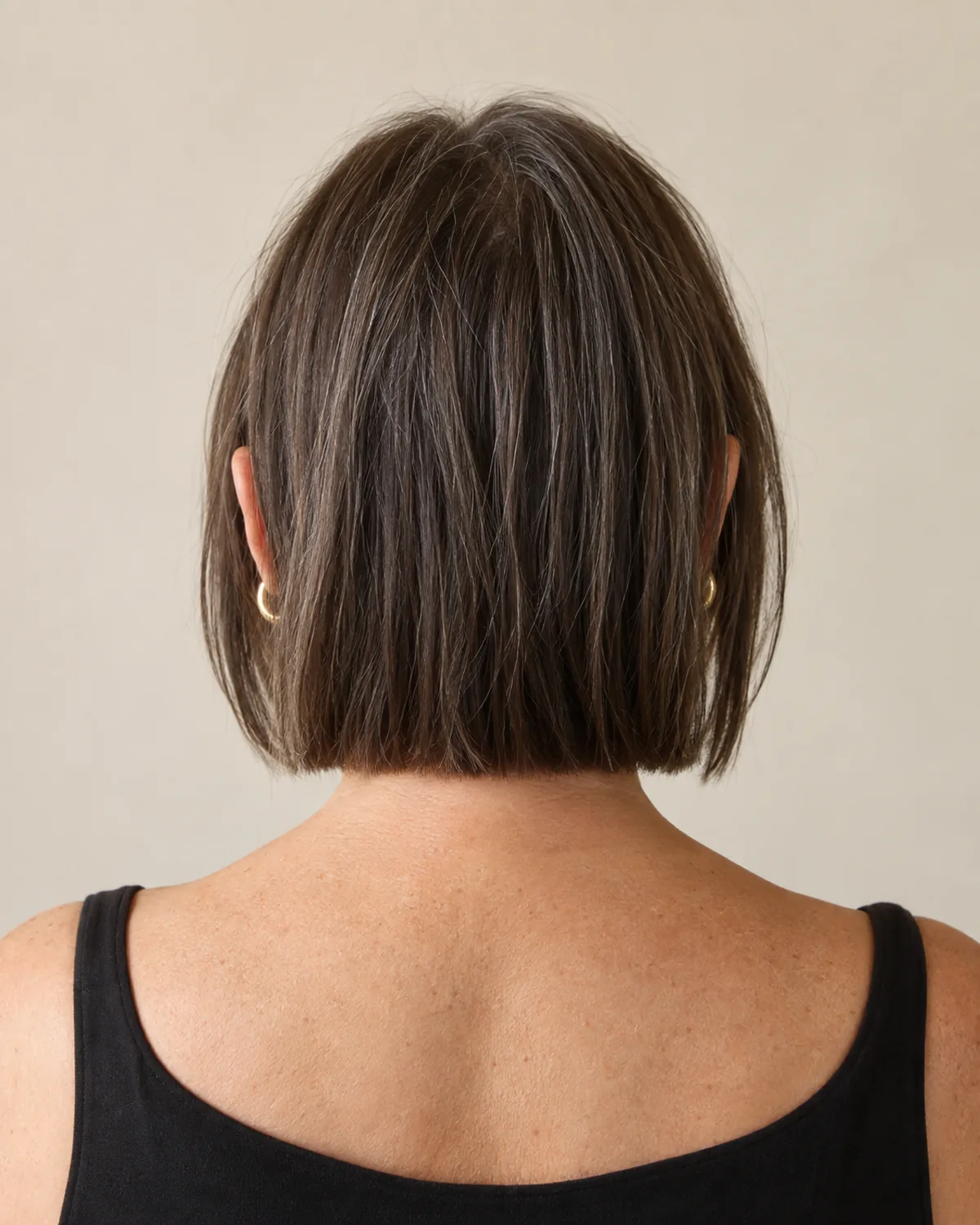
A single-length cut with a blunt perimeter and two shorter pieces cut to frame the face from cheekbone to jaw. The blunt line keeps all the weight at the bottom so the hair does not flare at the sides. The face-framing pieces create a V around the cheeks that reads as narrowing.
- Works on medium-density straight to wavy hair; from behind you see the blunt line, and from the front you see the shorter pieces curving inward
- On thick curly hair the blunt perimeter traps volume and the line puffs outward at the sides, which adds the width you were trying to lose
- The face-framing pieces should be subtle; two inches shorter than the main length is enough to create the V without looking like a mistake
- Ask your stylist to cut the face-framing pieces dry so they can see exactly where the shorter length lands against your cheekbone
8. Long Hair with a Deep Side Part and No Layers

One-length long hair swept to one side with no layering at all. The weight of the hair pulls straight down and the side part breaks the symmetry. This is the most minimal intervention on the list and the one that depends most on density.
- Only works if the hair has enough density to hang heavy; the downward pull of the weight is the entire mechanism
- On fine or thinning hair the centre of the scalp shows through at the part and the sweep cannot hold to one side
- No layering means no movement, which suits women who want a clean, deliberate silhouette and are willing to accept a daily brush-through
- Compare this option with the general medium-length guide to see whether a layer would add the movement you want without sacrificing the narrowing effect
9. Collarbone-Length Textured Waves
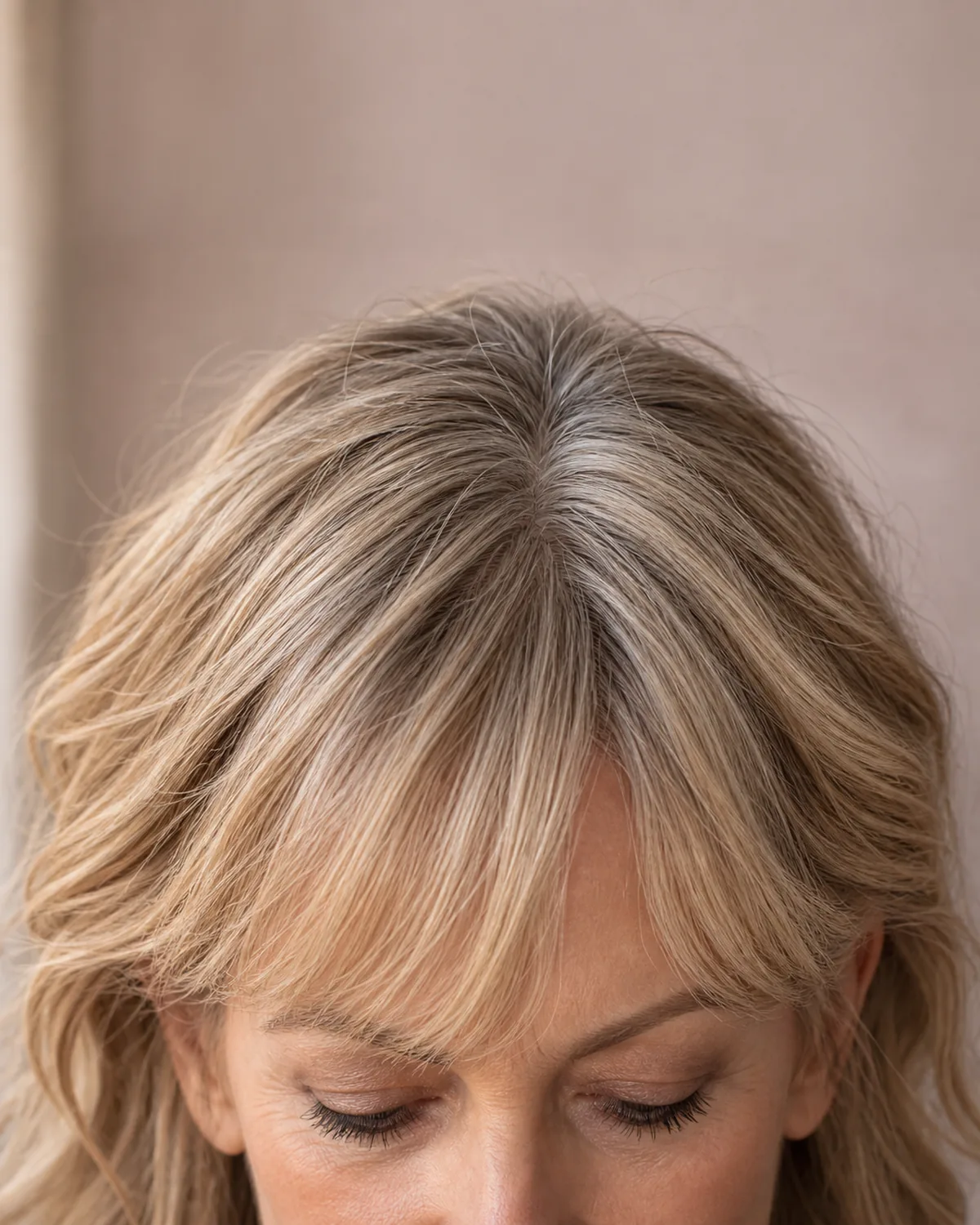
A medium cut with soft internal texture created by point-cutting or slide-cutting, styled into loose waves. The texture lives inside the body of the hair rather than at the perimeter, so the outline stays relatively smooth while the interior has movement. That internal motion avoids adding width at the sides.
- Suits naturally wavy or thick hair because the wave pattern holds without daily heat styling
- On straight fine hair the internal texture drops by afternoon and the round face reasserts itself against a flat silhouette
- Point-cutting and slide-cutting remove weight from within the hair shaft; ask your stylist which method they prefer for your texture
- The difference between this and a layered cut is that the perimeter stays intact; the movement comes from how individual strands are thinned, not from where the lengths end
For a broader look at how face shape and hair length interact across all five face shapes, the face shape and length guide covers the principles behind every cut on this page.
Where the checkable claims come from
- Face Shapes and Hairstyles — Pivot Point International
- Understanding Graduation and Layering — Sam Villa / Redken Education
- Fine Hair: Causes and How to Care for It — Philip Kingsley Trichological Clinic
Keep this one
Save it for the appointment
Pin the image above to the board you actually open before a salon visit. This guide is written to be re-read, not read once.
Tonight, before you close this tab
- Stand in front of a mirror and measure whether your face width and length are roughly equal by holding a pencil horizontally at the cheekbones and vertically from hairline to chin
- Part your hair at the centre and then at a deep side part and compare which one makes your face read longer
- Hold your hair at your chin and then at your collarbone and note which length sits below the widest point of your face
- Write down the two words from this list that describe your hair: thick, medium, fine, straight, wavy, curly
- Save one photo from this article that matches your density and show it to your stylist with the question: where would the layers start on my hair?