15 Face-Shape × Length Matches After 50: Which One Actually Suits You
Fifteen face-shape and length combinations judged on structure, density, and maintenance. Each one tells you who it suits, who should skip it, and why.
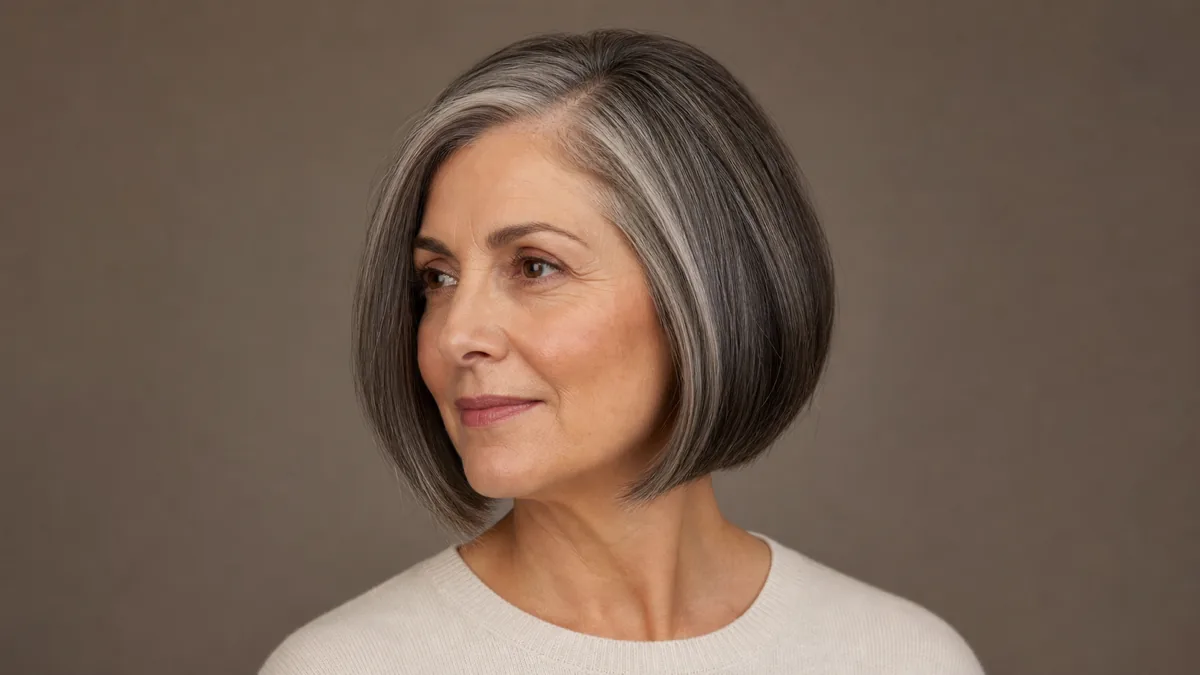
Booking an appointment soon? Save this page. It is easier to skim in the chair than to remember.
At a glance
Works
- Above-the-shoulder on an oval face with medium or thick hair
- A chin-length bob on a round face with enough density to hold a clean line
- A long bob on a heart-shaped face, ending between chin and collarbone
Depends
- Shoulder-length on a square face, which softens the jaw only if layers start below the cheekbone and the hair has enough body to hold movement
- A pixie on a round face, which elongates only if the volume stays on top and the sides are kept close
- Very short on a heart-shaped face, which works only if the chin is softly pointed rather than sharp
Skip
- Mid-back straight hair on an oblong face, where the vertical line doubles down on a face that already reads long
- A blunt chin-length bob on a square face without any tapering or face-framing layers
- Waist-length hair when the last three inches have gone transparent against your back
Knowing your face shape is the first step. If you have not measured yours yet, the face-shape identification guide walks you through the mirror test.
This guide is the second step: matching that shape to a length. Each combination below is judged on whether the proportions work, what hair conditions it needs, and who should skip it entirely.
1. Chin-Length on a Round Face

A round face measures roughly equal in width and length, according to Healthline's face-shape guide. A chin-length cut breaks the line below the widest point of the face, which shifts the eye downward and makes the proportions read narrower.
This works on medium-to-thick hair that can hold a clean edge at the chin. On very fine hair, the line thins out and exposes the jaw rather than framing it. A stylist who knows your density will tell you whether the line will hold.
- The blunt endpoint at or just below the chin creates a visual anchor that interrupts the round silhouette
- Thick hair at this length tends to hold the line between trims better than fine hair
- If the line splits or looks see-through within two weeks, the hair may be too fine for this length
- A side parting adds asymmetry, which fights the roundness more than a centre part
- For more on how short cuts work with round faces, see the short hairstyles for round faces guide
2. Above the Shoulder on an Oval Face

An oval face has length greater than width with no single feature dominating. It is the most forgiving shape for length choices because the proportions stay balanced at most cut points.
Above-the-shoulder length sits cleanly without hitting the shoulder break, which means the line holds its shape through the day instead of flipping outward where the hair meets fabric. This is the low-maintenance end of the spectrum for oval faces.
- The only watch-out is very fine hair, which can lose its edge and look undefined at this length
- Hair that sits above the shoulder does not need to be tucked, clipped, or adjusted through the day
- A slight angle from back to front adds movement without adding maintenance
- Redken notes that short-to-medium lengths on fine hair look fullest when the ends sit against skin or fabric rather than hanging free
3. Shoulder-Length on a Square Face
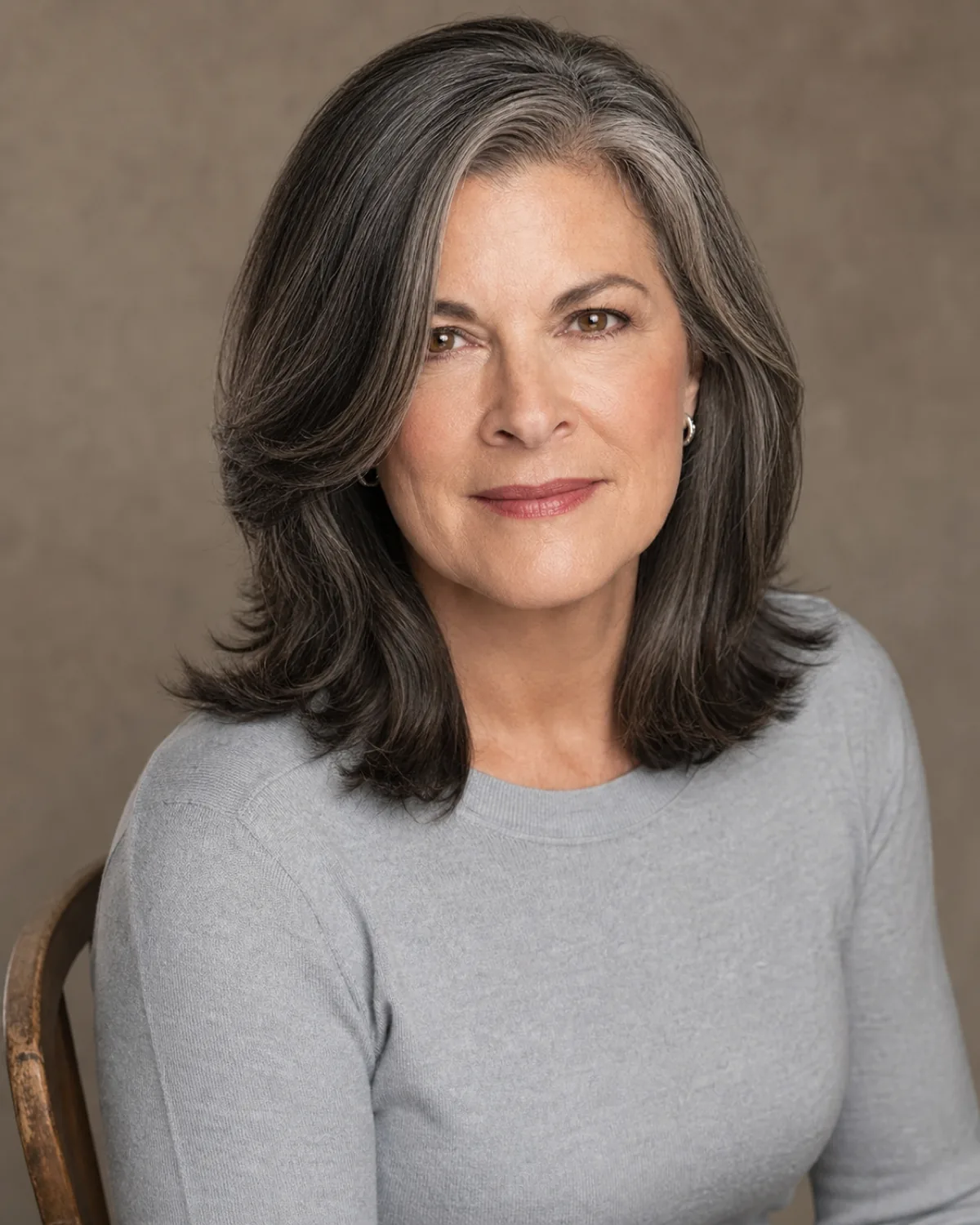
A square face has a jaw that matches the forehead in width. Shoulder-length hair keeps weight below the jaw, which draws the eye downward and softens the strong horizontal line.
The key is where the layers start. Layers beginning below the cheekbone add movement without widening the forehead. Layers that start above the cheekbone push volume outward at the wrong point.
- Shoulder-length works on medium and thick hair that has enough body to hold movement
- Skip this if your hair is very thin and hangs flat, because flat hair at the jaw highlights the angular line instead of softening it
- Point-cut ends help the line read as textured rather than blunt
- Ask your stylist to start the shortest layer below the cheekbone and show you exactly where before cutting
4. A Long Bob on a Heart-Shaped Face

A heart-shaped face is wider at the forehead and narrows toward the chin. The lob — ending between the chin and the collarbone — places visual weight exactly where the face narrows. The slight downward angle draws the eye toward the fuller part of the cut.
The lob is one of the most reliable matches for heart-shaped faces because it balances the proportions without adding volume at the top.
- The endpoint between chin and collarbone matters: too short and the width sits at the narrow chin, too long and the balance shifts
- This works on most hair types, from fine to thick
- A centre part emphasises the forehead width, so a side part tends to read more balanced on heart shapes
- Ask your stylist to hold the hair at different points between chin and collarbone so you can see which endpoint looks most balanced before committing
Where to start
Find your situation, skip ahead
Your face is round and you want a length that narrows it
Start with the chin-length bob. The blunt line breaks below the widest point of your face and reads narrower.
01 Chin-Length on a Round Face06 A Pixie on a Round Face11 A Shag at Any Length on a Round Face
Your hair is fine and you are not sure which length will make it look fullest
Collar-length gives fine hair its best shot at fullness. The neck and collarbone push the hair outward.
07 Collar-Length on an Oval Face With Fine Hair02 Above the Shoulder on an Oval Face15 Judging When Length Stops Working
You want to keep your length but worry it is starting to look thin at the ends
Read the waist-length section last. The test is not your age — it is where density drops off.
15 Judging When Length Stops Working10 Mid-Back Length on an Oblong Face13 Shoulder-Length on a Heart-Shaped Face With Grey Hair
5. Ear-Length on an Oblong Face
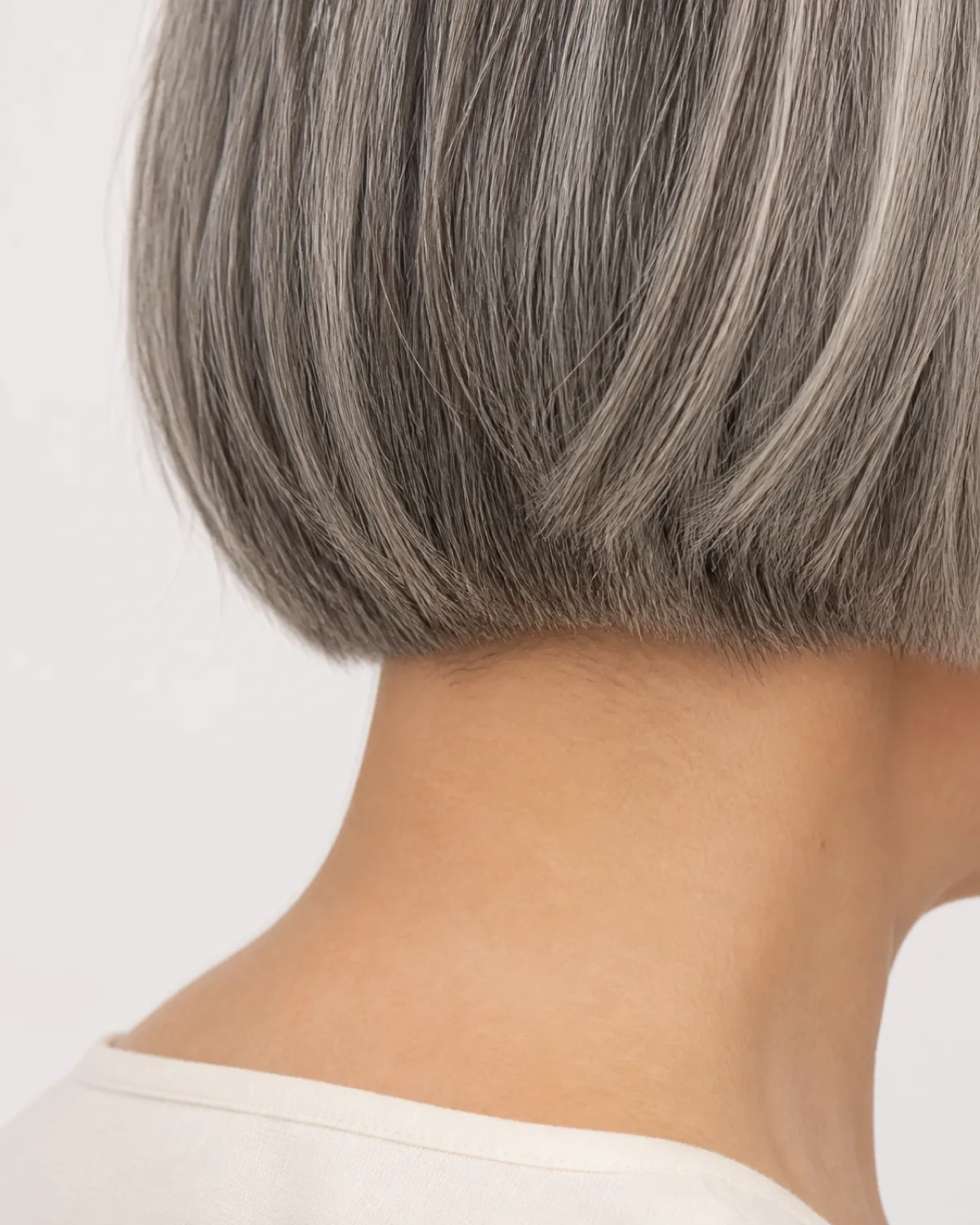
An oblong face has length dominating everything. Short hair adds perceived width because the cut endpoints sit near the cheekbone, the widest part, reinforcing the horizontal reading.
Fantastic Sams recommends shorter lengths on oblong faces specifically because they interrupt the vertical dominance. The ear-length cut pushes the visual frame outward.
- This requires a trim every four weeks because ear-length hair grows out of shape quickly
- Grey hair at this length holds a clean line better than fine pigmented hair because the coarser texture of grey gives it more body
- The nape line is fully visible at this length, so talk to your stylist about how you want the nape finished
- Skip this if you rely on length to balance a long neck
6. A Pixie on a Round Face
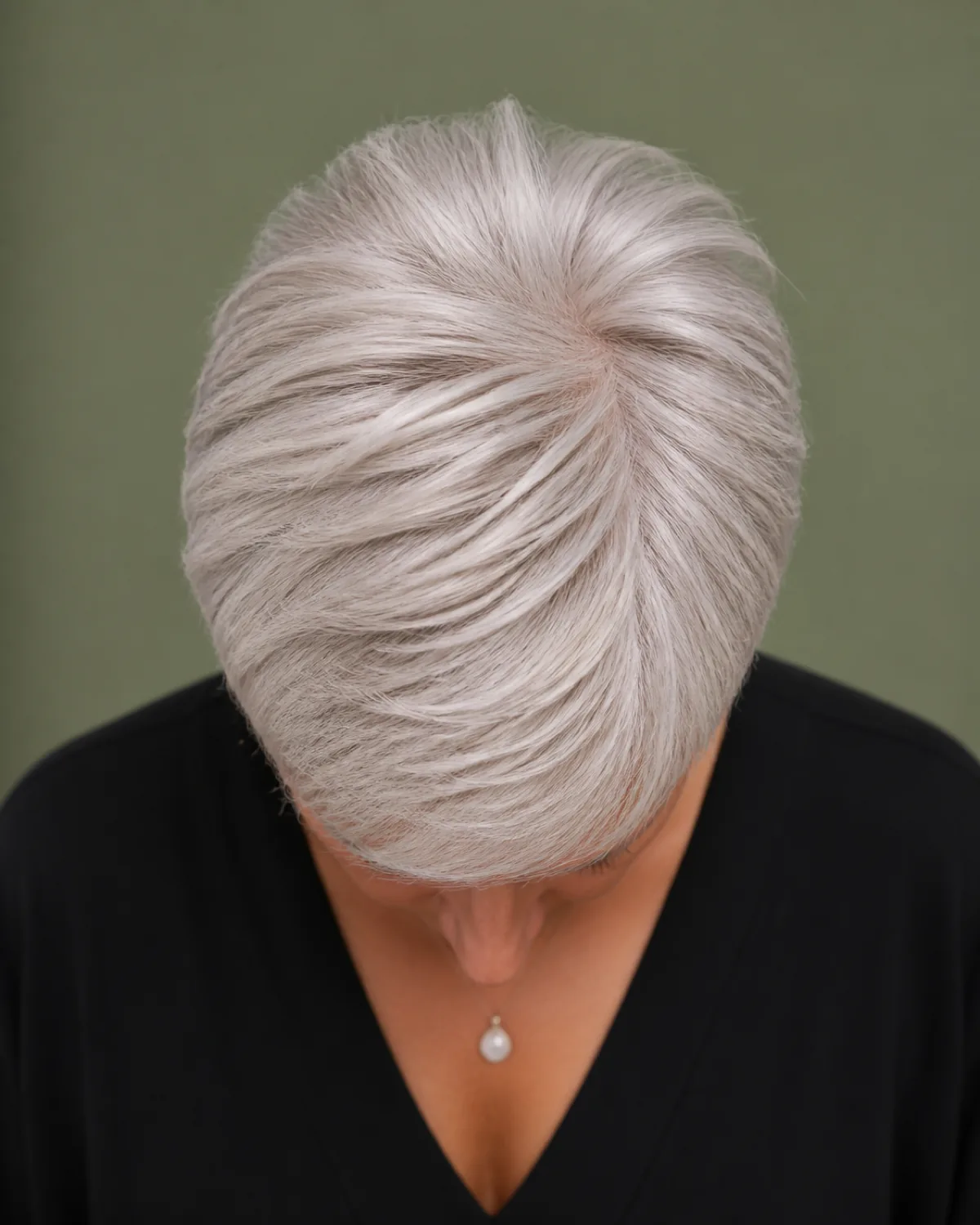
A pixie on a round face works only under one condition: the volume stays on top. Height at the crown elongates the face. The moment a pixie grows out and widens at the temples, it starts reading as a mushroom shape that reinforces the roundness.
This is a high-maintenance match. Keeping the sides cropped close while maintaining crown length requires trimming every three to four weeks.
- Crown volume is the entire mechanism, so ask your stylist to keep the maximum length at the crown and taper the sides tight
- If your hair grows fast at the temples, budget for more frequent trims
- A grown-out pixie on a round face is the hardest awkward phase because the width comes back first
- For detailed pixie and short-cut options on round faces, see the short hairstyles for round faces guide
7. Collar-Length on an Oval Face With Fine Hair
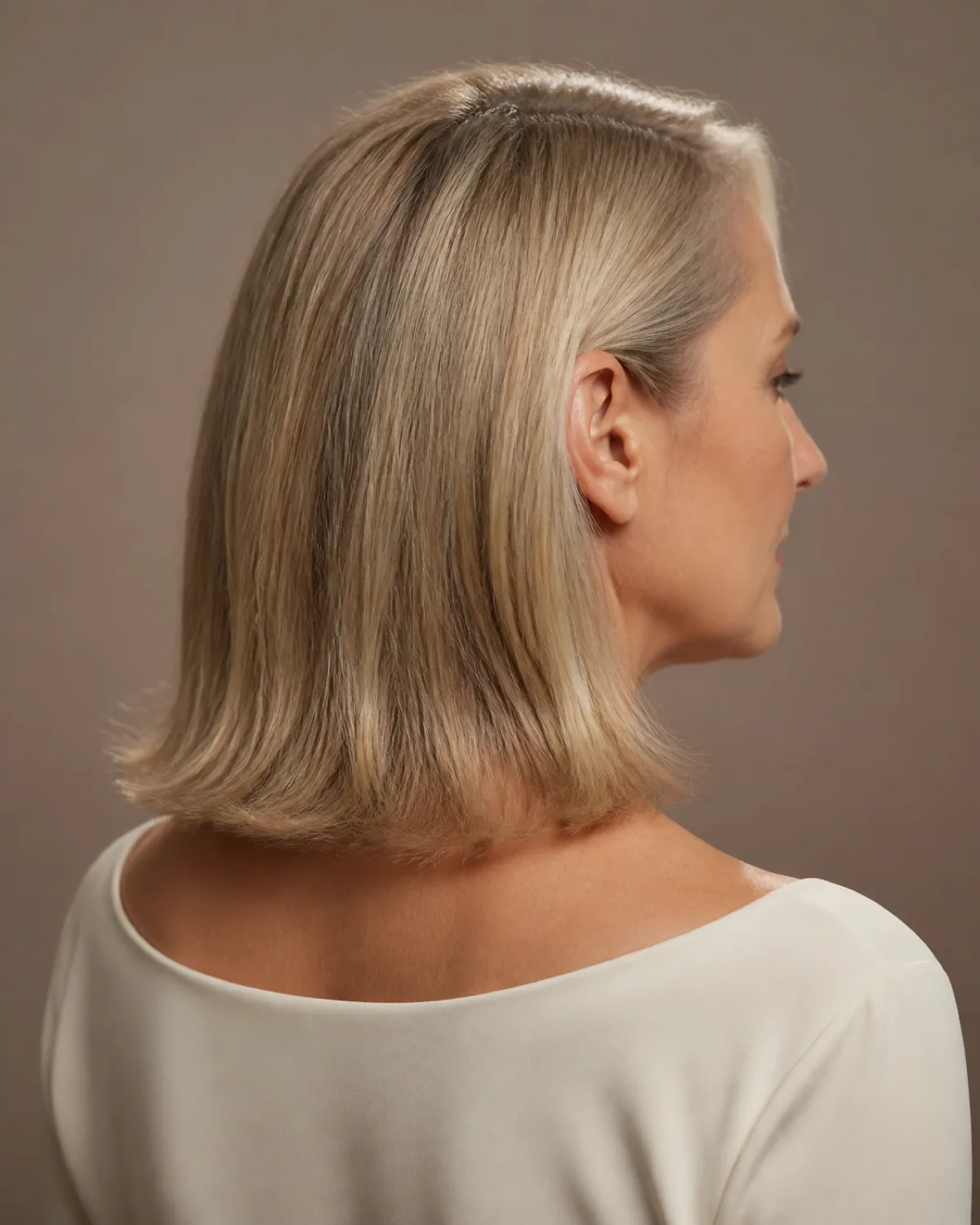
Collar-length gives fine hair its best chance at looking full because the hair sits against the neck and collarbone, which push it outward. That physical support adds perceived volume without any product or effort.
On an oval face, this length has no proportion fighting it. The face shape forgives the cut, and the collarbone does the volume work.
- Redken notes that fine hair looks fullest when the ends rest against a surface rather than hanging free
- This length also avoids the shoulder break, where fine hair flips outward and loses its line
- A one-length cut at the collar reads cleaner than layers on very fine hair, which can separate and show gaps
- Ask your stylist for a blunt line at the collarbone and decide on layers only after seeing the blunt version first
8. Jaw-Length on a Square Face With Thick Hair
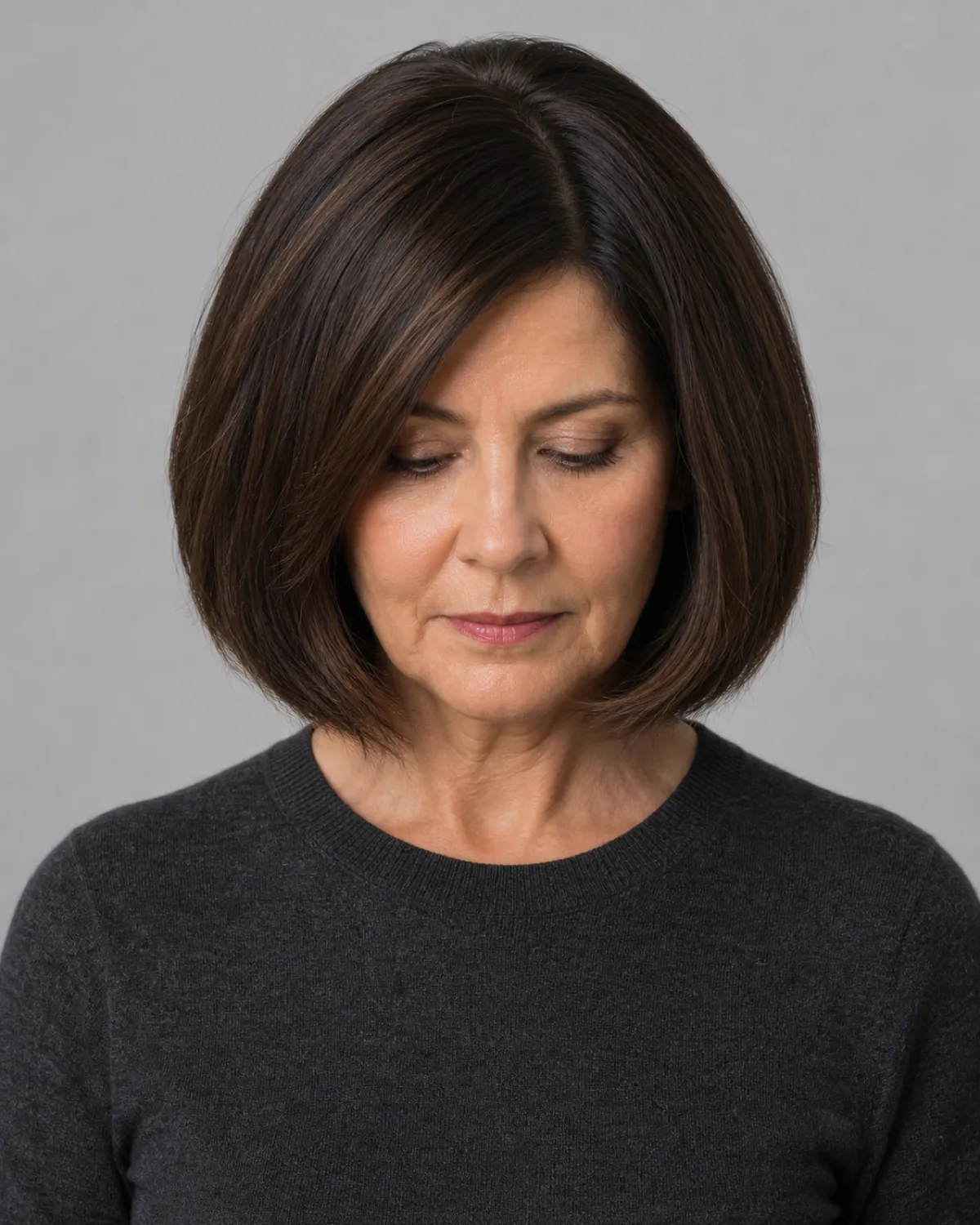
Thick hair at jaw length can square the jaw further because the density creates a horizontal mass at the widest point. This is a combination that needs careful cutting to avoid a box shape.
The safety nets are point-cut ends and a tapered line. Both thin out the density at the jaw without taking away length.
- A blunt cut on thick hair at this length is the highest-risk version of a jaw-length bob on a square face
- Point-cut ends break the horizontal mass and make the line read as textured rather than solid
- A slight graduation at the back can lift weight off the jaw and redirect it toward the crown
- Wikipedia's entry on the bob cut notes that the graduated version specifically redistributes weight upward
- Ask your stylist to thin the ends before deciding on the overall shape
9. Very Short on a Heart-Shaped Face
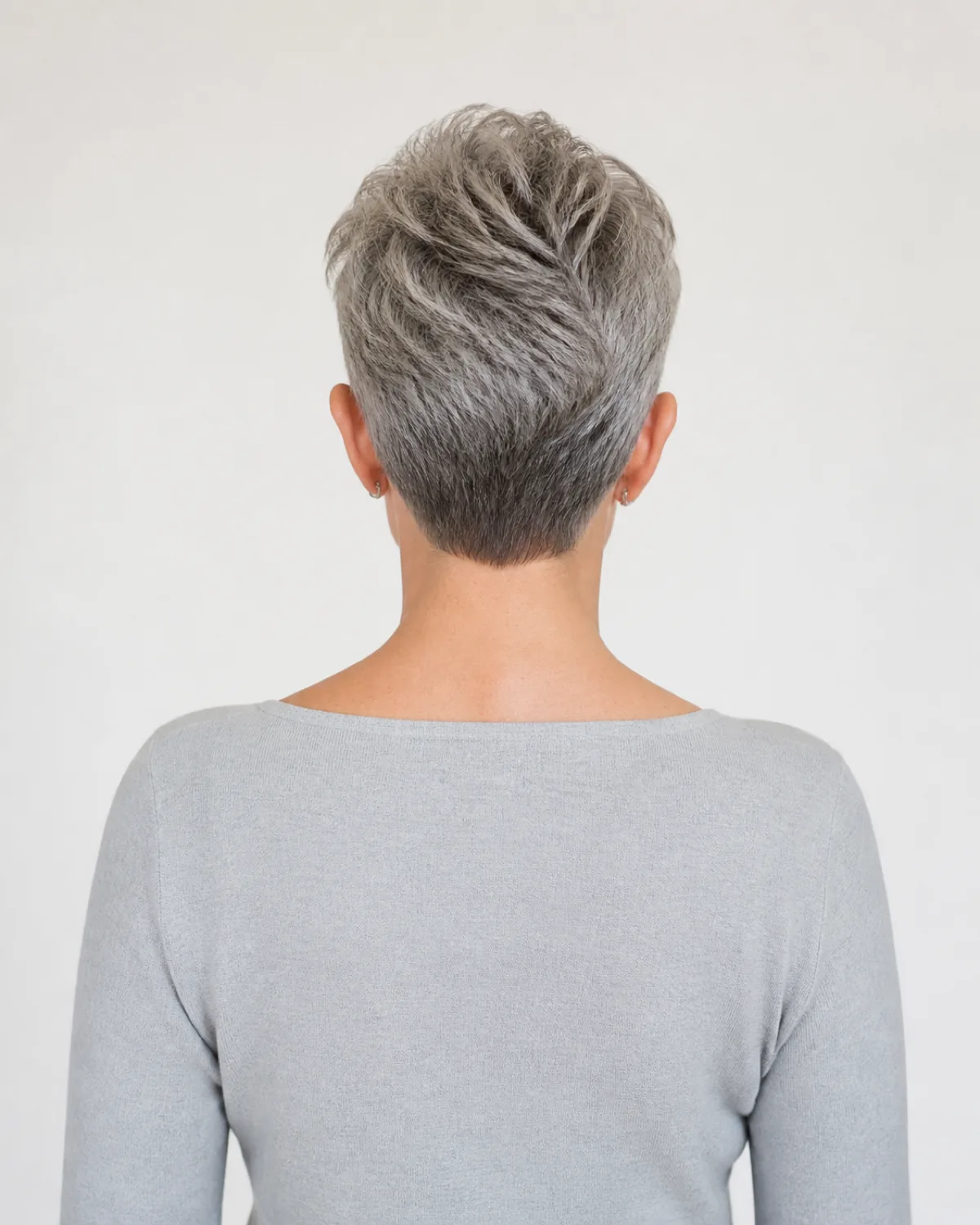
A heart shape narrows at the chin, so very short hair that exposes the entire jawline works only if the chin is softly pointed rather than sharp. A pointed sharp chin with no hair framing it reads more angular.
Cropped sides with volume at the crown balance the wider forehead by moving height upward. The forehead looks narrower when the crown draws the eye above it.
- This is a conditional match that depends on jaw shape, not just face shape
- A soft fringe over part of the forehead reduces the perceived width at the top
- If your chin is angular, a grown-out version with some length at the sideburns softens the jaw
- Ask your stylist to look at your chin profile before deciding how short to go at the sides
10. Mid-Back Length on an Oblong Face
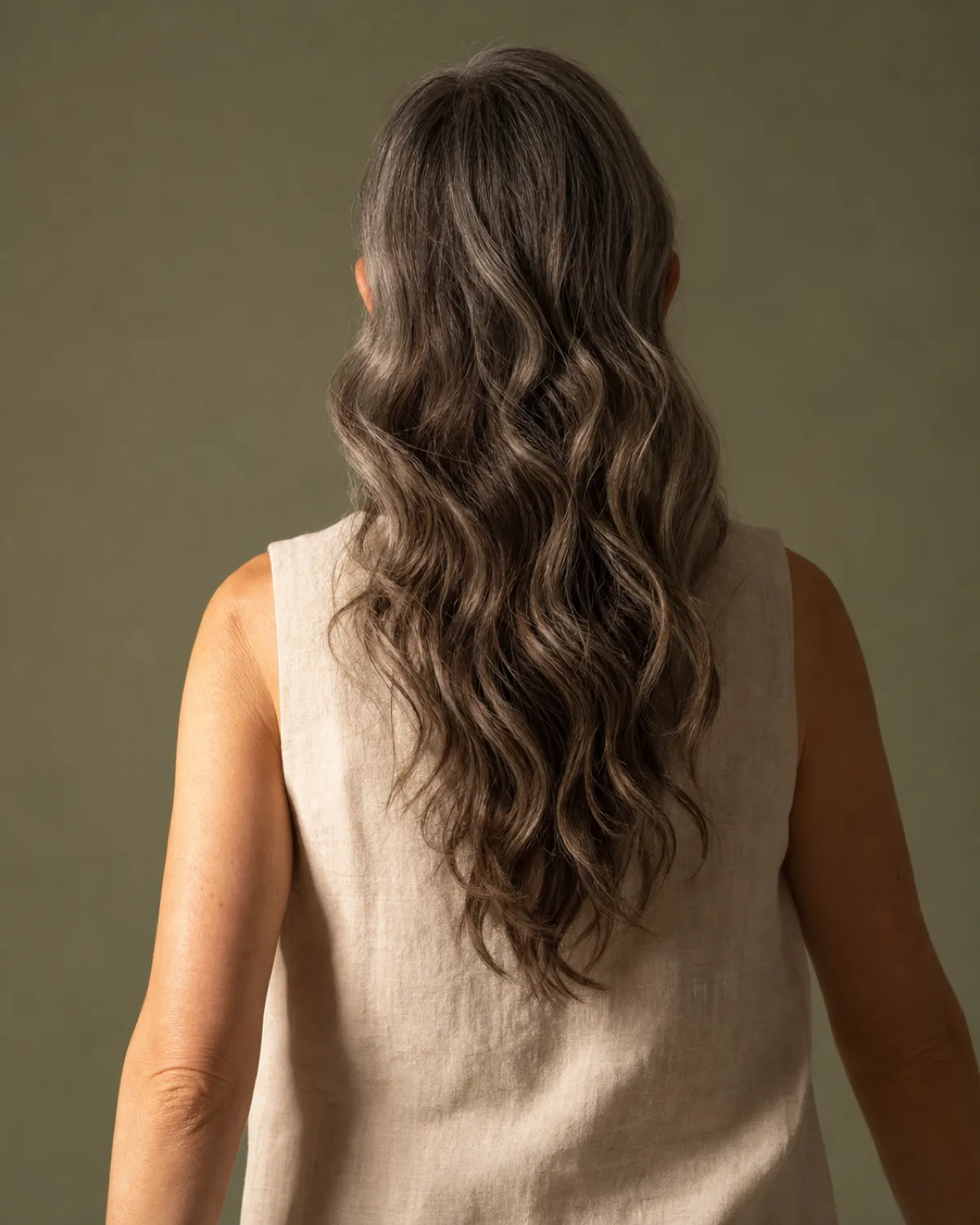
Long straight hair on a long face is the classic mismatch. The vertical line of the hair doubles the vertical line of the face, making it read even narrower and longer.
The one condition where mid-back length works on an oblong face is when the hair has enough wave or curl to break the vertical line with horizontal movement. Straight hair falls like a curtain. Wavy hair interrupts.
- If your hair is naturally straight and your face is oblong, this combination is the hardest to make work
- Adding layers can introduce movement, but on straight hair the layers often fall flat within hours
- Natural wave or curl is the structural advantage here, not a styling choice
- If you want to keep length on an oblong face, ask your stylist about where to place layers so they create width rather than adding to the vertical pull
11. A Shag at Any Length on a Round Face
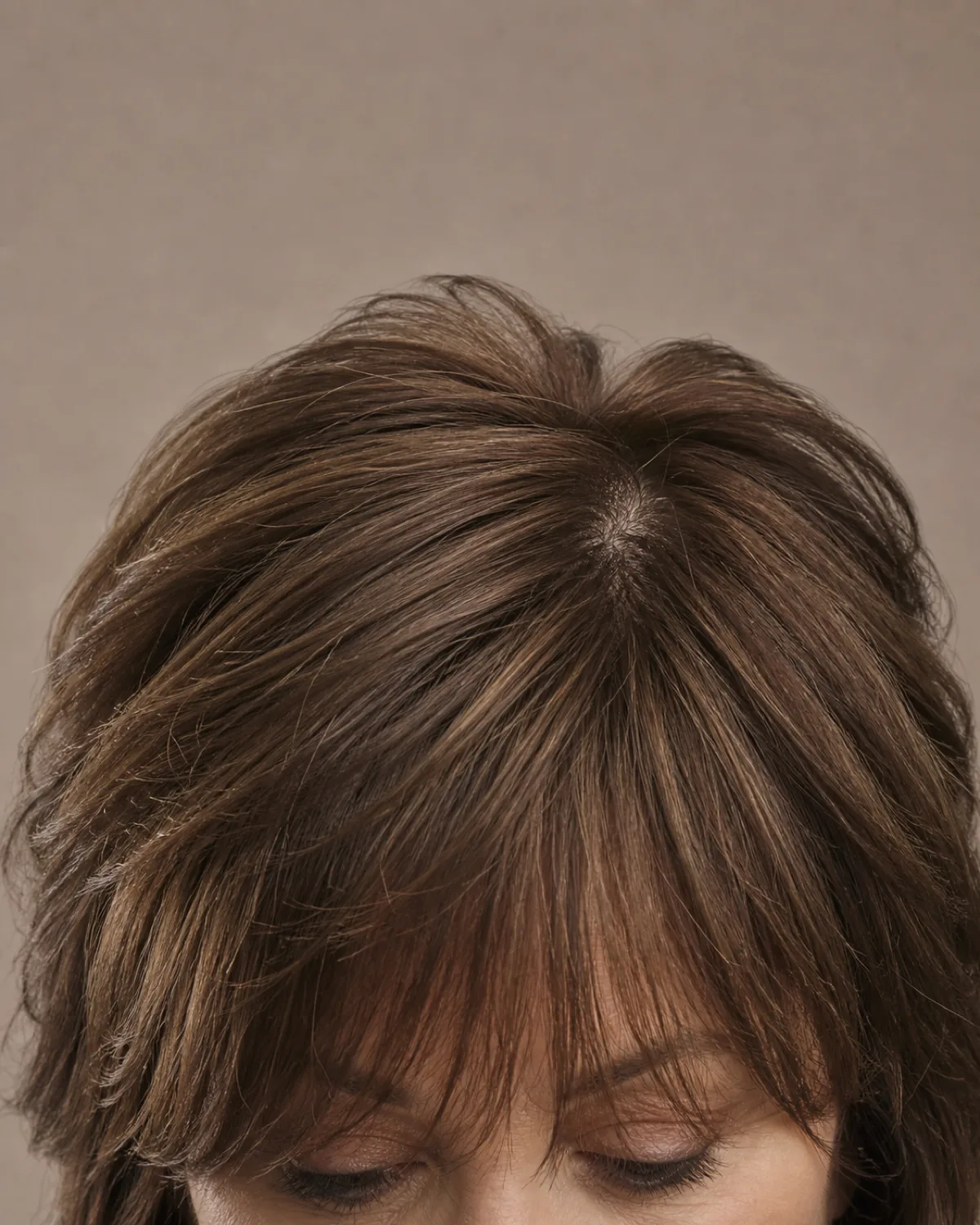
Shag layers add lateral volume at the crown and cheekbones. On a round face, this works when the volume sits high and the layers below the cheekbone fall close to the face.
Allure describes the shag's defining feature as heavily layered construction that creates movement and texture. The question for round faces is where that movement lands.
- Layers that flare at jaw level widen the face further, which is the opposite of what a round face needs
- The ideal version keeps the shortest layers at the crown and temple for height, with longer pieces falling flat below the cheekbone
- A fringe adds another horizontal line, which can work if it is wispy and broken rather than blunt and straight
- Ask your stylist to show you where the layers will fall before cutting, and specifically whether any layer will end at jaw width
12. Chin-Length on a Square Face

This is a risky pairing. A blunt chin-length line sits at the jaw and mirrors the strong horizontal of a square jawline, doubling the angularity instead of softening it.
It works only with a soft taper or face-framing layers that break the horizontal. A blunt-cut chin-length bob on a square jaw is the hardest version of this cut to pull off.
- Face-framing pieces that fall slightly below the chin interrupt the horizontal and read as movement rather than a hard line
- A slight graduation at the back can lift the silhouette and prevent the flat, boxy look
- If your stylist suggests a blunt chin-length bob and your jaw is square, ask to see a tapered version first
- The salt-and-pepper transition adds natural texture to the ends, which helps break the line on its own
13. Shoulder-Length on a Heart-Shaped Face With Grey Hair
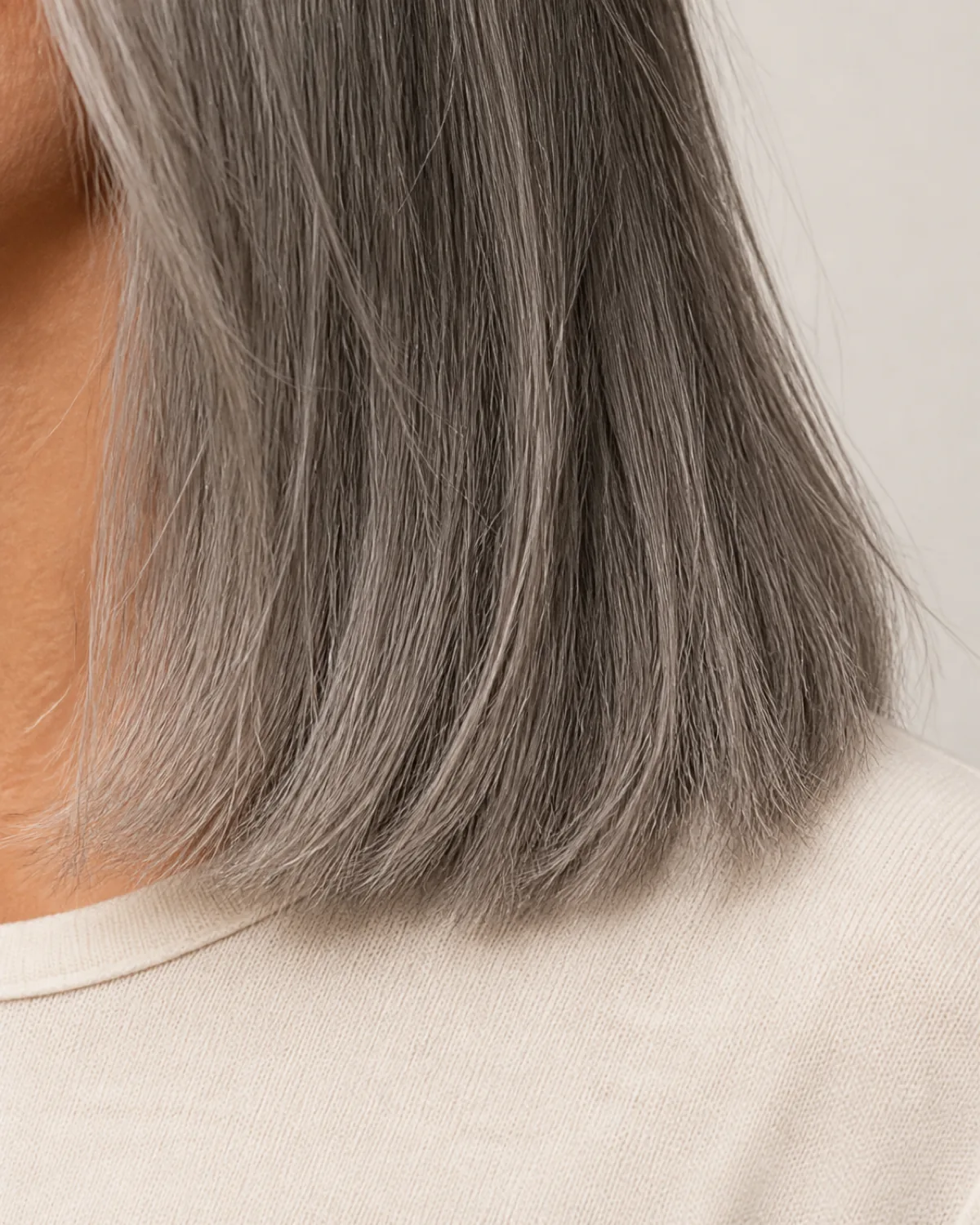
Grey hair at shoulder length often reads thinner than pigmented hair at the same length. The pigment change is not just colour — the strand texture changes too, and grey hair can feel coarser strand by strand while looking less dense as a group.
On a heart-shaped face, the narrowing chin benefits from whatever fullness shoulder-length can provide. But only if the ends still hold volume. When grey ends thin out, the weight disappears from exactly where the heart shape needs it most.
- Check your ends in a mirror against a plain shirt. If you can see the fabric through the hair, the density has dropped below what this length needs
- Regular trims keep grey ends from splitting and fanning, which thins the appearance further
- A blunt cut at the shoulder holds the line better than layers on grey hair that has already lost density
- For more on grey hair and length, see the long grey hair guide
14. A Grown-Out Pixie on an Oval Face
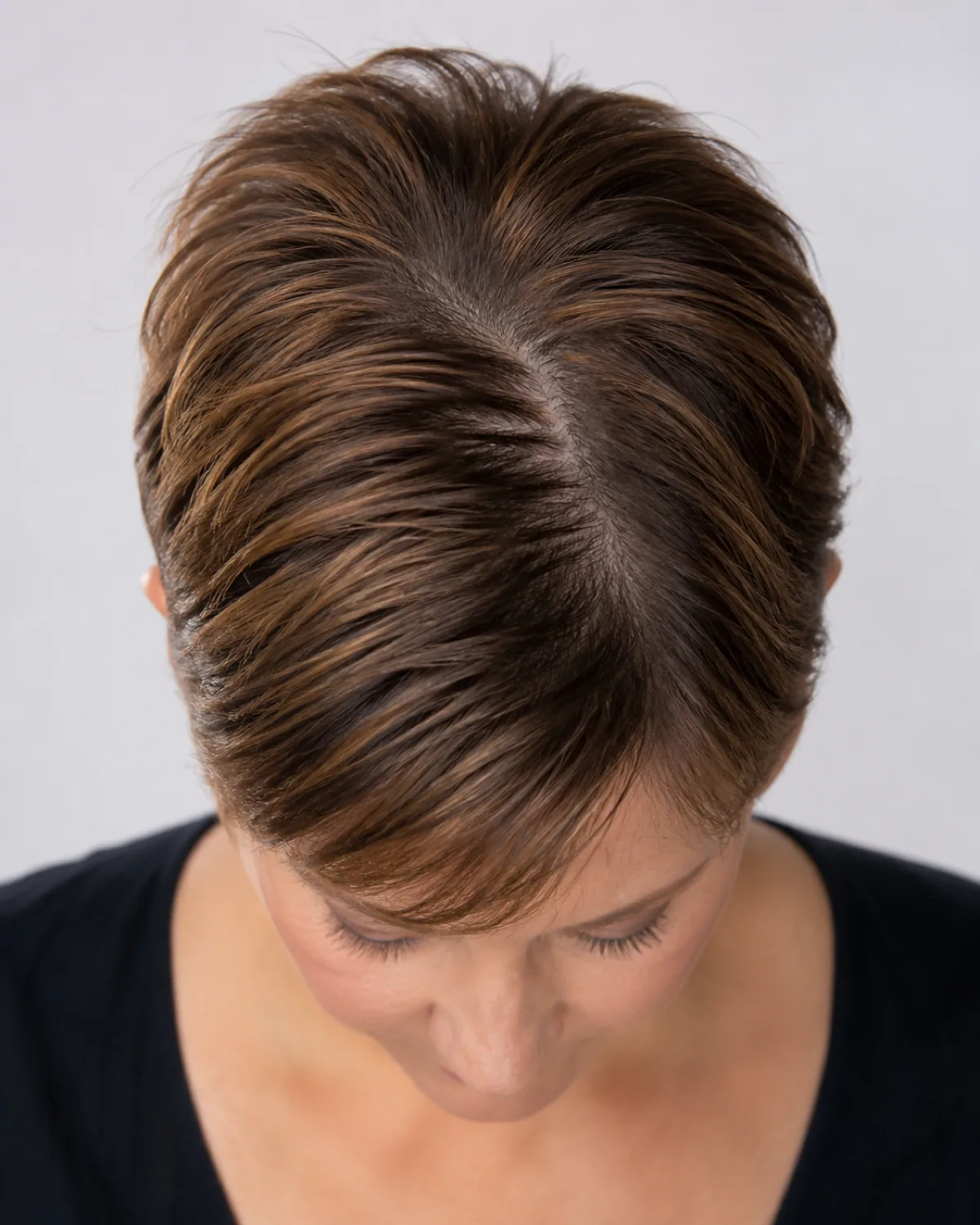
The awkward stage. A pixie growing past the ears reads shapeless for about three months. On an oval face, the proportions forgive more than other shapes, so the in-between period is less disruptive to the overall balance.
The key during grow-out is keeping the nape trimmed short while the top catches up. This prevents the back from reaching the collar while the crown is still too short to style, which is the mullet trap.
- An oval face handles the grow-out because it does not have one dominant proportion that the changing length can throw off
- Budget for a trim every four to five weeks during grow-out, focused on the nape and sides only
- The top should be left entirely alone until it reaches a length you can tuck behind the ear or push to one side
- A round or square face has a harder time with grow-out because the widening sides hit the face shape at its weakest point
15. Judging When Length Stops Working
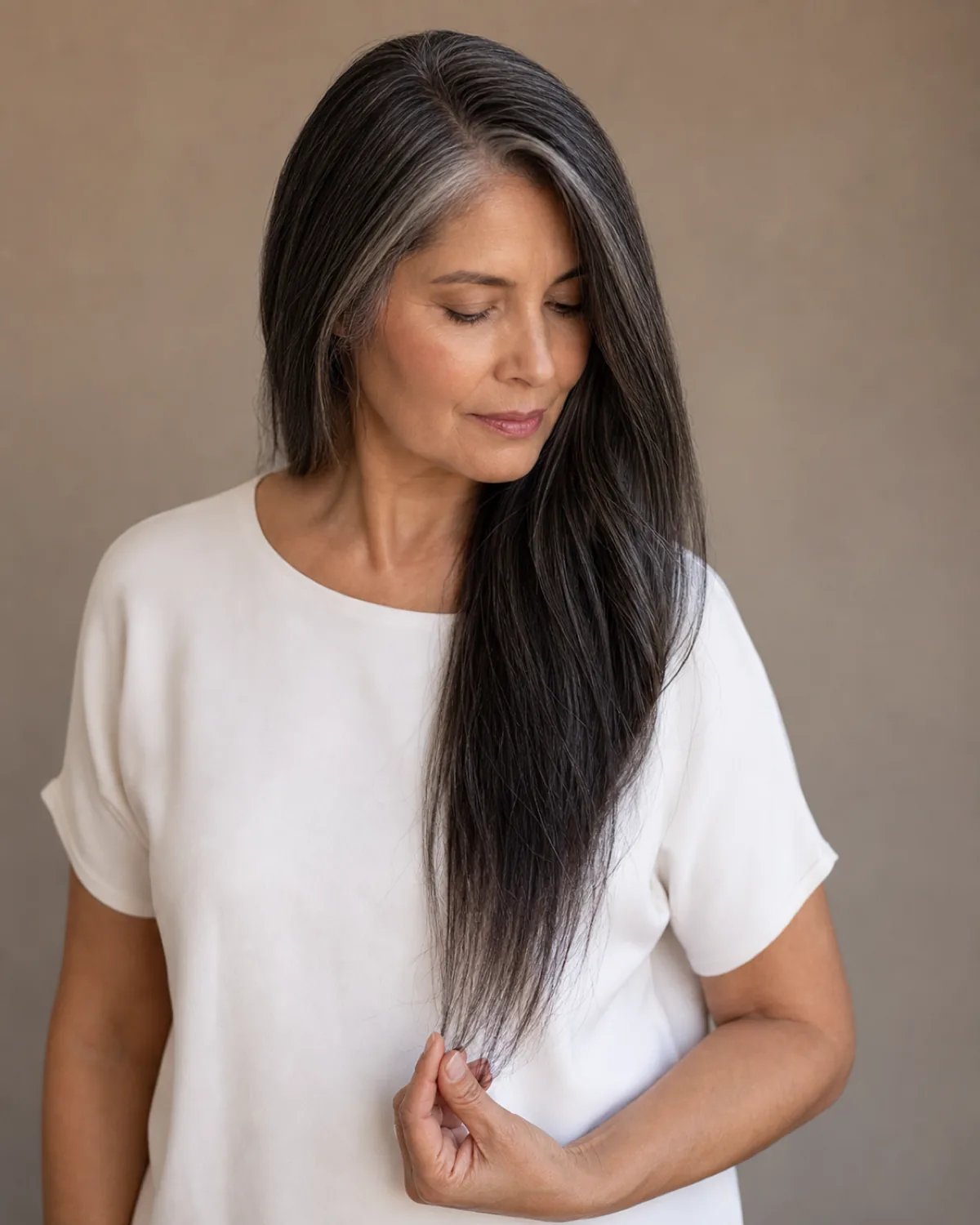
Length itself is not the issue. Density thinning at the ends is. This is not about age. Some women hold thick ends past their shoulders at sixty. Others notice transparency at the jaw by fifty-two.
The test: hold your hair at different points and check where density drops off visibly. When the last few inches look transparent against your back or your clothing, that is where the length stops working. Everything above that point is your real length range.
- Redken notes that hair appears thickest when the ends rest against a surface, so the test against a plain shirt is more revealing than letting it hang free
- A stylist can show you the density difference by holding your hair at three points and letting you compare in a mirror
- Cutting to just above the transparency line gives you the maximum length your density supports
- This is not a permanent limit: density can shift season to season with nutrition, hormones, and how recently the ends were trimmed
Where the checkable claims come from
- How to Determine Your Face Shape — Healthline
- Bob cut — Wikipedia
- How Short Hair Can Look Full — Redken
- Face Shapes and Hairstyles — Fantastic Sams
- The Shag Haircut — Allure
Keep this one
Save it for the appointment
Pin the image above to the board you actually open before a salon visit. This guide is written to be re-read, not read once.
Tonight, before you close this tab
- Stand in front of a mirror and hold your hair at chin, shoulder, and mid-back to see where density drops off
- Measure your face width at the cheekbones and length from hairline to chin to confirm your face shape
- Find two photos of yourself from different years with different lengths and compare which one reads more balanced
- Write down the one question about length and face shape you want to ask your stylist at your next appointment