8 Short Hairstyles for Round Faces Over 50
Eight short cuts for round faces over 50, each judged on where the line lands, how much density it needs and how much of your morning it wants.

Booking an appointment soon? Save this page. It is easier to skim in the chair than to remember.
At a glance
Works
- A perimeter that lands below the widest part of the face rather than across it
- Height built above the eyeline, at the crown or the top section
- A diagonal somewhere in the cut, from a deep parting or a swept fringe
- Sides that stay closer to the head than the face is wide
Depends
- Graduation and stacking, which need enough density to hold their shape
- A blunt one-length edge, which depends on your ends still reading solid
- Layers for movement, which depend on your hair having natural bend
Skip
- A straight fringe cut level across the widest part of the face
- Volume added at cheek level, which repeats the width you already have
- A perimeter that stops exactly at the fullest point of the cheek
A round face measures roughly as long as it is wide. That one fact decides more about a short cut than any trend does, because it tells you which lines to keep and which to lose.
Every cut below is judged on the same three things: where its strongest line lands, whether your hair has the density to hold it, and how much of your morning it wants.
None of them is a rule. Read the verdicts rather than the pictures.
1. The blunt chin-length bob, cut to land below the jaw
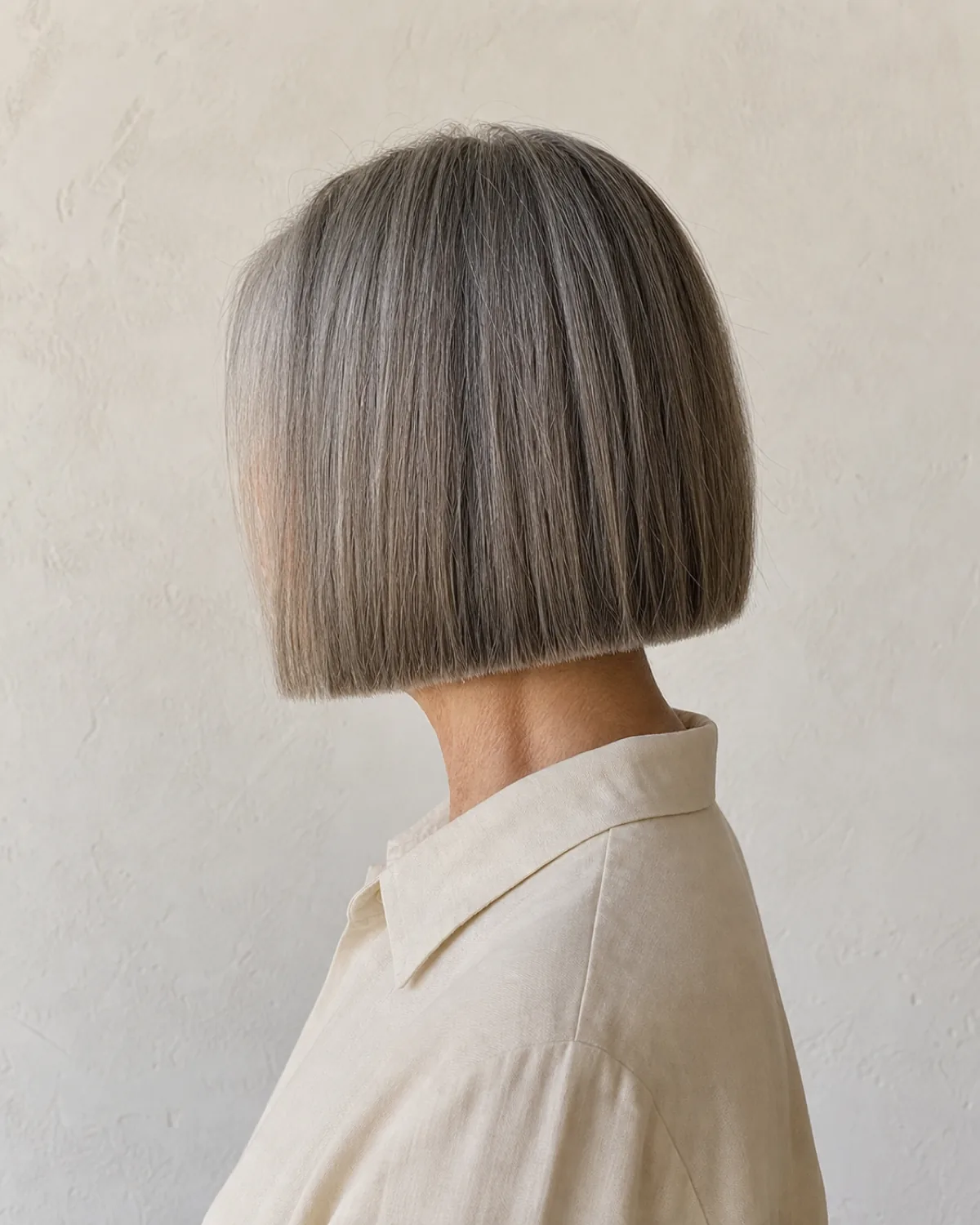
A bob is cut at roughly jaw level, and where exactly it lands is the whole decision. Stop the line at the fullest part of the cheek and the cut points at your widest measurement. Drop it below the jaw and the same haircut sends the eye downward.
The blunt edge is cut with the hair barely lifted from the head, so the weight collects right at the bottom. That is a gift if your ends still read solid and a problem if they have thinned, because one hard line shows every gap in it.
- Ask for the perimeter to finish below the jaw, not level with the cheek
- Look at the ends in daylight before you commit to a blunt line
- If the ends look sparse, ask about a softer perimeter instead
2. The angled bob, longer at the front
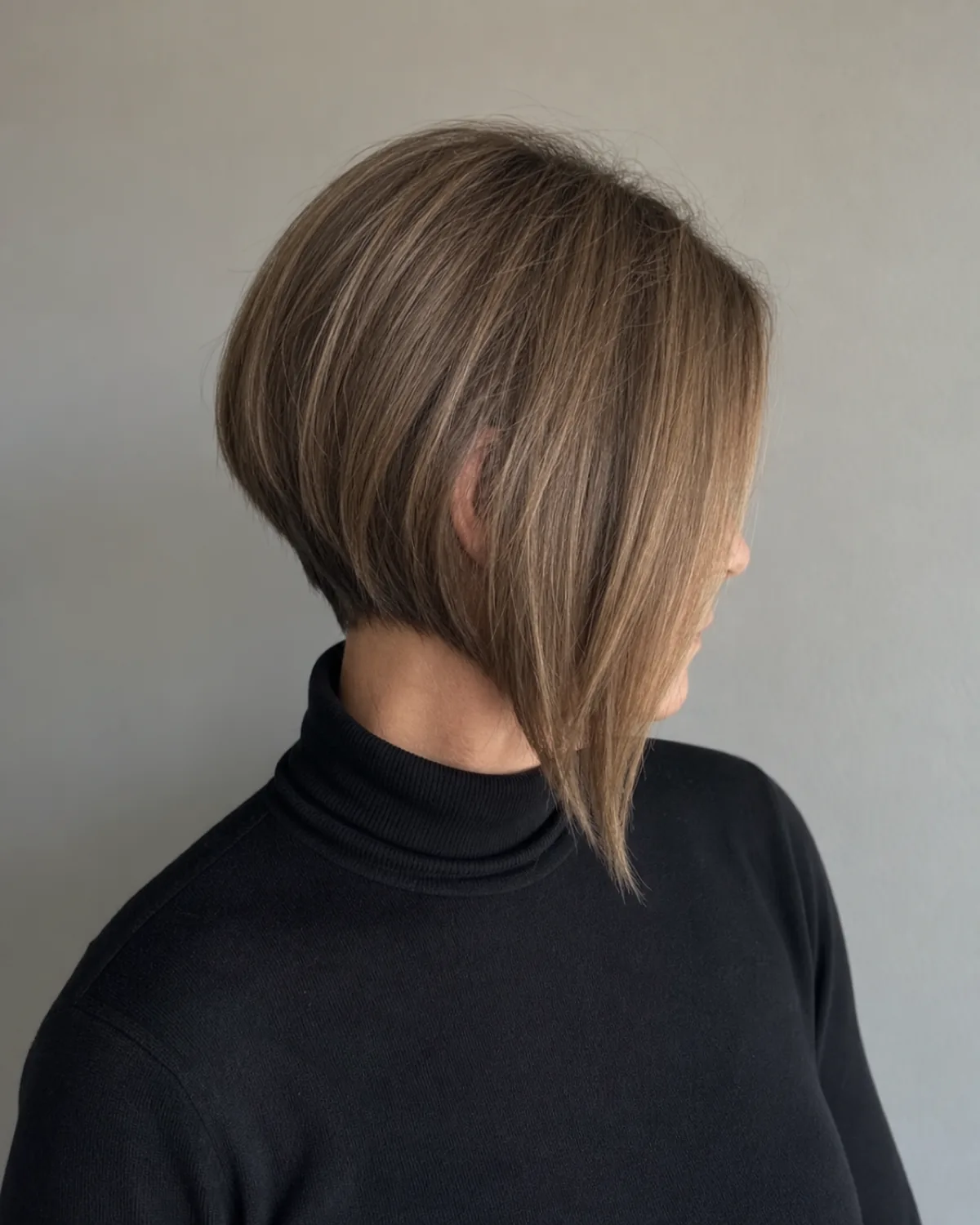
An A-line bob keeps longer hair at the front and takes it shorter behind. Those two front lengths hang past the jaw and read as a pair of verticals beside the face, which is the opposite of what a level line does.
The cost is structural. The slope only reads as deliberate when there is enough hair behind it to hold the shape. On very fine hair the short side collapses and the angle disappears.
- Ask how much difference there is between the front and the back in centimetres
- Check the back with a hand mirror before you leave the chair
- If your hair is fine, ask whether the angle can be gentler rather than dropped
Where to start
Find your situation, skip ahead
You want the biggest change and your hair is fine or losing density
Go up, not out. The two cuts that keep every millimetre of height above the eyeline are the ones to read first.
04 The long pixie, with every millimetre kept on top05 The textured crop, cut close at the nape
You want to keep length and you are only willing to change the front
Change the line that crosses your face, not the length below it. A fringe is the smallest edit with the largest effect.
06 Curtain bangs that open at the cheekbone07 The side-swept fringe, and why the blunt one is different
Your hair is thick, straight and heavy at the ends
Ask for weight to be moved rather than removed, so the shape holds instead of collapsing outward.
02 The angled bob, longer at the front03 The graduated back, with weight built at the crown
3. The graduated back, with weight built at the crown
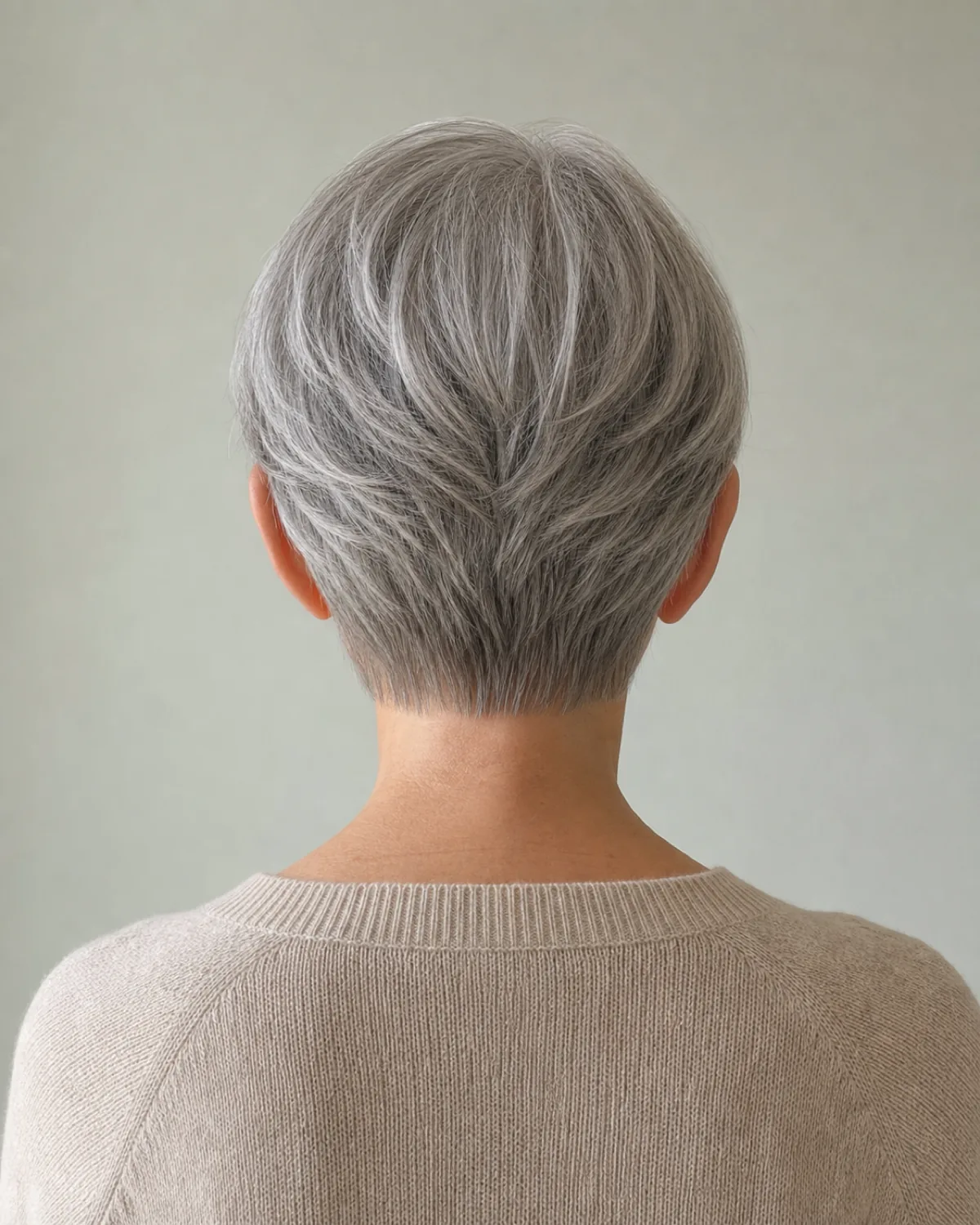
Graduation is weight built up on purpose, produced by cutting at a low to medium elevation so the lengths stack. Seen from behind, that stack sits high on the head, which is where a round face has least to work with.
The length can sit anywhere from a chin bob to a crop without changing the principle. Density does change it. Graduation needs hair to stack against, so on very fine hair the built-up crown falls flat within an hour.
- Ask for the shape from behind first, since that is where graduation lives
- Ask how high the stack starts, because that decides how much vertical you get
- If your crown already sits flat, ask what holds the shape between appointments
4. The long pixie, with every millimetre kept on top

A pixie is short at the back and sides and slightly longer on top. That description is also the argument for it: length lives above the eyeline where it adds height, and the sides sit closer to the head than your cheeks are wide, so the hair never repeats the measurement that reads as round.
It is also the most reliable option when density is low, since a short top section stands up on far less hair. The trade is frequency: this shape loses its balance quickly and needs a stylist more often than anything else here.
- Ask for the top to be left long enough to move, not cropped flat
- Ask how short the sides go over the ear, where width is won or lost
- Book the next appointment at four to six weeks, not when it annoys you
5. The textured crop, cut close at the nape
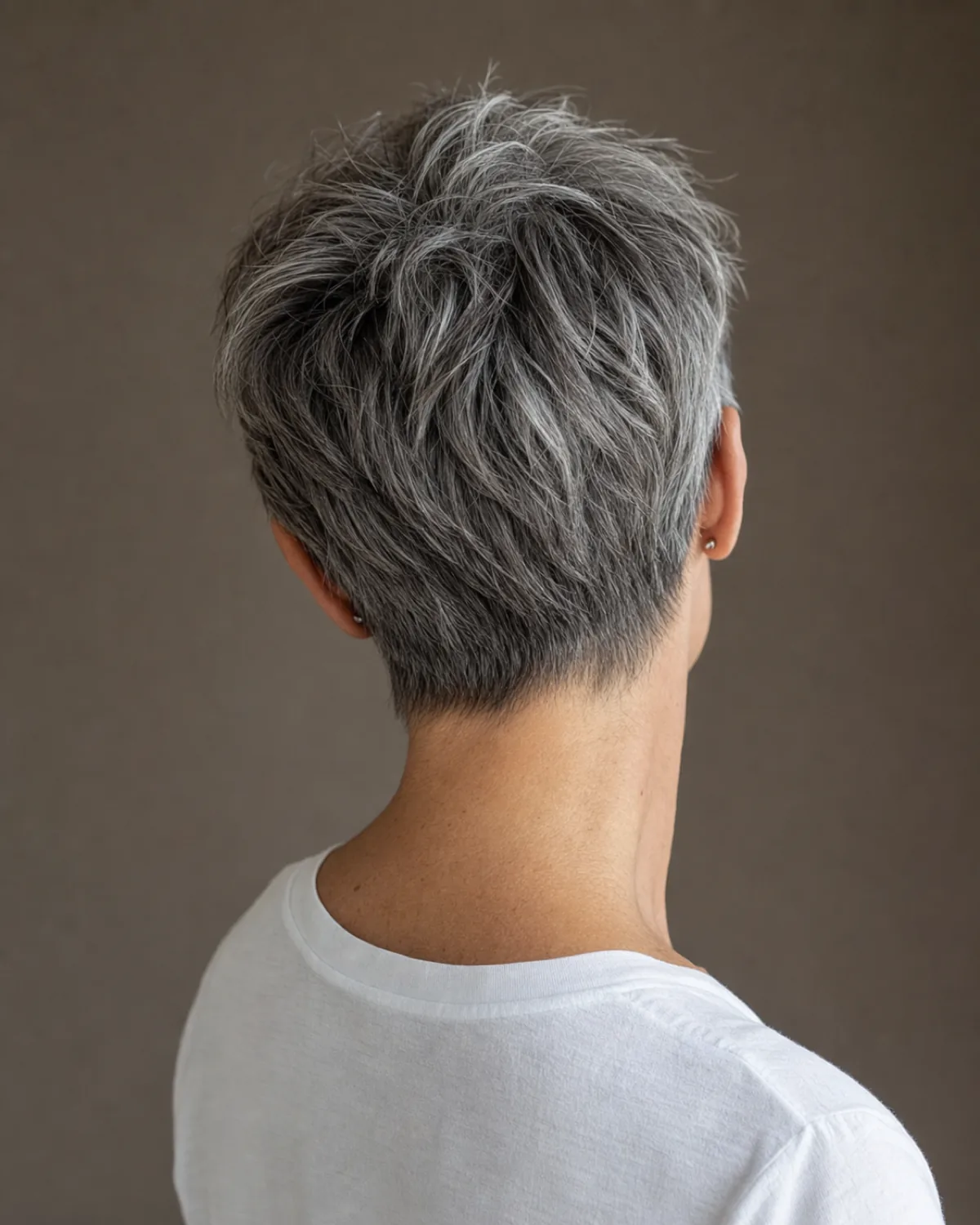
This is the shortest option here and the one with the clearest condition attached. A close nape puts your jaw and neck on show permanently. Choose it because you want those lines visible, not because someone said short hair suits a round face.
What it gives back is the strongest vertical here. Texture through the upper back keeps the shape from sitting like a helmet, and nothing at all sits at cheek level.
- Decide first whether you want your neck and jaw on show every day
- Ask for texture through the top so the shape is not one solid block
- Photograph the back the day it is cut, to show at the next visit
6. Curtain bangs that open at the cheekbone
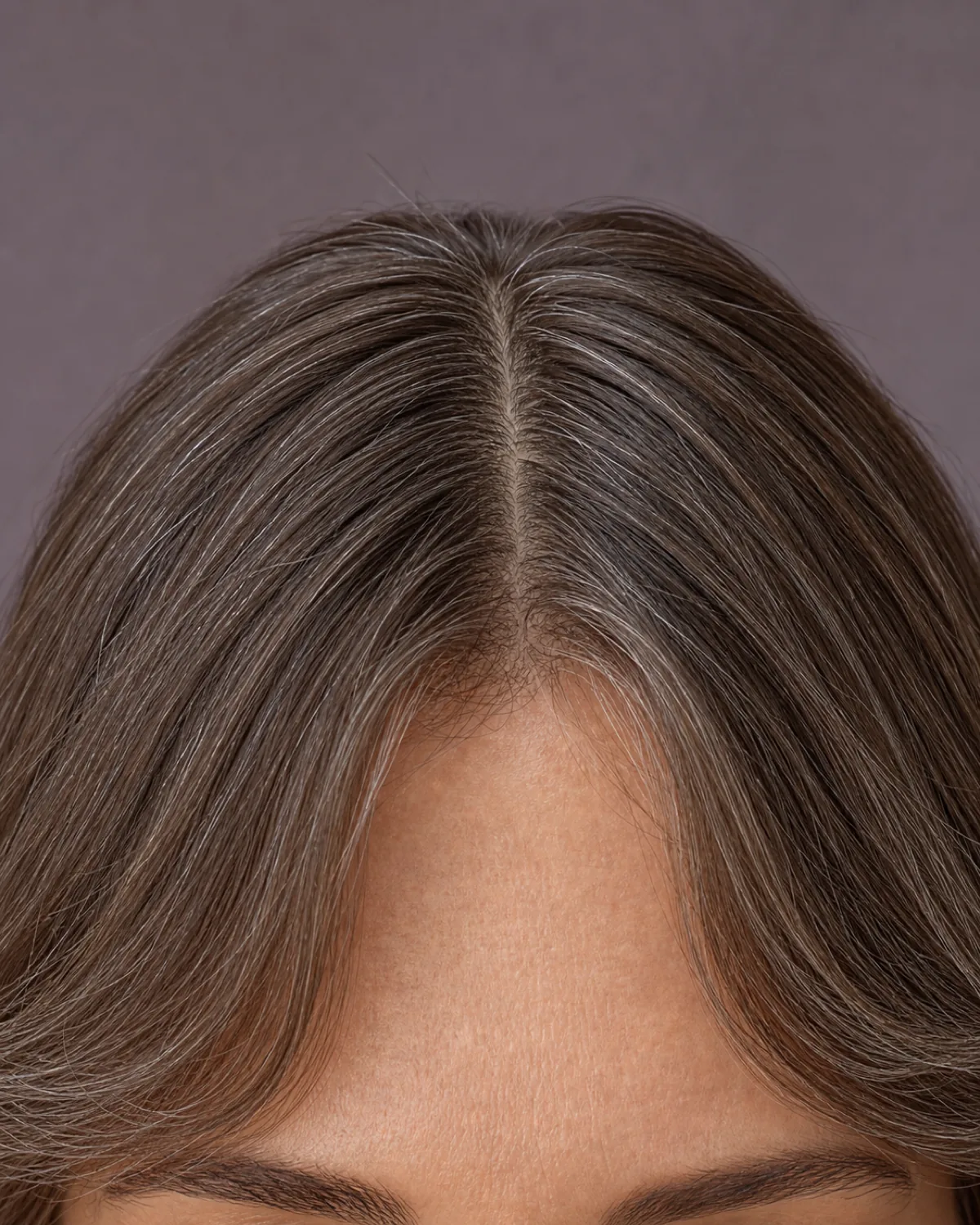
Bangs fall over the front hairline to cover the forehead, usually just above the eyebrows. A curtain shape parts in the middle and travels outward and down, so instead of one line across the forehead you get two diagonals opening apart.
That geometry is the reason this fringe suits a round face. The condition is room: the longest pieces need somewhere to land. If your forehead is short or your hairline sits high, the sweep runs out of space and reads as a heavy front.
- Ask where the longest pieces finish, and say if you want them at the cheekbone
- Ask what the shortest point measures, since that sets the trim interval
- If your forehead is short, ask whether the parting can start further back
7. The side-swept fringe, and why the blunt one is different
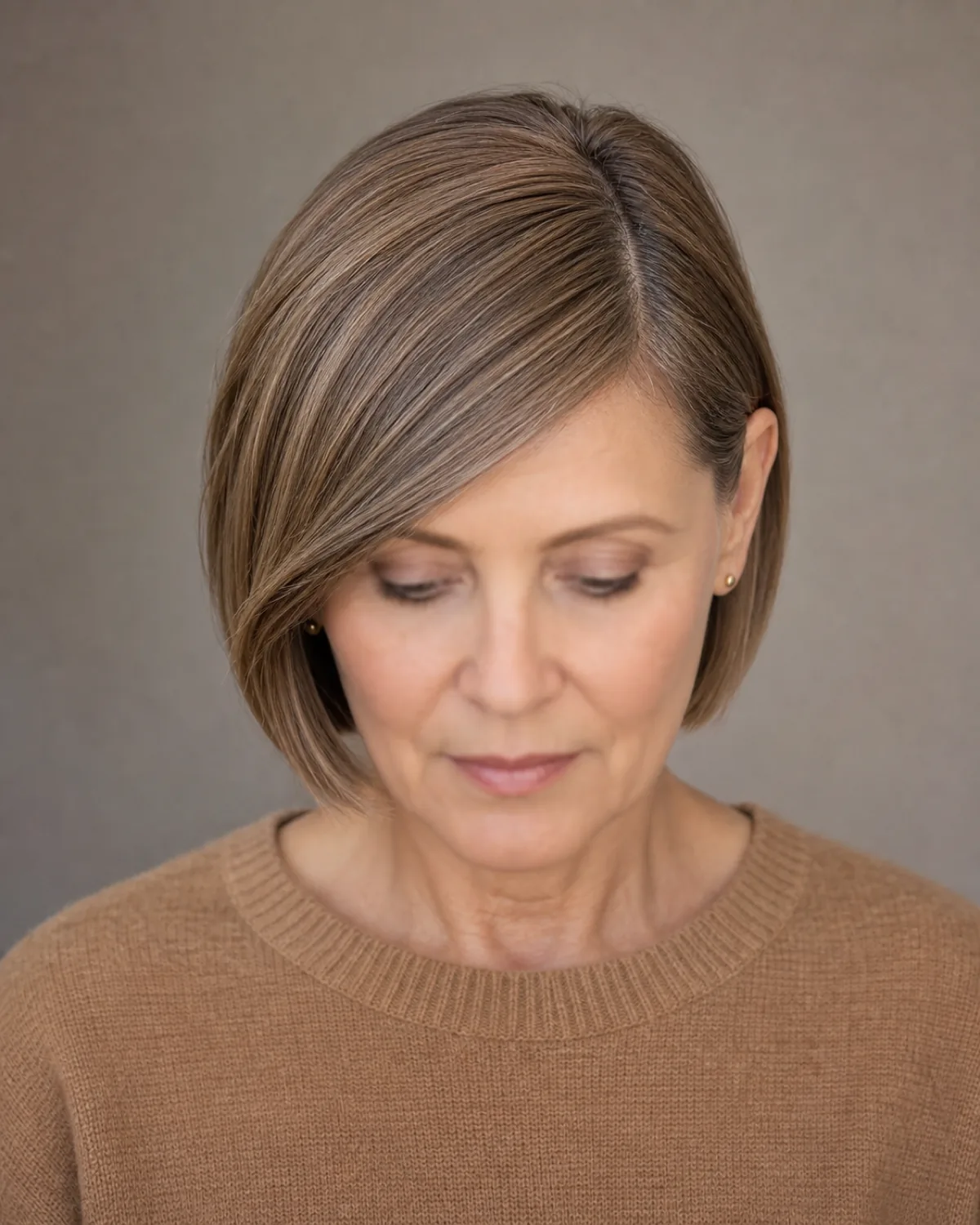
The word bangs comes from cutting the hair straight across the front, and most western fringes are still cut that way, though the shape can also be an arc or left ragged. A straight fringe draws a horizontal across the top of the face, which on a round face is a second horizontal to go with the one your cheeks already make.
A side sweep replaces that with a slant. It starts at a deep parting, crosses the forehead at an angle and finishes behind the far ear, so the eye follows the angle rather than the width.
- Ask for a parting deep enough that the sweep has somewhere to start
- Say if you wear glasses, because the frame decides where the sweep should end
- Keep the length that tucks behind the ear, or it reads as a half-grown fringe
8. The short shag, judged at the ends
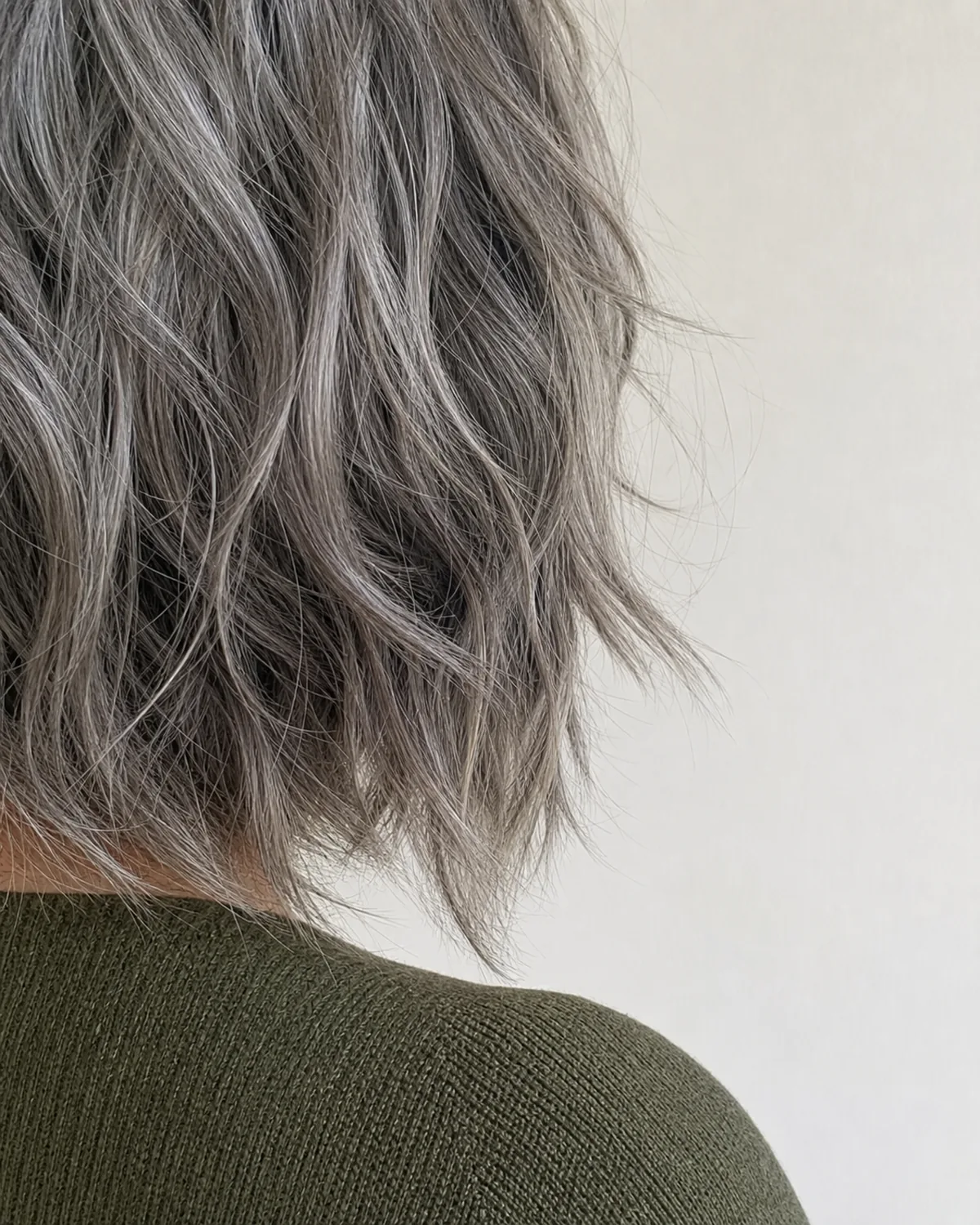
Higher elevation trades weight for movement, and that is what a shag buys. Cut this way the ends finish at different lengths and separate into pieces instead of forming one edge, and pieces move where a solid line only sits.
The condition is bend. Pieces separate because the hair curves away from itself, so on poker straight hair the same cut gives thinner ends and no movement. Look at your own ends, not the photograph.
That is the method: find your widest point, decide whether you are moving it up or down, then check your hair can hold the shape you picked. Take two of these to a consultation and ask what each costs in time. More of the same question sits in face shape and by length.
Where the checkable claims come from
- Face shape classification using Inception v3 — Adonis Emmanuel DC. Tio, University of the Philippines Diliman (arXiv:1911.07916)
- Bob cut — Wikipedia
- Pixie cut — Wikipedia
- Graduation vs. Elevation: The Subtle Distinction That Impacts Every Cut — Above Shears
- Bangs (hair) — Wikipedia
Keep this one
Save it for the appointment
Pin the image above to the board you actually open before a salon visit. This guide is written to be re-read, not read once.
Tonight, before you close this tab
- Measure your face once, from hairline to chin and across the cheekbones, and write both numbers down
- Find two photographs of yourself where your hair sat at different lengths and compare the jaw line
- Hold a hand flat at your cheekbone in the mirror to see where your widest point actually is
- Write down the two questions you want to ask at the consultation before you book it