10 Hairstyles for Fine Straight Hair Over 60 That Make the Most of What You Have
Ten hairstyles for fine straight hair over 60, judged by whether each cut creates structure your hair cannot build on its own.

Booking an appointment soon? Save this page. It is easier to skim in the chair than to remember.
At a glance
Works
- A chin-length blunt bob with interior layers because the blunt line reads solid while the invisible layers lift the mid-shaft off the scalp
- A graduated bob because the stacked back pushes volume up and forward where fine straight hair needs it most
- A cropped taper because there is so little hair to manage that washing and pushing it forward with fingers is the whole routine
Depends
- A side-swept fringe on a textured bob only if you will commit to trimming the fringe every four to five weeks because outgrown fringe on fine hair splits and thins
- A collarbone lob only if density is still medium because fine straight hair at that length thins to nothing at the ends and the hemline disappears
- A wispy shag only if you are comfortable with a less polished finish because the layers create movement at the cost of a clean hemline
Skip
- A one-length lob past the collarbone on very fine straight hair because the weight pulls it flat and the ends thin to transparency
- A heavy blunt fringe on fine straight hair because the fringe takes too much of the limited density and exposes the scalp at the part
- A disconnected undercut if you want all-over volume because it removes half the hair and the contrast demands a commitment to styling the top
Fine straight hair after 60 lies flat because nothing pushes it upward. The follicle count has dropped and the strands are thin. A cut either builds structure into that equation or it does not.
These ten cuts are judged by whether they create shape that fine straight hair cannot create on its own. Each idea lands on a verdict about who it suits, who should pass, and what to ask when you sit down.
A stylist who can see your hair density in person outranks anything written here. Bring one photo and one honest sentence about what you need the cut to do.
1. Chin-Length Blunt Bob With Interior Layers

The blunt hemline reads as a solid edge, not a thinning tail. Interior layers underneath lift the mid-shaft off the scalp without breaking that clean bottom line. Suits an oval or narrow face where a chin-length horizontal line adds width. Skip if the face is round because the hemline widens it further.
- Ask the stylist to cut dry so the hair shows its true hang before anything gets removed
- Request the interior layers start at the ear and taper inward so the mid-shaft lifts without disrupting the hemline
- Keep the part slightly off-centre to reduce the visible width of the scalp line
- Check in a mirror whether the hemline sits at the widest or narrowest point of your jaw and adjust the length by half an inch accordingly
2. Soft-Layered Pixie With Longer Crown
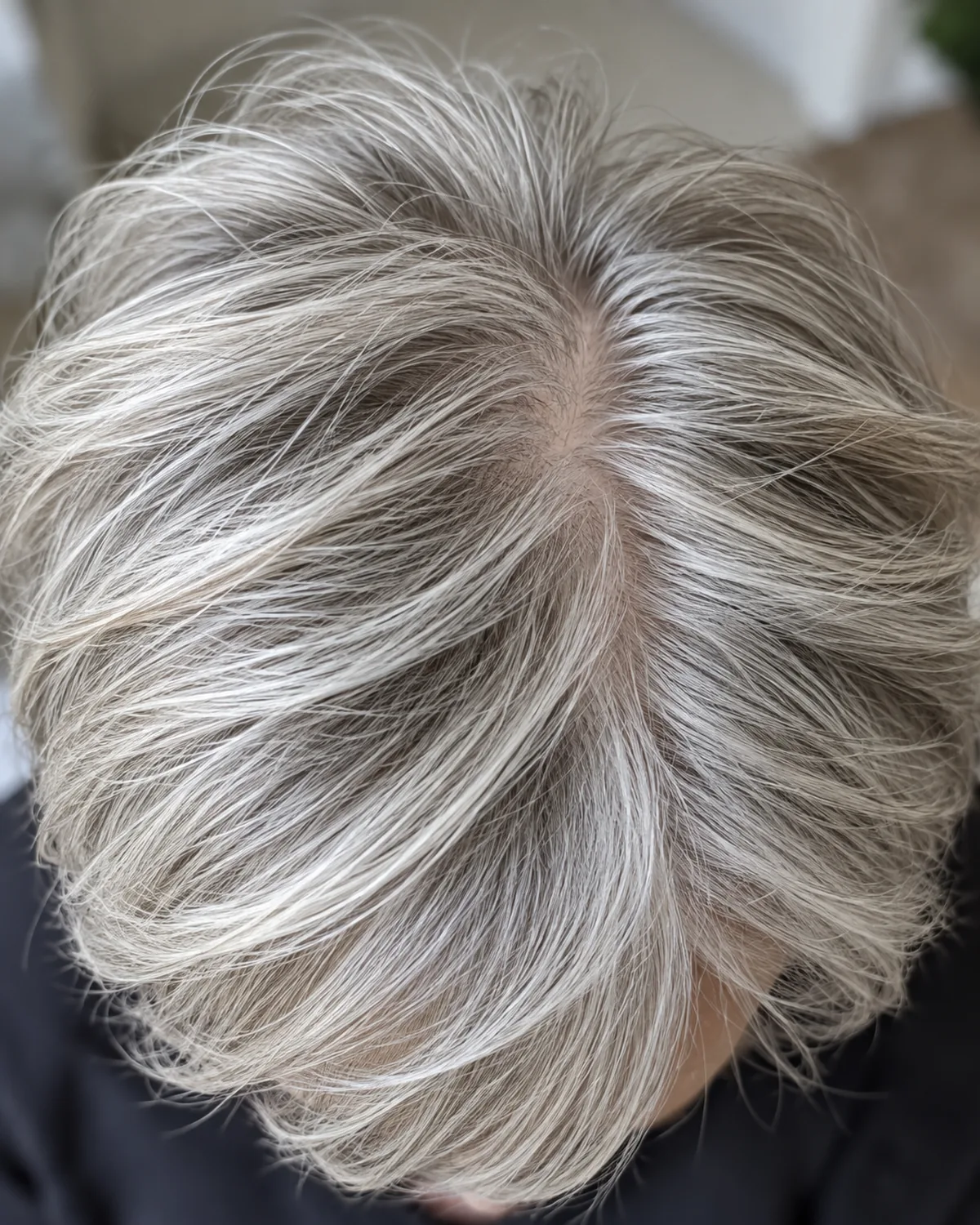
The crown is where fine straight hair falls flat first, and this pixie puts its layers there. Two to three inches on top with graduated sides keeps weight from dragging the silhouette down. The layers push roots upward, and short sides mean nothing pulls them back. Works on most face shapes because the crown volume compensates.
- Ask for point-cut layers at the crown rather than blunt layers so the ends blend instead of creating a shelf
- Keep enough length on top for the hair to show directional movement when you push it forward with your fingers
- Tell the stylist you want the sides to taper gradually rather than ending in a hard line at the temples
- Check that the crown length is at least twice the side length so the volume difference reads as intentional
3. Side-Swept Fringe on a Textured Bob

The fringe hides a thin hairline at the temples and gives the face a frame the rest of the hair cannot provide. Textured ends keep the bob from looking like a helmet. The commitment: a side-swept fringe on fine hair needs trimming every four weeks. If that schedule is one you will not keep, skip to idea 1.
- Ask the stylist to cut the fringe dry and on the diagonal so it sweeps naturally to one side
- Request textured ends using point cutting or razor ends rather than a blunt bottom line
- Bring a photo showing where you want the fringe to fall relative to your eyebrow because half an inch makes a visible difference on fine hair
- Plan the trim schedule before you leave the chair so it is on the calendar rather than on a maybe list
Where to start
Find your situation, skip ahead
Your hair is fine and straight and you have lost noticeable density at the crown and temples since your fifties
A graduated bob or a soft-layered pixie because both push volume upward where follicle miniaturization has thinned it most.
04 Graduated Bob With a Stacked Back02 Soft-Layered Pixie With Longer Crown
Your hair is fine and straight but still medium-density and you want to keep some length
A chin-length blunt bob with interior layers or a collarbone lob with face-framing pieces because both hold length without going flat.
01 Chin-Length Blunt Bob With Interior Layers06 Collarbone Lob With Face-Framing Pieces
You are done with blowouts and want a cut that works with just your fingers and a towel
A cropped taper or a disconnected pixie because the shape is built into the cut and the styling is done before you finish drying.
10 Cropped Taper With a Soft Top05 Disconnected Pixie With Micro-Fringe
4. Graduated Bob With a Stacked Back
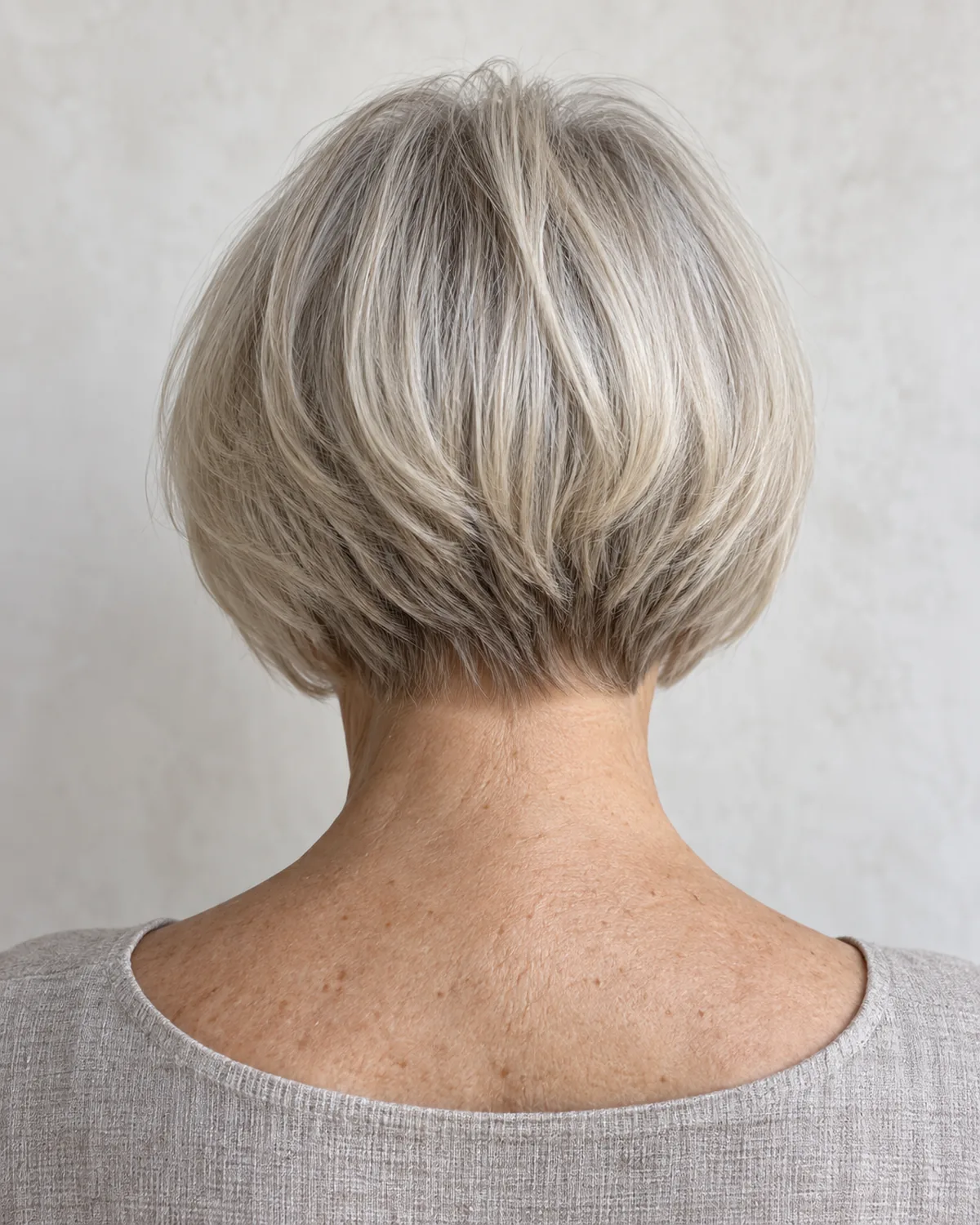
Graduation at the nape stacks shorter layers under longer ones, pushing volume up and forward. On fine straight hair this solves the flatness at the back of the head. Best on hair that is fine but still medium density. Too thin and the stacking exposes scalp at the nape.
- Ask the stylist to keep the graduation subtle with a difference of about one to two inches between the shortest nape layer and the longest
- Request that the front pieces stay long enough to reach the chin so the bob has a visible angle from back to front
- Check the back with a hand mirror before you leave the chair because the graduation is the whole point and you cannot see it yourself
- Ask whether your nape density is high enough to stack without showing scalp because the stylist can see what you cannot reach
5. Disconnected Pixie With Micro-Fringe

A visible ridge where the longer crown meets the close-cut sides creates a shape fine straight hair never holds on its own. The micro-fringe commits the look: deliberate rather than grown-out. Suits angular faces where the geometric lines echo the bone structure. A stylist can soften the ridge with a slight blend if the lines feel too severe.
- Ask the stylist to leave the disconnection visible rather than blending it out because the ridge is what creates the shape
- Request the micro-fringe at about one inch or less so it sits above the brow line and does not compete with the eyes
- Confirm whether the nape is tapered or squared off because the two endings read differently and fine hair shows the choice clearly
- Check that the crown section is long enough to push forward or to one side so you have at least one styling option beyond letting it sit
6. Collarbone Lob With Face-Framing Pieces

The longest cut here and the one with the narrowest margin for error. Fine straight hair at collarbone length is the last stop before the ends thin to transparency. Face-framing pieces add density around the face without full-bangs maintenance. If you can already see through the ends when the hair is down, go shorter.
- Ask the stylist to cut the face-framing pieces to fall between the chin and the cheekbone so they move when you turn your head
- Request blunt ends rather than razor-thinned ends because fine hair needs every strand at the hemline to read as a solid edge
- Check the ends in natural light before you leave the salon because overhead salon light hides thinning that daylight will not
- Compare the density at the ends with the density at the mid-shaft and if there is a visible drop-off ask about taking one inch off the length
7. Ear-Length French Bob

The French bob gets its volume from length alone: the hair is too short to lie flat. A single-length cut at the earlobes keeps every strand at the same hemline weight. The bottom edge reads denser than it is because nothing has been thinned away. Suits a slim face with a defined jaw. Too round and it reads wider.
- Ask for a single-length cut with no internal layering because the weight of every strand at the same point is what creates the density
- Request that the length falls just below the earlobes and no shorter because even half an inch too high and it reads as a grown-out pixie
- Check whether the bob curves inward slightly under the jaw because that inward turn is where the volume lives
- If the face is round, ask the stylist whether moving the length half an inch below the widest point of the jaw would narrow the silhouette
8. Wispy Shag With Root-Lift Layers
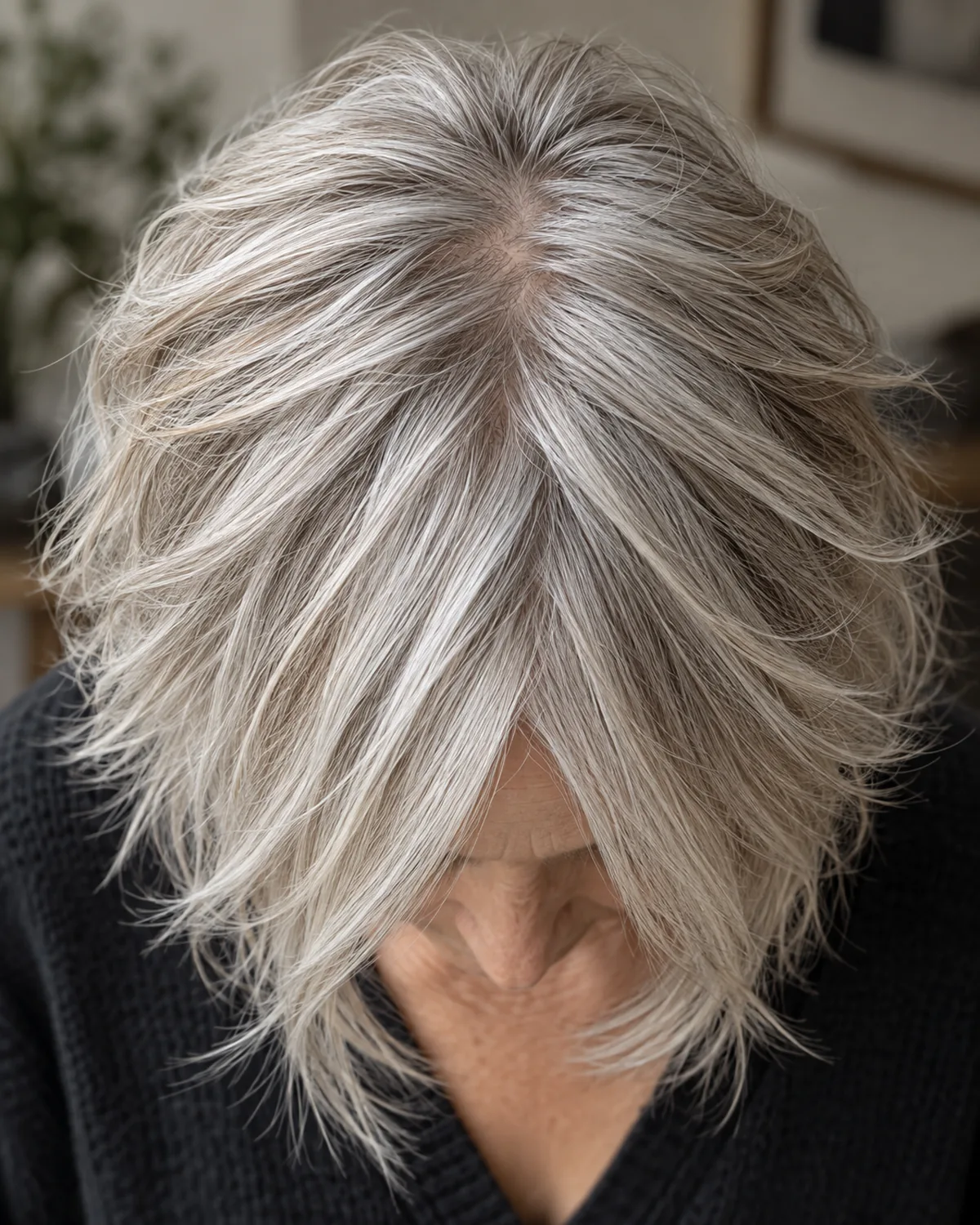
The shag puts layers at the crown for lift and around the face for movement. The trade-off is the hemline: a shag has no clean bottom edge, and on fine hair that can read as neglect. If a clean line is non-negotiable, look at idea 1 or 7 instead. If movement matters more, this delivers it.
- Ask for the shortest layers to start at the crown and the longest to reach the collarbone so the graduation creates visible movement
- Request wispy face-framing pieces that start at the cheekbone rather than the jaw so they actually frame rather than hang
- Tell the stylist you want root lift without relying on product because the layers should do that job on their own
- Check from the side in a mirror whether the crown layers stand up or lie flat because if they lie flat after the cut they will lie flat at home
9. Sleek Asymmetric Bob

Fine straight hair is sleek by default, and this cut uses that instead of fighting it. One side falls to the jaw, the other tucks behind the ear. The diagonal line gives the head a geometric shape that replaces volume. If adding layers and product has not worked, this is the alternative: shape what is already there.
- Ask for the long side to fall exactly at the jaw line and the short side to sit about one inch above the ear
- Request clean blunt ends on both sides because the diagonal line needs sharp edges to read as geometric rather than uneven
- Tell the stylist you want the transition from long to short to happen in a smooth diagonal across the back of the head
- Check from the front that the two lengths are different enough to read as intentional rather than as a bad haircut
10. Cropped Taper With a Soft Top
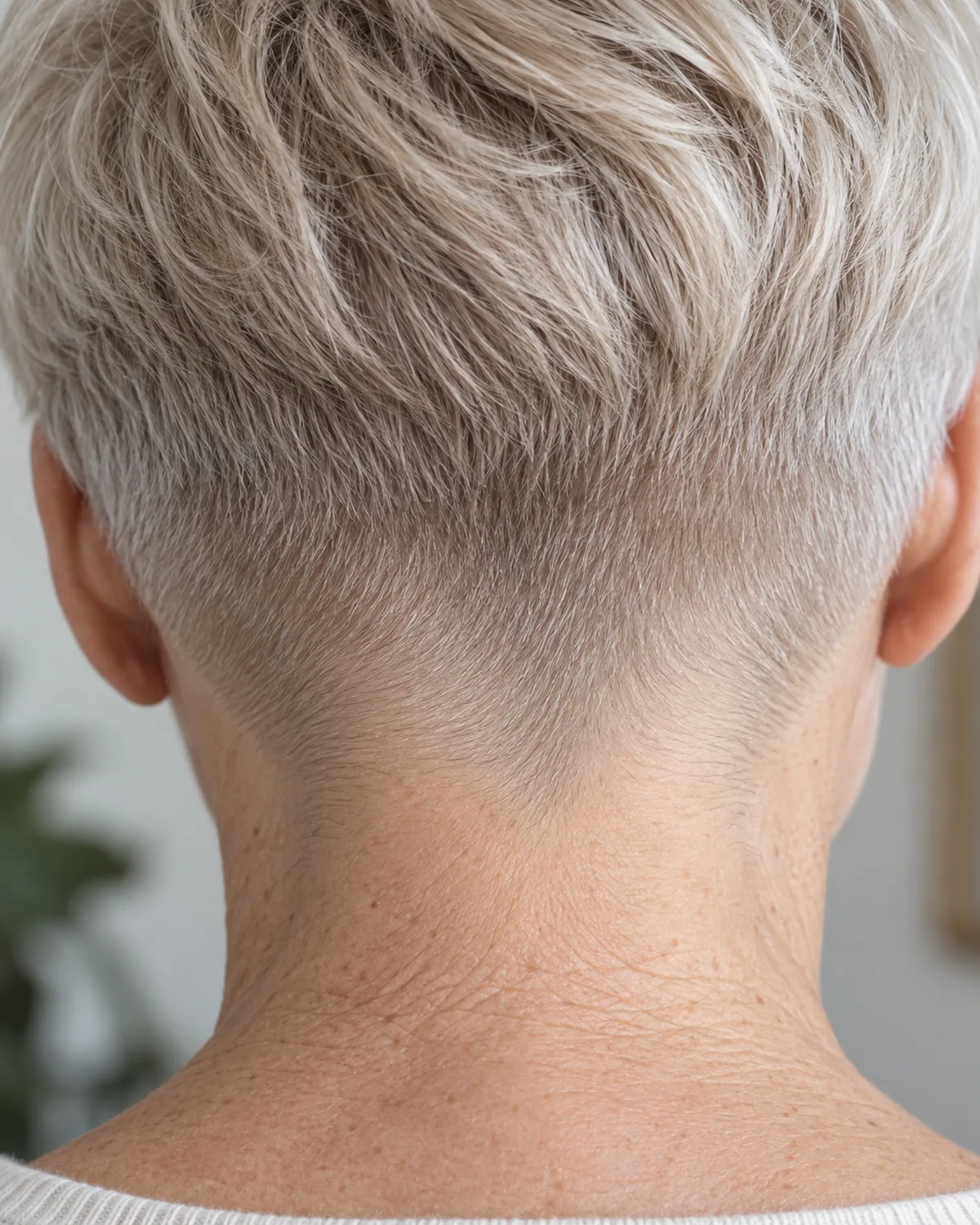
The closest this list gets to a cut that takes care of itself. Tapered sides blend from close at the nape to about one inch on top. Push it forward with your fingers after washing. Works on fine straight hair because the taper shows cleanly, the top dries in minutes, and the shape holds. The trade-off: this is the shortest cut here and the one with the least room to change your mind.
- Ask the stylist to keep the taper gradual rather than sharp at the nape because a hard line on fine hair shows every growing-out stage
- Request the top at about one inch so there is enough to push in one direction but not enough to lie flat
- Check the nape taper in the hand mirror and ask whether it will grow out cleanly or need a touch-up in three weeks
- Consider whether you are ready for this length by pulling your current hair back flat and seeing how the shape of your head reads without volume around it
Where the checkable claims come from
- Hair Loss: Who Gets and Causes — American Academy of Dermatology
- How to Create Volume With Layering — Sam Villa / Redken Education
- Face Shape Guide: Finding the Right Cut — L'Oreal Professionnel
Keep this one
Save it for the appointment
Pin the image above to the board you actually open before a salon visit. This guide is written to be re-read, not read once.
Tonight, before you close this tab
- Hold a section of hair at the crown between two fingers and let it fall to see whether it lies flat against the scalp or has any natural lift at the root
- Count how many strands you can see through when you hold a one-inch section up to the light because that density reading is what your stylist needs to choose the right graduation
- Look at your part line in a mirror under bright light to see how much scalp shows because that width determines whether a centre part or a side part serves you better
- Write down two cuts from this list and one sentence about what you need the cut to do and bring both to your next appointment