8 Hairstyles for Very Fine Hair Over 50
Eight cuts for very fine hair over 50, each judged on where weight collects, what density it needs and whether your hair can hold the shape.

Booking an appointment soon? Save this page. It is easier to skim in the chair than to remember.
At a glance
Works
- Cuts that keep weight collected in one zone rather than spreading it thin
- A pixie with length left at the crown, where fine hair can still stand up
- A deep side parting that displaces volume to one side so it reads thicker
Depends
- A layered bob, which works if the shortest layer creates a shelf rather than removing mass
- A shag with disconnected ends, which needs some natural bend to separate the pieces
- A curtain fringe, which must be cut narrow so it does not thin the sides
Skip
- A blunt one-length bob when the ends are sparse and show every gap in the line
- A steep graduation that needs thick hair to push against the stack
- Heavily layered styles on poker-straight fine hair, where layers just thin the ends further
Fine hair is about strand diameter, not how much of it you have. After 50 the two often travel together: individual fibres get thinner, density drops, and the hair that remains has less raw material than it did a decade ago.
Every cut below is judged on the same question: does this shape make fine hair read thicker, and what does it cost you to keep it?
1. The blunt bob at chin length, and when fine hair cannot hold it
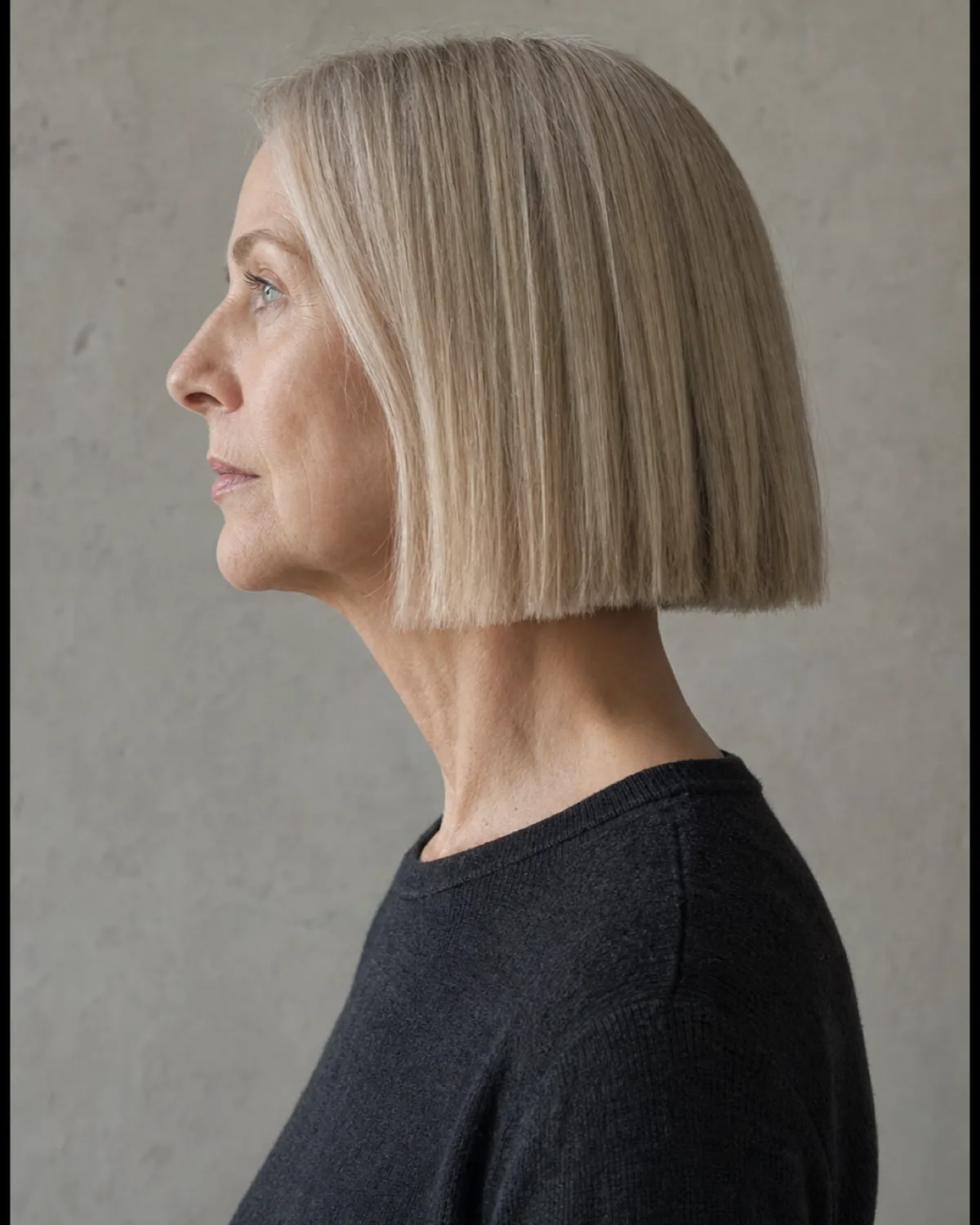
A bob cut at jaw level collects all its weight at the perimeter. That single line is the whole shape, which means the ends carry everything. On fine hair with good density at the tips, a blunt edge reads clean and deliberate.
The condition is the ends. Fine strands that have thinned show every gap in a one-length line, and no amount of product closes those gaps for long. If your ends look sparse in daylight, this is the first cut to rule out rather than the first to request.
- Look at your ends in natural light before you commit to a blunt perimeter
- Ask the stylist to hold the hair at the proposed length so you can see the edge
- If the ends are sparse, ask about a textured or bevelled perimeter instead
2. A layered bob with interior texture
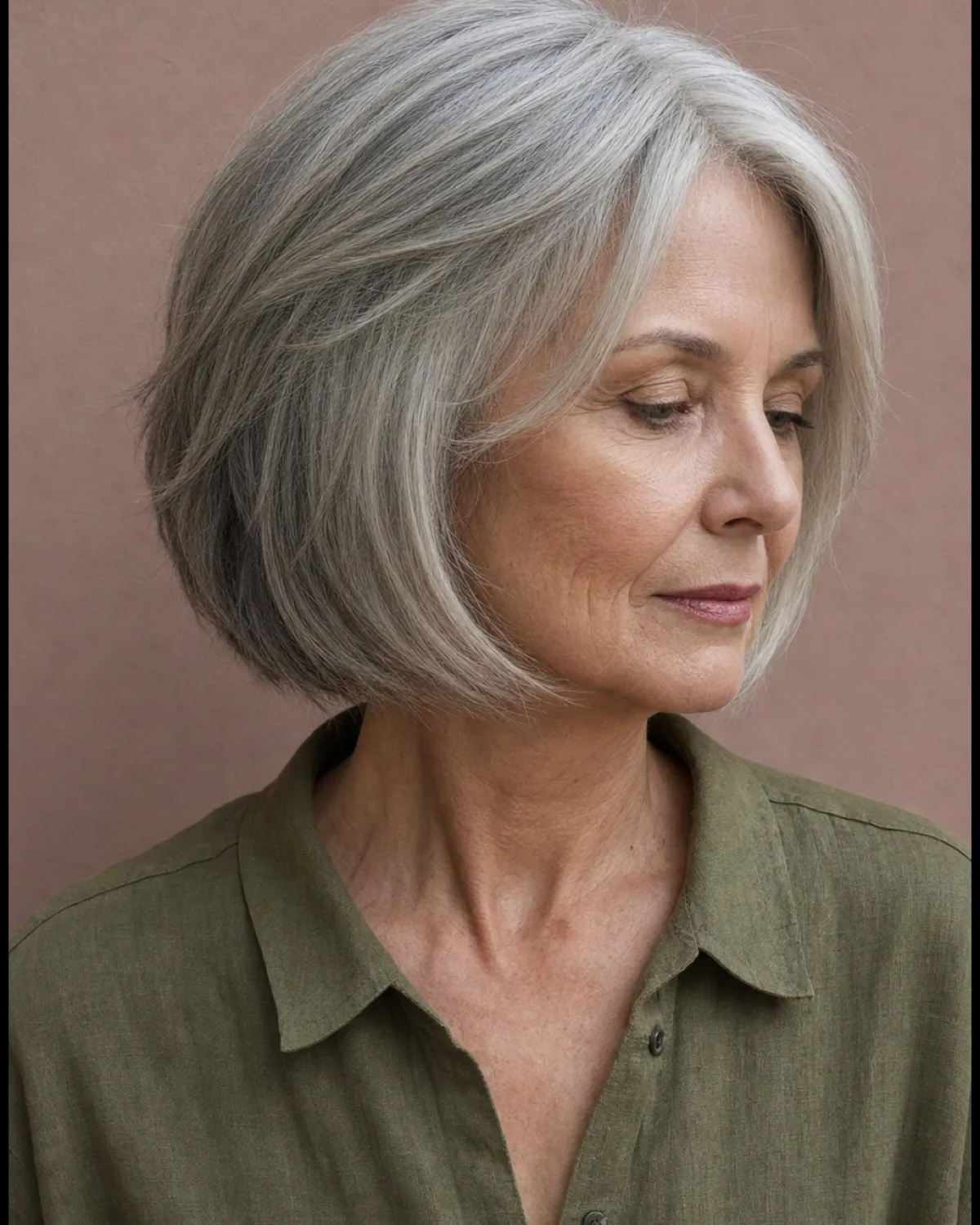
Layers cut at a higher elevation redistribute weight rather than collecting it. The shortest interior layer creates a shelf that the longer hair sits on, and that overlap reads as more density than the hair actually has.
The risk is removing too much. Every layer takes mass away from the section it shortens, and fine hair has less mass to spare. Ask where the shortest layer starts: if it begins too close to the crown the top section collapses, and the bob loses the fullness the layers were supposed to create.
- Ask where the shortest interior layer starts and whether it will still sit on the longer hair
- Ask how many layers the cut needs, because fewer often works better on fine hair
- If your hair is poker-straight, ask whether the layers will separate or just lie flat
Where to start
Find your situation, skip ahead
Your hair is fine and you have already noticed the ends thinning
Start with the two cuts that keep every millimetre of what you have. The pixie stands up on almost nothing; the graduated bob collects weight at the back.
03 The pixie that keeps the crown long04 A soft graduated bob, built at the back
Your hair is fine but you still have reasonable density
You have more room. The layered bob and the shag both redistribute weight, but only if your hair has some bend.
02 A layered bob with interior texture05 The shag with disconnected ends
You want the smallest change that still makes a difference
Move your parting. A deep side parting displaces volume to one side and costs you nothing at the salon.
06 Side-parted styles that use asymmetry07 Chin-length with a curtain fringe
3. The pixie that keeps the crown long
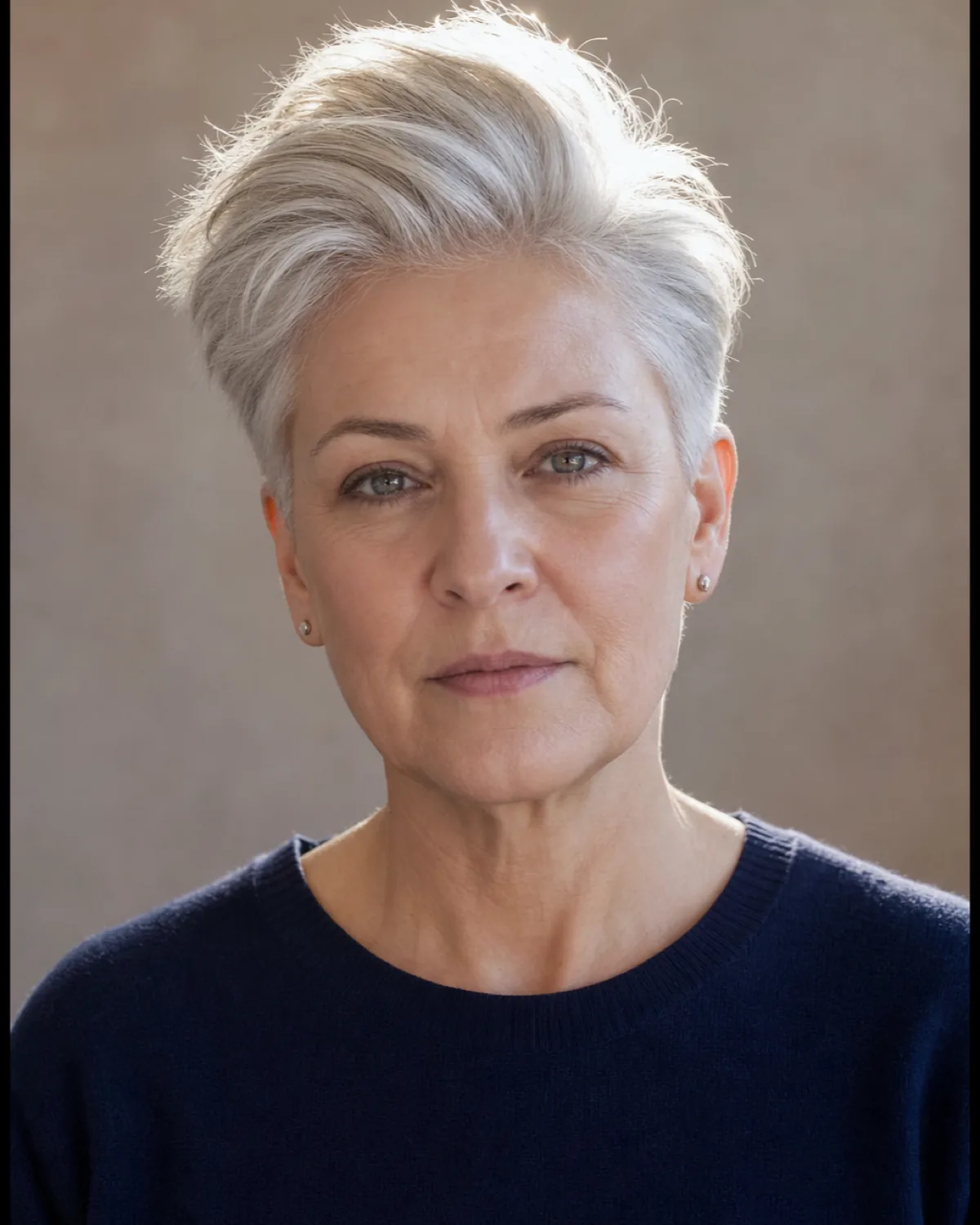
A pixie is short at the back and sides and longer on top. That description is also the argument for it on fine hair: the top section stands up on very little material because short hair is light enough to hold its own shape, and the sides sit close to the head so there is no width to fill.
The trade is maintenance. A pixie on fine hair loses its proportions quickly because there is not much length separating the top from the sides. Four to six weeks is the usual interval before the shape starts to flatten.
- Ask for the top to be left long enough to move, not cropped flat against the scalp
- Ask how short the sides will go over the ear
- Book the next trim before you leave the chair
4. A soft graduated bob, built at the back
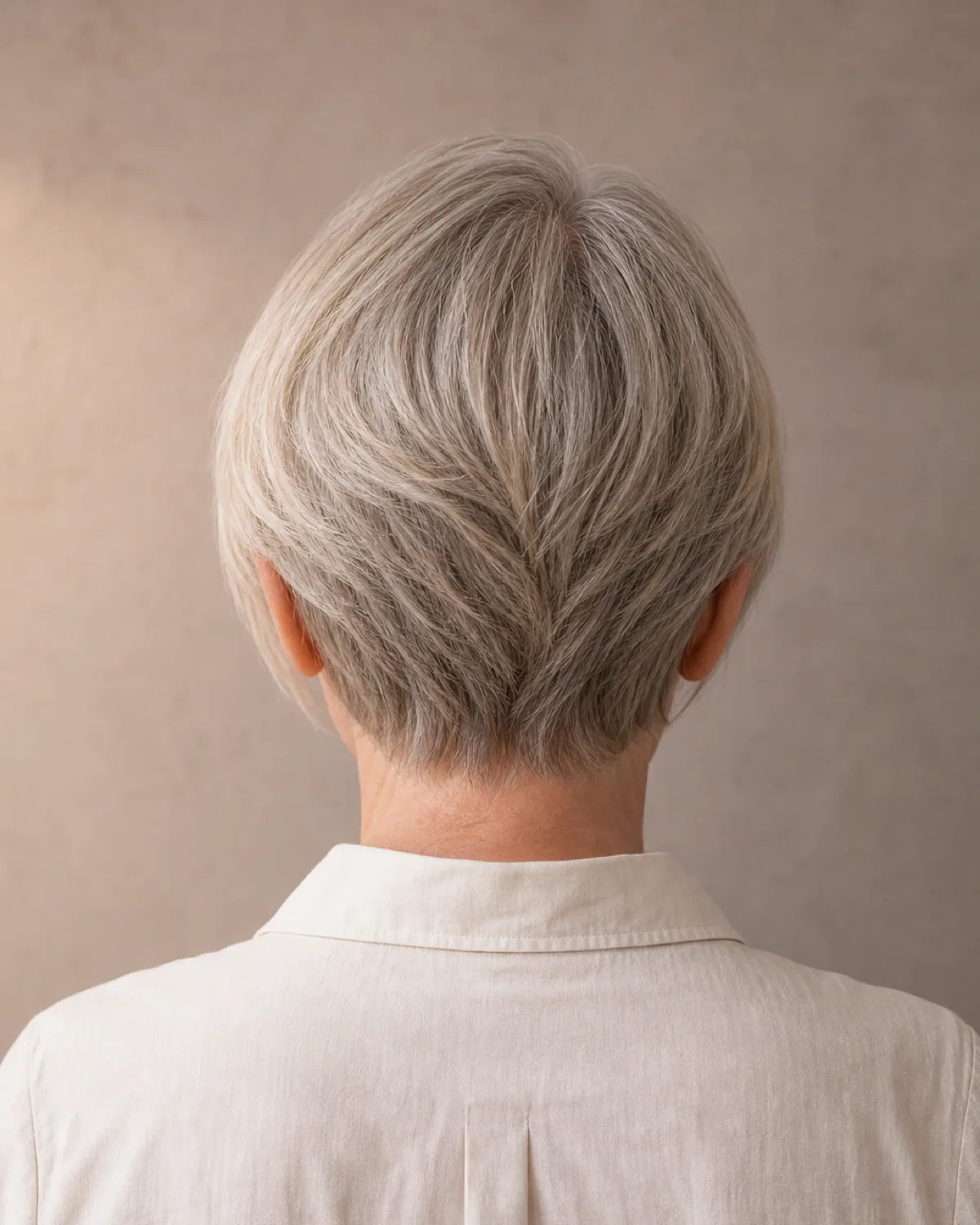
Graduation is weight built up on purpose. The hair is cut at a low elevation so the lengths stack against each other, and the result is a band of density at the back of the head that you would not have without the cut.
Fine hair can hold a gentle graduation but not a steep one. A steep stack needs thick hair to push against it; without that resistance the shape collapses within a day. Ask for the graduation to be soft, and ask the stylist to show you the back with a mirror before you leave.
- Ask to see the back while you are still in the chair
- Ask how steep the graduation is and whether your hair can hold it
- If the shape falls flat by evening, the angle is probably too steep for your density
5. The shag with disconnected ends
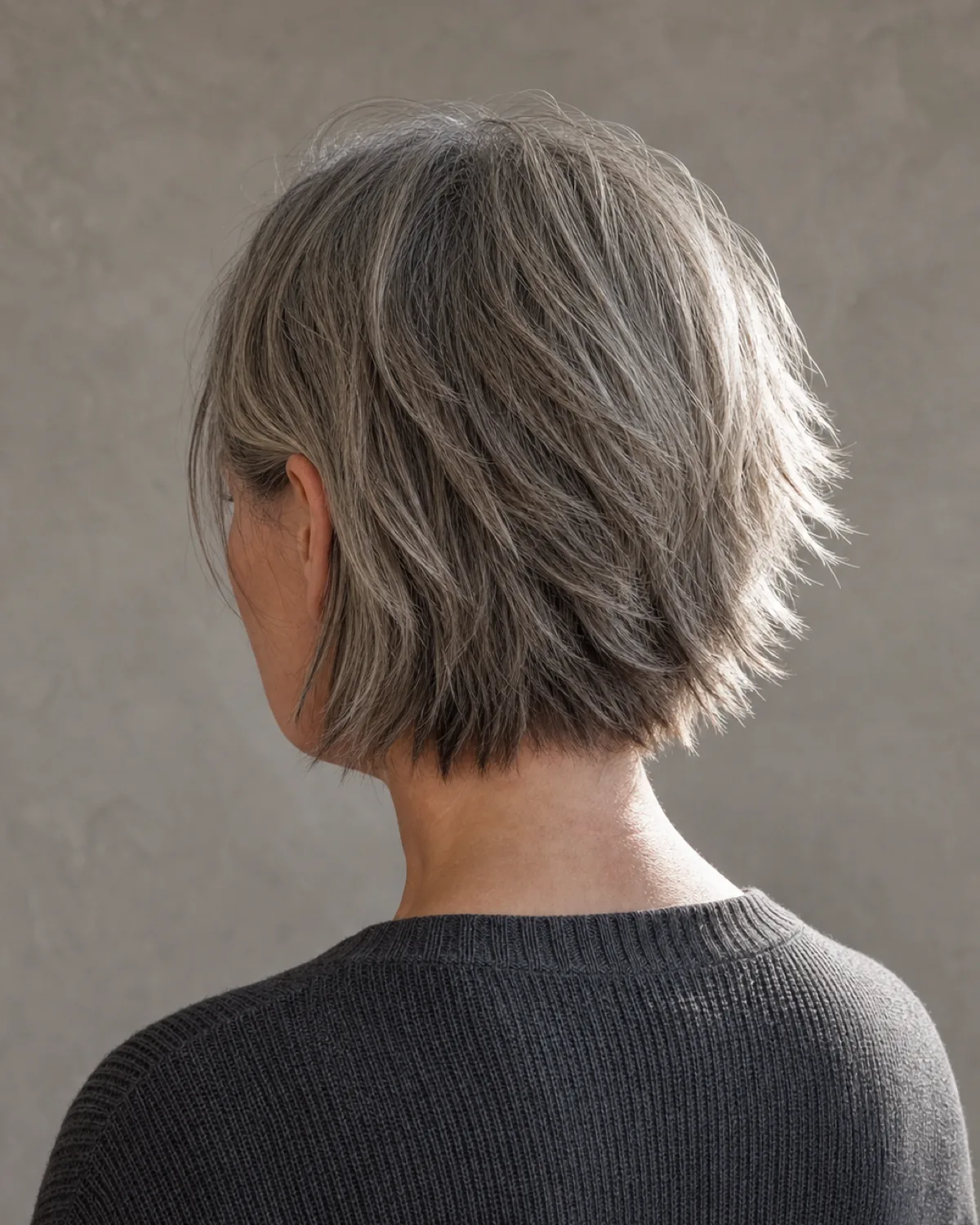
Higher elevation trades weight for movement. A shag cut this way finishes at different lengths, and those pieces separate and cast small shadows on each other. The overlapping shadows read as density even when the hair itself is fine.
The condition is bend. Pieces separate because the hair curves away from itself. On poker-straight fine hair the same cut produces thinner ends and no movement, because there is nothing to push the strands apart. Look at your own hair when it air-dries: if it lies flat, this cut will not give you what the photograph suggests.
- Ask whether your hair has enough natural bend to hold the disconnected shape
- Ask how many layers the shag needs, since over-layering on fine hair removes too much weight
- If your hair is very straight, ask whether a gentle wave from a consultation could help
6. Side-parted styles that use asymmetry
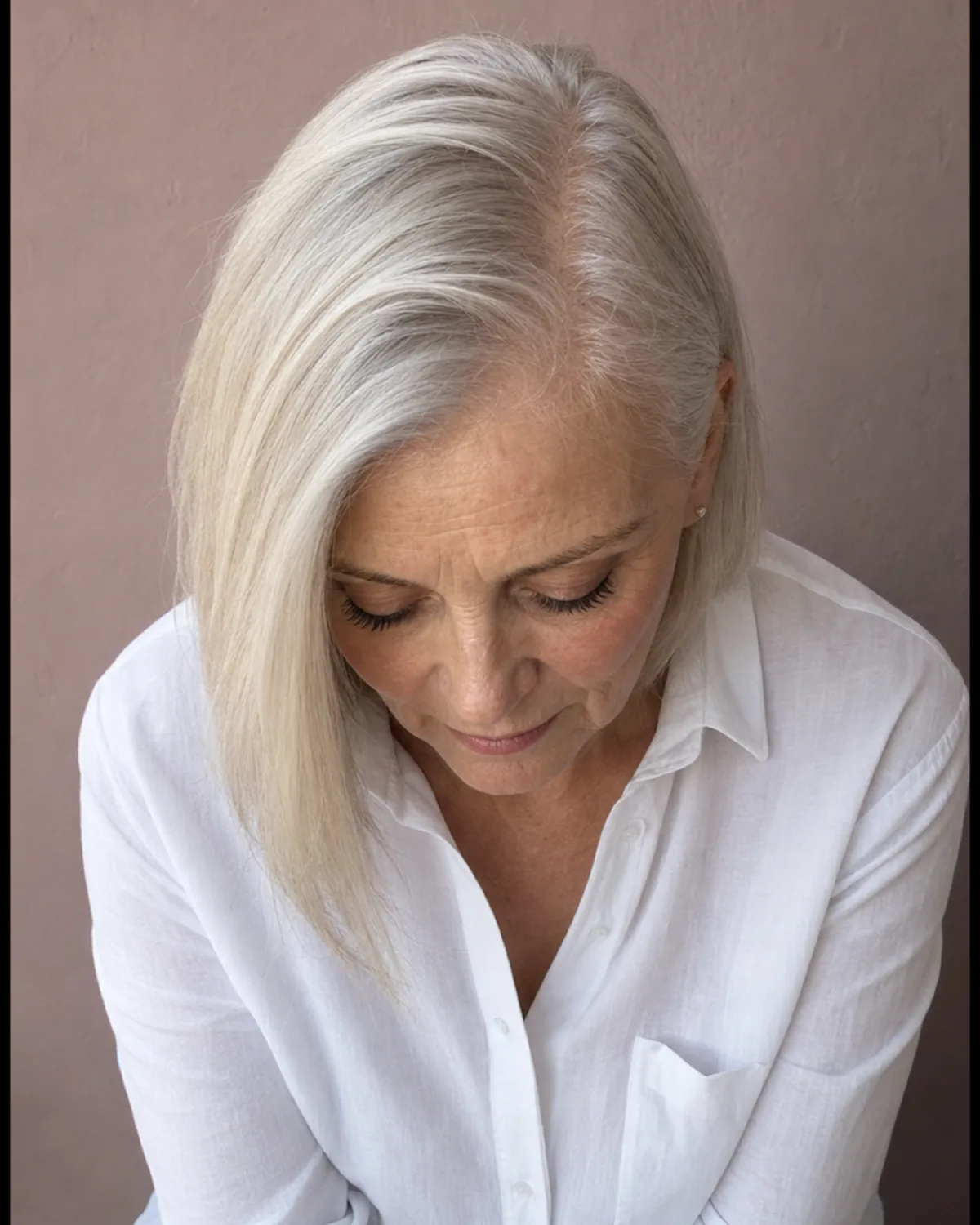
A deep side parting moves most of the hair to one side. That side reads thicker because it carries double the volume, while the shallow side shows more scalp. The net effect is one side that looks fuller than a centre parting would allow.
This is the lowest-commitment option here. No cutting is involved, the change is instant, and if it does not suit you the parting goes back where it was. The cost is coverage: whatever the heavy side gains, the shallow side loses. On very thin hair the shallow side may show more scalp than you want.
- Try moving your parting an inch toward the side and photograph the result
- Look at the shallow side in a mirror to check whether the coverage is enough
- If one side is thinner than the other, part toward the thinner side so the heavier fall covers it
7. Chin-length with a curtain fringe
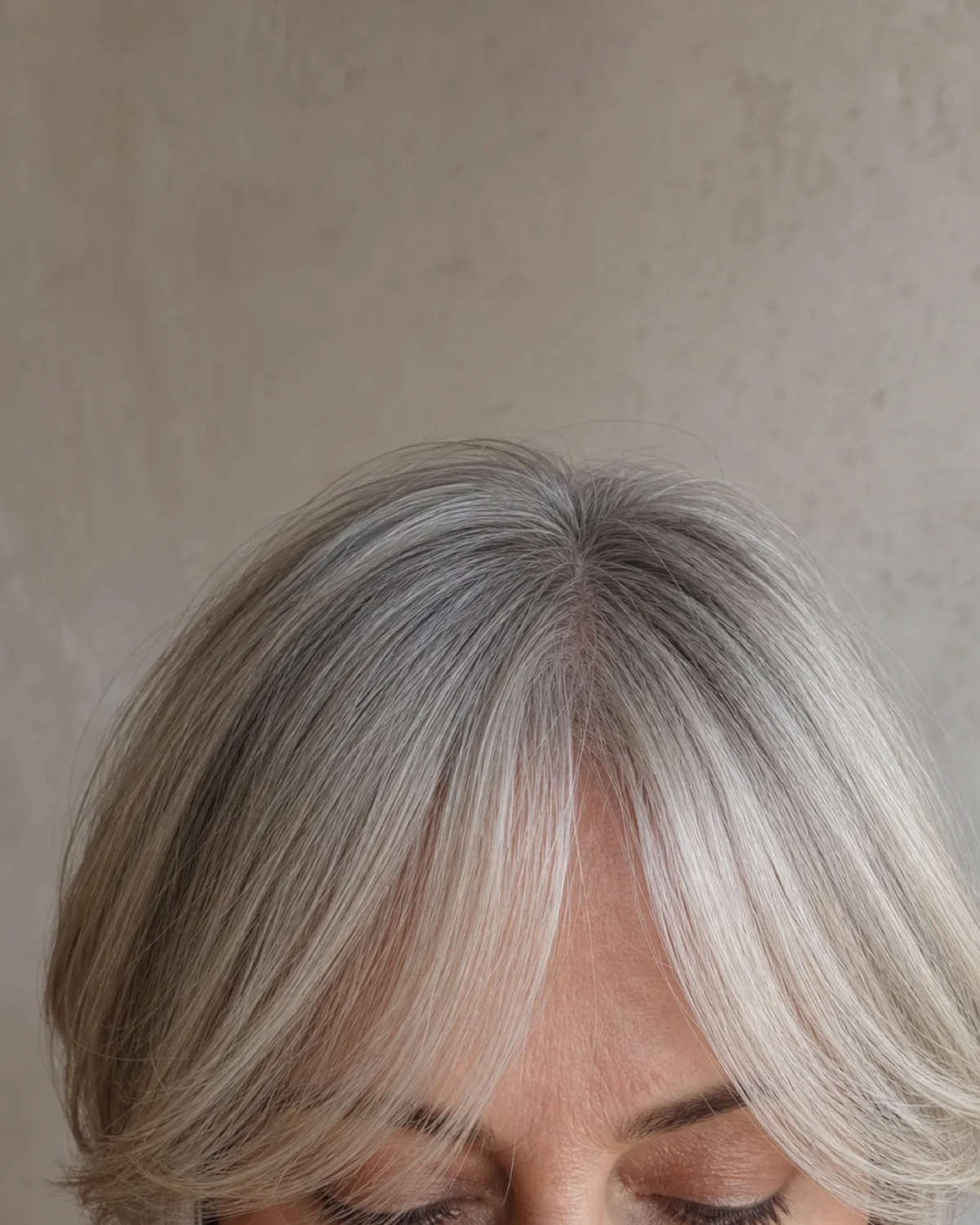
Bangs fall over the front hairline to cover the forehead. A curtain shape parts in the middle and sweeps outward and down, so it adds a second zone of movement at the front without shortening the sides.
On fine hair the fringe must be kept narrow. A wide fringe takes too many strands from the sides and temples, which are already the thinnest areas on most heads. A narrow section, cut from just the front two centimetres, gives the movement without robbing the sides of what little mass they have.
- Ask the stylist to take the fringe from a narrow section only
- Ask where the shortest point sits and where the longest pieces finish
- If the sides of your hair are already thin, ask whether a fringe is worth the trade
8. Why the cut matters less than the consultation

Fine hair varies more person to person than any other type in this article. Strand diameter and density are two separate measurements, and they combine in dozens of ways. Two women who both describe their hair as fine can need completely different cuts.
The right question to take into a consultation is not which cut but how much hair you actually have to work with. A stylist who can see your hair in person, hold it, and measure where the density sits outranks anything written here. Bring two photographs from this article if they help, but let the stylist tell you which shapes your particular hair can hold.
That is the method: know what your hair does on its own, decide what you want the cut to add, and then ask whether the hair you have can hold the shape you picked. More of the same question sits in fine hair and by length.
Where the checkable claims come from
- Bob cut — Wikipedia
- Graduation vs. Elevation: The Subtle Distinction That Impacts Every Cut — Above Shears
- Pixie cut — Wikipedia
- Bangs (hair) — Wikipedia
- Hair diameter and aging — Birch, Messenger & Messenger, Journal of Investigative Dermatology (2001)
Keep this one
Save it for the appointment
Pin the image above to the board you actually open before a salon visit. This guide is written to be re-read, not read once.
Tonight, before you close this tab
- Hold a single strand between your fingers and look at its thickness against a white background
- Part your hair under a bright light and photograph the parting to see your current density
- Pull your hair into a low ponytail and measure the circumference to get a rough density number
- Write down whether your ends currently read as solid or sparse, because that decides the first cut to rule out