8 Shag Haircuts That Work on Thin, Fine Hair Over 50
Eight shag variations for thin, fine hair over 50, each judged on whether the layering creates density or strips it. Weight line, ends, and what to ask your stylist.

Booking an appointment soon? Save this page. It is easier to skim in the chair than to remember.
At a glance
Works
- A chin-length shag bob that concentrates density in a short zone where thin hair reads thicker
- A curly or wavy shag that uses natural texture to create fullness the strand count alone cannot
- A modern wolf cut with heavy crown layers, if your crown still has reasonable density
Depends
- A collar-length shag with curtain bangs, which disguises a thin front only if the fringe has enough hair to split without a gap
- A layered shag with face-framing pieces, which works when your jaw-length hair is still dense enough to look intentional
- A long shag below the shoulders, where gravity flattens layers unless your mid-lengths can carry them
Skip
- A razored shag if your ends already look wispy, because the razor removes weight you cannot afford to lose
- A crown-heavy wolf cut when your crown is thinning, because it spotlights the zone that needs help
- Any shag that relies on a round-brush blowout every morning to hold volume
A shag is a bet on layers. Thick hair can afford to lose some. Fine hair over 50 cannot always say the same.
These eight shag variations are judged on one question: does the layering pattern create the illusion of density, or does it strip what little weight you have?
The difference is where the layers start, how much interior weight they remove, and whether the cut holds its shape without a blowout.
1. Modern Wolf Cut Shag
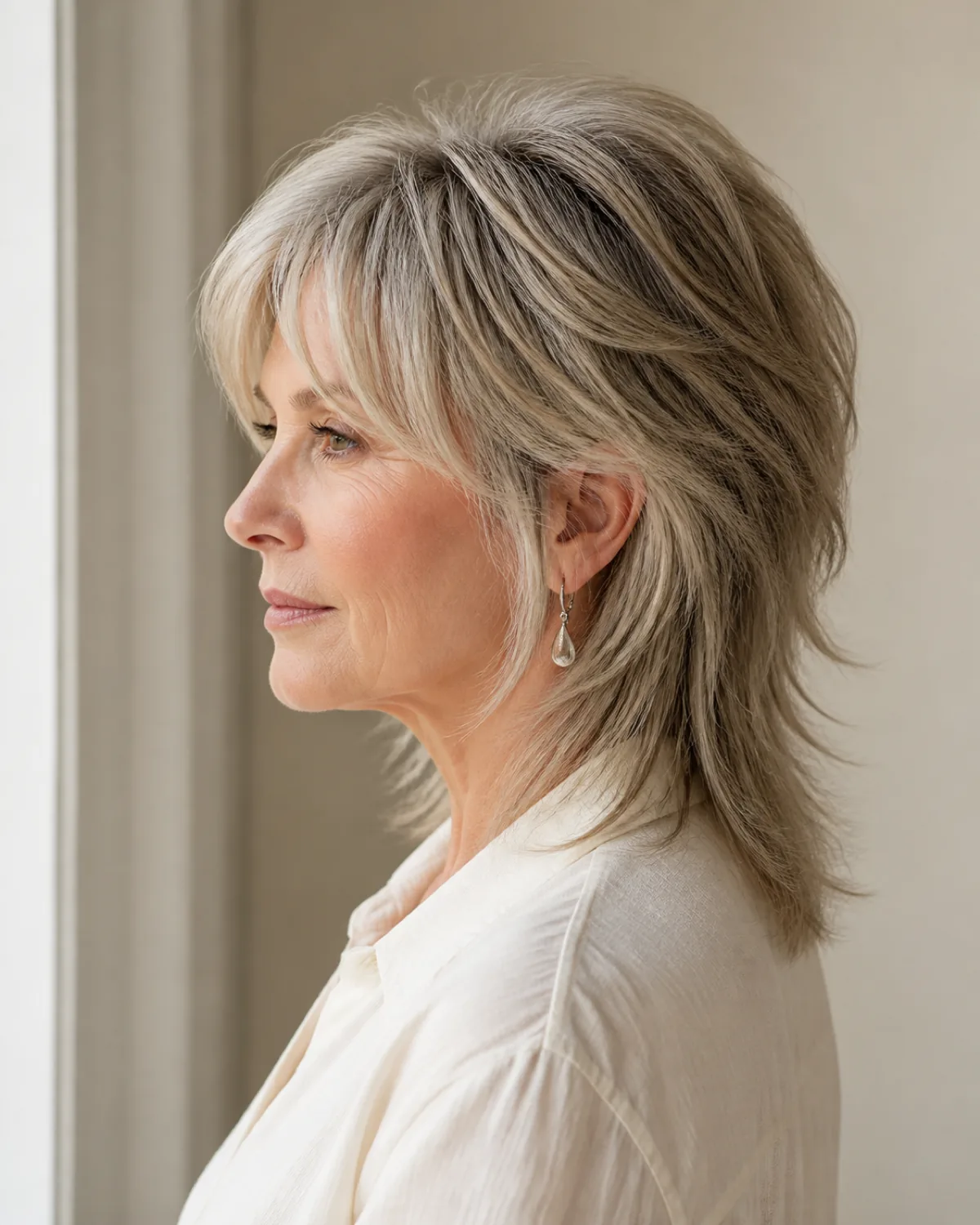
The wolf cut keeps its heaviest layers at the crown and lets the back disconnect into longer, thinner pieces. On fine hair, this single-zone focus is a structural advantage. All the volume lives where you need it most.
- Works if your crown still has reasonable density, because the short top layers rely on enough hair to stand up
- The disconnected back reads as intentional texture rather than thinning, which is one of the few cuts where gravity works in your favour at the nape
- Ask your stylist to keep internal layers rather than stacked graduation at the crown, because elevation-based layering removes weight that fine hair cannot spare
- Maintenance is moderate: the crown needs reshaping every six to eight weeks before it flattens
2. Chin-Length Shag Bob
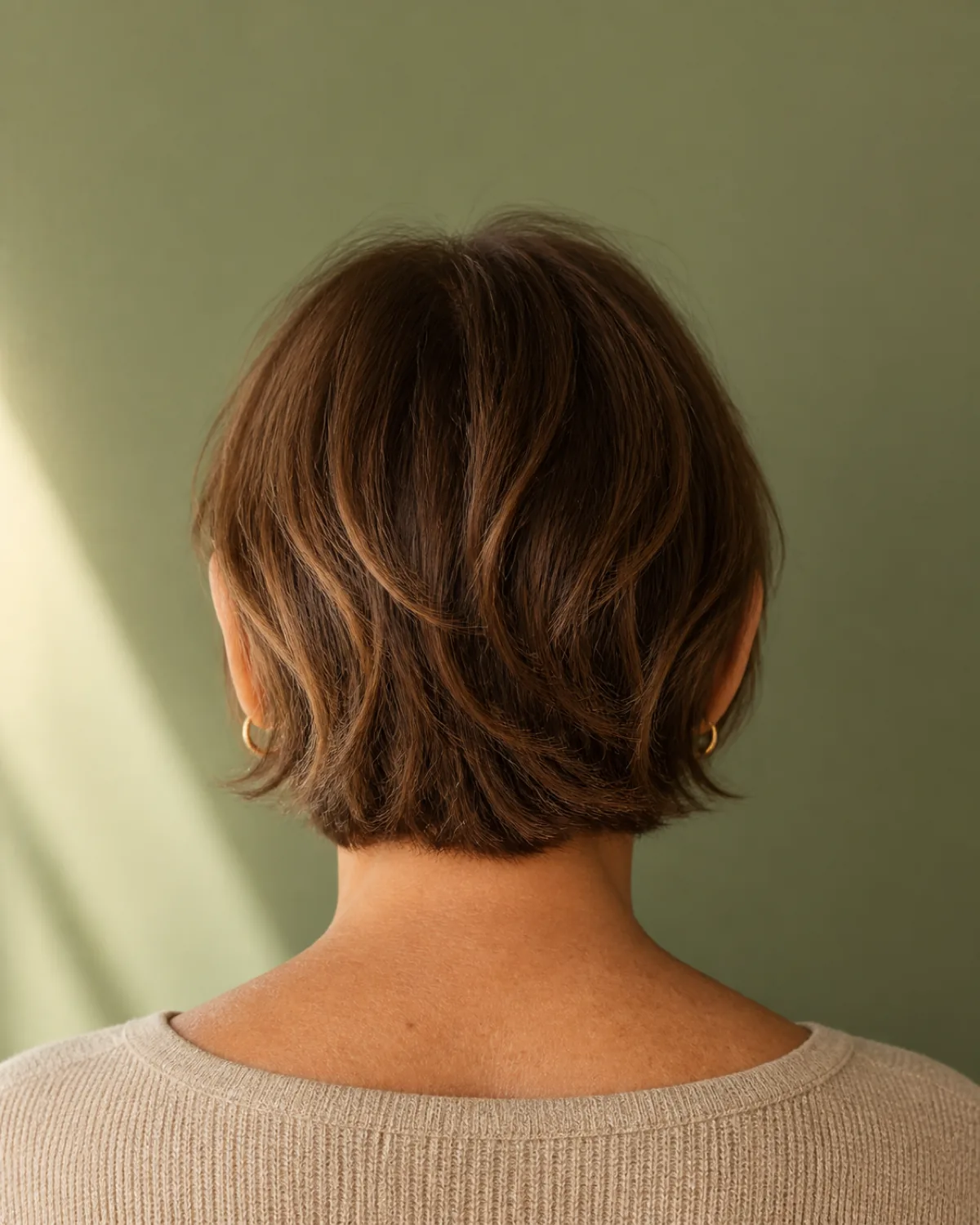
Concentrating every strand in a short zone is the simplest way to make thin hair read thicker. A chin-length shag bob does exactly that. The perimeter sits at the jaw, and the interior carries shaggy layering for movement without losing the solid edge.
- Best on straight-to-slight-wave textures, where the short perimeter holds a clean hemline that reinforces the density illusion
- Internal layers give movement without thinning out the ends, which is the difference between looking textured and looking sparse
- The rear view is the telling angle: if you can see daylight through the back, the interior has been layered too aggressively
- Hair fiber diameter declines after 50, which is why short perimeters that keep all your strands in a compact zone tend to perform better than length that spreads them thin
Where to start
Find your situation, skip ahead
Your fine hair still has decent density at the crown and you want movement
Start with the modern wolf cut shag. It keeps weight at the top where you still have it.
01 Modern Wolf Cut Shag03 Collar-Length Shag With Curtain Bangs08 Layered Shag With Face-Framing Pieces
Your fine hair is thinning all over and you want maximum perceived thickness
Go short. The chin-length shag bob concentrates every strand in a small zone.
02 Chin-Length Shag Bob06 Shag With Side-Swept Bangs07 Curly Shag
You want to keep length but worry about layers looking sparse
Ask your stylist for internal layers only, no razor. Honest assessment of your mid-length density decides whether a long shag is realistic.
04 Long Shag Below the Shoulders03 Collar-Length Shag With Curtain Bangs08 Layered Shag With Face-Framing Pieces
3. Collar-Length Shag With Curtain Bangs

Curtain bangs widen the face frame by splitting at the center and sweeping toward the cheekbones. On fine hair, this fringe also disguises a thinning front section by covering the temples where density often drops first.
- The fringe must have enough hair to split convincingly at the center part without a visible gap, because a see-through curtain bang reads as an accident rather than a choice
- Layers starting at the cheekbone and cascading to the collarbone give enough graduation to create movement without exposing the mid-lengths
- This length works particularly well on salt-and-pepper hair, where the mix of grey and pigmented strands adds visual texture that a single colour cannot
- Tell your stylist you want the curtain fringe to sit at the cheekbone and blend into the side layers, not stop as a blunt shelf
4. Long Shag Below the Shoulders

A long shag is the hardest length for fine hair to carry. Gravity pulls layers flat, and every gap between strands becomes more visible as the hair falls past the shoulders. This only works if your mid-lengths still have enough density to hold visible layer separation.
- Face-framing layers starting at the chin direct the eye to the front and away from the crown, which can be a useful distraction when crown density is low
- The test is simple: gather your mid-length hair in one hand and hold it against your shoulder. If you can see your clothes through it, the mid-section is too thin for a shag that relies on visible layer movement
- Internal layers preserve the perimeter edge, which is the line that reads as fullness from across a room
- Ask your stylist for point-cutting rather than razor on the ends, because every gram of end-weight matters at this length
5. Textured Razored Shag

A razor removes weight from the ends by slicing through the strand at an angle. On thick hair, this creates soft, feathered movement. On fine hair that is already light, it can make the ends disappear entirely.
- If your ends already look wispy or see-through, a razor will make them thinner. Ask for point-cutting instead, which removes less weight per strand
- The close-up tells the story: feathered ends that taper to individual strands look intentional on hair with enough density behind them. On hair without that backup, they look like the last few strands before nothing
- Razoring works best on fine hair that still has moderate density at the mid-lengths, where the soft taper adds movement without exposing scalp
- When you sit in the chair, ask your stylist to show you the razor versus the shears on a test section near your ear before committing to the whole head
6. Shag With Side-Swept Bangs

Concentrating fringe weight on one side makes it read denser than splitting it evenly in a center part. A side-swept bang directs all the front-section hair in one direction, which means fewer strands need to do the covering work.
- Good for asymmetric thinning at the temples: the sweep covers the thinner side while the fuller side carries the volume
- The bob-length silhouette with shaggy interior texture keeps the overall shape compact, which reinforces the density read
- Silver-white hair often has a coarser individual strand that holds a sweep better than pigmented fine hair did at 35
- Ask your stylist to cut the sweep so it sits just past the eyebrow and blends into the jaw-length layers on one side, because a fringe that stops mid-forehead in a hard line fights the shag's softness
7. Curly Shag
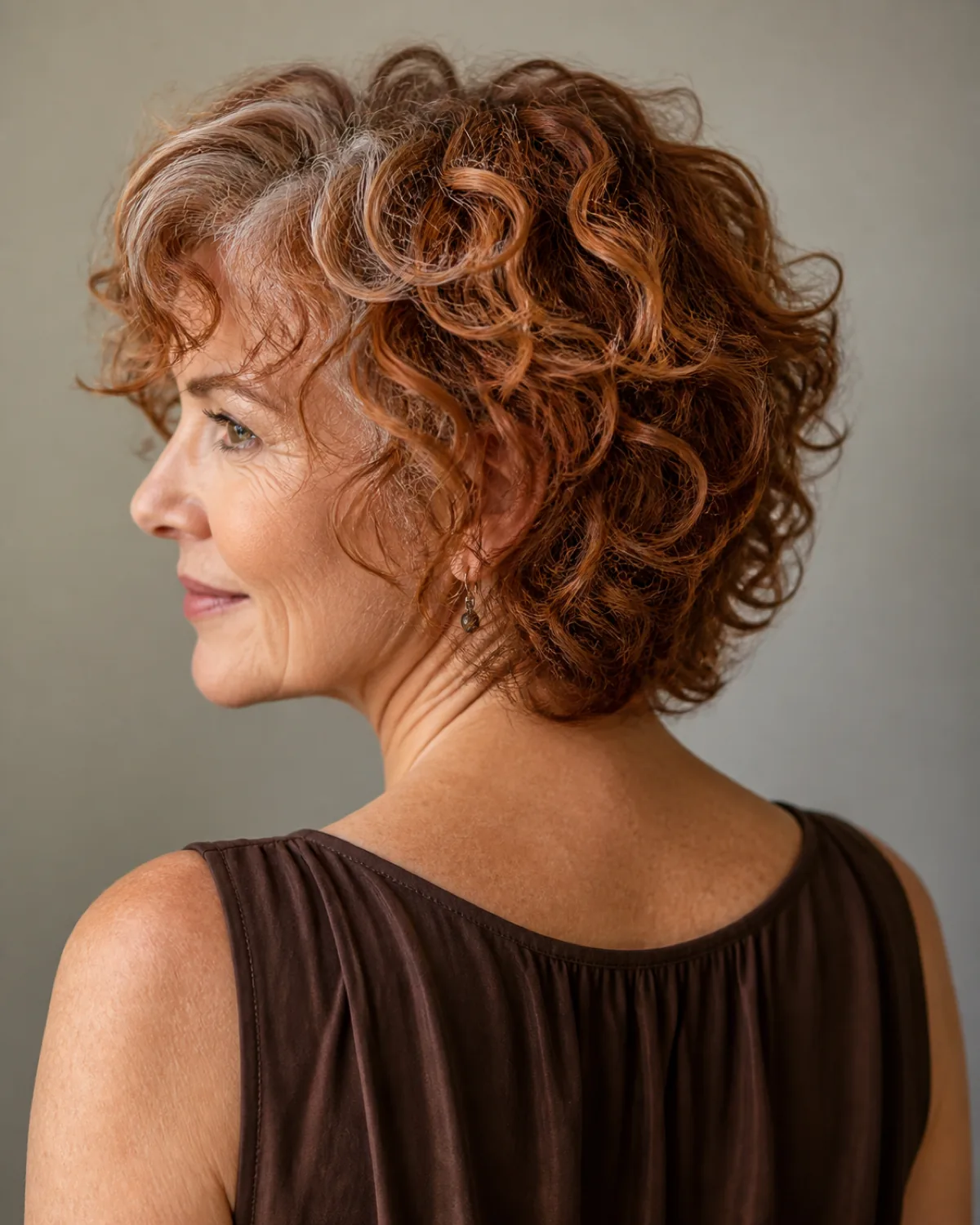
Wave and curl are fine hair's best density allies. Each curl takes up more space than a straight strand of the same length, which means fewer hairs create more visual coverage. A shag cut dry on naturally curly hair follows the curl pattern rather than fighting it.
- If you have even slight wave, a dry-cut curly shag may be the single best shag option for fine hair. The curl springs create volume that no amount of layering on straight hair can match
- Dry-cutting is essential: wet-cutting curly fine hair removes length the curls will reclaim when dry, and the result is always shorter and more layered than expected
- The back-three-quarter view shows how curl clumps fill the space between layers, creating perceived density from texture alone
- Ask your stylist whether they cut curly hair dry. If they hesitate, book someone who specialises. The difference between a dry-cut curl shag and a wet-cut one on fine hair is the difference between volume and a mistake
8. Layered Shag With Face-Framing Pieces
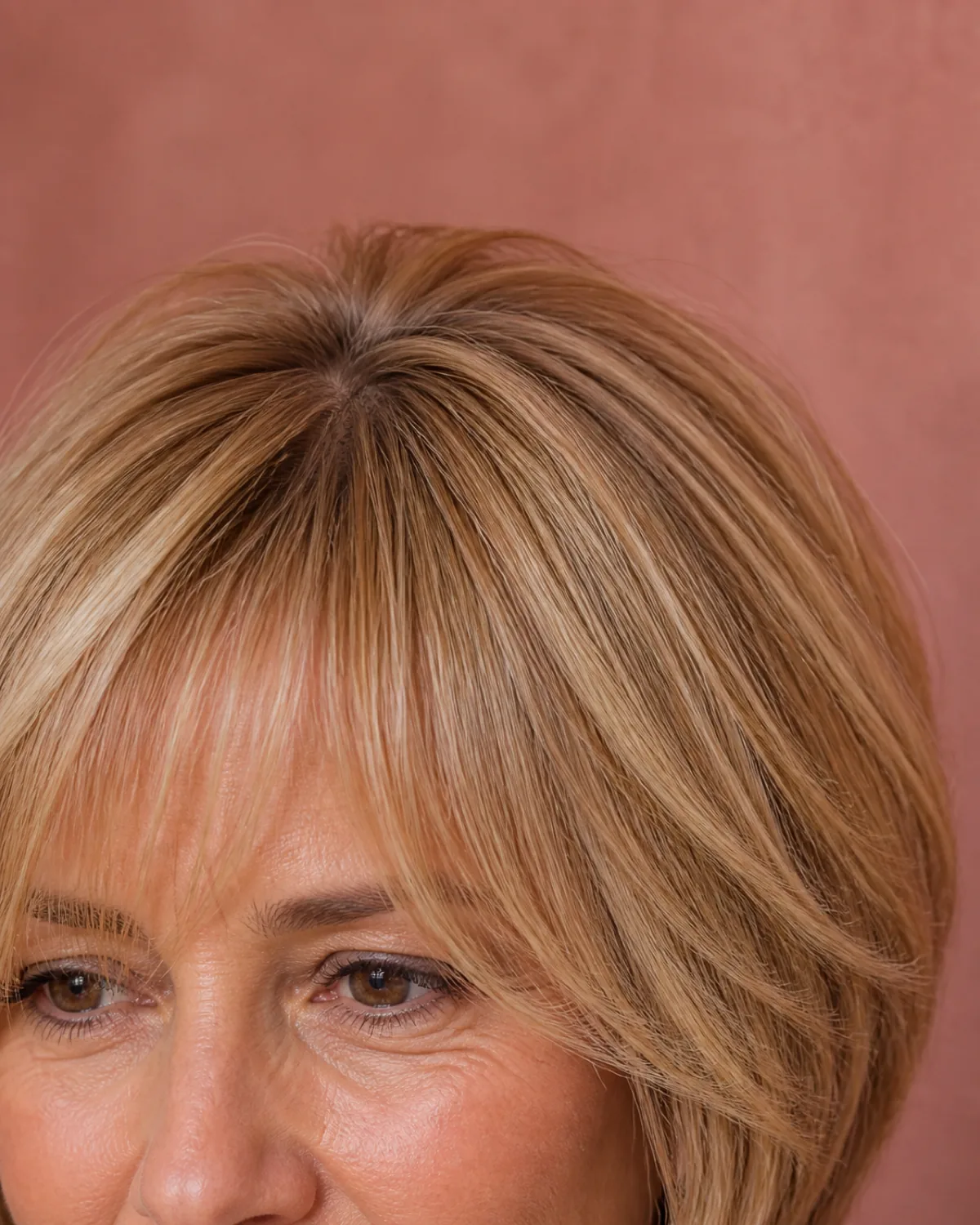
Face-framing pieces direct attention to the face rather than the crown. When the shortest layers sit at the jawline and frame the cheeks, the eye follows the hair toward the features, which is useful when crown density is lower than it used to be.
- The jaw-length framing reads as intentional styling rather than thinning, which changes the way the overall cut is perceived
- From the front, the face-framing structure creates a curtain effect that adds dimension even when the hair behind it is thinner
- This works on most face shapes because the framing layers follow the jaw contour, which Healthline's face-shape guide identifies as a universally safe length zone
- Ask your stylist to keep the face-framing pieces at the jawline and connect them smoothly into the longer back layers, because a hard disconnect between the framing and the body of the shag reads as two different haircuts
A stylist who can see your hair in person outranks anything written here. Bring these images, point to the density pattern that looks closest to yours, and let them tell you what will hold.
Where the checkable claims come from
- Hair diameter, color and density changes with age — Birch, Messenger & Messenger, British Journal of Dermatology (2001)
- Graduation vs. Elevation: The Subtle Distinction That Impacts Every Cut — Above Shears
- Face Shapes and Hairstyles — Healthline
Keep this one
Save it for the appointment
Pin the image above to the board you actually open before a salon visit. This guide is written to be re-read, not read once.
Tonight, before you close this tab
- Part your hair in daylight and photograph the crown, temples and mid-lengths to see where density is strong and where scalp shows through
- Run your fingers through the ends and check whether they taper to nothing or still feel like a solid edge, because that decides whether a razor or point-cut is safer
- Find two photos of shags you like and check whether the model's hair density looks similar to yours
- Write down whether your hair has any natural wave or curl, because even slight texture changes which shag layers will hold
- Ask your stylist where they plan to start the shortest layer, and tell them you want it below your thinning zone