7 Hairstyles for Thinning Hair Over 50: What to Ask Your Stylist
Seven hairstyles judged on one question: does this cut make thinning hair look intentional? Plus the exact words to bring to your next appointment.
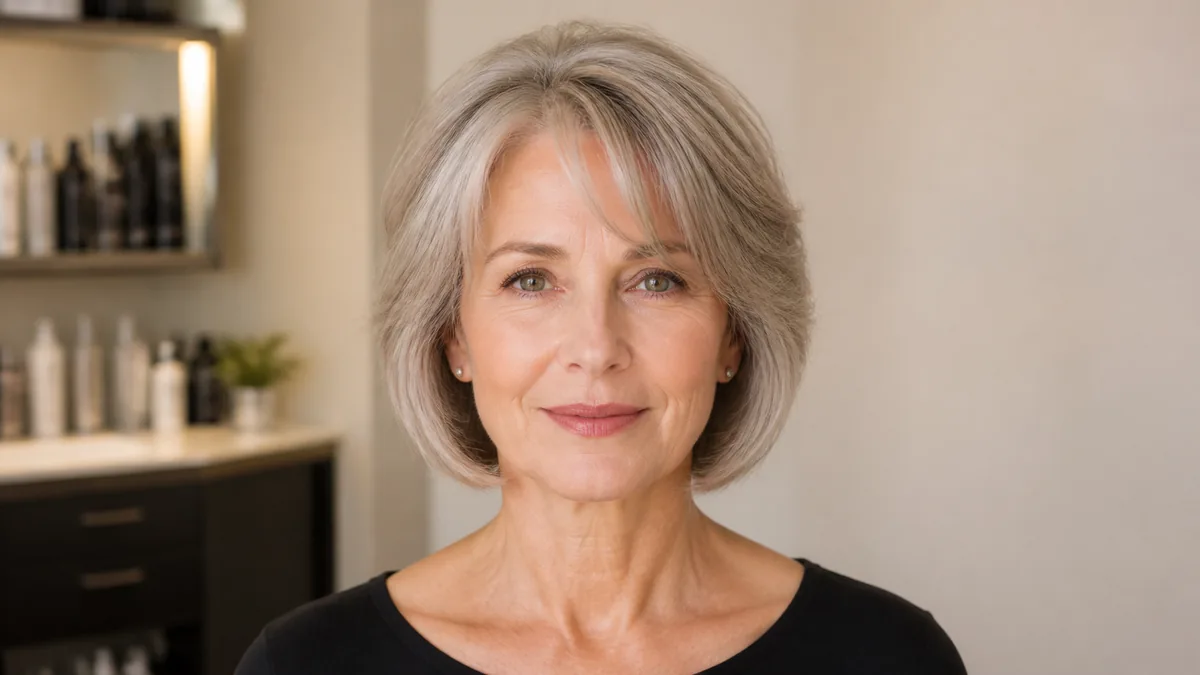
Booking an appointment soon? Save this page. It is easier to skim in the chair than to remember.
At a glance
Works
- A textured pixie when thinning is even across the crown, because short layers stand up on their own
- A chin-length blunt bob when strand diameter is medium or thick, because the single line reads heavier than it is
- A deep side part on any cut when the widest thinning runs along the center part line
Depends
- A collarbone-length one-length cut, but only if your ends still look solid at that length
- A curtain fringe to mask temple thinning, where the weight of the fringe determines whether scalp shows through
- A graduated crop versus a pixie, depending on how much crown lift you need and how short you are willing to go
Skip
- Heavy blunt bangs on very low density, because they separate and expose the forehead rather than cover it
- Long layers below the collarbone when density is already low, because gravity pulls volume flat
- Extreme razor-texturizing on fine thinning hair, because it removes bulk you cannot afford to lose
Thinning hair does not need a miracle. It needs a cut whose structure accounts for what is actually on your head.
The seven cuts below are not ranked. Each one answers a different thinning pattern, and none of them will work for every reader. The question under each is what to say to your stylist so the two of you can decide together.
1. Textured Pixie With Soft Crown Volume
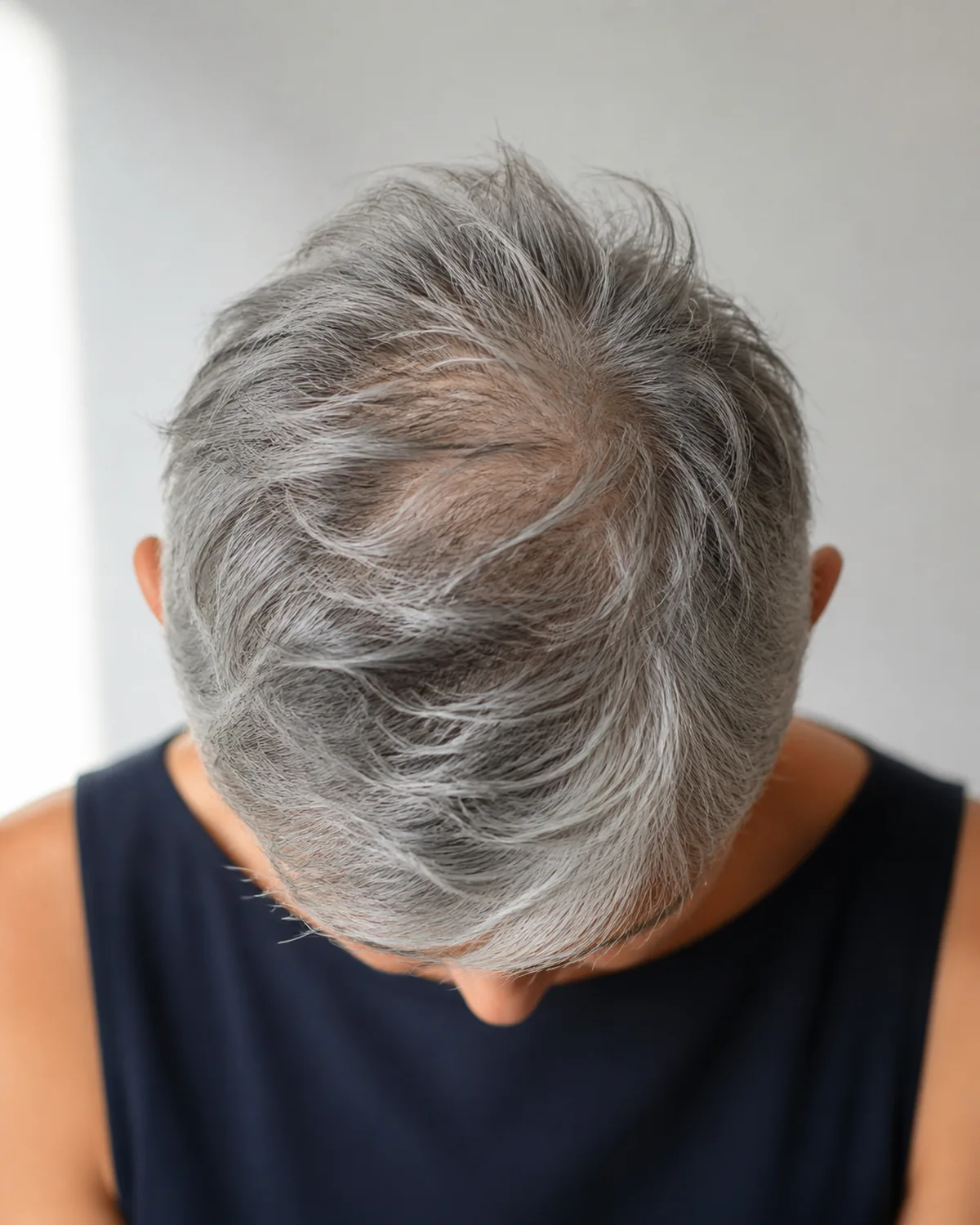
When thinning is spread evenly across the crown, short layers are one of the few structures that actually gain from having less hair. Cut short enough, fine strands stand up rather than lie flat, and the scalp visible between them reads as texture rather than loss.
The trade-off is maintenance: a pixie that flatters thinning hair depends on the crown being short enough to hold its lift. Grow it even a centimeter past that point and the volume collapses.
- Ask your stylist how short the crown layers need to be to stand without product
- Confirm that the sides stay long enough to frame your ears, not expose them
- Ask how many weeks this shape holds before the crown starts falling flat
- Bring a photo showing the crown from above so your stylist sees the thinning pattern you see
2. Chin-Length Blunt Bob
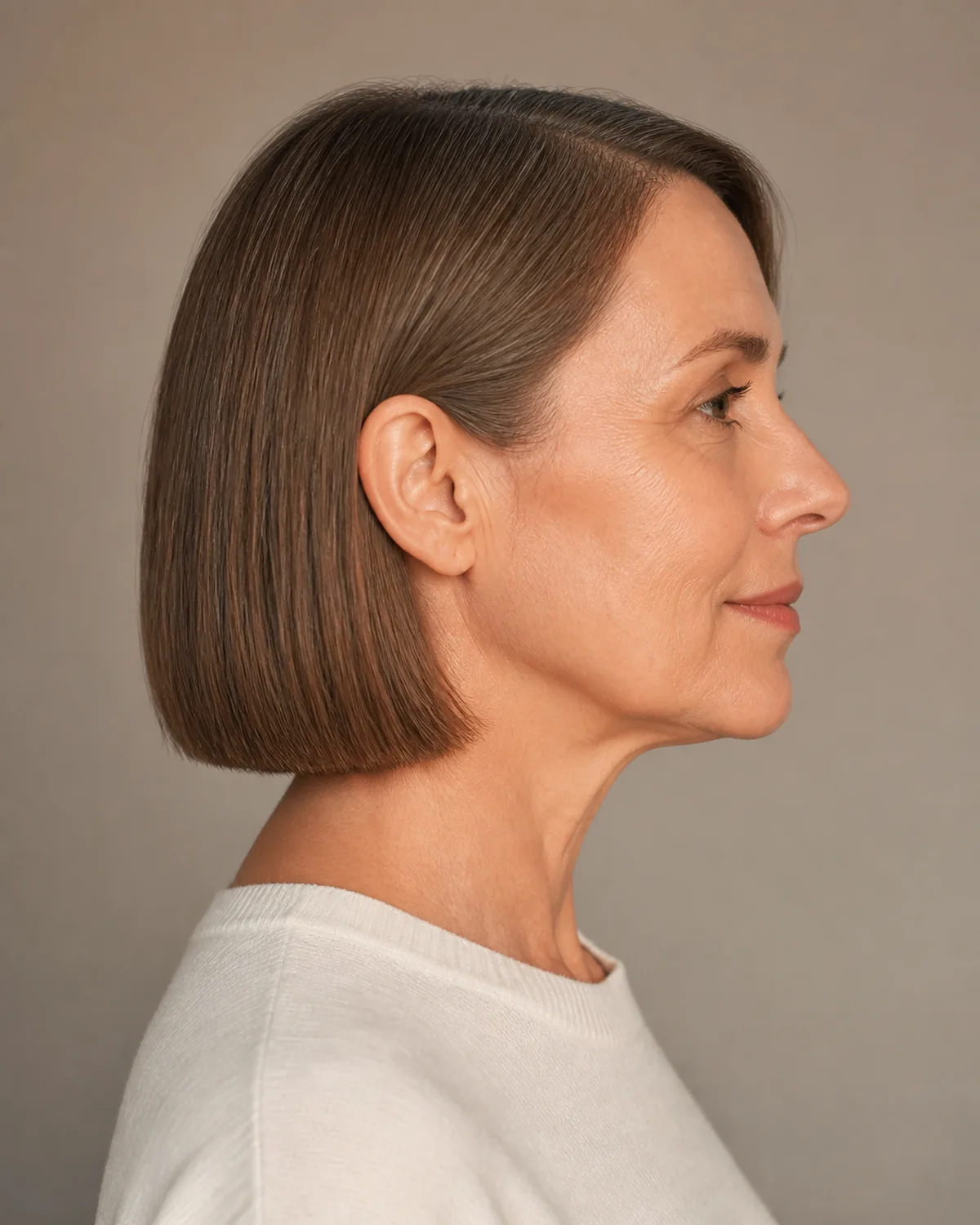
A one-length cut collects every strand at a single weight line. On thinning hair that still has medium-to-thick strand diameter, this line reads as a deliberate edge rather than a thinning tail. The visual density comes from the fact that all the hair ends in the same place.
The condition is the ends themselves. If your strand diameter is fine and the tips have started to taper, a blunt perimeter will show every gap. A slight inward bevel closes those gaps without giving up the single-line silhouette.
- Ask whether your ends can hold a true blunt line or whether they need a bevel
- Ask where the weight line should sit relative to your jawbone for the most density
- Ask your stylist to show you the difference between a blunt edge and a beveled edge on a test section before committing
Where to start
Find your situation, skip ahead
Your thinning is mostly at the crown and you want something short
A textured pixie keeps crown layers short enough to stand. Try Ideas 1 and 6 first.
01 Textured Pixie With Soft Crown Volume06 Volumizing Crop With Tapered Nape
You still have shoulder-length hair but the ends look thin and flat
A single-length line at the chin or collarbone preserves weight. Start with Ideas 2 and 5.
Your part line or temples are where the thinning shows most
A deep side part or curtain fringe redirects the eye. Ideas 3 and 4 are built for this.
03 Side-Swept Layered Bob With Root Lift04 Soft Shag With Curtain Fringe
3. Side-Swept Layered Bob With Root Lift
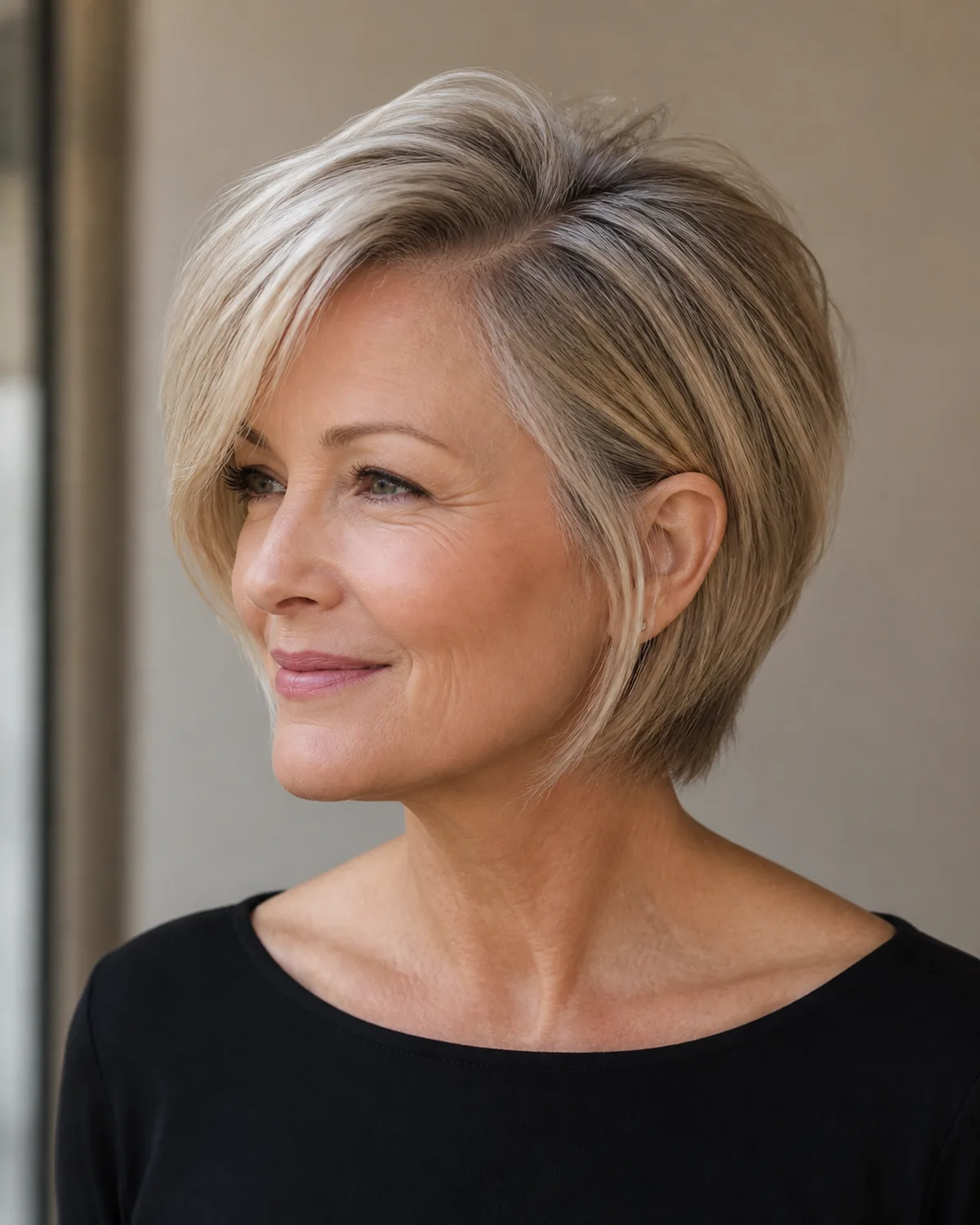
A center part on thinning hair is a spotlight on the thinnest strip of your scalp. Moving the part to a deep side position folds the hair over that strip and redistributes weight across the crown. This is one of the simplest interventions that makes the most visible difference.
The layered bob adds a second mechanism: layers at the crown create lift that a one-length bob cannot. The combination of redirected part and layered crown addresses both visible scalp and flat volume.
- Ask your stylist where your part should sit to cover the widest section of visible scalp
- Ask how steep the layers need to be to lift the crown without losing weight at the perimeter
- Request that the stylist show you the part placement in the mirror before cutting, so you can see the coverage in real time
4. Soft Shag With Curtain Fringe
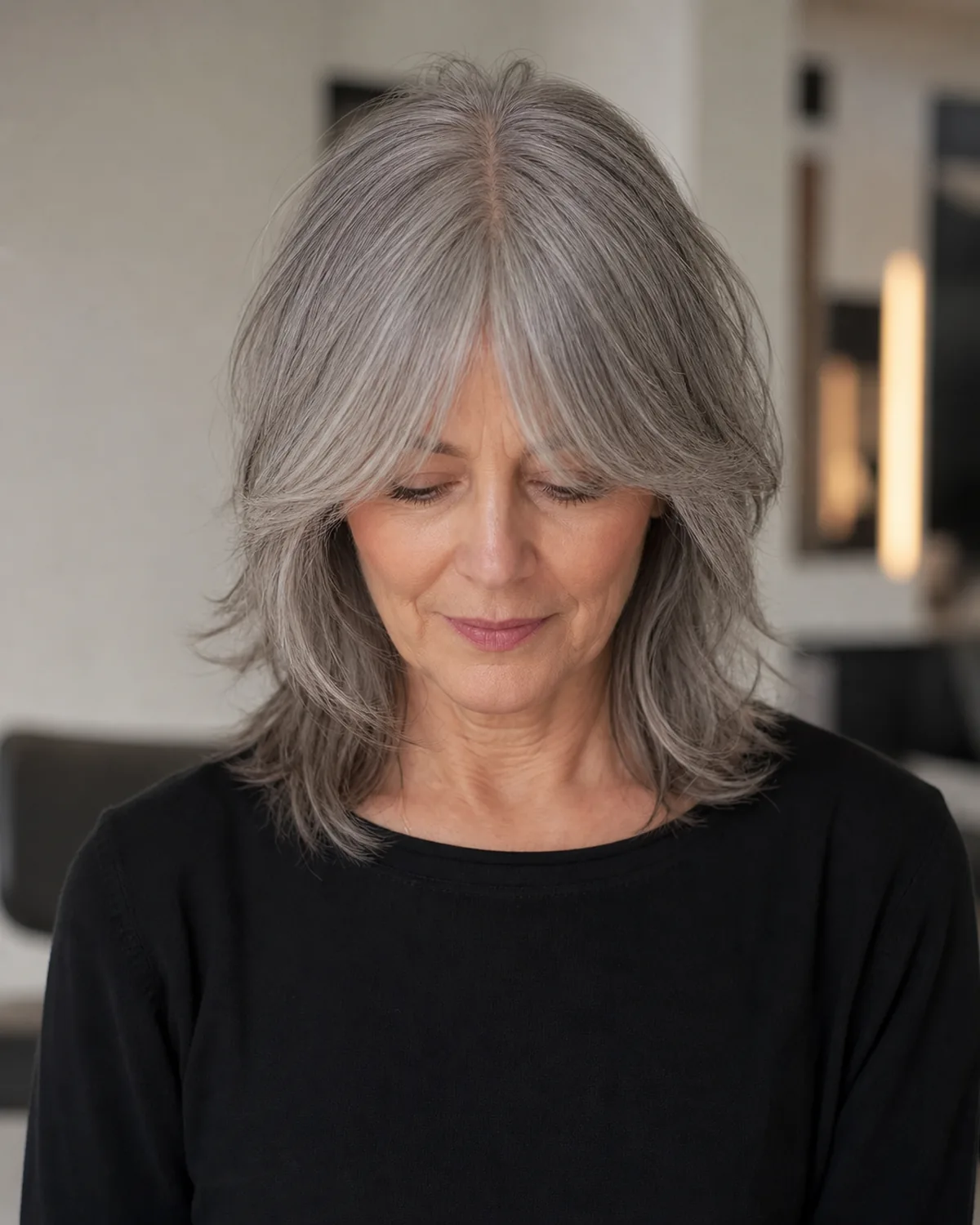
Temple thinning is one of the patterns that responds well to a fringe. A curtain fringe sits over the recession and the center part hides it rather than framing it. Below the fringe, disconnected shag layers create movement that reads as density even when individual strands are sparse.
The risk is fringe weight. A curtain fringe cut too thin on already-thin hair will separate and show scalp through the gaps. Too thick and it pulls density away from the sides, making the thinning elsewhere more obvious.
- Ask your stylist how much weight the fringe needs to cover your temples without separating
- Ask whether the fringe should blend into the layers or stay disconnected
- Ask how often the fringe will need trimming, because this is the one piece that grows out of position fastest
- Bring your hair parted where you normally wear it so your stylist can see the recession in its usual state
5. Collarbone-Length One-Length Cut
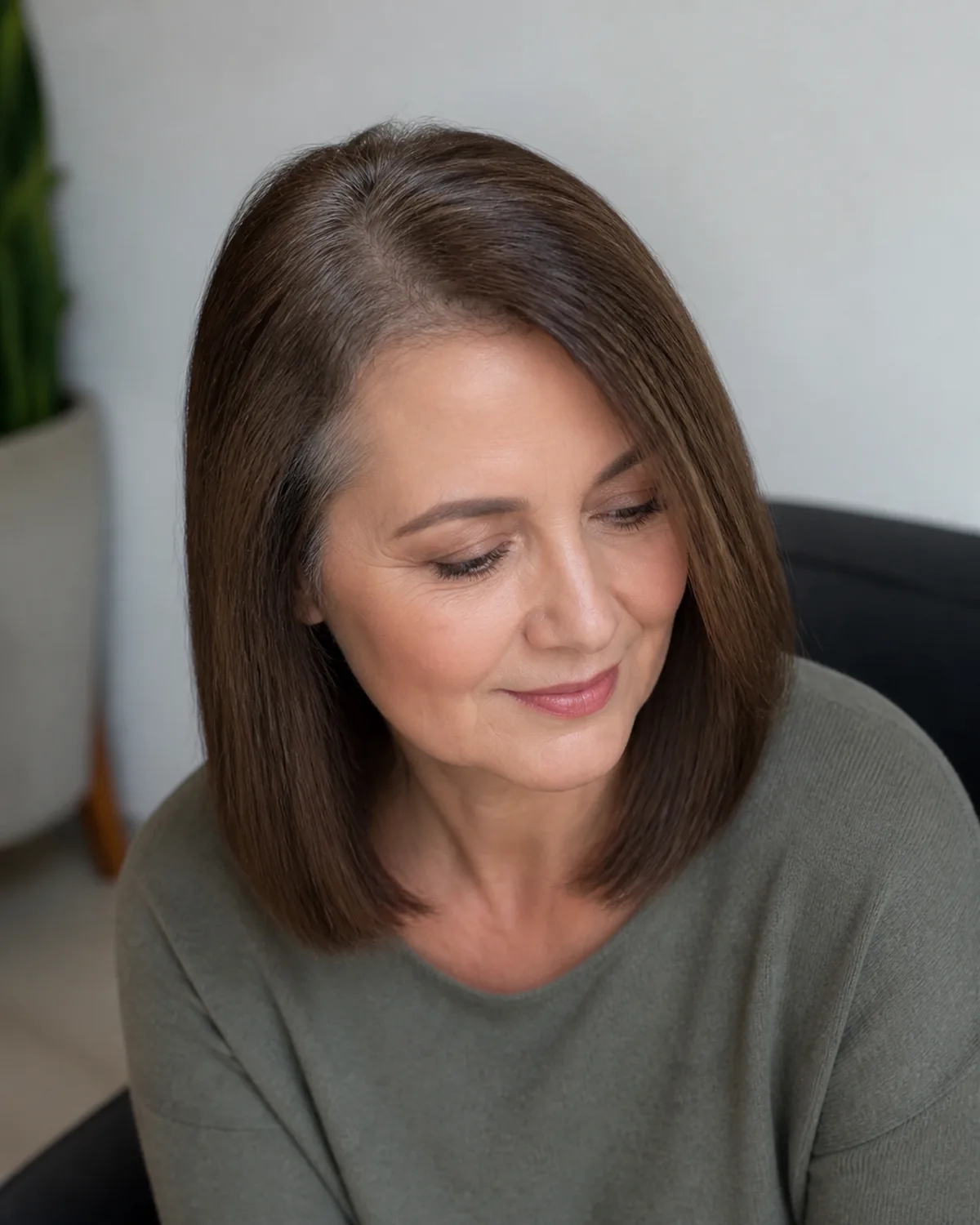
For women whose thinning has not yet reached the point where length costs them density, a single-length cut at the collarbone preserves every strand in the weight line. No layers means no thinning at the interior. The visual density depends entirely on whether the ends still look solid at this length.
The test is simple: hold your hair at collarbone length in front of a window. If you can see daylight through the last two inches, the ends are too sparse for a one-length line at this distance and a shorter single-length cut will serve you better.
- Ask your stylist whether your density can carry this length or whether the ends will look transparent past the collarbone
- Ask for a dry consultation so you can both see the hair at its natural density, not wet-combed and artificially even
- If the answer is borderline, ask about taking the line up to the chin and revisiting length when density stabilizes
6. Volumizing Crop With Tapered Nape
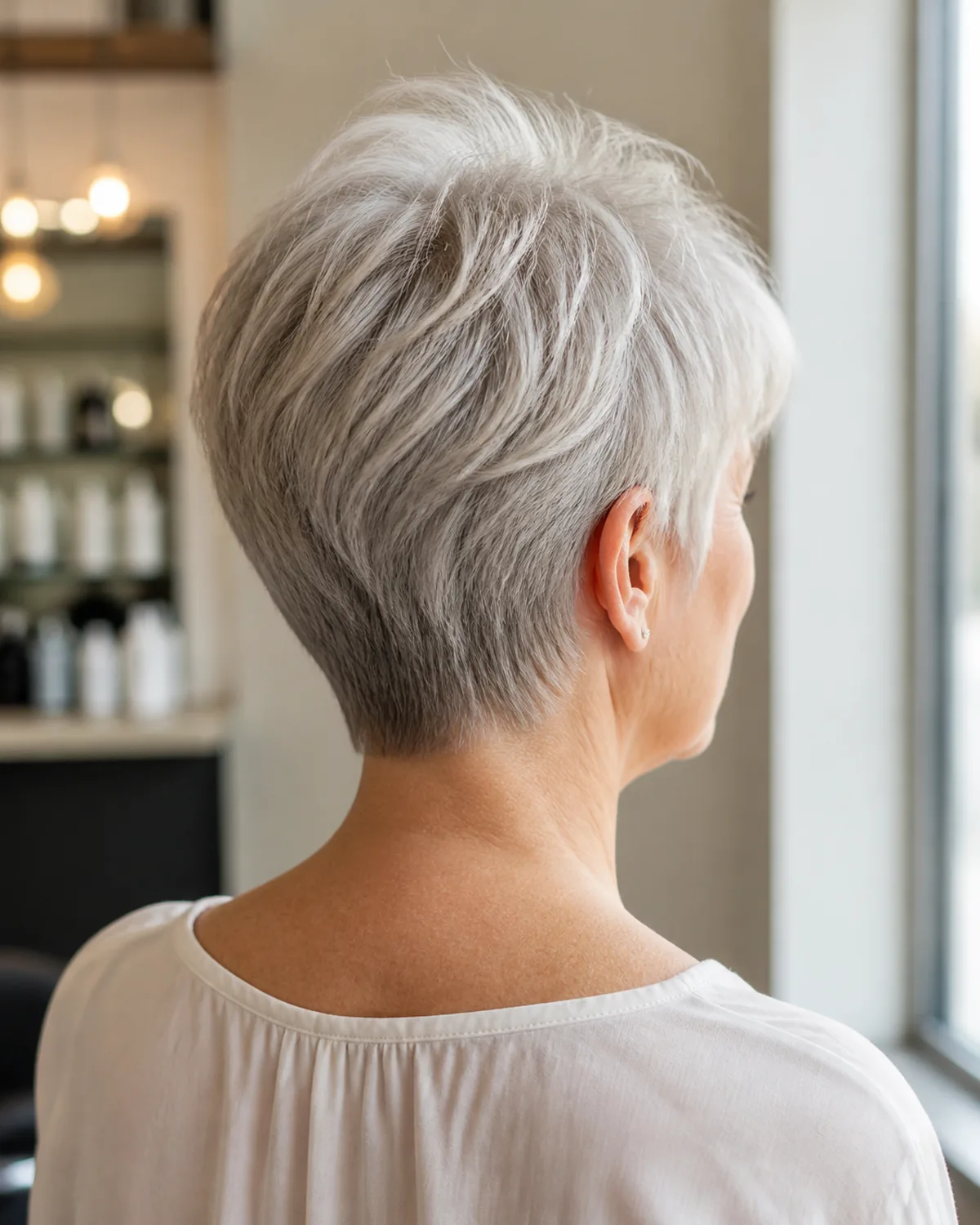
A crop sits between a pixie and a bob. The graduated back pushes volume up and forward toward the crown, which is where most women notice thinning first. The tapered nape keeps the back clean without adding bulk where you do not need it.
This cut suits women who want short but find a pixie too exposed. The extra length at the crown gives the stylist room to build shape, and the graduation means the back does architectural work that a blunt crop cannot.
- Ask how short the graduation at the back needs to be to push volume toward your crown
- Ask whether the taper should be close-cut or softened, depending on your nape hairline
- Ask your stylist to leave the crown long enough to create lift and show you the difference between a flat crown and a graduated one on your hair
7. Layered Lob With Face-Framing Pieces
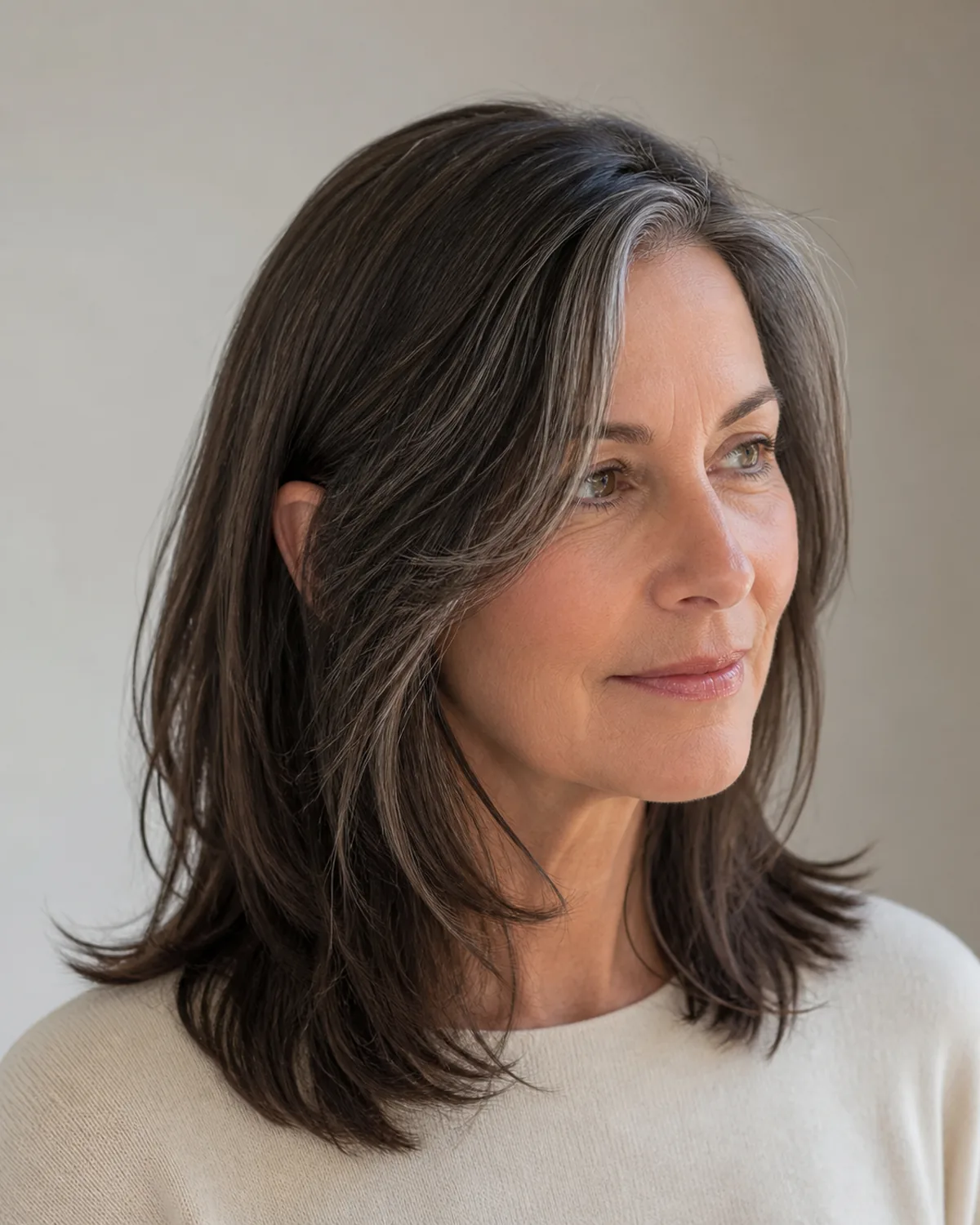
When thinning is mild and concentrated at the hairline, face-framing layers create a visual screen without sacrificing overall length. The shorter pieces at the front fill in where the hairline has receded, and because they are layered into the rest of the cut, they move naturally rather than sitting like a curtain.
This works best when the rest of the hair still has enough density to support a lob. If the thinning extends beyond the hairline into the crown, face-framing alone will not be enough and a shorter overall length may serve you better.
- Ask where the shortest face-framing piece should fall, whether at your cheekbone or your jawline, based on where your hairline thinning begins
- Ask whether the face-framing layers should be blended or sliced, because the technique changes how they move
- Ask your stylist to show you the difference with the pieces tucked behind your ear versus falling forward, so you can decide how much coverage you want daily
A stylist who can see your hair in person will always outrank anything written here. The value of these questions is not the answers themselves but the conversation they start: one where you and your stylist are looking at the same problem with the same vocabulary.
Where the checkable claims come from
- How to Cut Fine Hair to Look Thicker — Sam Villa
- Hair Cutting Techniques: One Length, Graduated, Layered — Pivot Point International
Keep this one
Save it for the appointment
Pin the image above to the board you actually open before a salon visit. This guide is written to be re-read, not read once.
Tonight, before you close this tab
- Pull your hair into a low ponytail and measure the circumference to give your stylist a density baseline
- Part your hair on the opposite side and photograph the crown from above to see where thinning is concentrated
- Write down the two sentences from this guide that best describe your hair and bring them to your appointment
- Stand at arm's length from a mirror in natural light and note where scalp is visible to map your thinning pattern