8 Bob Hairstyles for Women Over 50
Eight bob variations for women over 50, each judged on what your hair needs to hold the shape, what the cut actually does and what to ask before you book.

Booking an appointment soon? Save this page. It is easier to skim in the chair than to remember.
At a glance
Works
- A chin-length blunt bob when your ends still hold a solid, visible line
- A graduated bob when you have enough density for the stack to push against
- Layers placed to create a shelf rather than simply removing weight
Depends
- An A-line slope, which only reads as deliberate when the back has density to hold the angle
- A French bob above the chin, which depends on whether your forehead wants a fringe or open space
- A wavy bob, which needs natural bend to separate the pieces
Skip
- A blunt one-length line when the ends have thinned and show gaps
- A steep graduation on fine hair, where the stack collapses within an hour
- A shoulder-length lob with no layers and no texture, which reads as a default rather than a decision
A bob is a haircut between the jaw and the shoulder. That range is wider than it sounds, and it holds more structural variation than any other single length, from a blunt line at the chin to a graduated stack at the crown.
After 50, individual hair strands are often thinner than they were, and density can drop. Both change what a bob can do, because the shape depends on having enough raw material to hold the line you chose.
Every cut below is judged on the same question: what does your hair need to hold this shape, and what happens when it does not have it.
1. The blunt line, and what it demands from your ends
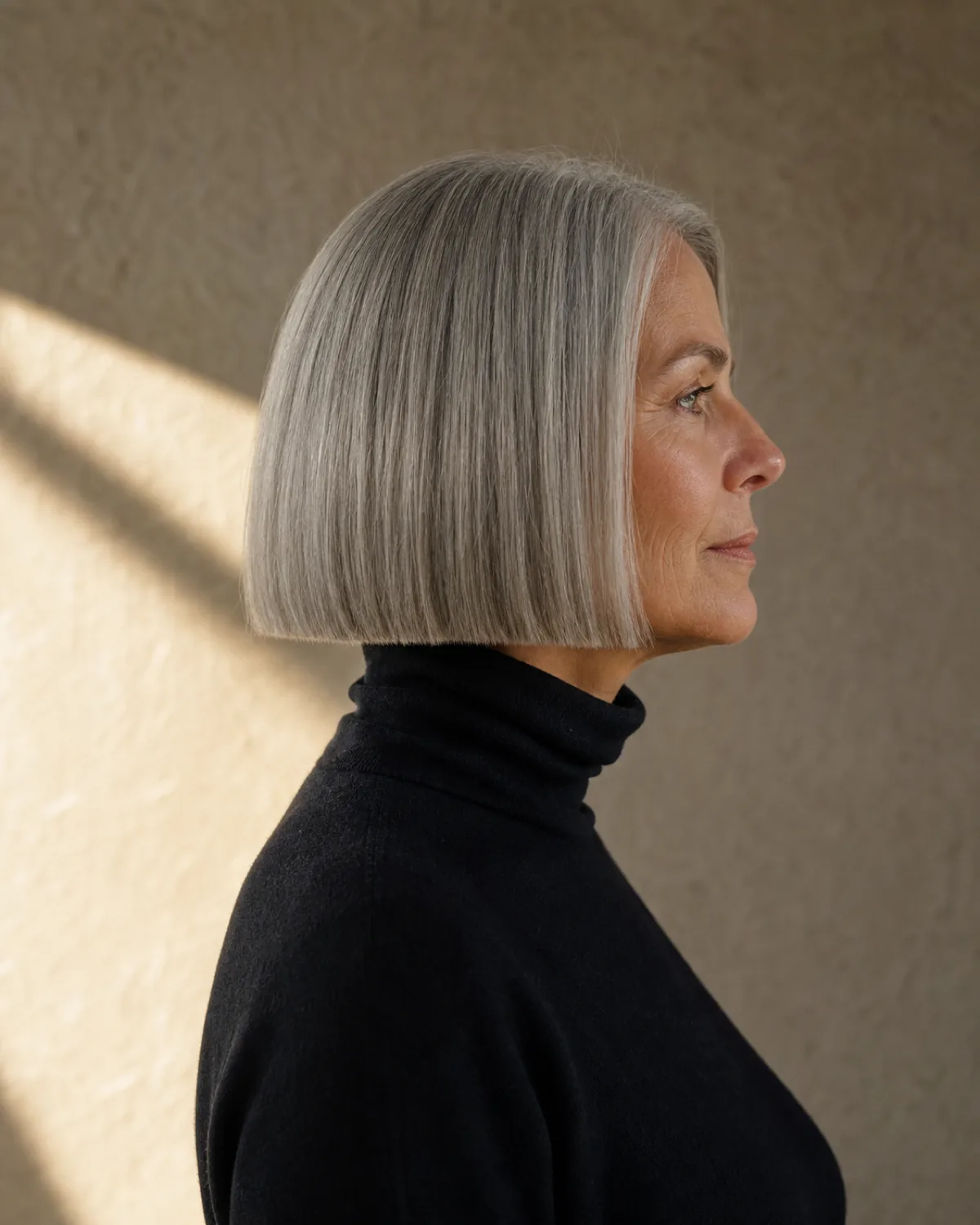
A blunt bob keeps every strand the same length so the weight collects right at the bottom. That single edge is the entire commitment: it works when the line reads solid, and it fails when the line shows gaps.
After 50 the density at the bottom tends to drop, and that is where the blunt line lives. Hold your ends flat between two fingers and see how much light comes through. If the edge reads thin, a point-cut perimeter keeps the length but softens the demand.
- Hold your ends in direct light before deciding on a blunt finish
- Ask whether a point-cut perimeter would keep the length but soften the edge
- If you can see scalp through the ends, the blunt version is working against you
2. The layered bob
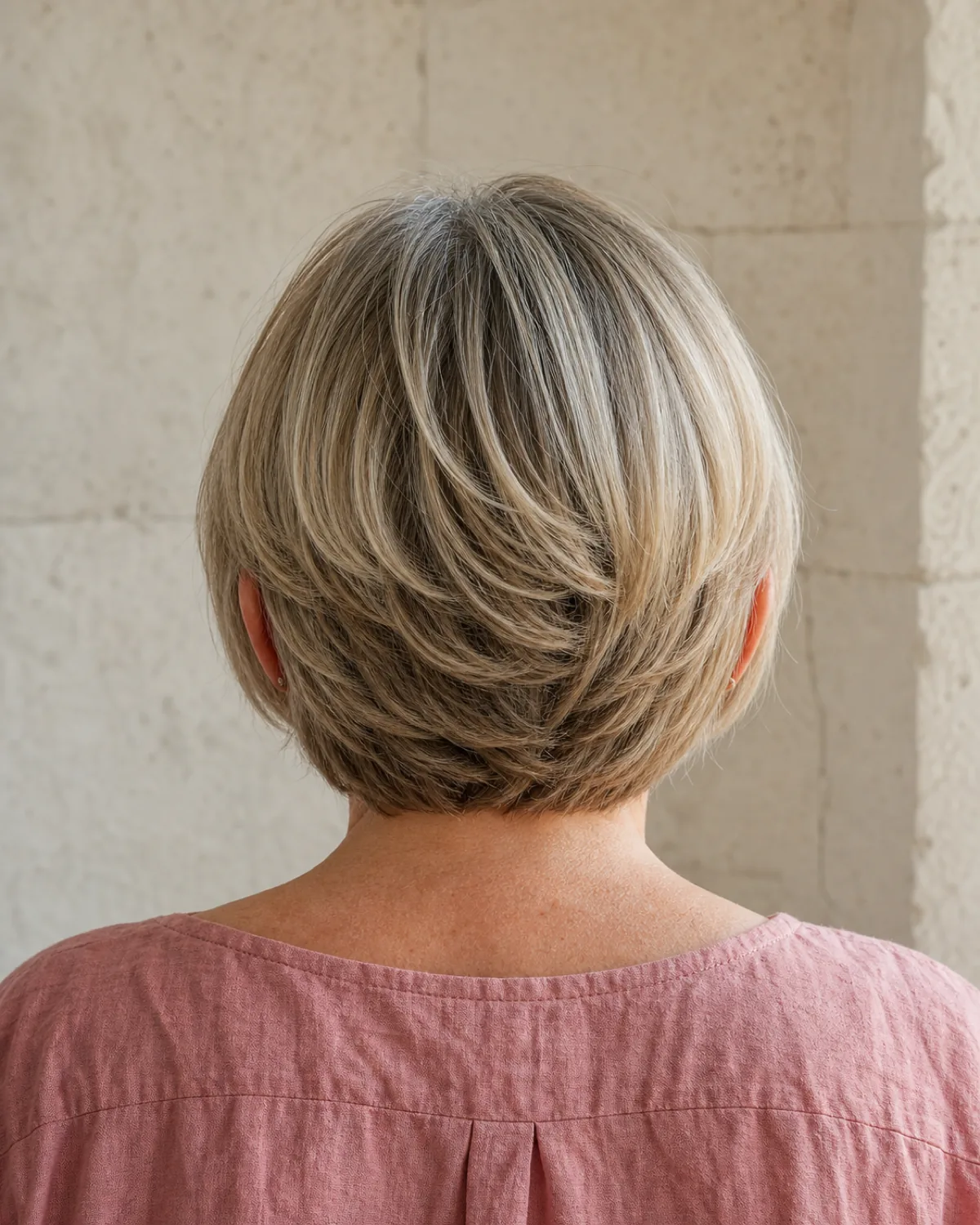
Layers are cut at a higher elevation than the perimeter, and where the shortest layer starts is the whole decision. Start it high and you remove weight from the interior, which gives movement but thins the bottom edge. Start it low and you build a shelf, which keeps density where the eye settles.
On fine hair, every layer you add is density you subtract. The shelf approach works because it redistributes weight rather than removing it. The shattered, heavily layered version does the opposite.
- Ask where the shortest interior layer starts, because that sets the trade-off
- Ask for a shelf rather than scattered layers if your hair is fine
- Check the back with a hand mirror before you leave the chair
Where to start
Find your situation, skip ahead
Your hair is fine or thinning and you want a bob that holds its shape
Start with the two cuts that collect weight rather than spread it. The graduated bob stacks density at the back; the blunt bob keeps every strand in one line.
01 The blunt line, and what it demands from your ends04 Stacking for volume, and testing whether your hair can hold it
You want a bob but you are not ready to go above the jaw
The long bob and the A-line both keep length below the chin. The difference is whether the front and back are the same length or different.
03 The A-line slope, and what happens when density drops05 The long bob at shoulder level
You want to change how the bob frames your face without changing the length
Add a fringe. Curtain bangs change the geometry of the forehead; a French micro-fringe changes the proportions of the whole face.
06 The French bob above the chin07 Adding a fringe to a bob, and counting the trim visits
3. The A-line slope, and what happens when density drops
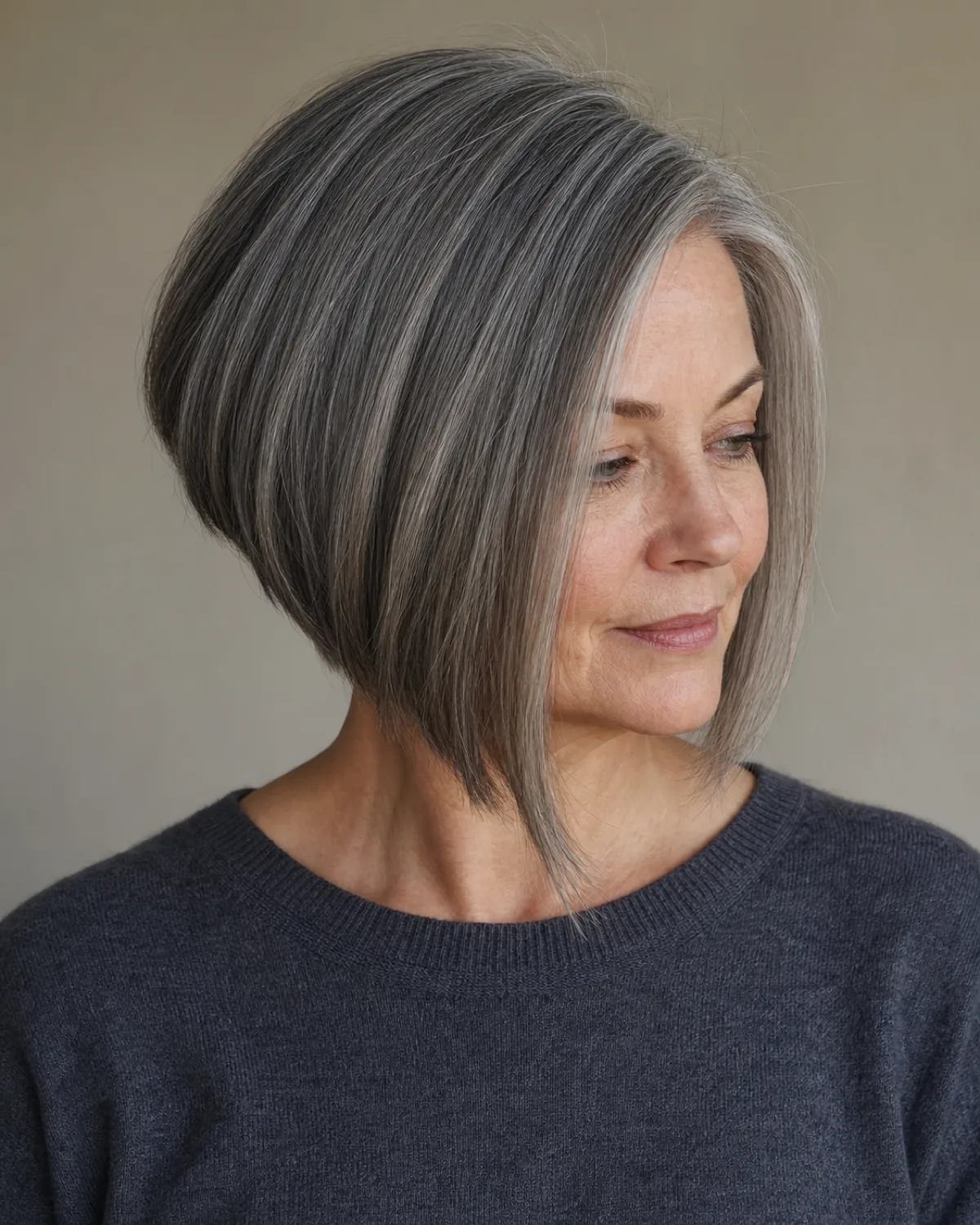
An A-line bob keeps the front longer and takes it shorter behind. The steeper the slope, the more dramatic the shape, but also the more it depends on the shorter back section holding its own weight.
Fine or thinning hair at the nape cannot support a steep angle. The back collapses, the front hangs, and the intended diagonal disappears. A gentler slope keeps the A-line readable on less density. A steep slope is a commitment to thickness you may not have in two years.
- Ask how many centimetres separate the front from the back
- Ask for the gentlest slope that still reads as an A-line
- Photograph the back at one week, because the angle shows its real behaviour after a few washes
4. Stacking for volume, and testing whether your hair can hold it
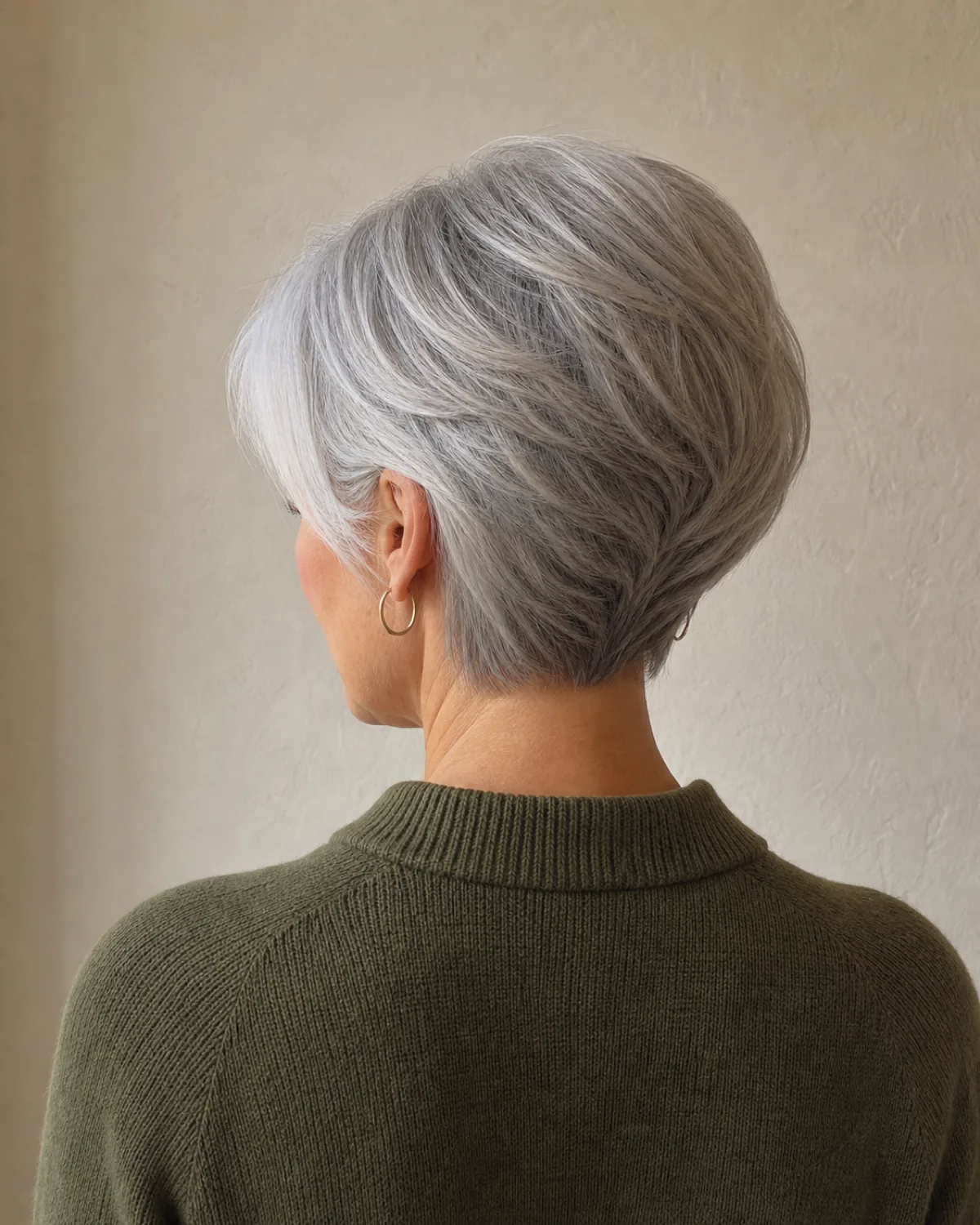
A graduated bob is built by cutting at a low to medium elevation so the shorter lengths press against the longer ones. That pressure creates a rounded wedge at the back of the head, exactly where most bobs go flat overnight.
The test is simple. Blow one section at the back of your head round with a brush and check it that evening. If the shape is still there, your hair has the resistance this bob needs. If it has flattened, every morning with a graduated bob is a rebuild. The cut itself is not the cost. The daily maintenance is.
- Blow one section round tonight and check it tomorrow morning
- Ask your stylist how many minutes the morning routine takes with this shape
- Ask how the back behaves on a no-wash day, because that is the honest version
5. The long bob at shoulder level

A bob that reaches the shoulder is the longest version the name covers. It is also the easiest to cut and the easiest to end up with by accident, which is both its advantage and its risk. Without some internal structure it reads as a default rather than a decision.
What saves a lob is a detail: a slightly textured perimeter, a single layer placed to create movement, or a parting that displaces weight. Without at least one of those, it is hair that happens to end at the shoulder.
- Ask for one structural detail that makes this a cut rather than a length
- Ask whether the perimeter is blunt, textured, or point-cut, and why
- If you want the least maintenance, this is the bob to start with
6. The French bob above the chin
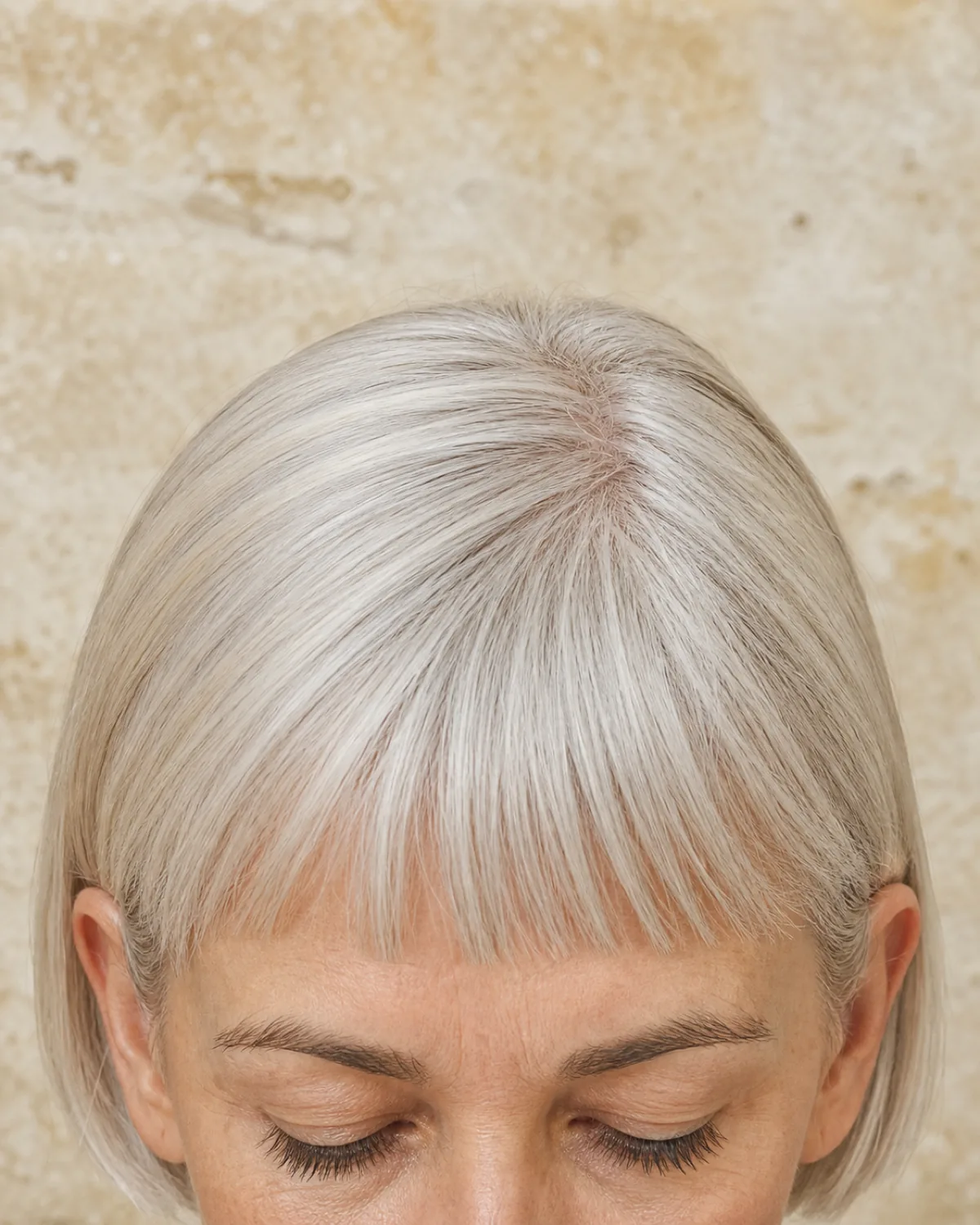
This is a bob that sits above the chin, typically at ear length, paired with a short fringe that ends above the eyebrows. Moving the perimeter above the chin exposes more of the jaw and neck than a standard bob does, and the fringe reshapes the proportions of the forehead.
The fringe is the condition. A short forehead or a high hairline compresses the space between the fringe and the brow, and the result reads as heavy rather than clean. Measure the distance from your hairline to your eyebrows before you ask for this.
- Measure your forehead height to see whether there is room for a short fringe
- Ask how often the fringe needs a trim, because short fringes grow fast
- Decide whether you want your jaw and neck permanently on show
7. Adding a fringe to a bob, and counting the trim visits

A fringe reshapes the top of a bob by introducing a new line across the forehead. A centre-parted version sweeps outward in two wings; a side-swept version runs from a deep parting toward one ear. Both do the same structural job: they add a horizon that the bob did not have before.
The question is whether that horizon is worth the upkeep. A fringe at bob length grows out of shape faster than the bob itself, and needs its own trim every four to six weeks. Count those extra visits for a year before you decide. If the schedule fits, the fringe is the most efficient edit you can make to a bob. If it does not, you spend the year growing it out instead.
- Count the extra appointments for a year and see whether the schedule fits
- Bring your glasses to the consultation if you wear them, because the sweep has to clear the frame
- Ask what happens as it grows out, so you know what the in-between stage looks like
8. The wavy bob, when your hair has natural bend
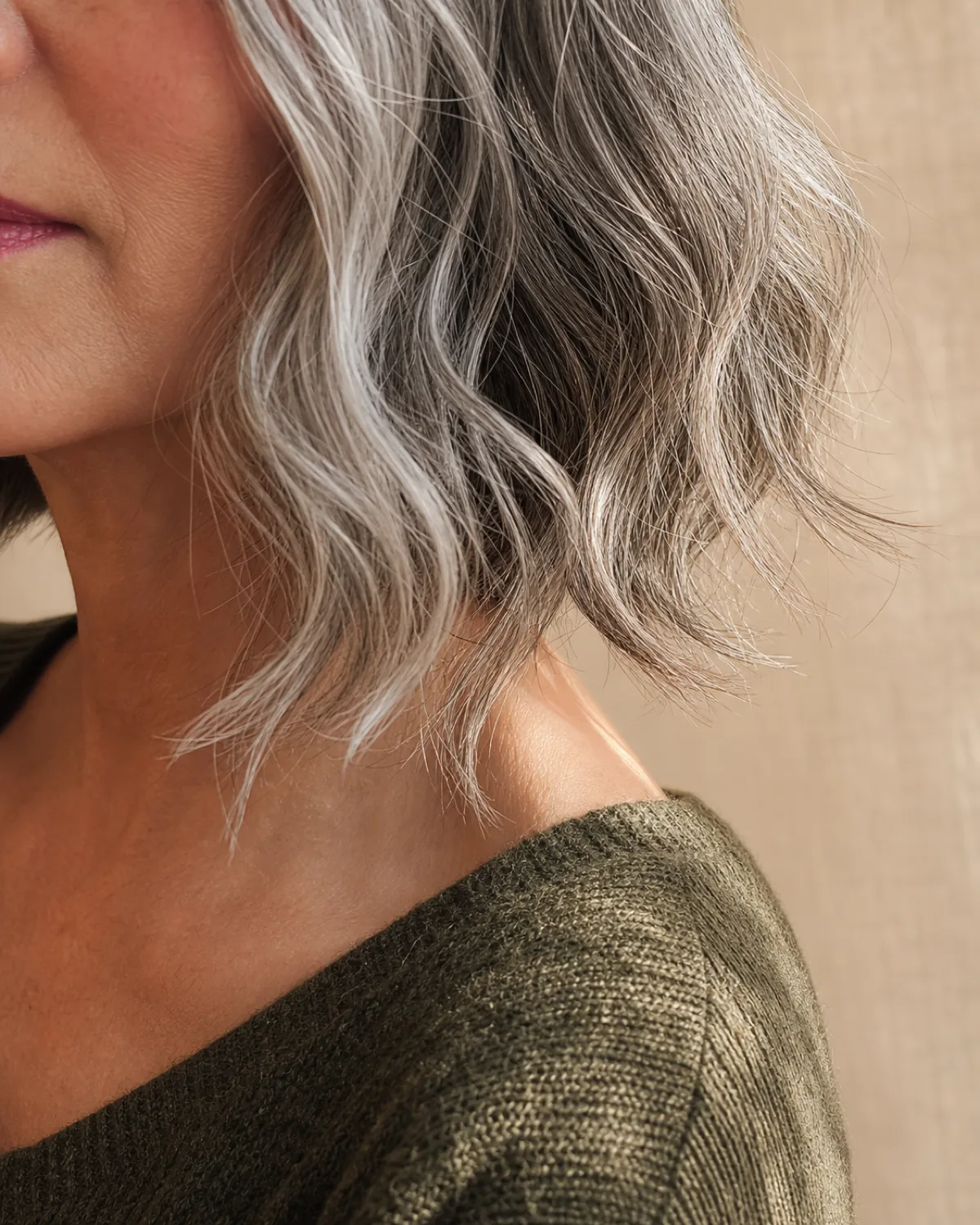
Natural bend makes the ends separate into pieces that curve away from each other, and that separation is the texture. On straight hair the same bob sits in one smooth sheet. The difference is not styling: it is what the hair does on its own after it dries.
This means a wavy bob is not a choice you make at the salon. It is a condition you check first. If your hair bends, the bob gets movement and texture for free. If it does not, no amount of layering produces the same effect.
That is the method for all eight cuts: check what your hair can supply, match the structure to it, then ask what the shape costs in time. More of the same thinking sits in fine hair and face shape.
Where the checkable claims come from
- Bob cut — Wikipedia
- Graduation vs. Elevation: The Subtle Distinction That Impacts Every Cut — Above Shears
- Bangs (hair) — Wikipedia
- Hair diameter and aging — Birch, Messenger & Messenger, Journal of Investigative Dermatology (2001)
Keep this one
Save it for the appointment
Pin the image above to the board you actually open before a salon visit. This guide is written to be re-read, not read once.
Tonight, before you close this tab
- Hold the ends of your hair flat between two fingers and look at how much light comes through
- Pull a section at the side and let it fall to see where your natural parting sits
- Find two old photographs where your hair was at bob length and compare how the ends looked
- Write down the one question about your hair that you want answered before you book