6 Inverted Bob Styles Over 50: Who Suits Each One and Who Should Skip It
Six inverted bob variations judged by face shape, hair density, and maintenance load. Each one tells you who it suits and who should skip it.

Booking an appointment soon? Save this page. It is easier to skim in the chair than to remember.
At a glance
Works
- A classic chin-length inverted bob on thick or medium-density hair with an oval or heart-shaped face
- A short stacked inverted bob on coarse grey hair that holds its shape without daily styling
- A long inverted bob on hair that still has density below the shoulders
Depends
- An inverted bob with side-swept bangs, which works if your hair is thick enough to form a solid fringe line but reads unfinished on fine hair
- A textured inverted bob with razored ends, which fills in nicely on wavy or coarse hair but can look stringy on fine straight strands
Skip
- Any stacked inverted bob on very fine hair at the nape, where the graduation exposes thin spots instead of building volume
- A short inverted bob when you depend on length to soften a strong jaw
- An inverted bob when you cannot commit to trims every four to six weeks
An inverted bob — also called a graduated bob or stacked bob — is built on one structural move: shorter layers stacked at the nape that graduate into longer front pieces.
That graduation creates crown volume and face-framing length in one cut. But it has conditions, and those conditions depend on your hair.
Every variation below is judged on the same question: does your hair have what the graduation needs to work?
1. The Classic Chin-Length Inverted Bob
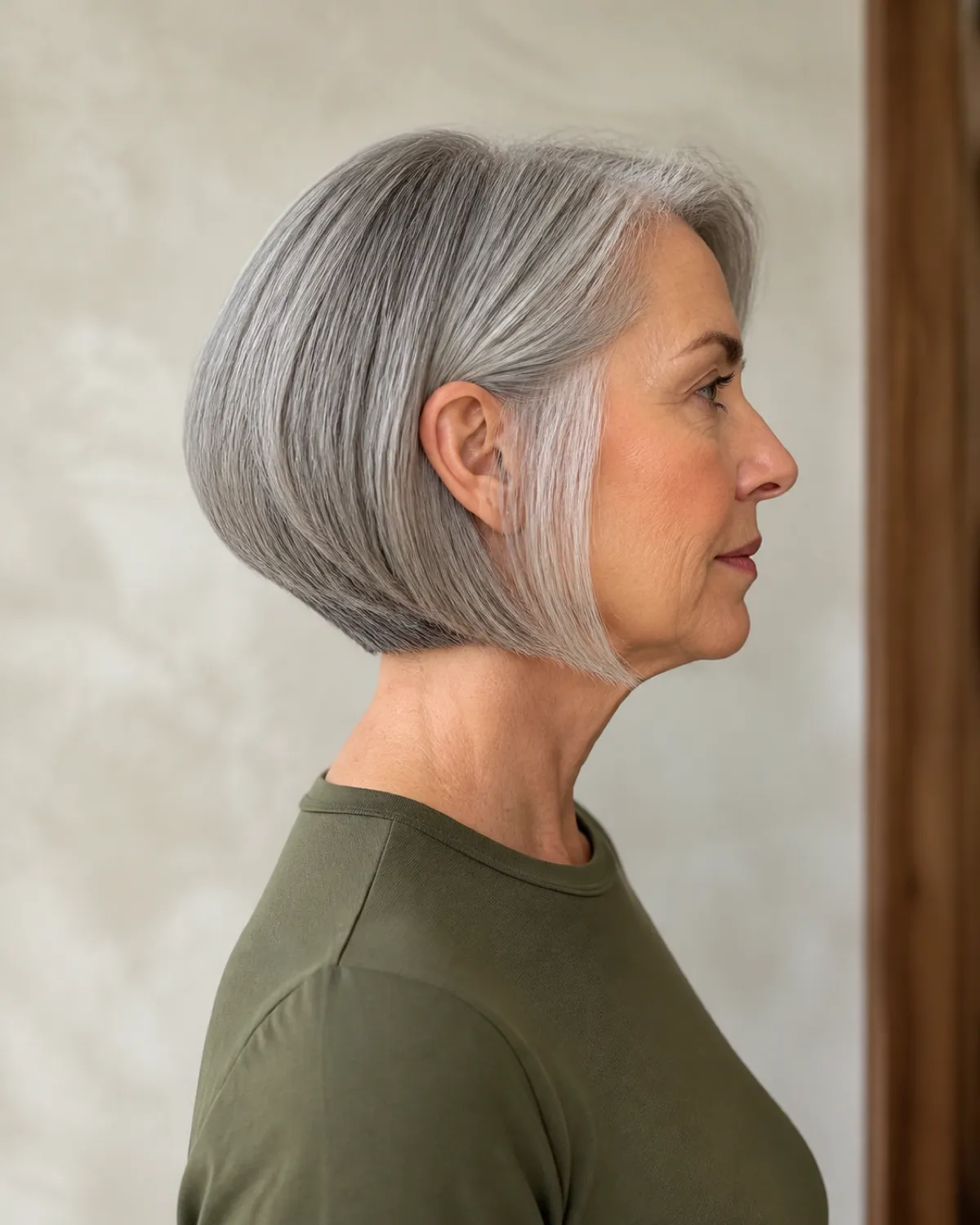
The foundational version. Stacked graduation at the nape builds a rounded shape at the back of the head, and the front pieces angle down to a clean line at the chin. The weight line — where the short stacking ends and the longer front begins — sits roughly at ear level.
Rush Hair & Beauty describes the graduated bob's defining feature as stacked layers at the nape that create volume and a rounded shape, with the height of graduation determining how bold the silhouette reads.
This works on oval and heart-shaped faces where the jaw angle mirrors the cut's angle. The chin-length front pieces frame without crowding.
Skip this version if your hair is very fine at the nape. The stacking needs density to push upward; without it, the graduation separates the strands and shows gaps. For more on how face shape interacts with cut structure, see the face shape guide.
- The weight line at ear level gives stylists a clear landmark to maintain across trims
- Graduation at the nape pushes volume upward without needing product or a round brush
- Ask your stylist how high the graduation should sit based on your nape hair density
2. A Short Inverted Bob with a Stacked Nape
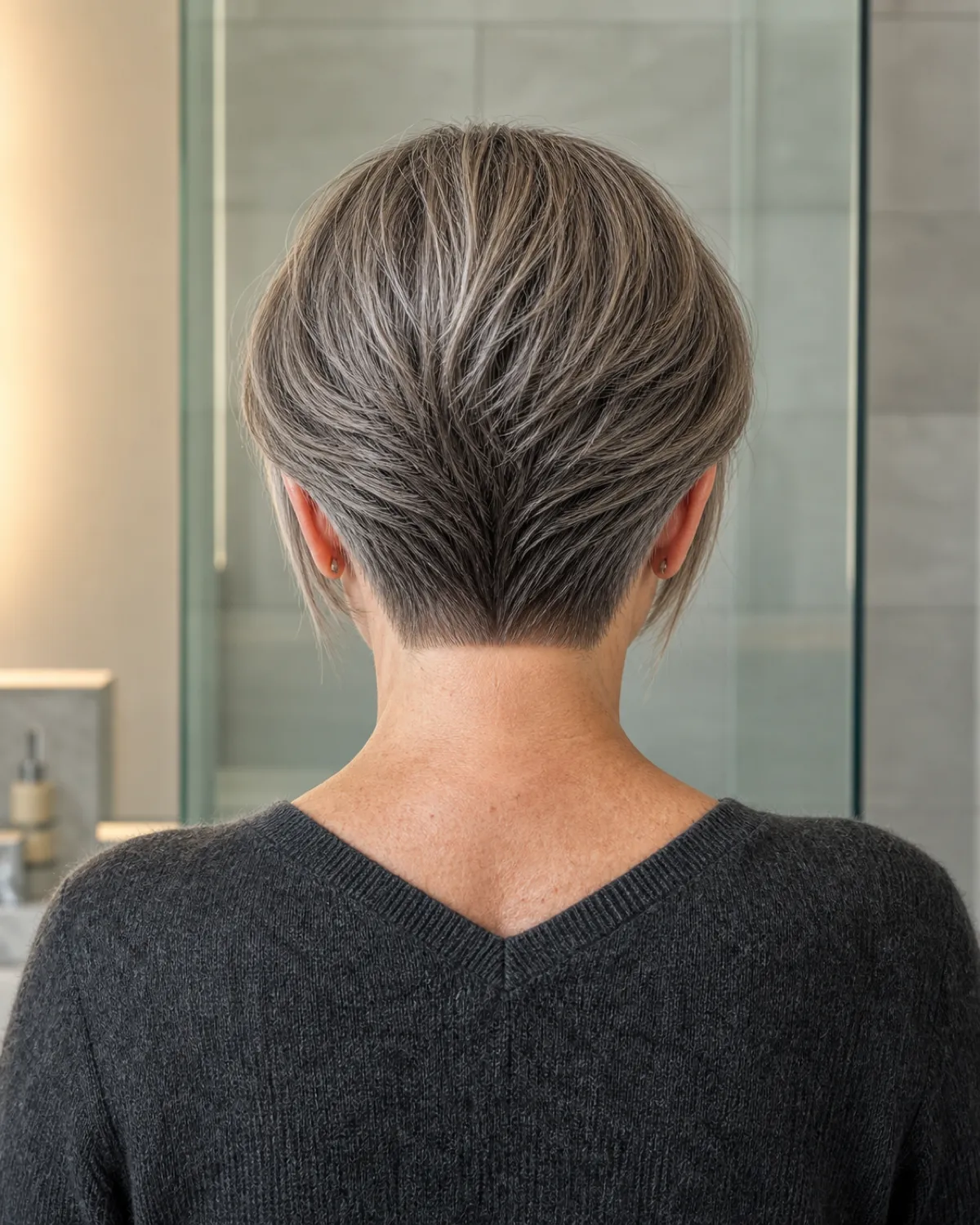
The graduation is higher and tighter here. The stacked layers at the nape start higher up the head and are cut with more elevation, creating a bolder rounded shape at the back. The longest front pieces reach the jawline rather than past it. Revlon Professional notes that the inverted bob's stacked, graduated back provides built-in crown volume and removes weight from thick tresses.
This version suits thick or coarse grey hair that holds its shape without daily intervention. The tight stacking stays put on hair with enough body to support it.
Skip this if you depend on length around the jaw to soften a strong jawline — the short front ends above it and draws attention to the jaw angle. For a broader look at bob options by structure, see the bob styles guide.
- The higher graduation creates more volume at the crown without added length
- Coarse grey hair holds the tight stacked shape through the day without product
- Ask your stylist about graduation height — high graduation is bold, low is subtle
Where to start
Find your situation, skip ahead
Your hair is thick or coarse and you want built-in volume without daily styling
The short stacked inverted bob holds its shape on thick grey hair with almost no effort. Start there.
02 A Short Inverted Bob with a Stacked Nape01 The Classic Chin-Length Inverted Bob
You want the inverted bob angle but are not ready for a short cut
The long inverted bob keeps the graduation subtle and the length past the collarbone. Less commitment, less maintenance.
04 A Long Inverted Bob Past the Collarbone05 A Textured Inverted Bob with Razored Ends
Your hair is fine and you are unsure whether the inverted bob will work
Read the wrong-cut section first. If your nape hair is sparse, the stacked graduation will make it look thinner.
06 When the Inverted Bob Is the Wrong Cut01 The Classic Chin-Length Inverted Bob
3. An Inverted Bob with Side-Swept Bangs

Adding a diagonal fringe changes what the cut does to the forehead. A side-swept bang crosses the forehead at an angle, breaking its width and redirecting the eye downward toward the cheekbone. The inverted bob structure underneath still provides the stacked nape and angled front, but the fringe adds a second face-shaping element on top.
This suits round and square faces where the forehead is the widest point. The diagonal line narrows it visually. Skip this if your hair is too fine to form a solid fringe line. A side-swept bang needs enough density to read as a deliberate shape; on fine hair, the strands separate and the fringe looks accidental rather than architectural.
- The side-swept fringe adds face-shaping without shortening the overall bob length
- A deep side part maximizes the diagonal angle across the forehead
- Ask your stylist to cut the fringe dry so you can see exactly where it falls before committing
4. A Long Inverted Bob Past the Collarbone

The graduation is subtle here. The back sits at the shoulders and the front reaches past the collarbone — the angle from shorter back to longer front is gentle enough that people might not notice it until you point it out. But the graduation is still doing its work: the back carries less weight than a one-length cut, and the front pieces frame the face at a flattering length.
This suits women who want the inverted bob's angle without committing to a short cut. The longer length also means longer intervals between trims.
Skip this if your hair has thinned below the shoulders. The longer the cut, the more density it needs to fill the silhouette, and the graduation at the back will reveal the density gap.
- The subtle graduation angle lets you keep collarbone length while removing back weight
- Longer intervals between trims compared to short inverted bobs
- Ask your stylist to show you the angle from behind in a hand mirror before you leave the chair
5. A Textured Inverted Bob with Razored Ends
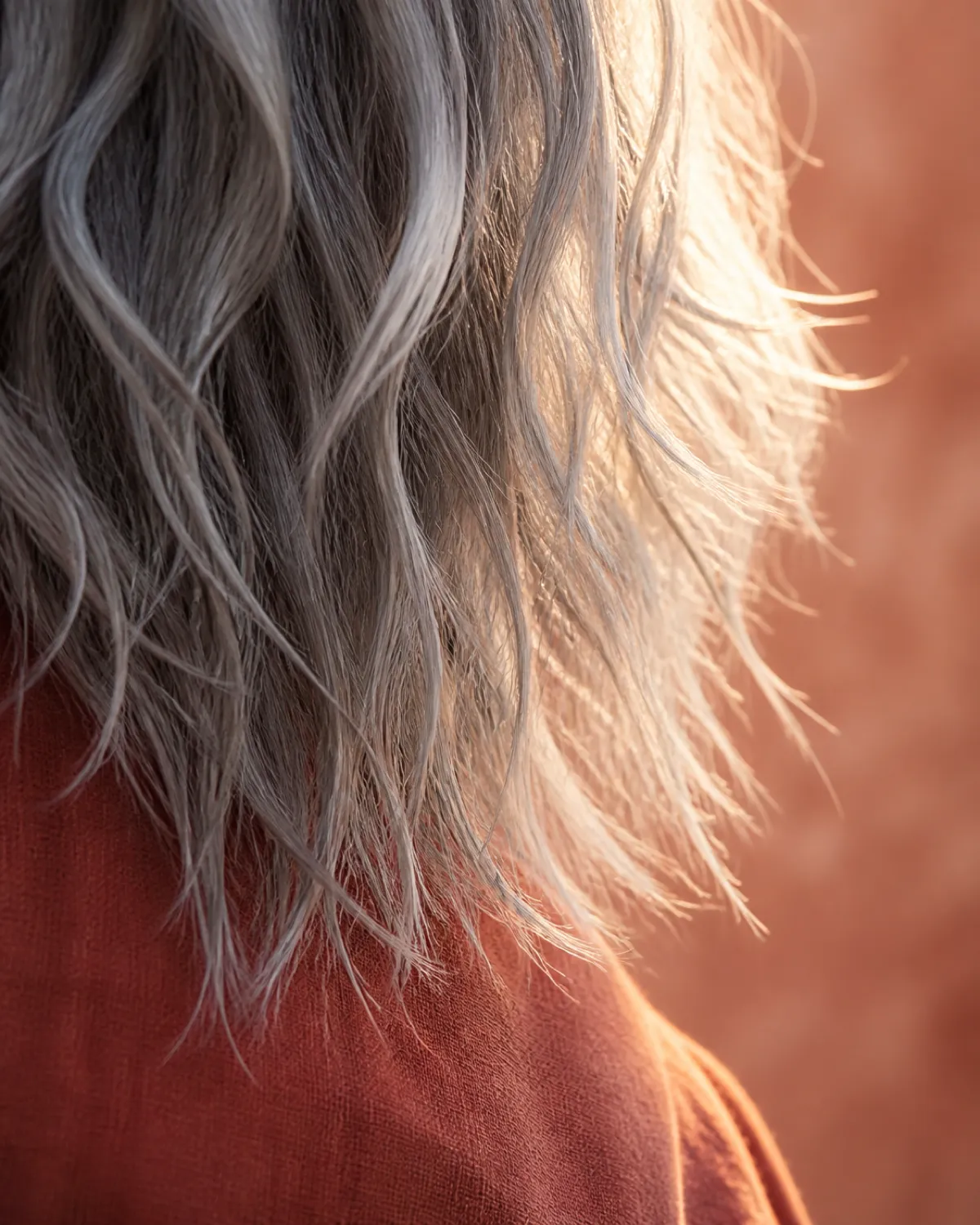
Razoring replaces the clean line of the classic inverted bob with choppy, piecy ends. A razor blade cuts through the hair at an angle, thinning each strand as it goes, so the ends land at different lengths rather than on one horizontal line. On naturally wavy or coarser grey hair, the wave fills the gaps between the razored sections and creates movement.
This version suits wavy or coarse hair where the natural texture collaborates with the razor work. The choppiness reads as deliberate when the wave fills it in. Skip this if your hair is fine and straight. Razored ends on fine straight hair can look stringy — the thinning removes density the strand cannot spare, and without wave to fill the gaps the ends just look sparse.
- Razored ends soften the structured look of the inverted bob into something more relaxed
- Natural wave or curl fills the gaps between the razored pieces and adds movement
- Ask your stylist whether they use a razor or point-cutting — both texturize, but a razor thins more
6. When the Inverted Bob Is the Wrong Cut
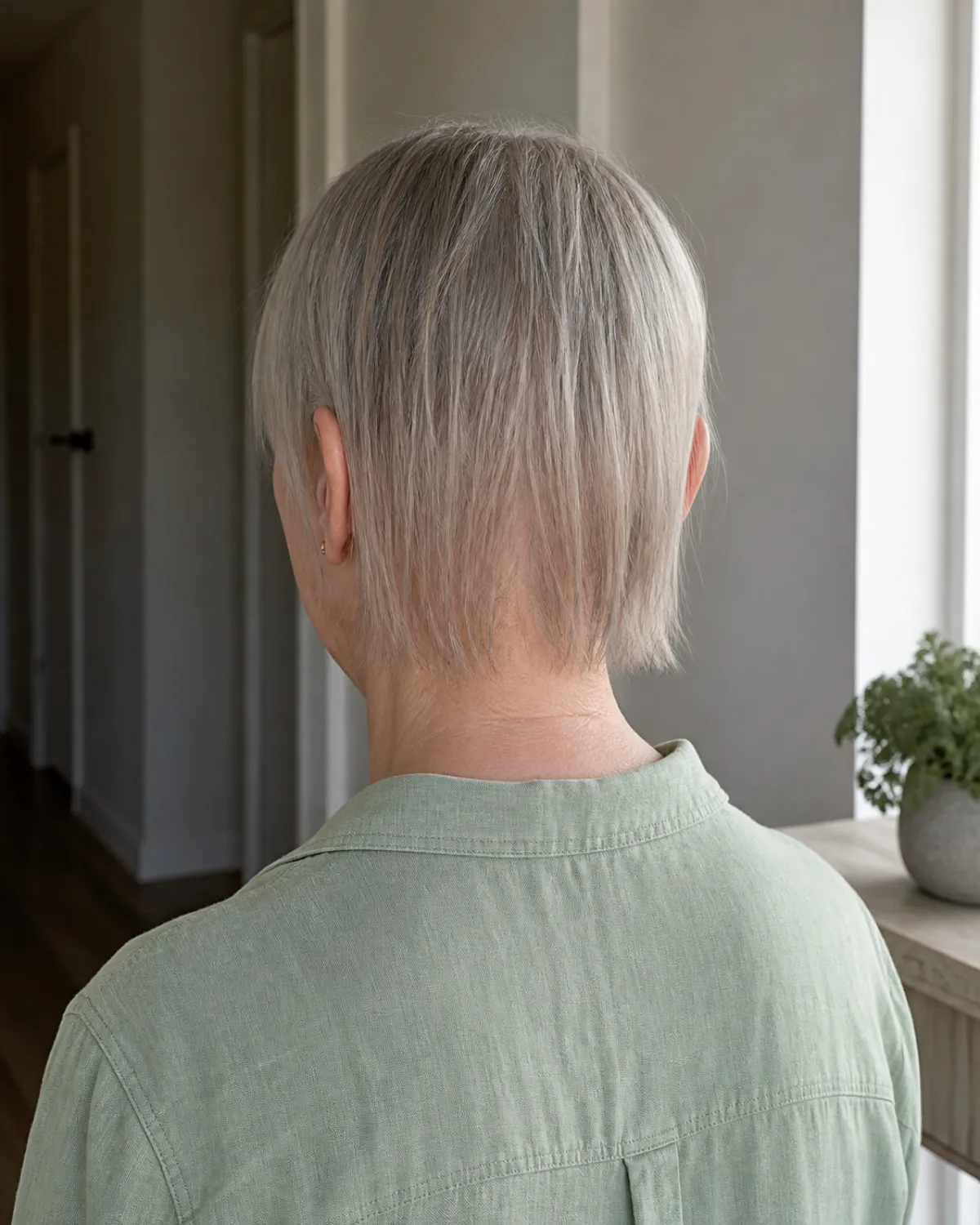
The inverted bob is a structure that depends on having enough hair to build with. When that condition is not met, the cut costs you rather than helps. Three situations where you should skip it.
Your nape hair is fine and sparse. The stacking graduation works by pushing short layers upward. If the layers are too thin, they separate instead of stacking, and the graduation shows scalp rather than creating volume. A one-length bob keeps all the density in one line.
Your face shape gets sharper with angles. The inverted bob adds a diagonal line from nape to chin. On a long or narrow face, that angle can elongate further. A rounder cut with less graduation would soften rather than sharpen.
You cannot maintain a four-to-six-week trim schedule. The graduation is the first thing to grow out. When the stacked nape layers lengthen, the structured shape becomes a shapeless wedge. A one-length bob holds its shape longer between trims.
For a lower-maintenance approach on fine hair, see the easy hairstyles guide.
- Check your nape density before booking by pulling your hair back and looking for visible scalp
- Consider a one-length bob if your nape hair is sparse — it keeps every strand working together
- Ask your stylist how often the specific graduation they recommend needs to be trimmed
Where the checkable claims come from
- Bob cut — Wikipedia
- Graduated Bob Hairstyles — Rush Hair & Beauty
- The Inverted Bob Hairstyle — Revlon Professional
- Bangs (hair) — Wikipedia
Keep this one
Save it for the appointment
Pin the image above to the board you actually open before a salon visit. This guide is written to be re-read, not read once.
Tonight, before you close this tab
- Pull your hair back at the nape and check in a mirror whether strands sit close together or show scalp between them
- Measure the length from the back of your crown to the nape to see how much stacking room a stylist would have
- Look at your jawline in profile and decide whether you want the front pieces to end at, above, or below it
- Check your calendar for a trim slot every four to six weeks before committing to the cut
- Write down one question about graduation height to ask your stylist at your next appointment