13 Hairstyles Over 50 With Long Hair That Earn Their Keep
Thirteen long hairstyles judged for women over 50. Each one rated by hair density, face shape and daily time so you know whether to keep length or let it go.
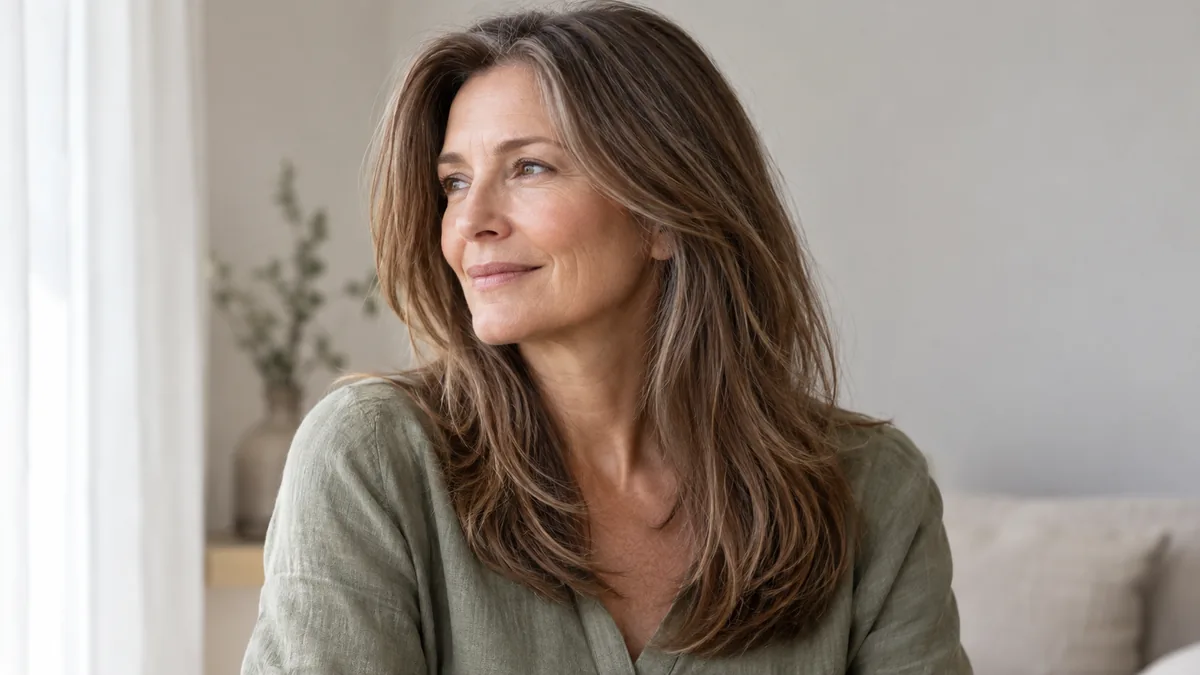
Booking an appointment soon? Save this page. It is easier to skim in the chair than to remember.
At a glance
Works
- Long layers starting at the collarbone on thick to medium hair because the layers remove weight without losing length and the movement starts low enough that the top stays full
- Face-framing layers on any density because only two pieces are cut and the rest stays blunt and heavy
- A low chignon for daily wear on every density and texture because it protects the ends and works even when the hair is not at its best
Depends
- One-length long hair with a deep side part only if the hair is thick enough to hang heavy from root to tip, otherwise the centre scalp shows through
- A long soft shag only if the hair is thick or naturally wavy, because on fine hair the layers expose thinning and the shag collapses
- Curtain-framed layers only if the hair is medium density or above, because on fine hair the curtain pieces go limp within an hour
Skip
- An undercut at the nape on fine hair because removing nape density makes the already-thin ends look even thinner
- Centre-parted long hair with crown volume on fine straight hair because the crown flattens within an hour and the flat centre part widens the face
- Long waves with a side sweep on fine straight hair because the waves drop within hours and the sweep loses its shape
Long hair past 50 gets questioned more than any other length. The advice to cut it short usually comes from people who have never had to decide whether to keep it.
The real question is not whether long hair suits your age. It is whether your hair can still hold the weight. Density decides more than preference does.
These thirteen are rated by who they work for and who they cost. See long layers for thick hair or medium lengths.
1. Long Layers Starting at the Collarbone
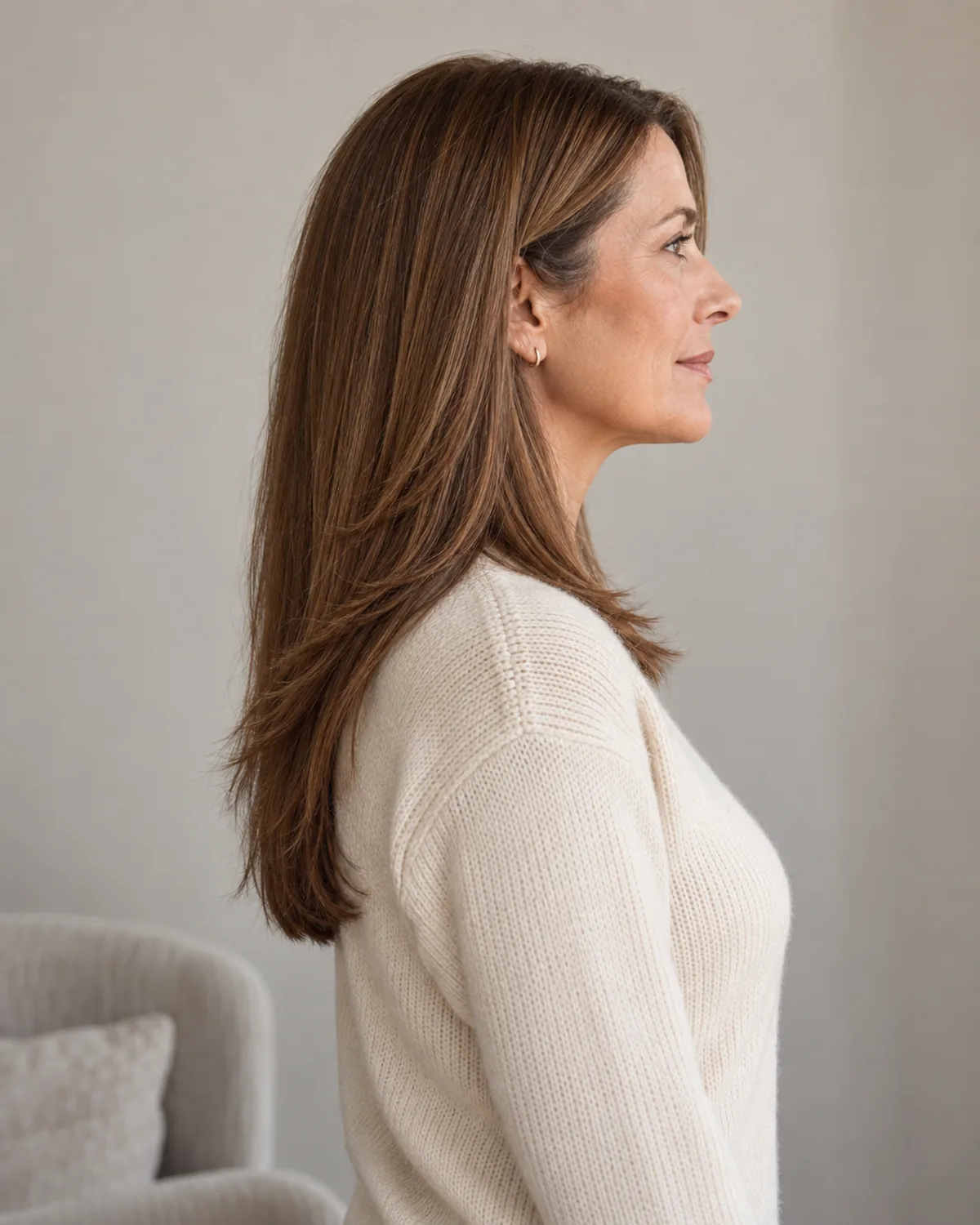
Layers that begin at the collarbone and graduate to the ends. The movement starts low enough that the top section stays full, and the graduation removes weight without removing length. From the side the step between the shortest and longest layer reads clearly.
- Suits thick to medium-density hair because the layers need enough hair behind them to avoid looking sparse
- The key structural detail is where the shortest layer sits: at or just below the collarbone keeps the silhouette narrow, above the collarbone opens up width at the shoulders
- On fine hair the layers separate through the mid-shaft and the scalp becomes visible between them
- Ask your stylist to start the shortest layer no higher than the collarbone and to keep the top section one length for weight
2. One-Length Long Hair with a Deep Side Part
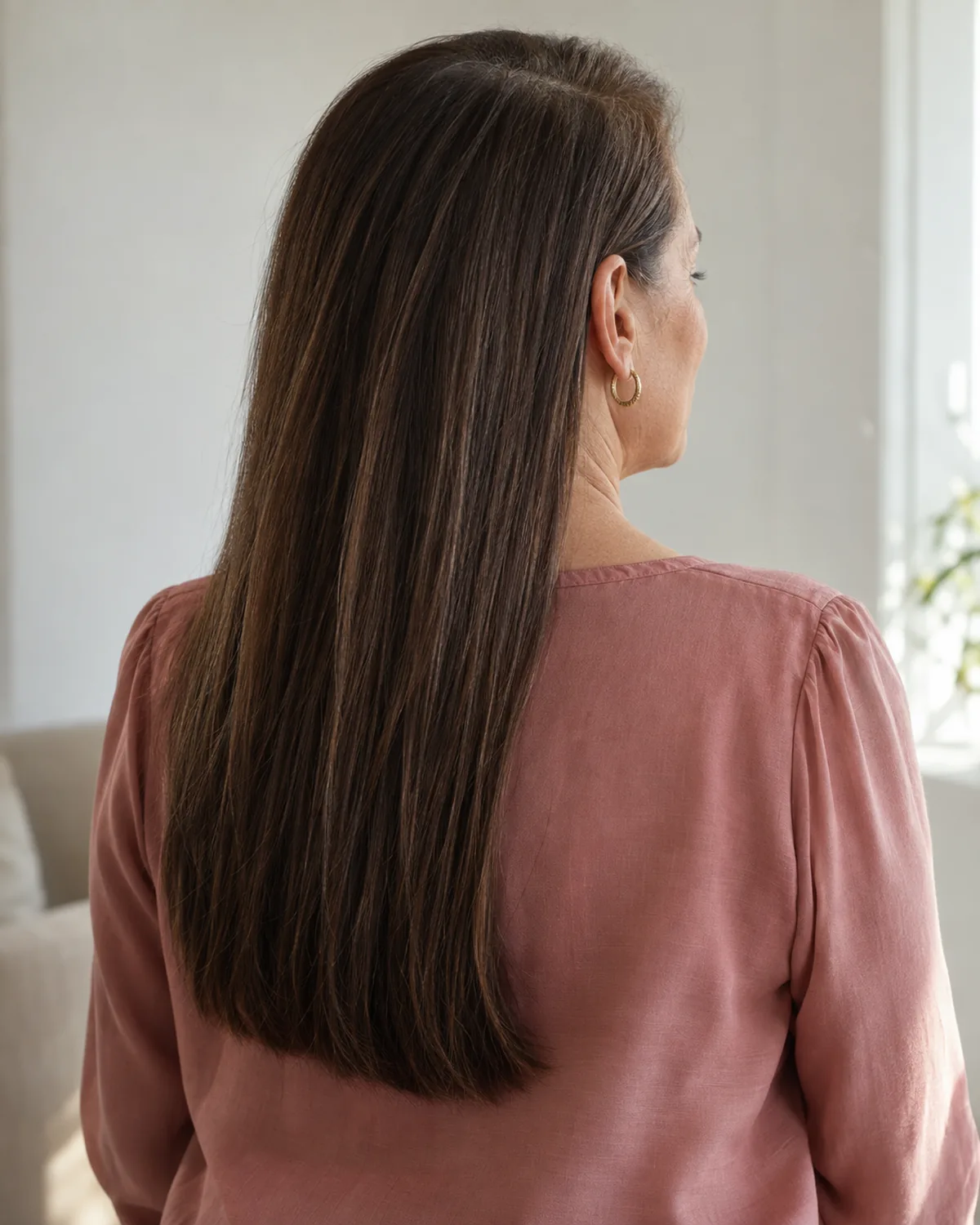
No layers, no fringe, just the weight of the hair pulling straight down with a strong side part. The asymmetry of the part breaks a round or square face by creating unequal halves. This is the lowest-maintenance long style on the list because it asks nothing of the cut except density.
- Works only if the hair is thick enough to hang heavy from root to tip without the centre scalp showing through
- The side part does the structural work: it creates a diagonal across the forehead that reads as length on a round face
- On fine or thinning hair the hair separates along the part and the scalp becomes the focal point instead of the hair
- Ask your stylist whether your density is enough to carry one-length long hair; if not, two face-framing pieces (see idea 3) add movement without losing bulk
3. Face-Framing Layers on Long Hair
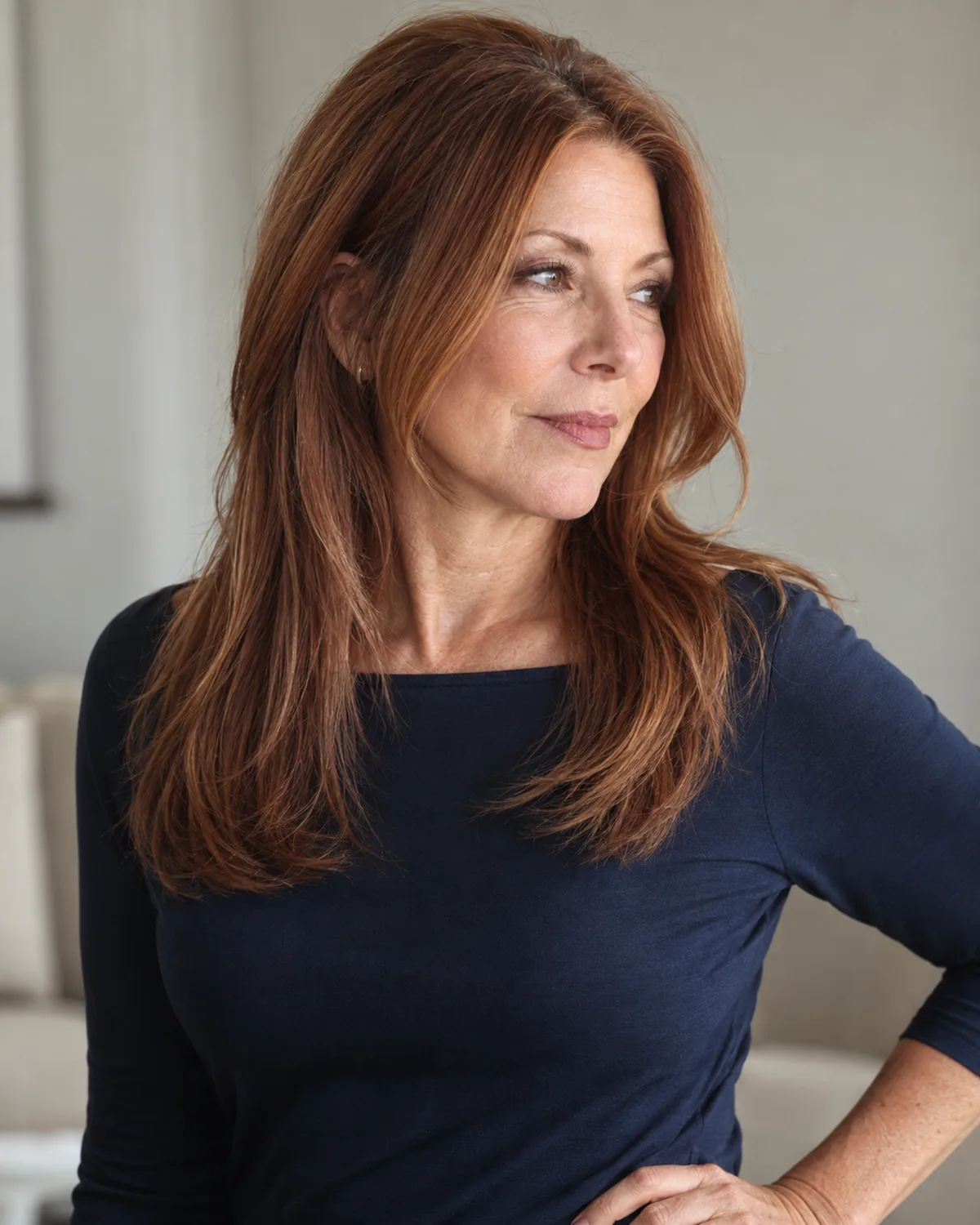
Two short pieces cut from the cheekbone to the jaw, with the rest of the length left untouched. The framing pieces create a soft V around the face without sacrificing any bulk from the main body of the hair. This is the most density-friendly long style on the list because only two pieces are layered.
- Works on every density because the two pieces are too few to thin out the hair
- The V-shape around the face narrows the mid-face the way a full layer set would, but without removing weight from the back or sides
- The only risk is on very curly hair where the short pieces spring upward and look disconnected from the longer length
- Ask your stylist to cut the framing pieces dry so the landing point against the face is exact, not estimated from wet hair
Where to start
Find your situation, skip ahead
Your hair is thick or medium-density and you want to keep real length past the shoulders
Start with collarbone layers or face-framing layers. Both keep the weight while adding movement where it counts.
01 Long Layers Starting at the Collarbone03 Face-Framing Layers on Long Hair
Your hair is fine or thinning and you are not sure long hair is still working for you
Look at the extended lob. It reads as long but behaves like a bob, and it works on every density.
You want long hair for events but need a daily style that takes no time
Keep your length and default to the low chignon on workdays. It protects the ends and reads polished with zero heat.
13 Long Hair Pulled Into a Low Chignon05 Low Ponytail-Friendly Cut with Blunt Ends
4. Long Soft Shag
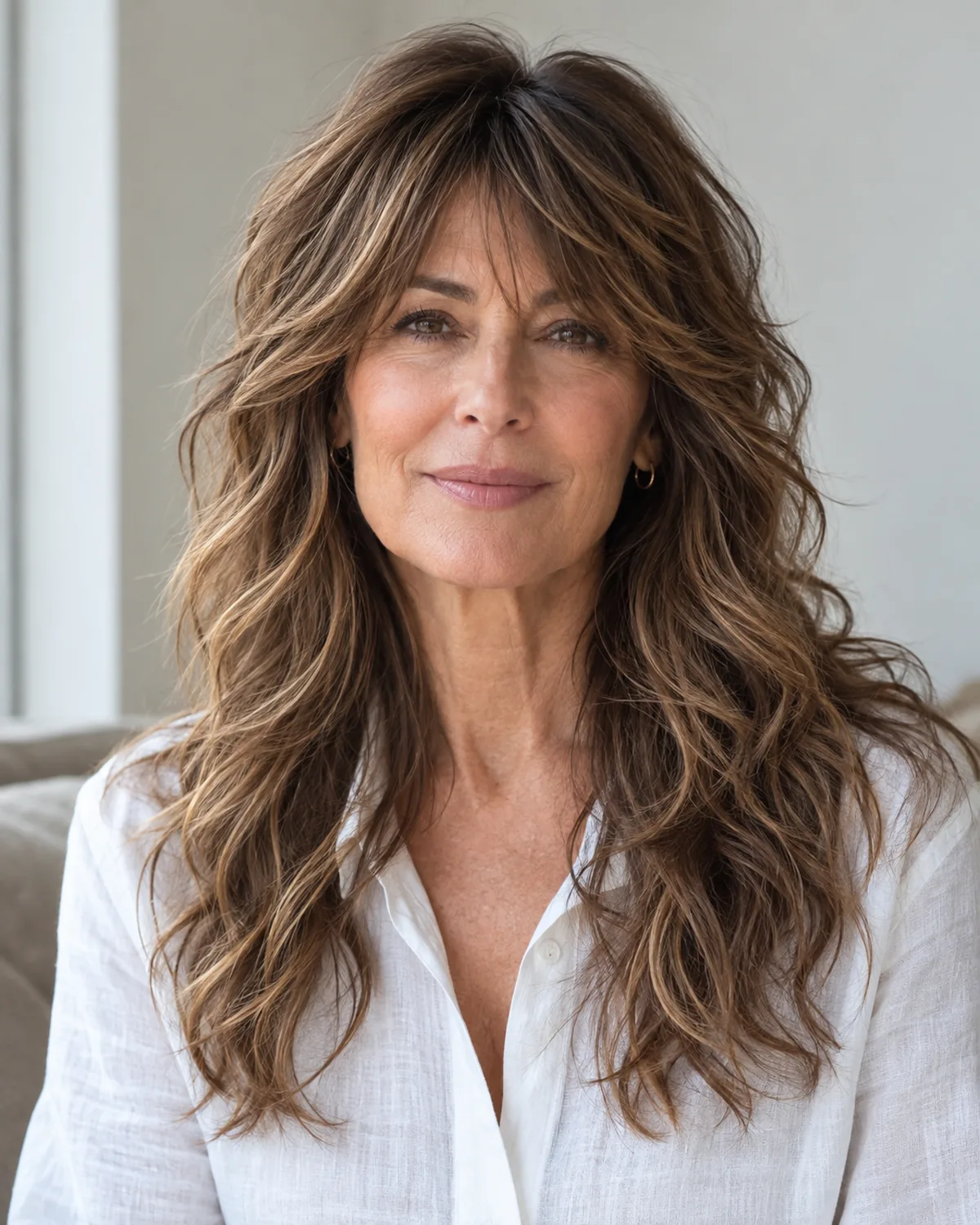
Heavy layering through the crown that gets lighter toward the ends, with a fringe that merges into the longest layers instead of sitting separately. The crown volume adds height and the layers give movement all the way down. For more shag detail, see medium shaggy cuts over 50.
- Suits thick or naturally wavy hair because the texture fills the layers and keeps the shag silhouette from collapsing
- The merged fringe is the structural difference between this and a standard layered cut: it blends into the face-framing pieces instead of drawing a separate horizontal line
- On fine hair the layers expose the thinning at the mid-shaft and the shag reads as sparse rather than textured
- Ask your stylist how much weight they plan to remove from the crown before they start cutting, because too much turns a soft shag into a mullet
5. Low Ponytail-Friendly Cut with Blunt Ends
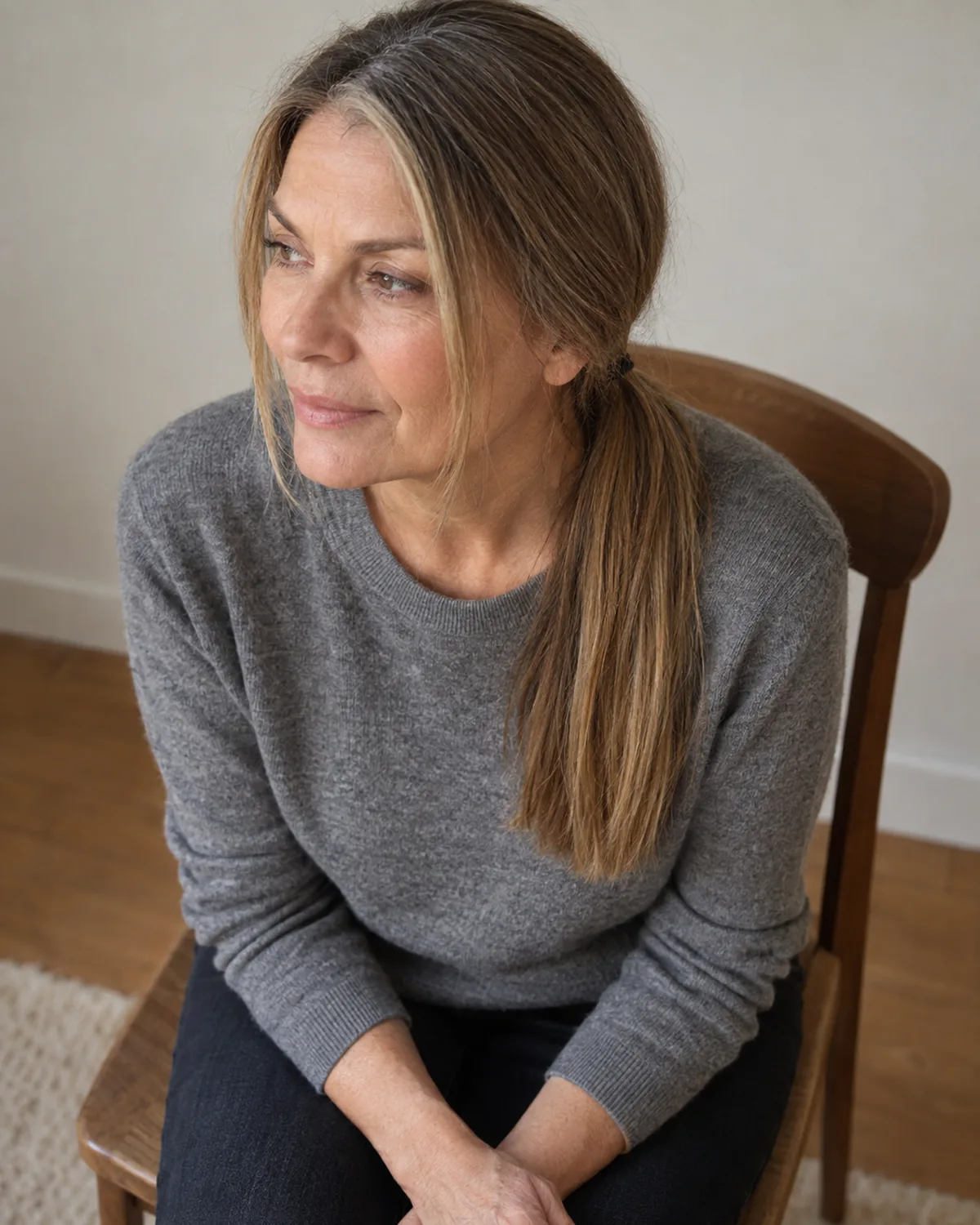
A single-length line with internal texture from point-cutting. Down, it reads as a simple blunt cut with subtle movement in the ends. Up, it goes into a low twist or ponytail with clean edges because the perimeter line is unbroken. This is the dual-purpose cut on the list.
- Suits medium to thick hair because the blunt perimeter needs enough density to look full at the ends
- The internal texture (point-cut, not razor-cut) gives the ends just enough irregularity to avoid the ruler-straight look without breaking the perimeter line
- On fine hair every wispy end shows at the elastic, and the ponytail looks thin rather than clean
- Ask your stylist for a blunt perimeter with point-cut texture through the last two inches only, not through the mid-lengths
6. Long Curtain-Framed Layers
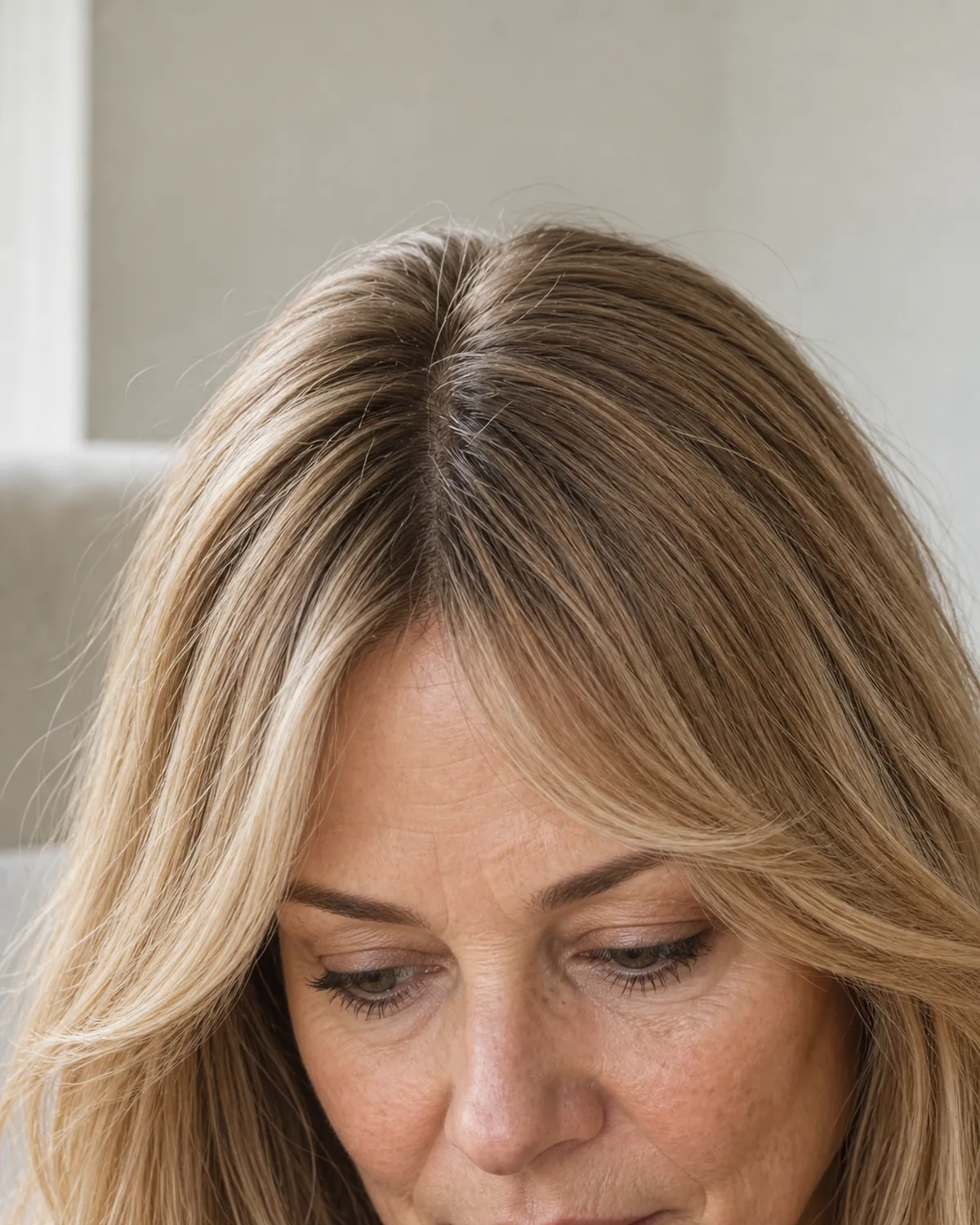
Curtain bangs that start at brow length in the centre, taper longer at the temples, and merge into long layers below the chin. The fringe frames the face while the rest of the length keeps its weight. For a full guide on bangs over 50, see bangs after 50.
- Works on straight to wavy hair with medium density or above because the curtain pieces need enough body to hold their shape against the face
- The taper from short at the centre to long at the temples is the structural difference between curtain bangs and a blunt fringe: it creates an opening that shows the face rather than covering it
- On fine hair the curtain pieces go limp within an hour and flatten against the forehead, losing the framing effect entirely
- Ask your stylist to cut the curtain pieces dry and to show you how they fall before committing to the length at the centre
7. Centre-Parted Long Hair with Volume at the Crown
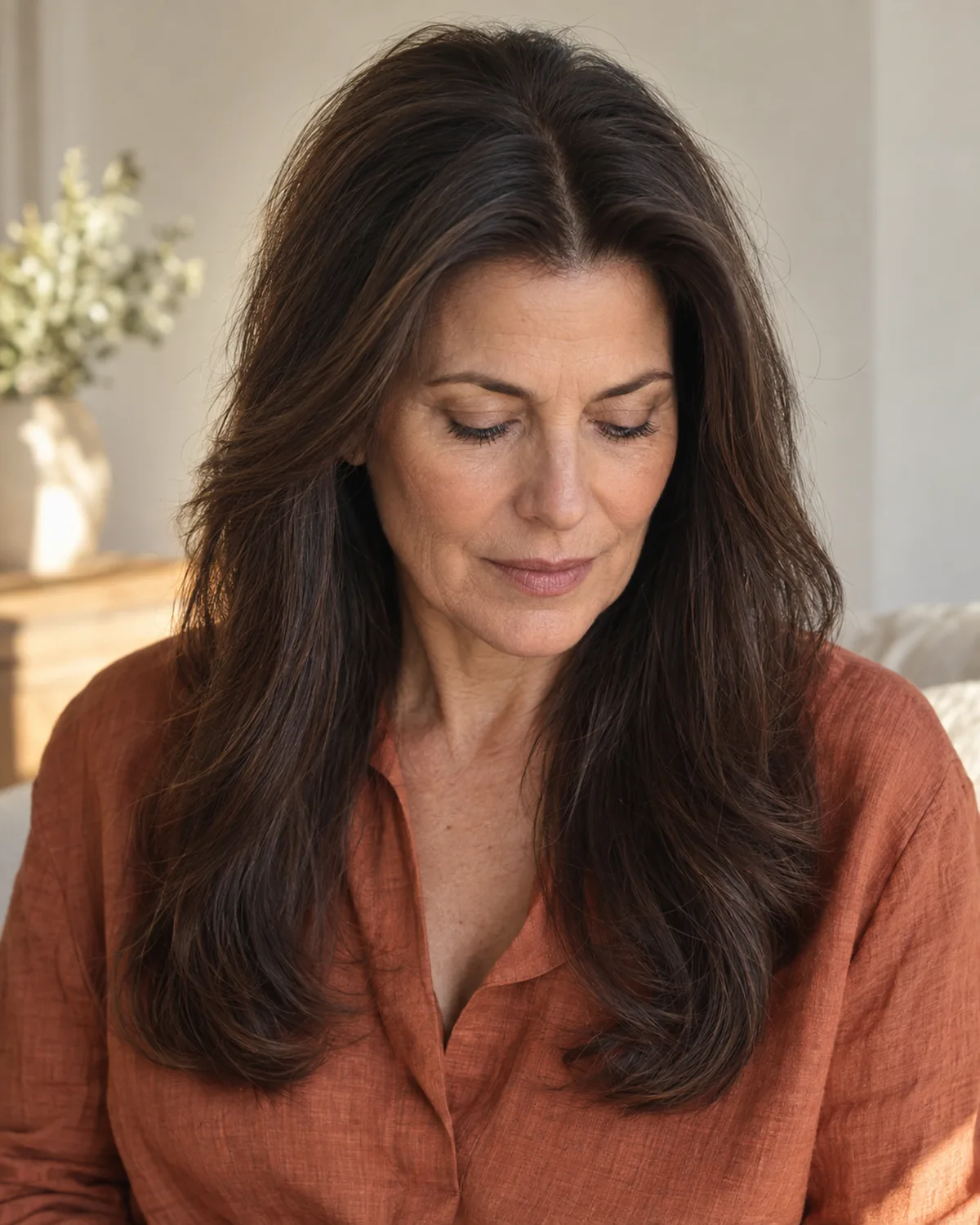
One-length or barely layered long hair, centre-parted, with root lift at the crown. The centre part creates a vertical axis that lengthens a round face, and the volume at the root line stops the hair from lying flat against the skull. Not sure which face shape you have? See the face-shape guide.
- Works on thick and wavy hair because the natural texture holds the root lift without product or heat
- The volume at the crown is the structural move: without it, a centre part on flat hair just splits the face into two equal halves and makes a round face look wider
- On fine straight hair the crown collapses within an hour and the flat centre part widens the face instead of lengthening it
- Ask your stylist whether your root density can hold volume at the part line; if it cannot, a side part (idea 2) does the same job without needing lift
8. Long Hair with an Undercut at the Nape
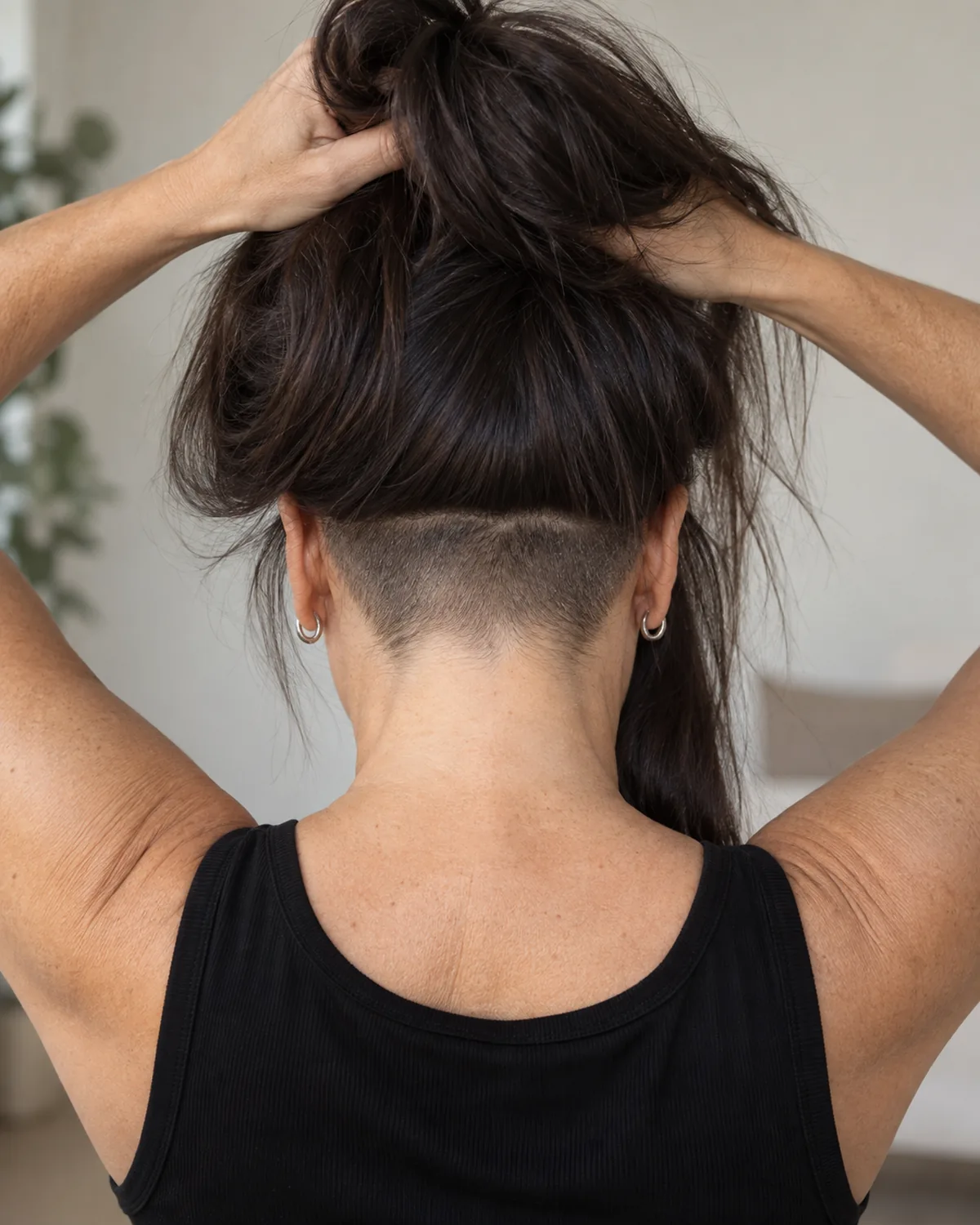
Full length visible from the front, with the nape shaved or clippered underneath. The undercut removes bulk at the neck without touching the visible silhouette. This is the most targeted intervention on the list: it changes how the hair feels and falls without changing how it looks from the front.
- Specific to thick or coarse hair that gets heavy and hot at the neck, especially in summer
- The key is that the clippered section stays hidden under the overlay: when the hair is down, no one sees it; when the hair is up, it shows as a clean nape
- On fine hair removing nape density makes the already-thin ends look even thinner, and the contrast between the clippered zone and the sparse overlay reads as patchy
- Ask your stylist to start with a narrow undercut (about two inches) and to leave the sides untouched so the overlay covers completely
9. Long Waves with a Side Sweep

Loose waves past the shoulders, styled to fall more heavily to one side. The diagonal sweep creates movement that reads as length on a round face. The waves add visual density because they take up more space than straight hair at the same thickness.
- Works on naturally wavy or thick hair because the wave pattern holds on its own weight
- The side sweep is not a hard part: it is a softer directional bias that guides the hair to fall to one side without exposing a sharp part line
- On fine straight hair the waves drop within hours and the sweep loses its shape, and you are back to flat hair with no directional bias
- Ask your stylist whether your natural texture can hold a wave or whether you would need heat tools every day, because a style that needs daily heat is not a long-term style
10. Layered Long Hair with a Blunt Fringe
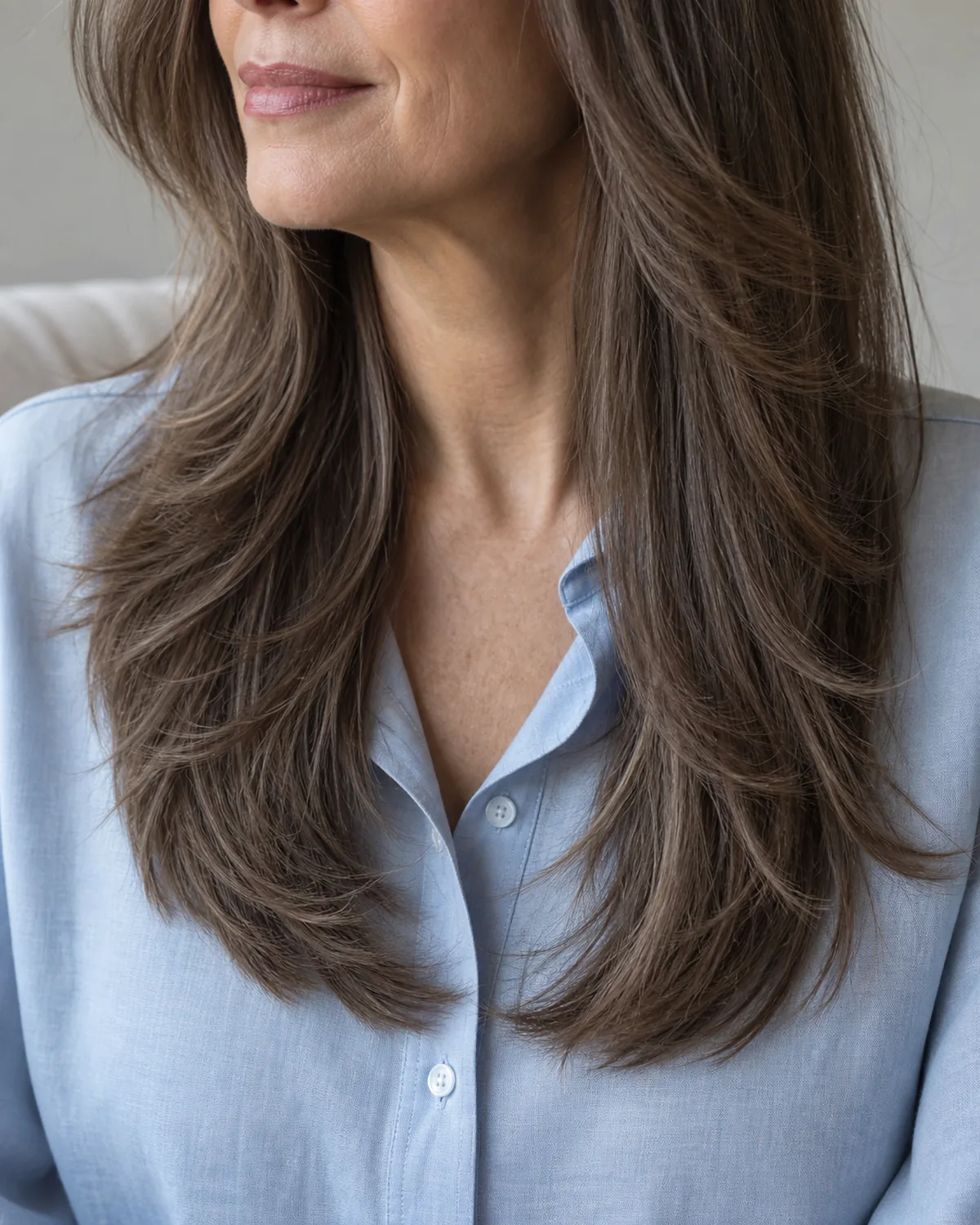
Long layers from the cheekbone down with a heavy, straight-across fringe at the brow. The fringe draws a strong horizontal line high on the face, and the long layers keep the silhouette narrow below it. The combination reads as structured and deliberate.
- Works on thick straight to slightly wavy hair because the fringe needs enough density to sit full across the forehead without gaps
- The structural contrast between the blunt horizontal fringe and the graduated vertical layers is what makes this cut read as intentional rather than grown-out
- On fine hair the fringe goes stringy within a day and the forehead shows through, which undermines the whole geometry
- Ask your stylist to cut the fringe on dry hair and to leave it slightly heavier than you think you want, because a blunt fringe that is too thin looks accidental
11. The Extended Lob That Reads as Long Hair

A blunt or barely textured line that sits at the base of the collarbone. It reads as long hair but behaves like a bob: it holds its shape, air-dries well, and swings when you turn your head. This is the compromise cut for anyone whose density no longer supports true long hair. For shoulder-length options, see shoulder-length hairstyles over 50.
- Works on every density and texture because the single-length line keeps all the hair at its thickest point
- The difference between this and a standard lob is about two inches: a lob that stops at the collarbone rather than mid-neck keeps enough length to pull back, twist, or pin
- The only styling requirement is that the ends stay blunt; tapered or feathered ends on a collarbone-length cut thin out the perimeter and lose the swing
- Ask your stylist for a true blunt line at the base of the collarbone, with no invisible layering and no texturizing at the perimeter
12. Long Grey or Silver Left Uncoloured
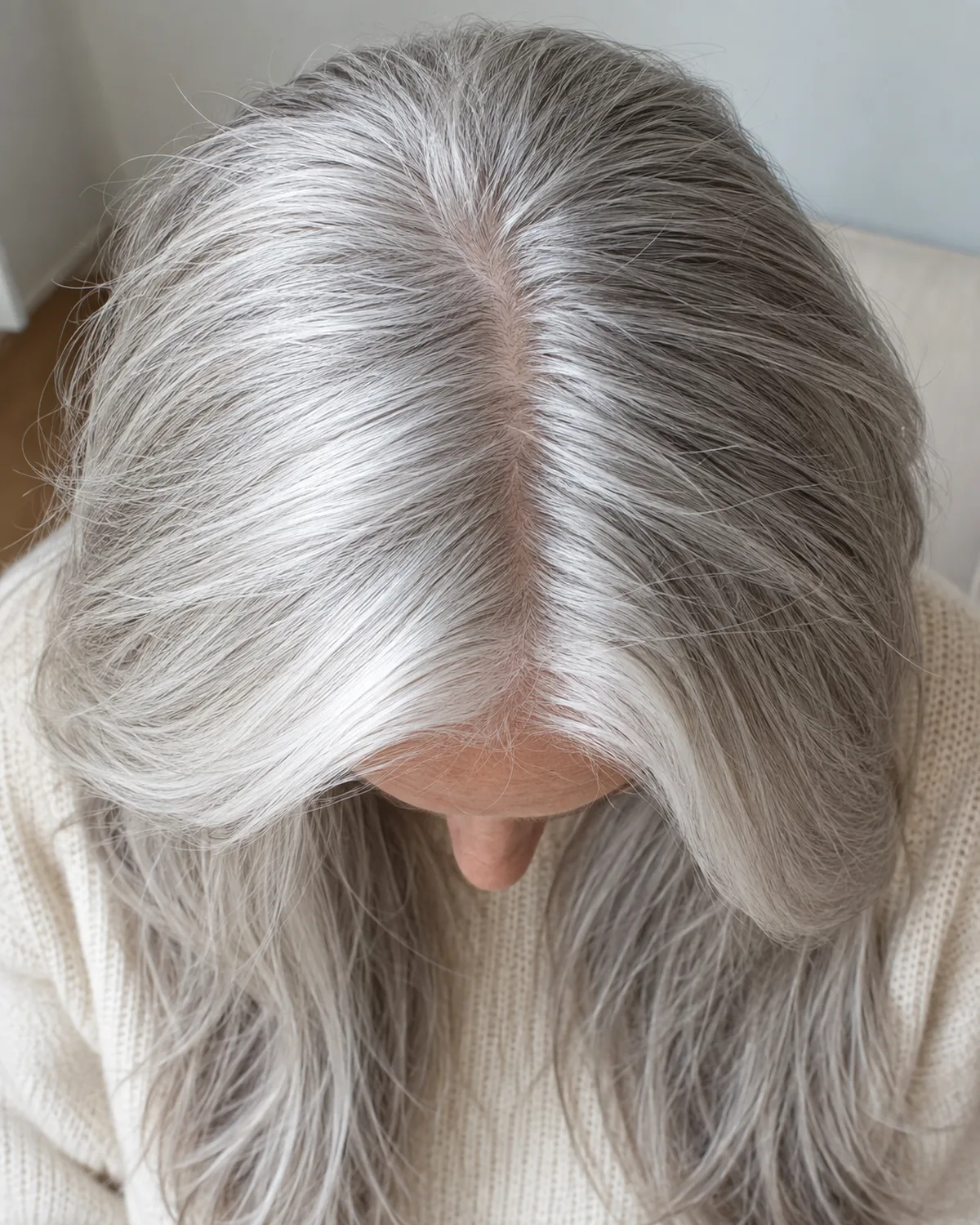
Any long silhouette left in its natural grey. The visual weight of long silver hair reads as intentional and editorial when the condition is good. The cut matters less than the condition: dry, yellowed grey looks neglected, while cool-toned silver with a gloss treatment looks deliberate. For more on the grey transition, see going grey over 50.
- Works best on coarse or medium-density grey because the hair has enough body to carry length without looking sparse
- The condition is the variable: a purple or silver shampoo once a week keeps the tone cool, and a gloss every six to eight weeks seals the cuticle and adds shine
- On fine grey the length drags the already-sparse hair thinner, and the scalp shows through the part line and mid-lengths
- Ask your stylist whether your grey has enough density for the length you want, and ask about a clear or silver gloss to manage the tone between visits
13. Long Hair Pulled Into a Low Chignon
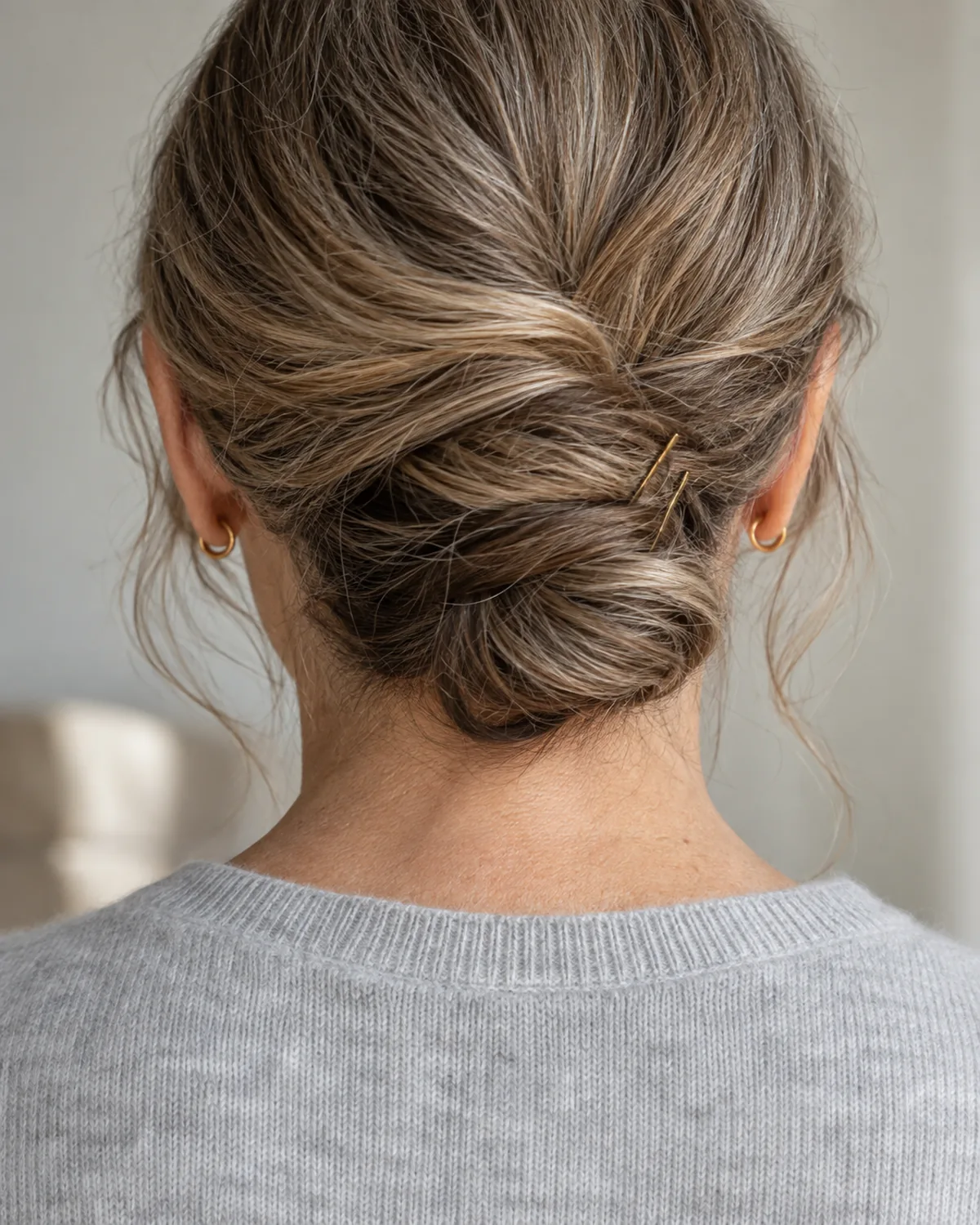
A simple twisted bun at the nape, held with two or three pins, with the front pieces left out to frame the face. This is not a formal updo but a daily style that protects the ends, keeps hair off the face, and takes less than two minutes. It suits every density and texture.
- The only requirement is that the hair is long enough to twist and pin without falling; collarbone length is the minimum
- The front pieces left out turn this from a severe pulled-back look into a softer frame, and they can be straight, wavy, or curled depending on your texture
- This is the one style on the list that works even when the hair is not at its best: second-day hair holds a twist better than freshly washed hair
- Ask your stylist to show you one twist-and-pin method that works with your hair thickness, because the technique for thick hair (a loose twist) is different from the technique for fine hair (a tighter coil with more pins)
A stylist who can see your hair in person outranks anything written here. Bring one photo from this guide and one question: does my density still support this length?
Where the checkable claims come from
- Understanding Graduation and Layering — Sam Villa / Redken Education
- Face Shapes and Hairstyles — Pivot Point International
- Fine Hair: Causes and How to Care for It — Philip Kingsley Trichological Clinic
Keep this one
Save it for the appointment
Pin the image above to the board you actually open before a salon visit. This guide is written to be re-read, not read once.
Tonight, before you close this tab
- Gather your hair into a low ponytail and look at the tail end to see whether the density holds or thins out past the elastic
- Part your hair at the centre and check whether the scalp shows through the mid-lengths when the hair hangs straight down
- Time how long your current style holds its shape from morning to evening and write the number down
- Save one image from this guide that matches your density and bring it to your stylist with the question: where would you start the layers on my hair?