14 Hairstyles for Medium Length Hair With Bangs Over 50 That a Stylist Can Actually Cut
Fourteen medium-length hairstyles with bangs for women over 50, each judged on which face shape it suits, which hair density it needs, and what to tell the stylist.

Booking an appointment soon? Save this page. It is easier to skim in the chair than to remember.
At a glance
Works
- Curtain bangs on a collarbone lob because the centre part softens the forehead on most face shapes without shortening the face
- Side-swept bangs on a layered shag because the diagonal line lengthens a round face and the layers add movement without needing thick hair
- Long bangs blending into face-framing layers because the gradual transition is the lowest-maintenance entry point for anyone who has never had bangs
Depends
- A blunt fringe on a one-length bob only if your face is oval or long — the strong horizontal line echoes the width on a round face
- Birkin bangs only if your hair has medium to thick density — fine hair cannot hold the volume the full fringe requires and will fall flat within an hour
- Choppy bangs on an undercut bob only if your hair is straight — curly hair springs up and shortens the fringe unpredictably
Skip
- Wispy micro bangs on very fine straight hair because the gaps widen to nothing by midday and the fringe vanishes
- Baby bangs on a round face because the short horizontal line sits at the widest point and echoes the width rather than breaking it
- A full arched fringe on a naturally tall forehead because the arch lifts the visual brow line even higher
The question is never whether bangs suit women over 50. They do. The question is which bangs suit your face, your hair density, and your willingness to sit in a salon chair on a schedule.
Medium-length hair gives you the widest range of fringe options because there is enough length to blend, layer, and frame. What follows are fourteen pairings, each judged on who they suit.
A stylist who can see your hair in person outranks anything written here. Bring these as a starting point, not a prescription.
1. Curtain Bangs on a Collarbone Lob

The centre part keeps the forehead visible while the swept pieces soften the temples. This works on most face shapes because the parted fringe does not create a hard horizontal line. On an oval or long face, the sweep reads as framing. On a round face, the vertical centre part adds length.
- Skip if your hair is very fine at the front — the gap at the centre part widens within days and the fringe looks sparse rather than intentional
- Ask for the shortest pieces to sit at eyebrow length so they frame without covering
- Maintenance interval is roughly six weeks, making this one of the most forgiving fringes to grow out
- Tell your stylist you want the curtain pieces to blend into the first layer, not sit as a separate section
2. Side-Swept Bangs on a Layered Shag
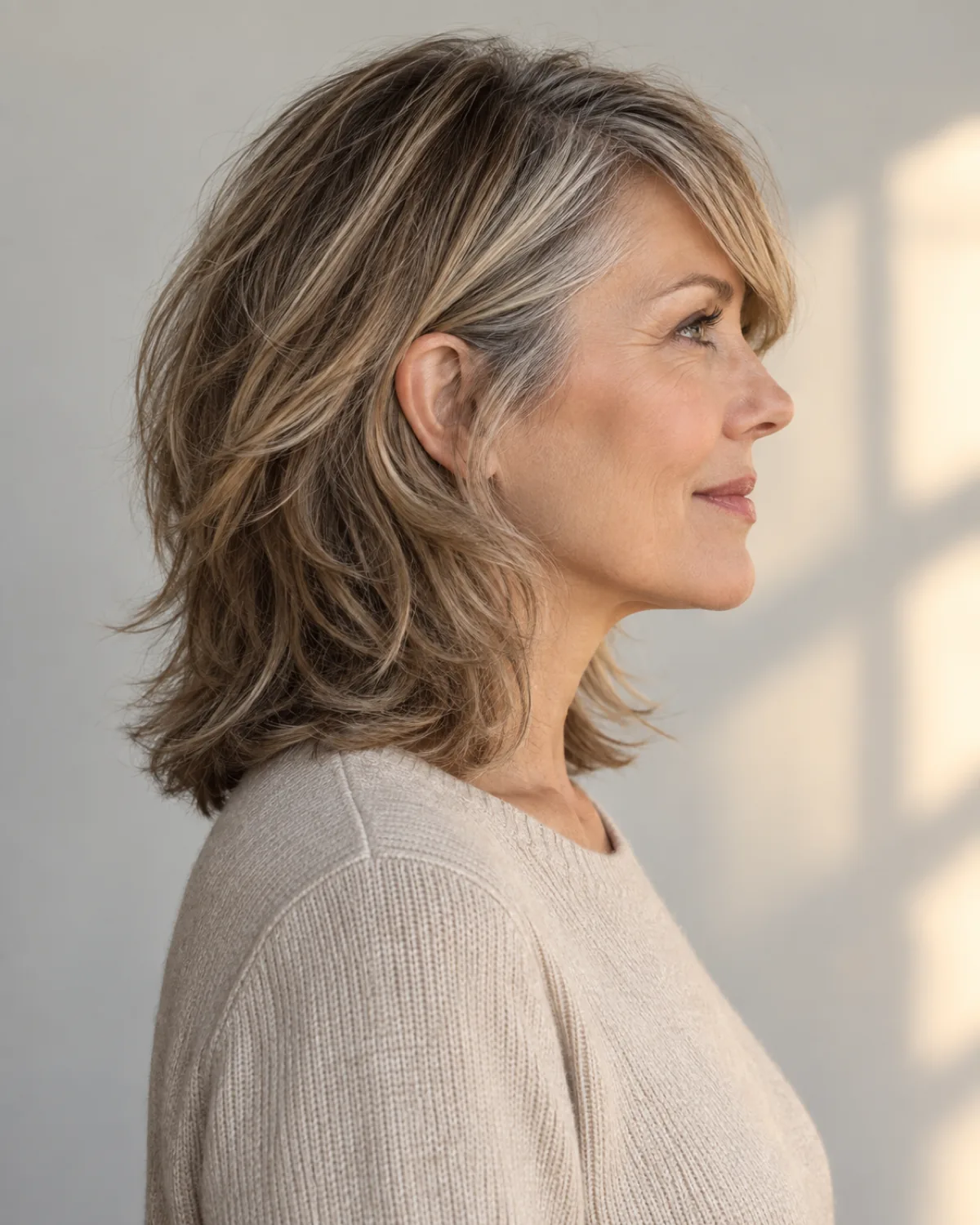
The diagonal line is the strongest tool for lengthening a round face. The deep side part sends the bang across the forehead at an angle, pulling the eye away from the widest point. The shag layers add textured movement through the mid-lengths without requiring thick hair to carry it.
- Layers should start below the cheekbone so the ends retain enough weight to sit properly
- Works on round and square faces because the diagonal breaks the horizontal axis
- Fine hair benefits here because the shag texture creates the illusion of density where the layers overlap
- Grow-out is gradual and blends naturally into the layered structure
3. Blunt Fringe on a One-Length Bob
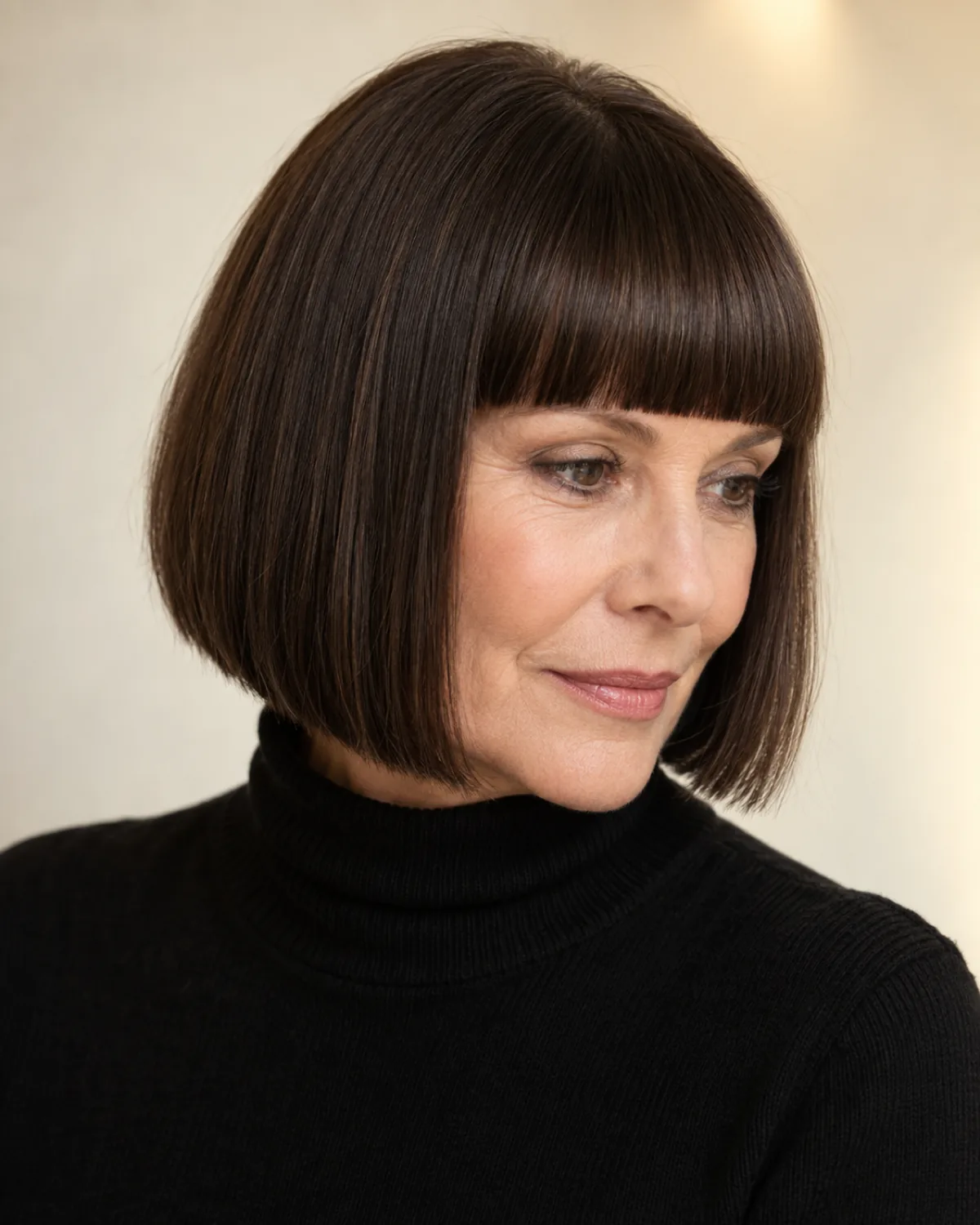
This is the most graphic option on the list. The horizontal fringe line echoes the horizontal bob line, creating a strong geometric frame. It suits oval and long faces best because the two parallel lines shorten the visual length of the face.
- Skip on a round face — the horizontal fringe echoes the width and makes the face read wider
- Requires a trim every three to four weeks because even a few millimetres of growth changes the line
- The bob must be truly one-length with no graduation, or the geometry loses its point
- Ask your stylist to cut the fringe dry so the landing point is exact
4. Wispy Micro Bangs on a Textured Bob
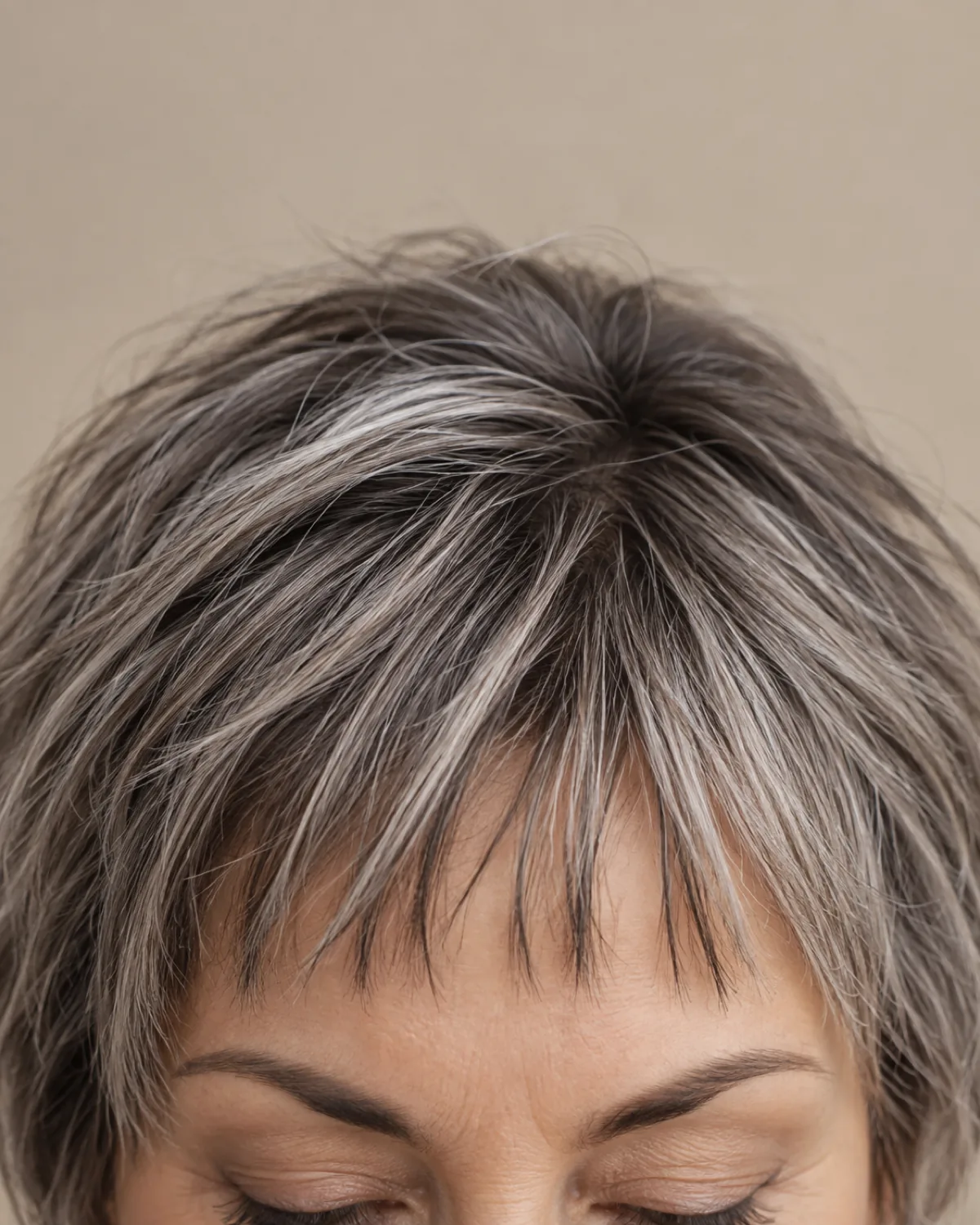
Micro bangs sit about an inch above the eyebrows with visible gaps between strands. The look is modern and deliberately undone, but it only works if your hair has enough natural texture to hold the piece-y separation. Straight fine hair makes the gaps widen to nothing by midday.
- Best on wavy or coarse hair that holds its shape without product
- The very short length means a trim every two to three weeks — this is the highest-maintenance fringe on the list
- Suits oval faces and strong bone structure because the short line draws attention to the brow and cheekbones
- Skip if you prefer low-maintenance hair — the upkeep is non-negotiable
Where to start
Find your situation, skip ahead
Your face is round and you want bangs that make it read longer
A diagonal line is your best tool. Side-swept bangs or bottleneck bangs that taper into face-framing layers both draw the eye on an angle.
02 Side-Swept Bangs on a Layered Shag05 Bottleneck Bangs on a Soft A-Line
Your hair is fine and you are worried bangs will look thin
Choose a style where the fringe blends into layers rather than standing alone. Feathered bangs or long face-framing bangs never expose a gap.
10 Feathered Bangs on a Layered Collarbone Cut13 Long Bangs Blending Into Face-Framing Layers
You have never had bangs and want the safest first step
Start with long bangs that blend into face-framing layers. They grow out without an awkward stage and you can pin them back any time.
13 Long Bangs Blending Into Face-Framing Layers01 Curtain Bangs on a Collarbone Lob
5. Bottleneck Bangs on a Soft A-Line

The bottleneck starts as a shorter fringe at the centre forehead and tapers seamlessly into longer face-framing pieces that reach the cheekbone. This bridges the gap between having bangs and not having them, which makes it a strong choice if you are uncertain.
- Works on square jaws because the tapered ends soften the angle at the jawline
- The taper must be smooth — an abrupt step between the short centre and the long sides reads as a bad grow-out, not a deliberate cut
- Maintenance is moderate, roughly every five weeks, because the tapering disguises growth
- Tell your stylist you want the transition to feel like one continuous line, not two separate lengths
6. Arched Bangs on a Classic Layered Cut
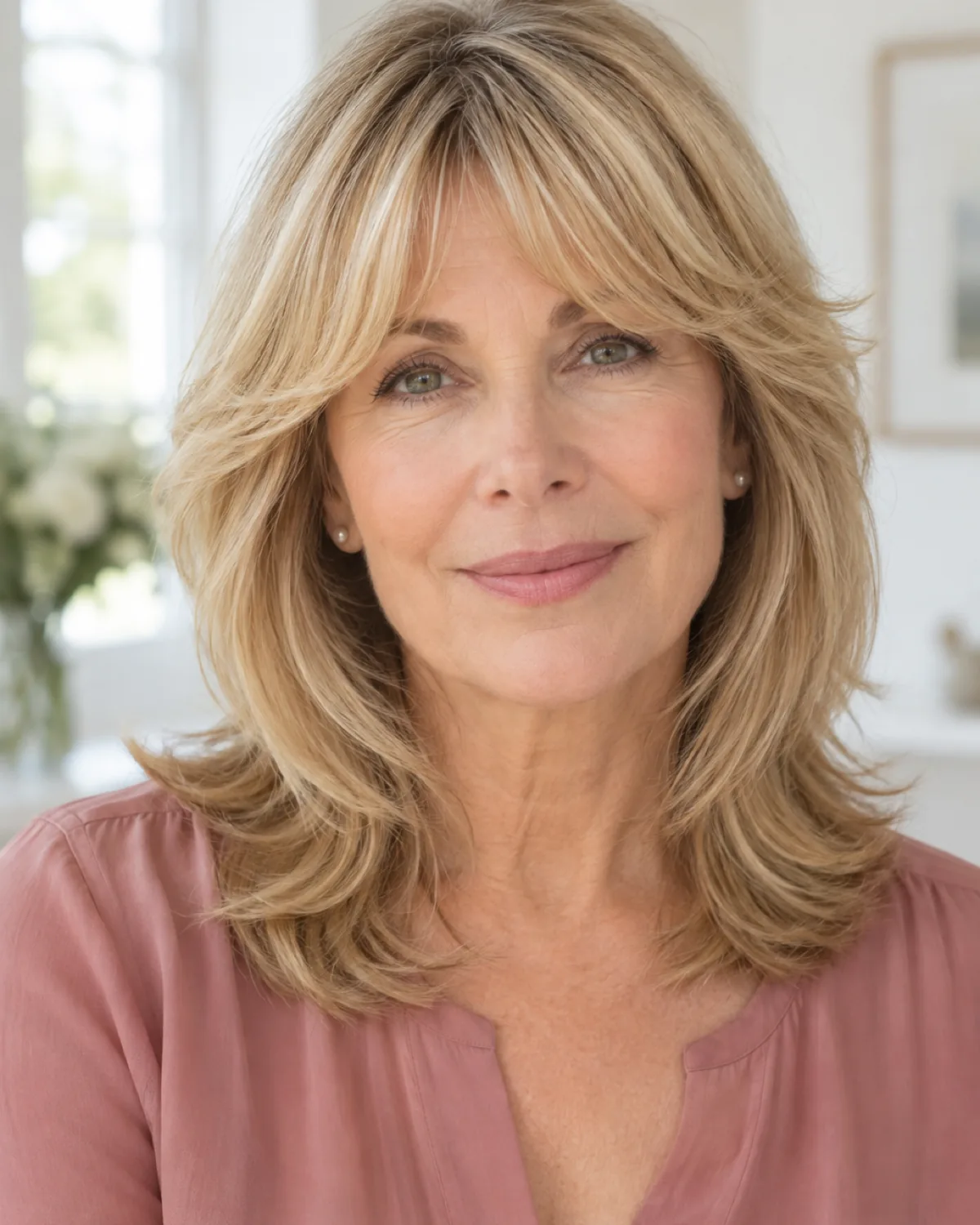
The arch lifts the visual brow line, which makes this a strong choice for heavy-lidded eyes or a naturally low forehead. The curve is shorter at the centre and longer at the temples, creating an open frame around the upper face.
- Skip if your forehead is already tall — the arch lifts the perceived line even higher
- The layered cut underneath provides movement and body without the fringe looking like it belongs on a different haircut
- Works on oval and heart-shaped faces where the natural width narrows at the jaw
- Ask for the arch to be subtle rather than dramatic — a deep arch reads dated, a soft one reads current
7. Birkin Bangs on a Shoulder-Length Wave
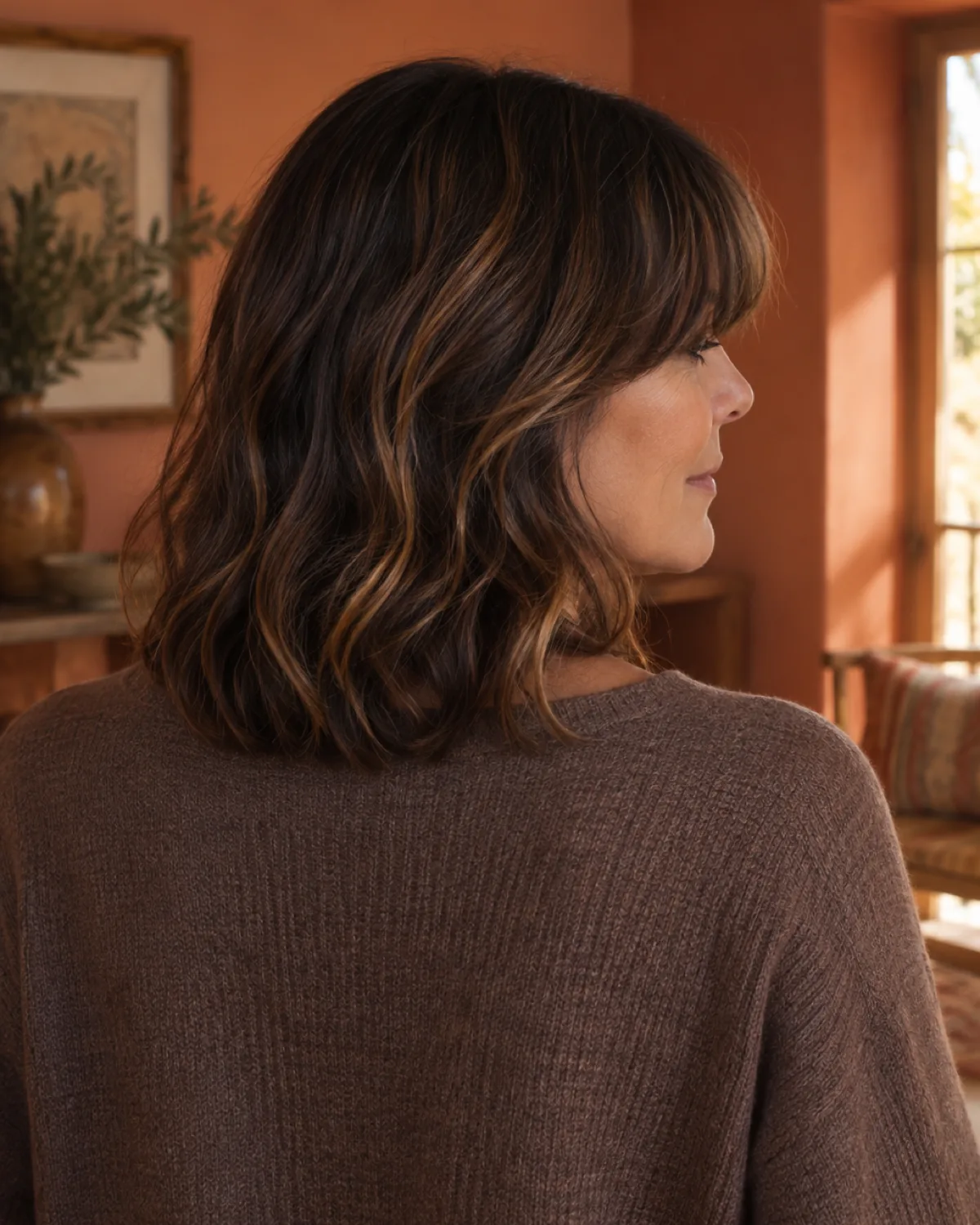
A full, slightly undone fringe that covers the forehead completely. This is the densest bang option on the list and it demands hair to match. The wave through the mid-lengths keeps it from reading as heavy or helmet-like.
- Requires medium to thick hair density — fine hair collapses the volume within an hour and the fringe falls flat against the forehead
- The slightly undone texture is the key to making full bangs read modern rather than dated
- Works on most face shapes because the full coverage resets the proportions entirely
- Trim every four weeks to keep the fringe from falling into the eyes
8. Side-Parted Bangs on a Graduated Bob
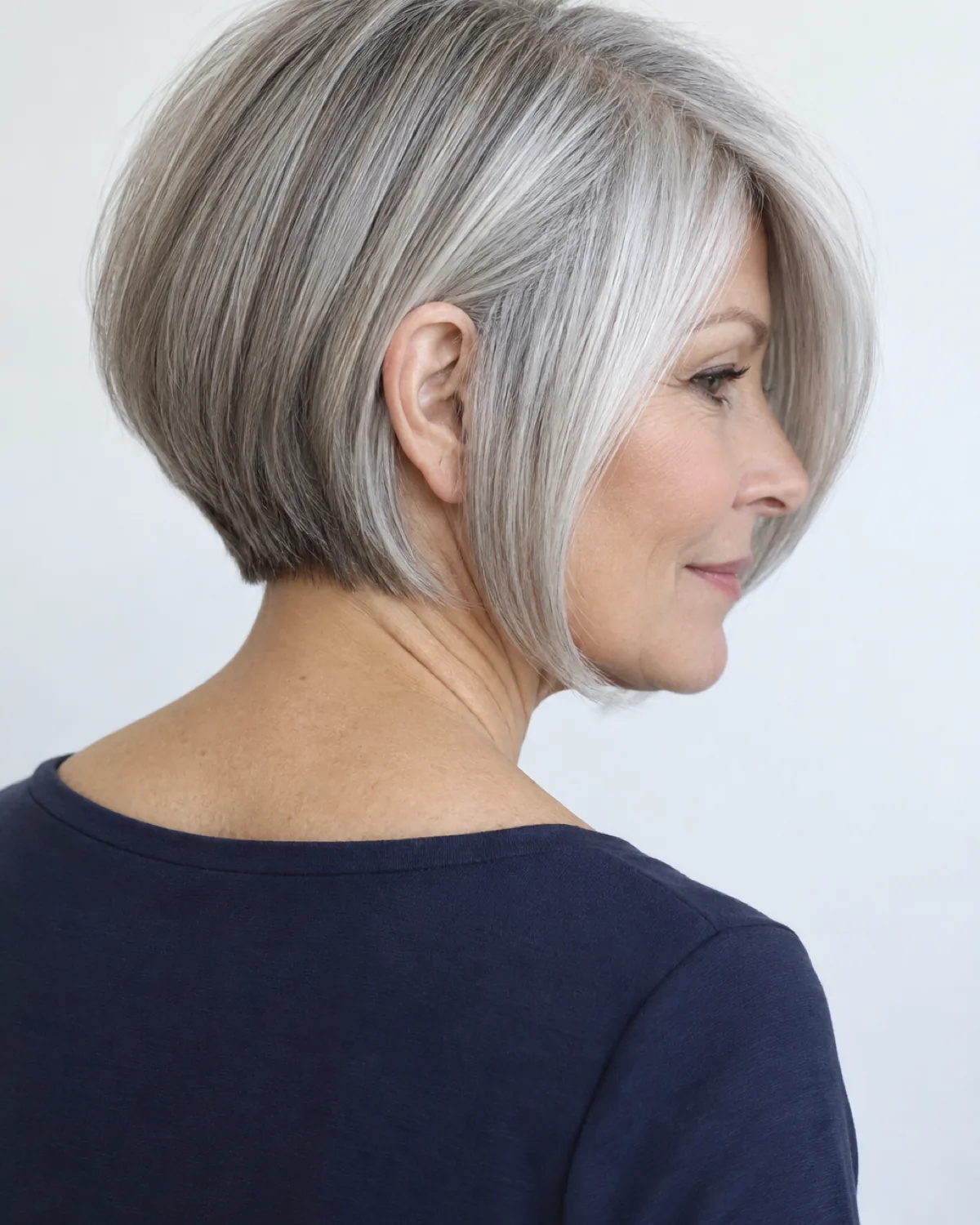
The longer bang piece sweeps across the forehead from a deep side part, and the graduated bob shortens at the nape and angles longer toward the chin. Together, the diagonal bang and the angled bob create two lines that lengthen the face.
- Conceals width on a broad forehead or a square face because the sweep covers the wider side
- Maintenance is lower than full bangs because the grow-out blends into the face-framing length naturally
- The graduation at the nape must be visible and clean — a muddy nape line undermines the entire cut
- Ask your stylist to keep the bang piece long enough to tuck behind the ear when you want it out of the way
9. French Fringe on a Tousled Midi

The French fringe sits at the eyebrows with a subtle centre part, softer and less committed than a full blunt bang. The tousled midi underneath asks for some natural wave or a willingness to scrunch and let the air do the rest.
- Works on oval and heart-shaped faces because the soft eyebrow-level line frames without closing in
- Depends on whether your hair cooperates with air-drying — the tousled look needs wave, and fighting straight hair into it daily defeats the purpose
- The centre gap is deliberate, not a flaw — it lets the forehead show through and keeps the fringe from reading as heavy
- Grow-out is forgiving because the French fringe already sits at the longer end of the bang spectrum
10. Feathered Bangs on a Layered Collarbone Cut
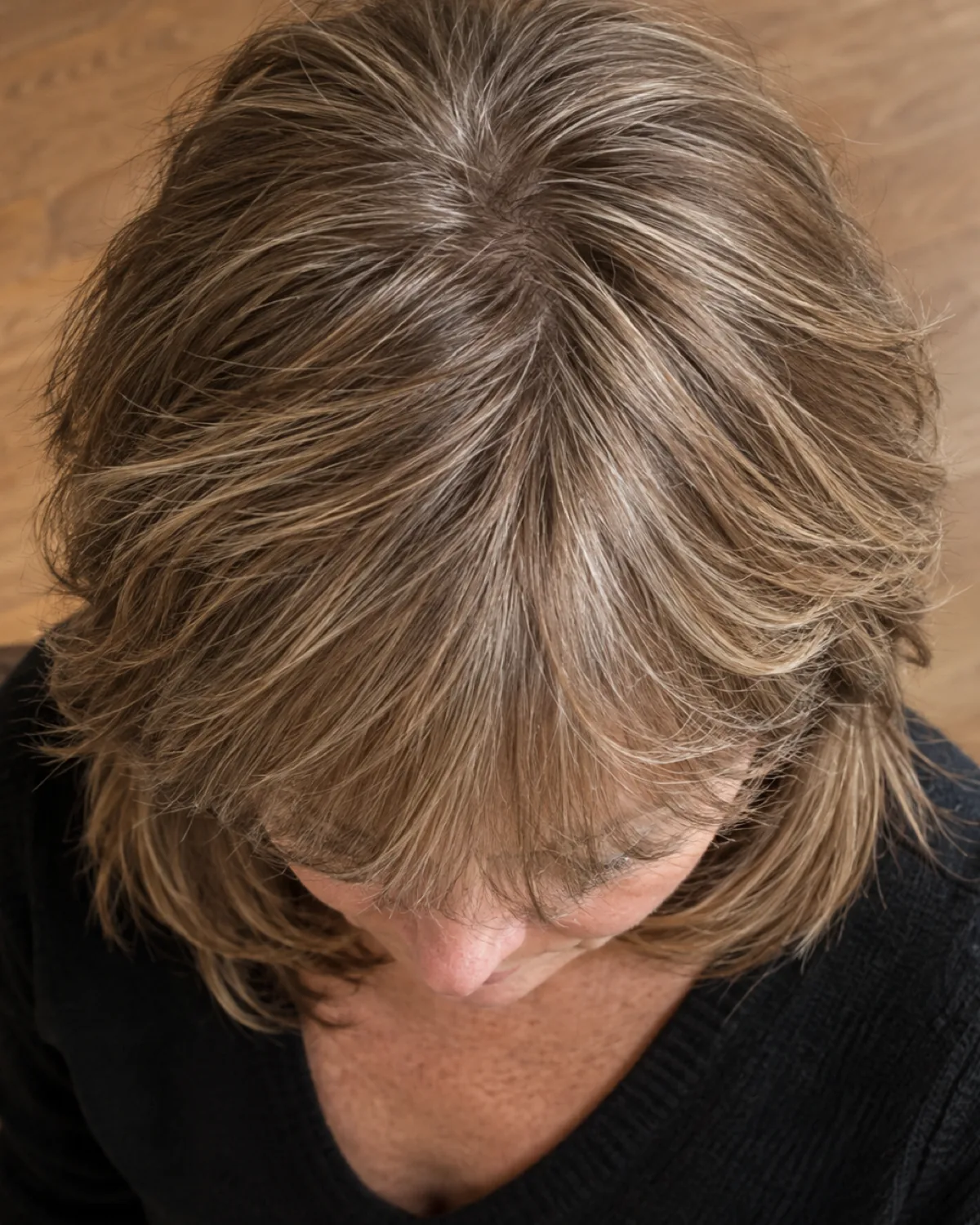
Feathered bangs have light, textured ends that blend into the layers below rather than sitting as a distinct section. The result is movement and the illusion of density where the bang meets the first layer.
- Works for fine-to-medium density because the feathering creates visible movement without needing thick hair to fill it
- Skip if you want a clean graphic line — feathering is the opposite of that, and mixing the two intentions reads as confusion
- The taper from bang to layer should be invisible in motion — ask your stylist to point-cut the ends rather than blunt-cut them
- Maintenance is roughly every five to six weeks, on the forgiving end of the spectrum
11. Choppy Bangs on an Undercut Bob

The contrast between the deliberately uneven fringe and the clean bob line reads as intentional edge. The undercut at the nape removes bulk and makes the bob sit closer to the head, which keeps the overall silhouette sharp.
- Skip if your hair is curly — choppy bangs spring up unpredictably on curly hair and the lengths you cut in the chair are not the lengths you get at home
- The choppiness must look deliberate — ask for razored or point-cut ends rather than blunt uneven sections
- Works on straight to slightly wavy hair with medium to thick density
- The undercut needs a trim every four to five weeks or the grow-out pushes the bob outward
12. Baby Bangs on a Sleek Midi
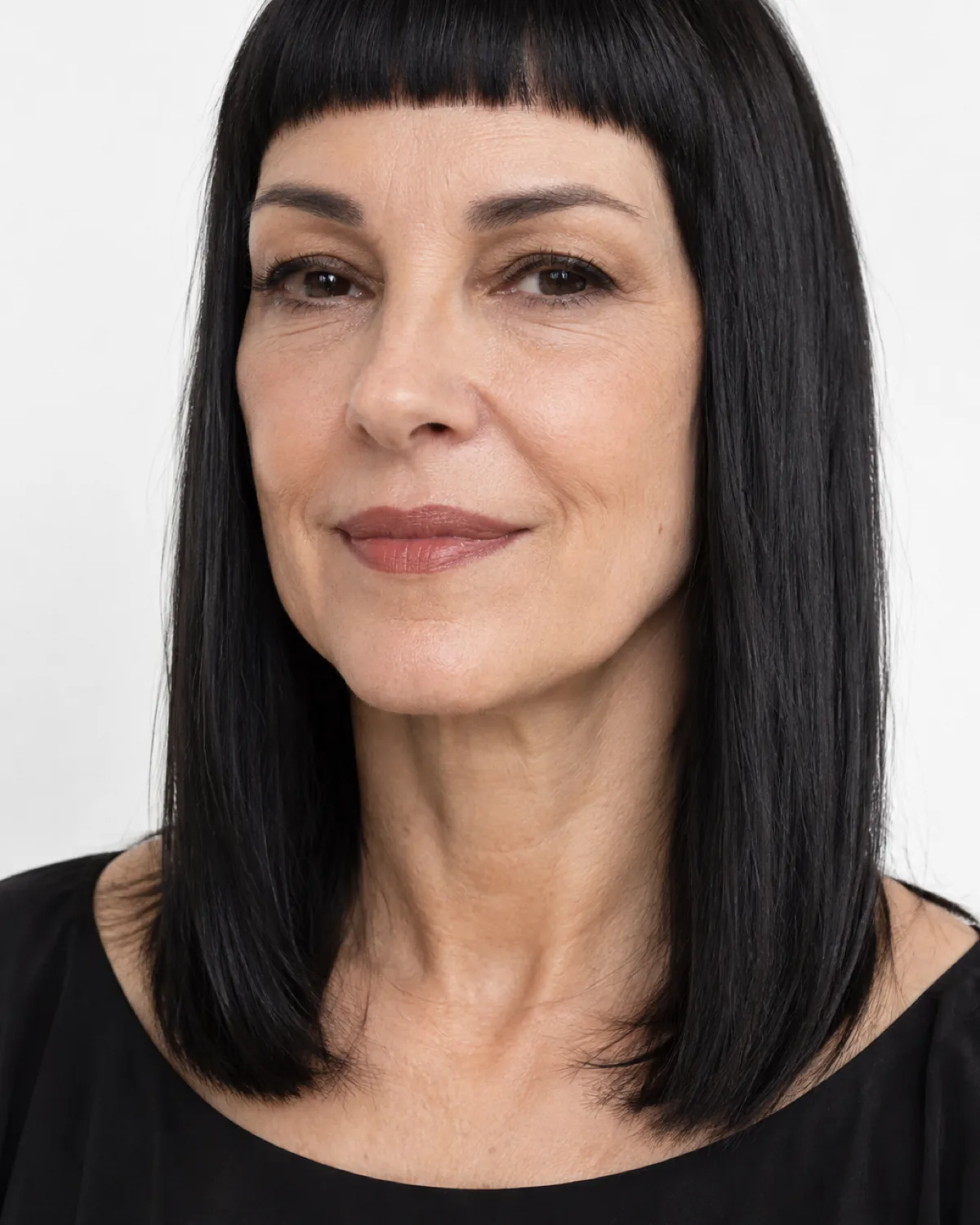
Baby bangs sit about an inch above the eyebrows in a short, precise horizontal line. Paired with a sleek midi, the contrast between the very short fringe and the long smooth length is the entire point. This is a confident, fashion-forward choice.
- Only works on a long or oval face — on a round face the short horizontal line sits at the widest point and widens further
- Requires a trim every two to three weeks because even slight growth changes the proportion dramatically
- The midi must be genuinely sleek — texture or wave underneath undermines the graphic contrast
- Skip if you are not ready for the commitment — baby bangs do not blend into a grow-out gracefully
13. Long Bangs Blending Into Face-Framing Layers
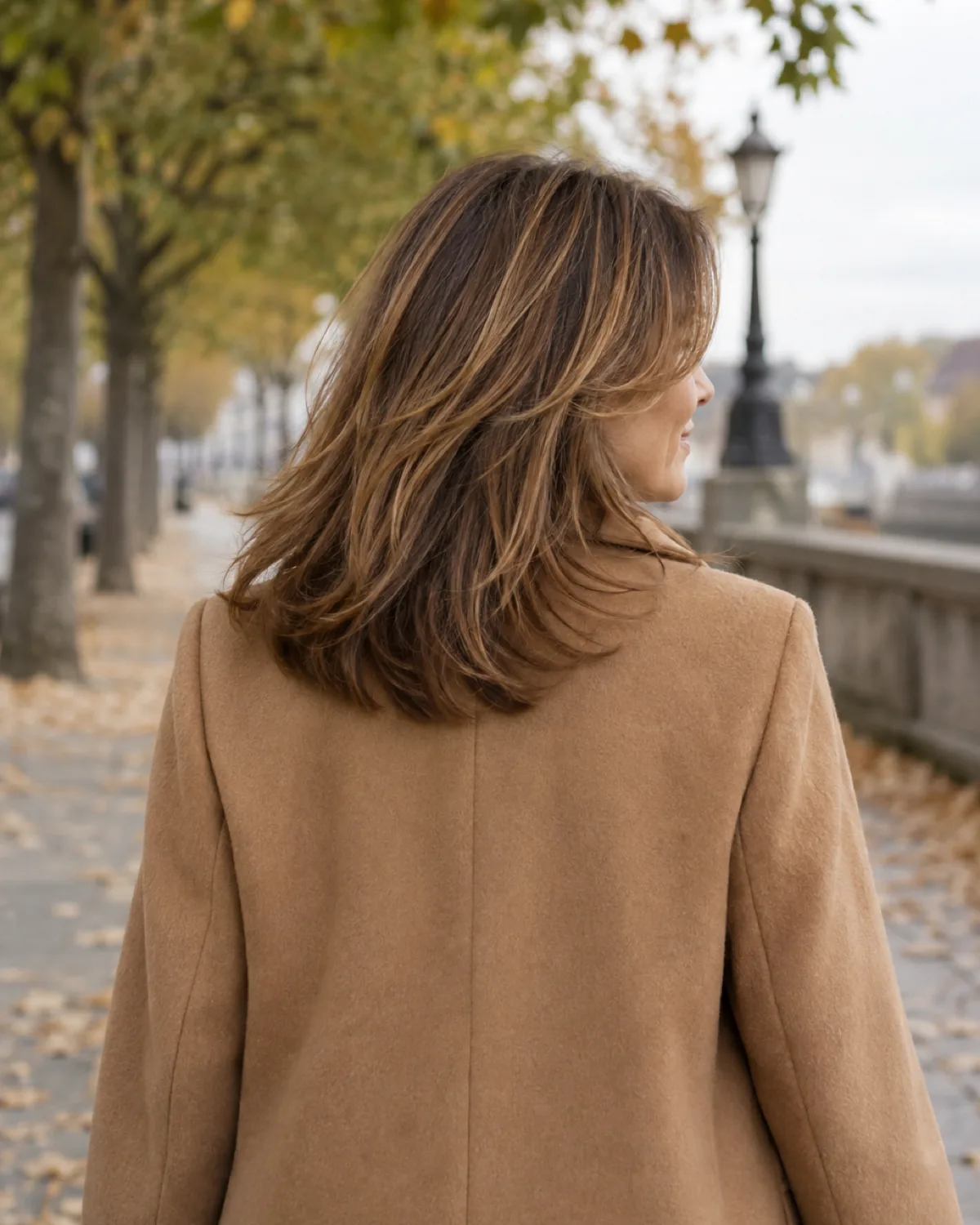
Almost not bangs at all. The longest pieces touch the jawline and taper seamlessly into the first layer of a U-shaped cut. This is the safest entry point for anyone who has never had bangs because the grow-out is invisible and you can pin the pieces back any time.
- Works on every face shape because the length and the taper adapt to whatever proportions sit underneath
- Maintenance is the lowest of any option on this list — the long pieces grow into the cut rather than out of it
- The transition from bang to layer must be seamless — ask your stylist for a soft, graduated blend rather than a distinct step
- This is the right choice if you want the framing effect of bangs without the commitment of actually having them
14. Asymmetric Bangs on a Disconnected Lob

One side is longer than the other, drawing the eye on a diagonal. The disconnected lob underneath has a slightly longer front piece on one side that echoes the asymmetry. Together, they break every horizontal line on the face.
- Works on square and round faces because the asymmetry disrupts the horizontal axis that those shapes emphasize
- Requires a trim every three to four weeks to keep the two lengths distinct — once they grow to the same length, the point is lost
- The disconnect between the bang and the lob must be deliberate and visible, not a subtle blend
- Ask your stylist which side should be longer based on your natural part and which direction your hair falls
Every fringe on this list answers the same question from a different angle: does this particular bang work with your particular face, your particular hair, and the schedule you will actually keep. The answer is always specific, never universal. Take two photos to the chair, tell the stylist what you read here, and let them adjust for what they see in person.
Where the checkable claims come from
- How to Choose the Best Hairstyle for Your Face Shape — American Academy of Dermatology
- Understanding Hair Layering Techniques — Pivot Point International
- The Science of Hair Aging — International Journal of Trichology
Keep this one
Save it for the appointment
Pin the image above to the board you actually open before a salon visit. This guide is written to be re-read, not read once.
Tonight, before you close this tab
- Hold a comb straight across your forehead at eyebrow height and check whether the horizontal line suits your face shape in the mirror
- Pull your current hair forward over your forehead to approximate a fringe length and see whether you prefer it above or below your brows
- Write down how often you currently get a trim — if it is less than every six weeks, rule out blunt and micro bangs
- Bring two photos to your stylist showing the bang length and density you want, one from the front and one from the side