9 Medium Shaggy Layered Cuts Worth Asking About After 50
Nine medium-length shaggy layered cuts for women over 50, each judged on face shape, hair density and maintenance. What to ask your stylist and what to skip.
Booking an appointment soon? Save this page. It is easier to skim in the chair than to remember.
At a glance
Works
- A collar-length choppy shag on oval or oblong faces where cheekbone layers add width without bulk
- A layered wolf cut at medium length when the crown still carries enough density to stack short
- A grown-out pixie shaped into shag territory, turning the awkward phase into an intentional cut
Depends
- A shoulder shag with curtain bangs, which only covers a thinning hairline if the fringe zone has enough hair to split cleanly
- A disconnected shag with short crown over long perimeter, which reads bold on wavy hair but unfinished on very straight strands
- A soft shag with flipped ends, which holds the flip on medium-weight hair but drops flat on very fine or slippery strands
Skip
- A textured lob with internal layers if your hair is already fine, because internal texturing removes weight you cannot spare
- A wolf cut when your crown is thinning, because the stacked crown layers spotlight the weakest zone
- A side-swept fringe that fights your natural center part, because the fringe will migrate back by noon
Medium length is the zone where shaggy layers either earn their keep or give the game away.
Short cuts can hide thin spots in a tight frame. Long hair can use gravity and a solid hemline. Collar-to-shoulder sits in between, where every layer either adds movement or subtracts density.
These nine are judged on that question. Each one suits a different combination of face shape, hair density and how much morning time you are willing to spend.
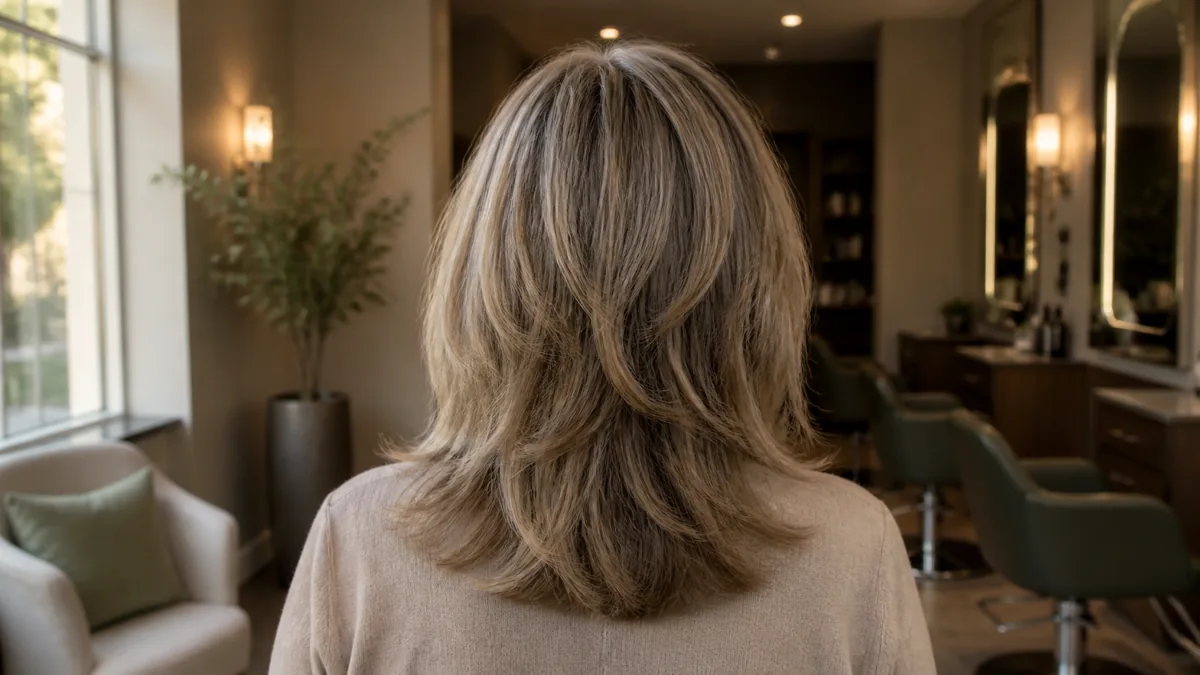
1. The Collar-Length Choppy Shag

The layers start at the cheekbone and land blunt at the collar. On an oval or oblong face, the cheekbone-level pieces create horizontal width where a longer cut would pull the eye downward. The blunt ends at the collar read denser than they are because the hair is concentrated in a short zone.
- Best for oval and oblong faces with medium density at the temples
- The choppy ends are blunt, not razored, so they keep a solid edge even as the hair grows out
- Skip if your density is low at the temples, because the face-framing layers will gap and show scalp
- Ask your stylist for point-cutting at the ends rather than razor-texturing, and tell them you want the shortest layer no higher than cheekbone level
- This cut grows out well for about eight weeks before the collar length starts dragging
2. A Shoulder-Hitting Shag With Curtain Bangs

The curtain fringe splits across the forehead and sweeps to each side, covering the hairline-to-forehead transition that often thins first. The weight line sits at the collarbone, anchoring the shag so gravity does not flatten every layer above it.
- Best for anyone whose hairline is receding at the temples and who wants to disguise the transition without a full fringe
- The split must look natural, which means the fringe zone needs enough hair to divide without showing a bald part down the center
- Skip if your fringe cannot hold a clean split, or if you are not willing to pin the fringe while it dries
- Ask how long the bangs will take to grow out if you change your mind, and whether they will blend back in without a bridging cut
- Works well paired with the layered bob approach for fine hair if your mid-lengths still hold
Where to start
Find your situation, skip ahead
Your hair still has decent density at the crown and you want visible movement
Start with the wolf cut or the choppy shag. Both concentrate layers where your density supports them.
01 The Collar-Length Choppy Shag03 The Layered Wolf Cut at Medium Length05 The Disconnected Shag
Your hair is medium density and you want something that works without a round brush
The piece-y shag or the grown-out pixie shape need almost no styling to look deliberate.
07 The Low-Maintenance Piece-y Shag09 The Grown-Out Pixie Shag06 A Soft Shag With Flipped Ends
You want to keep shoulder length but worry layers will thin you out
Ask for internal layers only. The textured lob hides all the work inside the outline.
04 A Textured Lob With Internal Layers Only02 A Shoulder-Hitting Shag With Curtain Bangs08 A Medium Shag With Side-Swept Bangs
3. The Layered Wolf Cut at Medium Length
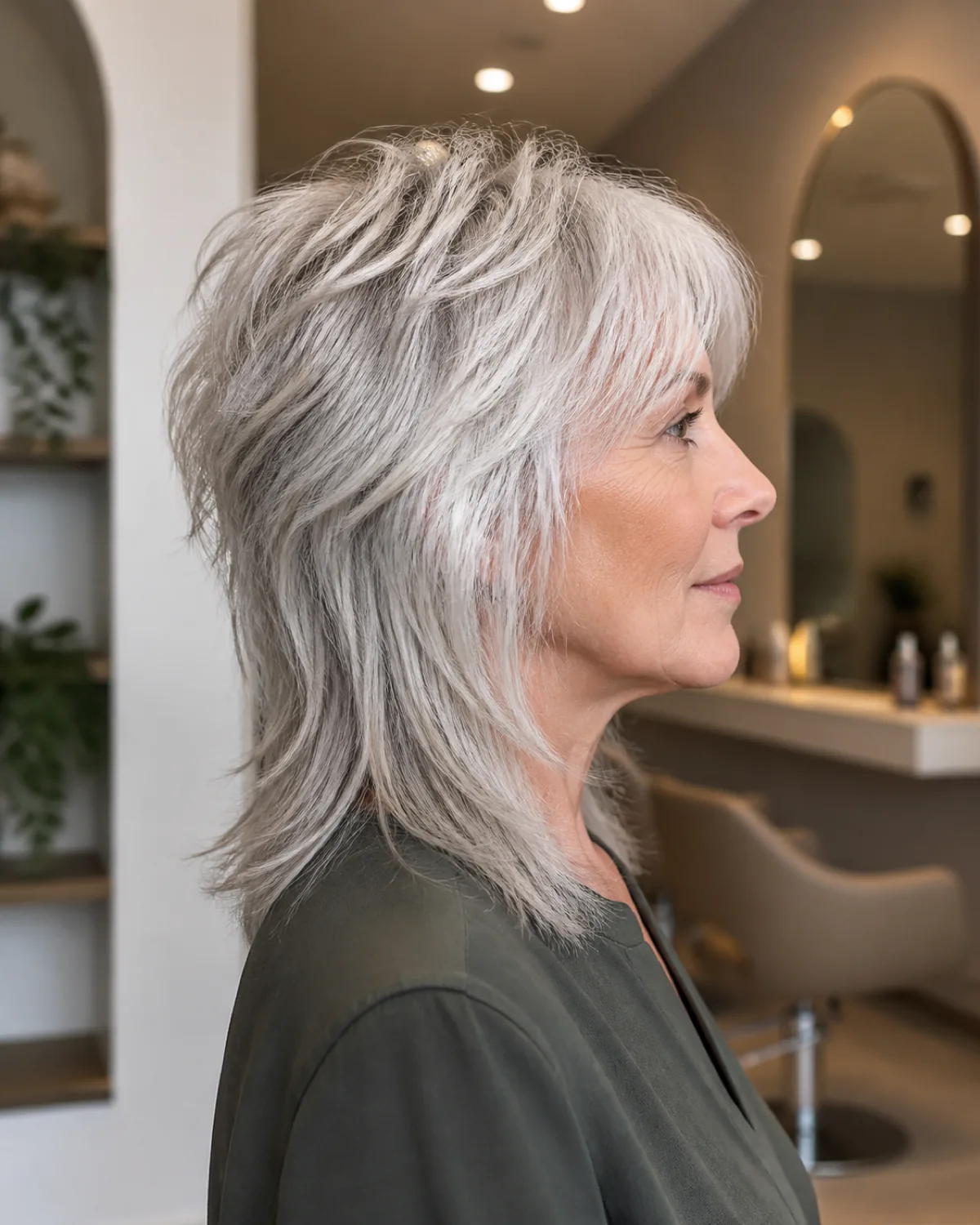
The crown layers stack short and build volume at the top. The longer lengths fall past the shoulders. From the side, the gradient reads clearly: about three inches of difference between the shortest crown layer and the longest perimeter piece.
- Best for round or square faces where crown height visually elongates the face shape
- The stacked crown only works if your crown still has reasonable density; if your density has dropped there, the layers spotlight what is missing
- Skip if your crown is thinning, because the short layers up top will separate and expose scalp in overhead light
- Ask your stylist to dry-cut the crown layers so you can see the volume stack in real time before committing
- A wolf cut at this length grows out into a generic shag within about ten weeks, which is a feature if you prefer low maintenance
4. A Textured Lob With Internal Layers Only
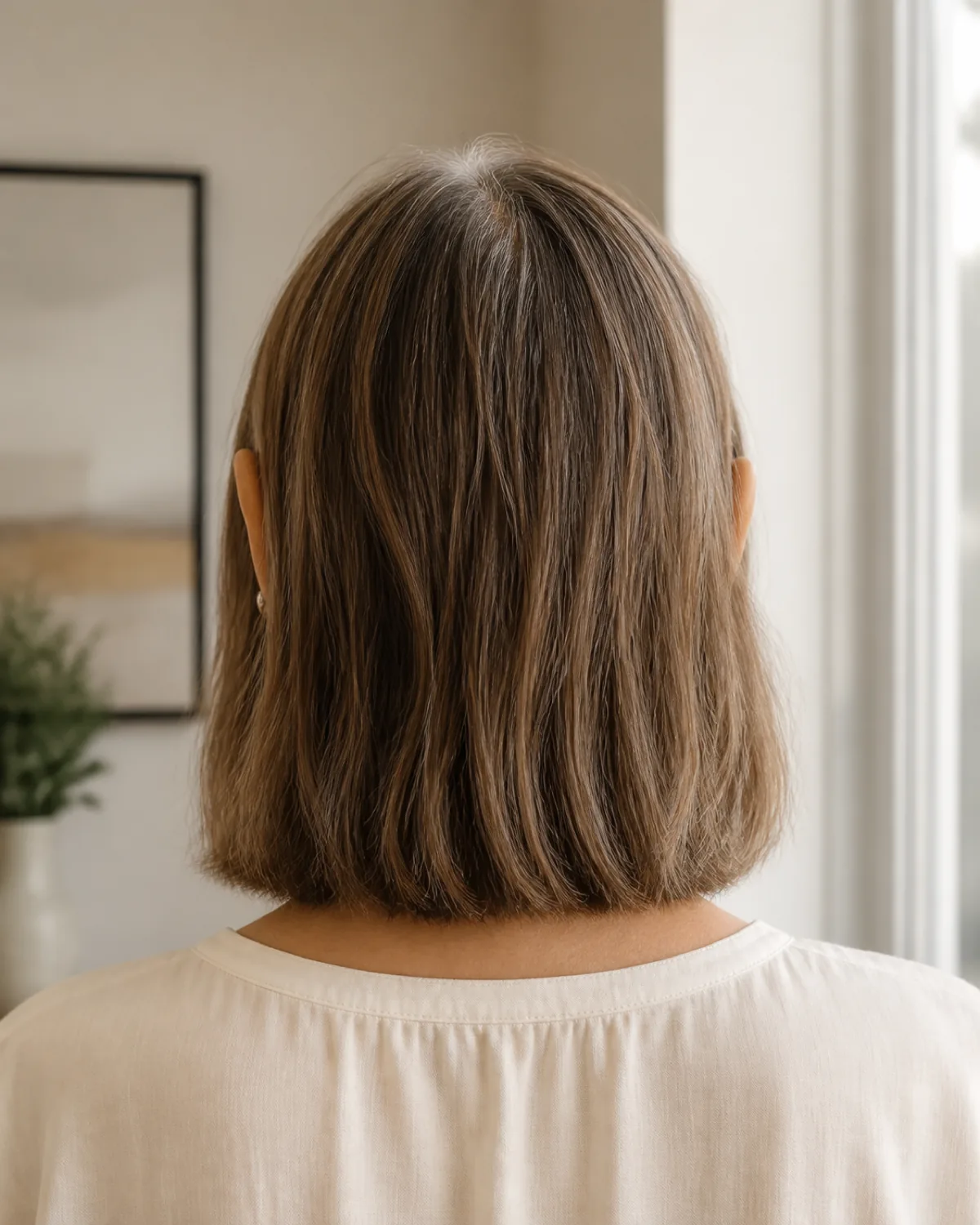
From the outside this looks like a one-length lob. The texturing is all internal: the stylist removes bulk from inside the shape without changing the outline. The result is a collarbone-length cut that moves as though it has layers but photographs as though it does not.
- Best for thick-to-medium hair that feels heavy at the bottom but lies flat on top, and for anyone who wants a shag sensibility without visible layering
- Internal texturing works because it thins the bulk without shortening the perimeter, so the hemline stays solid
- Skip if your hair is already fine or thin, because removing internal weight from fine hair leaves wispy ends with no structure
- Ask your stylist to show you where they plan to texturize and to stop if the ends start feeling sparse between the fingers
- This is the lowest-risk shag on this list because the outline stays intact even if the internal work does not suit you
5. The Disconnected Shag

Two distinct lengths with no blending between them. The crown sits at about three inches, choppy and textured. The perimeter drops to the collar. The gap between the two zones is the point. On wavy or curly hair, the texture hides the disconnect and makes it look deliberate rather than grown out.
- Best for wavy or curly hair where natural texture fills the gap between crown and perimeter
- The bold silhouette reads confident, but it is a specific look that does not suit every context
- Skip if your hair is very straight, because the disconnect reads as two separate unfinished haircuts stacked on top of each other
- Ask your stylist to cut the crown dry so you can see how the two zones interact at your natural texture before they commit to the perimeter length
- This cut grows out faster than it looks; within six weeks the disconnect softens into a standard shag, which may or may not be what you want
6. A Soft Shag With Flipped Ends

The layers curve outward at the ends, landing between the jaw and the collarbone. On a heart-shaped face, the outward movement at the jaw adds width where the face narrows, balancing the wider forehead above.
- Best for heart-shaped or narrow-chin faces where horizontal movement at the jaw creates visual balance
- The flip needs hair with enough weight and texture to hold the outward curve; medium-density hair with even slight wave will cooperate
- Skip if your hair is very fine and slippery, because the ends will not hold a flip without heavy product or daily heat
- Ask whether a round-brush blowout is required every wash, and be honest about whether you will do it
- This cut reads softer and more polished than a standard choppy shag, which makes it a good middle ground for someone who wants movement but not edge
7. The Low-Maintenance Piece-y Shag

Minimal layers. Maximum texture at the ends through point-cutting. The result is separated, piece-y tips that look like you styled them when you did not. The texture at the ends is the entire story of this cut.
- Best for anyone who will not pick up a round brush and wants the hair to air-dry into something that reads intentional
- Point-cutting the ends creates separation without removing bulk from the interior, so the hair keeps its density through the mid-lengths
- Skip if you want a polished, smooth finish, because piece-y ends always read casual regardless of the occasion
- Ask for point-cutting rather than razor-texturing, especially if your hair is on the finer side, because a razor removes more weight per pass
- Pairs well with the easy thin-hair approach if your maintenance tolerance is low
8. A Medium Shag With Side-Swept Bangs
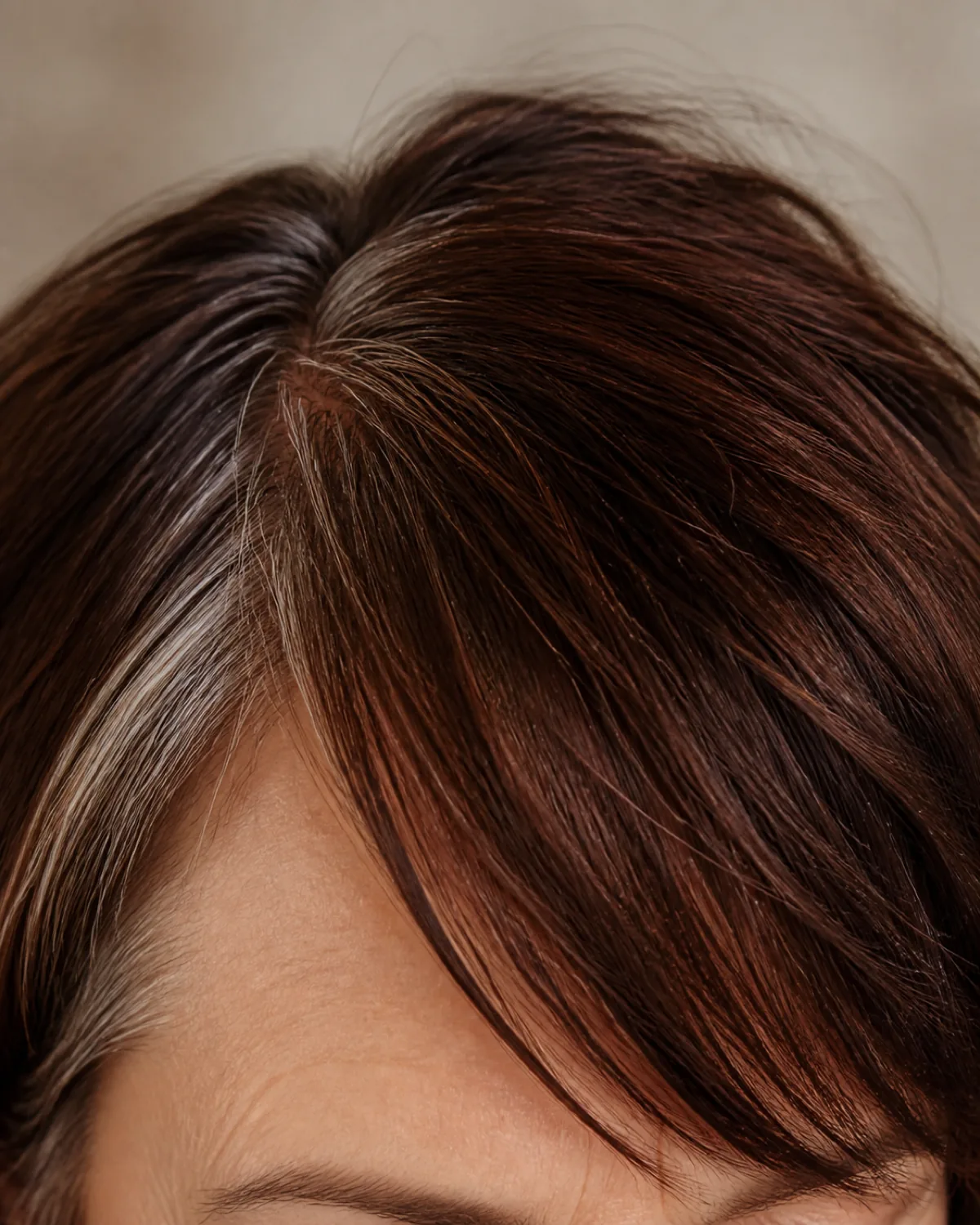
An asymmetric fringe swept to one side. The diagonal line of the bangs cuts across the forehead rather than running parallel to the jawline. On a square face, that diagonal softens the angular jaw because the eye follows the slant of the fringe rather than tracking the horizontal jaw below it.
- Best for square faces where diagonal lines counterbalance a strong horizontal jawline
- The side-swept fringe reads modern without requiring a dramatic commitment
- Skip if your hair naturally parts dead center, because a side-swept fringe fights a center part all day and the fringe will migrate back by noon
- Ask your stylist to cut the fringe into your existing part direction rather than against it
- If you wear glasses, check that the swept fringe clears the top of your frames rather than bunching against them
9. The Grown-Out Pixie Shag
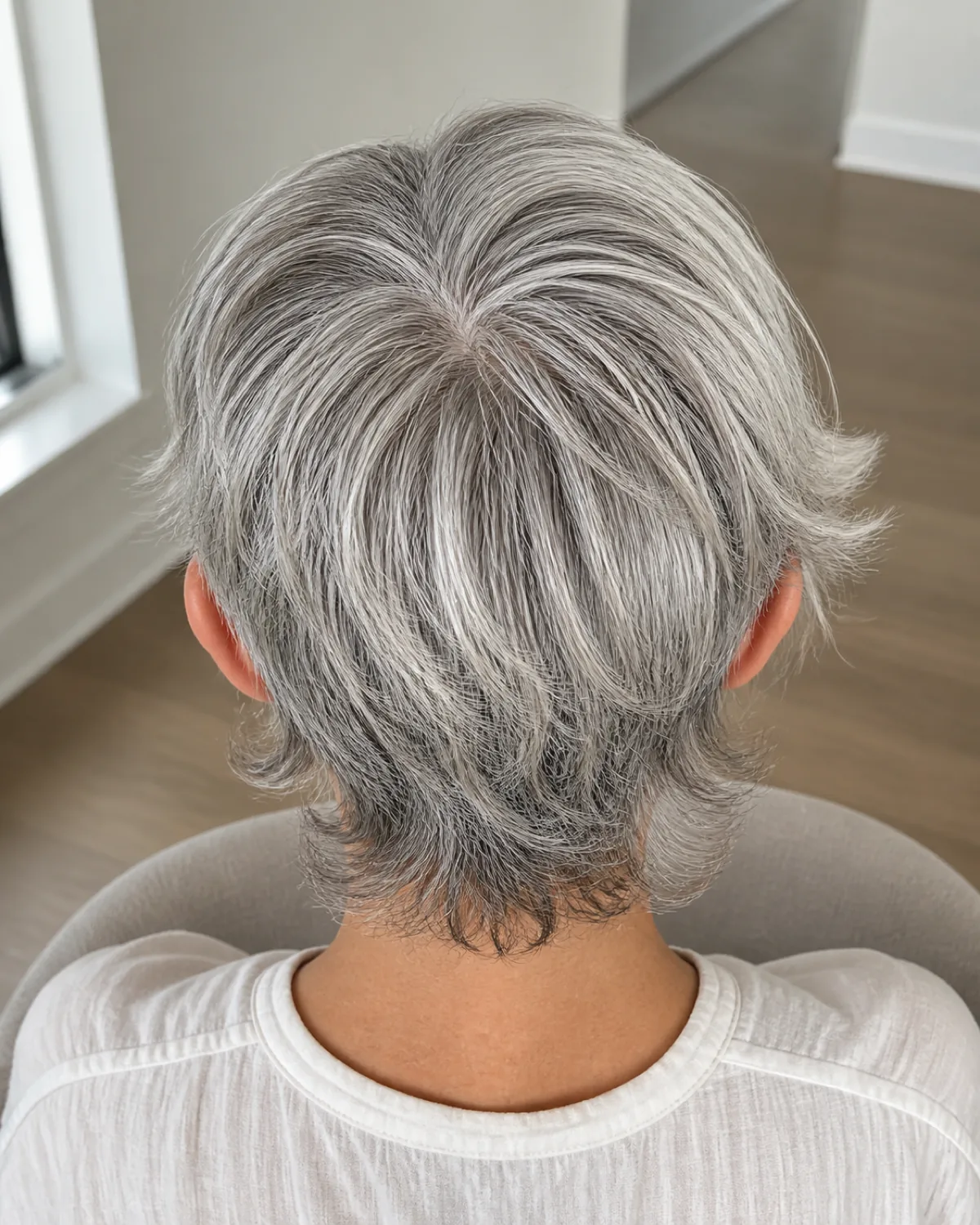
A pixie that has grown past the ears into shag territory. The uneven lengths are the point: instead of looking like a haircut that needs a trim, it looks like a deliberate layered shape. The ear tips are visible, the nape curls naturally, and the crown has enough length to start showing texture.
- Best for anyone growing out a pixie who wants to look intentional during the awkward phase rather than overdue for an appointment
- A maintenance trim every six to eight weeks keeps the shape evolving rather than collapsing into a helmet
- Skip if you are not actually growing out a short cut, because starting from medium length and cutting backward to mimic this shape reads forced
- Ask your stylist to shape the nape and the ears every visit while letting the crown and top grow, so the bottom stays clean while the top catches up
- This is a transitional cut, not a destination; plan where you want to end up and let each trim move you there
A stylist who can see your hair in person, run their fingers through the ends and check where your density holds will always outrank a photograph. Bring two photos from this list if they match your variables, and ask them to talk you through what will work at your texture, your density and your morning schedule.
Where the checkable claims come from
- Hair diameter, color and density changes with age — Birch, Messenger & Messenger, British Journal of Dermatology (2001)
- Graduation vs. Elevation: The Subtle Distinction That Impacts Every Cut — Above Shears
- Face Shapes and Hairstyles — Healthline
Keep this one
Save it for the appointment
Pin the image above to the board you actually open before a salon visit. This guide is written to be re-read, not read once.
Tonight, before you close this tab
- Part your hair in daylight and photograph where density drops off at the temples, crown and mid-lengths
- Check whether your ends still feel like a solid edge or taper to nothing, because that decides whether point-cutting or blunt-cutting is safer
- Find two photos of medium shags where the model's hair density looks close to yours
- Write down whether your hair holds any natural wave or curl, because even slight texture changes which shag layers stay put
- Ask your stylist where the shortest layer will start and tell them you want it below your thinning zone