19 Shoulder-Length Hairstyles Over 50 That Actually Suit Your Hair
Nineteen shoulder-length cuts for women over 50, judged on who they suit. Which shapes hold weight, which need daily styling, and what to ask your stylist.
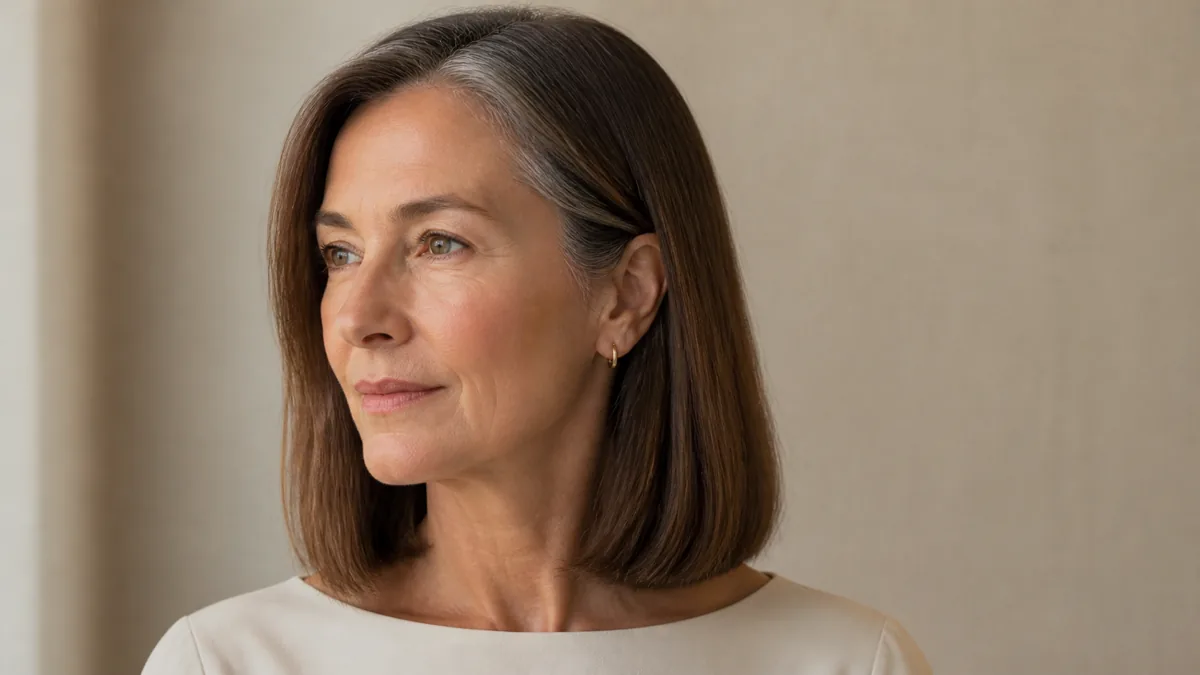
Booking an appointment soon? Save this page. It is easier to skim in the chair than to remember.
At a glance
Works
- A blunt one-length cut when your density is medium to thick and you want the hemline to read solid
- An internally layered lob when you need movement inside a clean perimeter, on a round or square face
- A textured lob with point-cut ends when hair is fine and you want movement only in the last inch
Depends
- Curtain bangs, which frame the face only if your fringe zone is dense enough to split without gapping
- A deep side part, which reads fuller on the heavier side and shows more face on the lighter one
- A blowout shape, which holds its curve only if you style it every wash rather than air-dry it
Skip
- Razored wispy ends on fine or thinning hair, where the perimeter disappears instead of tapering
- A shag with short crown layers on fine straight hair, which removes density where you need it most
- A shoulder-length flip on very fine hair, which drops out of the set within an hour
Shoulder length is the most requested length after fifty, and the one most likely to land in no-man's-land. Too short to pull back on a rushed morning. Too long to sit well once your crown thins.
The length is rarely the problem. Your shoulder is part of the haircut: hair stopping there meets an obstacle no other length deals with, and the ends turn out or under depending on where the hemline sits.
These nineteen are judged on one question: does this cut suit your face shape, your density, and the five minutes you actually have? If you are unsure of your face shape, start here.
1. The Blunt Shoulder-Length Cut
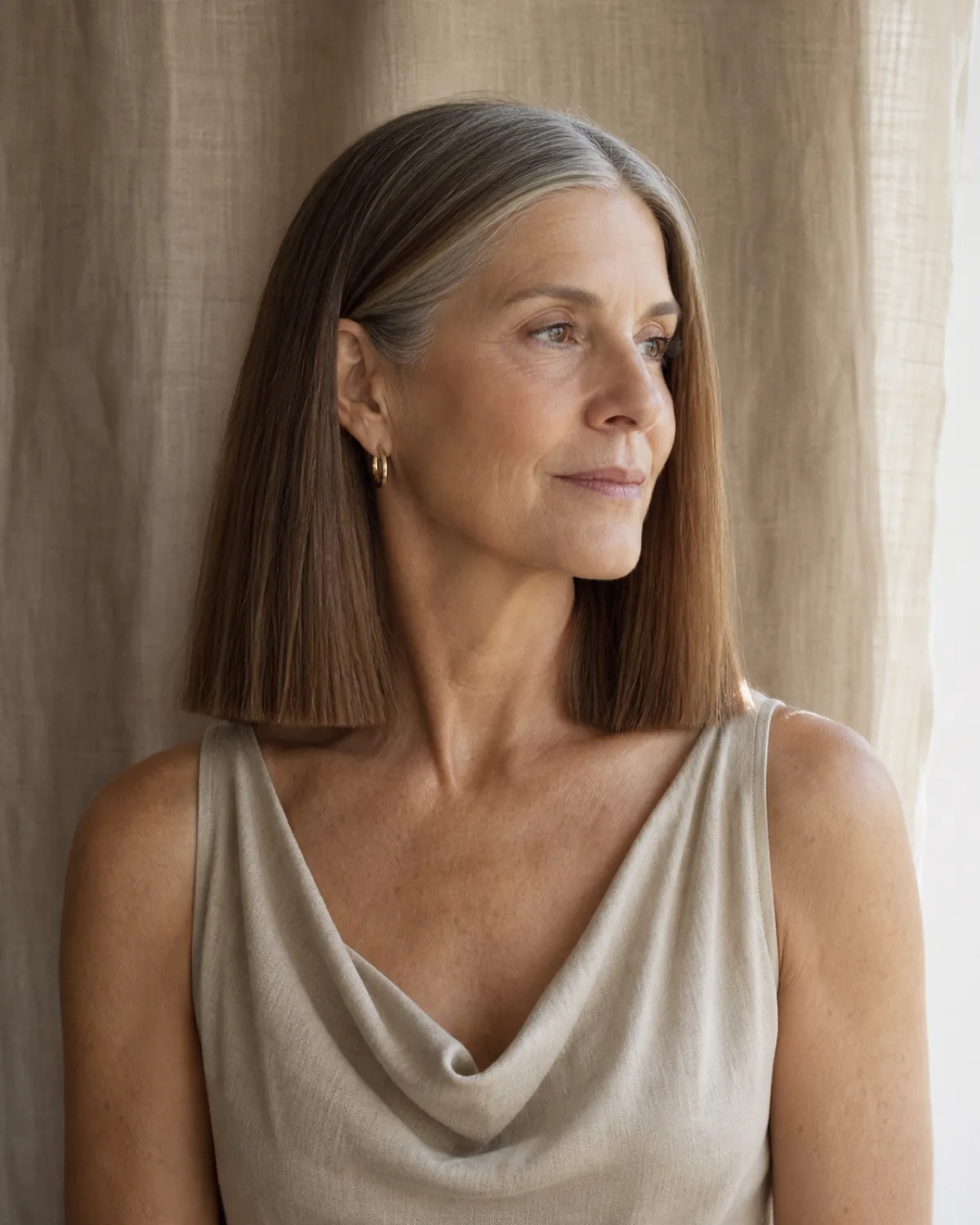
One length, one line, no layers anywhere. The whole cut rests on the hemline being solid enough to read as an edge rather than a fade, which is why it needs density behind it. On thick or medium hair it looks deliberate. On hair that has thinned at the ends it announces every gap.
- Suits medium to thick density, where there is enough hair at the perimeter to hold a straight edge
- Oval and oblong faces carry it best, because a flat line at the shoulder adds no width at the jaw
- The solid hemline reads fuller than the same quantity of hair cut into layers
- Skip it if your ends already taper on their own, because the blunt line has nowhere to hide that
- Ask for it cut dry, so your stylist can see where your weight actually falls before committing to the line
2. A Long Bob With Internal Layers
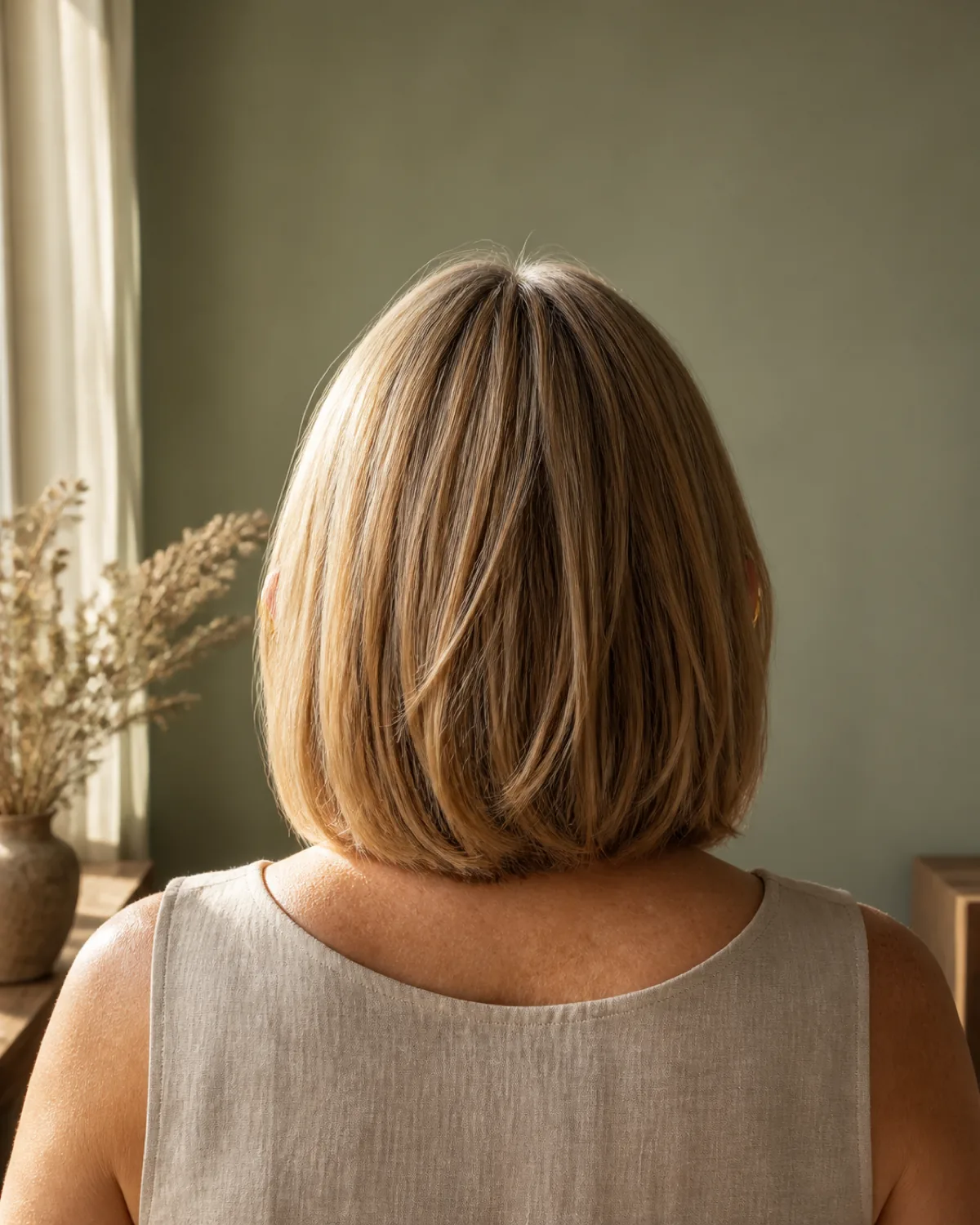
A lob sits between the collar and the shoulder, and the layers here are hidden inside the outline rather than cut into it. From behind you see one clean line with movement happening underneath it. That is the point: the perimeter stays intact so the cut still reads thick, while the interior loses enough weight to move.
- Round and square faces do well here, because the clean perimeter does not add width where you do not want it
- Internal layers remove weight without shortening the outline, so nothing looks thinner from the outside
- Best on medium density, where there is enough hair to lose some from the inside
- If you want the same idea shorter, the bob comparison covers where the line sits
- Tell your stylist to keep the perimeter one length and take the weight out internally, or you will get layers you did not ask for
3. Shoulder-Length With Curtain Bangs
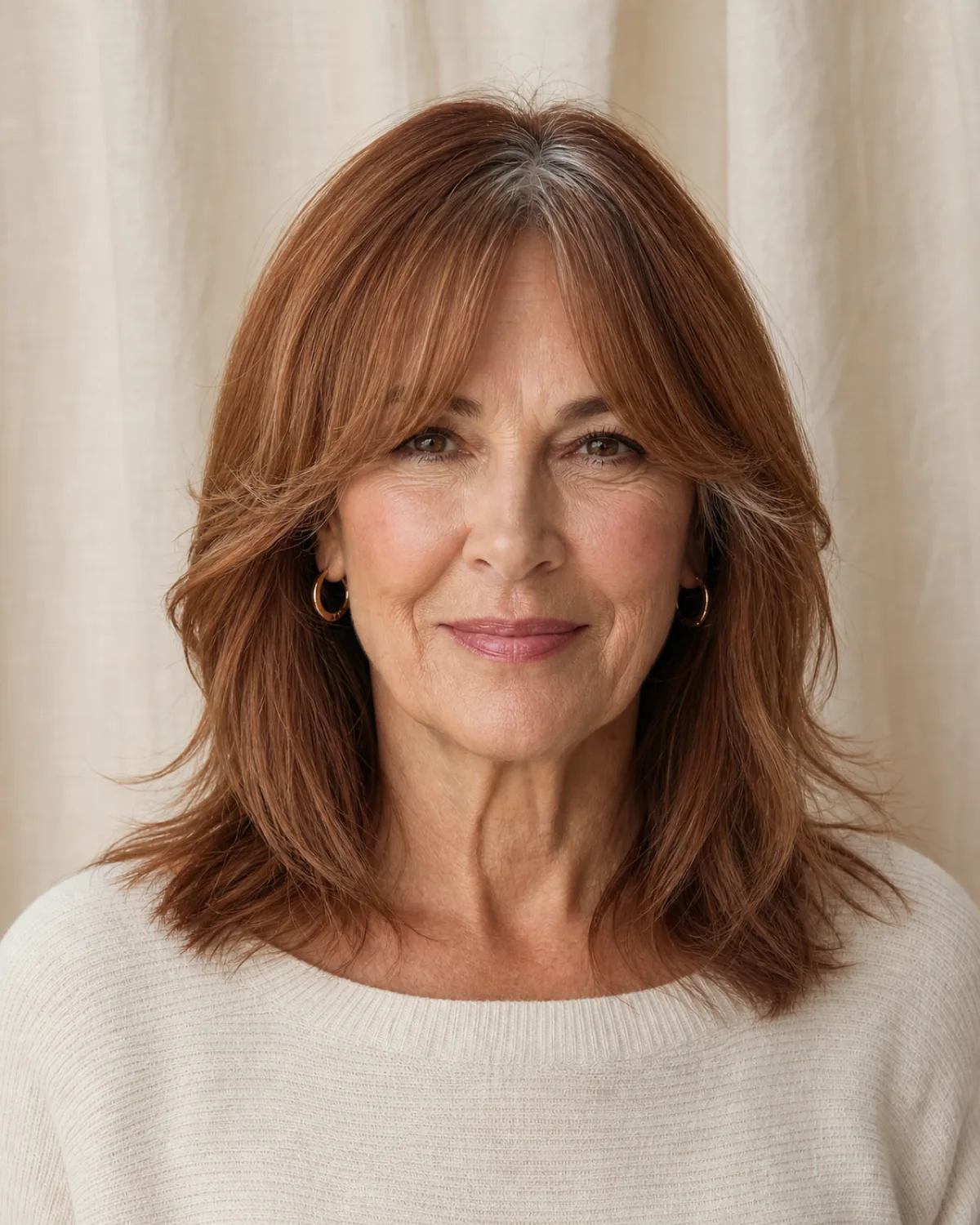
Curtain bangs split from a centre part and sweep outward past the cheekbone, so they frame without covering. Everything depends on the density in that front section. A fringe zone with enough hair splits into two clean panels. A sparse one splits into gaps, and the effect is the opposite of what you wanted.
- Oval and heart-shaped faces get the most from the outward sweep, which widens the narrower part of the face
- The fringe zone needs enough density to fall as two solid panels rather than separated strands
- Thinning at the temples is the thing to check before committing, because that is where the split lands
- A side-swept piece is the safer version if your front section will not hold a centre split
- Ask your stylist to test the split on dry hair before cutting, because wet hair hides gapping
4. A Shoulder-Length Shag With Short Crown Layers
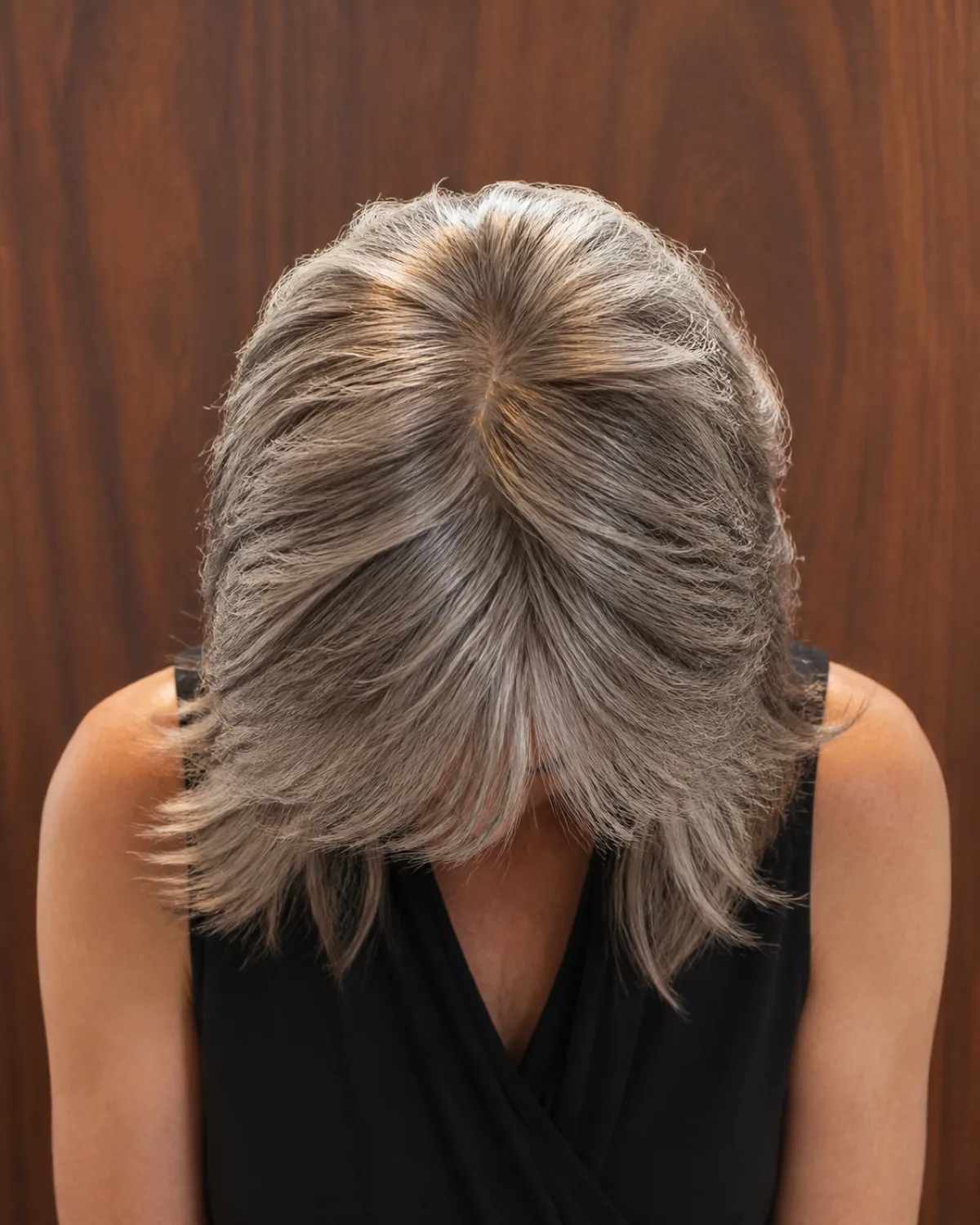
The layers start at the crown and get longer on the way down, which is what builds height where hair flattens first. It only works if your texture holds the layers open. Wave or curl keeps them separated. Fine straight hair lets them collapse, and then you have lost density at the crown for nothing.
- Best on hair with natural wave or curl, which holds the crown layers apart on its own
- Fine straight hair is the wrong candidate, because the shortened crown falls flat and the density loss shows
- The graduation should be visible from above, with the crown pieces clearly shorter than the mid-lengths
- Related shapes at this length are covered in the shaggy layered cuts round-up
- Ask how short the crown layer goes, because that number decides whether you can still pull it back
5. A Textured Shoulder Lob for Fine Hair
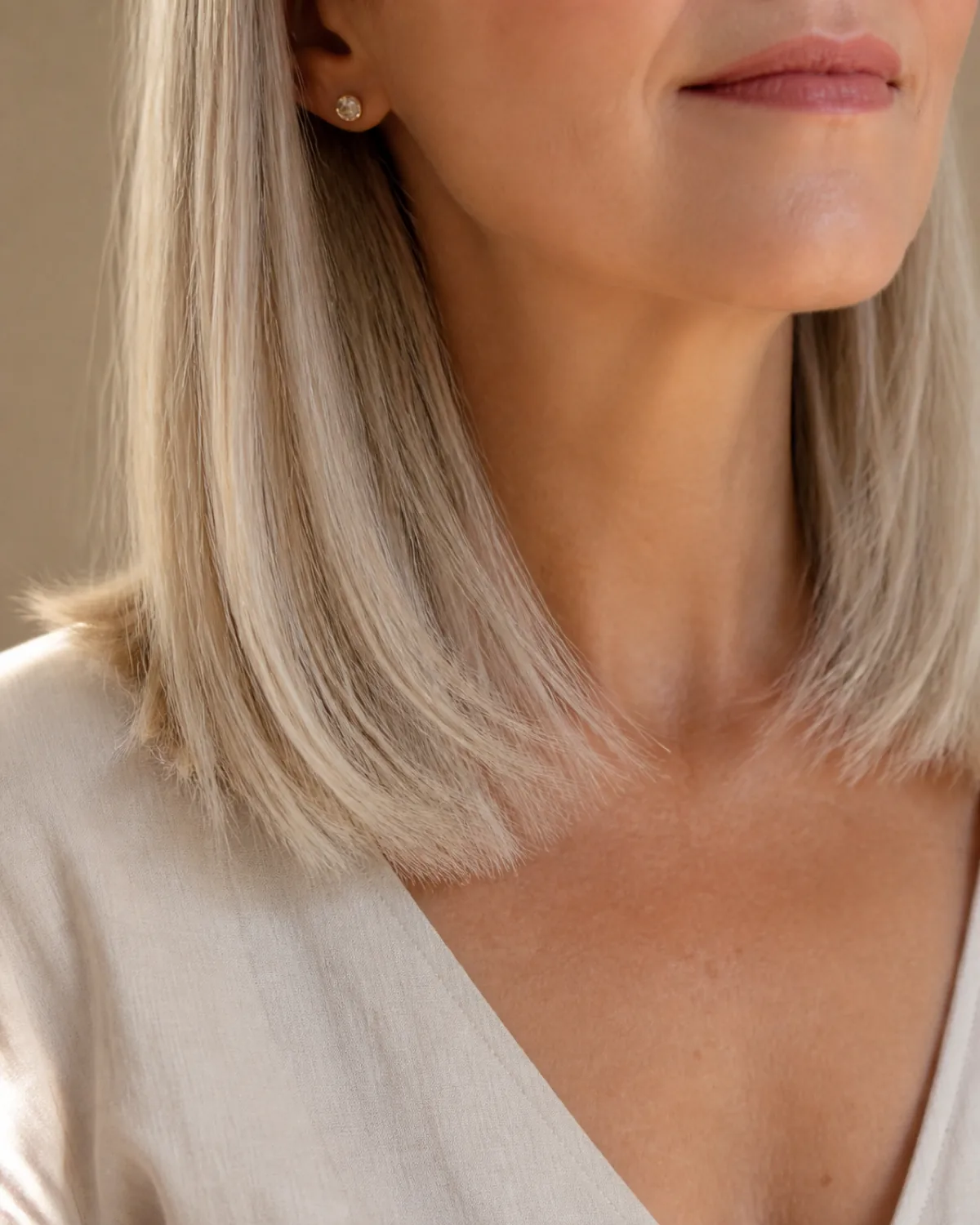
The base stays one length and only the last inch is point-cut. You get movement at the tips without giving up density higher up, which matters when there is not much to spare. Look at where the texture starts: anything cut above the weight line takes away the fullness the cut is supposed to protect.
- Built for fine hair that wants movement without losing the solid look of a one-length base
- The texturing stays in the last inch, so density above the weight line is untouched
- Reads softer than a blunt cut without reading thinner, because the bulk sits higher up
- More options for this density are in the very fine hair guide
- Say point-cut ends only, and say where you want the texture to stop, or it can creep up the length
Where to start
Find your situation, skip ahead
Your hair is fine or thinning and you want shoulder length without the ends looking sparse
Keep the perimeter solid and put the movement in the last inch: a textured lob, or layers that start below the chin.
05 A Textured Shoulder Lob for Fine Hair07 A Soft Layered Cut Starting Below the Chin02 A Long Bob With Internal Layers
Your hair is thick and shoulder length turns into a triangle by mid-afternoon
Ask for internal layers that remove bulk without shortening the outline, not layers cut into the perimeter itself.
17 A Layered Shoulder-Length Cut for Thick Hair02 A Long Bob With Internal Layers09 Shoulder-Length With Wispy Ends
You want shoulder length but have five minutes on a weekday morning
Choose a cut built for your natural texture rather than for a round brush: the wavy cut, or a blunt centre-parted one length.
13 A Wavy Shoulder-Length Cut18 Shoulder-Length With a Centre Part and No Layers01 The Blunt Shoulder-Length Cut
6. Shoulder-Length With a Deep Side Part
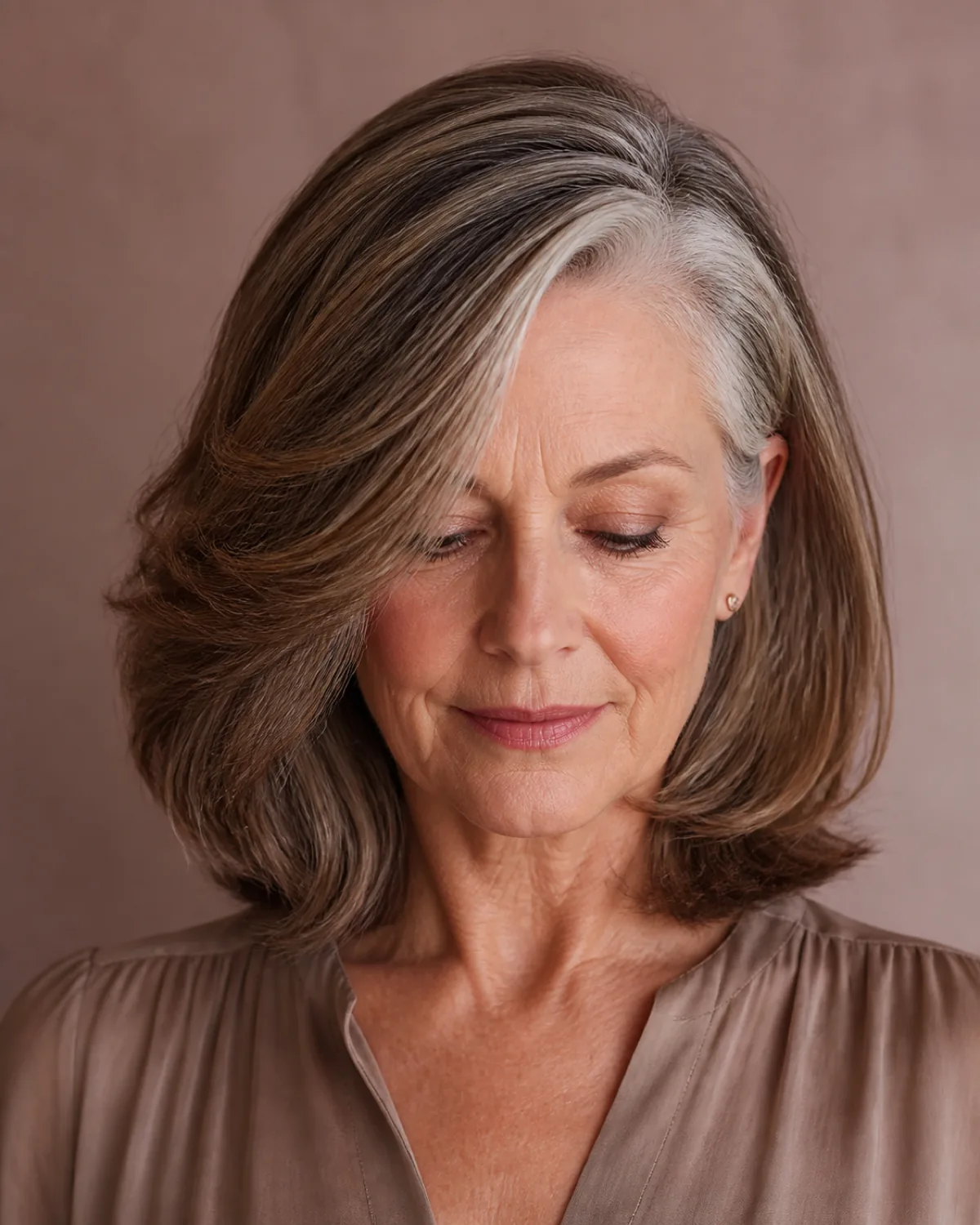
Moving the part off centre stacks the weight on one side and leaves the other side flatter. On a round face that asymmetry does more than any layer will, because it breaks the symmetry that reads as width. It also buys you coverage on the side where your hairline has receded.
- Round and square faces gain the most, because an off-centre line interrupts a symmetrical width
- The heavier side reads fuller, so put it where your density is lower or your hairline is higher
- Works on any texture, since the part does the work rather than the cut
- A part moved more than an inch off centre tends to fall back over time unless the cut supports it
- Ask your stylist where your hair naturally wants to break, because fighting the growth pattern is a daily job
7. A Soft Layered Cut Starting Below the Chin

Nothing is removed above the chin. The top half keeps all its weight and the bottom half moves, which is the safest way to get layers when your density is dropping. Seen from the side you can read exactly where the layering starts, and that starting point is the whole decision.
- The safest layered option for thinning hair, because the crown and mid-lengths keep their weight
- Layers beginning below the jaw protect the fullness at the top of the head
- Gives movement at the ends without the hollowed-out look that high layers cause on fine hair
- Check the starting point in profile, not from the front, because that is the only view that shows it
- Ask for the shortest layer to sit below your jawline and name that point out loud
8. A Shoulder-Length Blowout Shape
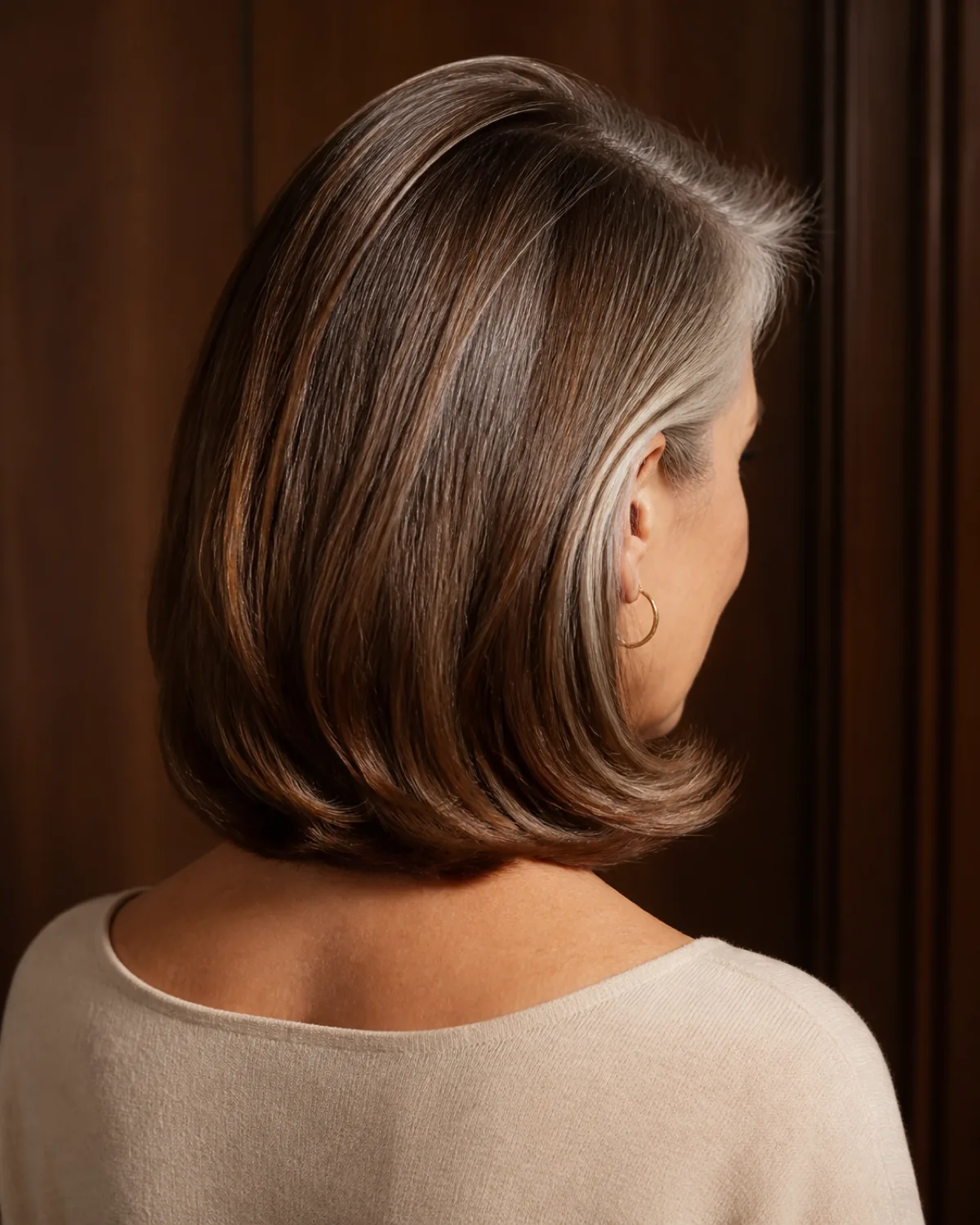
This shape is cut for a round brush, and it looks like this only when you use one. The ends curve under in a continuous line that hair does not do by itself. If you wash and go, you will be looking at a different haircut most days of the week.
- Suits medium-weight hair that holds a shape once it is set
- The turned-under hemline reads heavier and thicker than the same hair air-dried
- This is a styling commitment, not a wash-and-go cut, so count your mornings honestly
- Very fine hair drops the curve within hours, which makes the cut look shapeless by afternoon
- Ask whether the shape still works air-dried, and take the honest answer seriously
9. Shoulder-Length With Wispy Ends
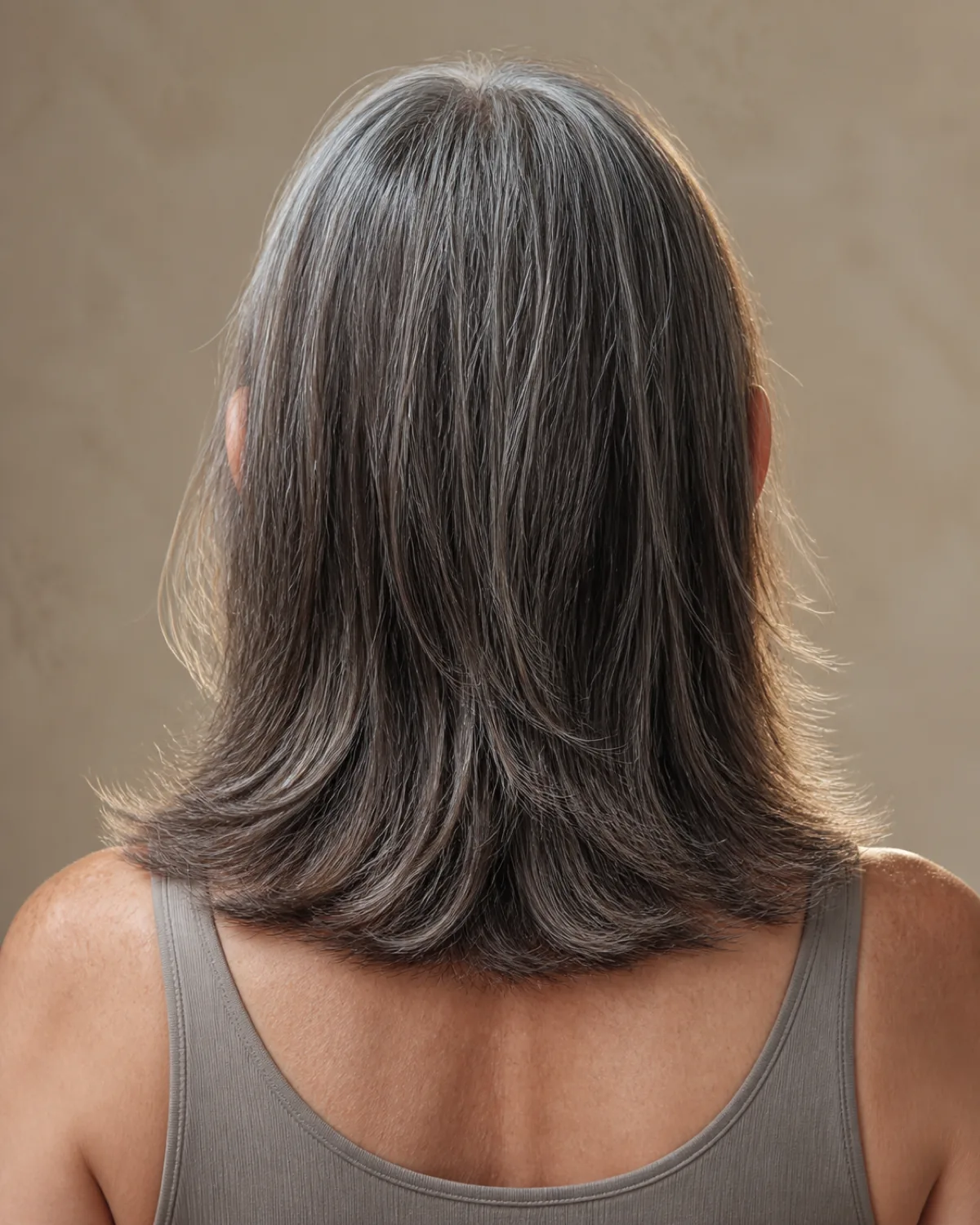
This is the opposite of the blunt cut. The ends are razored or point-cut so they taper into separate strands, which takes bulk off the perimeter of hair that has too much of it. On thick hair it stops the triangle. On fine hair the ends simply disappear.
- Made for thick hair carrying too much weight at the perimeter
- Tapered ends stop shoulder-length hair widening into a triangle by the end of the day
- Skip it on fine or thinning hair, where the ends vanish instead of tapering
- The taper is visible strand by strand, so a heavy hand here is hard to undo before it grows
- Ask for a light taper on the last inch first, since you can always take more off next time
10. A Collarbone-Length Cut With Face-Framing Highlights

The cut sits just below the collarbone and the lighter pieces do the shaping. Where those pieces are placed decides where the eye lands, which makes this as much a colour decision as a cutting one. The placement question belongs to your colourist, and it is worth asking before anything is mixed.
- The extra length below the collarbone suits anyone who wants shoulder length without the ends sitting on the shoulder
- Lighter pieces around the face pull attention toward the jawline and away from the hairline
- Ask your colourist where they intend to place the lightest pieces for your face shape, and why there
- Ask what it will look like three months on, once the colour has moved down the length
- The cut has to be right first, because colour placed on a shape that does not suit you changes nothing
11. A Shoulder-Length Flip
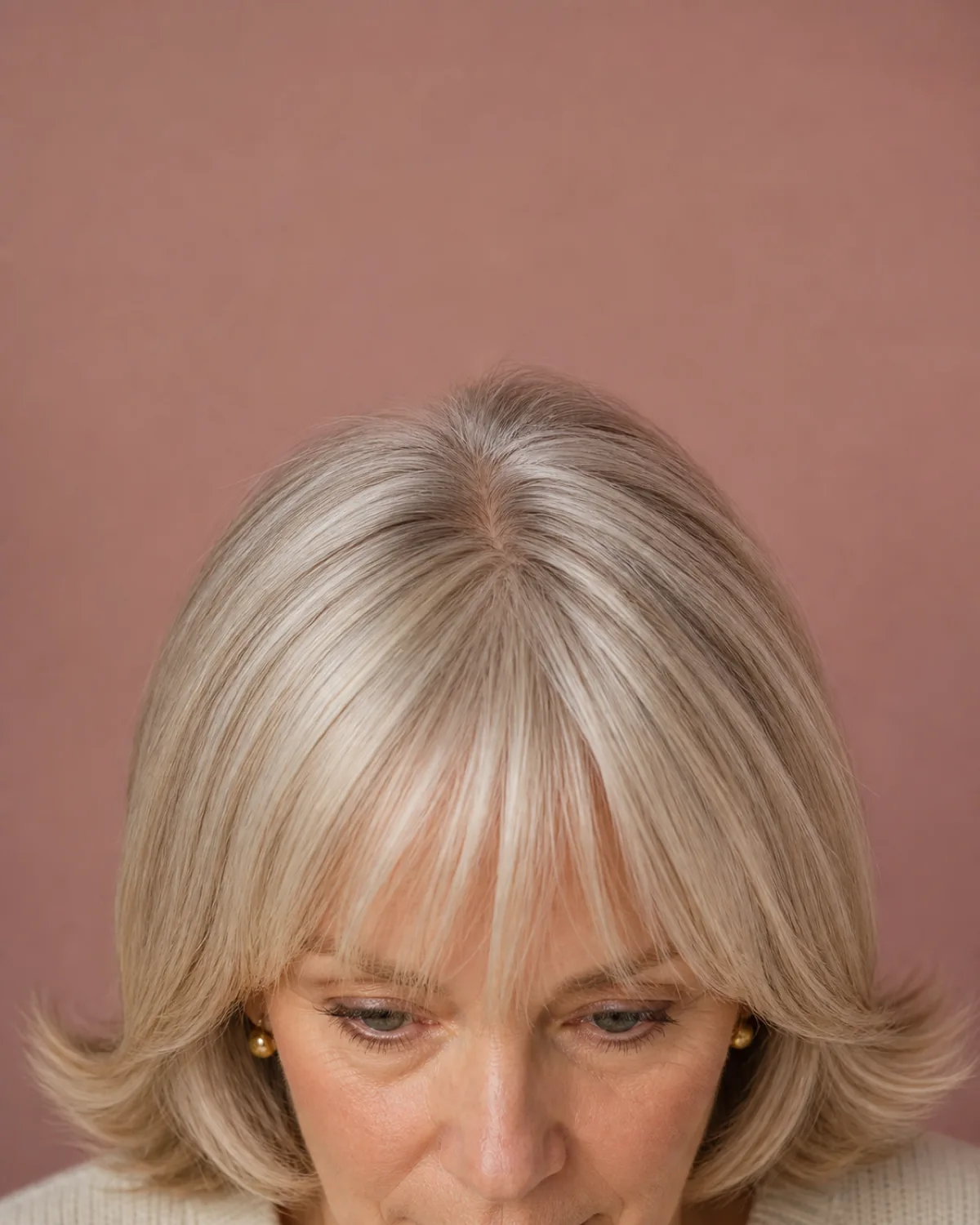
The ends kick out instead of turning under, and the look only reads as intentional when the flip holds evenly on both sides. That takes hair with enough body to keep a set. Fine hair takes the shape and loses it before lunch, at which point the ends just look like they are doing their own thing.
- Needs medium-weight hair that holds a set from a brush or rollers
- Reads deliberate and a little retro, which is the point rather than a side effect
- Very fine hair drops the flip within an hour and the shape reads accidental
- Both sides have to flip the same amount, so an uneven growth pattern will fight you
- Ask whether your hair holds a set at all before you build a cut that depends on one
12. Shoulder-Length With a Blunt Fringe
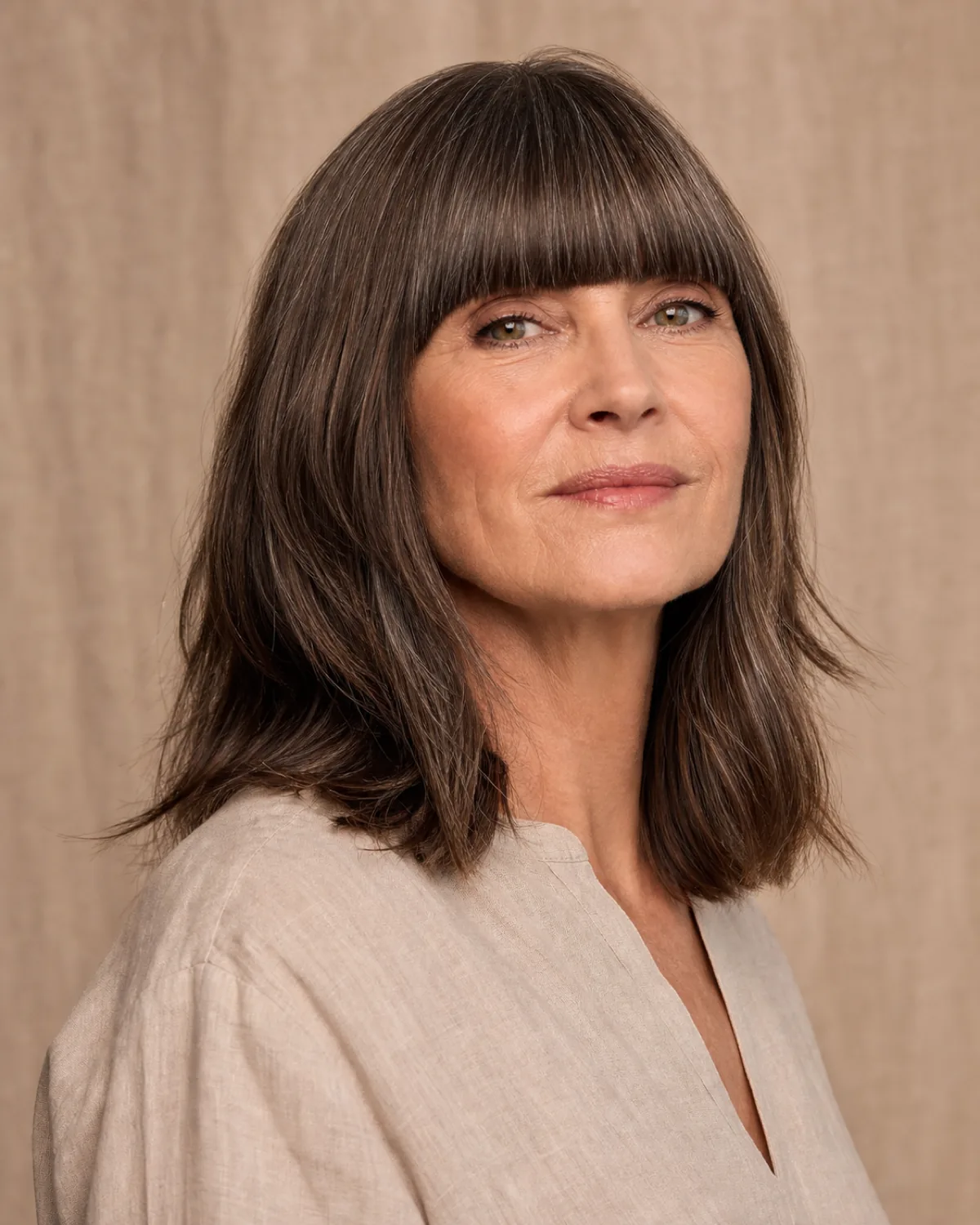
A full fringe cut straight across covers a high or wide forehead completely, and it needs enough hair in the fringe zone to sit as a solid block. It also has the shortest maintenance cycle of anything here. Three or four weeks and it is in your eyes.
- Covers a high or wide forehead more completely than any swept alternative
- The fringe zone needs real density, because gaps show immediately in a straight line
- Plan on a trim every three to four weeks, which is the true cost of this one
- A blunt fringe shortens the visible face, so it suits longer face shapes more than round ones
- Ask how wide the fringe section will be taken, since a wide take can thin out your side sections
13. A Wavy Shoulder-Length Cut
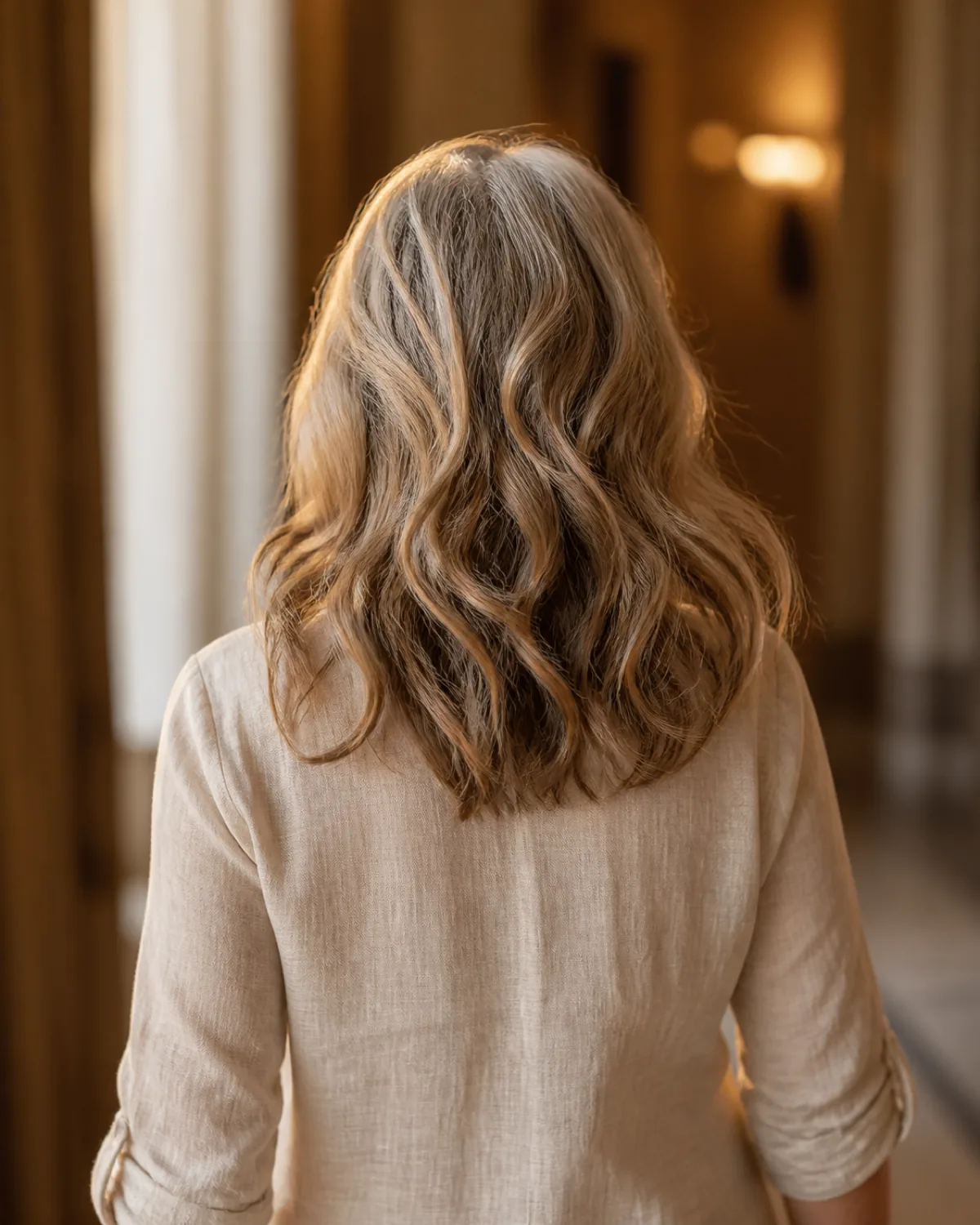
This is cut for the wave rather than against it. The layers are placed where the wave bends, so the shape appears when the hair dries on its own instead of after twenty minutes of work. If you have spent years flattening a natural bend, this is the cut that stops the argument.
- For type 2A to 2C hair, cut to where the wave actually bends rather than where it hangs straight
- The shape shows up air-dried, which makes it the lowest-effort option in this list
- Straight hair gets nothing from this cut, because there is no bend for the layers to sit in
- Wave usually loosens or tightens after fifty, so cut for the pattern you have now, not the one you remember
- Ask your stylist to cut it dry and in its natural state, because wet cutting hides where the bends fall
14. Shoulder-Length With Swooping Side Bangs
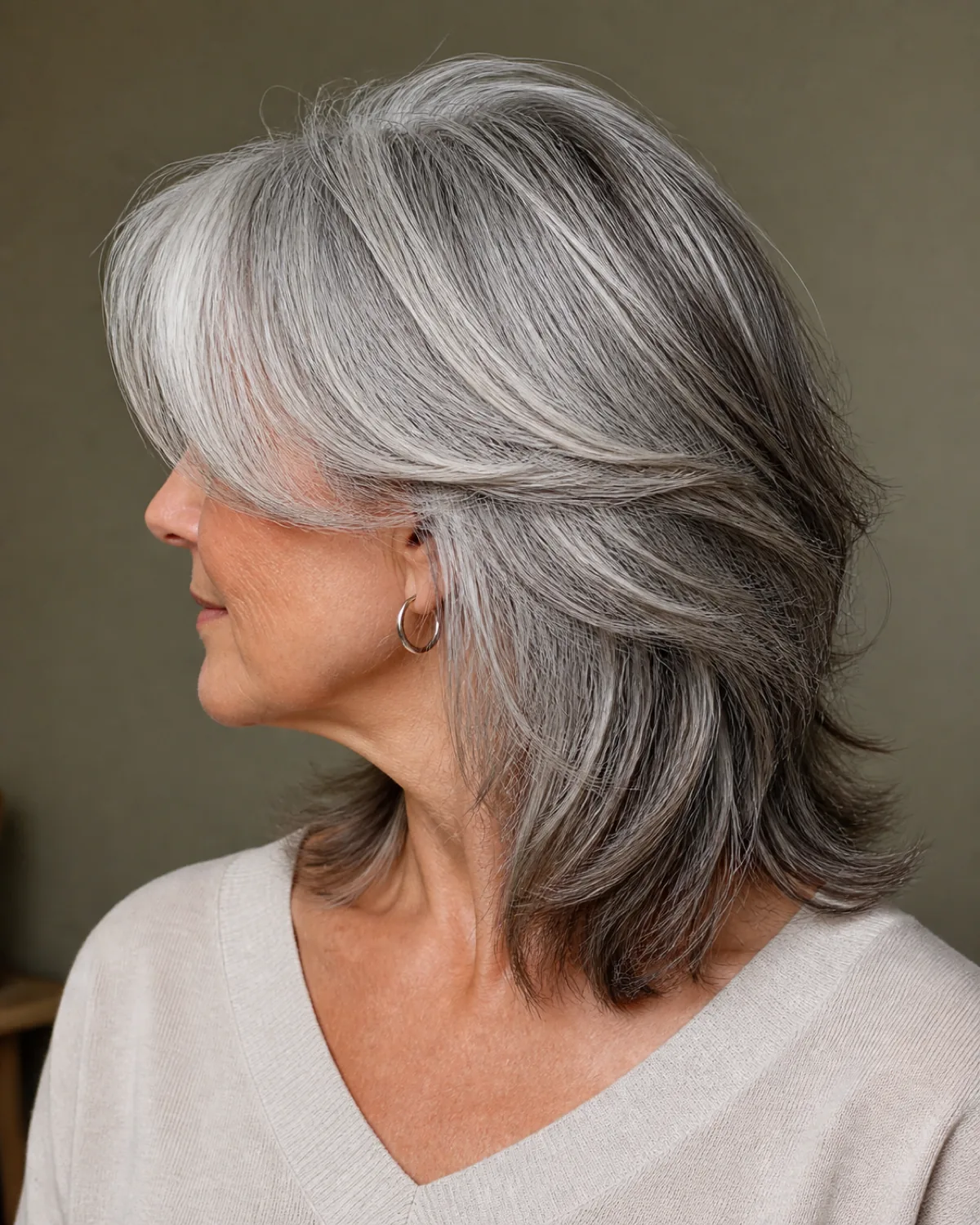
A long side fringe covers the temples and the front corners of the hairline, then blends into the length instead of stopping at a line. Turn your head and look at your temples in a mirror: that is the area this covers, and it is the reason to choose it over a shorter fringe.
- Covers thinning at the temples and the receding front corners of the hairline
- The fringe blends into the layers, so there is no visible line where it ends
- Oval and oblong faces carry the diagonal sweep best
- Long enough to tuck behind an ear on the days you want your face clear
- Ask for it to blend into the length rather than sit as a separate section, or it will need its own trims
15. A Graduated Shoulder-Length Bob
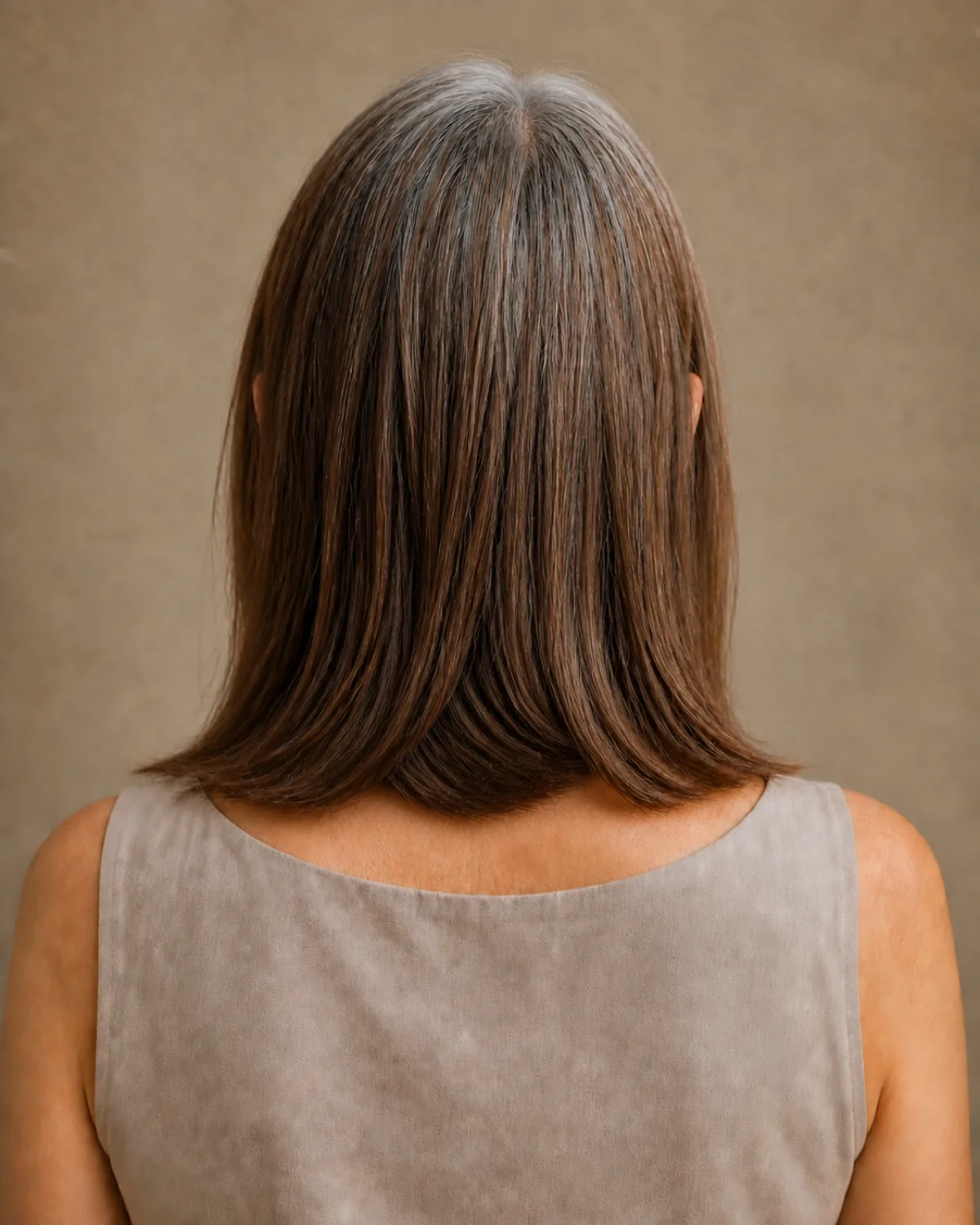
Only the very bottom of the nape is graduated. Those short stacked pieces build a soft bump of volume at the back of the head while everything else stays long and angles forward. It is the answer when the back of your head reads flat but you do not want to lose length.
- Adds back volume without shortening the overall length, since the graduation is confined to the nape
- Round and square faces benefit from the front lengths angling forward past the jaw
- Flat-backed heads gain the most, because that is exactly where the stacking sits
- Say shoulder-length with nape graduation, not graduated bob, or you may get a much shorter cut
- Ask how high the graduation goes up the nape, since too high turns this into a different haircut
16. Shoulder-Length With Flipped-Under Ends
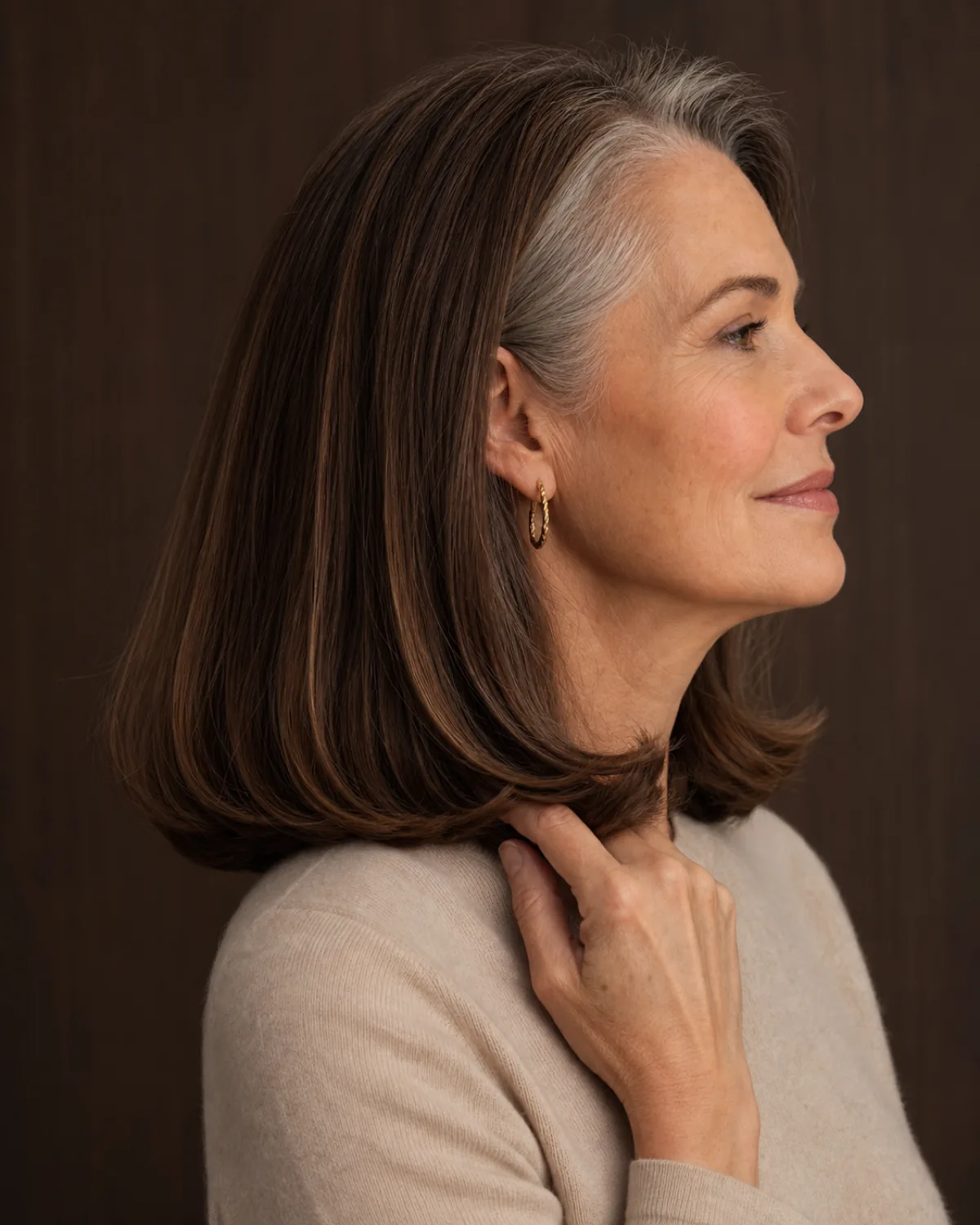
The ends turn under and stop, which gives the hemline a heavier edge and reads as finished in a way loose ends do not. It is the version of shoulder length that holds up in a professional setting. It also asks for a round brush and five minutes, every time.
- The turned-under edge reads thicker than the same hair left straight
- Suits professional settings where a shape that looks tended is worth the five minutes
- Needs a hemline solid enough to hold the curve, so heavy layering works against it
- The curve has to match on both sides or the imbalance is obvious in profile
- Ask for the ends left blunt enough to turn, because tapered ends will not hold the bend
17. A Layered Shoulder-Length Cut for Thick Hair
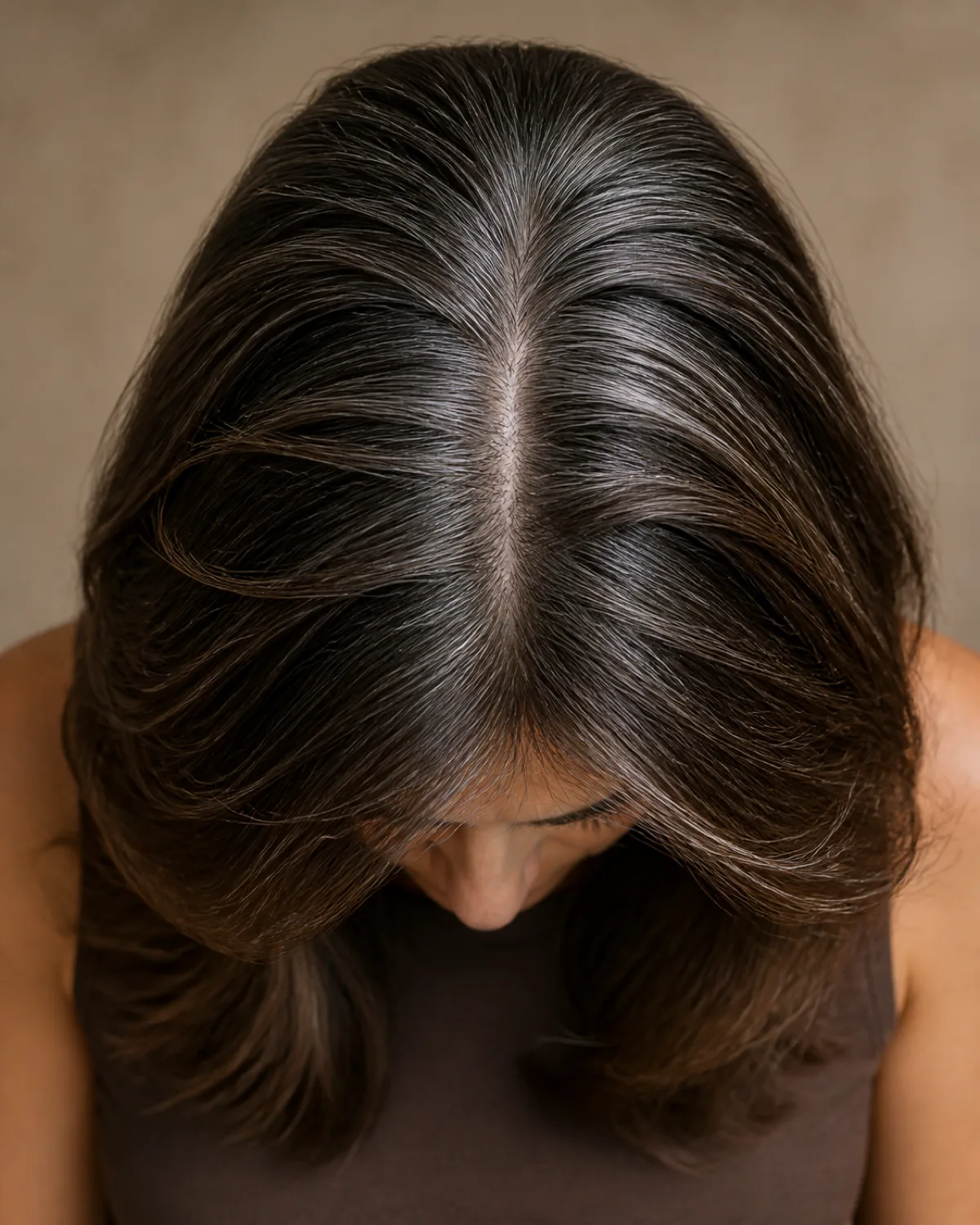
This cut is for hair with too much weight, not too little. The layers go inside, removing bulk while the outline stays where it is. Everything about it assumes density you can afford to lose, which is why it is the wrong choice if your problem is the opposite one.
- For genuinely thick hair that grows outward at the mid-lengths
- Internal layers remove bulk while the outline and the length stay unchanged
- The wrong cut if your density is already low, since it takes away what you are short of
- Thick hair at the roots with thinner ends is a different problem and needs a different cut
- Ask for weight removed internally rather than layers cut into the outline, and be specific about the difference
18. Shoulder-Length With a Centre Part and No Layers
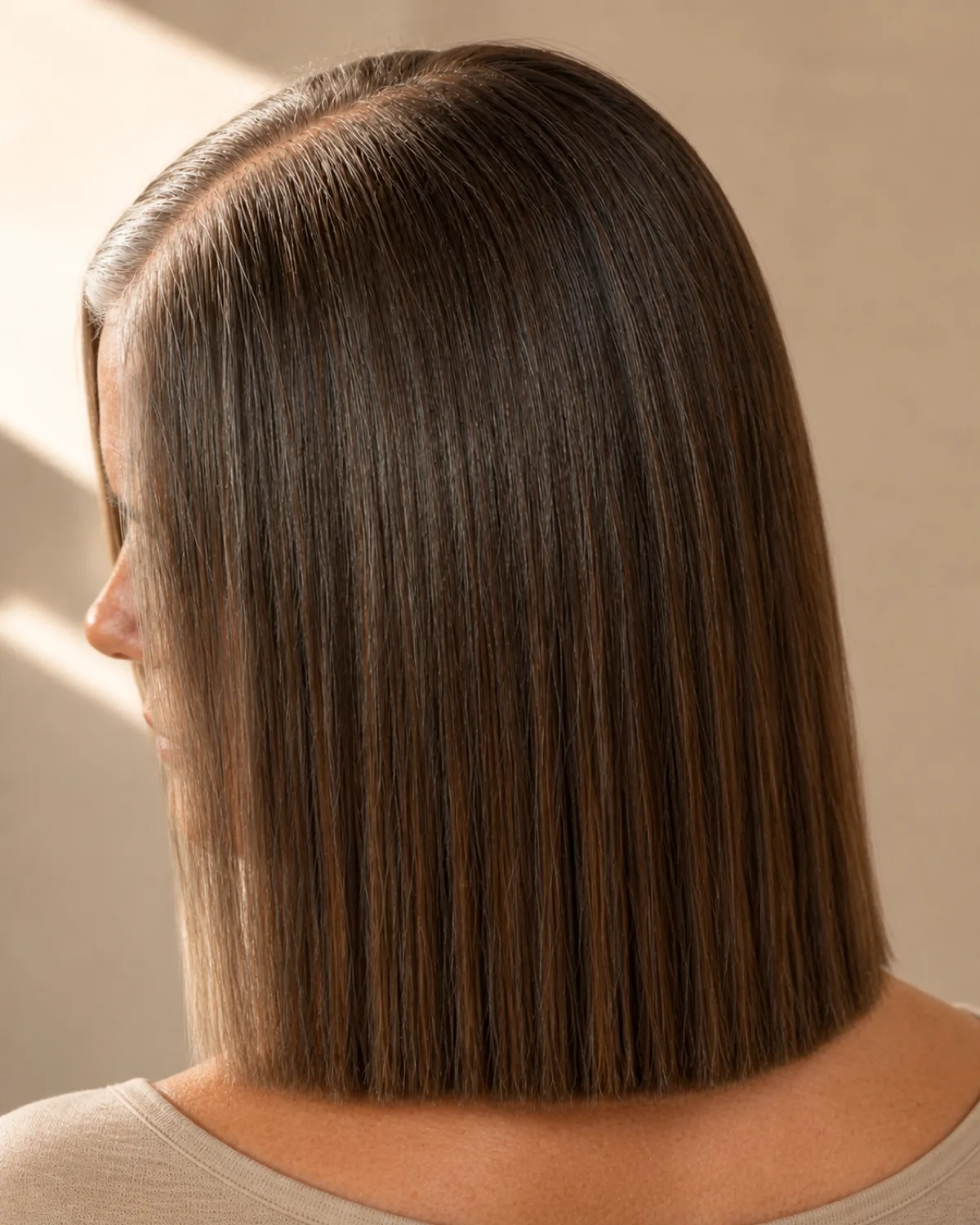
One length, centre part, blunt ends, nothing else. It is the least demanding cut here and the least forgiving: a centre part draws a straight line down the middle of your face and invites it to be read as symmetrical. There is no movement built in, which is the trade for no maintenance.
- Suits symmetrical faces, because a centre parting makes any asymmetry easier to see
- Needs medium to thick density, since there is no layering to create the impression of fullness
- Zero styling required, and zero movement in return
- A centre part exposes the parting line, so thinning at the crown shows here first
- Ask whether your hair will hold a centre part at all, because a stubborn natural break will fight it daily
19. A Shoulder-Length Shag With Bangs
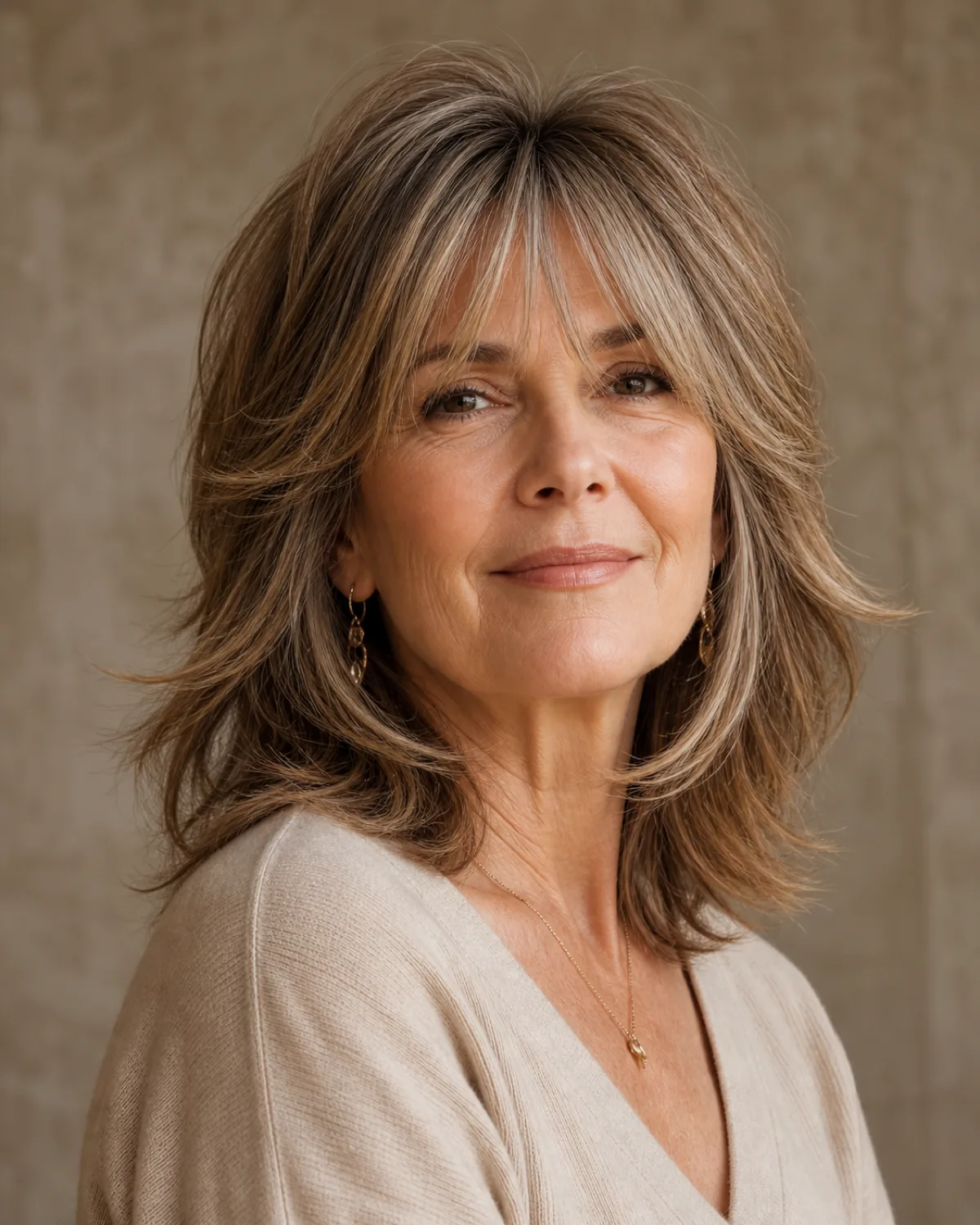
Crown layers plus a fringe makes this the fullest-looking cut in the list, and the most demanding of your natural body. Everything that gives it volume also removes weight, so hair without some natural movement ends up thinner rather than fuller.
- Reads the fullest of any shape here when your hair has natural body to hold the layers open
- Oval faces carry the combination of crown volume and fringe most easily
- Fine hair loses more from the layering than it gains from the shape
- The fringe and the crown layers each need their own trims, so the upkeep is doubled
- Ask to start conservative on the crown layers, because they are the hardest part to grow back
Where to Start
If you take one thing into the salon, make it the question of where the ends land relative to your shoulder, because that decides more about how the cut behaves day to day than any layer will.
After that, the order is density, then face shape, then time. A cut that suits your face but not your density will disappoint you within a month. A cut that suits both but needs a round brush you will never pick up is a cut you will not recognise on yourself.
Where the checkable claims come from
- Hair diameter, color and density changes with age — Birch, Messenger & Messenger, British Journal of Dermatology (2001)
- Layered hair — Wikipedia
- Graduation vs. Elevation: The Subtle Distinction That Impacts Every Cut — Above Shears
- Face Shapes and Hairstyles — Healthline
- Lob (haircut) — Wikipedia
Keep this one
Save it for the appointment
Pin the image above to the board you actually open before a salon visit. This guide is written to be re-read, not read once.
Tonight, before you close this tab
- Stand at a mirror and mark where your shoulder actually sits relative to your collarbone
- Pinch your ponytail at mid-length to judge whether your density can carry weight down at the shoulder
- Photograph your temples in natural light to see whether the fringe zone can hold a split
- Count the minutes you honestly spend styling on a weekday, then rule out anything needing a round brush
- Air-dry once without touching it and note whether your ends bend, wave, or hang straight