19 Medium-Length Hairstyles Over 50 That Earn Their Keep
Nineteen medium-length hairstyles for women over 50, each judged by face shape and hair density so you walk into the salon knowing what to ask for.

Booking an appointment soon? Save this page. It is easier to skim in the chair than to remember.
At a glance
Works
- A collarbone lob on thick hair because the density fills the blunt line and the weight sits where it should
- Curtain layers on gray hair because the coarser texture holds the shape and the frame softens the face
- A flipped-end medium cut on an oblong face because the outward kick at the bottom adds width where a narrow face needs it
Depends
- A shoulder-length blowout bob only if you heat-style every wash day, otherwise the shape disappears by evening
- A textured shag only if your hair has natural wave or curl, because on fine straight hair the disconnected layers separate and show scalp
- Face-framing colour placement only after asking a colourist where the lightest pieces should sit on your bone structure
Skip
- A blunt lob on fine hair without layers because the single length magnifies thinness at the ends
- A lob with an undercut on fine hair because you lose density you cannot afford to remove
- Micro bangs on curly hair because the curl shrinks the fringe to the hairline and the proportion goes wrong
Medium length is the range between your chin and your collarbone. It is short enough to manage and long enough to pin back, which is why it keeps turning up as the default recommendation.
The problem is that "medium" describes a length, not a structure. Two cuts at the same length can look completely different depending on where the layers start and how much hair you have to work with.
These nineteen cuts are judged by who they suit. Each one names the face shape and hair density where it works, and where it does not.
1. A Collarbone Lob Angled Slightly Forward
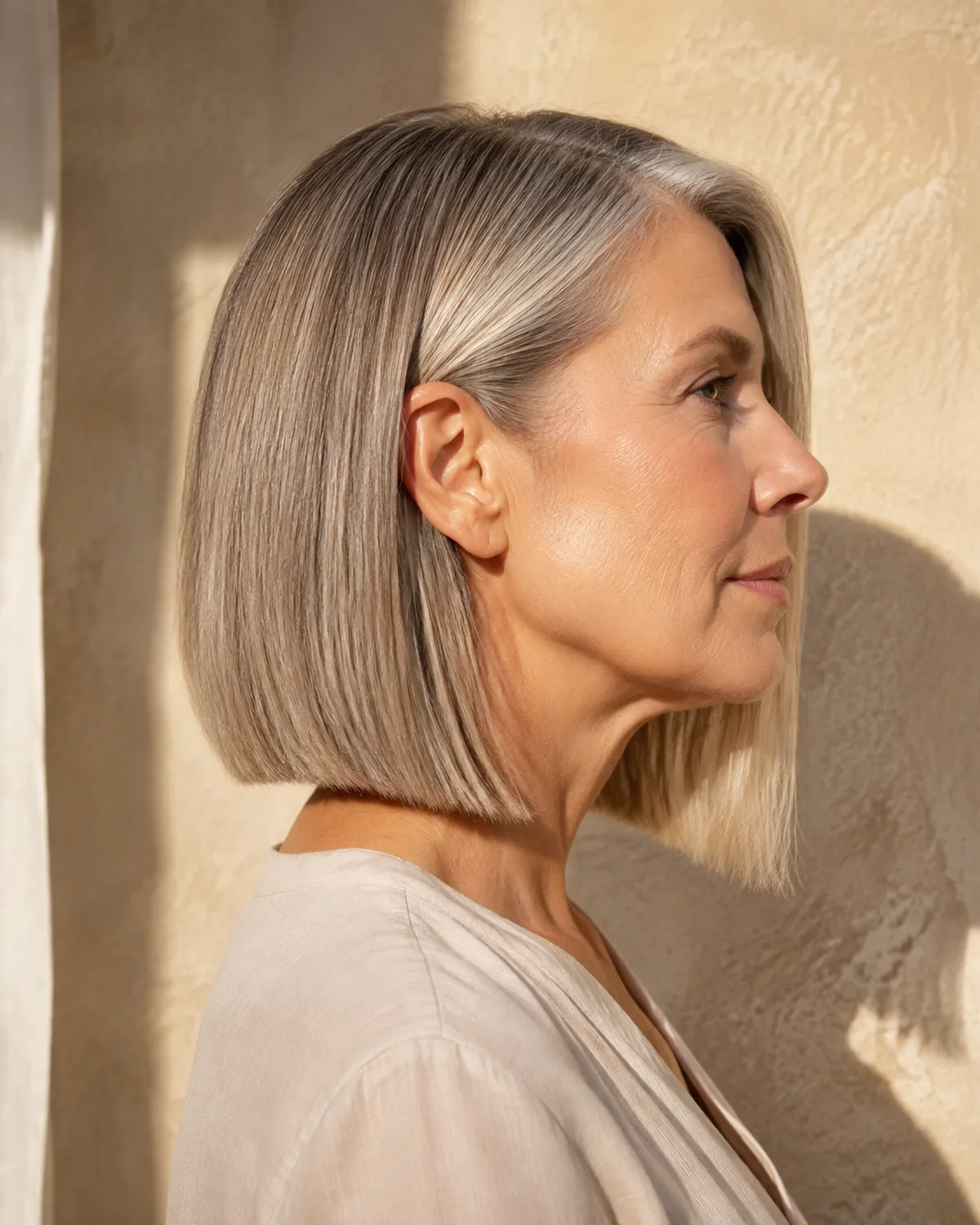
The front panels fall about half an inch longer than the back. That forward angle draws the eye down, which suits oblong and oval faces because it shortens the vertical line the face reads.
- Works on thick hair because the density fills a blunt one-length line without looking thin at the ends
- Flatters oblong and oval faces where the downward angle balances a longer mid-face
- Falls flat on fine hair because there are no layers to build internal volume
- Ask your stylist to keep the angle subtle so it reads intentional rather than grown out unevenly
- Maintain the line with a trim every six to eight weeks or the angle disappears
2. Long Layered Bob with Cheekbone Framing
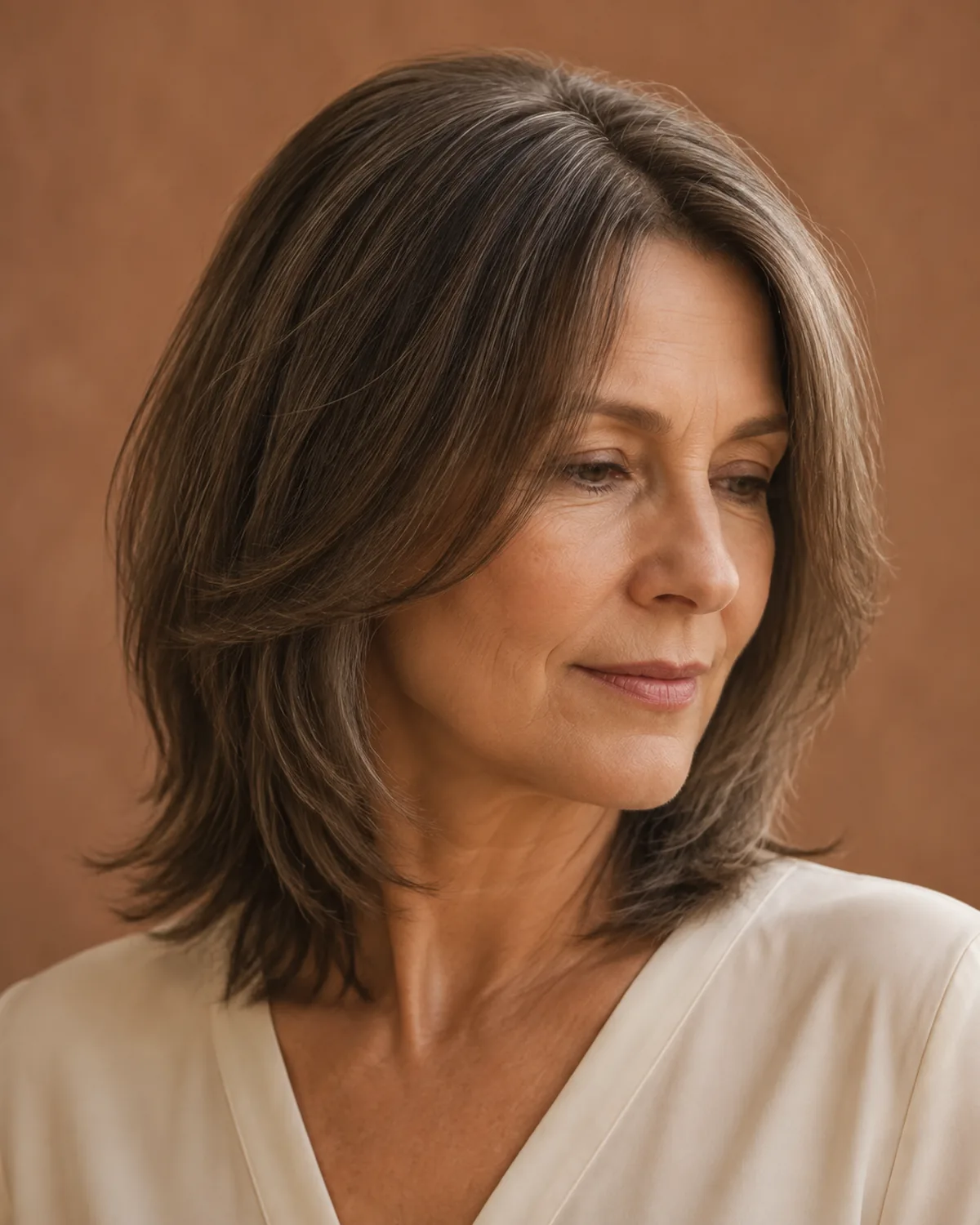
A bob between chin and shoulder with face-framing layers that start at the cheekbone. The shorter pieces curve around the face and create a curtain effect that flatters round faces by drawing the eye downward rather than across.
- Flatters round faces because the layers create a vertical line that narrows the mid-face
- Demands daily styling on hair that does not hold a bend, because the layers need shape to read as intentional
- Works on medium to thick hair where the layers have enough weight to stay in place
- Ask for the shortest layer to sit at the cheekbone, not above it, so the framing reads soft rather than choppy
3. Textured Shag with Curtain Bangs
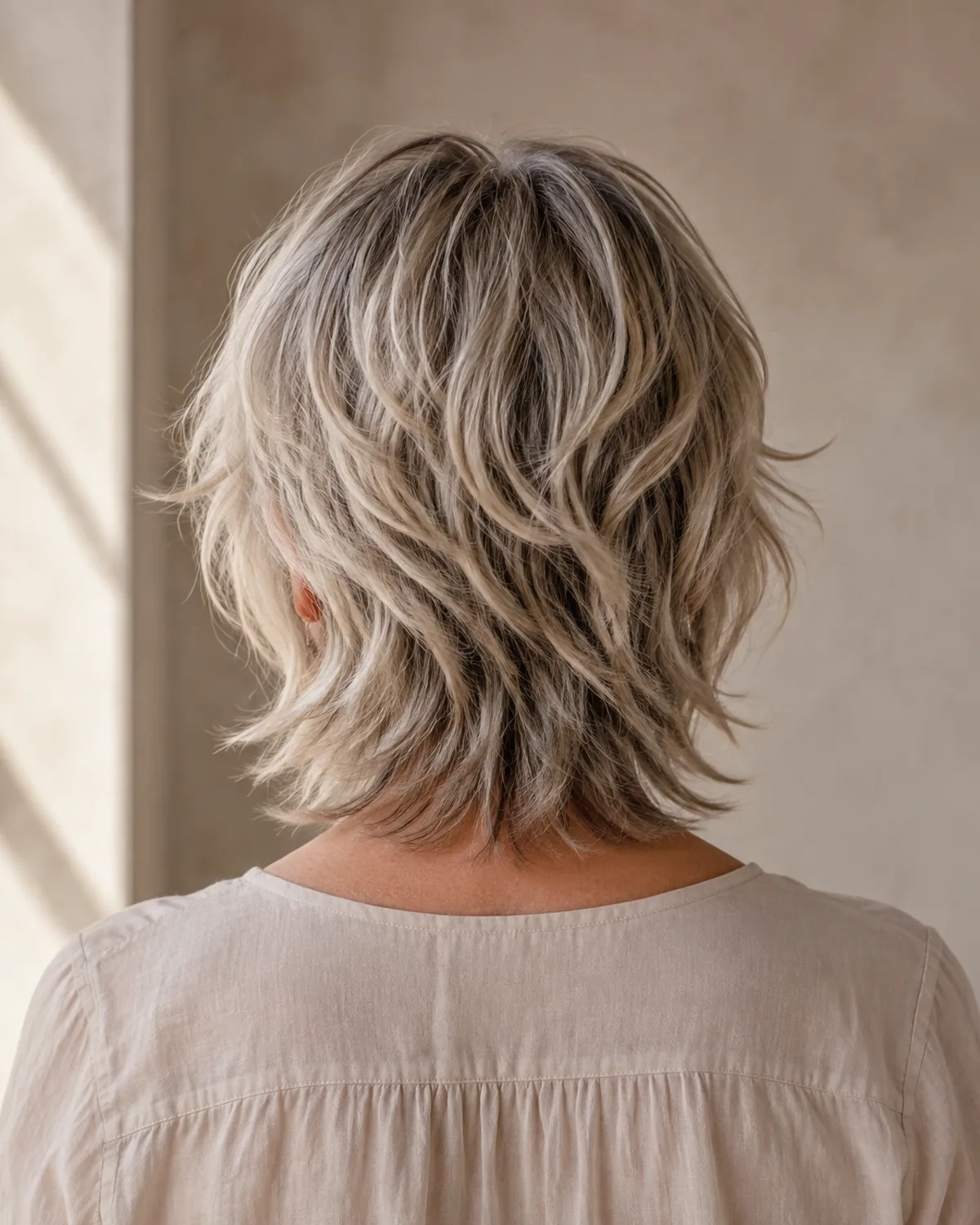
Disconnected layers through the mid-lengths and a centre-parted fringe at brow level. The texture comes from the layers themselves, not from styling products.
- Works on thick or wavy hair because the natural texture fills the disconnected layers and the movement reads natural
- On fine straight hair the layers separate and can expose the scalp between sections
- The curtain fringe breaks the forehead line, which suits oval and oblong faces
- Ask your stylist how much disconnection you want, because the range between a soft shag and a heavy shag is wide
- Grows out well because the disconnected layers blur into each other over time
4. Soft Shoulder-Length Waves

A one-length or long-layer cut styled into loose bends. On naturally wavy hair this cut almost styles itself, which is the whole appeal.
- Works on naturally wavy or curly hair because the bends form without heat tools
- On straight hair the wave drops by noon unless you use a curling iron, which contradicts the low-maintenance promise
- Suits most face shapes because the soft movement avoids hard geometric lines
- Ask your stylist whether your natural texture can hold a bend on its own before committing to this cut
5. Blunt Bob at the Jawline

A sharp geometric line right at the jaw. This cut is deliberate and reads that way. It suits square faces because the strong cutting line meets the strong jaw and the two look intentional together.
- Suits square faces because the horizontal line echoes the jaw rather than fighting it
- On round faces the same horizontal line widens the mid-face
- Requires straight or slightly wavy hair because the blunt line needs to read clean
- Ask for a true blunt cut with no point-cutting or texturizing at the ends, because the sharpness is the point
Where to start
Find your situation, skip ahead
Your hair is fine and your main concern is that medium cuts make you look flat
Start with the one-length cut with root lift or the blowout bob. Both build density at the crown without removing length.
12 One-Length Medium Cut with Root Lift at the Crown17 Shoulder-Length Blowout Bob
Your hair is thick and you want medium length without the bulk
Look at the feathered layers, the lob with a hidden undercut, or the razor cut. All three reduce weight while keeping length.
10 Feathered Layers15 The Lob with a Hidden Undercut18 Medium Razor Cut for Dense Wavy Hair
You are growing in gray and want a cut that works with the changing texture
The curtain layers on gray hair are built for the coarser texture that comes with silver. The classic medium layer is the safer bet if you are not sure.
16 Curtain Layers Shaped for Growing-In Gray19 The Classic Medium Layer Cut
6. A Flipped-End Medium Cut

The ends kick outward instead of curling under. That outward flip adds width at the bottom of the cut, which balances narrow or oblong faces by widening the lower frame.
- Flatters oblong and narrow faces because the width at the ends counteracts the vertical read
- On wide or round faces the added width at ear level makes the face read heavier
- Works best on hair with some natural movement because the flip needs a little texture to hold
- Ask your stylist to cut the ends at a slight bevel so they kick out naturally rather than needing to be curled every morning
7. Medium-Length Pixie Grow-Out
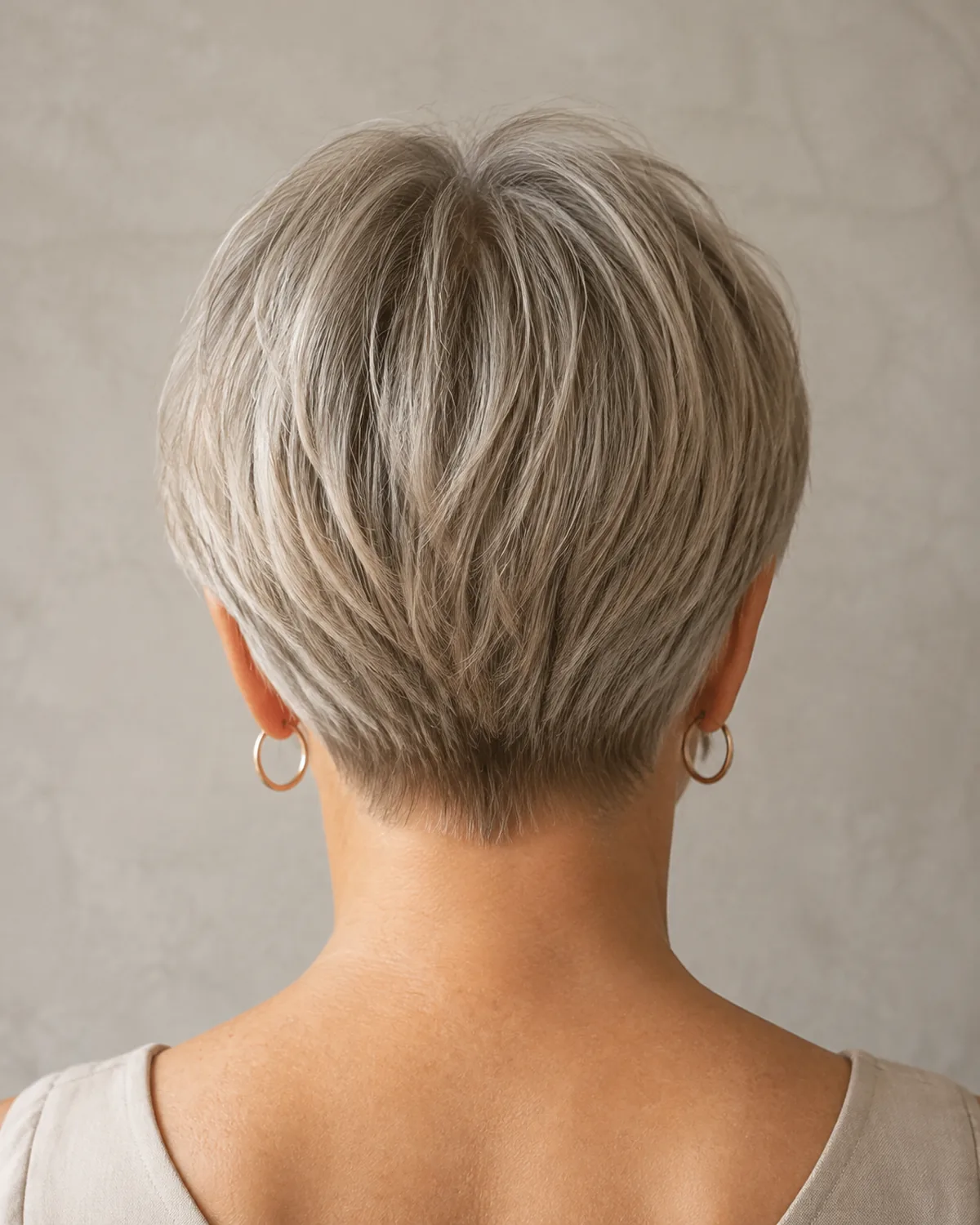
The intentional in-between stage when a pixie is growing past the ears. The difference between a grow-out that reads chosen and one that reads abandoned is whether the stylist shapes it along the way.
- Works if the stylist trims the nape and sides every six weeks to keep the shape intentional
- Without regular trims the nape flares and the sides puff, and the cut reads unfinished
- Suits any face shape during the transition because the stylist adjusts the proportions at each visit
- Tell your stylist you are growing it out so they trim for shape rather than for length
8. Side-Swept Medium Layers

Layers from ear to shoulder with a deep side part. The sweep across the forehead narrows the widest point of the face, which is why this cut flatters heart-shaped faces.
- Flatters heart-shaped faces because the side sweep hides the wider forehead
- On long faces the side volume can add width that is not needed
- Works on most hair densities because the layers adjust for fine or thick hair
- Ask your stylist which side to part on based on your natural growth pattern, not on which side you prefer
9. Collarbone-Length Curtain Bangs

A medium cut with a soft centre-parted fringe that splits at the brow and blends into face-framing pieces. The curtain shape breaks the forehead line without the commitment of a full fringe.
- Flatters oval and oblong faces by breaking the vertical line across the forehead
- On round faces the centre parting can emphasise width rather than length
- The fringe grows out gracefully because it was never cut short enough to sit blunt on the forehead
- Ask your stylist to start the fringe at brow level and let it blend into the longest face-framing layer
10. Feathered Layers
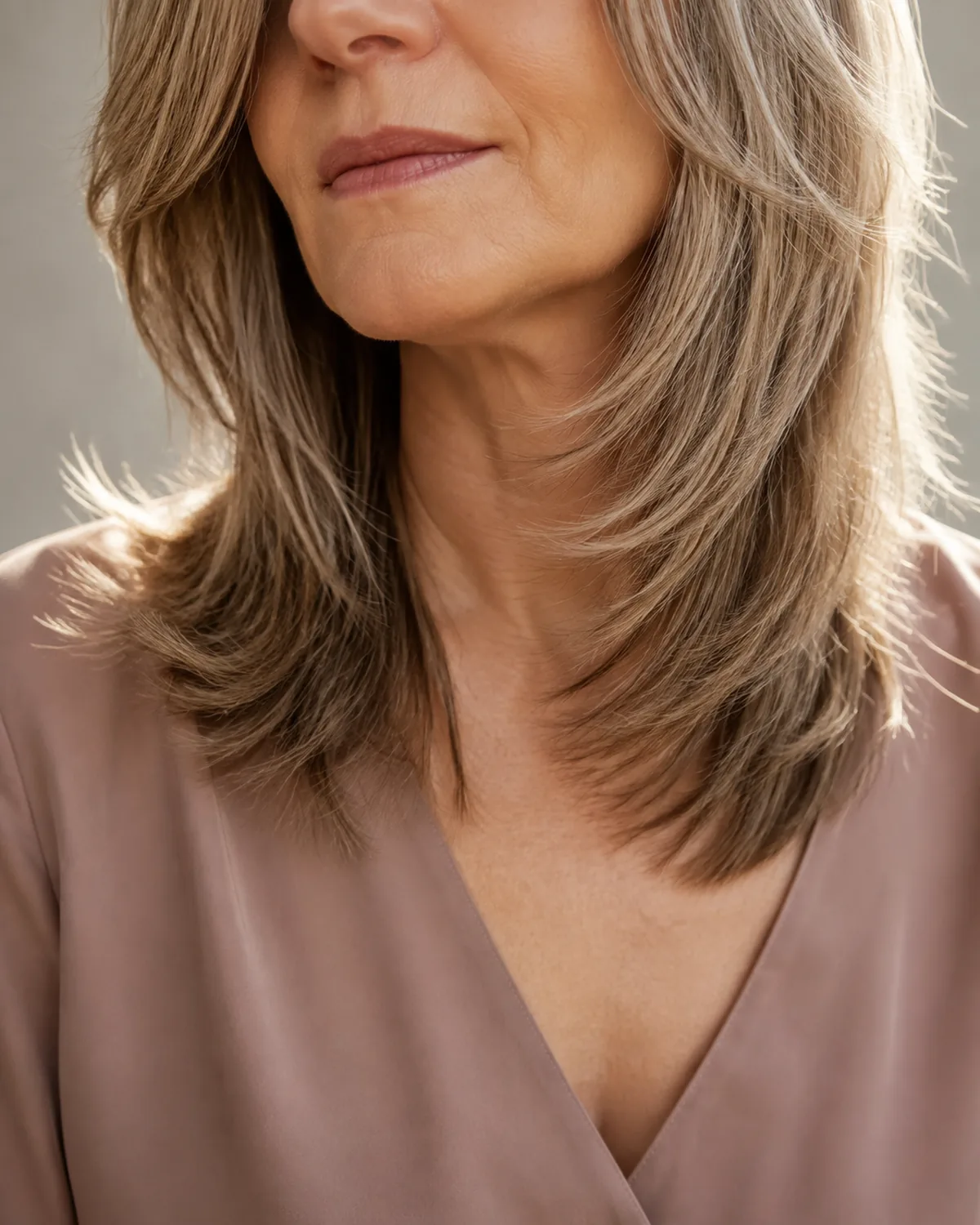
Light razored layers that taper from the cheekbone down. Feathering removes bulk without removing length, which makes it the first option for thick coarse hair that feels heavy at medium length.
- Works on thick coarse hair because the razor thins the internal density and the movement reads natural
- On fine hair the feathered ends thin out and look wispy rather than airy
- Flatters most face shapes because the soft taper avoids hard geometric lines
- Ask your stylist whether they use a razor or point-cutting, because the two techniques produce different end textures
11. French Bob with Micro Bangs
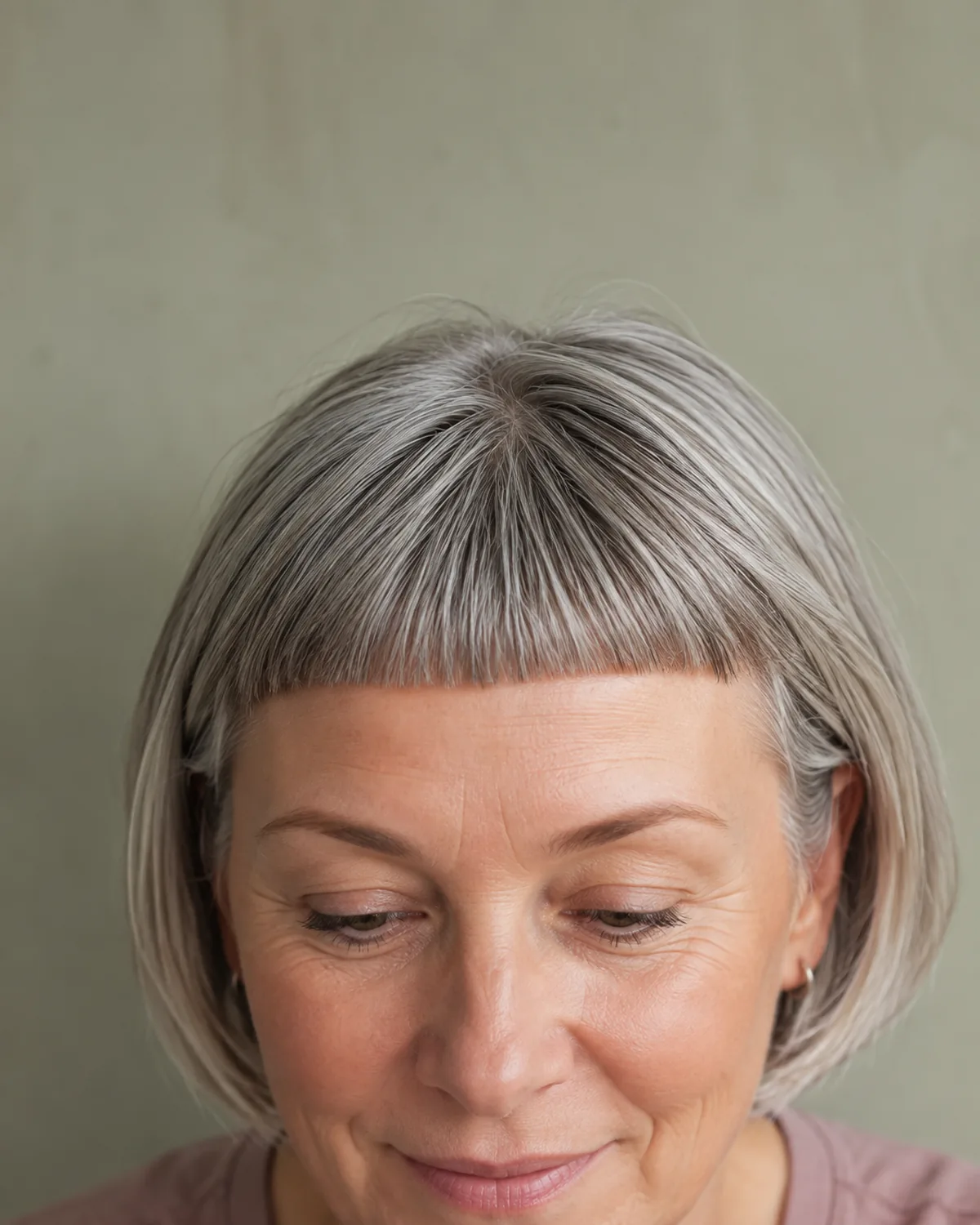
A chin-length bob with a very short fringe sitting high on the forehead. This cut is graphic and deliberate. It reads as a choice, not a compromise.
- Works on straight or slightly wavy hair because the micro fringe needs to sit flat and even
- On curly hair the micro bangs shrink and sit at the hairline, which changes the proportion entirely
- Suits oval faces best because the exposed forehead and the chin-length sides work with balanced proportions
- Ask your stylist to cut the fringe dry so they can see exactly where it falls
12. One-Length Medium Cut with Root Lift at the Crown
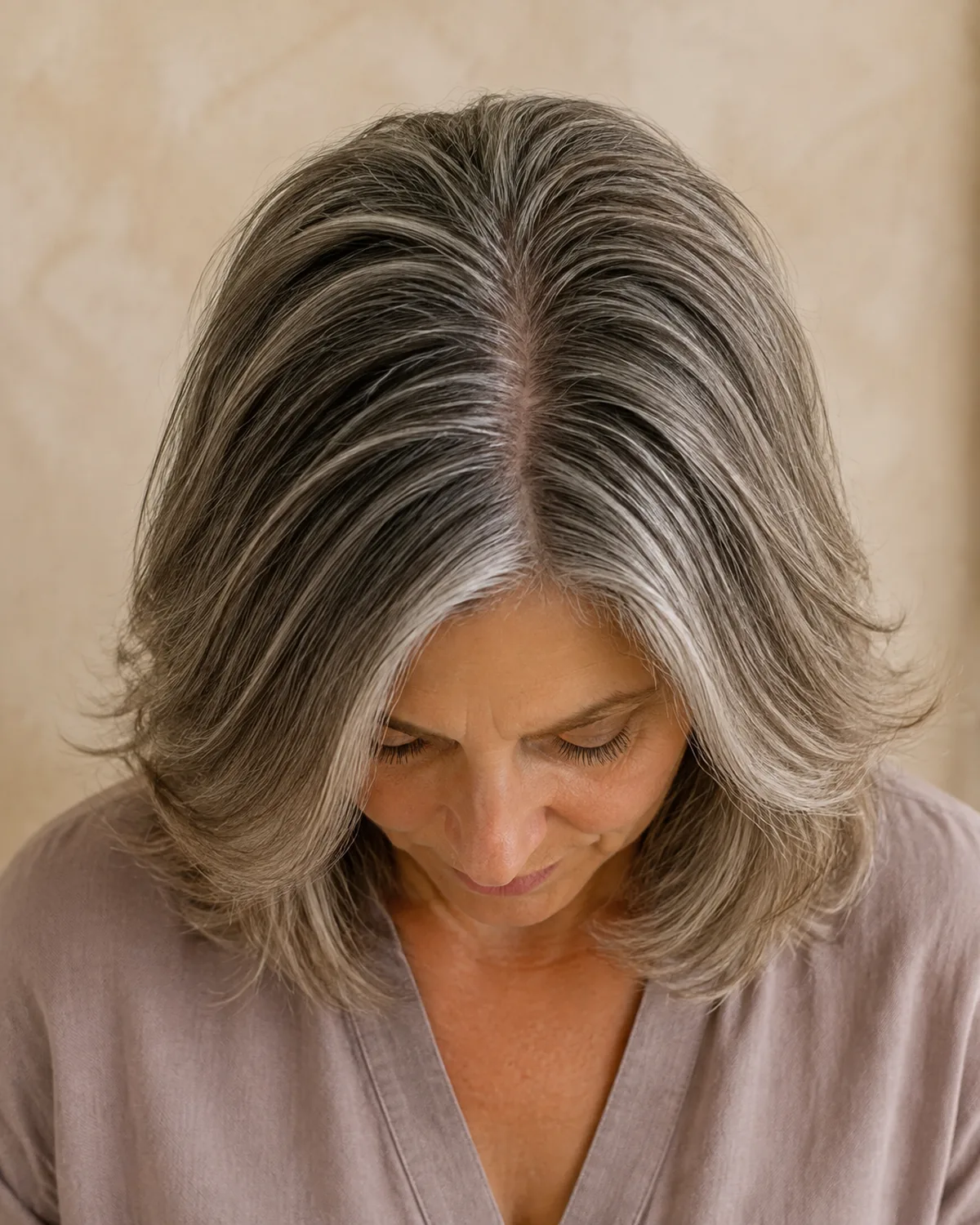
A blunt cut with no layers, styled to lift at the root zone. The single length holds all the weight at the bottom and the root lift gives the illusion of density at the crown.
- Suits fine hair when blown out because the volume comes from the roots, not from layering that removes weight you need
- Without styling tools it falls flat, so this cut only makes sense if you are willing to blow-dry
- The one-length line works on oval and oblong faces where the weight at the bottom adds balance
- Ask your stylist to show you a round-brush blowout technique at the crown so you can replicate it at home
13. Medium Shag with Choppy Ends

A shag variation with more aggressive point-cutting at the ends. The chop disperses the bulk and the movement reads natural on hair that already has texture.
- Suits wavy and thick hair because the choppy ends scatter the weight and the cut looks like it moves on its own
- On straight fine hair the choppy ends separate into stringy pieces rather than reading as texture
- Grows out well because the uneven ends blur into longer hair without an obvious line
- Ask for heavy point-cutting rather than razor-cutting if your hair is prone to frizz, because the razor can roughen the cuticle
14. Face-Framing Colour Placement on a Medium Base

Any medium-length base paired with lighter pieces positioned by a colourist to match your bone structure. The placement is the decision, not the colour itself.
- Ask your colourist where the lightest pieces should fall relative to your cheekbone and jawline
- The face-framing pieces should mimic where sunlight naturally hits, which varies by face shape
- This is a salon decision, not a home decision, because placement requires seeing the face in person
- Maintenance depends on how far from your natural colour the highlights sit
15. The Lob with a Hidden Undercut
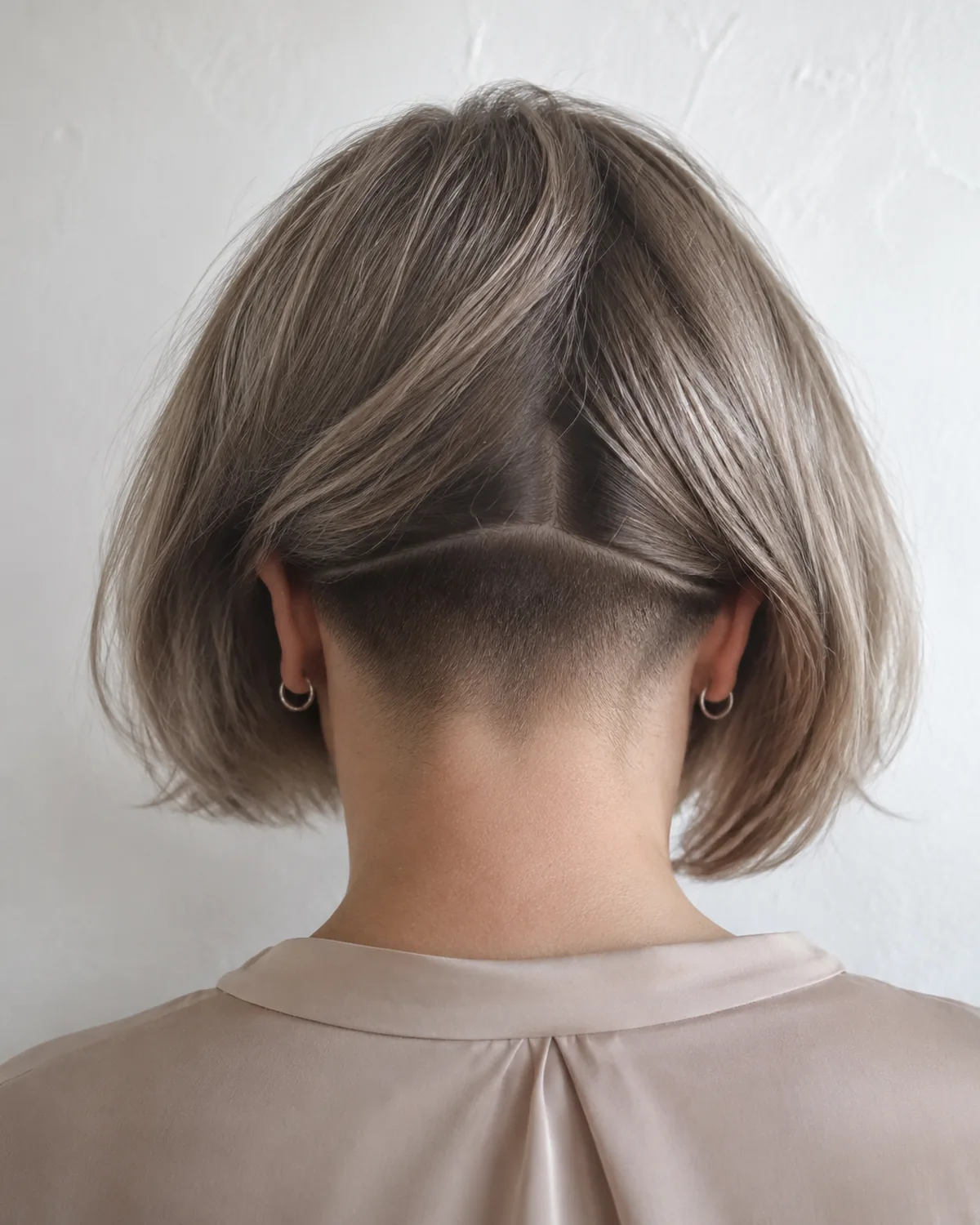
A lob that looks like a standard collarbone cut from the front but has the nape undercut to reduce bulk and weight underneath. The undercut is invisible when the hair is down.
- Suits thick hair because the undercut removes the puff at the back that makes thick lobs feel heavy
- On fine hair it removes density you cannot afford to lose
- The undercut needs a trim every four to six weeks or it grows into a mullet-like shape at the nape
- Ask your stylist how high the undercut should go based on how much bulk you want to remove
16. Curtain Layers Shaped for Growing-In Gray

Curtain-shaped layers on hair that is growing in silver or white. The layers frame the face and give the gray movement instead of letting it hang in a solid sheet.
- Works because gray hair is often coarser, and coarser hair holds layered shapes better than fine hair does
- The curtain framing softens the face, which matters because gray hair can read stark against the skin without movement
- Suits most face shapes because the layers adjust to frame wider or narrower proportions
- Ask your stylist to cut the layers while the hair is dry so they can see how the gray texture falls naturally
17. Shoulder-Length Blowout Bob

A round, bouncy shoulder-length bob that depends entirely on a blowout to hold its shape. This cut reads polished and full when styled, and flat when it is not.
- The judgment call is whether you style your hair every wash day, because the cut looks nothing like itself without heat
- Suits fine to medium hair where the blowout adds the volume the hair does not have on its own
- On thick hair the volume from the blowout can become too much and the shape reads puffy rather than polished
- Ask your stylist to demonstrate the round-brush technique before you commit, so you know what you are signing up for
18. Medium Razor Cut for Dense Wavy Hair
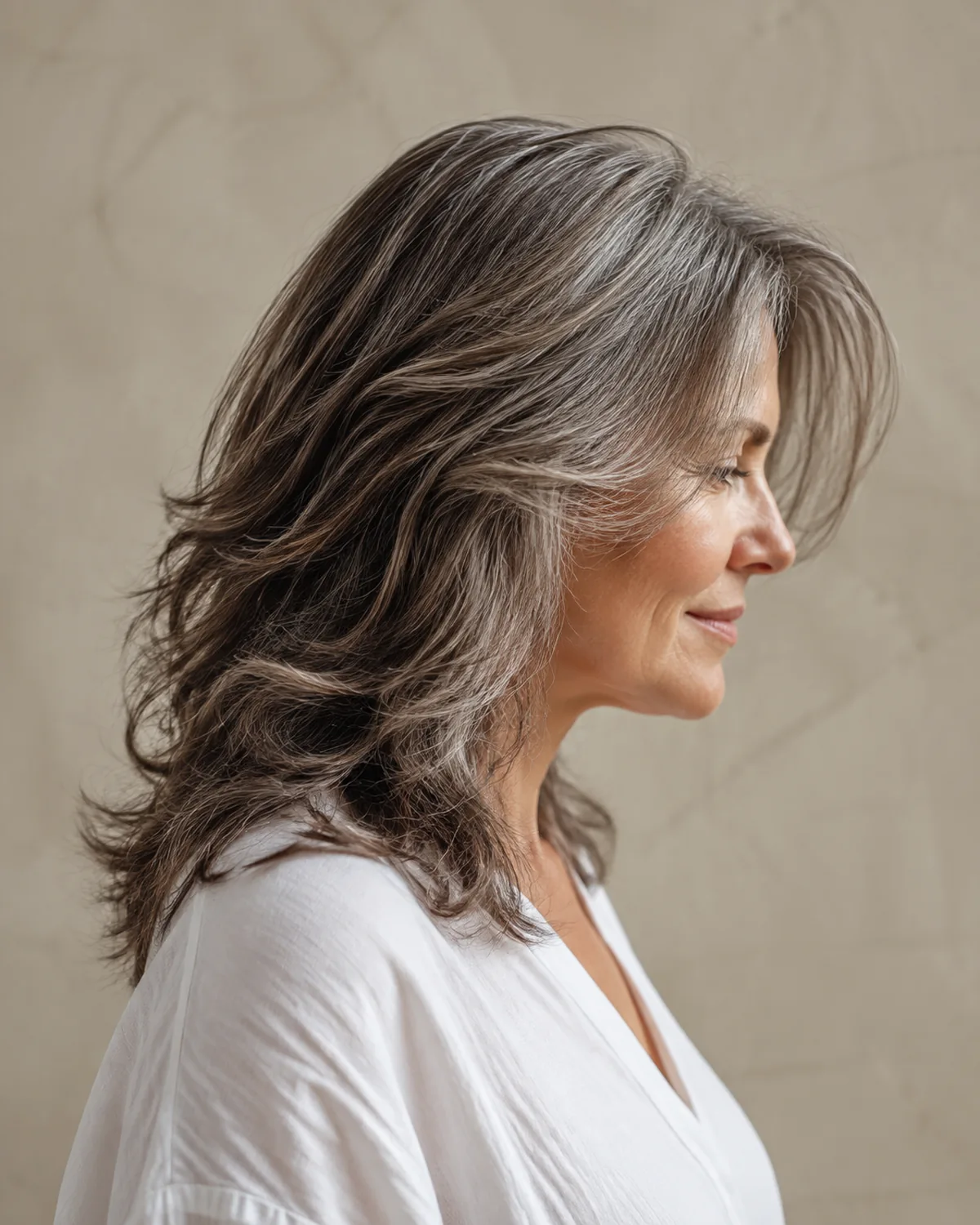
A razor-cut medium length designed to thin out dense wavy hair from the inside. The razor creates movement and reduces weight without visible layering from the outside.
- Suits dense wavy hair because the razor removes bulk internally while the exterior silhouette stays smooth
- On fine hair the razor weakens strands that are already fragile, which leads to breakage at the ends
- The wavy texture hides the razor marks, which is why this technique works better on waves than on straight hair
- Ask your stylist whether your hair is strong enough for a razor before they start, because not all hair types respond well to it
19. The Classic Medium Layer Cut

Layers starting at the chin and blending to the shoulders. This is the most versatile medium cut because it works on most face shapes and most densities. The trade-off is that it does not solve any one problem as well as a more targeted cut does.
- Works on most face shapes because the graduated layers avoid extreme proportions
- Works on most densities because the layers can be adjusted to remove or preserve weight
- The risk is that your stylist defaults to their own version of medium layers, which may not be yours
- Bring photos of the exact graduation you want so the conversation starts with a shared reference
A stylist who can see your hair in person outranks anything written here. Bring the photos, name the density, and let them adjust.
Where the checkable claims come from
- Face Shapes and Hairstyles — Pivot Point International
- Understanding Graduation and Layering — Sam Villa / Redken Education
- Fine Hair: Causes and How to Care for It — Philip Kingsley Trichological Clinic
Keep this one
Save it for the appointment
Pin the image above to the board you actually open before a salon visit. This guide is written to be re-read, not read once.
Tonight, before you close this tab
- Hold your hair at your collarbone and check whether the ends look full or whether you can see through them
- Part your hair at the centre and then at a deep side part and compare which one balances your face width better
- Count how many days between washes your hair holds a shape before it goes flat or frizzy
- Pull up three photos of medium cuts you like and circle where the shortest layer starts in each one
- Write down whether your priority is volume, movement, or low maintenance, and bring that word to the salon