Pixie vs Bob After 50 — Which Cut Matches Your Hair, Your Habits, and Your Patience
A side-by-side guide to choosing between a pixie and a bob after 50. Neckline, density, maintenance, glasses, and what it costs to change your mind.
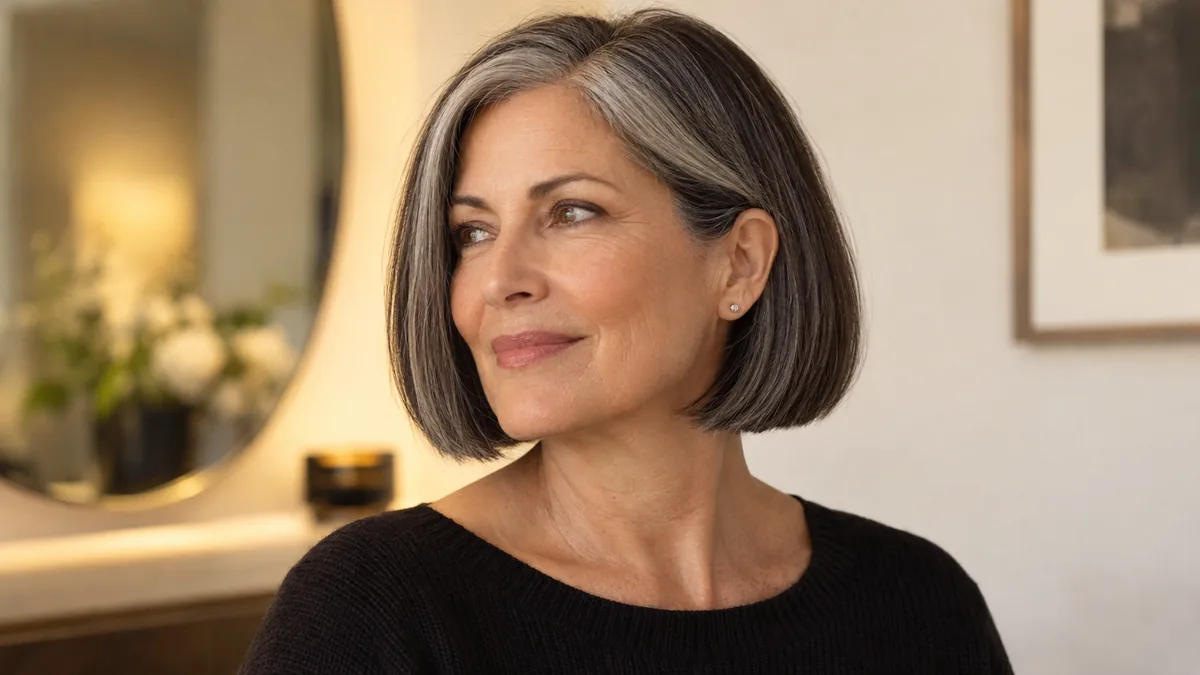
Booking an appointment soon? Save this page. It is easier to skim in the chair than to remember.
At a glance
Works
- A pixie when your hair is medium to thick, your neck is a feature you want to show, and you are fine with salon visits every four to six weeks
- A bob when your hair is fine but still has enough density to hold a solid bottom edge, and you want the option to tuck it behind your ears or pull it half-back
Depends
- How much daily styling time you will actually spend. A pixie dries faster but forgives nothing on day two; a bob takes longer but holds its shape for three or four days between washes
- Whether you wear glasses every day. Large frames crowd a pixie at the temples; a bob sits below the earpiece and leaves room
Skip
- A pixie when your hair is fine and your density is already visibly low at the nape. Exposing that area will make the thinning more obvious, not less
- A bob when you are unwilling to let it grow past the awkward chin-length stage during the first two months. Cutting it shorter before it settles defeats the shape
A pixie and a bob are not two points on the same scale. They are two different cuts with different upkeep and different exit costs.
The question is not which one looks better in a photo. It is which one you will still want to maintain eight weeks from now.
This guide walks through the dimensions that separate them. By the end you will know which one your hair, your schedule, and your tolerance for grow-out are asking for.
What Your Stylist Calls a Pixie and What They Call a Bob
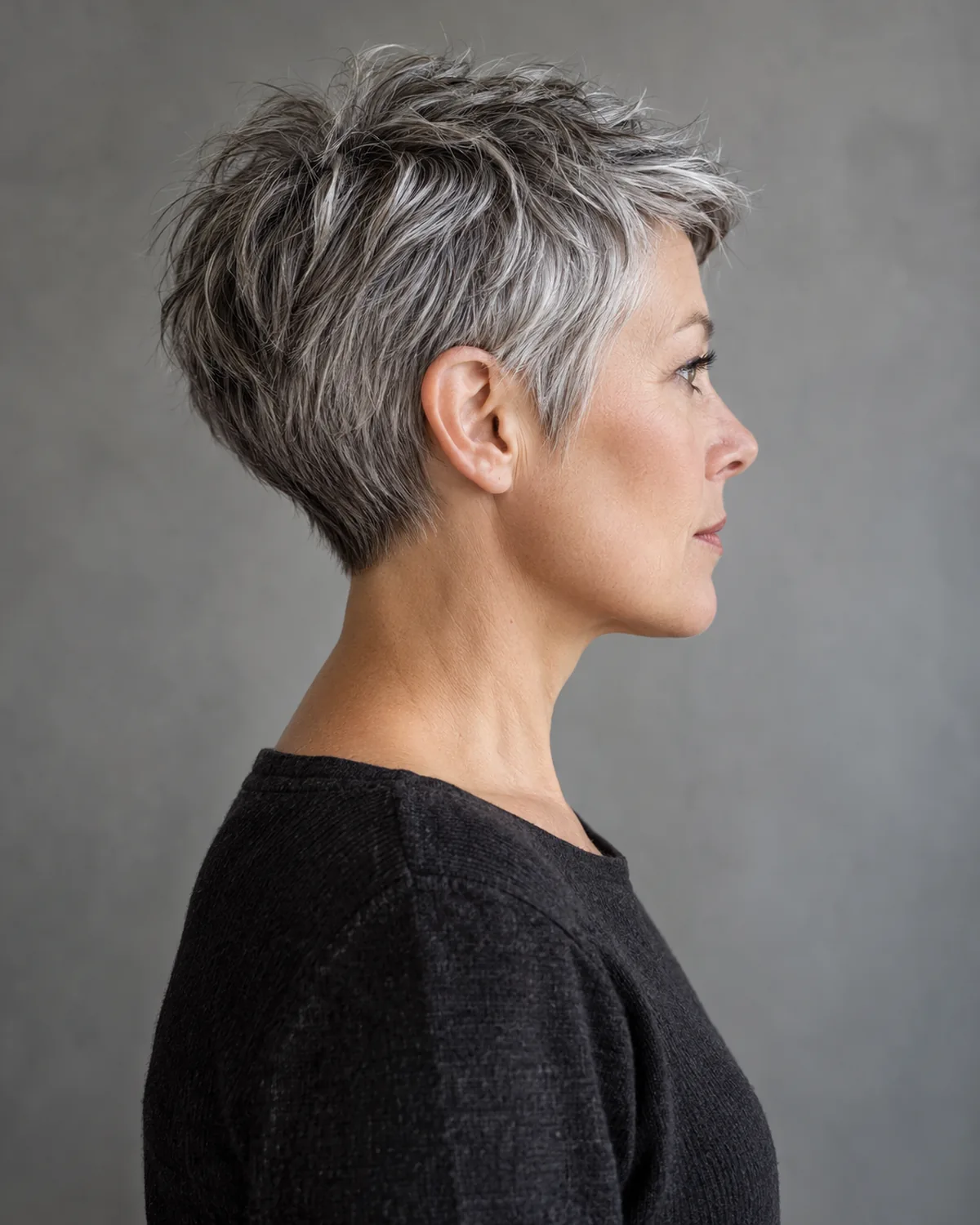
The dividing line is the ear. A pixie sits above it. A bob sits below it, anywhere from earlobe to chin. Everything in between is a grey zone your stylist will call a "long pixie" or a "short bob" depending on where the weight falls.
- A pixie exposes the ear and the entire neck. The shortest layers at the sides may be half an inch; the longest at the crown rarely pass two inches
- A bob covers the ear partially or fully. The weight line, the horizontal edge where the bulk of the hair ends, sits somewhere between the earlobe and the jaw
- The graduated bob creates a slope from shorter at the nape to longer at the front. It shares some visual territory with a long pixie, but the cutting technique is different: graduation builds weight at the bottom rather than removing it
The practical difference is exposure. A pixie puts your neck, your ears, and your jawline on display. A bob frames them. Whether that exposure reads as clean or bare depends on your bone structure and your comfort, not on the cut itself.
Neckline and Jawline: Where Each Cut Ends
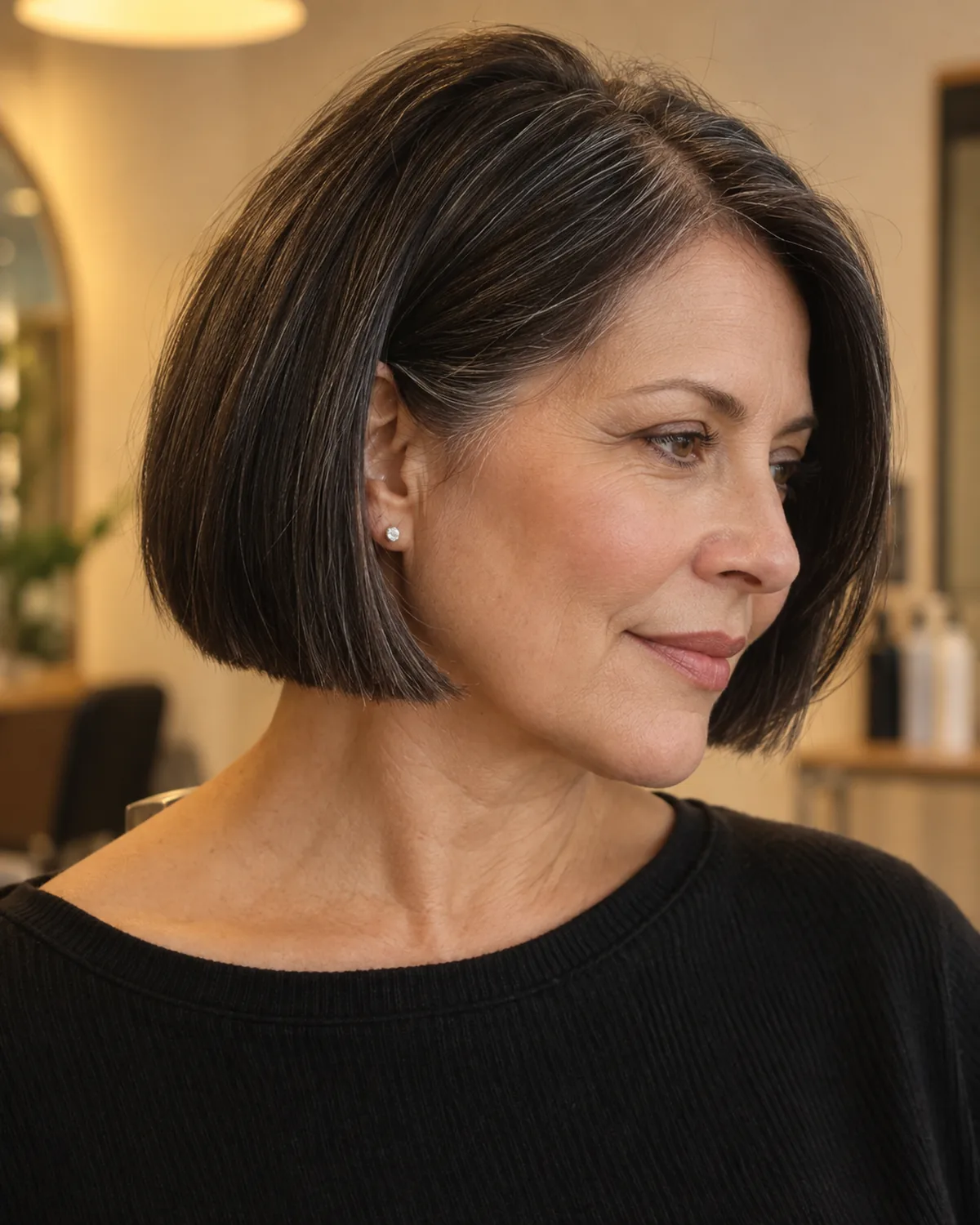
The neckline is the biggest visual difference between the two cuts, and it is the one most people underestimate. A pixie strips the nape bare. A bob covers it. That single difference changes how your neck, your jawline, and the back of your head read from every angle.
- If your nape hairline grows in clean and relatively even, a tapered pixie will finish cleanly there. An irregular nape hairline that zigs or grows in a whorl will need more frequent trims to look tidy in a pixie
- A bob hides the nape entirely. If your neck is a feature you would rather not emphasise, a bob gives you that option without requiring you to grow your hair long
- The jawline relationship matters in the other direction. A chin-length bob that lands exactly at the jaw can shorten a long face and soften a strong chin. A pixie pulls attention up to the cheekbones and the forehead, which suits an oval or heart shape but can feel stark on a very narrow face
Ask your stylist to hold your hair up at the nape and look at the back of your neck in the mirror. That ten-second check tells you more than any Pinterest photo about which finish will work for you.
Where to start
Find your situation, skip ahead
Your hair is medium-thick and you want the shortest cut you can maintain
A pixie is the stronger choice. Start with sections two and seven to see what your neckline and density need to look like.
02 Neckline and Jawline: Where Each Cut Ends07 When a Pixie Is the Stronger Choice
Your hair is fine and you want to keep some length options open
A bob is the safer bet. Read sections three and eight to check whether your density will hold the bottom edge.
03 Hair Density: Which Cut Asks for More08 When a Bob Is the Safer Bet
You are not sure and want to understand what each cut actually costs in time and commitment
Read section four for the daily trade-off, then section six for what happens if you change your mind.
04 Daily Styling Time: What Each Cut Actually Takes06 Growing It Out: The Cost of Changing Your Mind
Hair Density: Which Cut Asks for More

A pixie is more forgiving of thin hair than most people expect. Because the hair is short, even fine strands lie close together and create the impression of coverage. The nape is tapered rather than blunt, so there is no heavy bottom edge that needs density to hold its shape.
- A bob demands a minimum density at the bottom edge. If the ends are too thin, the weight line breaks apart and the cut reads as scraggly rather than sleek. This is the single biggest reason bobs fail on very fine hair
- Density changes with age. Hair diameter decreases and growth rate slows, which means the ponytail you had at 35 may be half its former thickness now. That is not a reason to avoid either cut, but it does shift the calculus
- A layered bob can redistribute what density you have. Interior layers lift the crown while the remaining weight at the jaw holds the outline. But this only works when the bottom still has enough hair to sit as a solid line
If you can gather your hair at the nape and feel a thin, wispy tail, a pixie will probably serve you better than a blunt bob. If the tail still feels like a bundle, you have the density for either cut.
Daily Styling Time: What Each Cut Actually Takes

A pixie is faster in the morning and less forgiving of a skipped day. A bob is slower in the morning and more forgiving of a skipped day. That trade-off is the one most people do not hear until they have already committed.
- A pixie that washes, towel-dries, and finger-styles takes under five minutes. But by day two it may sit flat at the crown and stick out at the sides. You will wash it again or accept the shape it gives you, and the shape it gives you is not the one you left the salon with
- A bob that air-dries well takes ten minutes in the morning if you want it to land cleanly. But it holds that shape for three or four days because the weight of the hair pulls it down into its intended line
- The real question is not "how long does it take" but "how many days a week do you need it to look intentional." If the answer is every day, a pixie requires daily attention. If the answer is four or five out of seven, a bob buys you that gap
Professional consultation frameworks suggest that a stylist should ask about daily maintenance budget before recommending a cut. If yours does not ask, volunteer the number yourself. Five minutes is a different cut than fifteen.
Glasses and Earrings: How Accessories Change the Equation

If you wear glasses every day, the relationship between the frame and the hairline at your temple is something you will see every time you look in a mirror. A pixie sits above the earpiece and leaves the frame fully visible. A bob falls below the earpiece and partially hides it.
- Large round or square frames work well with a pixie when the hair clears the top of the earpiece entirely. The risk is small frames that leave a gap between the hair and the frame, creating a bare patch at the temple
- A bob naturally covers the earpiece. This works for most frame styles, but it can trap the arms of thick acetate frames and push hair outward at an odd angle. If your frames are thick, check the fit with your hair tucked behind the ear and again with it falling loose
- Earrings are more visible with a pixie because the ear is fully exposed. Studs, small hoops, and drop earrings all read clearly. A bob partially covers the earlobe, so only studs and longer drops will show
This is not a dealbreaker in either direction. It is a comfort variable. Try on your everyday glasses and look at the temple line before you commit, and you will know whether you need to clear the earpiece or cover it.
Growing It Out: The Cost of Changing Your Mind

The grow-out cost is the hidden price tag of any short cut. A pixie takes twelve to eighteen months to reach a chin-length bob. A bob takes three to six months to reach a lob. That difference is not trivial, and it is the one most people wish they had thought about before the first appointment.
- Growing out a pixie means sitting through an awkward stage where the top is long enough to flop and the sides stick out over the ears. Most people need maintenance trims every four to six weeks during this period to keep the shape evolving rather than collapsing
- Growing out a bob is simpler. The shape holds its character as it gets longer. The only real adjustment is cleaning up the layers so they do not go flat
- Hair grows roughly half an inch per month. A pixie that starts at two inches needs to reach five or six inches before it begins to read as a short bob. That is eight to ten months of growth plus the trims that shape it along the way
- If you are someone who changes their mind about a cut within the first two months, a bob is the safer starting point. You can always go shorter. Going longer from a pixie is a commitment
The question to ask yourself is not whether you will love the cut on day one. It is whether you will tolerate the grow-out if you decide it is not for you on month three.
When a Pixie Is the Stronger Choice

A pixie earns its place when the conditions line up. It is not the right cut for everyone, but when it works, nothing else delivers the same combination of lightness, speed, and clean lines.
- Your hair density is medium to thick. Thin hair can work in a pixie, but the nape must still have enough coverage to taper gradually rather than trail off
- Your nape hairline grows in clean. A strong, even hairline at the back of the neck lets a pixie finish with authority. A messy nape means more frequent barber-style cleanups
- You are willing to see your stylist every four to six weeks. A pixie that grows out without shaping loses its architecture faster than any other cut
- You want maximum lightness. A pixie removes more hair than any other standard cut. On a hot day or during exercise, nothing else comes close
- You are comfortable with commitment. A pixie takes the longest to grow out of any common cut. You need to be sure enough to sit through twelve months of transition if you change your mind
When a Bob Is the Safer Bet

A bob occupies the middle ground between short and long. It gives up some of the pixie's speed and lightness in exchange for versatility and a gentler exit if you decide to grow it out.
- Your hair is fine but the density is still enough to hold a clean bottom edge. A blunt bob needs that solid line at the jaw or it reads as unfinished. If you are not sure, ask your stylist to check your density before committing to a blunt finish
- You want to keep the option of tucking your hair behind your ears, pulling it half-back with a clip, or pinning one side. A pixie offers none of these. A bob offers all of them
- You wear glasses with thick frames. A bob falls naturally around the earpiece and does not fight for space at the temple
- You do not want to visit the salon more than every six to eight weeks. A bob grows out more gracefully than a pixie and holds its shape longer between cuts
- You are not sure how short you want to go. A bob lets you test a shorter length without crossing the line where the only way back is a twelve-month grow-out. If you find you love it short, you can always go shorter next time
Pixie vs Bob FAQ
The questions below come up most often when someone is trying to decide between these two cuts. They are judgment questions, not styling instructions.
Can I try a long pixie as a compromise between the two?
A long pixie sits in the territory between a true pixie and a short bob. It covers the top of the ear but exposes the nape. It can work, but it is the hardest length to maintain because it grows into a different shape every three weeks. If you want a compromise, a chin-length bob that you can always cut shorter is a more stable middle ground.
Will a bob make thin hair look thinner?
It depends on where the thinning is. A bob that sits at the jaw concentrates the visual weight at the bottom. If your ends are already sparse, that concentration makes the thinness more obvious. A layered bob that moves the weight up toward the jaw can offset this, but the bottom edge still needs enough density to hold a clean line.
How do I know if my face shape suits a pixie?
A pixie works on most face shapes but reads differently on each. Oval and heart shapes gain clean angles. Round faces gain length because the exposed neck extends the vertical line. Square jaws soften with a textured version that leaves length at the sideburn.
The most reliable test is to pull your hair back tightly and look in the mirror. If you like what you see, that is roughly what a pixie will give you.
What should I tell my stylist if I cannot decide?
Tell your stylist you are between the two and ask them to assess three things: your density at the nape, the evenness of your nape hairline, and whether your daily styling time is closer to five minutes or fifteen. Those three data points will narrow the field more than any conversation about preferences. A stylist who can see your hair in person outranks anything written here.
Where the checkable claims come from
- Understanding Graduation and Layering — Sam Villa / Redken Education
- Tips for Healthy Hair — American Academy of Dermatology
- The Art of Consultation — Pivot Point International
Keep this one
Save it for the appointment
Pin the image above to the board you actually open before a salon visit. This guide is written to be re-read, not read once.
Tonight, before you close this tab
- Stand at a mirror and look at the back of your neck. If the hairline is clean and even, a pixie will read well there; if it is uneven or very low, a bob will cover it
- Time your morning hair routine for three days and write down the average. A pixie needs under five minutes but needs it every day; a bob needs ten but tolerates a skip
- Pull out a photo of yourself with the shortest hair you have ever had and one with the longest. Which version do you recognise more quickly as yourself
- Write down two questions for your stylist: one about how your density will affect the cut, and one about how often you will need to come back