8 Hairstyles Over 50 with Glasses: Cuts That Work with Your Frames
Eight hairstyles judged on how they sit with glasses after 50. Each option sorts into one of three strategies: echo the frame line, soften it, or break it.

Booking an appointment soon? Save this page. It is easier to skim in the chair than to remember.
At a glance
Works
- A jaw-length bob that ends below the temple-arm hinge, keeping the hemline and the frame line separate
- Curtain bangs that part above the bridge and sweep to each side of the top bar
- A textured pixie with crown volume that lifts the eye above the frame line
Depends
- Layers starting below the cheekbone — only if your hair has enough density to hold them at that length without thinning the ends
- A soft shag with jaw-level movement — only if your hair has natural wave or curl to sustain the texture
Skip
- A blunt mid-cheek bob that lands exactly at the temple-arm hinge and stacks two horizontal lines
- A full blunt fringe that presses against the frame top and crowds the forehead
- Pinning all the hair flat behind the ears so the temple arms sit exposed as hardware
Glasses add a hard horizontal line across your face. Every hairstyle either echoes that line, softens it, or fights it. Most advice starts with the frames. This flips it: you already own the frames, so which cut works with them?
Each option below is judged on one question: does the hairstyle work with the glasses you actually wear, or against them?
1. A Jaw-Length Bob That Ends Below the Temple Arms
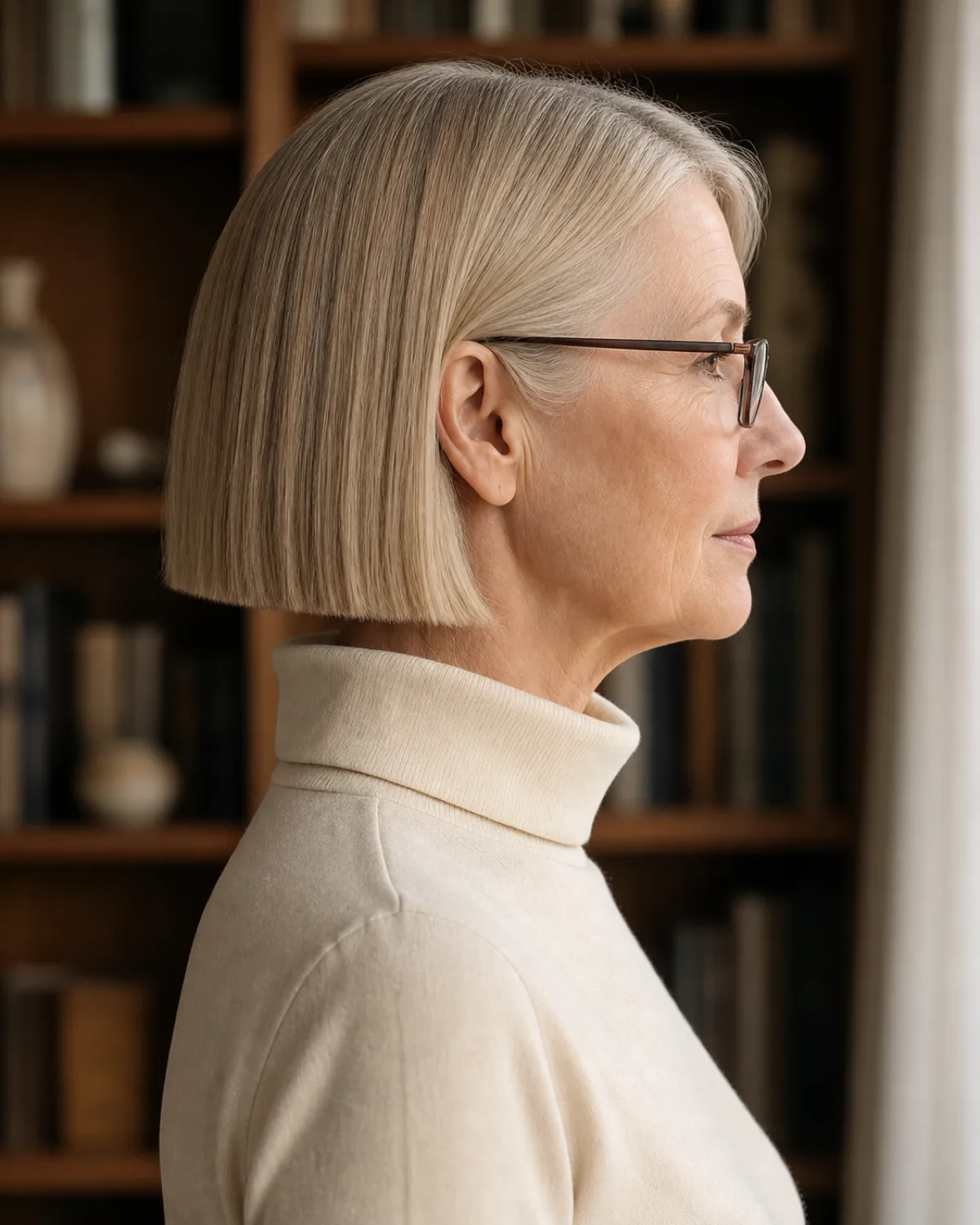
A bob that lands at or below the jaw keeps the hemline away from the temple arms. When the bob ends at the temple hinge, roughly mid-cheek, those two horizontal lines stack and the face reads as a stripe. The jaw-length version creates a gap between the two lines so each one registers separately.
- Suits oval and long face shapes wearing medium or wide frames
- The blunt hemline reads cleanest in profile, which is where the gap between frame and hair is most visible
- Round faces with round frames may find the bob curve doubles the roundness; try an angular frame or an asymmetric length instead
- Ask your stylist to check the distance between your temple-arm hinge and the bob hemline before cutting; two inches of separation is the minimum that reads as intentional
2. Curtain Bangs That Part Around the Frame Top

Curtain bangs split at the center and sweep to each side of the top bar, framing the glasses rather than competing with them. The parting point sits above the bridge so the bangs fall naturally to either side of the frame.
- Works on anyone whose frames have a visible top bar; the bangs soften that hard edge
- The ends of the bangs should fall just above the outer corner of the lenses, not below them; below creates a curtain that hides the frames instead of framing them
- Skip this if your frames are rimless or nearly invisible on top; the bangs frame nothing and hang over an empty line
- Wispy curtain bangs sit above the frame line without pressing against it, while a full blunt fringe often presses into the top bar and crowds the forehead
Where to start
Find your situation, skip ahead
You wear bold or oversized frames and want the cut to balance them
Crown volume and movement at the jaw pull attention away from the frame size. A textured pixie or a shag does that.
03 A Textured Pixie That Keeps Volume at the Crown08 A Soft Shag with Movement at the Jaw
Your frames are on the delicate side and you want them to blend in
Let the hair frame the temples. Curtain bangs or a pulled-back style with tendrils makes delicate frames look intentional.
02 Curtain Bangs That Part Around the Frame Top07 A Pulled-Back Style That Frames the Temples
You are keeping your current length and just want a better fringe situation
Drop any layers below the cheekbone and try a side-swept fringe that clears the outer lens edge.
04 A Side-Swept Fringe That Clears the Lens Edge05 Layers Starting Below the Cheekbone
3. A Textured Pixie That Keeps Volume at the Crown
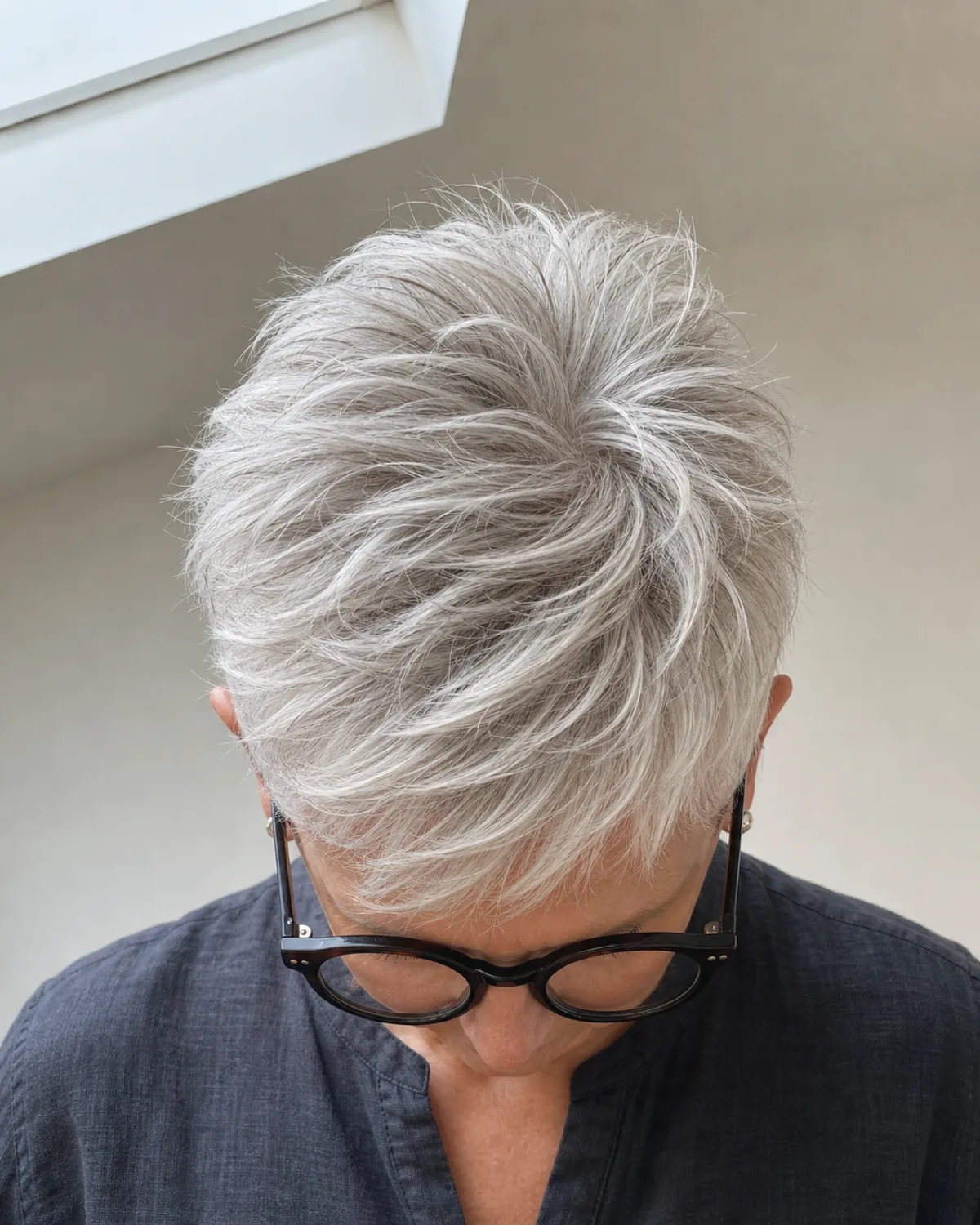
A pixie that stacks its length on top and keeps the sides short lifts the visual weight above the frame line. The contrast between short sides and textured crown places the glasses in the middle third of the face instead of at the top.
- Suits heart and oval shapes with bold or oversized frames; the crown volume counterbalances the frame width
- The shorter the sides, the more the crown stands out and the less the glasses dominate
- Very fine hair that lies flat at the crown can leave the pixie looking thin above a bold frame line, making the glasses appear heavier than they are
- Ask your stylist to keep the length on the crown long enough to lift but short enough to hold its shape without product
4. A Side-Swept Fringe That Clears the Lens Edge

A side-swept fringe that ends just above or beside the outer lens edge creates a diagonal that breaks the horizontal frame line. The diagonal reads as intentional asymmetry rather than an accidental collision between hair and eyewear.
- Works on square and round faces because the diagonal softens the jaw while drawing the eye away from the frame width
- The fringe sweeps from a deep side part across the forehead; the key measurement is where the swept end falls relative to the outer lens edge
- Skip this if your frames extend well past the temples; the fringe ends where the frame does not, creating an awkward gap
- A side-swept fringe behaves differently from curtain bangs: curtain bangs frame the top bar symmetrically, while a side sweep crosses it at an angle
5. Layers Starting Below the Cheekbone
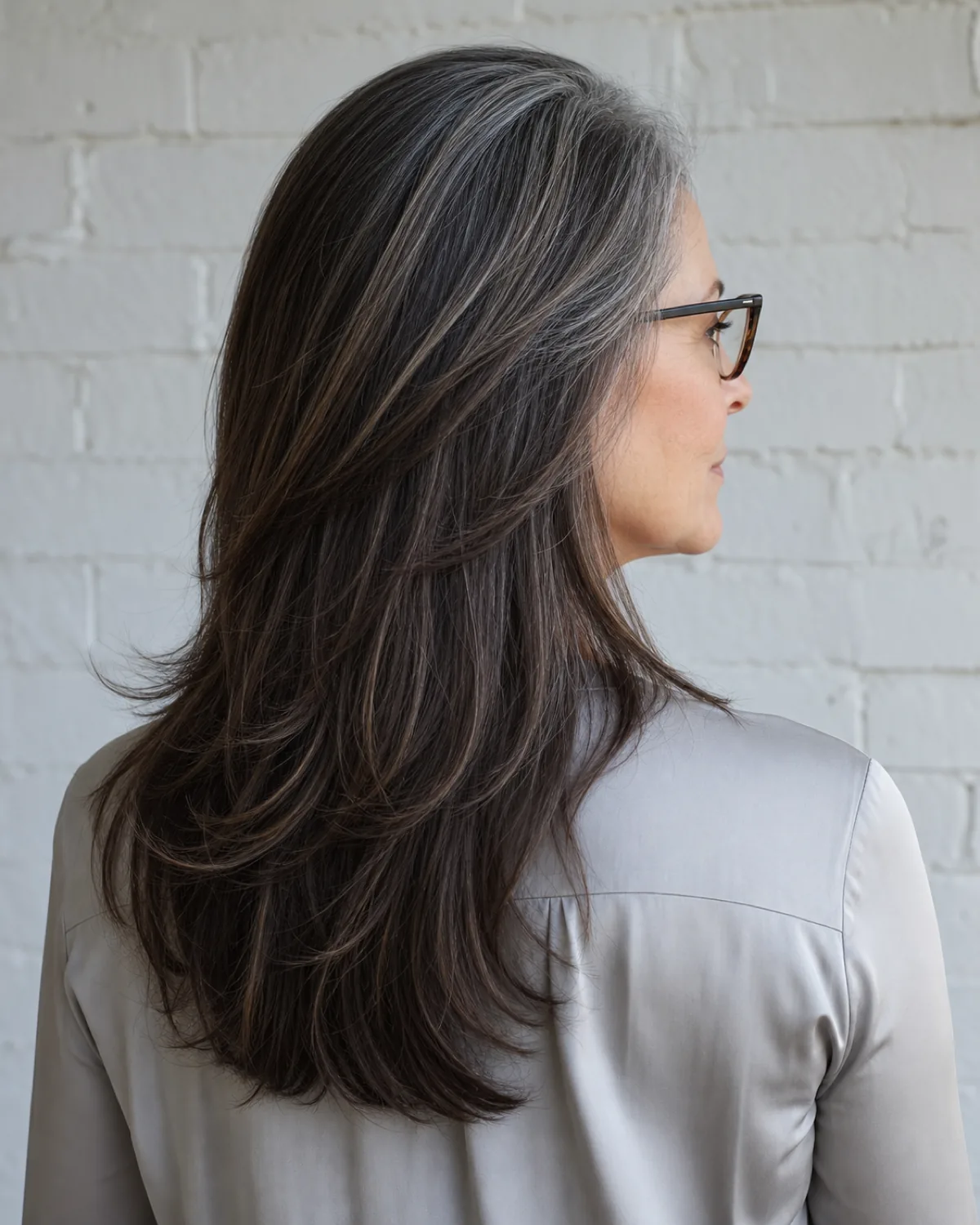
When the shortest layer starts at or near the frame line, usually at the temple, the layer and the temple arm run parallel. Two parallel lines at the same height cancel each other out. Dropping the shortest layer to below the cheekbone separates the two so each one reads on its own.
- Suits shoulder-length or longer hair on oval and long face shapes
- The gap between the temple arm and the first layer should be at least two inches; less than that and the eye still groups them together
- Very fine hair may not hold layers that start this low; the ends thin out before the layers create movement, and you lose density without gaining shape
- If you currently have layers that start at the temple, ask your stylist to grow them out or cut a new shortest layer below the cheekbone before your next appointment
6. A Graduated Bob with the Weight Line at the Back
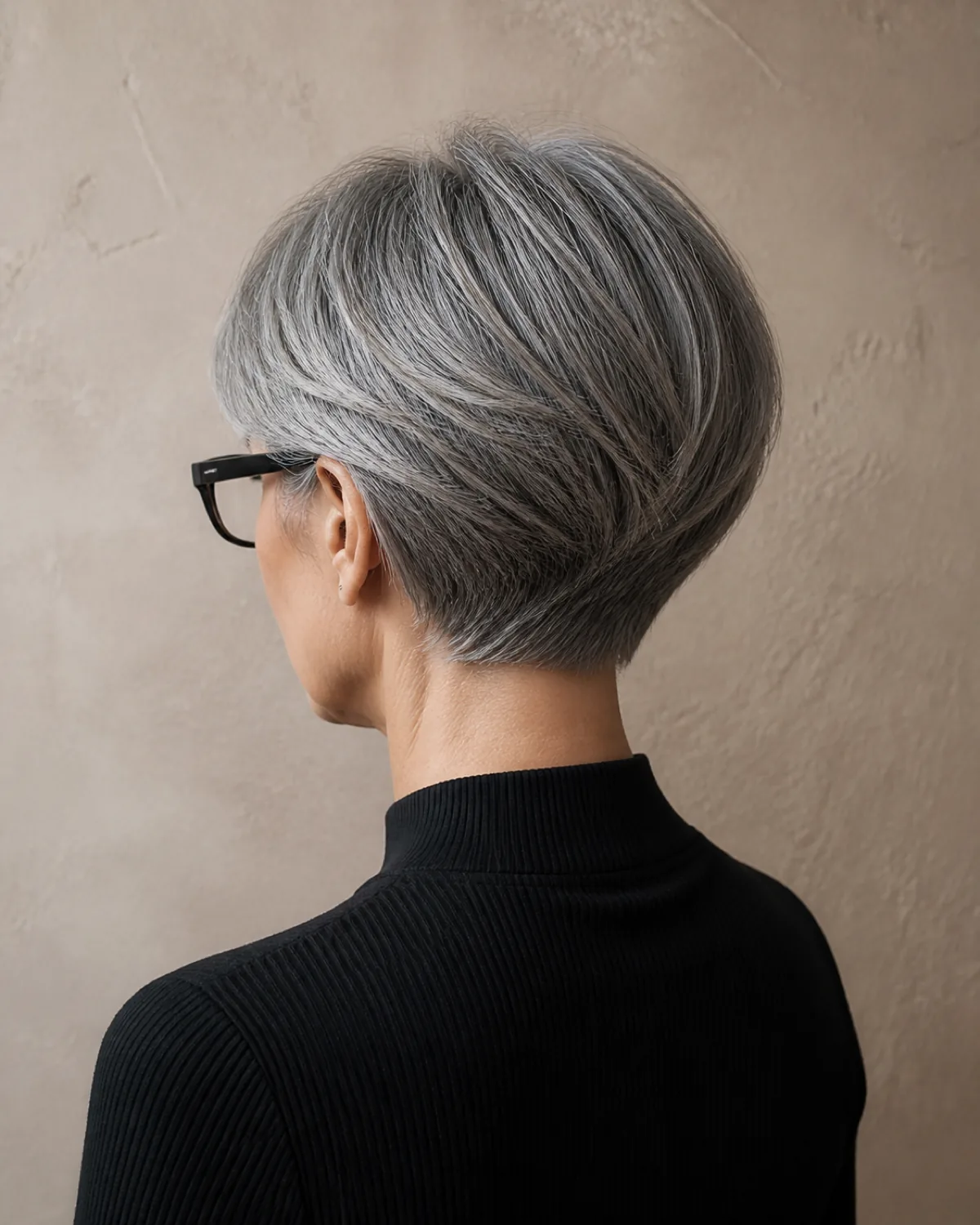
A graduated bob stacks its shortest lengths at the nape and builds weight toward the jawline. The weight line sits at the back of the head, not near the temple. The glasses dominate the front silhouette without competing with the most sculpted part of the cut.
- Suits square and round faces with wider frames; the graduation gives structure to the back while the front stays clean around the glasses
- The stacking at the nape creates volume without adding width at the temples, which keeps the glasses from looking buried in hair
- Petite features with delicate frames may find the bob reads heavy at the back against small glasses; in that case, reduce the graduation or shorten the nape
- A graduated bob and a layered bob solve different problems: graduation moves weight to the back, while layers distribute it through the length
7. A Pulled-Back Style That Frames the Temples

A low chignon or a half-up that releases face-framing tendrils at the temples makes the temple arms look like part of the styling. Pulling everything slick back exposes the arms as hardware. Hiding them entirely under hair looks like the glasses are something to apologize for. The tendrils split the difference.
- Works with any face shape and any frame style; this is the most versatile option on this list
- The tendrils should be jaw-length or shorter, wispy, and sit naturally alongside the temple arms so the two elements read together
- If your frames have chunky or patterned temple arms that you actively want to show, skip the tendrils and pull the hair back cleanly; let the arms be the accent instead
- A low chignon at the nape keeps the back clean and the glasses the focal point at the front
8. A Soft Shag with Movement at the Jaw

A shag with movement concentrated at the jaw adds texture around the lowest frame edge. The layers flip and curve naturally, blurring the boundary between face and hair so the glasses sit in texture rather than on a bare surface.
- Suits wavy or naturally curly hair on oval and heart shapes; the shag relies on natural movement to create the effect
- The jaw-level layers should be the most active part of the cut; shorter layers near the crown can flatten and leave the glasses as the only texture on the upper face
- Straight fine hair where the shag layers go limp loses the movement that makes this work; the glasses end up sitting on flat hair, which is the opposite of what the cut is for
- Ask your stylist how your natural texture will behave at the jaw before committing; bring photos of your hair on a second-day wash rather than freshly styled
Where the checkable claims come from
- Face shape — Wikipedia
- How to Choose Glasses for Your Face Shape — All About Vision
- Bob cut — Wikipedia
- Bangs (hair) — Wikipedia
Keep this one
Save it for the appointment
Pin the image above to the board you actually open before a salon visit. This guide is written to be re-read, not read once.
Tonight, before you close this tab
- Put on your glasses and pull your hair back flat, then photograph your face from the front to see where the frame lines fall
- Measure the distance between your temple-arm hinge and your jawline to know how much room a bob has below the frame
- Part your hair on the opposite side from usual while wearing your glasses and compare the two photos
- Write down two things you want your haircut to do with your glasses: hide the arms, frame the top bar, or balance the width