9 Gray Hairstyles for Women Over 60 That Work With the Texture You Have Now
Nine gray hairstyles for women over 60, each judged by how well the cut works with the coarser, drier texture that gray hair develops with age.

Booking an appointment soon? Save this page. It is easier to skim in the chair than to remember.
At a glance
Works
- Short textured cuts that use coarse gray hair's natural lift — the texture holds without product
- Chin-length or jaw-length bobs where thicker gray strands hold the line better than pigmented hair did
- Letting the curl pattern lead the cut rather than fighting it with straight-hair techniques
Depends
- A blunt one-length cut — reads decisive on thick straight gray, reads sparse on fine gray
- Collarbone layers — keep weight on wavy hair, gap and look ragged on very straight thin gray
- A deep side part — adds movement on moderate density, forces too much bulk on very thick hair
Skip
- Short crops on fine flat gray hair — the top collapses and reads as helmet-like
- Heavy graduation on very fine gray — thins the bottom edge too much
- Keeping length past the collarbone when the last three inches are visibly thinner than the rest
Gray hair over 60 is not the same hair you had at 50. The strands are thicker in diameter, drier, and often wavier than they were a decade ago. A cut that worked when the gray was just arriving may not work now that it has settled in.
These nine cuts are judged by one question: does this cut work with how your gray hair actually behaves, or does it fight it?
Each one names who it suits, who should skip it, and what to ask the stylist.
1. Silver Pixie With Soft Texture on Top
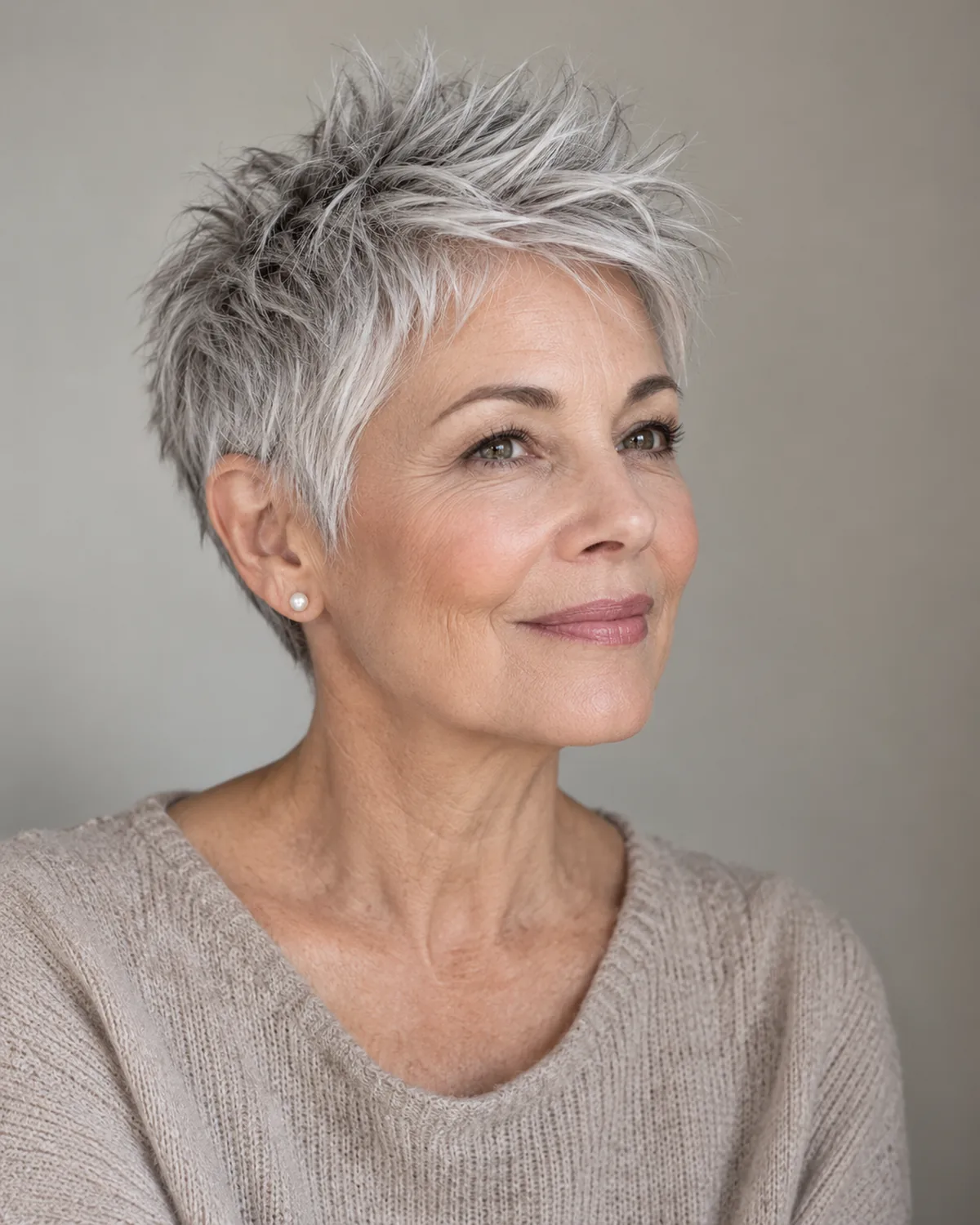
A cropped pixie where the top is left slightly longer and point-cut so each strand separates. This cut uses the one thing coarse gray hair does well on its own: stand away from the scalp and hold texture without product. The textured pieces on top create movement without any styling.
- Works on medium to thick gray hair that lifts naturally at the root — the coarser the strand, the better this holds
- Point-cutting the top lets each strand find its own angle, so the texture reads as deliberate rather than messy
- Skip on fine gray hair that lies flat against the scalp — the top collapses and the pixie reads as helmet-like rather than textured
- Tell the stylist to point-cut the top rather than blunt-cut, and to leave enough length for the strands to separate
2. Chin-Length Bob That Uses the New Diameter
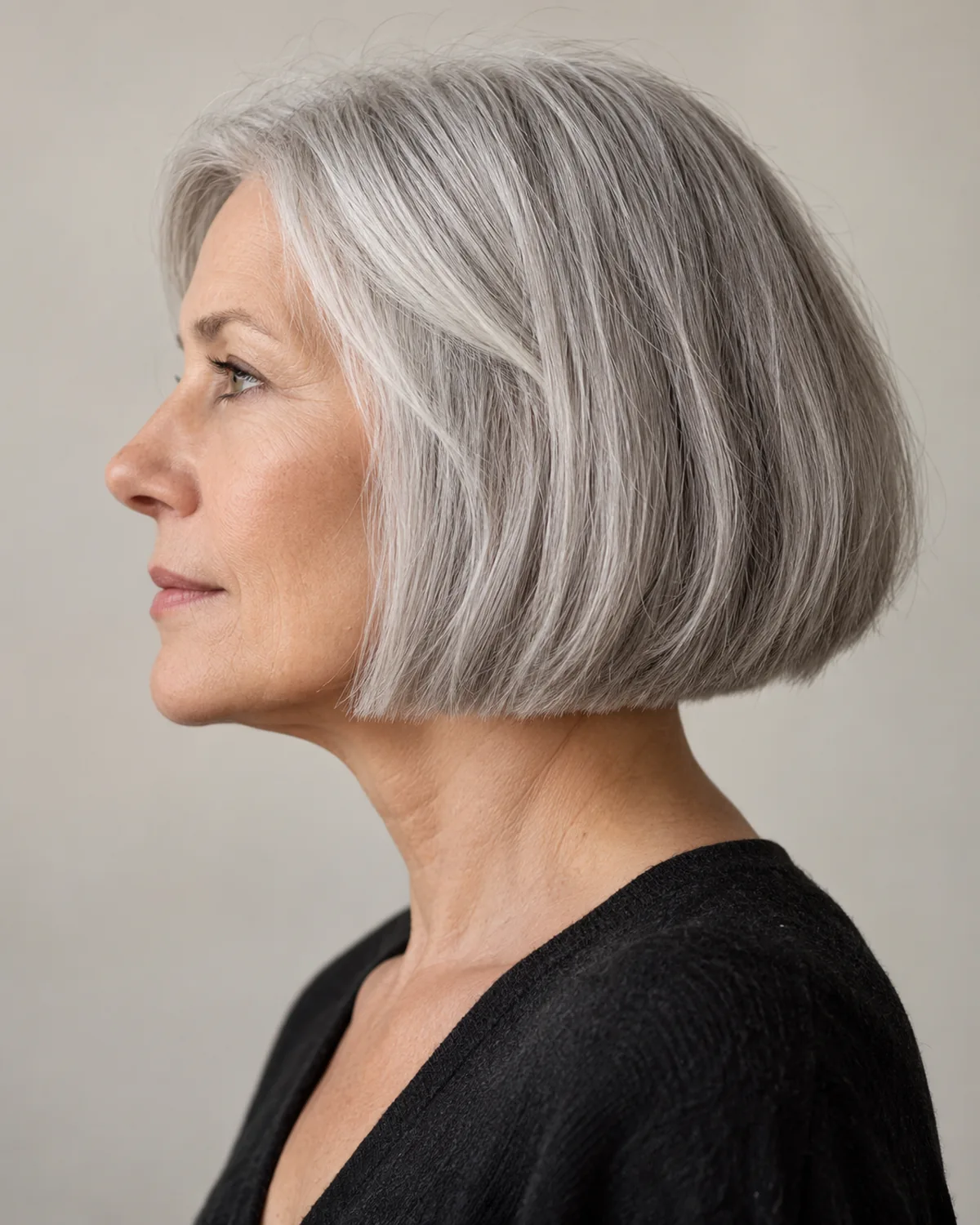
Gray strands are typically thicker in diameter than the pigmented hair they replaced. A chin-length bob takes advantage of that shift. The thicker strands hold a clean blunt line at the jaw that finer hair would have struggled to maintain. This profile view shows how crisply the line terminates.
- Works on straight to wavy gray hair where the strands have enough diameter to hold the line without blow-drying
- The blunt edge reads as sharp and intentional — the new strand thickness is doing the work that products used to do
- Skip if your gray has gone fine and wispy rather than coarser — the bob line will fall apart between washes
- Ask the stylist whether your gray strands are coarser or finer than what they replaced — this determines whether a blunt line is realistic for you
Where to start
Find your situation, skip ahead
Your gray hair is thick and coarse and you want something short that uses that volume
A textured pixie or tapered nape crop lets the natural lift do the work — no teasing, no product.
01 Silver Pixie With Soft Texture on Top04 Tapered Nape Crop With Volume Through the Crown
Your gray is straight and you want a clean line that looks put together without styling
A chin-length bob or blunt shoulder cut uses the thicker strand diameter to hold a line your hair could not hold at 40.
02 Chin-Length Bob That Uses the New Diameter06 Blunt Shoulder-Length Cut With No Layers
Your gray has gone curly or wavier than it used to be and you want a cut that follows it
A cropped curly cut or layered collarbone length works with the curl rather than cutting against it.
03 Layered Collarbone Cut That Keeps Weight at the Ends07 Cropped Curly Gray With Shape Left to the Curl
3. Layered Collarbone Cut That Keeps Weight at the Ends
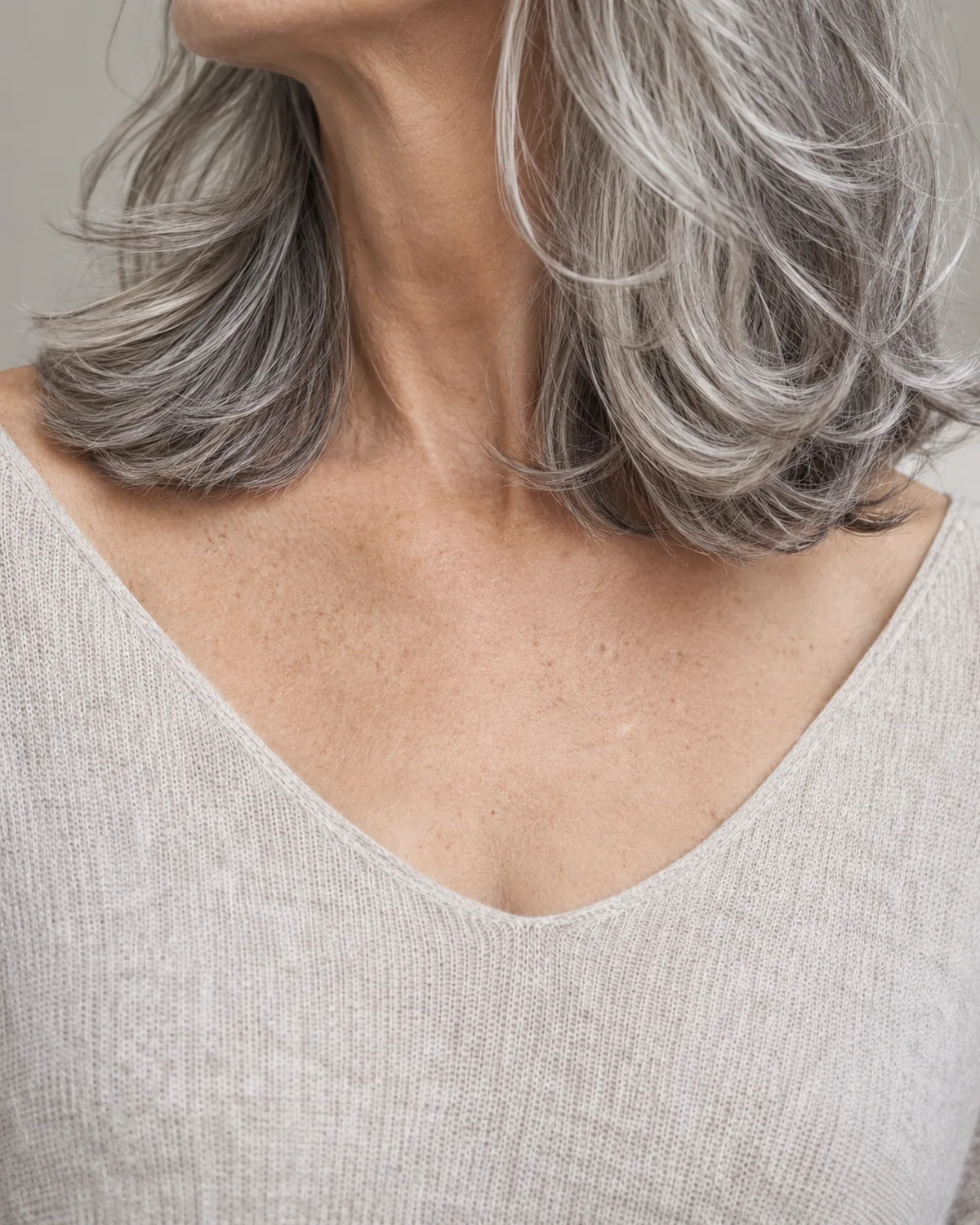
Layers that start below the chin keep enough weight at the hemline that the hair does not fly apart. Gray hair loses moisture and separates more easily than pigmented hair, so layers that start too high on dry gray can look ragged rather than shaped. This close-up shows how the weighted ends hold together.
- Works on wavy or curly gray hair with moderate density — the curl holds the layers and the weight keeps the ends from separating
- Starting layers below the chin preserves the hemline mass that dry gray hair needs to look finished
- Skip on very straight thin gray hair — without curl to hold the layers together, the ends gap and expose thinning
- Ask the stylist to keep internal weight and avoid over-texturizing the ends — gray hair that is thinned too much at the perimeter reads as wispy
4. Tapered Nape Crop With Volume Through the Crown
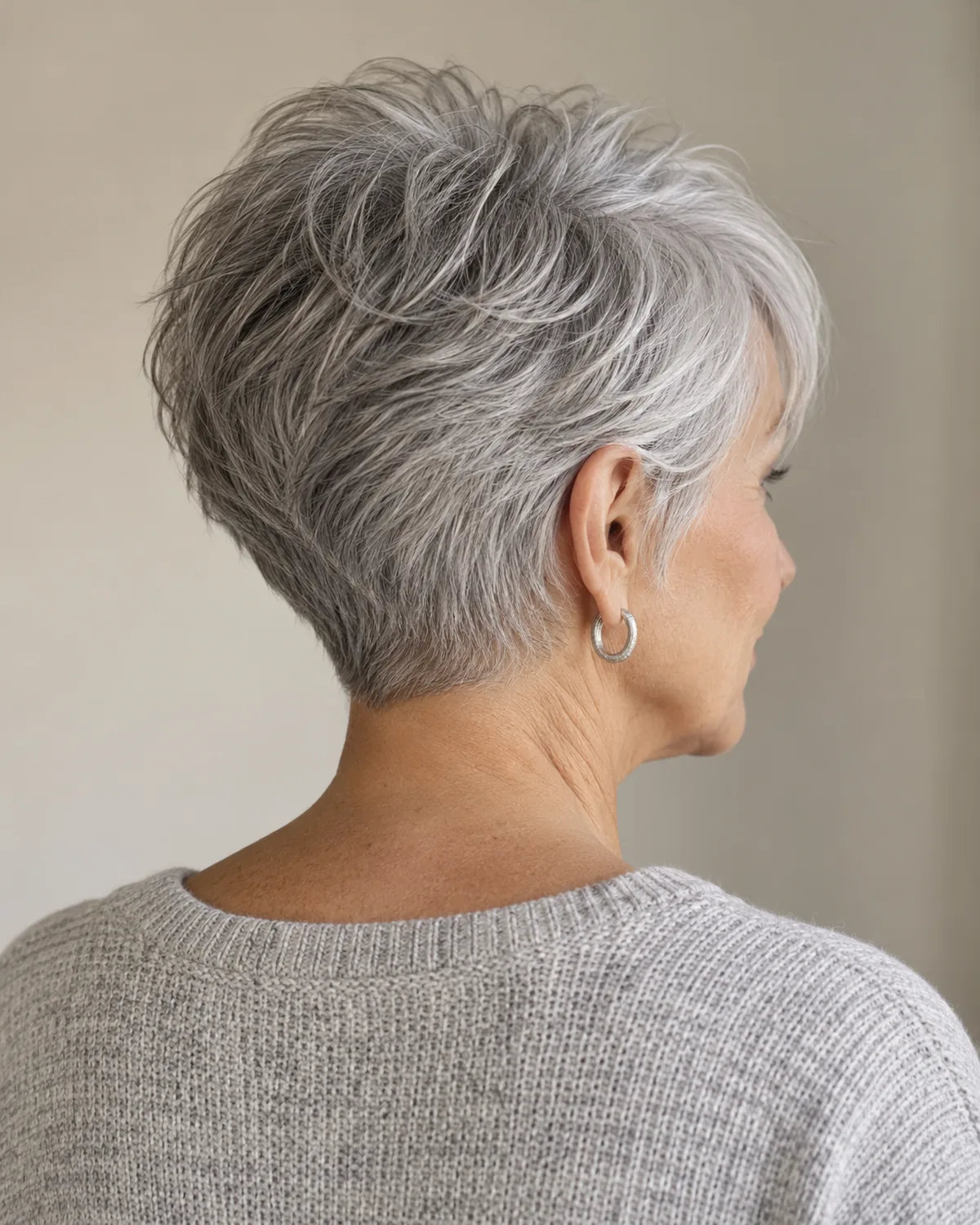
Short at the nape, fuller through the crown. The natural lift that coarse gray hair has at the root is the engine of this cut — the crown stands up without teasing or backcombing. This back view shows the contrast between the tight tapered nape and the natural volume through the crown.
- Works on thick coarse gray hair where the root lift is strong enough to carry the crown volume on its own
- The tapered nape keeps the back clean while the fuller crown creates the shape — no product needed for the lift
- Skip if the crown is thinning — the volume contrast between full crown and tight nape makes the thin area more visible, not less
- Tell the stylist you want the nape tight but the crown left with enough length to use its own lift
5. Side-Swept Bob With a Deep Part
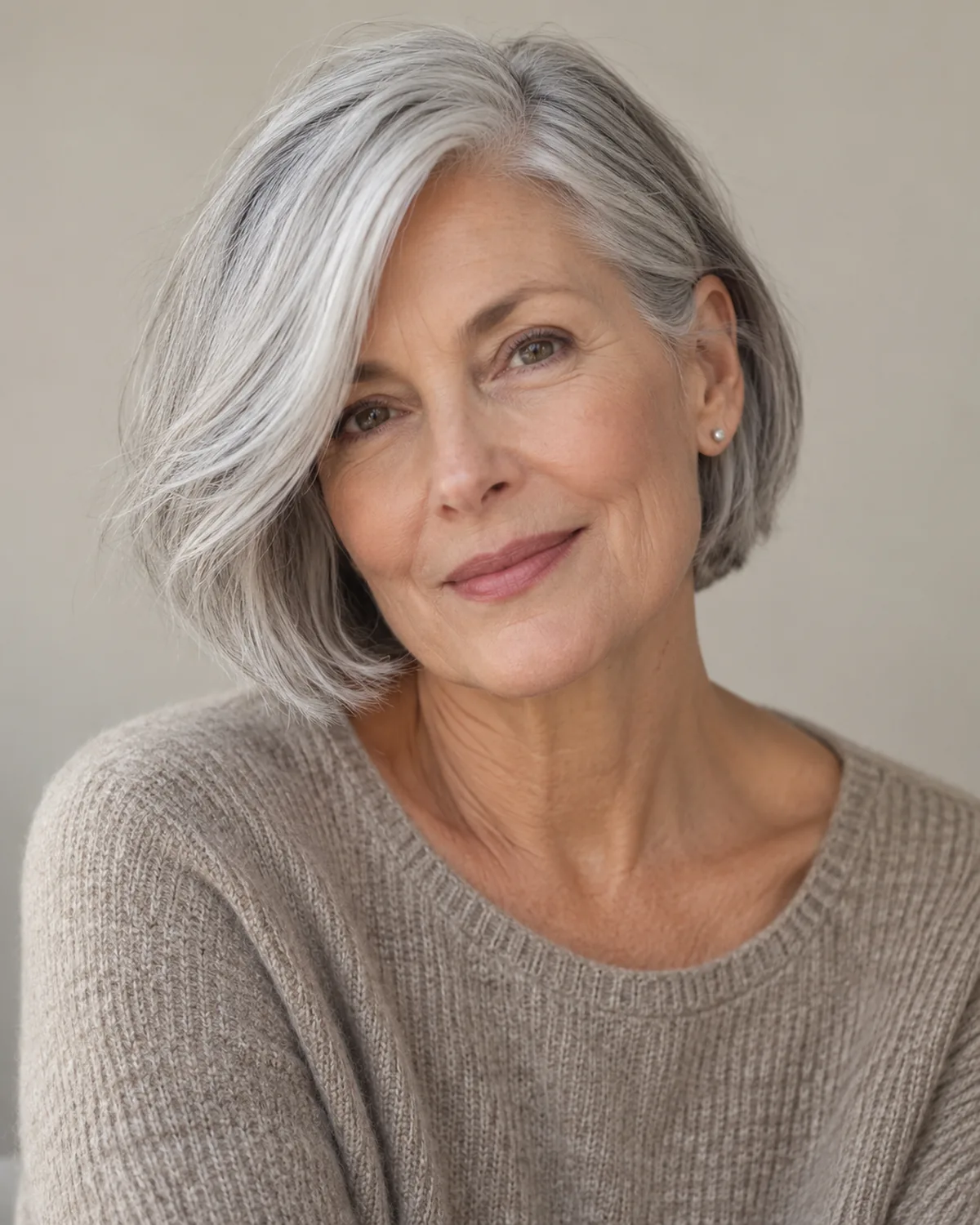
A bob at jaw length or slightly longer, swept to one side through a deep part. The sweep adds movement to gray hair that might otherwise sit stiffly. This front view shows how the deep part creates an asymmetric drape that keeps the bob from looking static.
- Works on straight or wavy gray hair with any face shape — the sweep softens angular features and adds width to narrow ones
- The deep part shifts volume to one side, giving the bob a sense of direction rather than sitting symmetrically
- Skip if the hair is very thick and coarse on both sides — a deep part forces too much bulk to one side and the bob loses its line
- Ask the stylist to cut the sweep side slightly longer so the drape falls forward naturally
6. Blunt Shoulder-Length Cut With No Layers
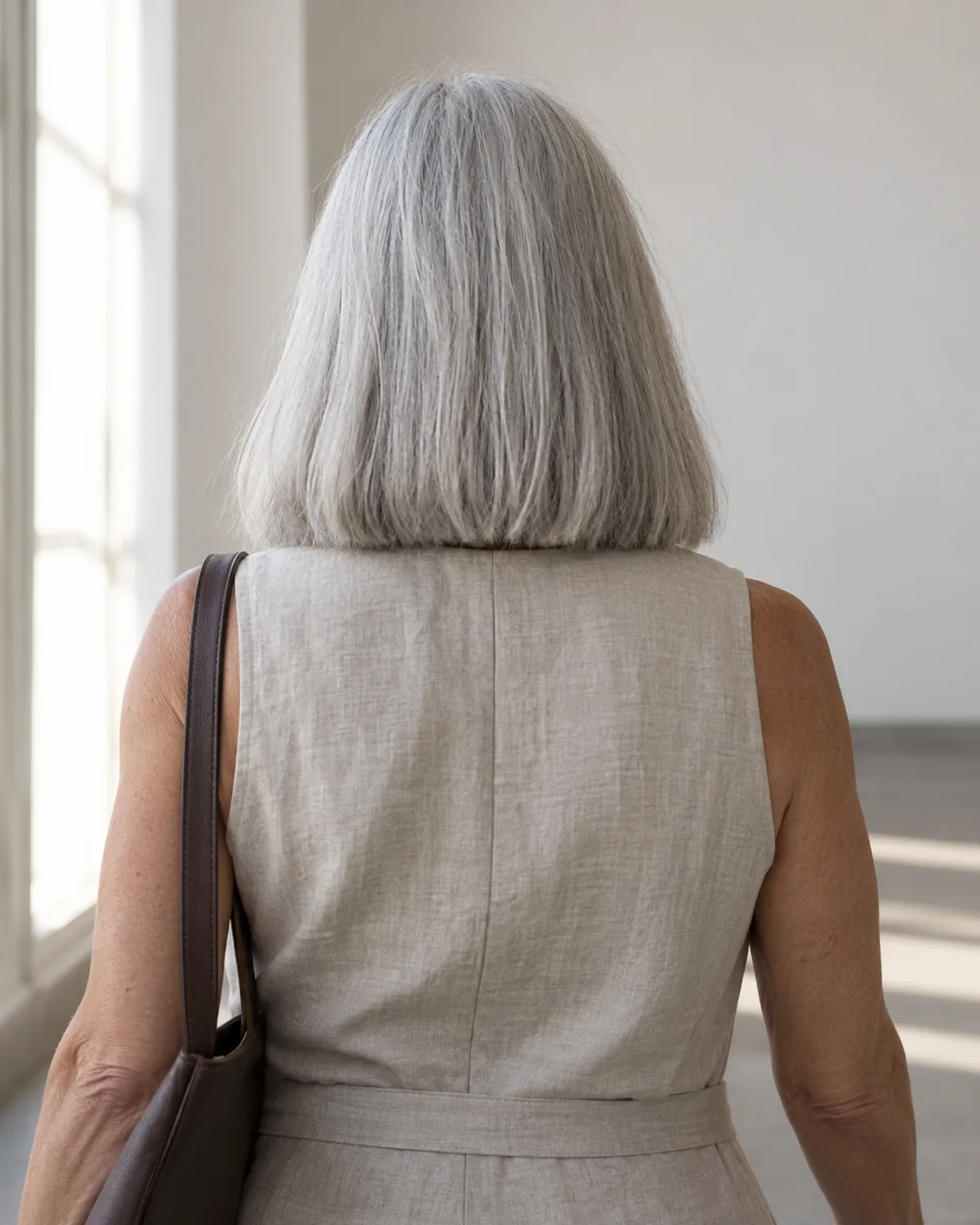
One length, no graduation, no texturizing. Gray hair that has thickened at 60 can hold a blunt hemline that reads as decisive rather than heavy. This back view shows the single unbroken line at shoulder level — the kind of clean edge that requires enough strand density to fill.
- Works on straight to slightly wavy hair with enough density for the blunt line to look full rather than sparse
- The one-length approach lets the thickened gray strands do what they do well: hold a clean perimeter
- Skip on curly gray hair — curls need interior shaping or the silhouette balloons without any internal architecture
- This is the simplest cut on the list, and that is the point — if your gray has the density, it earns the right to be uncomplicated
7. Cropped Curly Gray With Shape Left to the Curl
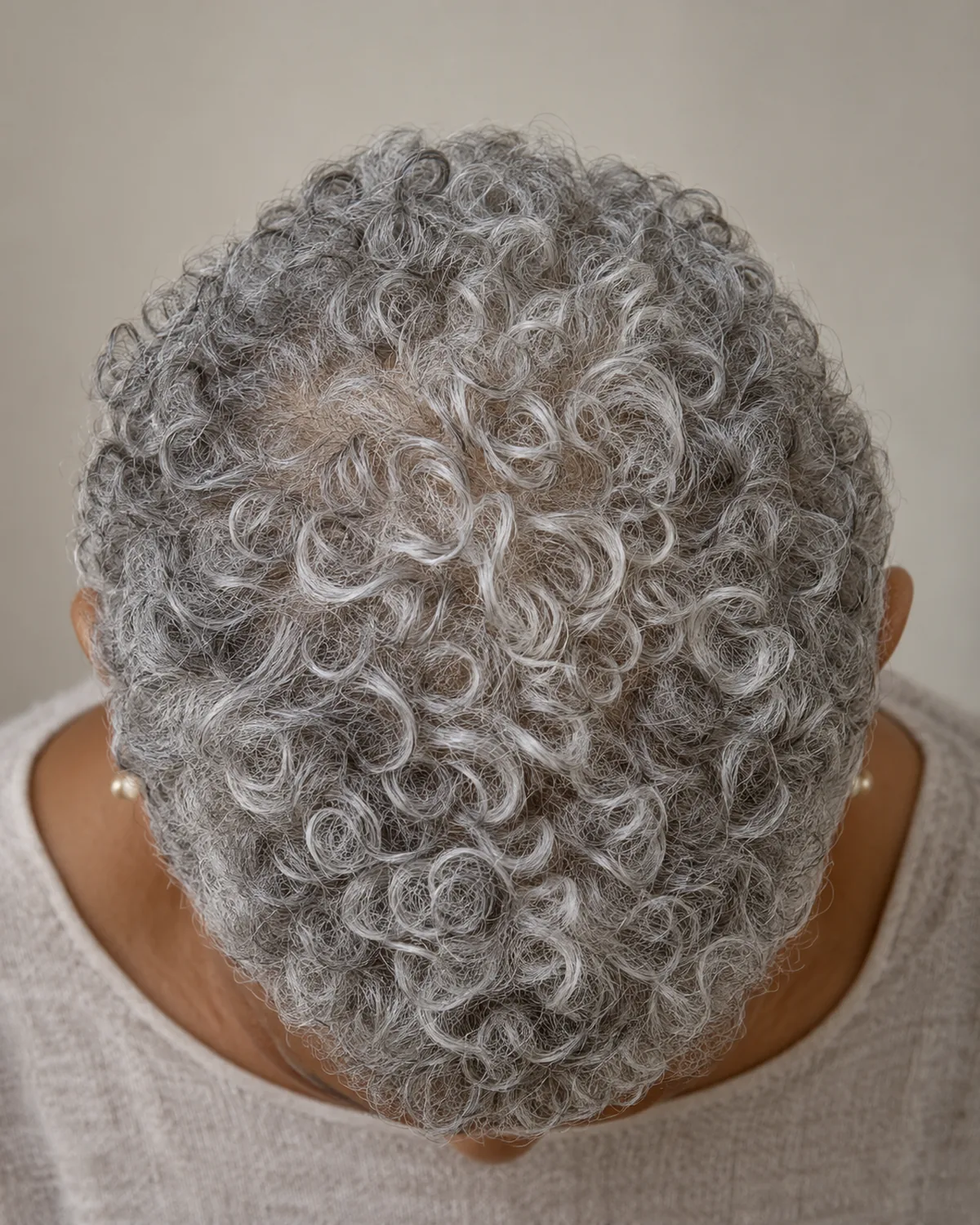
A short crop that follows the curl pattern rather than cutting against it. At 60 the curl may have tightened as the hair went gray — the follicle shape changes with age, and many women find their hair curlier than it was a decade earlier. Cutting with the curl means each ringlet finds its own position. This overhead view shows how the natural curl pattern distributes across the crown.
- Works on naturally curly or coily gray hair where the curl pattern is established and consistent
- Cutting with the curl lets each ringlet sit where it wants — fighting it creates frizz and unpredictable shape
- Skip on wavy hair that only curls at the ends — the crop removes the curling section and leaves straight roots with no shape
- Ask the stylist to cut your curls dry so they can see where each curl actually falls and where the shape needs to sit
8. Ear-Length Wedge That Frames Without Covering
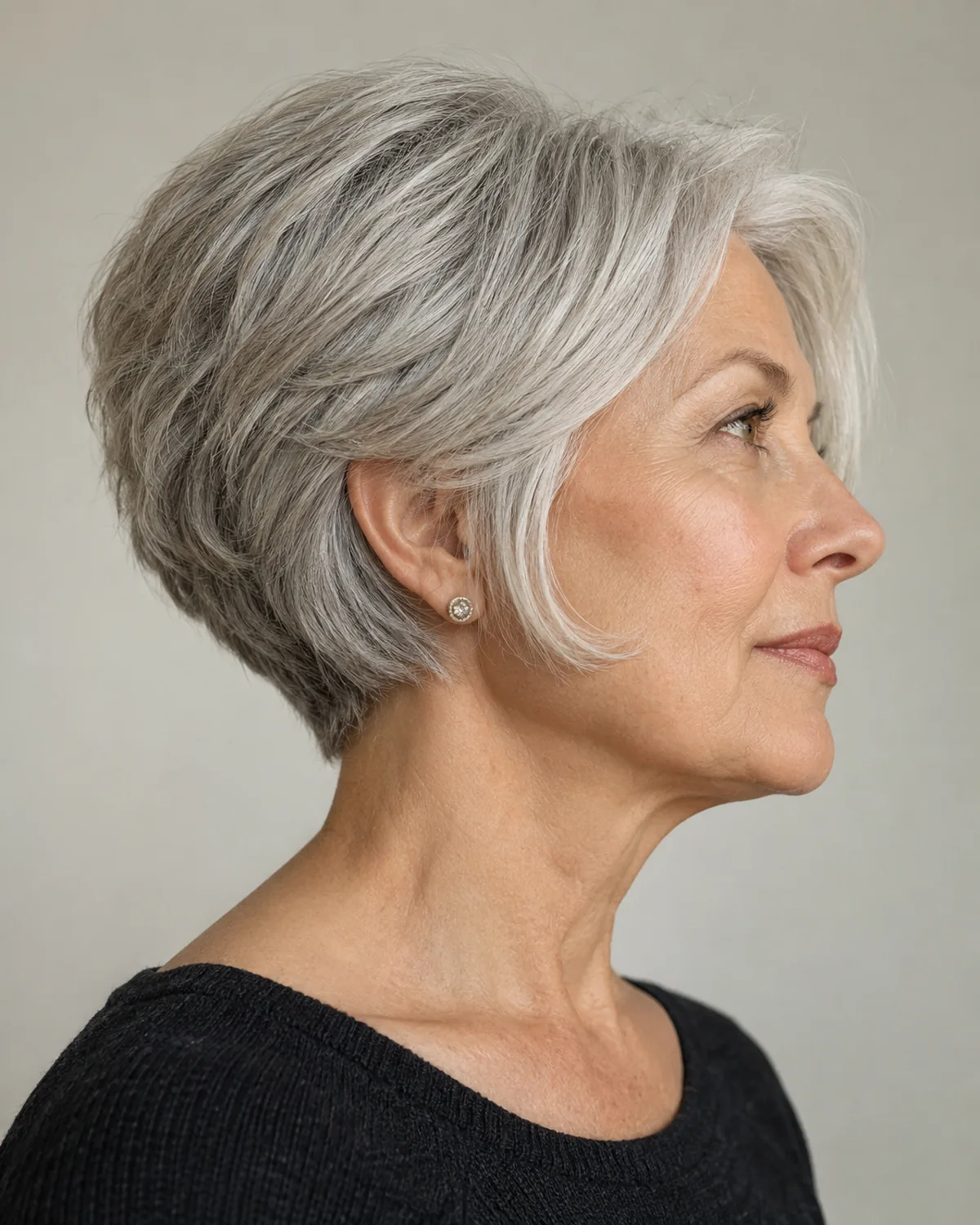
A wedge that hits just below the ear, graduated in the back, slightly longer at the front. It frames the jaw and shows the earlobes without covering the face. This profile shows the graduation from shorter back to longer front — and how coarser gray strands stack predictably in the graduated layers.
- Works on straight to wavy gray hair with moderate density — the graduation relies on strands that stack rather than separate
- The ear-length frame opens up the face and shows the jawline while the graduated back adds shape and visual interest
- Skip on very fine gray hair — the graduation thins the bottom edge too much and the wedge shape deflates
- Ask the stylist for a graduated rather than layered back — graduation stacks the weight, layers remove it
9. Textured Lob With Silver Ends That Catch Light

A lob at collarbone length with textured ends. Silver reflects light at every angle the textured ends create, so the cut looks different in every lighting condition. This seated view catches the light shifting across the textured silver ends as they fall forward.
- Works on wavy or straight gray hair with enough density to fill the length — the silver-light effect depends on having enough strands to catch light at multiple angles
- Textured ends give the hemline movement without removing too much weight — the cut keeps its shape between salon visits
- Skip if the last three inches of your length are visibly thinner than the rest — the textured lob draws attention to the hemline, and a thin hemline reads as neglect rather than style
- This is the longest cut on the list, and it works specifically because silver ends reflect light in a way dark hair cannot — the length earns its place
Where the checkable claims come from
- Hair Diameter and Gray Hair — International Journal of Trichology
- Why Does Hair Change Texture With Age? — Cleveland Clinic
- Cutting and Styling Gray Hair: What Stylists Need to Know — Behind the Chair
Keep this one
Save it for the appointment
Pin the image above to the board you actually open before a salon visit. This guide is written to be re-read, not read once.
Tonight, before you close this tab
- Pull a single strand and compare it to a dark one if you still have any — gray is usually thicker in diameter, which changes what your hair can hold
- Note whether your gray lies flat, lifts at the root, or curls — that tells you which cuts on this list apply
- Look at the last three inches of your length in natural light — if they are visibly thinner than the rest, that is the first thing to discuss with the stylist
- Bring this observation to the stylist rather than a celebrity photo — the cut should match your texture, not someone else's
- Ask the stylist whether your gray needs interior layers or just perimeter shaping — the answer depends on your density, and getting it wrong is the difference between movement and frizz