9 Medium-Length Gray Hairstyles Over 50 That Let the Silver Do the Talking
Nine medium-length gray hairstyles judged for women over 50. Each cut rated by whether it makes the silver look deliberate or like a grow-out you forgot to finish.

Booking an appointment soon? Save this page. It is easier to skim in the chair than to remember.
At a glance
Works
- A collarbone lob with blunt ends on medium-to-thick gray because the density holds the hemline and the blunt cut reads intentional
- A layered shag at chin-to-shoulder length because the texture makes gray's coarser post-transition strand look like a style choice rather than a problem
- A wavy lob with lived-in texture because the natural bends catch light across silver and make it look dimensional instead of flat
Depends
- A one-length shoulder cut with a middle part only if the hair has enough density and a slight natural wave to hold volume on both sides without collapsing by midday
- Feathered layers starting at the jawline only if the gray strands are not so coarse that they stick outward instead of lying soft at the tips
- A blunt jaw-length bob only if you commit to regular trims because gray hair catches light on every split end faster than pigmented hair does
Skip
- A collarbone lob with blunt ends on very fine gray hair because the ends thin out at that length and the hemline looks sparse instead of sharp
- Straightening a wavy lob every day because the cut depends on accepting whatever natural bend the hair has and fighting it defeats the purpose
- Skipping toner on face-framing highlights because bleached gray reads harsher than brightened gray against the skin
Gray hair that falls between chin and collarbone sits in a zone most gray-hair advice skips entirely. Short gray gets its own genre. Long gray gets the silver-mermaid treatment. Medium-length gray is the gap.
After 50, the strand itself often changes. Gray hair can come in coarser, drier, sometimes wavier than the pigmented hair it replaced. A medium-length cut either works with those changes or fights them.
These nine styles are judged by one question: does this cut make the silver look deliberate, or does it look like the grow-out stage you forgot to finish?
1. Collarbone Lob With Blunt Ends

A one-length cut hitting the collarbone with no layers. The blunt hemline is the whole point: on gray hair, a clean bottom edge reads as a decision, not an accident.
- Works on medium-to-thick gray hair where the density holds the line all the way across
- Skip on very fine gray hair because the ends thin out at this length and the hemline looks sparse rather than sharp
- Ask the stylist to cut the hem dry so the line sits where you actually see it, not where wet hair promises it will
- The collarbone is the longest length that still reads structured on gray hair without weight pulling the ends flat
2. Layered Shag at Chin-to-Shoulder Length
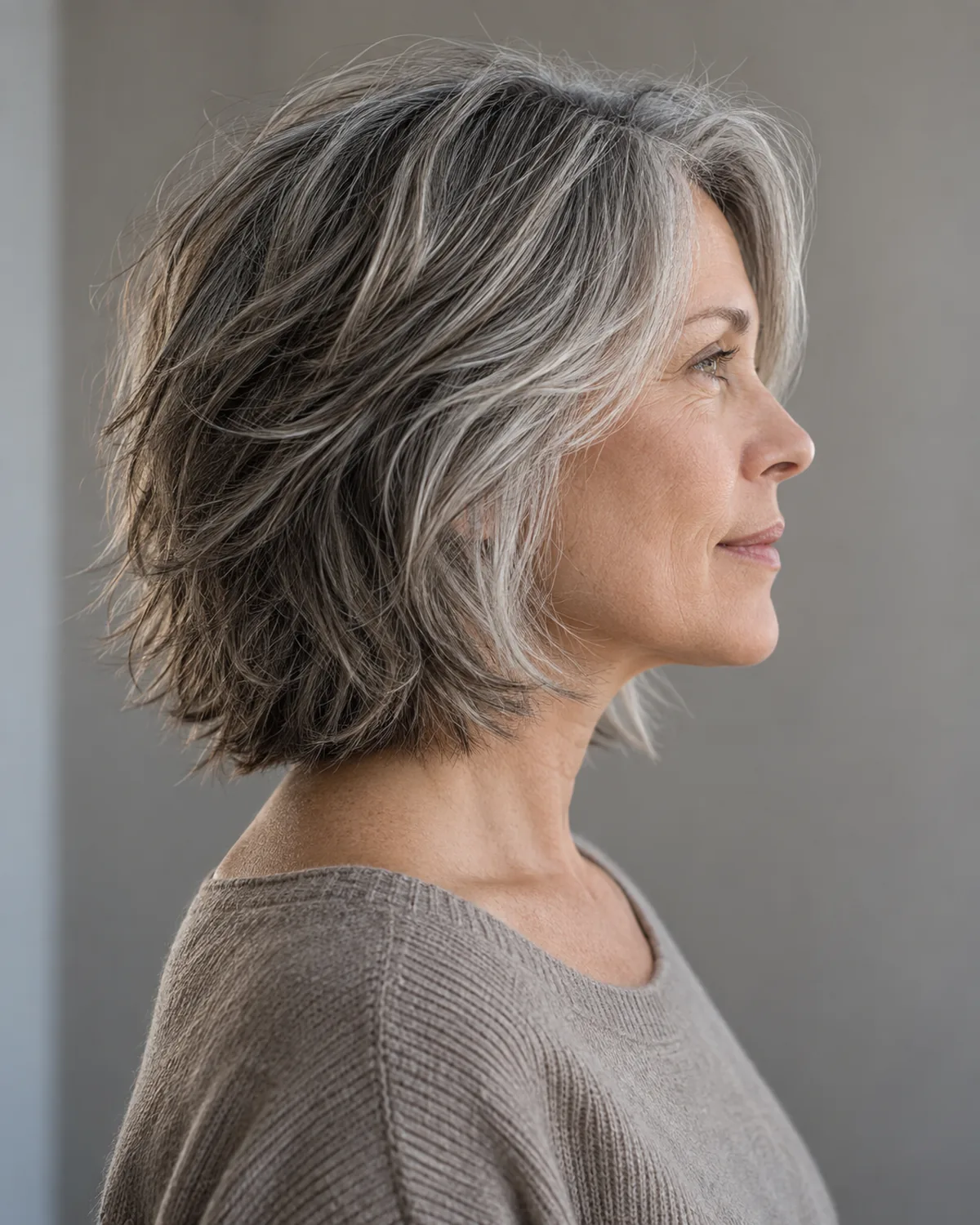
A shag with the shortest layers at the cheekbone and movement all through the lengths. The texture plays with the coarser strand that often arrives with gray, making the roughness look deliberate rather than neglected.
- The most forgiving medium cut for gray hair that has changed texture since the color shifted
- Depends on how much volume the roots still carry; flat roots under a shag read deflated, not tousled
- The shag on fine hair works differently because fine hair needs the layers to build perceived density, while gray hair already has the texture and just needs the cut to direct it
- Grows out well because the layers were already uneven on purpose
Where to start
Find your situation, skip ahead
Your gray is fully grown in and your hair is medium-to-thick with some natural wave
A wavy lob or a layered shag will make the texture work for you instead of against you.
07 Wavy Lob With Lived-In Texture02 Layered Shag at Chin-to-Shoulder Length
You are still growing out dye and have a visible demarcation line at the roots
A textured A-line removes old color from the back faster, and curtain bangs camouflage the line at the temples.
04 Textured A-Line With Soft Graduation03 Silver Bob With Curtain Bangs
You want the simplest possible cut that lets the silver speak for itself
A blunt jaw bob or a collarbone lob with no layers. The less the cut does, the more the color says.
08 Low-Maintenance Blunt Bob at Jaw Length01 Collarbone Lob With Blunt Ends
3. Silver Bob With Curtain Bangs

A jaw-to-chin bob paired with centre-parted bangs that frame the face. The curtain bangs do something specific for gray hair: they soften the transition zone at the temples where pigmented hair and silver often meet with a hard line.
- Works on most textures; how far through the grow-out you are decides whether the bangs camouflage the demarcation line or just frame the face
- For the full gray bob with bangs treatment, the dedicated guide goes deeper on how bang length interacts with the silver
- The chin-length version keeps the bob short enough that the ends stay thick, which matters when gray hair tends toward wiry
- Ask the stylist to cut the bangs dry and parted, not wet and pulled straight down, because they will live centre-parted and need to fall that way
4. Textured A-Line With Soft Graduation
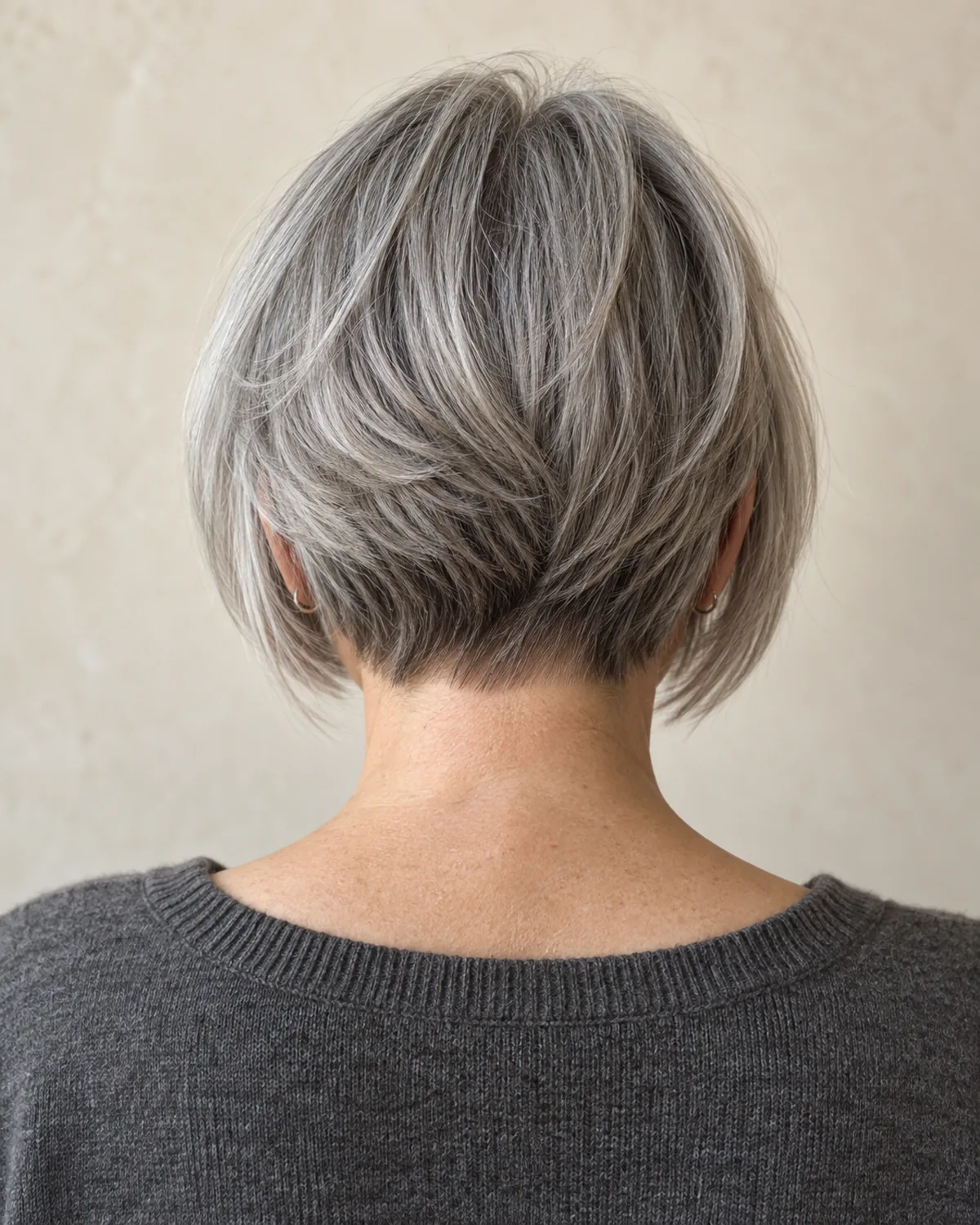
A slightly shorter back that angles to a longer front, with soft graduation at the nape. The angle draws the eye along the jaw instead of to the roots.
- A strong transitional cut if you are growing out dye: the shorter back removes old color faster while the front keeps length
- Skip if you want uniform length all the way around because the A-line commits to an angle
- The graduation at the nape adds dimension where the back of the head can look flat after 50
- Trim frequency is higher than a one-length cut because the graduation grows out and loses its shape sooner
5. One-Length Shoulder Cut With Middle Part

The simplest possible medium shape: no layers, middle part, ends at the shoulders. On silver hair, that plainness reads as confidence rather than indecision.
- Works only if the hair has enough density and a slight wave or bend to hold volume on both sides of the part
- Without either, the hair lies flat against the head and the middle part reads as a stripe dividing two thin curtains
- The middle part is the diagnostic: if both sides fill out and hold space on their own, this cut earns its simplicity
- Compare with the medium-length overview for the same shape on pigmented hair, where density is less often the deciding factor
6. Feathered Layers Starting at the Jawline

Layers that begin at the jaw and graduate downward, with feathered tips that soften the bottom edge. The feathering diffuses light across gray strands instead of letting them form one solid sheet.
- The standard salon recommendation for gray hair because the soft edges break up the flat-panel effect that one-length silver can develop
- Depends on how coarse the gray is: very coarse strands can resist feathering and stick outward instead of lying soft, which reads as frizz rather than texture
- Feathered layers on gray hair age well because the natural texture changes that come with gray often add the movement the feathering was designed to create
- The difference between this and a shag is control: feathered layers graduate smoothly while a shag breaks the surface at unpredictable intervals
7. Wavy Lob With Lived-In Texture

A lob with loose, unstructured bends. The waves catch light across the silver at different heights, making the gray look dimensional instead of flat.
- The best medium cut for showing off the natural texture shift that often comes with gray; many women discover more wave after the pigmented hair is gone
- Skip if you straighten every day because the style depends on accepting whatever bend the hair has and working with it
- The lived-in quality is the point: these are not hot-iron curls, they are the shape the hair lands in after drying without interference
- Compare with long gray hair where the same wave has more weight pulling it down; at lob length, the bends hold up better
8. Low-Maintenance Blunt Bob at Jaw Length
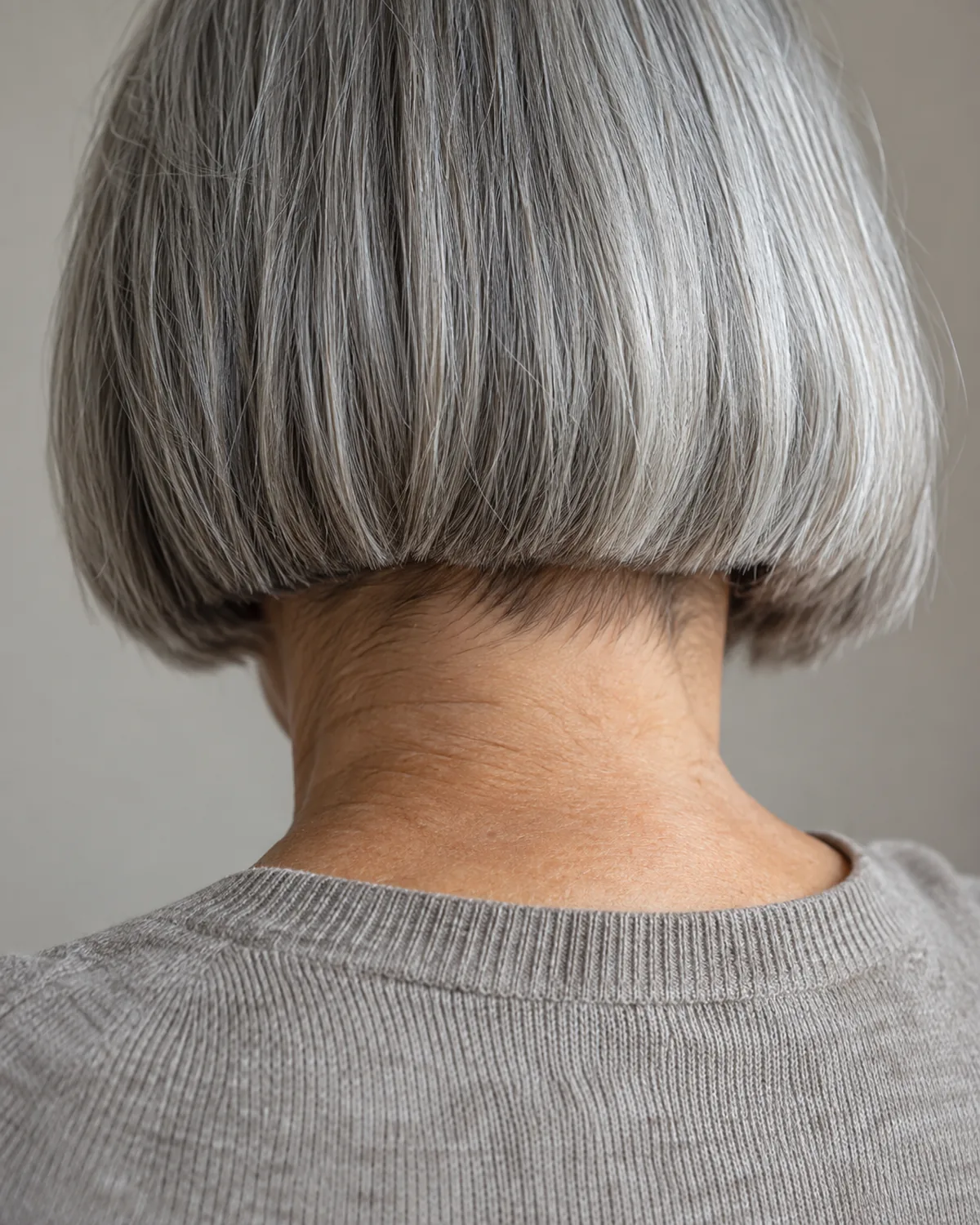
A clean bob at the jaw with no layers, no bangs, no angle. On gray hair, this is the length where the cut stops competing and the color takes over.
- The shorter length means less weight pulling the ends flat, so even fine gray hair can hold the blunt line here when it cannot hold it at the collarbone
- Depends on trim frequency: a blunt bob on gray hair shows split ends faster because the light catches every imperfection that dark hair would absorb
- The jaw line creates a strong horizontal that reads as structure, which is what gray hair at medium length needs most
- For a deeper look at the natural gray palette across all lengths, the broader guide maps where jaw-length sits in the spectrum
9. Soft Face-Framing Highlights on a Medium Cut
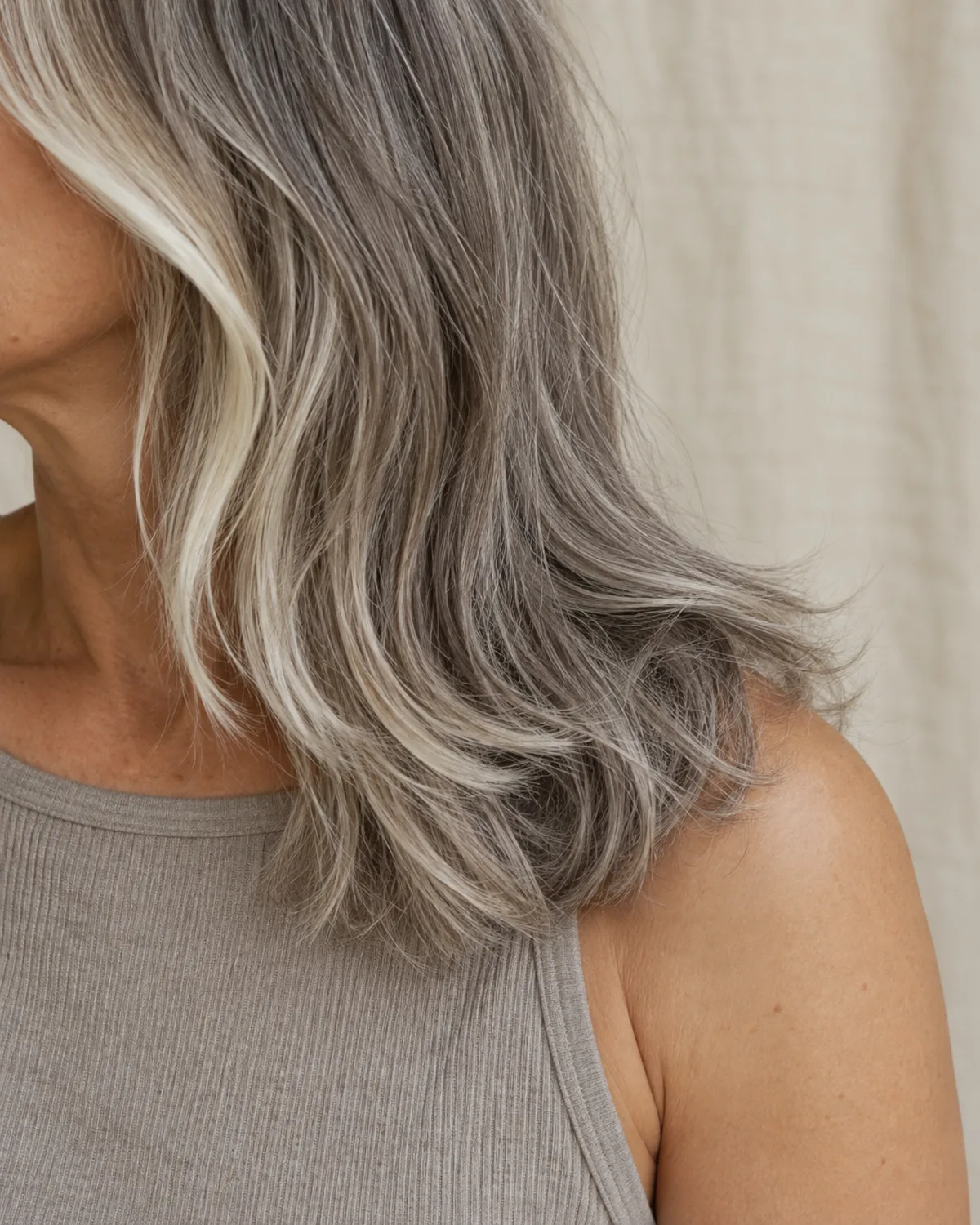
Not a hairstyle per se, but a placement decision that changes how the gray reads near the skin. Two or three lighter pieces around the face on a medium-length gray base brighten the area closest to the complexion.
- Ask the stylist about toning rather than lifting: gray that has been bleached reads harsher than gray that has been brightened, and the difference is visible at face-framing distance
- This is a question for the chair, not a DIY project; the distinction between brightening and bleaching matters when the base is already silver
- Works on any of the eight cuts above as a finishing layer, not a replacement for the shape itself
- For the full platinum and silver conversation, including how cool and warm tones interact with skin undertone, the dedicated guide goes further
The cut decides the shape. The gray decides the character. At medium length, both have to look like they were chosen on the same day. A stylist who can see your hair in person outranks anything written here — bring two of these photos and the sentence you wrote about what you want the silver to do, and let them tell you which shape earns it.
Where the checkable claims come from
- Why Does Hair Change with Age? — American Academy of Dermatology
- Understanding Graduation and Layering — Sam Villa / Redken Education
- How to Tone Gray Hair — Matrix Professional
Keep this one
Save it for the appointment
Pin the image above to the board you actually open before a salon visit. This guide is written to be re-read, not read once.
Tonight, before you close this tab
- Pull your hair to collarbone length in a mirror and check whether the ends look full or sparse at that length
- Part it in the middle and see if both sides hold enough volume to fill the space without styling help
- Run your fingers through the lengths and notice whether the texture has changed since the gray arrived
- Write down one sentence about what you want the gray to do for you rather than what you want to hide about it
- Bring that sentence plus two photos from this list to your next trim