12 Grey Curly Bob Hairstyles Over 50: Which One Suits Your Curl Pattern
Twelve grey curly bob shapes judged by curl density, texture, and face shape — which ones hold on grey curls, which collapse, and what to ask your stylist.

Booking an appointment soon? Save this page. It is easier to skim in the chair than to remember.
At a glance
Works
- A chin-length bob on thick uniform grey curls, where the weight holds the hemline in place
- A graduated bob on medium-density curls with a round or square face, for a longer visual neck line
- An A-line bob when grey curls tend to expand sideways, because the angle contains the width
Depends
- Layers below the ear, which add movement only if the curl pattern is medium-to-thick and will not collapse into waves
- Curtain bangs, which need enough grey fringe density to form the parting curve rather than lie flat
- A collarbone-length lob, which works only if the ends still carry enough strands to hold the shape
Skip
- An ear-length bob on curls that loosen at short lengths, because you will get waves where you wanted ringlets
- Micro bangs on a wispy grey fringe, where the sparse strands will expose the forehead rather than frame it
- A long inversion on very tight curls, because the curl compresses the angle and the cut reads as one length
Grey changes the curl before it changes anything else. As strands lose melanin, many turn coarser or wirier, and a curl pattern that was uniform at 40 can loosen in one zone and tighten in another.
That is why a curly bob on grey hair is not one decision but two: the shape, and whether your current curl can carry it. These twelve variations are judged on the second question.
If your hair is grey but straight or wavy, the general bob guide is the better starting point. This one is for hair that curls.
1. Chin-Length Curly Bob, No Layers
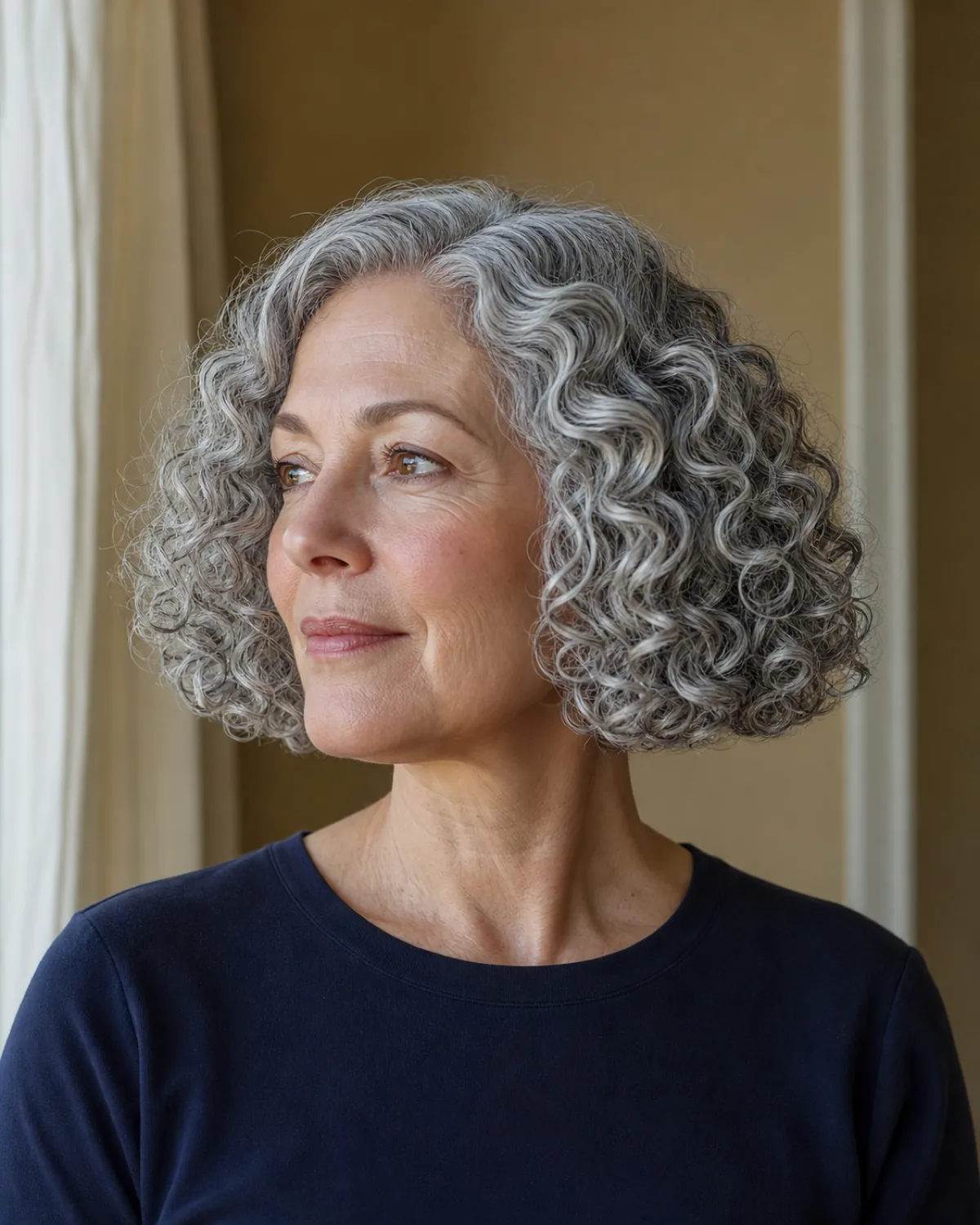
One length, no layers, everything ending at the chin. On thick, uniform grey curls this is the lowest-maintenance bob there is: the weight of the uncut interior holds the hemline down, and the ringlets stack into a full, even edge.
- Works if your curls still hold a defined pattern from root to tip, because the shape depends on the curls themselves reading as deliberate
- The uncut weight keeps the bottom edge from frizzing upward on humid days, which layered curly bobs cannot promise
- Skip if your curls have thinned at the ends: without enough strands, a one-length hemline reads as growing out rather than cut in
- Ask your stylist to cut it dry or nearly dry, so the finished length lands at the chin after the curl springs up, not above it
2. Graduated Curly Bob
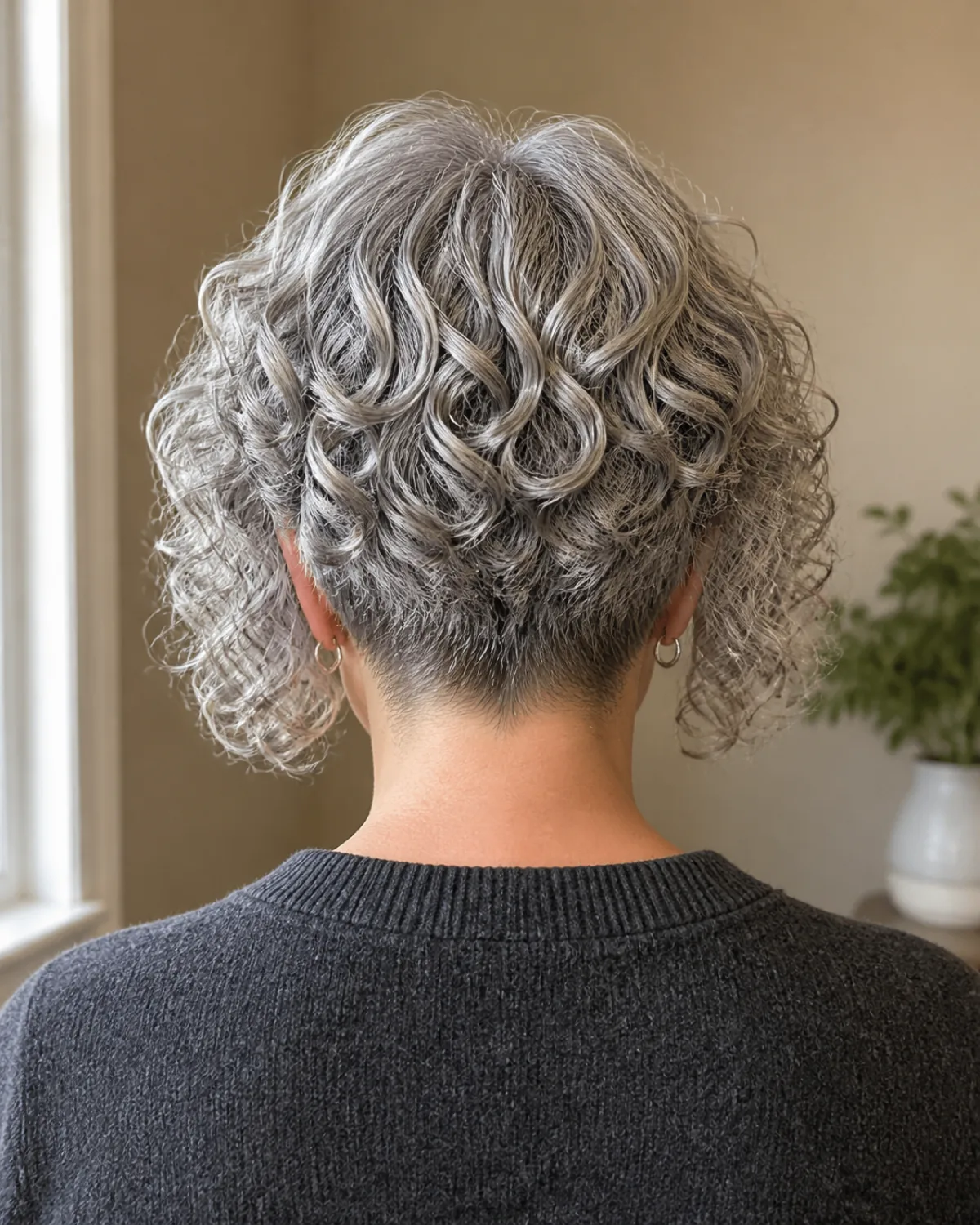
A graduated bob stacks the back short and lets the length build toward the front. From behind — the angle everyone else sees — the exposed nape creates a longer visual neck line, which is why this shape flatters round and square faces.
- Suits medium-density curls: enough hair for the stacked layers to sit in rows, not so much that the back bulks outward
- The short nape means the curls there are cut to a tighter spring, so expect the back to look curlier than the front
- Skip if your grey is fine or thinning at the crown, since stacked graduation exposes scalp faster than any other bob shape
- Maintenance is real: the stacked back loses its architecture in six to eight weeks and needs re-cutting to keep the line
3. Curly A-Line Bob
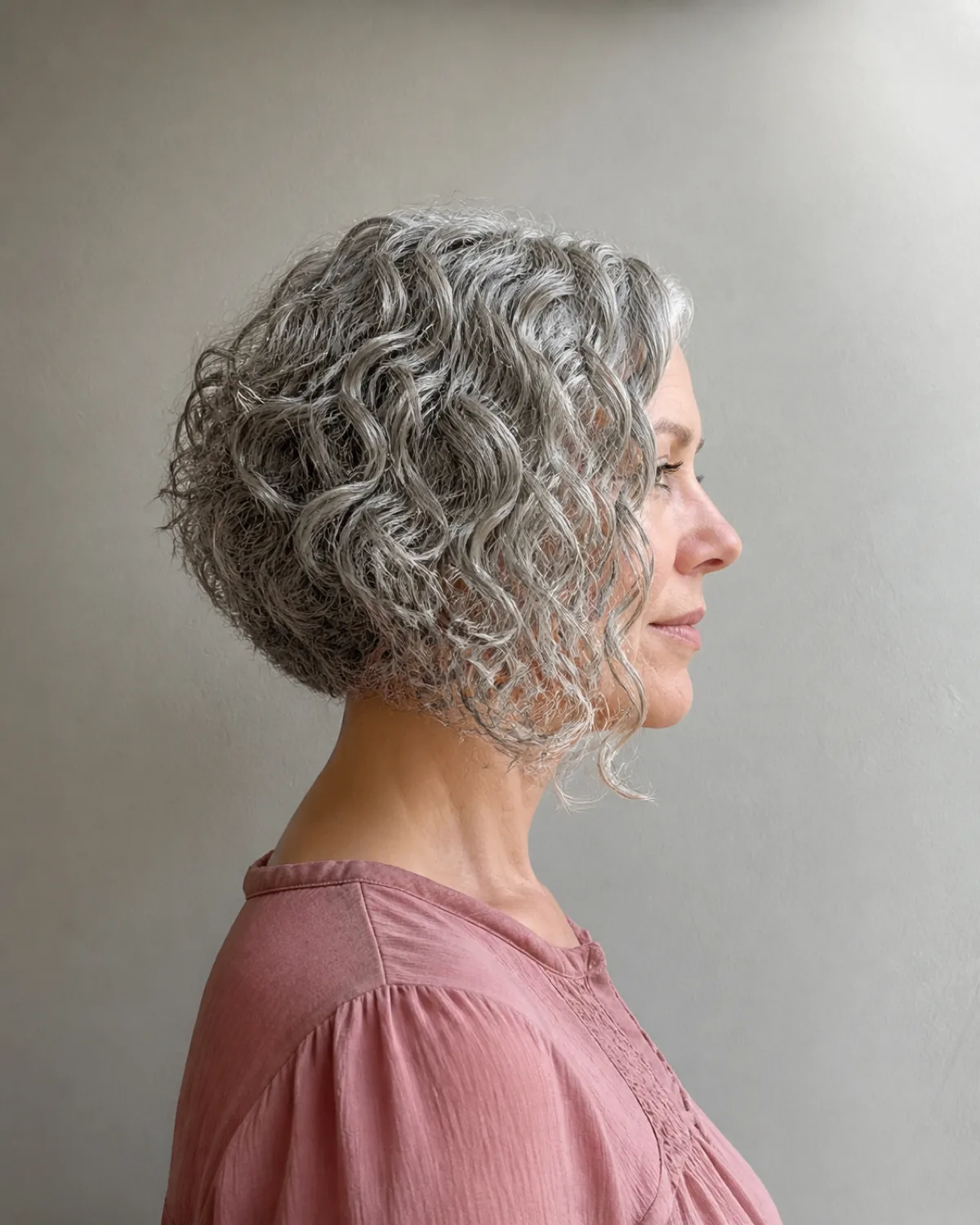
In profile, an A-line bob draws a visible diagonal: shorter at the back, longer toward the face. On grey curls that expand sideways, that diagonal does containment work — the longer front panels hold the width down while the shorter back stops the silhouette from becoming a triangle.
- The go-to shape if your grey curls grow out rather than down, which coarser grey texture often does
- The angle needs curl clusters that hang; loose-to-medium curls show the diagonal, tight ringlets shrink it into nothing
- Grey's mixed strand diameters can make width unpredictable day to day — the A-line absorbs that variation better than a one-length cut
- Ask your stylist to keep the front panels below the jaw, because an A-line that ends at mouth level on curly hair springs up to the cheekbone
Where to start
Find your situation, skip ahead
Your grey curls are thick and uniform and you want the simplest possible bob
The chin-length bob with no layers needs almost no styling. The graduated bob is the next step up if you want a shorter back.
Your curls tend to expand and you worry a bob will read as a triangle
The A-line bob contains side width. If you also want forehead coverage, add curtain bangs.
Your grey curls have thinned or gone flatter and you want the bob to still read as full
Crown volume layers lift flat roots. A tapered nape cleans up the back without needing bulk.
07 Curly Bob With Volume at the Crown08 Tapered Curly Bob, Tight at the Nape
4. Layered Curly Bob, Layers Starting Below the Ear
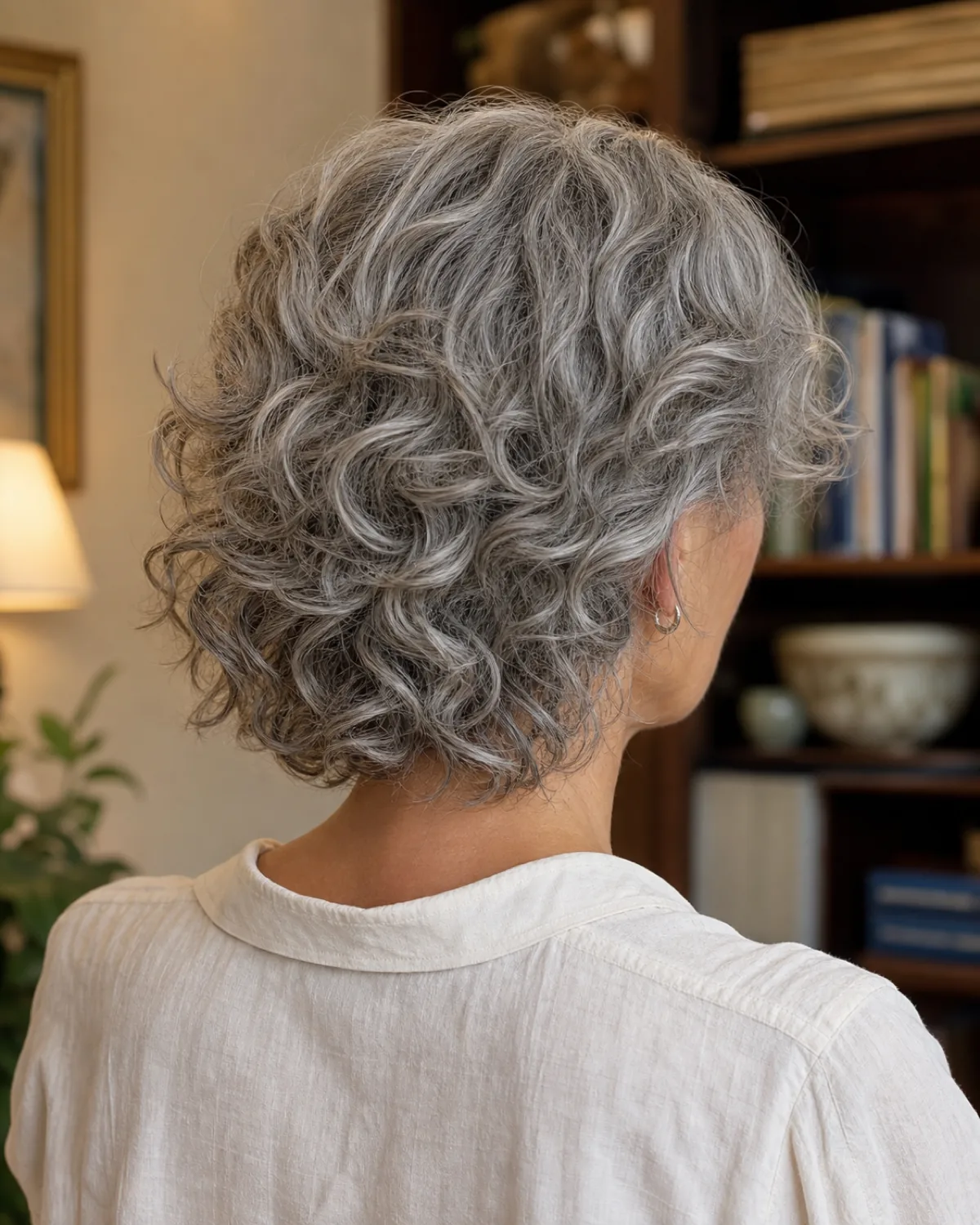
Where the first layer starts decides whether a layered curly bob keeps its shape or loses it. Layers beginning below the ear remove weight only where the curls stack heaviest, so the top stays smooth and the movement lives in the lower half.
- Suits medium-to-thick grey curls that feel bulky at the sides and back but flat on top
- Because the top layer stays long, the crown keeps its coverage — relevant if your part line has started to widen; if it has thinned noticeably, the fine-hair playbook is the honest place to start
- Skip if your curls are loose waves: layering wave this low reads as a shag, not a bob, and the bob silhouette disappears
- Ask for internal layers cut into the underside rather than surface layers, so the outer curl layer stays unbroken
5. Jaw-Length Curly Bob With Side Part
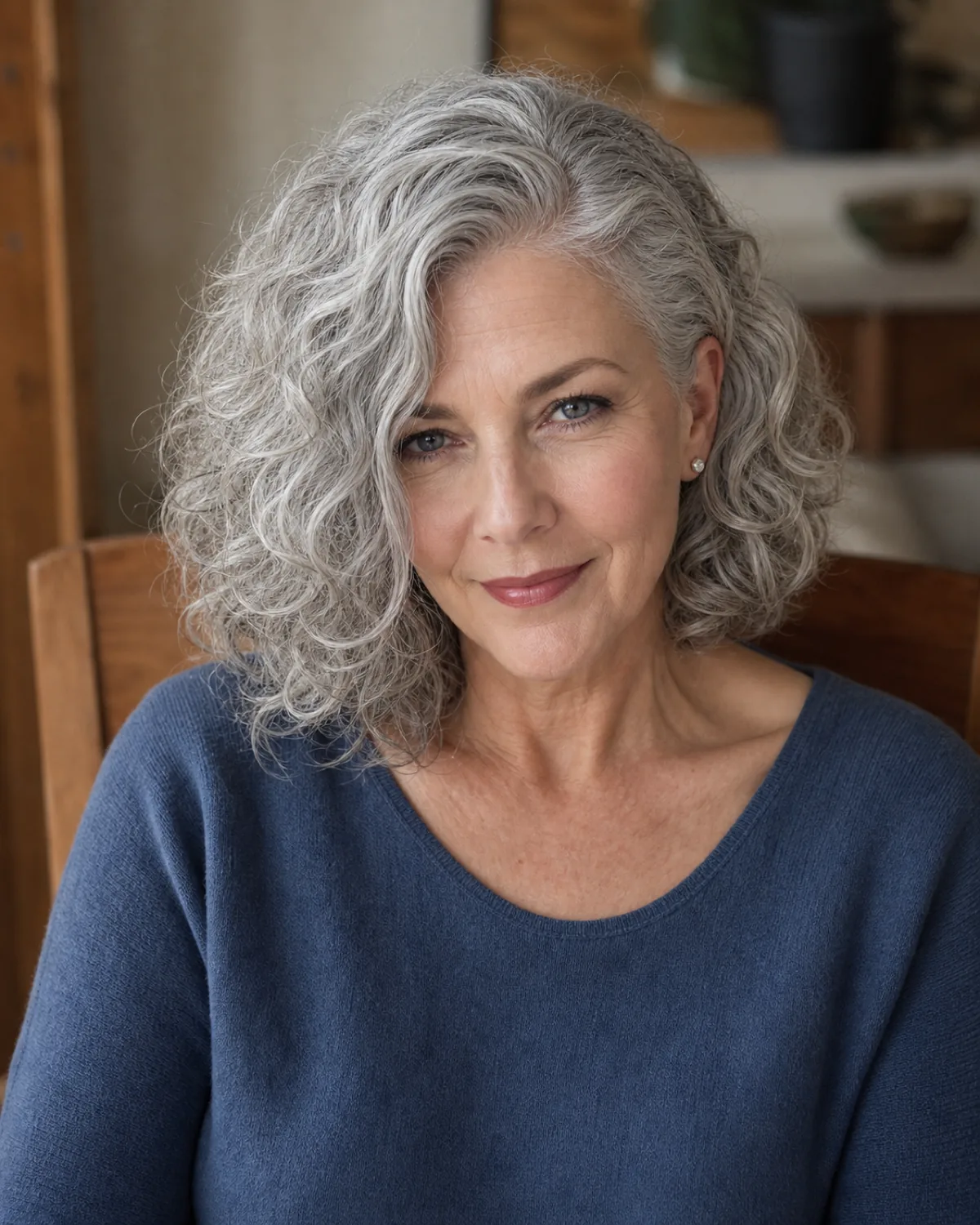
A deep side part sends most of the curl mass across to one side and leaves the other side close to the head, often tucked behind the ear. The asymmetry pulls the eye sideways, which balances a narrow chin and softens a heart-shaped face.
- The fuller side needs enough density to look abundant, because the whole point is the contrast between the two sides
- Grey works in this cut's favour: the mix of silver and steel tones adds dimension along the sweep that flat colour cannot
- Skip if your part line shows scalp under bright light — a deep part concentrates all the exposure in one visible line
- Bring a photo and ask your stylist how far off-centre your part can go before your growth pattern fights it back
6. Short Curly Bob, Ear-Length
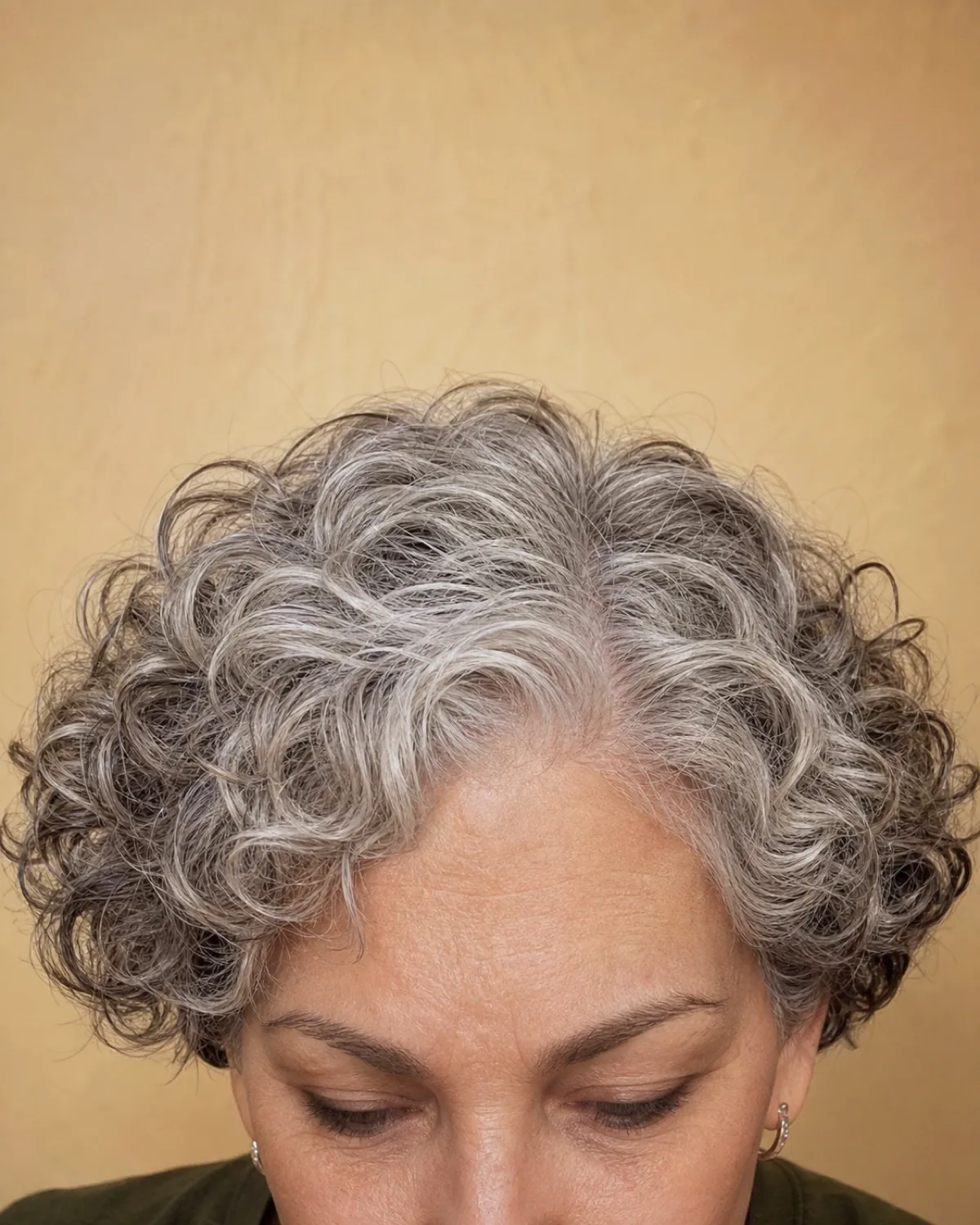
At ear length there is nowhere to hide: the curls sit directly against the skull, and the cut reads as intentional only if they spring tight enough to hold that shape. Thick, coarse grey curls do this naturally — the volume gathers at the temples and the whole head reads as structure.
- Works on curls that keep or tighten their pattern when cut short; many curl types spring tighter as length and weight come off
- Skip if your pattern loosens at short lengths: you will get waves standing off the head, not curls hugging it
- The exposed neck and jaw make this the most face-forward bob here, so be sure you like your jawline in photos before committing
- Grey at this length is wash-and-go in the best case, but the shape needs a trim every five to six weeks to stay a bob rather than a halo
7. Curly Bob With Volume at the Crown
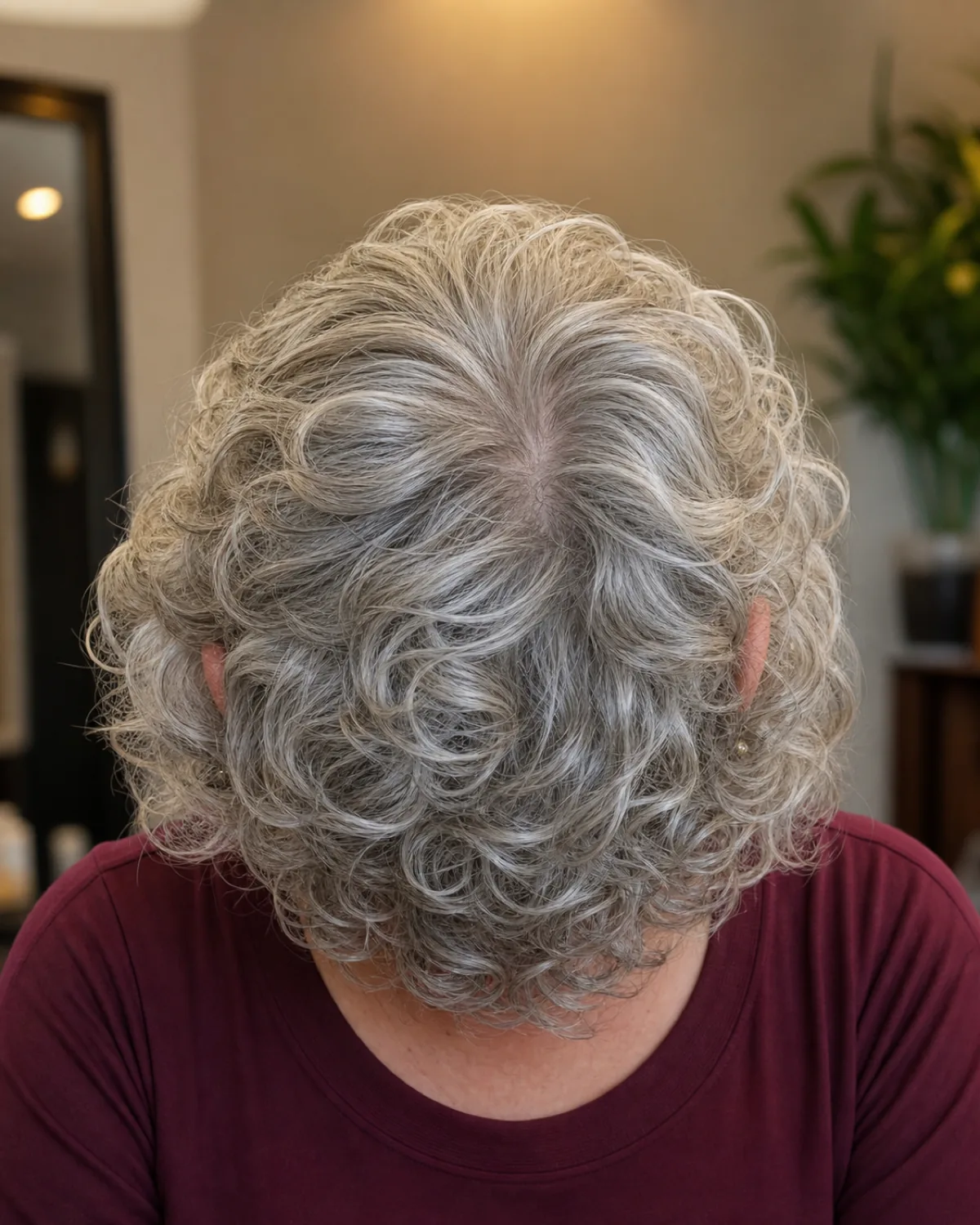
Grey hair often goes flatter at the roots even while the lengths stay curly. Internal layers cut at the crown lift the top section from underneath, restoring height without touching the perimeter — the bob outline stays exactly where it was.
- The fix if your side and back curls still perform but the top has dropped, a shift that often arrives with greying's texture changes
- Because the lift is cut in rather than styled in, it survives rain, hats, and day two
- Skip if your curls are already high-volume: extra crown height on top of natural expansion overwhelms a round face
- Ask specifically for internal crown layers with the perimeter left untouched — if the outline gets shorter, that was a different haircut
8. Tapered Curly Bob, Tight at the Nape
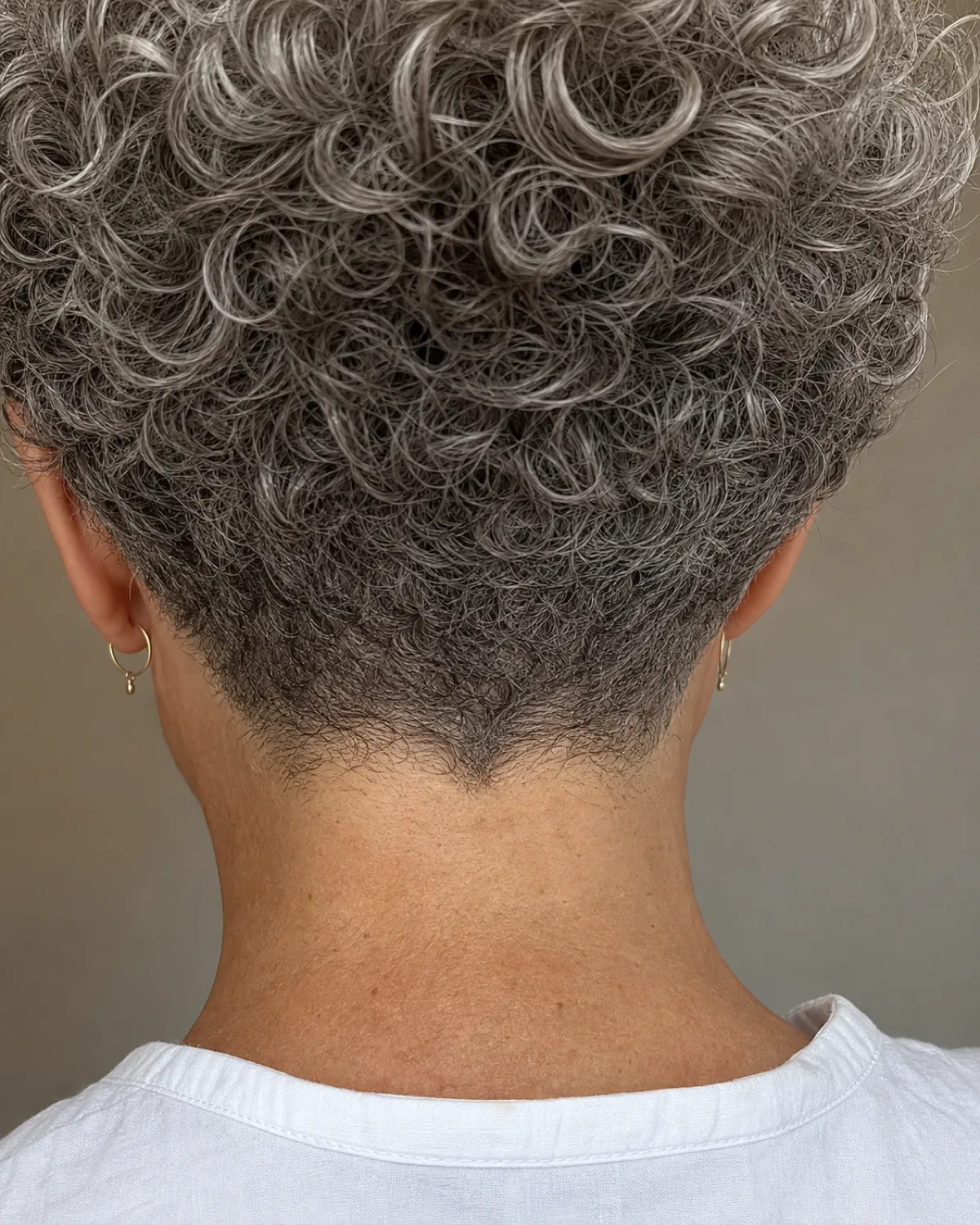
The taper takes the nape down to almost nothing — a clean point of short hair at the hairline with the curl volume building above it. Up close it reads as precision, which is exactly what fine-to-medium curls need at the back where bulk was never an option.
- Suits anyone who wants the back of the head to look deliberately finished rather than padded out
- The tight nape shows the natural growth line, so expect your stylist to check which way your hairline grows before cutting
- Skip if you dislike frequent salon visits: nape hair grows fast, and the taper blurs within four to five weeks
- This pairs naturally with the graduated bob above — the taper is what the graduation looks like when carried to its cleanest end point
9. Curly Bob With Curtain Bangs

Curtain bangs split at the centre and curve toward the cheekbones, shortening a long forehead without committing to a full fringe. On a curly bob the curve comes partly free: the curl wants to bend anyway, and the cut just decides where.
- Suits oblong and long faces where the forehead is the feature you want to reduce
- The pieces must be cut long enough to complete their curve — on curly hair that means starting them at the cheekbone, because they will spring up from there
- Skip if your grey fringe area is wispy: curtain bangs need a critical mass of strands to form the two sides of the curtain, and sparse ones lie flat
- If you are still mid-transition to grey, this fringe zone is where the line shows first — the grey styling guide covers how cuts handle that stage
10. Inverted Curly Bob
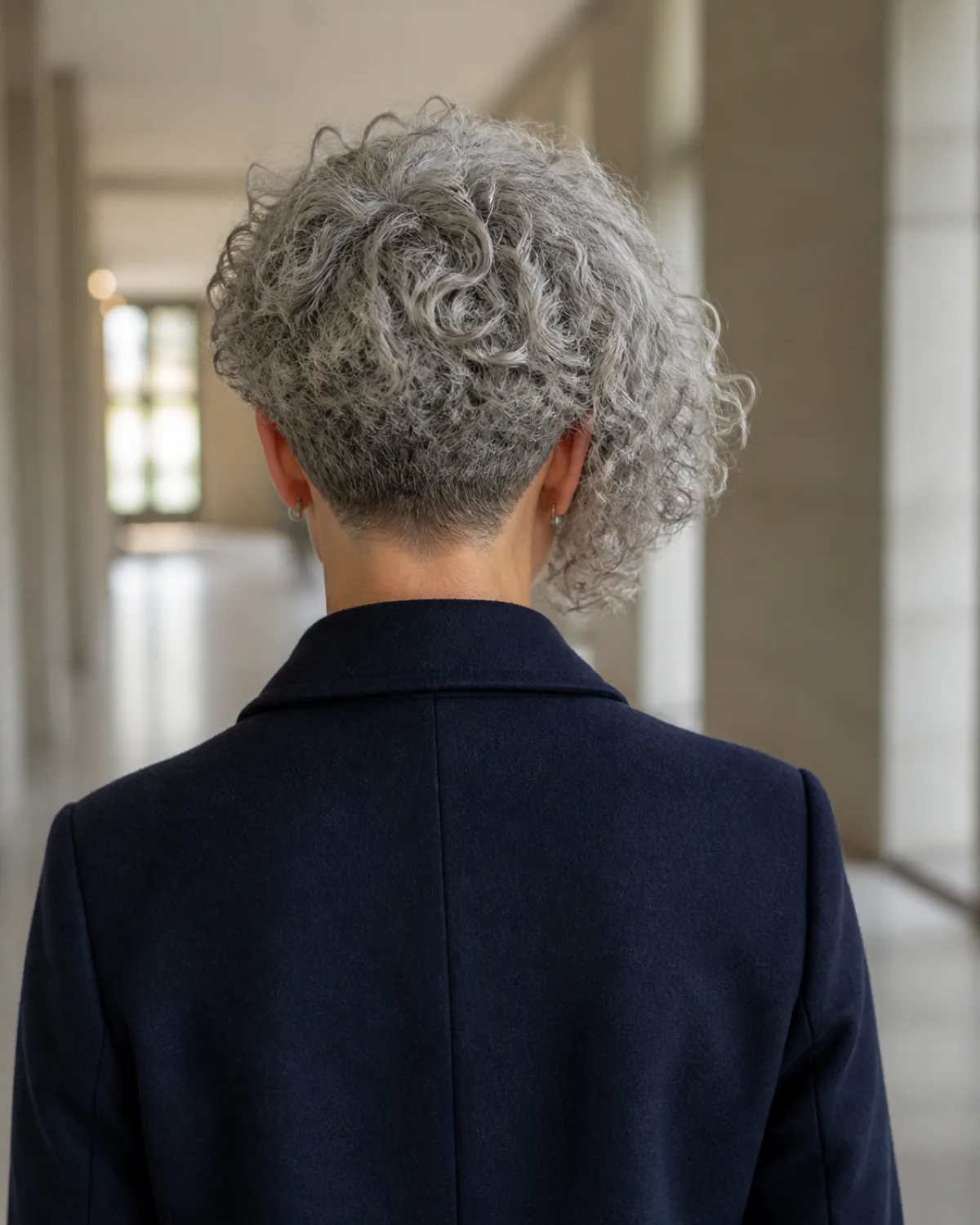
The inverted bob pushes the graduated idea to its sharpest version: a steep angle from a short, close-cut back to noticeably longer front lengths. Even on textured grey hair, the geometry reads as structured — the back is architecture, the front is curl.
- The choice if you want a curly cut that still reads sharp in a work setting
- Needs loose-to-medium curls: the angle survives only if the front lengths hang low enough to show the difference
- Skip if your curls are very tight — the spring compresses the front length upward and the inversion flattens into a one-length look
- The straight-hair version of this cut behaves differently enough that it has its own write-up; read that one if your curl is closer to wave
11. Curly Bob With Micro Bangs
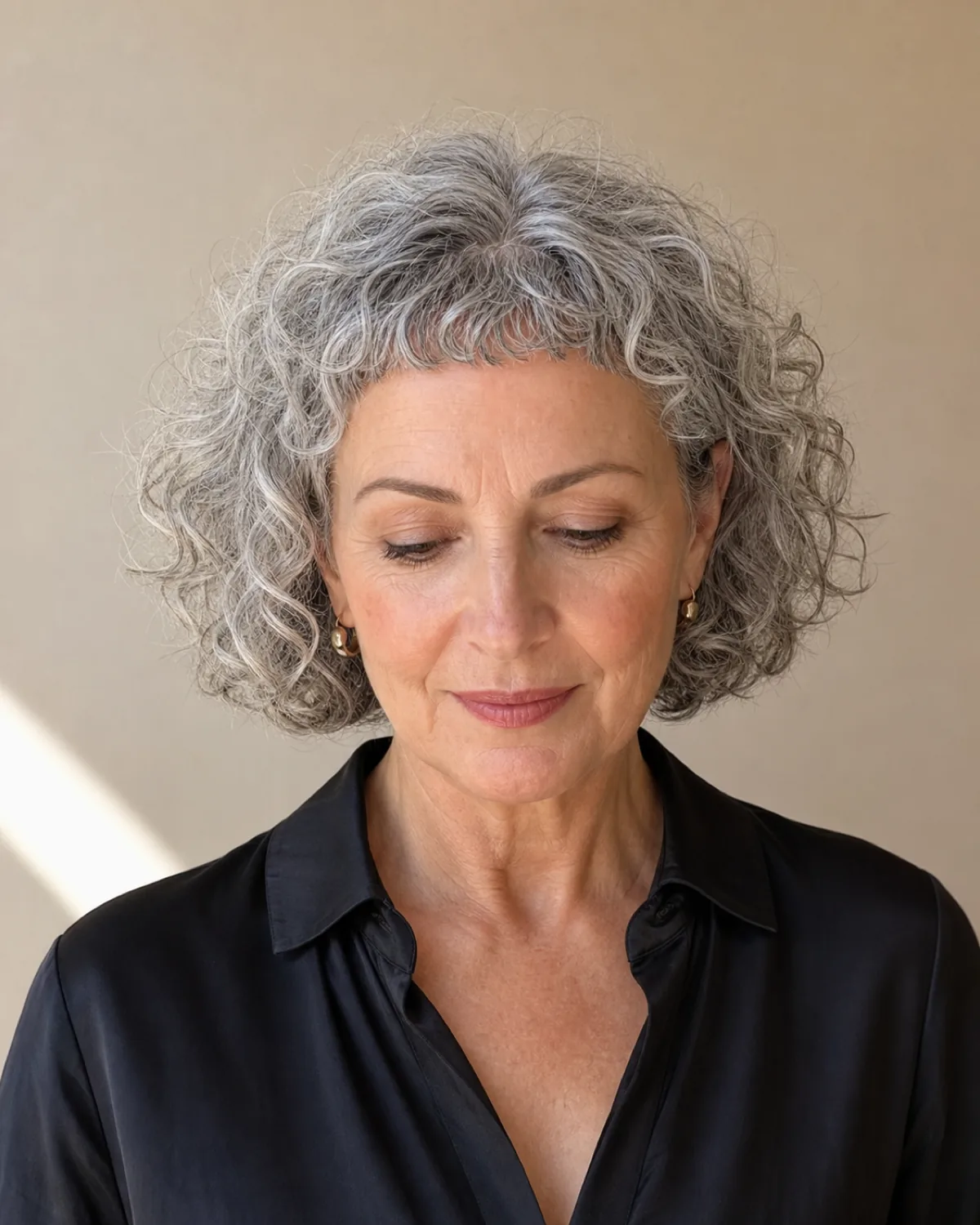
Micro bangs stop well above the eyebrows and leave the whole forehead on display. On a grey curly bob the short fringe curls into a dense band, and the effect is deliberate in a way no soft fringe can be — this is a statement cut, and it does not whisper.
- Suits strong bone structure and medium-to-thick curls that can fill the fringe band without gaps
- The exposed forehead becomes the focal point, so skip this if your forehead is a feature you prefer to soften
- Curly micro bangs spring even shorter than they are cut — agree the finished (not wet) length with your stylist before the first snip
- Grey works for rather than against the drama here: a silver fringe band against the skin reads as a choice, not a compromise
12. Collarbone-Length Curly Bob (Long Bob / Lob)
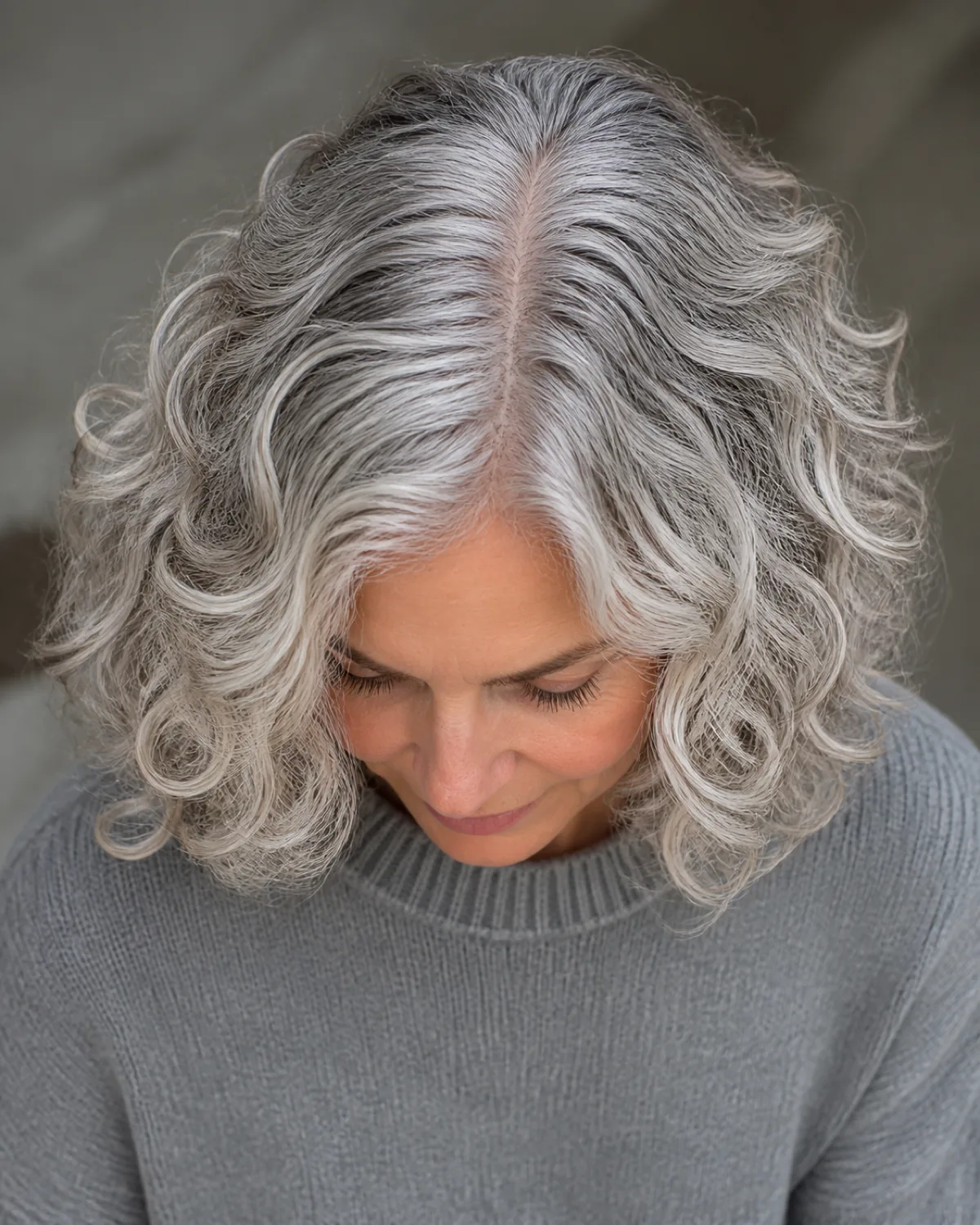
The lob is the bob for people not ready for a bob. The length reaches the collarbone, the curls have room to complete two or three full turns, and the shape keeps the one thing that makes a bob a bob: a deliberate, visible end line.
- Suits anyone testing shorter hair without committing — from here, any bob above is one appointment away, and going back is just patience
- The part line carries this cut: seen from above, the curls need enough root strength to fall away from the part on both sides rather than collapsing across it
- Skip if your grey curls have thinned at the ends — extra length spreads your strand count thinner, and the last inch turns stringy instead of curled
- If you try the lob and find yourself keeping the length, the honest next read is the long grey hair guide, because at that point you are growing it out, not wearing a bob
A stylist who can see your curl in person outranks anything written here. Bring the photo closest to your density and pattern, point at it, and ask whether your hair can do that shape at that length.
Where the checkable claims come from
- Bob cut — Wikipedia
- Layered hair — Wikipedia
- Bangs (hair) — Wikipedia
- Human hair greying is naturally reversible and linked to stress — Rosenberg et al., eLife (2021)
- Curly Girl Method — Wikipedia
Keep this one
Save it for the appointment
Pin the image above to the board you actually open before a salon visit. This guide is written to be re-read, not read once.
Tonight, before you close this tab
- Pull one curl straight at the side and release it; watch where it re-forms its shape and where it falls limp — that is your curl's working length
- Part your hair the way you usually do and check whether the part line shows scalp clearly or the curls close over it — this decides side-part vs centre-part suitability
- Hold a dark cloth behind the ends and see whether individual curl clusters are visible or the ends have thinned into frizz — this sets your maximum bob length
- Write down two things you want your curly bob to do (contain width, add height, frame jawline) and bring them to your stylist