15 Going Gray Questions to Settle Before You Book the Appointment
Fifteen questions about going gray over 50 worth answering before you sit in the chair. Covers grow-out timeline, cuts, and what to ask.

Booking an appointment soon? Save this page. It is easier to skim in the chair than to remember.
At a glance
Works
- Booking a consultation appointment before the colour appointment
- Cutting at least two inches before starting so the grow-out line disappears sooner
- Asking the stylist to photograph your root pattern in daylight before deciding a strategy
Depends
- Highlights to bridge the gap, only if your gray is patchy rather than evenly distributed
- Keeping face-framing colour, depends on whether your skin tone clashes with your natural gray undertone
- A toner session after the last dye, only worth it if your natural gray leans warm and you want a cooler read
Skip
- Booking the first appointment without seeing at least two inches of your natural root colour
- Going cold-turkey from box dye to fully gray without a professional strand assessment
- Skipping the question of maintenance costs, because gray is not free and toning adds up
Going gray is not a single decision. It is a sequence of smaller ones, and the appointment goes better when most of them are settled before you sit down.
These fifteen questions cover the ground that matters: your grow-out path, the cut that carries you through it, and what maintenance looks like on the other side.
None of them have a right answer that applies to everyone. The useful work happens when you figure out your own answers and bring them to the stylist.
1. Do You Want to Grow Out Your Existing Colour or Strip It and Start Fresh
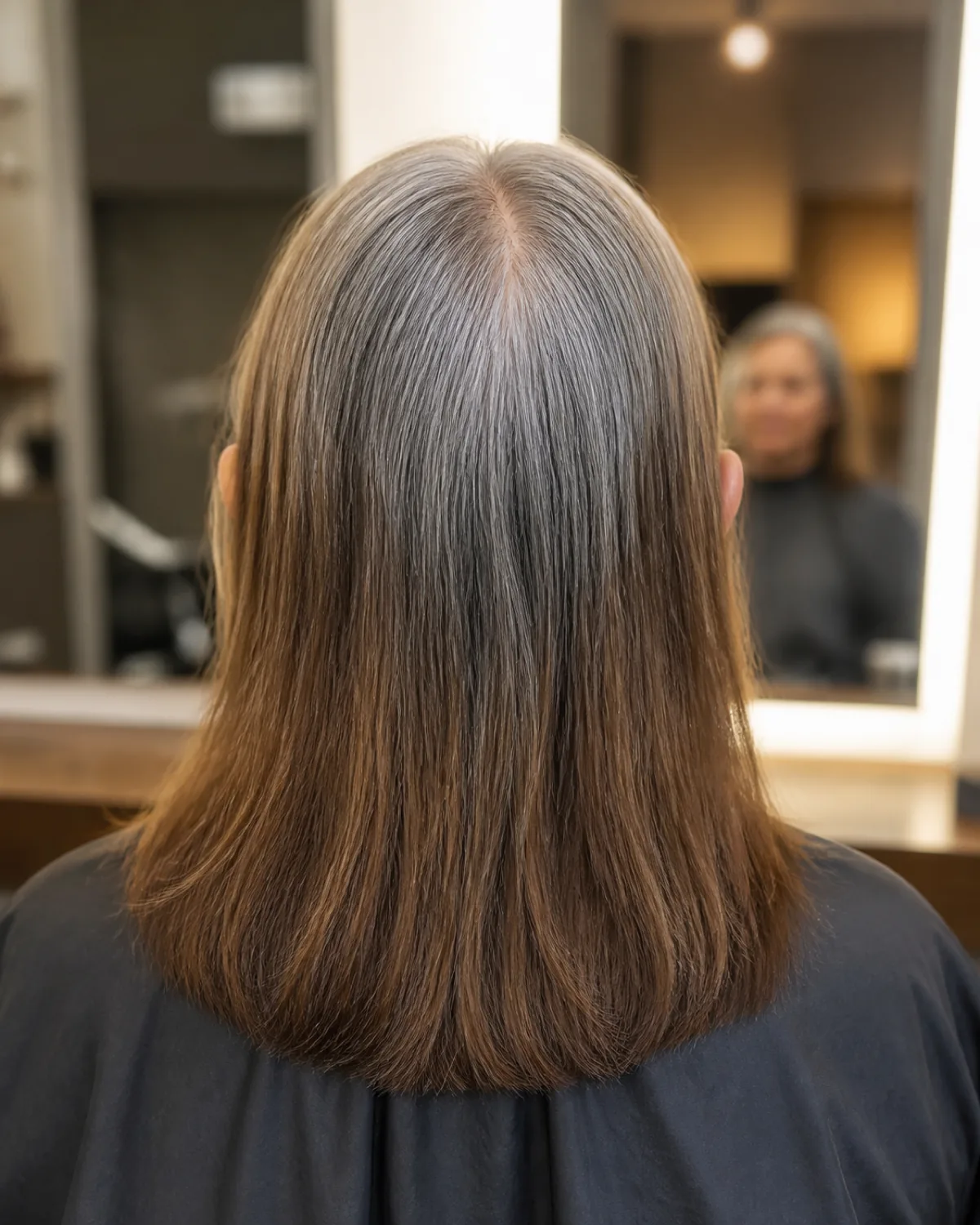
Growing out lets your natural gray advance while the stylist manages the visible line. Stripping uses a colour-removal process to take out the dye faster, but it involves chemical processing. Ask which path your current formula supports, because permanent dye layered over years behaves differently from a single-process tint.
- Ask the stylist how many layers of colour are currently in your hair
- Ask whether your existing dye is semi-permanent, demi-permanent, or permanent, because the removal options differ
- Ask for a realistic timeline for each path so you can compare months, not just methods
- Ask what the cost difference looks like across the full transition, not just the first session
2. How Many Inches of Natural Gray Have You Already Grown In
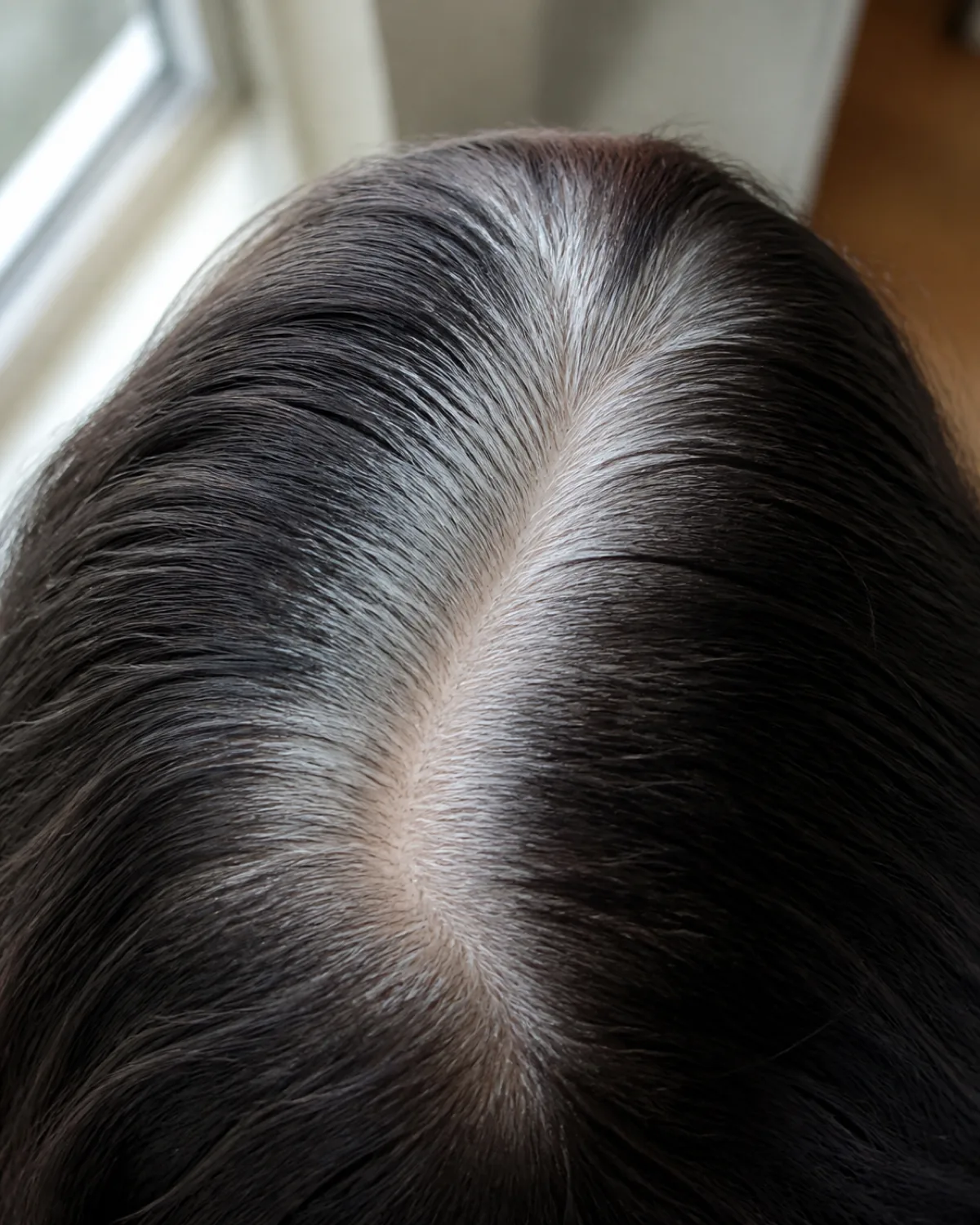
The amount of root you have determines what the stylist can do. Under two inches limits most blending strategies. Two to three inches opens real options. Four or more means you already have a usable sample and the conversation can move faster.
- Part your hair in daylight and measure the silver band along the part from scalp to where the old colour starts
- Photograph the root area from the top, front part, and temple so the stylist can see your pattern without guessing
- If you are under two inches, ask whether waiting another six to eight weeks would give the stylist significantly more to work with
3. What Is Your Natural Gray Pattern

Gray does not arrive the same way on every head. Even salt-and-pepper blends naturally and needs the least intervention. Concentrated streaks create contrast that some women keep and others soften. Sparse patches can look uneven and may benefit from targeted highlights.
- Ask the stylist to map your pattern before proposing a blending strategy
- If your gray is concentrated at the front, ask whether the existing colour in the back can simply grow out while the front gets attention first
- If your pattern is sparse and uneven, ask specifically about babylight placement to fill the gaps
4. Has Your Hair Texture Changed Since It Started Turning Gray
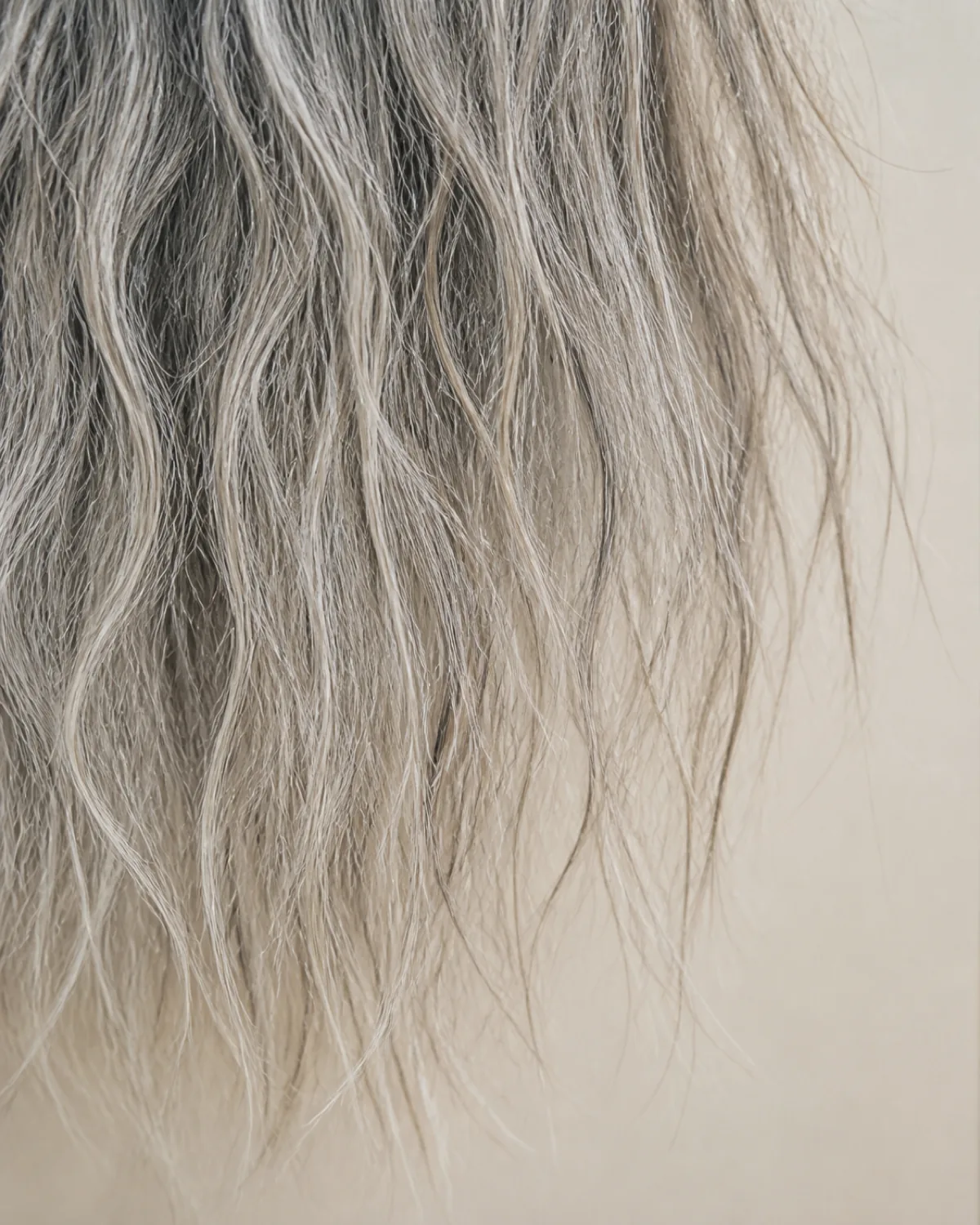
Gray hair often becomes coarser and drier because it loses melanin and the strand structure changes. The cut that worked at forty may not sit the same way now. A bob that fell smoothly in brunette may push outward in gray. Ask the stylist whether a restructuring cut makes sense for your current texture.
- Run your fingers along a few gray strands and compare them to the dyed strands in terms of thickness and flexibility
- Ask the stylist whether your gray texture would benefit from a different layer structure than what you currently have
- Ask about hydrating treatments that address the dryness without weighing down the new texture
- If your hair has gone from straight to slightly wavy with the gray, ask whether a curly bob approach would work better than fighting the new wave
Where to start
Find your situation, skip ahead
You have been dyeing for years and have less than one inch of root showing
Book a consultation, not a colour appointment. You need to see your natural pattern before choosing a strategy.
01 Do You Want to Grow Out Your Existing Colour or Strip It and Start Fresh02 How Many Inches of Natural Gray Have You Already Grown In03 What Is Your Natural Gray Pattern
You have three or more inches of gray root and you are ready to stop dyeing
Ask the stylist about a transitional cut that breaks up the demarcation line, and bring photos of gray tones you like.
05 What Transitional Cut Would Disguise the Grow-Out Line06 How Long Are You Prepared to Wait08 What Will Your Gray Look Like at Different Lengths
You want to go mostly gray but keep some colour around your face
Tell the stylist exactly which areas you want to keep, and ask about the per-session cost and frequency for partial maintenance.
07 Would Strategic Highlights Help Bridge the Gap09 How Will Your Skin Tone Read Next to Your Natural Gray13 Do You Want to Keep Some Colour
5. What Transitional Cut Would Disguise the Grow-Out Line
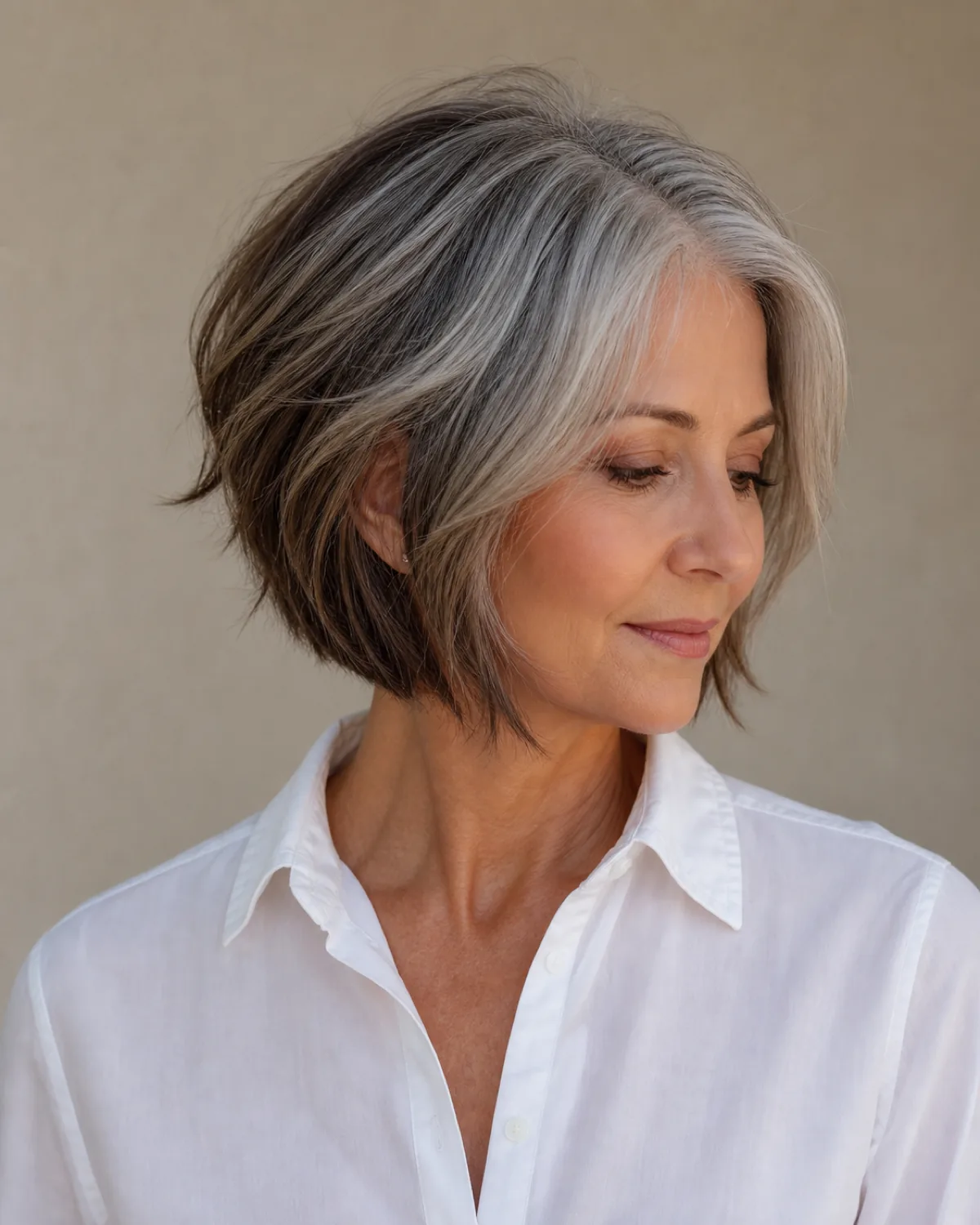
A one-length cut exposes the root line for the longest period because every strand hits the colour change at the same point. Graduated layers or razored ends break up that demarcation so it reads as dimension rather than neglected roots. The shorter the cut, the faster you clear the old colour.
- Ask whether a bob with bangs would break up the root line at the front
- Ask how a graduated back would handle the grow-out differently from a blunt line
- Ask the stylist to show you where the current demarcation sits and how a cut three inches shorter would eliminate it
- Ask whether razored ends or blunt ends disguise the transition better on your particular texture
6. How Long Are You Prepared to Wait
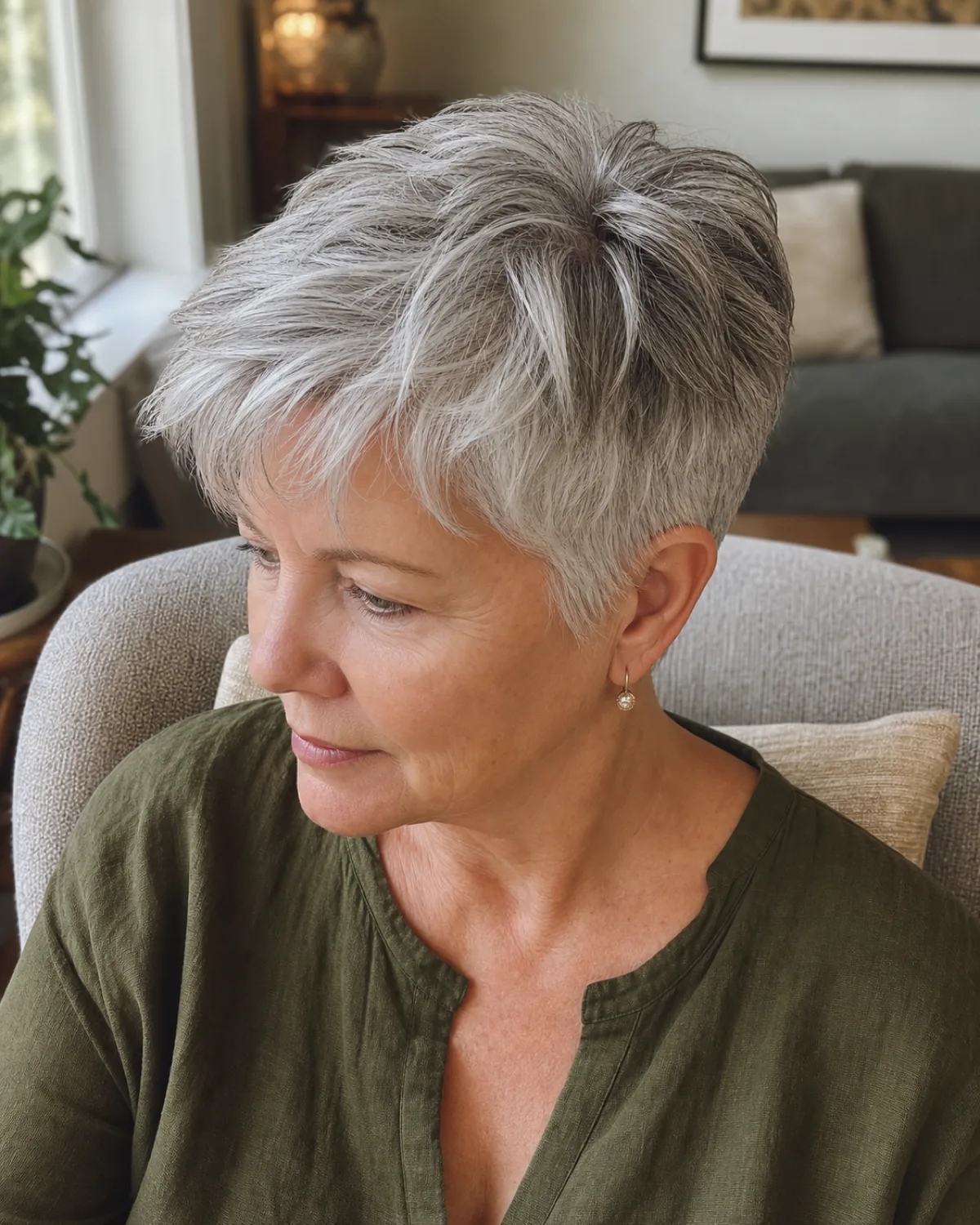
Full grow-out takes twelve to twenty-four months depending on length and growth rate. A pixie cut can compress that to six to nine months. A shoulder-length style may take the full two years. The answer sets expectations for salon visits and cost.
- Decide what length you are willing to go to, because shorter means faster
- Ask the stylist how many intermediate trims the full timeline requires and what the per-visit cost range is
- Set a calendar date for when you expect to be fully transitioned so you have a concrete target rather than an open-ended commitment
7. Would Strategic Highlights Help Bridge the Gap
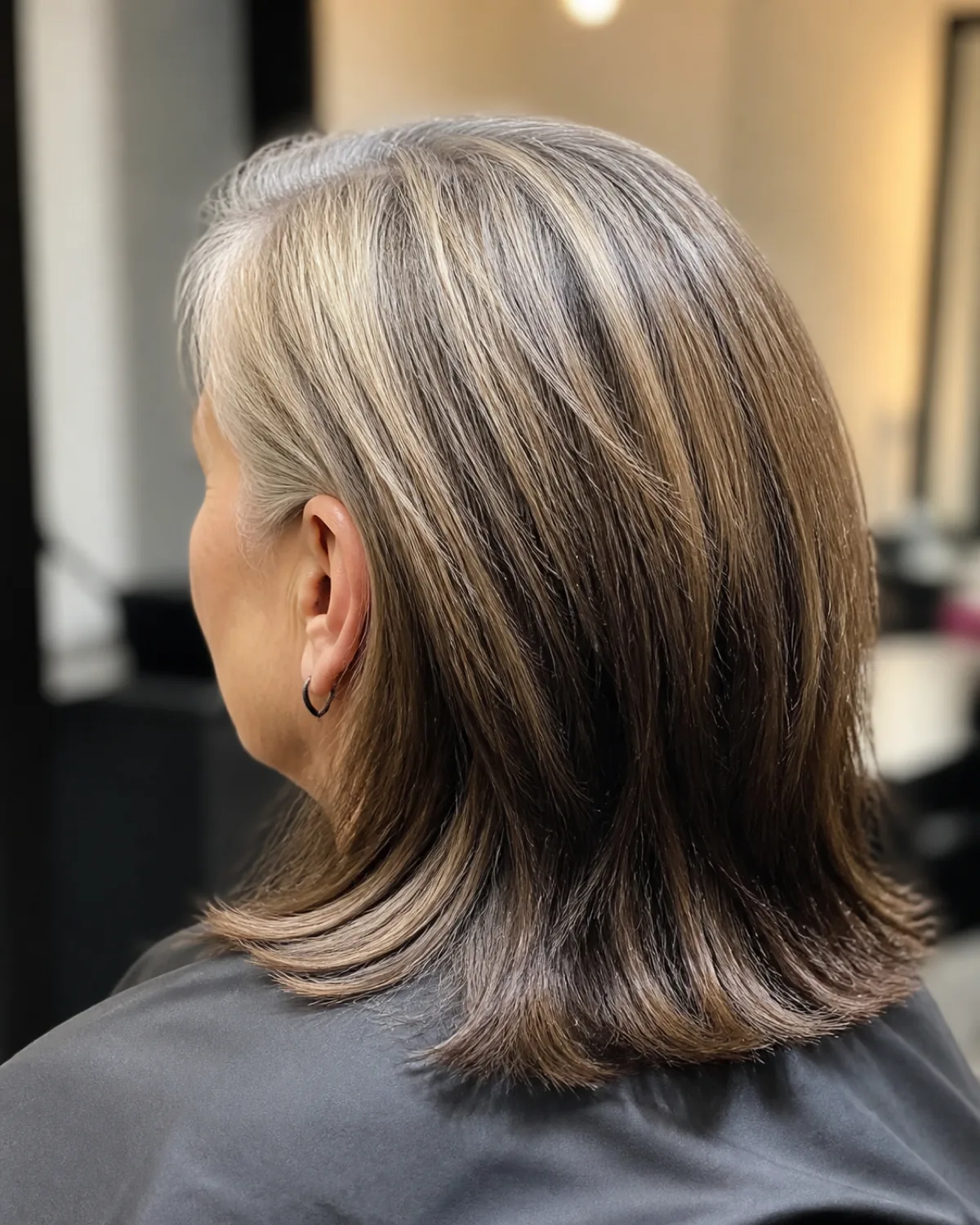
Lighter highlights near the gray root band soften the line between silver and dyed lengths. This works best when gray is patchy, because highlights fill the tonal gaps. Ask about babylights, which are finer than traditional foils and blend more gradually.
- Ask how many sessions the highlight blending requires before your natural gray takes over
- Ask what the per-session cost is and how that compares to regular root touch-ups over the same period
- Ask whether the highlights can be concentrated at the part and temples where the grow-out line is most visible
- Ask how the highlights will interact with your natural gray undertone, warm or cool, once the old dye grows out
8. What Will Your Gray Look Like at Different Lengths

Gray reflects light differently at different lengths. Longer gray can read flat if the hair is fine. Shorter gray tends to look more luminous because the cut creates angles that catch light. Ask the stylist to show you photos at multiple lengths so you choose based on evidence.
- Bring photos of gray hair at three different lengths and ask the stylist which one your texture and density support best
- Ask whether your face shape reads differently once the colour shifts from dark to silver
- Ask specifically how a chin-length cut would look compared to keeping shoulder length through the transition
9. How Will Your Skin Tone Read Next to Your Natural Gray

Your skin tone and your gray's undertone interact more than most people expect. Cool skin with warm gray can read sallow; warm skin next to cool silver can look striking or stark. Ask the stylist to hold a root section against your face in daylight.
- Ask whether a toner session after the last dye removal would help control the undertone
- Ask the stylist whether your natural gray leans warm, cool, or neutral, because the answer determines your toning schedule going forward
- Ask about the difference between a blue-violet toner and a clear gloss in terms of warmth correction
- If your skin tone is warm and your gray is cool, ask whether keeping warm face-framing pieces would soften the contrast
10. What Is the Maintenance Commitment Once You Are Fully Gray

Gray is not zero-maintenance. Purple shampoo keeps yellowing in check, but overuse turns silver hair purple. Toner touch-ups every eight to twelve weeks maintain the tone. Bond-repair matters more because gray texture is more vulnerable to breakage.
- Ask how often you should use purple shampoo and how to tell when you have used too much
- Ask what a toner appointment costs and how it fits into the overall maintenance budget
- Ask about bond-repair treatments and whether they are worth the cost for your texture
- Ask when yellowing typically becomes visible and what causes it besides sun exposure
11. Will Your Current Cut Structure Still Work in Gray
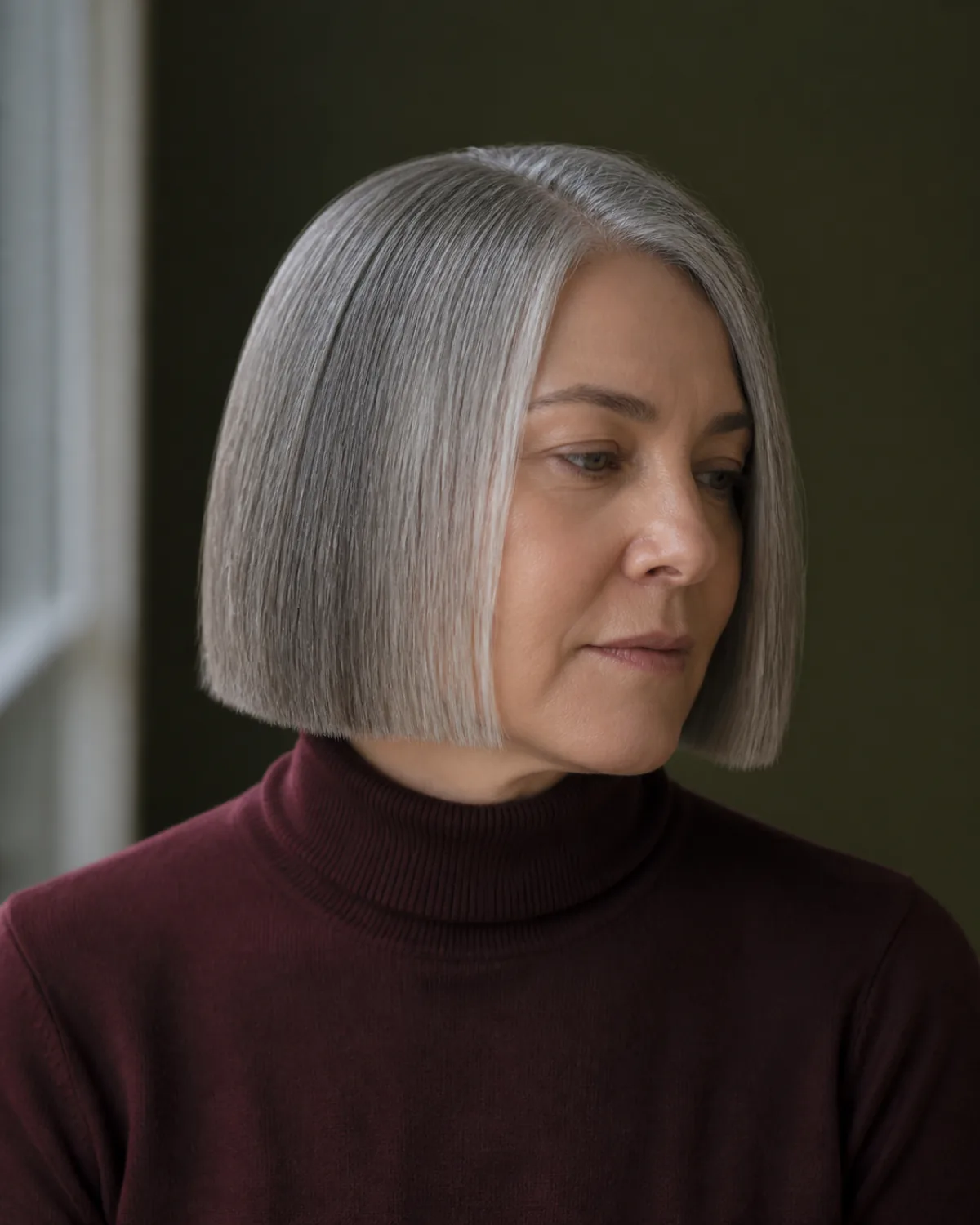
A heavy blunt bob that looked polished in brunette can read flat in gray because melanin provided the visual depth that made the surface interesting. Without it, a single-length cut often falls in one plane without the dimension that internal texture creates. Adding even subtle interior layers or point-cutting the ends can restore the light-catching quality that the colour change took away.
- Ask the stylist whether your current cut has enough internal texture to work with gray
- Ask specifically about point-cutting or slide-cutting the ends to add movement without losing length
- Ask whether the weight line of your current cut sits in the right place for gray, because the lighter colour can change where the eye reads the heaviest section
- If your hair is fine and thinning, ask whether the combination of fine texture and gray means a different cut structure altogether
12. How Does Your Workplace or Social Circle Factor In

This question is not about asking permission. It is about logistics. If your workplace has an unspoken expectation about hair colour, knowing that in advance lets you plan the timing and the pace rather than reacting to comments mid-transition. If friends or family are likely to have opinions, deciding your one-line answer ahead of time removes the friction from the conversation when it happens.
- Decide what you will say when someone asks why you stopped dyeing, and practise saying it once out loud
- If your workplace has a conservative culture, consider whether starting the transition over a holiday break gives you a head start before anyone notices
- If you expect pushback from someone close to you, decide in advance whether their opinion changes your plan or just your pacing
13. Do You Want to Keep Some Colour

Full gray is not the only destination. Face-framing highlights, a gloss, or a root shadow are partial-colour options that keep warmth without full coverage. The real question is how much maintenance you will accept every eight to twelve weeks.
- Ask the stylist to show you what face-framing highlights look like on fully gray hair versus partially transitioned hair
- Ask about the per-session cost and frequency so you can compare partial maintenance to full coverage over a year
- Ask whether a clear gloss would add shine without changing the tone, and how long it lasts between applications
- If you decide to keep some colour, ask the stylist to define exactly which areas get colour so the instruction is precise and repeatable
14. What Products Will You Need to Switch To
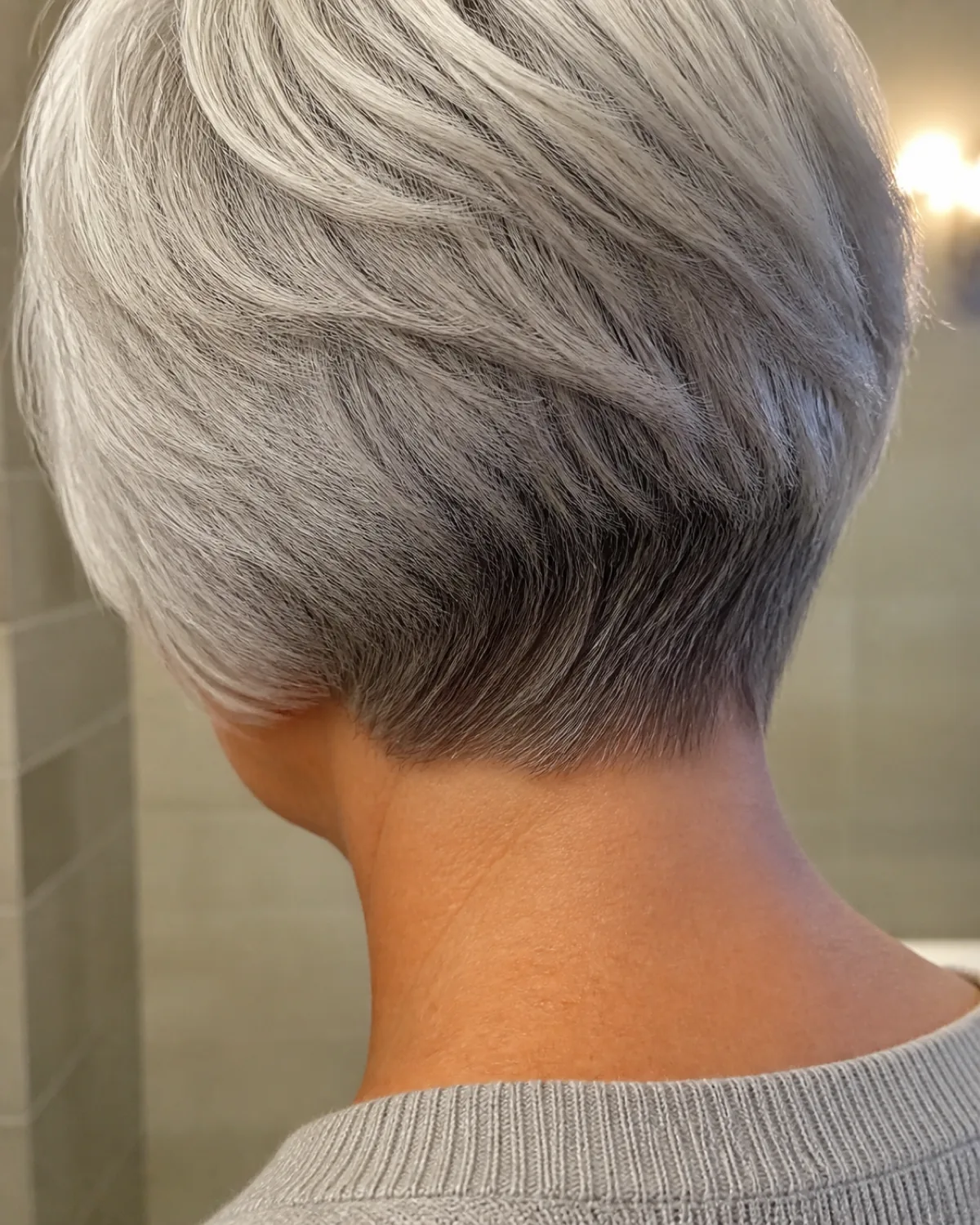
Gray hair responds to products differently. Sulphate shampoos strip silver and worsen yellowing. Volumising mousses leave residue visible on gray. Heat protectants matter more because gray hair is drier. Ask the stylist which products to drop and which to add.
- Ask whether your current shampoo contains sulphates and, if so, what to replace it with
- Ask about the difference between a purple shampoo and a purple conditioner and whether you need both
- Ask about bond-repair treatments and how often to use them
- Ask about heat protectant with UV filter, which matters for gray because sun exposure yellows silver faster than it fades brunette
15. What Does the First Appointment Actually Look Like
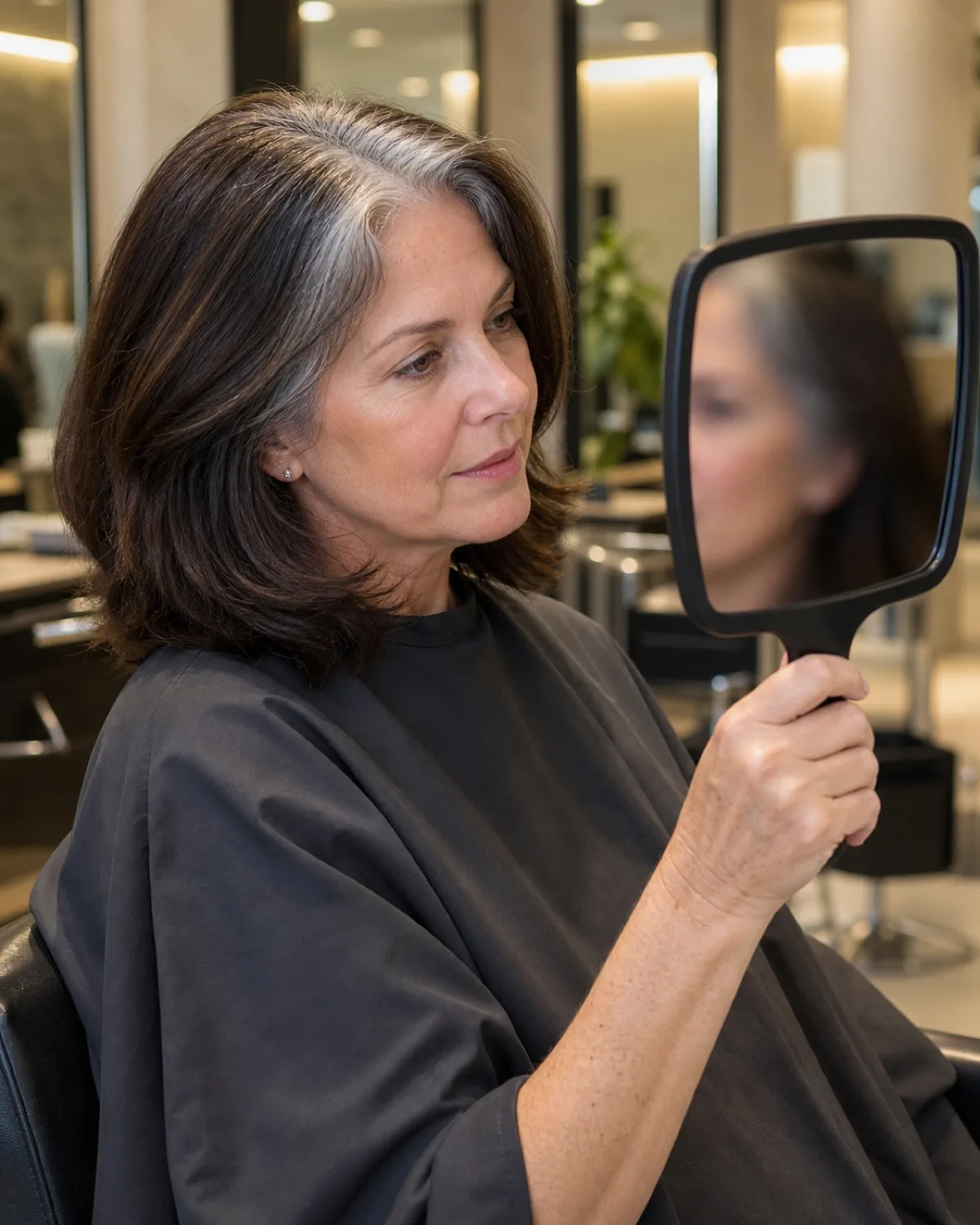
The first session is not a transformation. It is an assessment and a plan. Ask how long the consultation takes, whether they do a strand test, and whether they take before photos. Ask what happens at the second and third appointments so you see the full arc. A good transition usually means the stylist had a multi-visit plan from the start.
- Ask the stylist to outline the first three appointments in sequence so you can see the full plan
- Ask whether they take before photos and use them for comparison at later visits
- Ask how long the first session takes from arrival to leaving the chair
- Ask what happens if you change your mind mid-transition and want to go back to dyeing, because knowing the exit plan reduces the stakes of starting
Where the checkable claims come from
Keep this one
Save it for the appointment
Pin the image above to the board you actually open before a salon visit. This guide is written to be re-read, not read once.
Tonight, before you close this tab
- Part your hair under daylight and photograph the root band from three angles so you have a visual aid for the consultation
- Write down the exact name and shade number of your current dye so the stylist can assess what needs to come out
- Set a calendar reminder for the date your next root touch-up would have been to track how fast your gray grows in
- Ask one friend who went gray what surprised her most about the process because her answer will surface a question you had not thought of