7 Long Gray Hairstyles Over 50: When Length Is the Right Call
Seven long grey hairstyles over 50, each judged on density, texture and maintenance. Find out when keeping length is the right call and when it costs you.

Booking an appointment soon? Save this page. It is easier to skim in the chair than to remember.
At a glance
Works
- A one-length cut on thick uniform grey, where the weight holds the hemline taut
- Long layers starting below the collarbone on medium-to-thick grey with density to spare
- A half-up, half-down style when the top section still has enough density to gather
Depends
- Face-framing pieces, which add shape only if the shorter sections have enough weight to sit against the jaw rather than float
- A long shag with curtain bangs, which needs natural wave or coarser grey texture to hold the movement
Skip
- A blunt fringe on wispy or patchy grey, where the fringe cannot form a solid line
- Keeping length past the point where the last four inches have visibly thinned, because the shape stops reading as deliberate
Long grey hair after 50 works when three things line up: density carries the length, texture holds the shape, and maintenance fits your life. When one drops, the length stops reading as a choice.
Every option below is judged on that line. The question is not whether long grey hair can look good in a photograph but whether your grey, with its density and its texture, can hold the style you pick.
1. One-Length at the Shoulders
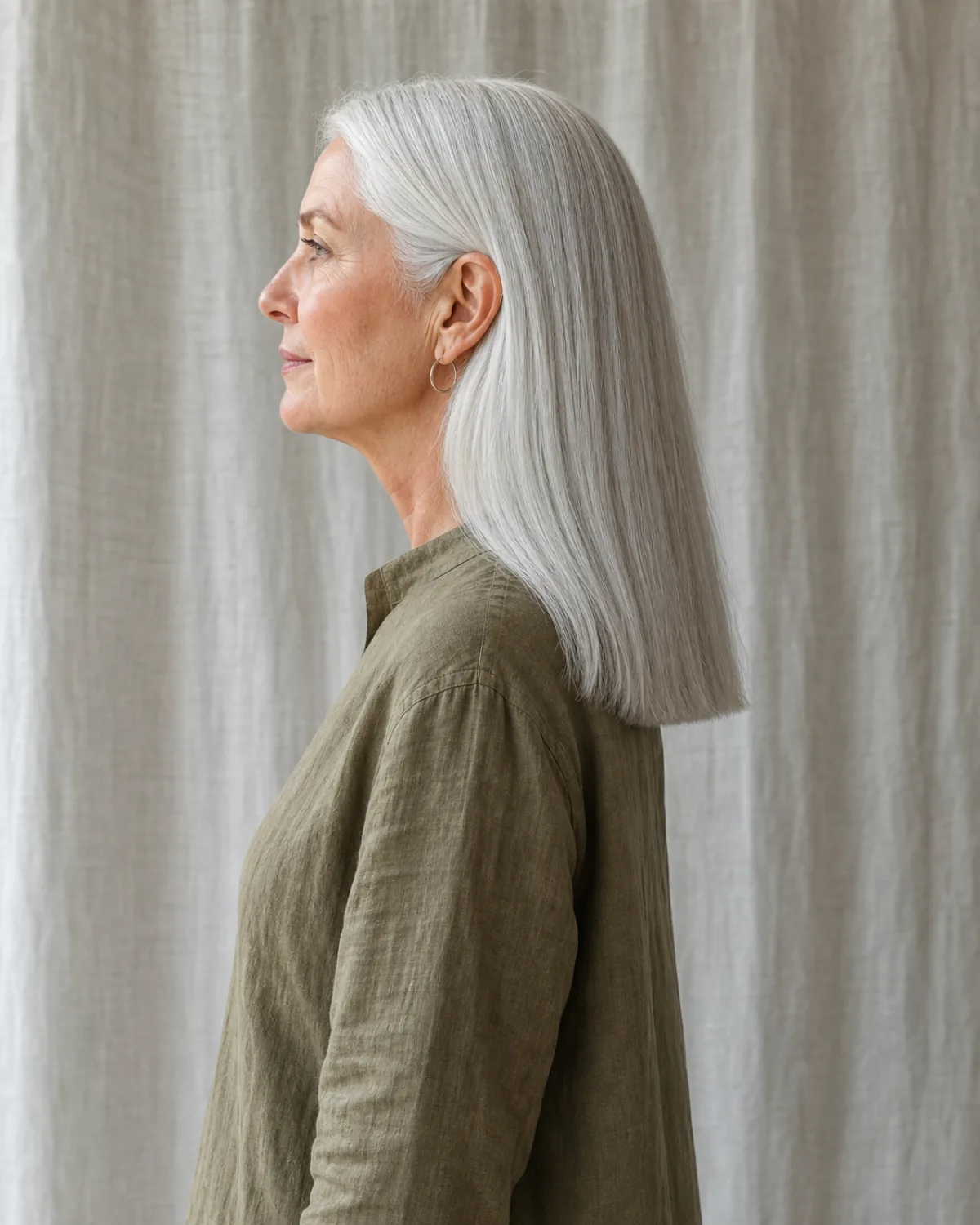
A one-length cut with no layers is the lowest-maintenance option in this group. The hair hangs in a single plane and the hemline reads as one clean horizontal line. It works because the weight holds the line taut, which is what makes the cut look deliberate rather than default.
The condition is thickness. A one-length cut on hair that has thinned at the ends exposes exactly how much density you have lost, because there are no layers to create the illusion of fullness. If your ends already look sparse against your back, this cut will confirm it.
- Ask the stylist to check whether the hemline sits clean without blow-drying
- Ask how often the ends will need trimming to keep the line sharp
- If your grey is salt-and-pepper rather than uniform, ask whether the tonal variation makes the hemline look uneven
2. Long Layers Starting Below the Collarbone
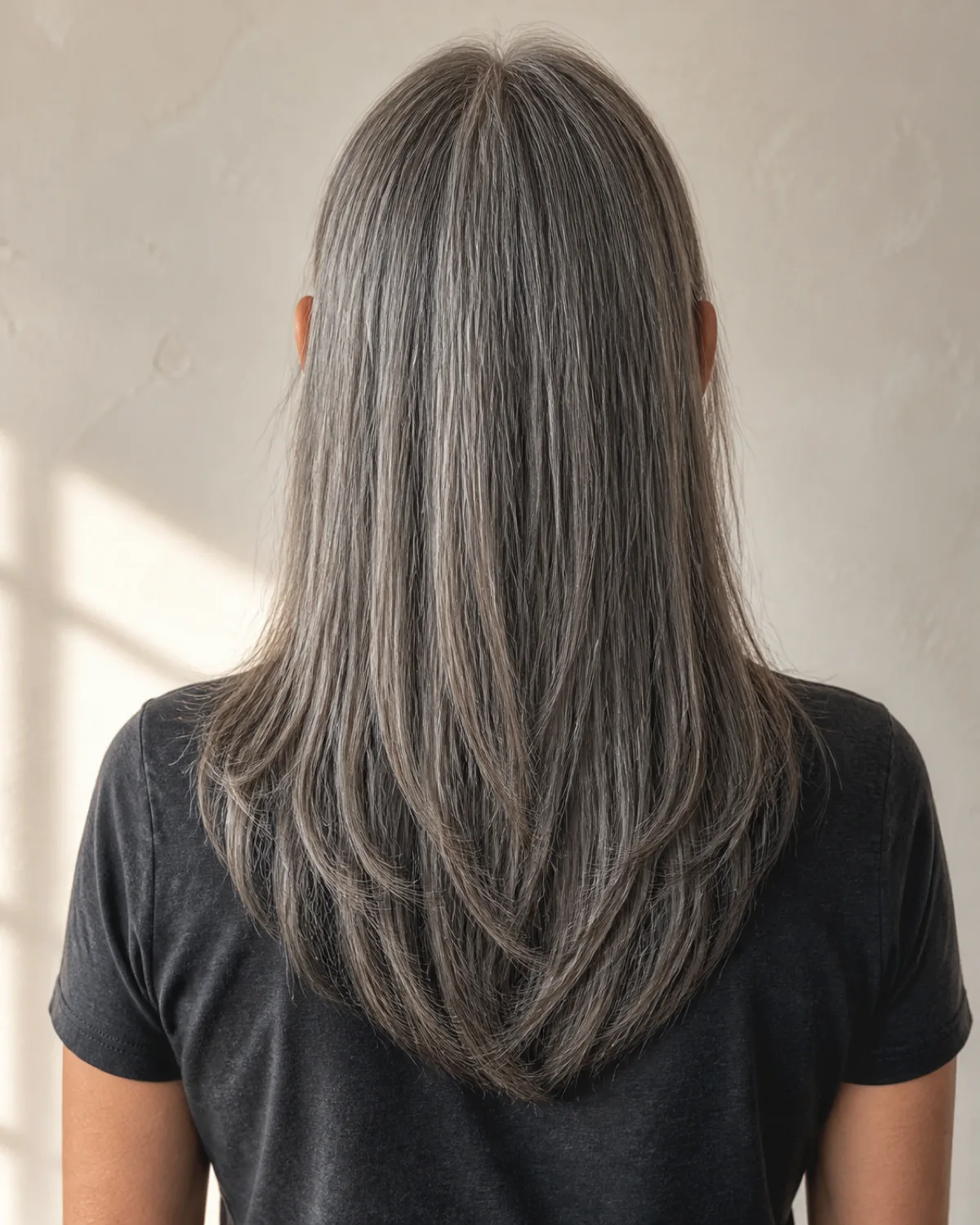
Layers remove interior weight without shortening the perimeter. When the shortest layer starts below the collarbone, the cut still reads as long but the bottom half has more movement than a one-length line. The graduated V-shape means the hair falls at slightly different points rather than all at once.
This works on medium-to-thick grey because there are enough strands to fill the gaps between layers. On fine grey, layers below a certain density threshold thin the ends further. The line between helpful and harmful is whether the layered ends still look solid or start to see through.
- Ask the stylist where the shortest layer will fall and whether it will still read as long
- Ask how many inches separate the shortest layer from the longest
- If your grey is fine, ask whether the layers will thin the last few inches past the point of looking intentional
Where to start
Find your situation, skip ahead
Your grey is thick and uniform and you want the least maintenance
The one-length cut below the shoulders needs no layers, no styling and no trims beyond keeping the hemline clean.
Your grey has some wave and you want movement without losing length
The long shag with curtain bangs lets the texture do the work. Layers and face-framing pieces are the moderate alternatives.
04 A Long Grey Shag with Curtain Bangs02 Long Layers Starting Below the Collarbone03 Face-Framing Pieces on Long Grey Hair
You suspect your length has passed its mark but you are not sure
Read the signs section last. If two of the three checks apply, book a consultation rather than a cut.
3. Face-Framing Pieces on Long Grey Hair

Face-framing pieces are two shorter sections of hair that fall along each side of the jaw while the rest stays long. It is a small intervention: only a narrow section is shortened, so the overall length stays intact.
The pieces add shape around the face without a full layered cut. On grey hair, they create a tonal contrast at the jaw where the light catches the shorter strands at a different angle from the longer back length. Whether this flatters depends on face shape and density at the temples. If the shorter pieces are too thin, they float away from the jaw rather than framing it.
- Ask the stylist to cut the pieces dry so you can see where they will actually sit
- Ask whether your face-framing sections have enough weight to lay against the jaw
- If you already have layers, ask whether adding face-framing pieces will over-thin the front
4. A Long Grey Shag with Curtain Bangs
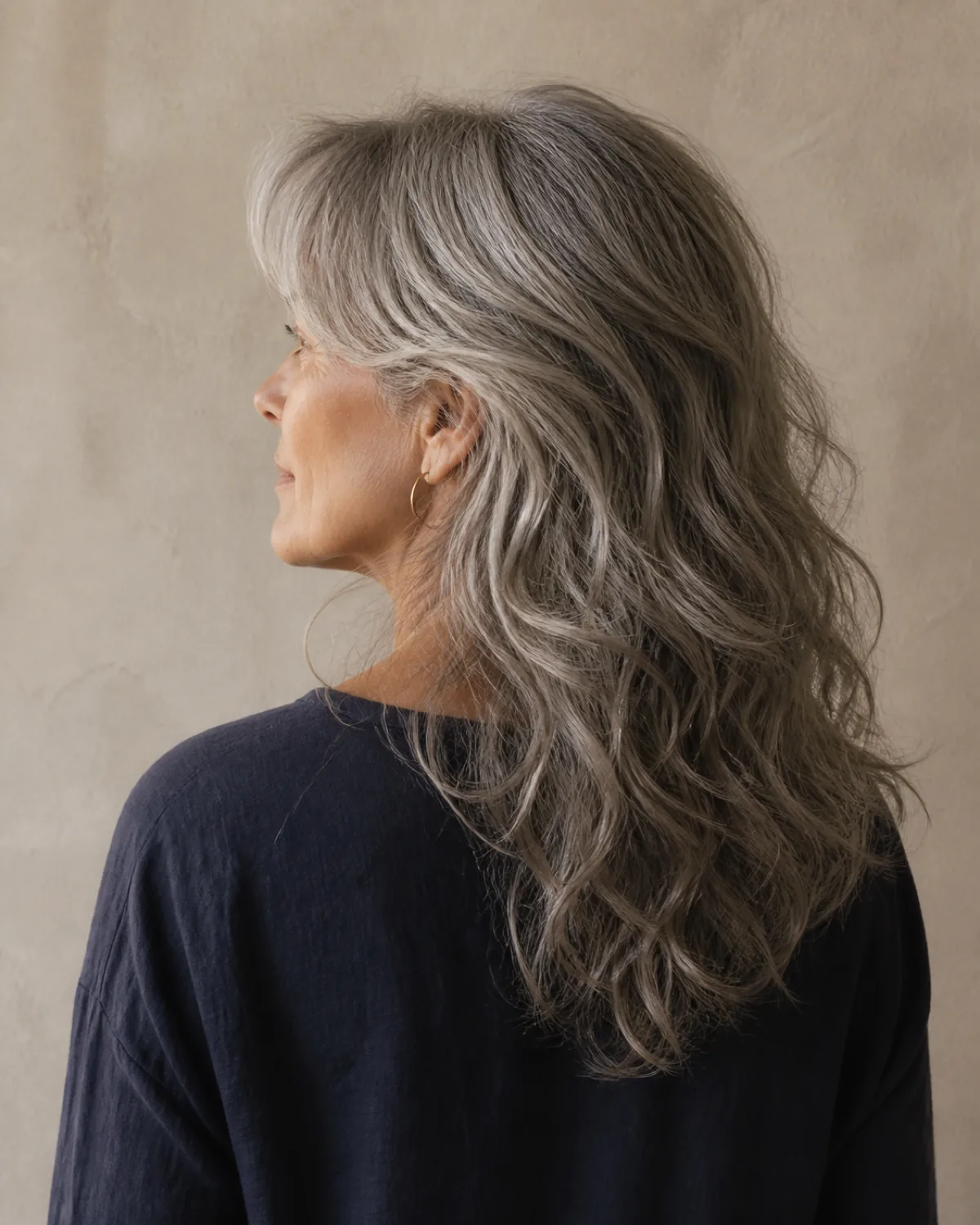
The shag gives the most movement a long grey cut can have. The layers are shorter and more disconnected than a standard layered cut, and the curtain bangs frame the forehead by parting at the centre and sweeping to each side.
This suits wavy or slightly coarser grey because the texture does the styling. The disconnected layers on wavy hair fall into natural shapes without heat or product. On straight fine grey, the same layers go flat and the shag loses the movement that justifies the cut.
- Ask the stylist how short the crown layers will be and whether they will stand up on their own
- Ask whether your grey has enough natural texture to hold the shag shape between washes
- If your hair is straight, ask whether the shag will require a diffuser or wave spray to look like the reference photo
5. Half-Up, Half-Down for Long Grey Hair

This is a styling option, not a cut. Gathering the top section at the crown while the bottom half falls freely proves that long grey hair can read deliberate in under five minutes. It works as a daily default because it keeps the hair out of the face while still showing the length.
The condition is density at the top. If the crown area has thinned noticeably, gathering it with a clip exposes the sparse zone. The gathered section needs enough bulk to look intentional rather than pulled-back-because-it-was-in-the-way.
- Check whether the gathered section at the crown still looks full when you pull it up in the mirror
- Try different clip heights: crown, mid-back-of-head, and nape each change how much length shows
- If the top section looks thin when gathered, try leaving the two front sections loose to add volume around the face
6. Long Grey Hair with a Blunt Fringe
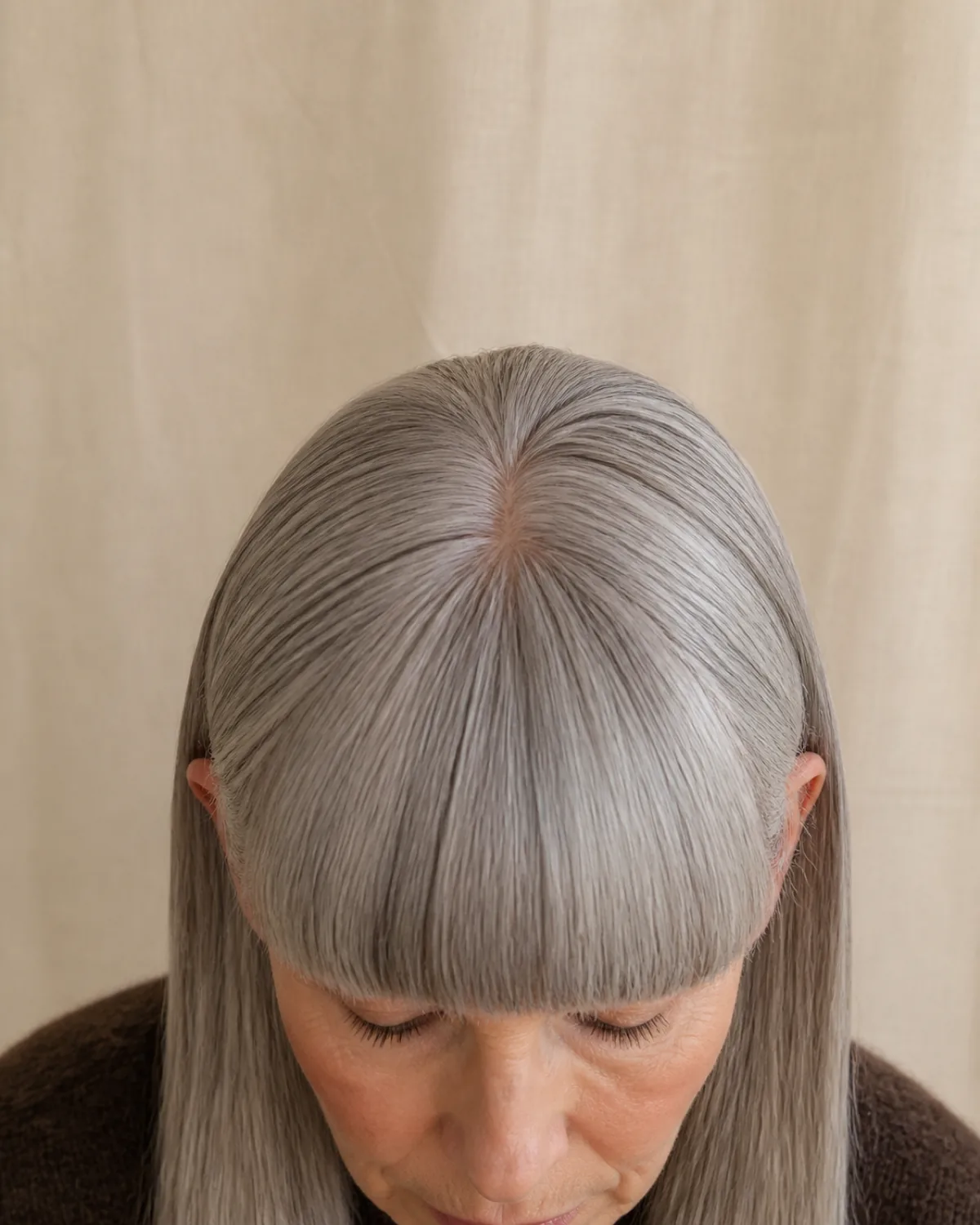
A blunt fringe cut straight across the brow on long grey hair is the strongest visual statement in this group. It reads as a deliberate aesthetic commitment because it demands density and straightness to hold the line. The fringe must sit as a solid bar of hair. Any gaps or wisps and the line breaks.
This suits thick grey with a straight-to-slight-wave texture. On coarse wiry grey, a blunt fringe can spring upward and sit shorter than it was cut. On thin or patchy grey at the hairline, the fringe will not form the solid line the look depends on.
- Ask the stylist to cut the fringe dry and check whether it sits straight without a flat iron
- Ask how often the fringe will need trimming to maintain the brow-length line
- If your grey is coarse, ask whether the fringe will spring shorter after washing
7. When to Stop: The Signs That Length Has Passed Its Mark
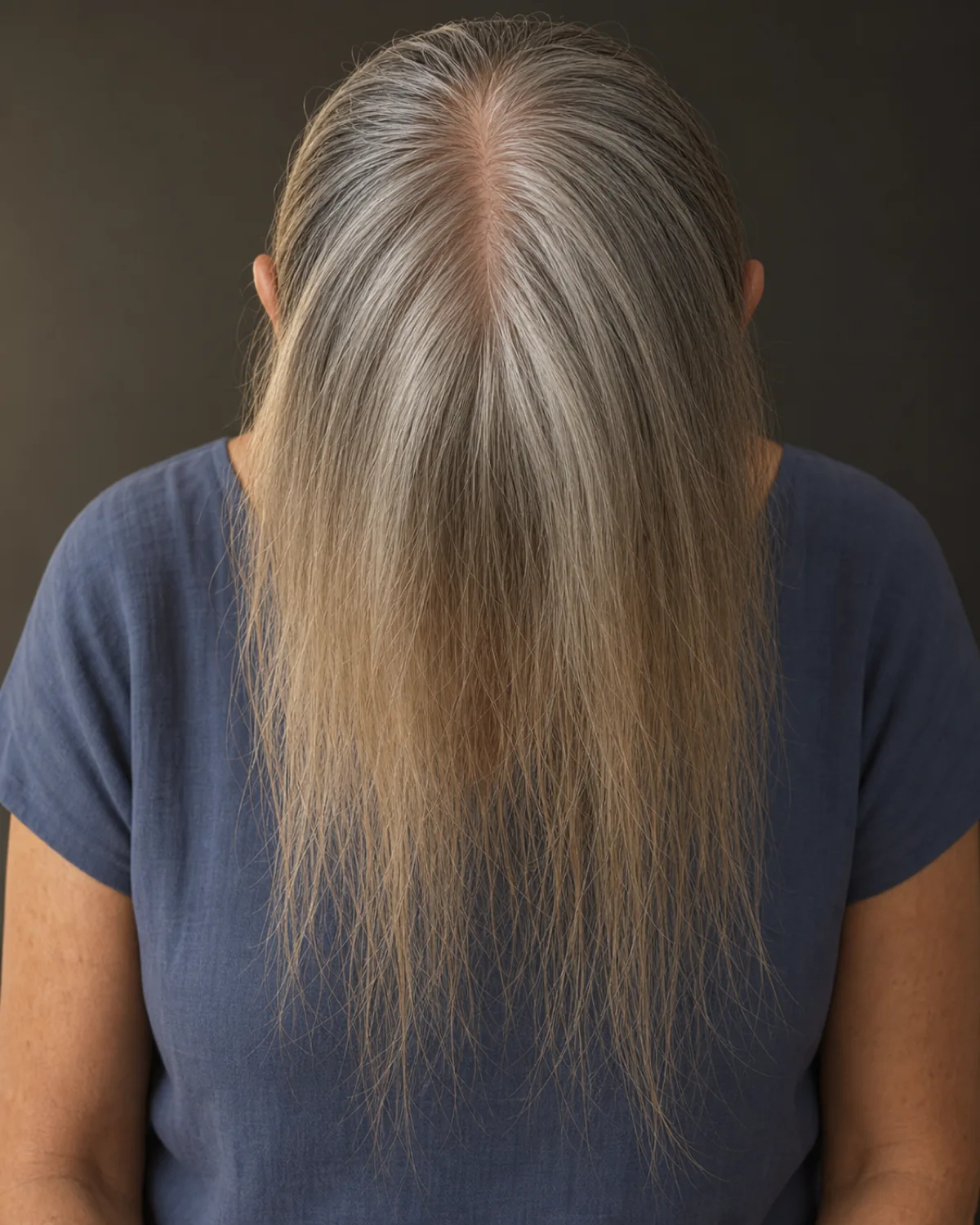
This is not a hairstyle. It is a judgment framework for deciding whether the length you have is still working.
Grey hair changes strand by strand. The surface loses melanin granules, and the hair often becomes coarser or changes in density over time. A length that looked deliberate three years ago may have crossed into territory where it reads as unstyled. The shift is gradual enough that you may not notice it in the mirror.
Three checks that cut through the mirror's blind spot: hold the last four inches against a dark surface and see whether the strands are visible as individual lines or whether you can see through them. Pull your hair into a low ponytail and compare the circumference to what it was a year ago. Look at your hemline from the side in daylight and ask whether it reads as a clean edge or a fade.
If two of those three apply, the length is costing you. That does not mean you have to cut it short. It means you should book a consultation and ask the stylist what three inches less would do to the shape.
- Hold the last four inches against a dark shirt and photograph them in daylight
- Compare a current ponytail photo to one from two years ago
- Ask a stylist what the minimum cut would be to restore a clean hemline
Where the checkable claims come from
- Human hair greying is naturally reversible and linked to stress — Rosenberg et al., eLife (2021)
- Layered hair — Wikipedia
- Bangs (hair) — Wikipedia
- Bob cut — Wikipedia
Keep this one
Save it for the appointment
Pin the image above to the board you actually open before a salon visit. This guide is written to be re-read, not read once.
Tonight, before you close this tab
- Pull your hair into a low ponytail and compare its circumference now to what it was five years ago
- Hold the last four inches of your hair against a dark surface and check whether you can see through them
- Look at your grey in daylight from the side and note whether the hemline reads as one clean line or an uneven fade
- Write down the one thing you want your long grey hair to do and bring it to your next stylist appointment