8 Natural Grey Hairstyles Over 50
Eight natural grey hairstyles over 50, each judged on who it suits, who should skip it and what to ask the stylist before you commit.

Booking an appointment soon? Save this page. It is easier to skim in the chair than to remember.
At a glance
Works
- A pixie on uniformly grey hair, where the coarser texture gives the crown natural lift
- A chin-length blunt bob when your grey still has enough density to hold a clean perimeter
- A textured crop on salt-and-pepper hair, blending the tones rather than drawing a line
Depends
- Layered shoulder length, which adds movement only if there is enough density to spare
- A side-swept fringe, which covers the greying hairline but costs strands from the thinnest zone
- Long grey hair, which reads intentional only when the density can carry the weight
Skip
- Any cut that needs blow-drying to hold shape, because grey hair resists heat styling more
- A steep graduated bob on thick coarse grey hair, where the stack builds too much bulk at the nape
Grey hair is not one thing. Some grey comes in silver and fine, some comes in coarse and wiry, and some arrives as salt-and-pepper that makes every photograph look different depending on the light.
What stays the same is the question: does the cut you pick read as deliberate, or does it read as hair you stopped paying attention to? Every cut below is judged on that line.
1. The silver pixie that reads deliberate
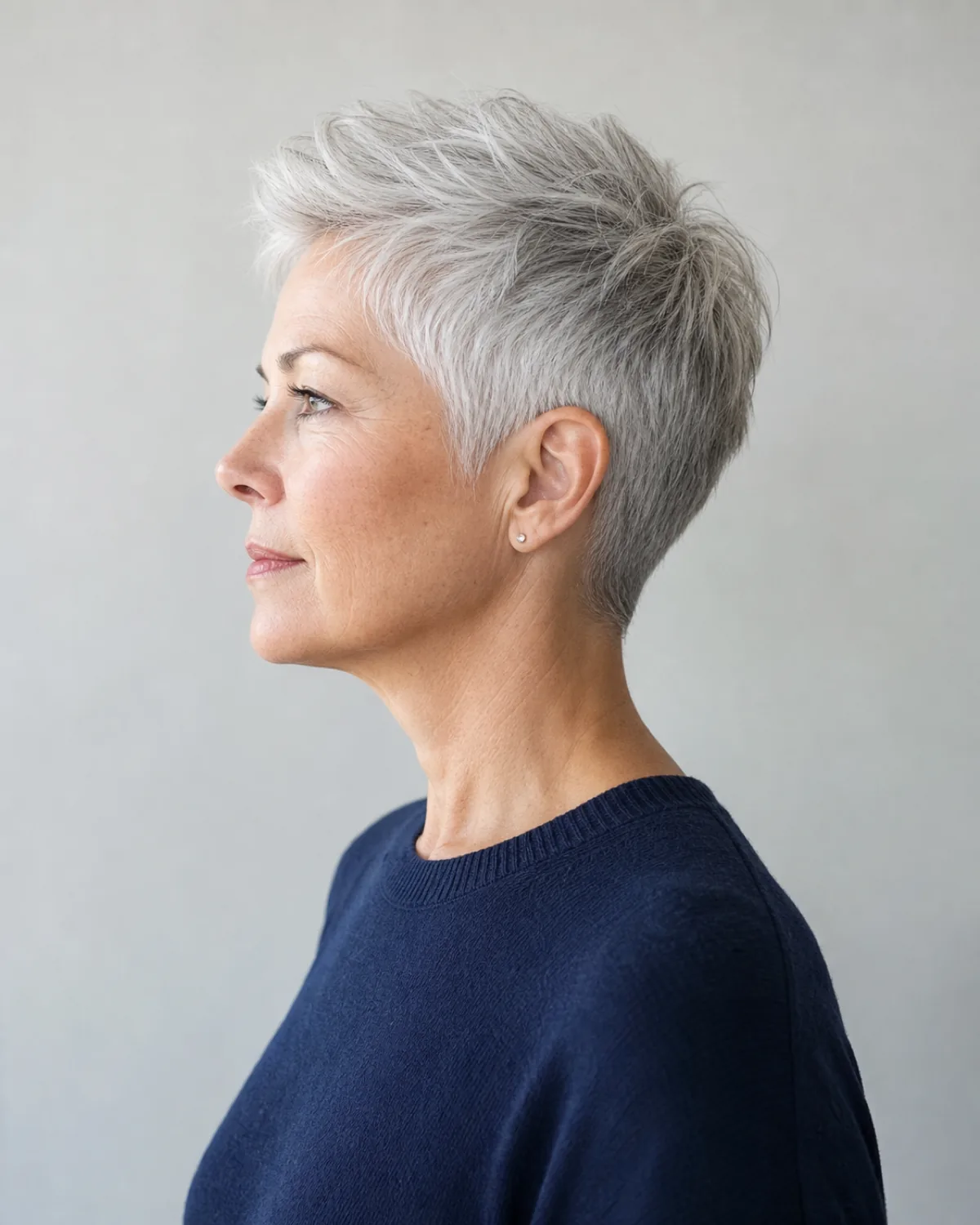
A pixie is short at the back and sides and longer on top. On grey hair the argument for it is textural: grey strands tend to be coarser than pigmented ones, and coarser hair stands up on its own. The top section gets natural volume without product or heat, which is the pixie's best trick on this hair type.
The condition is uniformity. A pixie exposes the entire head, so patchy grey shows. If your temples have gone silver but the crown is still dark, the pixie draws a map of the transition rather than blending it. Wait until the grey is mostly even, or look at the textured crop instead.
- Ask the stylist to leave the top long enough to stand, not cropped flat
- Ask how short the sides will go over the ear
- If your grey is still patchy, ask whether the pixie will expose the uneven distribution
2. A chin-length bob that lets grey read as one colour
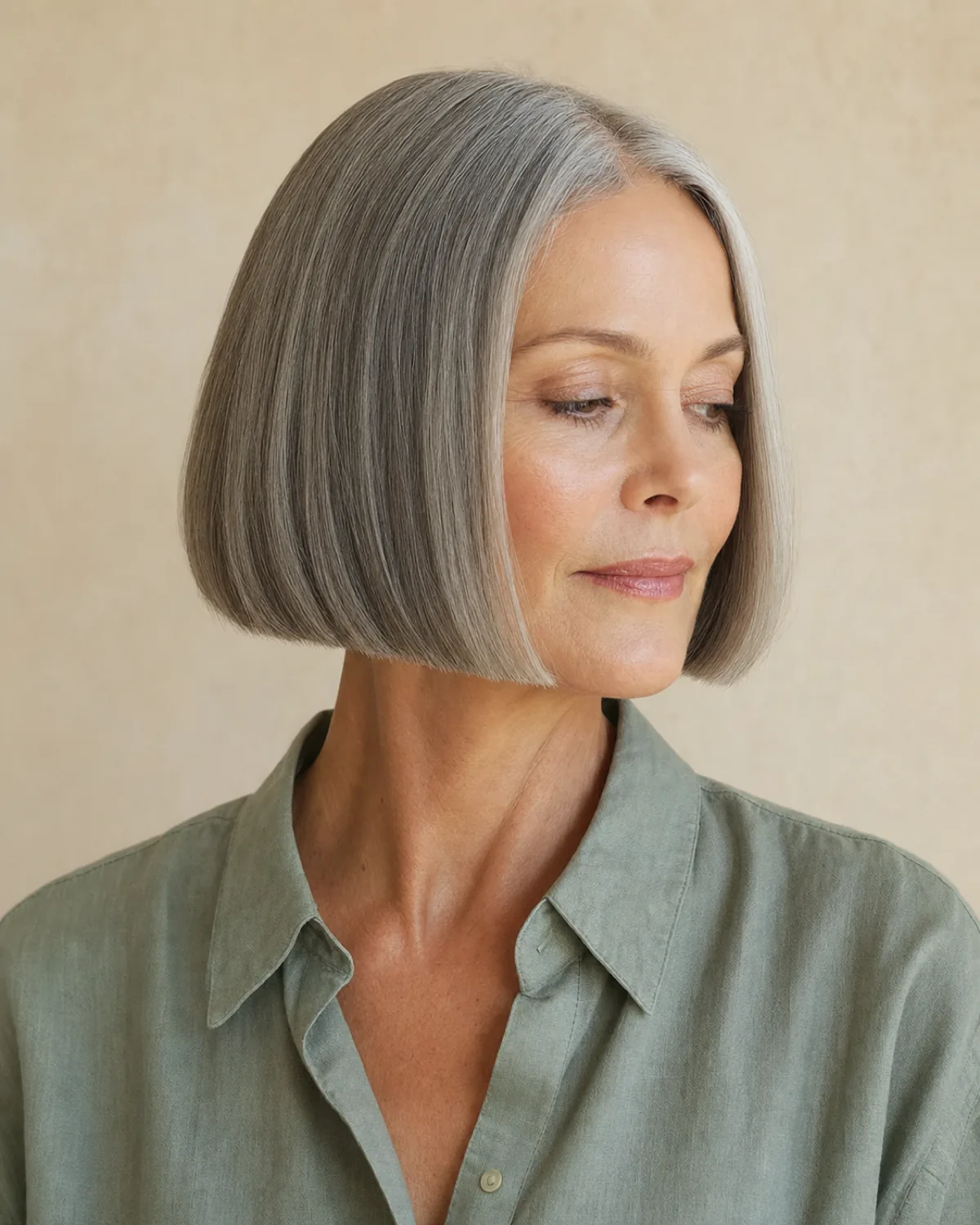
A bob cut at chin level collects all its weight at one perimeter line. Under even light that single line catches the grey spectrum and blends it: silver, pewter, steel all read as one colour rather than competing for attention.
The condition is density at the ends. A blunt perimeter needs enough hair to close the line. If the ends are sparse and the chin edge shows gaps, a one-length bob reads thin rather than clean. In that case, ask about texturing the perimeter or shifting to a graduated shape that hides the thinning at the back.
- Look at your ends in natural light before committing to a blunt chin line
- Ask the stylist to hold the hair at chin level so you can see whether the edge closes
- If the ends show gaps, ask about a textured or bevelled perimeter instead
Where to start
Find your situation, skip ahead
Your grey has come in mostly uniform and you want something short
The pixie and the textured crop both work with grey's coarser texture. The pixie suits fine features; the crop suits salt-and-pepper.
01 The silver pixie that reads deliberate04 The textured crop for salt-and-pepper hair
Your grey hair is still dense but looks flat indoors
Layers or a side-swept fringe create shadow and movement. Start with the fringe if you want the smallest change.
03 Layered shoulder length that keeps grey hair from going flat05 A side-swept fringe that softens the grey hairline
You are still growing out colour and the demarcation line is visible
Ask your stylist what to do about the line before you pick a cut. The grow-out section has the questions to bring in.
08 What to settle with your stylist before the grow-out04 The textured crop for salt-and-pepper hair
3. Layered shoulder length that keeps grey hair from going flat

Grey hair without pigment granules has a smoother strand surface. Under indoor light that surface reflects evenly, and the hair reads flat in photographs and in bathroom mirrors. Layers cut at different lengths break that uniformity by creating shadows between the sections.
The trade is density. Every layer removes mass from the section it shortens. If your grey is fine or sparse, those layers thin what little you have and the cure is worse than the problem. Layers work best on grey hair that still has moderate density, where there is material to spare.
- Ask where the shortest layer starts and whether your density can carry it
- Ask how the layers will look if you let your hair air-dry
- If your grey is fine, ask whether fewer, longer layers would work better than many short ones
4. The textured crop for salt-and-pepper hair

Salt-and-pepper is a transition pattern where grey and the original colour still coexist. A textured crop keeps the hair short enough that the two tones mix rather than separating into bands. From above, the dark and silver strands intersperse naturally and the overall read is texture rather than a line where one colour stops and another starts.
This suits women early in the transition who are not ready for a uniform silver. The trade: once the grey takes over entirely, the mixing effect fades and the crop just reads as a short grey cut. At that point, decide whether you want to stay short or grow into one of the longer shapes here.
- Ask the stylist to cut for texture, keeping the pieces at different lengths
- Ask how the crop will read once your grey overtakes the dark
- If you want a uniform silver look now, this cut works against that goal
5. A side-swept fringe that softens the grey hairline
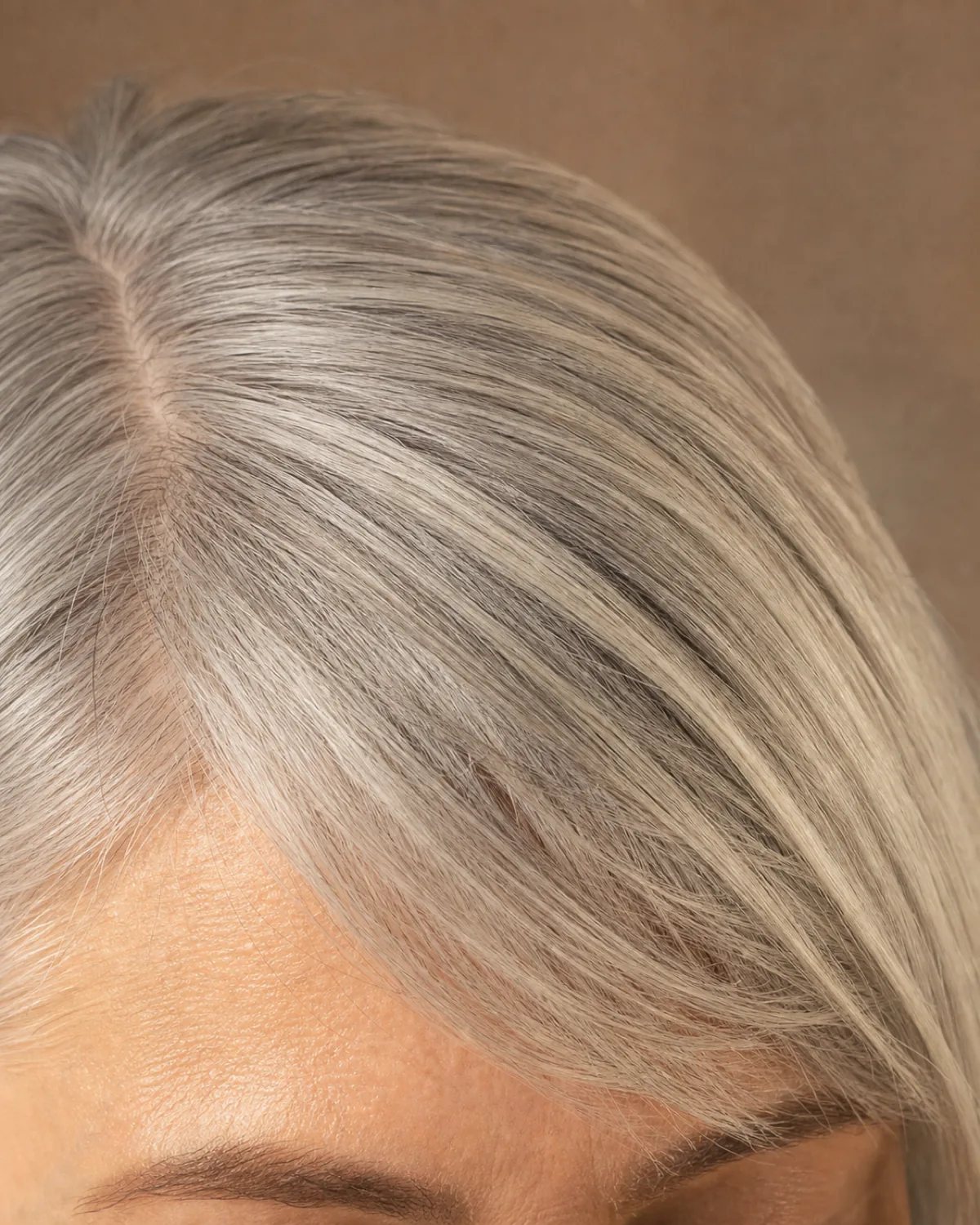
The hairline is where grey often arrives first. A side-swept fringe covers that zone: the hair falls from a deep parting across the forehead, and the grey at the temples disappears under the swept section. This is a modification to an existing cut, not a cut by itself.
The cost is material. A fringe takes strands from the front and temples, which are already the thinnest areas on most heads after 50. A wide fringe robs the sides of coverage. Ask for the fringe to be cut from a narrow section, no more than the front two centimetres, so the sides keep what mass they have.
- Ask the stylist to take the fringe from a narrow section only
- Ask where the shortest point of the fringe sits relative to the brow
- If the sides of your hair are already thin, ask whether the fringe is worth the trade
6. Long grey hair, and when length still works
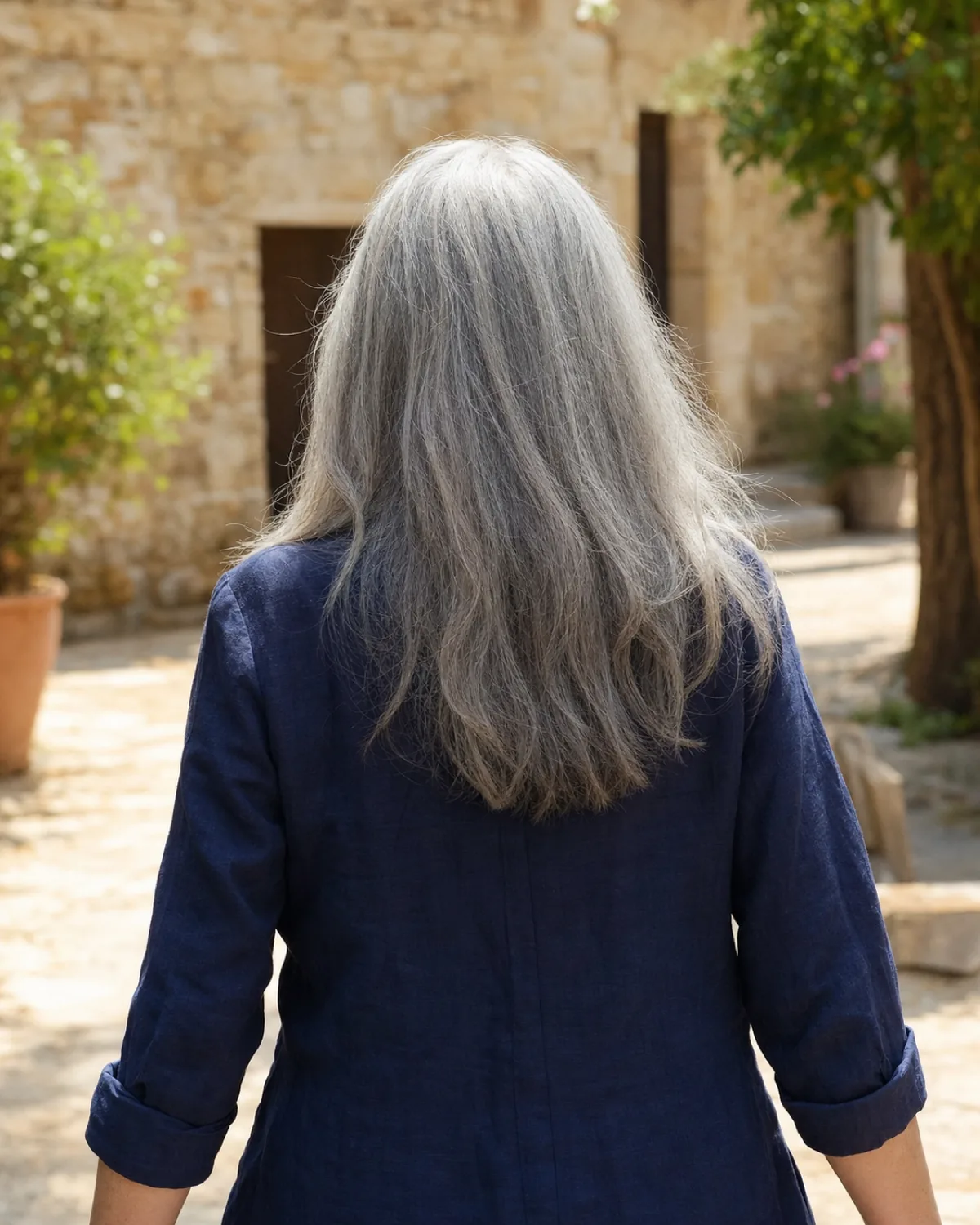
Length on grey hair works when density can carry it. The image here is thick grey hair past the shoulders with enough weight that it holds its own shape in movement. That read only happens when there is enough raw material: thin grey hair at length looks wispy rather than deliberate.
The test is the ponytail. Gather your hair at the nape and measure the circumference. If it has dropped noticeably from what it was five or ten years ago, the density may not support the length you want. The cut is not the problem; the material is. A shorter shape that concentrates what you have often reads stronger than a long shape that stretches it thin.
- Measure your ponytail circumference and compare it to what you remember
- Look at your ends in daylight: if they are sparse and see-through, length is working against you
- If the density is still there, ask the stylist to keep the length and clean up the perimeter only
7. A grey bob with soft graduation
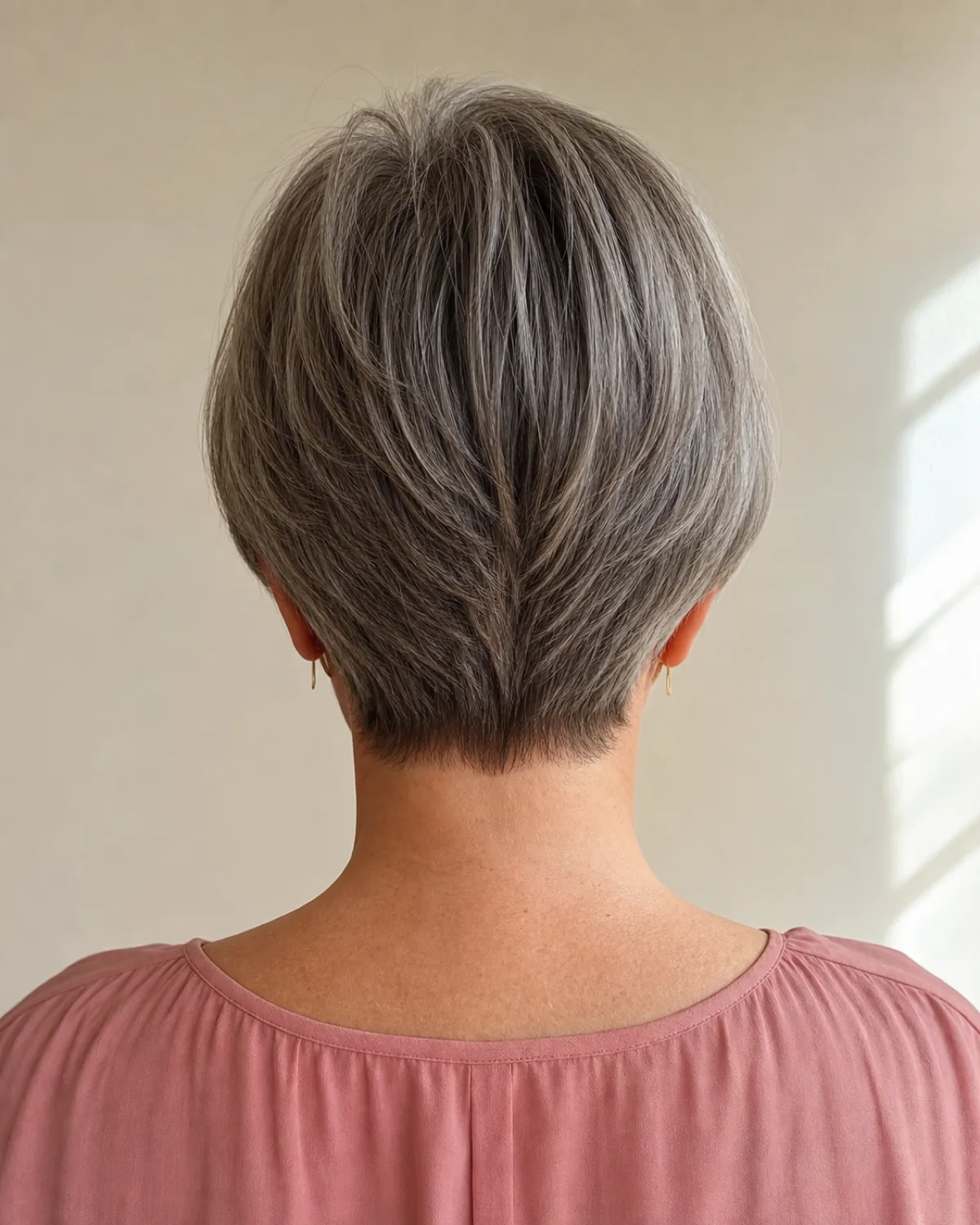
Graduation is weight built up on purpose. The hair is cut at a low elevation so the lengths stack against each other at the back of the head, creating a band of density that the hair would not have on its own. Grey hair that has lost body benefits from this: the graduation compensates for the flatness.
The condition is the degree. A soft graduation blends the lengths gently. A steep graduation stacks them sharply, and coarse thick grey hair pushes against a steep stack and builds too much bulk at the nape. Ask the stylist to keep the angle gentle, and ask to see the back with a mirror before you leave.
- Ask to see the back of the graduation while you are still in the chair
- Ask how steep the angle is and whether your hair density suits it
- If your grey is coarse and thick, ask whether a softer angle would prevent bulk at the nape
8. What to settle with your stylist before the grow-out
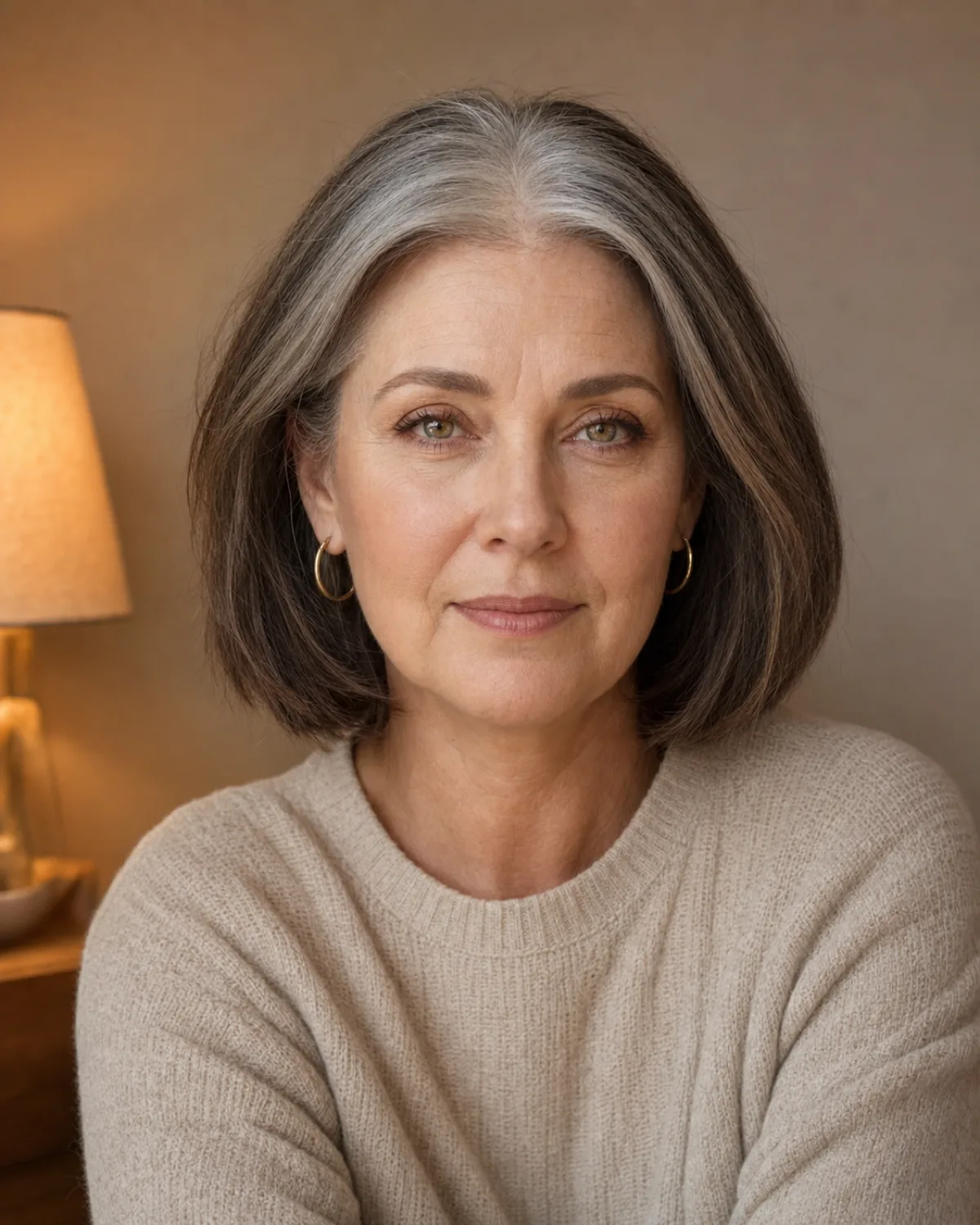
The grow-out is the transition from chemically coloured hair to natural grey. It involves a visible demarcation line where the grey root meets the dyed length, and how that line is handled is a stylist decision, not something to plan from a photograph.
Three questions to bring into the consultation: what is the plan for the demarcation line, how long will the awkward phase last with your particular hair and colour history, and whether interim steps would make the transition less abrupt.
The stylist sees your starting point and your growth pattern. A written guide sees neither. A stylist who can see your hair in person outranks anything written here.
That is the method for every cut in this article: know what your grey does on its own, decide what you want the shape to add, and then ask whether your particular grey can hold it. More of the same kind of judgment sits in going gray and face shape.
Where the checkable claims come from
- Human hair greying is naturally reversible and linked to stress — Rosenberg et al., eLife (2021)
- Bob cut — Wikipedia
- Graduation vs. Elevation: The Subtle Distinction That Impacts Every Cut — Above Shears
- Pixie cut — Wikipedia
- Bangs (hair) — Wikipedia
Keep this one
Save it for the appointment
Pin the image above to the board you actually open before a salon visit. This guide is written to be re-read, not read once.
Tonight, before you close this tab
- Look at your grey in daylight and note whether it reads as one tone or a mix of several
- Pull your hair into a low ponytail and measure the circumference to get a rough density number
- Check whether your grey strands feel coarser or finer than they did five years ago
- Write down two cuts from this article and the specific question each one raises about your hair