10 Platinum and Silver Hairstyles Over 50 That Read the Way You Mean Them To
Ten platinum and silver hairstyles for women over 50, each judged by skin undertone, upkeep and what to ask your stylist so the tone stays where you set it.
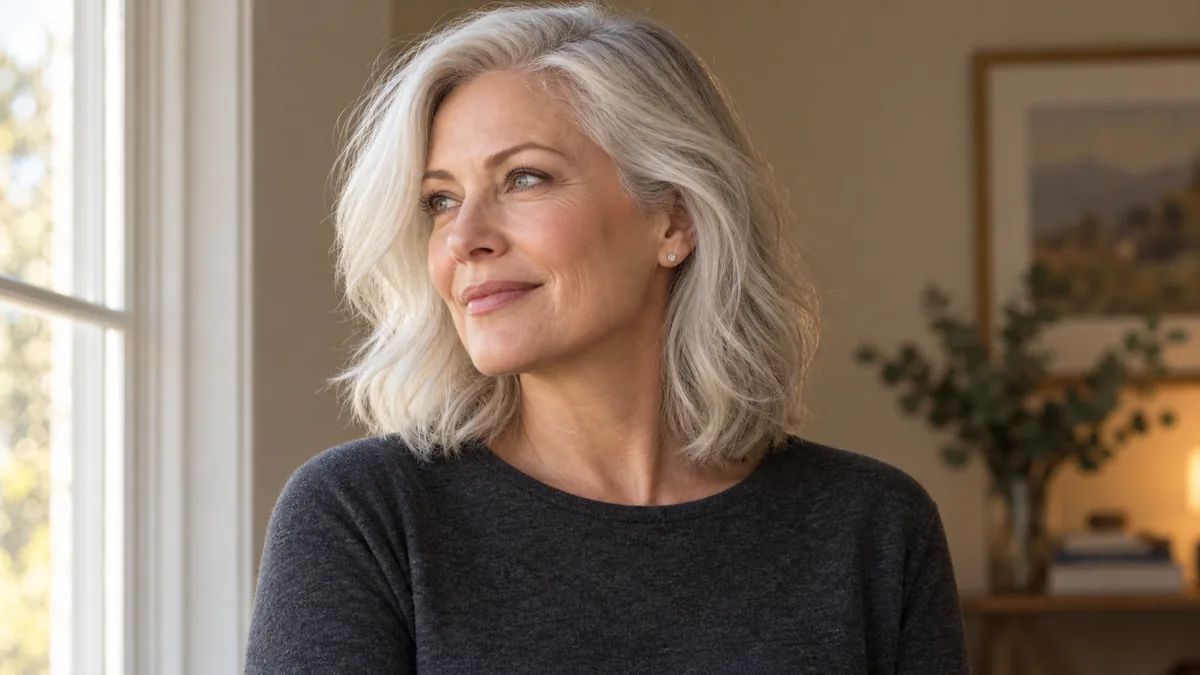
Booking an appointment soon? Save this page. It is easier to skim in the chair than to remember.
At a glance
Works
- A warm silver bob on golden or olive undertones because the warmth in the silver matches the warmth in the skin and neither cancels the other
- Silver balayage over a dark base because the contrast at the roots frames the face without requiring all-over bleaching
- A champagne-ash layered lob when re-growth concealment matters because the ash tone blurs the line between processed and natural
Depends
- Cool-toned platinum depends on whether your skin undertone is cool or neutral, because warm undertones against icy platinum can read sallow and a strand test at the temple settles it in ten minutes
- A pearl-white crop depends on hair density, because fine hair carries it well at short length but thin hair with visible scalp reads patchy at near-white
Skip
- Icy platinum on thick coarse hair that resists lifting because the bleach volume required pushes into damage territory and the tone yellows faster on resistant hair
- A silver-lavender tint when the base is still mostly dark because the pigment cannot land on unlifted hair and the result is muddy rather than iridescent
Platinum and silver sit on a spectrum that most people flatten into one word. Platinum is lifted, toned and maintained on a schedule. Silver is closer to what gray becomes when you steer it rather than fight it. Both are deliberate.
The wrong shade on the wrong undertone reads washed out. See going gray questions if you have not decided whether to work with your gray or against it.
These ten are judged by who they suit, what they cost and what keeps them honest.
1. Cool-Toned Platinum Pixie
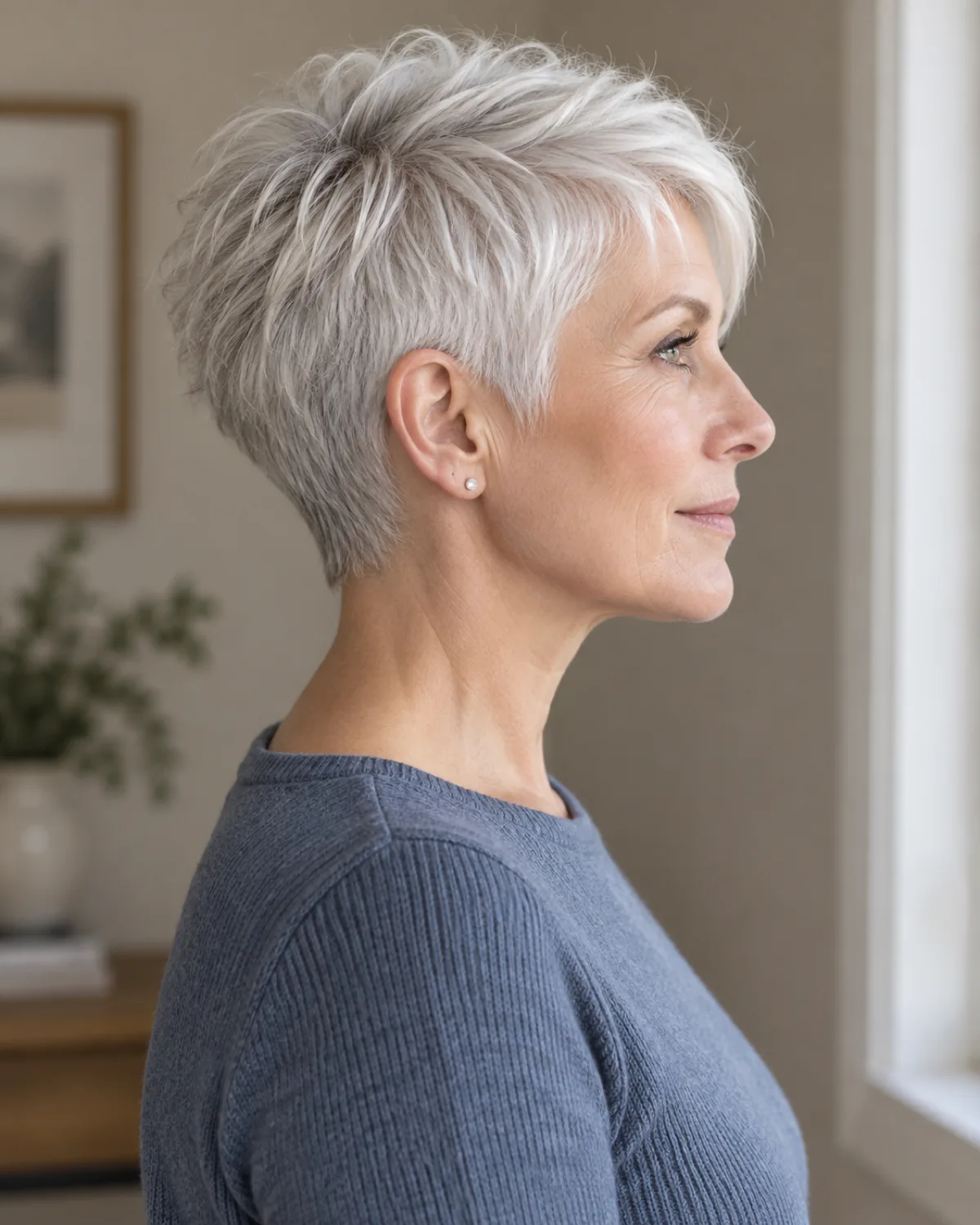
Icy platinum at pixie length reads sharpest on cool or neutral skin undertones. The cropped sides sit at half an inch and the crown keeps enough length for the platinum to catch light. The tone is a clean white with no yellow cast.
- Warm undertones against this shade can pull sallow, which is why a strand test at the temple matters before committing to all-over platinum
- The short length means less surface area to maintain, so toner touch-ups stretch further than they would on longer hair
- Works best on hair with enough density that the scalp does not show through, because near-white hair against visible scalp reads thinner than it is
- Ask your stylist whether your natural base can reach level 10 without double-processing, and what condition your hair will be in afterward
2. Warm Silver Bob at the Jawline
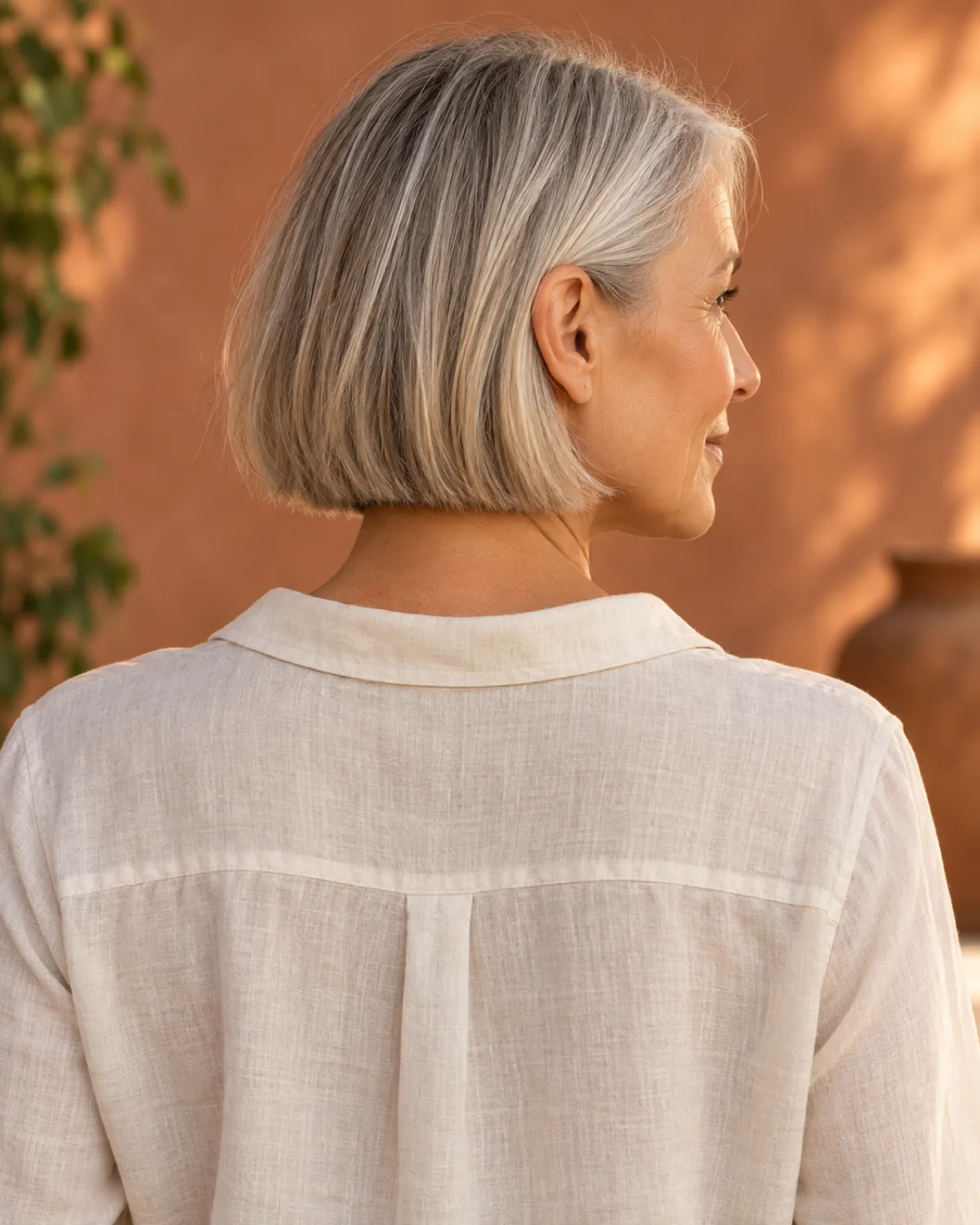
A warmer silver with subtle champagne undertones sits easier on olive and golden-warm skin than icy platinum does. The jawline bob ends at the narrowest point of the face, which keeps the overall read balanced rather than washed out.
- The warm cast in this silver means it tolerates a longer window between toner appointments because the natural drift toward warmth is already part of the plan
- Jawline length works across most face shapes because the line itself creates a defined edge that frames the lower face
- Fails on very fine hair at this length if the ends look sparse, because a blunt bob needs enough density to hold a clean line
- Ask your stylist for a warm silver toner rather than an ash or cool violet, and confirm that the undertone matches your skin in natural daylight before you leave the chair
3. Champagne-Ash Layered Lob

A middle-ground tone between platinum and natural ash that hides re-growth better than either extreme. The champagne cast sits deliberately ambiguous at the roots so the line between processed and natural blurs rather than announces itself.
- Face-framing layers starting below the cheekbone keep movement in the hair without losing density, which matters because lightened hair can read flat when it sits in one piece
- This tone is the most forgiving option for someone testing the platinum-to-silver range because the re-growth window is longer
- Skip it on very dark natural bases that require heavy lifting to reach this level, because the damage offsets the low-maintenance advantage
- Ask your stylist to blend the root area rather than foil it, and bring a photo that shows the champagne-to-ash gradient so the target tone is specific
Where to start
Find your situation, skip ahead
Your hair is already mostly gray or white and you want to refine the tone rather than fight it
Start with platinum highlights on what you have. Less lift, lower risk, and you see the tone before committing.
08 Platinum Highlights on a Natural Gray Base05 Silver Balayage on a Grown-Out Base06 Pearl-White Cropped Cut
You want silver or platinum but you still have a significant dark base and you are worried about damage
Go balayage first. It keeps your roots dark on purpose and limits chemical exposure.
05 Silver Balayage on a Grown-Out Base03 Champagne-Ash Layered Lob10 Ash-Blonde to Silver Transition Cut
You know you want to go fully platinum and you are prepared for the upkeep
Blunt collarbone or pixie. Both work at full platinum because the shape is defined enough to carry the tone.
04 Icy Platinum Blunt Cut at the Collarbone01 Cool-Toned Platinum Pixie09 Silver-Lavender Tint on a Short Crop
4. Icy Platinum Blunt Cut at the Collarbone

The most high-maintenance option on this list. Full-commit icy platinum demands a salon toner refresh every four to six weeks because the cool tone drifts warm on its own. Suited to straight or slight-wave hair with decent density, because the blunt line shows every gap.
- The collarbone length gives enough surface area for the platinum to read as a full commitment rather than a bleach accident
- Straight hair holds this cut best because waves and curls at this length can hide the blunt line that gives the look its structure
- Not a starting point if your hair is already compromised by heat damage or previous chemical processing
- Ask your stylist what developer volume they plan to use and whether the lift can be done in a single session, because double-processing in one sitting increases breakage risk
5. Silver Balayage on a Grown-Out Base
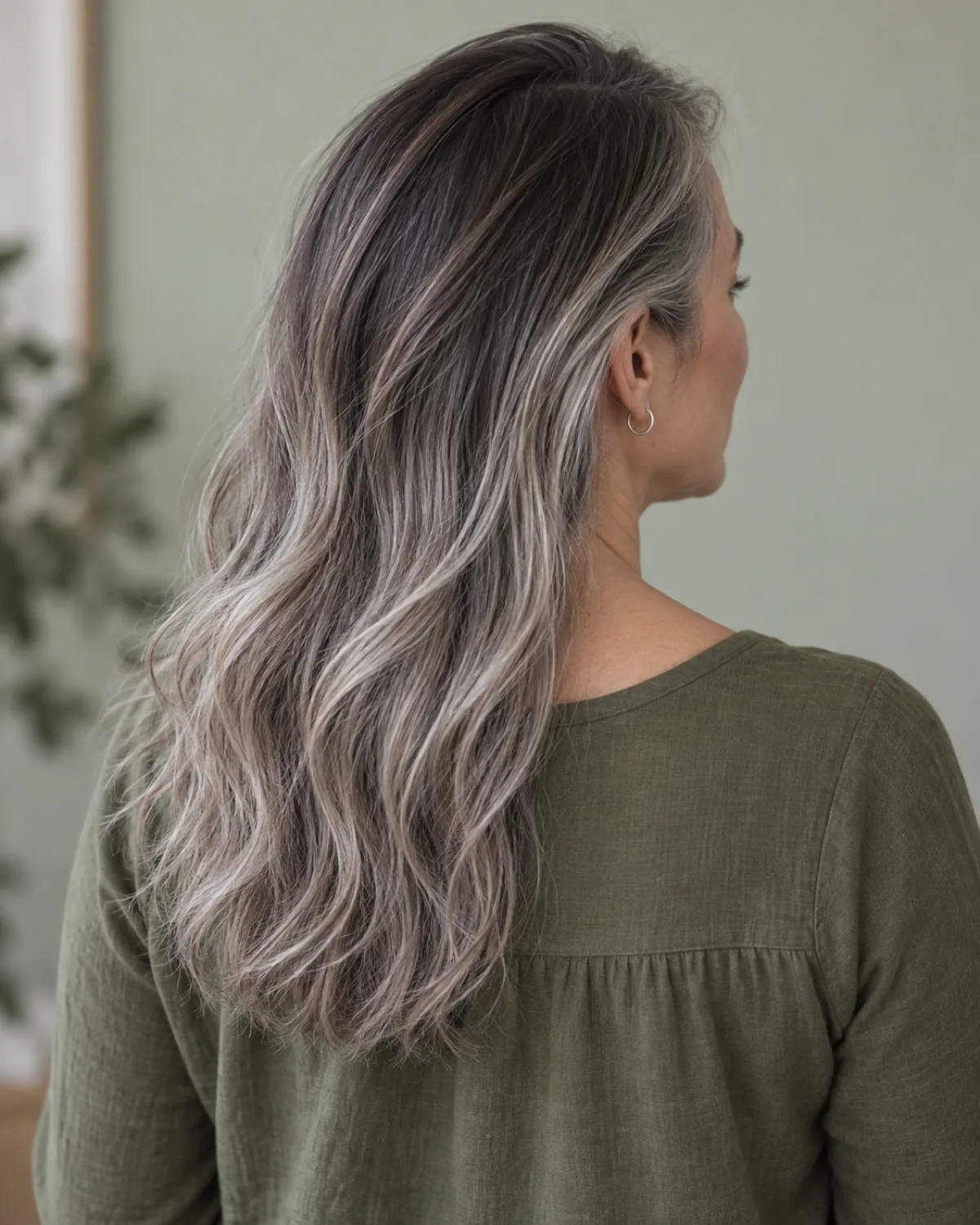
Keeps the roots dark on purpose. The contrast between a natural brunette base and hand-painted silver through the midshaft reads deliberate rather than neglected, and the dark shadow at the root frames the face on every face shape without requiring all-over bleaching.
- The lowest-damage path to silver because the roots are never touched and the balayage application limits chemical exposure to selected sections
- Works on every face shape because the root shadow does the framing work that a specific cut length would otherwise need to handle
- Fails when the contrast is too subtle, because a dark base with barely-there silver reads like accidental highlights rather than an intentional tonal shift
- Ask your stylist to paint the pieces wide enough that the silver reads from across a room, and confirm that the transition from dark to silver is gradual rather than striped
6. Pearl-White Cropped Cut
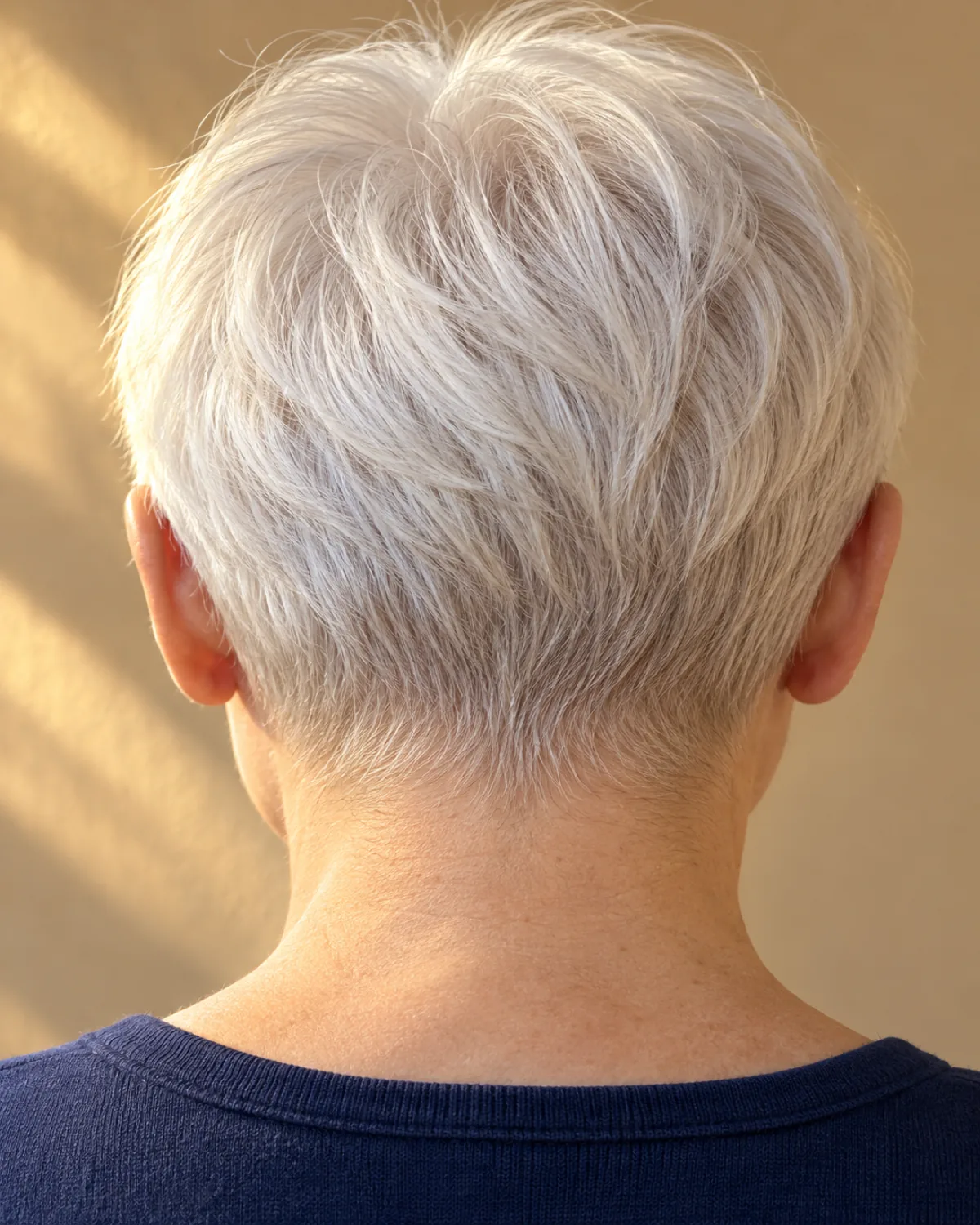
Ultra-light, near-white with the faintest cool shimmer. Suited to fine hair because the short length means less weight pulling volume flat. The crop shows the nape tapering cleanly and the pearl tone reads luminous rather than washed out at this length.
- Fine hair actually benefits here because the short cut removes the weight that drags fine strands flat, and the near-white tone catches light in a way that reads as volume
- Needs purple shampoo at home to keep the tone from yellowing between salon visits
- Not suited to hair with significant density variation across the head, because near-white at crop length shows every patch where growth is thinner
- Ask your stylist whether your natural white or gray base is even enough to go pearl without patchy results, and whether a gloss rather than a full toner would be enough to steer the tone
7. Pewter-Toned Shag With Curtain Bangs

A darker, muted silver-gray that reads edgier than bright platinum and hides the line between grown-out roots and processed ends. The curtain bangs part in the center and fall to just above the brow, softening a tall forehead without committing to a full fringe.
- The pewter tone sits closer to natural gray than platinum does, so it works as a tonal refinement rather than a dramatic change
- Shag layers start below the cheekbone and create separation that adds movement, which suits hair that has lost some of its natural body
- Skip the curtain bangs if your hair is very fine at the temples, because thin curtain bangs separate and look sparse rather than deliberate
- Ask your stylist to keep the shortest layer below the cheekbone rather than above it, and to cut the bangs dry so they fall where they actually land
8. Platinum Highlights on a Natural Gray Base
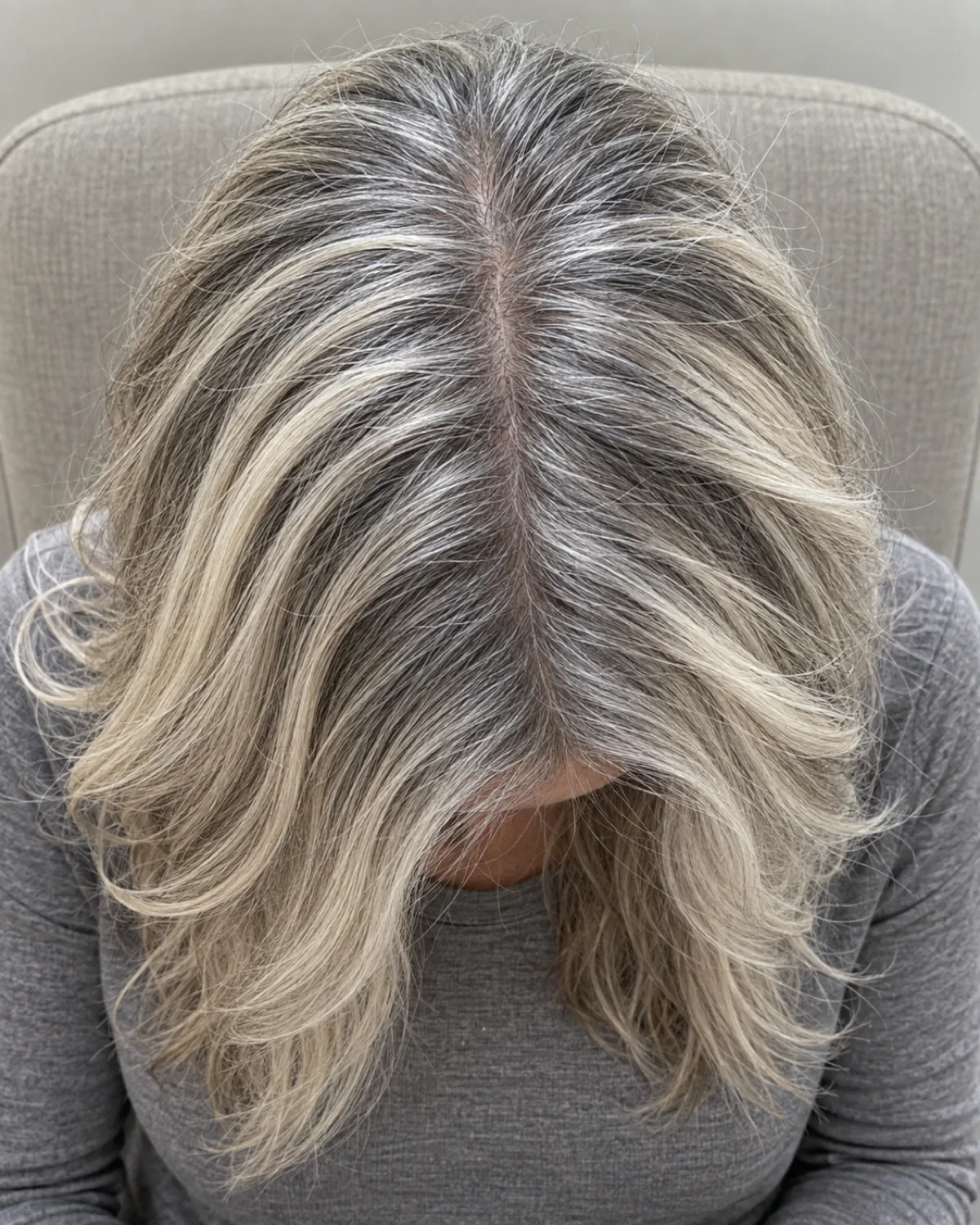
The lightest-lift option because the hair is already largely gray. A stylist applies partial foils to brighten selected sections without lifting everything, so the damage is minimal and the commitment is low. The contrast between natural gray and brighter platinum pieces adds dimension.
- This is the safest entry point for someone who wants to test platinum without going all-over, because the foils target only the sections that need brightening
- Works on any length and any face shape because the highlights are an accent, not the entire palette
- Fails when the foils are too thin or too few, because scattered platinum pieces on a gray base can read as accidental rather than intentional
- Ask your stylist for chunky foils rather than fine babylights, and confirm that the platinum pieces are wide enough to register from a normal viewing distance
9. Silver-Lavender Tint on a Short Crop
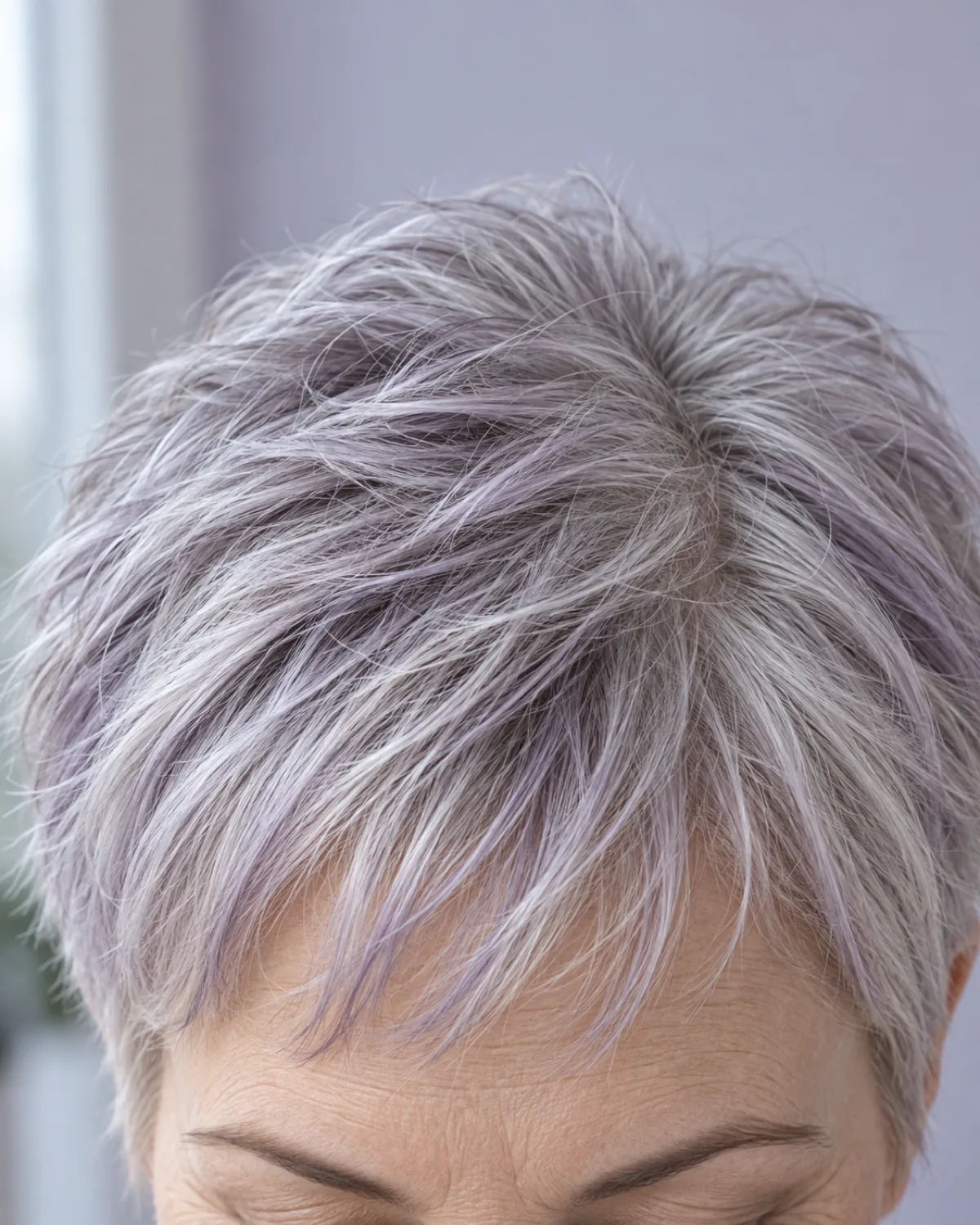
A cool-leaning fashion shade that sits best on fully white or very light gray hair. The tint is not permanent and washes toward pure silver within four to six washes, which means the commitment is short and the recovery is built in.
- The short crop keeps maintenance honest because there is less surface area for the tint to distribute unevenly
- Works only when the base is already very light, because lavender pigment cannot land on unlifted dark hair without turning muddy
- The wash-out timeline is the point, not the limitation, because it lets you test a fashion tone without a long-term commitment
- Ask your stylist whether a semi-permanent gloss or a direct dye is better for your hair condition, and confirm the lavender sits cool rather than pink on your particular white or gray base
10. Ash-Blonde to Silver Transition Cut
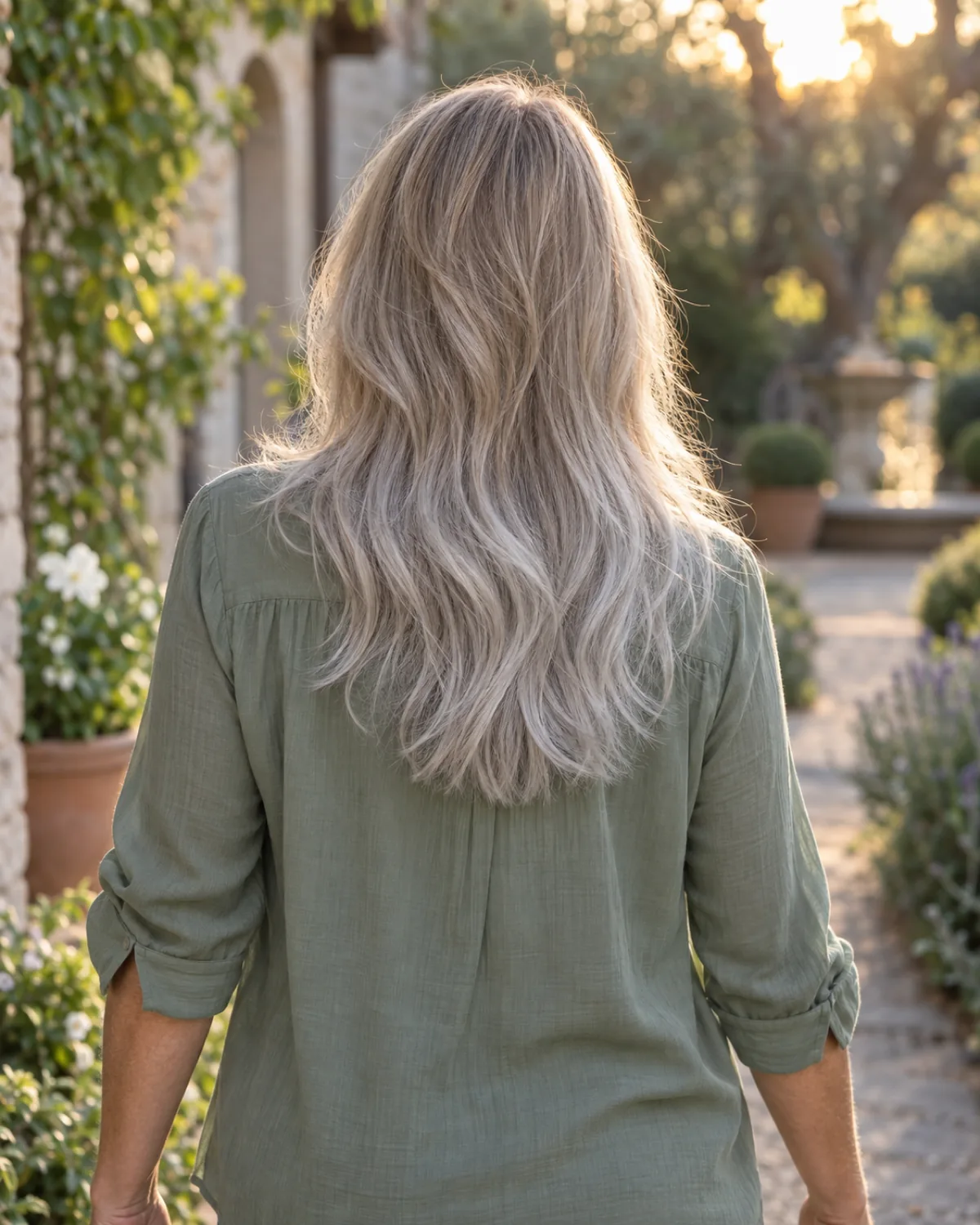
For the reader still deciding. The cut blends warm ash-blonde at the roots with cooler silver through the midshaft and ends so the grow-out line stays invisible. The gradient works with the natural direction of re-growth rather than against it.
- The lowest-commitment option on this list because the warm-to-cool gradient means there is no hard line to maintain between appointments
- Works best on medium to long hair because the gradient needs length to read as a deliberate transition rather than a patchy grow-out
- Skip it if you want a single uniform tone, because the whole point of this cut is the shift from warm to cool across the length
- Ask your stylist to place the transition point at the midshaft rather than higher, so the warm zone at the roots has room to grow without disrupting the gradient
See natural grey hairstyles if you prefer to let gray come in without toning, or short grey pixie cuts if you already know length is not the question. For fine hair at any tone, hairstyles for very fine hair judges cuts by density rather than colour.
Where the checkable claims come from
- Understanding Hair Colour Levels and Tones — Pivot Point International
- The Science of Hair Lightening — Sam Villa / Redken Education
- Face Shapes and Hairstyles — Pivot Point International
Keep this one
Save it for the appointment
Pin the image above to the board you actually open before a salon visit. This guide is written to be re-read, not read once.
Tonight, before you close this tab
- Hold a piece of white paper next to your jawline in natural daylight and check whether your skin reads warm, cool or neutral
- Pull up three photos from this guide and bring them to your next salon visit with the question: which of these tones can my current base reach without excessive lifting?
- Ask your stylist to do a single strand test at the temple before committing to all-over colour
- Check the mineral content of your home water supply because hard water yellows platinum faster and a shower filter is a low-cost fix