17 Short Grey Pixie Cuts Over 50 That Actually Suit Your Texture
Seventeen grey pixie cuts for women over 50, judged by texture and face shape. Which ones carry grey well, which ones expose it, and what to ask your stylist.

Booking an appointment soon? Save this page. It is easier to skim in the chair than to remember.
At a glance
Works
- A classic cropped pixie when your silver is uniform in coarseness from crown to nape
- A textured crop with choppy top layers when your grey is mixed-texture, because the piece-y finish disguises strand inconsistency
- A curly grey pixie when going grey actually tightened your curl pattern
Depends
- A side-swept fringe pixie, which covers a high hairline only if your grey fringe section is dense enough to form the sweep
- A tapered nape pixie, which elongates the neck only if your nape hair does not grow in competing grey directions
- A grey pixie bob, which is the safe bet if you do not yet know how your new grey texture behaves short
Skip
- An edgy undercut on patchy salt-and-pepper, where the shaved boundary looks accidental rather than intentional
- Micro bangs on fine wispy grey, where the gaps between strands make the fringe look incomplete
- A feathered pixie on coarse wiry grey, because the ends will spike rather than taper
Grey changes the strand before it changes the colour. A pixie that worked on pigmented hair may spike, flatten, or frizz on the grey version of the same strand.
These seventeen are judged on one question: does your grey texture carry this shape, or expose what the shape tries to hide?
Grey hair often shifts in diameter and stiffness at the same time it loses pigment. What you see is a colour change. What the scissors meet is a texture change.
1. Classic Cropped Pixie on Uniform Silver
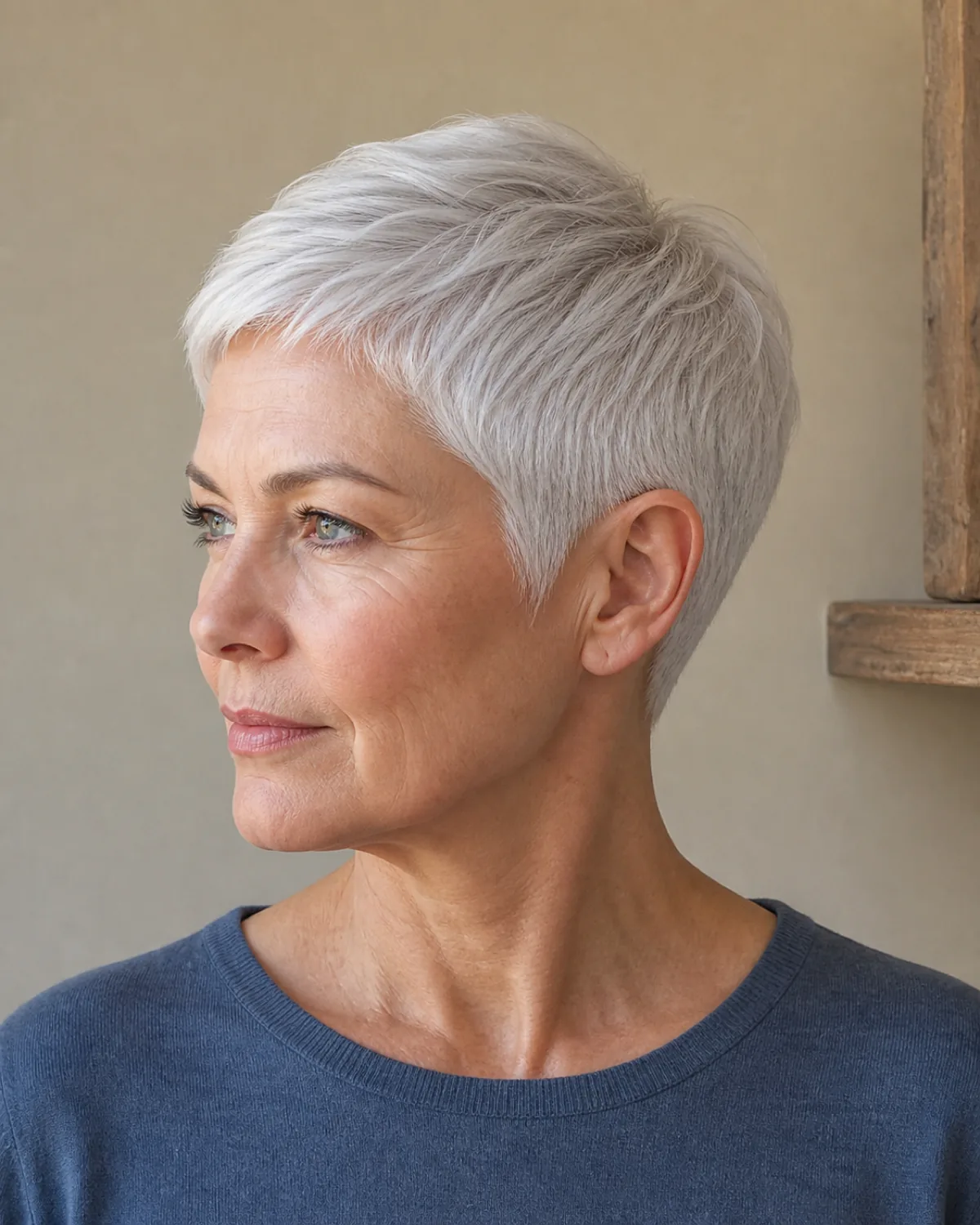
This is the benchmark. About an inch and a half on top, tapered evenly at the sides, graduated at the nape. It works when every grey strand on your head is roughly the same coarseness, because this cut has nowhere to hide inconsistency.
- Suits uniform silver where the tone is the same from root to nape
- The weight line where the top meets the taper should sit just above the ear
- If your grey is patchy, this cut announces every transition zone
- Ask your stylist to cut dry so the grey texture shows its true resting position
- The less your grey texture varies, the cleaner this shape reads
2. Textured Crop With Piece-y Top

Choppy layers on top serve a specific purpose on grey hair: they disguise the mismatch between wiry strands and fine ones. When some of your grey grows coarse and some stays silky, a smooth pixie exposes the difference. A textured crop makes it look intentional.
- Works when your grey is mixed-texture and you want the variety to read as style rather than chaos
- The choppy top creates deliberate separation between pieces of different thickness
- Keep the sides cropped close so the texture story happens on top, not everywhere
- Skip this if your grey is all one texture, because the choppiness adds nothing and just removes weight
- Tell your stylist which sections are wiry and which are fine so they can place the texture where it helps
3. Soft Rounded Pixie on Coarse Grey
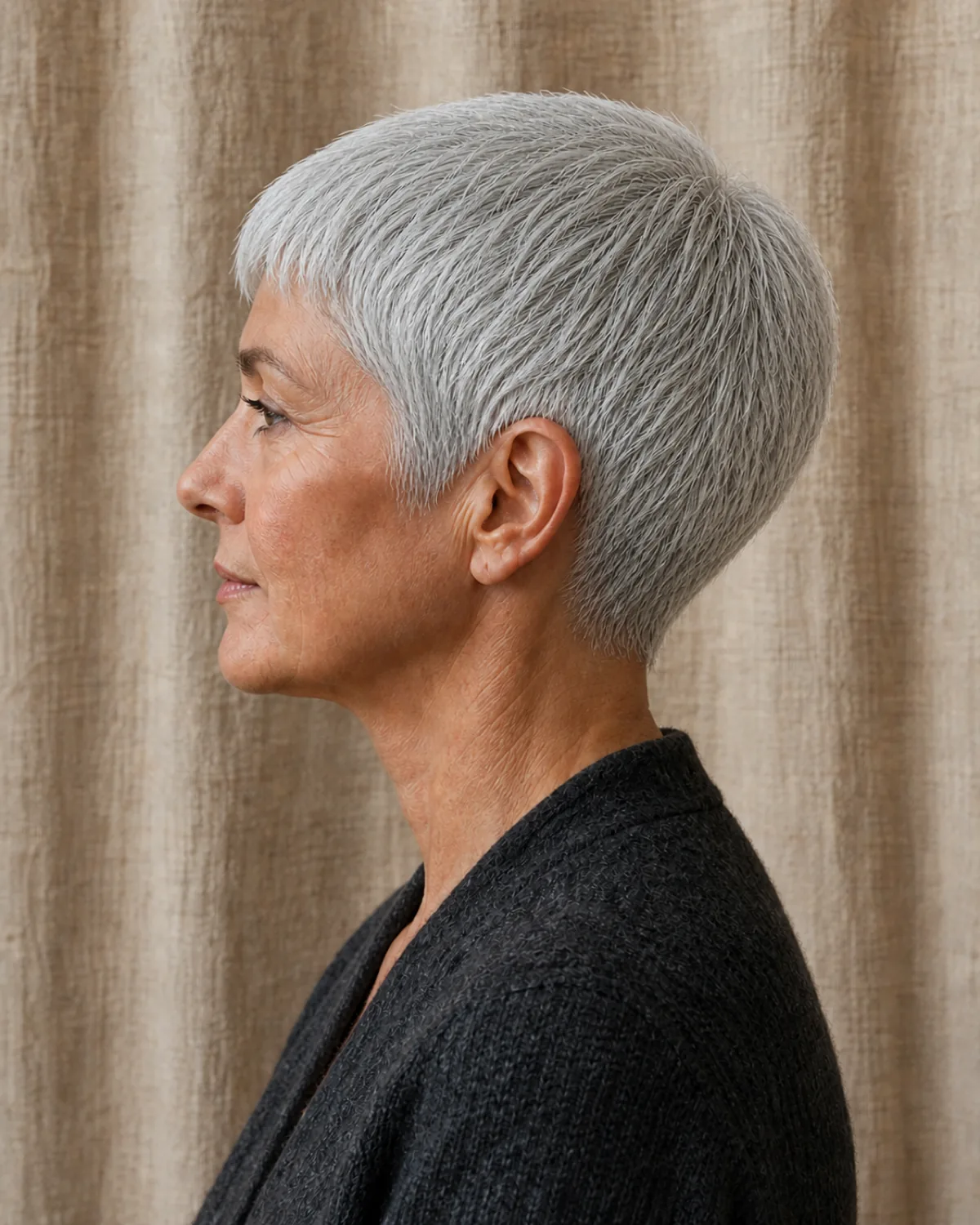
Coarse grey hair has a quality fine grey lacks: it holds its own shape. This cut uses that natural body to create a smooth, rounded silhouette that curves around the skull without needing product or heat.
- Suits thick wiry grey that stands away from the scalp on its own
- The rounded shape follows the head closely, about two inches all over
- Fine wispy grey will flatten and lose the silhouette within hours
- The profile view is the real test: the curve from crown to nape should read as one continuous line
- No layers needed here, because the coarseness already creates volume
4. Silver Pixie With Side-Swept Fringe
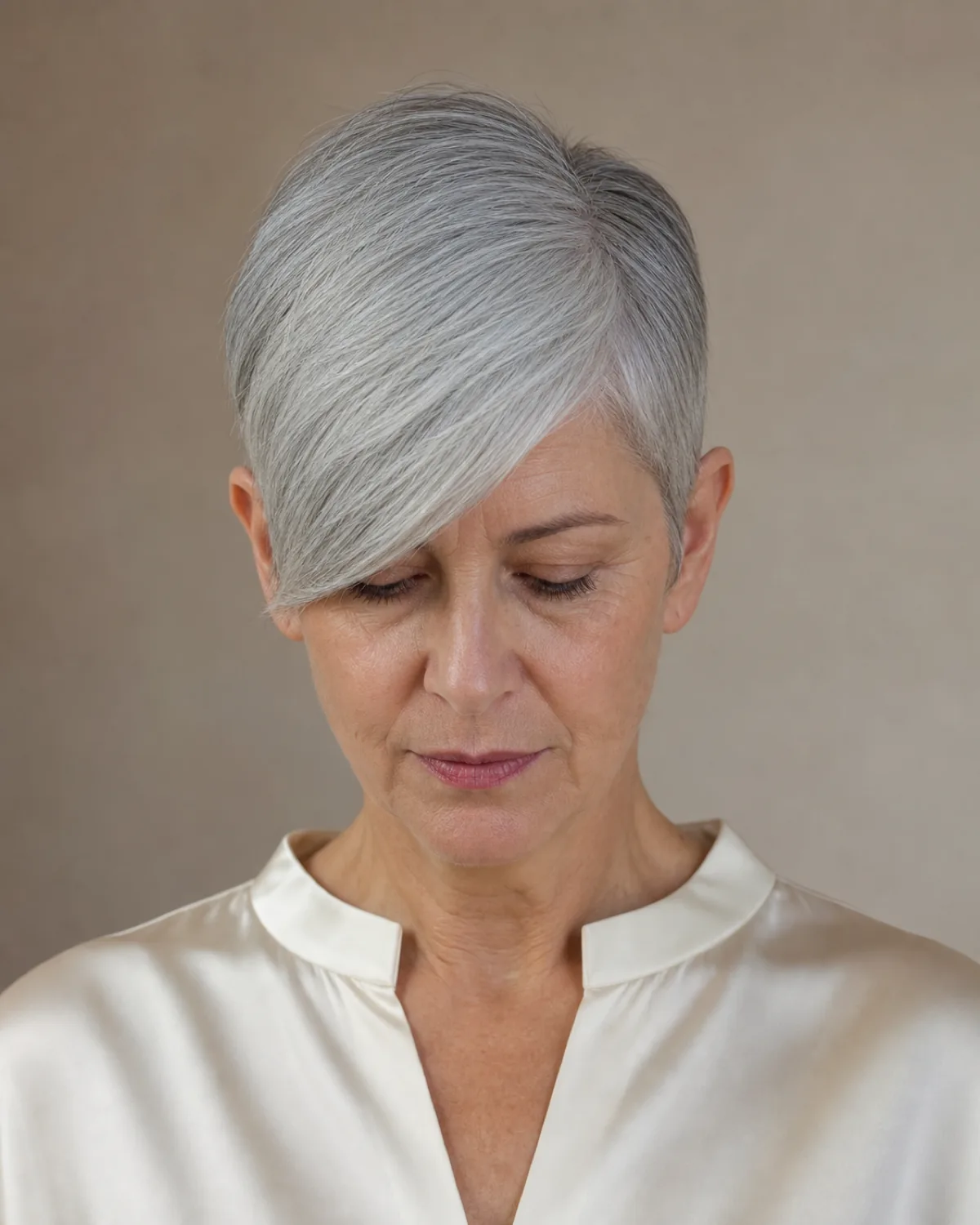
A fringe on a pixie redirects the eye from a high or receding hairline. On grey hair, the fringe section must be dense enough to form a solid sweep. If it is sparse, the individual strands separate and expose scalp instead of covering it.
- The fringe should fall past the outer corner of the eye for maximum coverage
- Works when your grey front section has enough strands to lie as a sheet rather than individual wisps
- Sparse grey at the temples makes a side-swept fringe look thin rather than deliberate
- Ask your stylist to check your fringe density before committing to this shape
- The rest of the cut stays short, about an inch at the sides, to frame the sweep
Where to start
Find your situation, skip ahead
Your grey is uniform silver and your hair texture is medium or fine
Start with the classic cropped pixie. It is the cleanest test of whether your grey carries short.
01 Classic Cropped Pixie on Uniform Silver06 Pixie With Kept Length at the Crown10 Feathered Pixie With Wispy Ends
Your grey has changed your curl or wave pattern and you are not sure what it does now
The curly grey pixie or the bixie lets your texture show what it wants to do at a recoverable length.
08 Curly Grey Pixie11 Grey Pixie Bob (Bixie)02 Textured Crop With Piece-y Top
Your grey is patchy or mixed-tone and you want the cut to work with the blend rather than against it
Layered and textured styles reveal the blend as depth rather than mess. Skip anything that demands uniform colour.
15 Layered Pixie With Visible Grey Blend02 Textured Crop With Piece-y Top07 Asymmetric Pixie on Salt-and-Pepper
5. Tapered Nape Pixie for a Clean Finish
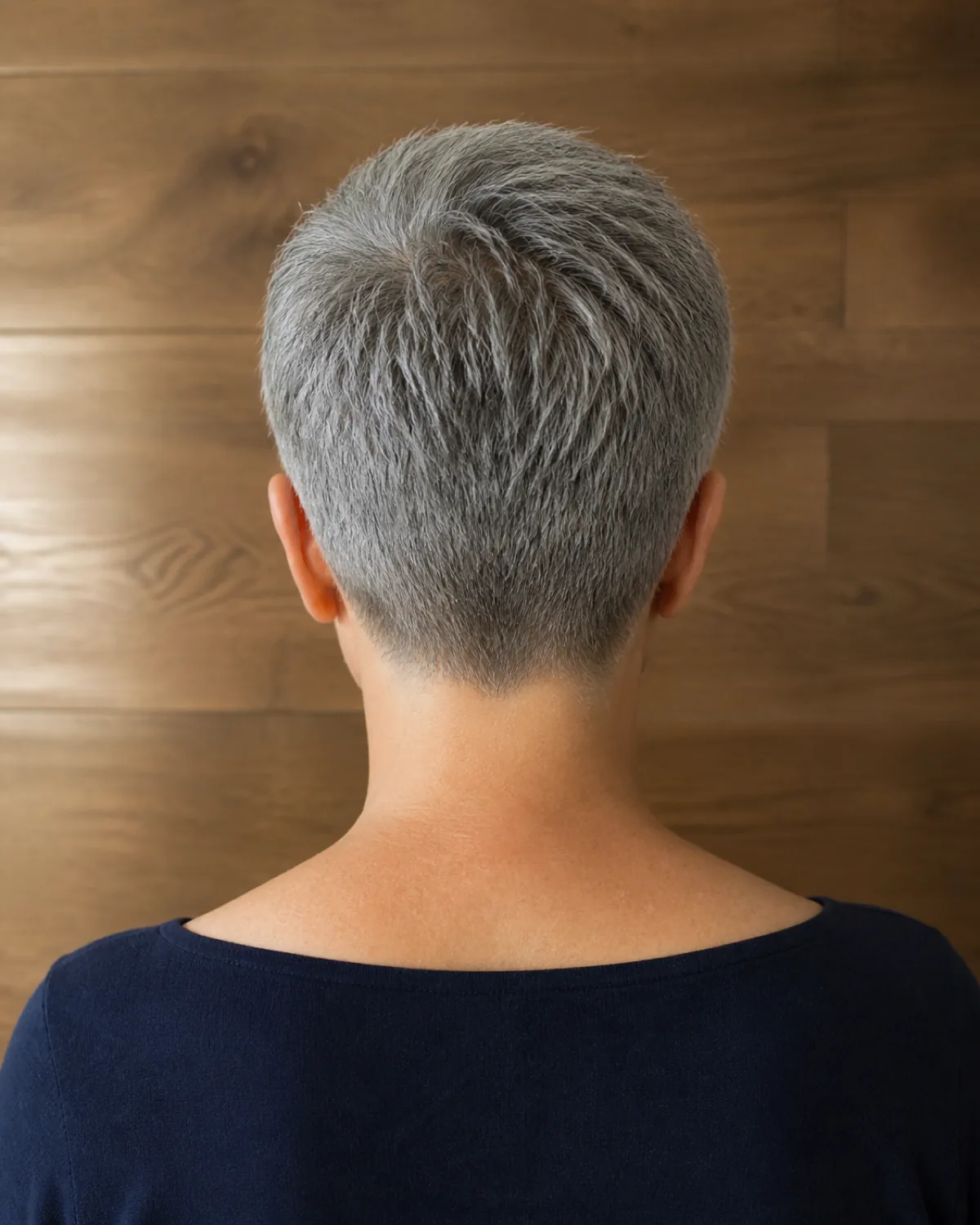
The nape is where grey hair most often changes its growth direction. A taper that follows one clean line downward reads sharp. A taper fighting multiple cowlicks at the nape reads messy within a week.
- Graduation from about two inches at the crown to close at the nape elongates the neck line
- Suits round or square faces by creating the illusion of a longer neck
- Check your nape growth direction before booking: run a finger upward and feel where the hair pushes back
- If your grey nape hair grows in two or more competing directions, a taper will need frequent trims to stay clean
- Skip a tight taper if your nape hair refuses to lie flat, and ask about a slightly longer graduated finish instead
6. Pixie With Kept Length at the Crown
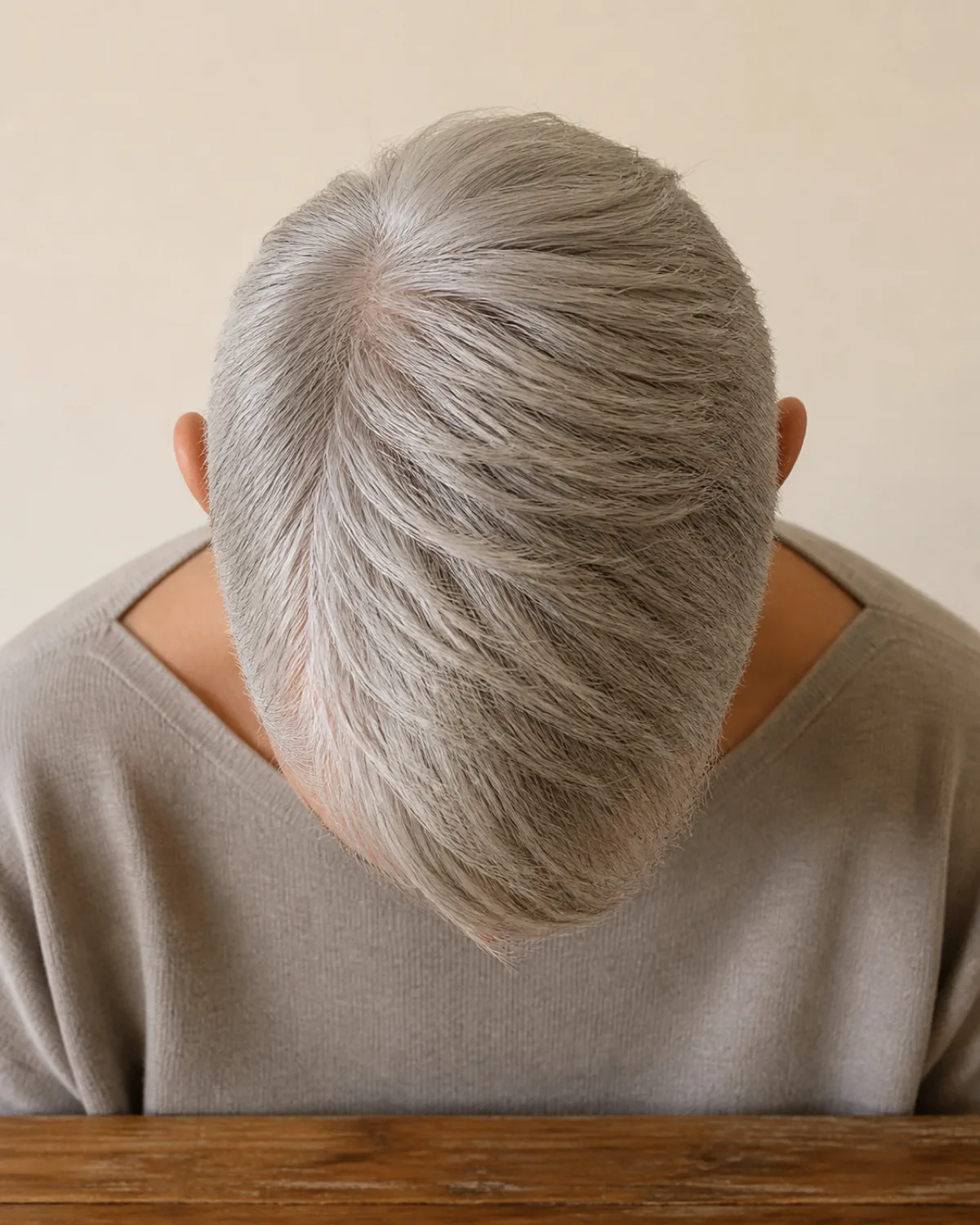
This is the safest bet when your grey is fine and has lost volume. By leaving about two and a half inches at the crown and cropping the sides to an inch, the weight stays where you still have coverage.
- The crown hair must drape forward softly rather than stick up, which requires pliable grey texture
- Fine silver that has gone stiff will stand straight and read as accidental rather than styled
- The single part line should sit naturally without being forced
- A good test: push your crown hair forward with your hand and let go. If it falls back where you want it, this shape works
- If your crown hair has gone wiry and springs upward, the kept-length approach will fight you every morning
7. Asymmetric Pixie on Salt-and-Pepper

The asymmetry serves a purpose on salt-and-pepper hair: the longer side displays the blend, and the short side frames it. The contrast works when your grey ratio is roughly fifty-fifty, so the long side shows a genuine mix rather than a streak.
- The longer side should be about three inches, the short side about half an inch
- On uniform white hair, asymmetry can read as a mistake rather than a style choice
- On mostly-dark hair with a few grey streaks, the blend is too subtle for the long side to display
- The sweet spot is roughly even grey-to-dark ratio where the blend is the visual interest
- Ask your stylist to check which side has the more interesting blend before choosing which side goes long
8. Curly Grey Pixie
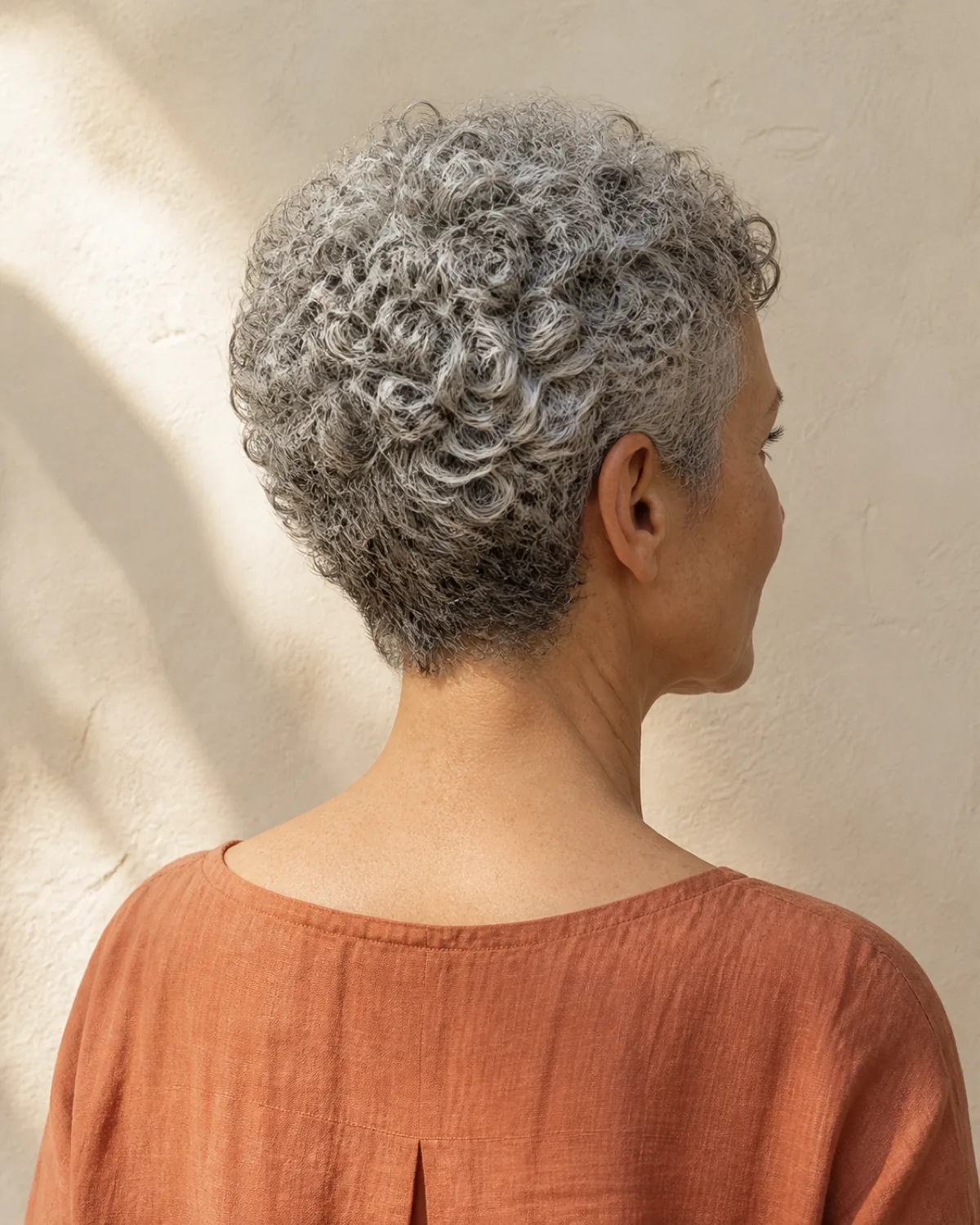
Grey often changes curl pattern. For some women it tightens the curl, giving more volume at short lengths than they ever had before. For others it loosens the curl into waves. This pixie works for the first group, not the second.
- Works when going grey has tightened your curl, because the ringlets compress into a rounded short shape
- Fails when going grey has loosened your curl, because waves at pixie length lack definition
- The curls should be consistent from crown to nape for the shape to read as intentional
- If your curls tighten at the crown but loosen at the nape, talk to your stylist about leaving slightly more length at the nape to compensate
- Ask for a dry cut so the stylist sees where each curl actually sits, not where wet hair pretends it will
9. Edgy Undercut Pixie on Bright White Hair
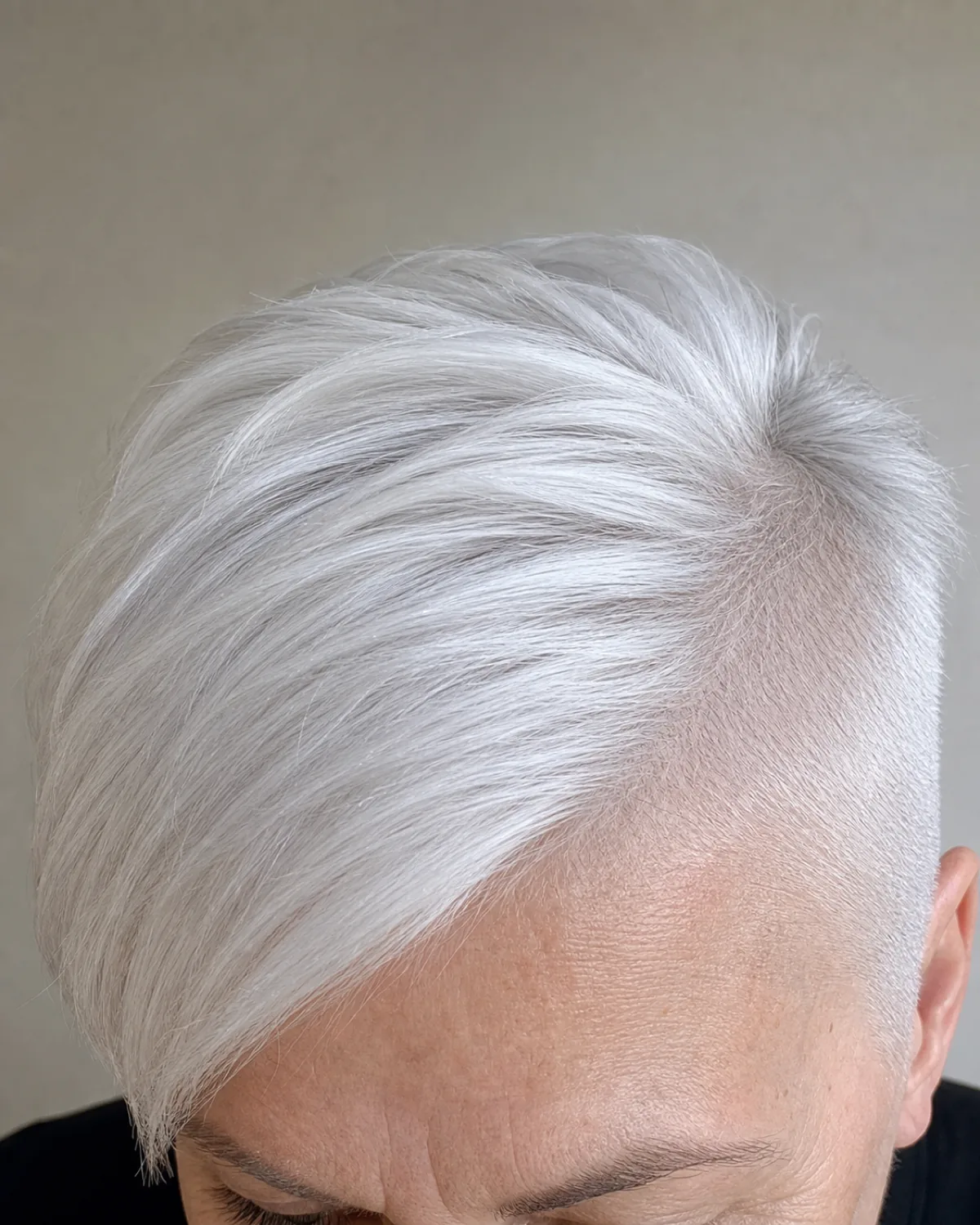
The undercut creates a sharp line between long and short. On uniformly bright white hair, that line reads as a deliberate design choice. On patchy grey, the shaved boundary looks accidental, as if a section was missed.
- The contrast is the point: long top at about three inches, temple buzz at about three millimetres
- Requires uniformly white hair or uniformly dark roots with white length for the line to read cleanly
- Patchy salt-and-pepper makes the undercut boundary ambiguous
- This is a high-maintenance shape that needs buzzing every three to four weeks to stay sharp
- If your grey is still transitioning, wait until the transition is complete or choose a shape that works with the blend
10. Feathered Pixie With Wispy Ends
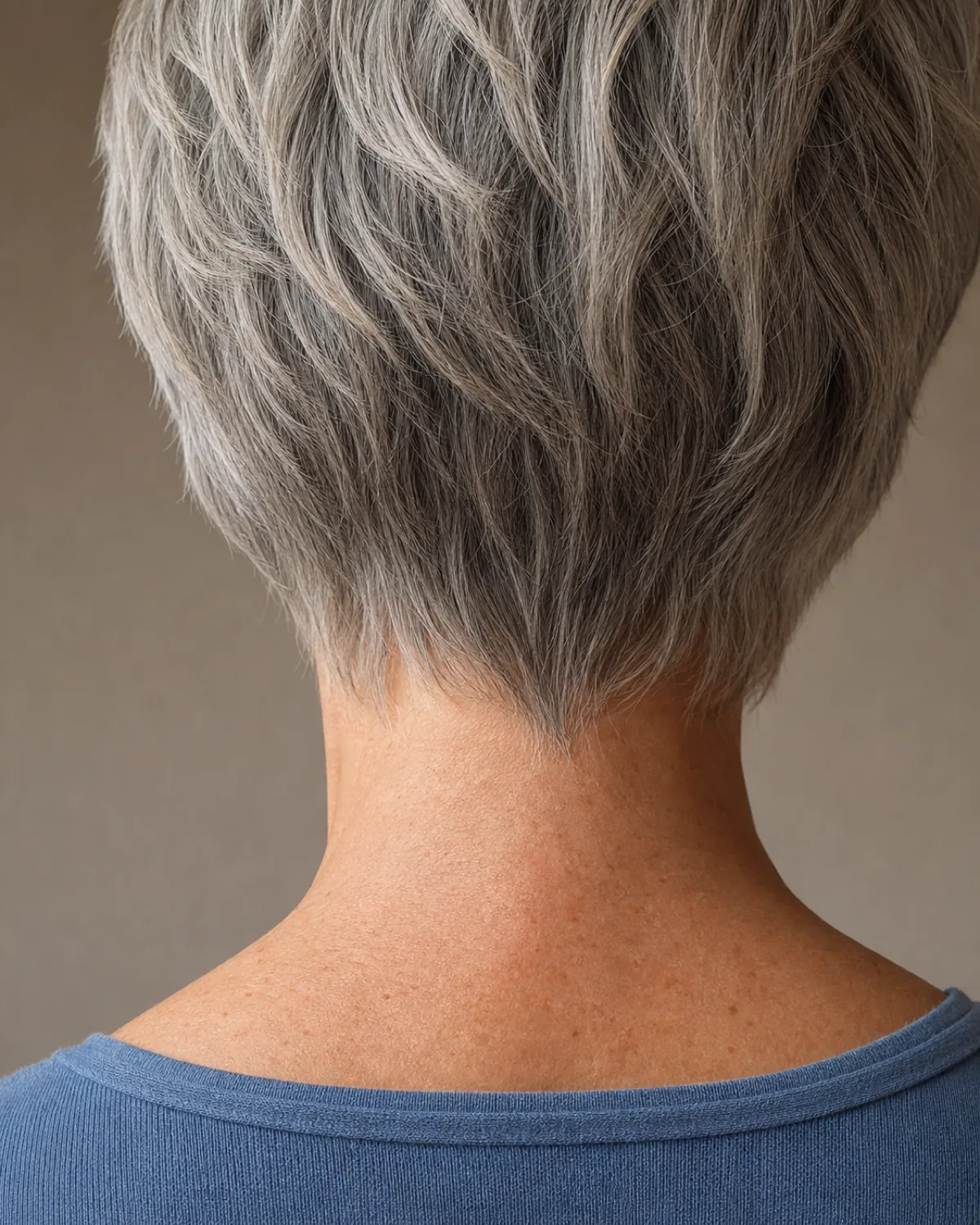
Feathered ends taper to nothing, and the effect depends entirely on whether your grey hair cooperates. Medium-density grey with some pliability lets the ends curve slightly and lie flat. Coarse wiry grey will not taper. It will spike.
- The feathered ends should resolve into fine tapered points, not blunt stubs
- Works on grey that still has flexibility and lies where you put it
- Coarse wiry grey at the nape will push the feathered ends outward instead of letting them lie soft
- Look at how your nape hair behaves right now: does it lie against your neck or stand away from it?
- If it stands away, feathering will amplify that tendency rather than soften it
11. Grey Pixie Bob (Bixie)
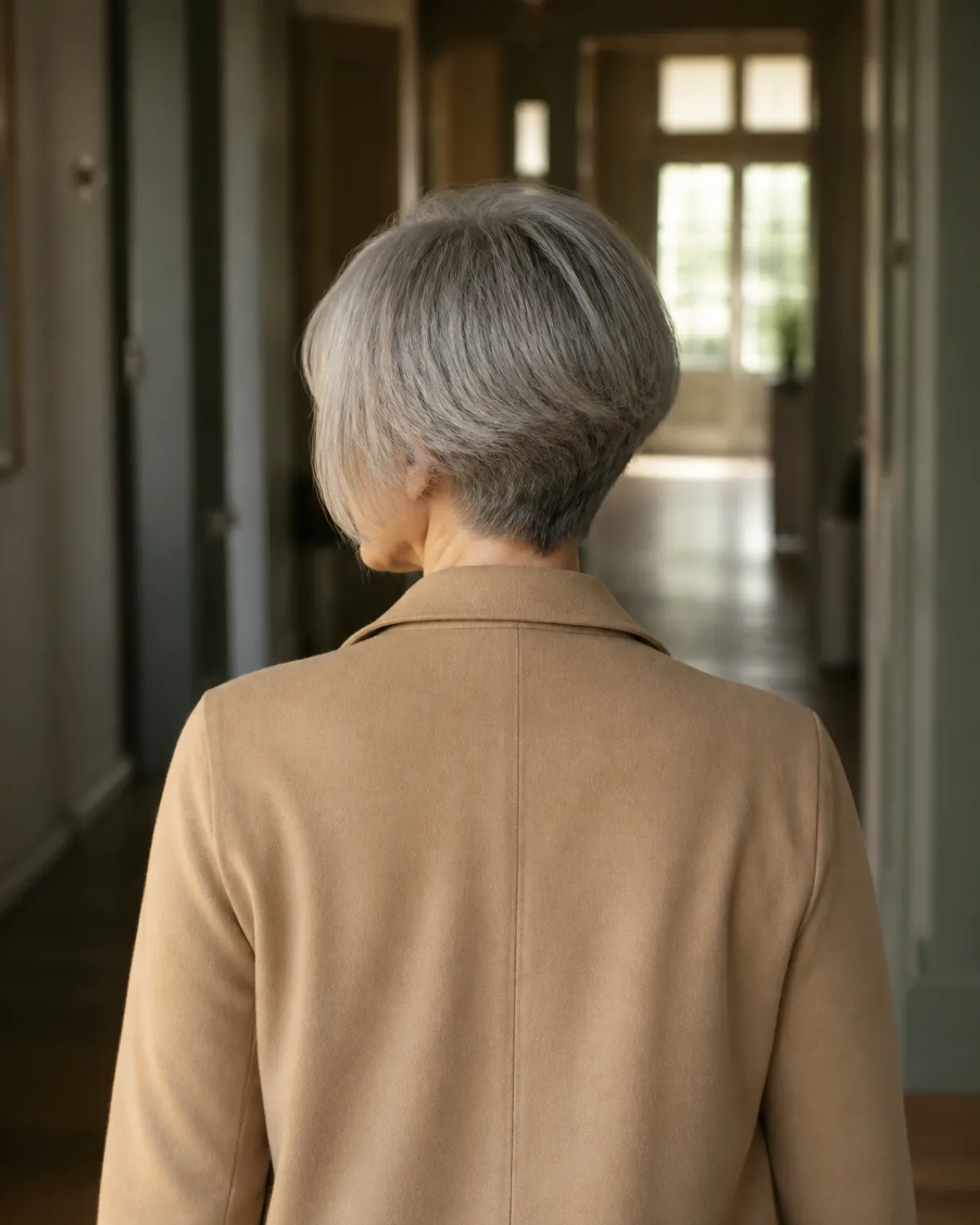
The bixie sits between a pixie and a bob, about jaw-length at the front tapering to pixie-short at the nape. It is the safety-net cut when you do not yet know how your grey texture behaves short.
- Gives you something to work with if the pixie length turns out wrong for your grey
- The in-between length lets you test how your grey sits short without full commitment
- If the grey sits well, you can go shorter next time. If it fights you, you have enough length to adjust
- Ask your stylist to cut dry so the grey texture shows its true length, not wet-hair optimism
- Suits almost any face shape because the graduated length creates balance from most angles
12. Close-Cropped Silver Buzz Variation
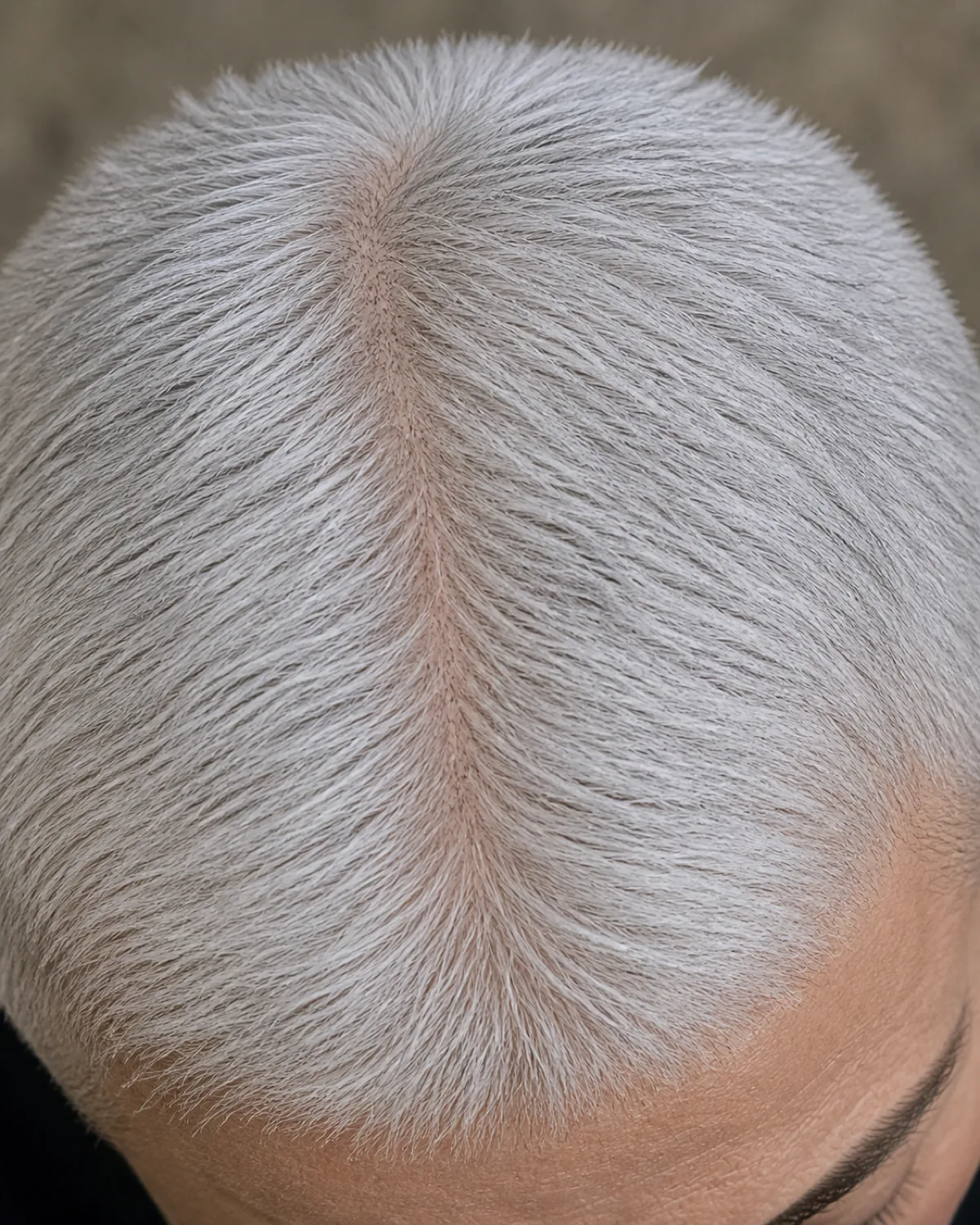
Nearly uniform at one to two inches all over, this is the most honest shape you can put on grey hair. Nothing hides, nothing is styled to cover. The bone structure of your face carries the look.
- Suits strong bone structure: a defined jaw, a clear brow ridge, visible cheekbones
- On softer, rounder faces the uniform shortness can tip toward severity
- This shape announces every strand of grey equally, which reads confident on the right person
- No styling required, minimal product, almost no maintenance between cuts
- The real question is not whether your hair suits it but whether your comfort with visibility does
13. Pixie With Volume at the Temples
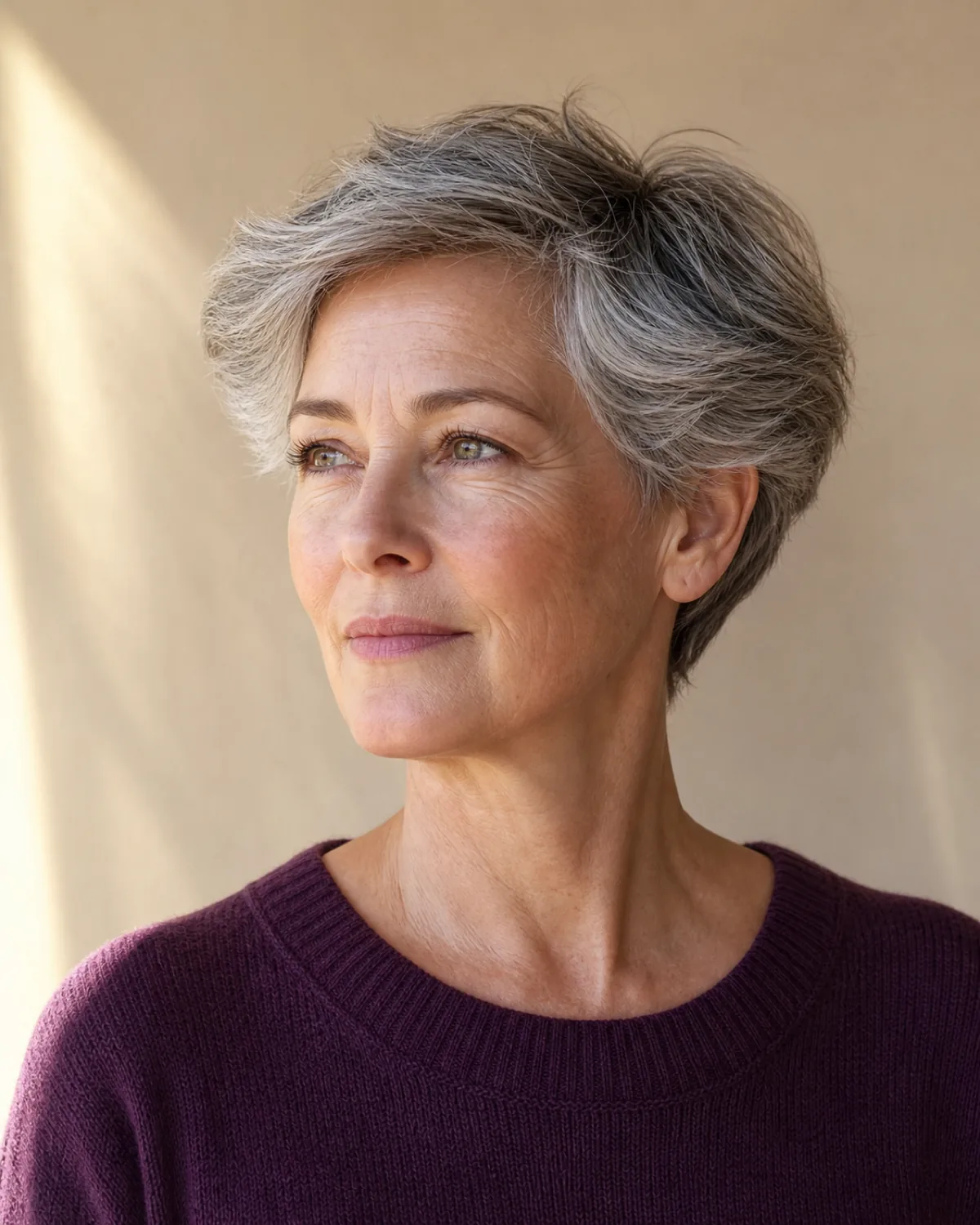
Most pixies crop the sides close. This one does the opposite: it keeps about two inches at the temples, wider than the crown, creating deliberate width at the sides of the head.
- Balances a narrow or long face by adding width at the cheekbone level
- Skip on round faces, where the side volume amplifies what you already want to slim
- The top should be slightly shorter than the sides so the width reads as the design choice, not an accident
- Grey hair at the temples often grows differently from the crown, so check whether your temple hair lies flat or pushes outward
- If it pushes outward naturally, this shape uses that tendency instead of fighting it
14. Grey Pixie With Micro Bangs

Micro bangs are a half-inch fringe cut straight across, well above the eyebrows. On thick coarse grey, the dense strands hold a clean horizontal line. On fine grey, the gaps between strands make the fringe look accidental.
- The fringe must be dense enough to form a solid line with no visible gaps
- Thick coarse grey hair is the only texture that reliably holds micro bangs
- Fine grey or thinning grey at the front will separate into individual wisps
- This is a high-contrast choice that reads editorial and deliberate, not soft
- If you are unsure about your fringe density, ask your stylist to hold the front section straight and count whether you see scalp through it
15. Layered Pixie With Visible Grey Blend

Internal layers let different grey tones show through in alternating sections. This works when your grey blend has at least two distinct tones, such as bright silver at the crown and darker steel grey at the nape.
- The layers reveal tonal depth by letting sections of different grey shades overlap
- On uniform grey, layers have nothing to reveal and just remove weight for no visual gain
- The more distinct your grey tones, the more interesting this cut becomes
- Ask your stylist to layer with the two-tone geography in mind, placing shorter layers where the contrast is strongest
- If your grey is all one tone, choose a shape that works with uniformity instead, like the classic cropped pixie
16. Soft Pixie With Ear Tuck

This pixie keeps about two and a half inches of length, just enough to tuck behind one ear. The ear tuck is a small gesture that reads polished, but it only works on grey hair that stays where you put it.
- Straight-to-wavy grey with some pliability tucks and stays
- Wiry coarse grey will spring out of the tuck within minutes
- The tucked side should reveal the ear completely, with hair lying flat against the skull behind it
- The untucked side falls forward naturally, creating soft asymmetry without a full asymmetric cut
- Test it now: push your hair behind your ear and see if it stays for ten minutes. That is your answer
17. Wind-Swept Grey Pixie With Off-Centre Part

An off-centre part pushes volume to one side, creating directional movement. On pliable grey hair, the sweep holds. On stiff grey, the hair resists direction and the part looks like a fight you are losing.
- Suits oval and heart-shaped faces where the volume on one side balances the chin line
- On square faces the volume on one side can exaggerate jaw width
- Your grey texture must be pliable enough to accept direction and hold it through the day
- Stiff wiry grey will push back toward centre within hours
- The off-centre part works best at roughly one-third from the side, not dead centre and not at the temple
Where the checkable claims come from
- Human hair greying is naturally reversible and linked to stress — Rosenberg et al., eLife (2021)
- Pixie cut — Wikipedia
- Graduation vs. Elevation: The Subtle Distinction That Impacts Every Cut — Above Shears
- Hair diameter and ethnicity — Franbourg et al., Journal of the Society of Cosmetic Chemists (2003)
Keep this one
Save it for the appointment
Pin the image above to the board you actually open before a salon visit. This guide is written to be re-read, not read once.
Tonight, before you close this tab
- Pull one grey strand and one pigmented strand from the same spot and compare thickness and curl between your fingers
- Part your hair in natural light and photograph the crown, temples, and nape to map where grey is densest
- Check your nape growth direction by running a finger upward, because competing directions change which nape finishes work
- Write down whether your grey sections feel wiry-stiff or silky-fine, because the answer changes which shapes hold
- Find one photo of a pixie you like and one you rejected, and note what the texture did that made you react