7 Mother-of-the-Bride Hairstyles Over 50: Half Up, Half Down
Seven half-up half-down hairstyles for mothers of the bride over 50, each judged by what your hair needs to hold the shape through a full wedding day.
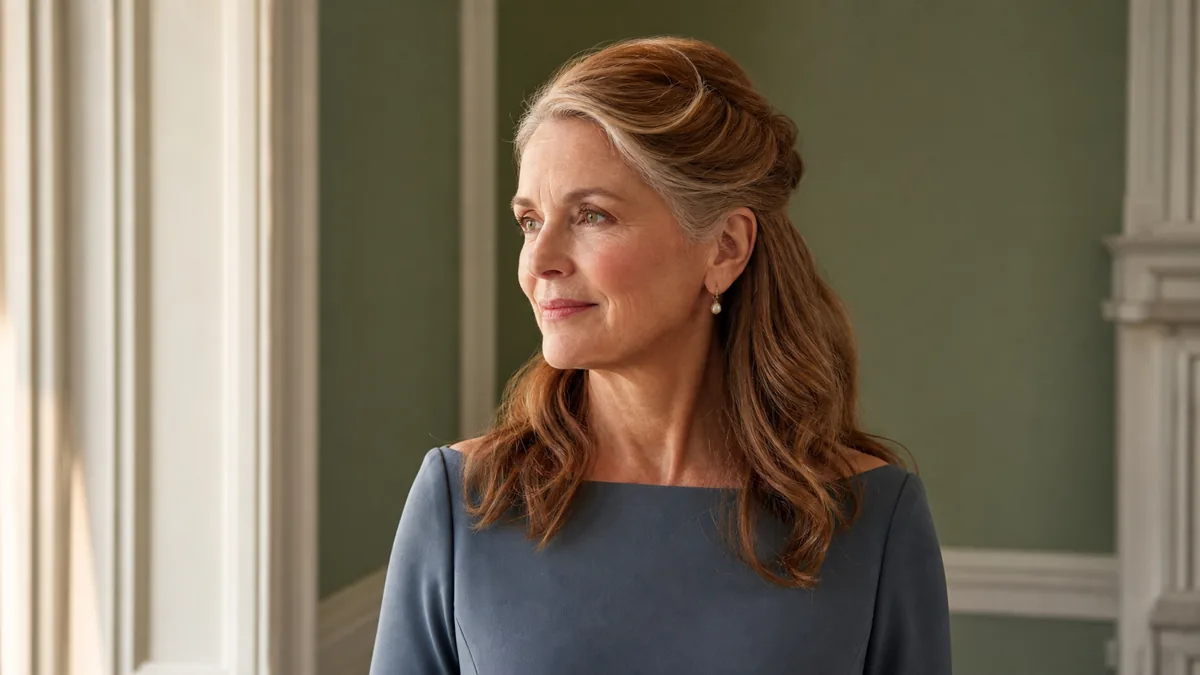
Booking an appointment soon? Save this page. It is easier to skim in the chair than to remember.
At a glance
Works
- A crown twist when you have enough density at the top for the roll to read as a shape
- A braided crown, which holds all day and works on second-day hair
- A low chignon with the lower half down, when the loose section has volume to balance the knot
Depends
- Soft waves pinned to one side, which only reads as intentional if the wave holds through the event
- A swept-back crown with root lift, which needs grip at the root or the height falls flat by the first dance
Skip
- A clip alone on fine hair, where the clip slides out within the second hour unless anchored with hidden pins
- A full crown twist when the density at the top is low enough to show gaps through the roll
A half-up half-down arrangement splits the hair into two jobs. The upper section holds structure and formality. The lower section provides movement and, on a good day, the sense that there is more hair than there actually is.
After 50, individual strands are often thinner and density can drop. Both change what a half-up style can do, because the pinned section needs enough material to hold a shape, and the loose section needs enough volume to balance it.
Every style below is judged on the same question: what does your hair need to hold this arrangement through a full wedding day, and what happens when it does not have it.
1. The classic half-up twist at the crown
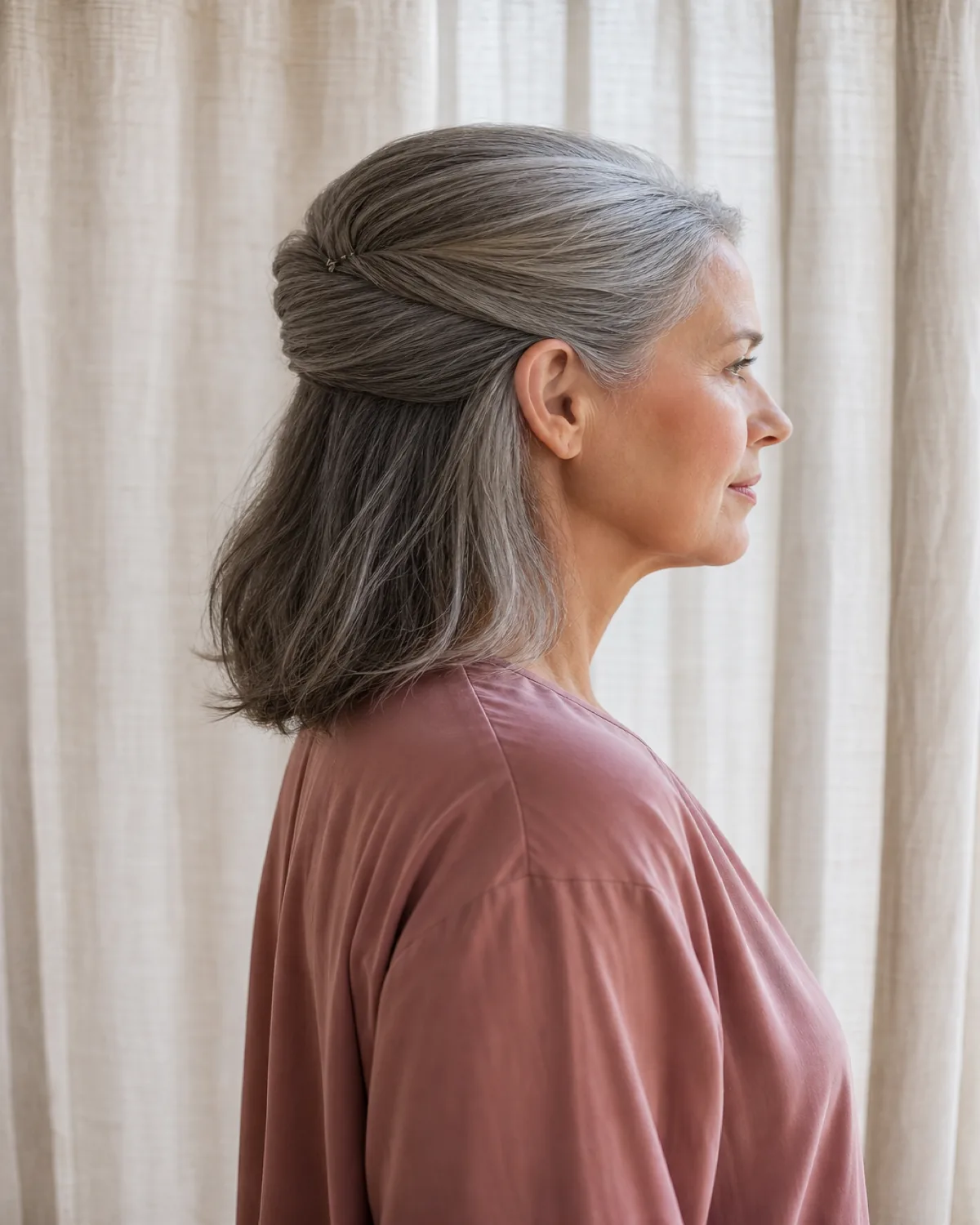
A single horizontal twist at the crown divides formal from everyday without committing to a full updo. The twist gathers the hair from the temples and crown, rolls it once, and pins it in place. The lower section falls from the ears down.
This works when the crown has enough density to form a roll that reads as a deliberate shape. If the twist shows gaps or flattens into a thin ridge, the arrangement looks accidental rather than chosen. A second row of pins placed just below the twist can reinforce it, but the raw material has to be there.
- Look at the hair at your crown in a mirror and see whether it covers your fingers when gathered
- Ask the stylist how many pins the twist needs; more than four means the hair is thin enough to consider a different option
- If the twist shows scalp through the roll, a braided crown or a chignon may hold better
2. A low chignon with the bottom half down
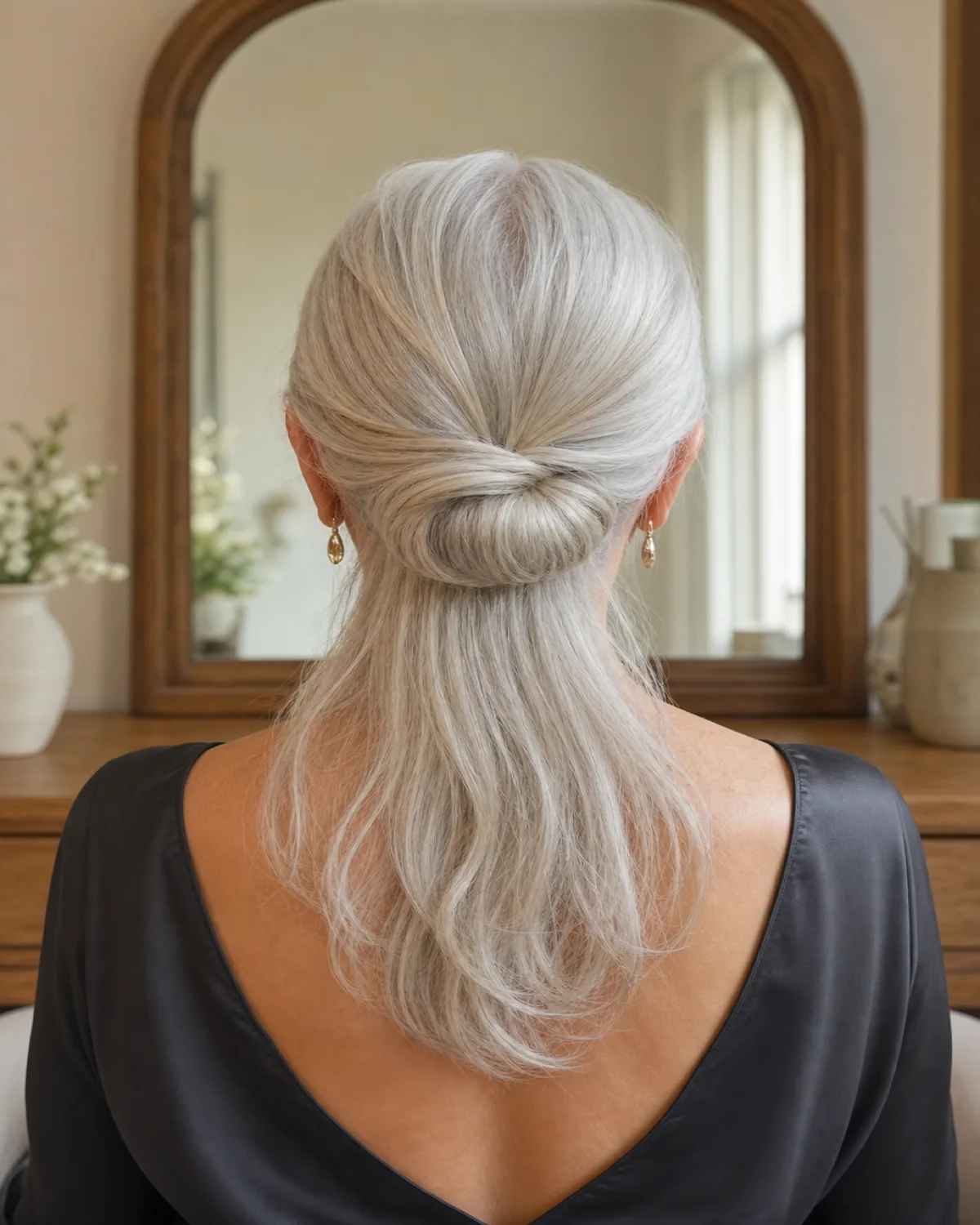
A chignon collects the upper section into a knot at the nape while the lower half falls free. The knot sits low, which means the weight does not pull against gravity the way a crown twist does. That makes it more stable on fine hair.
The balance depends on the lower section. If the loose hair below the knot has enough volume, the chignon reads as a deliberate division. If the lower section is sparse, the knot looks heavy and the bottom looks thin. Widening the chignon so it sits flatter against the nape helps, because a wide, low knot demands less volume below it than a tight, round one.
- Pull the upper section back and let the lower half hang; check whether the bottom reads full or thin
- Ask the stylist to keep the chignon flat and wide rather than round if your lower density is limited
- Bring a photo that shows the back of the dress; a low-back dress changes where the chignon should sit
Where to start
Find your situation, skip ahead
Your hair is fine or thinning and you need the half-up to hold all day
Start with the two structures that are secured with pins rather than relying on grip alone. The crown twist and the low chignon both stay put.
01 The classic half-up twist at the crown02 A low chignon with the bottom half down
Your hair holds a wave and you want the look to photograph well from the side
The side pin-back and the swept-back crown both change your profile silhouette, which is what the photographer captures during the ceremony.
03 Soft waves pinned back at one side06 Swept-back volume at the crown, lengths curled below
You want the simplest option that still reads as formal
A braided crown or a single decorative comb both do the structural work without complexity, as long as the hair has enough length or thickness to hold them.
05 Braided crown with ends falling free07 A simple clip or comb, and when that is enough
3. Soft waves pinned back at one side
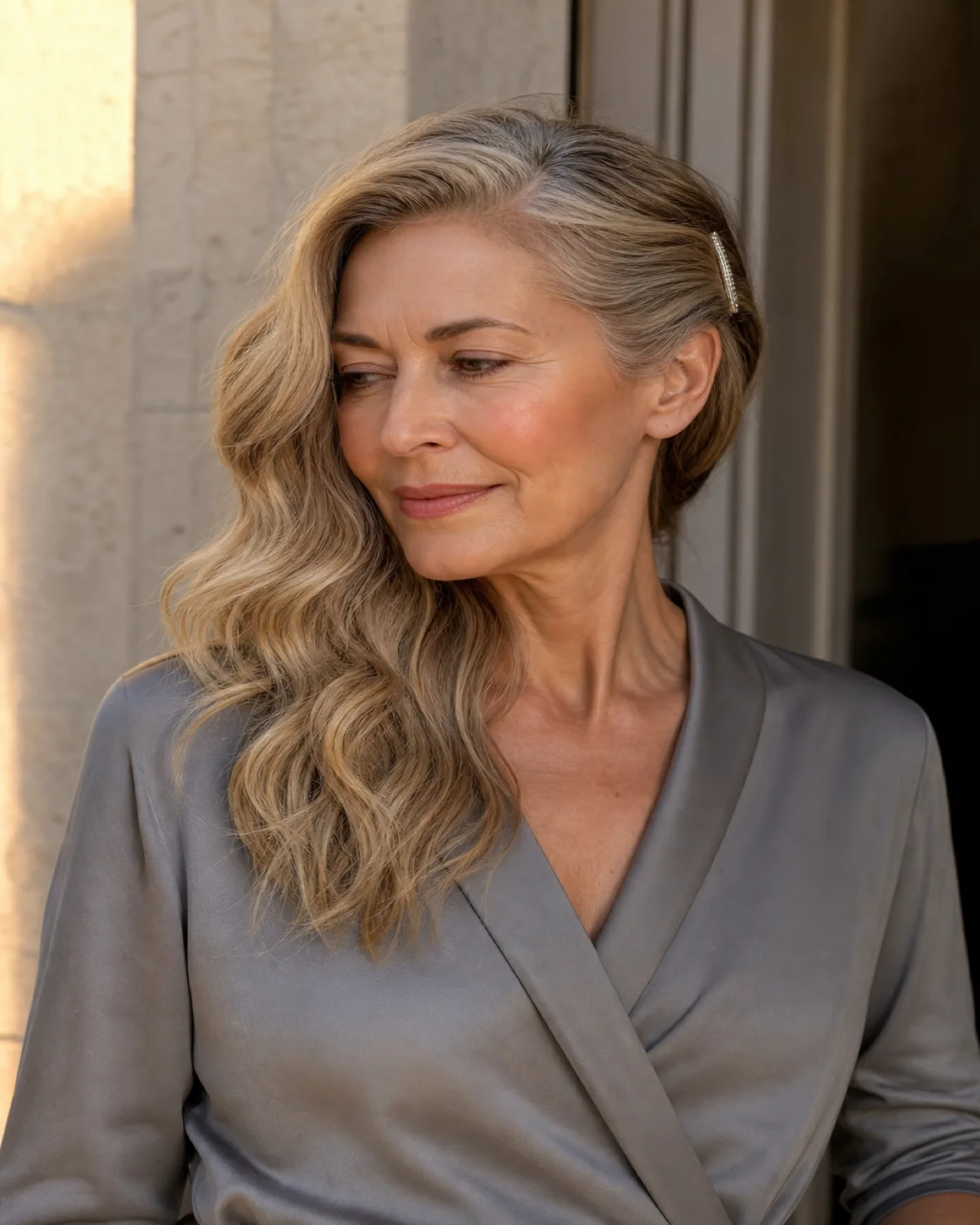
An asymmetrical pin-back sweeps one side behind the ear and lets the other fall forward. The asymmetry reads as intentional rather than half-finished, and it gives the photographer a clean jawline on one side and movement on the other.
This depends entirely on whether the waves hold. Hair that drops a curl within the first hour will keep the pinned side in place but lose the wave pattern on the free side, and the asymmetry then reads as unfinished. Ask the stylist about a setting technique that locks the wave before the day starts.
The pin itself should sit flat against the head. A bulky clip lifts away from the scalp and slides.
- Test whether your waves hold for three hours without product before committing to this shape
- Choose a flat pin or a barrette rather than a jaw clip; the flatter the hardware, the more stable the hold
- Ask the stylist to set the waves the night before if your hair is naturally straight
4. A half-French twist leaving the lower section loose
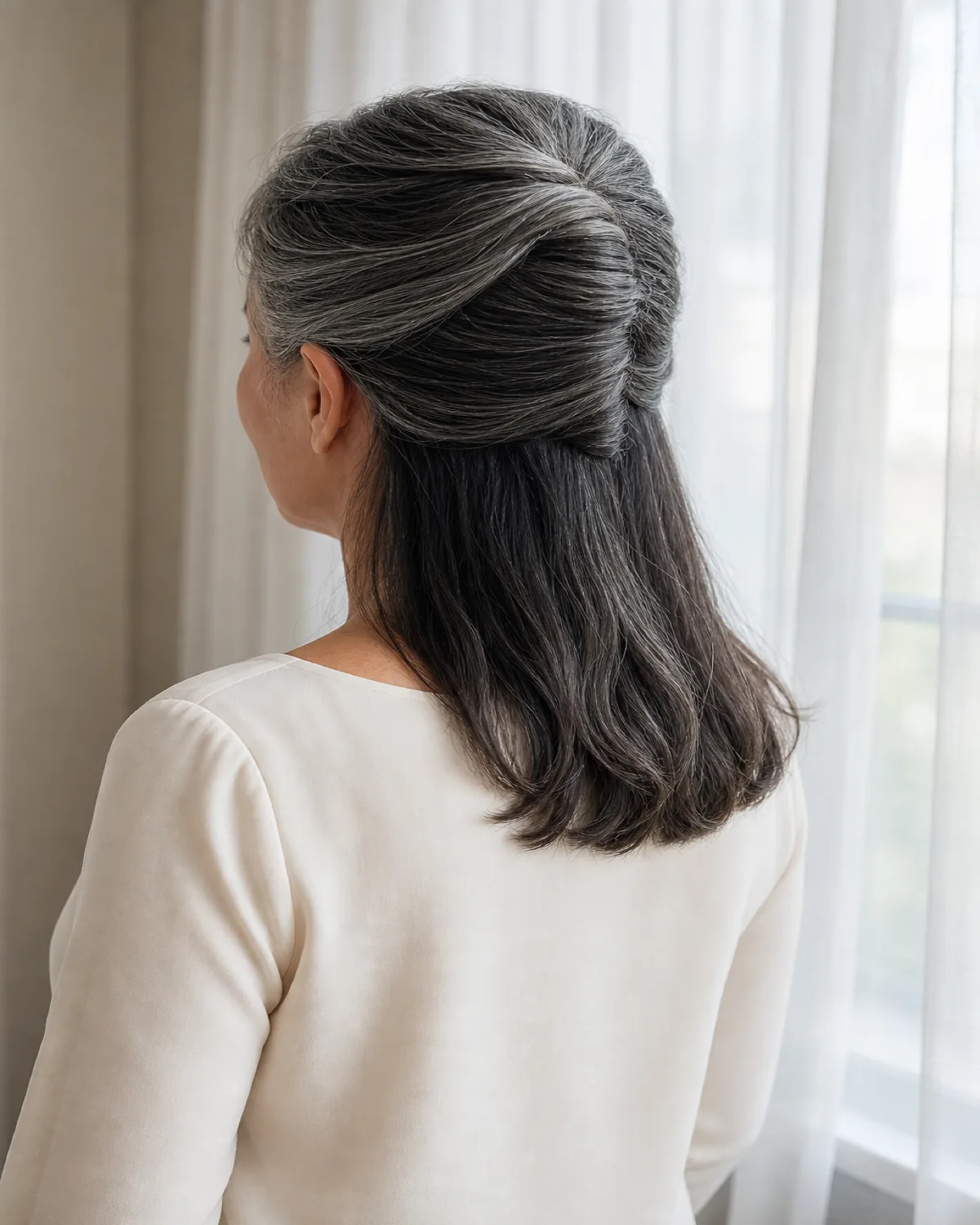
A French twist is a vertical roll that runs up the back of the head. In the half version, the twist stops partway, holding the crown and temple sections while everything from the ears down falls free. The vertical line reads formal without the weight and pincount of a full twist.
The twist needs the hair from the ears up to be long enough to wrap into the roll. Jaw-length minimum in that section. Shorter, and the ends pop out of the twist mid-event. The pin count is the tell: if the stylist needs more than eight pins, the hair is fighting the shape rather than holding it.
- Measure the hair at your temples; if it reaches your jaw when pulled straight, the twist has enough to work with
- Ask the stylist how many pins the twist needs at the trial; more than eight is a sign to reconsider
- Ask whether the roll can be secured with a single line of pins rather than scattered anchoring
5. Braided crown with ends falling free
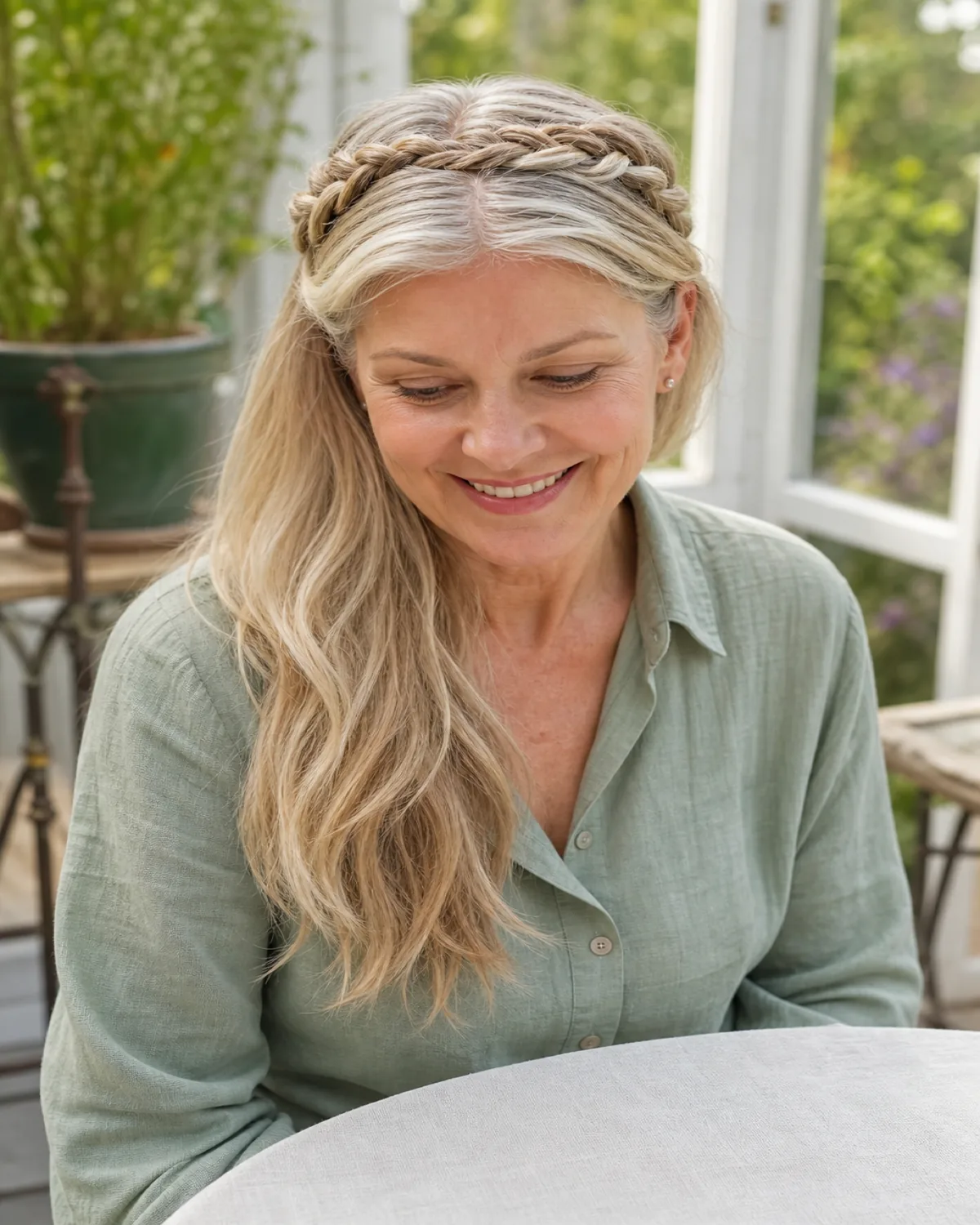
A braid across the crown holds structure all day because the interlocking strands grip each other. It works on second-day hair, on hair with natural texture, and on hair that refuses to hold a curl. The braid does the structural work that pins and product do in every other option here.
The braid needs enough length to wrap from temple to temple without pulling at the hairline. If you are growing out a shorter cut, the front pieces may be too short to reach. In that case, ask the stylist about starting the braid slightly behind the hairline and leaving face-framing tendrils out intentionally.
- Part your hair and see whether the front section reaches past the opposite ear when pulled across the crown
- Ask the stylist to braid on unwashed hair for better grip
- If the front pieces are too short, ask about leaving them out as face-framing tendrils rather than forcing them in
6. Swept-back volume at the crown, lengths curled below
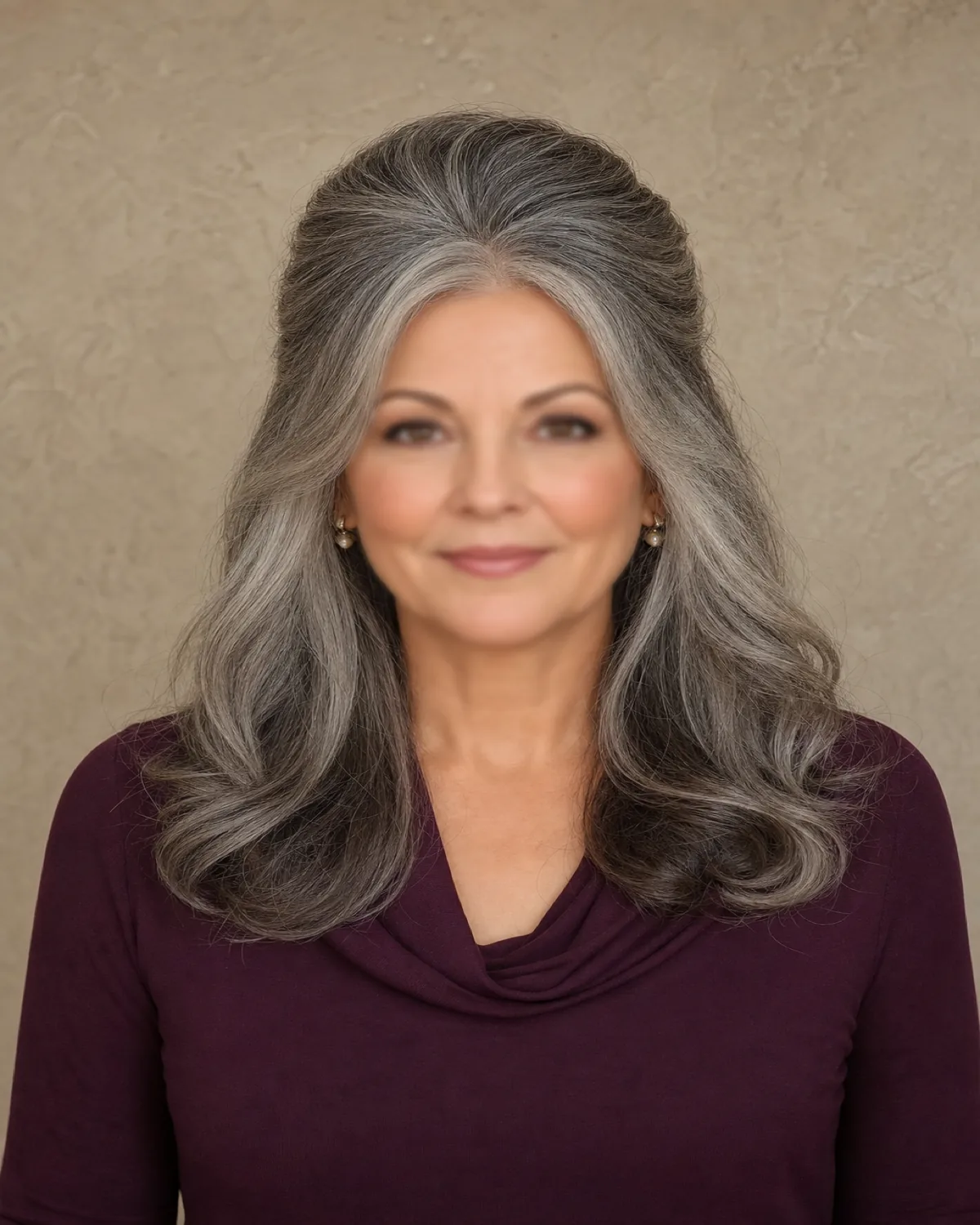
Lifting the roots at the crown and pinning the upper section with height creates a profile silhouette that photographs well from the side. The lower half, curled at the ends, provides the movement. This is the variation that changes how the head reads in a profile shot.
The lift depends on root grip. Fine, slippery hair needs a light texturizing product and gentle backcombing at the root before the pins go in. Without that grip, the height collapses and the pins slide down, and the arrangement reads flat by the time the ceremony starts. Ask the stylist to test how long the lift holds at the trial.
- Ask the stylist to test crown lift at the trial and time how long it holds before falling
- If the lift drops within an hour at the trial, the day-of result will be the same; choose a different structure
- This option photographs best when the photographer captures the profile; mention this to the photographer
7. A simple clip or comb, and when that is enough
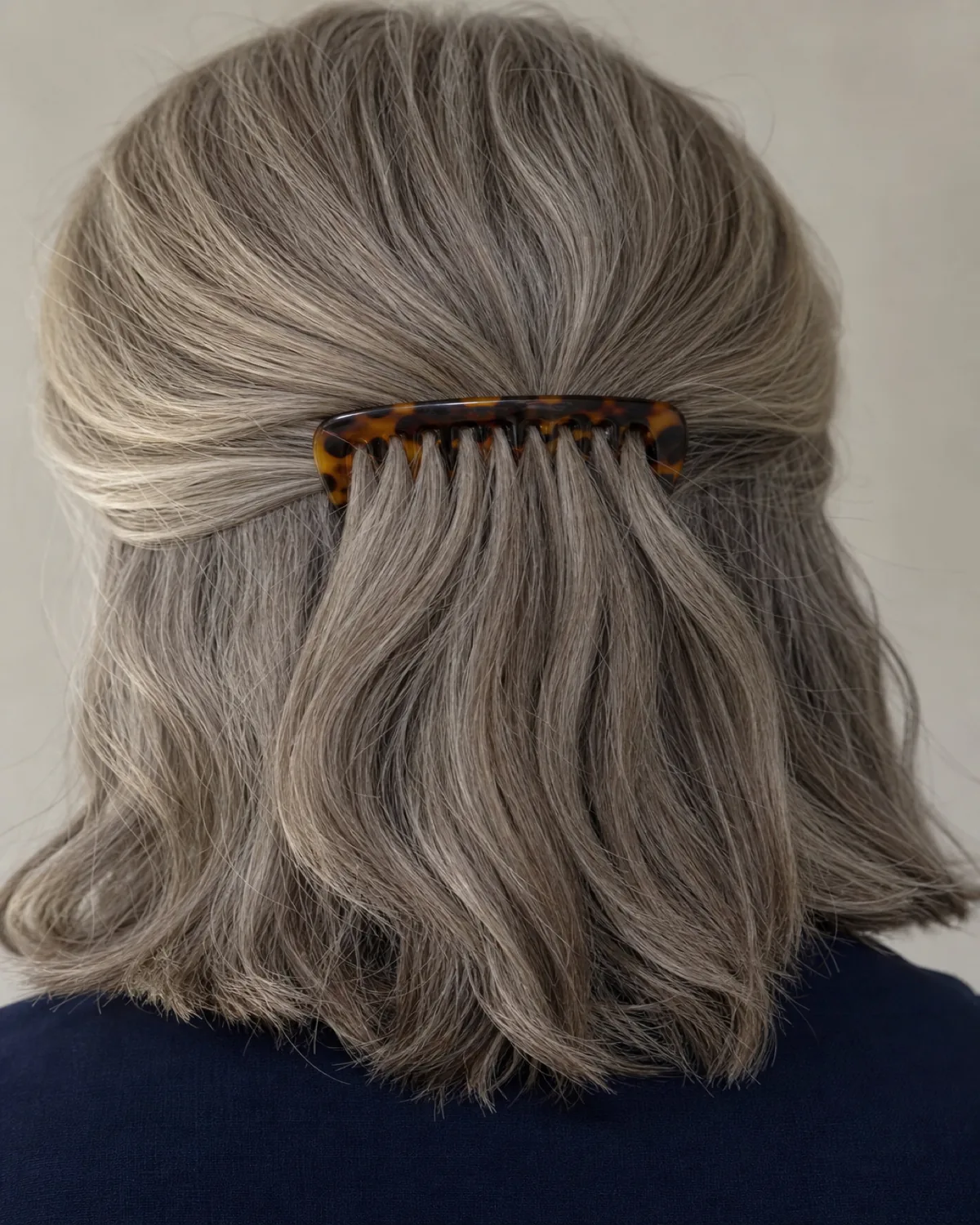
A decorative clip or comb doing the structural work of the half-up section is a legitimate formal choice. The hardware is the style. It works when the hair is thick enough to grip the clip and stay, which means the teeth or the spring mechanism have enough hair to brace against.
On fine or thin hair, a clip slides out within the second hour unless the stylist anchors it with hidden pins beneath. A comb generally holds better than a clip on thinner hair because the teeth brace against the scalp in multiple places. Bring the clip or comb to the trial appointment and test whether it holds through an hour of normal movement.
- Bring the clip or comb to the trial and test whether it stays in place for a full hour of moving and bending
- Choose a comb over a clip when your hair is fine; the teeth distribute the grip across a wider area
- Ask the stylist to place two hidden pins beneath the clip as insurance if the hold feels borderline
Where the checkable claims come from
- Updo — Wikipedia
- Hair diameter and aging — Birch, Messenger & Messenger, Journal of Investigative Dermatology (2001)
- French twist (hairstyle) — Wikipedia
- Chignon (hairstyle) — Wikipedia
Keep this one
Save it for the appointment
Pin the image above to the board you actually open before a salon visit. This guide is written to be re-read, not read once.
Tonight, before you close this tab
- Hold the hair above your ears in one hand and look at whether the lower section reads sparse or full
- Find the neckline of the dress you are wearing and note whether it is open, covered or strapless
- Write down how many hours the event runs from the first photographs to the last dance
- Ask the salon whether a trial appointment is included in the wedding-day booking