14 Mother-of-the-Bride Hairstyles for Shoulder-Length Hair Over 50
Fourteen mother-of-the-bride hairstyles for shoulder-length hair over 50, each judged by face shape, hair density and what holds through a full wedding day.
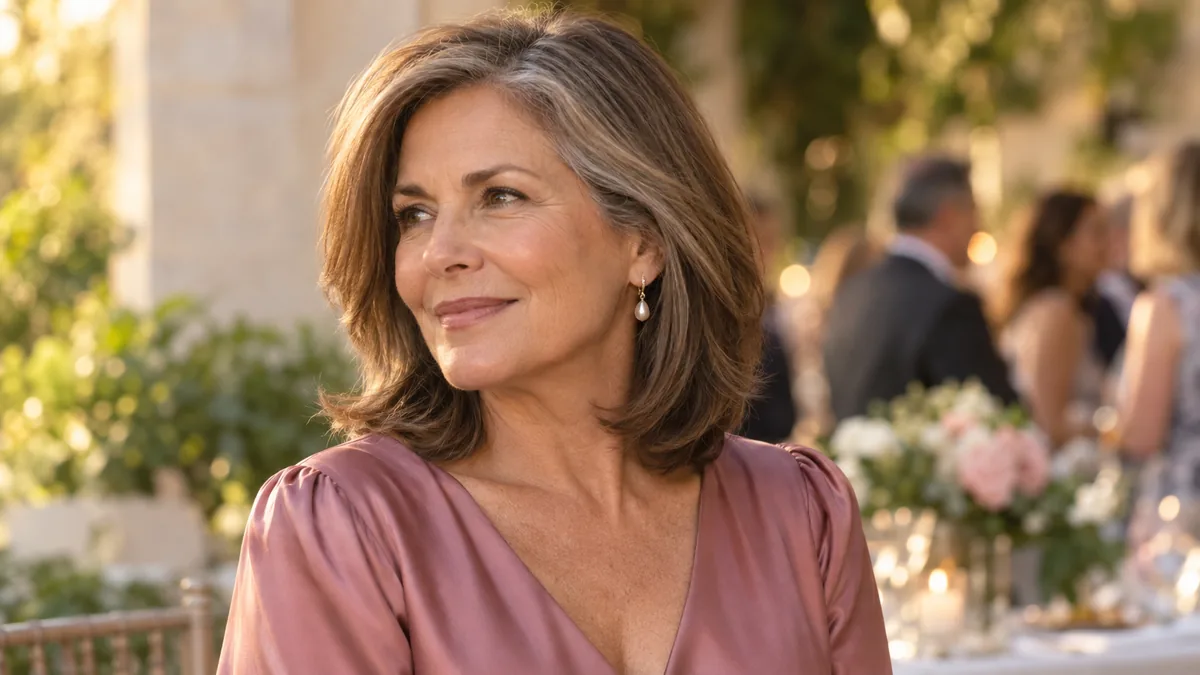
Booking an appointment soon? Save this page. It is easier to skim in the chair than to remember.
At a glance
Works
- A layered blowout or barrel waves on medium-density hair when the ceremony is indoors and you want the length visible in photographs
- A low chignon or rolled updo when you need the hair off your face and neck for a long summer reception
- A centre-parted curtain sweep on oval or heart-shaped faces where the shoulder length already sits at the right point
Depends
- A half-up twist depends on crown density: you need enough hair at the top to fill the twist, or it collapses flat and reads thinner than wearing it down would
- A sleek bob with a deep part depends on face-shape geometry: angular faces carry the clean line, but round faces lose definition against that much smoothness
Skip
- A braided crown on fine or thin hair because the braid loses density within two hours and reads wispy rather than wedding-ready
- A finger-wave accent on wavy or curly natural texture because the set wave pattern fights the existing texture and both cancel out
Shoulder length can go up or down at a wedding without committing to either. The question is whether the structure you choose holds from the ceremony through the last photograph.
For the split approach, see half-up half-down options. For everyday versions, see shoulder-length hairstyles.
These fourteen are judged by face shape, hair density, and what survives a full day.
1. Layered Blowout With a Side Part
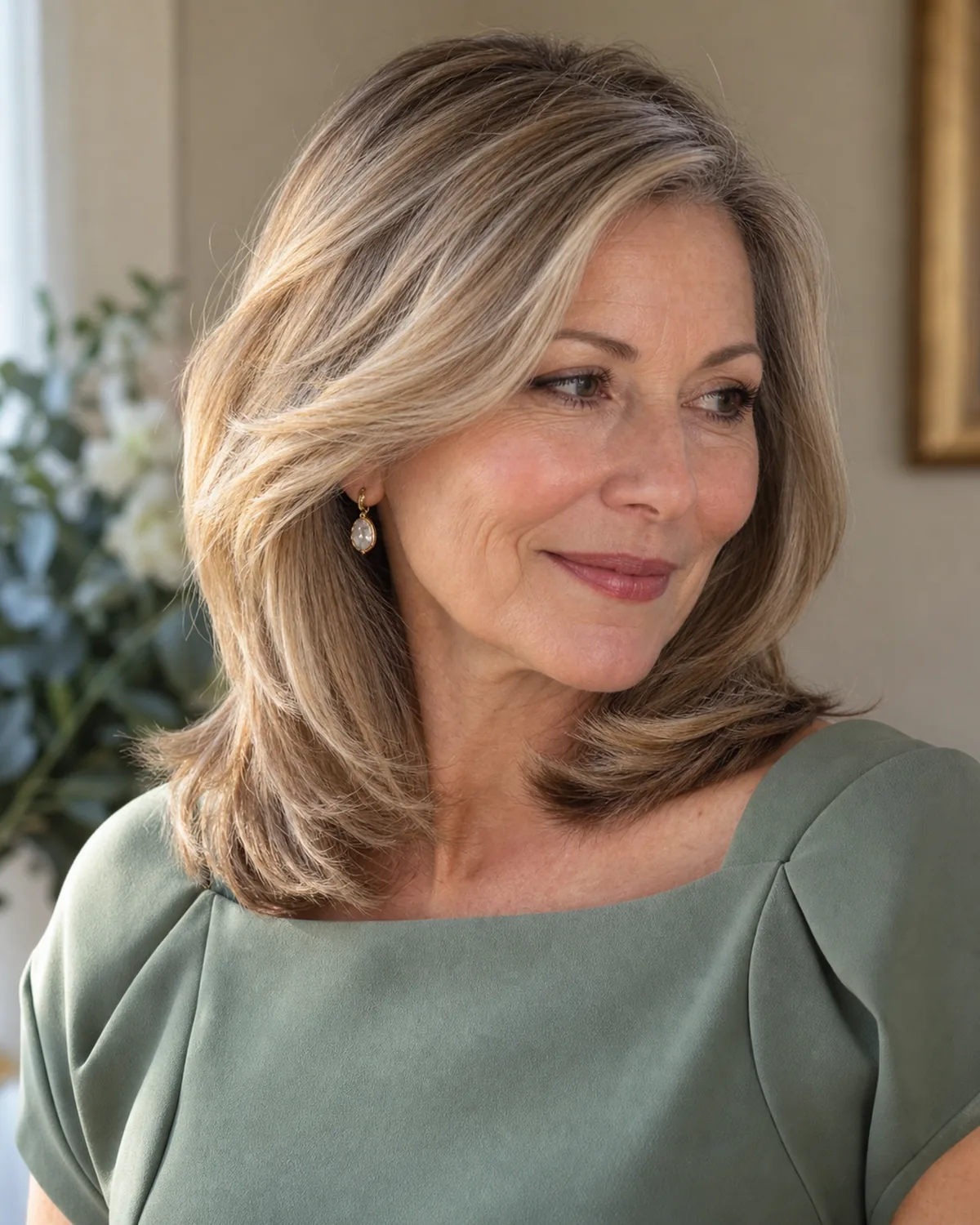
A side-parted blowout reads polished without a single pin. The part sweeps the hair across the forehead, which widens the narrower half of the face on oval and heart shapes. Layers starting below the ear give graduated volume that holds its shape indoors.
- The side part does the most work here: it breaks vertical symmetry, which is why it reads more finished than a centre part on the same cut
- Layers that start above the ear on fine hair risk going flat within two hours because there is not enough weight below them to hold the shape
- Best on medium-to-thick straight or wavy hair where the blowout has enough body to anchor itself through the day
- Ask your stylist for a trim that keeps the heaviest weight at the collarbone so the ends do not flip outward by evening
2. Tucked-Behind Low Chignon at the Nape
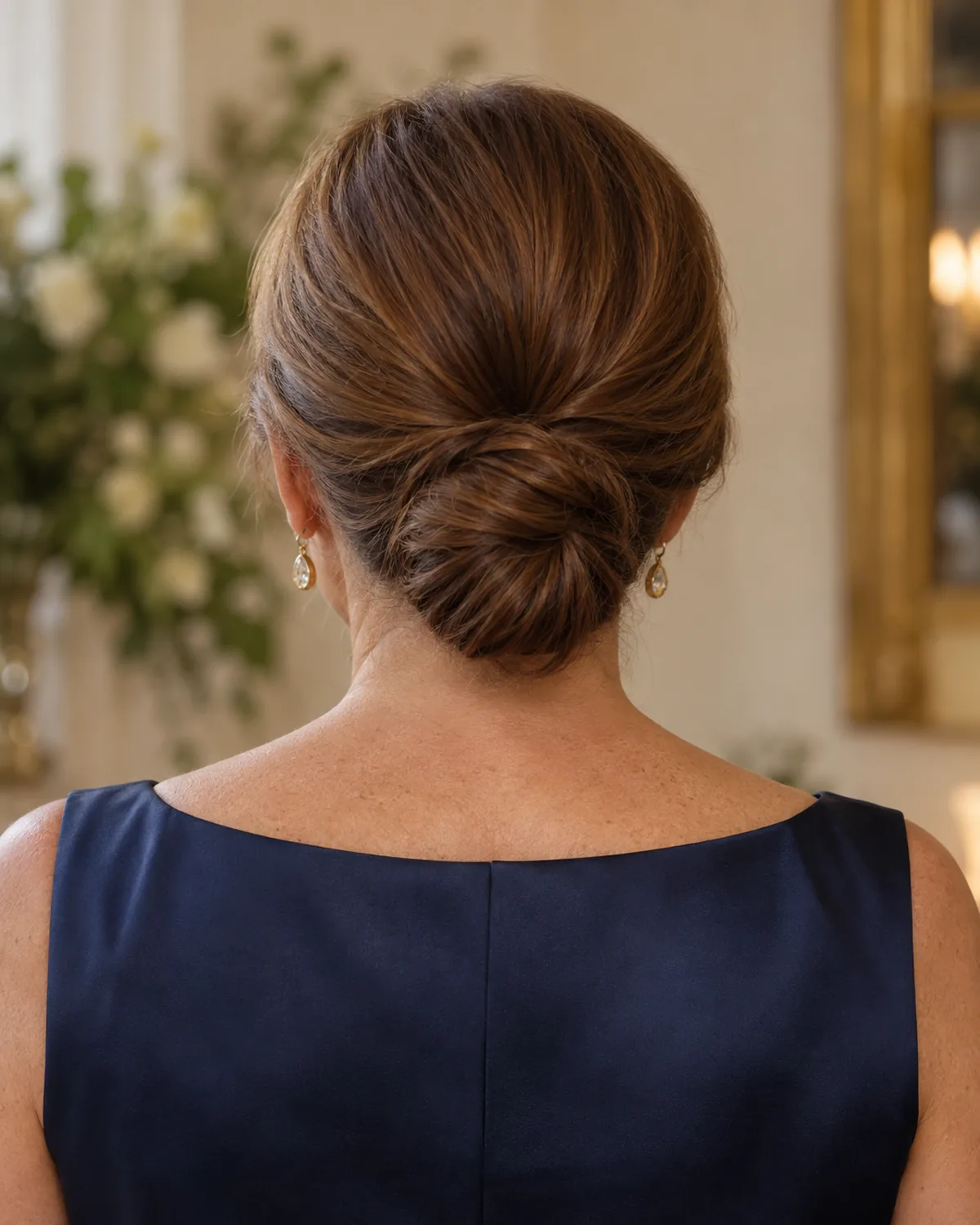
A low chignon gathers all the length at the nape and clears the jaw entirely. From behind, the bun sits compact and smooth against a navy silk back. This is the cleanest option for round and square faces because nothing falls forward to widen the jaw.
- Shoulder-length hair makes a smaller chignon than longer hair does, which is actually an advantage: a compact bun reads intentional rather than heavy
- Fine hair needs enough density to fill the bun or the shape looks thin from behind; if your ponytail circumference is less than two fingers wide, consider the rolled updo in idea 13 instead
- The nape finish matters because it will be photographed: ask your stylist to smooth the nape hair down flat rather than leaving flyaways
- This holds through a long reception because the structure is self-supporting once pinned
3. Soft Waves With the Ends Turned Under

The ends turn inward at the collarbone and create a rounded silhouette that reads set without looking stiff. The waves are large and loose, not tight curls, and they soften the face evenly on all sides.
- This works on medium-density hair because the wave has enough weight to hold its curl pattern through the day
- Thin hair loses the inward curve by the third hour because there is not enough mass at the ends to maintain the shape
- The turned-under ends shorten the visual length slightly, so this reads closer to a long bob than to shoulder length
- Best in controlled environments because wind or humidity unravels the wave pattern faster than a pinned style
4. Half-Up Twist With Volume at the Crown
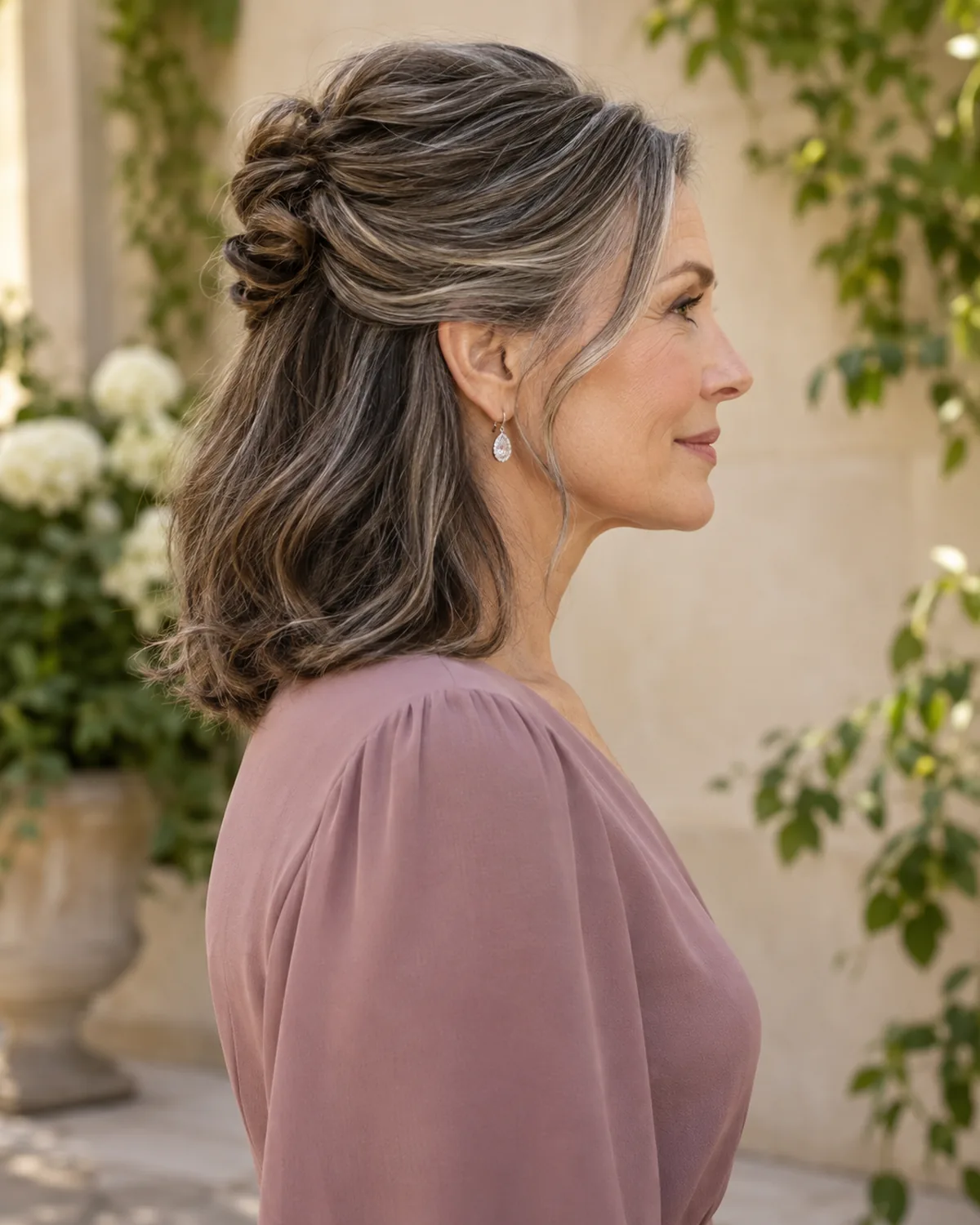
The top section twists and pins at the crown while the lower half stays loose at the shoulders. From the side, the twist lifts the crown and adds height, which elongates a round face. The loose lower section keeps the shoulder length visible in photographs.
- This only works if you have enough hair at the crown to fill the twist; a thin crown collapses the structure and reads flat from the side
- The twist sits above the ear, which means earrings are fully visible and become part of the composition
- Wavy or curly hair holds the twist better than straight hair because the texture grips itself
- If your crown is thin, the layered blowout in idea 1 gives a similar polished result without exposing where the density drops off
Where to start
Find your situation, skip ahead
Your hair is fine or thin and you are worried about volume collapsing through the day
Pin it back or wear it down. A low chignon or a tucked-behind sweep holds shape without relying on volume that is not there.
02 Tucked-Behind Low Chignon at the Nape07 Pinned-Back Side Sweep05 Textured Low Ponytail With a Wrapped Base
Your hair is medium-to-thick and you want something that photographs well without feeling set
Leave it down with structure. Barrel waves or a layered blowout hold their shape because the hair has the weight to anchor them.
09 Loose Barrel Waves01 Layered Blowout With a Side Part14 Tousled Shoulder-Length Shag With Piece-y Ends
You want the hair off your face and neck for a long warm reception
Go for a low updo. A French twist or rolled updo at the nape clears everything and holds better than a high style at this length.
08 Soft French Twist Ending Below the Crown13 Low Rolled Updo With Face-Framing Pieces02 Tucked-Behind Low Chignon at the Nape
5. Textured Low Ponytail With a Wrapped Base
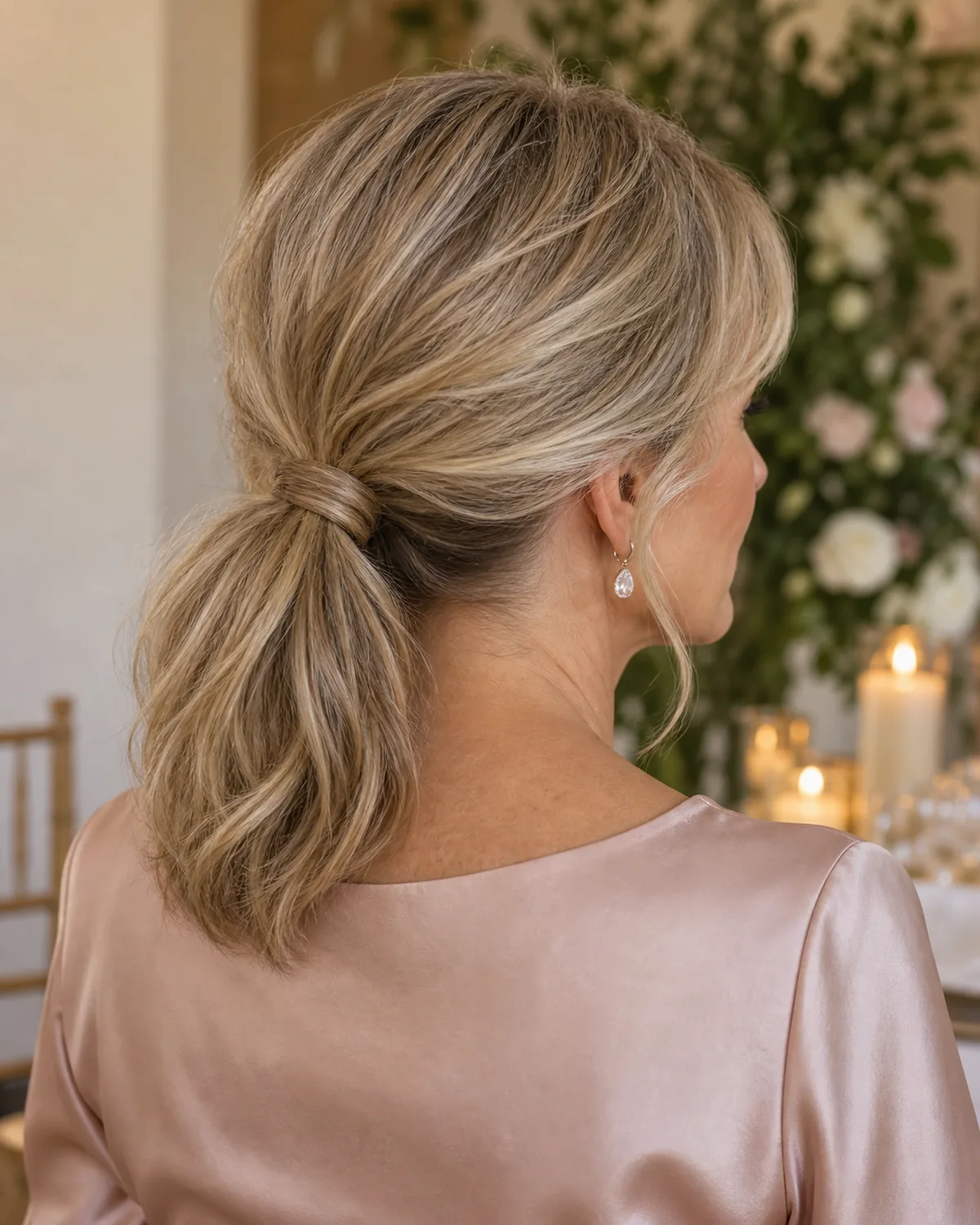
A low ponytail wrapped at the base with a section of hair conceals the elastic and reads polished enough for a wedding. The texture through the length keeps it from looking like a gym ponytail. From behind, the wrapped base is the focal detail.
- This works on every face shape because the ponytail sits behind the ears and does not add width at the jaw
- Medium-to-thick hair fills the ponytail; fine hair looks sparse at the base, even with the wrap
- The wrapped section needs to be long enough to cover the elastic and tuck under itself, which means at least collarbone length
- Ask your stylist to leave some texture through the length rather than pulling it perfectly smooth, because the texture is what separates this from everyday
6. Curtain-Swept Layers Parted at Centre

Face-framing layers that sit at the cheekbone and sweep outward break up roundness and soften squareness. The centre part is clean and straight, and the layers graduate visibly from the cheekbone down to full length at the collarbone.
- The centre part works best on oval and heart-shaped faces where the forehead is proportional to the jaw; on round faces it can emphasise width
- These layers are shorter at the cheekbone, so they thin the perimeter; on fine hair that is already thin at the ends, the layers remove density you cannot afford to lose
- The curtain sweep reads casual but intentional, which suits outdoor and garden ceremonies better than a heavily pinned style
- Tell your stylist where you want the shortest layer to hit relative to your cheekbone and bring a photo, because the landing point changes the entire effect
7. Pinned-Back Side Sweep
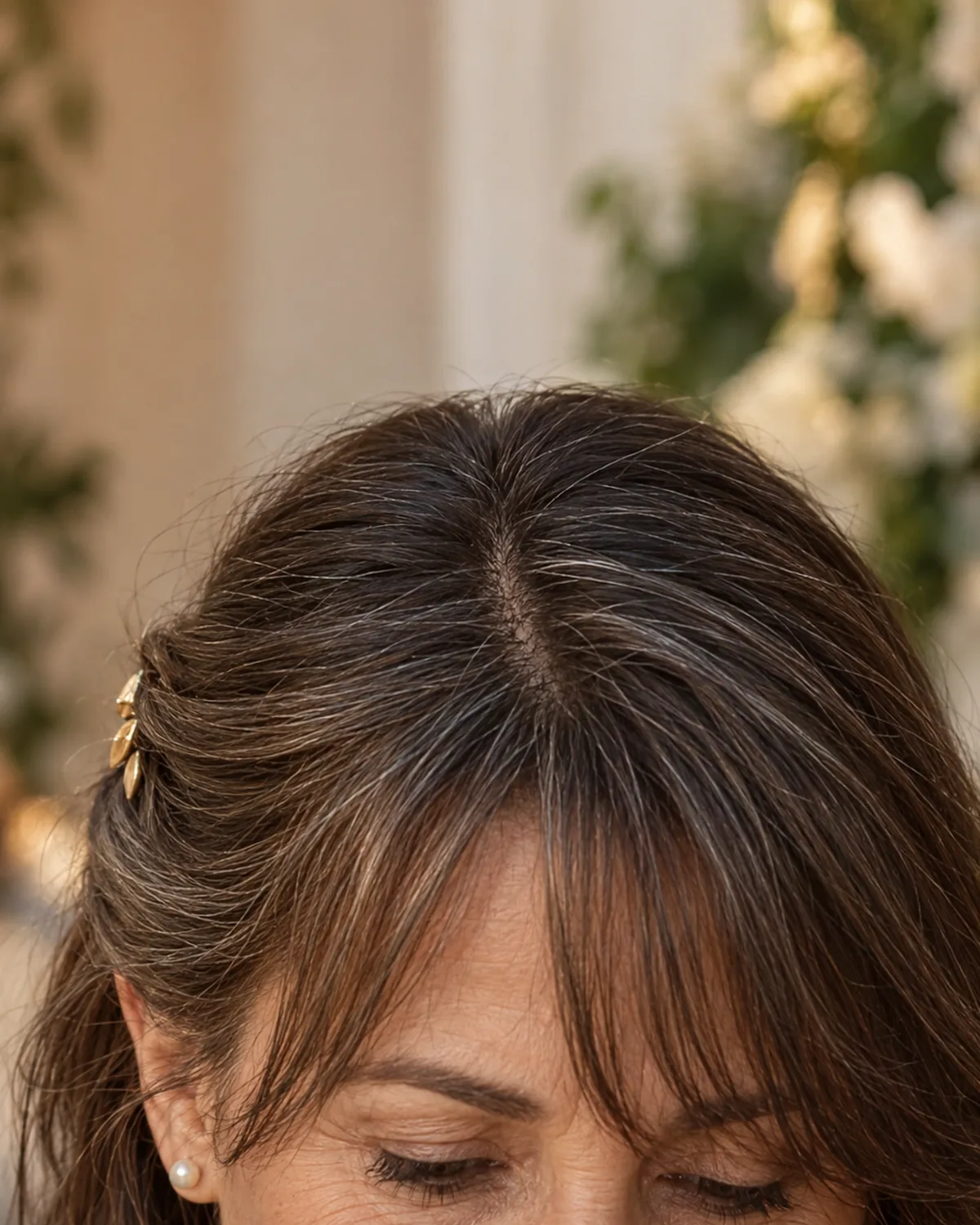
One side pins behind the ear with a small clip while the rest falls forward. The asymmetry flatters round and square faces because it breaks the horizontal line at the jaw. The exposed ear makes a small earring part of the composition.
- A matte or brushed-metal clip reads more formal than a snap clip; the clip should be small enough to sit flat against the head
- This is one of the easiest options for fine hair because it does not rely on volume or hold; the pin does all the structural work
- The asymmetry means one side of your face will be more visible in every photograph, so consider which side you prefer and pin accordingly
- Avoid chandelier earrings on the exposed side because a long drop at ear level pulls the eye down past the jaw, which undoes the lift the sweep creates
8. Soft French Twist Ending Below the Crown
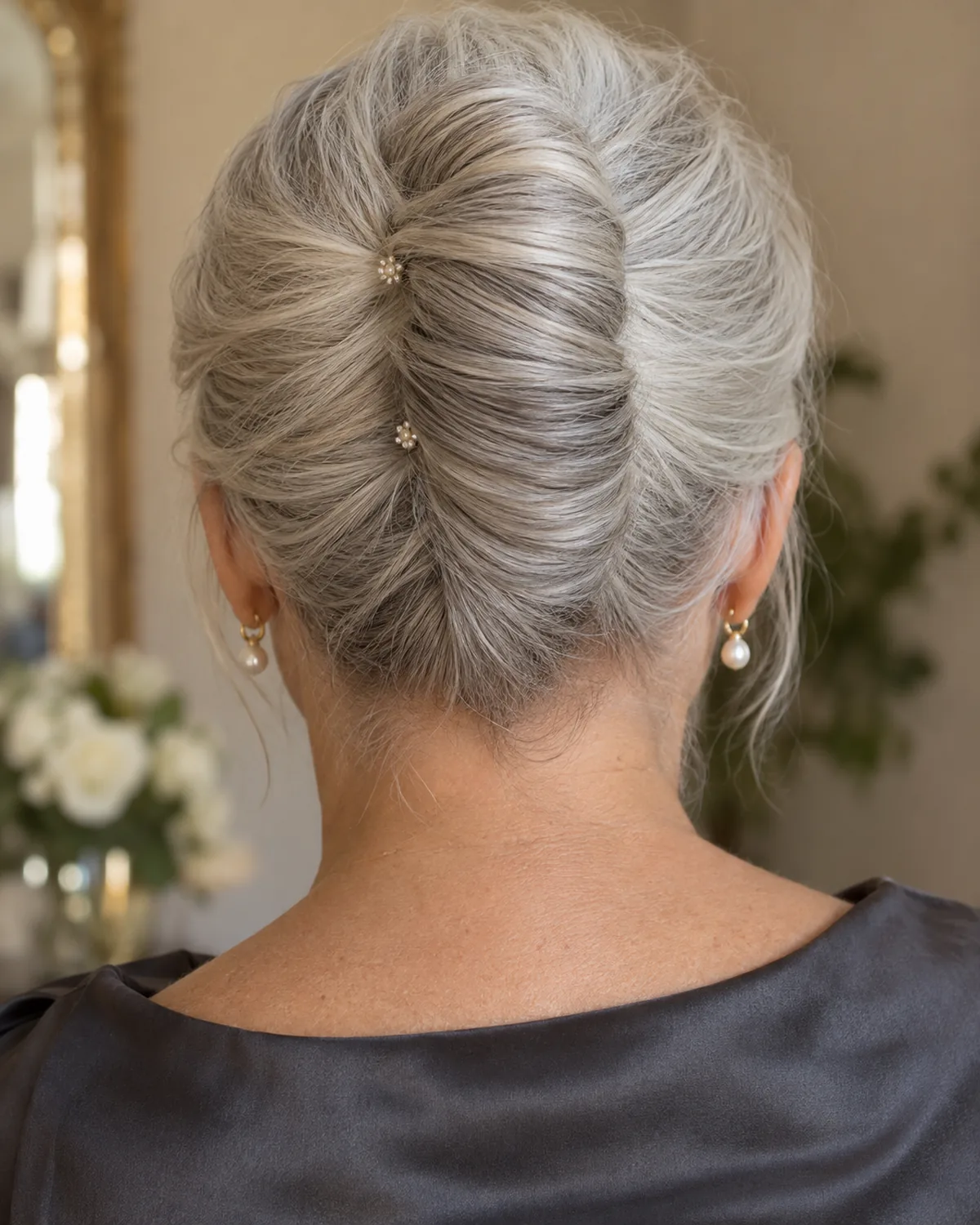
A French twist that rolls upward from the nape and stops below the crown rather than climbing to the top of the head. On silver-white hair, the rolled structure catches light along the twist. Small pearl pins secure the shape without competing with it.
- This holds on straight-to-wavy hair with enough body that the twist does not collapse from the side
- Fine hair needs a volumising product at the roots before twisting, or the shape reads flat in profile
- The twist stops below the crown because shoulder-length hair does not have enough length to climb higher without pulling
- This is the most formal option here and reads best with structured clothing: silk, crepe, or a jacket
9. Loose Barrel Waves
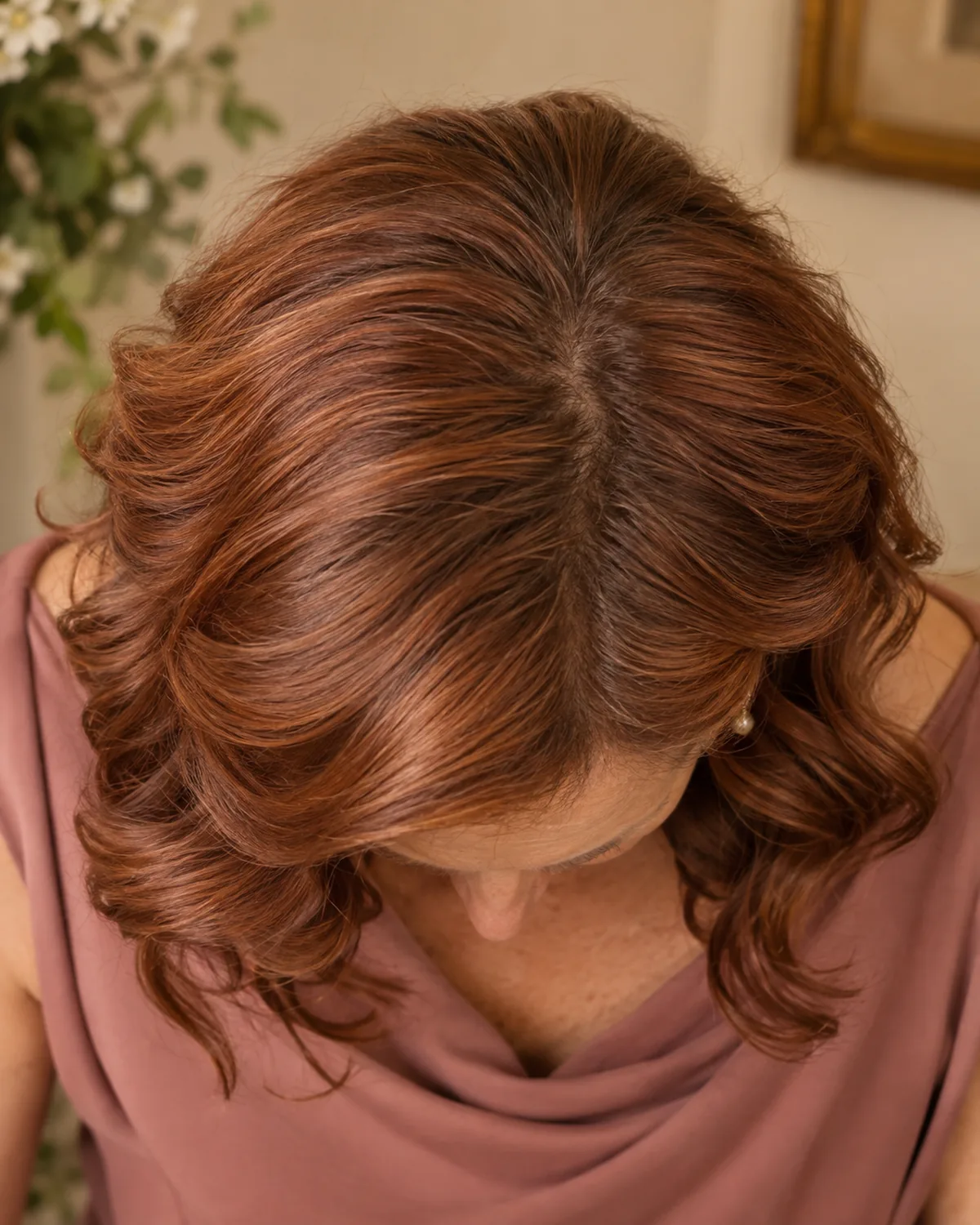
Large barrel waves from the ear down with smooth roots and natural root lift at the crown. The wave pattern is loose enough to read formal in photographs but relaxed enough that it forgives itself as it relaxes through the day.
- This is the easiest style to maintain through a long event because the wave pattern simply loosens rather than collapsing
- Works on medium-to-thick hair where the barrel has enough surface area to hold the curl; fine hair drops the wave within a few hours
- The smooth roots with volume at the crown keep the style from reading as bedhead; the contrast between smooth and waved is the structure
- Ask your stylist to use a large-barrel iron and stop two inches from the ends so the tips stay straight, which reads more modern than curled ends
10. Sleek Shoulder-Length Bob With a Deep Part
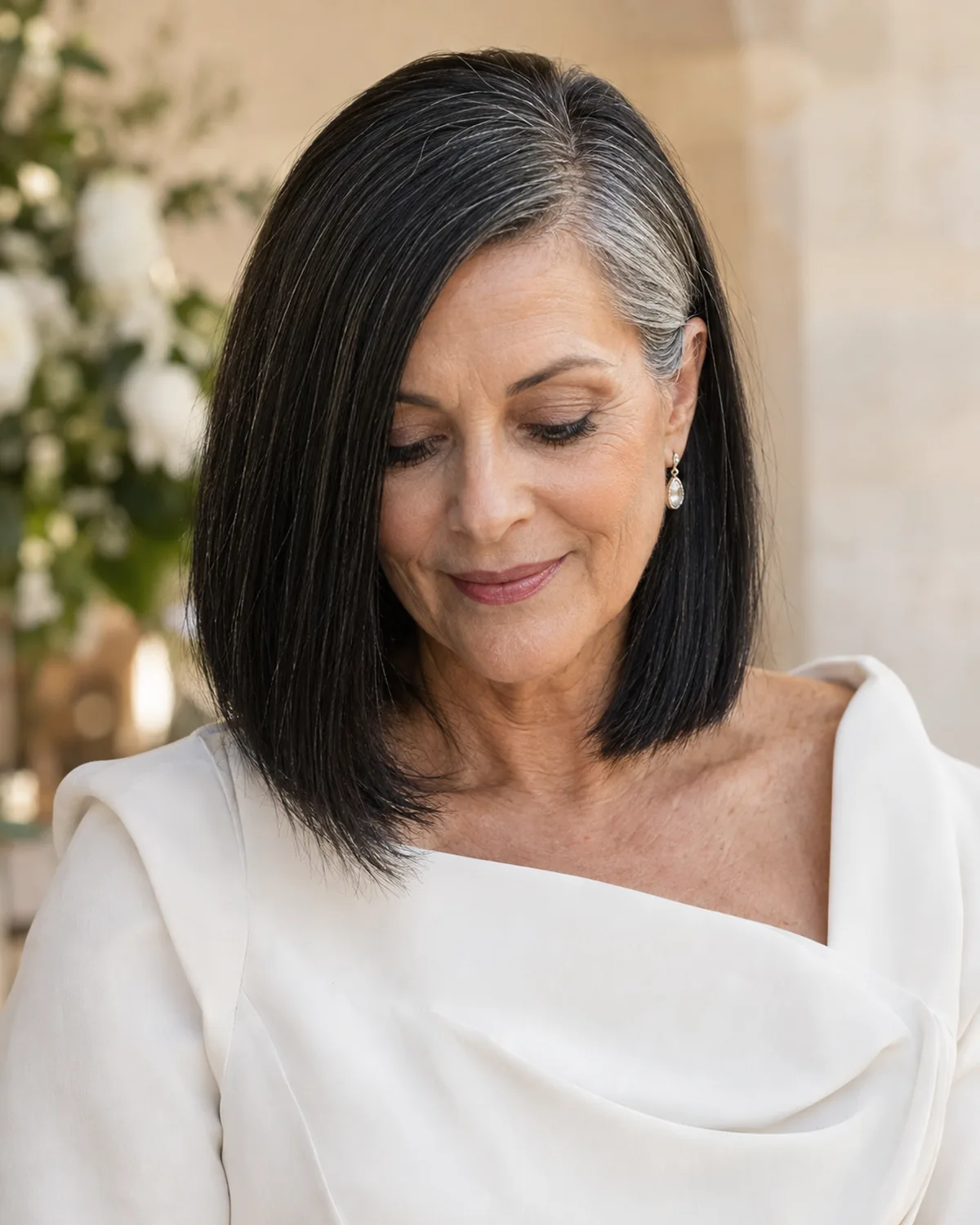
No curl, no pin, no texture. A one-length line at the collarbone with a deep side part that creates strong asymmetry. On angular face shapes like square or diamond, the geometry of the cut echoes the geometry of the face and reads deliberate.
- Round faces lose definition against this much sleekness because there is nothing to break the continuous curve
- The deep part throws more hair to one side, which adds visual weight; this is useful if one side of your face is slightly narrower
- This demands perfectly straight hair on the day, so it suits naturally straight hair or hair you are willing to flat-iron before the ceremony
- The silver strands at the temples are part of the look, not something to cover; they break the monochrome and add dimension
11. Braided Crown With the Lengths Left Down
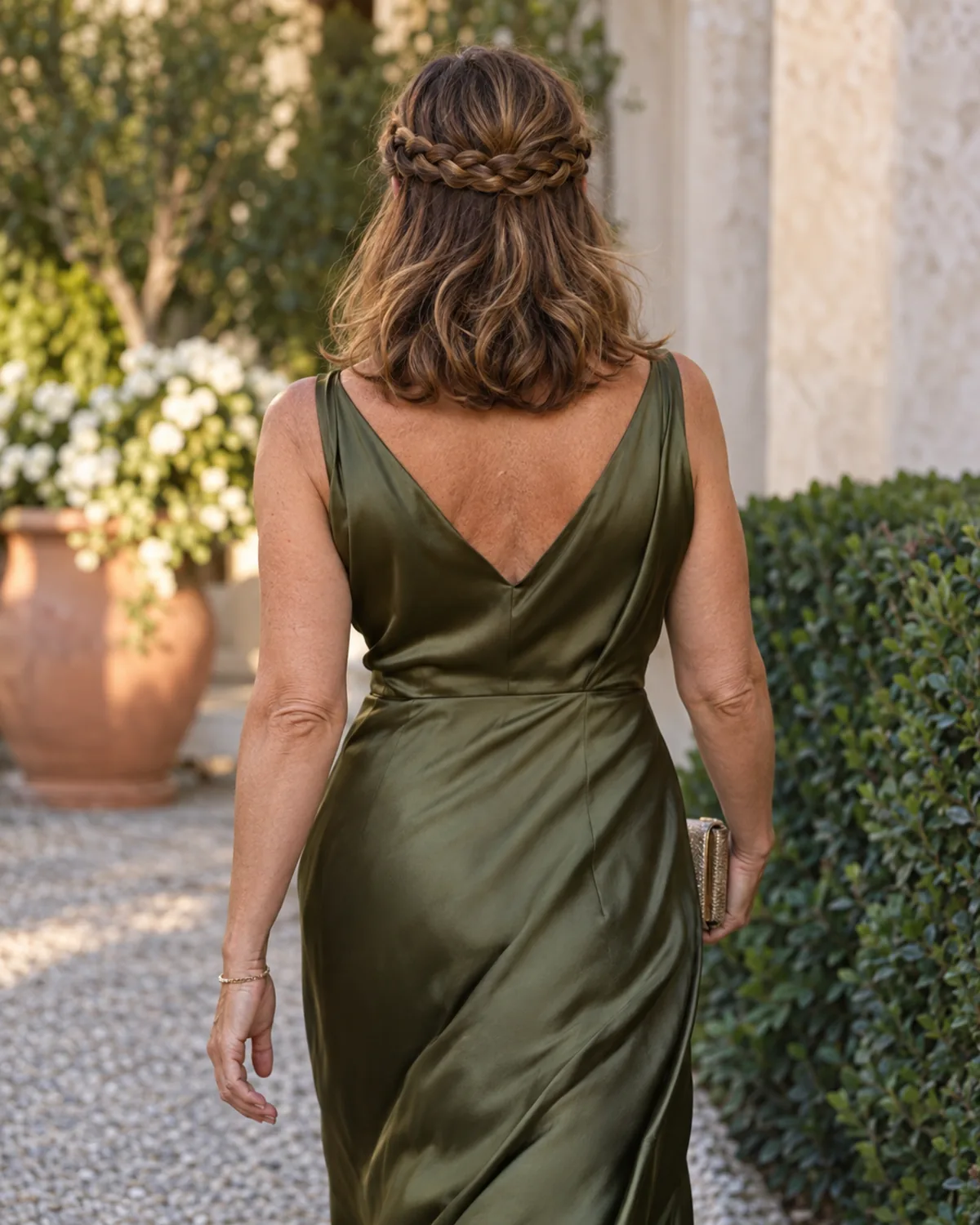
A single braid wraps from one temple across the hairline to the other while the rest of the hair falls loose at shoulder length. The braid frames the face from above and the loose hair keeps the length visible. This reads best in outdoor and garden settings.
- This works on medium-to-thick hair where the braid has enough volume to hold its shape along the hairline
- Fine hair makes a thin braid that looks wispy within two hours; if your braid does not feel substantial when you test it at home, this is not the right option
- The loose hair below the braid catches movement, which photographs well outdoors but may tangle in wind
- Ask your stylist to braid on the tighter side because it will loosen through the day; starting tight gives it room to settle
12. Vintage Wave Accent on a Bob
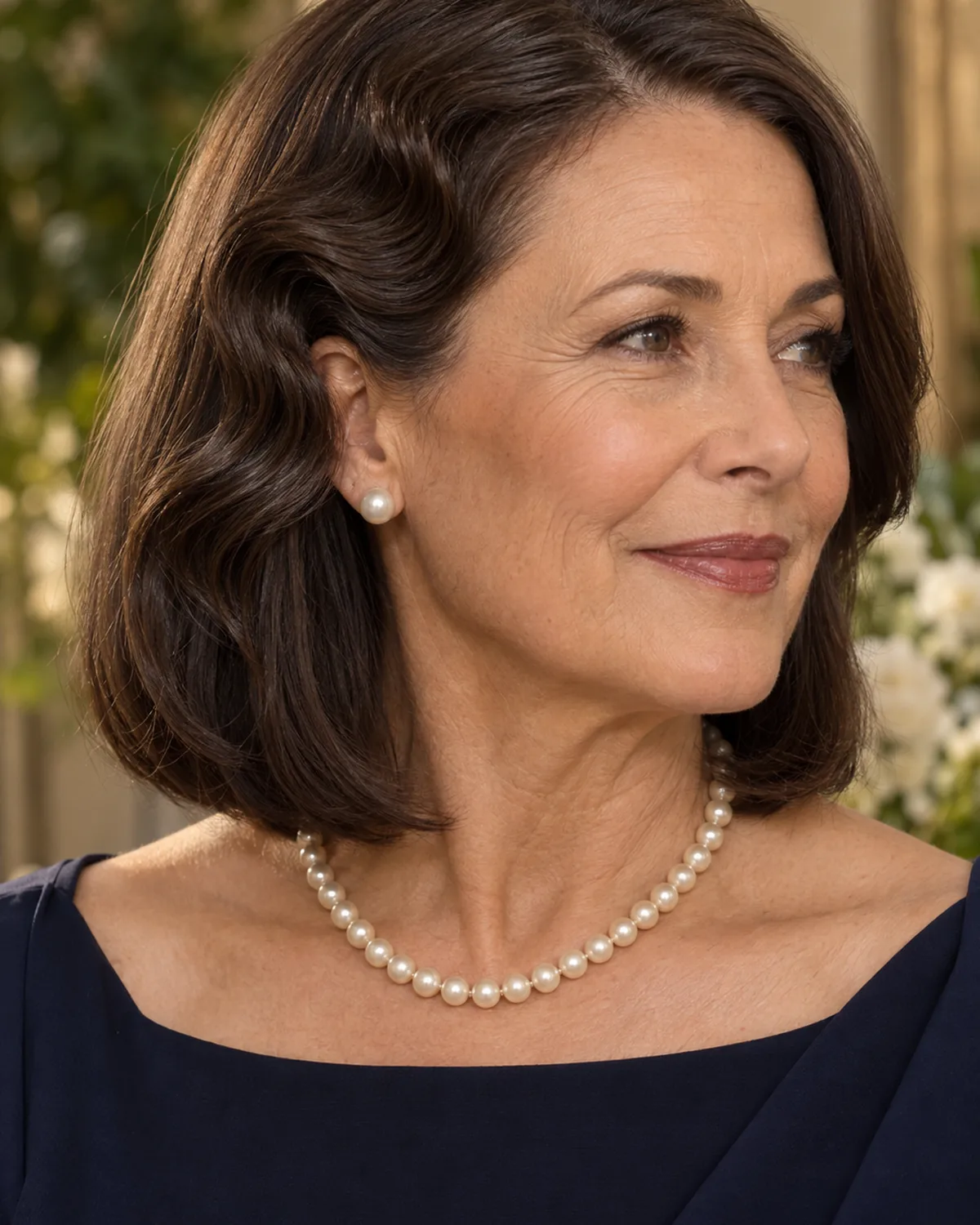
Two or three defined waves near the face on one side while the rest of the bob stays smooth. This reads intentionally dressed without consuming the entire head. The waves accent the style rather than define it.
- This works on straight hair where the set wave holds its definition against a smooth backdrop
- Wavy or curly natural texture fights the set wave pattern, and the two cancel each other out
- The accent sits at the temple and cheekbone, so it draws attention to the upper face; if you want attention lower, skip this one
- Pearl or simple stud earrings complement the vintage register; statement earrings compete with the wave detail
13. Low Rolled Updo With Face-Framing Pieces
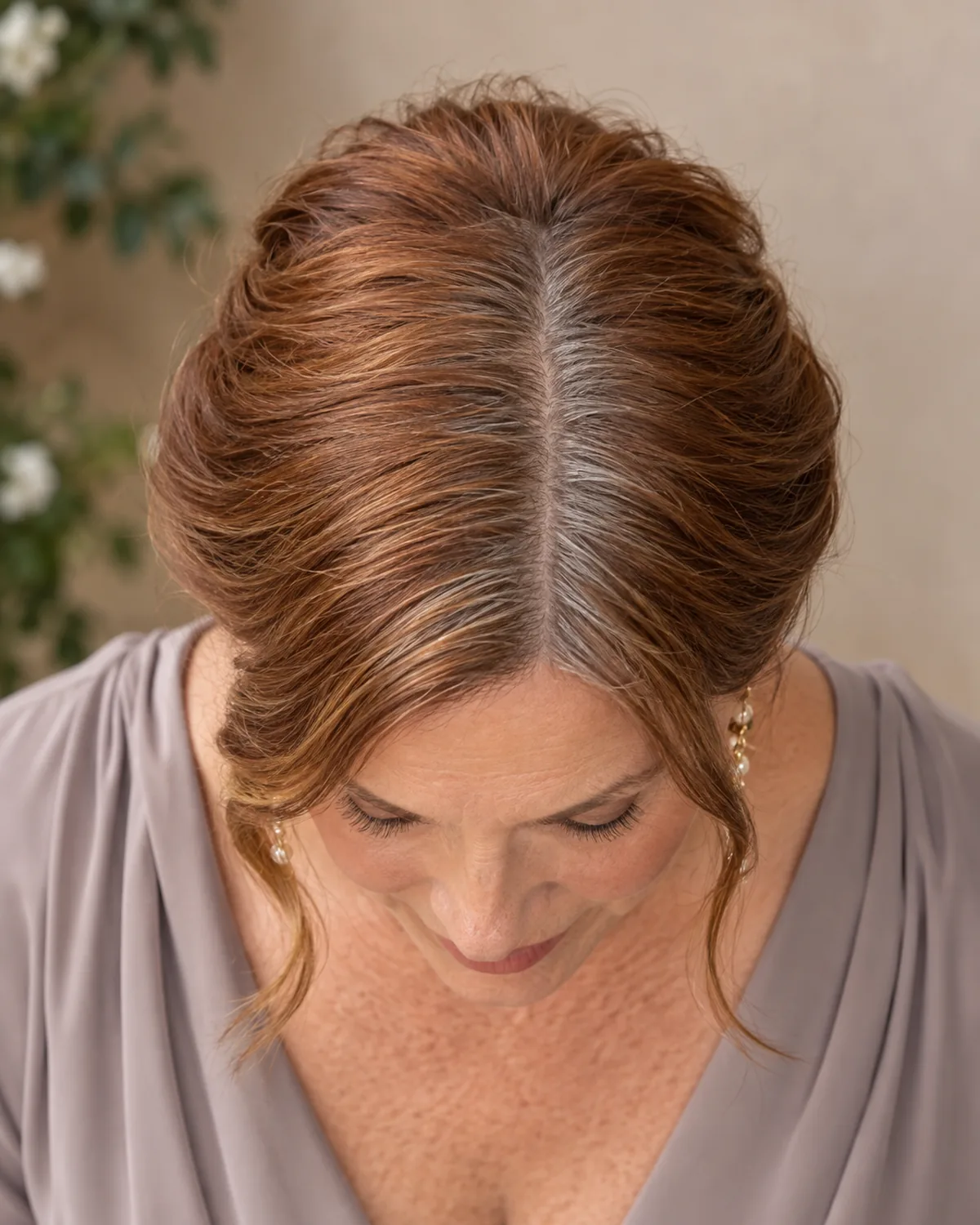
The hair rolls under at the nape in a shape wider than a chignon, with two loose pieces left out at the temples. The roll sits flat and wide, which means it reads softer than a bun. From above, the centre part is clean and the silver roots along the part line add natural contrast.
- This suits heart and oval faces where the temple pieces balance a narrow forehead or soften a wider one
- The roll is wider than a chignon, which means it distributes weight more evenly across the nape and feels lighter
- This uses less hair than a chignon because the roll is flat rather than gathered, which makes it a better option for fine hair that cannot fill a round bun
- The face-framing pieces need to be long enough to touch the jawline or they read as flyaways rather than intentional
14. Tousled Shoulder-Length Shag With Piece-y Ends
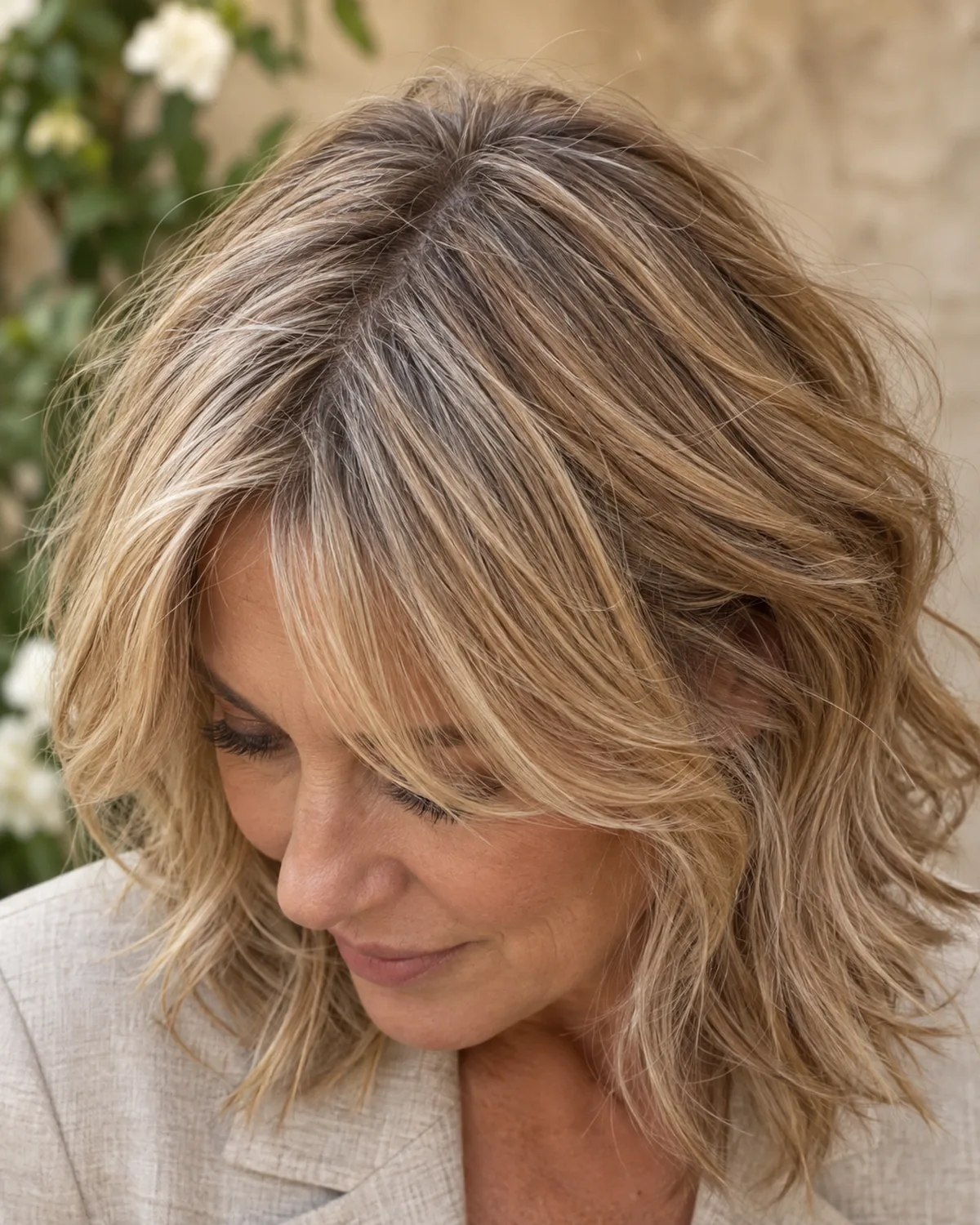
The least formal option here, and the one that suits outdoor or garden weddings where the dress code is relaxed. The shag's internal layers create visible movement and separation that holds without product on thick hair. The piece-y ends sit at varying lengths and read deliberately undone.
- Thick hair carries this without product because the internal layers have enough weight to separate on their own
- Thin hair needs a texturising spray or the ends separate and look sparse rather than piece-y; the line between tousled and thin is narrow
- The curtain bangs sit at the cheekbone and frame the face, which works on most shapes but adds width on round faces
- This is the lowest-maintenance option in this guide, which makes it the best choice if you know you will not touch your hair again after leaving the house
If you are still deciding between shoulder-length options and face shape, see how to know your face shape for the measurements that matter, or fine hair strategies if density is the deciding factor.
Where the checkable claims come from
- Face Shapes and Hairstyles — Pivot Point International
- Understanding Hair Texture and Density — Pivot Point International
Keep this one
Save it for the appointment
Pin the image above to the board you actually open before a salon visit. This guide is written to be re-read, not read once.
Tonight, before you close this tab
- Pull your hair into a low twist at the nape right now and check whether enough gathers to make a shape or the ends slip free
- Photograph yourself with a centre part and a side part in natural daylight and compare which breaks up or repeats the shape of your face
- Bring two photos from this guide to your next trim and ask which structure your hair density can hold for eight hours without restyling
- Write down the ceremony start time and the last event of the day then ask your stylist which option holds better across that span