11 Quick Everyday Hairstyles Over 50
Eleven quick hairstyles for women over 50, each judged on one question: does your hair type cooperate? Every idea includes what to ask yourself first.

Booking an appointment soon? Save this page. It is easier to skim in the chair than to remember.
At a glance
Works
- A low twist at the nape when your hair is shoulder-length or longer with enough density to hold without pins
- A half-up clip at the crown when fine hair needs the illusion of volume where it flattens first
- A deep side part with the heavy side tucked behind the ear on a square face to offset jaw width
Depends
- A slicked-back headband style works if your hairline lies flat when pushed back, but fights you if cowlicks or waves spring up
- Air-dried finger-combed texture only reads as a style if your hair has natural wave or curl on its own
- A scarf-tied twist for gray-in-progress hair covers the transition zone, but only if the scarf sits where the demarcation line actually falls
Skip
- A low twist on fine hair that slips out within an hour because the twist needs density to hold and pins defeat the quick promise
- A slicked-back headband on a round face with a soft jawline because pulling all the hair away removes the framing that narrows it
- A ponytail on hair shorter than chin length because the pieces that fall out create mess rather than style
A quick hairstyle is not the same as no hairstyle. The difference is whether your hair cooperates with the technique or fights it.
The eleven ideas below each take five minutes or fewer. None of them require heat tools. The question for each one is whether your specific starting material makes it work or makes it fall apart by noon.
1. Low Twist at the Nape
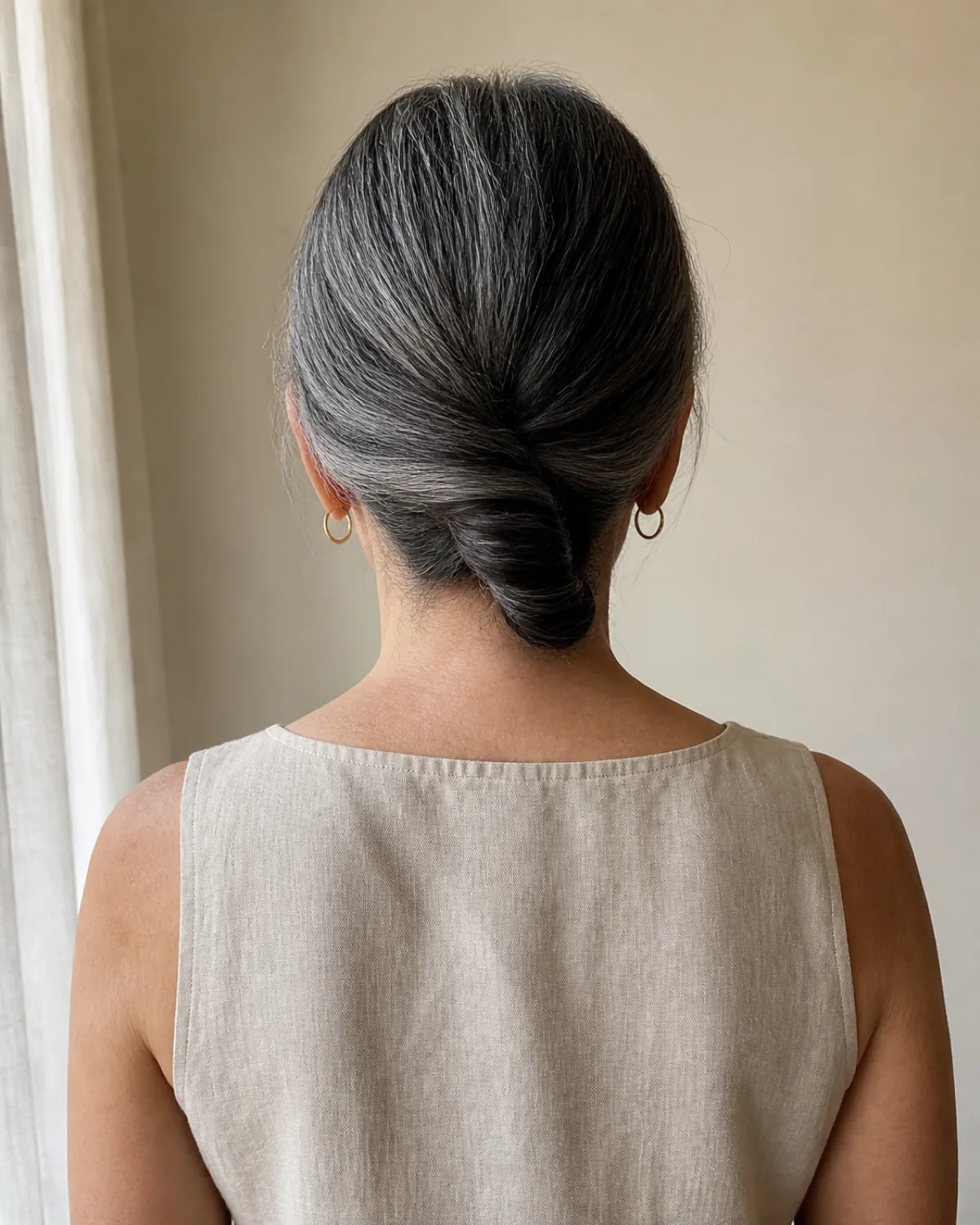
The twist gathers at the nape and holds by its own weight. No pins, no elastic, no second mirror to check the back. The version shown here works because the hair has enough density to grip itself once it is turned. The twist sits low, just above where the neck meets the shoulders, and the hair wraps into a single rotation that tucks under.
This is a density test. Hair that is thick enough to hold a twist without slipping is the right candidate. Fine hair that unravels within an hour is not, and adding bobby pins to compensate defeats the point of a five-minute style.
- Ask yourself whether a twist at the back stays put through a full morning without pins
- If it slips, the problem is strand diameter, not technique
- Shoulder-length is the minimum for the twist to have enough material to grip
- The nape hairline should sit cleanly below the twist, not poke through it
2. Side-Swept Tuck Behind One Ear

One side goes behind the ear. The other side falls forward. That asymmetry does more than it looks like it should. On a round face, exposing the ear on one side narrows the visual width because the eye reads the uncovered cheekbone as the face edge rather than the hair.
The style here shows chin-length hair with one side tucked flat and the other curving toward the jawline. The length matters. Hair that reaches past the collarbone tends to swing forward and cover the tucked ear again within minutes. Chin to shoulder is the range where the tuck holds.
- Check whether tucking one side changes how wide your face reads in a mirror
- If the falling side curves toward your jaw, it frames the face without needing a clip
- This is the fastest possible change from just-washed to intentional
- Works on most face shapes, but the narrowing effect is strongest on round and oval
3. Half-Up Clip at the Crown
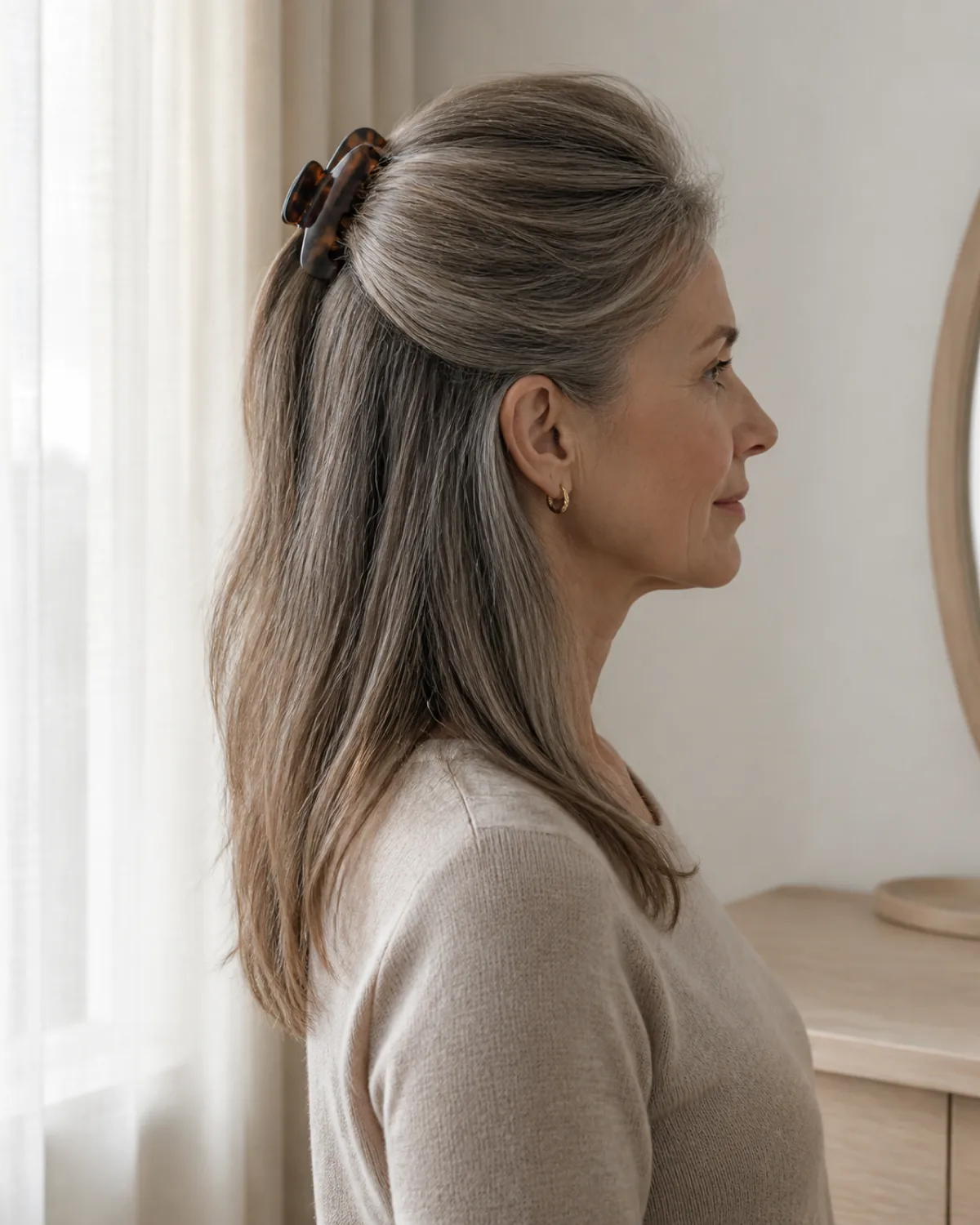
The clip sits at the crown and lifts the top section. The result is height where fine hair over 50 loses it first. This is the structural replacement for backcombing: the clip does the mechanical work of holding the hair up, and the lifted section creates the illusion that there is more of it.
The placement is the entire judgment. Too high and it reads as a costume. Too low and it adds nothing. The crown is the spot where your hair starts to flatten when you look at your profile. That is where the clip belongs.
- Find the spot on your crown where volume disappears and place the clip there
- A plain matte clip (tortoiseshell, neutral) reads as intentional; a decorative one reads as an accessory choice
- The remaining hair below the clip should fall freely, not be gathered
- Fine hair benefits most from this because the lift is mechanical, not dependent on strand thickness
Where to start
Find your situation, skip ahead
Your hair is fine and you have lost volume at the crown over the past few years
A half-up clip at the crown or a low ponytail with crown lift gives the illusion of density. Ideas 3 and 5.
03 Half-Up Clip at the Crown05 Loose Low Ponytail With Crown Volume
You are growing out your gray and the root-to-end contrast bothers you
A scarf-tied twist covers the demarcation line and buys you time. Idea 6.
You want a finished look in under two minutes on hair that has natural wave or texture
Air-dried finger-combed texture or a textured pixie reset both work with what your hair already does. Ideas 8 and 11.
08 Air-Dried Finger-Combed Texture11 Textured Pixie Finger Reset
4. Slicked-Back With a Padded Headband
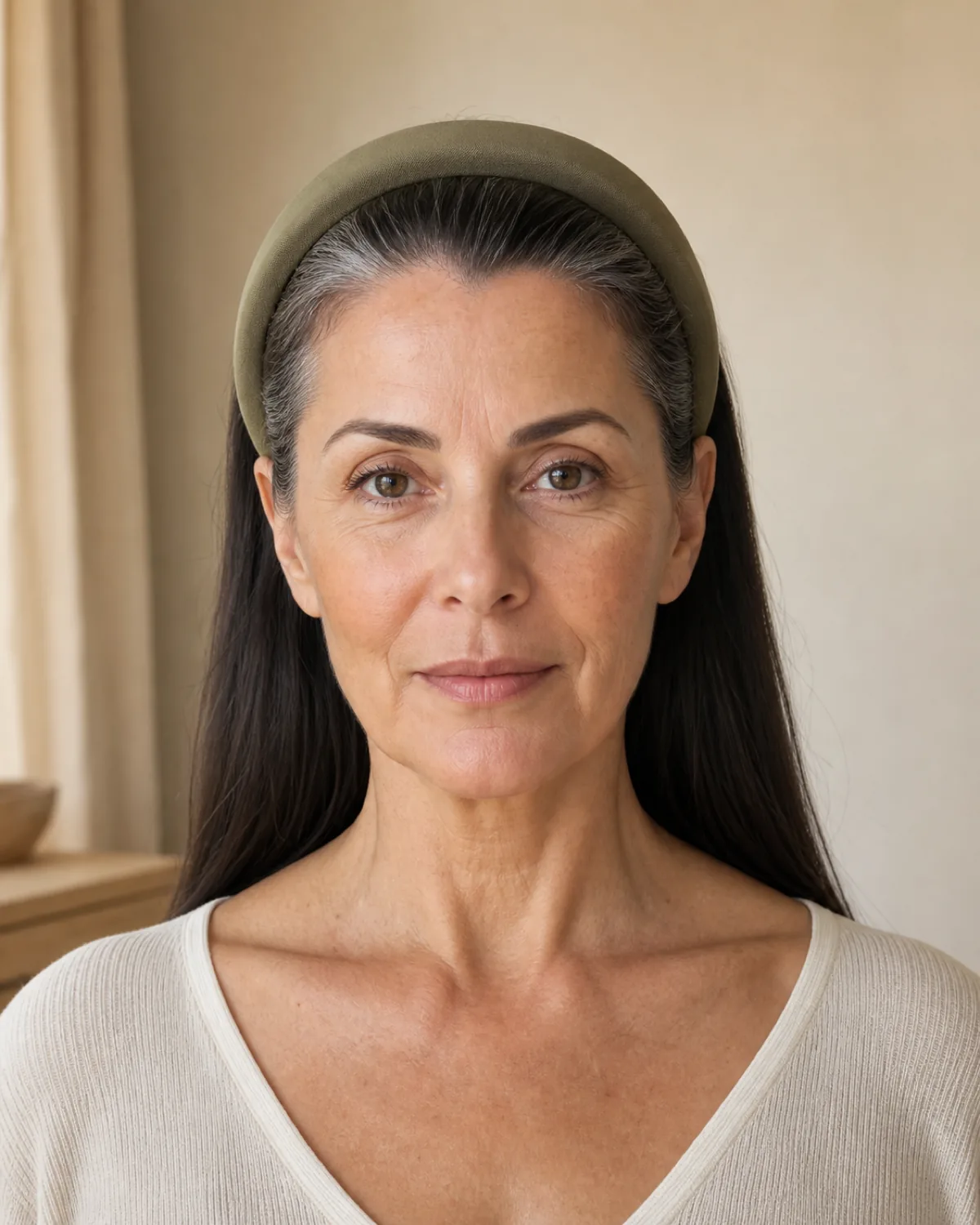
All the hair goes back. The headband holds it there. The face is completely exposed, which means this style depends on bone structure more than hair texture. Strong cheekbones and a defined jaw carry this well. A round face with a soft jawline loses the framing that hair normally provides, and the result can feel exposed rather than polished.
The version here uses a wide padded fabric headband in olive. The hair lies flat against the skull behind it and falls straight down the back. This only works on hair that stays flat when directed backward. Waves, cowlicks, or a strong widow's peak will push hair up and over the headband within an hour.
- Push all your hair back in a mirror and see whether it lies flat or springs up at the hairline
- If your hairline cooperates, a padded headband is a ten-second style
- The headband fabric should have enough grip to hold the hair without needing pins behind it
- This suits thick straight hair and strong bone structure; it works against round faces and fine wispy hairlines
5. Loose Low Ponytail With Crown Volume
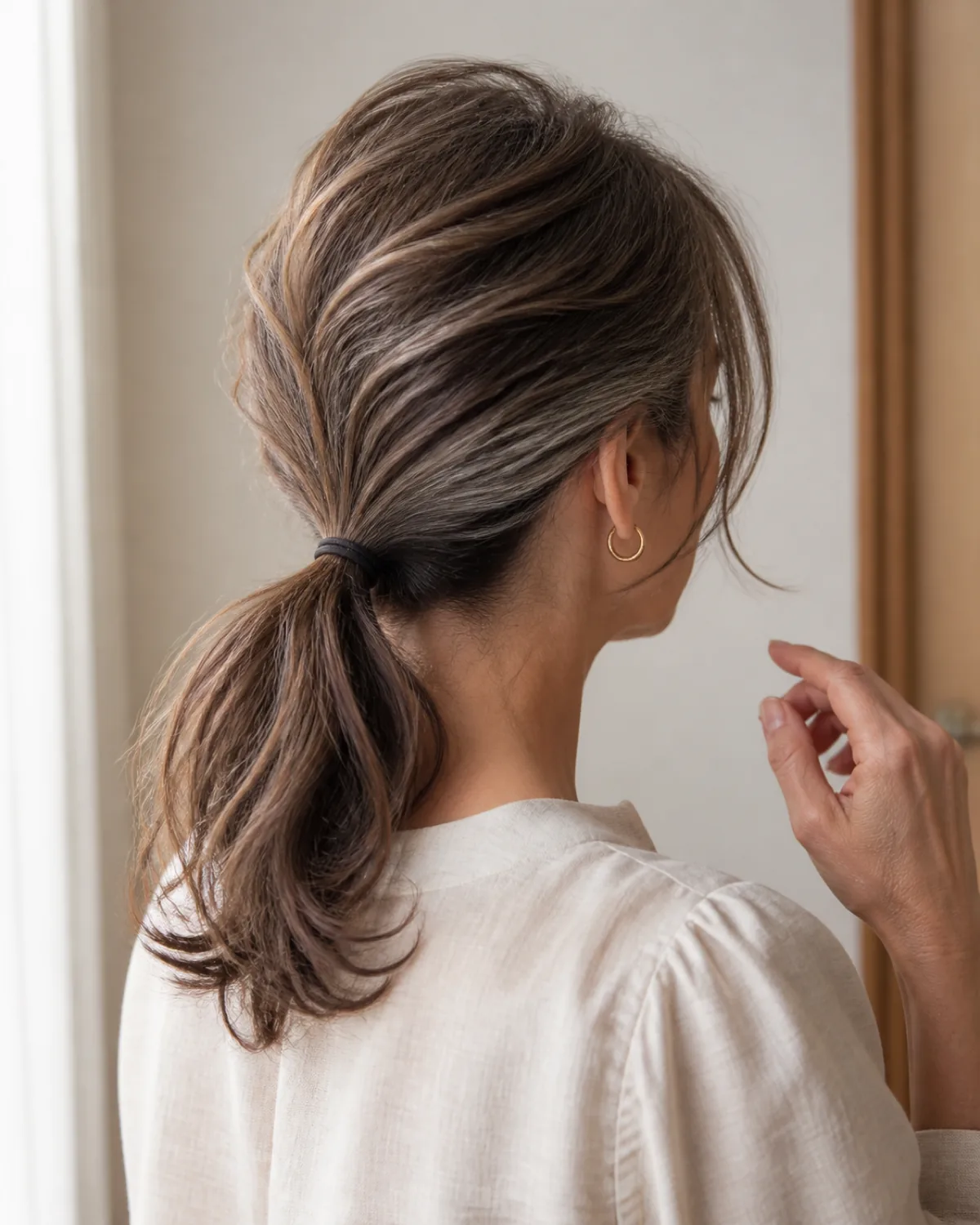
The ponytail takes ten seconds. The judgment call is about the crown. After gathering the hair at the nape with an elastic, pulling the hair above the elastic slightly forward and upward creates a lift at the crown. On a round face, that added vertical dimension changes the proportions.
The style here shows the elastic sitting at the nape, the crown area lifted slightly rather than pulled tight, and a few shorter pieces left out near the temples. Those face-framing pieces are not an accident; they soften the transition between the pulled-back hair and the face.
- Gather at the nape first, then gently lift the crown section by pulling hair forward above the elastic
- The crown lift only reads as volume if you have enough density there; sparse crowns look lifted but not full
- Leaving a few short pieces out near the temples breaks the severity
- On a round face, the lifted crown adds vertical length that balances the width
6. Scarf-Tied Twist for Gray-in-Progress Hair

This is the only idea here that is specifically about the gray transition. A silk or satin scarf wraps the twist at the back and covers the zone where silver roots meet the old colour. The scarf does two things: it hides the demarcation line and it adds a colour accent that makes the whole arrangement look deliberate rather than mid-process.
The version shown here has a dusty-rose scarf tied around the twist with the tails falling over one shoulder. The grow-out stripe is visible above the scarf where the silver roots begin, but the harshest contrast zone is covered. This works when the transition is in the awkward middle stage and you want to stop reaching for a hat.
- The scarf must sit where the demarcation line actually falls, not above or below it
- Silk or satin prevents friction damage on hair that is already fragile from the colour transition
- This buys time during the growing-out phase without committing to a full salon visit
- If your grow-out stripe is shorter than two inches, a headband may cover it more naturally than a scarf wrap
7. Pinned Asymmetric Sweep

One side swept back with a single flat clip. The other side falling forward. The asymmetry creates a different face frame on each side, which is the point. On a heart-shaped face, the swept-back side balances the wider forehead while the forward-falling side adds visual weight near the narrower chin.
The clip here is a small flat gold-toned bar, not a decorative statement piece. It holds the hair behind the ear without calling attention to itself. The falling side curves gently toward the jaw. Chin-length or longer on the falling side is the minimum for this to read as a style rather than hair that has come loose.
- Check whether one side of your face reads visually heavier than the other; the clip goes on the heavier side
- The clip should be flat enough to disappear into the hair rather than sit on top of it
- The falling side needs enough length to curve toward the jaw, not stick straight out
- This is a one-clip, five-second adjustment that changes the face frame without cutting anything
8. Air-Dried Finger-Combed Texture
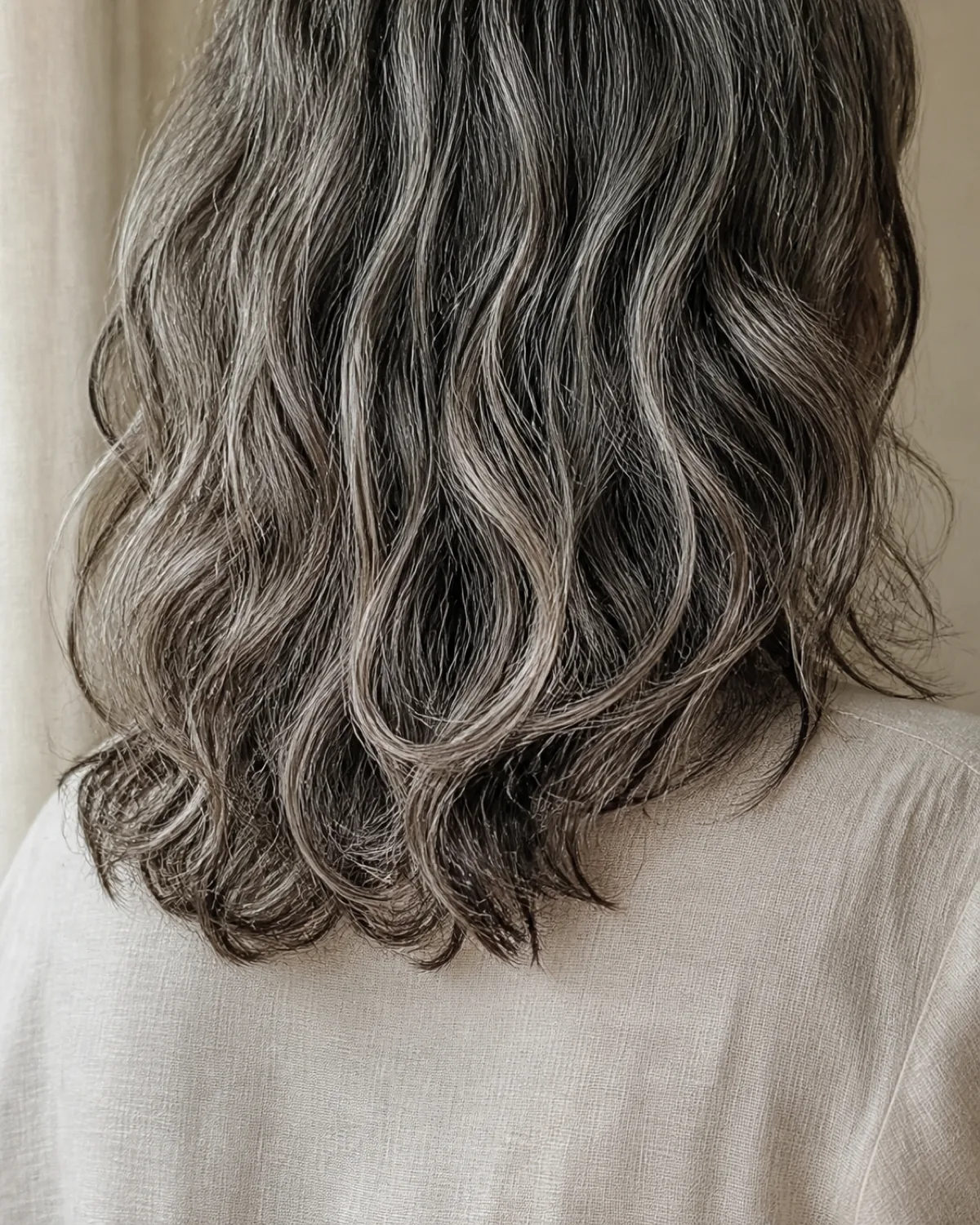
This is the zero-effort option, but it only qualifies as a style if your hair has natural wave or curl. Straight fine hair that air-dries without any bend reads as flat and unwashed. The version here shows shoulder-length waves with visible irregularity, some pieces bending more than others, silver and dark strands catching the light differently. That variation is the visual interest.
The judgment is simple: wash your hair, touch nothing, and see what happens by the time it dries. If visible bend appears on its own, air-drying with finger-combed separation is a real everyday style. If your hair dries flat and limp, this is not your shortcut.
- The test is one wash with no styling at all; what your hair does on its own is what you are working with
- Finger-combing while damp separates the waves and prevents them from clumping into undefined sections
- This style gets better as natural gray comes in because the colour variation adds visual texture
- Straight fine hair should skip this entirely and look at Ideas 3 or 5 instead
9. Low Bun With a Face-Framing Piece Left Out

The bun sits at the nape. One shorter piece is left out near the face and curves gently toward the jawline. That single freed strand does more work than it should: it softens the severity of the updo and draws attention to the jawline rather than the forehead.
The version here shows the freed strand following the natural line of the face. This only works if you have a piece in front that naturally turns inward. A strand that hangs straight down beside the face does not create the same softening effect. If your front pieces curve toward your jaw on their own, this is a reliable three-minute option.
- The freed strand should curve toward the face, not dangle straight; its natural direction decides whether this works
- The bun itself should be loose and low, not tight and high
- This works on any face shape because the freed strand adjusts the frame regardless of the geometry
- Keep the freed piece short enough that it does not swing into your line of sight
10. Deep Side Part With the Heavy Side Tucked
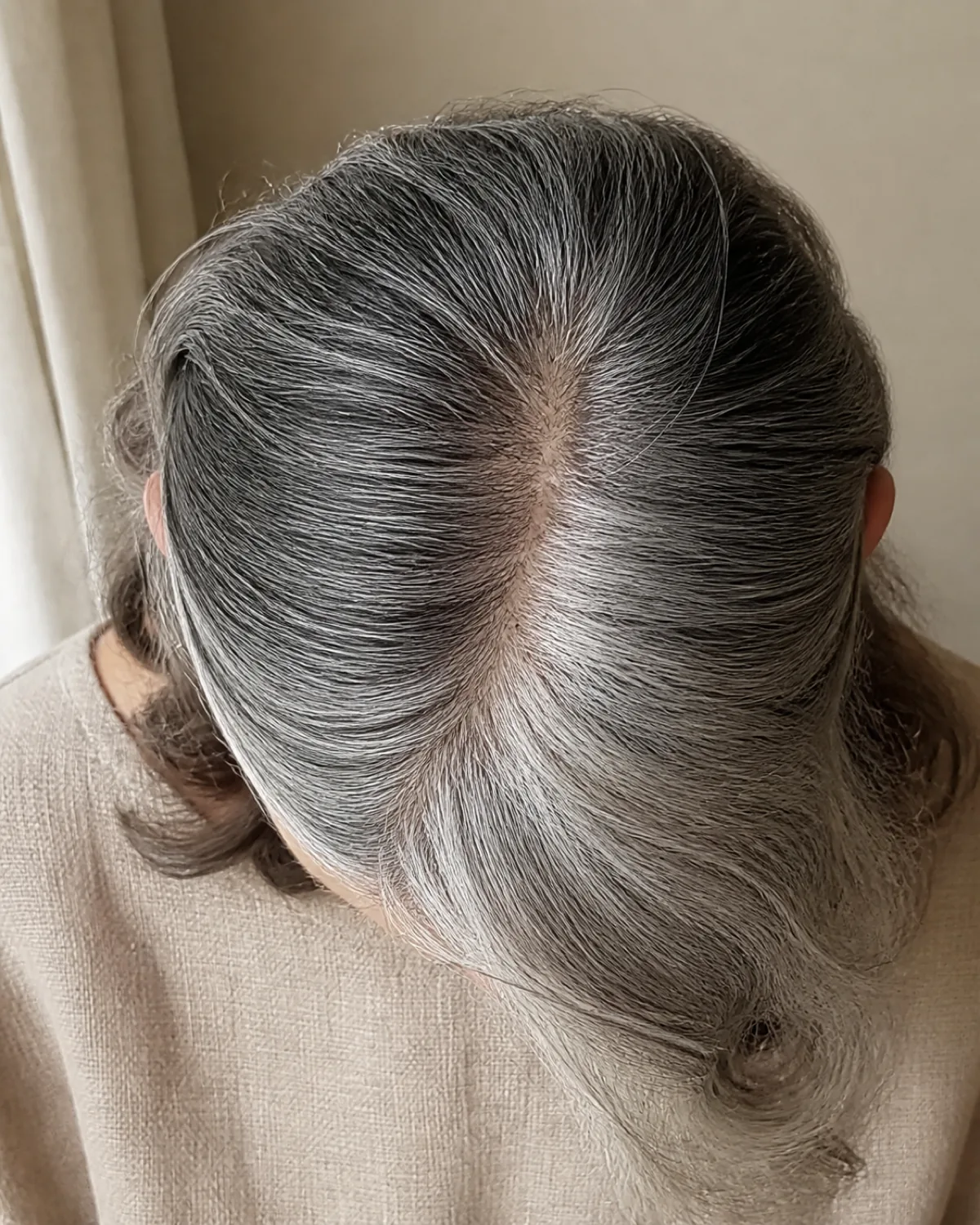
Moving the part to one side takes five seconds and changes the face frame entirely. The heavy side, where most of the hair falls, gets tucked behind the ear. The light side falls naturally. The result is asymmetric volume that offsets a strong jaw or square face shape.
The top-down view here shows how the deep part creates two unequal sections. The wider section carries more visual weight, and when that weight is tucked behind the ear, it narrows the face on that side while the lighter section provides a soft frame on the other. The part line and the volume difference are the structural elements that do the work.
- Try moving your part gradually from center toward one ear and watch when the asymmetry starts to change your face shape
- The heavy side must have enough weight to stay tucked behind the ear; if it swings forward within an hour, the hair is too short or too fine
- Square faces benefit most because the asymmetry offsets the jaw width
- This is the fastest possible style change and costs nothing; the only judgment is whether the tuck holds
11. Textured Pixie Finger Reset
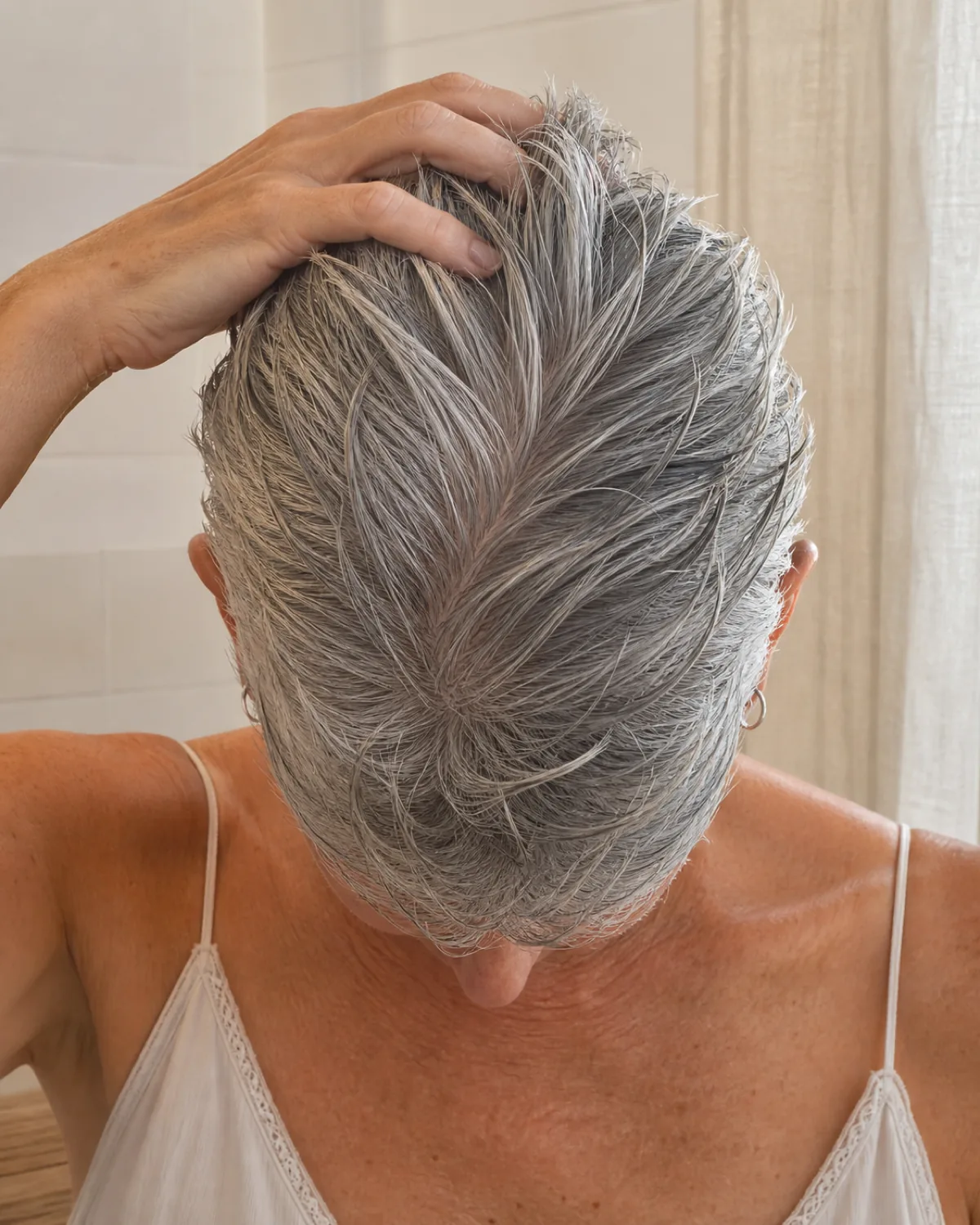
For women who already have a pixie or a very short crop. Fingers through damp hair, directed away from the face, left to set. The judgment is about direction: pushing everything forward closes the face and makes it read smaller. Pushing up and back opens it and creates height at the crown.
The version here shows finger tracks through a silver pixie, the hair directed up and away from the forehead. The styling took less than a minute, but the directional choice is what makes it read as intentional rather than uncombed. Damp hair holds the direction longer than dry, so this works best right after washing.
- Direct short hair away from your face for an open, lifted look; toward your face for a softer, closed one
- Damp hair holds the finger-set direction longer than dry hair does
- The crown is where direction matters most; flat at the crown reads as unstyled regardless of what the sides are doing
- This only applies to women who already have a short cut; it is not a reason to cut short
A stylist who can see your hair in person outranks anything written here. Bring the idea that matches your starting texture and ask whether your specific hair will hold it past noon.
Where the checkable claims come from
- Face Shapes and Hairstyles — Pivot Point International
- Fine Hair: Causes and How to Care for It — Philip Kingsley Trichological Clinic
Keep this one
Save it for the appointment
Pin the image above to the board you actually open before a salon visit. This guide is written to be re-read, not read once.
Tonight, before you close this tab
- Wash your hair tonight, skip all styling, and see what it does by morning to find your actual starting texture
- Try tucking one side behind your ear and check whether your face reads narrower or wider to know if asymmetric styles help
- Find the spot on your crown where volume disappears first and mark it mentally because that is where a clip or lift belongs
- Write down the one morning style that lasts past noon without adjustment because that is the one worth keeping