20 Mother-of-the-Groom Updos Over 50: Which One Holds and Which One Slips
Twenty updos for the mother of the groom over 50, each judged by what your hair needs to hold the shape through a full wedding day and what happens when it does not.
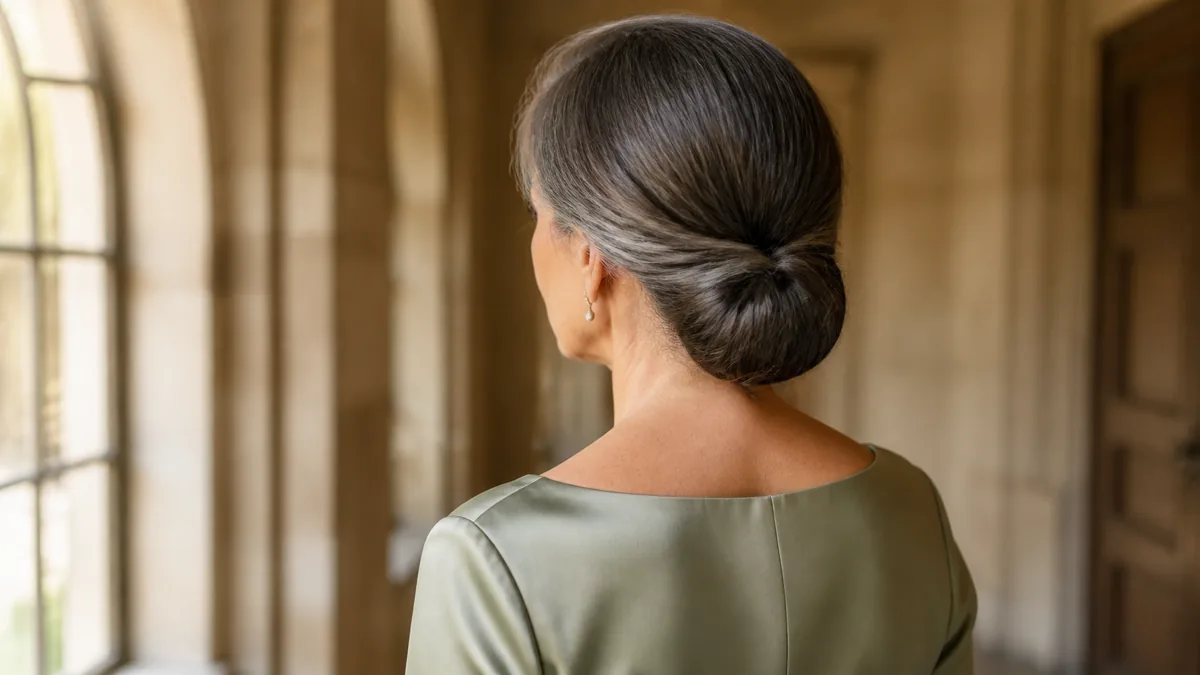
Booking an appointment soon? Save this page. It is easier to skim in the chair than to remember.
At a glance
Works
- A low chignon at the nape, which holds on almost any hair that reaches the shoulders
- A low braided bun, which stays put all day and works on second-day hair
- A Gibson tuck, which uses a horizontal roll that medium to thick hair holds without effort
Depends
- A French twist, which needs enough mid-shaft density to hold the vertical roll without showing gaps
- Soft pinned curls, which only read as intentional if the hair holds a natural wave or set curl
- A side-swept bun, which shifts weight off-center but falls flat on stick-straight hair within two hours
Skip
- A figure-eight bun on fine hair, where the two coils show gaps rather than a solid shape
- A sculpted chignon with swept-back sides when temples are thinning, because the sleek line exposes sparse areas
An updo pins everything up. Unlike a half-up style, there is no lower section left to move or provide the illusion of volume. The structure has to hold on its own, and whatever density the hair has is the density the updo shows.
After 50, individual hair strands tend to be thinner in diameter and overall density can drop. Both change what an updo can do, because the pinned shape needs enough material to read as a deliberate form rather than a thin ridge or a sparse twist.
Every updo below is judged on the same question: what does your hair need to hold this shape from the ceremony through the reception, and what happens when it cannot.
1. Classic French twist
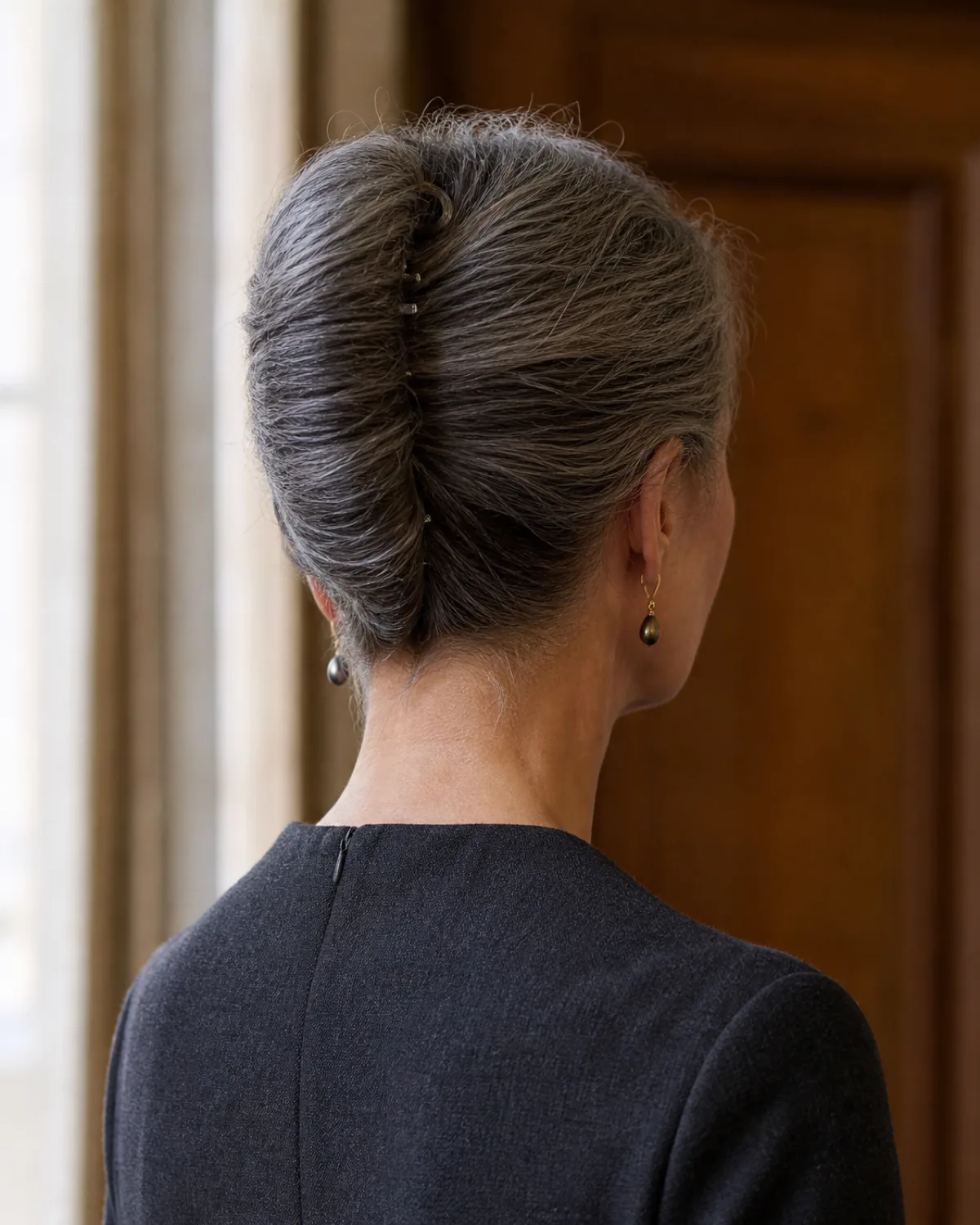
A French twist rolls the hair vertically from the nape upward, tucking it inward to create a cylindrical shape along the back of the head. The roll needs enough hair at the mid-shaft to hold the shape without showing scalp through the twist. When the density is there, the twist reads as solid architecture. When it is not, the roll flattens into a thin ridge within the first hour.
- Ask the stylist how many pins the twist needs; more than six suggests the hair may not sustain the shape through a long event
- Look at the mid-shaft section in a mirror; if you can see scalp through the gathered hair, a chignon or braided bun may hold better
- Request that the stylist leave the twist slightly loose at the crown to avoid pulling the hairline
2. Low chignon at the nape
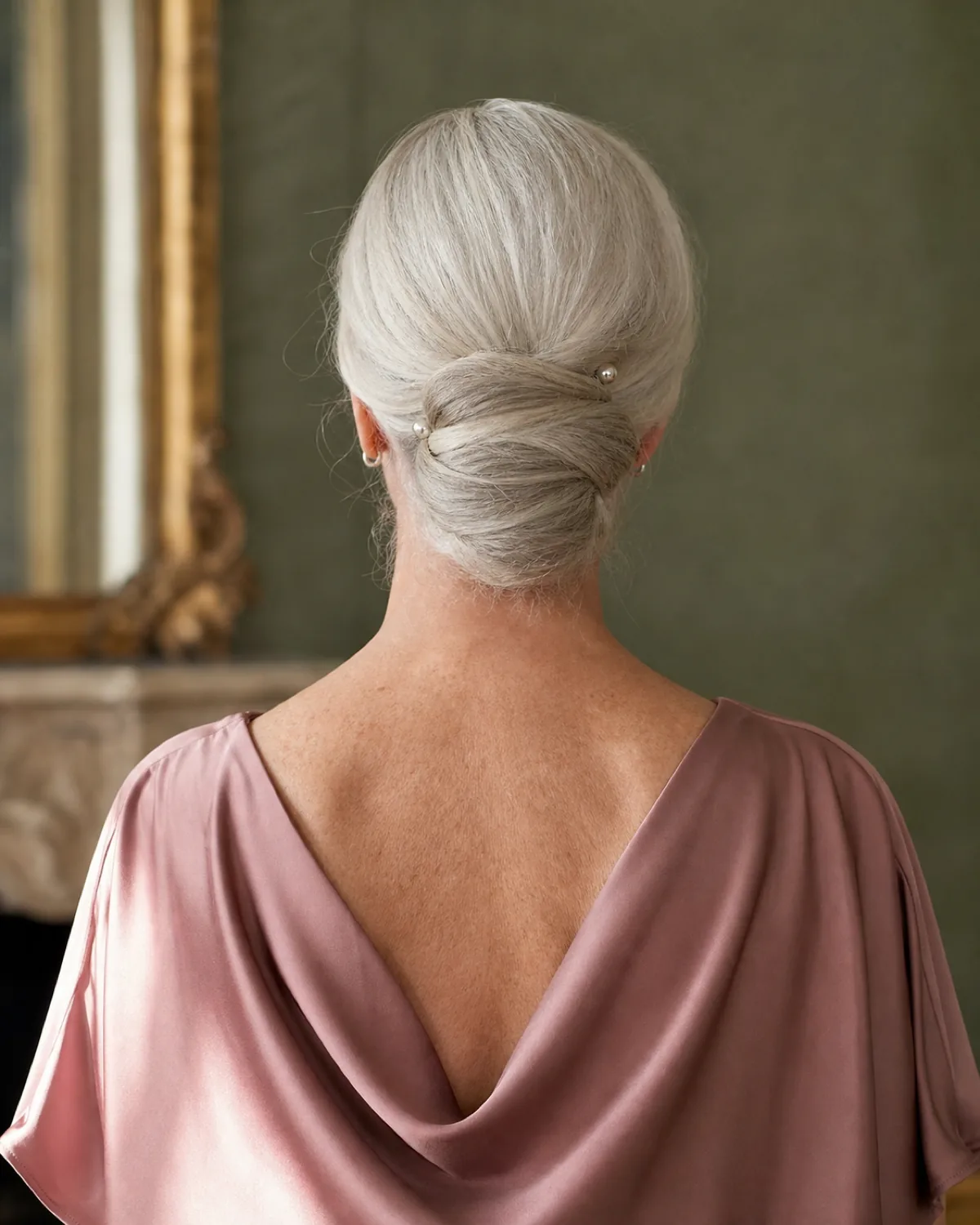
A chignon gathers the hair into a knot or bun at the nape. It is the most forgiving updo on this list because it works on almost any hair that reaches the shoulders. The knot sits low enough that gravity helps rather than fights, and the shape is compact enough to stay put with a few pins. Fine hair makes a smaller chignon, but the structure still holds.
- Check whether the gathered section at the nape has enough volume to form a visible shape rather than a thin coil
- A draped-back dress makes this chignon the visual centerpiece; a high collar tucks it away
- If the knot is small, a single decorative pin can add visual weight without adding structural demand
3. Side-swept low bun
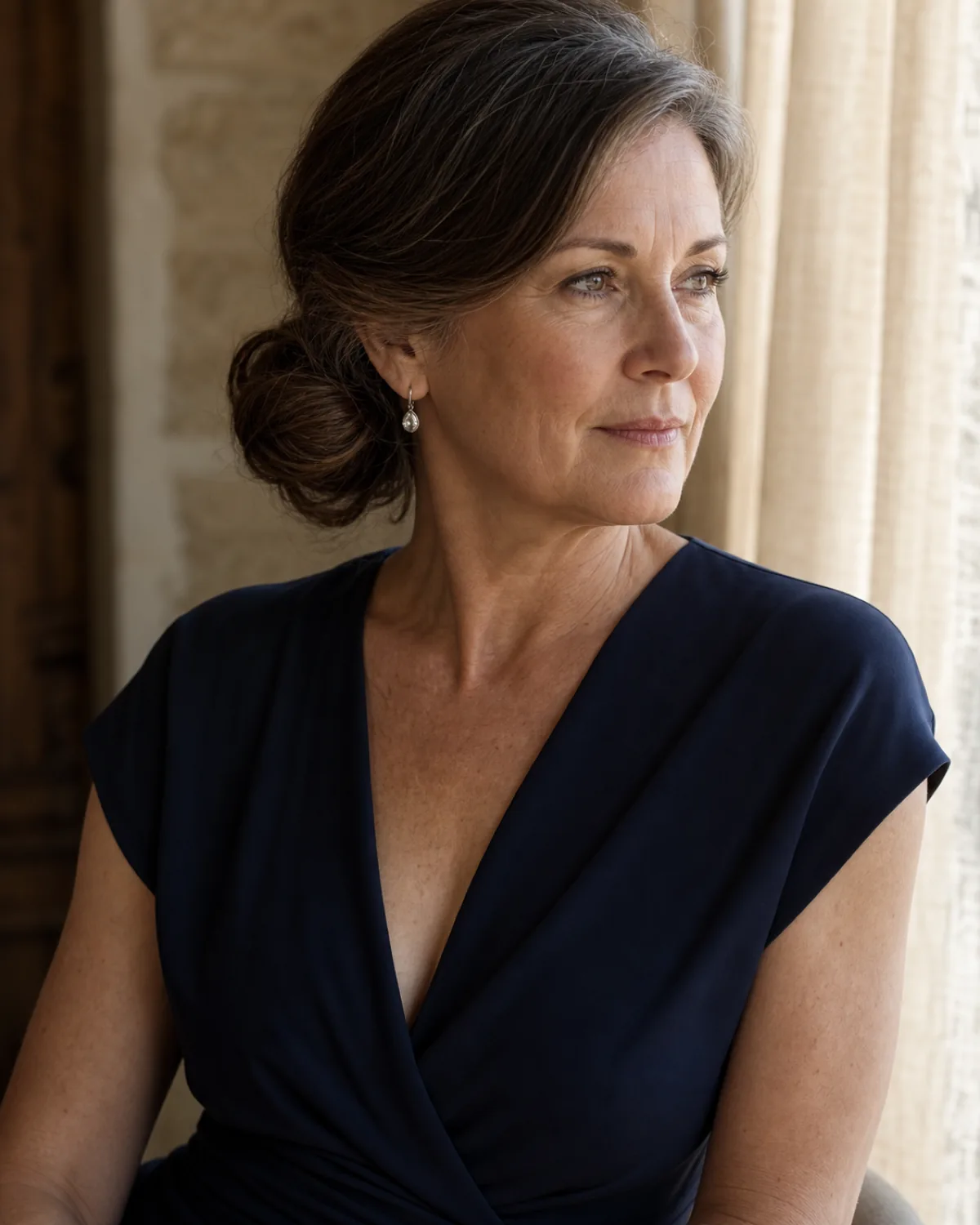
A side-swept bun shifts the weight off-center, creating an asymmetric line that changes the profile in photographs. The bun sits behind one ear, which means one side of the neck is exposed and the other is covered.
This suits women with a strong jawline who want to soften the profile on the photographed side. The risk is that the curve depends on the hair holding a bend; stick-straight hair relaxes within a couple of hours and the bun goes flat.
- Test whether the hair holds a curve by wrapping a section around two fingers and releasing; if it springs straight, ask the stylist about a setting spray
- The exposed side of the neck is where the photographer catches the profile during the ceremony
- If the bun sits too far behind the ear, it disappears from the front; ask the stylist to position it where it shows at three-quarter angle
4. Rolled banana twist
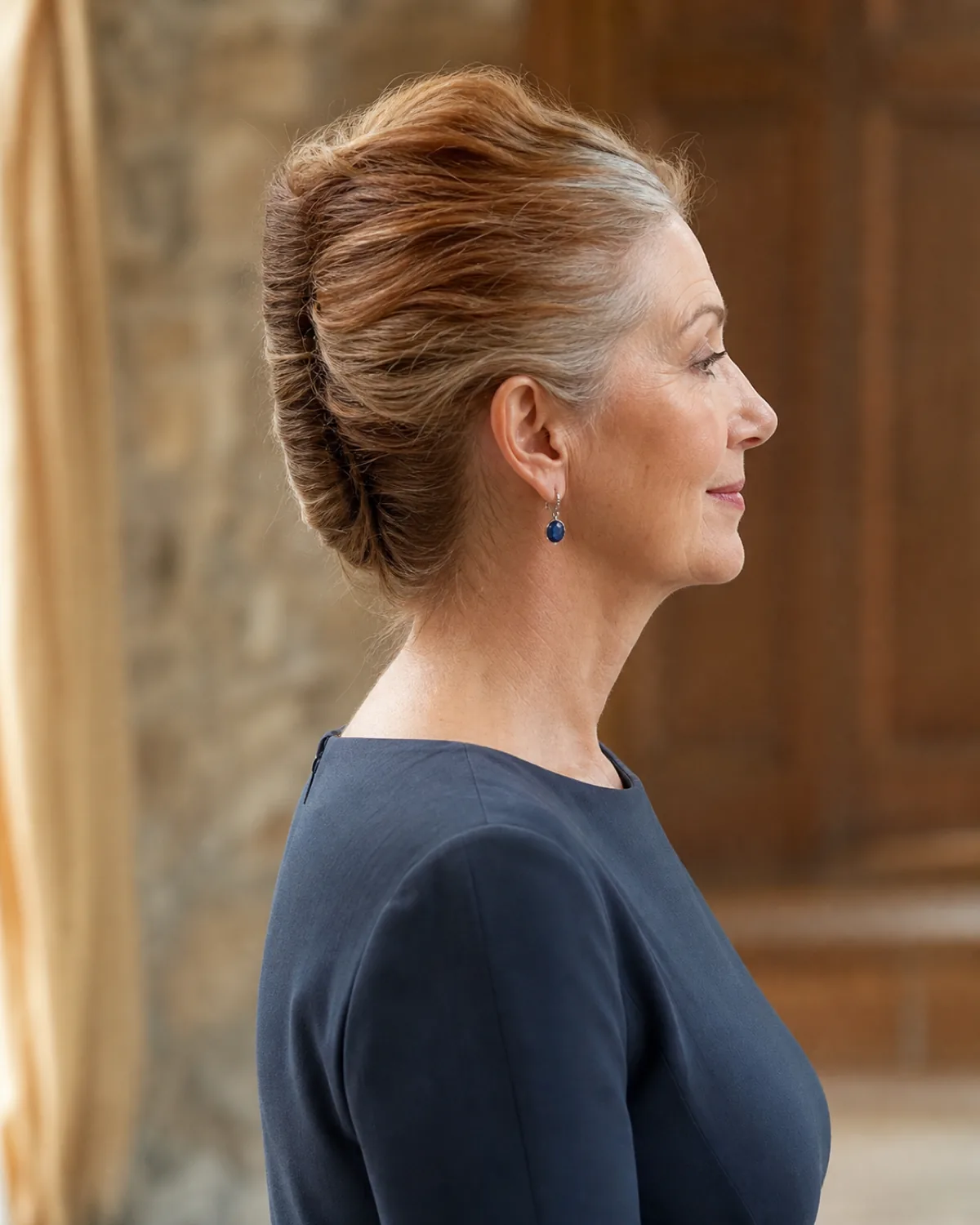
A banana twist is a vertical roll that spirals from the nape to the crown, creating an elongated shape along the back of the head. The roll adds the impression of height and lengthens the neck line, which suits oval or oblong face shapes.
For a round face, the vertical line can emphasize width by contrast. The twist needs enough length and density to spiral smoothly; thin hair at the crown will leave gaps at the top of the roll.
- Stand in profile in front of a mirror and hold the hair in a vertical line from nape to crown; if the line looks natural, the twist will sit well
- This updo elongates the neck, which pairs well with a jewel or boat neckline that sits below
- If the roll shows gaps near the crown, ask the stylist to stop the twist at ear level and pin the remaining hair into the base
5. Soft pinned curls at the nape

Soft pinned curls gather individually at the nape, each curl pinned to form a cluster that reads as one organic shape. This updo suits naturally wavy or permed hair because the curls hold their shape without additional setting. On fine, straight hair, the curls unwind before the reception starts, and the cluster begins to look like loose strands rather than a deliberate arrangement.
- If the hair is straight, test a single curl with a curling iron the day before; if it drops within two hours, the pinned-curl updo will not hold through an event
- The cluster should sit as a unified shape; if individual curls separate and read as stray pieces, the stylist needs to pin tighter
- This updo reads more relaxed than a formal twist, which suits outdoor or garden ceremonies
Where to start
Find your situation, skip ahead
Your hair is fine or thinning and you need the updo to hold all day without re-pinning
Start with structures that lock mechanically rather than relying on grip. The low chignon, braided bun and Gibson tuck all pin in place.
Your hair has body and you want the updo to photograph well from the side during the ceremony
The French twist and banana twist both change your side profile, which is the angle the photographer catches during vows and speeches.
You want something formal enough for the event but not so structured it reads as stiff
The textured low updo and the loose low bun both read put-together without looking rigid, as long as you have enough density to keep the loose sections full.
09 Textured low updo with loose tendrils14 Loose low bun with volume at the crown
6. Low braided bun
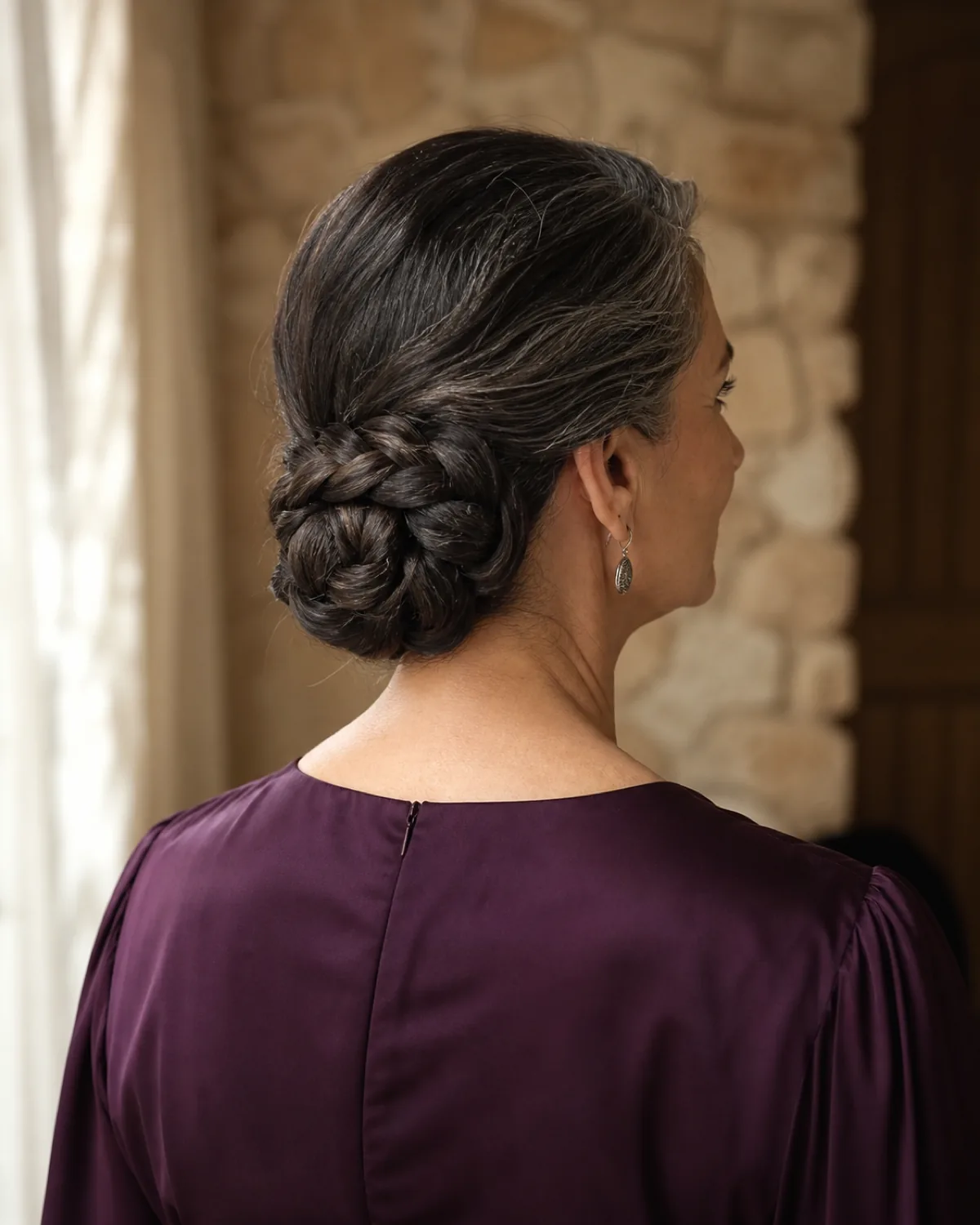
A three-strand braid folded and pinned into a bun at the nape is one of the most reliable updos for a long event. The braid locks the hair mechanically, so it holds even on second-day hair.
The braid pattern adds visual texture without additional accessories. This updo works on anyone with enough length to braid. It does not work when layers are too short to stay inside the braid; short pieces pull free within the first hour.
- Check whether the shortest layer reaches past the chin; if it does not, the braid will shed pieces
- This updo holds well enough that a trial is less critical than for a twist or pinned curls
- The braid pattern adds enough visual interest that the bun does not need a decorative pin
7. Twisted crown into a low knot
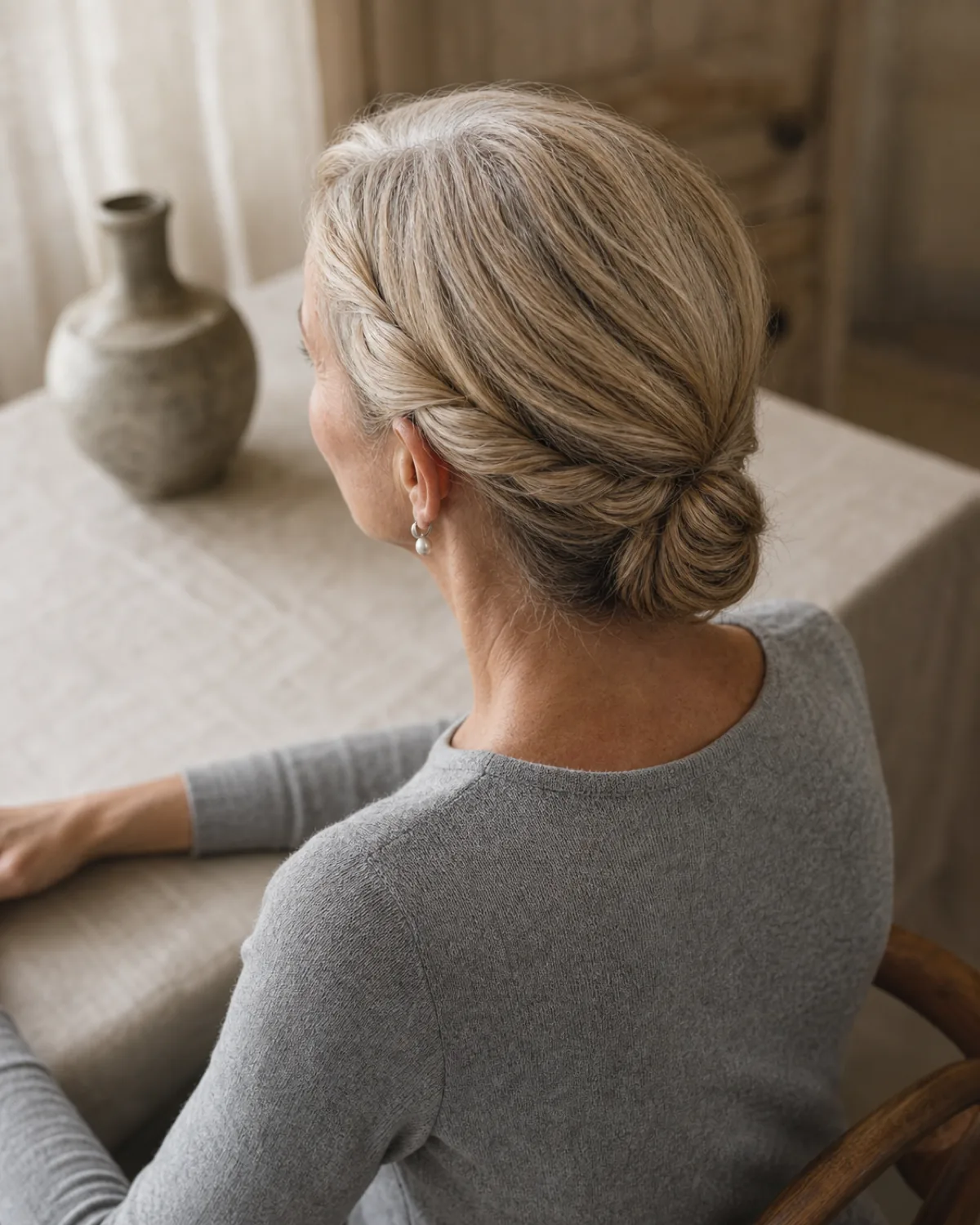
Two sections twisted from the temples meet at a knot at the nape. The twists clear the face without the severity of a slicked-back look because the twisted texture adds softness along the sides. The knot at the nape is small and neat, so this updo reads as understated rather than architectural. It suits women who want the face framed cleanly without pulling the hair flat against the head.
- The twists should sit close to the head without pulling the hairline; if they lift away from the scalp, the hair is too slippery for this structure
- This updo works well with small earrings because the twists leave the ears exposed without competition
- If the knot at the nape is too small to read as a shape, the stylist can wrap an additional section around the base
8. Gibson tuck
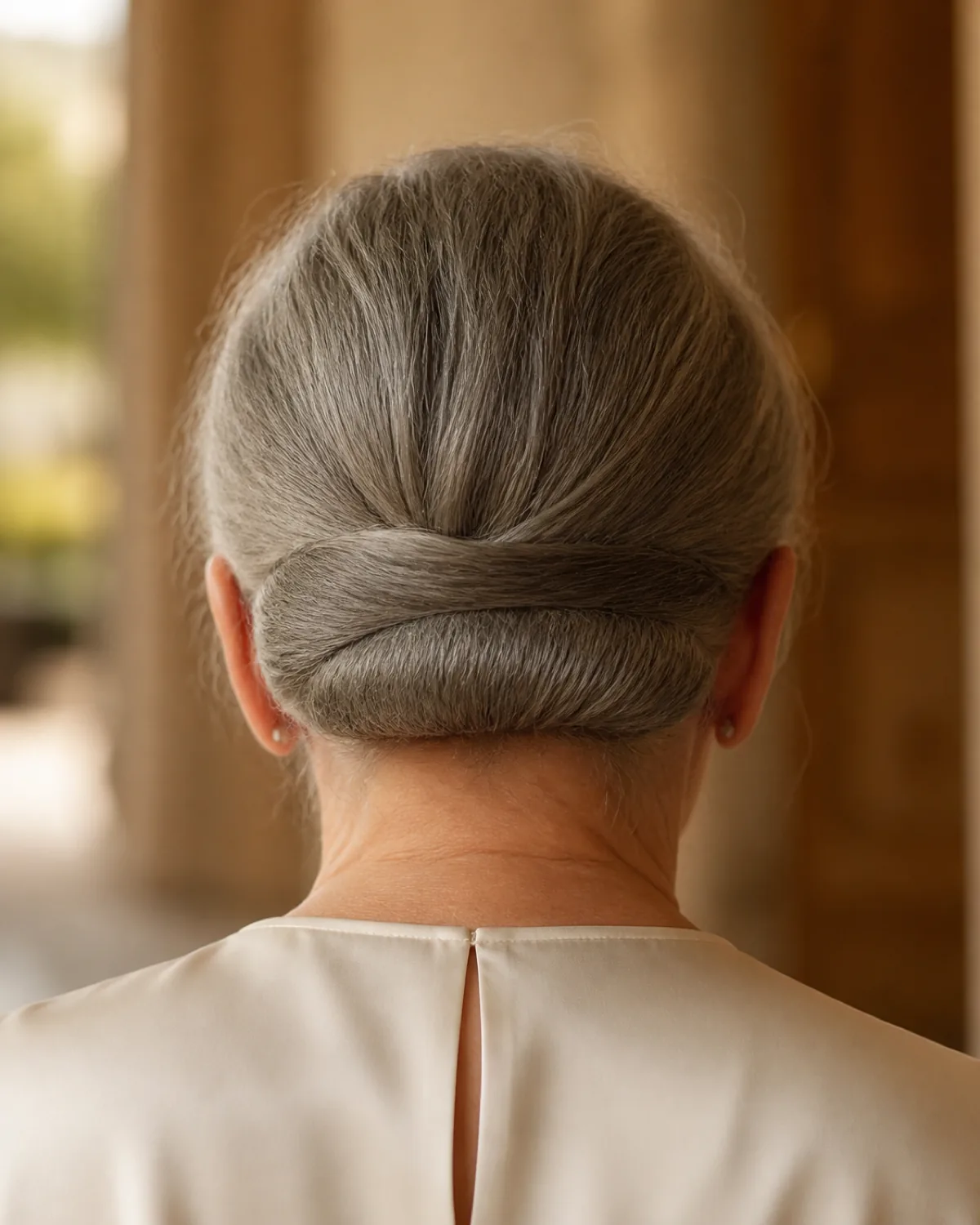
A Gibson tuck rolls the hair under at the nape in a horizontal tuck. The hair folds into itself, creating a smooth horizontal ridge across the back of the head.
This updo works on medium to thick hair because the tuck needs enough material to form a visible roll. On fine hair, the tuck shows the shape of the head beneath it rather than holding as a distinct ridge. The hair must be at least shoulder length for the tuck to fold under properly.
- Hold the hair at the nape and try folding it under once; if the fold feels secure, the tuck will hold
- This updo sits entirely below the crown, so it pairs well with hats or hair pieces if the venue calls for one
- If the fold creates a bump rather than a smooth ridge, the hair may be too thick for a single tuck; ask the stylist about dividing it into two sections
9. Textured low updo with loose tendrils
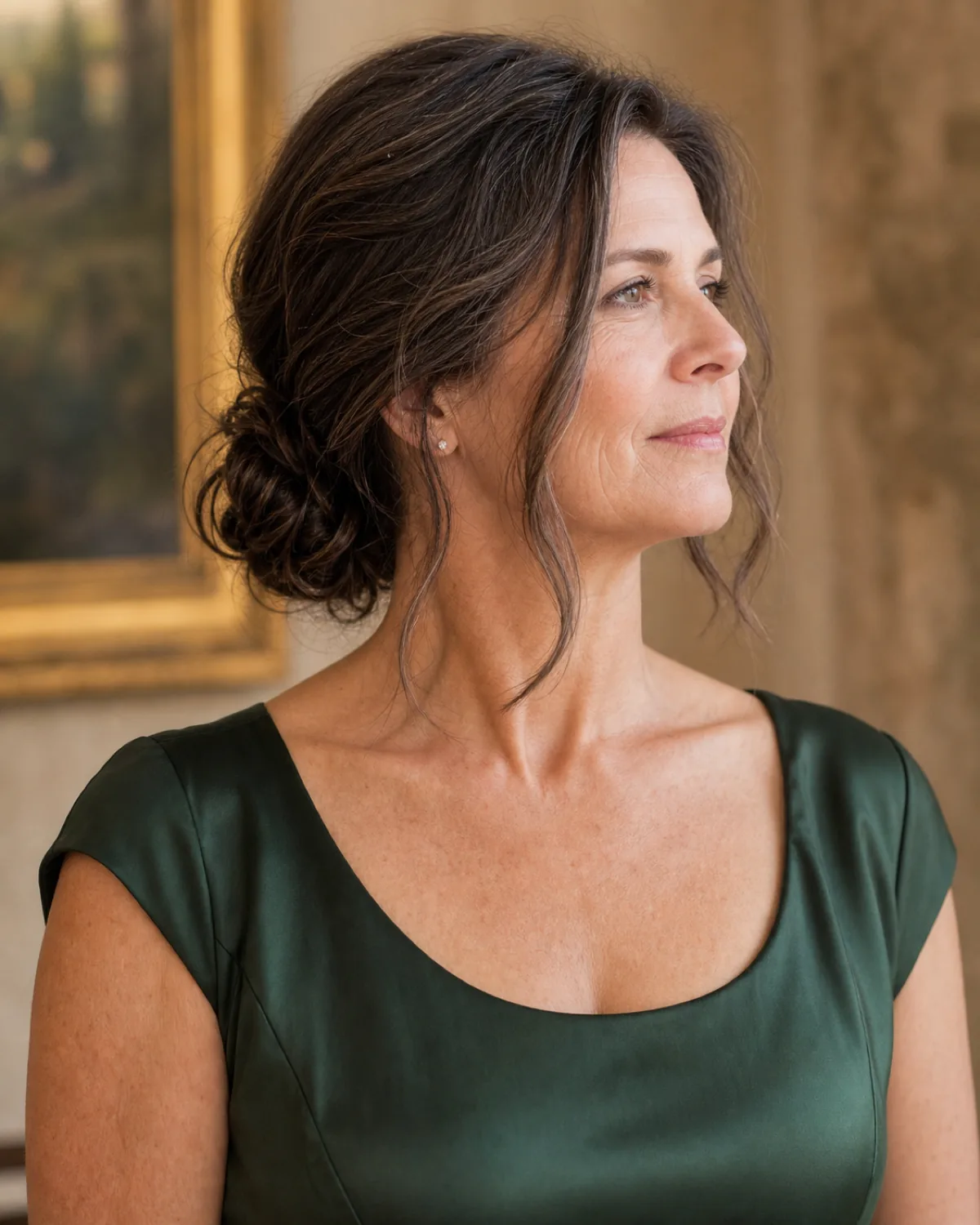
A textured low updo gathers the main mass at the nape while leaving face-framing pieces out. The bun is deliberately imperfect, which gives it a softer register than a polished chignon.
The judgment here is whether the tendrils read as intentional or escaped. On hair with natural body, the tendrils hold a slight curve and frame the face. On fine hair, they read as thin wisps that fell out of the updo.
- Pull out two pieces at the temples before the trial and check whether they hold a shape or fall limp and straight
- The tendrils should be thick enough to read as a deliberate frame; if they are sparse, pinning them back into the updo is the cleaner option
- This updo photographs well from three-quarter angles because the tendrils soften the jawline in profile
10. Asymmetric side knot
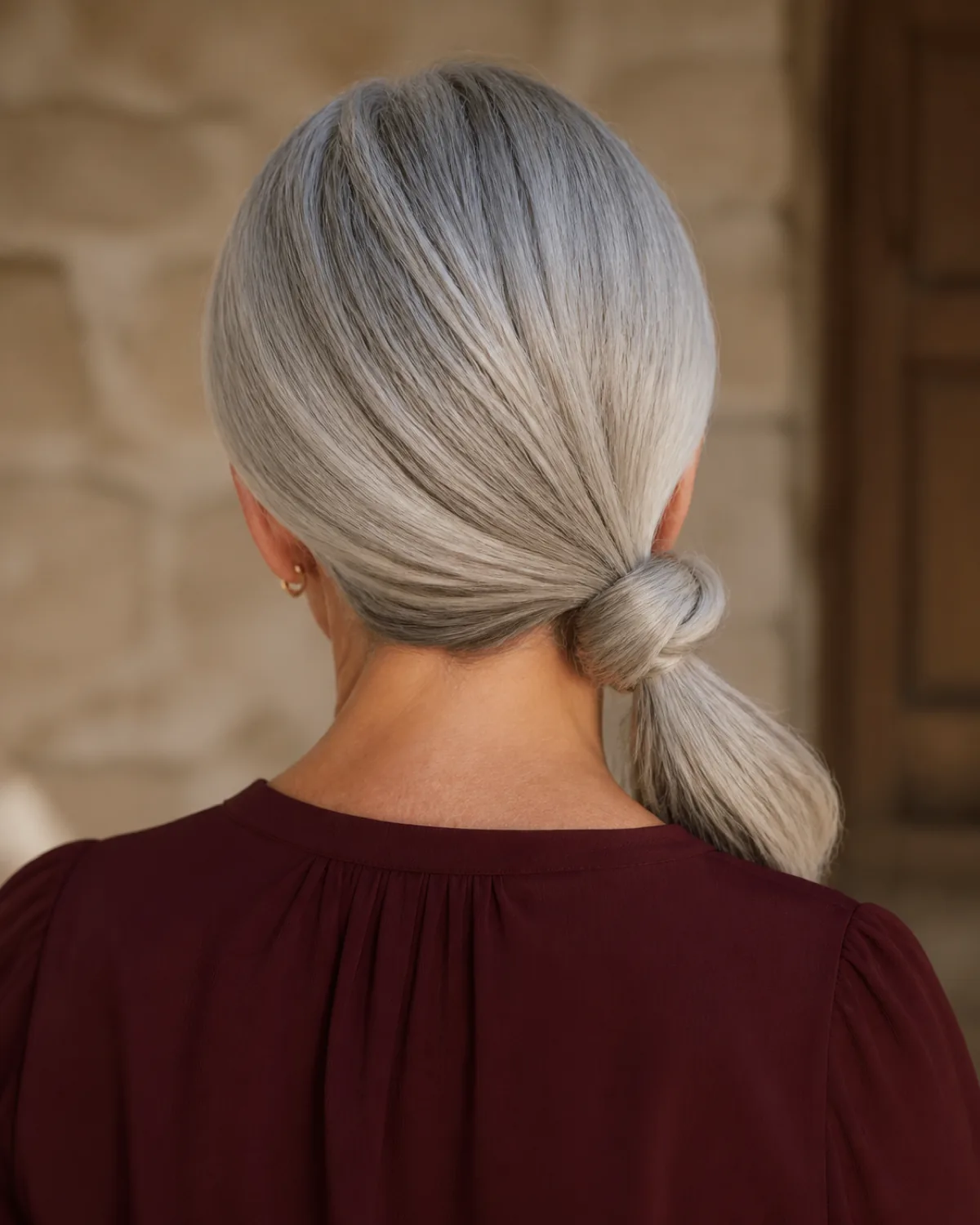
All the hair gathered to one side and tied into a knot below the ear creates an asymmetric profile. One side of the neck is fully exposed, the other is covered by the gathered hair.
This suits women with a strong jawline who want to direct attention to one side. The knot needs enough density to hold its shape without showing scalp at the gathering point. On very fine hair, the pull to one side can expose thin areas.
- Stand in front of a mirror and sweep all the hair to one side; if the scalp shows where the hair pulls across, this updo will not hold cleanly
- The exposed side is the one the photographer will capture during the ceremony; choose the side you prefer
- A small knot reads more modern than a full bun at the side
11. Figure-eight bun
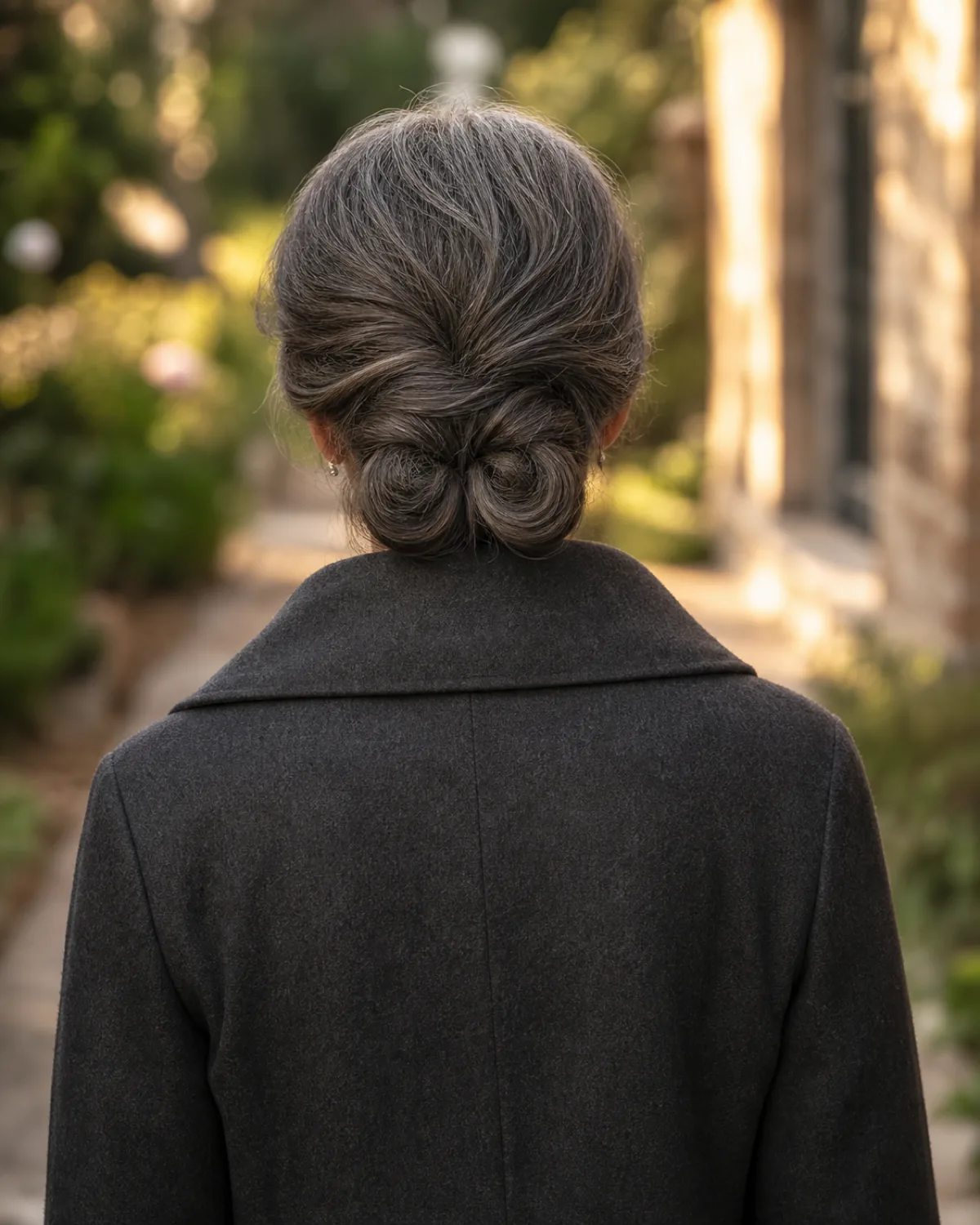
Two coils of hair looped and crossed over each other at the nape form a figure-eight shape. This updo needs thick, heavy hair because each coil must have enough volume to read as a distinct loop. When the density is there, the shape is striking and architectural. On fine hair, the coils flatten and the figure-eight becomes a thin ridge that looks like a collapsed bun.
- Divide the ponytail into two equal sections and hold them in loops; if each loop reads as a full shape, the figure-eight will work
- This updo holds well on thick hair precisely because the weight of the hair settles the shape rather than pulling it apart
- The architectural shape pairs well with a simple dress and minimal accessories; adding a decorative comb competes with the structure
12. Sleek low ponytail tucked under
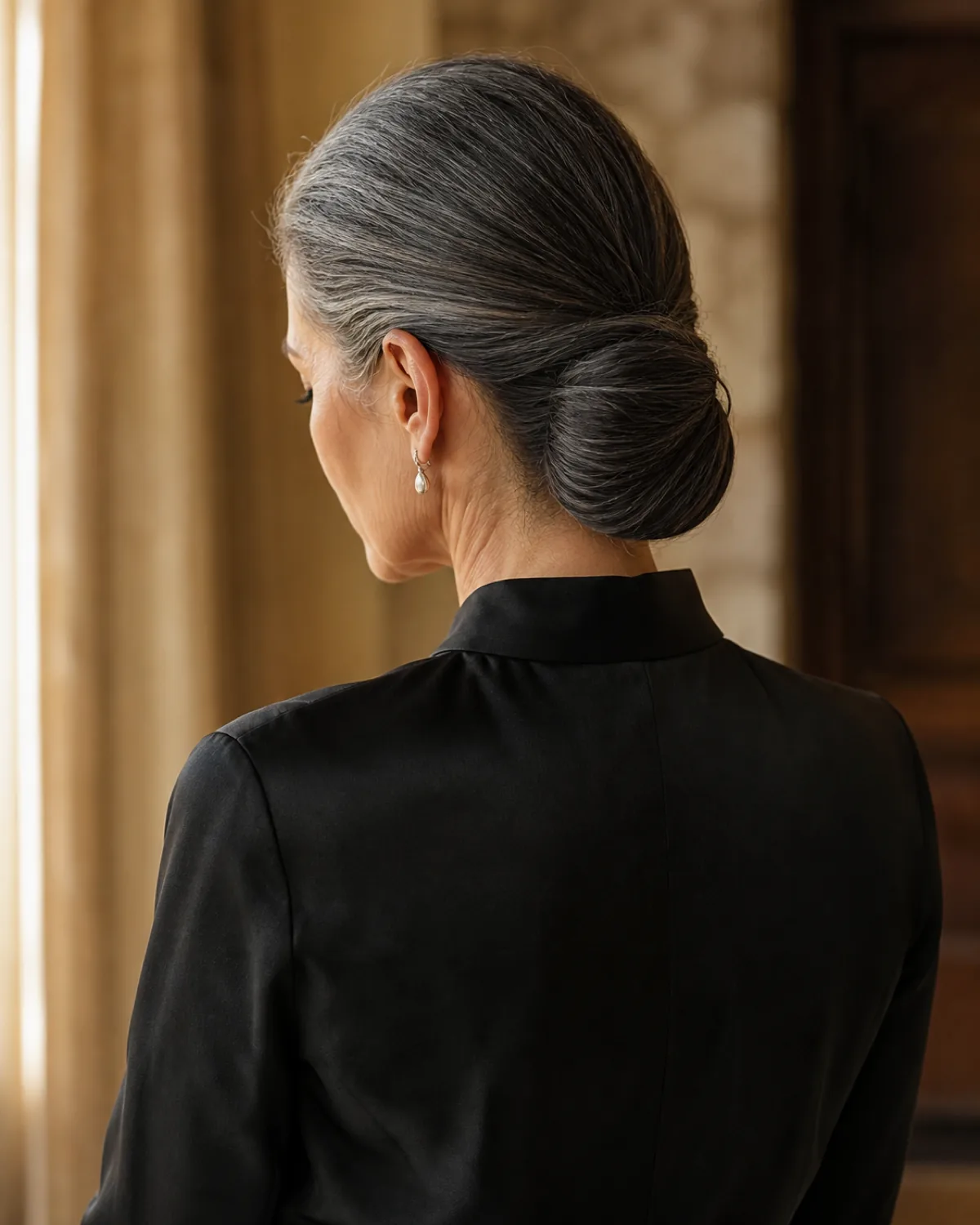
A low ponytail folded back on itself and pinned beneath creates a smooth oblong shape at the nape. This is the lowest-maintenance updo on the list because the fold is mechanical and does not depend on texture or curl.
It works best on straight, dense hair where the surface stays polished. The risk is that the fold can create a visible bump where the tail doubles back; if the bump reads as bulk rather than shape, the updo looks unfinished.
- Tie a low ponytail, fold it under, and pin; if the surface is smooth and the fold stays flat, this is a strong option
- This updo needs no trial if the hair cooperates at home; the shape is simple enough to test in five minutes
- The mandarin collar and polished surface of this updo read as the most composed option on the list
13. Chignon with a braid accent
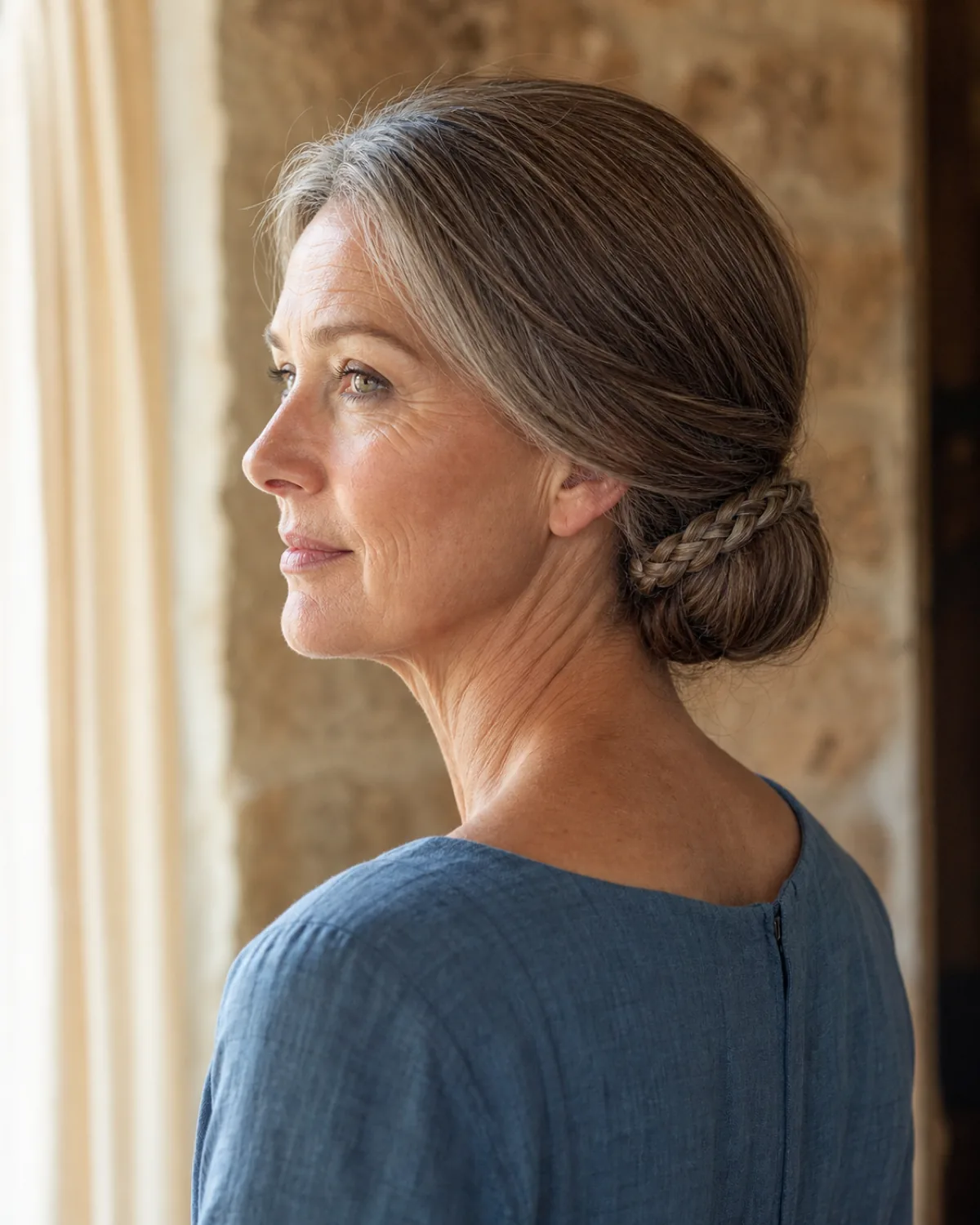
A single braid wrapping the base of a chignon adds texture without adding formality. The braid is a visual accent, not a structural element, so the chignon must hold on its own. The judgment is whether the braid is thick enough to read as a deliberate detail. A thin braid on fine hair looks like a stray strand that was twisted to keep it out of the way.
- Separate a section at the nape and braid it; if the braid is as thick as a pencil or thicker, it will read as an accent
- The braid adds enough visual interest to the chignon that earrings can be simple; both competing for attention dilutes the effect
- If the braid is too thin, wrapping a ribbon or cord around the base of the chignon creates a similar accent without depending on hair density
14. Loose low bun with volume at the crown
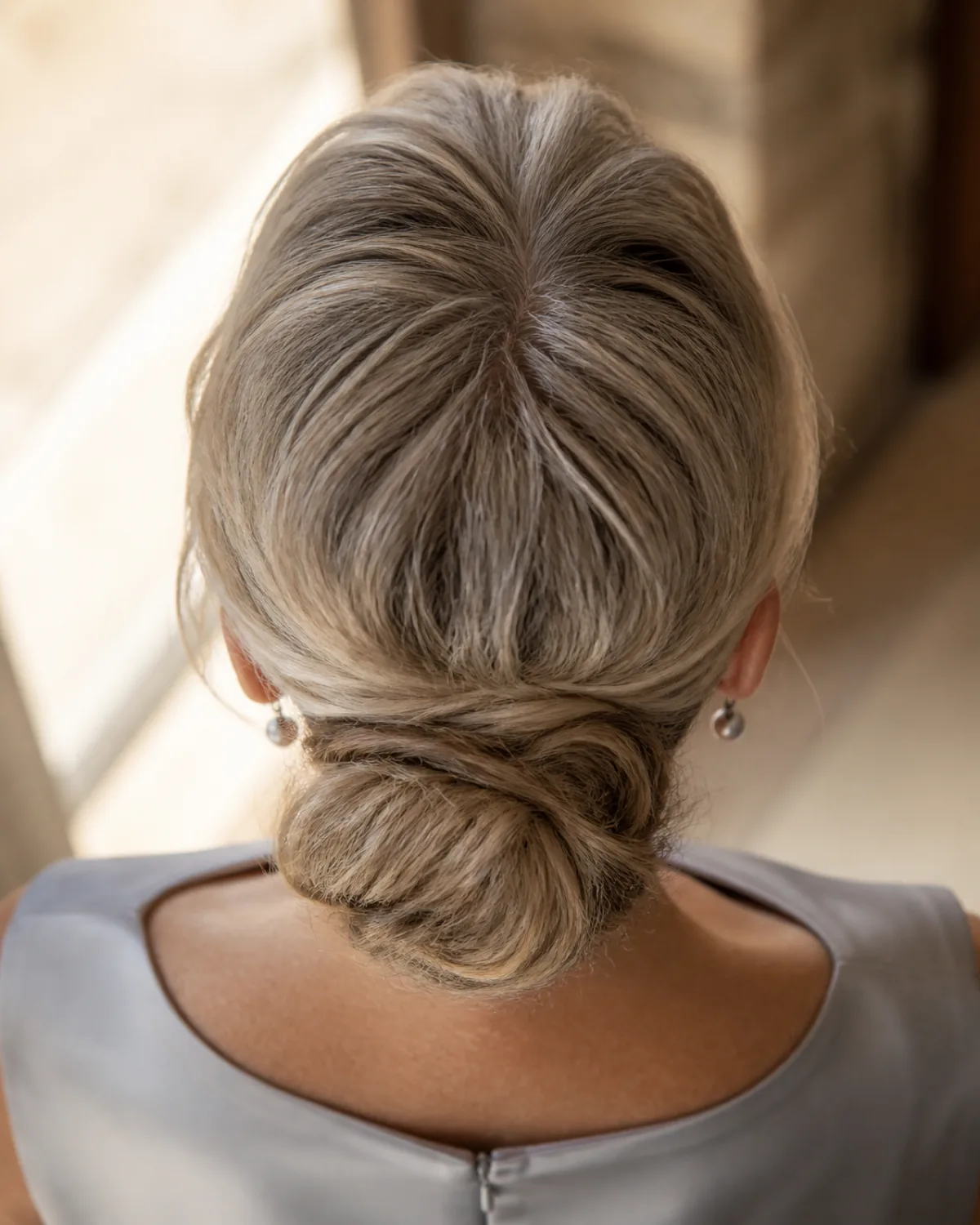
A gently lifted crown leading to a relaxed bun at the nape creates an updo that reads as soft rather than architectural. The crown volume is the key judgment: it must look like a deliberate shape, not like the back of the head has been slept on.
Fine hair that deflates at the crown within the first hour makes this updo fall apart before the ceremony ends. A light root spray can help, but the baseline density has to be there.
- Look at the crown from the side in a mirror; if it reads flat against the head, the volume will not hold
- Ask the stylist for minimal backcombing at the roots rather than heavy teasing; the goal is a shape, not height
- This updo reads best from above and from three-quarter angles; the photographer during the ceremony captures both
15. Double-twisted low roll
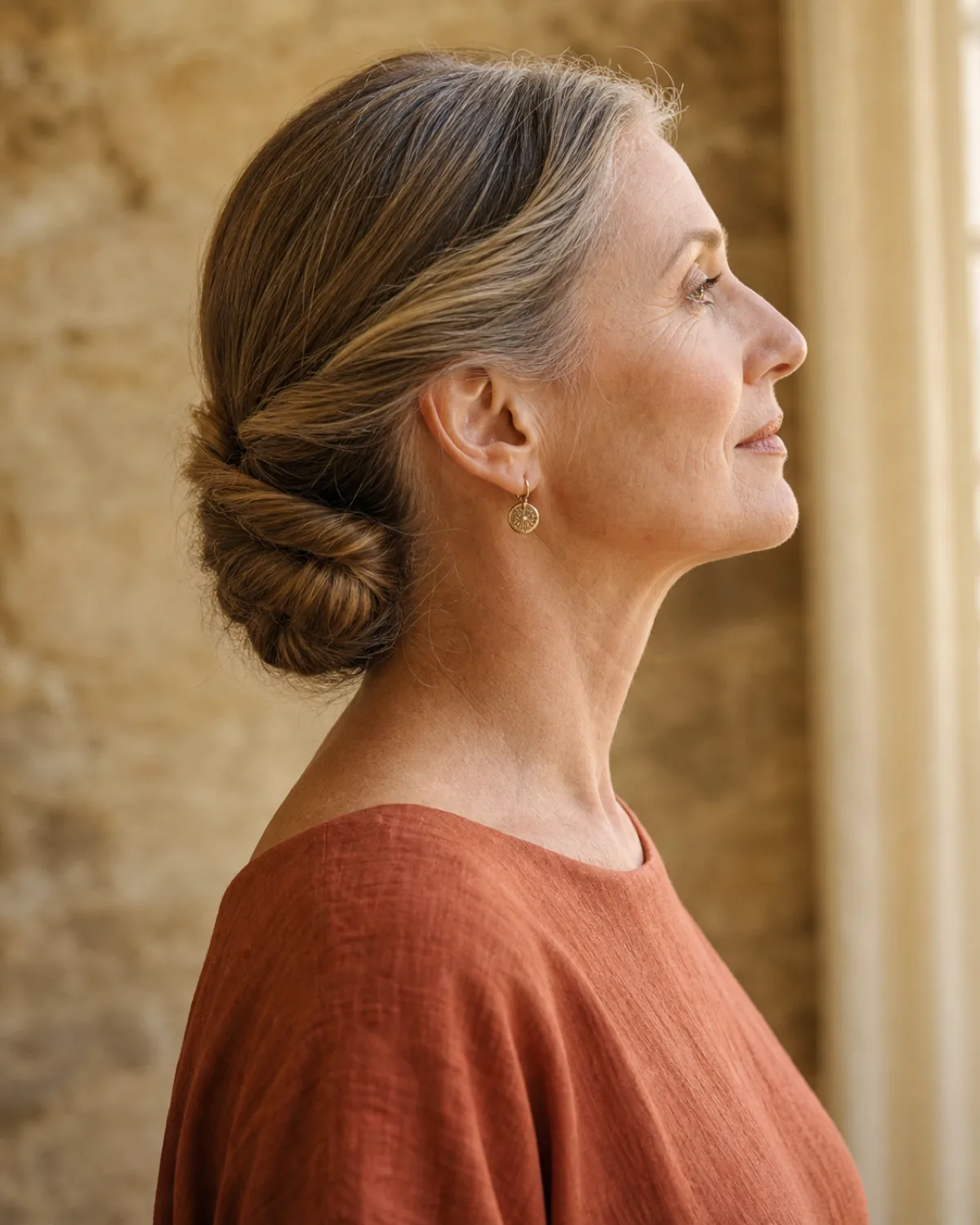
Two sections of hair twisted separately and crossed at the nape form a flat interlocking roll. This gives more visual complexity than a single twist without the height of a French twist. The two twists must be individually readable as separate elements; on very fine hair, they collapse into one flat ridge and the distinction is lost.
- Twist two sections at the back and cross them; if each twist holds its shape independently, the double-twist will read clearly
- This updo sits flat against the head, which works well with high necklines and statement earrings
- The interlocking structure holds better than a single twist because the two sections brace each other
16. Knotted nape chignon

Hair looped into a knot rather than rolled creates a slightly more casual chignon that sits lower than the classic version. The knot shape is less polished than a rolled chignon, which can read as either relaxed or undone depending on the context. For a garden or outdoor wedding, the casual register works. For a formal evening ceremony, a rolled chignon reads more deliberately.
- This updo works best on medium-density hair; fine hair makes the knot too small to read, and heavy hair pulls it loose
- The knotted shape is quick to create, which makes it a strong option if the wedding schedule does not allow for a lengthy styling appointment
- From the front, the chignon is barely visible; the effect is clean lines at the face with the structure hidden at the back
17. Low bun with a jeweled pin
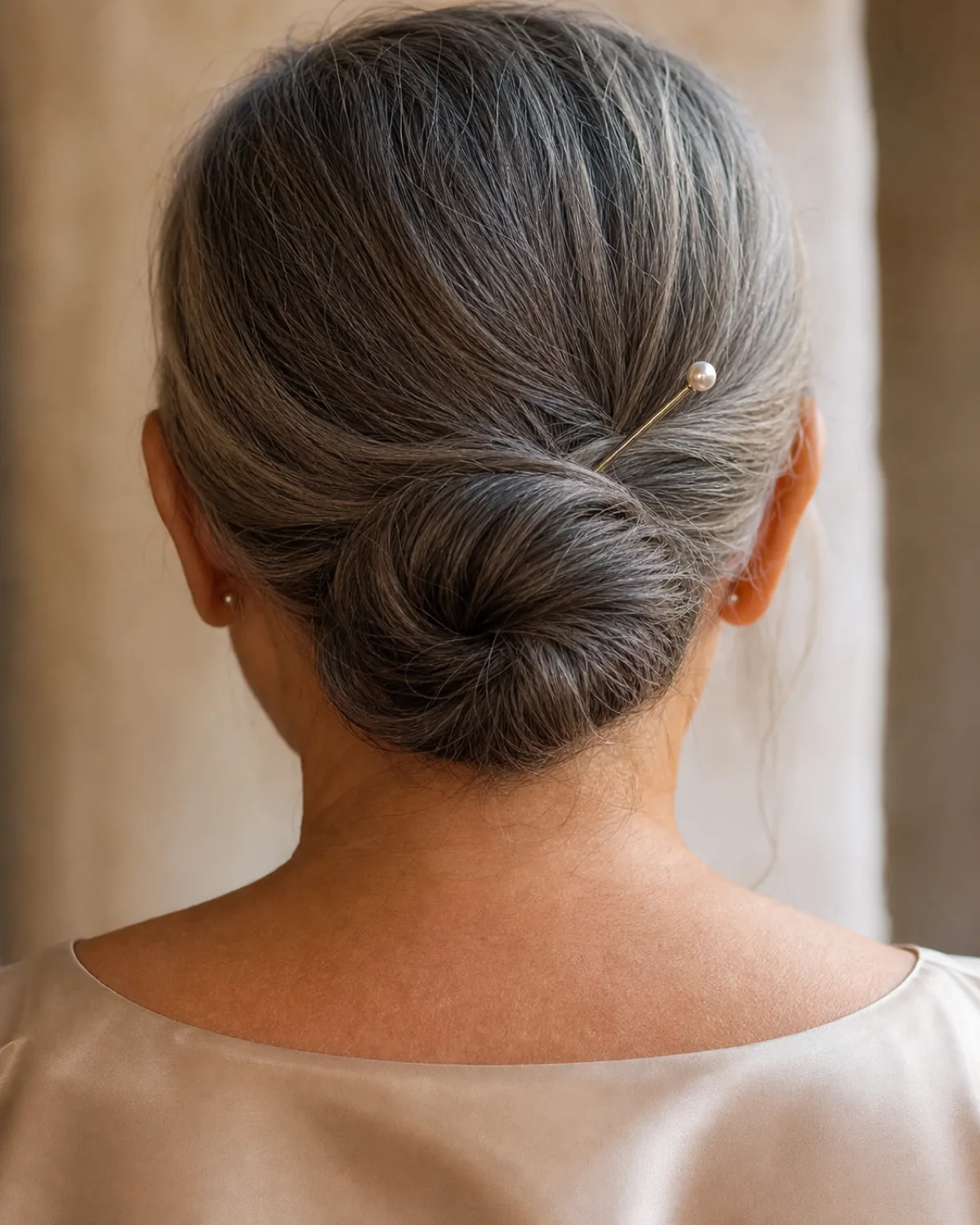
A plain low bun elevated by a single decorative pin puts the visual work on the accessory rather than the hair. The bun itself only needs to hold its shape; the pin does the rest.
This is a strong option for fine hair that cannot sustain an elaborate structure, because the bun can be small and the pin compensates visually. The judgment is whether the bun is dense enough for the pin to sit without tilting.
- Push a pin into the gathered hair; if it sits firmly without leaning, the bun has enough density
- Choose a pin that coordinates with the earrings but does not match exactly; an identical set reads as costume
- The pin should be inserted at a slight angle from the top of the bun; a pin that sits straight up reads as accidental
18. French twist with a side part
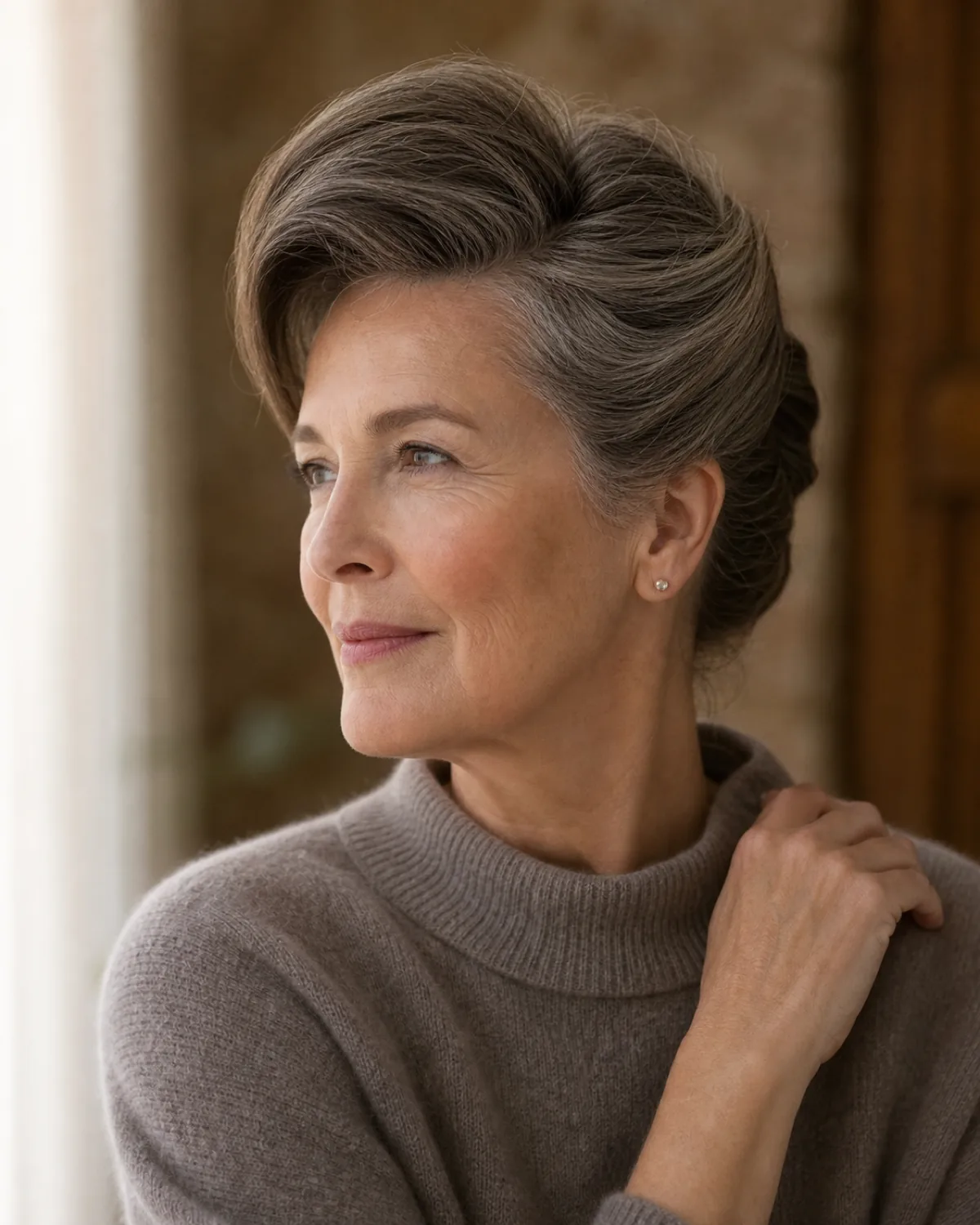
A French twist that starts from a deep side part leaves more volume on one side of the head. The asymmetry adds visual interest and suits women who already wear a side part.
Forcing a side part for one day when the natural part is center creates an awkward ridge where the hair resists the new direction. The heavier side of the part is where the volume sits, so the twist reads differently from each angle.
- If the natural part is center, do not force a side part for this updo; the ridge will be visible within the first hour
- The heavier side photographs with more volume, so position it toward the ceremony aisle
- This variation works best on thick hair that has enough mass to create a visible volume difference between the two sides
19. Wrapped low ponytail
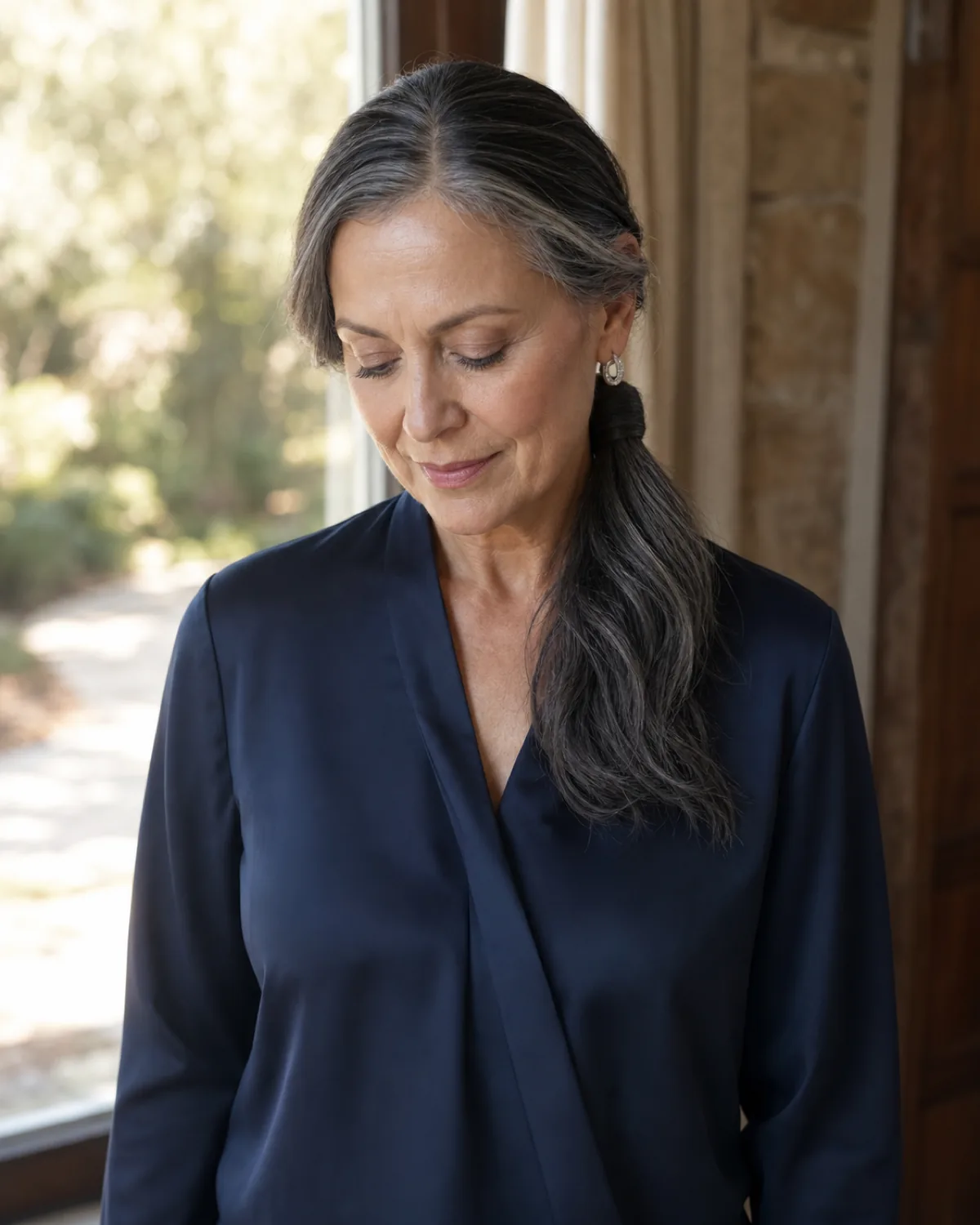
A low ponytail with a section of hair wrapped around the elastic sits between an updo and a down style. This is the least formal option on this list, and it works when the event register allows for something more relaxed. The wrap must be thick enough to cover the elastic and read as a deliberate finish. On fine hair, the wrap looks thread-thin and the elastic shows through.
- Wrap a section of hair around a ponytail elastic and check whether the elastic disappears; if it still shows, the wrap is too thin
- This option requires the least time and the fewest pins, which suits a morning ceremony with a short turnaround
- The ponytail hangs between the shoulder blades, so a backless or draped-back dress makes it the focal point; a high-collar dress hides it entirely
20. Sculpted chignon with swept-back sides
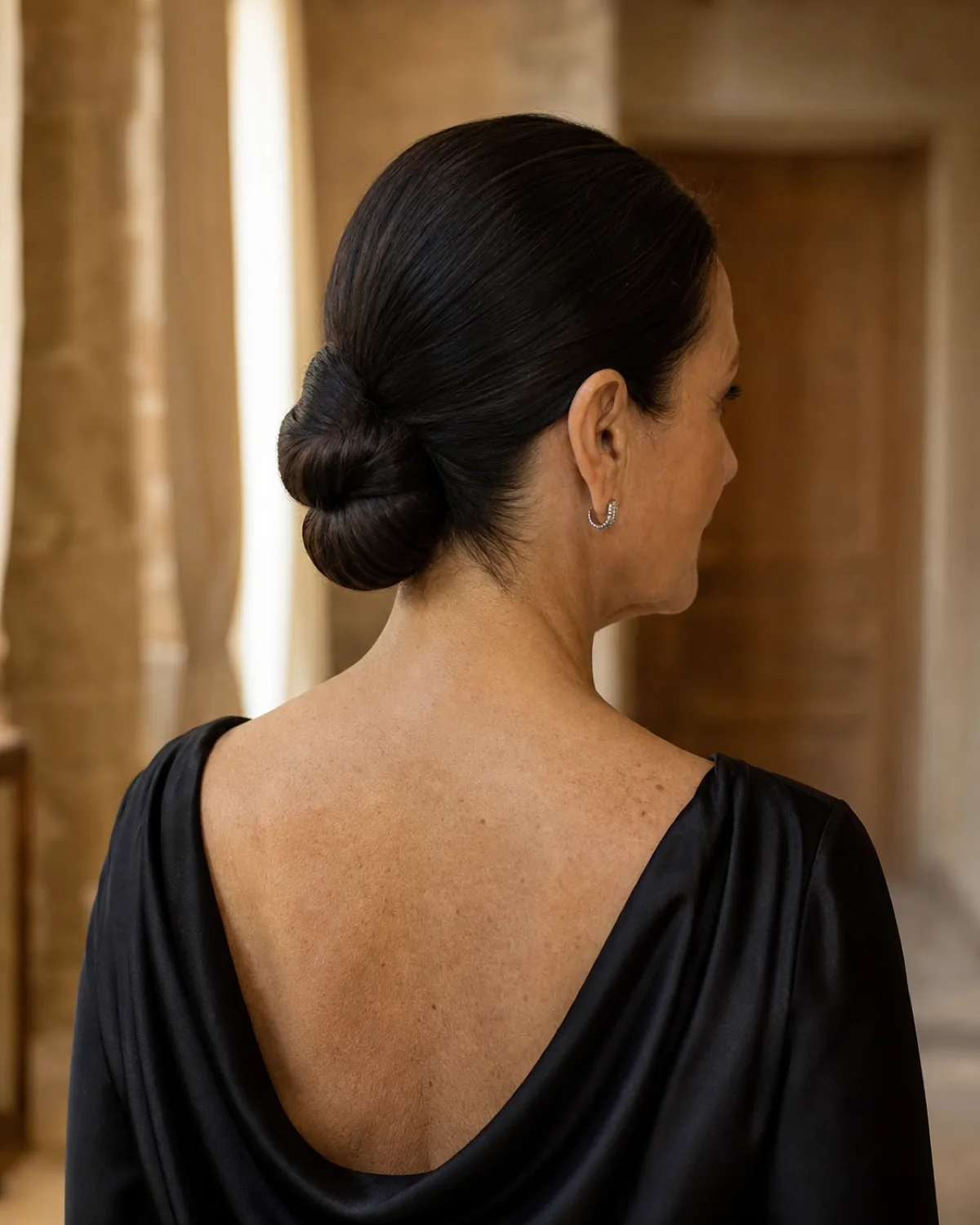
Sides slicked back from the temples with no flyaways, meeting at a polished chignon at the nape. This is the most formal updo on the list and the one that demands the most from the hair. The sleek surface from temple to nape requires enough density at the temples to cover the scalp completely. Thinning at the temples makes the slicked-back line show scalp, which undercuts the polished effect.
- Pull the hair back flat from both temples and check whether the scalp shows; if it does, a looser gathering at the sides is a better choice
- The sleek surface reads as the most composed option here, which suits a formal evening ceremony
- This chignon pairs with statement earrings because the clean line from temple to ear leaves the earrings as the only competing detail
A stylist who can see the hair in person outranks anything written here. Bring two photographs to the appointment, not twenty, and tell them how many hours the updo must hold. The constraint that matters is not what the updo looks like in the first mirror check. It is what it looks like six hours later.
Where the checkable claims come from
- Updo — Wikipedia
- French twist (hairstyle) — Wikipedia
- Chignon (hairstyle) — Wikipedia
- Hair diameter and aging — Birch, Messenger & Messenger, Journal of Investigative Dermatology (2001)
- Gibson tuck — Wikipedia
Keep this one
Save it for the appointment
Pin the image above to the board you actually open before a salon visit. This guide is written to be re-read, not read once.
Tonight, before you close this tab
- Gather the hair at the nape in one hand and look at whether the gathered section reads as a shape or shows gaps
- Find the dress you are wearing and note whether the neckline is high, open, draped or strapless
- Write down the total number of hours from the first photographs to the end of the reception
- Pull out any face-framing pieces and check whether they read as intentional or escaped
- Ask the salon whether a trial appointment can be booked four to six weeks before the wedding