20 Evening Hairstyles for Women Over 50 That Hold Past the First Hour
Twenty evening hairstyles for women over 50, judged on what holds through a full event. Which styles suit your density, what to ask your stylist, and what to skip.
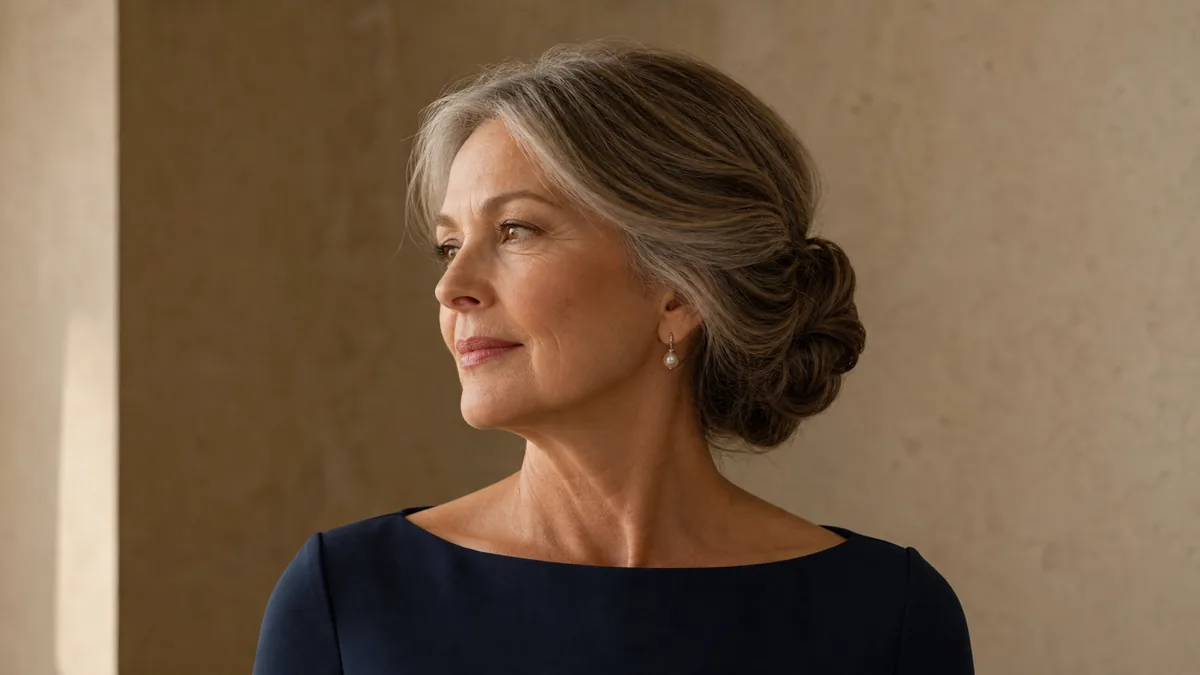
Booking an appointment soon? Save this page. It is easier to skim in the chair than to remember.
At a glance
Works
- A low chignon on medium-to-thick hair that needs a formal shape lasting three hours or more
- A side-swept French twist on straight-to-wavy hair with enough density to fill the vertical roll
- A textured bob left slightly undone, where a statement earring does the formal work instead of the cut
Depends
- A half-up with crown volume, which reads top-heavy if the lower half is fine or sparse
- Loose waves set on rollers, which hold past the second hour only if your hair has some natural texture
- A sleek low ponytail, which reads clean on thick hair but exposes thinning in the tail section
Skip
- A sculptured updo with pinned loops on fine hair, where the loops collapse into wisps rather than shapes
- A wet-look finish on curly or coily hair, which fights the product rather than lying flat
- Swept-back root lift with no part on fine hair, which drops the lift within an hour without back-combing
Evening hair after fifty has one real constraint: the style must hold for hours on strands that are thinner and less grippy than they were a decade ago. A shape that collapses by the main course is worse than wearing it down.
These twenty are judged on hold. Not on how they photograph in the first ten minutes, but on what your hair needs to sustain them through a full event.
If you are not sure which shapes suit your face, start with the face shape guide.
1. A Low Chignon With a Visible Twist
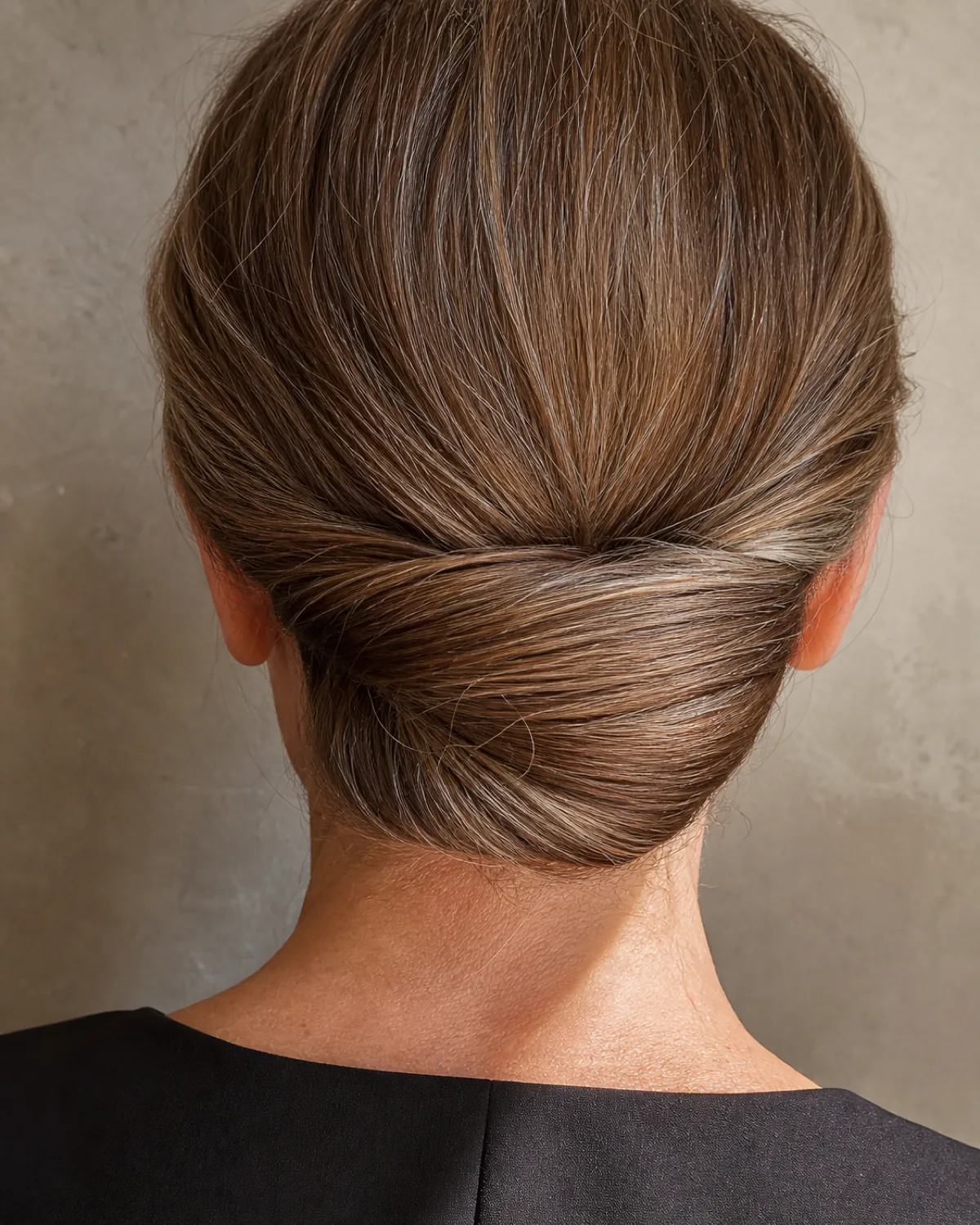
The twist is the structure here, not decoration. Seen from behind at nape level, each strand winds visibly through the roll rather than being tucked away. A twist you can see is a twist built with enough hair to hold. On medium-to-thick hair the roll fills out and keeps its shape. Fine hair needs hidden pins inside to stop the roll from collapsing.
- Suits medium-to-thick hair, where there is enough bulk to fill the roll visibly
- The low position keeps weight off the crown, which helps the style sit without pulling
- Fine hair can wear this, but the twist must be pinned internally rather than held by friction alone
- Oval and oblong faces carry the exposed nape well, because it lengthens the neck line
- Ask your stylist to build the twist around pins rather than relying on a single elastic, so the hold lasts past the first hour
2. A Side-Swept French Twist
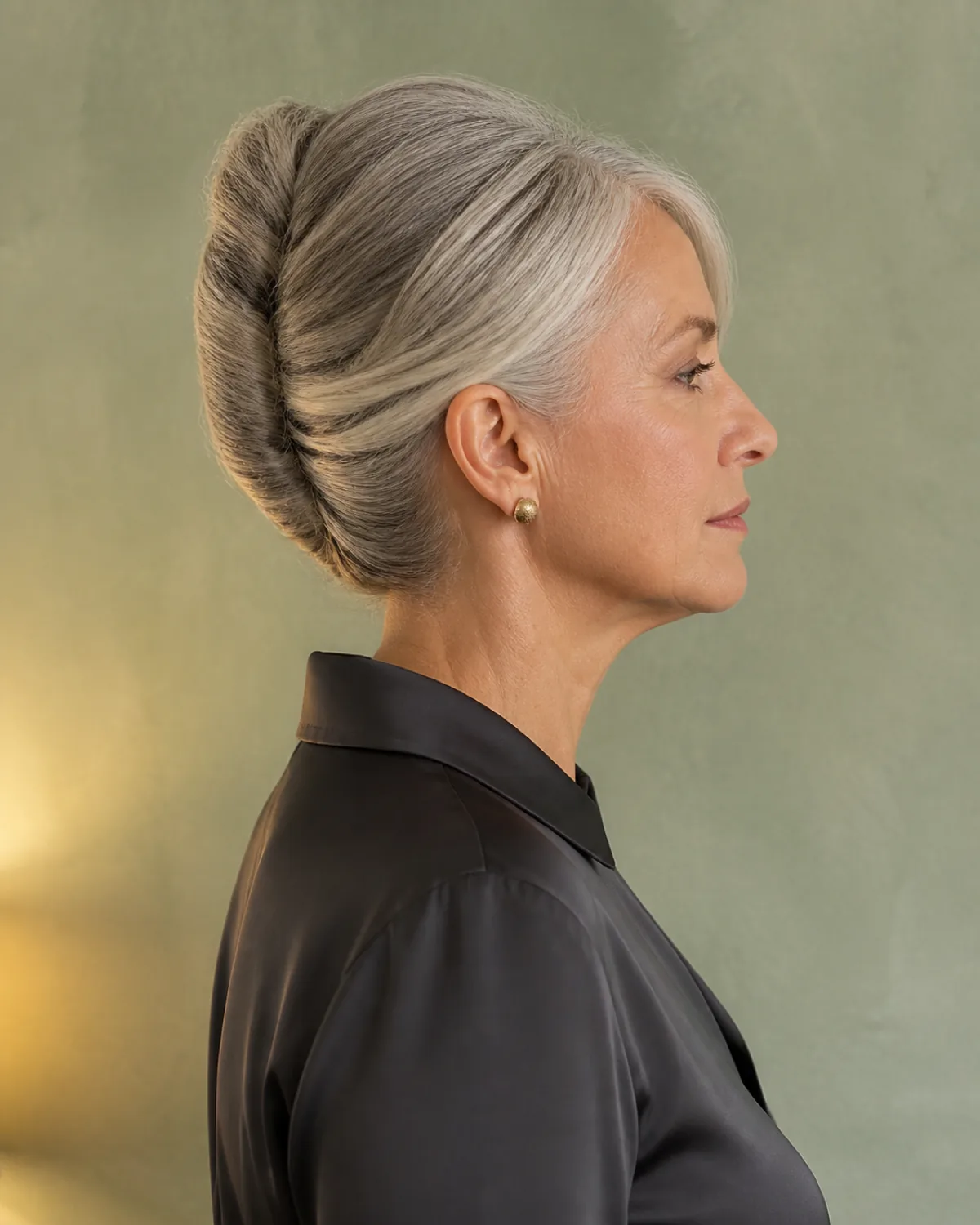
All the hair sweeps to one side and rolls vertically from nape to crown in a single column. The profile silhouette changes: one side is smooth and flat, the other holds the roll. That asymmetry reads formal without accessories. The roll needs density to fill it. Straight-to-wavy hair cooperates best; strong curl fights the vertical line.
- Best on straight-to-wavy hair with enough density to fill the roll from nape to crown
- The single-side sweep creates a profile silhouette that reads differently from every angle
- Strong curl or coil fights the vertical roll and may unwind under humidity
- The asymmetry flatters round faces by breaking the horizontal symmetry line
- Ask your stylist to anchor the base of the roll with crossed pins, because the nape is where a French twist fails first
3. A Soft Half-Up With Volume at the Crown
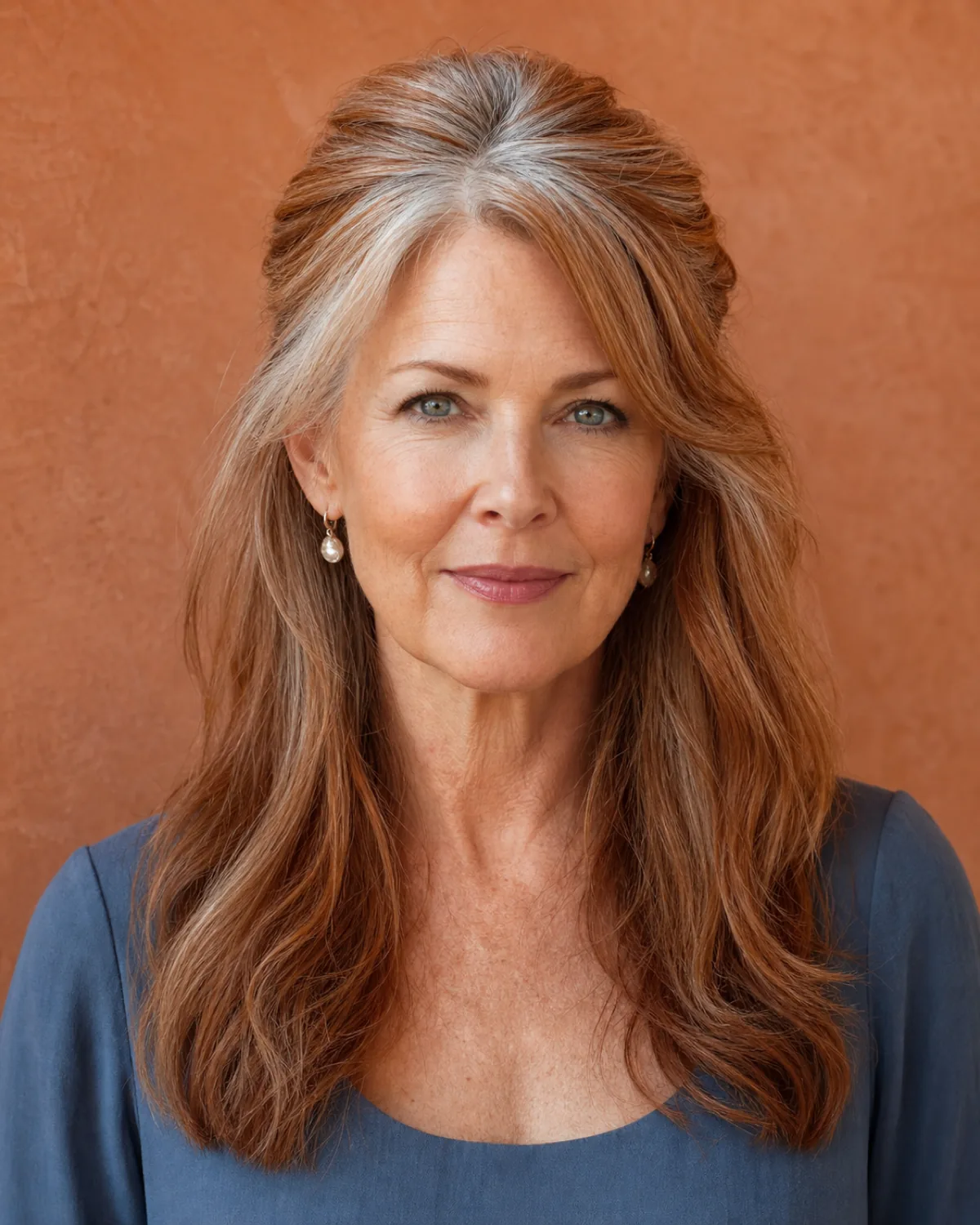
The crown section lifts and pins while the lower half hangs loose, creating two distinct zones. The lift reads formal; the loose section reads approachable. Everything depends on the density of the lower half. If it is sparse, the proportions read top-heavy, and the style tips into something unfinished rather than deliberate.
- Works when the lower half has enough density to balance the volume at the crown
- The crown lift adds formal register without committing to a full updo
- Fine lower hair makes the bottom section look thin against the lifted top, which breaks the proportion
- Heart-shaped and oval faces carry this well, because the width at the crown narrows toward the jaw
- If your lower half is thin, consider a full updo instead so the sparse section is gathered rather than displayed
4. A Shoulder-Length Blowout With Turned-Under Ends
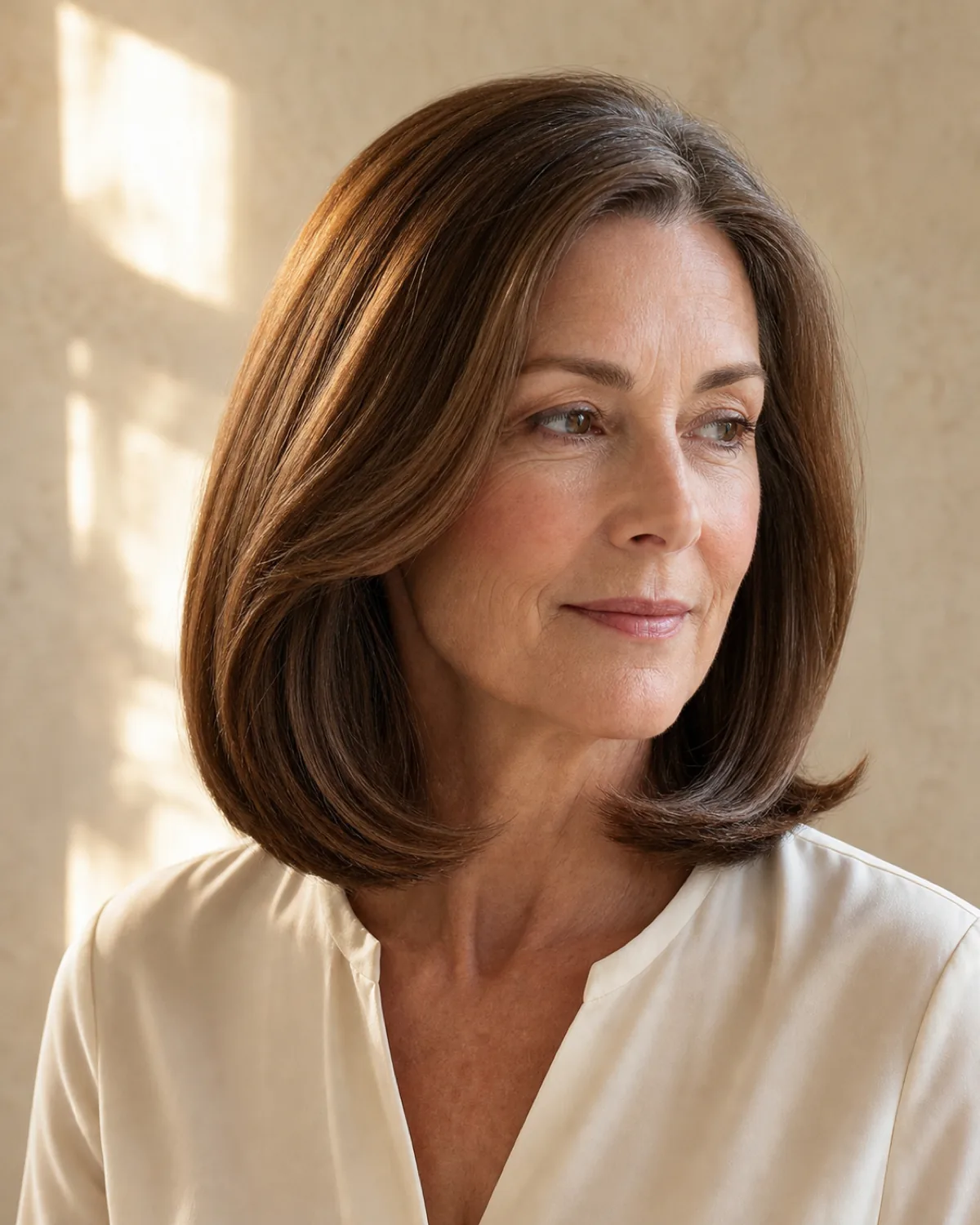
A round-brush finish that curves the ends inward at the shoulder creates a contained shape without an updo. The turned-under ends close the silhouette, so the hair reads polished from every angle. It holds best on medium-weight hair that keeps a set. Fine hair drops the curve within an hour unless the ends were set on velcro rollers first and allowed to cool completely before brushing out.
- Suits medium-weight hair that holds a round-brush set through an evening
- The inward curve at the shoulder closes the silhouette, which reads polished without effort
- Fine hair drops the curve quickly and needs a roller set underneath the blowout to hold
- A good option when you want event-ready hair without pins, clips, or accessories
- If your hair is shoulder length, the hemline position decides whether the ends flip out or curve under
5. A Textured Bob With a Statement Earring
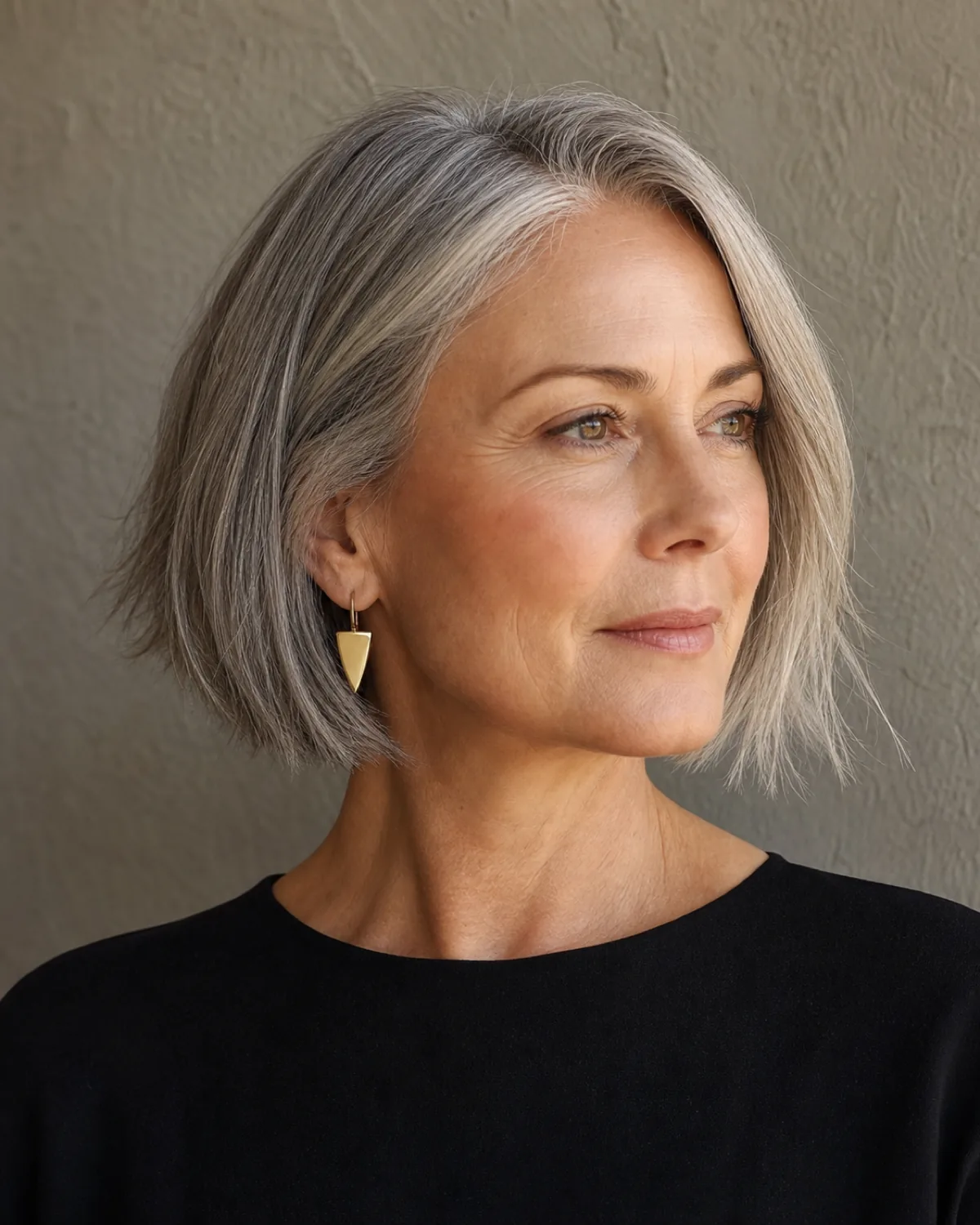
The bob sits at the chin to jaw with point-cut ends that separate into individual pieces rather than sitting as one mass. The texture prevents the flat-against-the-head look that a sleek bob risks on fine hair. The earring does the formal work, not the cut. That division of labour is the point: the hair stays low-maintenance while the accessory signals the occasion.
- Works on fine and medium hair, where the point-cut texture creates movement without needing density
- The earring carries the formality, so the cut itself does not need to be event-specific
- A sleek version of the same length risks looking flat on fine hair; the texture prevents that
- Chin to jaw length frames the face without competing with neckline or necklace
- For more bob variations, the round-up covers where the line sits relative to the jaw
Where to start
Find your situation, skip ahead
Your hair is fine or thinning and you want an evening style that does not reveal the thinning under event lighting
Keep hair close to the head or let an accessory carry the formality: a smooth bob with a barrette, a textured bob with earrings, or a pixie.
14 A Smooth Bob With a Single Barrette05 A Textured Bob With a Statement Earring13 A Pixie Styled With Height at the Crown
You need an updo that holds for three or more hours without touchups
Pin-based structures outlast twist-only holds. A low chignon, a sculptured updo, or a French twist all outlast a twist held by friction alone.
01 A Low Chignon With a Visible Twist09 A Sculptured Updo With Pinned Loops02 A Side-Swept French Twist
You want to look formal without an updo because your hair is shoulder length or shorter
A polished blowout, a smooth bob with a single barrette, or swept-back root lift all read event-ready without needing length to pin up.
04 A Shoulder-Length Blowout With Turned-Under Ends14 A Smooth Bob With a Single Barrette15 Swept-Back Hair With Root Lift and No Part
6. A Braided Crown for Silver or Grey Hair
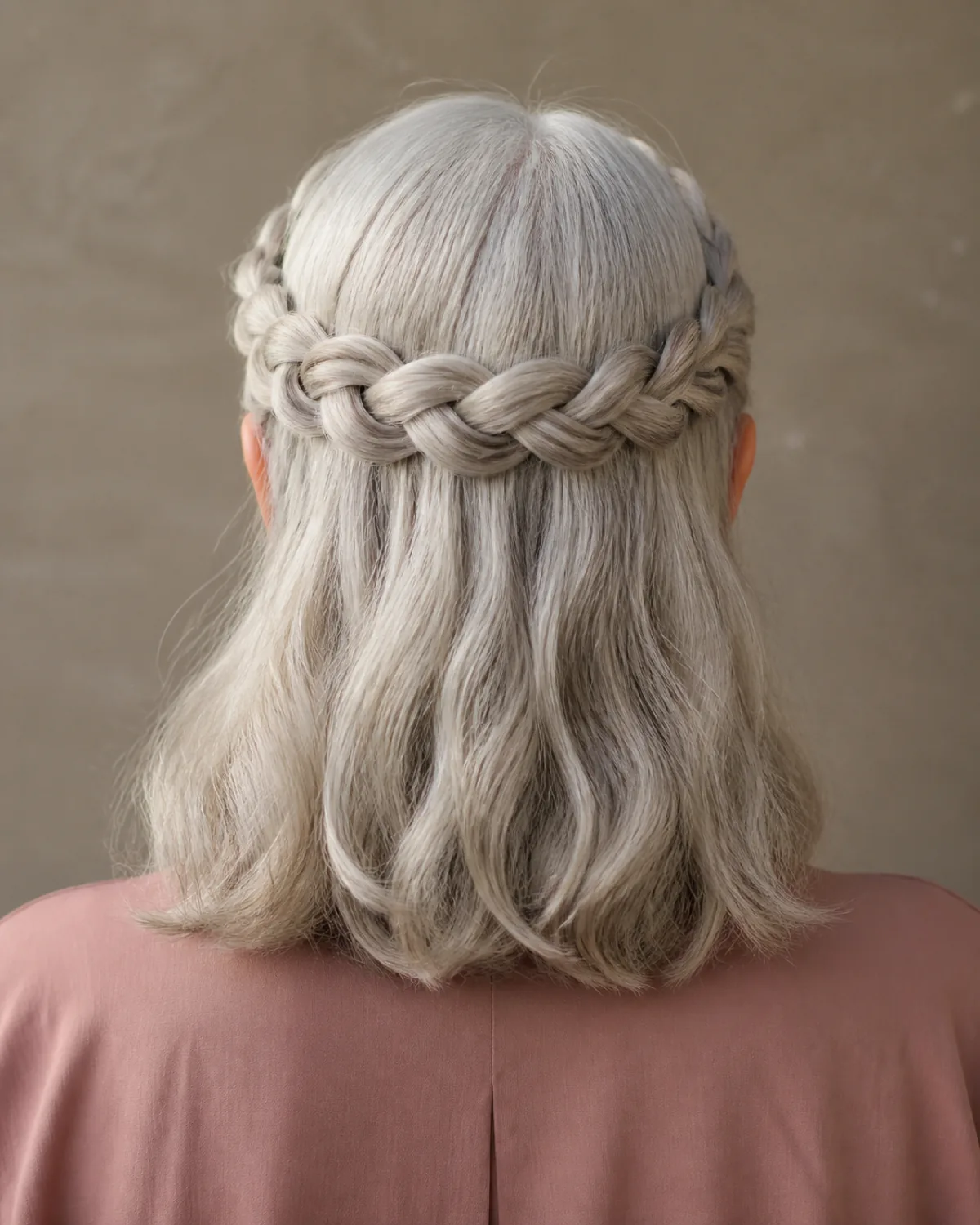
A crown braid wrapping from ear to ear does something specific with silver hair: the weave pattern catches light along every crossing, so the grey reads as a feature rather than an absence of colour. The braid needs hair past the shoulders to complete the wrap. Shorter hair runs out before the braid meets at the back, leaving a gap.
- Shows off silver and grey beautifully, because the braid weave catches light at every crossing
- Needs hair past the shoulders, or the braid runs out of material before completing the crown
- The ear-to-ear wrap keeps hair entirely off the face and neck, which suits warm-weather events
- Thick hair builds a wider, more visible braid; fine hair produces a thinner one that may need padding
- Ask your stylist to anchor the start and end of the braid with flat pins so the join does not gap open during the evening
7. A Sleek Low Ponytail at the Nape
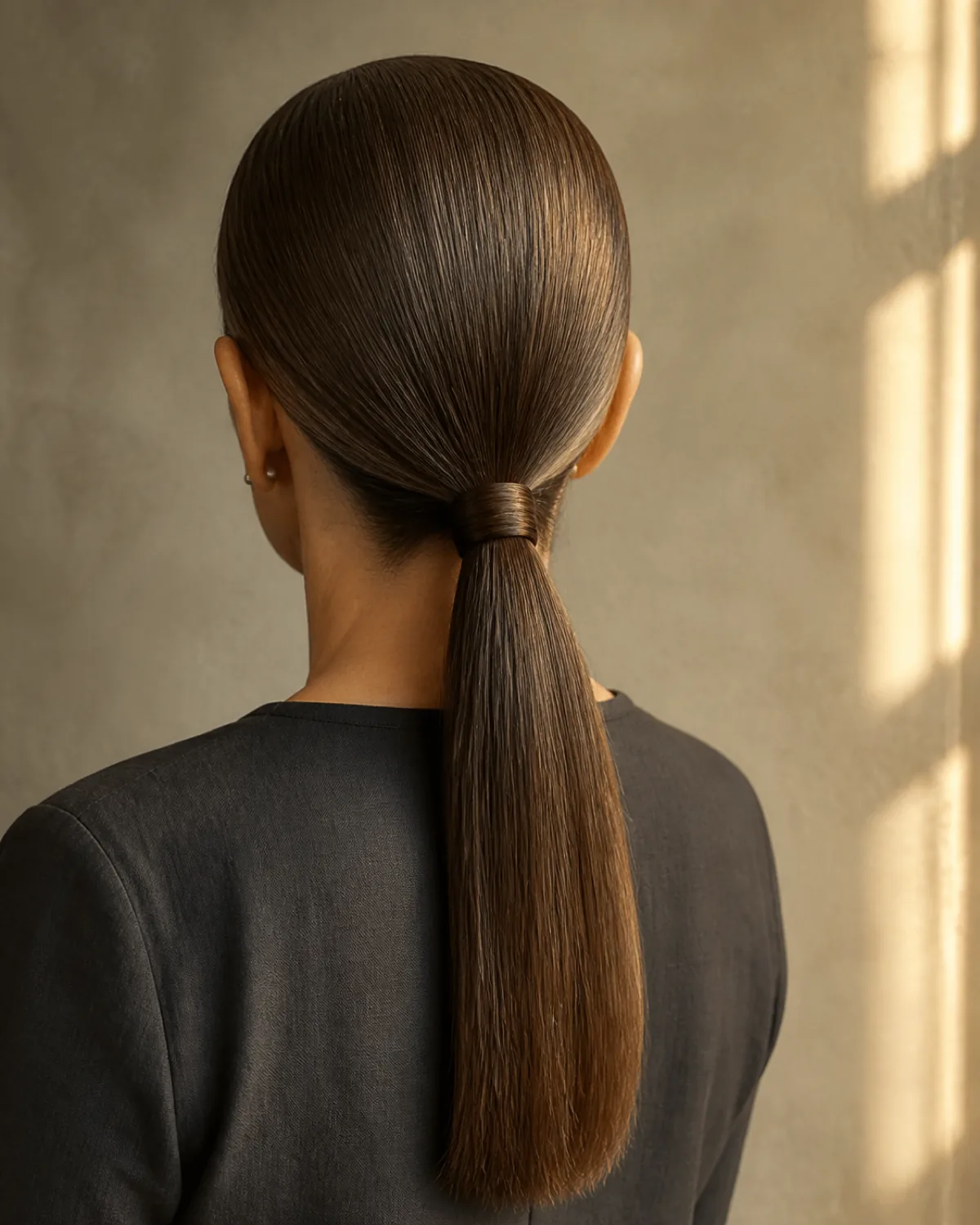
All hair gathered at the nape, smoothed flat, with a strand wrapped around the elastic. The surface is the statement: no flyaways, no texture, just a clean plane from crown to nape. The tail section reveals your actual density. On thick hair it hangs with weight. On fine hair the tail can look thin.
- The cleanest formal option, where the smoothed surface does all the work
- Reads best when the tail section has enough weight to hang rather than wisp
- Fine or thinning hair in the tail section is exposed rather than hidden by this style
- Wrapping a strand around the elastic is the difference between polished and casual
- Works on any face shape, because the sleek surface adds no width or height anywhere
8. Loose Waves Set With Large Rollers
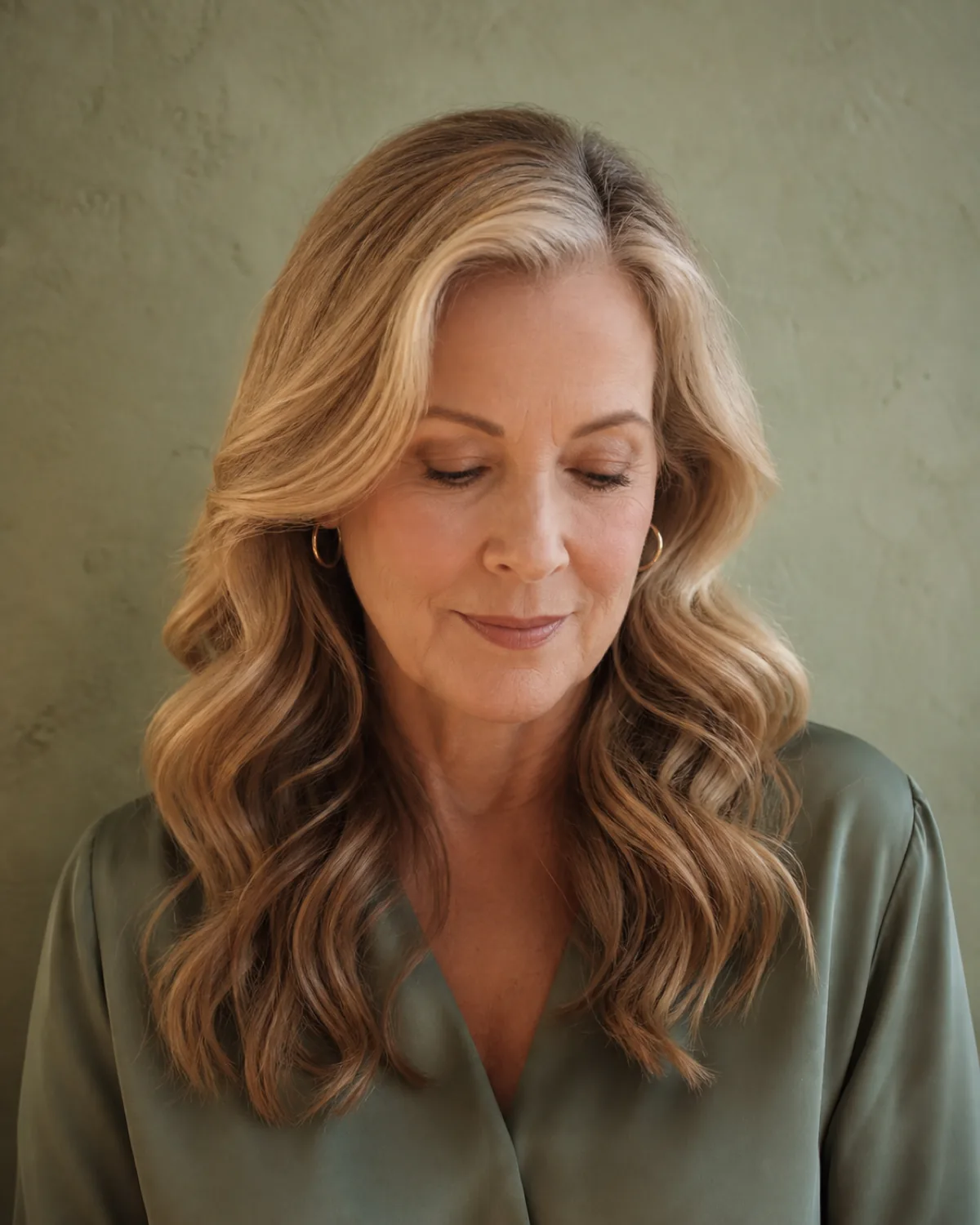
Waves set on large rollers and brushed out into a soft S-pattern from root to end. Formal enough for a seated dinner but not stiff. The wave holds best on hair with natural texture that cooperates with the roller shape. Straight fine hair needs pin-curling after the rollers, or the S-pattern drops by the second hour.
- Best on hair with some natural wave or texture, which holds the S-pattern longer
- Straight fine hair needs a pin-curl set after the rollers to lock the wave past the first hour
- The brushed-out finish reads soft rather than set, which suits dinners more than galas
- A side part adds asymmetry that flatters round and square faces
- Humidity is the enemy of this style; if the venue is outdoors, consider an updo instead
9. A Sculptured Updo With Pinned Loops
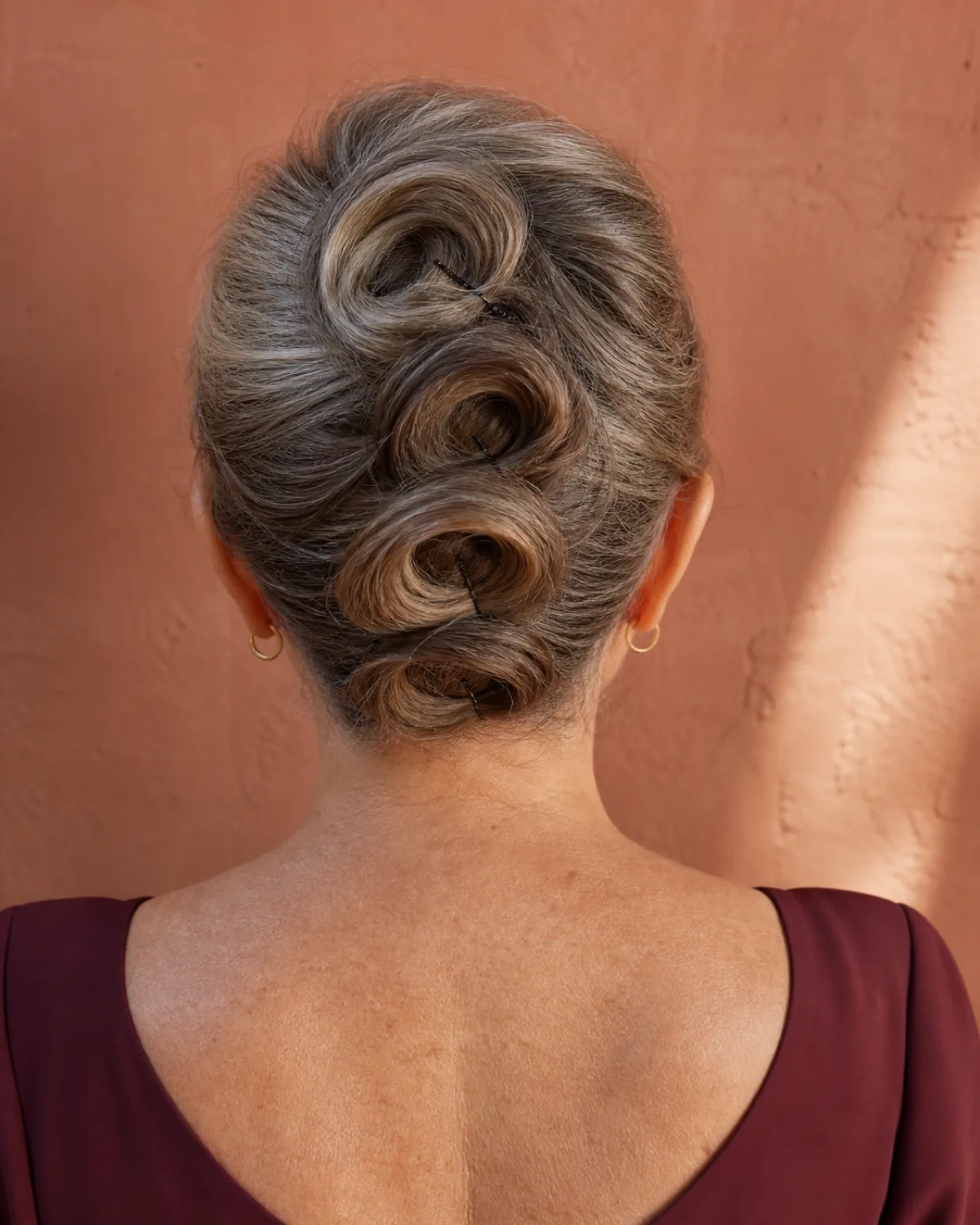
Sections of hair looped and pinned individually at the back of the head, each loop holding its shape as a separate sculptural element. Three distinct loops are visible here, each a deliberate shape. This is a stylist-built style that suits thick hair, because each loop needs enough material to read as a form. Thin sections collapse into wisps.
- Suits thick hair, where each loop has enough material to hold its shape as a distinct form
- A stylist-built structure that holds through a long evening because each loop is independently pinned
- Fine hair collapses the loops into wisps, losing the sculptured effect entirely
- The individually pinned structure means one loop can be repinned without dismantling the whole style
- Ask your stylist how many loops your density can support, because forcing too many from thin hair flattens all of them
10. A Deep Side Part With Waves Pinned Behind One Ear
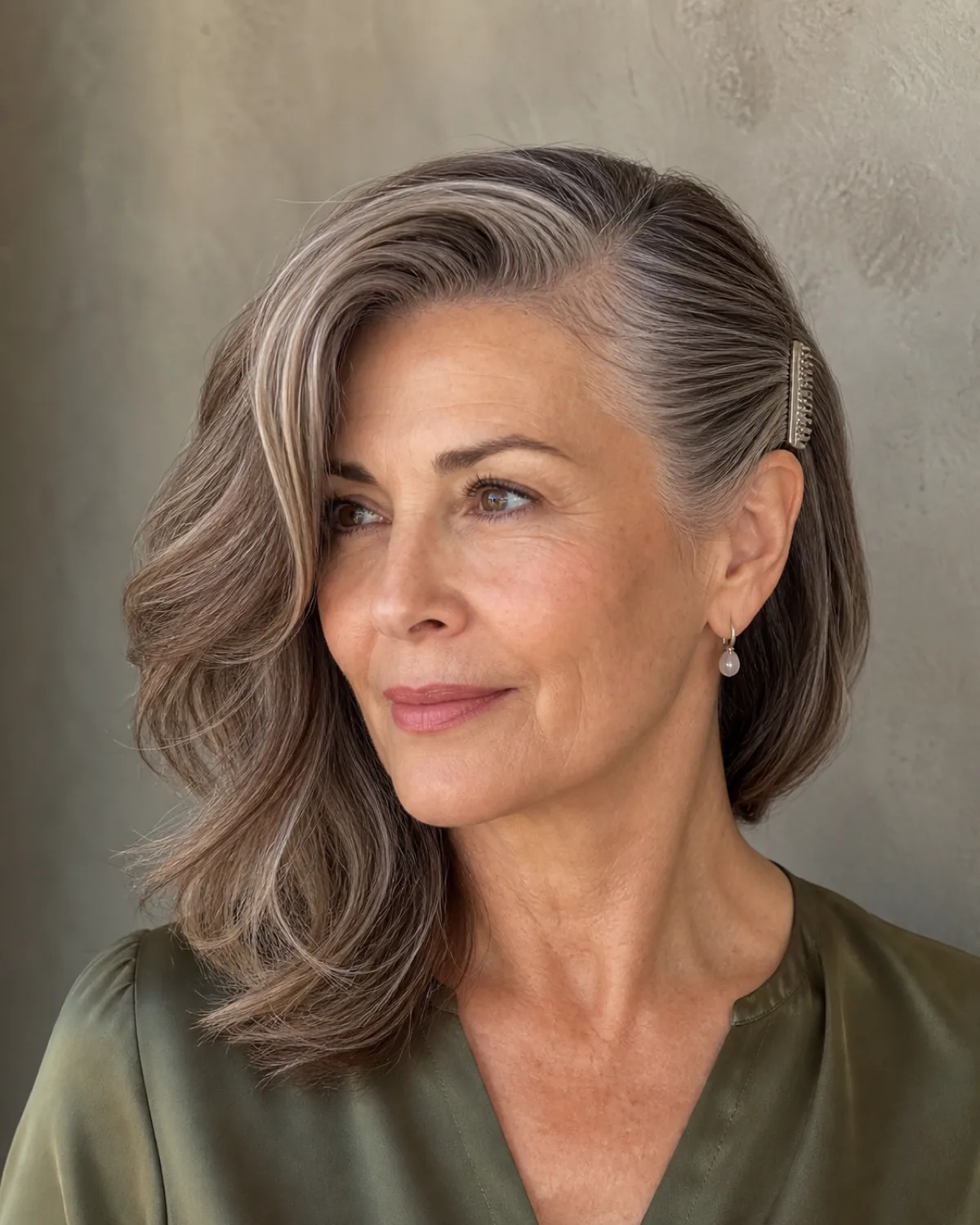
All hair swept to one side from a deep part, the lighter side pinned flat behind the ear with a decorative comb. The heavy side adds volume; the flat side exposes the ear and jawline. The comb elevates the look from casual to evening. The deep part breaks the symmetry line, which flatters round and square faces that read wider with a centre part.
- The asymmetry flatters round and square faces by breaking the width at the horizontal centre
- A decorative comb at the pinned side is what lifts this from a daytime look to an evening one
- Works on medium-length hair with enough wave to hold the swept shape
- The exposed ear on the flat side is a natural place for a statement earring
- If your hair is very fine on the lighter side, the flat section can reveal scalp, so test the part depth before committing
11. A Shoulder-Length Lob With a Wet-Look Finish
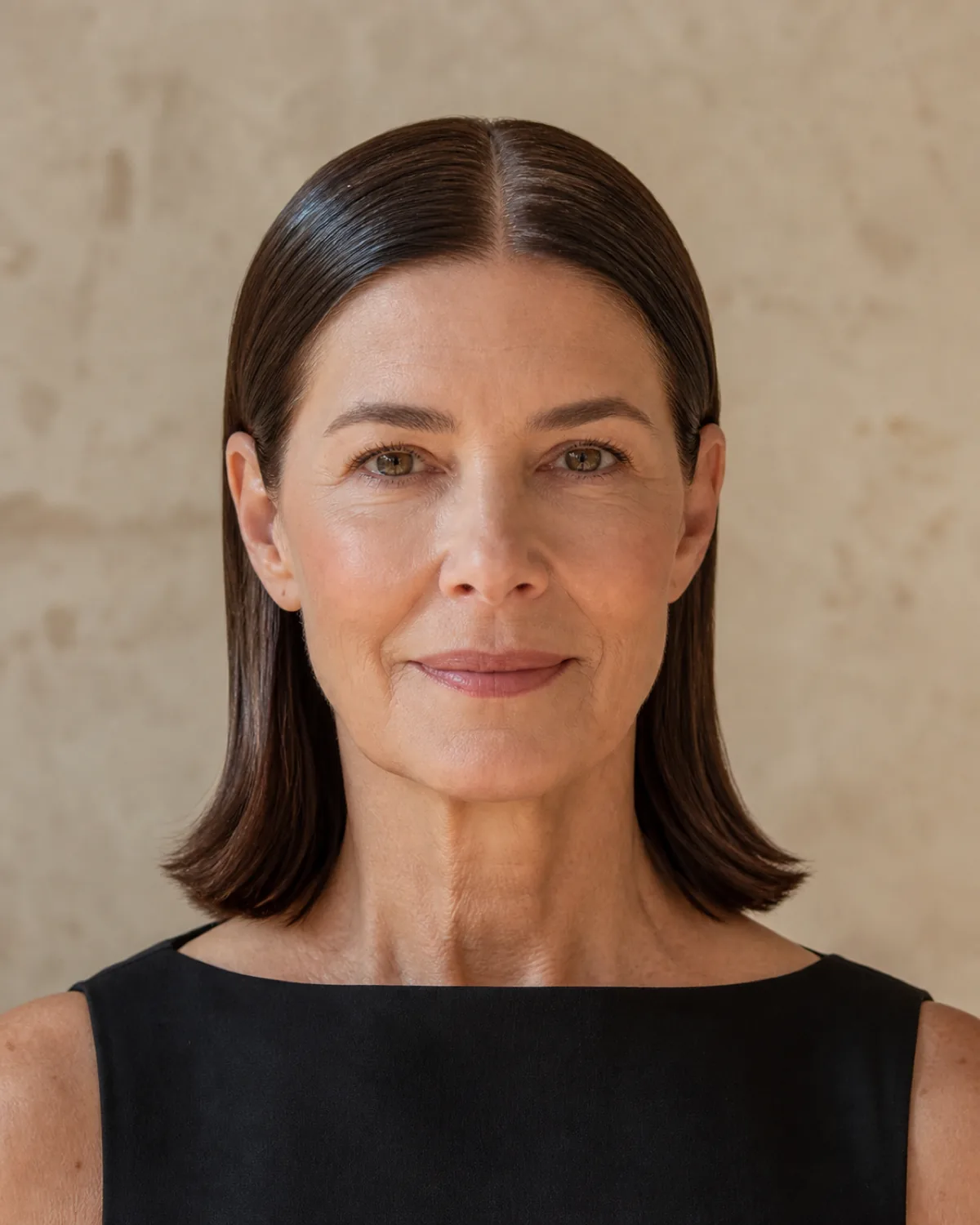
A controlled gel finish that reads editorial rather than undone. The hair sits flat and close to the head from a centre part, every strand slicked into place. It reads formal through its precision: nothing out of place, nothing moving. The wet-look finish works on straight or wavy hair. Curl patterns fight the gel where the whole point is smoothness.
- Best on straight or wavy hair that lies flat under gel without fighting back
- Curl and coil textures resist the slicked-down finish, creating bumps that break the editorial line
- The centre part demands symmetry in the face; an oval or oblong face carries it best
- Water-based gel is essential because alcohol-based formulas can flake under warm event lighting
- This is a commitment look: once set, you cannot adjust it mid-evening without starting over
12. A Relaxed Bun With Face-Framing Pieces
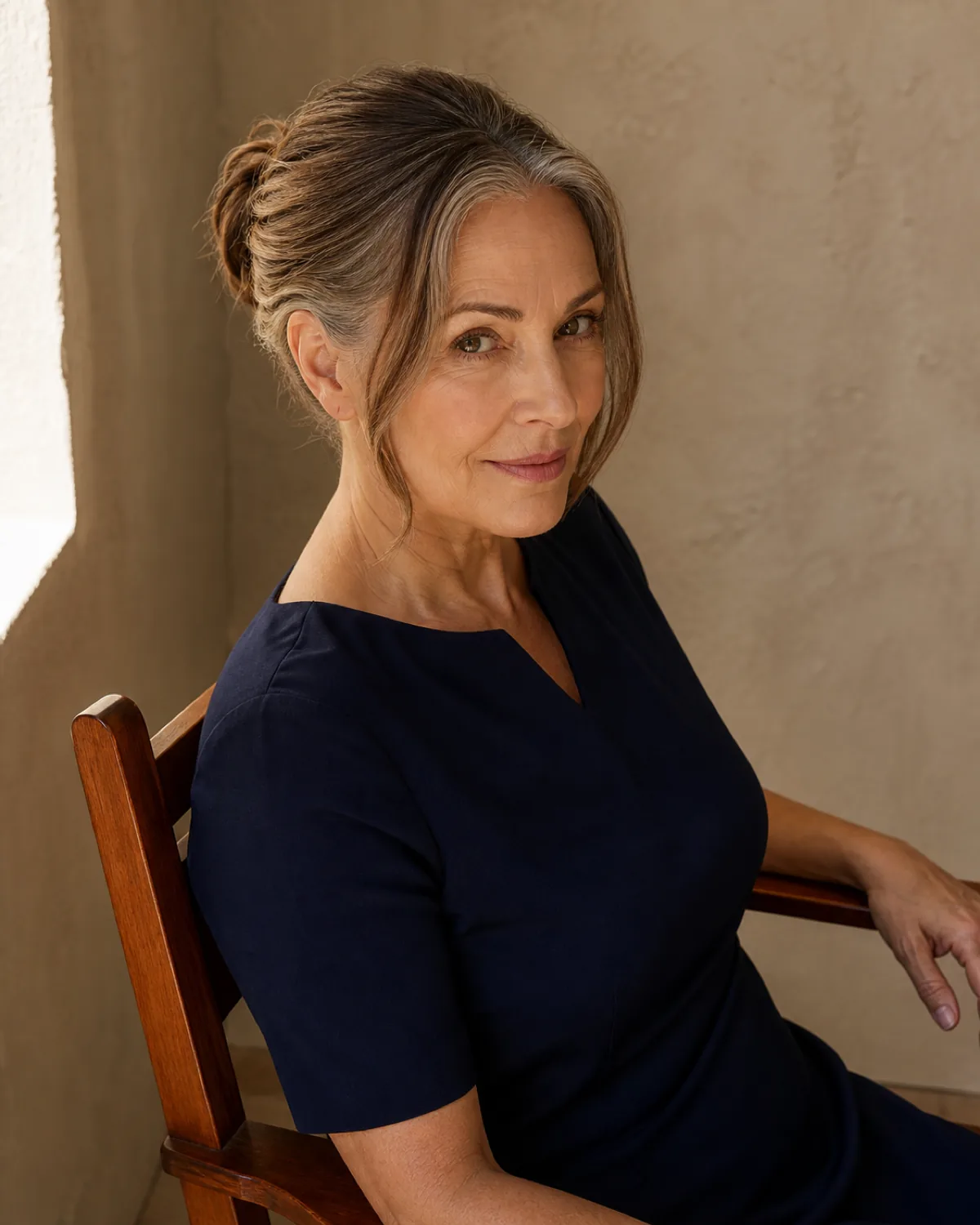
A loose bun at the mid-back with two soft pieces left out at the temples. The face-framing strands soften what would otherwise be a strict bun without losing the structure. The bun must be pinned, not just twisted. A twist held only by friction drops by the second hour. The pinned version holds because each pin is an independent anchor.
- Works on most densities, because the bun gathers whatever you have rather than demanding volume
- The face-framing pieces at the temples soften the look without requiring additional styling
- The bun must be pinned internally, not just twisted, because a friction-only hold drops within two hours
- A mid-back position sits lower than a classic ballerina bun, which reads evening rather than dance class
- If your hair is past-collarbone length, this is one of the lowest-effort formal options that still holds
13. A Pixie Styled With Height at the Crown
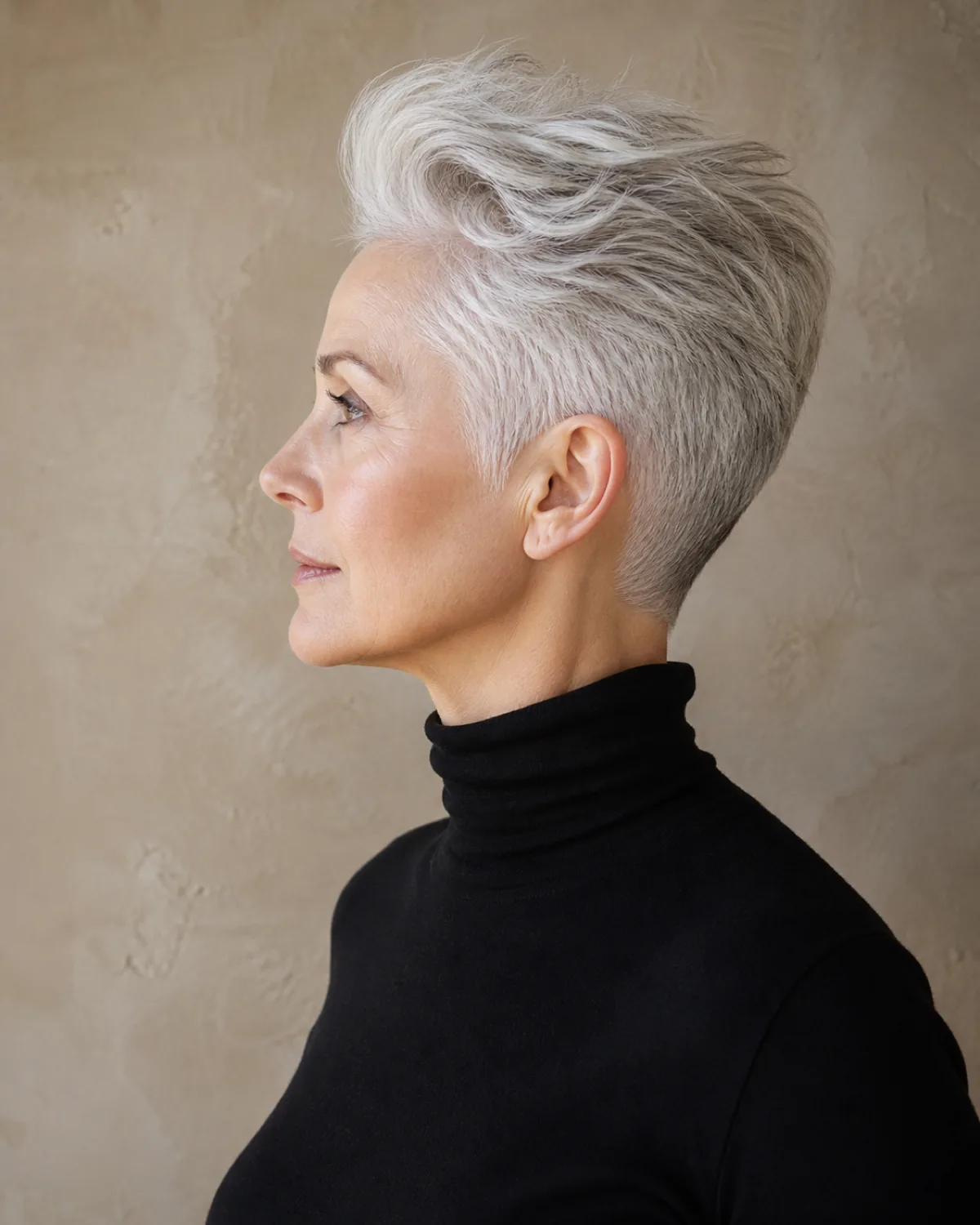
A short pixie swept upward at the crown with product, the height changing the head silhouette in profile. The crown lift is the formal signal. Without it, a pixie reads casual. With it, paired with the right earring and neckline, it holds its own at any event. On fine hair, matte paste works better than gel, which adds weight that pulls strands flat.
- The crown height is what turns a daytime pixie into an evening one
- Matte paste holds the lift better than gel on fine hair, because gel adds weight that pulls strands flat
- The profile silhouette changes completely with crown height, which is what reads across a room
- No pins, no hold time, no collapse risk: the product does the work and stays put
- Formal enough when paired with a visible earring, because the short length exposes the ear and neck fully
14. A Smooth Bob With a Single Barrette
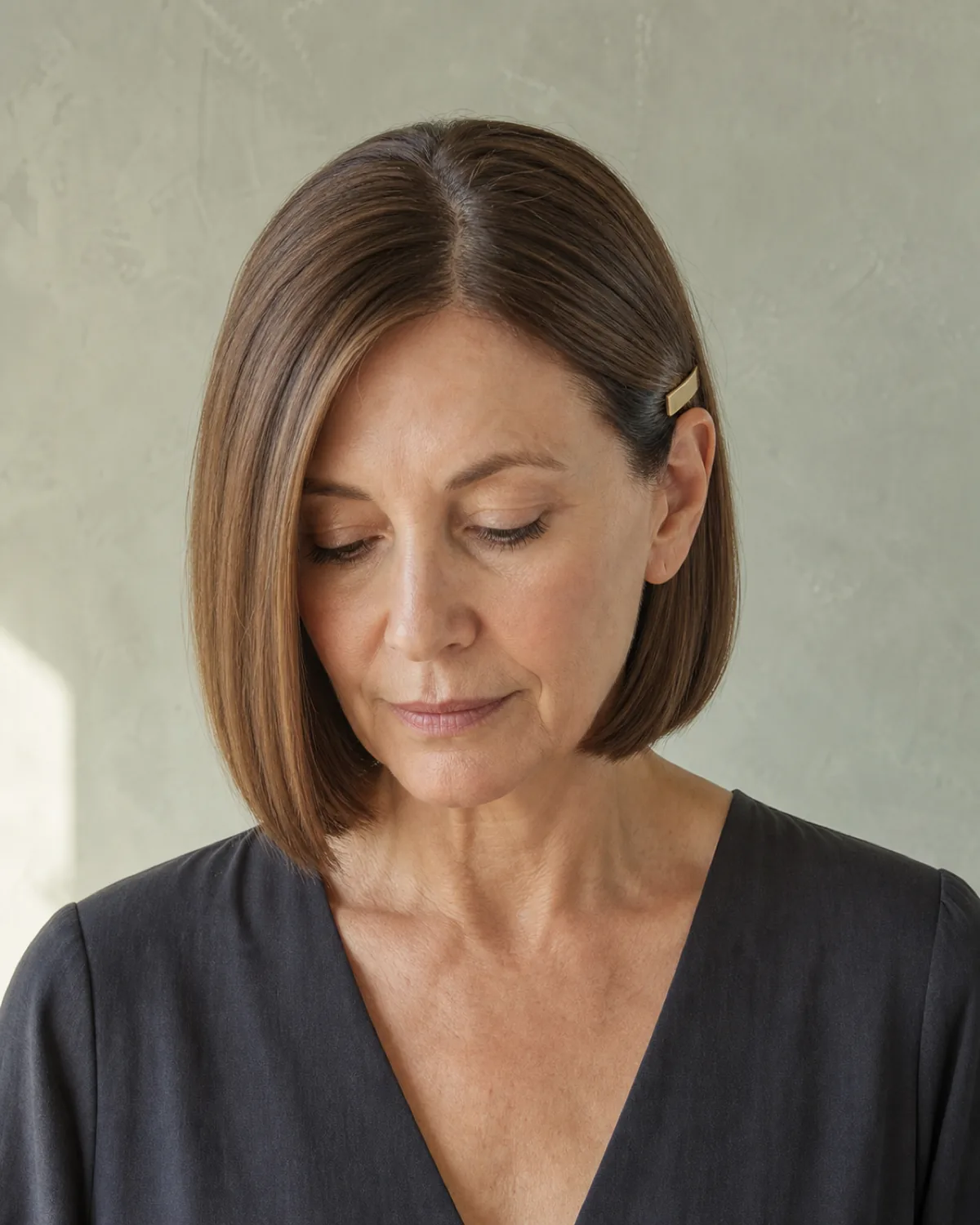
A one-length bob at the jaw, smoothed flat, held on one side with a single gold barrette at ear level. The barrette signals formality without changing the cut. This is the lowest-effort evening option for anyone already wearing a bob: you add one accessory and the register shifts. The placement matters. A barrette at or above the ear reads intentional. Below the ear it reads like it slipped.
- Works on any face shape, because the bob length and barrette placement can be adjusted to suit
- The single accessory is what shifts the register from everyday to evening
- Placement at or above the ear reads deliberate; below the ear reads accidental
- A metal or pearl barrette holds formality longer than a plastic one, which reads casual regardless of placement
- If you already wear a bob, this is the fastest path to event-ready without changing your cut
15. Swept-Back Hair With Root Lift and No Part
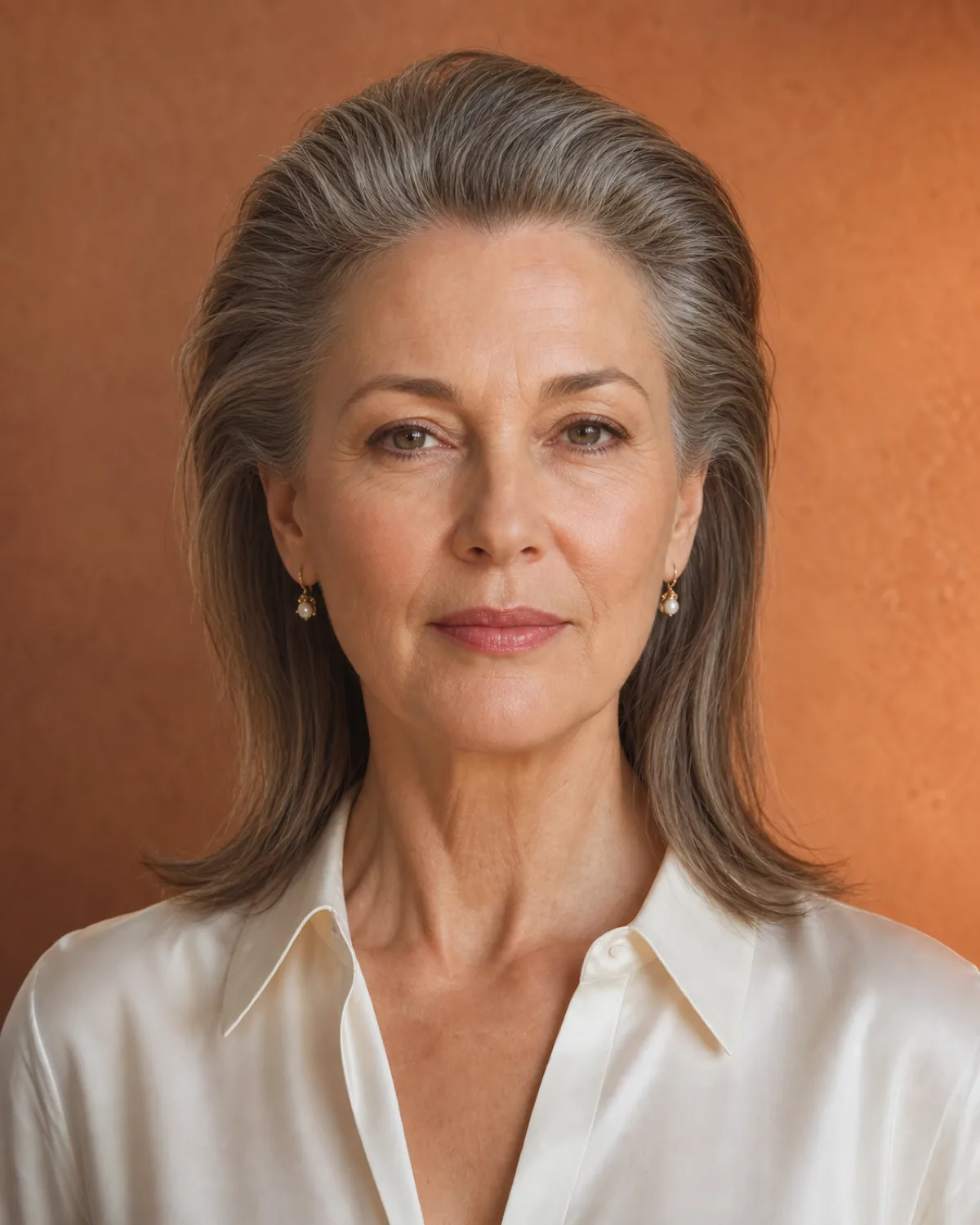
All hair brushed straight back from the forehead with volume at the roots and no part line. The result reads modern and clean: no fringe, no part, just a single direction. It works on medium-to-thick hair with enough body to hold the lift. Fine hair needs root powder or back-combing, because gravity pulls the crown flat without support.
- Reads modern and uncluttered, with the single swept direction doing all the formal work
- Medium-to-thick hair holds the root lift on its own; fine hair needs product or back-combing underneath
- No part line means no decision about which side to favour, which simplifies the styling
- The fully exposed forehead and ears suit oval and oblong faces, which can carry the openness
- Round faces may want a version with slight temple volume rather than full exposure, to avoid widening the face line
16. A Low Chignon With a Jewelled Comb
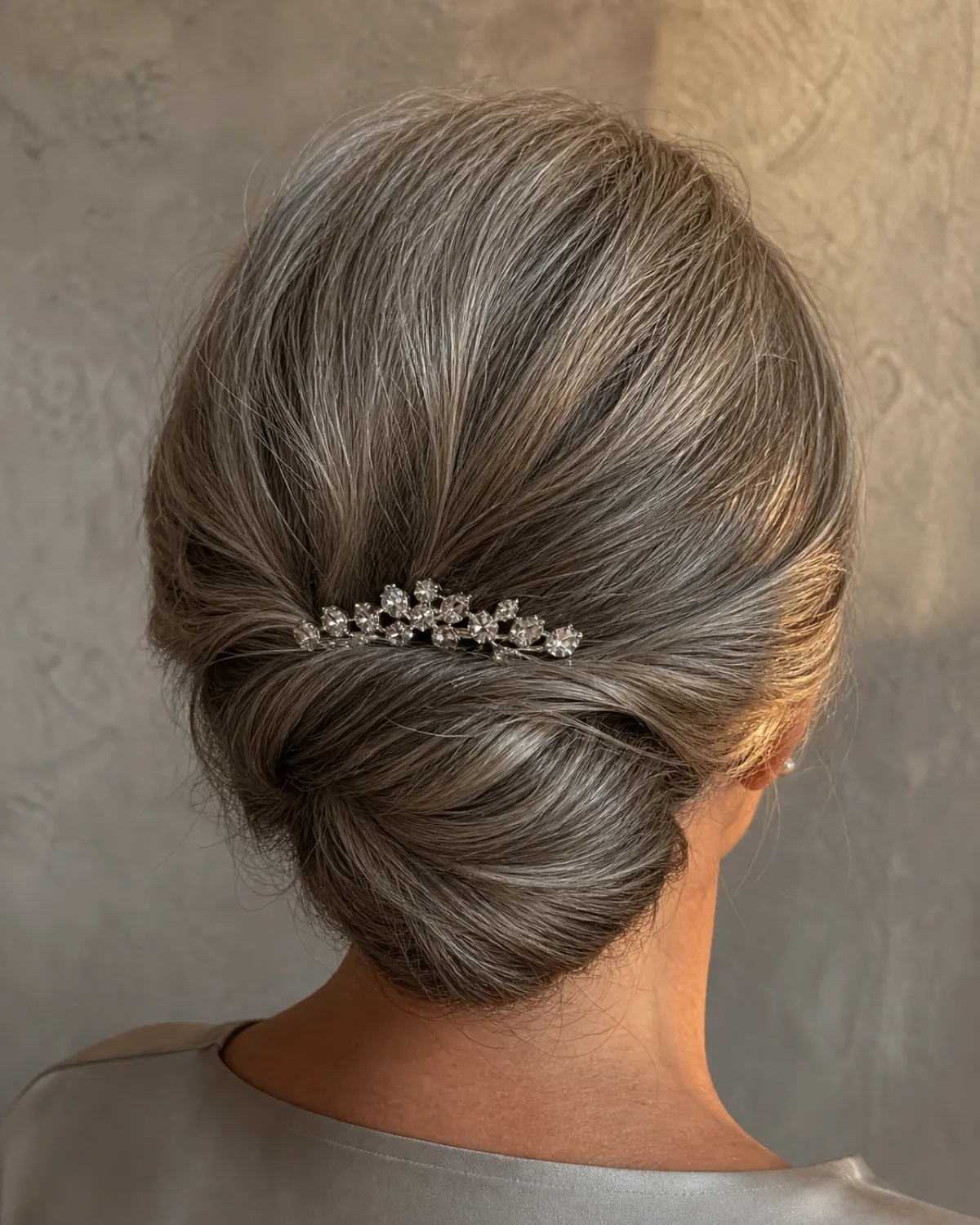
The same low chignon structure as idea one, but dressed with a decorative comb sitting flat just above the twist. The comb does the formal work, so the style stays simple. Individual crystals catch light, which means the back of the head holds interest even when seated. Choose a comb that sits flat. A standing comb reads bridal rather than evening.
- The comb elevates a simple chignon to a formal register without adding complexity to the hair itself
- A flat-sitting comb reads evening; a standing comb reads bridal, and the distinction matters
- The crystals catch light from behind, which is where most of the visual interest lands at a seated dinner
- Same build as idea one, so the hold and density requirements are identical
- If you already know your hair holds a low chignon, adding a comb is the fastest formal upgrade
17. A Shoulder-Length Cut With Flipped-Out Ends
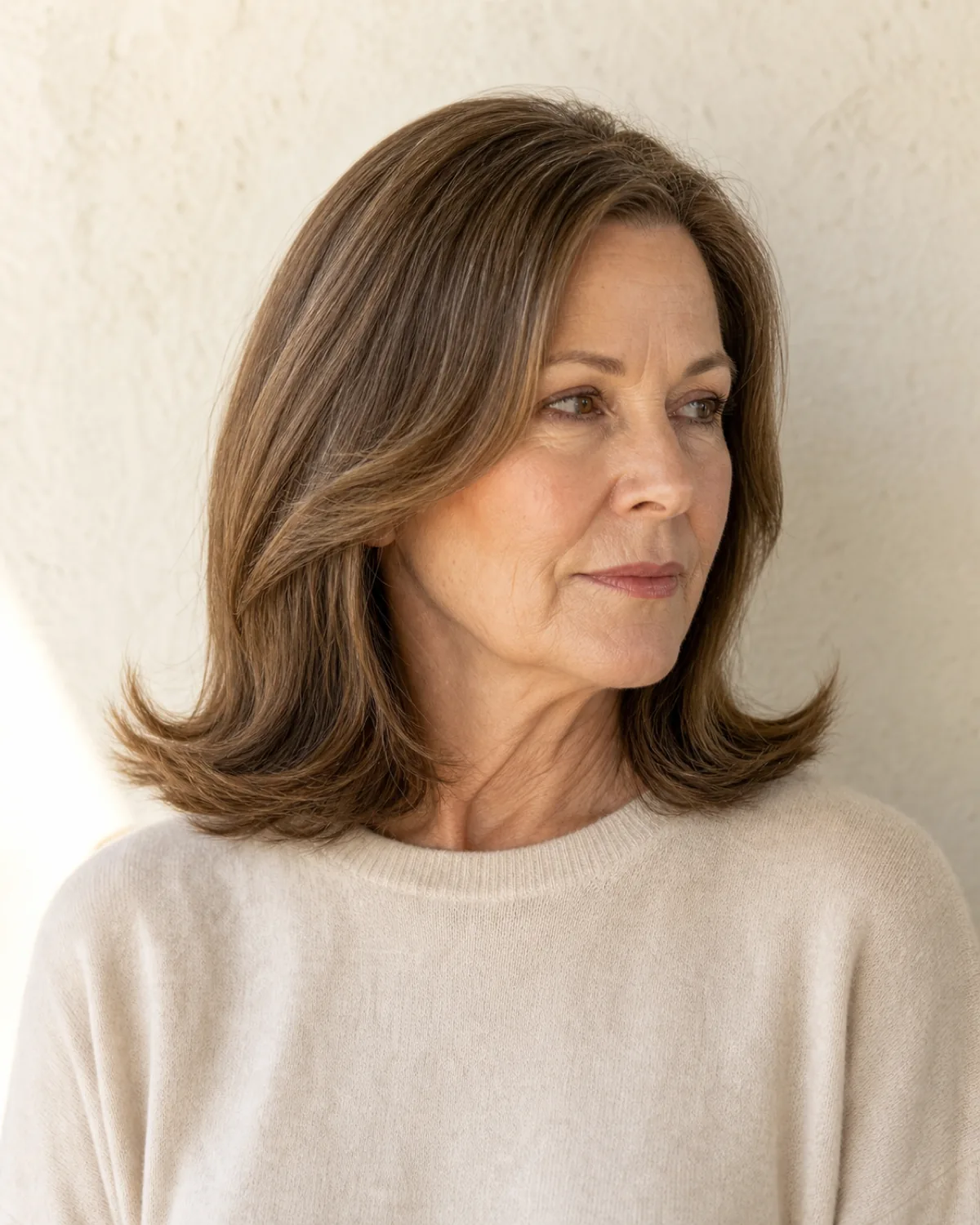
Ends kicked outward with a round brush on both sides, creating a deliberate retro-formal flip at the shoulder. The flip must be uniform: one side flipped and the other straight reads like a mistake, not a style. That uniformity is what makes it read as intentional rather than accidental. It holds best on medium-weight hair that keeps a set. Fine hair drops the outward curve within an hour.
- Best on medium-weight hair that holds a round-brush set long enough to last through an evening
- The flip must be even on both sides; asymmetric flip reads as a styling accident
- Reads retro-formal without an updo, which suits events with a vintage or classic dress code
- Fine hair drops the flip quickly unless the ends were roller-set first and cooled completely
- The shoulder-length baseline matters: hair too far past the shoulder loses the flip against gravity
18. A Textured Updo Built on Second-Day Hair
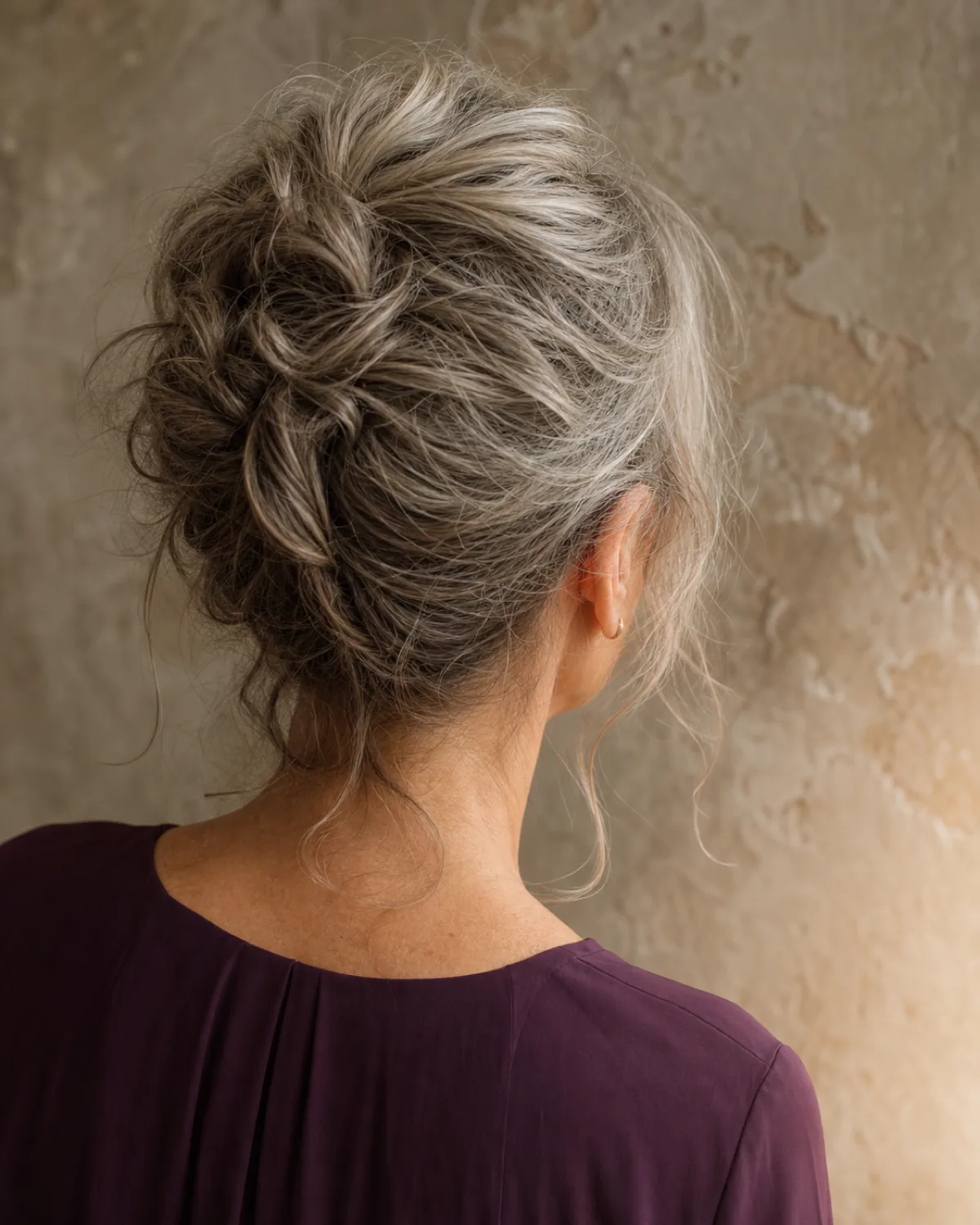
An intentionally undone updo pinned loosely at the back, with nape wisps escaping the pins. The texture comes from second-day hair, which has more grip because the natural oils add friction. That grip makes pinning easier and holds longer. Freshly washed hair slides out of pins within an hour. The looseness is calculated, not lazy.
- Second-day hair pins better and holds longer than freshly washed hair, because the natural oils add grip
- The intentionally loose structure suits events where a strict updo would read overdone
- Works on most lengths past the chin, because the pins do not need much length to grip
- Fine hair benefits from dry shampoo at the roots before pinning, which adds texture and volume
- The nape wisps are part of the design, not a failure: they soften the back view at a seated dinner
19. A Formal Ponytail With Volume at the Crown
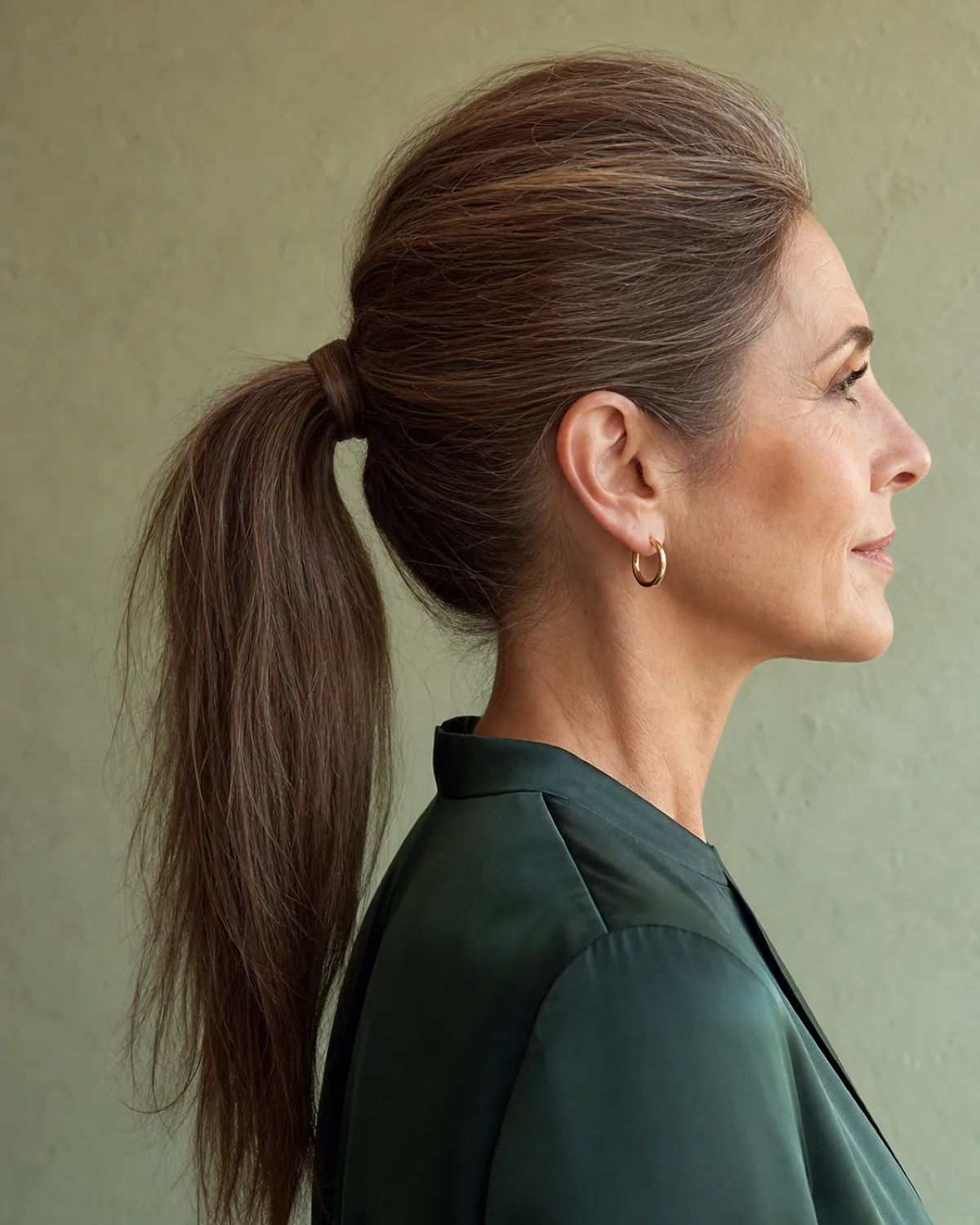
A ponytail set higher than the nape but not at the top of the head, with the crown section teased for height. The mid-height position reads formal without reading youthful. From the right profile here, the crown volume creates a visible arc from the forehead to the ponytail tie, and the tail falls behind the shoulder with weight. A strand wrapped around the elastic finishes the line.
- The mid-height position is the formal sweet spot: nape-level reads casual, crown-level reads youthful
- Crown volume is what separates a formal ponytail from a gym ponytail
- Works on shoulder-length and longer, where the tail has enough length to hang with weight
- Wrapping a strand around the elastic hides the tie and closes the silhouette
- If your tail section is thin, this style exposes it the same way a sleek low ponytail does
20. A Straight Curtain of Hair With a Centre Part
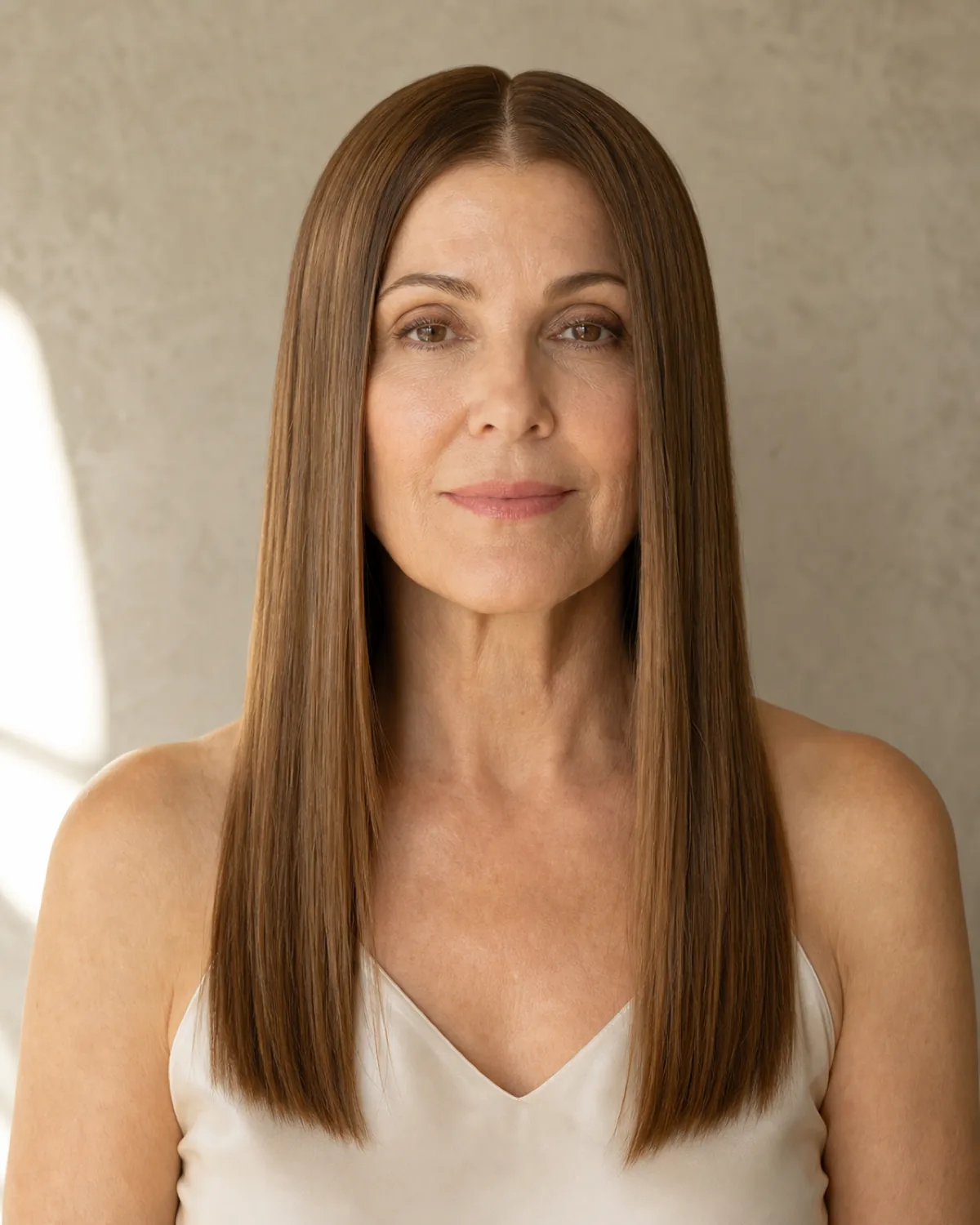
The simplest possible evening look: freshly flat-ironed, centre-parted, hanging in a straight curtain from crown to ends. It reads formal through its precision. Every strand lies in the same direction and the surface is glass-smooth. It works best on naturally straight, medium-to-thick hair that hangs with weight. Fine or wavy hair may not hold the line through a humid evening.
- Reads formal through sheer precision rather than structure or accessory
- Works best on naturally straight, medium-to-thick hair that hangs with weight
- Fine hair achieves the line with heat but may not hold it in humidity
- Wavy or curly hair fights the flat-iron finish and risks reverting mid-evening
- The centre part demands facial symmetry; if you prefer asymmetry, swap to a deep side part instead
Where the checkable claims come from
- Hair diameter, color and density changes with age — Birch, Messenger & Messenger, British Journal of Dermatology (2001)
- Updo — Wikipedia
- French twist (hairstyle) — Wikipedia
- Chignon (hairstyle) — Wikipedia
- Face Shapes and Hairstyles — Healthline
Keep this one
Save it for the appointment
Pin the image above to the board you actually open before a salon visit. This guide is written to be re-read, not read once.
Tonight, before you close this tab
- Pull your hair into a twist right now and time how long it stays before slipping, to learn your hold baseline
- Check the density at your nape by gathering the hair there and seeing whether it fills your hand or leaves gaps
- Photograph your profile from the left and the right to see which side your hair naturally falls toward
- Write down the two questions you would ask a stylist about hold, so you do not forget them in the chair