7 Updos After 50 That Hold Without a Salon and Without a Hundred Pins
Seven structurally different updos for women over 50, each judged by hair density and face shape so you know which ones hold and which ones slip by hour two.

Booking an appointment soon? Save this page. It is easier to skim in the chair than to remember.
At a glance
Works
- A French twist on thick hair because the density fills the roll and holds the pins without backcombing
- A low chignon on an oval face because the nape placement does not shorten or widen the proportions
- A half updo on fine hair because the lower section provides visual density while the gathered top does the structural work
Depends
- A low chignon on fine hair only if you add root texture or a volumizing spray before gathering, otherwise it collapses flat
- A rolled bun on a square jaw only if you keep the roll soft and slightly off-center rather than pulling it tight and centered
- A side sweep on a round face only if you start the sweep high enough at the crown to add vertical proportion
Skip
- A tight French twist on fine hair without backcombing first because the twist compresses already-thin hair and the scalp shows through the roll
- A full chignon on a round face without face-framing pieces because the pulled-back weight widens the mid-face
- A rolled bun on hair shorter than shoulder length because the roll cannot complete a full turn and the pins have nothing to anchor
An updo is not one thing. It is a family of structures, and which one holds on your head depends less on the occasion than on two facts most advice skips: how much hair you have, and where you need the weight to sit.
A French twist on thick hair holds itself. The same twist on fine hair needs backcombing, spray and twice the pins. The photo looks the same, but the engineering is not.
These seven updos are sorted by structure, not by event. Each one names who it holds for, who it disappoints, and what to say if you want a stylist to build it for you.
1. A Low Chignon That Holds on Fine Hair

The chignon in this image sits low at the nape and stays modest in size. That is what fine hair produces when gathered without padding. The wispy strands escaping at the temples are not a styling failure. They are the honest texture of fine hair, and they soften the line between the pulled-back section and the face.
- Oval and oblong faces suit this placement because the low position does not visually shorten the face.
- On a round face, the lack of height at the crown and the exposed width at the cheekbones make the proportions read wider. Pull out vertical face-framing pieces to break that line.
- A texturizing spray worked into the roots before gathering gives the pins something to grip. Without it, fine hair collapses flat within an hour.
- Ask a stylist to pin the base of the chignon first, then shape the outer edge. Pinning the shape first and the base second is why most self-done chignons loosen.
2. A French Twist With Volume at the Crown
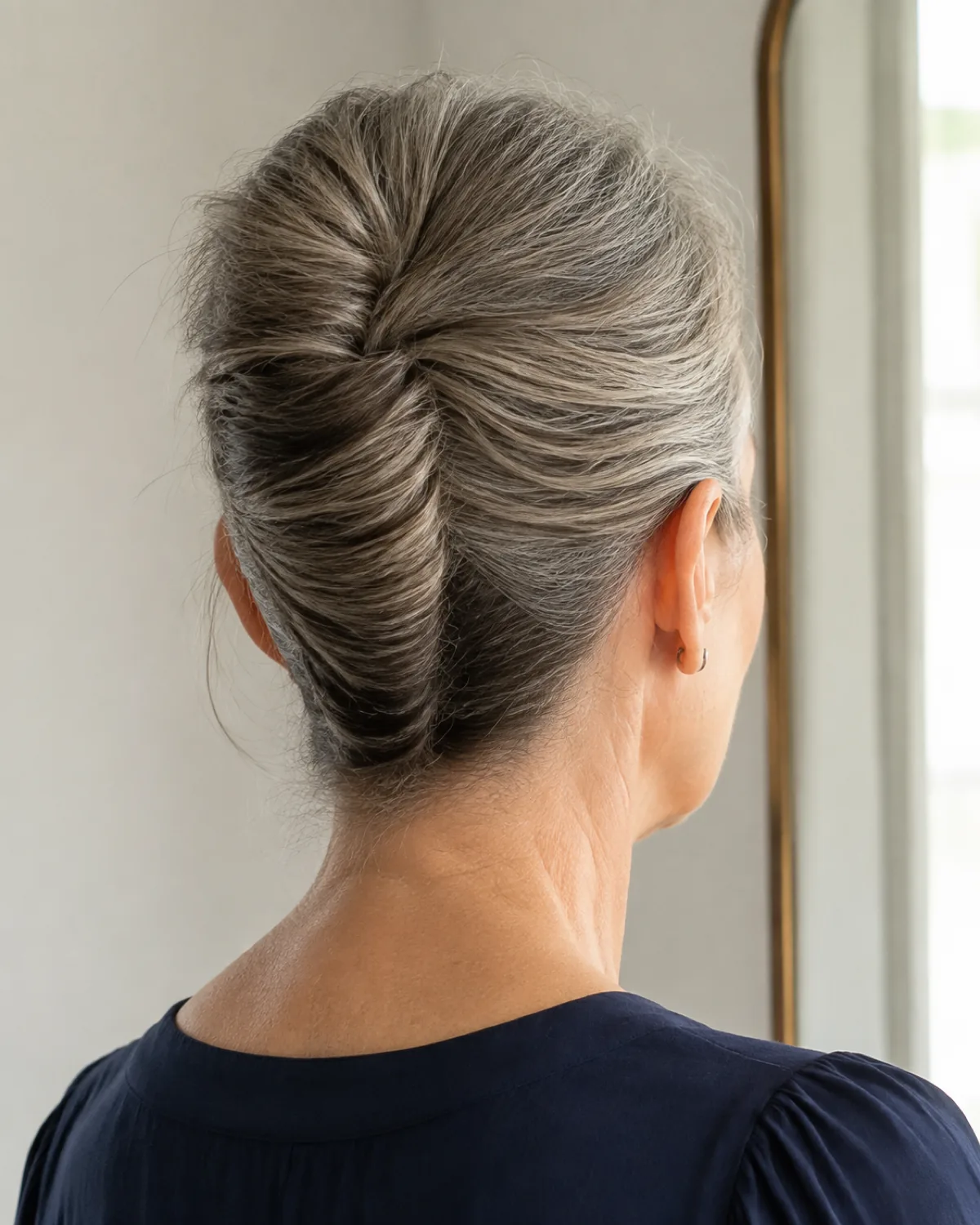
The French twist here runs vertically along the center back, and the crown section sits noticeably higher than the twist below it. That lift is the structural advantage this updo has over a chignon. Round and square faces benefit from the added height because it shifts the proportions vertical.
- Thick hair fills this twist without backcombing. The density holds the roll from inside and anchors the pins.
- Fine hair needs backcombing at the crown section before rolling. Even then, the twist loosens faster because each strand has less grip on its neighbor.
- The number of pins determines how formal it reads. Fewer pins and softer edges make it read casual. A tightly pinned twist with no flyaways reads dressy.
- Ask your stylist how many pins they plan to use. If the answer is under six, the twist is built for thick hair. Fine hair needs more.
Where to start
Find your situation, skip ahead
Your hair is fine and you worry updos always look flat on you
Start with the half updo or the twisted crown. Both leave enough hair down to read full while the pinned section does the work.
04 A Half Updo With Face-Framing Pieces06 A Soft Twisted Crown Pulled Back From the Temples01 A Low Chignon That Holds on Fine Hair
Your hair is thick and every updo feels like it is about to fall apart
The French twist and the rolled bun are built for density. Thick hair anchors the pins instead of fighting them.
02 A French Twist With Volume at the Crown05 A Rolled Bun Sitting at the Nape
Your hair barely reaches your shoulders and you are not sure an updo is possible
The pinned-back bob and the side sweep both work at chin-to-shoulder length. Neither needs enough hair to form a bun.
07 A Pinned-Back Bob for Shoulder-Length Hair03 A Loose Side Sweep Pinned Behind the Ear
3. A Loose Side Sweep Pinned Behind the Ear
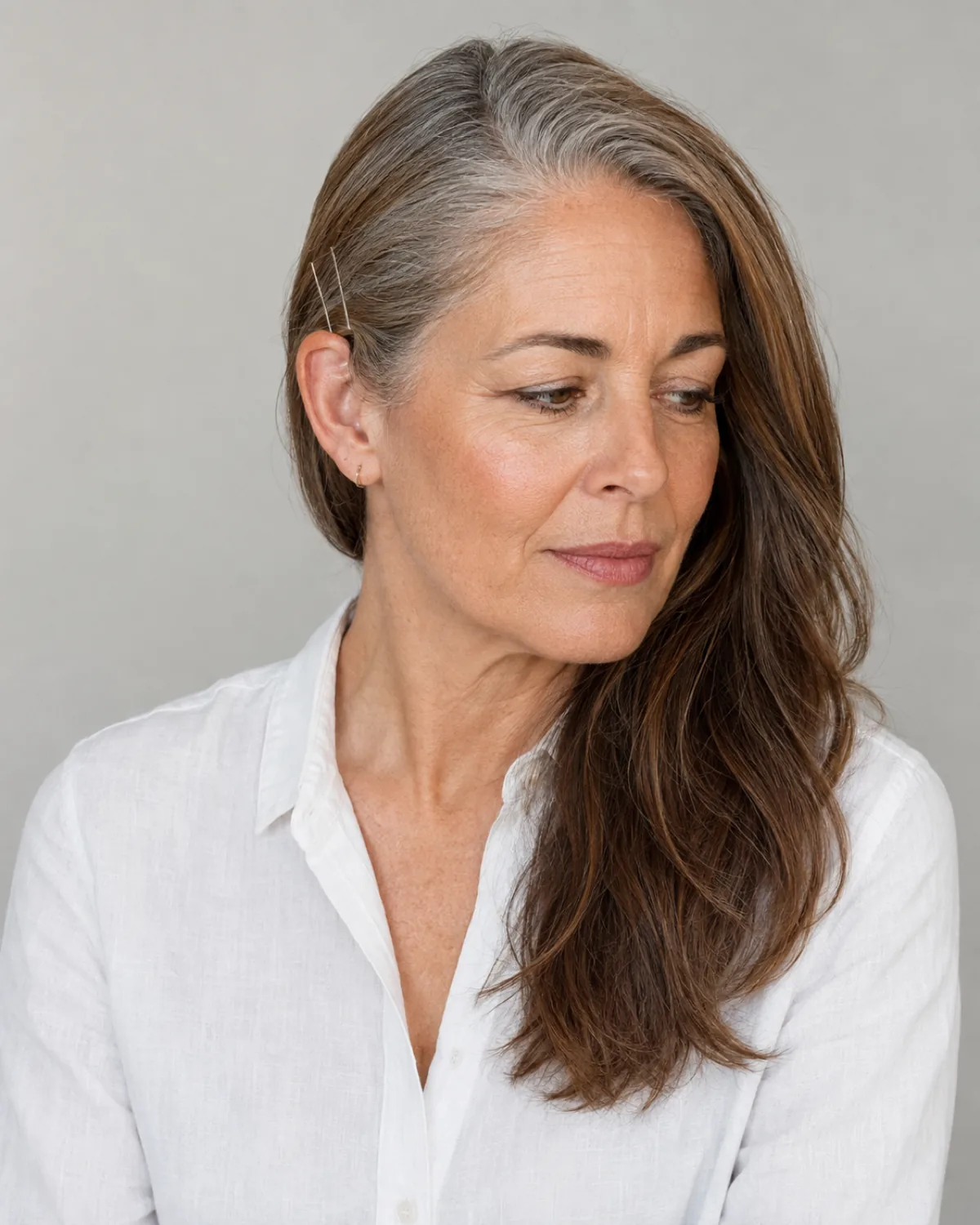
All the hair in this image sweeps to one side and falls over the shoulder. Two bobby pins behind the opposite ear do the structural work. This is the least engineered updo on this list, and the one most likely to survive being done at home without a mirror behind you.
- Heart-shaped and oval faces suit this because the asymmetry creates a diagonal line that draws the eye downward rather than across the width of the face.
- On a round face, start the sweep higher at the crown. The extra height adds vertical proportion before the hair falls.
- Works on shoulder-length hair and longer. Anything shorter than the collarbone and the sweep does not have enough weight to drape.
- The pins should sit flat against the head, not stacked. Stacking pins on fine hair creates a bump that reads as hardware, not structure.
4. A Half Updo With Face-Framing Pieces

The top section is gathered back while the lower half hangs loose past the shoulders. The face-framing pieces fall at both temples and along the jawline. They are the judgment call in this structure. Too much hair left forward and it reads as neither up nor down. Too little and you lose the softening effect around the jaw.
- Fine hair benefits here. The lower half provides visual density while the gathered top section does the structural work of the updo.
- Best for hair between chin and collarbone length. Shorter than the chin and there is not enough to gather. Longer than the collarbone and the lower half overwhelms the gathered section.
- The face-framing pieces should fall naturally where your hair parts. Pulling them out of the gathered section after pinning looks deliberate in a way that undercuts the ease.
- On an angular jaw, wider face-framing pieces soften the line. On a narrow jaw, keep them thin so they do not hide the structure.
5. A Rolled Bun Sitting at the Nape
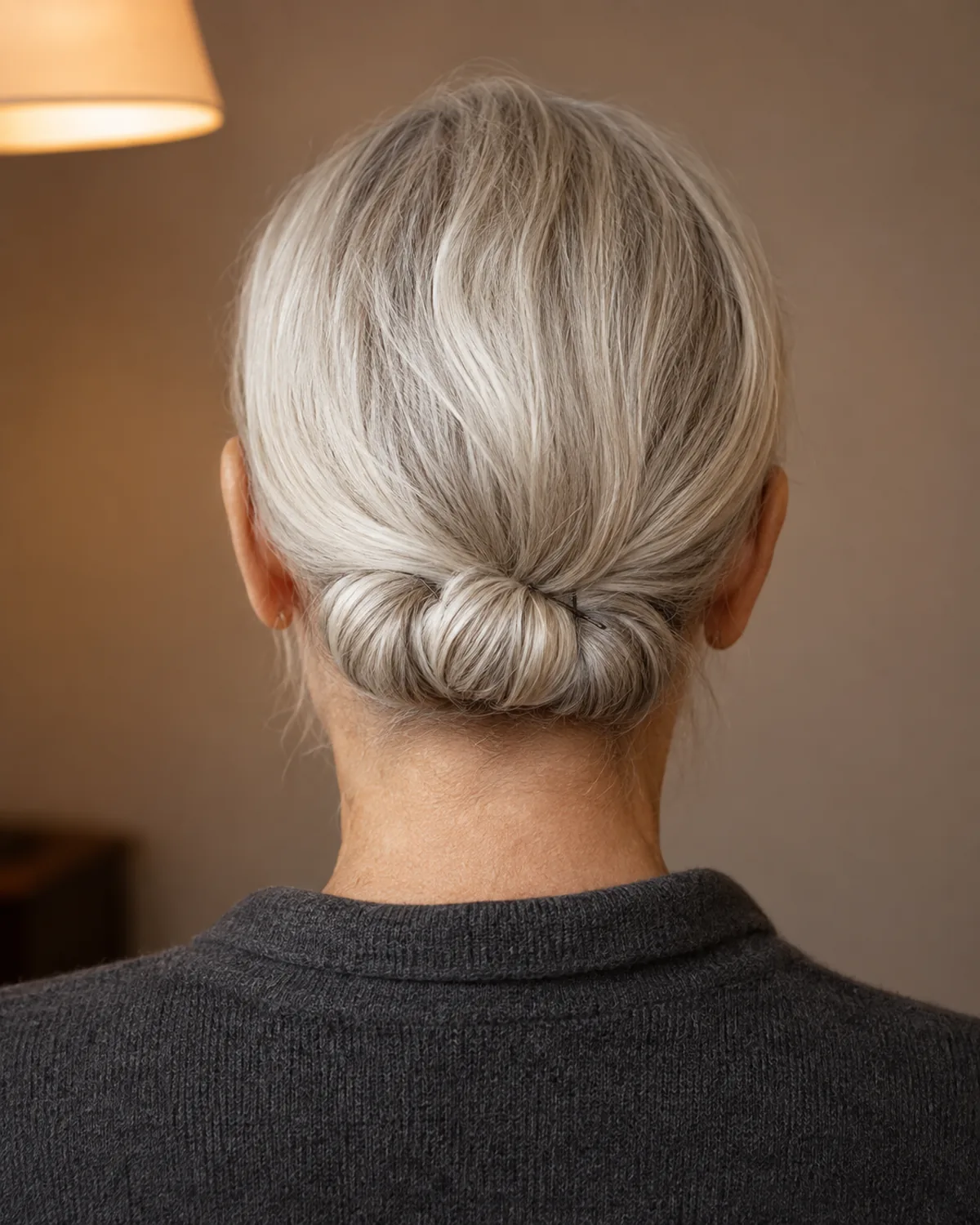
The bun in this image sits at the nape and the hair wraps around itself in a visible roll. It reads dressier than the chignon in idea 1 because the roll creates a deliberate shape rather than a gathered knot. The silver-white strands are individually visible where they enter the roll.
- Thick hair fills the roll naturally. No padding needed.
- Fine hair can be looped over a small foam donut for shape. The donut sits inside the roll and gives the pins something to anchor into besides the hair itself.
- Long and oblong faces suit this placement because the horizontal shape at the nape balances vertical length.
- On a square jaw, keep the roll soft and slightly off-center. A tight, centered roll draws a horizontal line that echoes the jawline, which is the opposite of what most square-jaw styling advice recommends.
6. A Soft Twisted Crown Pulled Back From the Temples
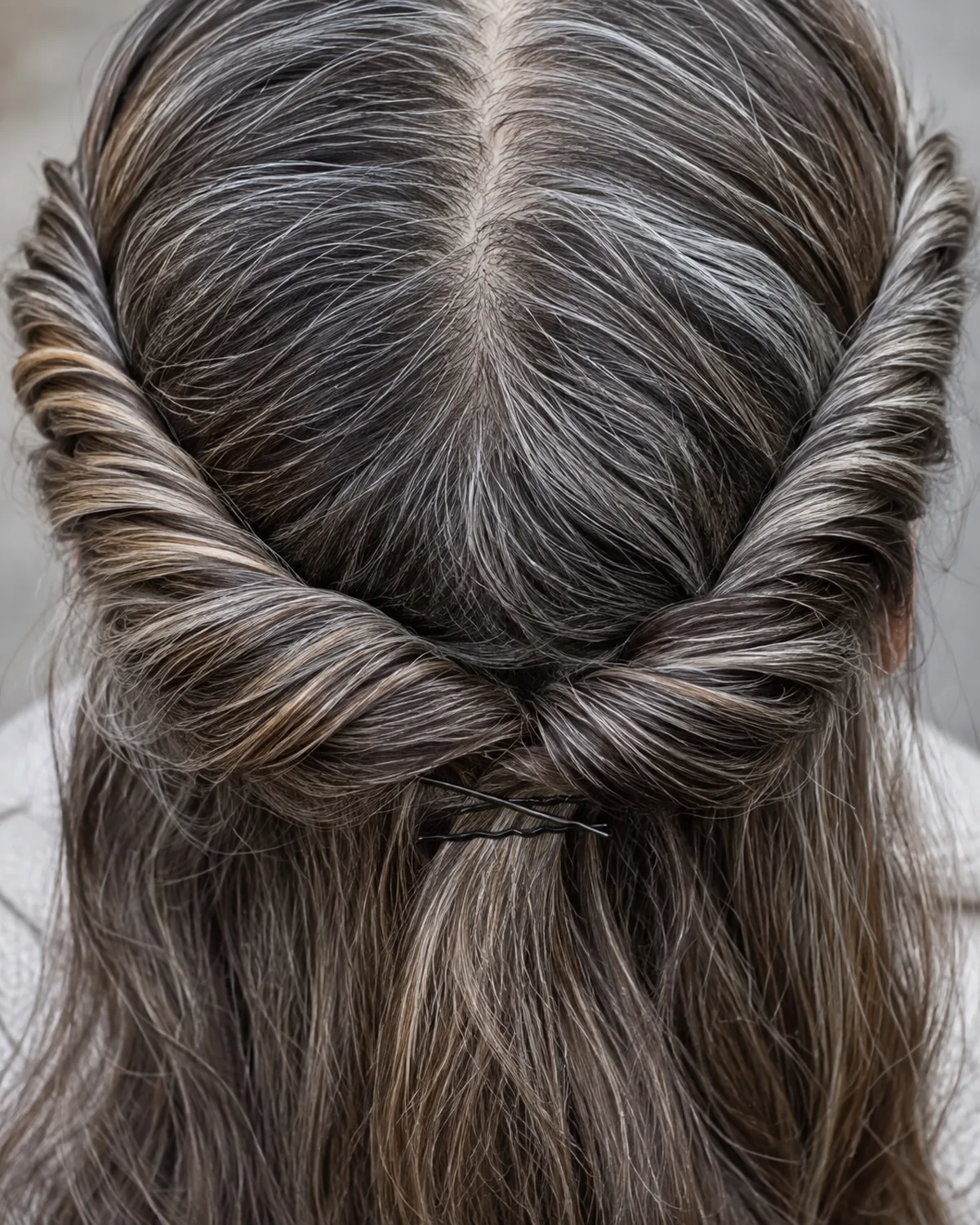
Two sections twist back from each temple and meet at the mid-back of the head. A single bobby pin holds them where they converge. Below the meeting point, the rest of the hair hangs loose. This is a half-up structure that keeps hair off the face without committing to a full updo.
- Works on every face shape because the twist placement is adjustable. Higher twists for round faces that need vertical lift. Lower twists for long faces that benefit from width.
- Fine hair holds the twists better than thick hair. Each fine strand grips its neighbor inside the twist. Thick hair pushes outward and tends to unravel.
- The part line and root area are visible in this style. If you are growing out grey at the roots, this updo frames it rather than hiding it.
- Tell a stylist you want the twists loose, not rope-tight. A loose twist reads as deliberate ease. A tight twist reads as trying to control the hair, which is the wrong tone for this structure.
7. A Pinned-Back Bob for Shoulder-Length Hair
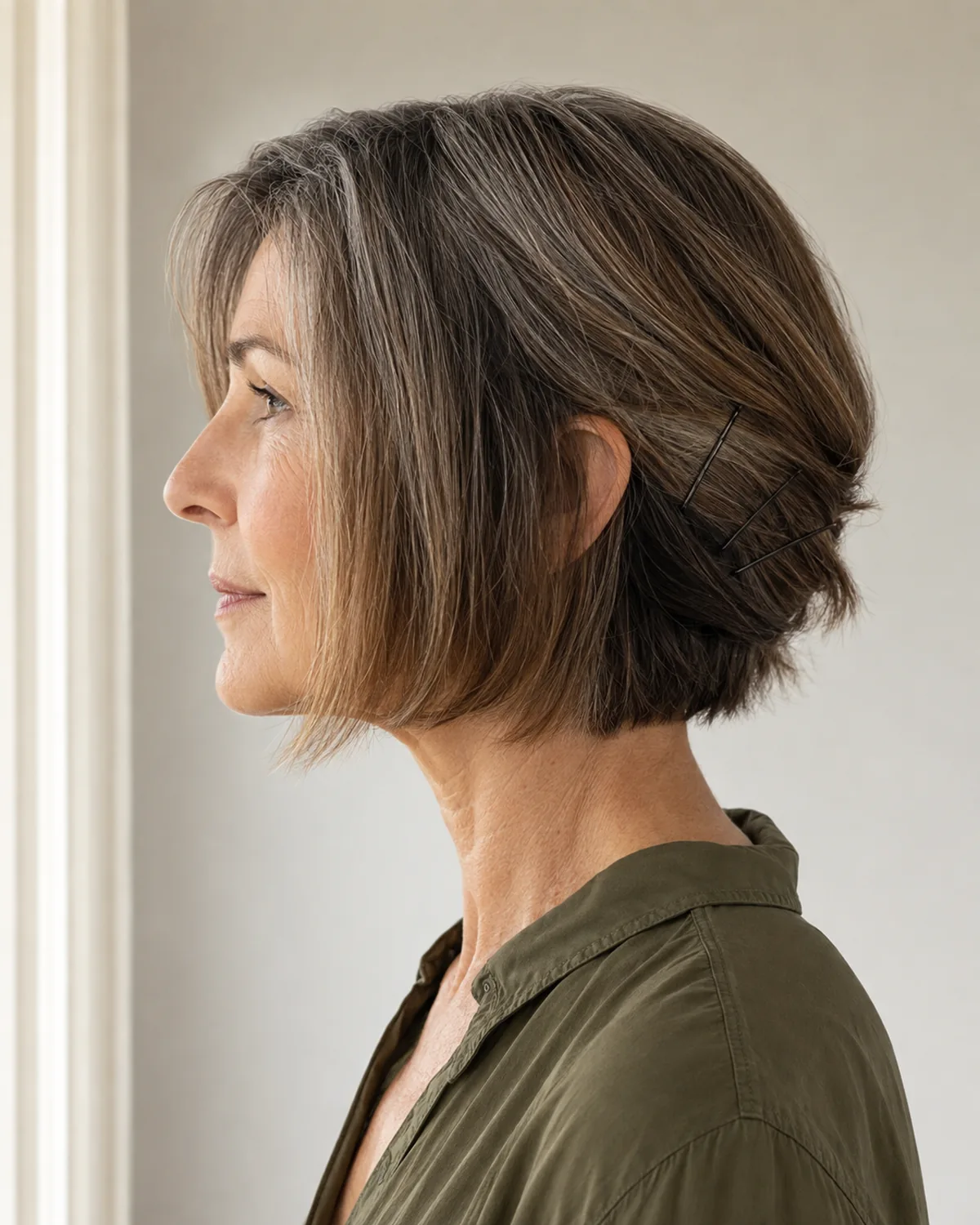
This is the only option on this list for hair too short to form a true updo. The front of the bob hangs naturally at chin level. The back sections are pinned up behind the ear with three visible bobby pins. The profile shows both the unpinned front and the gathered back.
- Flatters every face shape because the front silhouette does not change. Only the back gathers, so the proportions you chose when you cut the bob stay intact.
- The judgment call is length. Hair shorter than the chin slips out within an hour unless you use enough pins to create visible hardware, which defeats the purpose.
- Bobby pins work better than a claw clip here. A clip adds bulk at the nape that a short bob cannot hide. Flat pins sit closer to the head and disappear into the hair.
- This is the updo to suggest to a stylist if you want something for an event but do not want to commit to growing your hair out. It works with the cut you already have.
A stylist who can see your hair in person outranks anything written here. Bring one of these images to the consultation and ask whether your density and length can hold that structure. The answer saves you from an updo that photographs well and lasts forty minutes.
Where the checkable claims come from
- Face Shapes and Hairstyles — Pivot Point International
- Fine Hair: Causes and How to Care for It — Philip Kingsley Trichological Clinic
- Understanding Graduation and Layering — Sam Villa / Redken Education
Keep this one
Save it for the appointment
Pin the image above to the board you actually open before a salon visit. This guide is written to be re-read, not read once.
Tonight, before you close this tab
- Gather your hair at the nape and check in a mirror whether the twist fills your hand or whether you can see gaps
- Count how many bobby pins it takes to hold your hair in a simple twist at the back for five minutes without slipping
- Pull two front sections forward and note whether they fall to your jawline, your cheekbone or your temple
- Write down one of these words to bring to your stylist: chignon, French twist, rolled bun, half-up