8 Edgy Short Hairstyles for Women Over 50 That Prove Short Does Not Mean Safe
Eight edgy short hairstyles for women over 50, each judged by what makes it bold, who it flatters, and whether the edge survives past the first wash.

Booking an appointment soon? Save this page. It is easier to skim in the chair than to remember.
At a glance
Works
- Hard asymmetry that shifts the face's geometry — deep side parts, one-sided length drops, shaved panels
- Razored or point-cut texture that keeps a short cut from reading as the default salon pixie
- Deliberate contrast between two lengths — cropped nape and long top, or shaved side and full bob
Depends
- A disconnected undercut — reads as architecture on thick hair, reads as thinning on hair that is already sparse
- Micro bangs — shorten a long face but compress a round one
- Extended sideburns — frame the jaw on wavy hair, stick out on straight fine hair
Skip
- Any edgy cut that requires daily product and heat styling to hold its shape — the edge has to survive a wash-and-go
- A side-shaved bob if you part centre — the asymmetry only works with commitment to the side
- A sculpted buzzcut if your concern is thinning at the crown — the uniform length exposes it
Most short cuts over 50 are designed to disappear. They sit close, behave well, and look like the same cut on every third woman in the room.
These eight go the other direction. Each one has a structural move that makes the silhouette unmistakably deliberate — a shaved panel, a razored edge, a contrast between two lengths that were never meant to meet.
The question is not whether you can carry one. It is which edge suits your hair's density, your face's geometry, and how often you are willing to sit in the chair for maintenance.
1. Asymmetric Pixie With a Deep Side Part

The deep part does the work here. It pushes most of the hair to one side, so one ear is nearly bare and the other is hidden under a sweep that falls past the cheekbone. The diagonal line across the face reads as intentional geometry rather than a cowlick gone wrong.
- Works on round and square faces because the diagonal interrupts the face's symmetry and draws the eye off-centre
- The long side needs enough density to hold its sweep. Fine hair tends to collapse flat against the head rather than arcing across
- Grows out unevenly by design, so maintenance trims every four to five weeks keep the contrast sharp
- Ask the stylist to show you the part depth before cutting. A part that starts two inches above the ear reads very differently from one at the temple
- Skip if your hair is very fine on the side that will carry the longer sweep. Without density, it reads thin rather than dramatic
2. Razored Bob With Blunt Bangs

The edge lives in the tension between two opposite finishes. The bangs are blunt, a hard horizontal line across the brow that frames the face like a statement. Below that, the bob ends are razored to thin, wispy points that taper to nothing at the jaw.
- Razoring removes weight from each strand by cutting at an angle, so the ends sit flatter and thinner than scissor-cut ends
- The blunt fringe works best on thick or medium-density straight hair. It needs enough weight to hold the line without gaps
- Skip on curly hair. Razored ends spring up unevenly because the thinned tips lose the weight that keeps the curl pattern consistent
- Ask for a demonstration cut on one section before the stylist razors the full head. The tapered effect varies depending on blade angle and speed
- The bangs need trimming every three weeks to stay blunt, while the razored body can go five to six weeks
Where to start
Find your situation, skip ahead
You want a pixie that does not look like everyone else's pixie
Push the asymmetry — a deep side part or a disconnected undercut makes the cut unmistakably yours.
01 Asymmetric Pixie With a Deep Side Part03 Disconnected Undercut Pixie
You like bobs but want one that reads as sharp, not polished
Razored ends or a shaved side panel turn the bob from boardroom to editorial.
You want the shortest possible cut that still has a design element
A sculpted buzzcut with a clean defined hairline, or a textured crop with micro bangs — the edge is in the detail.
04 Textured Crop With Micro Bangs08 Sculpted Buzzcut With a Defined Hairline
3. Disconnected Undercut Pixie

The disconnection is the point. Instead of blending the shorter sections into the longer top, the stylist leaves a visible gap. The buzzed temple or nape sits right next to two or three inches of textured top with nothing bridging the difference.
- Reads as architectural on medium to thick hair because the density of the longer section creates a clean shadow line above the buzzed zone
- On fine or sparse hair, the same gap can read as thinning rather than deliberate. The longer section lies too flat to cast that shadow
- Ask the stylist where the disconnection line will sit when your hair is wet and flat. That line is permanent until it grows out
- The buzzed section grows back fastest, so plan on two to three weeks between touch-ups to keep the contrast visible
- Skip if the area where the undercut would go already has significant thinning. The shaved section draws attention to the scalp
4. Textured Crop With Micro Bangs
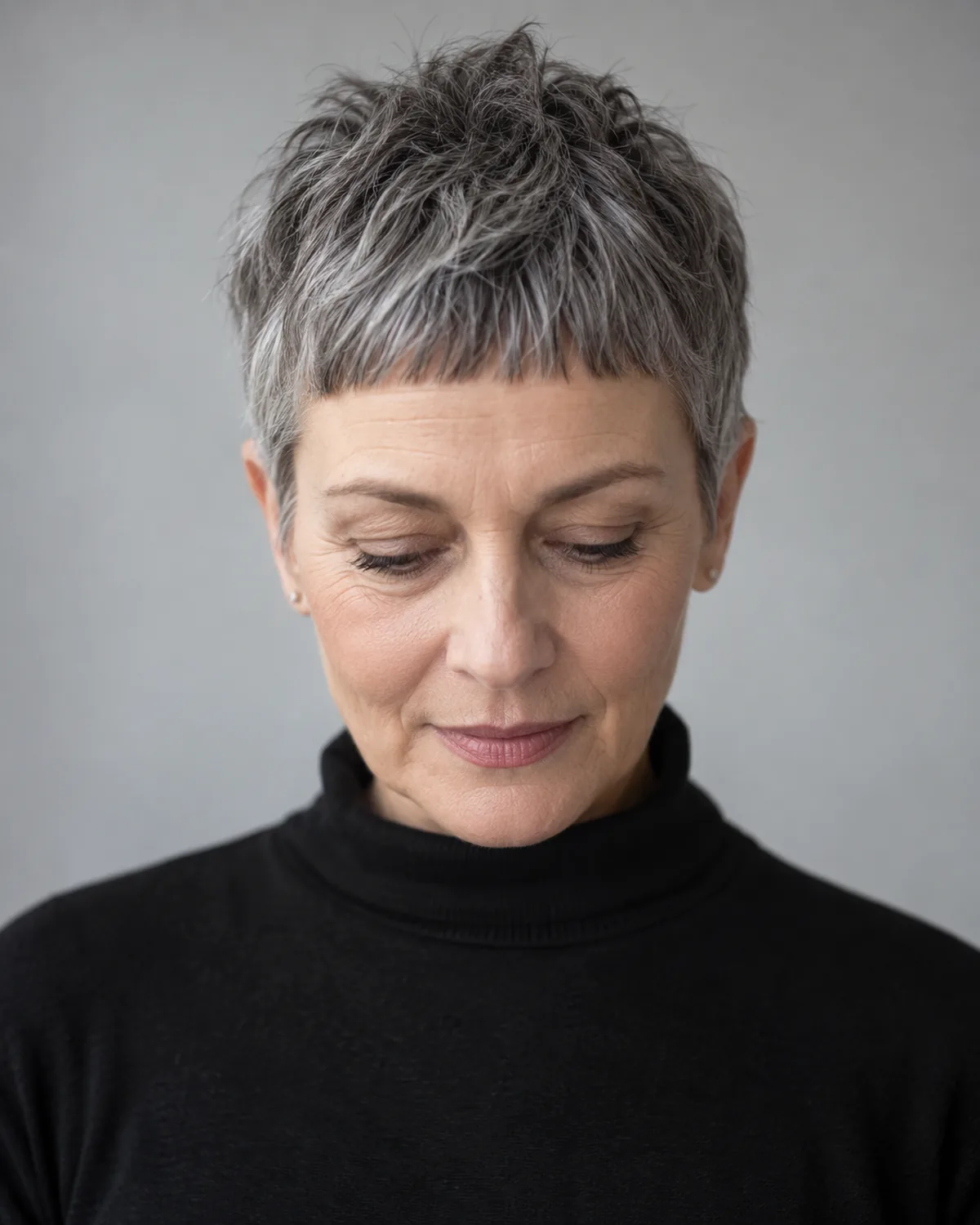
Micro bangs change the proportions of the face. Cutting the fringe above the mid-forehead shortens the visible forehead, which makes a long or oval face read more balanced. The rest of the crop is kept short and textured, with enough piecey separation to prevent the cut from looking severe.
- The fringe landing point matters more than the length of the rest. Even a quarter-inch shift up or down changes the face proportions noticeably
- Works best on long and oval face shapes where the forehead is the longest zone
- Skip on round faces. The short fringe and the short sides together compress the face and make it read rounder
- The texture is what keeps it wearable. Without it, a crop this short with micro bangs reads as costume rather than style
- Bring a photo of the exact fringe length you want. The term means different things to different stylists, and the difference between mid-forehead and one inch above the brow is significant
5. Tapered Nape Pixie With Long Top Layers
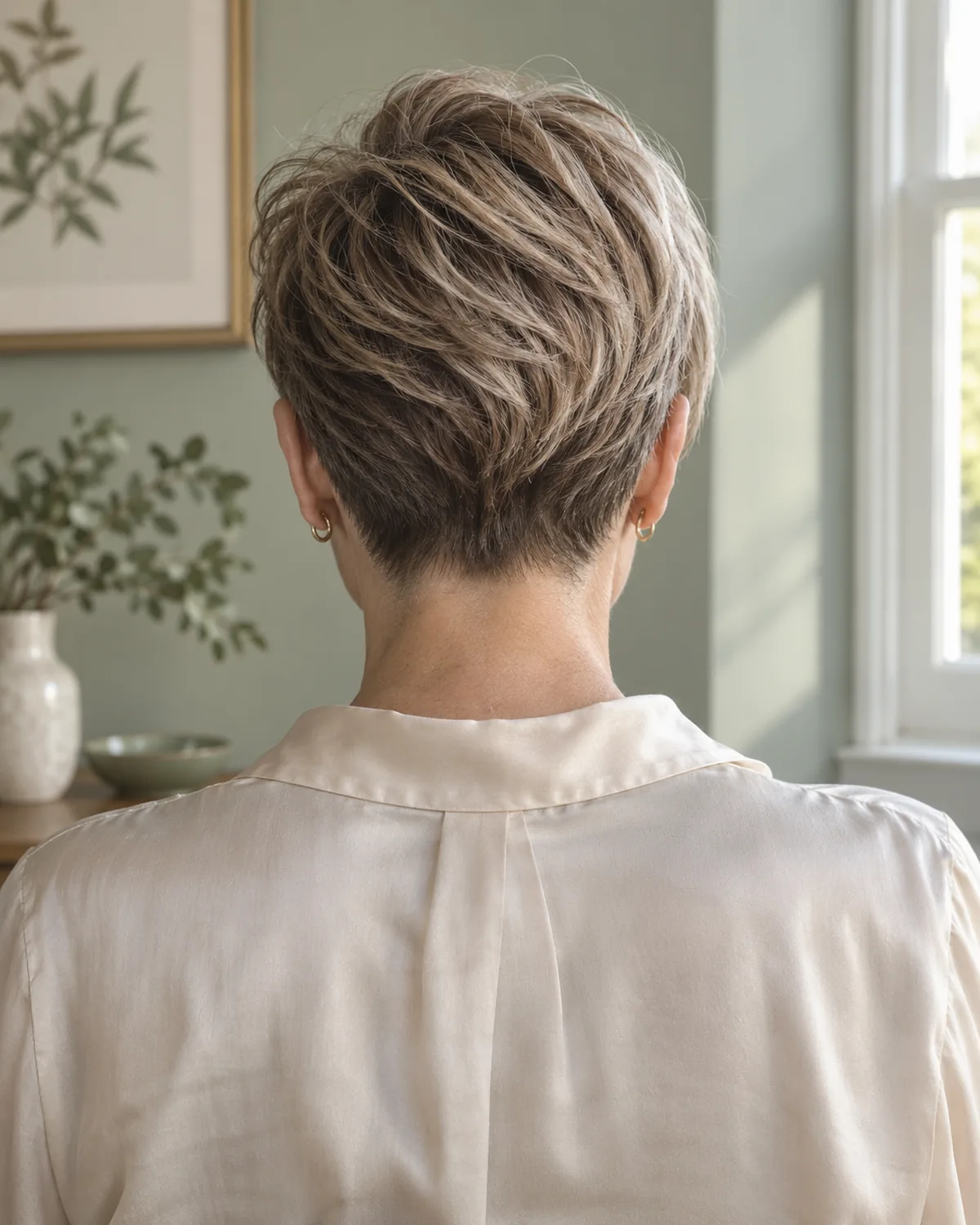
This cut runs on contrast between the back and the top. The nape is tapered tight, short enough to see the natural hairline, while the top layers are long enough to reach the brow when pulled forward. The transition between the two creates a sculptural silhouette from the side.
- Works on fine hair because the long top layers overlap and build the illusion of density at the crown and the front
- The back requires regular trims to keep the taper clean, but the top can grow longer between visits without losing the shape
- Skip if you do not style the top at all. Unstyled, the long layers fall flat against the tight nape and the contrast that makes it edgy disappears
- Ask the stylist to cut the taper with the grain of your natural nape growth. Cutting against it causes the new growth to bristle outward
- For a related take on pixie versus bob silhouettes, including which face shapes suit each
6. Side-Shaved Bob

The asymmetry here is maximal. One side is a jaw-length bob with enough weight to swing; the other is shaved to a grade two or three. The silhouette changes depending on which side faces the room, which means you are carrying two different cuts at once.
- Needs enough density on the bob side to hold a clean weight line at the jaw. If the hair is thin on that side, the bob reads flat
- The shaved side grows back fast and unevenly, so every two to three weeks in the chair is realistic
- Ask the stylist to define the transition line before shaving. A hard line between the bob and the shaved section reads more intentional than a faded blend
- Skip if you always part your hair in the centre. This cut commits to a side, and flipping it over exposes a half-grown panel
- Consider your daily routine: the bob side may need smoothing while the shaved side needs nothing, so your morning is genuinely shorter on one half of your head
7. Choppy Shag Pixie With Sideburns

Extended sideburns do something that most short cuts avoid: they frame the lower face. The tapered pieces that extend past the ear sit against the jaw and soften the transition between the cut and the neck. Above them, the choppy disconnected layers create the shag texture that keeps the top from reading polished.
- Works best on wavy or curly hair because the natural bend holds the choppy pieces in place and the sideburns curve against the jaw
- On very straight fine hair, the sideburns tend to stick outward rather than lying flat, and the choppy layers look sparse instead of textured
- The disconnection between the short top layers and the longer sideburns is the signature. Ask the stylist not to blend them
- Grows out into a longer shag over time, which gives you a window of several weeks before it loses its shape
- This cut tolerates a wash-and-go better than most edgy styles because the texture hides imprecision
8. Sculpted Buzzcut With a Defined Hairline
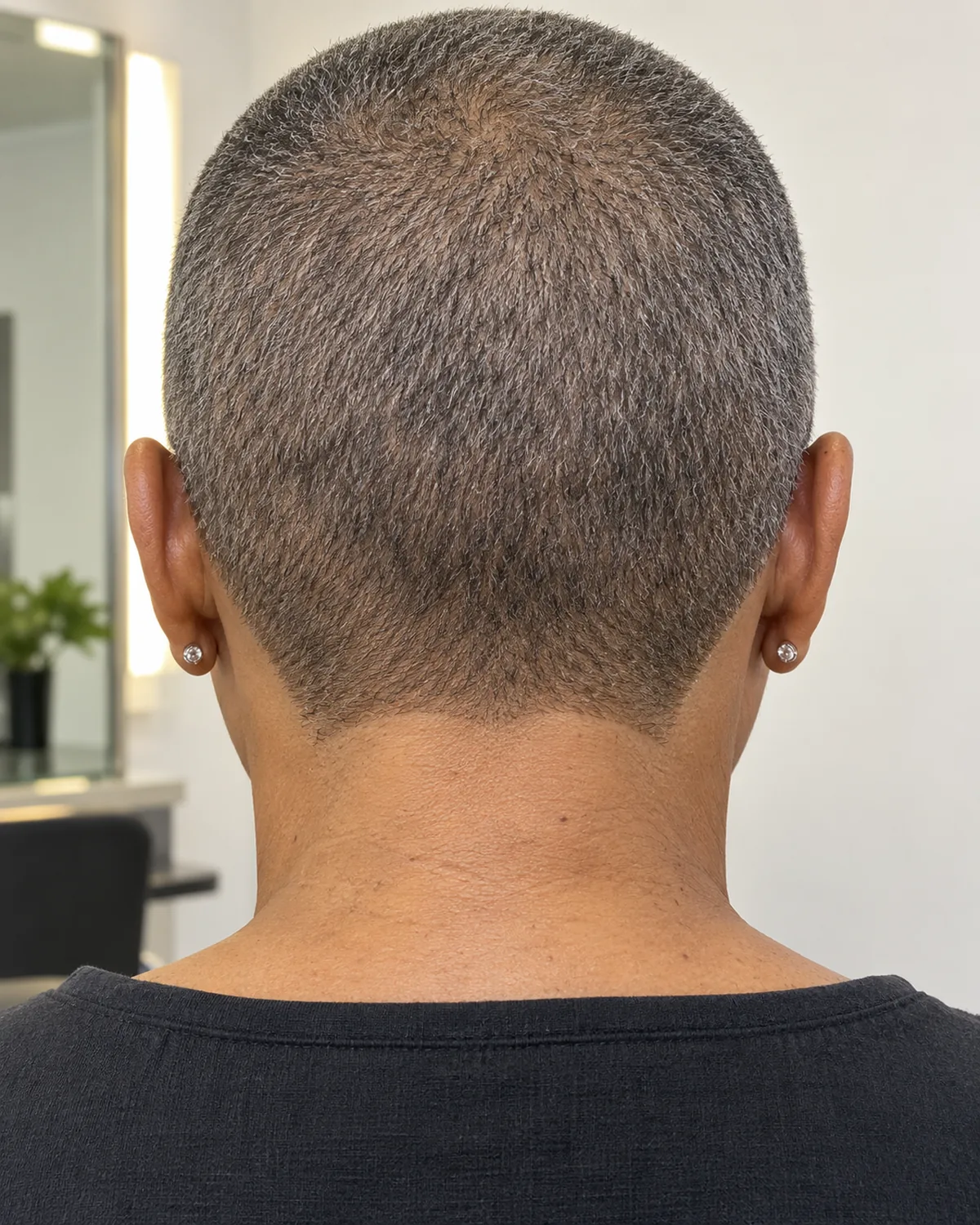
The edge here is precision, not length. A buzzcut with a barber-defined hairline turns the temples and nape into architecture, clean lines that follow the bone structure of the skull. Without those defined edges, the same length reads as an afterthought.
- Works on any hair texture and any face shape because the cut follows the head's own contours rather than trying to change them
- The defined hairline at the temples and nape is what separates this from a simple buzz. Ask a barber, not just a stylist, because the line work is a different skill set
- The line softens within ten days to two weeks as the hair grows back, so maintenance is frequent but fast: a five-minute edge cleanup between full cuts
- Skip if you are not ready for full exposure. There is nothing to hide behind, and the cut puts the bone structure of your face and head on full display
- For related guidance on very short cuts and who they suit best, including face shape considerations
A stylist who has cut edgy short styles before will read these references differently from one who defaults to classic shapes. Before you book, look at the portfolio, not the menu, and find examples of asymmetry, disconnection, or precision line work on clients in your age range.
Where the checkable claims come from
Keep this one
Save it for the appointment
Pin the image above to the board you actually open before a salon visit. This guide is written to be re-read, not read once.
Tonight, before you close this tab
- Search for your face shape plus the specific cut name and look at real photos — does the asymmetry flatter or fight your bone structure
- Book a consultation before committing to a shaved section — a stylist can clip a test panel underneath so you see the contrast before it is permanent
- Ask the stylist how often the cut needs reshaping — most edgy short cuts grow out faster than classic ones and need trims every four to five weeks
- Bring two reference photos from opposite angles so the stylist sees both the long side and the short side