7 Medium-Length Cuts for Thick Hair Over 50 That Take Weight Off Without Taking Volume Away
Seven medium-length hairstyles for thick hair over 50. Each cut removes weight from a specific zone so the silhouette stays full but the hair finally moves.
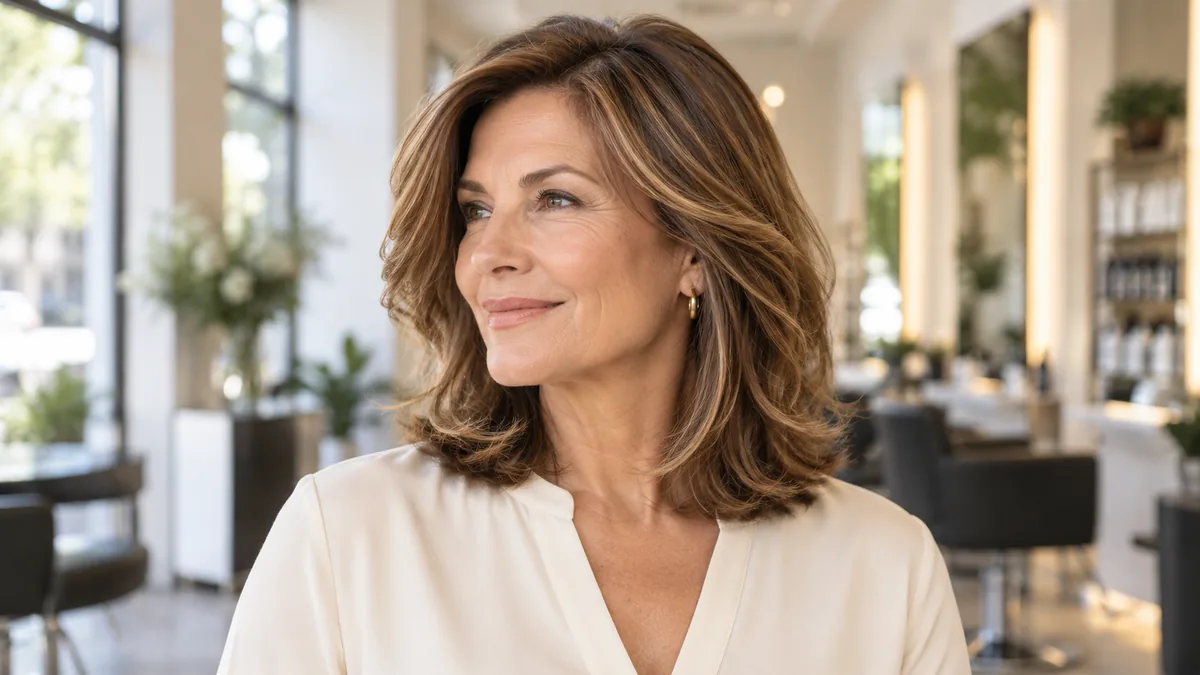
Booking an appointment soon? Save this page. It is easier to skim in the chair than to remember.
At a glance
Works
- Internal graduation or hidden undercuts that remove bulk you cannot see
- Layers starting at the jaw or above to break the triangle before it forms
- Point-cut or bevelled ends that let thick hair lie flat without heat
Depends
- A centre-parted shag — needs natural wave or curl to hold the disconnected pieces inward
- Curtain layers — only thin the front, so the back stays heavy for updos but heavy for wearing down too
- A wolf cut — works if you like visible disconnection, not if you want the length to look even
Skip
- One-length blunt with no interior thinning — thick hair will triangle within three weeks
- Heavy all-over layering on straight thick hair — each layer splays outward instead of falling in
- Any cut that relies on daily blowout shaping to hold its silhouette
Thick hair at medium length is a negotiation between fullness and control. Too much weight at the bottom and the shape triangles within three weeks of the cut.
These seven cuts solve that equation differently. Each one removes bulk from a specific zone — the interior, the nape, the perimeter, or the face frame — so the silhouette stays full but the hair finally moves.
A stylist who specialises in thick hair will place the weight removal where your particular density needs it. Bring these as reference points, not instructions.
1. Long Layered Bob With Internal Graduation
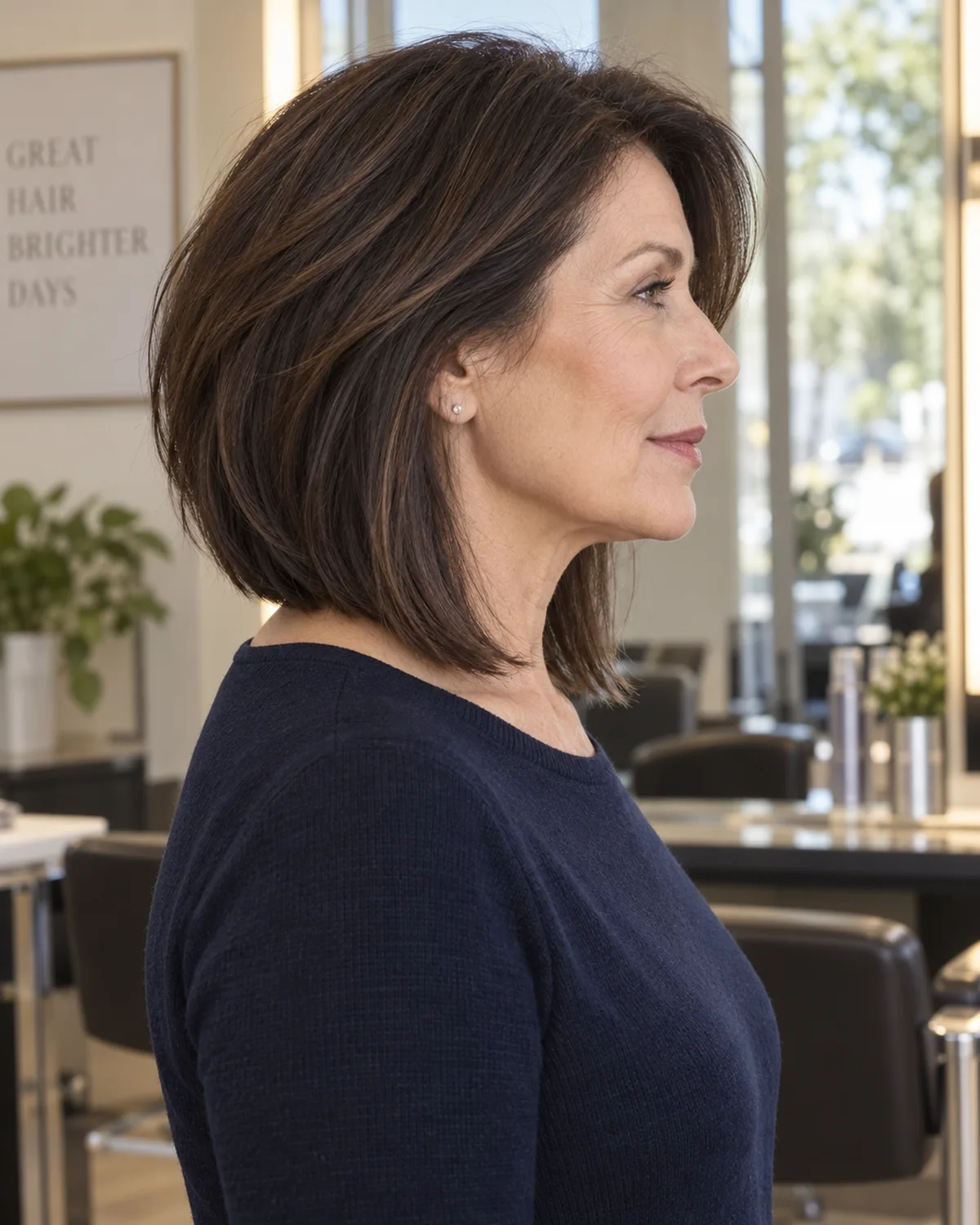
A collarbone-length bob with layers starting at the jawline and an invisible graduated interior that thins the bottom third. The graduation angle means the weight is removed from inside the cut, not the perimeter, so the hemline still reads as a clean solid line from the front and sides. On thick hair this is the difference between a bob that swings and one that sits like a block.
- Ask the stylist to graduate internally rather than thin with shears — thinning shears on thick hair cause frizzy mid-lengths within weeks
- The graduation works best when the shortest interior layer sits at least two inches above the longest outer layer
- If you want a strictly blunt bottom edge with zero tapering, skip this — internal graduation necessarily softens the hemline even if it is invisible from the front
- This sits in the same length zone as long layered styles for thick hair but controls the bottom edge more tightly
2. Textured Shag With a Centre Part

A medium shag with heavy layering through the crown and disconnected ends at the shoulders. The layers start high — above the cheekbone — to break the triangle shape that thick hair defaults to when it is cut one length. The centre part distributes the weight evenly so neither side dominates.
- This is a high-commitment cut — the disconnected ends are visible and deliberate, not a grow-out phase
- Works best on thick wavy or curly hair where the natural texture pulls the disconnected pieces inward
- Skip on thick straight hair — without wave to contain them, the disconnected ends splay outward and the shape looks unfinished
- Tell the stylist to keep the layering heaviest through the crown and lighter toward the ends so the volume sits at the top, not the bottom
Where to start
Find your situation, skip ahead
Your hair is thick and straight, and you spend too long blow-drying
Take the bulk out where nobody sees it — internal graduation or a hidden undercut.
01 Long Layered Bob With Internal Graduation03 Shoulder-Length Blunt Cut With Hidden Undercut
Your thick hair has wave or curl and it poofs into a triangle by afternoon
Break the triangle at the crown — a shag or wolf cut channels the volume into movement.
02 Textured Shag With a Centre Part05 Medium Wolf Cut With Face-Framing Disconnection
You want to keep length for updos but the weight gives you neck tension
Thin only the front with curtain layers or angle the back shorter with an A-line lob.
06 Collarbone-Length Curtain Layers07 A-Line Lob With Point-Cut Ends
3. Shoulder-Length Blunt Cut With Hidden Undercut
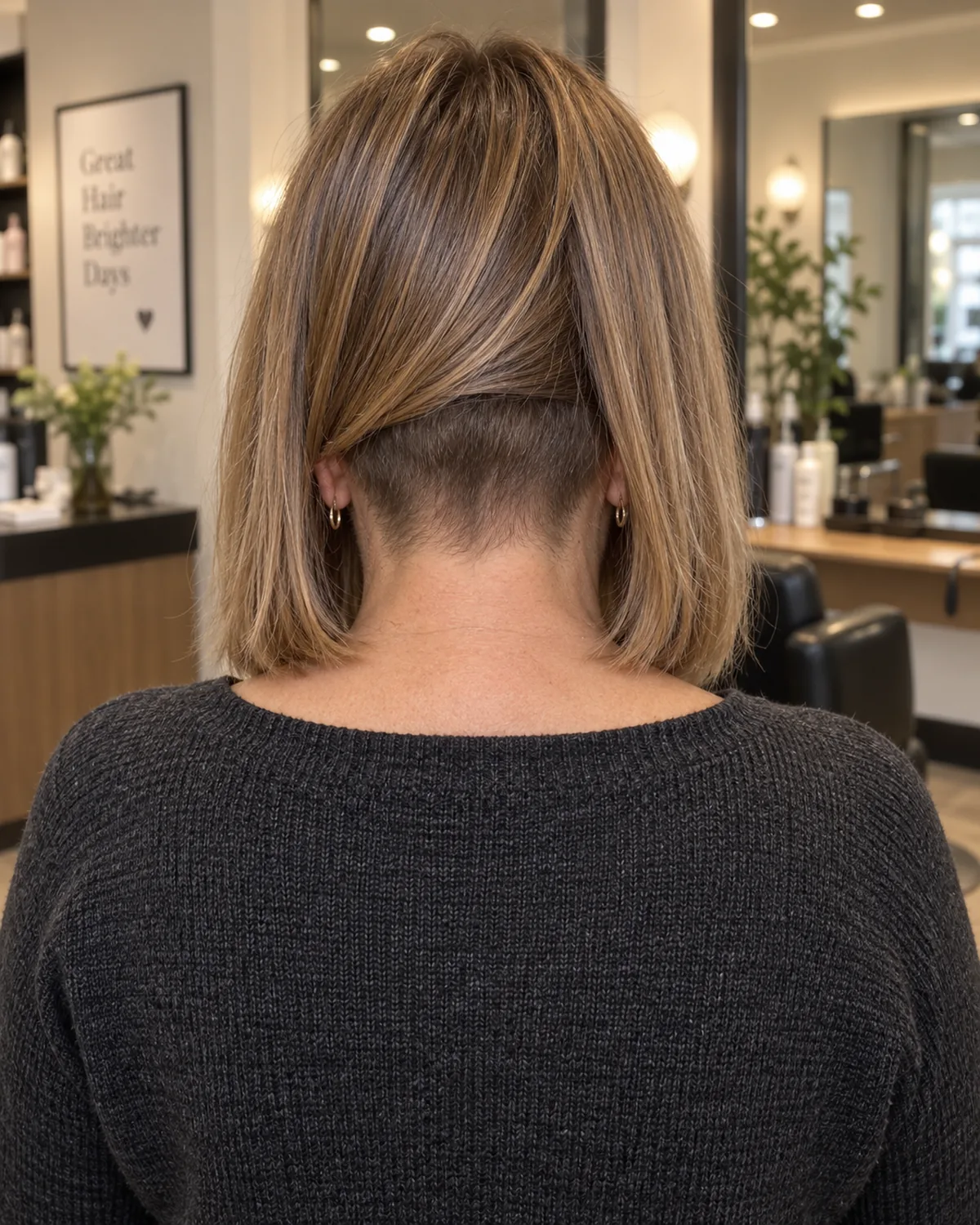
A one-length cut at the shoulder with the nape section clipped short underneath. The undercut removes up to a third of the total bulk without changing the visible silhouette from any angle except directly behind when the hair is lifted. Drying time drops noticeably because the densest section is gone.
- The undercut line should sit low enough that wearing your hair tucked behind the ears does not reveal it
- If you wear your hair up regularly — ponytails, clips, low buns — the undercut shows, and that may or may not bother you
- Ask the stylist to clipper the nape section rather than scissor-cut it so the grow-back transition stays clean
- This is the only cut on this list that reads as a completely different style from behind — see the difference between this and a standard bob from the front
4. Below-Chin Bob With Bevelled Ends
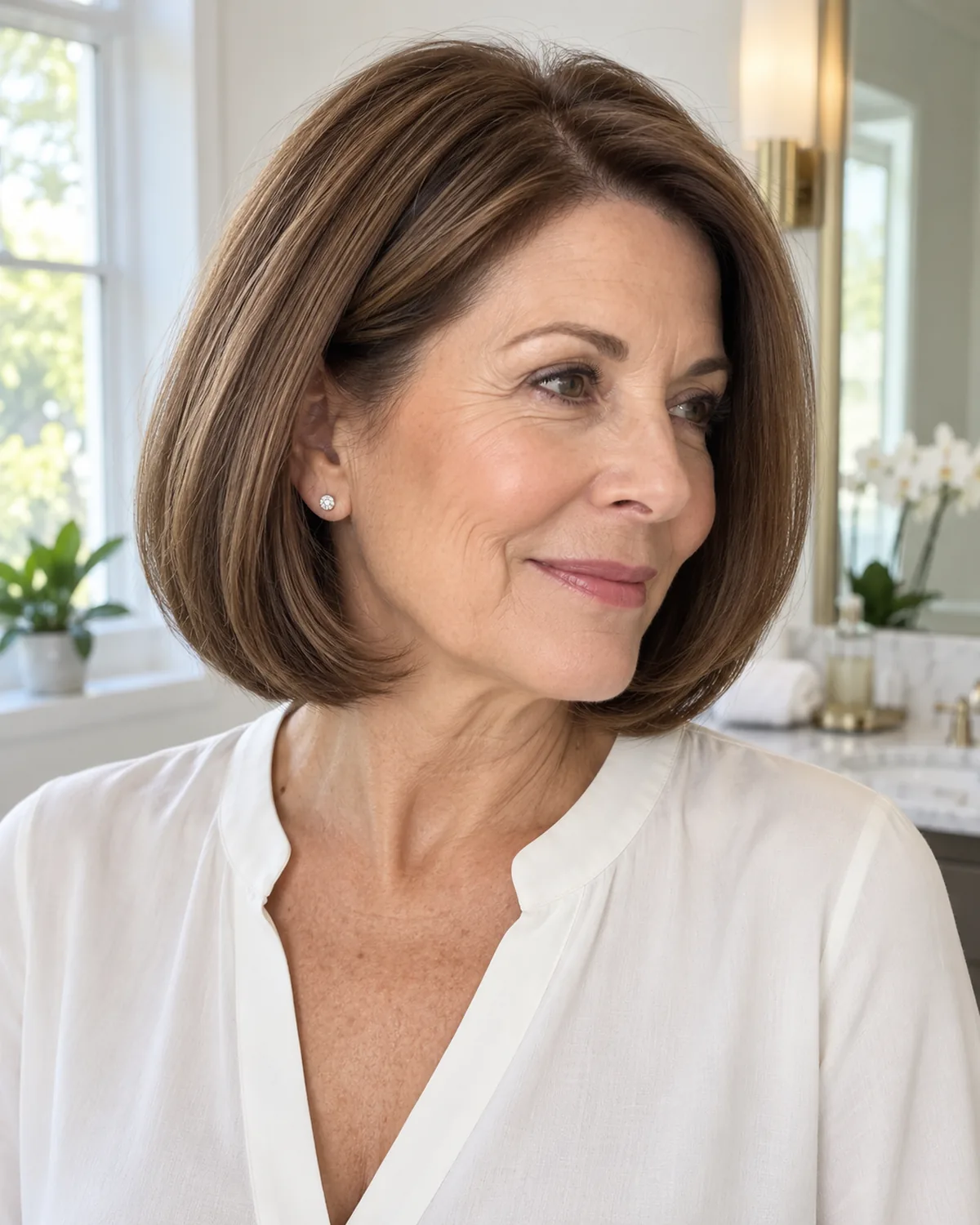
A bob that falls just below the chin with ends cut at an inward angle so the bottom edge curves under naturally. Thick ends tend to flip outward or sit at odd angles, and the bevel solves that without daily flat-iron work. The inward curve also narrows the bottom silhouette, which counteracts the widening effect that thick hair creates at chin level.
- The bevel is cut into the hair, not styled in — it should hold without heat on most thick straight or slightly wavy hair
- On very curly thick hair the bevel fights the natural curl pattern and the ends will not lie flat regardless of how they are cut
- Ask the stylist to cut the bevel at a shallow angle rather than steep — steep bevels on thick hair create a helmet look
- This length sits between a jawline bob and a collarbone lob, so it keeps the face framing without the neck weight
5. Medium Wolf Cut With Face-Framing Disconnection
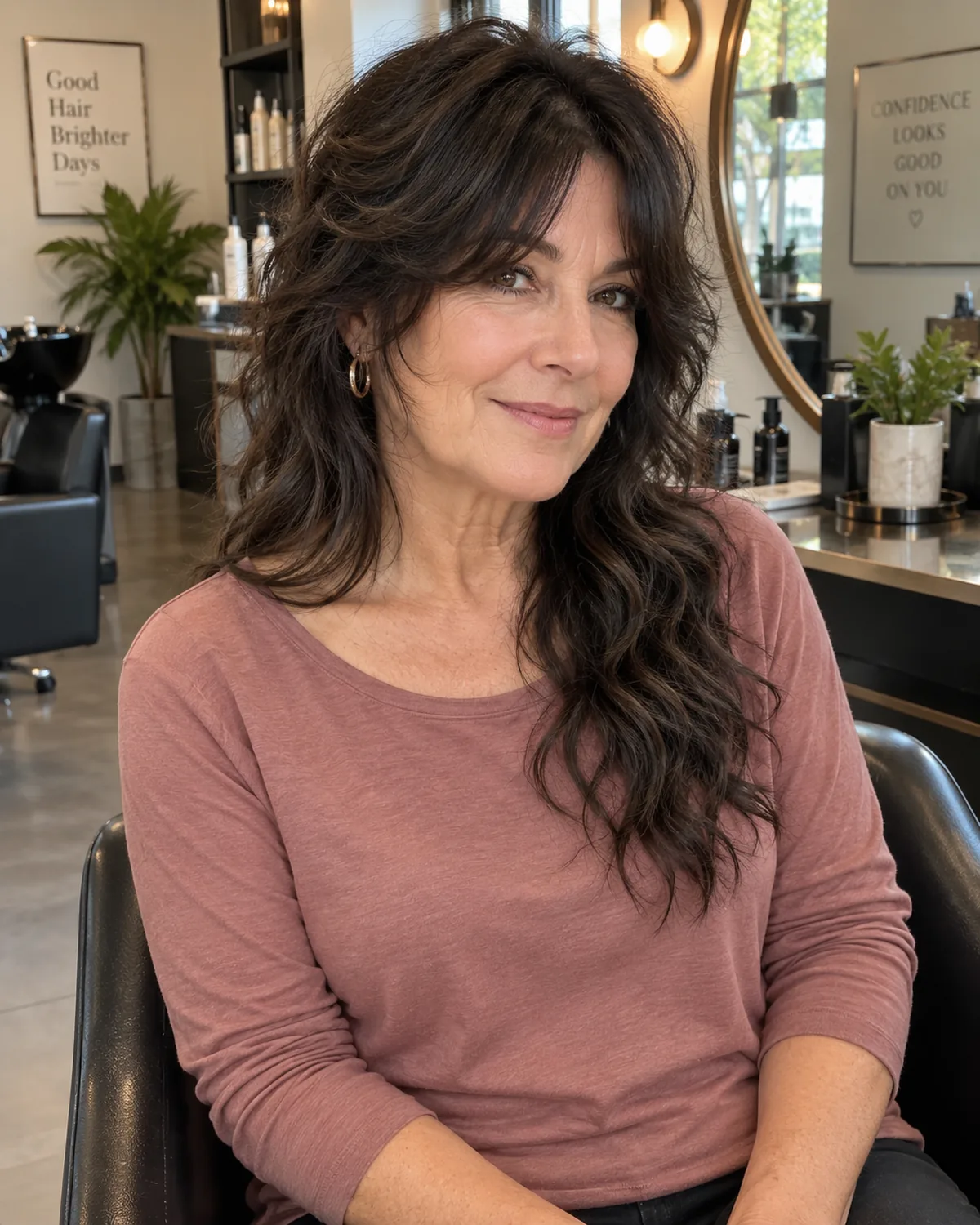
Shorter choppy layers around the face and longer untouched length in the back, with a visible gap between the two. The face-framing pieces lighten the heaviest zone — the area around the jaw and cheekbone where thick hair stacks widest — while the back keeps its full length and density.
- The disconnection between front and back is the design, not a mistake — if you want the lengths to match, this is the wrong cut
- Works best on thick hair with natural wave or texture that gives the short front pieces movement
- Skip if your thick hair is pin-straight — the choppy face-framing pieces will stick out at right angles without texture to soften them
- Tell the stylist how much disconnection you want before the scissors start — the gap between the shortest face-framing piece and the longest back layer can range from two inches to six
6. Collarbone-Length Curtain Layers
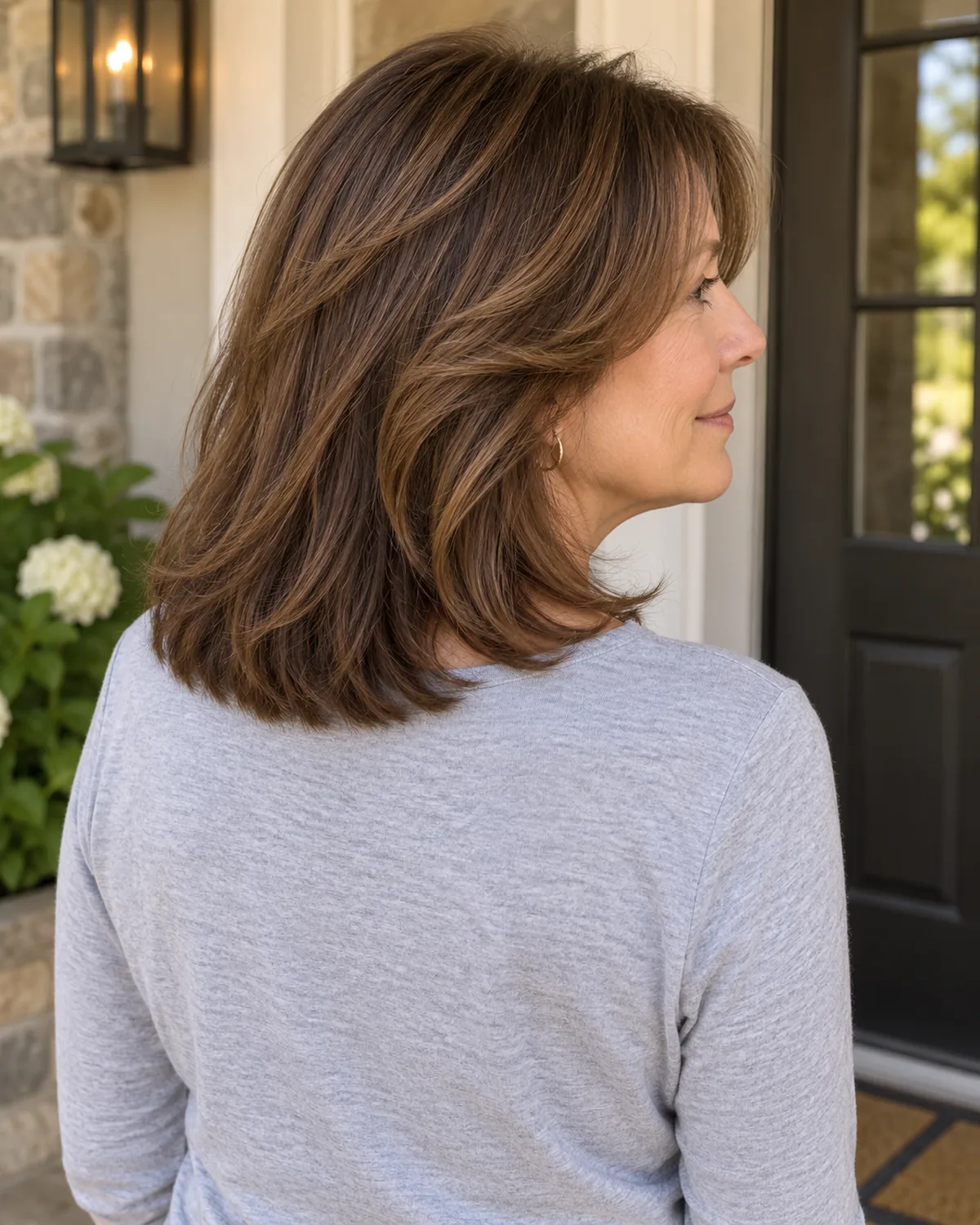
Layers that begin at the cheekbone and fall in curtain-like panels toward the collarbone, with the back kept at one length. This is the only cut on this list that removes weight exclusively from the front while leaving the back untouched. The trade-off is clear: updos and low buns stay full, but wearing the hair down still carries the full back weight.
- The curtain layers should start at or above the cheekbone — starting them lower defeats the purpose on thick hair because the heaviest jaw zone stays intact
- If your thick hair tends to separate into chunky panels, curtain layers can widen those gaps rather than smooth them
- Ask the stylist whether your hair texture holds a curtain shape or whether it will need daily parting and repositioning
- Combines well with idea 4 if you later decide to bevel the back ends for extra movement
7. A-Line Lob With Point-Cut Ends
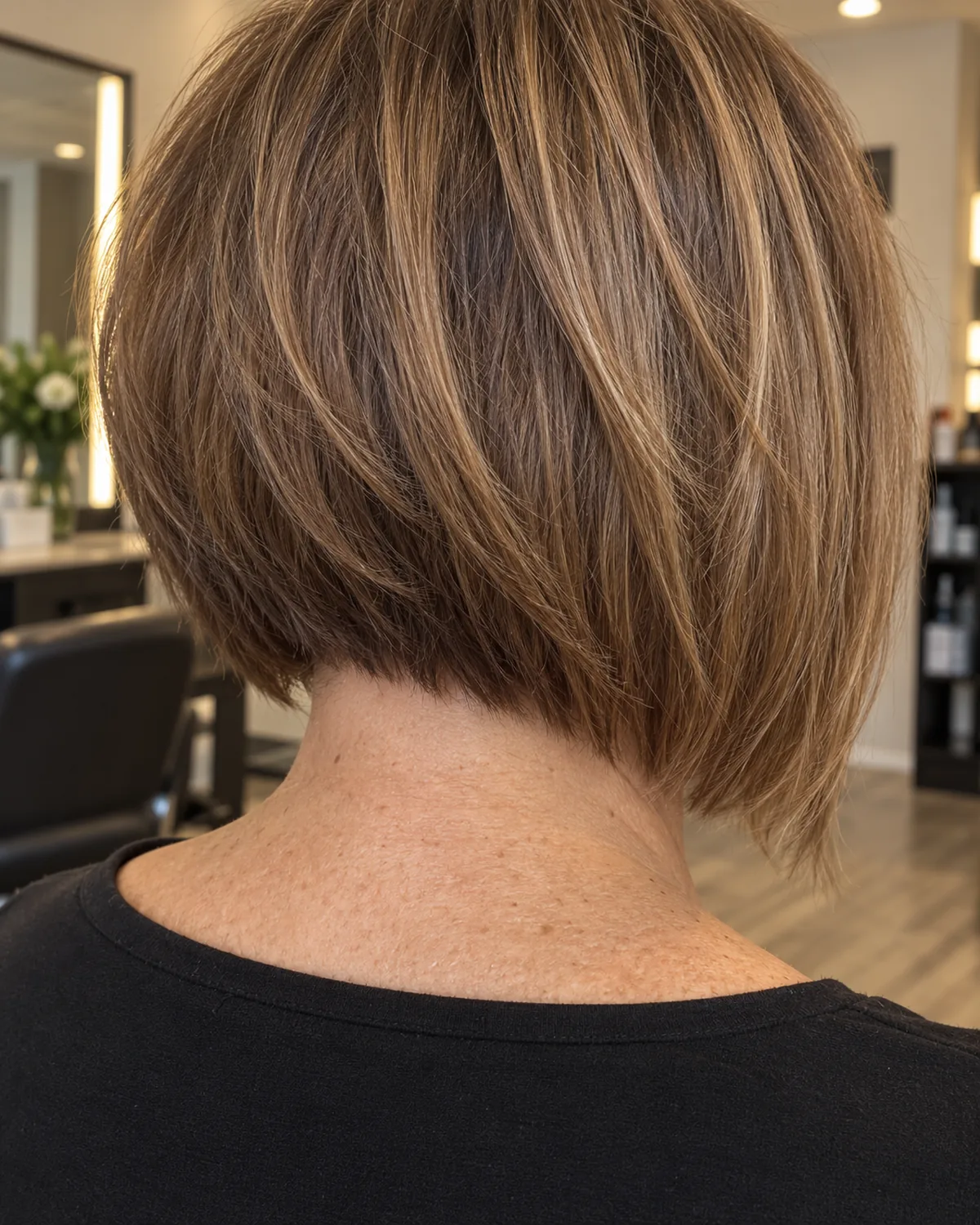
A lob that is shorter at the back and gradually longer toward the front, with point-cut tips that soften the blunt line. The A-line removes weight from the back of the head, which is where thick hair stacks heaviest and where the triangle shape builds first. The point-cutting at the front prevents the longer pieces from clumping together.
- The angle difference between back and front is typically one to three inches — more than three starts to look like two different haircuts
- Works on straight and wavy thick hair equally well because the angle does the structural work, not the texture
- Skip if you want the back and front at the same length — the angle is the entire mechanism of this cut
- Ask the stylist to point-cut only the front ends and leave the back line clean so the A-line reads clearly from behind
Thick hair at medium length does not need to be thinned into submission. It needs weight removed from the right zone — the interior, the nape, the perimeter, or the face frame — so the shape holds between salon visits and the hair dries before you run out of patience. Pick the zone that matches your daily reality, and tell the stylist where you want the weight to go.
Where the checkable claims come from
- How to Remove Weight From Thick Hair — Sam Villa
- How to Cut Thick Hair — Redken
- Understanding Graduation in Haircutting — Toni & Guy
Keep this one
Save it for the appointment
Pin the image above to the board you actually open before a salon visit. This guide is written to be re-read, not read once.
Tonight, before you close this tab
- Pull your hair into a low ponytail and measure how thick the tail is — that is your bulk baseline
- Try clipping the nape section up for a day to feel the weight difference an undercut would make
- Bring a photo that shows the triangle shape you want to avoid, not just the shape you want
- Ask the stylist to show you where the layers will start before cutting — jaw-level feels very different from chin-level on thick hair