11 Short Haircuts for Thick Hair Over 50 That Cut the Weight Without Losing the Shape
Eleven short haircuts judged for thick hair after 50. Each cut rated by whether it manages the weight inside the shape or leaves the bulk as your daily problem.

Booking an appointment soon? Save this page. It is easier to skim in the chair than to remember.
At a glance
Works
- A textured bob at jaw length with internal thinning because it manages bulk from inside and air-dries clean
- A graduated bob with stacked nape because thick hair fans into the graduation on its own without product
- A shaggy pixie with razored ends because thick hair holds the choppy shape and it air-dries well
Depends
- An undercut bob only if you keep a five-to-six-week trim cycle, because the clippered nape section grows out fast and reads messy
- A blunt chin-length cut with hidden layers only if the hair is straight enough to hold a clean perimeter line, because wavy thick hair will splay at the ends
- A cropped shag with curtain bangs only if the temples are not so full that the bangs add unwanted width to the face
Skip
- A layered pixie on thick wavy hair because the layers spring upward and the shape bloats within a week
- A wedge cut on very curly thick hair because the stacked layers turn into a mushroom shape
- A disconnected pixie without daily styling time because the long top flattens and the proportions collapse
Thick hair after 50 is a different problem from thick hair at 30. The density is still there, but the strands are coarser, the grey that arrives is wiry, and a short cut that worked at 35 may now puff out at the sides or need twice the blowout time.
These eleven cuts are judged by one question: does the cut manage the weight for you, or does it make weight your daily job?
A stylist who can see your hair in person outranks anything written here. Bring the image, ask where they would remove the interior bulk, and listen.
1. Layered Pixie With Tapered Sides
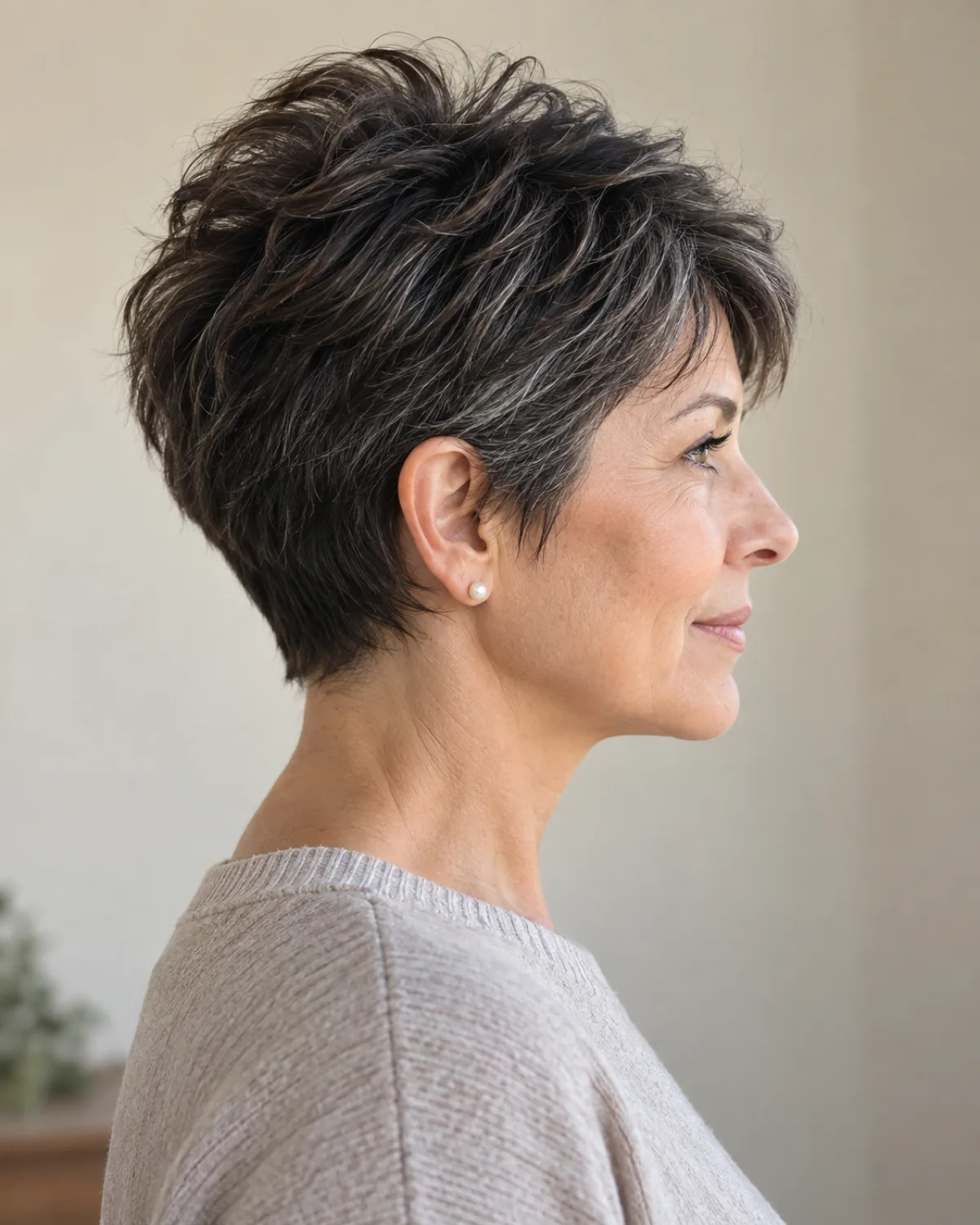
Short layers through the crown reduce bulk at the top while the tapered sides keep the silhouette narrow. The cut in the image shows how the layers create lift and texture at the crown without letting the sides puff outward. The taper at the ear and nape is close and clean.
- Works on most face shapes because the proportions stay compact
- Skip if the hair is thick and wavy because the layers will spring upward and the shape bloats within a week
- Ask the stylist to taper the sides with a clipper rather than scissors for a closer, longer-lasting line
- The crown layers need direction, so a thirty-second finger-style with a light hold product sets them for the day
2. Textured Bob at Jaw Length
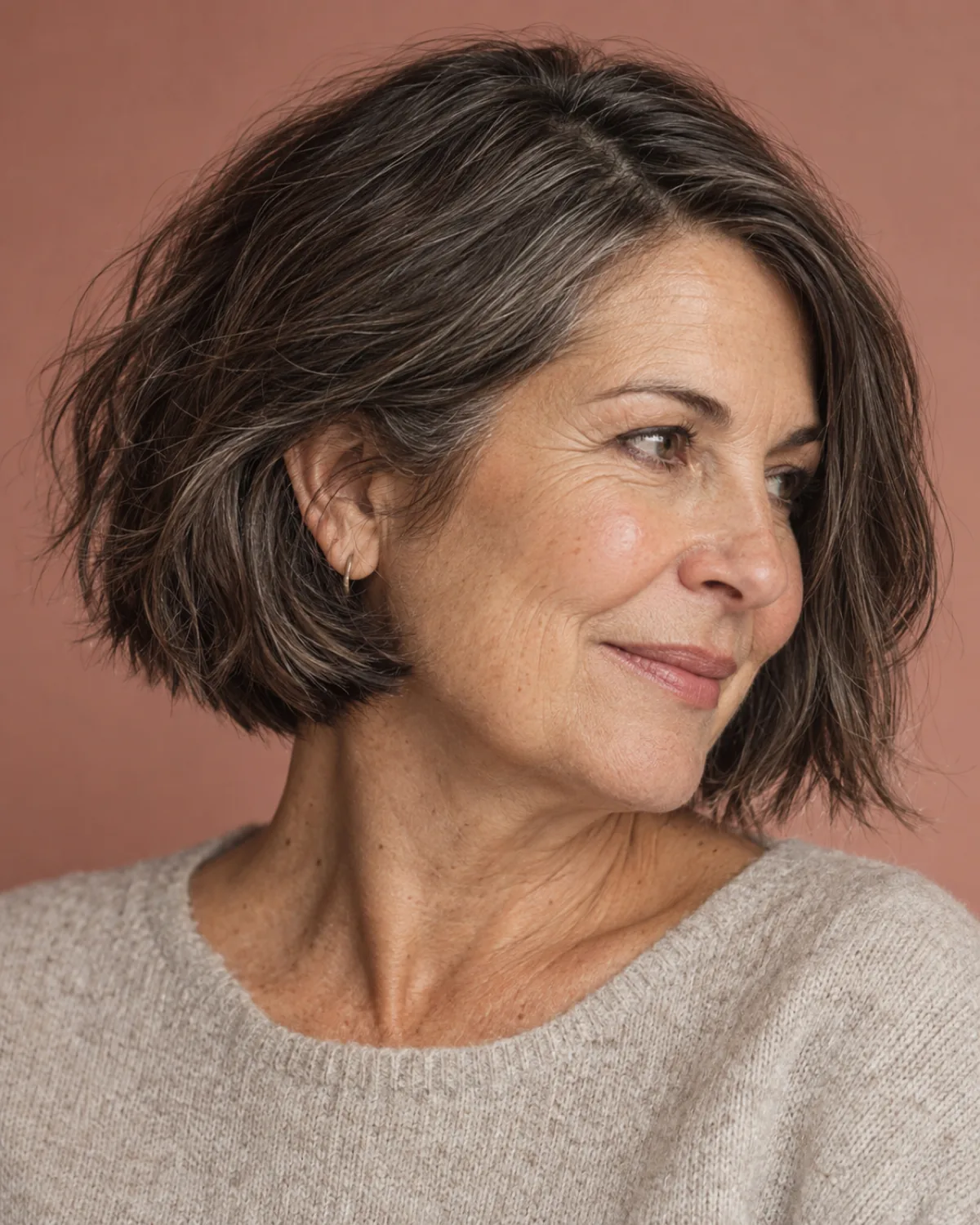
The workhorse of thick-hair short cuts. A classic bob cut with internal texturing — point-cutting or razor — to thin the bulk from inside. The image shows the slight swing in the ends where the texturing allows the hair to move instead of sitting as a solid block.
- Depends on whether the stylist actually textures the interior, because a blunt bob on thick hair turns into a helmet
- The jaw-length line frames the face without requiring layers that remove weight at the wrong places
- Ask specifically for point-cutting through the interior, not just the ends, so the bulk is removed evenly
- Works well with a side part to shift the weight line and create asymmetry
3. Undercut Bob
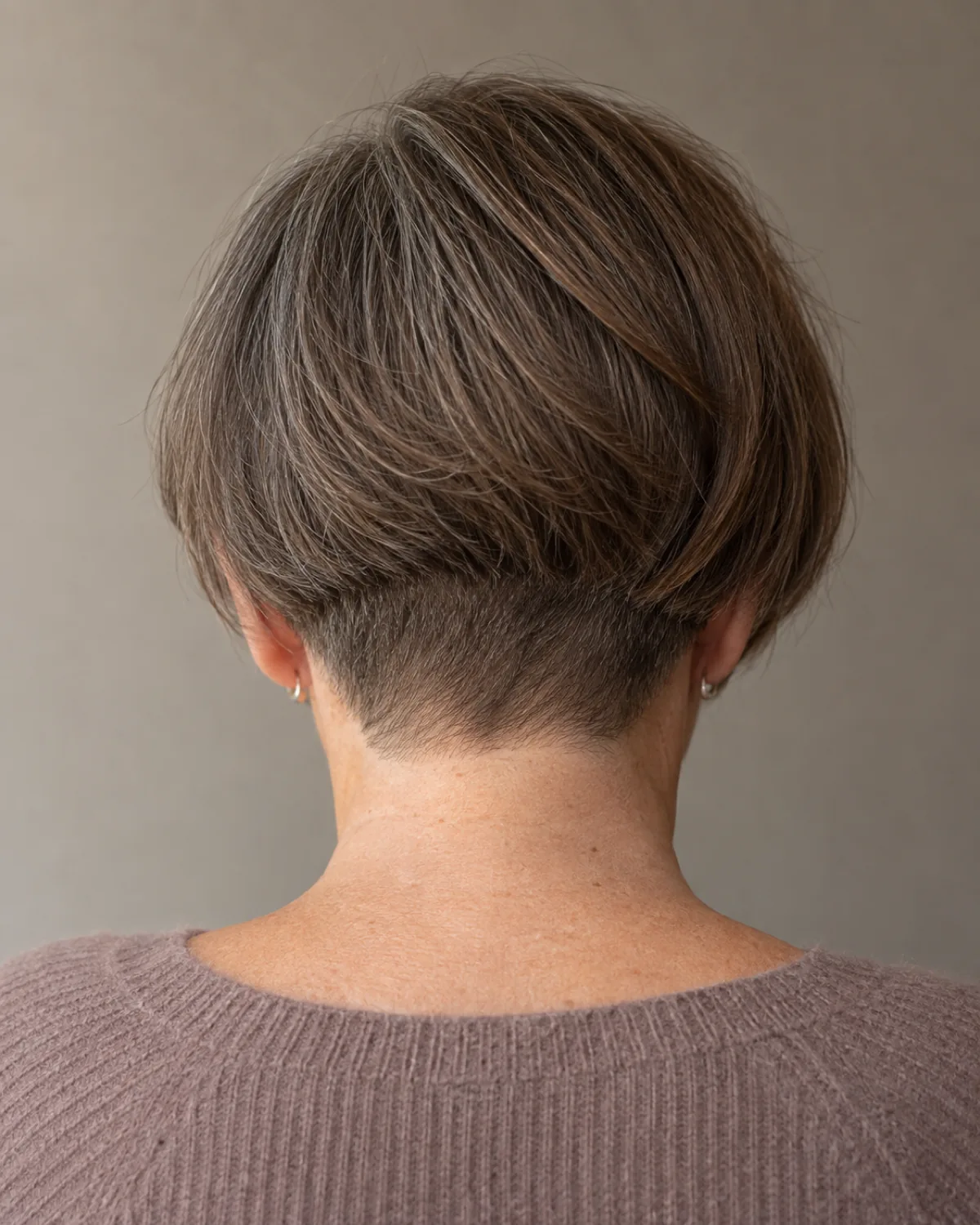
The undercut removes the most bulk of any cut on this list. The nape section is clippered short underneath while the top layer falls over it — the eye sees a normal bob, the neck feels noticeably lighter. The image shows the clean line where the top layer ends and the clippered section begins.
- Works if you are willing to maintain it every five to six weeks because the grow-out stage reads messy
- Skip if you stretch appointments to ten or more weeks
- The undercut is invisible when the hair is down, which makes it a practical option for professional settings
- Tell the stylist how high you want the undercut to reach. A low undercut at the nape only removes moderate bulk, while a higher one removes more but is harder to hide
Where to start
Find your situation, skip ahead
Your thick hair is straight or only slightly wavy and you want the most low-effort short cut
Start with a textured bob at jaw length. It manages weight internally and air-dries clean.
02 Textured Bob at Jaw Length06 Blunt Chin-Length Cut With Internal Layers04 Graduated Bob With Stacked Nape
Your thick hair has a real wave or curl and short cuts tend to puff out on you
A shaggy shape that works with the wave will outlast a structured cut that fights it.
09 Shaggy Pixie With Razored Ends11 Cropped Shag With Curtain Bangs01 Layered Pixie With Tapered Sides
You want a dramatic sculptural short cut and you are willing to style it every morning
The disconnected pixie or side-swept pixie gives the most design control but the trade-off is daily work.
07 Disconnected Pixie05 Side-Swept Pixie With Long Fringe08 French Bob With Micro Bangs
4. Graduated Bob With Stacked Nape
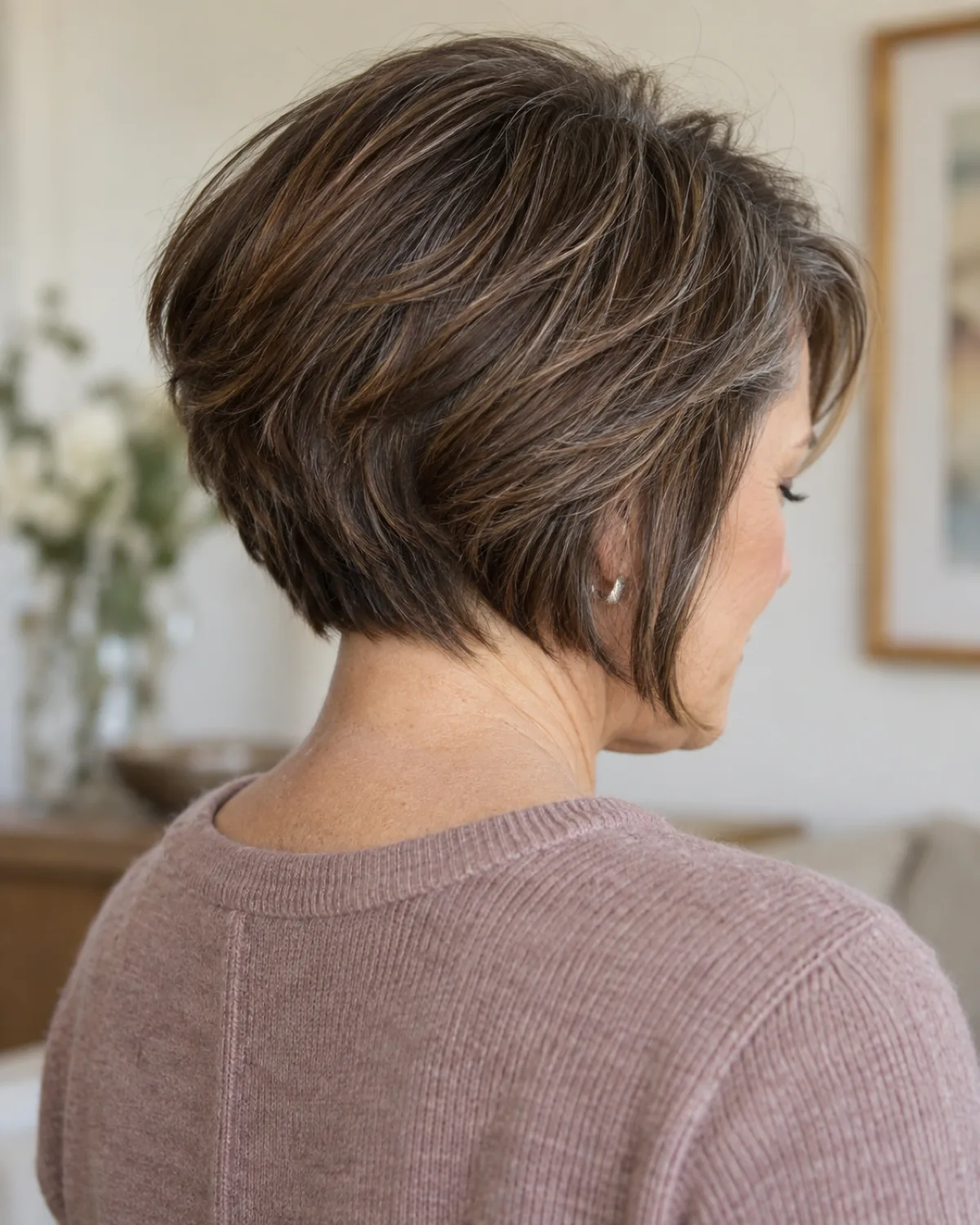
Graduation compresses layers at the nape so the hair fans outward mechanically. Thick hair turns into an asset here — the density fills the graduated shape without needing product. The stacked layers visible at the nape in the image show how the cut creates its own structure.
- One of the few shapes that turns thick-hair bulk into an advantage
- Depends on nape hair direction because a strong cowlick at the nape will push the graduation sideways
- Longer in the front, shorter in the back. The angle should be gradual, not dramatic, to avoid a dated look
- The stacked back holds its shape well between cuts, making this one of the lower-maintenance options
5. Side-Swept Pixie With Long Fringe
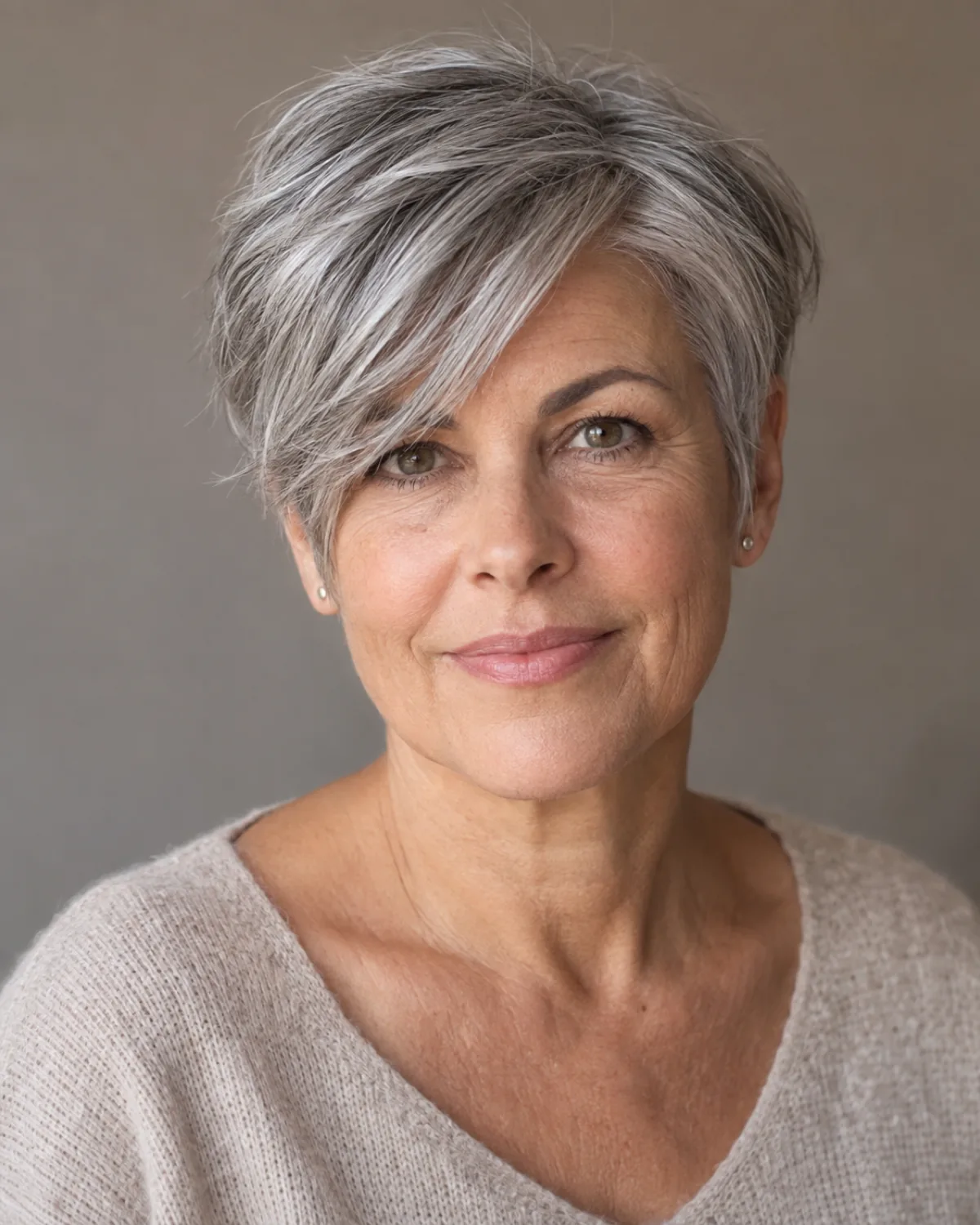
The asymmetry channels the bulk into a single design line rather than letting it spread evenly. The image shows the long fringe sweeping to one side, creating a diagonal that elongates a round or square face. The shorter temple on the opposite side keeps the silhouette balanced.
- Works well on round and square faces because the diagonal line elongates
- Skip on very long faces because the sweep adds more vertical length
- The fringe needs to be heavy enough to stay in place, so ask the stylist to keep it one solid piece, not thinned
- Maintenance is moderate: the fringe grows into the eyes within four weeks and will need a trim
6. Blunt Chin-Length Cut With Internal Layers

A blunt perimeter line with hidden layers inside to thin the shape. The cut reads polished and deliberate — the clean hemline visible in the image is what separates this from a textured bob. The internal layers are invisible but they allow the hair to settle instead of belling outward.
- The blunt line only holds if the hair is straight or mildly wavy. Anything curlier and the ends will splay
- The white streak at the temple adds visual interest without requiring colour work
- Ask the stylist to channel-cut the interior so the weight is removed between the top and bottom layers
- Pairs well with a deep side part to shift the mass and create the look of extra density on one side
7. Disconnected Pixie
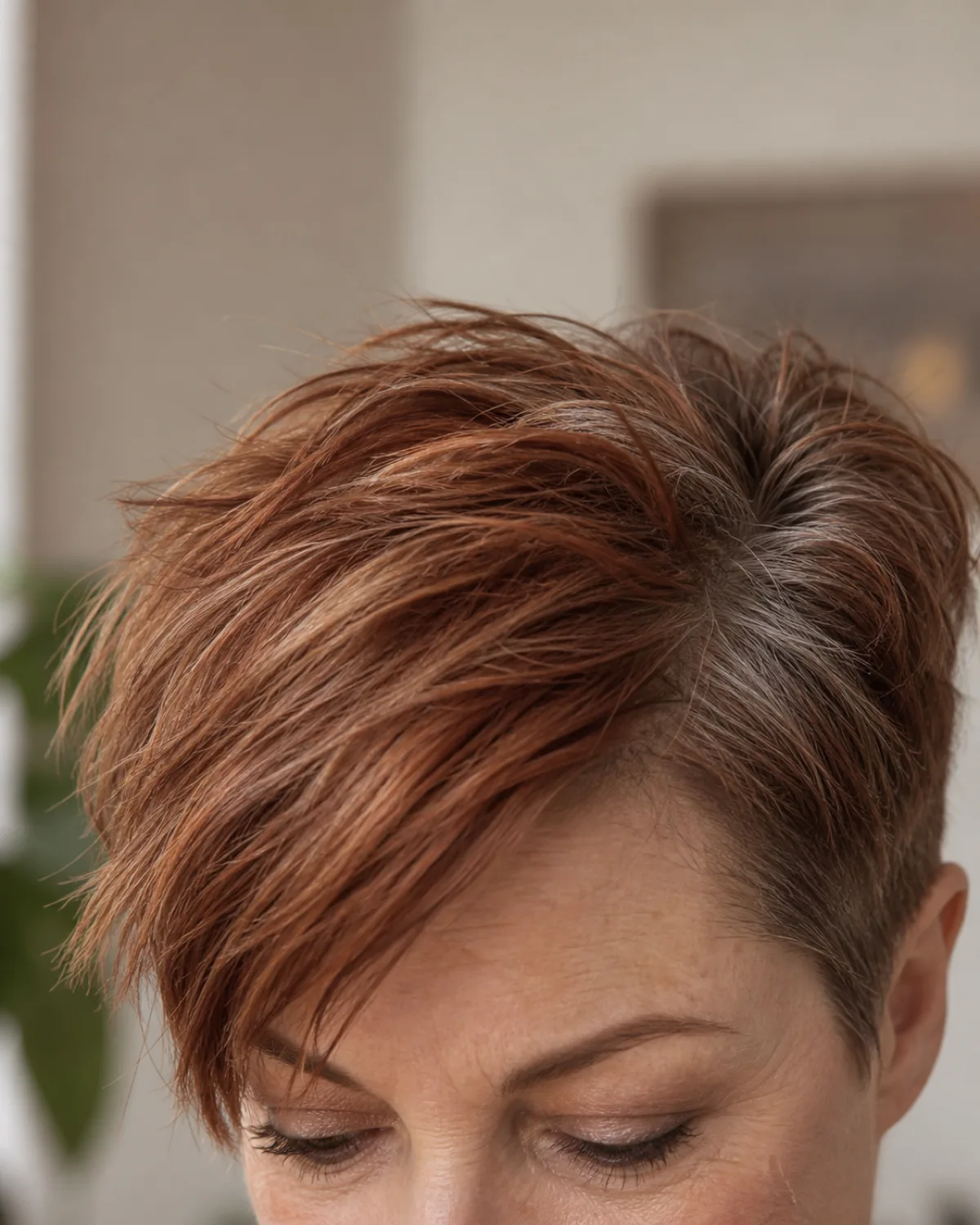
Longer on top, dramatically shorter at the sides and back. The image shows the disconnect clearly — the textured auburn top falls to one side while the sides are cut close enough to see the grey roots. This is the most sculptural option on the list.
- Depends on how much styling time you have because the long top needs direction every morning
- If the top falls flat the proportions collapse and the cut reads as a grown-out pixie rather than a design choice
- Thick hair is actually ideal for this cut because the density fills the long top section
- Tell the stylist exactly how dramatic you want the disconnect. A gentle version leaves two centimetres on the sides; a strong version goes to a grade two
8. French Bob With Micro Bangs

A chin-length bob with bangs cut above the eyebrow. The bangs reduce visual weight at the forehead and the short length keeps thick hair from overwhelming the frame. The rounded shape visible in the image is what thick hair does naturally in this cut — the density fills out the silhouette.
- Works if the forehead is average-to-tall
- Skip on a short forehead because the bangs will make the face look compressed
- The bangs need to be blunt and heavy on thick hair. Thinned bangs on thick hair split apart and show the forehead in patches
- This cut requires the least interior texturing because the short length and bangs naturally distribute the weight
9. Shaggy Pixie With Razored Ends
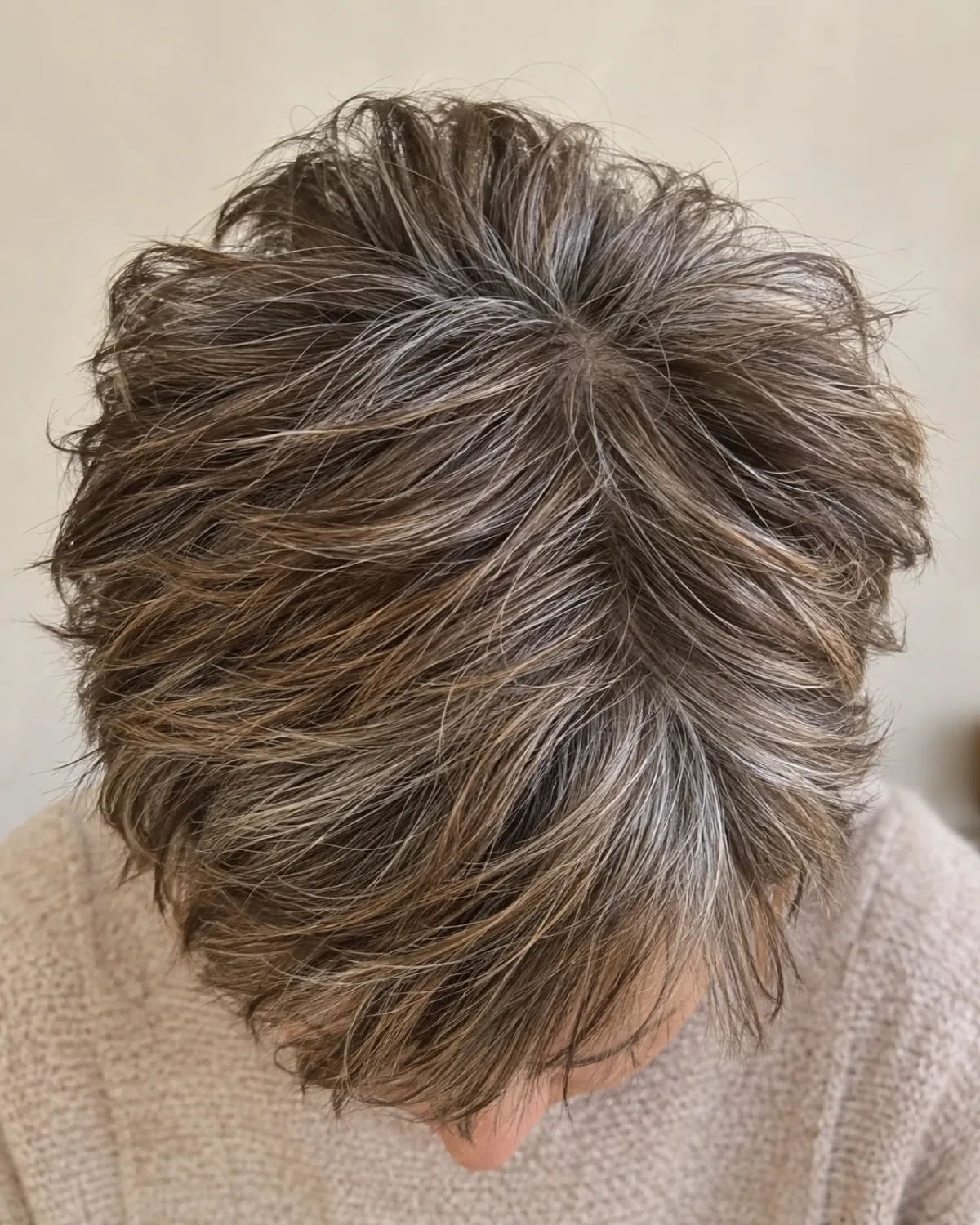
The most low-maintenance option on this list. The razored ends break up the dense thickness and the shaggy shape air-dries well because thick hair holds the choppy texture. The crown-down view in the image shows how the razored pieces separate naturally.
- Skip if you want a polished finish because this cut is meant to look undone
- Thick hair is the best texture for this cut because fine hair cannot hold the razored shape
- The grow-out is forgiving: the shaggy silhouette still works at six to eight weeks
- Ask the stylist to use a razor rather than point-cutting for this one because the softer edge gives the choppy ends their particular movement
10. Wedge Cut
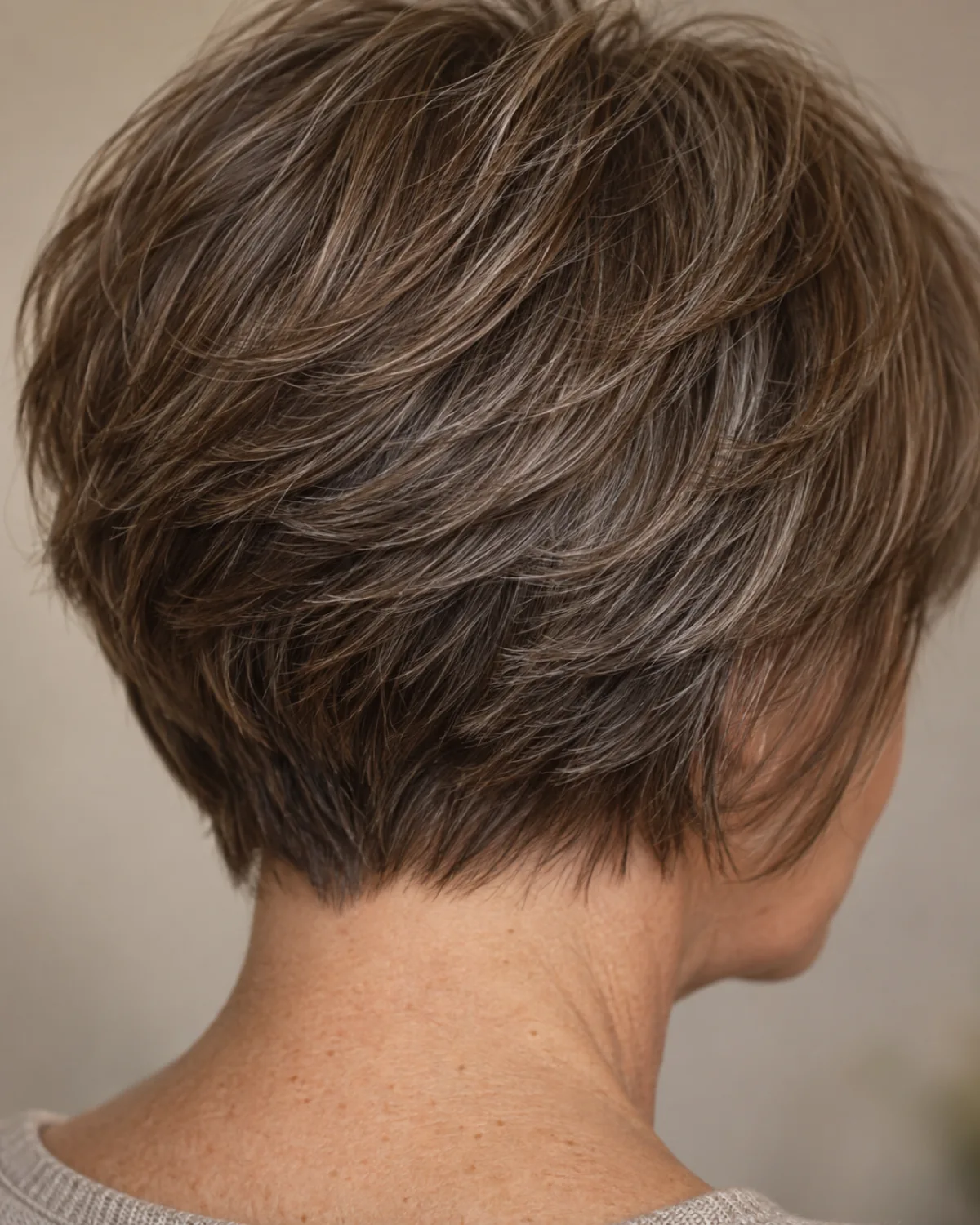
A retro shape with a strong angle from the back to the front. The wedge stacks layers aggressively at the back, which is exactly where thick hair needs the most relief. The nape detail in the image shows the layered stack fanning outward — each layer builds on the one below it.
- Works best on straight-to-slightly-wavy hair
- Very curly thick hair will turn the wedge into a mushroom — the stacked layers at the back will puff outward rather than lying in a controlled angle
- The strong geometric line makes this the most structured option on the list
- Ask the stylist to keep the angle moderate at first. You can always steepen it at the next visit
11. Cropped Shag With Curtain Bangs

The most forgiving shape for thick wavy hair. The heavy layering works with the wave instead of fighting it, and the curtain bangs frame the face without adding bulk at the forehead. The back view in the image shows the layers moving with the wave — the hair has natural body and the shape holds without effort.
- Depends on density at the temples: if the temples are very full, the curtain bangs add too much width
- The curtain bangs part at the centre and fall along the cheekbones, creating a frame rather than a fringe
- This is the longest cut on the list at jaw-to-ear-length, so it bridges the gap between pixie and medium-length cuts
- Thick wavy hair is the ideal texture: the layers have enough weight to fall correctly and enough wave to hold the shape between washes
Every cut here solves the same problem in a different place. Texturing thins the interior; graduation redirects the nape; razoring breaks up the ends; an undercut removes bulk nobody sees. Which one to choose depends on where your bulk sits and whether your hair goes straight or wavy. A stylist who understands interior weight removal will get you closer than any guide can.
Where the checkable claims come from
- Understanding Graduation and Layering — Sam Villa / Redken Education
- Face Shapes and Hairstyles — Pivot Point International
- Thick Hair: How to Care for and Style It — Philip Kingsley Trichological Clinic
- Point Cutting and Texturizing Techniques — L'Oréal Professionnel via SalonCentric
Keep this one
Save it for the appointment
Pin the image above to the board you actually open before a salon visit. This guide is written to be re-read, not read once.
Tonight, before you close this tab
- Pull your hair into a low ponytail and measure its circumference to confirm you are in the thick-hair camp
- Look at your hair one week after a fresh cut and check whether it still holds the shape or already puffs at the sides
- Write down two candidates from this list and bring both photos to your next appointment
- Ask the stylist whether they plan to texturize the interior or only cut the perimeter