How to Choose the Best Haircut for Thin Hair After 50
A judgment guide for choosing the right haircut when your hair is thin after 50. Where the thinning is, what length works, and what to tell your stylist.
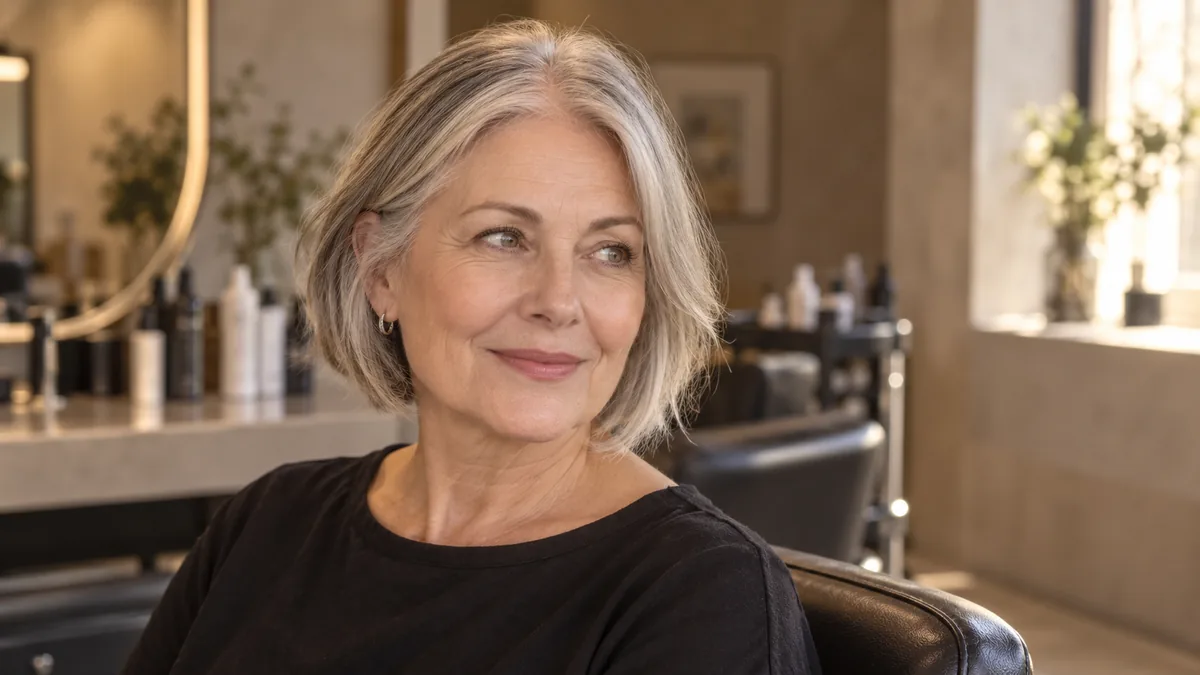
Booking an appointment soon? Save this page. It is easier to skim in the chair than to remember.
At a glance
Works
- Women whose thinning is concentrated in one area (crown, temples, or hairline) and who want a cut that compensates at that specific spot rather than a generic short style
- Anyone ready to choose between blunt and layered based on where their hair is actually thin, not based on what worked for someone else
- Readers with a realistic salon budget of every six to eight weeks who want a cut that holds its shape between visits
Depends
- Hair that is thin all over rather than in one spot. An all-over thin pattern limits length more strictly than localised thinning and may need a shorter baseline
- Very fine strands that fall below the minimum density for a bob hemline. These need a stylist assessment before committing to any chin-length or longer cut
Skip
- Women with medium to thick hair who just want a new style. This guide is designed around density limitations that do not apply to you
- Anyone experiencing sudden or patchy hair loss. That is a medical question, not a haircut question. See a dermatologist before changing your cut
Every list of thin-hair cuts starts the same way: go shorter, add layers, try a bob. The problem is not the cuts. It is that no list tells you which one fits your hair.
That depends on where your hair is thin. Crown thinning and end thinning need completely different cuts. This guide covers the judgment calls that come before you pick a style.
Read this first, then use what you learn to choose from the style lists that match your length.
Find Out Where Your Hair Is Thin

Most women describe their hair as thin without specifying where. But a stylist who hears "my hair is thin" without a location will default to their most common thin-hair cut, which may or may not address your actual pattern.
The four most common patterns after 50 each need a different structural fix. Crown thinning, where scalp shows through the part and top of the head, needs a cut that builds height and redirects the part. Temple thinning needs face-framing pieces that cover without looking heavy.
All-over thinning limits how long you can go before the ends look transparent. Hairline recession benefits from a soft fringe or forward-swept layers that disguise the retreating edge.
- Stand in front of a mirror under overhead light and look at where the scalp shows most
- Run your fingers from forehead to crown along the part. Note where the gap widens
- Pull your hair into a low ponytail and check the circumference. If it feels notably thinner than five years ago, that is all-over thinning rather than one localised spot
- Tell your stylist which of these four patterns you see. It is the single most useful piece of information you can bring to a consultation
The Length-Line Question
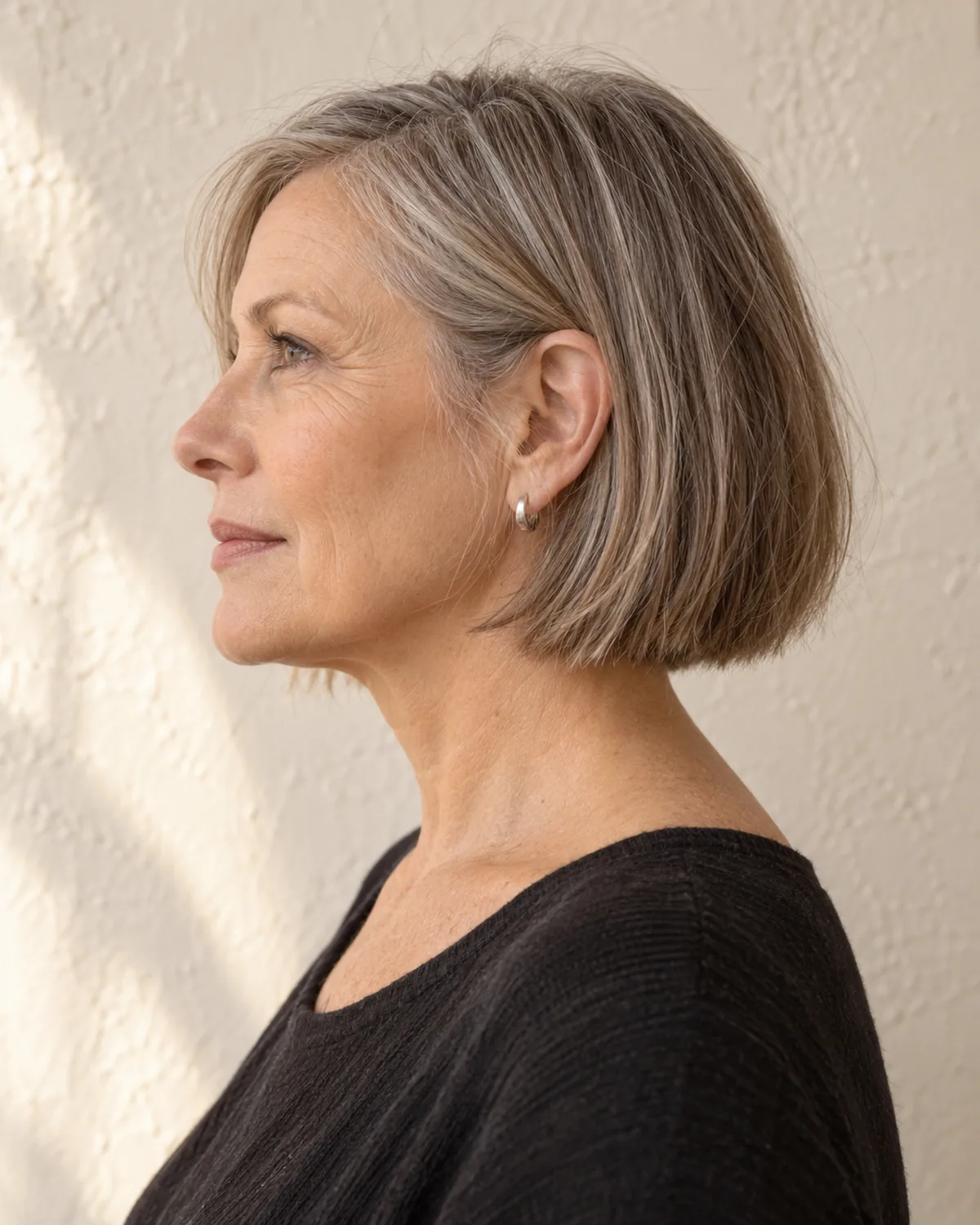
The point where hair ends on the body determines how thick it looks more than almost any other variable. This is because thin hair spreads out as it gets longer, and at some point the ends become transparent enough that the cut reads as wispy rather than deliberate.
For most thin hair, chin length is the density sweet spot. The strands have not yet spread far enough apart to look see-through, and the weight line at the jaw creates a clean visual edge.
Between chin and collarbone is a test: hold your hair at that length and check whether the ends still form a defined line or start to dissolve. Past the shoulders, thin hair almost always needs a one-length cut that sacrifices movement for a solid perimeter.
- Ask your stylist where your personal density threshold falls. This is the length below which your ends lose their defined edge
- If you want length, a blunt one-length cut preserves the most perimeter density. Layers at this length will thin the ends further
- The right length is not a fashion choice for thin hair. It is a structural decision that everything else depends on
Where to start
Find your situation, skip ahead
You are not sure where your hair is thinnest and every haircut list feels generic
Start with section one: the thinning pattern is the single most important input your stylist needs, and most women have never looked for it on purpose.
01 Find Out Where Your Hair Is Thin02 The Length-Line Question
Everyone tells you to get a bob but something about it feels wrong
A bob needs minimum density at its bottom edge. Check section four to see whether your hair clears that bar, and section five for a structural alternative.
04 Why the Classic Bob Fails Some Thin Hair05 Graduation and Stacking: Building Bulk Where It Counts
You want to spend as little time as possible on appointments and daily styling
Not every short cut is low-maintenance. Read section seven to match your trim budget to cuts that actually hold their shape on your schedule.
07 Maintenance Budget: Which Cuts Fall Apart First08 What to Say at the Appointment
Blunt Cut or Layers: The Trade-Off That Changes Everything
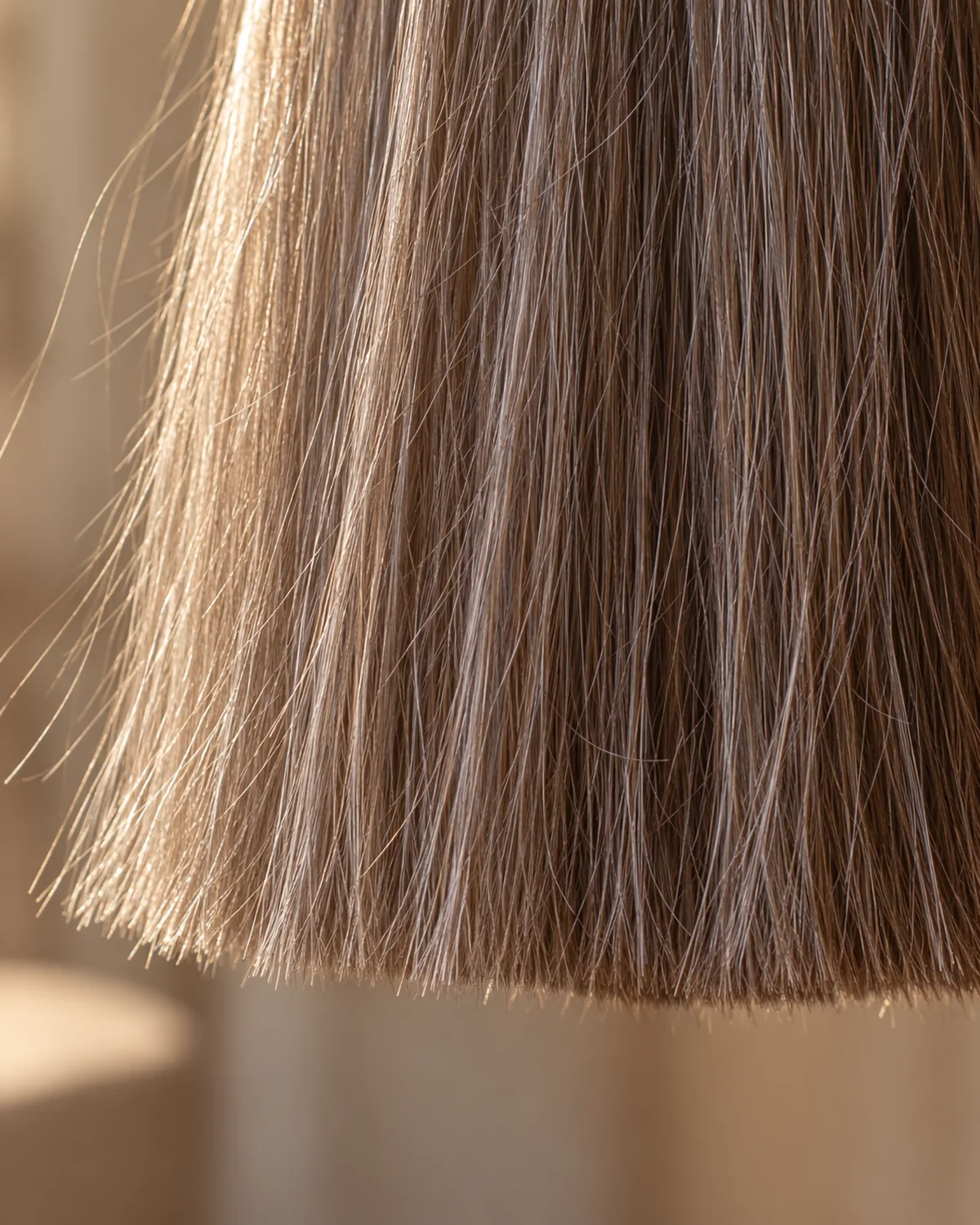
A blunt cut keeps every strand the same length, which maximises the density at the bottom edge. The hemline reads as a clean, deliberate line rather than a wispy fade. The trade-off is that a blunt cut on thin hair can look flat from the side, because there is no interior movement breaking up the silhouette.
Layers do the opposite. They remove weight from the interior, which creates the illusion of volume and movement. But each layer shortens some strands, which means fewer strands reach the bottom edge. On thin hair, the wrong layers can turn a passable hemline into one that looks see-through.
The judgment call depends on where your thinning is. If your ends are where density drops off, a blunt cut protects what you have. If your crown is flat and you have reasonable density at the ends, layers starting at the cheekbone or lower can add body on top without sacrificing the hemline. Layers that start too high on thin hair remove density where it is already scarce.
- Ask your stylist: "If you layer this, how many strands will still reach the bottom edge?" A good stylist can estimate this by feel
- Consider internal texturing as a middle ground. A stylist can use thinning shears or point cutting on the interior without shortening the visible perimeter
- Skip if your density is low all over. A blunt cut with a shorter length will almost always serve you better than layers on length your hair cannot support
Why the Classic Bob Fails Some Thin Hair
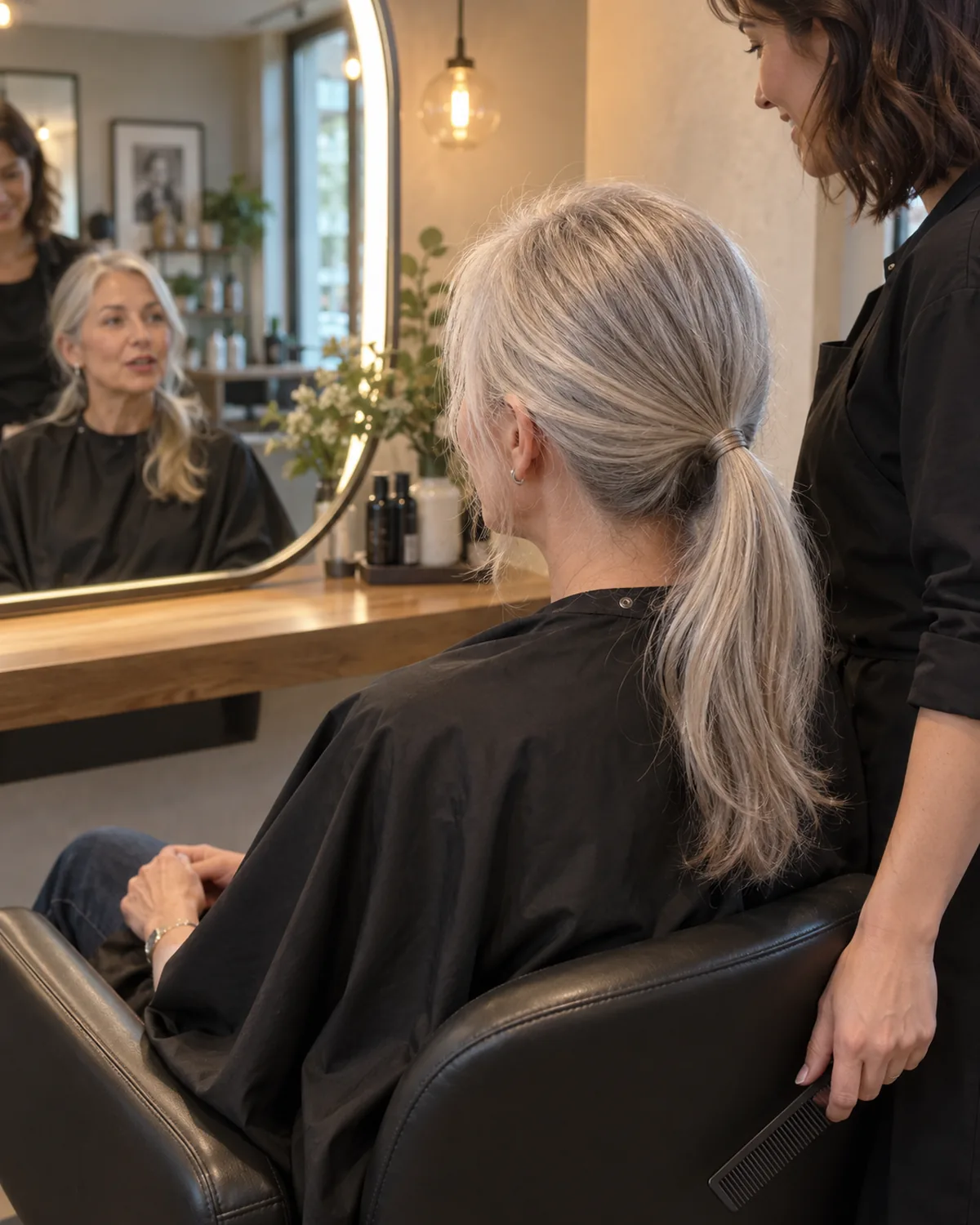
The bob is the most recommended cut for thin hair, and for good reason. It keeps all the strands at a length where they still overlap enough to look full. But a bob has a structural requirement that not all thin hair meets: the bottom edge needs enough density to form a solid line. If the hair at jaw level is too sparse, the hemline will look ragged no matter how well the cut is executed.
The test is simple. Gather your hair at chin length and look at the bottom edge in a mirror. If you can see distinct gaps between clusters of strands, the bob will show those gaps as its permanent hemline. If the edge forms a reasonably continuous line, even if it is not thick, the bob will work.
- A bob that passes the edge-density test is one of the strongest cuts for thin hair. It concentrates your full strand count into a short length where every strand contributes to visual thickness
- A bob that fails the test can sometimes be rescued by cutting it shorter. An ear-length bob requires less bottom-edge density than a chin-length one
- If the bob fails at every length, a graduated bob (next section) or a pixie may be a better structural fit
Graduation and Stacking: Building Bulk Where It Counts
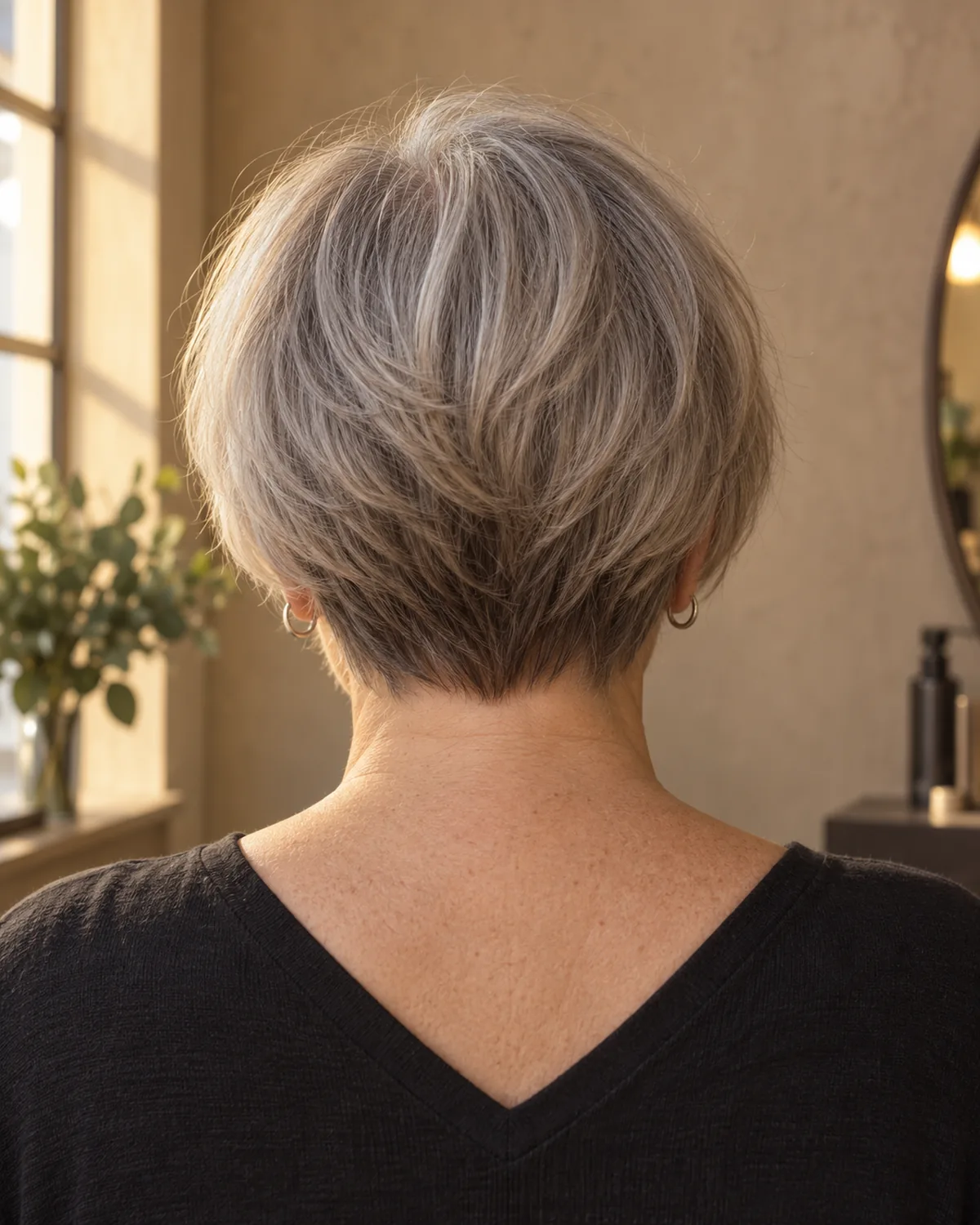
Graduation is a cutting technique where the hair gets progressively shorter toward the nape, stacking layers on top of each other. The result is a rounded, full-looking shape at the back of the head, even when the individual strands are fine or thin. It works because each shorter layer pushes the layer above it outward, creating bulk through structure rather than through strand thickness.
This is a different tool from the long layers discussed in section three. Graduation builds volume at the back and bottom; long layers create movement through the mid-lengths and top. For thin hair, graduation solves a specific problem: the flat, see-through nape that makes the back of a one-length bob look sparse.
- A graduated bob combines the density protection of a bob hemline with engineered volume at the nape. It is worth asking your stylist about if a classic bob passes the front test but looks flat at the back
- Graduation works best on hair that is chin length or shorter. Longer graduated cuts need enough hair weight to hold the stacked shape, which thin hair often lacks
- The maintenance trade-off is real: a graduated cut needs reshaping every six weeks to keep the stacking precise, compared to eight or more for a one-length bob
What Reference Photos Actually Tell Your Stylist
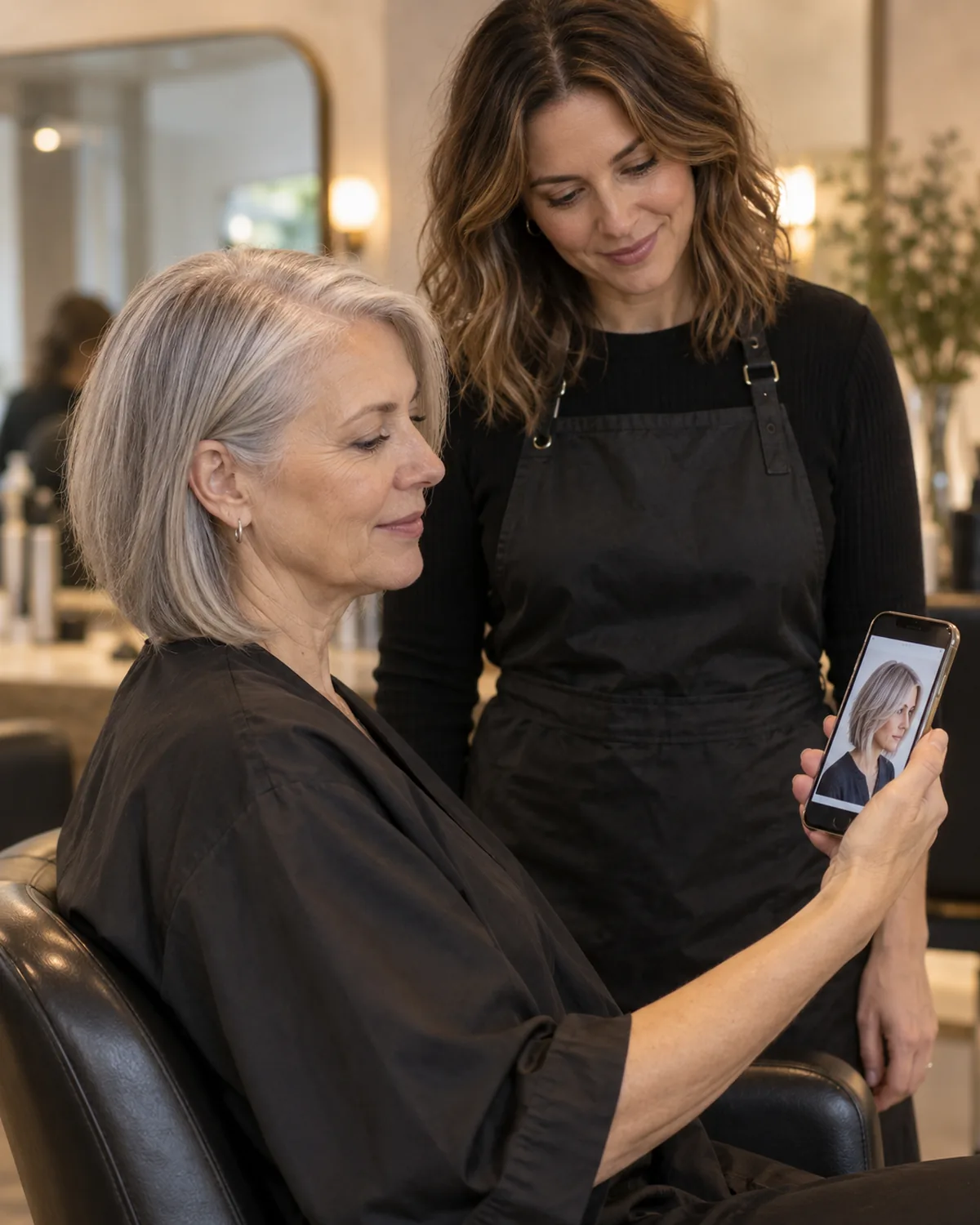
A reference photo of a thick-haired model tells your stylist what shape you want. But it does not tell them how to achieve that shape with your density, and the gap between those two things is where most disappointment starts.
The most useful reference photo shows a woman whose hair thickness looks similar to yours. The cut in that photo was designed for that density, so your stylist can replicate the technique rather than improvise.
When the reference hair is dramatically thicker than yours, the stylist has to modify the cut. The result will look different from the photo no matter how skilled they are.
- Search for "thin hair" or "fine hair" before the style name when looking for references. The results will show cuts that were designed for your density
- Bring one photo for length and one for texture or shape. More than three photos forces your stylist to pick which one to prioritise, and they may not choose the one you care about most
- Point to the specific feature you like: "I want the length to land here" or "I like how the layers frame the jaw." Saying "I want this" without specifying the feature leaves too much open to interpretation
- If you found a style list on this site that helped you narrow your choices, save the specific image you liked and bring it to the appointment
Maintenance Budget: Which Cuts Fall Apart First

Thin hair exposes overgrowth faster than thick hair because there is less material to disguise where the shape starts to lose its precision. A cut that looks intentional at four weeks may look grown-out at six, while the same cut on thicker hair would still hold.
Pixie cuts and short graduated bobs are the most precision-dependent. They need reshaping every four to six weeks because the ear line, nape line, and crown shape all drift as the hair grows.
A chin-length blunt bob is more forgiving: the hemline stays clean for eight to ten weeks. A one-length cut past the chin needs only a trim every ten to twelve weeks.
- Match the cut to your salon schedule, not the other way around. If you can only visit every eight weeks, a pixie will spend half its life looking grown-out
- Ask your stylist: "How will this cut look at week six without a trim?" The answer will tell you whether the cut fits your maintenance budget
- If you want a low-maintenance option, start with the trim cadence and let that narrow the field before you choose a shape
What to Say at the Appointment
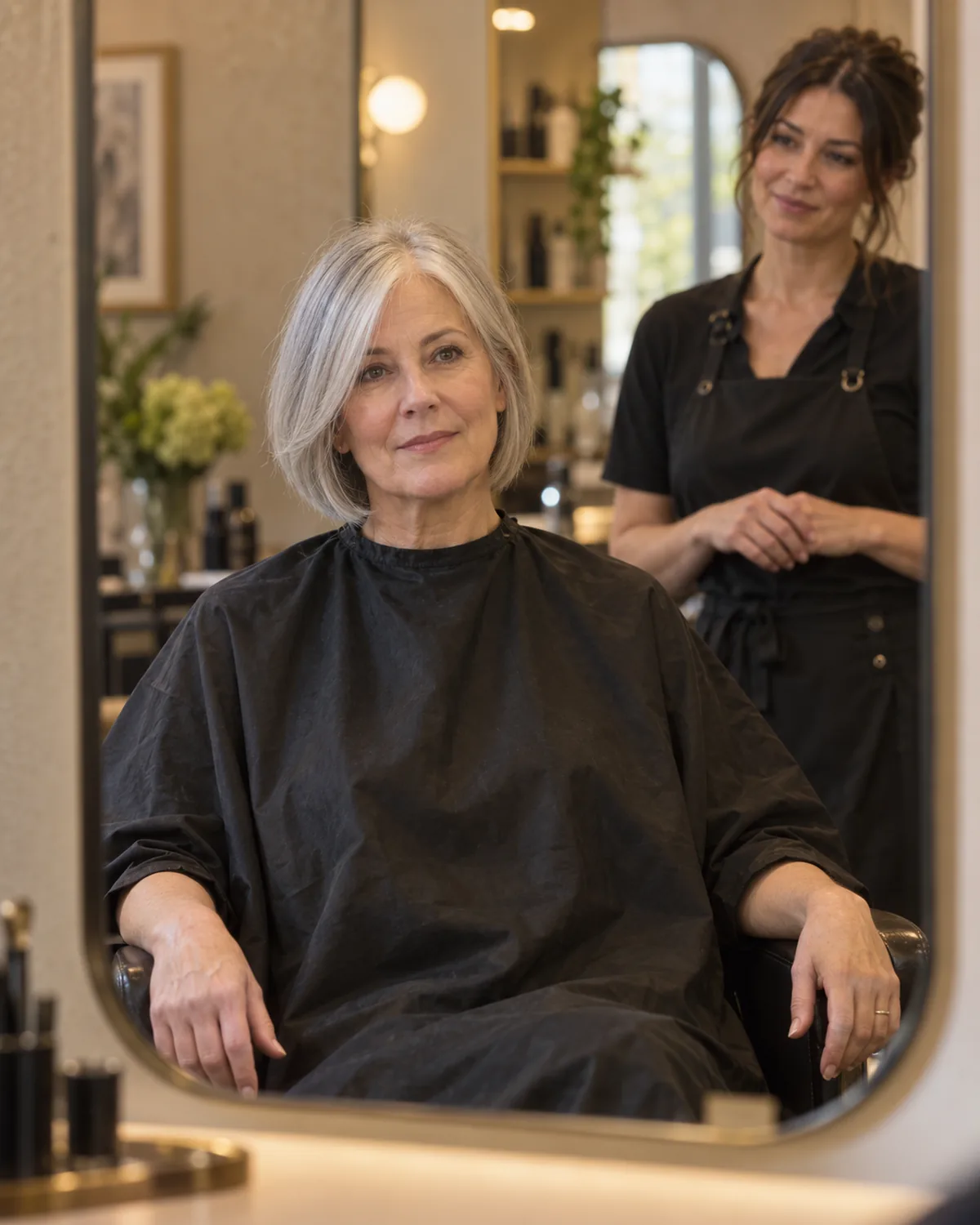
A ten-second opening statement gives your stylist more to work with than a twenty-minute conversation that wanders. Three facts, stated upfront, set the foundation for every decision that follows.
First, say where your hair is thin. "My crown shows scalp through the part" or "my ends get see-through past my collarbone." Most clients never volunteer this.
Second, say where you want the length to end using a body landmark. "I want the ends at my chin" removes every ambiguity. Third, say how many minutes you spend on your hair each morning. A number beats the word "easy."
- After your three facts, ask two questions back: "How often will I need to come back to keep this shape?" and "What will this look like at week six without a trim?" The answers will confirm whether the cut fits your life, not just your face
- If you are choosing between two cuts, ask your stylist which one works better with the thinning pattern you described. A stylist who can see and feel your hair in person outranks anything written here
- Write your three facts and two questions on your phone before you arrive. Reading them out loud takes ten seconds and prevents the most common source of salon disappointment: leaving without having said the thing that mattered most
Thin Hair Haircut FAQ
These are the questions that come up most often when choosing a cut for thin hair after 50. Each answer draws on the judgment framework in the sections above.
Is a pixie always the best option for very thin hair?
No. A pixie maximises perceived density by keeping all strands short, but it demands the most frequent maintenance. If your hair is thin at the crown, a pixie can make that area more visible, because there is less length to redirect over the thin spot. A chin-length blunt bob or a short graduated bob may serve you better.
Can layers make thin hair look even thinner?
Yes, if they start too high or remove too much length. Layers that begin above the ears on all-over thin hair will reduce the strand count at the hemline to a point where the bottom edge looks see-through. Layers work well on thin hair only when they start below the point where density is sufficient and when the stylist preserves enough strands at the full length to maintain a solid perimeter.
Should I avoid growing my hair past my shoulders?
It depends on your density threshold. Some thin hair holds a clean edge past the shoulders with a blunt one-length cut. Most, however, starts to look transparent past the collarbone. The test from section two — gathering the hair at the target length and checking whether the bottom edge forms a continuous line — works at any length.
How do I know if my hair is thin or just fine?
Fine describes the diameter of each strand. Thin describes the total number of strands. You can have fine hair that is dense (many thin strands) or coarse hair that is sparse (fewer thick strands).
The practical difference: fine-but-dense hair supports most styles. Thin hair, regardless of strand diameter, needs the structural considerations in this guide. If you see scalp through your hair in normal overhead light, your hair is thin.
What if my stylist recommends something different from what I researched?
Listen. A stylist who can see and feel your hair has information no article can replicate. Ask them to explain why, and check whether their reasoning accounts for the thinning pattern you described.
If it does, their recommendation is worth trying. If they did not address your concern, say it again. The best outcome combines your informed preference with their professional assessment.
Where the checkable claims come from
- The Best Haircuts for Thin Hair, According to Hairstylists — Allure
- How to Choose the Right Haircut for Thinning Hair — American Academy of Dermatology Association
- What to Ask Your Hairdresser When You Have Fine or Thinning Hair — Good Housekeeping
Keep this one
Save it for the appointment
Pin the image above to the board you actually open before a salon visit. This guide is written to be re-read, not read once.
Tonight, before you close this tab
- Stand at a mirror and find where your hair is thinnest: crown, temples, bottom edge, or everywhere
- Hold a finger at your chin, collarbone, and shoulder. Note which length your hair still looks full at
- Count how often you realistically visit the salon. The answer rules out some cuts before you look at photos
- Save two reference photos of women whose hair density looks close to yours, not just women whose cut you like