12 Easy Work Hairstyles for Medium Hair Over 50 That Stay Put All Day
Twelve work hairstyles for medium hair over 50, judged by one standard: does it still look intentional at four in the afternoon without a midday mirror check?

Booking an appointment soon? Save this page. It is easier to skim in the chair than to remember.
At a glance
Works
- A low chignon on medium-thick hair because the twist holds all day without pins and sits flat against any chair back
- A soft blowout with inward ends on hair that holds a set because the shape stays polished for eight hours without restyling
- A layered lob with face-framing pieces on most face shapes because the layers do the styling and the cut carries itself to the end of the day
Depends
- Side-swept waves only if the hair has some natural texture — straight fine hair loses the wave by midday and reads limp rather than swept
- A sleek low ponytail only if the face is not very long or narrow — the pulled-back line can emphasise length rather than frame it
- A French twist only if hair density is medium to thick — fine hair slips out of the roll and needs too many pins to hold through a meeting
Skip
- A messy-neat bun at the crown on very thin or fine hair because gathering it high exposes thinning and the bun reads sparse rather than intentional
- A smooth centre-part bob at exact chin length on wide round faces because the horizontal line at the jaw adds width instead of framing
- A blowout on hair that will not hold a set because it falls flat within two hours and reads neglected rather than polished by afternoon
Medium hair at work means chin to just past the shoulders. Long enough to pin up, short enough to wear down without it falling into everything.
The problem is not finding something that looks good at eight in the morning. The problem is finding something that still looks good at four.
These twelve styles answer that question. Each one is judged on hold, speed, and whether it reads professional without requiring a salon visit the night before.
1. Low Chignon With a Side Part

A twist at the nape held with one elastic. No pins, no bobby pins sliding out during a meeting. The side part keeps it from looking severe, and the whole thing sits flat against a chair back without pulling or pushing out of shape.
- Works on medium-thick to thick hair that has enough bulk to hold a twist
- If your hair is fine, twist tighter and use a thin elastic wrapped twice
- Bring a photo of the finished chignon you want when asking your stylist about length
- This is the one style here that looks better on second-day hair than freshly washed
2. Soft Blowout With Inward Ends

Smooth, bouncy, ends curving slightly inward at the collarbone. This is the style that reads polished without anyone being able to point to why. The inward curve gives the ends a finished line instead of a blunt chop.
- Best on hair that holds a round-brush set, so test it once before committing
- Fine hair that goes flat by noon will need a lightweight hold spray at the roots
- The inward curve matters: flipped-out ends read casual, inward reads office
- Ask your stylist whether your ends are blunt enough to hold the curve or if they need a slight bevel
3. Half-Up Twist
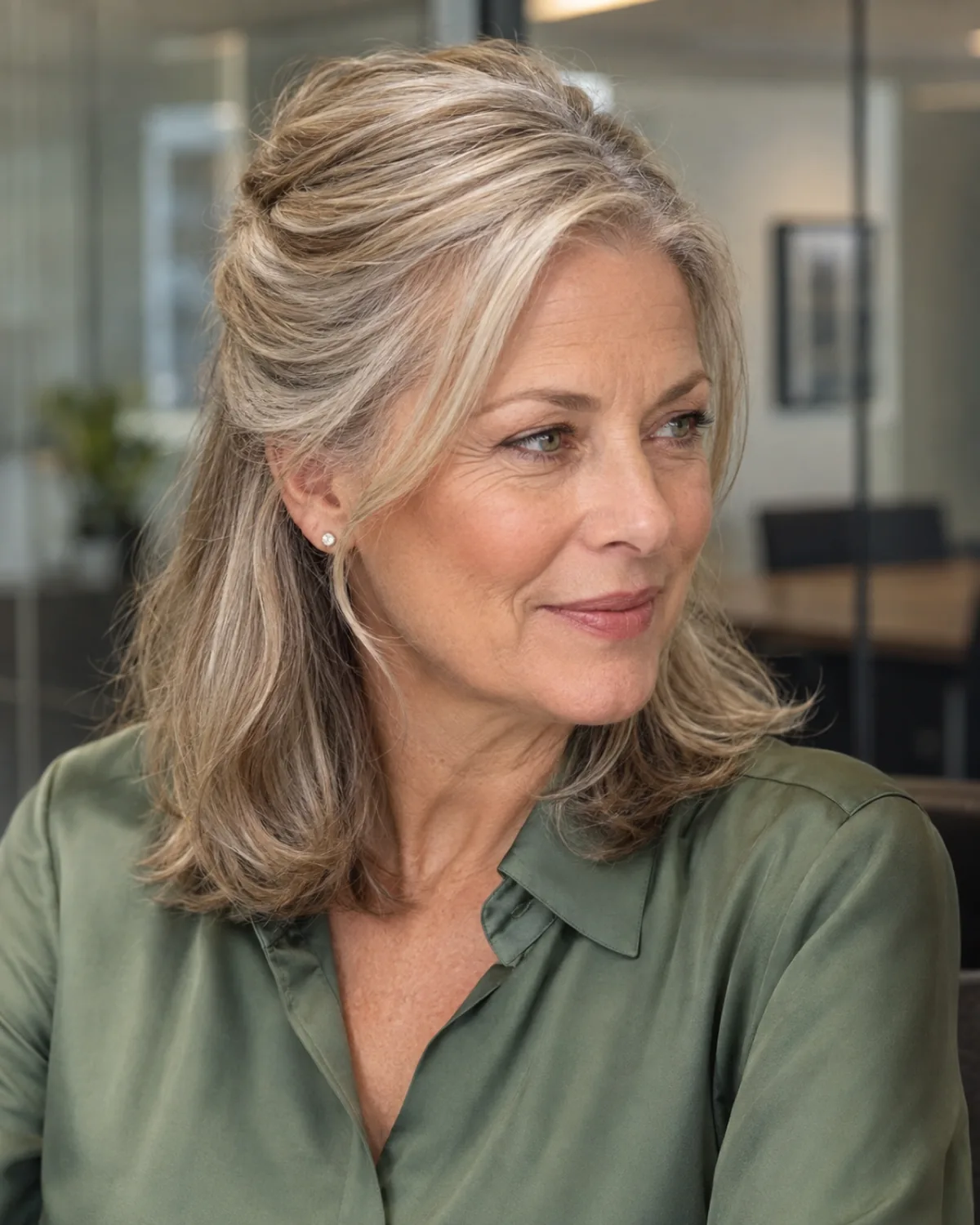
The front sections twisted back and pinned at the crown. The twist adds volume where fine hair needs it most — right at the top of the head — while keeping the rest out of your face and off your collar.
- One of the best options for fine hair because the twist creates the illusion of crown volume
- Use a single flat clip rather than bobby pins because it holds better and looks intentional
- The remaining length falls naturally, so the cut does the work from here
- Works well with glasses because it clears the temple area
Where to start
Find your situation, skip ahead
Your hair is fine and you need a style that lasts the full workday without restyling
A half-up twist or a low chignon both hold on fine hair because neither relies on volume to look intentional.
You want to look polished but spend less than five minutes in the morning
A layered lob or a low loop bun are set-and-forget — the lob if your cut is recent, the bun if it is not.
Your workplace leans creative and you can push the formality line
A messy-neat bun at the crown or pinned-back fringe with loose lengths both read intentional without being stiff.
10 Messy-Neat Bun at the Crown11 Pinned-Back Fringe With Loose Lengths
4. Sleek Low Ponytail
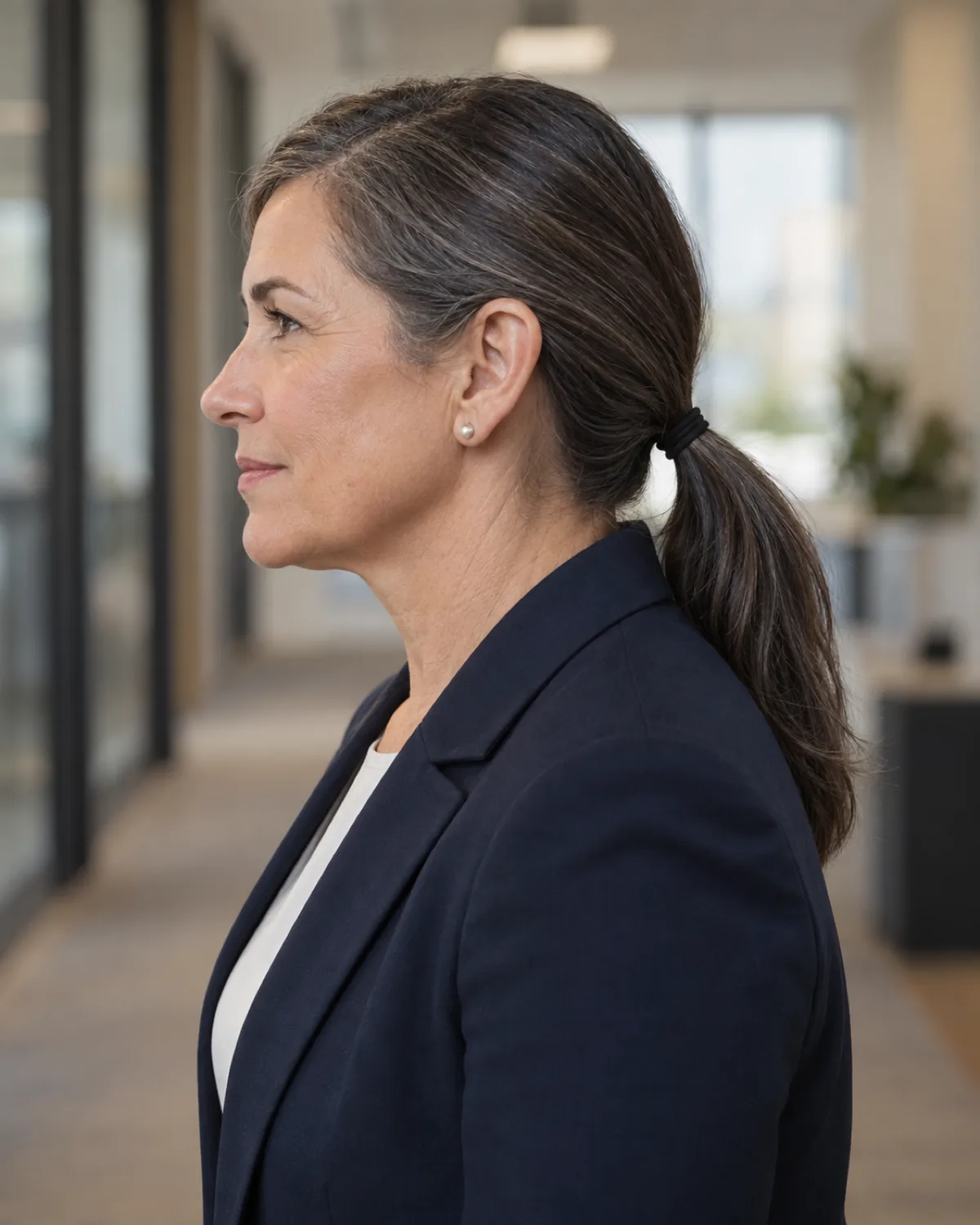
Brushed back, elastic at the nape, ends left natural. The most reversible professional style — you can pull it out and wear it down in thirty seconds. But the face shape question matters here. A pulled-back ponytail elongates a round face, which is often a good thing. On a long or narrow face, the severity can emphasise the length instead of framing it.
- If your face is round, this will elongate it, which is usually flattering
- If your face is long or narrow, leave a few pieces loose at the temples to soften the line
- Smooth the flyaways with a clean mascara wand rather than gel, which can flake by afternoon
- The lower the elastic sits, the less tension on the hairline
5. Textured Bob With Tucked Ends

A layered bob where the ends tuck slightly under on their own. No heat required if the cut is right — the layers do the work. This is the style that looks the same at four as it did at eight because the shape is built into the haircut rather than imposed on top of it.
- The tuck comes from the cut, not from styling. Ask your stylist for an internal layer that encourages the ends inward
- Works best on medium-density to thick hair where the ends have enough weight to hold position
- Fine hair needs the layers placed carefully to avoid the ends separating and looking thin
- If the tuck disappears in humidity, the cut may need adjusting rather than more product
6. Side-Swept Waves
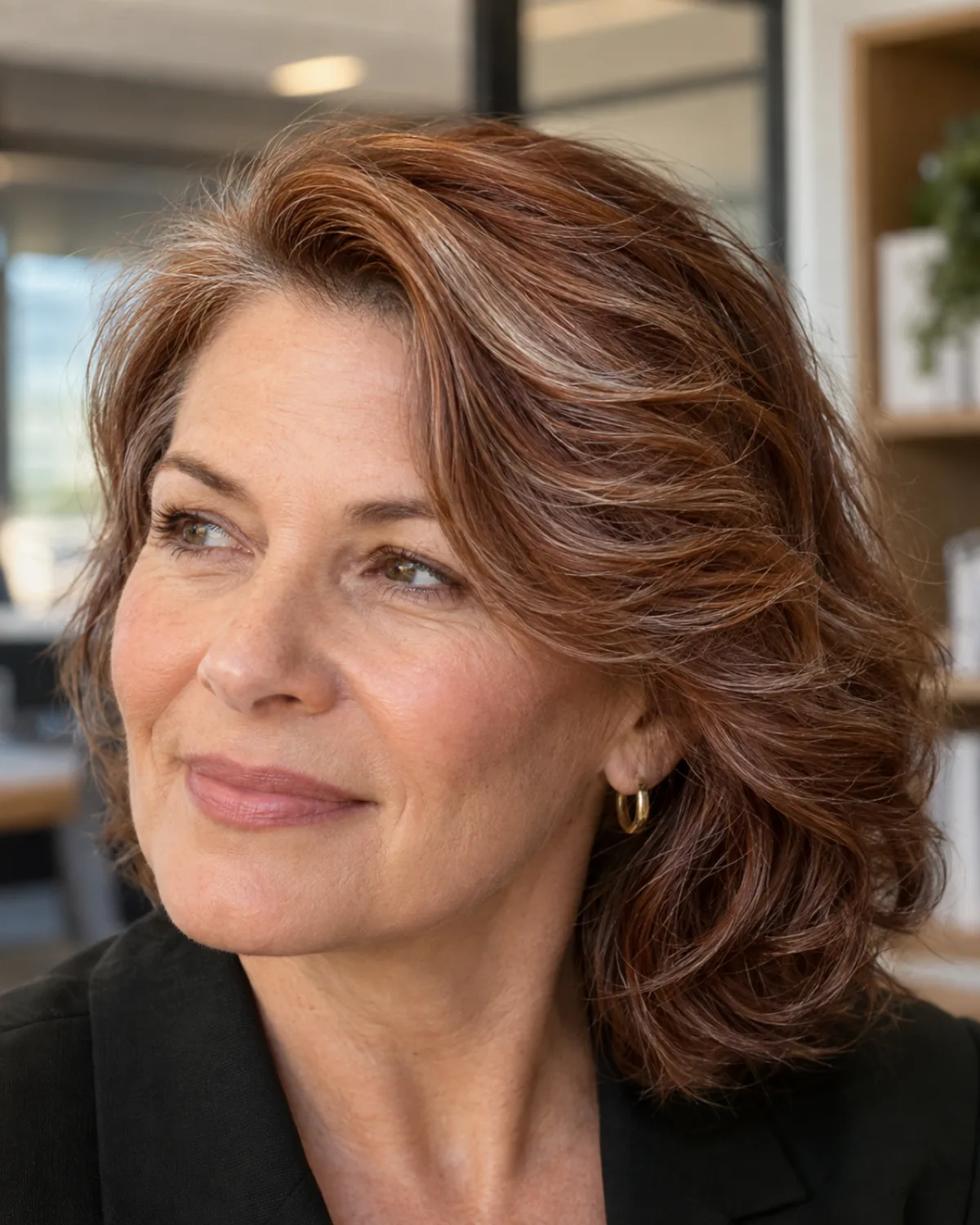
Loose, brushed-out waves swept from a side part to one side. This reads approachable rather than formal — the kind of style that works in a meeting and a lunch afterward without changing anything. The wave pattern here is open and relaxed, not ringlet-tight.
- The wave holds best on hair with some natural texture — wavy or coarse hair is ideal
- Straight fine hair can achieve this with a large-barrel tool, but it may not last the full day
- The side part does most of the work: it creates the sweep and adds asymmetry
- If the wave drops by afternoon, the remaining sweep still reads intentional
7. French Twist
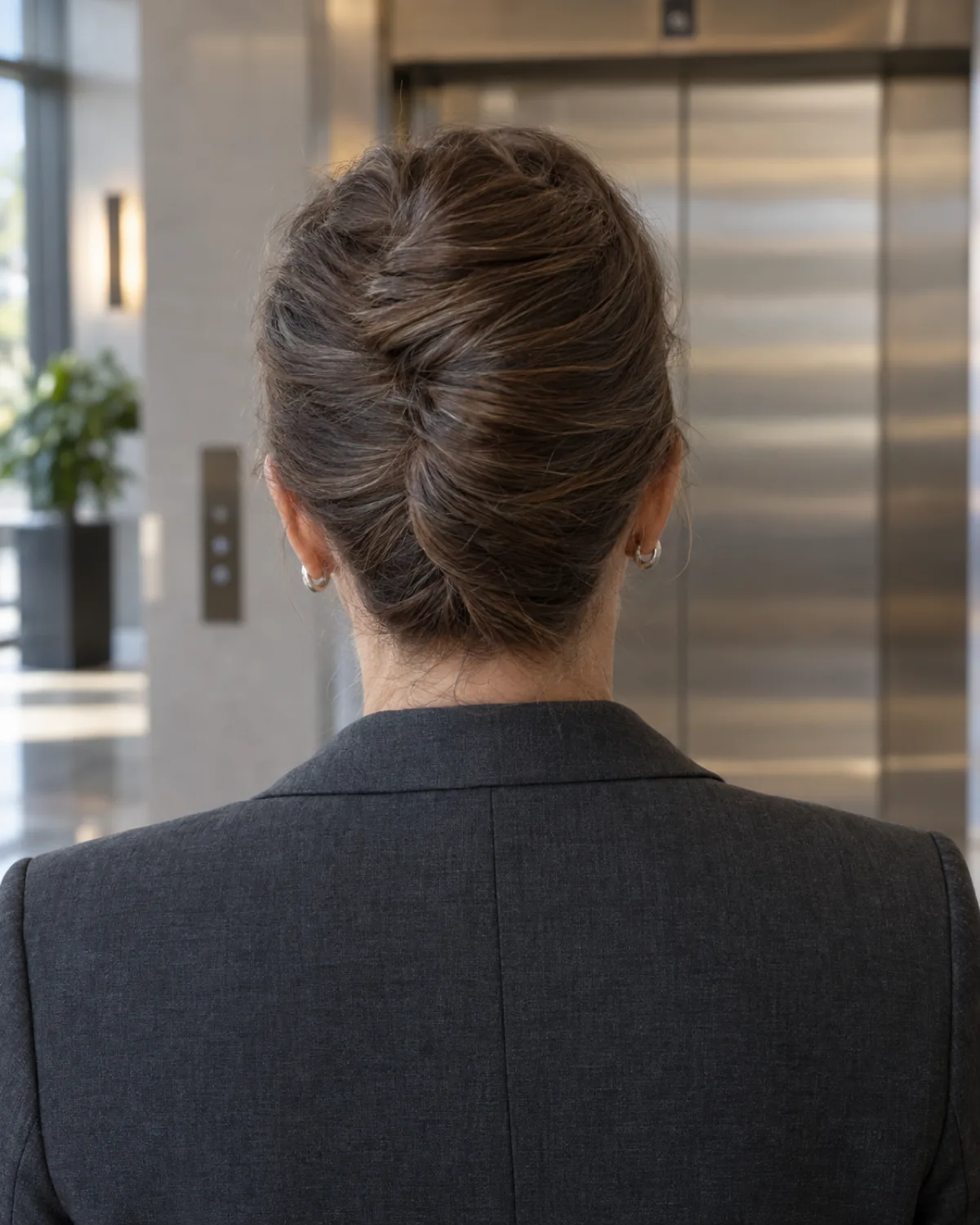
A classic vertical roll pinned at the back of the head. This is the most formal option in this guide, but in the right workplace it reads everyday-sharp rather than event-special. The roll structure is smooth and centred, with the hair swept upward from the nape.
- Requires medium to thick hair — fine hair slips out of the roll and needs too many pins
- If your hair is on the thinner side, a spin pin holds better than bobby pins for this shape
- The twist looks best when the nape is clean, so trim timing matters
- Ask your stylist how much length you need to hold the roll — too short and it unravels by lunch
8. Layered Lob With Face-Framing Pieces
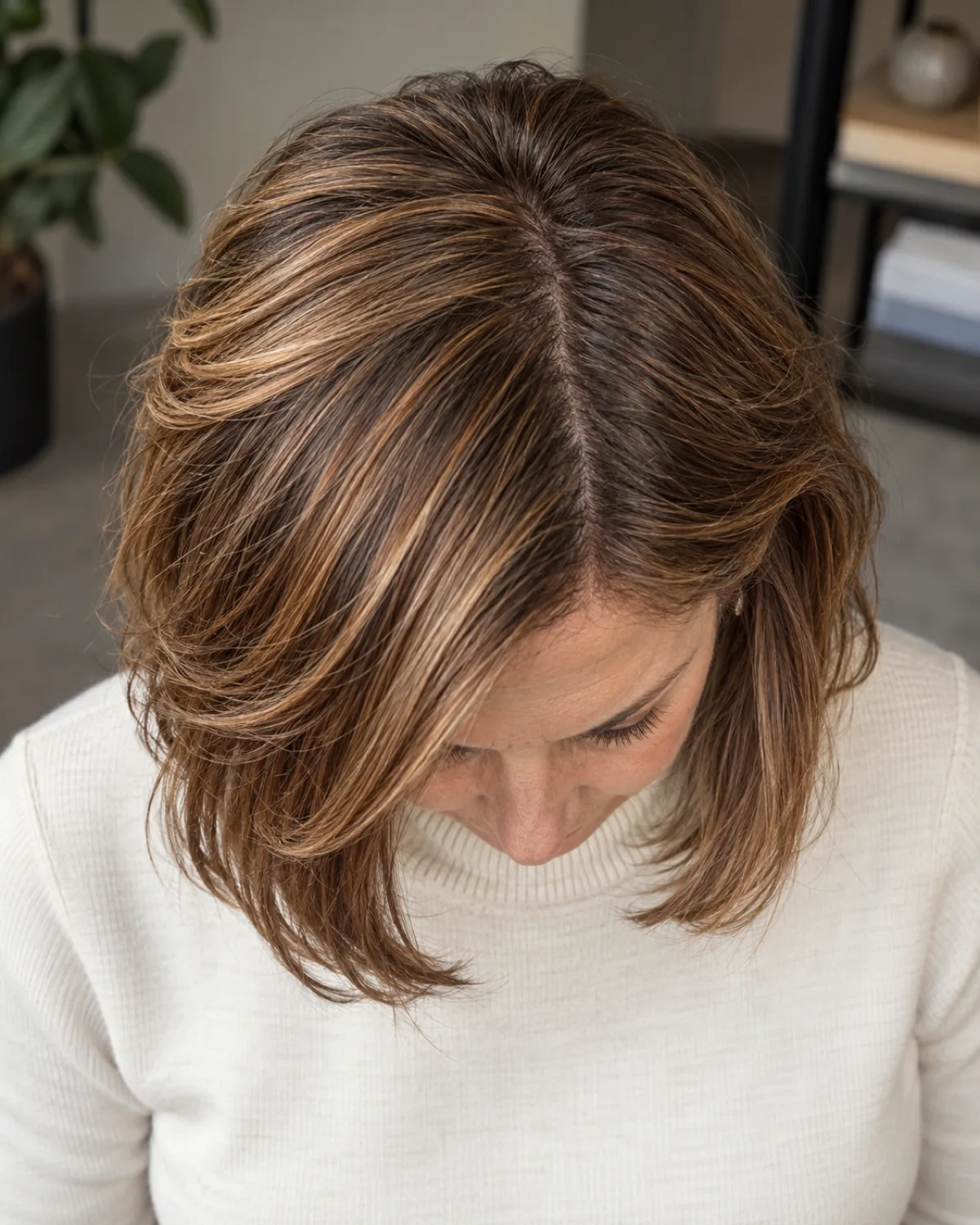
A collarbone-length lob with layers that frame the jawline. Once the cut is right, this style carries itself. The layers add movement without bulk, and the face-framing pieces draw the eye inward. From above, the layering creates a shape that moves with you.
- One of the lowest-maintenance options here — the cut does all the work
- Round faces benefit from the length sitting below the jaw rather than at it
- Ask your stylist to keep the longest face-framing layer at jaw level, not above it
- This cut grows out well, which means fewer trim visits than most updos require
9. Smooth Centre-Part Bob
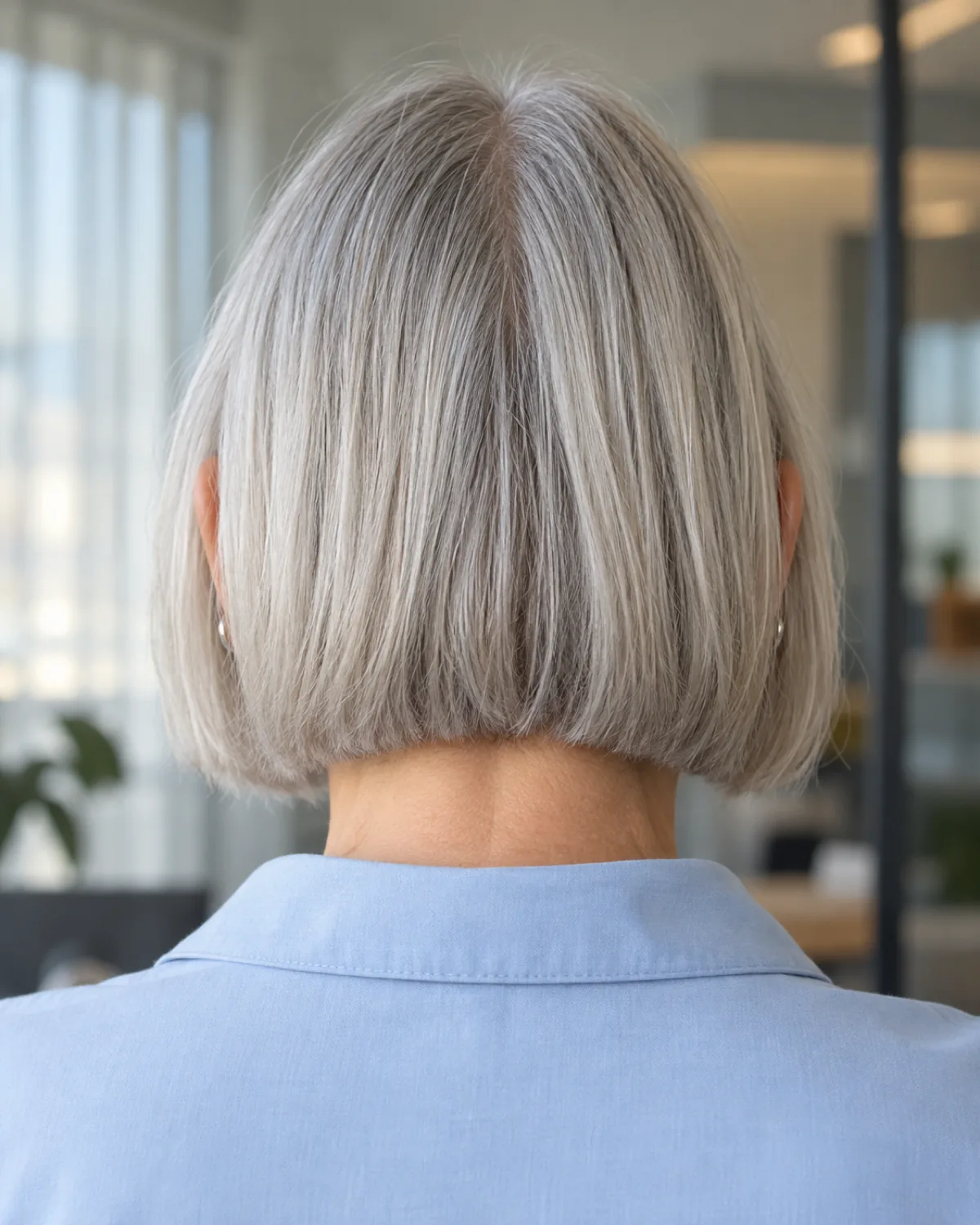
Chin-length, centre-parted, ends blunt. Clean and modern. The blunt line at the chin gives this bob a deliberate finish that reads professional in any setting. From the back, the ends sit evenly across the nape with no layering to manage.
- Suits oval and heart-shaped faces best because the symmetry of the centre part needs a balanced face structure
- On a wide round face, this exact chin length can add width — consider dropping the length an inch below the jaw
- The blunt ends require trimming every five to six weeks to keep the line sharp
- Silver and platinum hair looks particularly clean in this shape because the colour is uniform through the ends
10. Messy-Neat Bun at the Crown
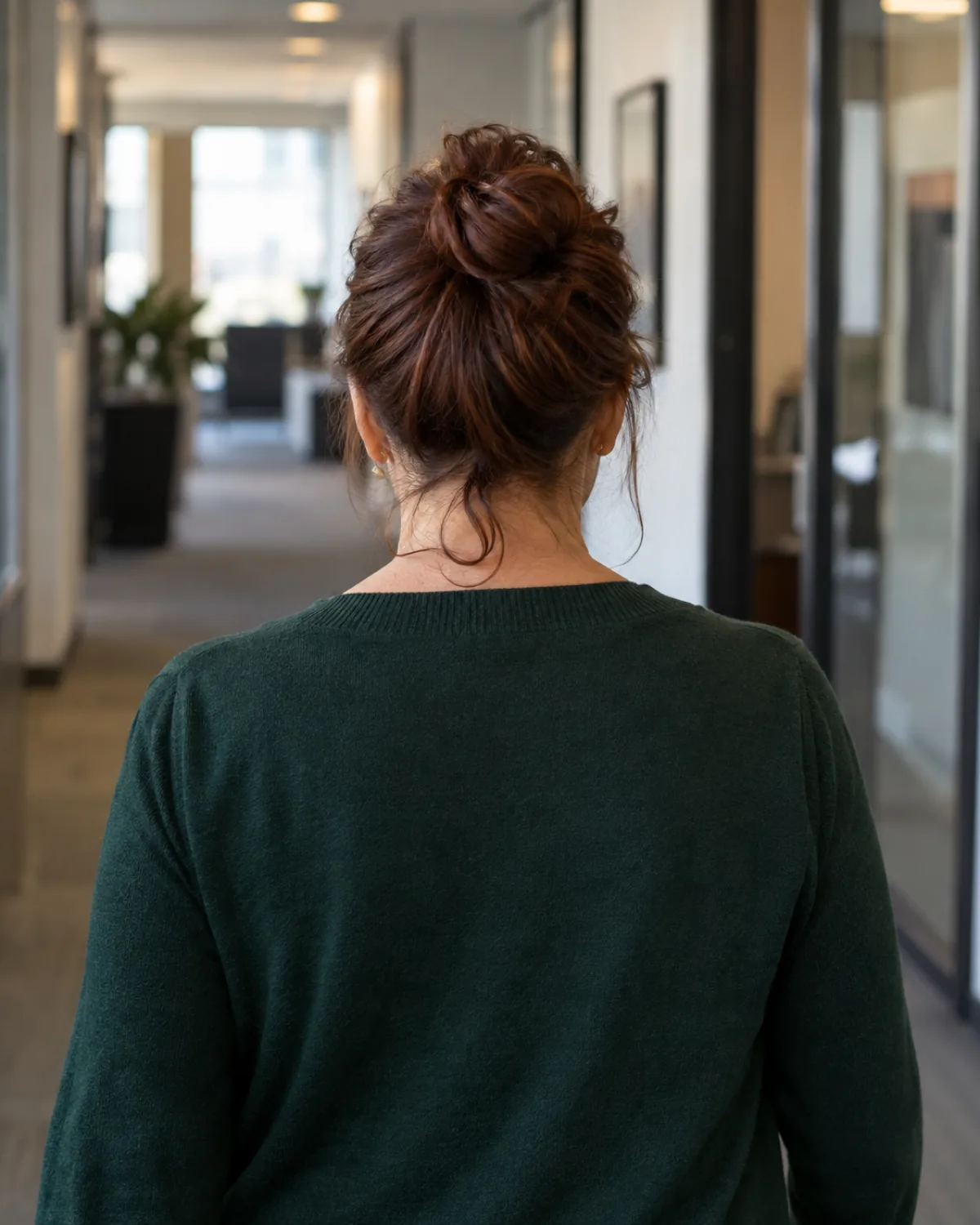
Gathered at the mid-crown, intentionally imperfect. A few strands fall at the nape, and the bun itself is not perfectly round. This reads creative-professional rather than corporate. The key is that the imperfection looks deliberate — a few specific strands pulled out, not a collapsing updo.
- Works best on medium to thick hair that has enough bulk to fill the bun shape
- Thin or fine hair gathered this high shows scalp and the bun looks sparse
- Pull two or three specific strands at the nape and temples before you leave the house
- If your workplace leans formal, drop the bun to the nape — same principle, different register
11. Pinned-Back Fringe With Loose Lengths

The front section is clipped to one side with a small tortoiseshell clip while the rest hangs naturally. This is practical more than decorative — it keeps hair out of your eyes during screen work and meetings without committing to a full updo.
- Ideal during a fringe grow-out when the length is too long to sit as bangs but too short to tuck behind the ear
- The clip should be small and flat — large claw clips read casual for most workplaces
- Works on every hair texture because the clip does the holding, not the hair
- If you wear bangs, this is the fastest way to get them out of your face for a focused afternoon
12. Low Loop Bun
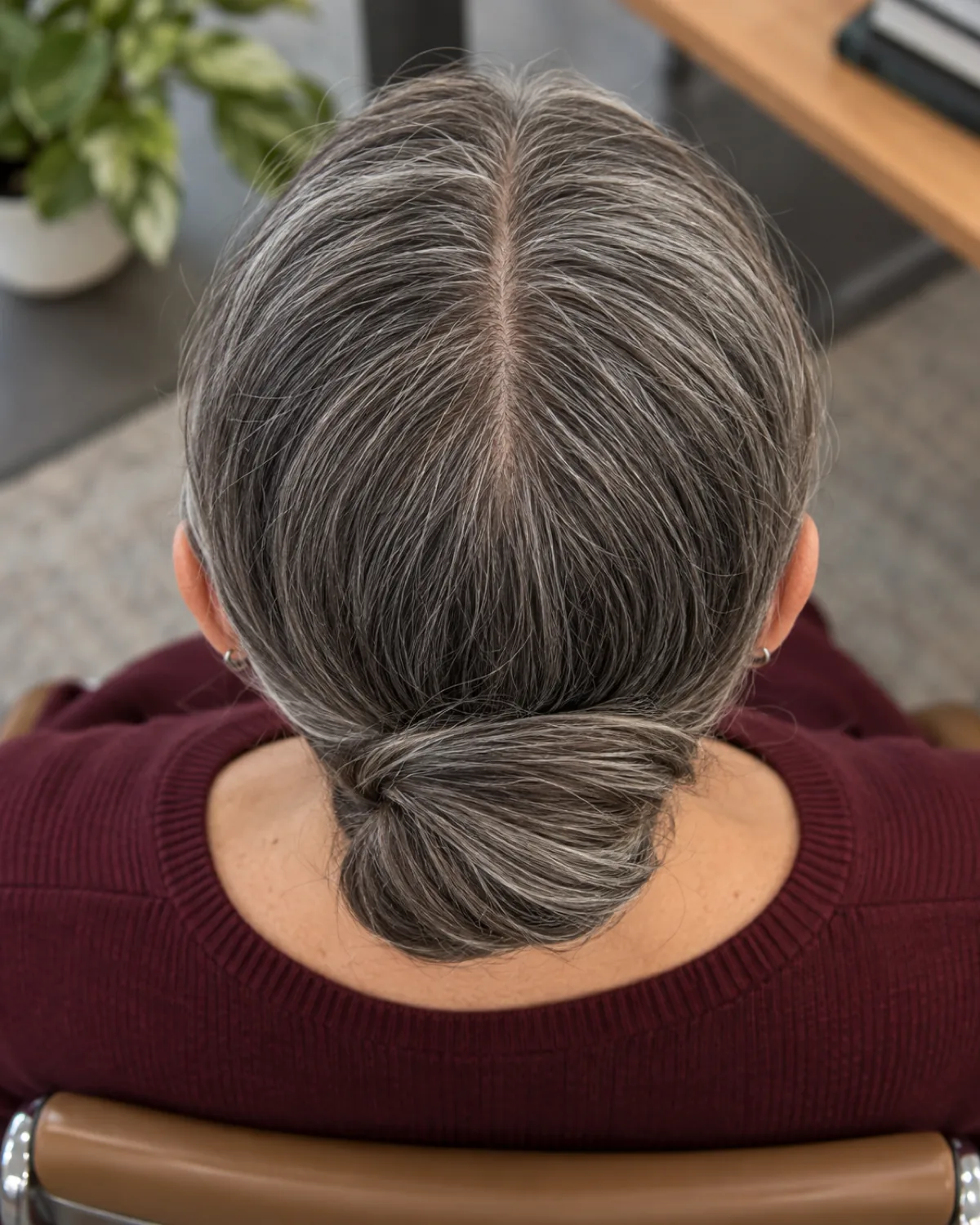
Hair folded into a loop at the nape rather than twisted. It sits flatter than a chignon, holds without pins on medium-thick hair, and takes about two minutes. The centre part feeds cleanly into the loop, and the whole structure stays put because the fold creates its own tension.
- The three-minute default for mornings when nothing else is working
- Holds best on second-day or third-day hair when the texture grips
- On fine hair, wrap the elastic one extra time to keep the loop from sliding
- This and the low chignon are the two fastest updos here — the difference is the chignon twists and the loop folds
A stylist who can see your hair in person outranks anything written here. Bring two photos — one up, one down — and one question: which of these will still look like this at four in the afternoon?
Where the checkable claims come from
- How to Choose the Best Hairstyle for Your Face Shape — American Academy of Dermatology
- Understanding Hair Layering Techniques — Pivot Point International
- Short Hair Cutting Fundamentals — Precision and Texture — Sam Villa
Keep this one
Save it for the appointment
Pin the image above to the board you actually open before a salon visit. This guide is written to be re-read, not read once.
Tonight, before you close this tab
- Set your hair in the morning, take a photo, then take another at the end of the workday — that gap is the only honest measure of hold
- Write down the three mornings you had the least time and what you did with your hair — the style that survived those mornings is your real default
- Bring a photo of one updo and one down style to your next trim and ask which will hold longer on your hair type
- Check whether your workplace dress code says anything about hair — most do not, but if yours does, know the line before you test it