10 Hairstyles for Square and Oval Faces Over 50 That Use the Room You Have
Ten hairstyles judged for square and oval faces over 50. Which cuts use the room these shapes give you, which waste it, and what to ask your stylist.

Booking an appointment soon? Save this page. It is easier to skim in the chair than to remember.
At a glance
Works
- A chin-length blunt bob that echoes the jaw angle on square or anchors the contour on oval
- A side-swept long fringe that breaks forehead-to-jaw symmetry on a square face
- Face-framing layers starting at the cheekbone on shoulder-length or longer hair
Depends
- A graduated bob with a stacked back, which suits square but can read too rigid on oval unless the angle is subtle
- Crown-volume pixie, which works on oval but on square overexposes the jaw when density is low
- A wavy shag, which flatters both shapes but only if the ends are razored and not blunt-layered
Skip
- A blunt one-length cut past the shoulders with no layering, which frames the jaw like a box on square and hangs flat on oval
- An ultra-short buzz with no perimeter softness, which exposes every angle on square and removes the balanced read on oval
- A centre part on a square face with a strong horizontal jawline, because it mirrors the symmetry you are trying to break
Square and oval faces share one advantage after 50. Neither fights width the way a round face does, and neither reads as narrow the way oblong can. Square has a defined jaw angle. Oval has a softer curve. Both start from balanced proportions.
Both accommodate more silhouettes than the other three shapes. But more room is not the same as anything goes. The question is still which cuts use the proportions you have, and what changes when hair density thins or the hairline shifts.
If you have not confirmed your face shape yet, the face-shape guide walks you through the measurement.
1. Chin-Length Blunt Bob

The blunt perimeter sits at the jawline and echoes whatever angle is there. On a square face, it picks up the jaw's geometry and turns it into a deliberate frame. On an oval face, it anchors a contour that might otherwise fade into the neck when hair thins.
The line works because it is blunt. Ask the stylist to keep the perimeter clean and unrazored. Texturized ends lose the geometry that makes this cut read as architectural on angular proportions.
- Ask for a single-length perimeter with no graduation and no point-cutting at the ends
- The line should sit at the widest part of the jaw, not above it and not below
- If your hair is fine, a slight internal layer can add body without breaking the perimeter
- Pair with a side part on square faces to break the forehead-to-jaw symmetry
- On oval, a centre part works here because the jaw curve already provides asymmetry
2. Side-Swept Long Fringe
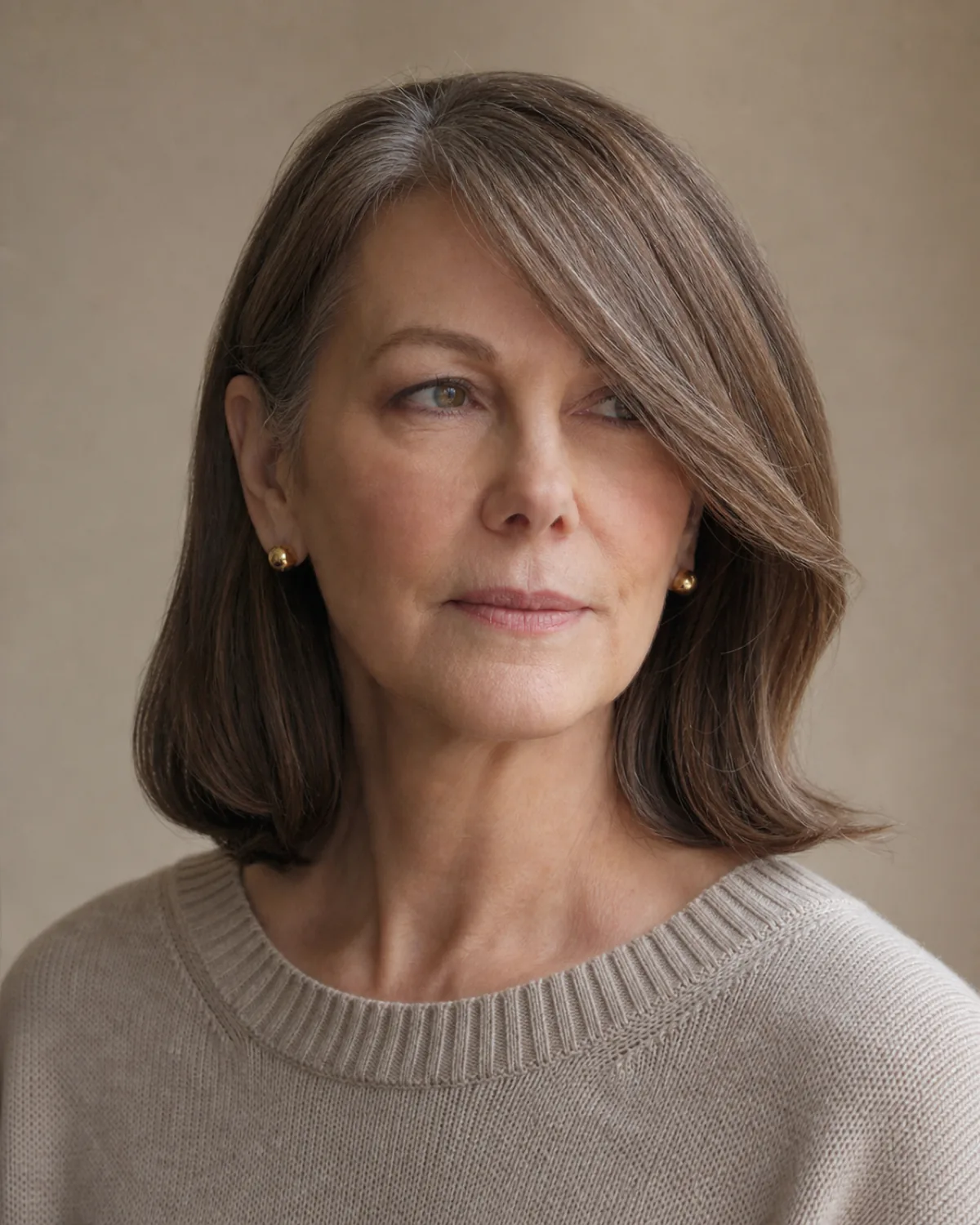
A long fringe that sweeps from the parting across the forehead and past the cheekbone creates a diagonal line. On a square face, that diagonal breaks the horizontal grid that forehead and jaw make together. The face reads as less boxy without losing its structure.
On an oval face the fringe is optional but never wrong. It adds a point of interest around the eyes without changing the proportions.
- The fringe must reach past the cheekbone to read as a diagonal, not a short curtain
- Ask the stylist to cut it so it falls naturally to one side without heavy product
- On square faces, the deeper the sweep, the stronger the line break across the forehead
- If density is dropping at the temples, a long fringe covers the thinning zone
- Works with bobs, lobs, and shoulder-length cuts alike
3. Soft-Layered Lob at Collarbone Length

Layers starting at the chin give this lob movement without losing its length. On a square face, the layers soften the jaw angle because they break up the horizontal line that a one-length bob creates. On an oval face, they prevent a blunt lob from reading flat when density drops.
The distinction between internal layers and perimeter layers matters here, especially for fine hair. Internal layers build body in the mid-shaft. Perimeter layers thin the ends. Ask which one the stylist is cutting, because the wrong call on fine hair after 50 can make the ends look scraggly instead of textured.
- Ask for layers starting at chin level, not higher, so the shortest pieces frame the jaw
- Internal layers build volume without reducing the thickness of the ends
- On square, pair with a side part to keep the diagonal working with the layers
- On oval, a centre part with these layers reads clean and balanced
- If your hair is very fine, ask for fewer layers cut with more weight left at the perimeter
Where to start
Find your situation, skip ahead
Your face is square and cuts keep making your jaw look wider
Diagonal lines break the grid. Start with the side-swept fringe and the graduated bob.
02 Side-Swept Long Fringe07 Graduated Bob With a Stacked Back
Your face is oval and you have been told anything works, but nothing looks right
Oval tolerates more shapes, but fine hair over 50 narrows the field. Read the layered lob and face-framing layers first.
03 Soft-Layered Lob at Collarbone Length08 Shoulder-Length With Face-Framing Layers
You are not sure whether your face reads as square or oval
Check your jawline: if it turns at a visible angle, square; if it curves, oval. Then read the cuts that suit both.
01 Chin-Length Blunt Bob03 Soft-Layered Lob at Collarbone Length08 Shoulder-Length With Face-Framing Layers
4. Short Crop That Reads Differently on Oval Than Square
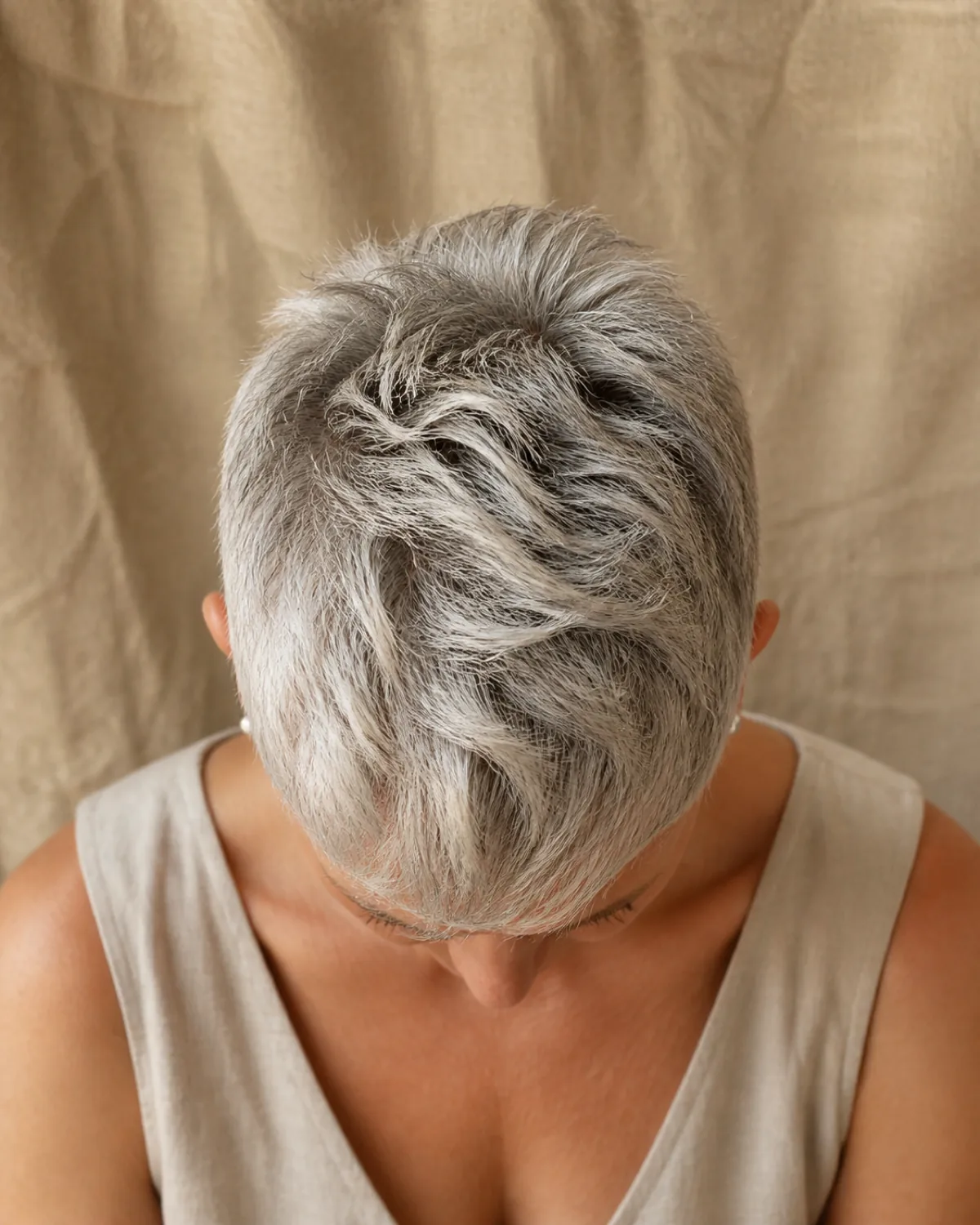
This is one of the few cuts on the list where the face-shape split matters more than individual preference. An oval face already has the length-to-width ratio to carry short sides with a longer crown. The proportions are balanced, and the crop just emphasizes them.
A square face changes the equation. Short sides expose the jaw fully, and whether that reads as striking or harsh depends on whether the jaw angle is something you want to feature. If you want to soften it, a crop this short leaves no hair around the jaw to do the work. The decision is not about the cut itself but about how you feel about your jaw being the most visible line in the frame.
- On oval, this crop is close to a guaranteed fit because the face shape does most of the balancing
- On square, the sideburns are the variable: enough length there to soften, or cropped tight to make the jaw the feature
- Ask the stylist to leave texture at the crown rather than cutting it blunt and uniform
- The fine-hair pixie guide covers the density question for anyone whose hair is thinning at the temples
- If you are not sure how your jaw reads with short hair, pull everything back and look in flat light before booking
5. Deep Side Part on Any Length

Shifting the part 2-3 cm off-centre creates an asymmetry that works on any length. On a square face, the asymmetric volume breaks the forehead-to-jaw grid. The heavy side carries more hair, the light side shows more scalp. The face reads as less symmetrical and therefore less boxy.
On an oval face the deep part is neutral. It does not hurt anything, but it does not solve a problem either. It is worth doing on fine hair over 50 regardless of face shape, because the deeper part adds root lift on the heavy side without product.
- Move the part 2-3 cm toward the ear on the side where you want less volume
- The heavy side should fall naturally without needing to be pinned or set
- On square, this single change can shift how the face reads more than a new cut
- For fine hair, the root lift from a deep part adds the appearance of density at the crown
- Try it for a week before your next appointment and notice whether it changes the mirror read
6. Grown-Out Bob With Curtain Bangs

The curtain framing splits at the centre and sweeps outward past the cheekbones. On a square face, those two arcs break horizontal lines at the forehead. On an oval face, they add warmth around the face without committing to a full fringe.
This is a low-commitment option for anyone who wants something around the forehead but does not want the maintenance of a blunt fringe. Curtain bangs grow out more gracefully than straight-across bangs and need trimming less often.
- Ask for the longest pieces of the curtain to reach the cheekbone
- The centre split should fall naturally, not need to be forced with a round brush
- On square, the outward sweep of the bangs creates two diagonal lines across the forehead
- On oval, curtain bangs add a frame without changing proportions
- If the bangs are too short, they read as a grown-out mistake rather than a deliberate cut
7. Graduated Bob With a Stacked Back
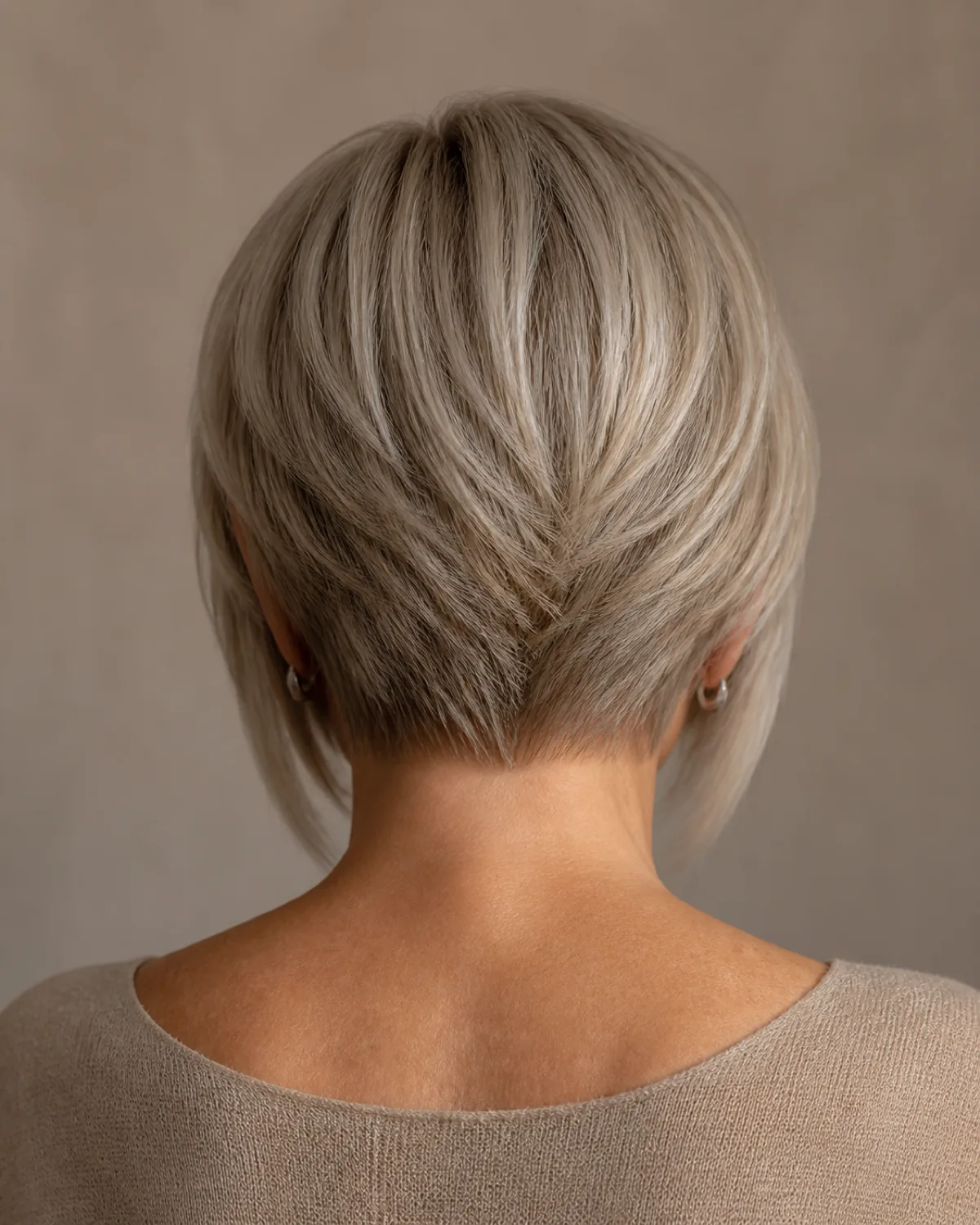
The angle from short back to longer front creates a diagonal silhouette. On a square face, that diagonal counterbalances the jaw's horizontal line. The stacked graduation at the nape also lifts the visual weight upward, away from the jawline.
On an oval face, the graduation can read as too structured. The face already has a soft contour, and adding rigid geometry at the back can compete with it. If you have an oval face and like the shape, ask the stylist to keep the graduation angle subtle rather than steep.
- The shorter back layers should push outward slightly, creating volume at the nape
- The longer front pieces should angle forward to at least the chin
- On square, a steeper angle creates a stronger diagonal and more line-breaking effect
- On oval, keep the angle to 1-2 cm difference between back and front
- This cut needs maintenance every 6-8 weeks because the graduation grows out fast
8. Shoulder-Length With Face-Framing Layers
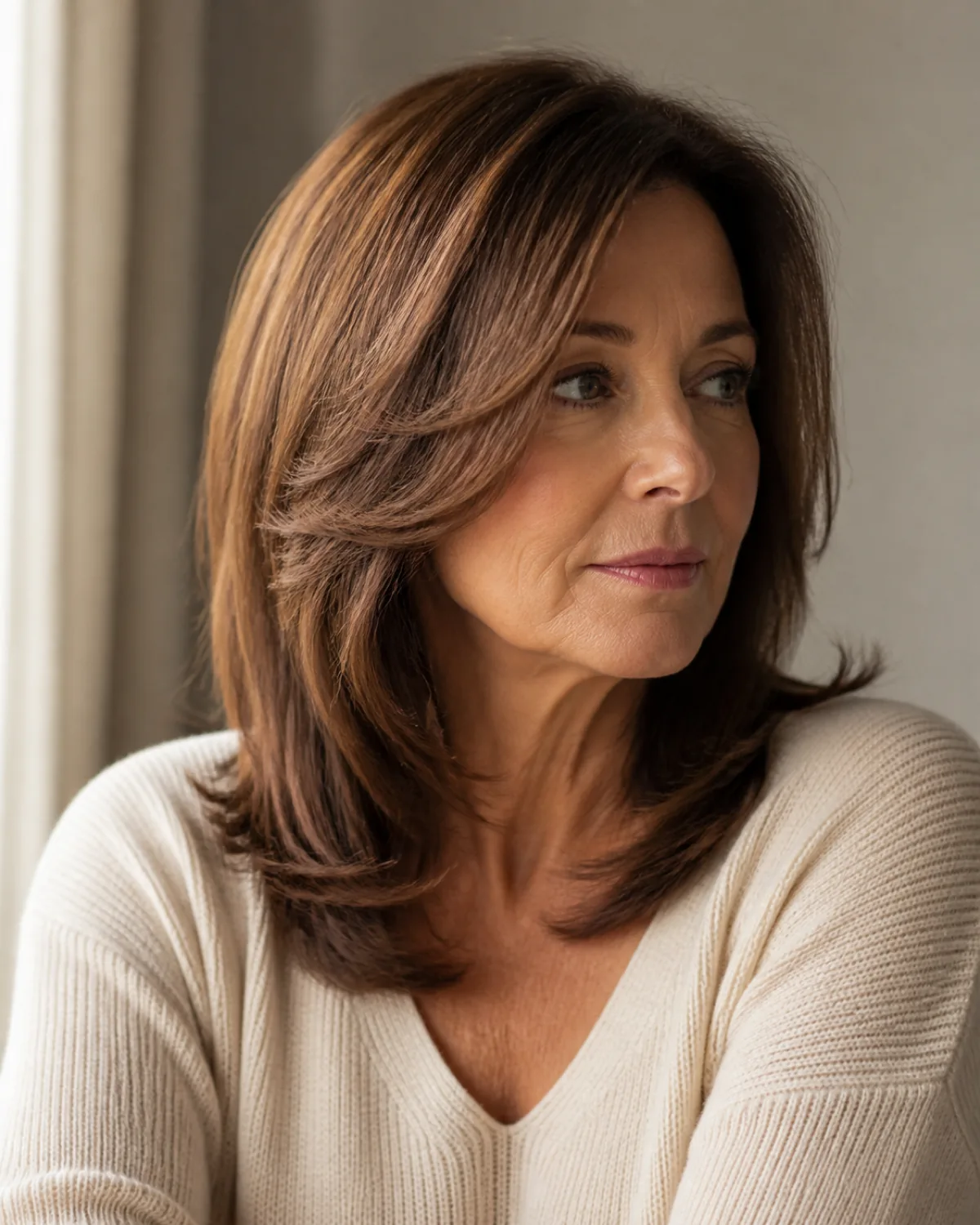
The first layer should hit at the cheekbone. On a square face, it interrupts the jaw line by drawing the eye upward to the cheek. On an oval face, it gives the stylist something to shape around the face without committing to bangs.
After 50, temples are often the first place where density drops. Face-framing layers compensate for that thinning by adding movement and visible hair in exactly the zone where the loss shows most. The shoulder-length guide covers the length question separately.
- The shortest face-framing piece should sit at cheekbone height, not higher
- Ask the stylist to cut 2-3 pieces per side, not a full set of layers throughout
- On square, these layers break up the jaw-to-temple line when the hair moves
- On oval, they provide shape without altering the proportions
- If your hair is fine, fewer layers with more weight keeps the ends from looking thin
9. Cropped Nape With Ear-Length Top
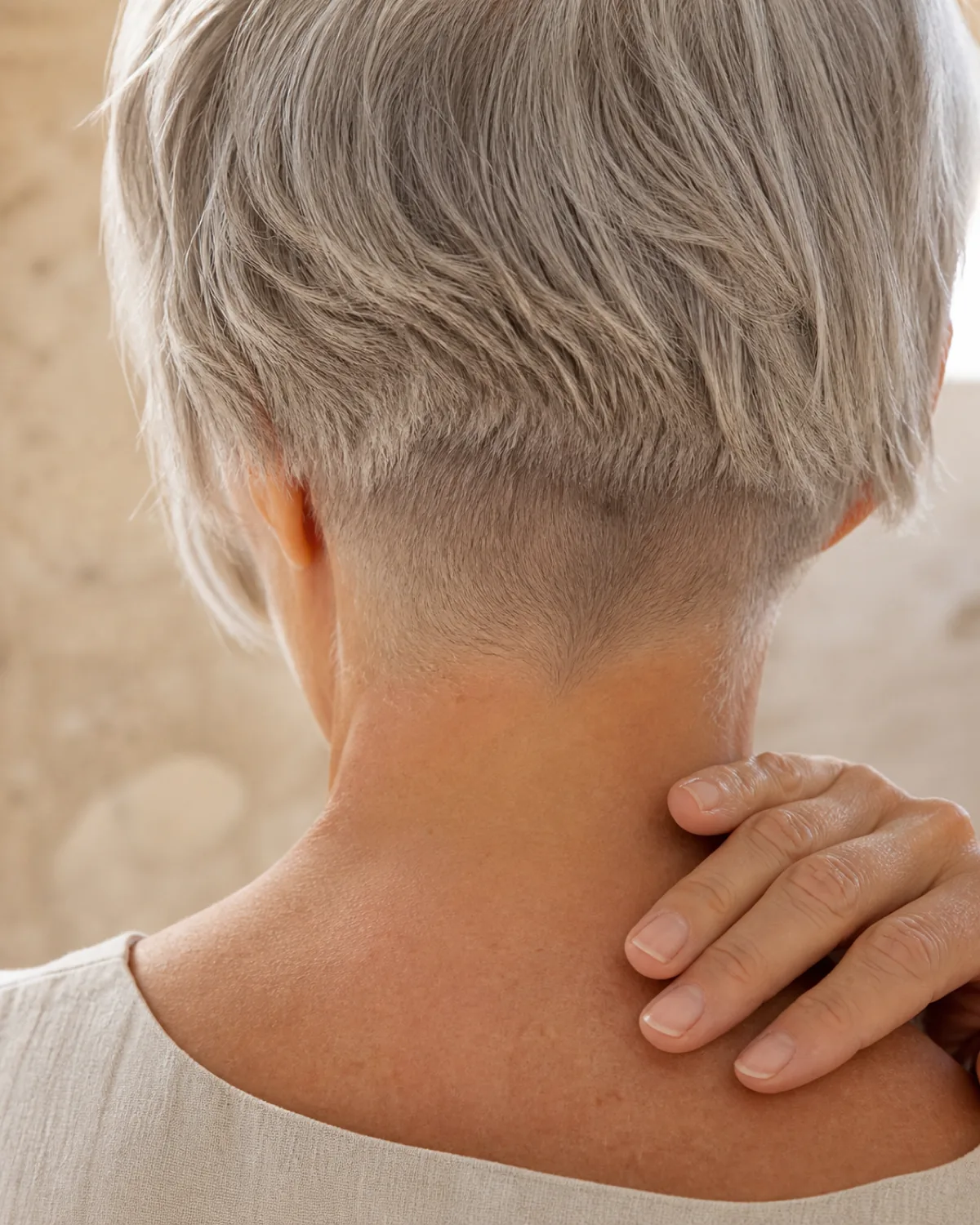
A very short nape with slightly longer top shows off balanced proportions. On an oval face, the exposed nape and ears read clean because the jaw's soft curve carries the look. The proportions are already balanced, and the crop just emphasizes them.
On a square face, the exposed nape and ears can overemphasize the jaw width. This cut works on square only if the density allows a soft perimeter at the sides rather than a blunt chop. Without that softness, the cropped nape creates a frame that makes the jaw the loudest feature.
- The nape should be cropped close but not buzzed to skin, leaving some texture
- The top length should reach the ear at minimum, giving the stylist room to shape
- On oval, this is a strong option if you want short hair that reads as intentional
- On square, add some length or texture at the sideburns to balance the jaw exposure
- Works well with natural grey or silver because the texture of grey hair adds visual interest at short lengths
10. Wavy Shag From Chin to Shoulder
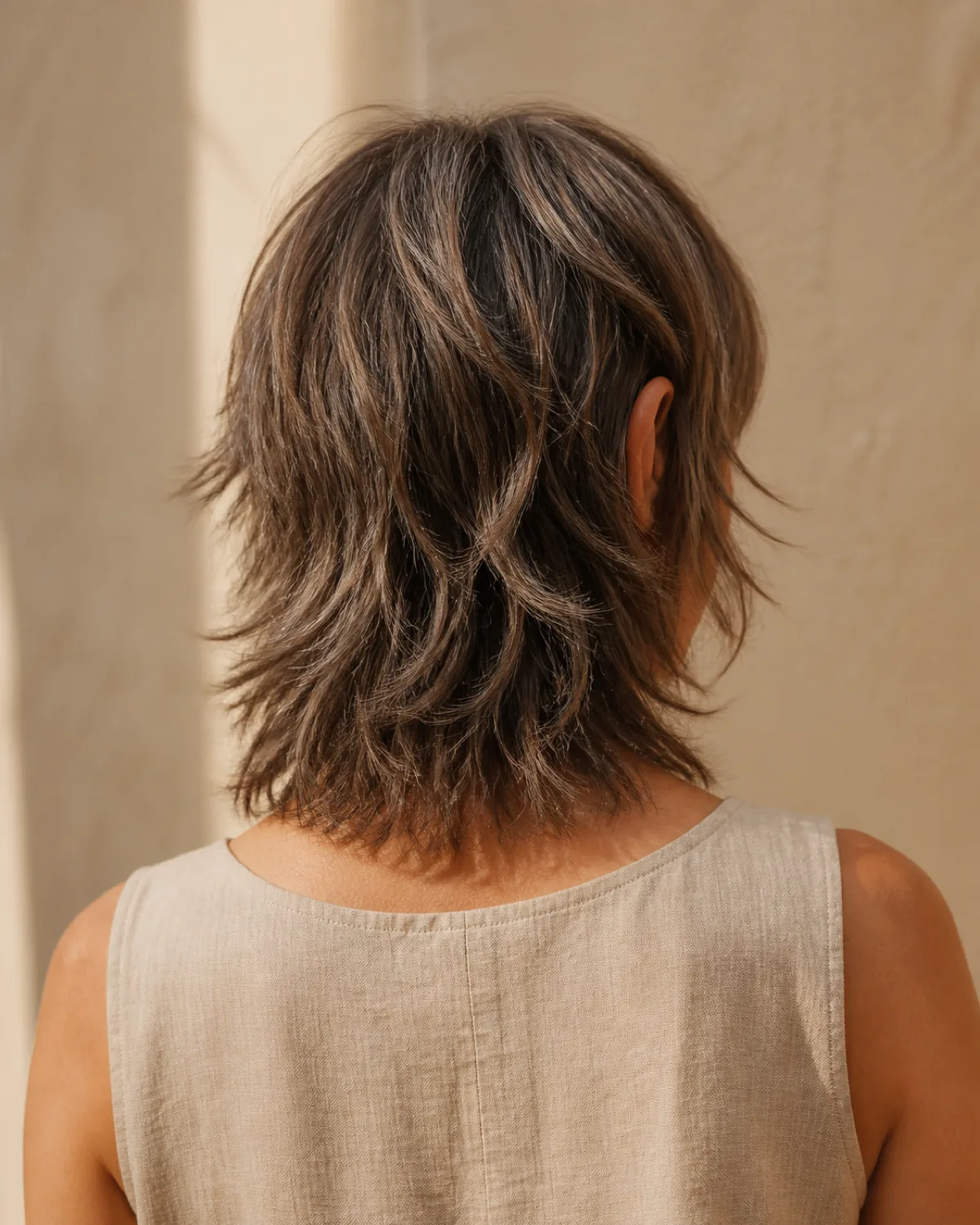
Disconnected layers in a shag give texture that reads as volume. On a square face, the unstructured edges soften the jaw because there is no clean horizontal line for the eye to follow. On an oval face, the volume through the mid-lengths prevents the face from reading too narrow at the chin.
The razored ends are what make a shag look deliberate rather than messy. Blunt layers in a shag shape create choppiness without the frayed texture. Ask specifically for razored ends and check that the stylist is comfortable with a razor, because not all are. The shag guide for fine hair covers density considerations separately.
- Ask for razored ends, not blunt layers, to get the frayed texture that defines the shag
- The disconnected layers should sit at different lengths through the mid-shaft
- On square, the lack of a clean perimeter line softens the jaw angle
- On oval, the volume from the layers compensates for density loss at the chin level
- If your hair has any natural wave, a shag will make the most of it without heat styling
The cuts here are a starting point. What actually works depends on the density and texture your hair has right now, not the density it had ten years ago. A stylist who can see your hair in person outranks anything written here.
Where the checkable claims come from
- Face shape — Wikipedia
- Graduation vs. Elevation: The Subtle Distinction That Impacts Every Cut — Above Shears
- Bangs (hair) — Wikipedia
- Hair diameter, color and density changes with age — Birch, Messenger & Messenger, British Journal of Dermatology (2001)
Keep this one
Save it for the appointment
Pin the image above to the board you actually open before a salon visit. This guide is written to be re-read, not read once.
Tonight, before you close this tab
- Pull your hair back, face flat light, and photograph yourself straight on to see whether your jawline turns at an angle or curves
- Try parting your hair 2-3 cm off-centre for a week and note whether the asymmetry changes how your face reads in the mirror
- Look at where your face is widest and note whether it sits at the cheekbones or the jaw
- Write down two things to ask your stylist: where should the first layer hit, and should the perimeter be blunt or textured