18 Medium Haircuts for Thin Fine Hair Over 50 That Hold Their Shape
Eighteen medium haircuts judged for thin fine hair over 50. Each one rated by whether it holds shape, adds density and survives a full day without tools.
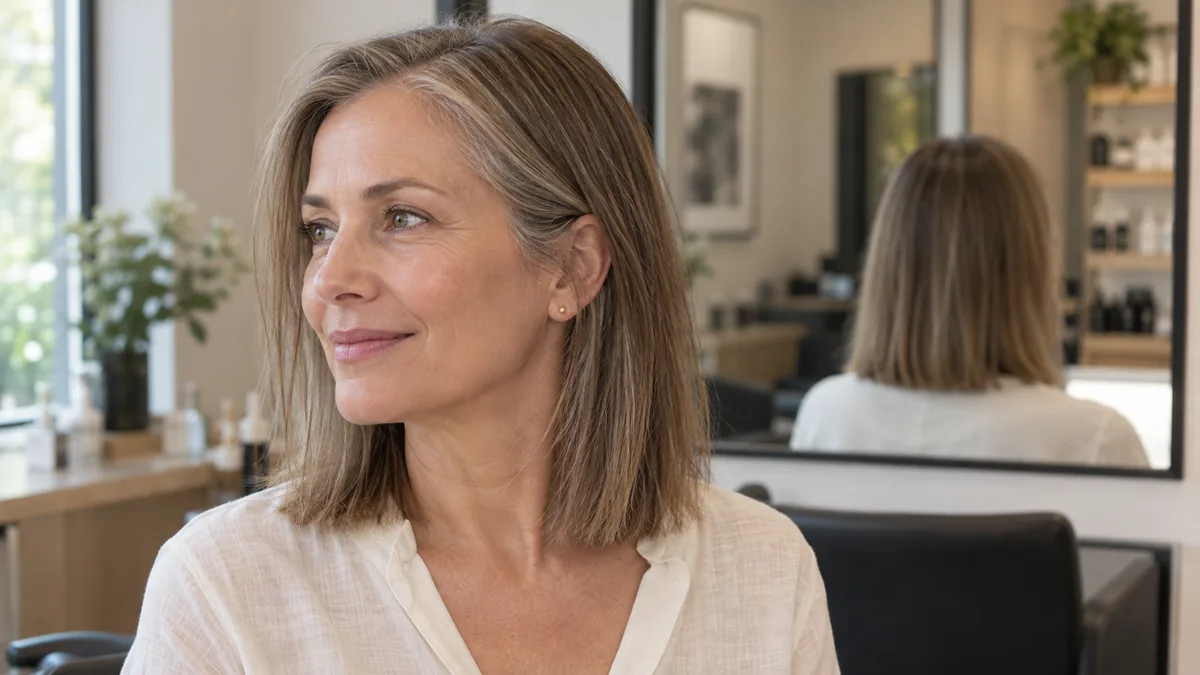
Booking an appointment soon? Save this page. It is easier to skim in the chair than to remember.
At a glance
Works
- A blunt one-length collarbone cut because the unbroken perimeter holds every strand together and the edge reads thick without any layering
- A collarbone lob with internal point-cut texture because the perimeter stays solid while the interior gets movement
- Face-framing layers where only two pieces are cut because the rest of the weight stays intact and the framing adds more than it costs
Depends
- A medium shag with a centre part only if the hair has some natural wave or texture, because on dead-straight fine hair the layers hang in parallel strips and the mid-lengths separate
- Collarbone waves with a blunt hem only if you commit to daily heat styling, because air-dried fine hair rarely holds a wave for more than two hours
- A layered crown cut only if there is still enough density at the crown to hold the lift for a full day, otherwise the layers expose thinning rather than adding volume
Skip
- Piece-y sliced ends on hair where the mid-shaft is already thinning, because the separated ends read as damage rather than texture
- A medium flip with outward ends without daily round-brush styling, because fine hair will not flip on its own and the flat version looks unfinished
- Heavy layering through the crown on very thin hair, because every layer removes density from the area where thinning shows first
Medium length is the hardest territory for fine hair. Short cuts gain volume from compression. Long hair can hide behind weight. Medium sits in the middle, where the root lifts and the ends thin and the cut has to earn its shape by structure alone.
The real question is whether your hair holds a line at the collarbone or dissolves. See very fine hair or low-maintenance fine hair cuts.
These eighteen are rated by who they hold for and who they cost.
1. Blunt One-Length at the Collarbone
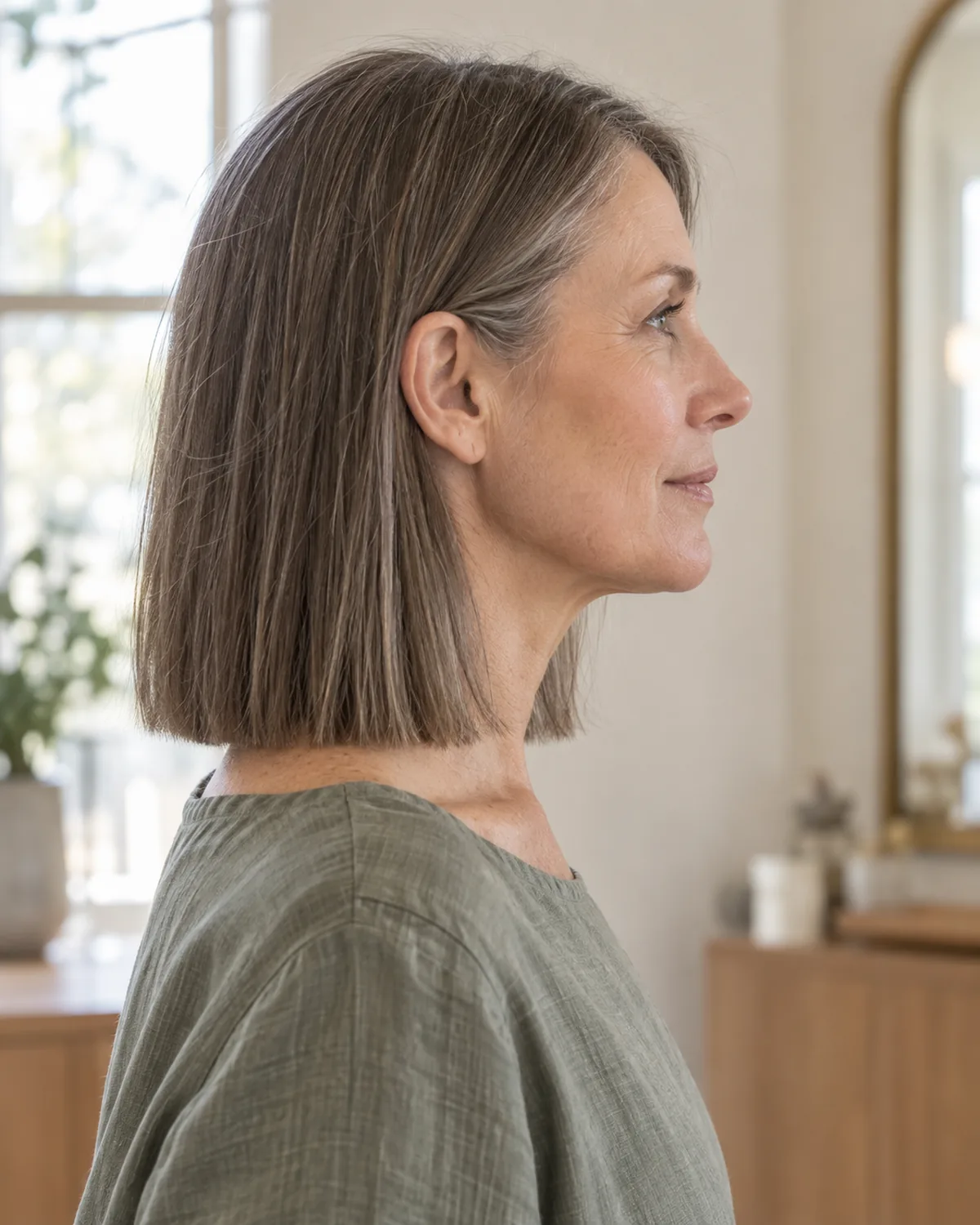
A single-length line that ends exactly at the collarbone with no graduation, no layers, no thinning shears. The unbroken perimeter holds every strand together so the edge reads as thickness even when the individual hairs are fine. From the side the weight line sits cleanly at the collarbone.
- This is the baseline test for medium length on fine hair: if your hair can make a clean line here, you have enough density for this territory
- The blunt edge creates a visual floor that stops the eye from seeing the thinning through the mid-shaft
- On hair where the ends taper to nothing even when blunt, medium length is costing you and a shorter cut will read better
- Ask your stylist to check the density at the ends before deciding whether to keep this length or come up two inches
2. Collarbone Lob with Internal Texture
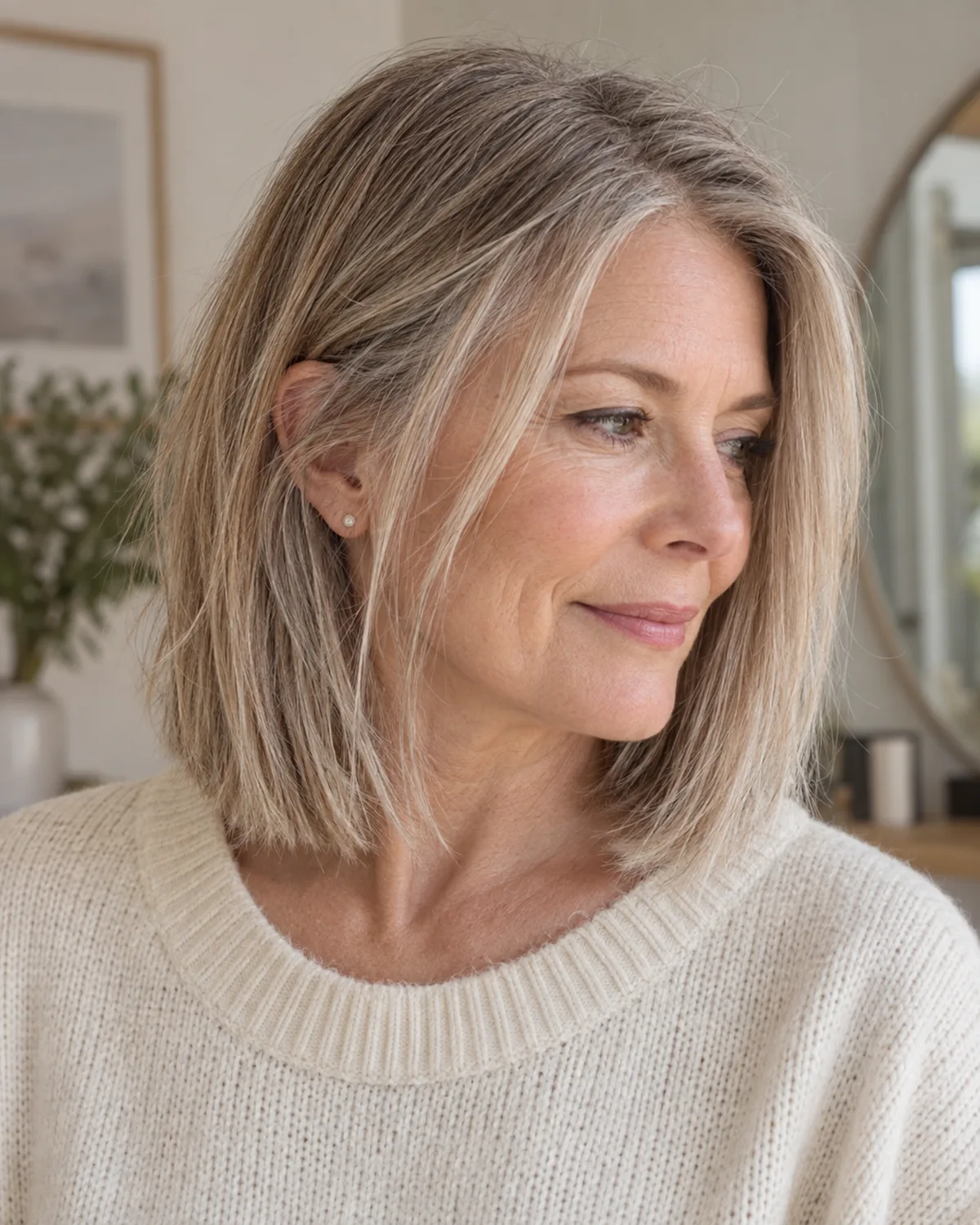
A blunt-line lob with point-cutting on the interior only, leaving the perimeter untouched. The internal texture reduces stiffness without breaking the outline. The perimeter stays solid while the mid-lengths get subtle movement.
- Fine hair benefits because the perimeter holds its edge while the interior avoids the flat, sheet-like look that one-length fine hair can take on
- The cut needs a stylist who understands that fine hair can afford internal texture but cannot afford perimeter thinning
- If the point-cutting is too heavy the interior separates and the scalp shows through the mid-shaft
- Ask your stylist to point-cut the interior only and to leave the last inch of perimeter completely blunt
3. Lob with a Deep Side Part

A chin-to-collarbone lob swept across a deep side part. The asymmetry stacks more hair on the heavy side, which creates the look of density without adding a single layer. The deep part does more work for fine hair than any layering technique can. A deep side part creates asymmetry that reads as added density on the heavy side.
- The risk is that the thin side looks sparse, so the short side needs to stay blunt and heavy enough to read as intentional
- This works on any face shape because the diagonal line of the part narrows the face on one side and adds width on the other
- On fine hair the deep part is free density: it redistributes what you already have rather than cutting into it
- Ask your stylist to keep the thin side at jaw length or shorter so it reads as deliberate rather than limp
4. Graduated Bob Extended to Medium Length
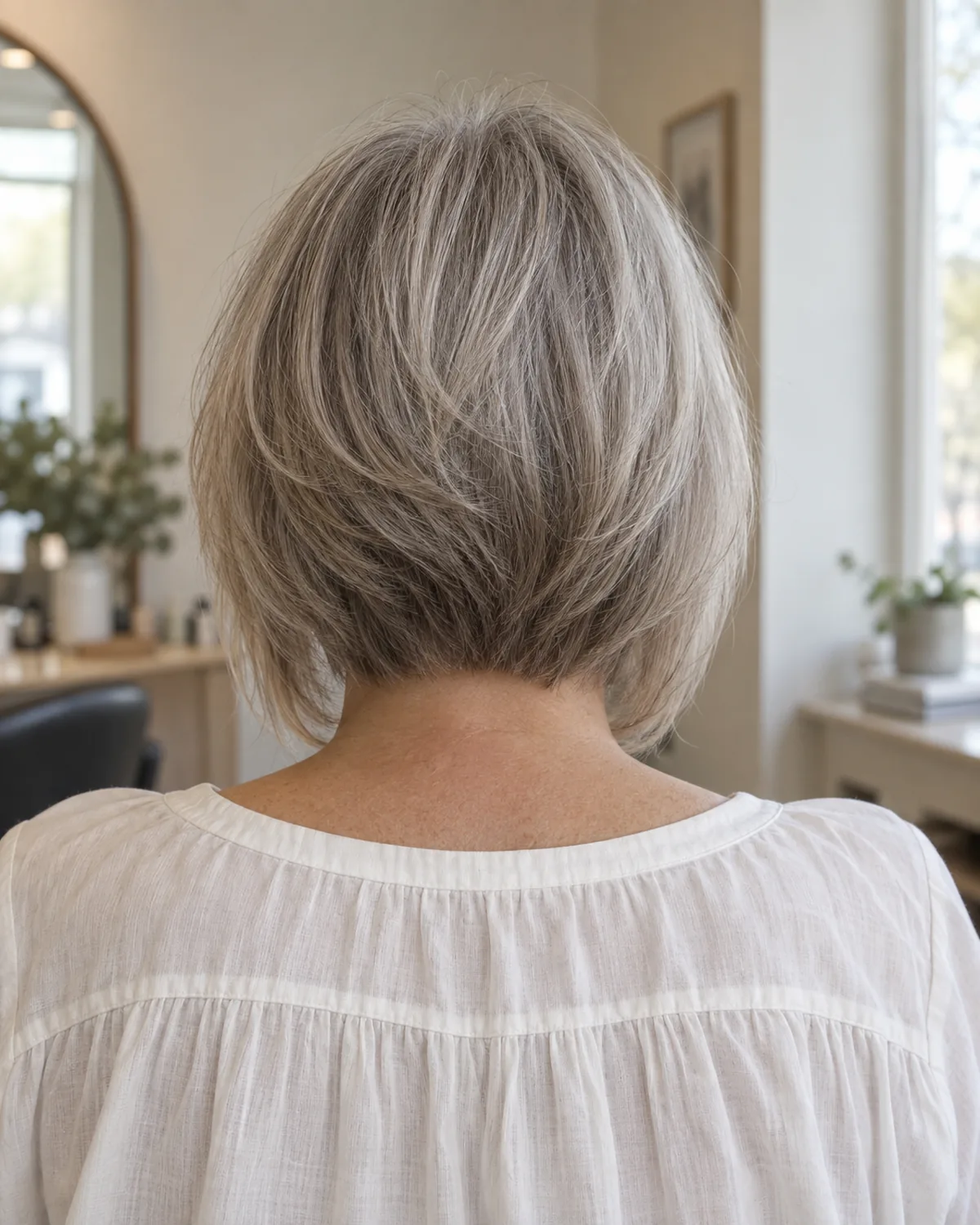
Graduation at the nape that gets longer toward the front, ending between the chin and the collarbone. The stacking at the back pushes volume upward while the front length keeps the medium silhouette. Graduation compresses layers so the hair fans outward, creating mechanical volume that does not depend on density.
- This is one of the few medium-length shapes that creates its own volume on fine hair, because graduation works by compressing layers rather than removing weight
- The front pieces need to stay one-length and heavy to anchor the silhouette
- From the back the stacking is clearly visible and gives the impression of thickness even on fewer strands
- Ask your stylist how steep the graduation should be for your density: too steep and the back goes flat between washes, too gentle and you lose the lift
5. Medium Shag with a Centre Part

Layers through the crown and sides, bangs that merge into the longest layer, centre-parted. On fine hair the shag is a gamble: the crown layers add lift at the root but the mid-lengths can separate and show scalp. This works only when the hair has some wave or texture to fill the gaps the layers create.
- On dead-straight fine hair the layers hang in parallel strips and the shag collapses into a shapeless curtain
- Natural wave is what makes this cut viable on fine hair because the texture fills in between the separated layers
- The centre part reads as intentional rather than limp if the crown has enough lift behind it
- Ask your stylist whether your hair has enough natural movement to support this many layers, and if not, whether a partial shag with layers only through the crown would be safer
- See medium shaggy layered cuts for a broader look at how shags behave across hair types
Where to start
Find your situation, skip ahead
Your fine hair still has enough density to make a clean line at the collarbone
Start with the blunt one-length. It is the baseline test for medium length on fine hair, and everything else on this list is a variation of it.
01 Blunt One-Length at the Collarbone02 Collarbone Lob with Internal Texture18 One-Length Medium Hair Tucked Behind the Ears
Your hair is fine and thinning at the crown but you want to keep medium length
Look at the graduated bob extended to medium or the soft wedge. Both create volume mechanically without relying on density you no longer have.
04 Graduated Bob Extended to Medium Length13 Soft Wedge at Shoulder Length
You want to add visual density without cutting layers
A deep side part or curtain bangs cost almost nothing in bulk and add diagonal movement that makes the silhouette read fuller.
03 Lob with a Deep Side Part06 Blunt Collarbone Cut with Side-Swept Bangs09 Curtain Bangs on a Medium One-Length Base
6. Blunt Collarbone Cut with Side-Swept Bangs
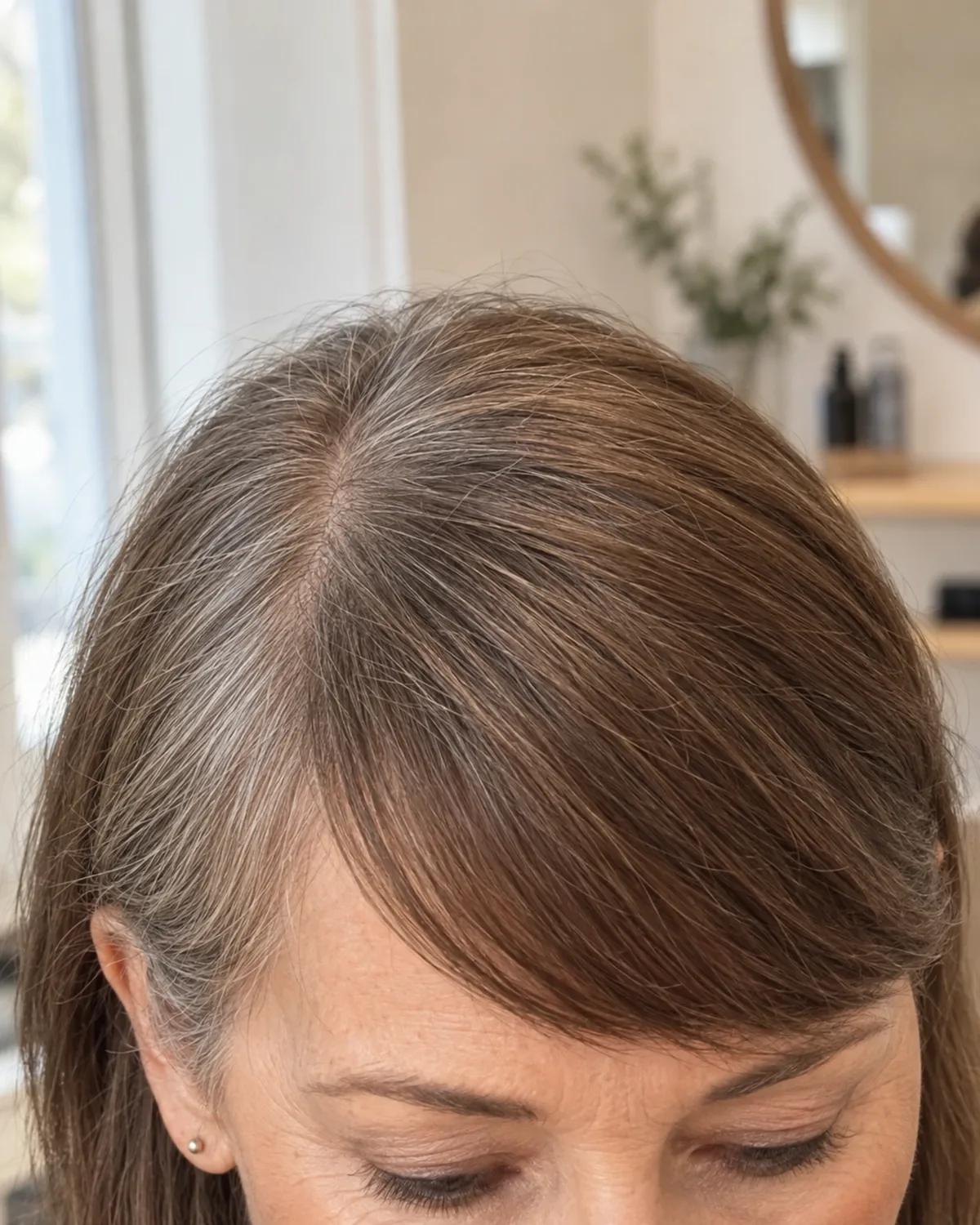
One-length hair at the collarbone with a sweep of blunt-cut bangs from a deep side part. The bangs add density at the face without thinning the body. On fine hair the side sweep does double duty: it hides a sparse hairline and adds diagonal movement that makes the whole silhouette read fuller.
- The bangs must be blunt-cut, not feathered, because feathered bangs on fine hair go stringy within an hour
- Side-swept bangs use hair from the front section where density is often still strong, so the cost to the body is minimal
- The sweep across the forehead creates a visual line that draws the eye across the face rather than down through the thinning mid-lengths
- Ask your stylist to cut the bangs heavy enough to hold their arc across the forehead and to blunt-cut the ends
- See bangs after 50 for more on how different fringe styles behave on fine hair
7. Textured Lob with Soft A-Line
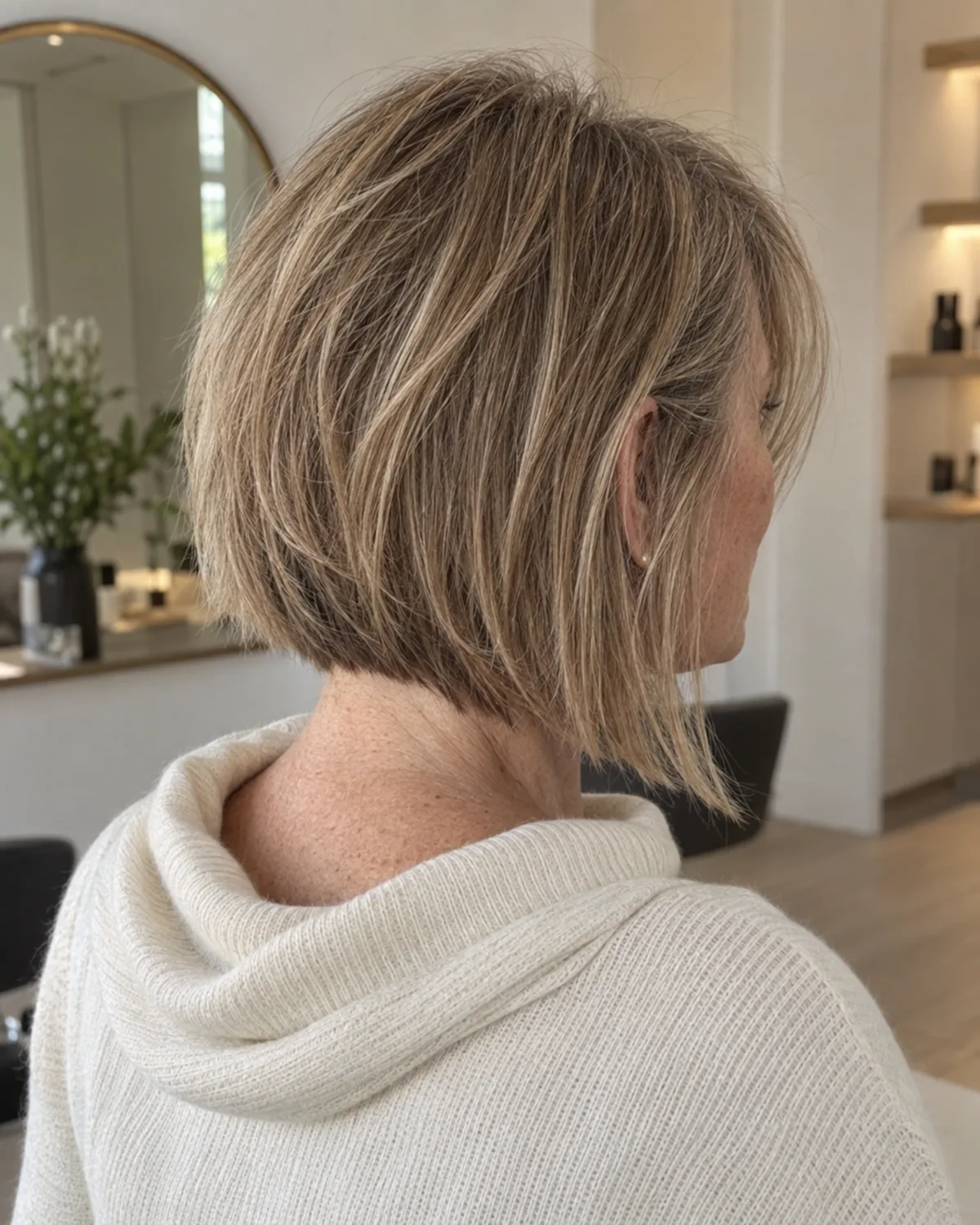
Slightly shorter at the back, slightly longer at the front, with a razored texture through the interior. The A-line angle adds length at the face while the back gains bounce from being shorter. The angle keeps the weight forward where it is visible.
- Fine hair responds well to a subtle A-line because the shorter back section swings and the longer front pieces frame the face with weight
- Too steep an angle and the back goes flat between washes because there is not enough hair to hold the bounce
- The interior razoring needs to be light on fine hair: too much and the back section separates
- Ask your stylist for a two-inch difference between the back and the front, no more, and to razor the interior only
8. Medium Layered Cut Starting Below the Chin
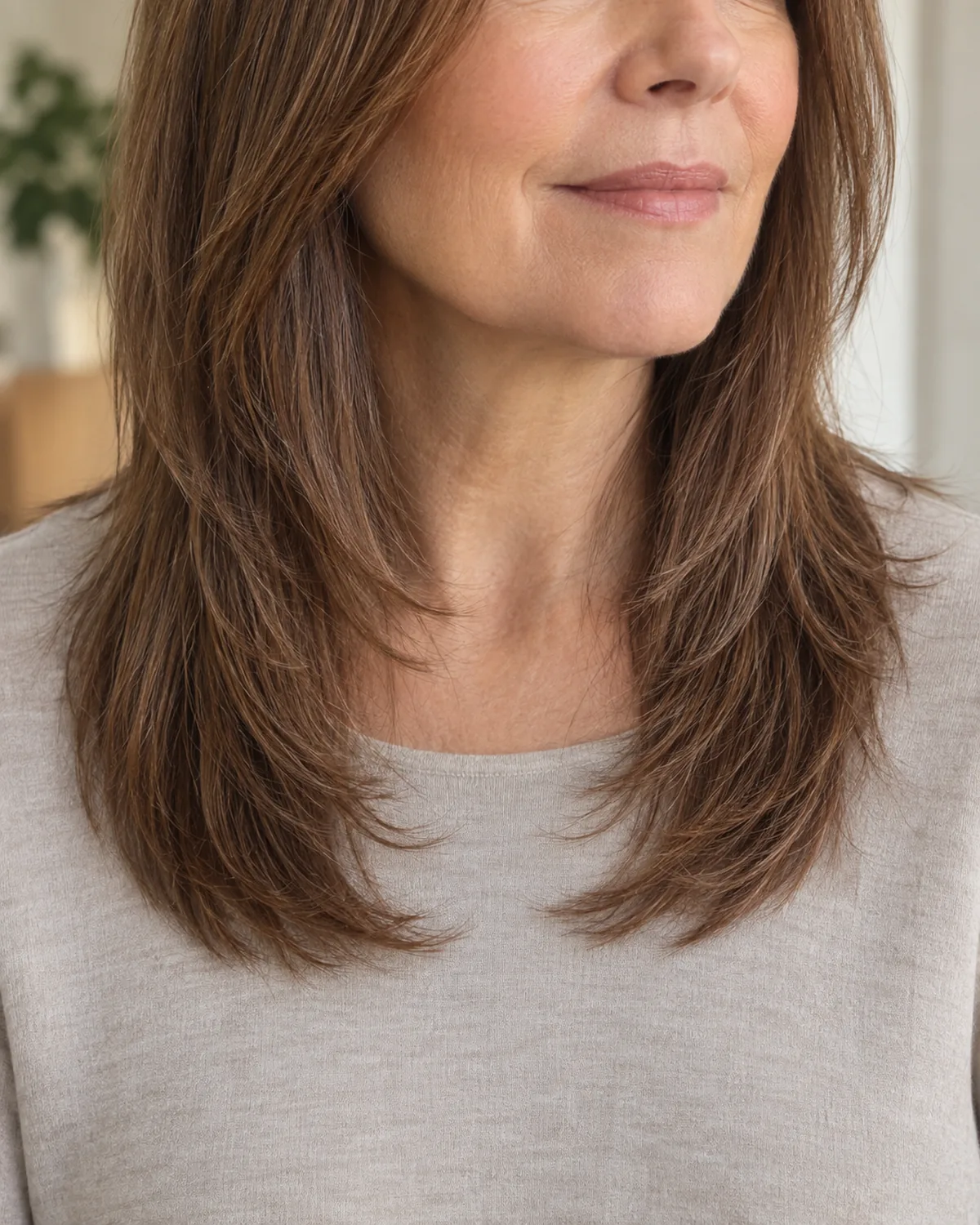
Layers that begin below the chin and graduate to the ends, with the top section left unlayered for weight. The low starting point keeps density through the crown and mid-shaft. On fine hair this is safer than crown layers because it leaves the thinnest area alone.
- The risk is that the layered ends look sparse if density drops sharply past the chin, but the unlayered top section compensates
- Low layers give movement at the ends without sacrificing the visual density through the most visible area of the hair
- This cut air-dries well because the weight of the unlayered top pulls the hair straight while the layered ends add texture
- Ask your stylist to start the shortest layer no higher than two inches below the chin and to leave the top section completely alone
9. Curtain Bangs on a Medium One-Length Base
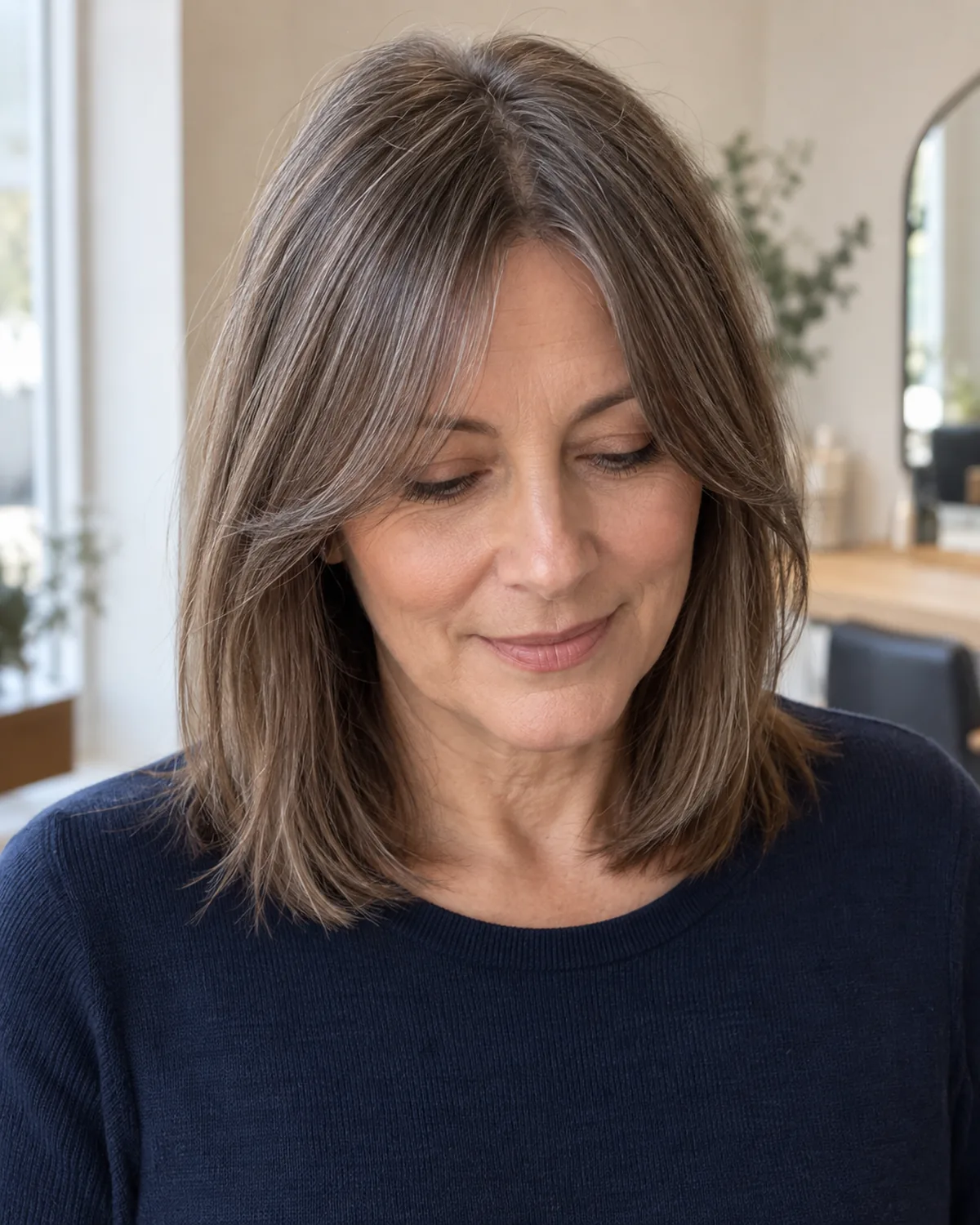
A one-length medium cut with curtain bangs that taper from the cheekbone to the jaw. The bangs frame the face and the rest stays blunt. On fine hair the curtain pieces are the only sacrifice of perimeter density and they add more visual weight at the face than they cost from the body.
- The bangs must be heavy enough to hold their arc: thin wisps go limp and lose the frame within an hour on fine hair
- Curtain bangs work here because they use hair from the denser front section and direct it where it does the most good
- The one-length base behind the bangs stays thick and keeps the overall silhouette from looking layered
- Ask your stylist to cut the curtain pieces dense and to check that they hold their arc when air-dried, not just when blow-dried
10. Collarbone Waves with a Blunt Hem

Medium hair set in loose waves with the perimeter kept blunt. The waves expand the silhouette by adding lateral width, while the blunt hem holds the baseline. On fine hair the waves add visual volume that the straight version cannot match.
- This works if the waves are set with heat or overnight rollers, but air-dried fine hair rarely holds a wave for more than two hours
- Honest about daily time: if five minutes with a curling iron every morning is not realistic, this cut will read as a limp one-length most of the time
- The blunt hem is what saves this cut on fine hair because the wave adds width but the baseline needs a clean edge to read as intentional
- Ask your stylist whether your hair holds a wave when air-dried; if it does not, this cut will look like the one-length version within an hour of styling
11. Face-Framing Layers on Medium Hair

Two short pieces cut from the cheekbone to just below the jaw, the rest untouched. The framing pieces create a soft V around the face without costing any bulk from the body. On fine hair this is the lowest-risk layering because only two pieces are cut.
- The rest of the weight stays intact, so the overall silhouette reads as dense even though the face gets framing
- From above the two shorter pieces are clearly visible against the one-length body
- This is the conservative choice for anyone who wants some movement at the face but cannot afford to lose density anywhere else
- Ask your stylist to cut only two face-framing pieces and to leave the rest at one length: the temptation to layer more is what costs fine hair its density
12. Medium Bob with an Undercut at the Nape
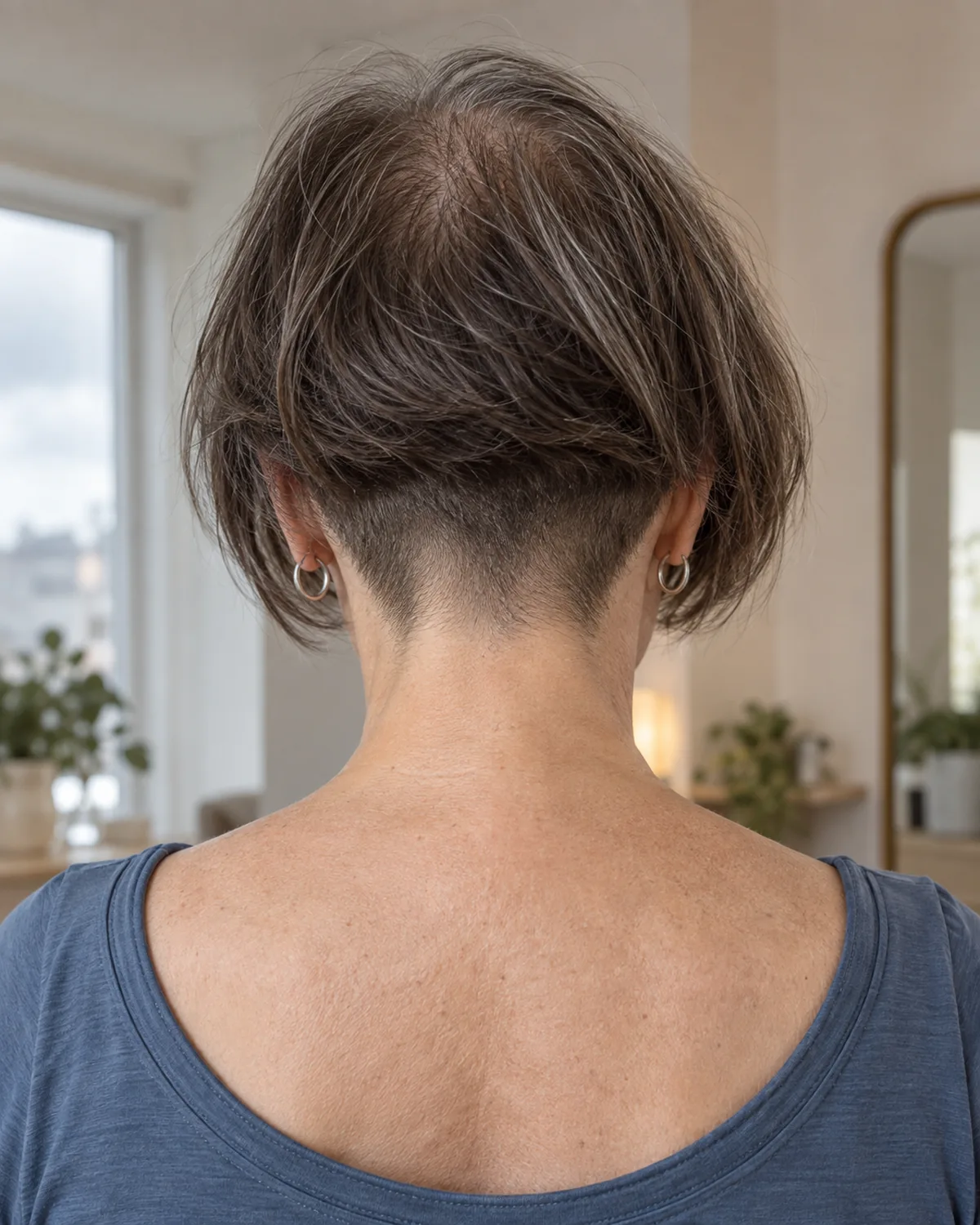
A medium bob with the nape section shaved or clippered underneath to reduce bulk at the neck. On fine hair this sounds counterintuitive: removing hair from someone who has little. But if the nape hair is dense while the crown is thin, the undercut brings the proportions into balance and lets the crown section fall more smoothly.
- The contrast between the fine crown hair and the clean clippered nape is visible from the back and reads as deliberate
- This cut works only if the nape area is denser than the crown, which is common in certain patterns of thinning
- The undercut reduces weight at the neck so the visible hair sits flatter against the head rather than puffing outward at the bottom
- Ask your stylist to check whether your nape density is higher than your crown density before committing to this
13. Soft Wedge at Shoulder Length
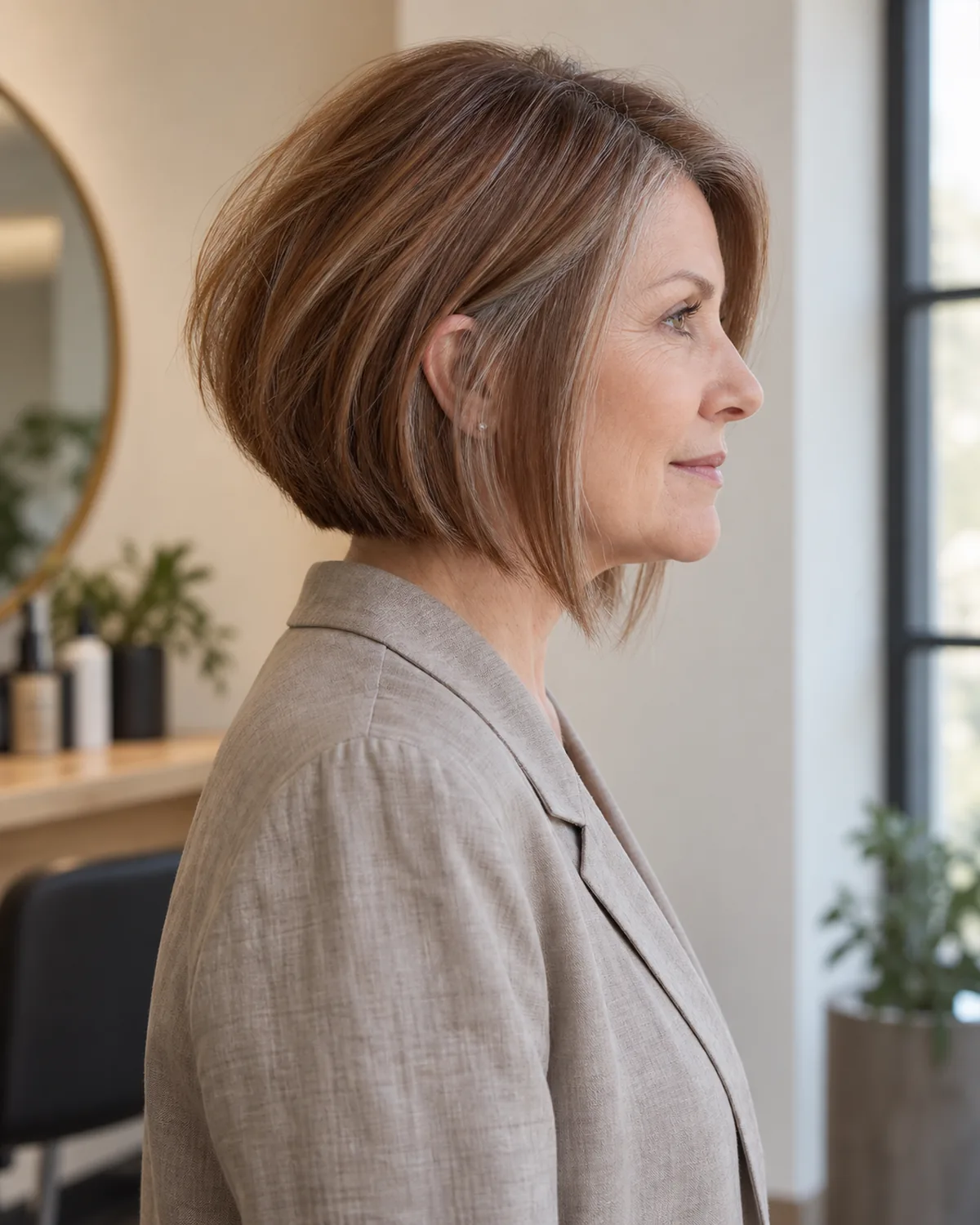
A wedge shape that fans out at the back with longer blunt front pieces. The back graduation pushes volume upward and outward. On fine hair the wedge is one of the few medium-length shapes that creates its own volume mechanically, without relying on density the hair does not have.
- The back graduation compresses layers so the hair fans outward, creating width that reads as thickness from the side
- The front pieces stay blunt and heavy to anchor the silhouette and keep the face framed
- From the profile the wedge shape is clearly visible: the back fans out while the front hangs straight
- Ask your stylist how much graduation your density can support: the wedge creates its own volume but the graduation needs enough hair to compress
14. Medium Hair with a Micro Fringe

A collarbone cut with a very short, straight-across fringe at mid-forehead. The micro fringe is dense and blunt, which reads as deliberate thickness. On fine hair the fringe works because it is short enough that it does not go limp, and it uses hair from the front section where density is often still strong.
- The cut behind the fringe stays one-length to preserve every strand of density through the body
- A micro fringe is a commitment: it needs trimming every three to four weeks because at that length every millimetre matters
- The short, dense fringe draws the eye to the forehead and away from thinner areas at the crown or part line
- Ask your stylist to cut the fringe blunt and straight across, not textured, and to keep it at mid-forehead where it holds its own weight
15. Layered Medium Cut with Volume at the Crown
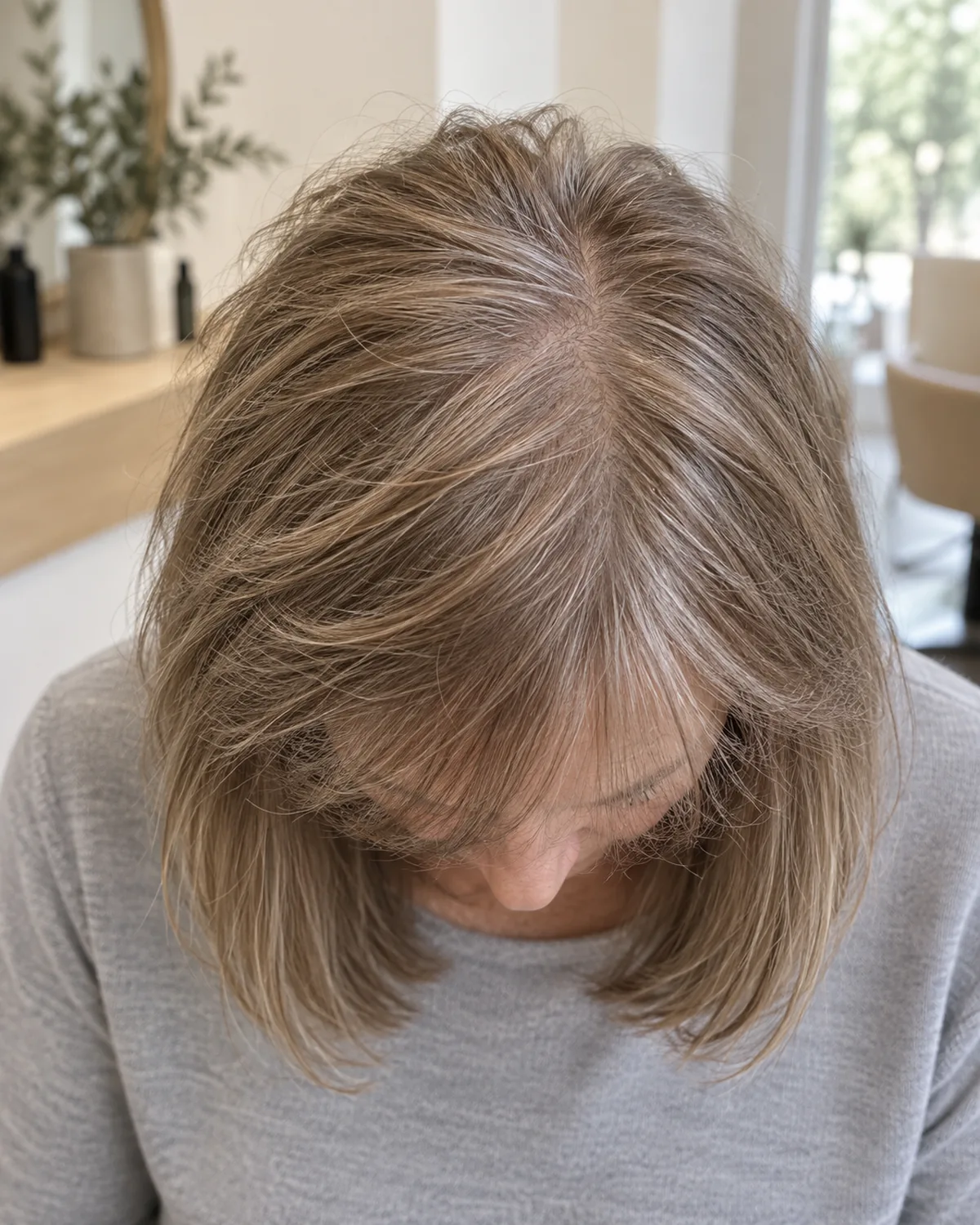
Crown layers cut with a razor to lift the root area, the rest of the hair left at one length to the collarbone. On fine hair the crown is where thinning shows first, so layers here either add life or expose the problem. The razor-cut layers create visible lift at the root.
- This works only if there is still enough density at the crown to hold the lift for a full day; a root-lift spray becomes non-negotiable
- The one-length body below the crown layers preserves density through the visible mid-shaft and ends
- The crown layers are a high-reward, high-risk choice on fine hair: they succeed brilliantly when the density holds and fail visibly when it does not
- Ask your stylist to check whether your crown density is enough to hold razor layers, and to leave the rest completely untouched
- See easy hairstyles for thin hair for options that need less daily styling
16. Tousled Collarbone Cut with Piece-y Ends

A collarbone-length cut where the ends are sliced to create separated, piece-y texture. The texture at the tips adds movement without touching the mid-shaft density. On fine hair the separated ends can read as intentional texture or as thinning. The difference is whether the mid-shaft is thick enough to make the ends look like a choice.
- If the mid-shaft is already thinning, the piece-y ends extend the sparse look downward and the whole cut reads as neglected
- If the mid-shaft holds its density, the piece-y ends create a deliberate contrast between solid body and textured tips
- The motion in this image shows how the separated ends catch light differently from the denser body above them
- Ask your stylist to slice the ends only if the mid-shaft density is strong, and to leave them blunt if it is not
17. Medium Flip with Outward Ends

A collarbone cut styled with the ends flipped outward. The flip pushes width at the bottom of the silhouette and lifts the ends away from the neck. On fine hair the outward flip adds visual density at the perimeter.
- The catch is that this needs a round brush and five minutes every morning; fine hair does not flip on its own
- Without daily styling the ends will hang straight and the cut will read as a plain one-length
- The flip is a styling choice, not a structural one: the cut underneath is a simple collarbone line, and the flip is what makes it read as a distinct style
- Ask your stylist whether your hair holds a round-brush flip; if it falls flat within an hour, this style will work only for events, not for daily wear
18. One-Length Medium Hair Tucked Behind the Ears
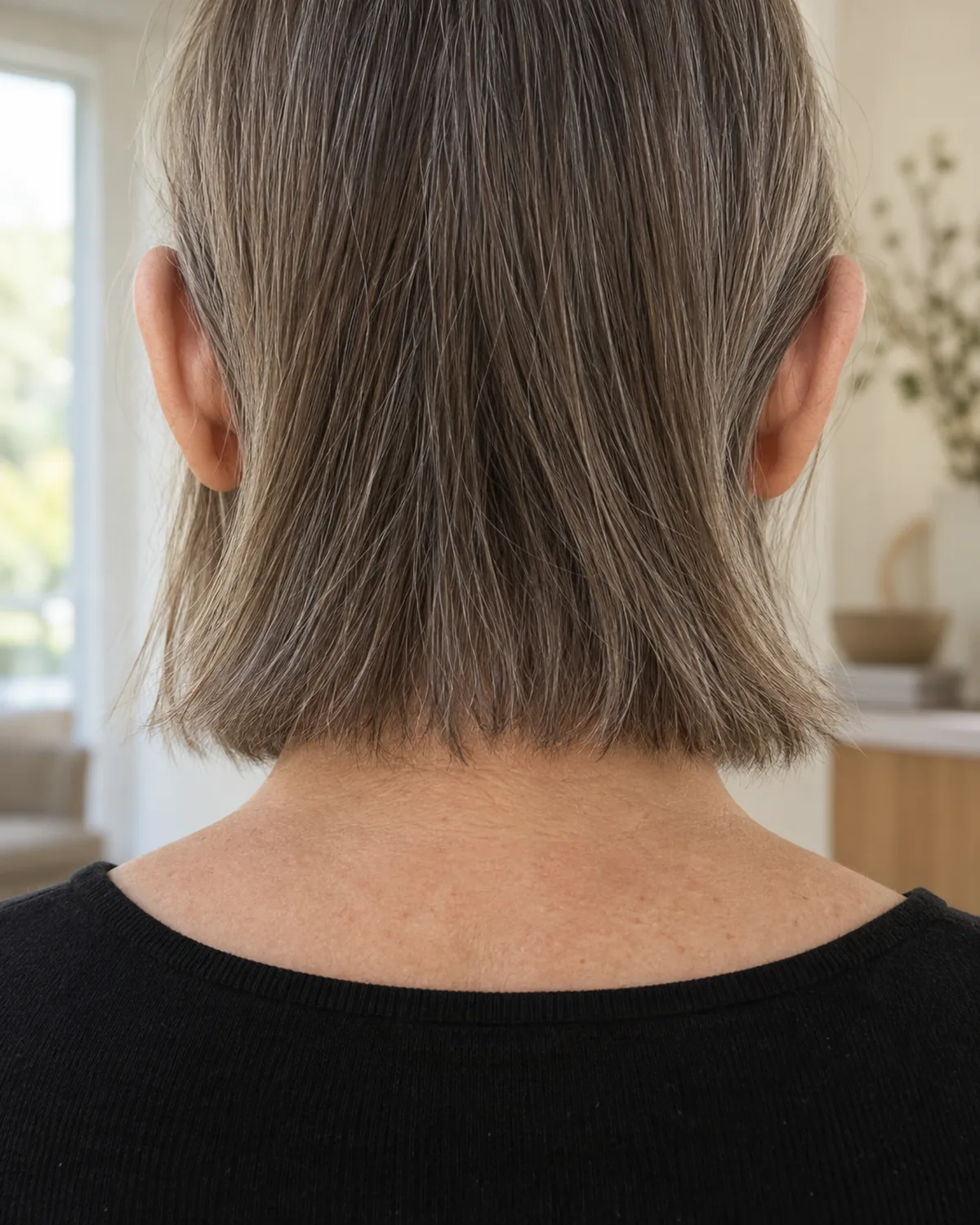
The simplest silhouette on this list: one-length hair at the collarbone, no bangs, no layers, tucked behind both ears. The tuck pulls the hair back into a single plane that reads as dense. On fine hair this is the lowest-maintenance option.
- The ears do the styling: the tuck creates a smooth surface from crown to collarbone and the hair lies in one plane rather than separating into sparse sections
- From behind the clean tuck line behind each ear is visible and the hair hangs as one sheet
- This is what medium-length fine hair looks like when you stop trying to add volume and let the hair do what it does naturally
- Ask your stylist to keep this at one length and to resist the urge to add face-framing layers: the tuck is the frame
- See thinning hair: what to ask your stylist for the right questions when your density is changing
A stylist who can see your hair in person outranks anything written here. Bring two photos from this list, not ten, and start the conversation with where you want the weight line.
Where the checkable claims come from
- Fine Hair: Causes and How to Care for It — Philip Kingsley Trichological Clinic
- Understanding Graduation and Layering — Sam Villa / Redken Education
- Face Shapes and Hairstyles — Pivot Point International
Keep this one
Save it for the appointment
Pin the image above to the board you actually open before a salon visit. This guide is written to be re-read, not read once.
Tonight, before you close this tab
- Gather your hair at the collarbone and check whether the ends make a clean line or taper to wisps
- Part your hair at the centre and look at the mid-shaft from above to see whether the scalp shows through
- Time how long your current style holds its shape from morning to the end of the day
- Save one image from this guide that matches your density and bring it to your stylist with the question: where would you keep the weight line?