14 Short Hairstyles for Women Over 50 That a Stylist Can Actually Cut
Fourteen structurally distinct short cuts for women over 50, each judged by face shape and hair density so you know which ones to ask for and which to skip.

Booking an appointment soon? Save this page. It is easier to skim in the chair than to remember.
At a glance
Works
- A tapered pixie on an oval or heart face because the exposed jaw and cheekbones have room to balance the short sides
- A graduated bob at the jaw on an oblong face because the horizontal line breaks the vertical length
- Internal layers in a thick-hair bob because they remove bulk from underneath without changing the perimeter shape
Depends
- A side-swept pixie on a round face only if your hair has enough density to hold the heavy side past noon
- A micro fringe only if the front section is dense enough to hold a solid line across the forehead
- A stacked nape only if your hair density supports the layers without the scalp showing through at the back
Skip
- An undercut bob on fine hair because it removes density you cannot afford to lose from the one section that needs it most
- A classic pixie on a round face without sideburns or temple length because the exposed jaw emphasizes the horizontal width
- Heavy razor texturing on fine hair because the blade thins each strand from within and the ends dissolve into nothing
Short hair is not a single decision. It is a category that holds a dozen structurally different cuts, and which one suits you depends on two things most advice skips: your face shape and your hair density.
A pixie on fine hair needs a different build from the same pixie on thick hair. The photo might look the same, but the weight placement and texturing method are not.
These fourteen cuts are organized by structure, not by trend. Each one names who it works for, who it disappoints, and what to tell a stylist if you want it.
1. A Classic Pixie With Tapered Sides

The shortest and most architectural option in this guide. Weight sits at the crown, sides and nape are close-cropped, and the silhouette reads clean from every angle. Oval and heart-shaped faces suit this cut because the exposed jawline and cheekbones have room to balance the short sides without the face reading wider.
- On a round face, the lack of length at the jaw emphasizes the horizontal. Skip this version unless you add sideburns or longer temple pieces (see idea 8).
- Ask for the sides to be tapered with scissors rather than clippered if you want a softer transition.
- The nape should be cut tight enough that it does not curl or flare outward between appointments.
- Maintenance interval: every four to five weeks. A classic pixie loses its shape faster than any other cut on this list.
2. A Pixie With Volume at the Crown on Fine Hair

Same family as the classic pixie but built for density. The top is left longer and blunt-cut rather than razored, which preserves every strand's visual weight. The sides stay tapered but not shaved. Crown volume lifts the eye upward, which helps a long face read shorter.
- Blunt-cutting the top section keeps the ends solid. Razoring would thin each strand from within, and on fine hair that means the ends disappear.
- On thick coarse hair, this top section can mushroom. Ask the stylist for internal point-cutting to thin only from beneath so the surface stays full.
- If your hair is fine enough that the crown section separates to show scalp, consider the soft crop with no defined part instead.
3. A Side-Swept Pixie for a Round Face
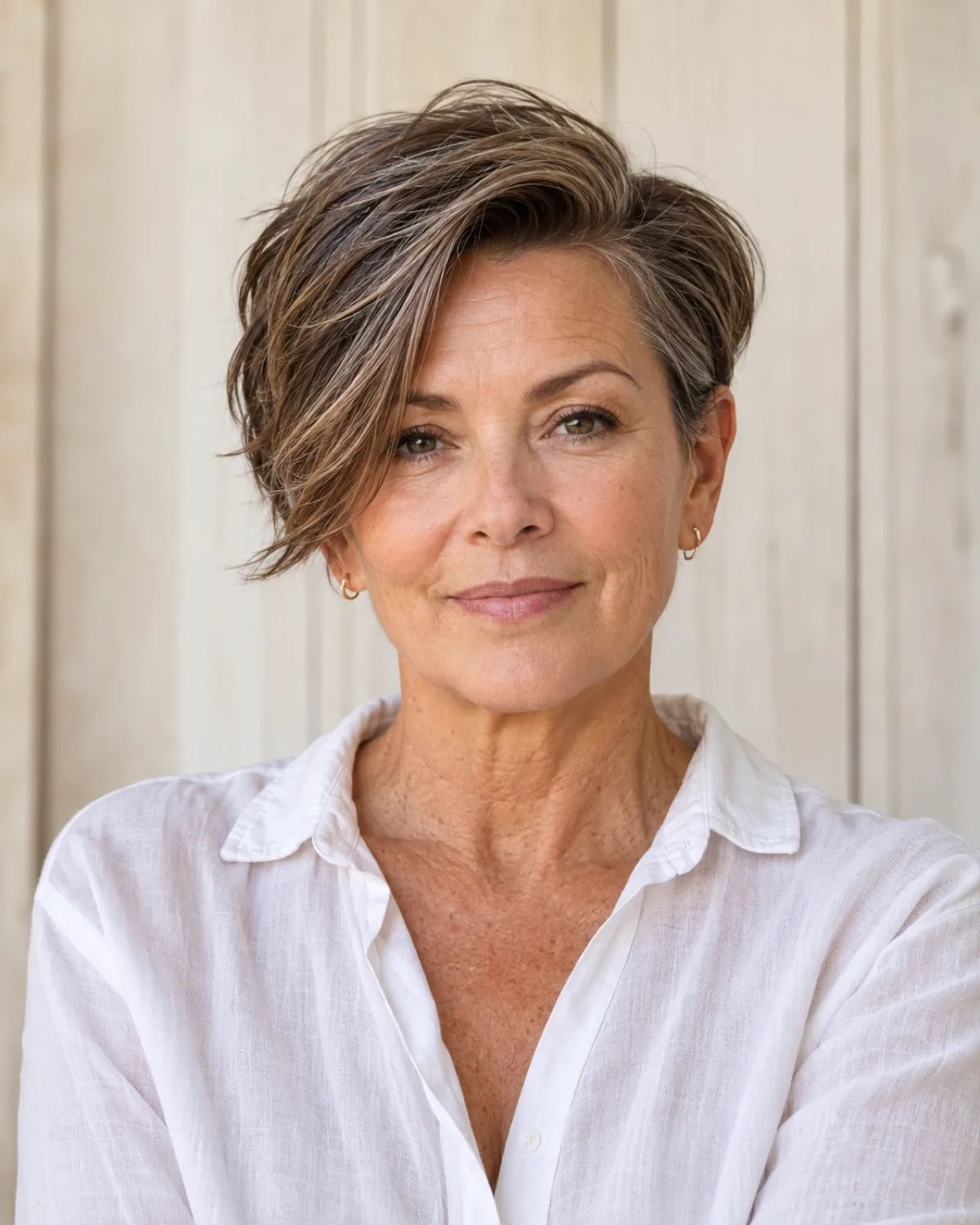
The asymmetry does the work. A deep side part and a long swept fringe create a diagonal line that breaks the circle a round face draws. The longer side falls past the cheekbone. The short side stays clean above the ear. Weight sits on one side only.
- This cut needs medium-to-thick hair to hold the heavy side's shape. Fine hair on the longer side will flatten by midday and the asymmetry collapses.
- The sweep direction matters. Sweep the fringe away from the fuller cheek to draw the eye toward the narrower side.
- If you already know your face shape, you can judge whether the diagonal is doing enough or whether you also need temple-length pieces.
- For more round-face strategies with short hair, see the dedicated round-face short hairstyles guide.
4. A Graduated Bob That Stops at the Jaw

Graduation means the back is shorter than the front, with layers stacking at the occipital bone to add volume at the back of the head. The front pieces frame the jaw. This is the short cut for an oblong face: the strong horizontal at the jaw breaks the vertical length.
- On a round face, the horizontal can mirror the width. Angle the front pieces below the chin to pull the line downward rather than across.
- The graduation at the back should be steep enough to create visible lift, but not so steep that you see scalp through the layers at the nape.
- Ask the stylist where the weight line sits. If it is too high, the back will look puffy rather than structured.
- For a broader survey of bob options, see the bob hairstyles guide.
Where to start
Find your situation, skip ahead
Your hair is fine and you worry every short cut will look thin
Start with the point-cut chin bob or the soft crop. Both preserve density. Avoid undercuts and razor texturing.
10 A Chin-Length Bob With Point-Cut Ends14 A Crop With Soft Fringe and No Defined Part02 A Pixie With Volume at the Crown on Fine Hair
Your hair is thick and short cuts always end up looking like a helmet
Internal layers or an undercut remove the bulk without losing the shape. The graduated bob and stacked bob also redirect volume.
09 A Layered Bob for Thick Hair13 An Undercut Bob With Hidden Volume Control04 A Graduated Bob That Stops at the Jaw06 A Stacked Bob With Nape Graduation
Your face is round and you want a short cut that does not widen it
Asymmetry and vertical lines are your tools. The side-swept pixie creates a diagonal. Sideburns add length at the jaw.
03 A Side-Swept Pixie for a Round Face08 A Soft Pixie With Long Sideburns11 A Disconnected Pixie With Longer Top
5. An Ear-Length Bob With Blunt Ends
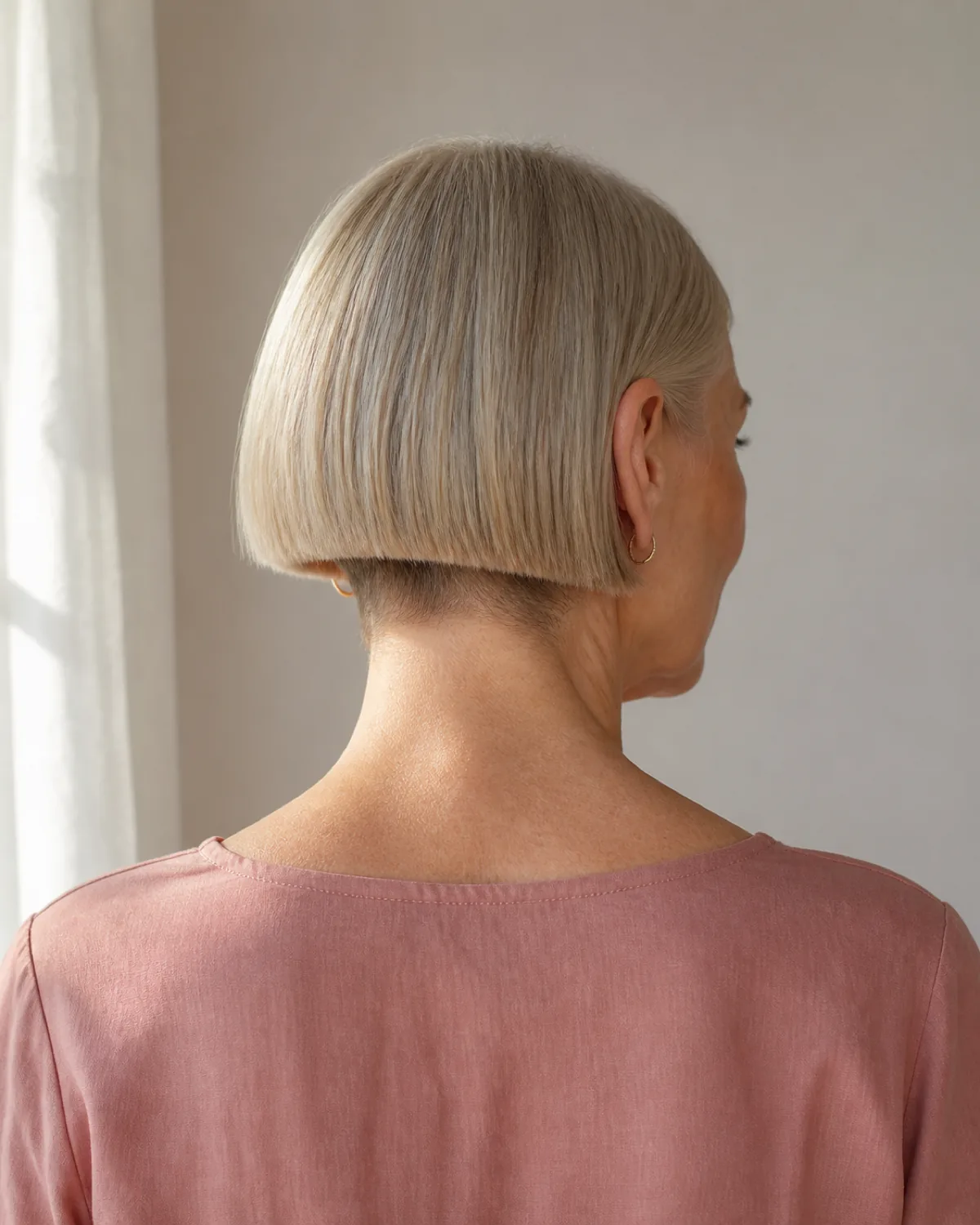
The simplest short bob: one length, blunt line, sitting at the ear or just below. It reads clean and geometric. Best on straight-to-wavy hair with medium density because the blunt line demands enough hair to hold a solid edge.
- On fine hair the ends will separate and the line reads sparse. Switch to point-cut ends instead (see idea 10).
- The blunt line works best when the hair is healthy enough to hold its shape without splitting. Damaged ends will fray the line and it reads unfinished rather than geometric.
- This cut needs very little styling. A flat or round brush and five minutes is enough to set the shape.
6. A Stacked Bob With Nape Graduation
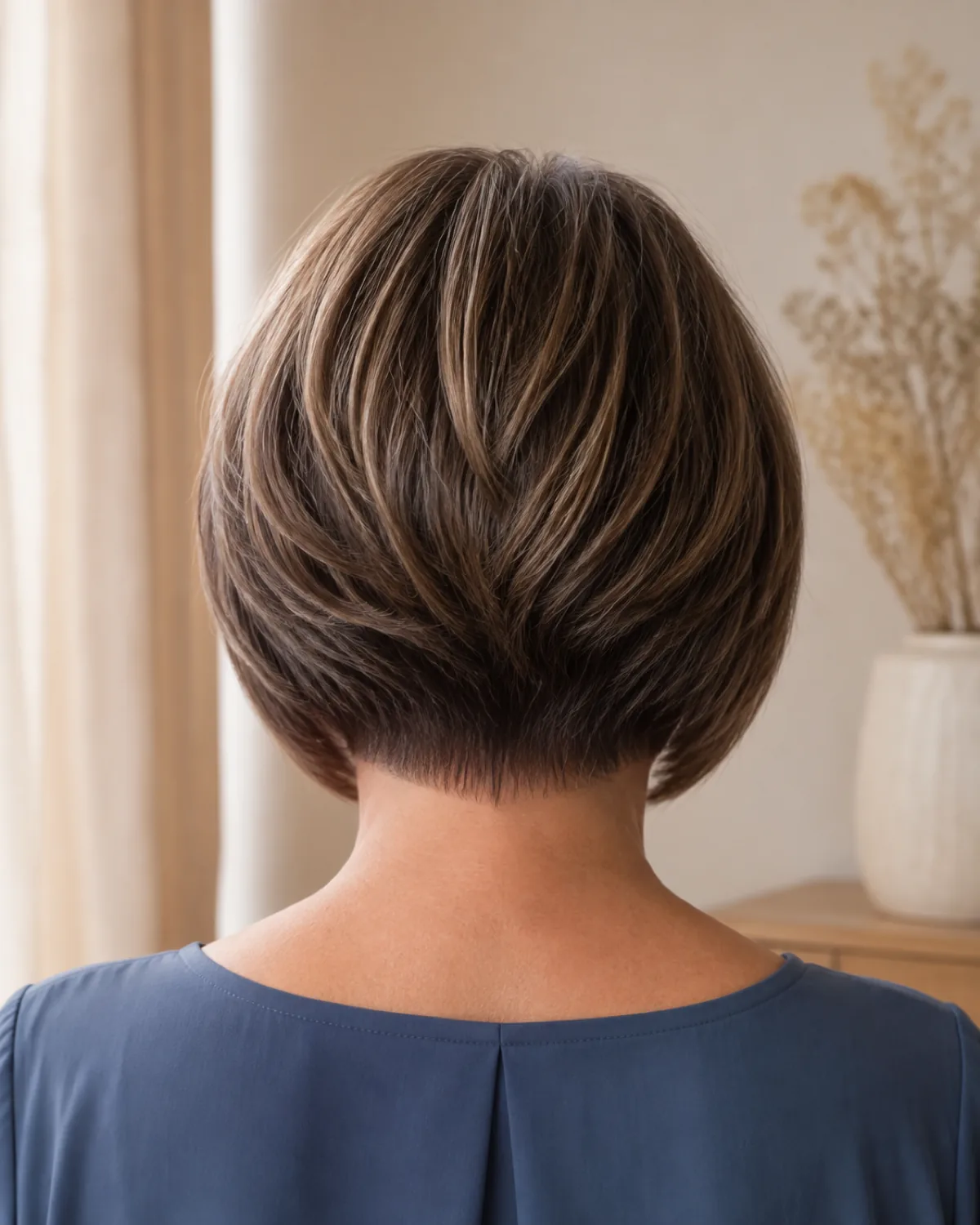
Stacking means tight graduation at the nape that lifts the back silhouette while the front stays chin-length. The back layers are cut at steep elevation, creating a rounded shape that adds volume where the head curves. Suits most face shapes because the front length frames the jaw regardless.
- The risk is over-stacking on fine hair. The nape layers can expose the scalp if the density is not there to support multiple short layers sitting on top of each other.
- Ask the stylist how many levels of graduation they plan. Two or three is structural. Five or six is aggressive and may need daily effort to sit properly.
- The rounded back shape is the visual signature. If the back sits flat rather than lifting, the graduation is not steep enough.
7. A Textured Crop With Piece-y Fringe
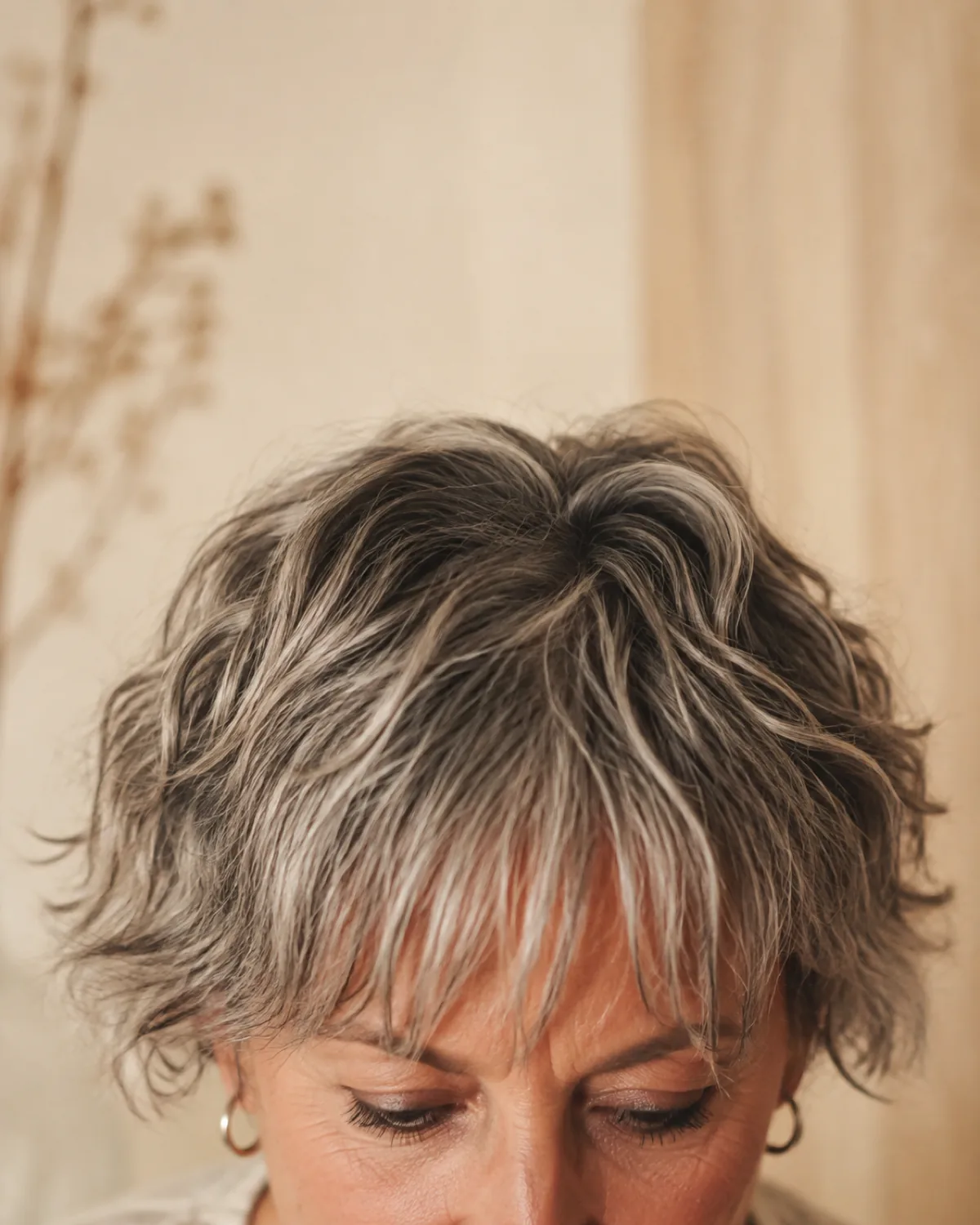
Not quite a pixie, not quite a bob. Length sits between two and four inches all over, with point-cut texture and a choppy fringe. The texture makes it work on wavy and curly hair that would fight a smooth pixie.
- On fine straight hair the pieces can separate and look thin. This cut needs some natural body to hold its shape.
- The piece-y fringe is the defining feature. Ask the stylist to point-cut the fringe section so the pieces separate naturally rather than sitting as a solid curtain.
- If your hair has enough wave to hold this texture, it is one of the most low-maintenance short cuts. The texture hides grow-out better than a precise geometric bob.
8. A Soft Pixie With Long Sideburns

A variation that adds length at the temples and in front of the ears. The sideburns soften the transition from hair to face and give a round or square face the vertical lines it needs. The top is short but not cropped flat.
- Ask for the sideburns to be point-cut so they feather into the skin rather than sitting as a blunt tab.
- The sideburn length should reach at least the middle of the ear. Shorter than that and they read as unfinished rather than intentional.
- This is the pixie for someone who wants the ease of short hair but not the fully exposed jawline of a classic pixie.
- On a square face, the vertical sideburns soften the jawline angle. On a round face, they add the vertical length the silhouette is missing.
9. A Layered Bob for Thick Hair

When density is the issue because there is too much of it rather than too little, internal layers remove bulk without changing the perimeter shape. The bob outline reads as a solid chin-length line, but the interior is lighter because the stylist has taken weight from underneath.
- Suits thick wavy hair that tends to triangle outward. The layers prevent the pyramid shape that makes thick bobs look heavy.
- Not for fine hair. Removing internal weight on already-thin strands collapses the shape entirely.
- Ask the stylist to remove weight from underneath only, not from the surface. Surface layers on a bob can create frizz and flyaways that undermine the clean line.
- If thick hair is your primary concern, also read the long layered guide for thick hair to see whether you want to go short or stay long.
10. A Chin-Length Bob With Point-Cut Ends
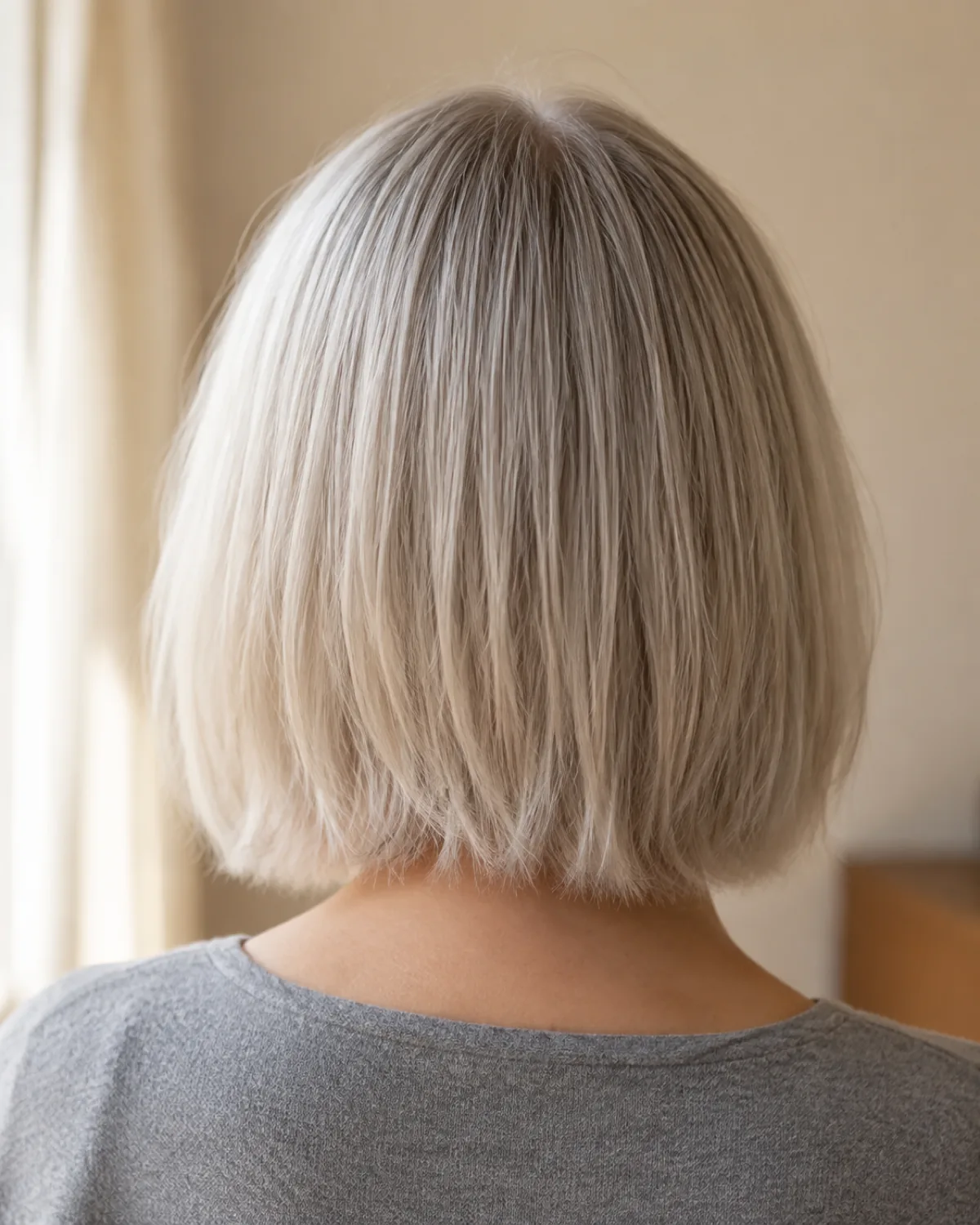
Same length as the blunt ear-length bob but the ends are point-cut: scissors enter the hair vertically, removing small triangles of weight at the tips. The result is a softer, less geometric perimeter that reads natural rather than sharp.
- This is the fine-hair alternative to the blunt bob. Point-cutting preserves density while breaking the line enough to hide sparse ends.
- The difference is visible at the tips. Blunt ends sit in a hard line. Point-cut ends sit in a slightly irregular line that reads as movement rather than precision.
- Ask the stylist to point-cut conservatively. Over-texturing the ends on fine hair turns soft into stringy.
11. A Disconnected Pixie With Longer Top
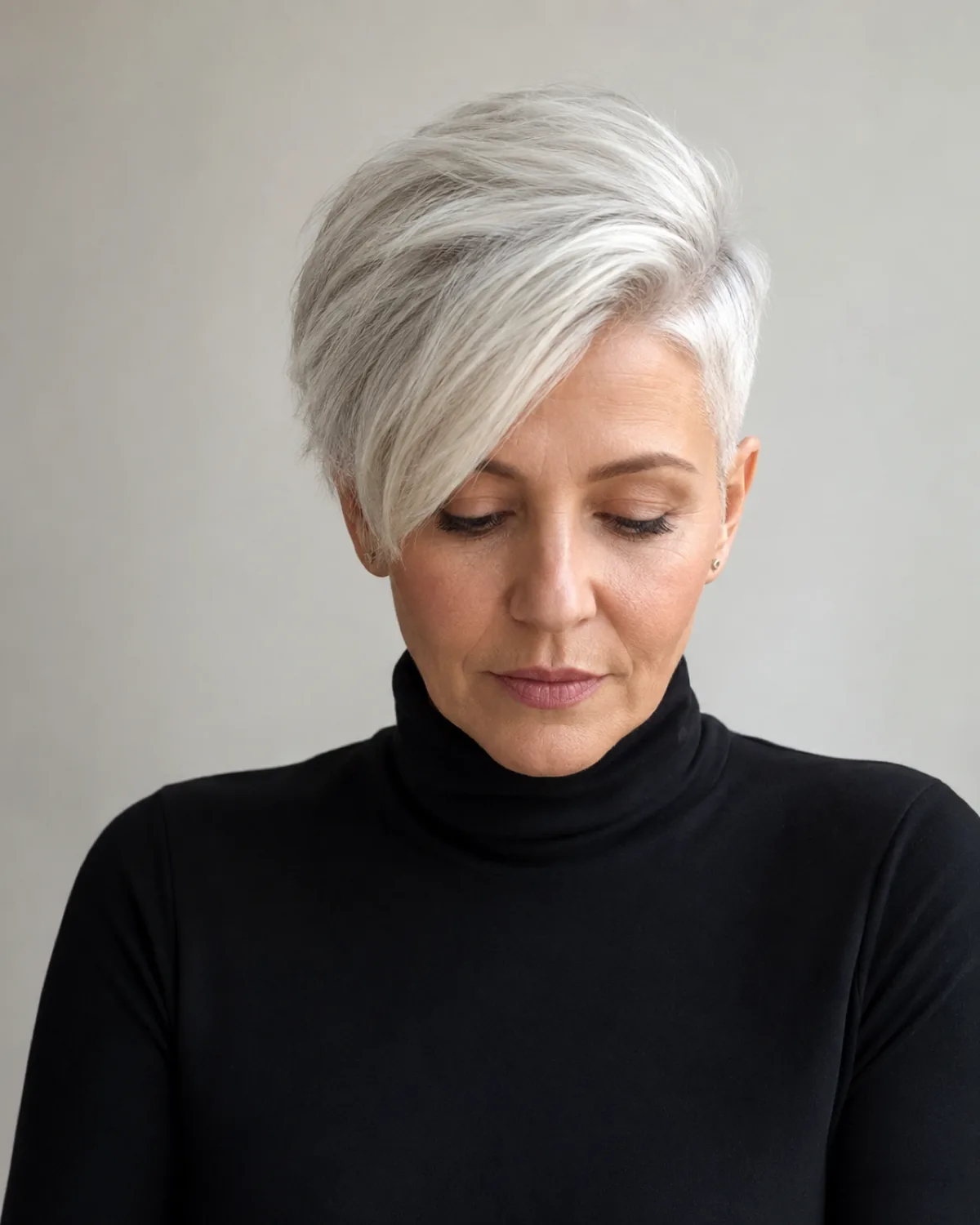
The disconnect means the top section is deliberately much longer than the sides, with no blending between the two zones. It reads edgier than a classic pixie. The longer top can be swept to one side or pushed forward.
- Suits oval and diamond faces. On a round face, the volume at the top helps, but the exposed sides need to stay slightly longer than a buzz to avoid emphasizing width.
- The disconnect is a deliberate design choice. If it starts to blend as it grows out, it loses its structure. Maintenance is every four to five weeks.
- Ask the stylist to keep the top long enough to style in at least two directions. One direction is a haircut. Two directions is a choice.
12. A French Bob With Micro Fringe

Sits at the cheekbone, slightly shorter than a chin-length bob, with a short straight fringe sitting above the eyebrows. The micro fringe is the defining feature: forehead visible above it, eyes framed below it.
- Best on oval faces and straight-to-wavy hair. A high forehead benefits from the fringe coverage. A low forehead can look shorter.
- Fine hair needs the fringe section to be dense enough to hold a solid line across the forehead. If the strands separate, the fringe reads as a mistake rather than a choice.
- The cheekbone length means the sides do not touch the jaw. This is the shortest bob that still frames the upper face rather than the lower face.
13. An Undercut Bob With Hidden Volume Control
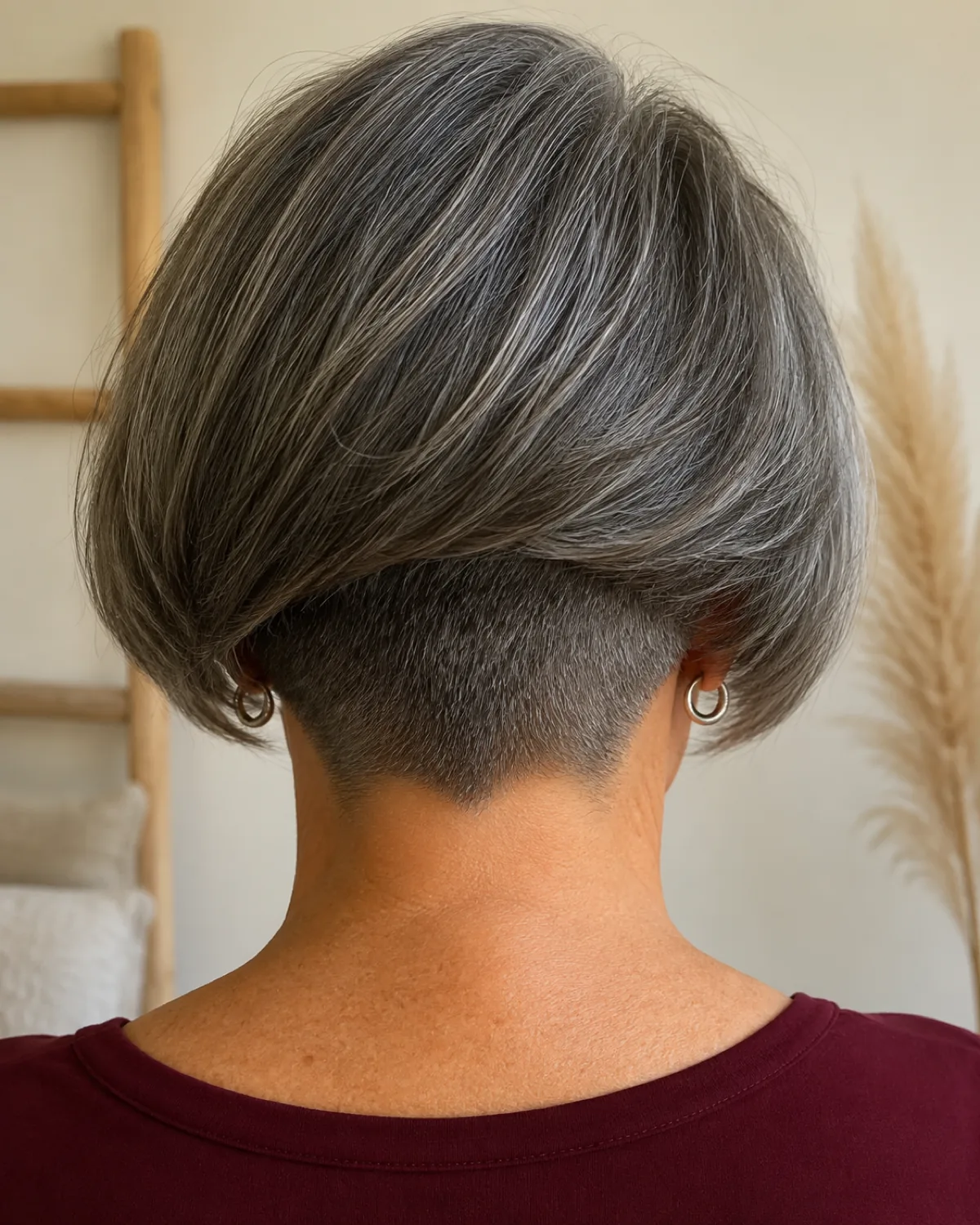
The undercut is invisible from the front. The nape section is clippered short beneath the top layer, which falls over it. The result is a bob that looks smooth and flat-lying on the outside but carries far less bulk underneath.
- Built for very thick or coarse hair that refuses to sit flat in a standard bob. The undercut removes the bulk that makes thick bobs puff outward.
- On fine hair, an undercut removes density you cannot afford to lose. Skip entirely.
- The undercut grows out faster than the top layer. Maintenance is every three to four weeks for the clippered section, while the bob itself can go six to eight weeks.
- Ask the stylist how high the undercut goes. Too high and it shows when the wind catches your hair. Too low and it does not remove enough bulk to matter.
14. A Crop With Soft Fringe and No Defined Part
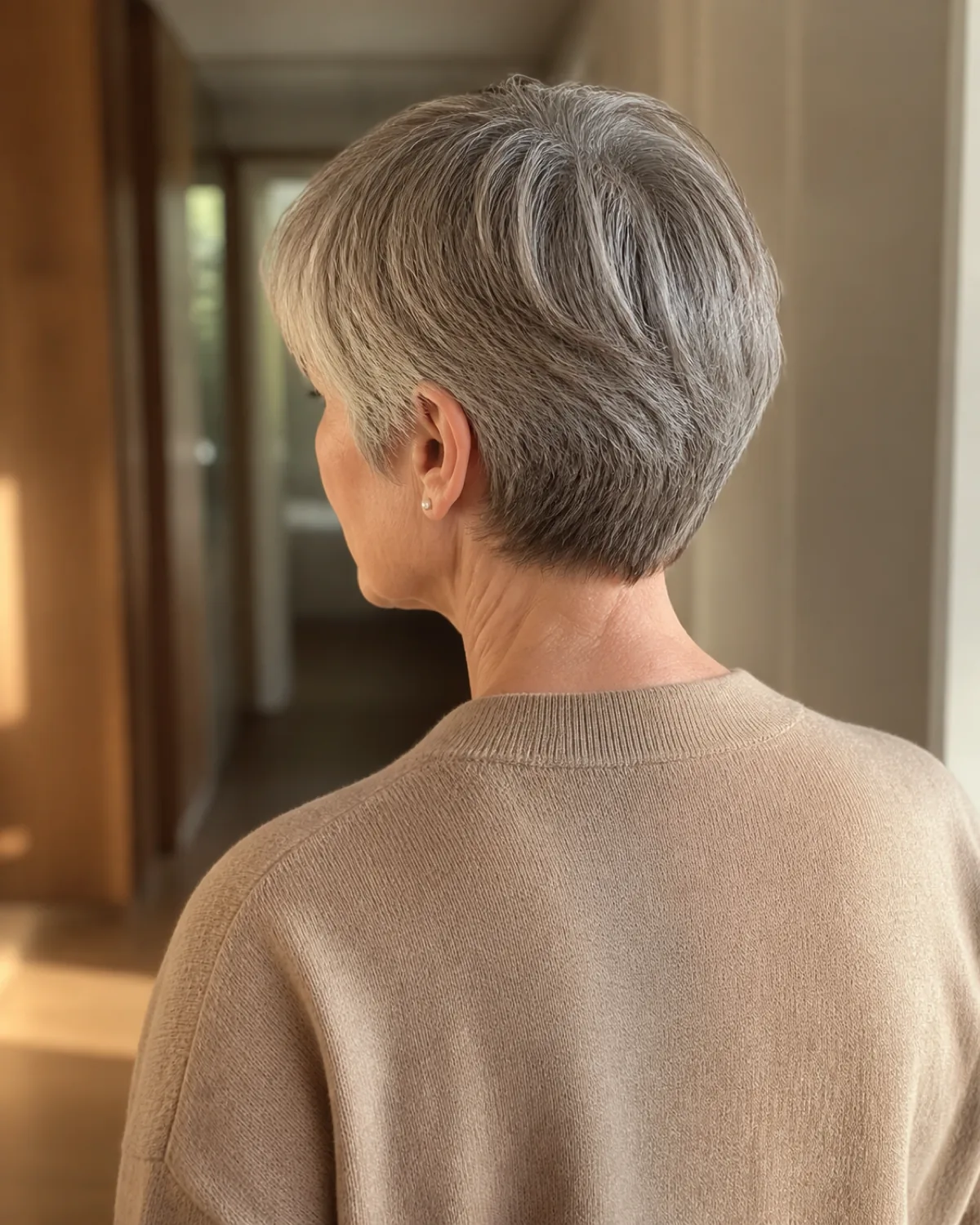
The softest short option. Hair is cut to two to three inches, pushed forward from the crown, with a fringe that blends into the sides. No parting, no hard line. The lack of structure makes it low-maintenance and forgiving on hair that has lost density evenly.
- Suits most face shapes because the soft edge does not impose a strong geometry. On a very round face, the lack of angles means no corrective lines. Consider a side part version instead.
- This is the short cut for someone who does not want to think about their hair. Push it forward, run your fingers through it, and leave.
- The fringe blends into the sides rather than sitting as a separate section. Ask the stylist to graduate the transition rather than cutting a defined fringe line.
- If you have been considering pixie cuts for fine hair, this crop is the gentler entry point. It carries more density than a true pixie and forgives uneven thinning better.
Where the checkable claims come from
- Face Shapes and Hairstyles — Pivot Point International
- Fine Hair: Causes and How to Care for It — Philip Kingsley Trichological Clinic
- Understanding Graduation and Layering — Sam Villa / Redken Education
Keep this one
Save it for the appointment
Pin the image above to the board you actually open before a salon visit. This guide is written to be re-read, not read once.
Tonight, before you close this tab
- Pinch a section at your crown between two fingers and note whether it fills the space or you can see through it
- Hold a pencil horizontally under your chin and check in a mirror whether the line sits at, above, or below the jawline
- Look at your hair from the side and note where the heaviest section sits relative to your ears
- Write down two structural words from this list to bring to your stylist: tapered, graduated, stacked, point-cut, disconnected, undercut