19 Hairstyles for Straight Hair Over 50 That Prove Volume Is Not the Only Goal
Nineteen hairstyles for straight hair over 50, judged by whether the cut uses the natural fall or fights it. Face shape, density, and what to tell the stylist.
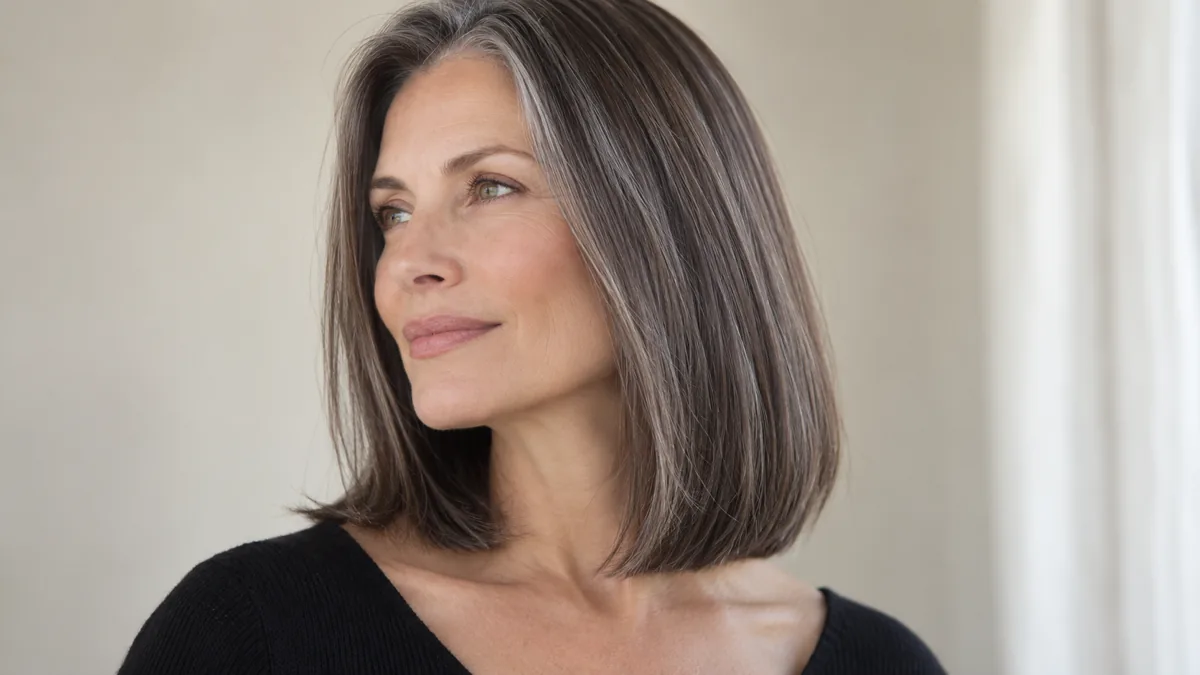
Booking an appointment soon? Save this page. It is easier to skim in the chair than to remember.
At a glance
Works
- A blunt collarbone lob because straight hair is the only texture that holds a true one-length hemline with visible swing
- Long layers starting at the chin on medium-to-thick hair because the different lengths create movement without thinning the ends
- A deep side part on any length because it costs nothing and creates asymmetric body instantly
Depends
- Curtain bangs only if your hairline does not grow forward and thick because a heavy hairline doubles up the bang section into a shelf
- A blunt micro-bob at the jawline only if your face is not round because the horizontal line at jaw level echoes facial width
- A textured pixie only if your hair is fine-to-medium because coarse straight hair stands up in a pixie rather than lying into the textured shape
Skip
- A sleek center-parted long look if crown density has thinned because the center part widens and shows scalp under the weight
- Disconnected shag layers if you want a polished finish because the shag reads intentionally undone and cannot be smoothed without heat
- Tapered V-cut on fine hair because the sides thin the perimeter further and the silhouette narrows instead of shaping
Straight hair does not lack pattern. It lacks built-in shape. Every cut either creates shape with geometry — layers, graduation, blunt angles, weight placement — or embraces the natural fall and lets the clean line speak.
These nineteen cuts answer one question: does the shape use the straight texture, or does it fight it? Each idea lands on who it suits, who should skip it, and what to say in the chair.
A stylist who can see your hair density and face shape in person outranks anything written here. Bring your two-word description and your flat-iron count.
1. One-Length Collarbone Cut With Swing
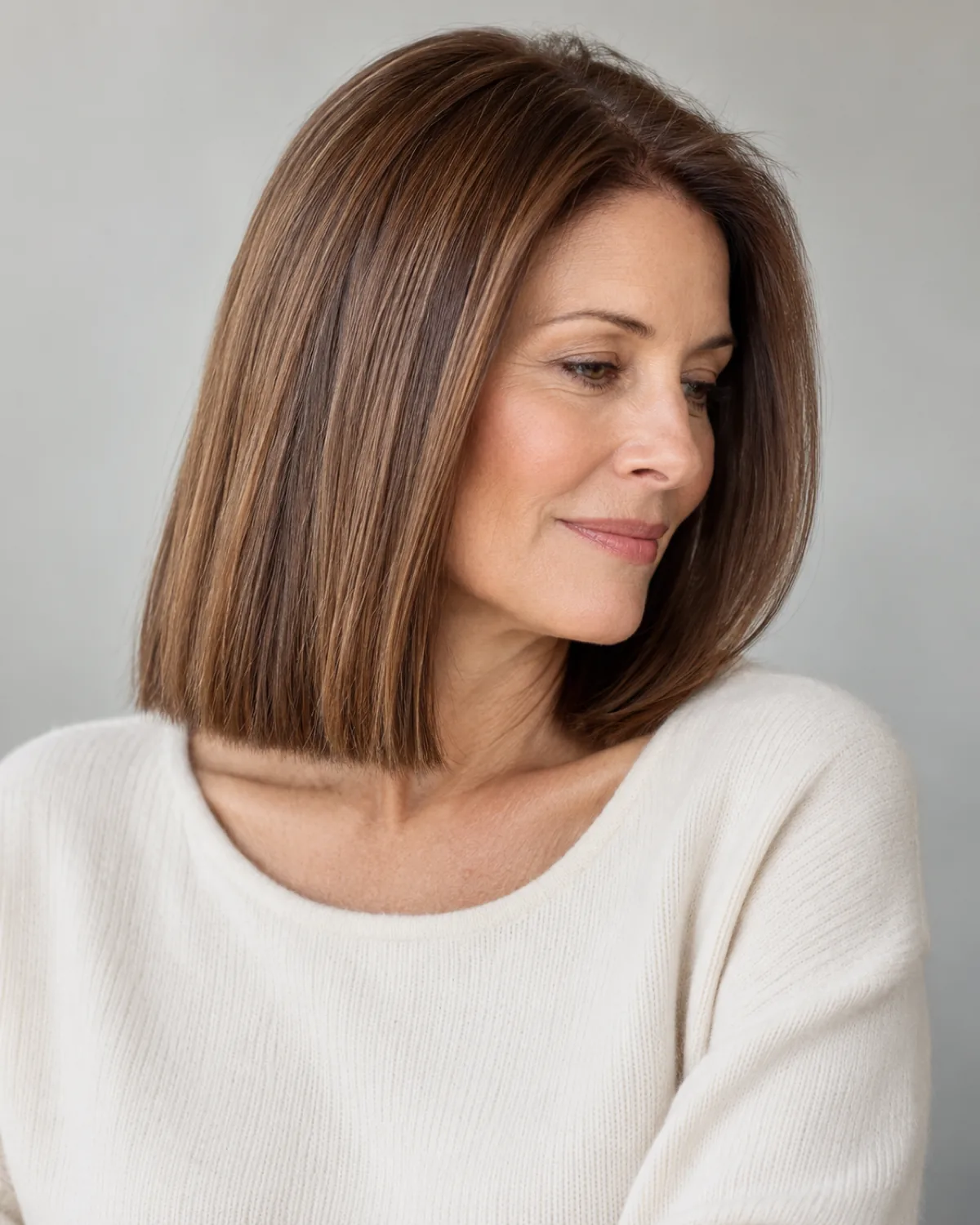
A single-length cut at the collarbone with no layers and the ends cut square. On straight hair this creates swing — the uniform weight at the hemline makes the hair move as one sheet when the head turns. The angle of the cut determines whether the swing is forward or neutral. Skip if hair is fine and sparse because the single-length hemline magnifies thin ends.
- Tell the stylist to cut on dry hair with the head upright because wet cutting on straight hair hides how gravity pulls the hemline
- Ask for a true horizontal hemline checked from the back with a mirror before leaving the chair
- If you are considering medium-length hairstyles over 50 this is the cleanest starting point for straight hair
- The swing is a texture-specific payoff — curly and wavy hair cannot replicate it
2. Graduated Bob With a Stacked Back
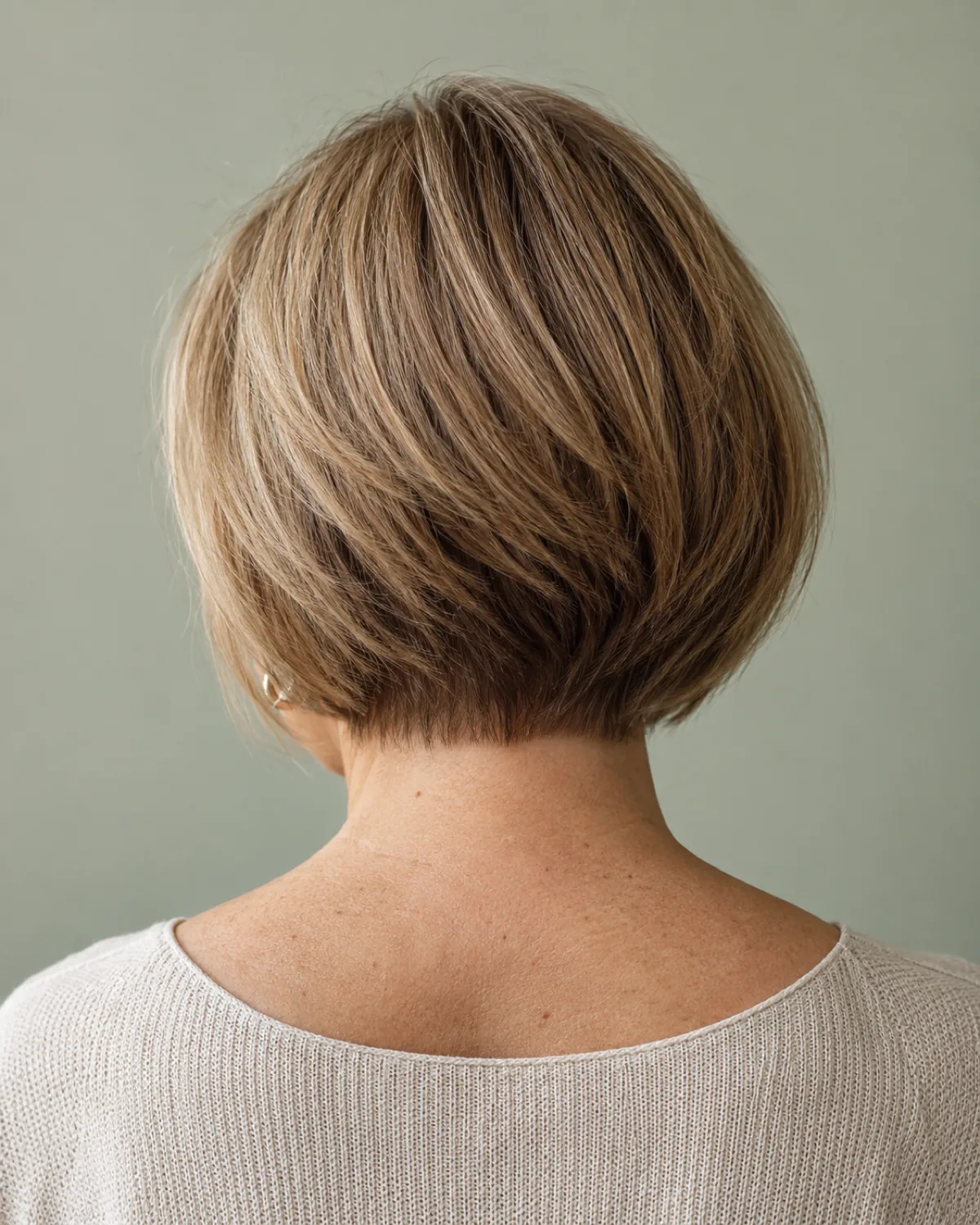
Shorter at the nape, longer toward the chin. The graduation builds shape into straight hair by stacking weight at the occipital bone, which creates the illusion of a fuller back. Works on all face shapes. Skip if you want to grow it out because the stacked back takes months to blend into a one-length shape.
- Ask the stylist how many inches of graduation there will be at the nape because a deep stack locks you in longer than a shallow one
- Request that the front length stays at or below chin level so the bob reads as a bob and not a pixie growing out
- If you are looking at short hairstyles over 50 the graduated bob is the bridge between short and medium
3. Long Layers Starting at the Chin
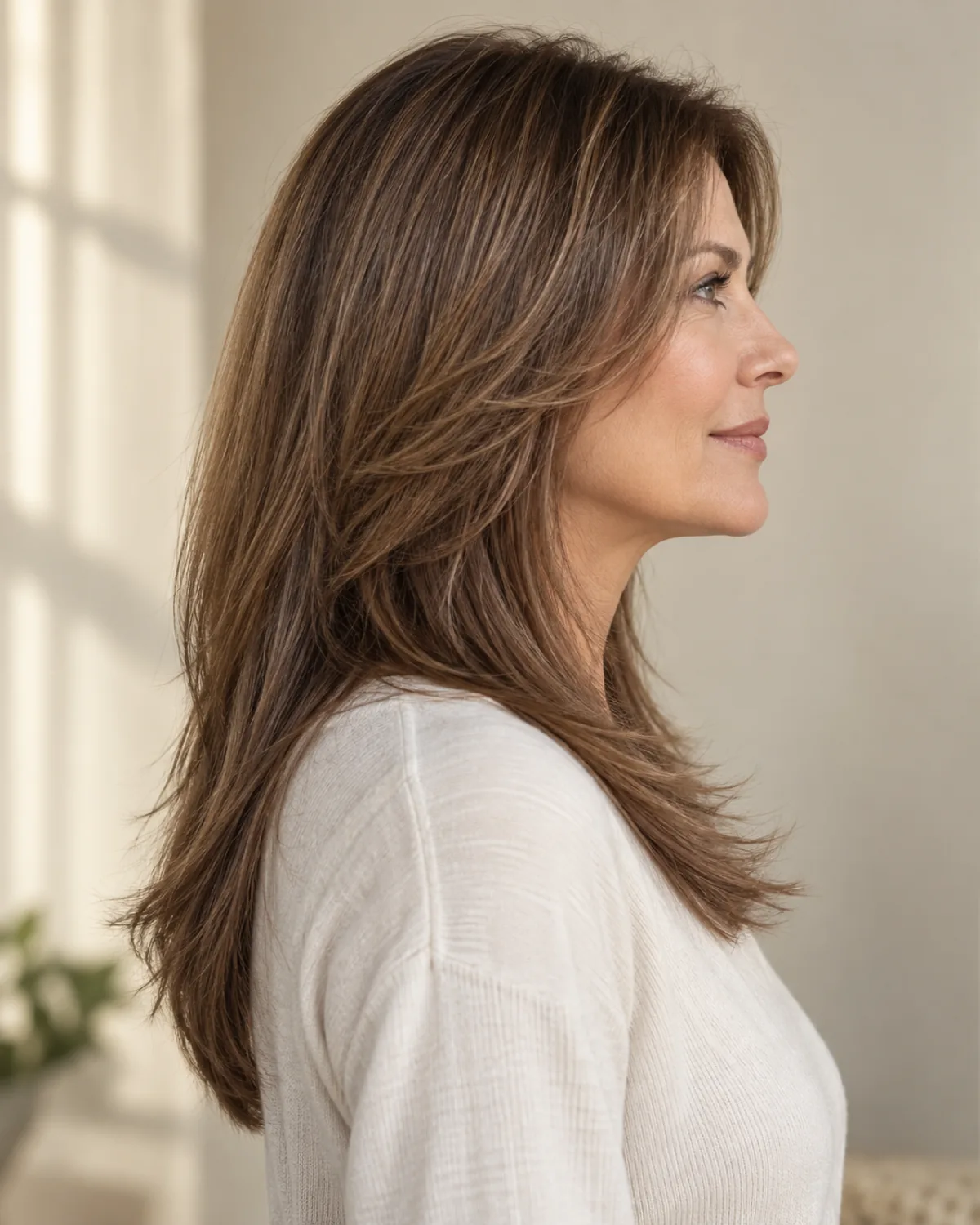
Layers that begin at chin level and cascade to the longest length. On straight hair the different lengths catch movement differently — longer pieces swing while shorter pieces frame. Works on medium-to-thick density. Skip if hair is thin because long layers on thin straight hair separate and show gaps (Sam Villa — weight removal and layering on straight versus textured hair).
- Ask the stylist to start the shortest layer at chin level and not higher because starting too high on straight hair creates a mullet silhouette
- Request that the layering stays on the sides and front only so the back keeps its full density
- Check from the side that the layers create a gradual diagonal rather than visible steps
4. Curtain Bangs on Shoulder-Length Straight Hair

Center-parted fringe graduating from brow length to cheekbone. On straight hair the curtain bang holds its shape without curling iron work because the hair falls where it is cut. Flatters oval, long, and heart-shaped faces by breaking the vertical line. Skip if your hairline grows forward and thick because the bang section doubles up and reads heavy.
- Ask the stylist to point-cut the bang ends rather than blunt-cutting so the fringe blends into the side length
- If you are weighing bangs after 50 the curtain style is the lowest-commitment option because it grows out fast
- Confirm that the center part sits naturally where you already part your hair because fighting a natural part with bangs means daily restyling
5. Sleek Long Hair With a Middle Part
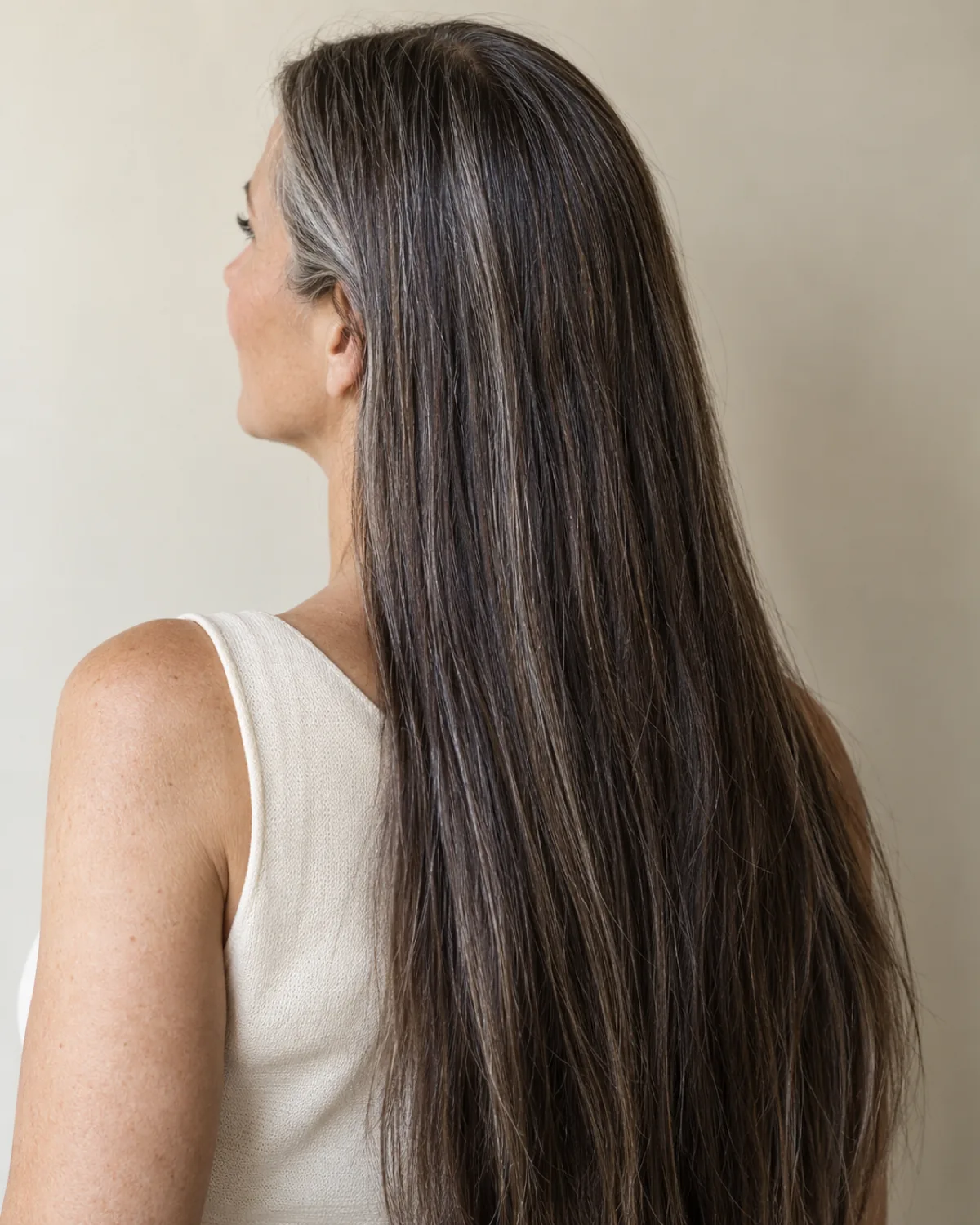
Hip-length or longer, parted dead center, no layers. This is the statement choice: straight hair worn as straight hair. Works when hair is thick, shiny, and the scalp can sustain the weight. Skip if density has thinned at the crown because the center part widens under tension and shows scalp.
- The judgment is binary — is your hair thick enough to carry the weight without the part spreading
- Ask the stylist for a maintenance trim every eight to ten weeks to keep the hemline clean because dead ends on straight long hair are more visible than on any other texture
- If you are interested in long hair after 50 this is the purest expression but requires the most from your hair
Where to start
Find your situation, skip ahead
Your straight hair is thick, medium-to-long, and you want a shape that works without daily styling
A blunt collarbone lob or long layers starting at chin — both hold shape with gravity alone on thick straight hair.
01 One-Length Collarbone Cut With Swing03 Long Layers Starting at the Chin
Your straight hair is fine, you want more movement, and you are open to a shorter cut
A textured pixie or graduated bob — both create built-in shape on fine straight hair without relying on volume products.
06 Textured Pixie on Straight Hair02 Graduated Bob With a Stacked Back
You want to keep your length but the straight fall looks flat and formless
Face-framing layers or a deep side part — minimal change, visible payoff, both reversible.
08 Shoulder-Length With Face-Framing Layers09 Switching the Part Line to Reset the Silhouette
6. Textured Pixie on Straight Hair
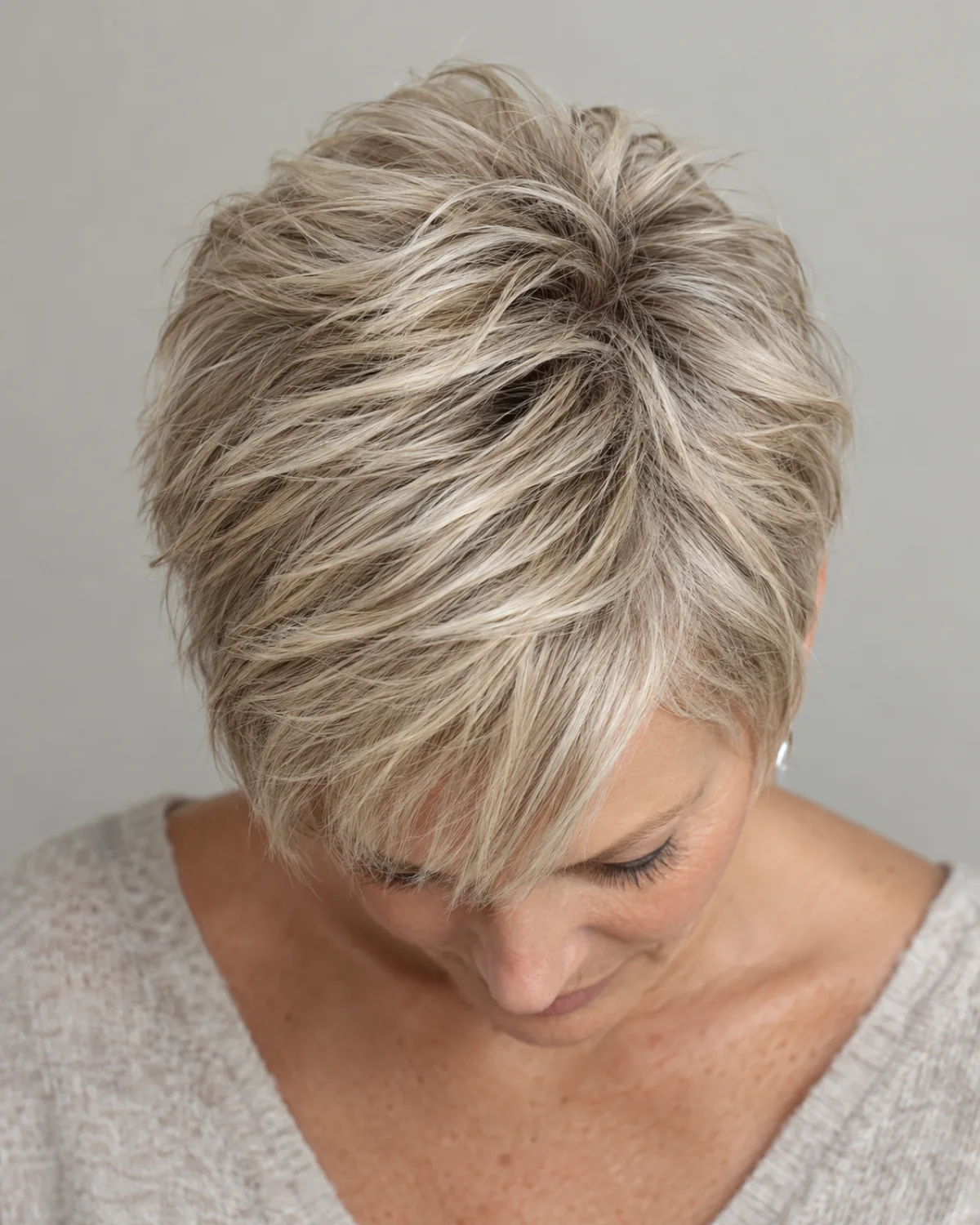
A short pixie with point-cut texture through the crown and sides. The texture breaks up straight hair's tendency to lie flat against the skull. Works on fine-to-medium straight hair. Skip if hair is coarse and thick because coarse straight hair in a pixie stands up rather than lying into the textured shape.
- Tell the stylist to point-cut rather than razor because razor on straight hair frays the ends instead of creating clean texture
- Ask for the texture to start at the crown and taper toward the ears so the shape has direction
- If you are considering pixie cuts for fine hair over 50 the texture is what makes this version work on straight strands
7. A-Line Bob (Longer in Front, Shorter at Back)
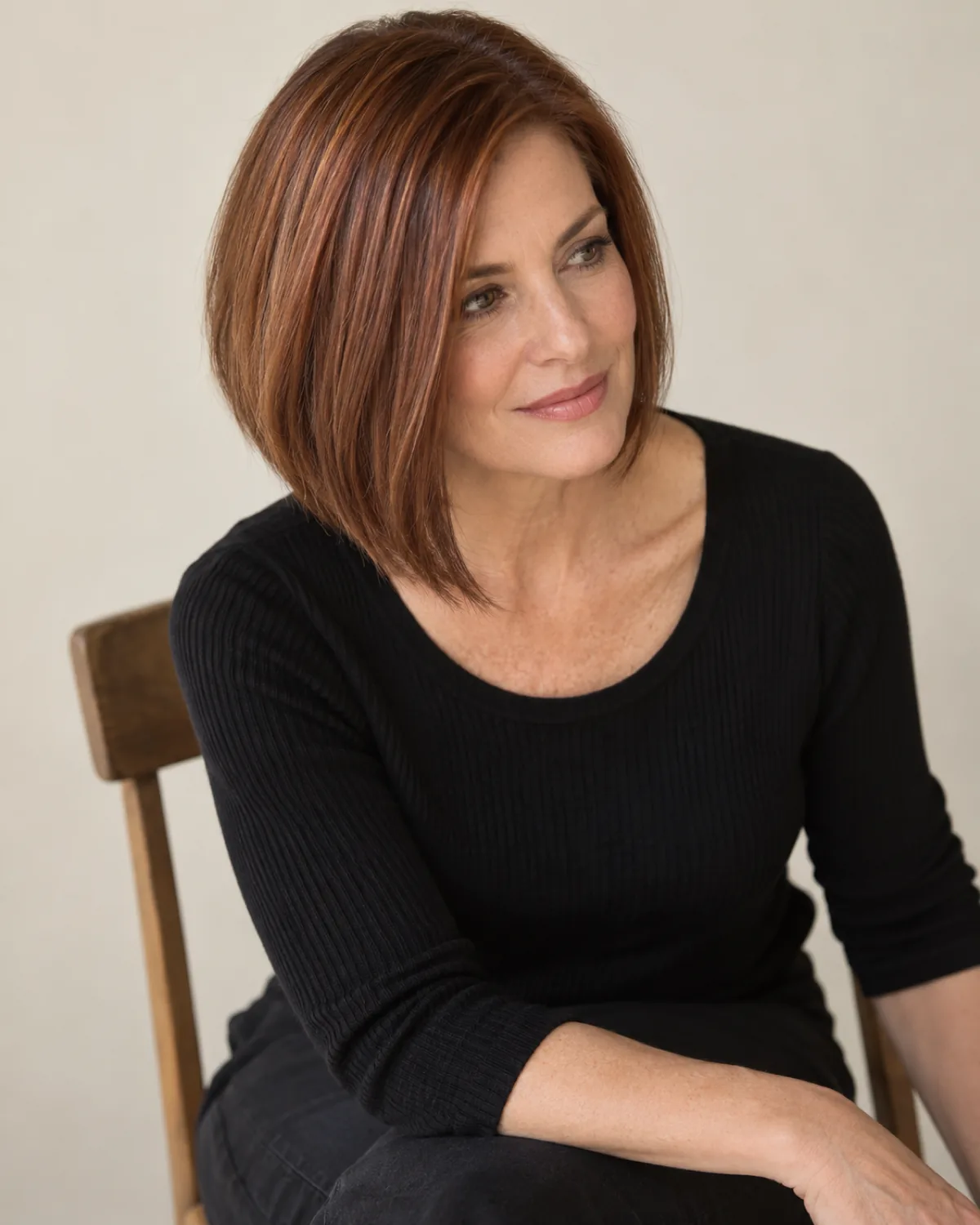
A bob angled from shorter at the nape to longer at the chin. The angle creates a visible diagonal that gives straight hair a geometric shape without layers. Works on round and square faces because the forward length narrows the frame (Milady — diagonal lines and face shape). Skip if you push your hair behind your ears constantly because the A-line only reads when the front pieces stay forward.
- Ask the stylist for the exact angle in inches — the difference between the back and front determines how dramatic the line reads
- Request a clean blunt perimeter rather than textured ends because the geometric line is the point of this cut
- Check from the front that both sides are even because an asymmetric A-line is a different style entirely
8. Shoulder-Length With Face-Framing Layers
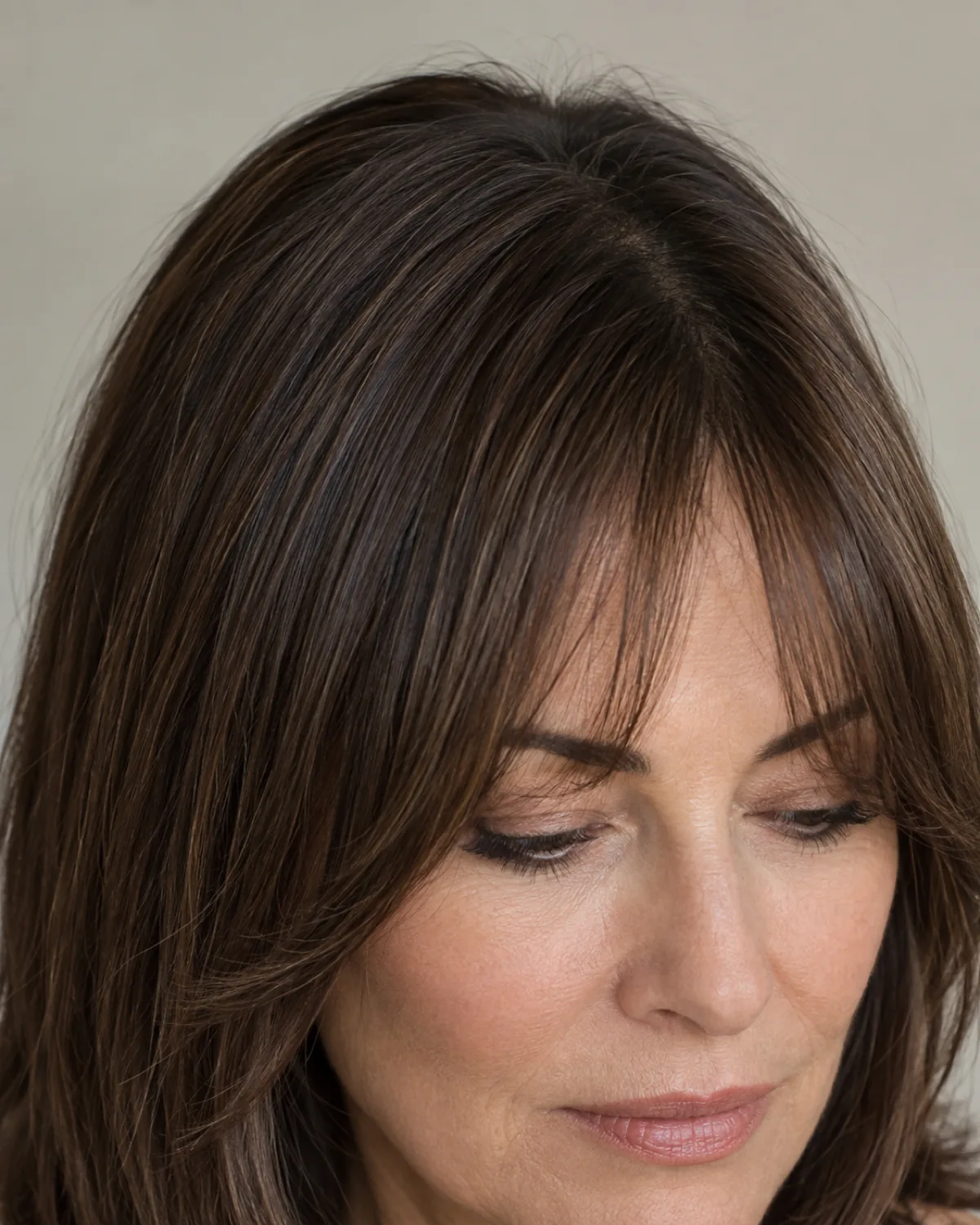
A one-length base at the shoulders with only the front sections layered from cheekbone to chin. Minimal disruption to the straight fall, but the face-framing pieces soften the contour. Works on all densities. This is the lowest-risk layer option because the back stays one length and the face-framing pieces grow out fast if you dislike them.
- Ask the stylist to keep the face-framing layer no shorter than cheekbone level because going higher creates a curtain-bang effect you may not want
- Request that the layering stays within the first inch of hair on each side of the face so the rest of the cut is untouched
- Check from the front that the shortest pieces fall at the same point on both sides
9. Switching the Part Line to Reset the Silhouette
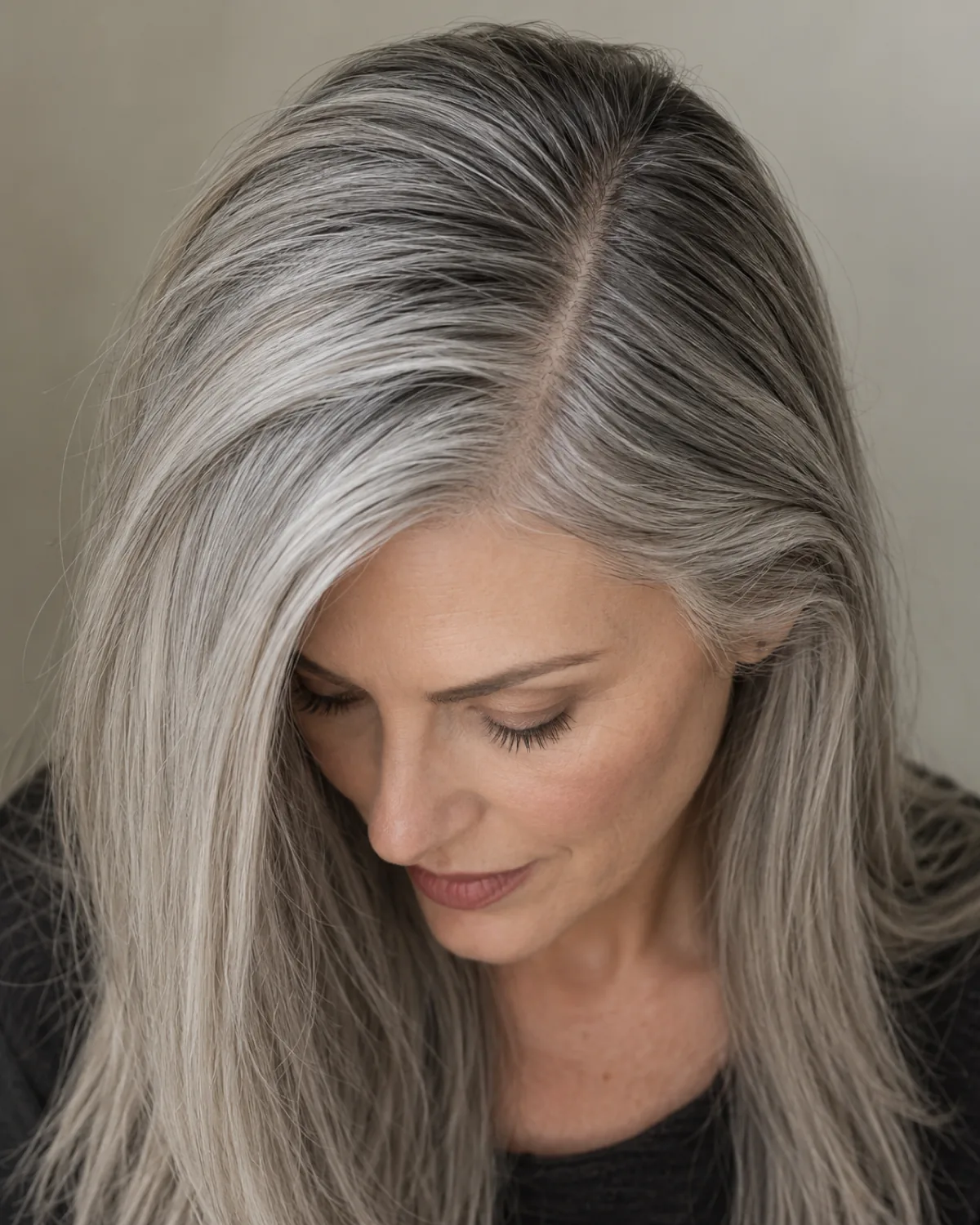
The part line on straight hair is more visible and more structural than on any other texture because every strand falls in the direction the part dictates. Moving an established center part to a deep side part redirects root lift on the heavy side and flattens the light side, creating an asymmetric silhouette from a symmetric cut.
- The straight-hair-specific advantage is that a new part line holds itself after one wash because straight hair has no curl memory fighting the change
- This is the only idea on this list that costs nothing and can be tested before the salon visit
- Works on all face shapes except already-asymmetric faces where adding more asymmetry from the part compounds the imbalance
10. Blunt Micro-Bob at Jawline
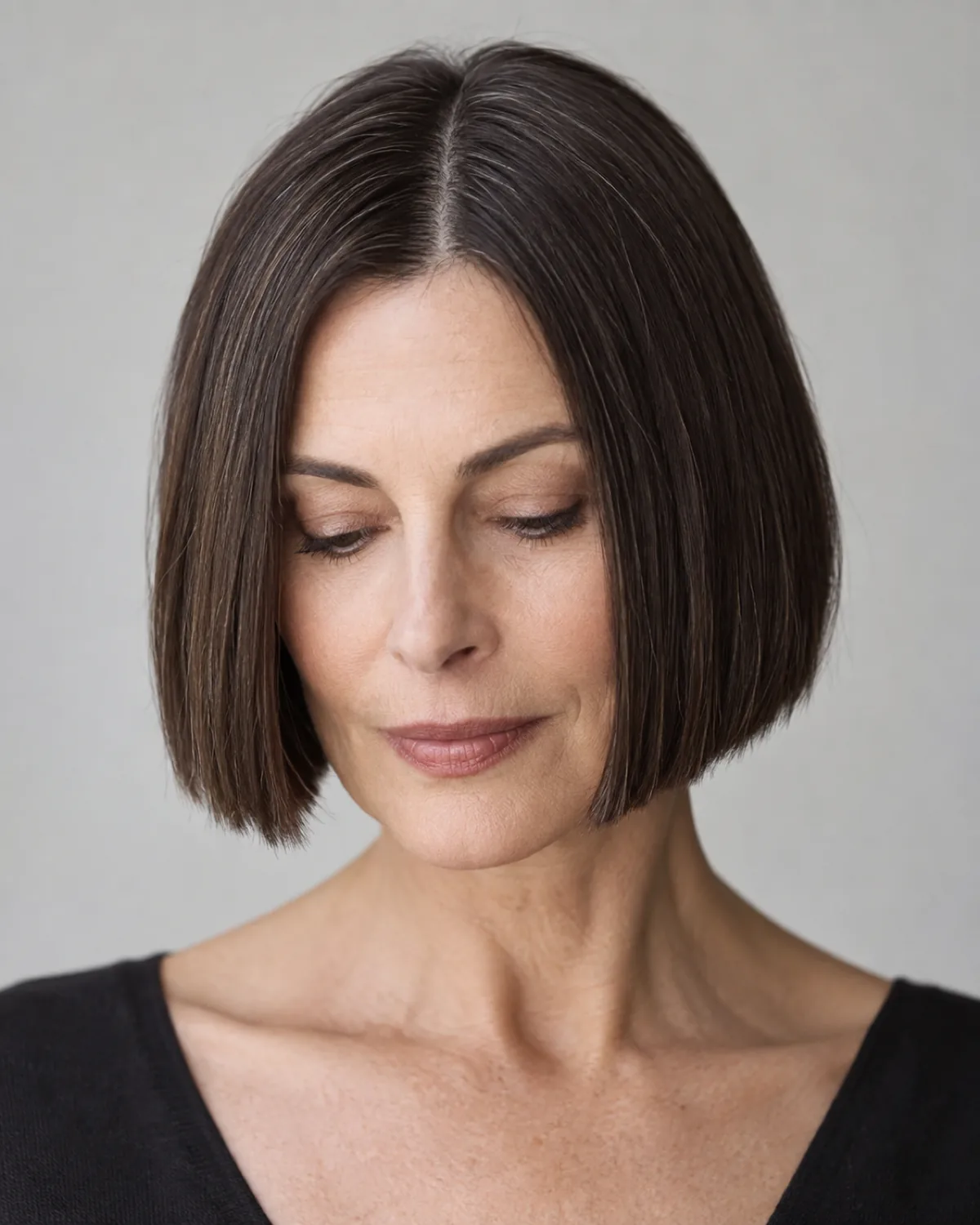
Chin-length or shorter, blunt cut, no graduation. The short blunt line is a bold frame for straight hair — it emphasizes the jaw and neck. Works on oval and heart-shaped faces. Skip if your face is round because the jaw-length horizontal line echoes the width (Milady — face-shape and line relationship in cutting).
- Ask the stylist to check the length from both profile and front views because a micro-bob that reads right from the front can look too short from the side
- Request a true blunt cut with no texturing because the clean line is what makes this style distinct from a grown-out pixie
- Consider this cut only if you are comfortable with your neck and jawline being fully exposed
11. Straight Shag With Disconnected Layers

A mid-length shag with visible disconnection between the crown and the perimeter. On straight hair, the disconnected layers create deliberate separation rather than blending — the choppy silhouette is the style, not a flaw. Works on medium-to-thick hair. Skip if you want a polished finish because the shag reads intentionally undone.
- Tell the stylist you want visible disconnection between the layers rather than blended graduation because blending removes the shag character on straight hair
- Ask where the shortest layer will sit because on straight hair you can see the exact point where the disconnection starts
- If you are looking at shag haircuts for thin fine hair over 50 note that the shag works differently on straight versus wavy — straight needs thicker density to hold the disconnection
12. Collarbone Length With Beveled Ends
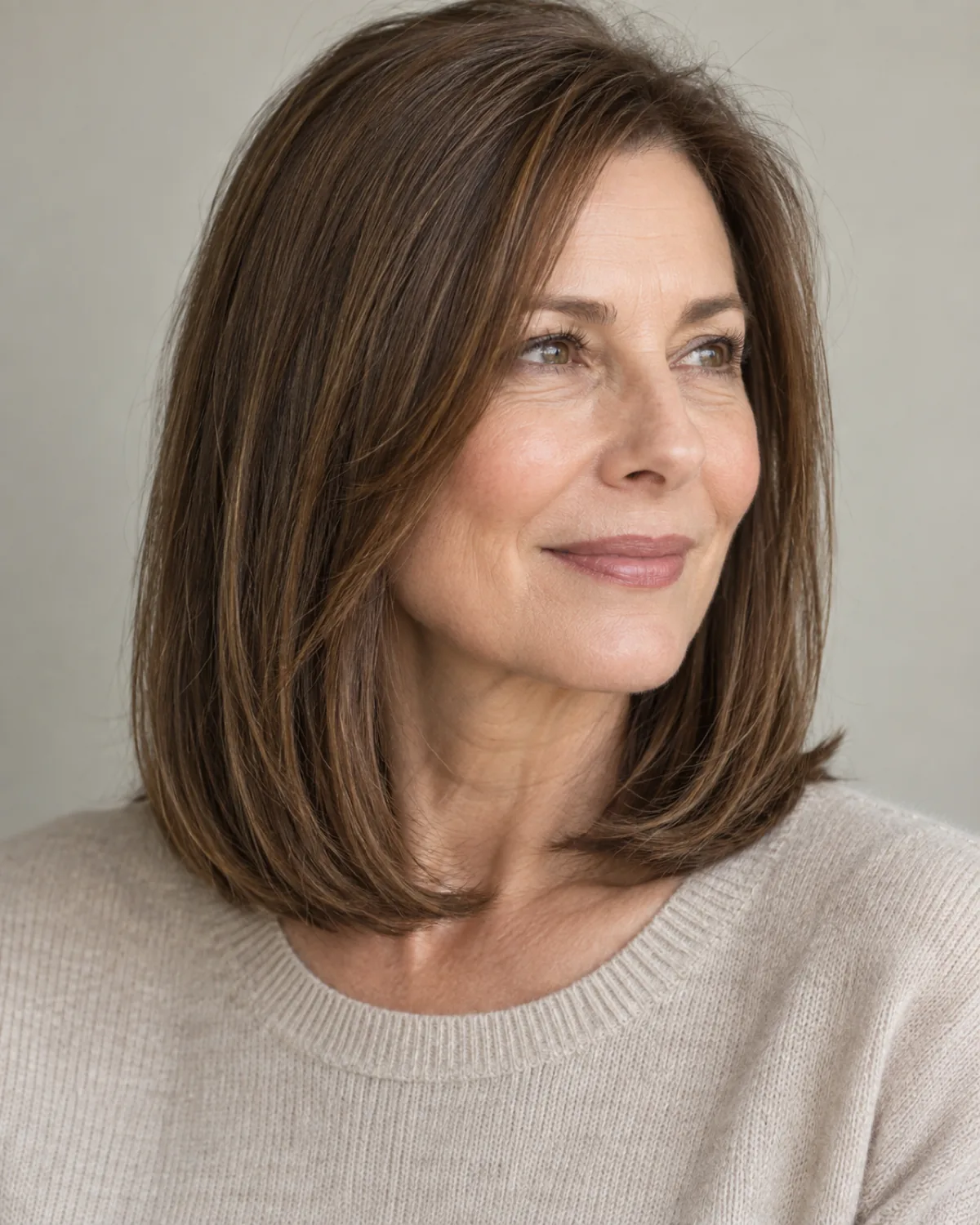
A one-length cut at the collarbone where the last inch is beveled inward with a round brush during the cut. The bevel gives straight ends a slight curve without permanent layers. Works on all densities. The bevel grows out in six to eight weeks, so this is a temporary shape trick between cuts.
- Ask the stylist to bevel on dry hair so you can see exactly how much the ends turn under
- Understand that the bevel is not a perm and will relax after a few washes — this is a cut-day shape, not a permanent shape
- If you like the effect but want it to last, ask about an internal layer that mimics the bevel structurally
13. Long Bob With Side-Swept Bangs
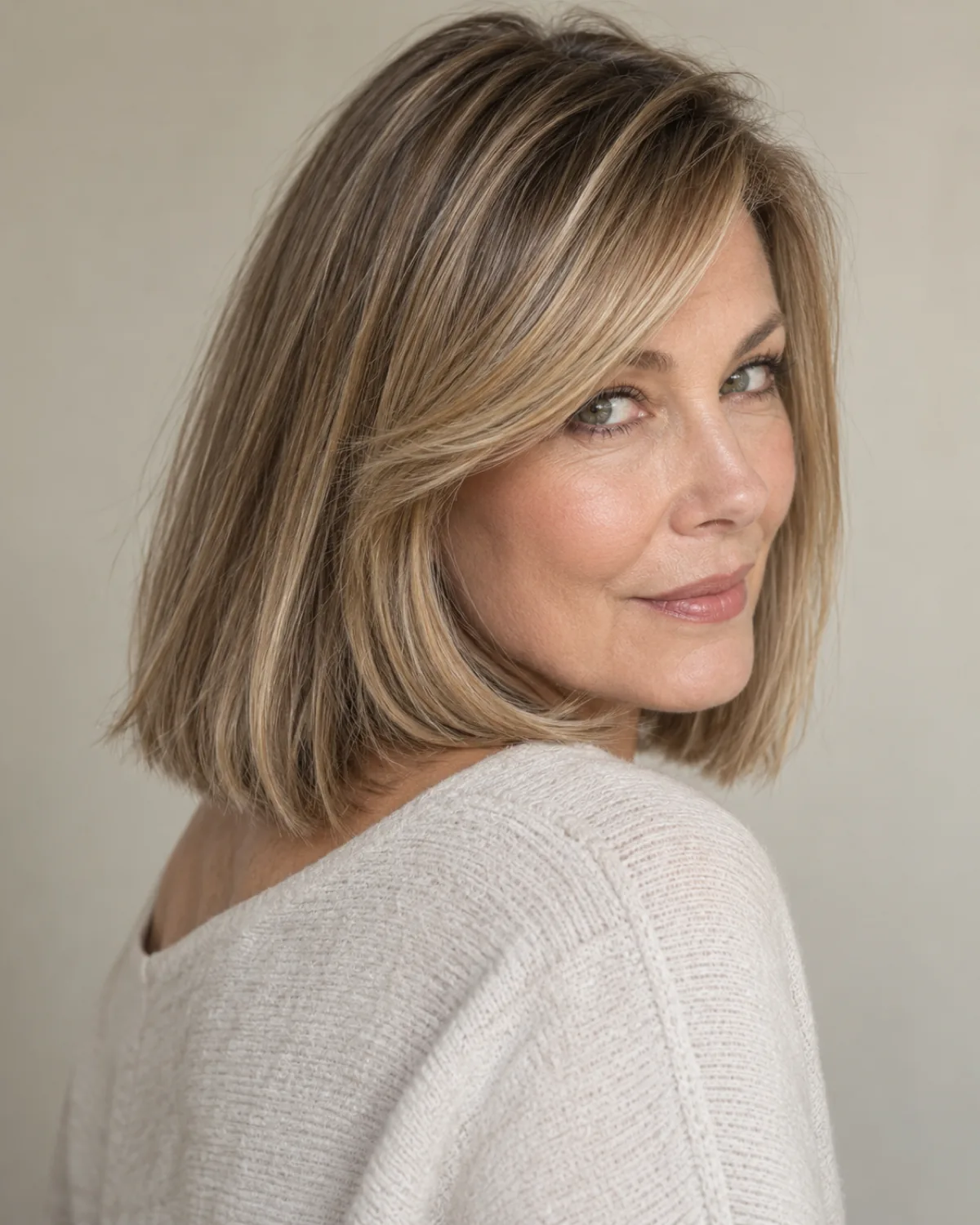
A lob at collarbone or shoulder length combined with a diagonal bang swept to one side. The diagonal bang breaks the horizontal line of straight hair and draws the eye across the face rather than down. Works on square and round faces. Skip if your bang section is cowlicked because the side sweep fights the growth pattern.
- Ask the stylist to cut the bang longer than you think you want because you can always pin it shorter but you cannot add length back
- Request that the sweep direction follows your natural part rather than fighting it
- Check that the bang blends into the side length at cheekbone level so there is no visible step when you tuck it behind your ear
14. One-Length Straight Hair With Blunt Bangs
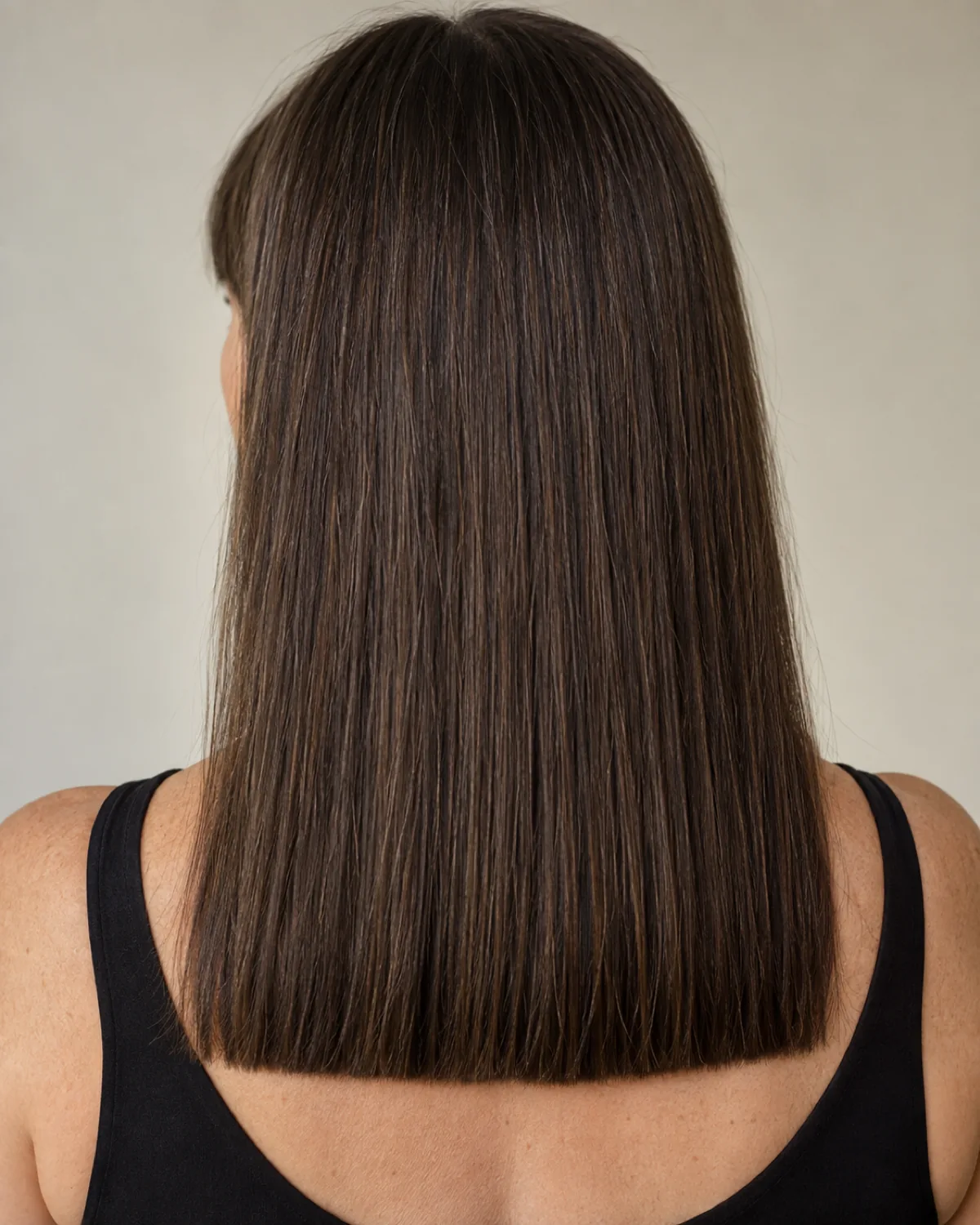
Straight-across bangs at brow level on any length. On straight hair, blunt bangs are self-maintaining — they dry flat, stay put, and do not need round-brushing. The contrast with long one-length hair below creates a strong frame. Skip if your forehead is short because the brow-level bang compresses the upper face (Sam Villa — bang cutting and face proportion).
- Ask the stylist to cut the bangs dry and level with the brow bone while you are sitting upright because tilting the head during cutting shifts the line
- Request a true blunt edge rather than a softened or feathered line because on straight hair the clean geometric contrast is the point
- Plan for trims every three to four weeks because straight blunt bangs show overgrowth faster than any other bang style
15. Tapered Straight Cut Below the Shoulders
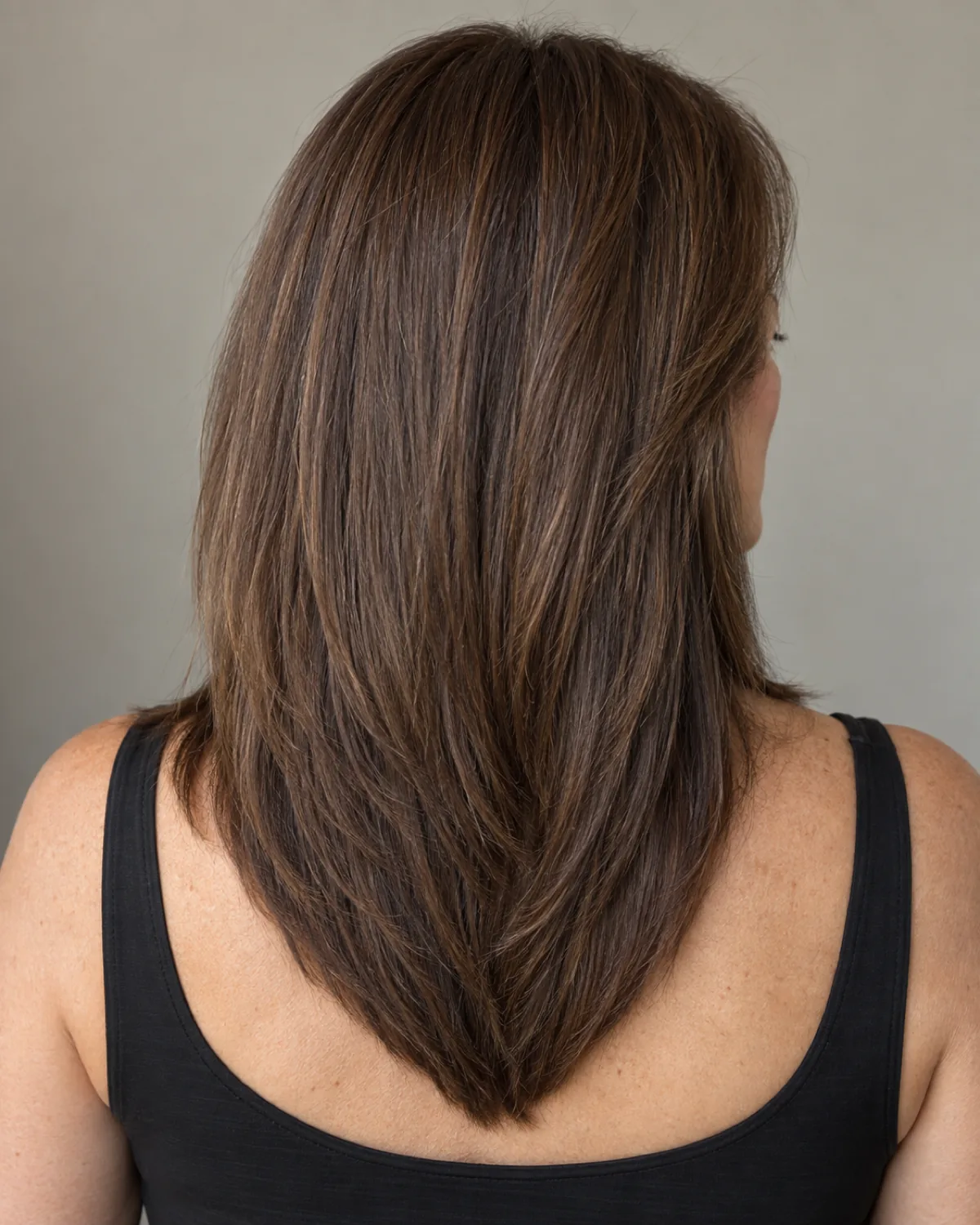
Perimeter cut in a V or U shape so the center back is longest and the sides taper shorter. This removes bulk from the sides on thick straight hair and creates movement without traditional layers. Works on thick hair only. Skip if hair is fine because the tapered sides thin the perimeter further.
- Ask the stylist whether a V-taper or U-taper suits your thickness because the V is more dramatic and the U is softer
- Request that the taper stays within two inches of difference between the center and the sides because a deeper taper on straight hair creates visible weight imbalance
- Check from the back that the taper is symmetrical because on straight hair any unevenness shows immediately
16. Asymmetric Bob (One Side Longer)

One side cut at the earlobe, the other at the chin. Extreme asymmetry reads as a design choice on straight hair because the clean lines make the angle visible. Works on oval and heart-shaped faces (Milady — asymmetric lines and face shape). Skip if you wear your hair in ponytails often because the short side escapes.
- Ask the stylist for the exact length difference in inches before cutting because asymmetry is harder to correct than symmetry
- Choose which side is shorter based on which side of your face you prefer to show because the longer side draws the eye
- Understand that this cut requires directional styling — you will always need to know which way the hair falls
17. Straight Hair With an Undercut at the Nape
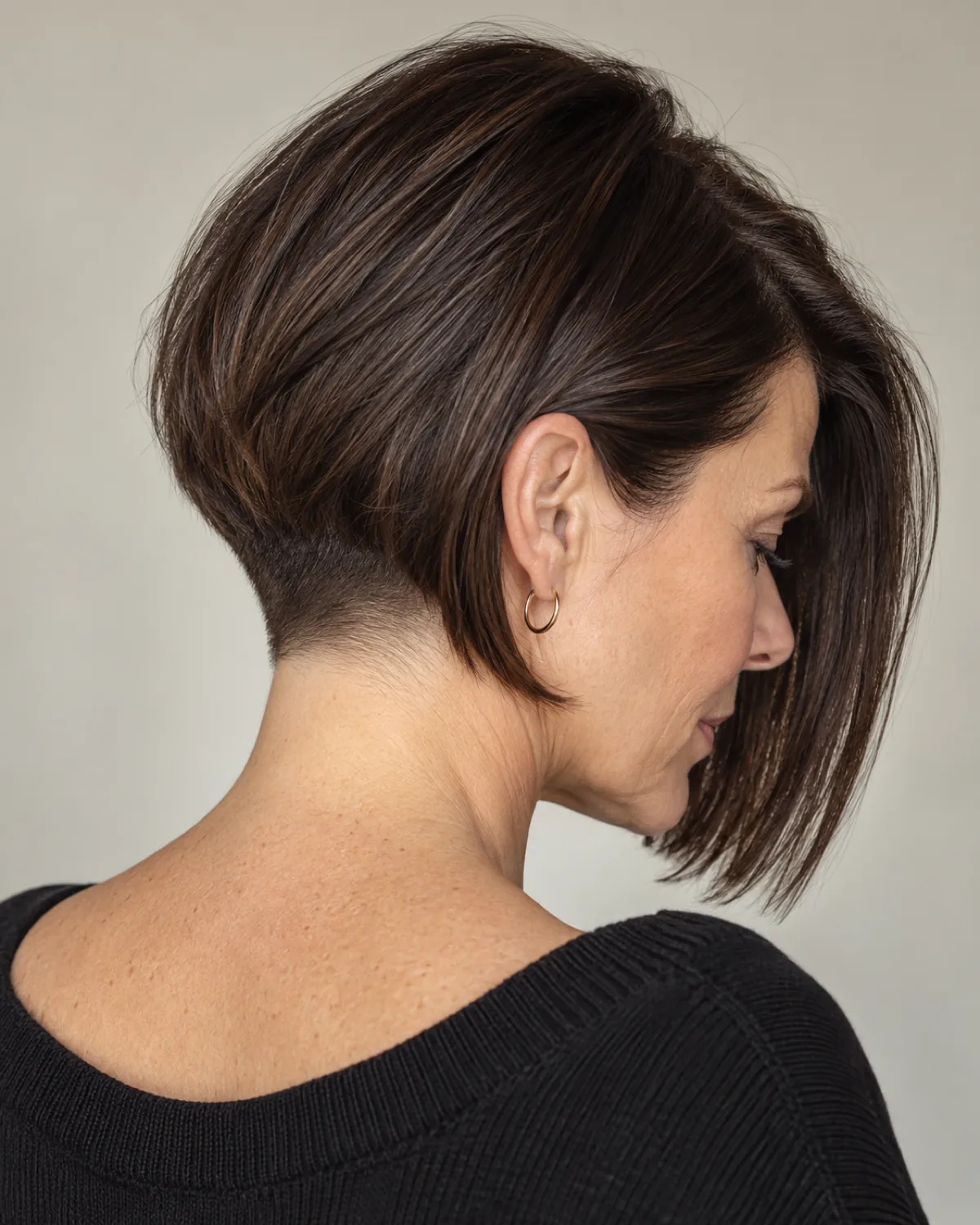
Any length on top with the nape section buzzed underneath. The undercut removes bulk and weight from thick straight hair without changing the visible silhouette when hair is down. Works on thick, coarse straight hair. Skip if you wear updos because the buzzed section shows.
- Tell the stylist to keep the undercut line below the occipital bone so it stays hidden when the hair is down
- Ask how often the undercut needs maintenance because buzzed sections grow out faster than you expect and the stubble phase is uncomfortable
- This is a functional choice more than an aesthetic one — it solves neck heat and bulk on thick straight hair
18. Chin-Length Straight Bob With a Center Part
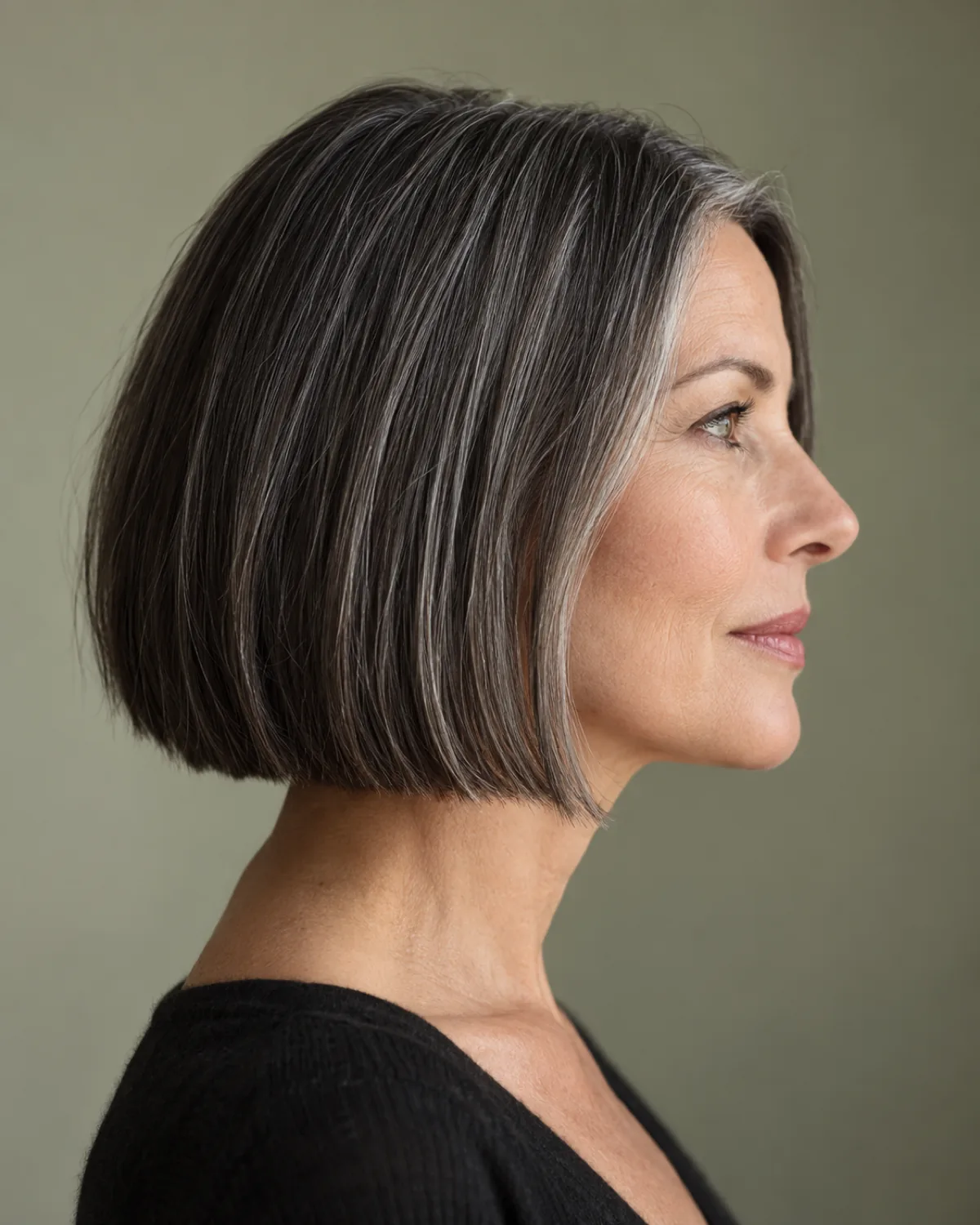
A classic bob at chin level, center-parted. The symmetry is the point — straight hair holds a center part cleaner than any other texture. Works on oval and long faces. Skip if your face is round and your chin is soft because the horizontal chin-length line and center part frame the width.
- Ask the stylist to cut the bob at exactly chin level by measuring from the jaw hinge rather than the chin tip because jaw shape varies and you want consistency
- Request that both sides be checked from the front and back before finishing because on straight hair even a quarter-inch difference between sides is visible
- Commit to the center part or do not get this cut — a side part turns a center-parted bob into a different style entirely
19. Straight Hair at Any Length With a Defined Weight Line
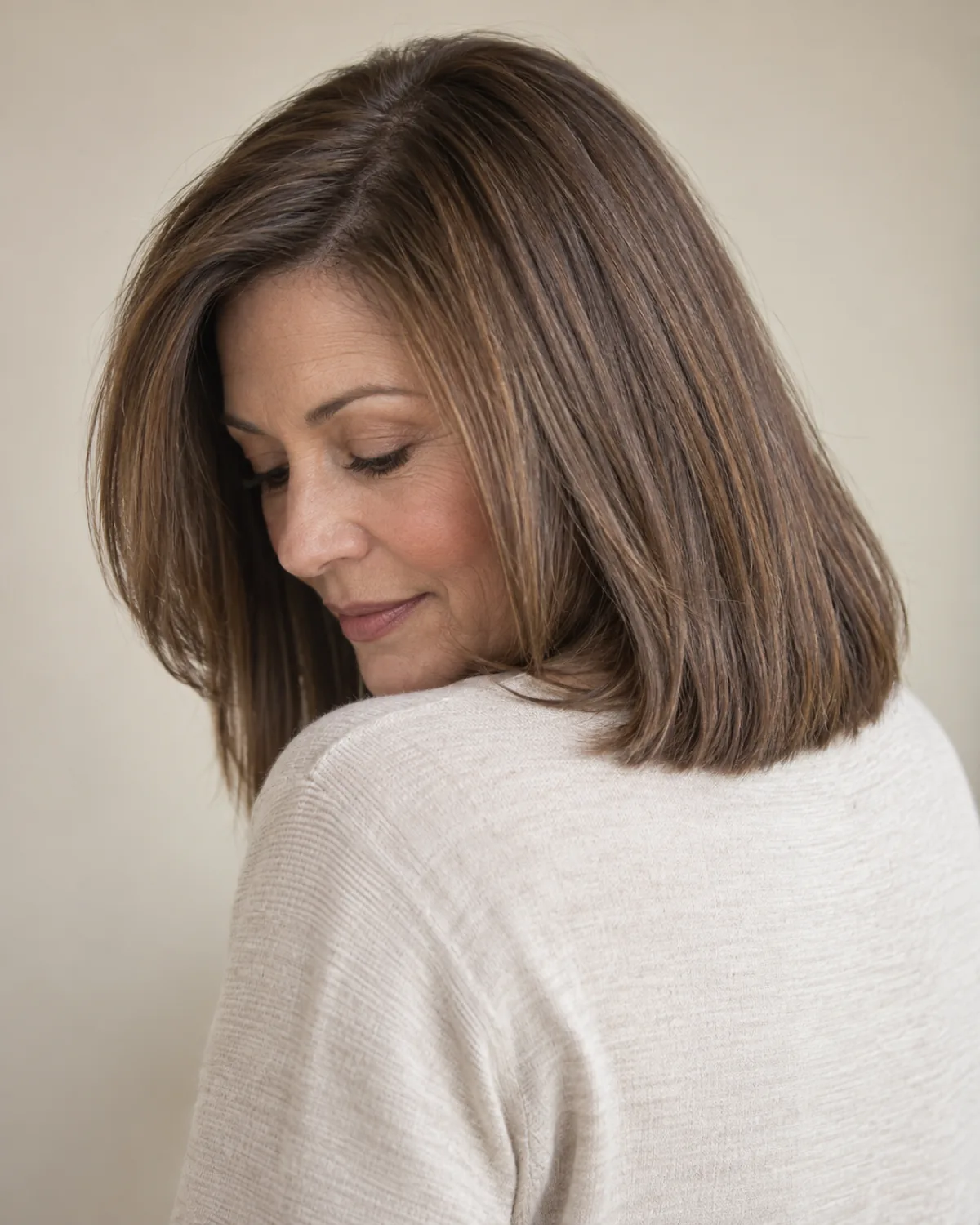
The weight line is where the bulk of the hair mass sits. On straight hair it is visible and controllable in a way curly hair cannot replicate. A low weight line — hair cut to one length, heaviest at the tips — reads formal. A high weight line — short layers on top, long underneath — reads modern. This idea is cross-cutting: whatever length you choose from this list, settle the weight line first.
- Ask the stylist where the weight will sit and what that does to the silhouette from the side because weight placement changes the entire read of a cut
- If you chose a cut from this list and it does not look right, the weight line is the first thing to adjust before changing the cut itself
- Bring a photo from the side rather than the front because the weight line is only visible in profile and most reference photos are shot from the front
Where the checkable claims come from
- Understanding Graduation and Layering — Sam Villa / Redken Education
- Milady's Standard Cosmetology — Milady / Cengage Learning
Keep this one
Save it for the appointment
Pin the image above to the board you actually open before a salon visit. This guide is written to be re-read, not read once.
Tonight, before you close this tab
- Stand in front of a mirror with your hair parted where you usually part it and look at the side silhouette because if the outline is a straight column with no taper the cut has no built-in shape and every option on this list will change the silhouette
- Grab a one-inch section at the crown and hold it straight out then let go because if it falls flat against the scalp immediately your hair is fine-to-limp and layering needs to be conservative
- Count how many days per week you use a flat iron or curling iron because if the answer is five or more the cut you have is fighting your texture and a shape that works with the straight fall will save that time
- Write down two words that describe how you want your hair to read from across a room and bring those words to the salon because they narrow the choice faster than a photo album