20 Salt and Pepper Hairstyles for Women Over 50 That Make the Mix Look Intentional
Twenty salt and pepper hairstyles for women over 50, each judged by how well the cut organizes the dark-and-silver contrast so the mix reads as a style choice.

Booking an appointment soon? Save this page. It is easier to skim in the chair than to remember.
At a glance
Works
- Cuts that follow where your gray actually grows — temples, crown, nape — so the contrast looks designed rather than accidental
- Textured or layered cuts that blend the dark-to-silver border into dimension instead of a hard line
- Putting the grayer sections at face level where they read like highlights without dye
Depends
- A blunt bob — holds its line on straight hair and frames the gray sharply, but fights curl and loses the frame
- A long wolf cut — exaggerates the crown-to-length contrast on thick wavy hair, flattens on fine straight hair
- Ear-length crops — concentrate the color mix in a tight frame, but need enough density to hold texture
Skip
- Any cut that ignores where your gray actually grows and forces a pattern that does not match
- Feathered layers on coarse gray hair that resists blending — the ends split apart instead of softening the transition
- Leaving long tendrils at the temples if the tendrils are still dark — reads as unfinished, not deliberate
Salt and pepper is not a color you choose. It is a stage — silver at the temples, white through the crown, dark lengths that no longer match the roots. The question is whether the cut makes it look like a plan.
These twenty cuts are judged by how well they organize that contrast so the mix reads as dimension. Some follow the natural growth map. Others break up the boundary so no hard line forms.
Each one answers who it suits, who should skip it, and what to tell the stylist.
1. Cropped Pixie That Follows the Silver Growth Map
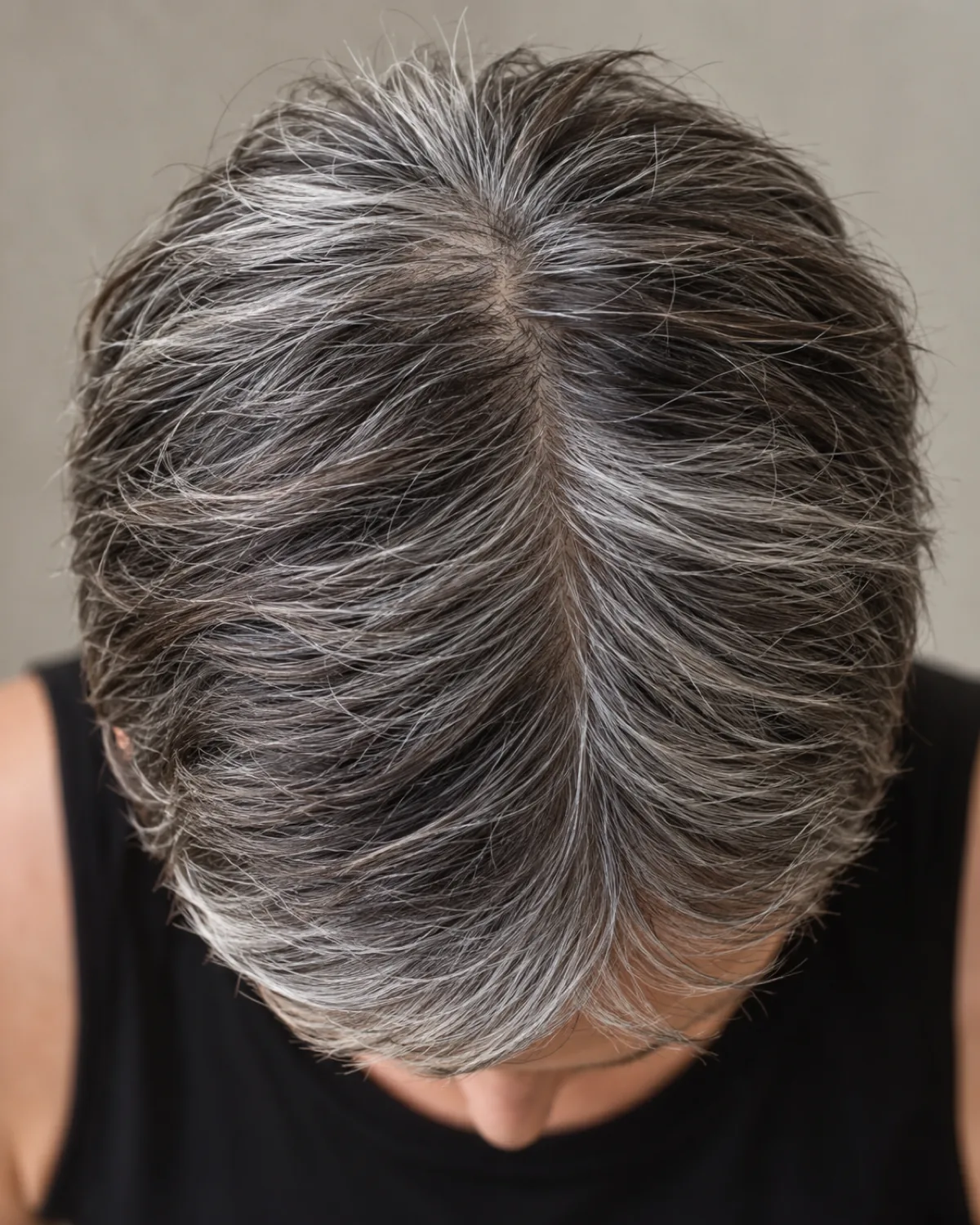
Cut short enough that the gray pattern at the temples and crown becomes the visible texture. The dark patches in between read like lowlights rather than roots growing out. This top-down angle shows exactly what a cropped pixie exposes: the natural color map from the part line outward.
- Works on fine to medium hair where the gray has started at the temples and crown — the short length means the whole pattern is on display
- The silver sections catch light differently from the dark, creating dimension without any product or technique
- Skip if the gray is concentrated only at one small patch. The crop exposes the whole map, and a single isolated patch reads unfinished rather than designed
- Ask the stylist to follow the natural growth direction rather than imposing a uniform length. The texture comes from how the gray emerges, not from the cut fighting it
- For related guidance on short gray pixie variations, including which face shapes suit the shortest crops
2. Chin-Length Blunt Bob With a Gray Frame

When the gray concentrates at the temples, a chin-length blunt line puts the lightest strands at face level. The darker hair falls behind and underneath. The gray reads like face-framing highlights that happen to be natural rather than painted on.
- Works on straight or wavy hair with enough density for the blunt line to hold. The line needs weight — thin ends taper and the frame breaks
- The contrast is sharpest when the temple gray is significantly lighter than the lengths. If the difference is subtle, the framing effect is subtle too
- Skip on curly hair. The blunt line fights the curl pattern, and the gray frame loses its shape within a day
- The chin-length matters because it keeps the gray at jaw level. Shorter and the gray moves above the face; longer and the dark lengths dilute the frame
- Grows out gracefully because the blunt line stays clean for six to eight weeks before the shape softens
3. Textured Shag With Scattered Silver
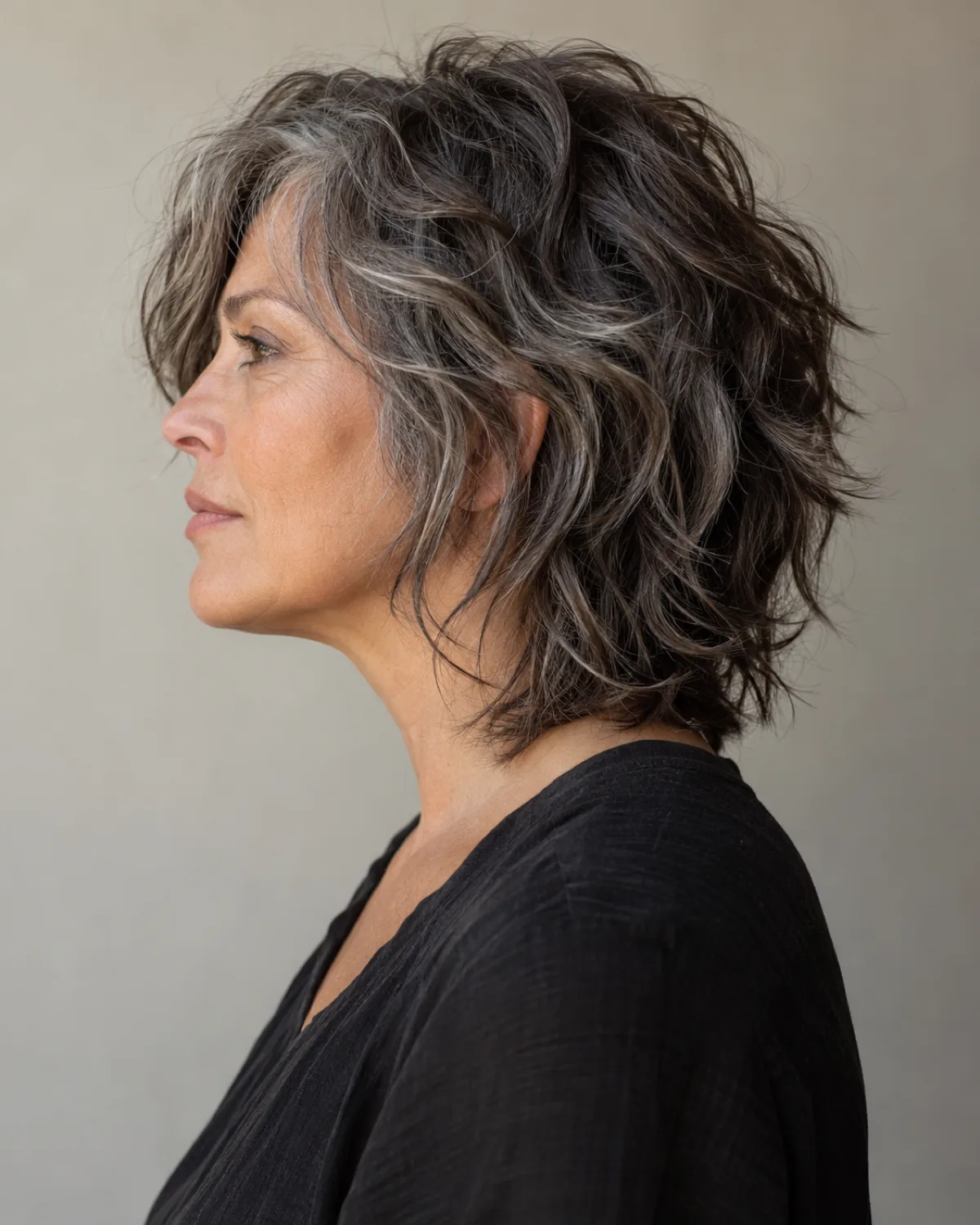
Choppy disconnected layers break up the boundary between dark and light so the contrast reads as dimension rather than grow-out. This profile shows how the layers create shadow and separation, letting each strand's color register individually rather than forming a block.
- Works best on wavy or curly hair that holds the texture naturally. The disconnection needs movement — flat hair shows the layers as gaps rather than texture
- The scattered silver pattern is the ideal match for a shag because neither the color nor the cut has a clean line. They reinforce each other
- Skip on very straight fine hair. The layers separate and show scalp instead of blending color, and the shag silhouette deflates
- Ask the stylist for disconnected layers specifically, not blended ones. Blended layers smooth the transition — you want the opposite, a cut that lets each layer sit visibly on top of the one below
- Maintenance is forgiving. The shag grows out into a longer shag rather than a different shape, so the window between trims is wider than most short cuts
4. Tapered Nape Pixie With a Silver Crown
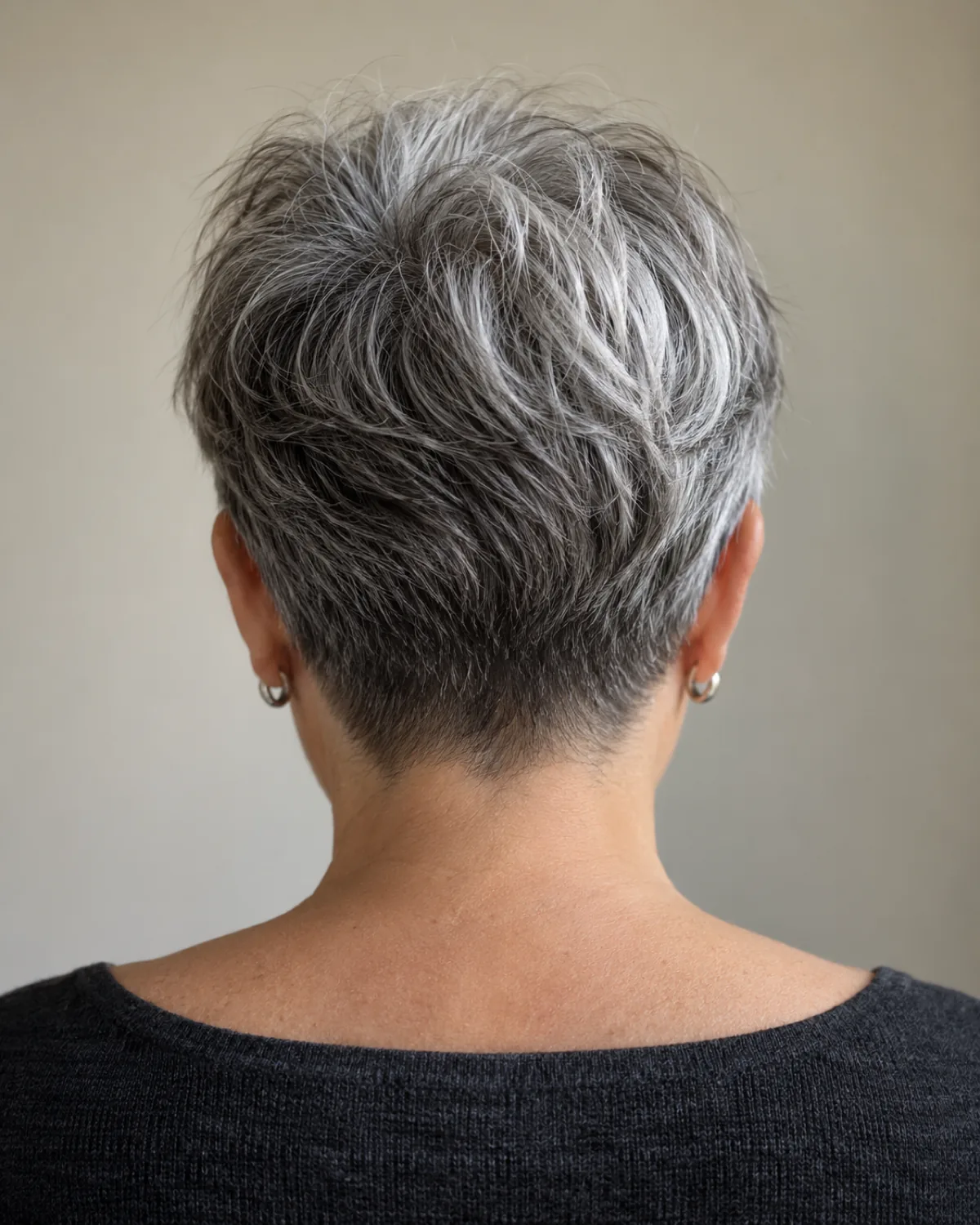
The nape cuts tight where gray often starts early. The crown stays longer to show the silver-white blend at its most concentrated. From behind, the architecture is clear: short dark at the nape, building to silver volume at the crown.
- Works on medium to thick hair so the crown has enough volume to carry the contrast. The longer crown section is what makes this cut distinctive — it needs density to hold its shape
- The nape taper means the darkest hair is the shortest, which keeps the dark-to-light transition moving upward naturally
- Skip if the crown is thinning. A longer crown on thin hair reads as coverage rather than style, and the taper draws attention to the volume difference
- The back is the signature view. Ask the stylist to shape the taper so the transition from nape to crown is visible from behind, not just from the sides
- Grows out faster at the nape than the crown, so plan on nape trims every three to four weeks while the crown can go longer
5. Long Bob With Gray Wings at the Temples

Collarbone length with the gray temple streaks left to frame the face. The length itself stays darker, so the silver reads like deliberate face-framing highlights. The wings are the only thing that differentiates this from a standard lob — and they do all the work.
- Works on any texture with moderate density. The wings frame regardless of whether the hair is straight, wavy, or loosely curled
- The effect depends on having enough gray at the temples specifically. If the gray is at the crown or scattered through the mid-lengths, there is nothing to frame with
- Skip if there is no gray at the temples yet — borrowing a pattern that has not arrived makes the cut purposeless
- For a similar approach on gray bobs with added bangs, including how a fringe interacts with temple gray
- The length allows for updos and half-ups that expose the wings deliberately, giving the style a second silhouette
Where to start
Find your situation, skip ahead
Your gray is mostly at the temples and you want it to look like highlights
Keep length at chin level or longer and part so the lighter temple sweeps forward.
02 Chin-Length Blunt Bob With a Gray Frame05 Long Bob With Gray Wings at the Temples07 Side-Parted Bob With the Lighter Temple Forward
Your gray is scattered everywhere and you want the mix to look textured, not messy
A textured shag or layered crop breaks up the boundary — the choppier the cut, the more the contrast reads as dimension.
03 Textured Shag With Scattered Silver09 Textured Crop With Heavy Temple Silver20 Textured Wolf Cut With Salt-and-Pepper Contrast
You want to go short and let the full color map show
A cropped pixie or swept-back crop exposes the growth pattern — the shorter the cut, the more the pattern becomes the design.
01 Cropped Pixie That Follows the Silver Growth Map04 Tapered Nape Pixie With a Silver Crown14 Swept-Back Crop That Shows the Full Hairline-to-Crown Map
6. Curly Pixie That Lets Ringlets Scramble the Colors
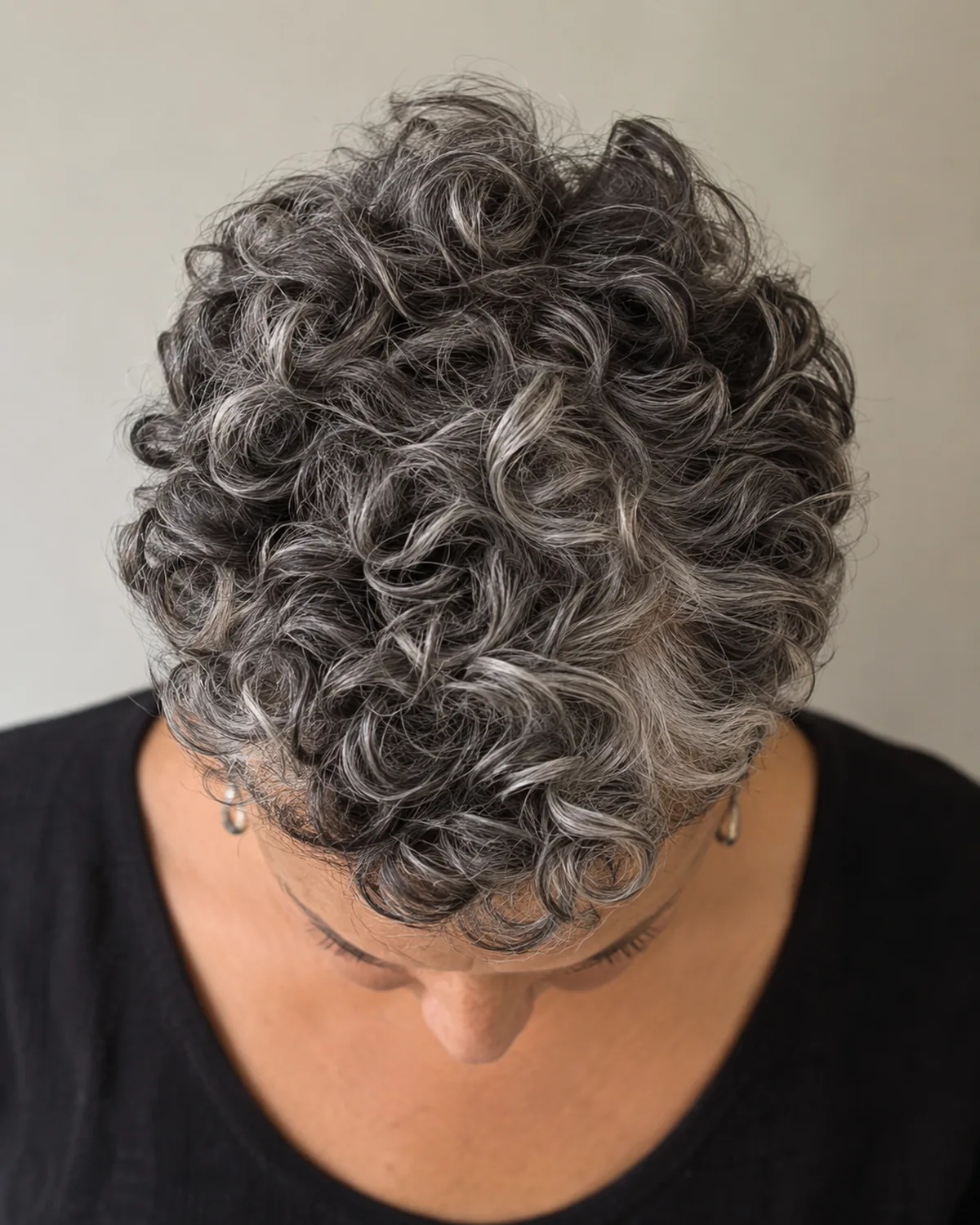
Tight curls naturally interleave dark and silver strands so no sharp boundary forms. This overhead angle shows how each ringlet contains both colors twisted together, eliminating any visible line between old and new growth.
- Works on naturally curly or coily hair. The scramble effect depends on tight curl definition — each ringlet holds both dark and silver strands in a twist
- The pixie length means the full color map is visible, and the curl pattern ensures it reads as texture rather than two-tone
- Skip if your curls are loose waves. Waves separate into sections and each section tends to be one color, which creates bands rather than scramble
- For a related take on curly gray bobs at chin length, which uses the same interleaving effect with more length
- The curl pattern does the blending work that a straight-haired cut would need layers and texture to achieve. This is the lowest-maintenance option for naturally curly salt-and-pepper hair
7. Side-Parted Bob With the Lighter Temple Forward

The part sits so the grayer temple sweeps across the face. From the front, the hair reads more silver than it actually is because the lighter side dominates the view. The darker side tucks behind, becoming the backdrop rather than the feature.
- Works on straight or wavy hair, any face shape. The effect is about the part placement, not the cut itself
- The key decision is which side to part on. If one temple is significantly grayer than the other, that temple goes forward
- Skip if both temples match in color — there is nothing to feature by choosing a side, and the asymmetric part serves no purpose
- This is one of the simplest adjustments on the list. If you already have a bob, you can test it today by moving your part to the grayer side
- The seated angle shows how the bob's weight falls forward on the parted side, giving the silver maximum face time
8. Graduated Bob With Silver at the Nape
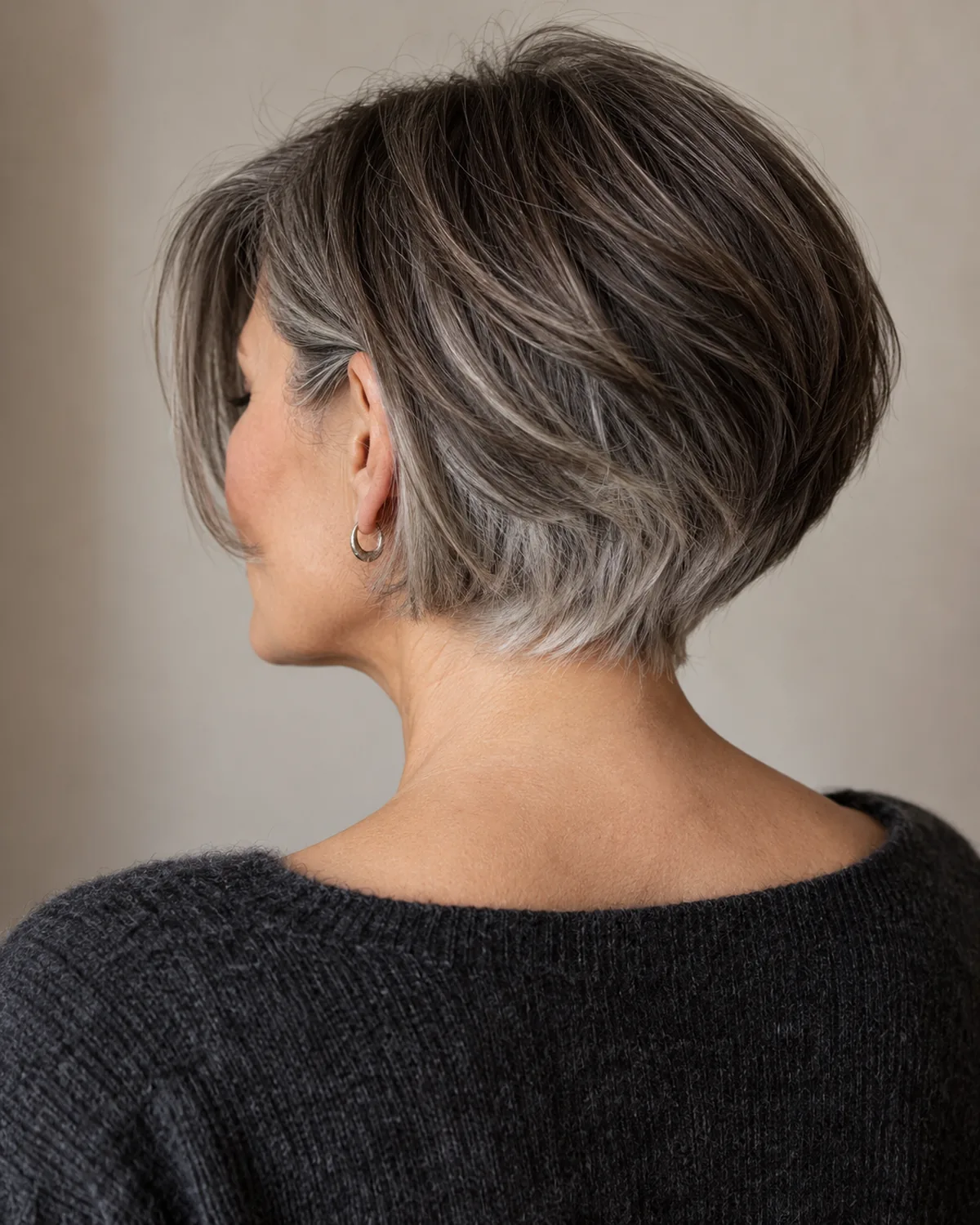
Short in the back where gray often concentrates first, longer toward the front where dark hair may still dominate. The graduation makes the color shift look built into the architecture — the silver is not growing in, it is where the cut decided to put it.
- Works on straight or wavy hair where the nape gray is visible. The graduated angle draws the eye up from the silver nape to the darker lengths
- The stacked back creates a clean weight line that turns the color transition into a design element rather than a grow-out stage
- Skip on very curly hair. The graduation flattens the curl pattern at the nape, and the clean angle that makes this cut work depends on straight or wavy hair lying flat
- Ask the stylist to keep the graduation steep enough that the silver nape is visible from behind. A shallow graduation hides the nape and loses the effect
- The front length can range from chin to just below the ear depending on how much dark hair you want framing the face
9. Textured Crop With Heavy Temple Silver
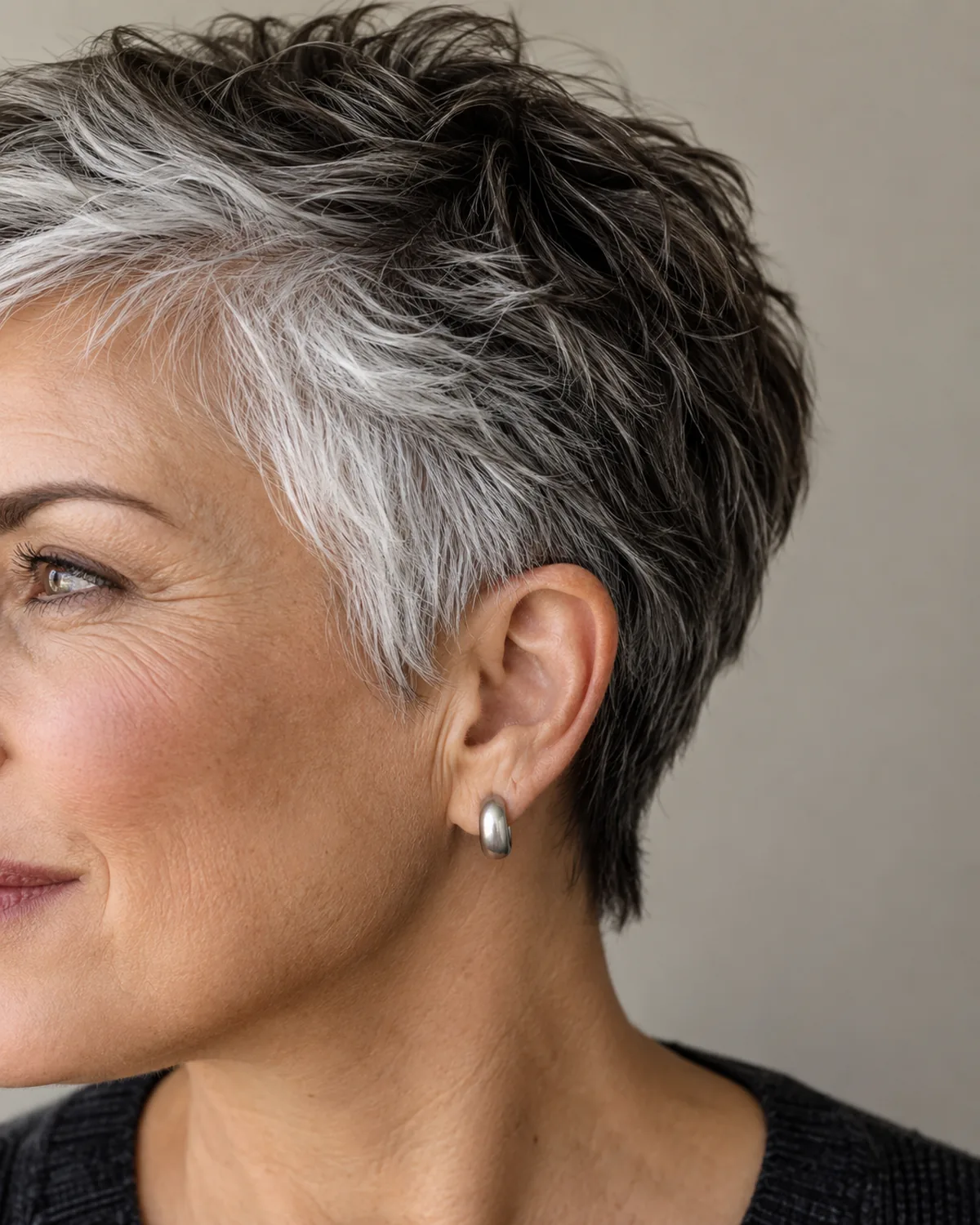
A very short all-over crop where the silver at the temples reads as intentional contrast against the darker crown. This close angle shows the texture — the piecey separation that prevents the crop from reading as a basic short cut.
- Works on thick hair where the crop holds texture. The texture is what gives this cut its character; without it, the crop is just short
- The heavy temple silver is the focal point. The darker crown provides the backdrop that makes the silver pop
- Skip on fine hair where the crop lies flat. The color contrast is still there but the cut has no dimension to frame it, so the silver reads as patches rather than features
- For a similar short cut with an edgy structural element, see textured crops and micro bangs
- Ask the stylist to point-cut or razor the top for texture rather than scissor-cutting a uniform length. The piecey finish is what separates this from a standard crop
10. Shoulder-Length Layers That Stack Silver Over Dark
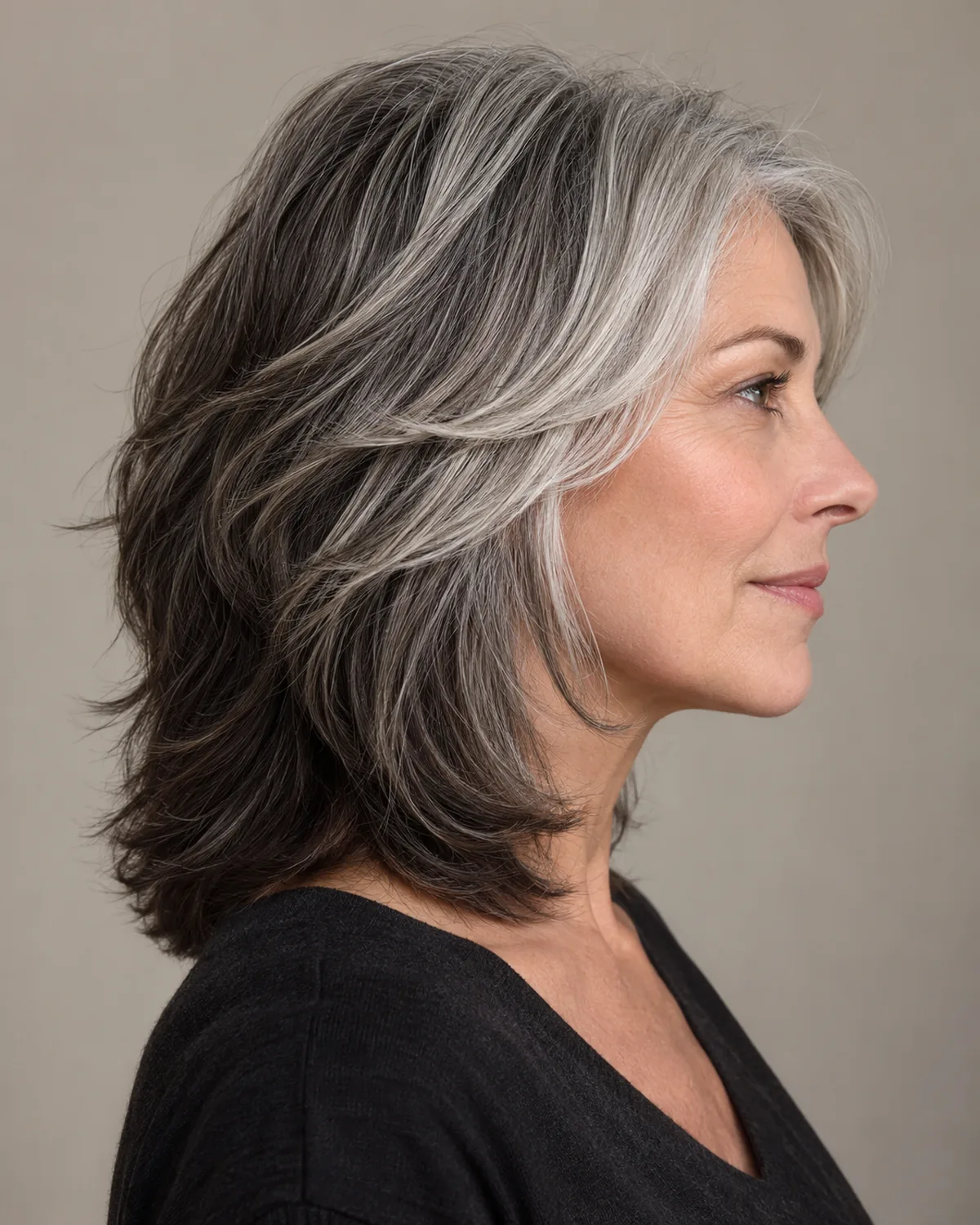
Layers cut so the shorter silver sections sit visibly on top of longer dark lengths, creating a natural ombre without dye. The profile view makes the stacking visible — silver at the surface, dark underneath, the layering turning a growth pattern into a gradient.
- Works when the gray pattern cooperates — mostly lighter on top, darker underneath. The layers follow the color, not the other way around
- The shoulder length gives enough room for the gradient to develop. Shorter and the layers compress the effect; much longer and the dark lengths dominate
- Skip if the pattern is reversed or random. Forced layering cannot fake a gradient that the hair does not have
- For guidance on shoulder-length cuts and their face-shape implications
- Ask the stylist to cut the layers based on where the color changes, not at standard intervals. The cut should trace the gray map, not impose its own
11. Asymmetric Bob Where the Grayer Side Carries the Length
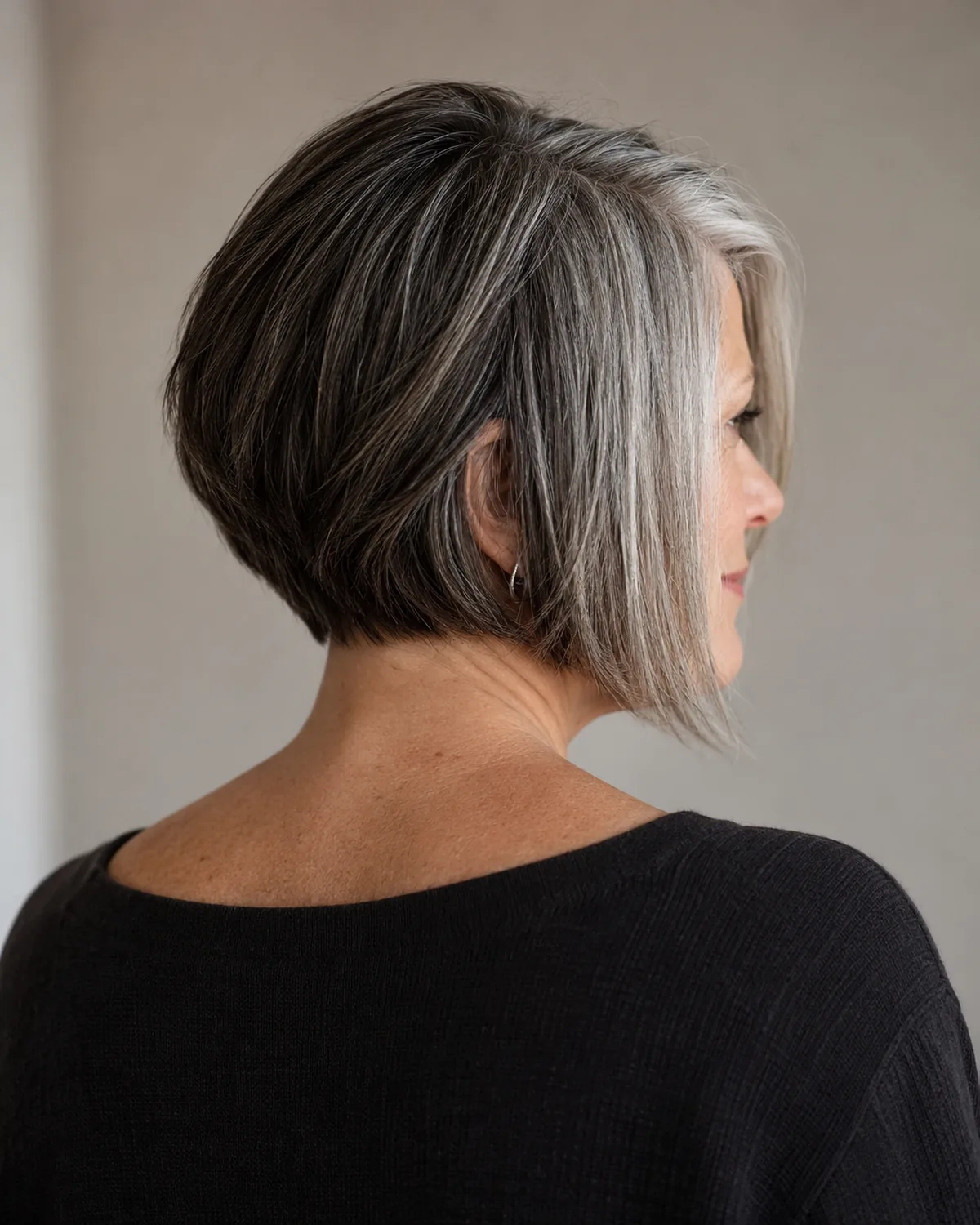
The longer side is the one with more silver, giving the silver the most visual weight. The shorter side stays dark and close. The asymmetry is doing double duty — it creates visual interest in the silhouette and it puts the color story on the side with the most length to tell it.
- Works on straight hair with clear asymmetry in the gray pattern. If one side is noticeably grayer than the other, this cut capitalizes on that
- The back angle shows how the longer silver side swings forward while the shorter dark side stays clean against the neck
- Skip if gray is evenly distributed. The asymmetric cut adds nothing when there is no color difference to amplify
- Ask the stylist to keep the difference between sides deliberate — at least an inch of length difference. A subtle asymmetry reads as a bad haircut, not a design choice
- The longer side needs trimming more often to keep the weight line clean, while the shorter side can go an extra week or two
12. Feathered Layers at the Jawline

Soft feathered ends blur the dark-to-light boundary rather than cutting it sharply. This close-up shows the effect — each feathered strand tapers to a point, and the dark and silver tips intermingle rather than forming a hard color line.
- Works on straight to wavy hair at jaw length or longer. The feathering needs hair that lies flat enough for the ends to overlap
- The transition from dark to silver reads gradual even if the actual growth pattern has hard borders. The cut disguises the boundary
- Skip on coarse gray hair that resists feathering. The ends split apart instead of blending, and the texture at the tips fights the softness the cut is trying to create
- Ask the stylist to use a razor rather than scissors for the feathered ends. A razor thins each strand at an angle, which creates the wispy overlap. Scissors cut a blunt edge that defeats the purpose
- The jawline length is deliberate — it positions the feathered color blend right at the face, where it works as soft framing
13. Natural-Part Pixie That Follows the Silver Growth Line
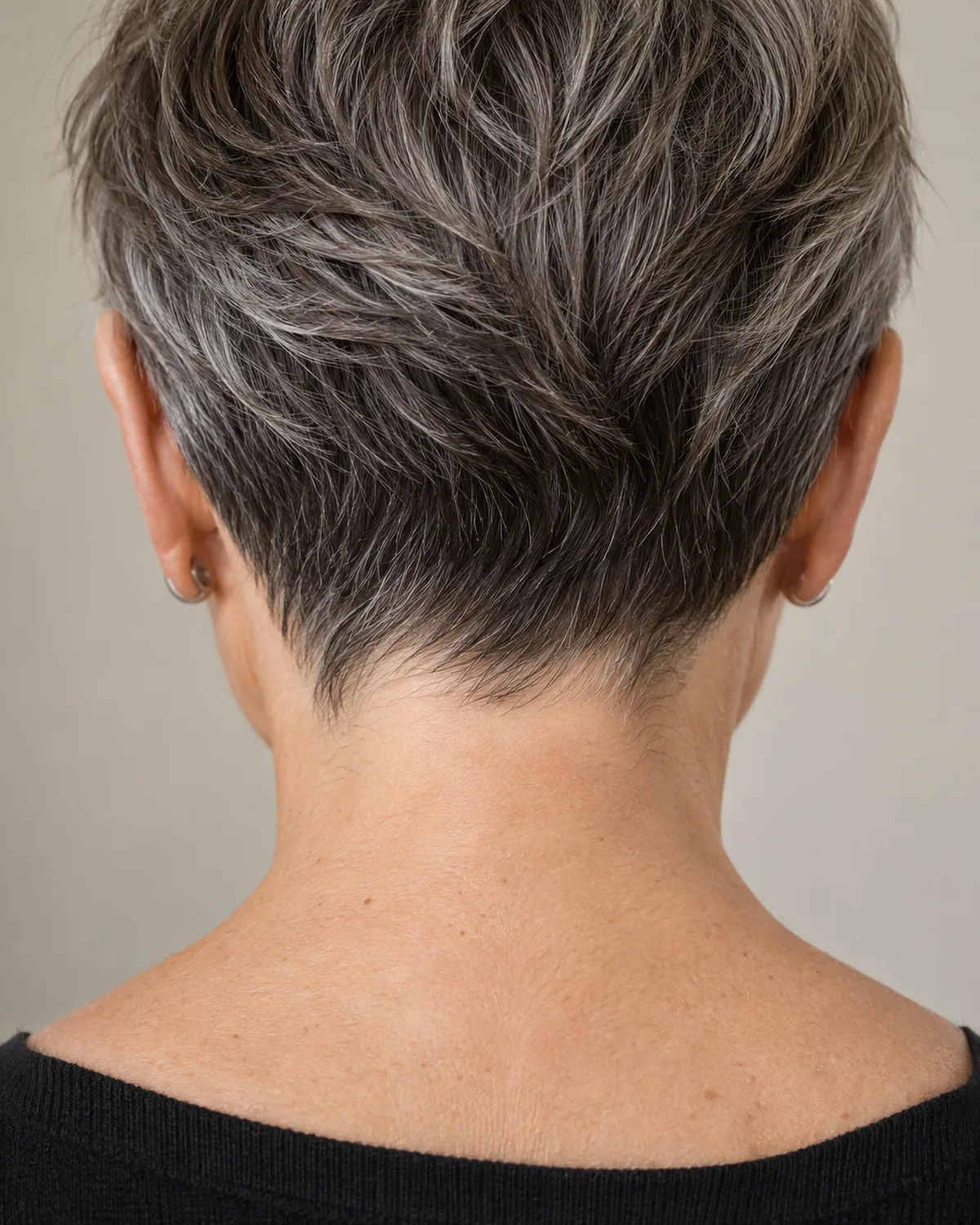
The part sits exactly where the gray naturally changes direction, so the line looks like part of the color design. This back view shows how the growth pattern from nape to crown creates its own visual line that the cut follows rather than imposes.
- Works on medium-density hair where the part exposes enough scalp to read cleanly. The part is the feature — it needs to be visible
- The natural part works because it traces the color boundary. A forced part in a different location fights the growth pattern and the gray reads as random
- Skip if the growth line runs dead center and you want asymmetry. The part follows the gray, not your preference
- This is a zero-product cut. The part falls where the hair wants to fall, and the salt-and-pepper pattern does all the visual work
- Ask the stylist to find your natural part by wetting the hair and pushing it forward, then letting it fall back. The split point is where the cut should center
14. Swept-Back Crop That Shows the Full Hairline-to-Crown Map

Hair pushed back off the face to expose the entire color progression from the hairline through the temples to the crown. The back view shows the full map — dark at the nape, silver threading through the mid-lengths, the complete salt-and-pepper story on display.
- Works on thick or medium hair that holds a swept shape. The hair needs enough body to stand back from the scalp rather than collapsing flat
- The curly texture in this version adds dimension to the color map, each curl catching light at a different angle
- Skip if the hairline is receding. The swept-back crop pulls attention to the hairline itself, and a receding line reads as the focal point rather than the color
- This is the most exposed cut on the list. Nothing is hidden, which means the salt-and-pepper pattern has to be dense enough to carry the look — isolated patches of gray in a mostly dark head read sparse rather than designed
- Ask the stylist to keep the nape slightly longer than a buzzcut so the texture reads from behind
15. Collarbone Waves With Silver Ribbons

Wavy texture at collarbone length creates visible alternating ribbons of silver and dark that catch light differently. The back view shows the ribbon effect — each wave separates the strands into sections, and each section reflects a different mix of colors.
- Works only on naturally wavy hair. The ribbons depend on how waves separate the strands into bands, and each band holds a slightly different ratio of dark to silver
- The collarbone length gives enough room for multiple wave cycles, which means multiple ribbons visible at once
- Skip on straight hair that lies flat. No wave separation means no ribbon effect — just a dark-and-light mass with no internal structure
- For more on how natural waves create styling options after 50
- This is a length-dependent effect. Above the shoulders, there are not enough wave cycles for the ribbons to form. Below the collarbone, the weight straightens the waves and the ribbons flatten
16. Blunt Micro Bob at Ear Length
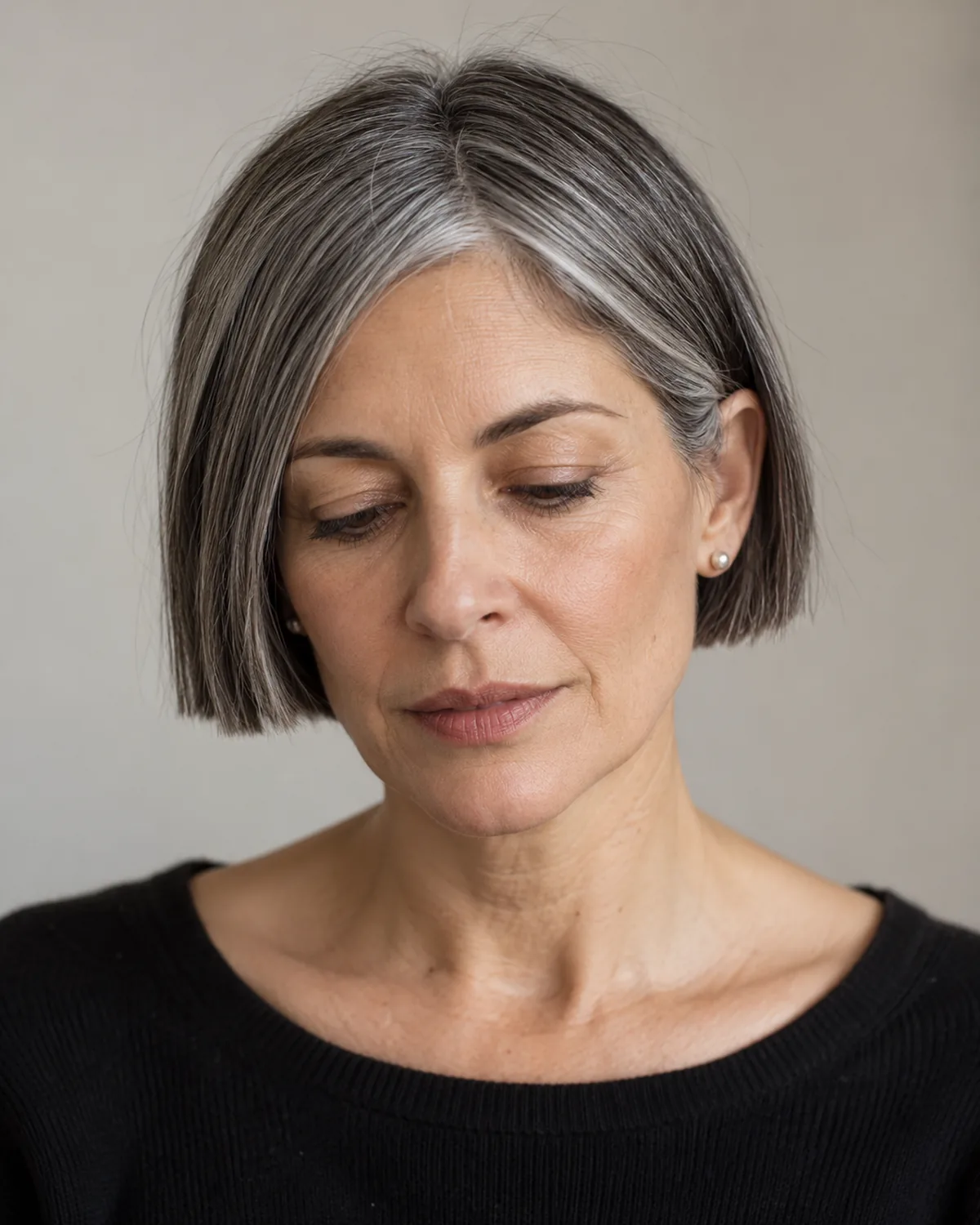
All the dark-and-silver contrast concentrated in a tight frame above the jaw. The blunt line gives the mix a graphic quality — no feathering, no layers, just a clean edge that makes the color contrast read as bold rather than transitional.
- Works on straight or wavy hair where the blunt line can hold. The ear length means every strand is visible and the cut tolerates no unevenness
- The graphic quality comes from the blunt edge meeting the salt-and-pepper pattern. Blunt ends on solid-color hair are just clean; blunt ends on mixed color are a statement
- Skip on very curly hair. Ear-length curls spring up and the blunt line disappears entirely — the cut depends on the line being visible
- This is the boldest short bob on the list. The ear-length frame compresses the color into a small space, which intensifies the contrast
- Grows out fast because the line softens within four to five weeks. Budget for frequent trims if the graphic edge is what you are after
17. Layered Crop With a Silver Fringe
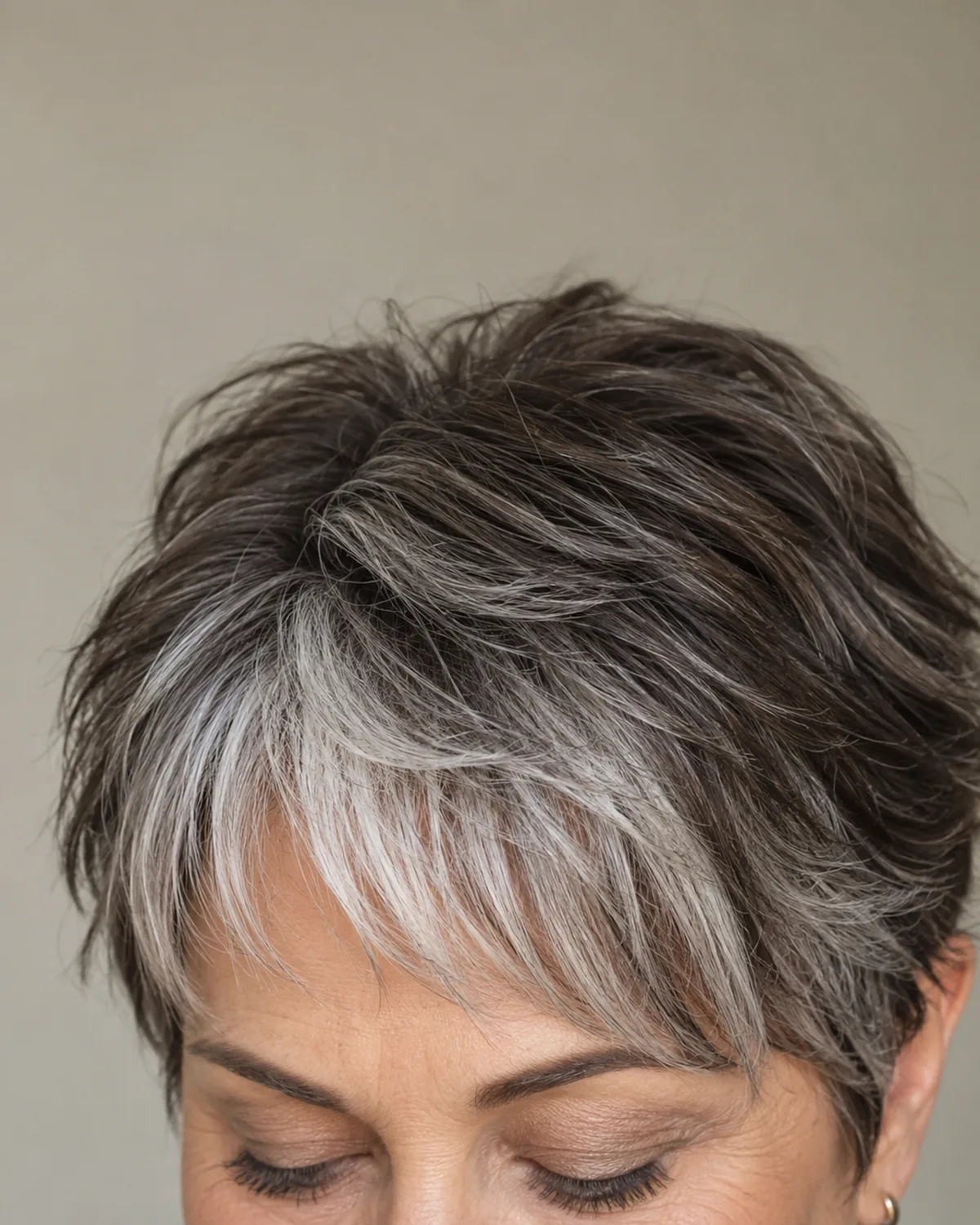
Short crop with the fringe left slightly longer. If the gray has reached the front hairline, the fringe frames the face in silver while the sides stay darker. This overhead angle shows the contrast — silver fringe sweeping forward, darker crown behind.
- Works on any face shape where a fringe works. Long and oval faces benefit most because the fringe shortens the visible forehead
- The fringe is the feature. It only works if the gray has reached the front hairline — the silver fringe against the darker crop is the whole point
- Skip if the fringe zone is still fully dark. Without the silver there, the cut is just a crop with bangs, and the salt-and-pepper effect is invisible from the front
- For guidance on which bang styles suit which face shapes after 50
- Ask the stylist to keep the fringe wispy rather than blunt. A blunt silver fringe on a darker crop reads as a dye job rather than a natural growth pattern
18. Chin-Length Curly Bob With Natural Color Mixing

Shoulder-to-chin curls mix dark and silver along each ringlet so the colors interleave rather than separate. The bob length contains the volume and gives the curls a defined shape, so the color mixing happens within a clean silhouette.
- Works on medium to thick curly hair where the ringlets are defined enough to hold both colors in each curl
- The chin length is the sweet spot — long enough for the curl pattern to develop, short enough to prevent the weight from pulling the curls straight
- Skip if the gray has gone coarse and wiry. The curly bob amplifies the texture difference between gray and pigmented strands unless the stylist knows how to cut both textures together. Ask the stylist about that specifically
- The interleaving effect gets better as more gray comes in. In the early salt-and-pepper stage, the dark dominates; by mid-transition, the mix is at its most interesting
- This cut shares the color-scrambling principle with idea 6 but at a longer length, giving the effect more room to develop across larger curls
19. Face-Framing Tendrils Left Long Around a Short Back
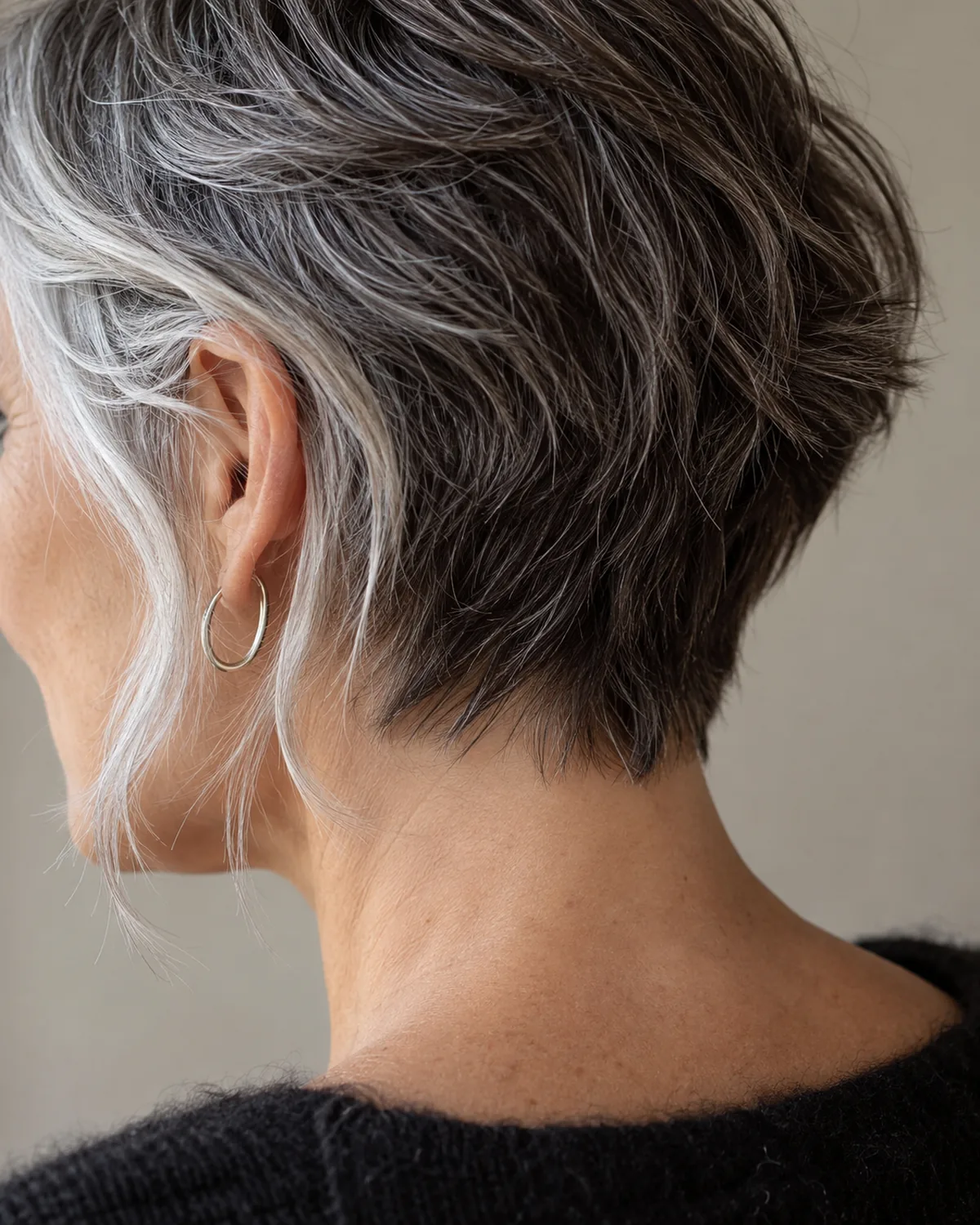
A short crop or pixie at the back with two or three longer tendrils left at the temples. If the temples are silver, the tendrils become deliberate silver accents — a few strands doing all the face-framing work while the rest of the cut stays close and easy.
- Works on fine to medium hair where the tendrils lie flat against the face. They need to be long enough to reach the jaw to read as intentional
- The nape stays short, which means this cut grows out in two zones at different rates. The tendrils stay styled while the nape needs more frequent trims
- Skip if the tendrils are still dark. Without the silver, the styling reads as unfinished bangs that the stylist forgot to cut, not accent framing
- The key is restraint. Two or three tendrils are an accent; five or six are a mullet. Tell the stylist exactly how many to leave
- This cut gives you the option to tuck the tendrils behind the ears for a cleaner look, or let them fall for the framing effect — two styles in one cut
20. Textured Wolf Cut With Salt-and-Pepper Contrast
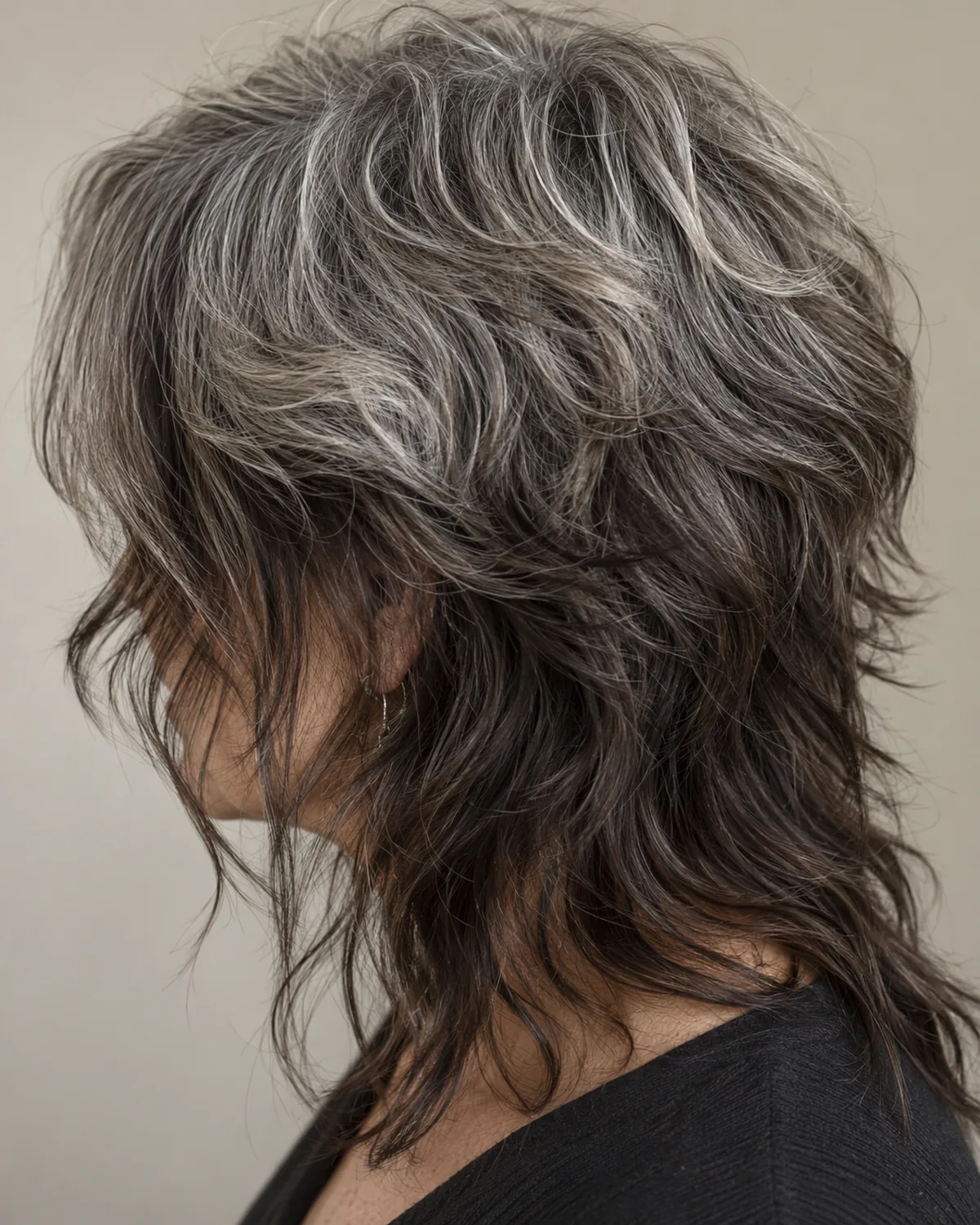
The wolf cut's heavy layer contrast — short choppy crown and long curtain — exaggerates the color difference between the silvering crown and the darker lengths. The crown catches light where the silver concentrates, while the dark curtain falls behind as the shadow.
- Works on wavy or curly hair with enough density to hold both zones. The short crown needs texture and the long curtain needs weight — fine hair delivers neither
- The color contrast is the feature, not the cut itself. A wolf cut on solid-color hair is about shape; on salt-and-pepper hair, it is about light and dark zones stacked vertically
- Skip on fine straight hair. The short crown flattens against the head, the long curtain separates into strings, and both the texture and the color effect are lost
- The wolf cut is the longest option on this list. It works here because the salt-and-pepper stage has enough contrast to fill a larger canvas
- For a broader look at natural gray styling options at medium length, including how different cuts handle the growth-out stage
The cut that works for your salt-and-pepper stage follows where the gray actually grows. Map your pattern in natural light — temples, crown, nape, scattered — and match the cut to that map. Bring your growth pattern to the stylist, not someone else's photo, and ask them to cut the shape around the contrast you already have.
Where the checkable claims come from
- Why Gray Hair Has a Different Texture — Cleveland Clinic
- Understanding Disconnection in Haircutting — Sam Villa
- How to Choose the Right Bangs for Your Face Shape — Byrdie
- When to Use a Razor vs Scissors — Redken
Keep this one
Save it for the appointment
Pin the image above to the board you actually open before a salon visit. This guide is written to be re-read, not read once.
Tonight, before you close this tab
- Stand in natural light and map where your gray concentrates — temples, crown, nape, or scattered — then match that pattern to the cuts in this guide
- Pull your hair back and look at the color progression from hairline to crown — that gradient is what a short cut will expose
- Bring your current growth pattern to the stylist, not a photo of someone else's gray — the cut should follow your map
- Ask the stylist whether your gray strands are coarser than your dark ones — if yes, that changes which cuts will lie flat
- If you are considering stopping dye, ask the stylist to cut a transition length that removes most of the dyed ends and lets the natural pattern take over