12 Short Curly Hairstyles for Women Over 50 That Let the Curl Do the Work
Twelve short curly hairstyles judged for women over 50. Each one rated by curl type, density and how much daily shaping it demands.

Booking an appointment soon? Save this page. It is easier to skim in the chair than to remember.
At a glance
Works
- A curly bob at the jawline because the curls stack on top of each other and the weight line holds the shape without daily intervention
- A tapered nape cut on dense tight curls because all the weight sits above the occipital bone and the nape stays clean
- A soft round cut at uniform length because it follows the head shape and has no disconnection points where the curl can go wrong
Depends
- A curly shag with disconnected layers only if the hair has enough density that the scalp does not show through the separation between curls
- A chin-length curly lob only if your wet-to-dry shrinkage lands the length at the chin rather than the shoulder, because shrinkage eats two to three inches on most curl patterns
- A curly pixie with weight at the crown only if the curls are tight enough to hold vertical lift all day, because loose waves collapse flat by noon
Skip
- An undercut bob when the hair is thin rather than thick, because the undercut removes bulk from hair that has none to spare
- A wash-and-go crop when the curl pattern varies across the head, because inconsistent curls at this length read as accidental rather than intentional
Short hair on curly hair is not the same problem as short hair on straight. Curly hair has its own architecture and the curl decides where weight lands.
The real question is whether a specific cut respects your curl pattern. See short hairstyles for straight or grey curly bob if grey is the decision you are making first.
These twelve are rated by who they hold for and who they cost.
1. Curly Pixie With Weight at the Crown
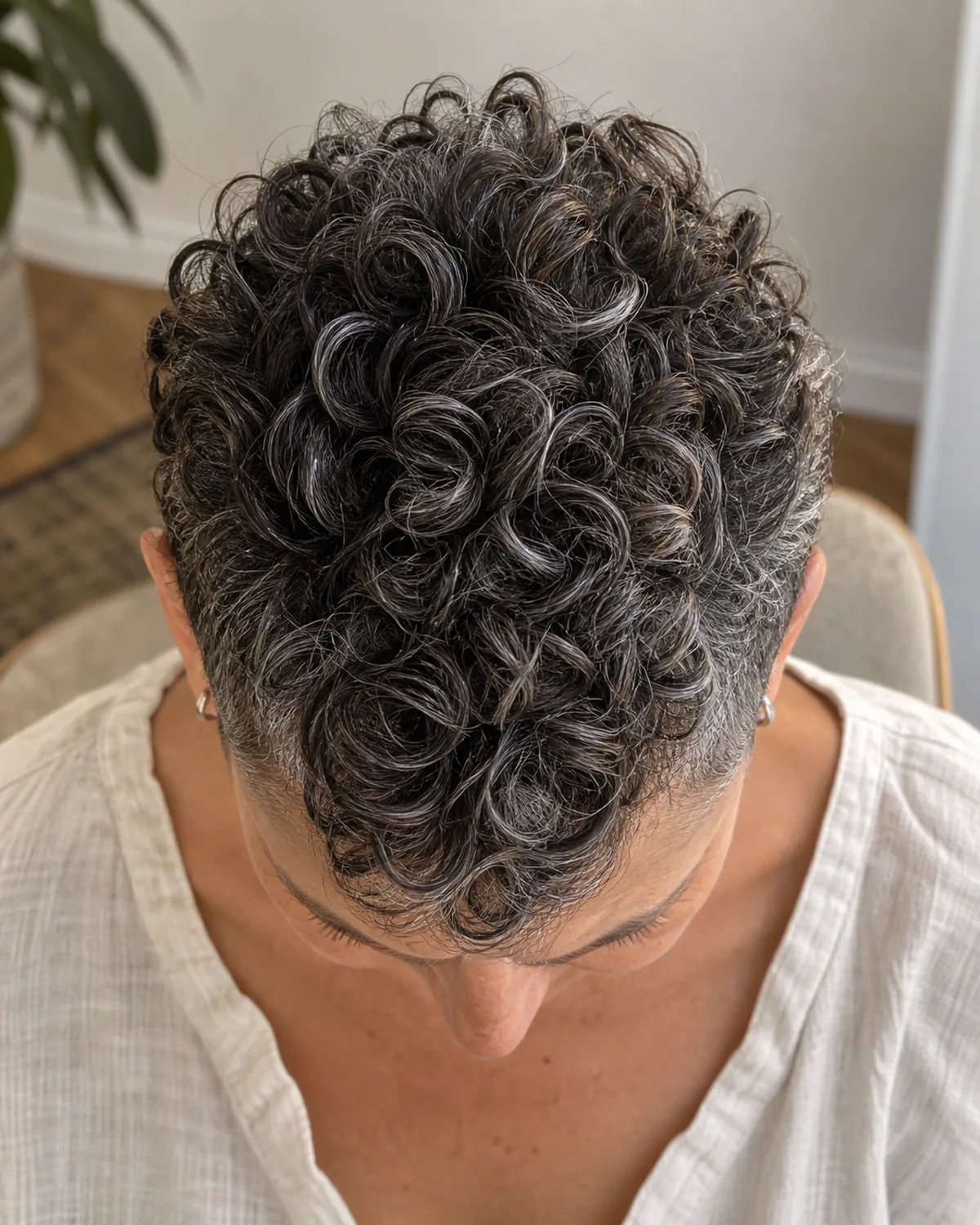
Tight ringlet curls concentrated at the crown create vertical lift that a straight pixie cannot. The sides crop to half an inch, and the crown curls stand at least two inches from the scalp. The silhouette reads tall and deliberate rather than flat.
- Works when curls are tight enough (roughly 2B or tighter) to hold their spring all day without collapsing
- The cropped sides eliminate bulk at the temples, which keeps the proportions balanced on round and square faces
- Fails on loose waves that flatten by noon because the crown volume is the entire point of this cut
- Ask your stylist to cut the crown dry so the curl spring determines the final height, not a wet guess
2. Short Curly Bob at the Jawline
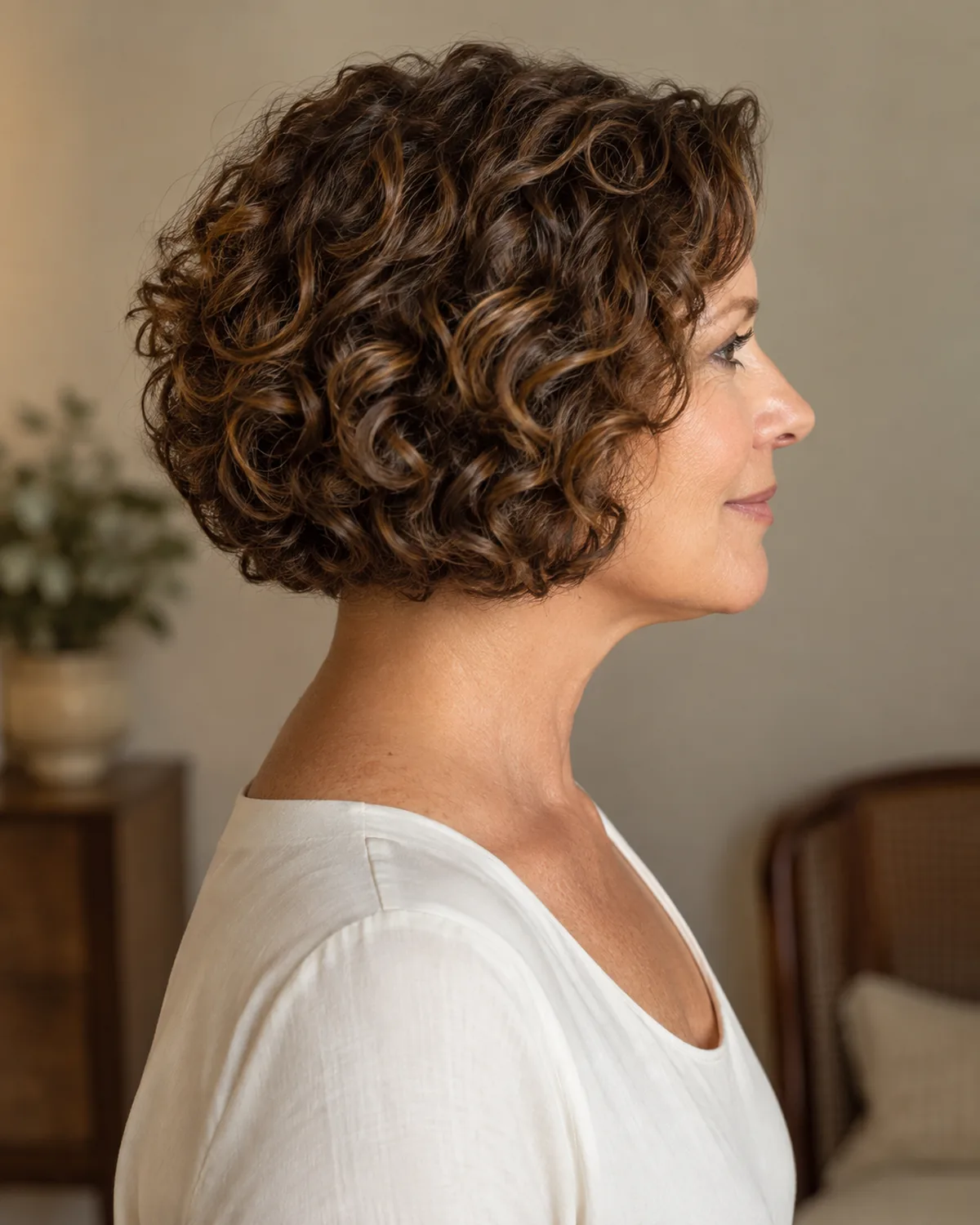
The baseline test for short curly hair. If curls stack at the jawline and the bottom edge holds a clean shape, this length works for you. The curls sit on top of each other and build a solid silhouette that reads as density. The weight line sits right at the jaw.
- This is the reference cut: if your curls hold here, everything shorter on this list is a variation
- The stacking effect is mechanical, meaning it works on fine curls and thick curls alike as long as there is enough curl to stack
- On hair where the curls droop and stretch rather than stack, the bob sags below the jaw and loses its architecture
- Ask your stylist whether the curl diameter is large enough to complete a full turn at this length
3. Tapered Nape Curly Cut
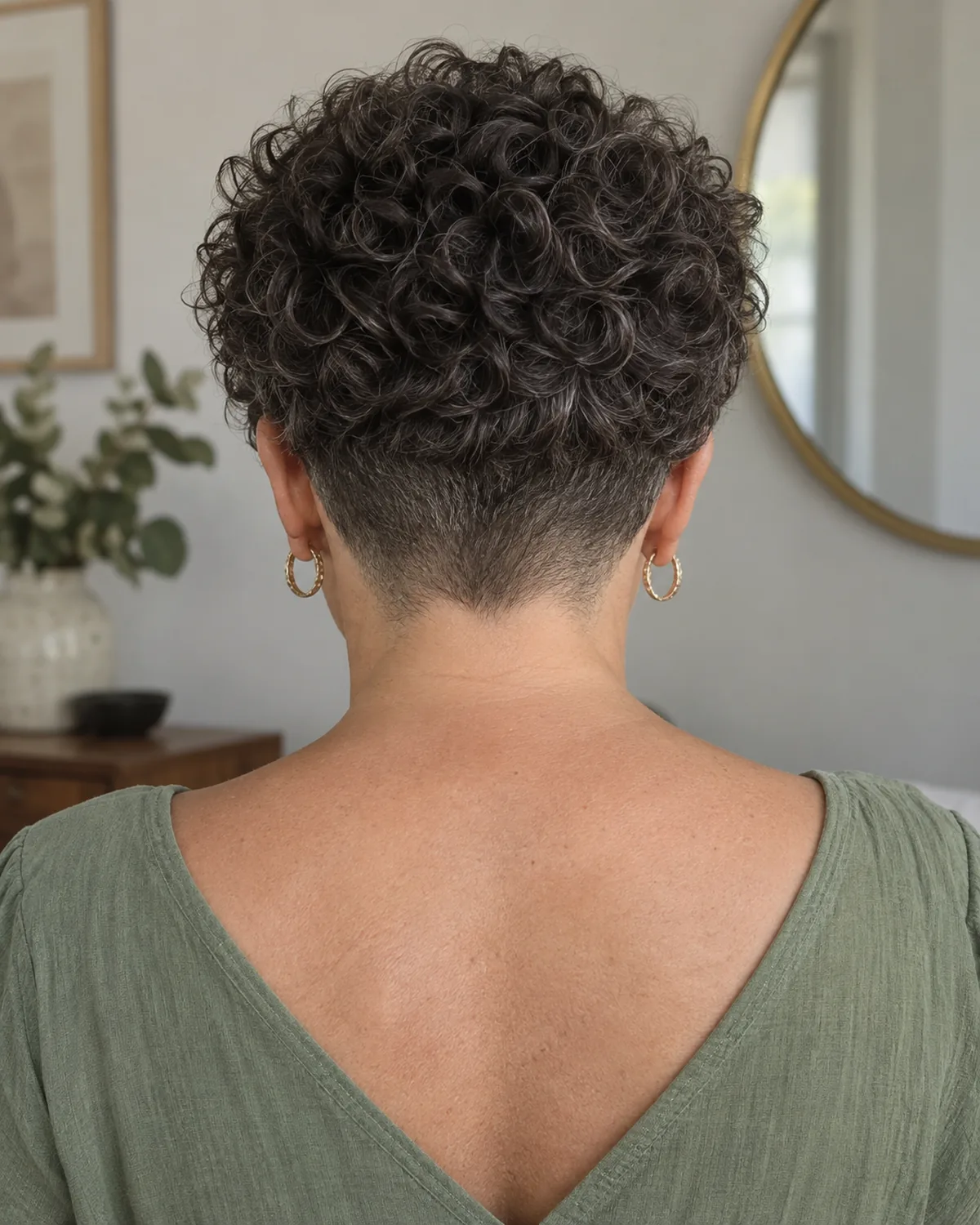
All the weight concentrates above the occipital bone. The nape is cropped to a quarter inch, and the curls above graduate upward into full volume. The transition from clean nape to dense curls creates a sharp contrast that reads as intentional.
- Solves the nape mushroom problem where dense tight curls push out at the back and ruin the profile silhouette
- The graduation from short nape to full crown is the structural feature, and it must be visible from the side to work
- Skips when the nape hair is sparse or thin because the taper will expose scalp rather than create a clean line
- Ask your stylist to show you the graduation line from the side mirror before leaving the chair
Where to start
Find your situation, skip ahead
Your curls are tight and dense and you want them shorter without losing volume
Start with the jawline bob. It is the baseline test. If curls stack here, every shorter cut on this list is a variation of it.
02 Short Curly Bob at the Jawline03 Tapered Nape Curly Cut09 Wash-and-Go Curly Crop
Your curls are looser spirals and you are not sure how short you can go
Measure your shrinkage first. Cut wet hair to the shoulder and see where it lands dry. That number decides your real options.
08 Chin-Length Curly Lob06 Curly Bob With Curtain Fringe11 Soft Curly Round Cut
Your curly hair is thick and heavy and the bulk is the problem
Look at the undercut bob or the tapered nape. Both remove weight mechanically without thinning shears, which frizz curly hair.
10 Curly Undercut Bob03 Tapered Nape Curly Cut07 Layered Curly Wedge
4. Curly Shag With a Centre Part
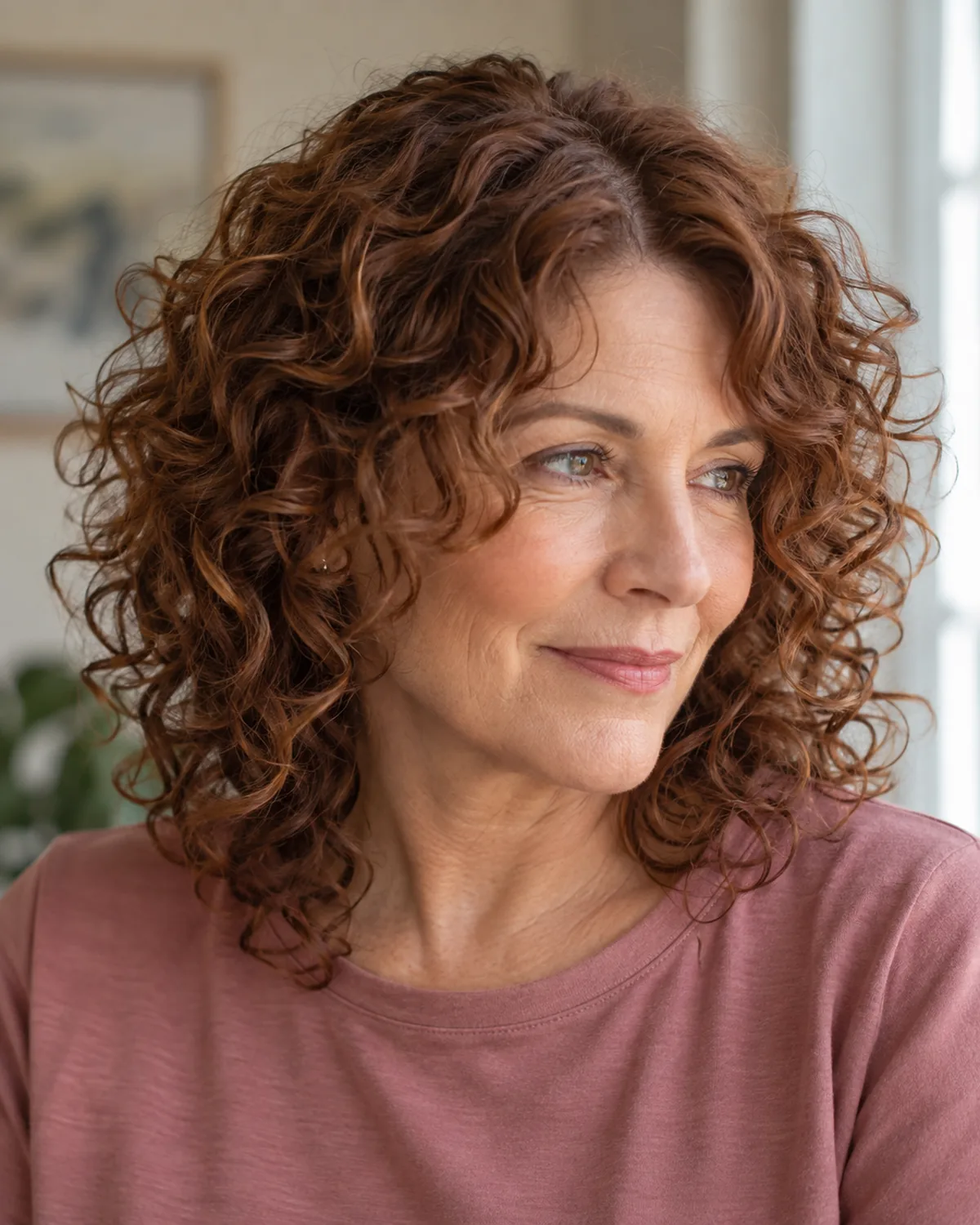
Disconnected layers let each curl spring on its own rather than merging into a single mass. The centre part opens the face and the uneven lengths create movement throughout. Each curl falls at a different level.
- Works when the hair has enough density that the separation between curls does not expose the scalp
- The disconnection is the feature: it lets medium-diameter curls show their individual shape instead of clumping
- On hair where the density is low, the gaps between layers read as thinning rather than texture
- Ask your stylist how deep the disconnection can go before the scalp starts showing through at your density level
- See shag for fine hair for the opposite approach where maintaining density is the priority
5. Side-Swept Curly Crop
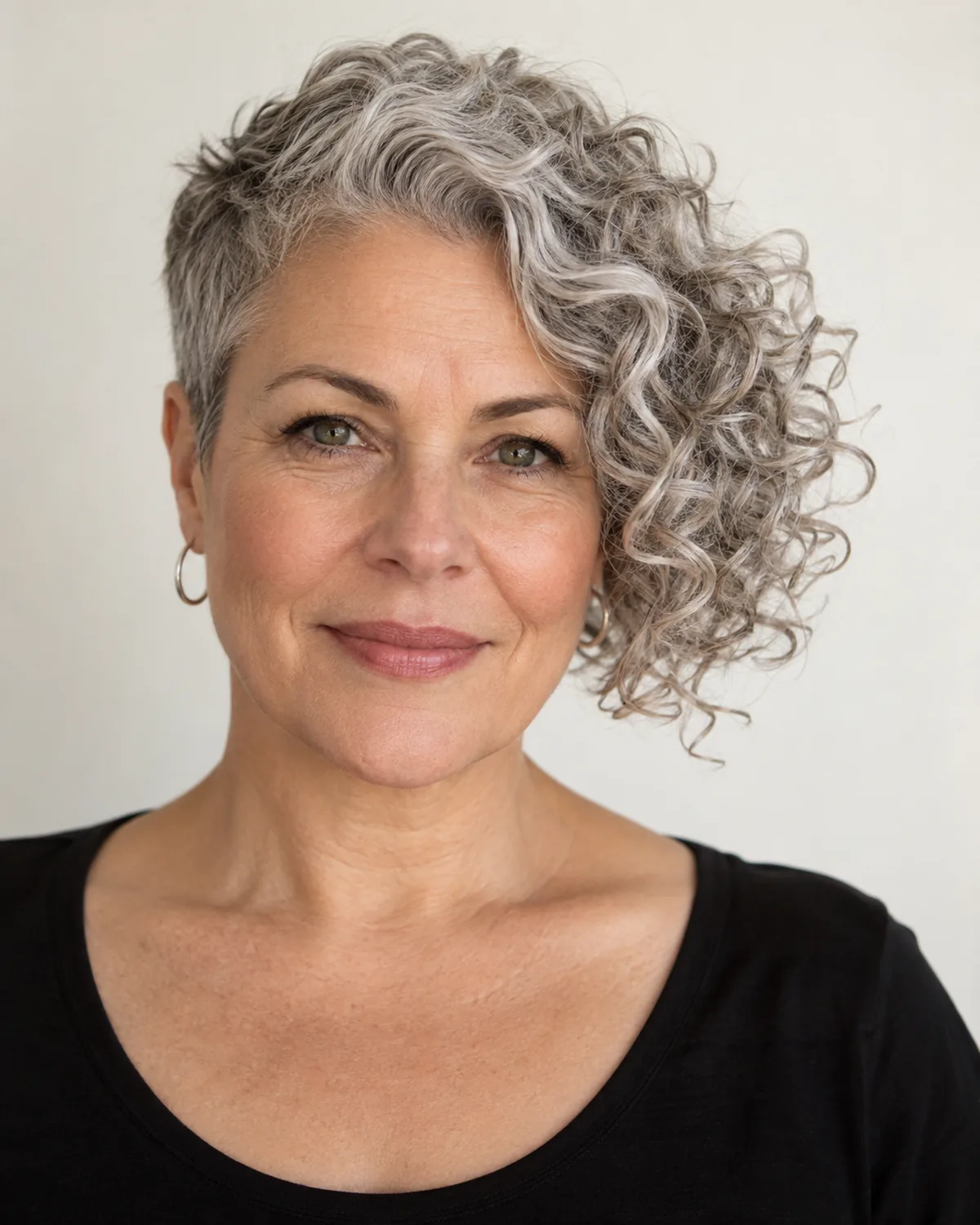
One side cropped close, the other left long enough for the curl to complete a full turn. The asymmetry is dramatic and intentional. The short side frames the ear and the long side sweeps across the forehead or falls at the cheekbone.
- Works when the curl diameter is small enough to complete a full turn in two inches of length
- The contrast between the cropped side and the curly side is the entire visual point, so it needs to be bold
- Fails when curls need more length to form because the long side will read as wavy rather than curly
- Ask your stylist to cut the long side dry and the short side with clippers so each side gets the right tool
6. Curly Bob With Curtain Fringe
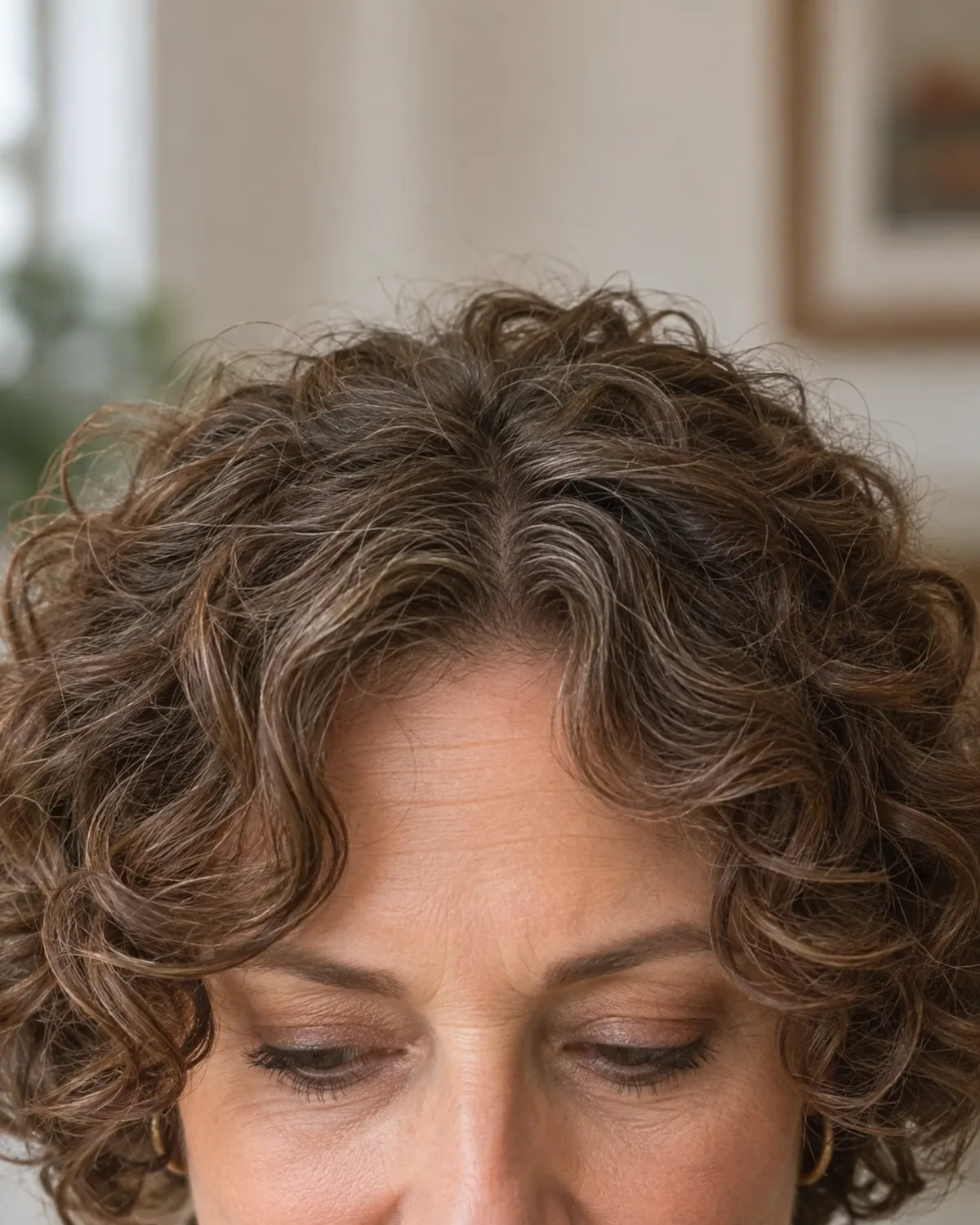
Curtain pieces split at the centre and curl away from the forehead. The bulk of the bob stays at the jaw. The fringe works when the curl diameter matches the fringe length so the pieces curl rather than frizz.
- The match between curl diameter and fringe length is the make-or-break variable: too short and the curl cannot complete a turn, too long and it hangs straight
- Works when the curl in the fringe reads as the same texture as the rest of the bob, creating one cohesive piece
- Depends on whether your front hairline curls the same way as the rest of your head, which it often does not
- Ask your stylist to cut the fringe dry and one curl-length at a time, checking the spring after each cut
- See bangs after 50 for a broader comparison of fringe types on different face shapes
7. Layered Curly Wedge
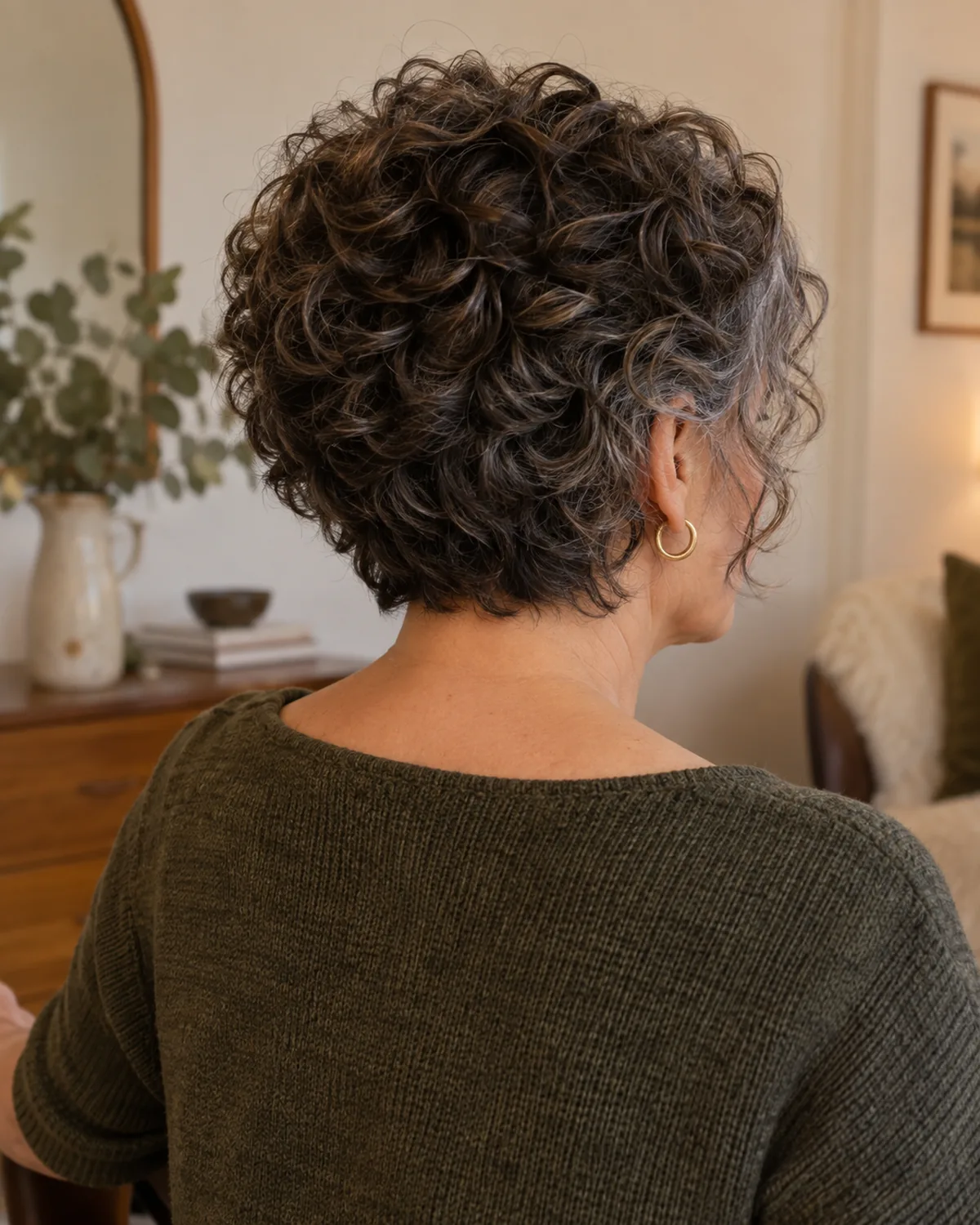
A graduated back stacks the curls on top of each other, pushing the volume outward from the head. The front stays longer and frames the face at the jaw. The wedge shape is structural, built by the graduation rather than by styling.
- Works on medium-density curls where the stacking creates visible volume without looking forced
- The graduation at the back is the engine: it compresses the curls into a shape that holds on its own
- Skips when curls are fine and sparse because the graduation will expose the layers rather than build on them
- Ask your stylist to check the density at the crown before committing to the graduation depth
8. Chin-Length Curly Lob
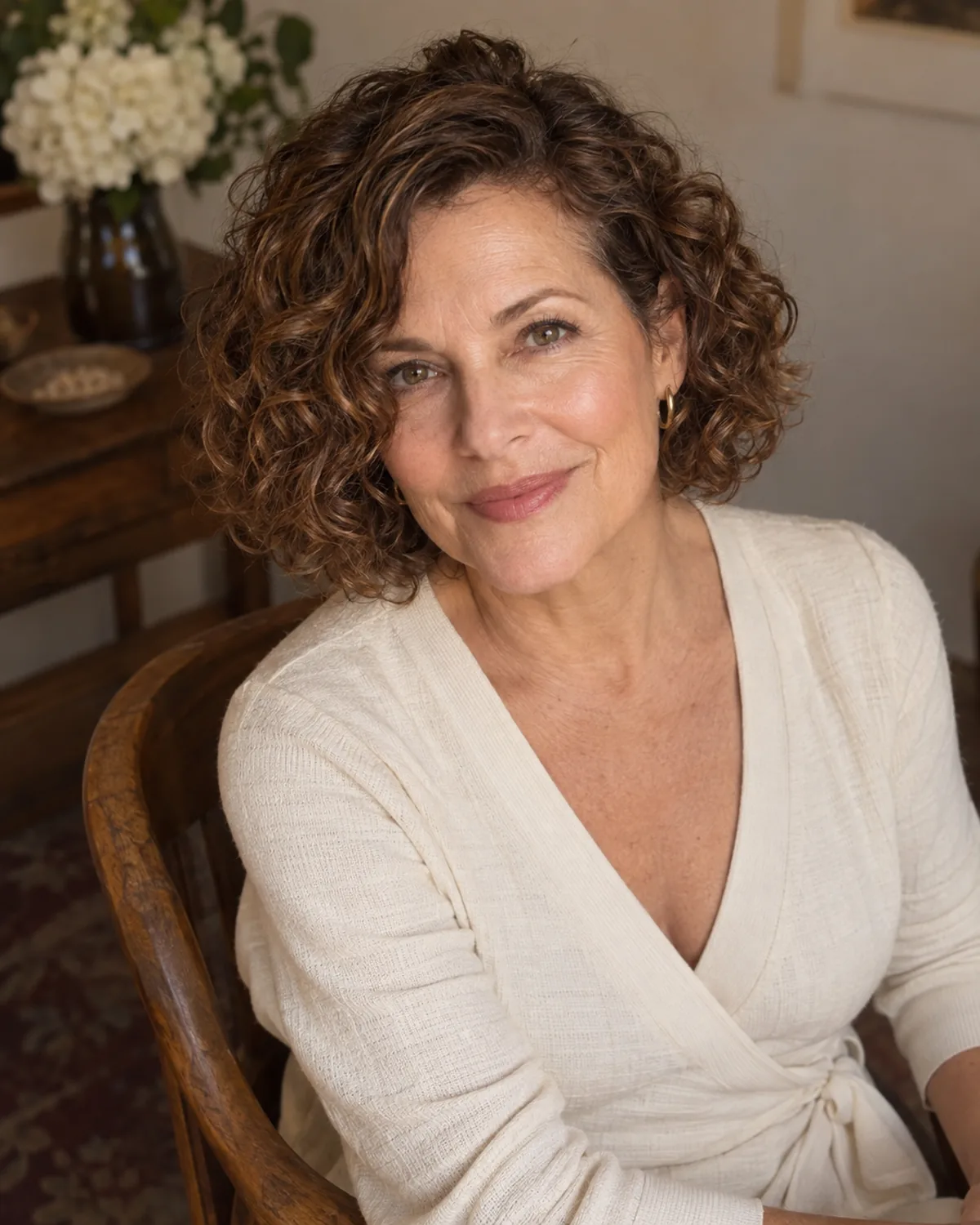
Cut to the shoulder when wet, this lob lands at the chin once the curls dry and the shrinkage takes hold. That shrinkage ratio is the entire decision. Loose spirals (roughly 1.5-inch diameter) typically lose two to three inches between wet and dry.
- The cut is technically medium length, but on curly hair it reads short because of shrinkage
- Measure your shrinkage before booking: wet your hair, let it air-dry, and compare the two lengths
- Works when the dry length lands between the jaw and the chin, which is the sweet spot for this silhouette
- If shrinkage pulls the length above the chin, you are in pixie territory and should plan for that instead
- See medium length hairstyles over 50 for cuts that stay medium even after shrinkage
9. Wash-and-Go Curly Crop
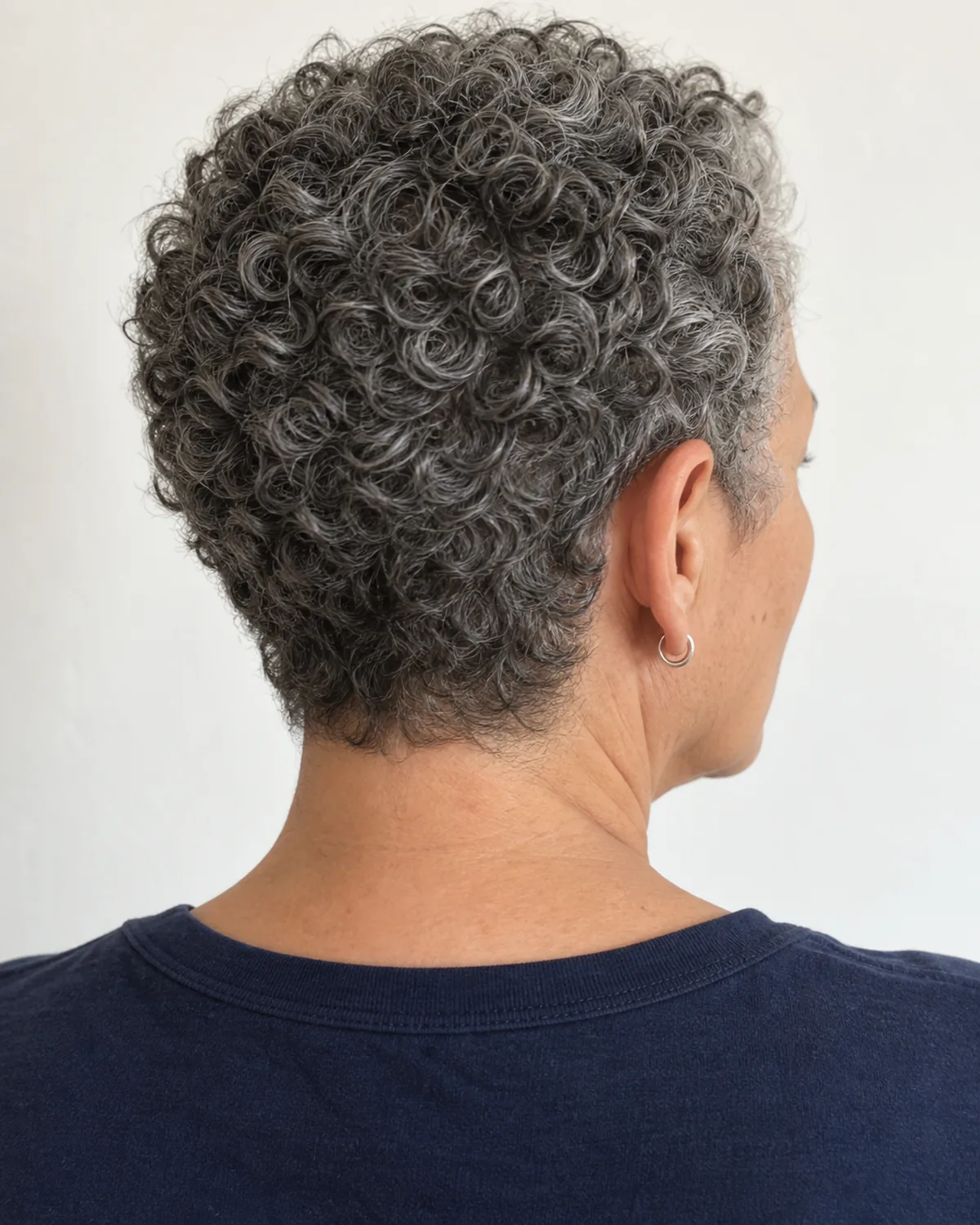
The shortest cut on this list and the lowest maintenance. No product, no diffuser, no scrunching. Wash it and walk out. The curl pattern does everything.
- Works only when the curl pattern is consistent across the entire head, crown to nape to temples
- The uniform curl at this length reads as deliberate style rather than a haircut that just happened
- On hair where the pattern varies (looser at the crown, tighter at the nape, a cowlick at the temple), the inconsistency at this length looks unintentional
- Ask your stylist whether your curl pattern is consistent enough to carry this length without help
10. Curly Undercut Bob
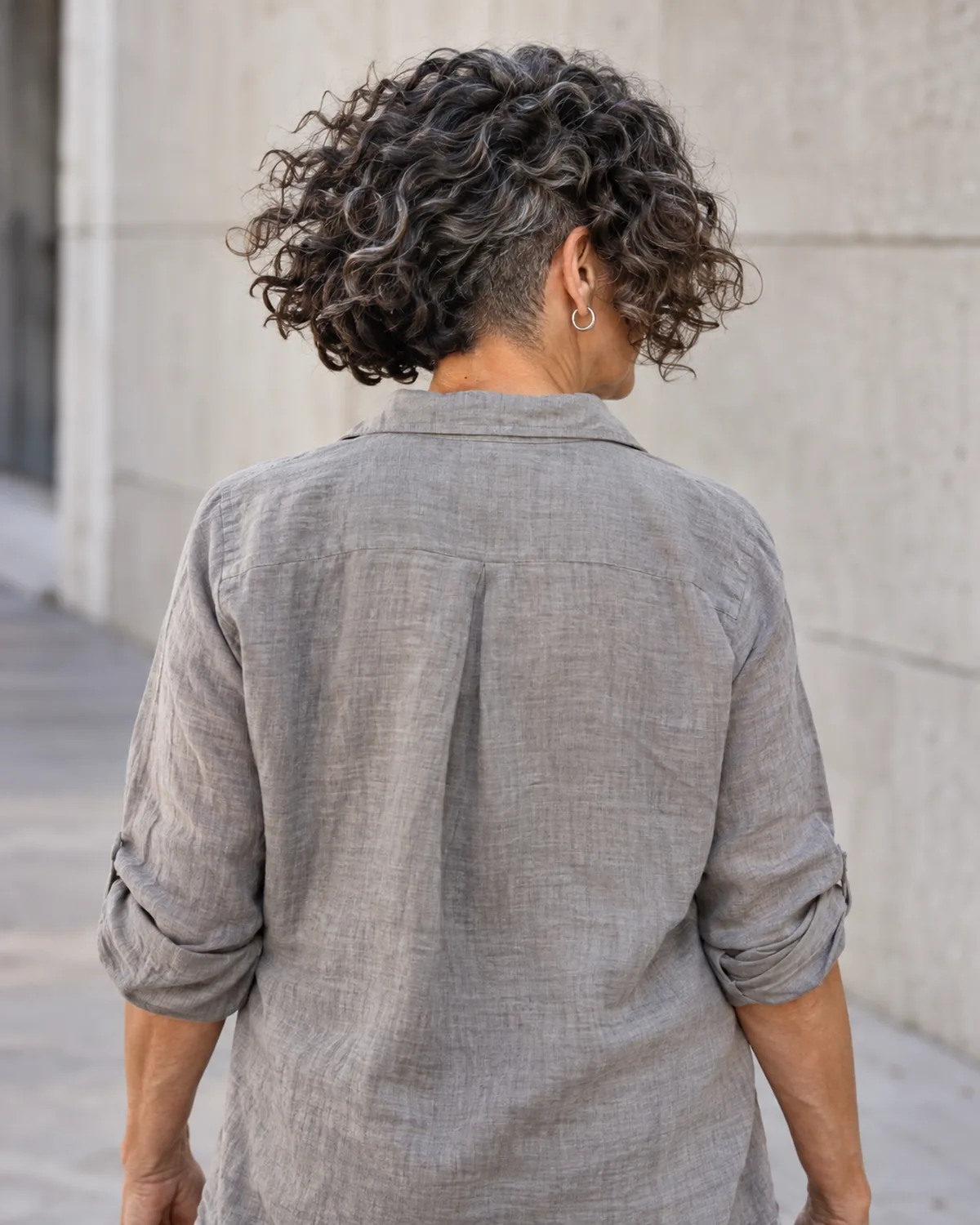
Clipped sides beneath a longer curly top. The undercut removes bulk mechanically without thinning shears, which frizz curly hair. When the curls part with movement, the clipped section is just visible underneath.
- Solves the thickness problem on hair where the volume is too much rather than too little
- The undercut is hidden at rest and only shows when the hair moves, which makes it versatile for different settings
- Fails when thinness is the issue because removing what little bulk exists will make the top layer look sparse
- Ask your stylist to clip the undercut to one length with no graduation so the reveal is clean when it shows
11. Soft Curly Round Cut

Uniform length all around, following the natural shape of the head. No layers, no stacking, no disconnection. Every curl sits at the same distance from the scalp. The silhouette is a smooth round shape.
- The safest short curly cut because there are no disconnection points where the curl can spring in an unexpected direction
- Works on almost every curl type and density because it asks nothing of the hair except to be curly
- The trade-off is that it adds no drama, no asymmetry, no structural interest beyond the curl itself
- A good starting point if this is your first short curly cut and you want to learn how your curls behave at this length before committing to something more structured
12. Curly Pixie With Longer Top and Cropped Sides
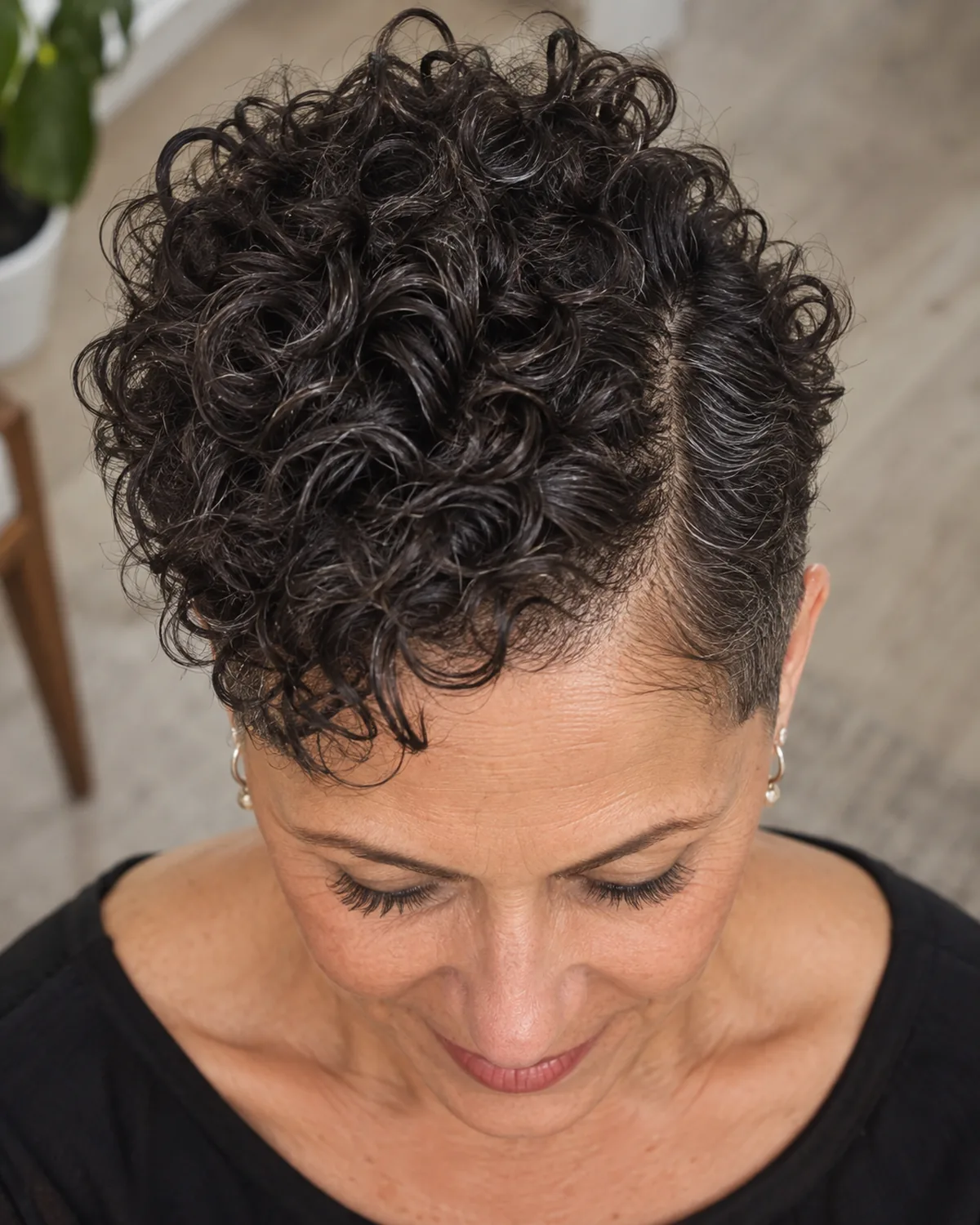
High contrast between the curly top and the cropped sides. The top has tight curls standing at two or more inches. The sides are cut to a quarter inch. The gap between the two lengths is the visual statement.
- Works when curls are tight enough to stand up on two inches of length without flopping sideways
- The contrast between the long curly top and the shaved sides is the entire design, so it needs to be maintained every four to five weeks
- Fails on loose waves because the top collapses onto the cropped sides and the contrast disappears
- Ask your stylist to cut the top dry so the curl determines the standing height, and use clippers on the sides for a clean edge
- See pixie for fine hair for a different set of rules where density rather than curl type is the deciding variable
Every curly cut on this list starts with the same question: what does your curl do on its own, without help? The answer to that decides which of these twelve works for you and which fights you. A stylist who cuts curly hair dry and has seen your specific curl pattern in person outranks anything written here.
Where the checkable claims come from
- The Ultimate Guide to Curl Types — NaturallyCurly (TextureMedia Inc.)
- Understanding Graduation and Layering — Sam Villa / Redken Education
- Face Shapes and Hairstyles — Pivot Point International
Keep this one
Save it for the appointment
Pin the image above to the board you actually open before a salon visit. This guide is written to be re-read, not read once.
Tonight, before you close this tab
- Wrap one curl around your finger and measure the diameter to know your curl type before your next appointment
- Wet your hair, let it air-dry without product, and measure the length difference to know your shrinkage ratio
- Check whether your curl pattern is consistent across your whole head or varies between the crown, sides and nape
- Save one image from this guide that matches your curl density and bring it to your stylist with the question: where would you put the weight line on my curl pattern?