17 Bangs for Fine Hair Over 50 That Won't Leave You See-Through at the Forehead
Seventeen bang styles for fine hair over 50, judged by how much hair each borrows from the crown and what to tell the stylist.
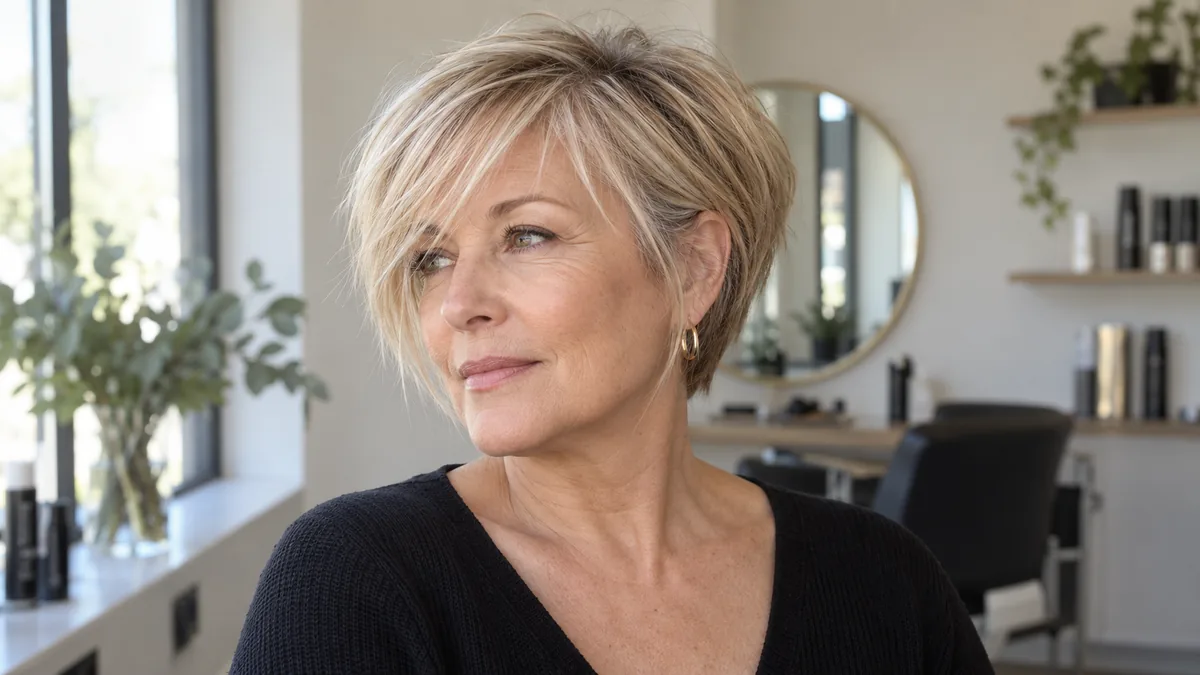
Booking an appointment soon? Save this page. It is easier to skim in the chair than to remember.
At a glance
Works
- Wispy, side-swept, or curtain shapes that borrow a sliver from the crown, not a slab
- Point-cut or razor-finished edges that let fine hair look intentional, not stringy
- Any fringe you can tuck behind the ear when it is not cooperating
Depends
- A blunt full fringe — needs enough density to fill the width without visible gaps
- Root-lifted styles — hold only if your hair responds to a roller or brush and keeps the volume past lunch
- Micro bangs — only work when the frontal hairline is still intact and even
Skip
- A thick one-length curtain on visibly thinning crown hair — the cost is too high
- Choppy bangs plus a voluminous pixie top — too much texture competing above the brow
- A see-through fringe on uneven forehead skin — it becomes a magnifying glass
Every fringe borrows hair from the top section. On fine hair that borrowing is the whole question — take too much from the crown and the density behind the bang collapses. Take too little and the fringe looks like an afterthought.
These seventeen styles are sorted by that trade-off. Each one names the density cost, who it suits, who should skip it, and what to say in the chair so the stylist sections the fringe correctly.
A stylist who can see your actual density outranks any list. Bring these ideas as a conversation starter, not a prescription.
1. Wispy Side-Swept Fringe
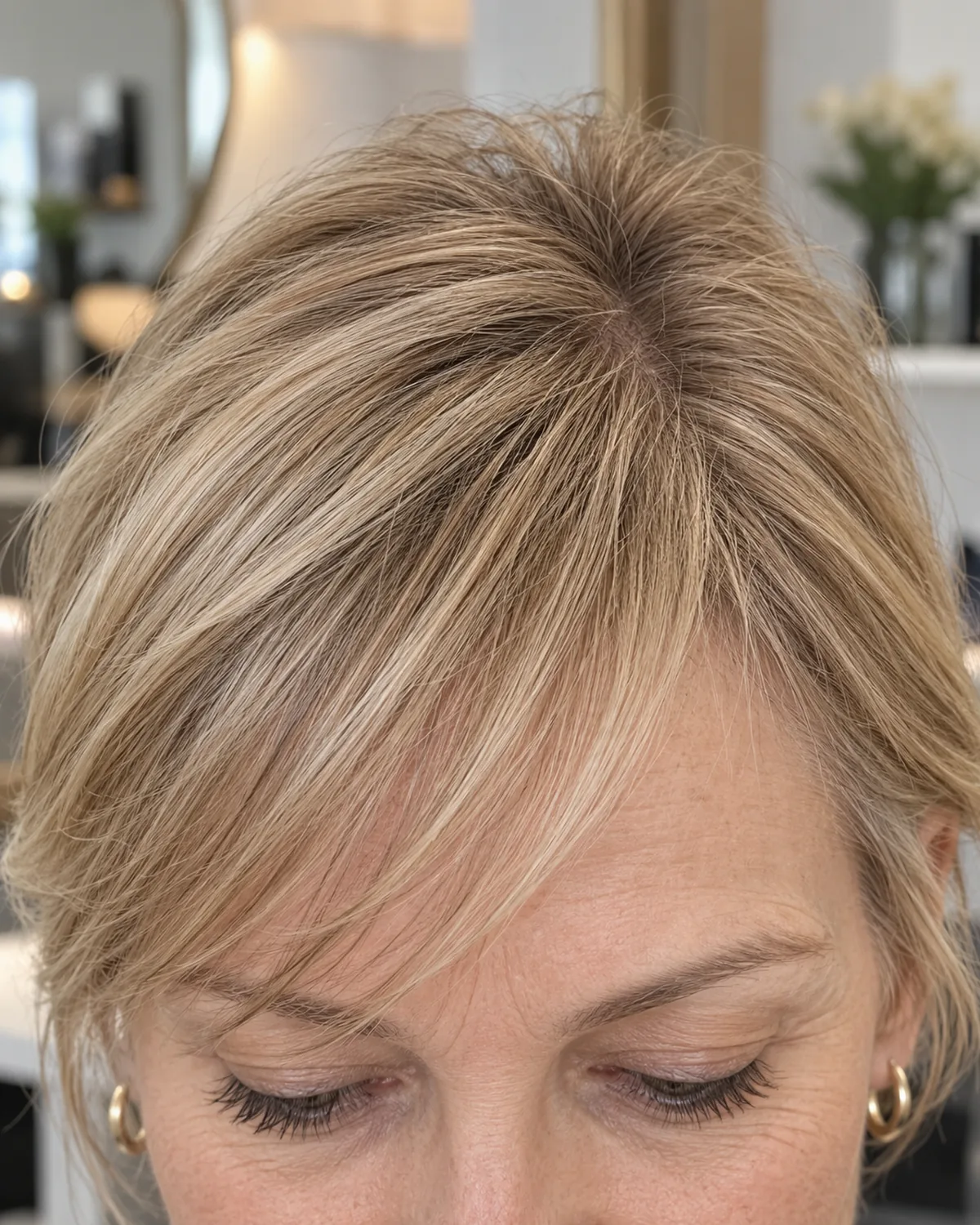
A light diagonal fringe swept to one side, point-cut so each strand tapers to a fine tip. The section it borrows from the crown is narrow — a triangle barely two fingers wide at the hairline. That small cost is why this style works on hair that is fine but not yet thinning at the temples.
- Ask the stylist to point-cut the tips rather than blunt-cut so the fringe ends look deliberate rather than chopped
- Confirm the section depth before cutting — two fingers at the hairline, tapering to a point at the crown
- If your temple area is already sparse, skip this and look at idea 5 or 6 instead
- This pairs well with layered bobs for fine hair over 50 where the fringe blends into the first layer
2. Curtain Bangs With a Wide Centre Part

Two face-framing pieces that split at the centre and taper past the cheekbone. The wide part means the forehead section is narrow, so the crown keeps most of its density. Works on fine hair with at least chin length. Skip if the part line has widened significantly — the curtain frames the gap instead of hiding it.
- Tell the stylist to keep the centre section narrow so the fringe does not thin the crown
- The taper should end at the cheekbone, not the jaw, so it reads as bangs rather than layers
- If you are weighing bangs after 50 in general the curtain style is the lowest-commitment entry point
- Works best when the hair has enough weight to hold the split — very fine flyaway hair drifts out of the curtain shape
3. Micro Bangs Above the Brow
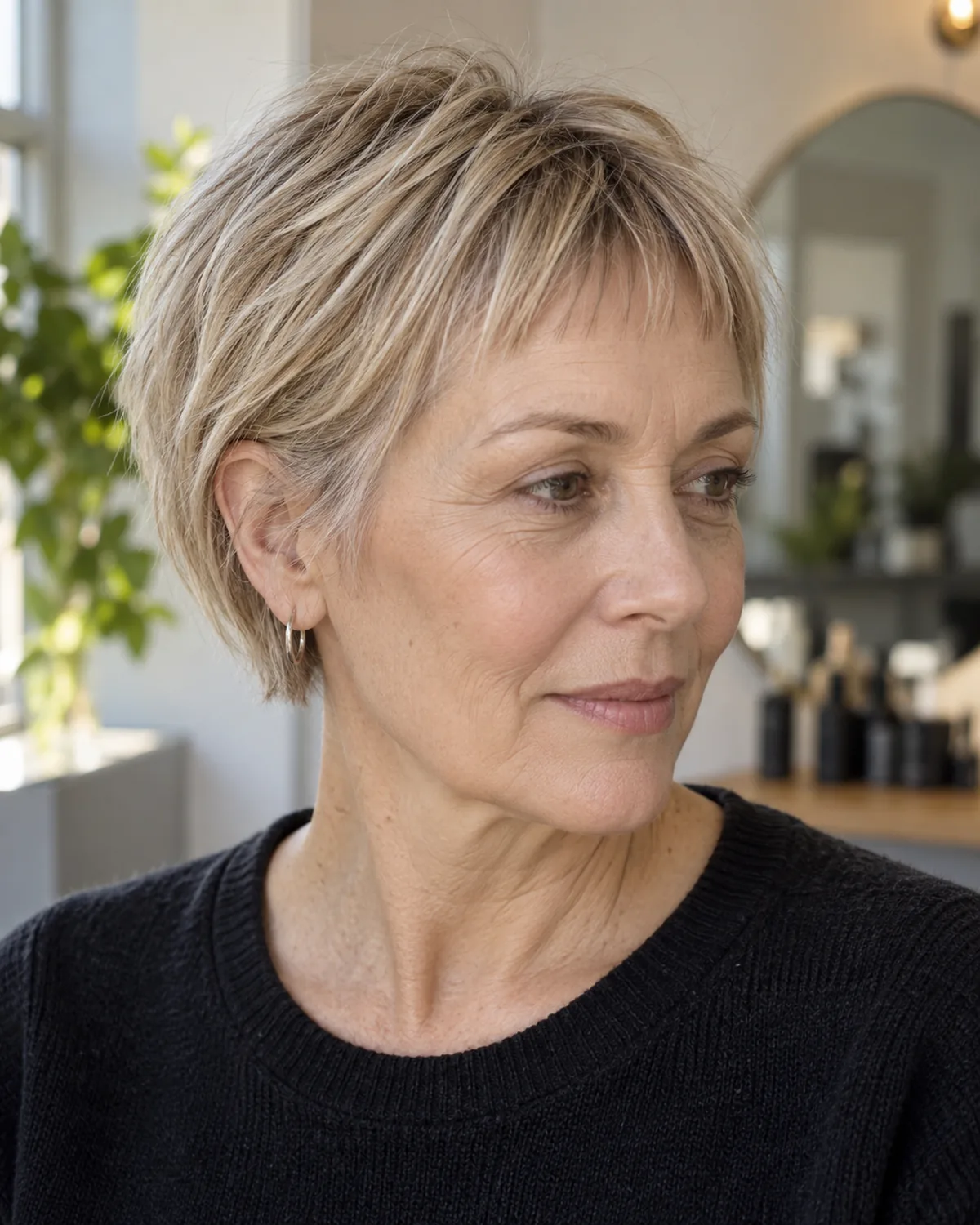
Very short bangs cut at mid-forehead. Because each strand covers less vertical distance, fewer strands create a full-looking line. The density cost is low — the section is shallow and the hair is short, so it does not pull weight from the crown. Works when the frontal hairline is still intact and even.
- Skip if the hairline has receded or thinned unevenly — micro bangs sit so close to the hairline that any gap shows
- Ask the stylist to dry-cut micro bangs because wet hair shrinks and a half-inch difference turns a bold choice into a mistake
- These suit pixie cuts for fine hair over 50 where the short proportion reads cohesive
- Bring a photo showing the exact length you want — mid-forehead has a different effect from just above the brows
4. Soft Blunt Fringe Just Touching the Brow
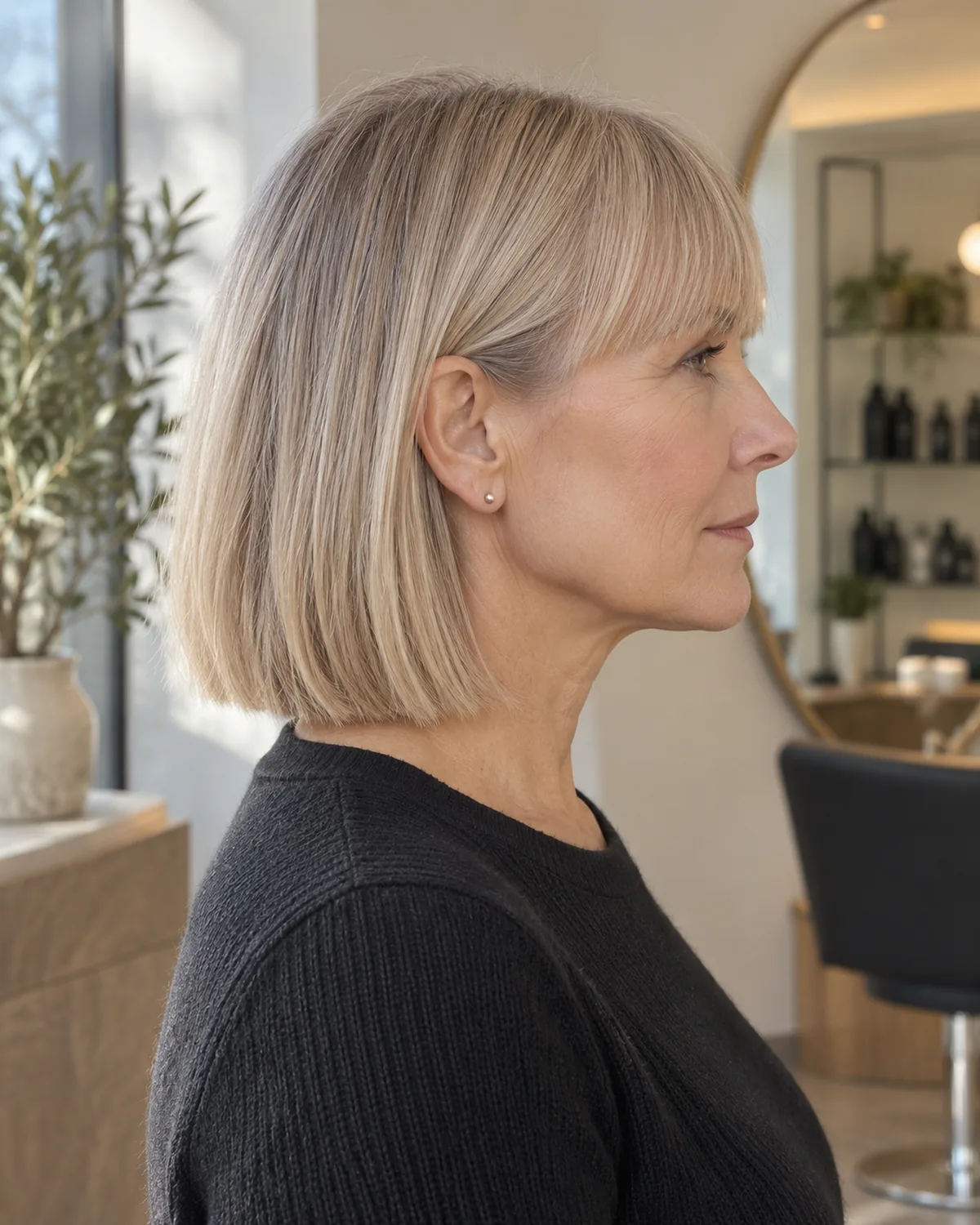
A one-length fringe cut straight across to the eyebrow with minimal texturing. The blunt line creates a visual edge that reads as thick even when the individual strands are fine — the uniform cut line tricks the eye. Works when hair is fine but plentiful enough to fill the width. Skip if total density is low because a blunt line with gaps looks worse than no bangs at all.
- Ask the stylist to check the fringe density from the front before finishing — if you can see forehead through the line, the section needs to be slightly deeper
- Request minimal point-cutting at the ends to soften the blunt edge without losing the visual weight
- A blunt fringe on fine hair needs a trim every four to five weeks because the clean line is the entire effect
Where to start
Find your situation, skip ahead
Your hair is fine but still covers the scalp when dry
You have enough to spare — try a side-swept or curtain fringe and see how it sits after a week.
01 Wispy Side-Swept Fringe02 Curtain Bangs With a Wide Centre Part07 Side Fringe Blending Into Layers
Your crown is visibly thinning and every strand counts
Borrow as little as possible — wispy, micro, or piece-y styles that use hair you can afford to lose.
03 Micro Bangs Above the Brow05 Tapered Baby Bangs06 Piece-y Fringe With Deliberate Separation on Fine Hair
You want bangs but you are not sure you can commit
Start with a long curtain fringe you can tuck, or a clip-back transition — both are reversible.
11 Long Curtain Fringe Past the Chin17 Textured Clip-Back Fringe in Transition
5. Tapered Baby Bangs
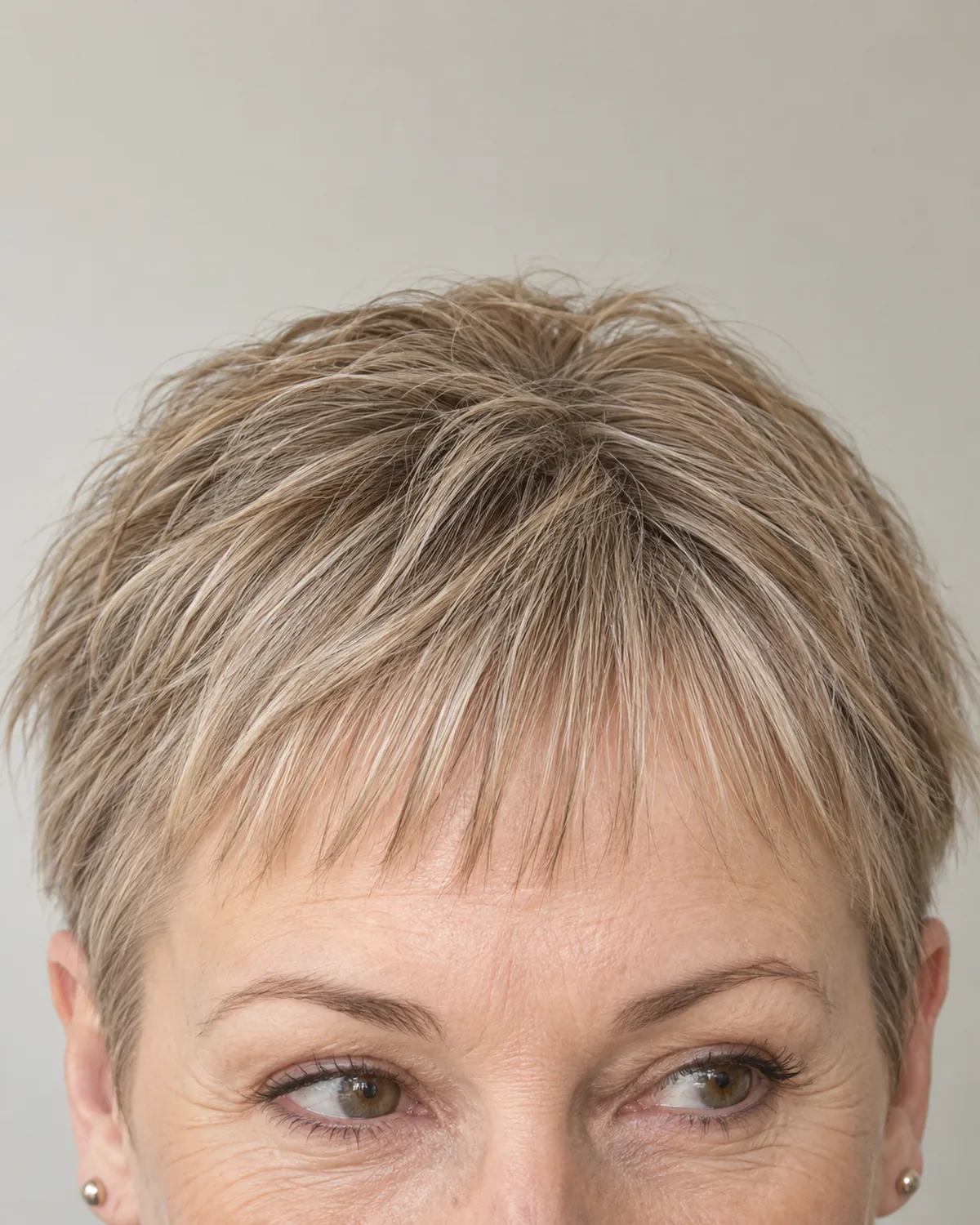
A shorter version of micro bangs, tapered thinner at the temples and fuller at the centre. The taper hides how little hair is actually in the fringe — the graduation from full to sparse reads as design, not deficit. Works with short crops and pixies. Skip on longer hair because the short fringe against long sides looks disjointed.
- Tell the stylist that the taper should thin toward the temples, not thin everywhere equally
- This is one of the lowest-cost options — the section is tiny and the length is minimal
- Works well if you are already wearing a low-maintenance cut for fine hair and want to add interest without adding upkeep
- If you wear glasses, check that the fringe clears the frame top bar — baby bangs behind the frames disappear
6. Piece-y Fringe With Deliberate Separation on Fine Hair
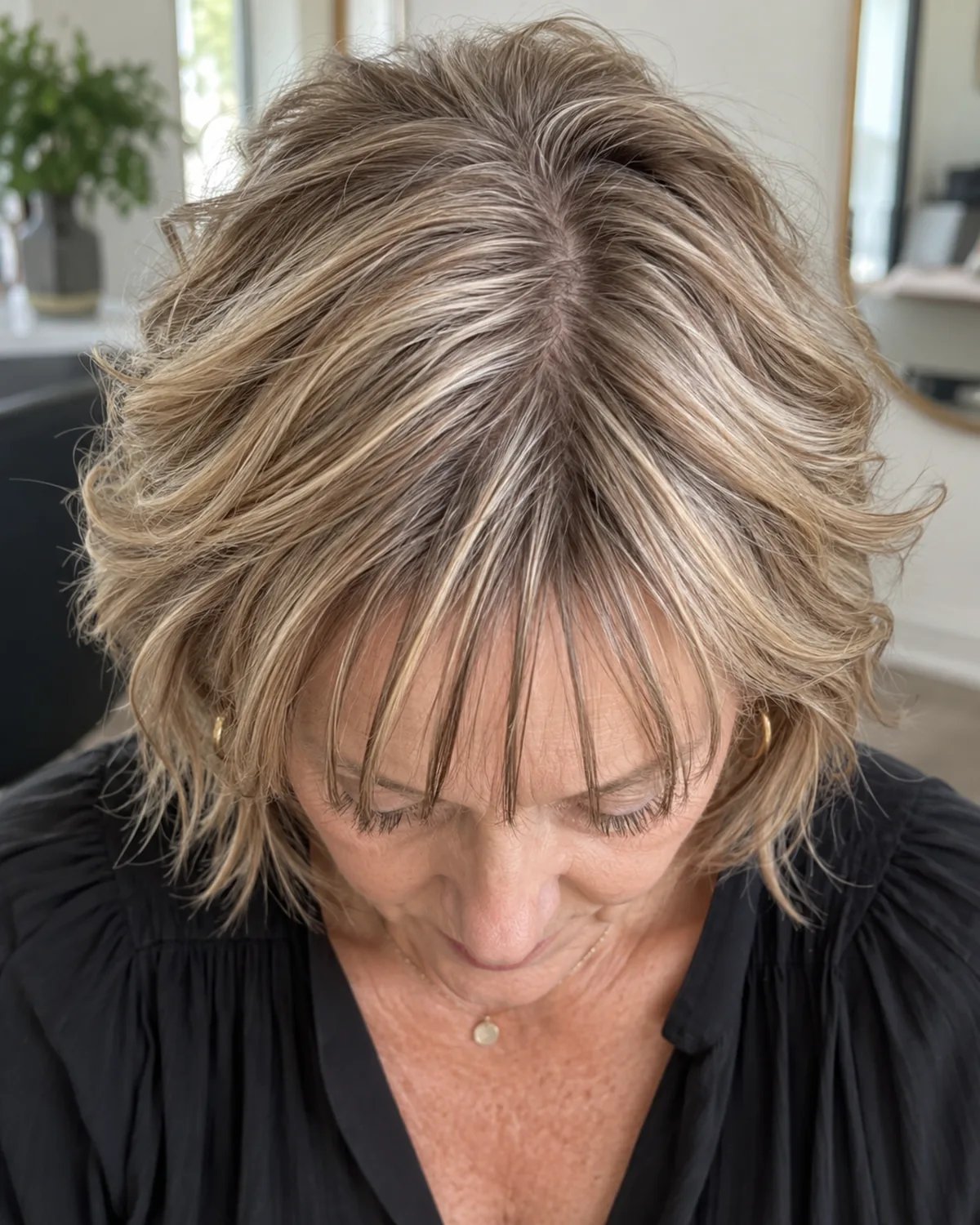
Bangs razor-cut into distinct separated sections so each piece casts its own shadow on the forehead. The visible gaps are the design, not a symptom of thinning. The density cost is minimal: a narrow triangular section at the hairline. Works on wavy or slightly textured fine hair where strands hold a bend. Skip on dead-straight fine hair — the pieces lie flat and the gaps look accidental.
- Ask the stylist to razor-cut the sections rather than point-cut so each piece has a tapered edge
- The fringe should have no more than four or five separated pieces — too many and the effect reads messy
- If your hair has any natural wave this is one of the most forgiving styles because the movement keeps the pieces from clumping
7. Side Fringe Blending Into Layers
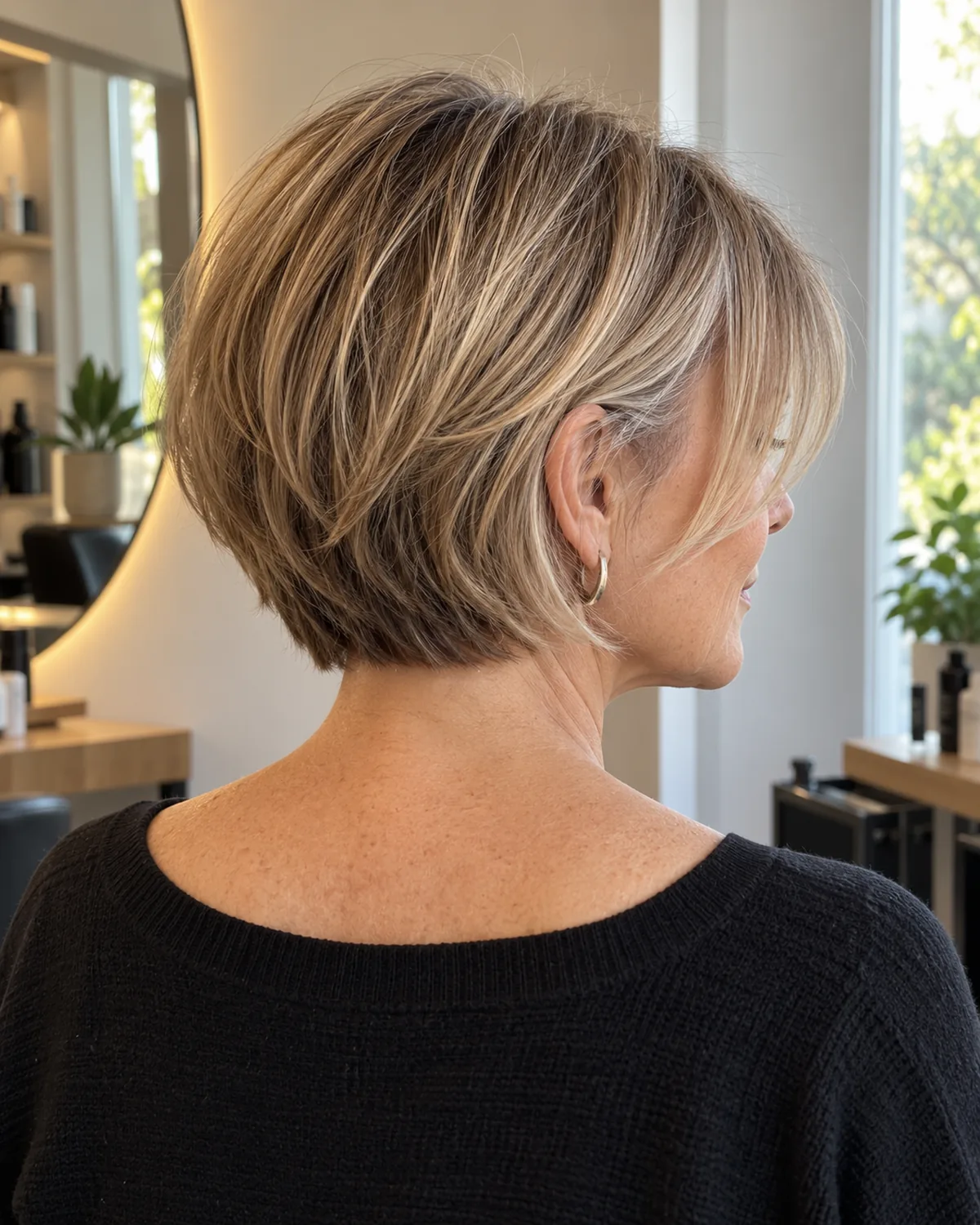
A long side fringe that graduates into the first face-framing layer. No hard line between bang and layer, so the eye cannot tell where the fringe ends and the haircut begins. Works on layered bobs and shags. Skip if hair is one-length — there is nothing for the fringe to blend into.
- Tell the stylist you want the fringe to disappear into the layers so there is no visible transition line
- This is the safest choice if you are not sure about bangs because growing it out is invisible
- Pairs naturally with shag haircuts for thin fine hair over 50 where the layers already frame the face
- If you decide you do not like it, skip the trim on the fringe section for two months and it becomes a face-framing layer
8. Rounded Full Fringe With Internal Layering
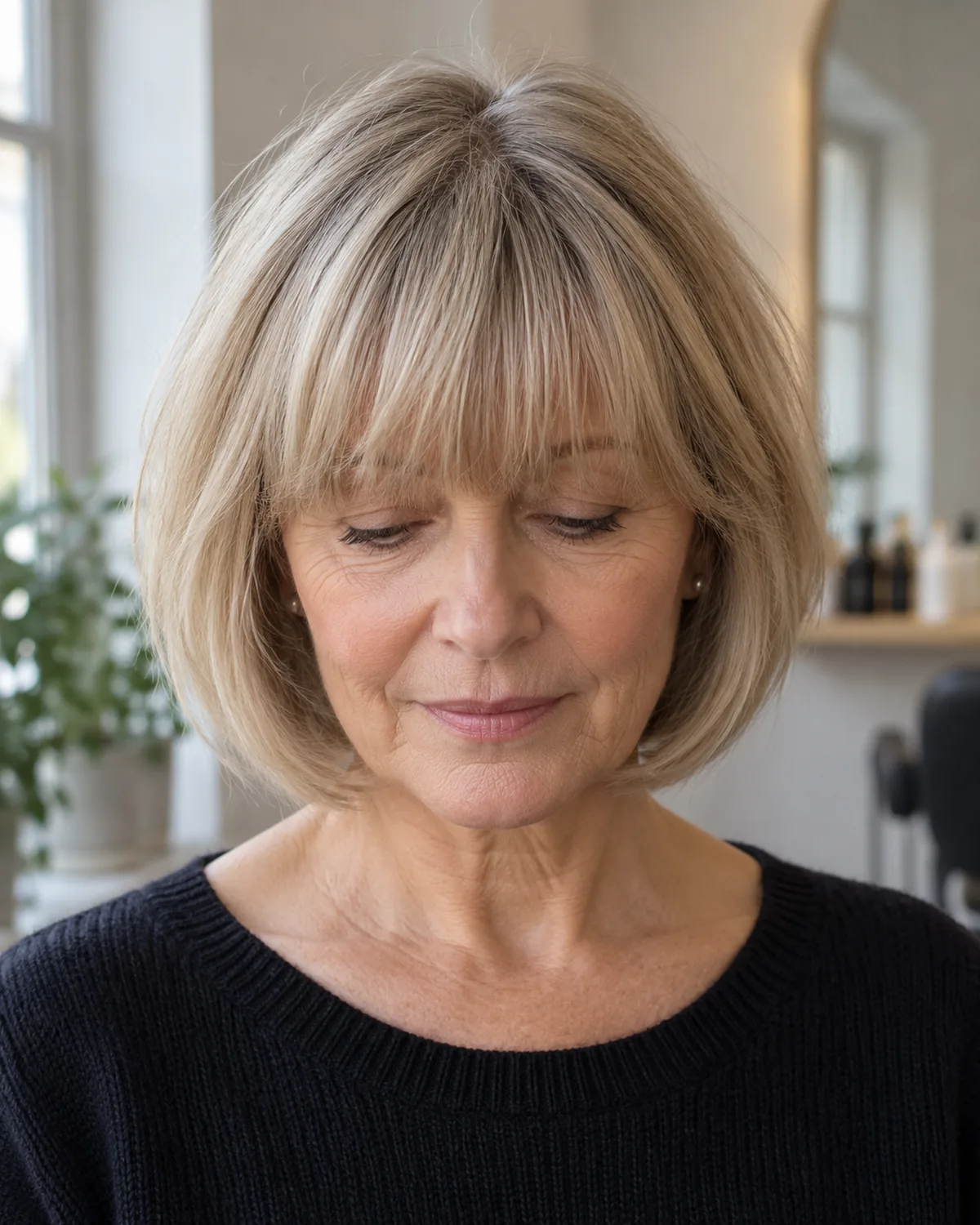
A full fringe that appears thick from the front but has hidden internal layers that reduce weight. The layering prevents the flat-sheet look that heavy bangs develop on fine hair. Works when hair has enough density to look full from the outside. Skip if the crown is visibly thin — a full fringe pulls the most hair from the top section of any style on this list.
- Ask the stylist to layer inside the fringe rather than on the surface so the fullness reads from the front
- Request a round shape rather than a straight-across line because the curve softens the weight
- This is the highest-cost option in density terms — confirm you can afford the section before the stylist cuts
- If you are considering a gray bob with bangs over 50 this shape works well with the coarser texture of gray hair
9. Arched Bangs Following the Brow Shape
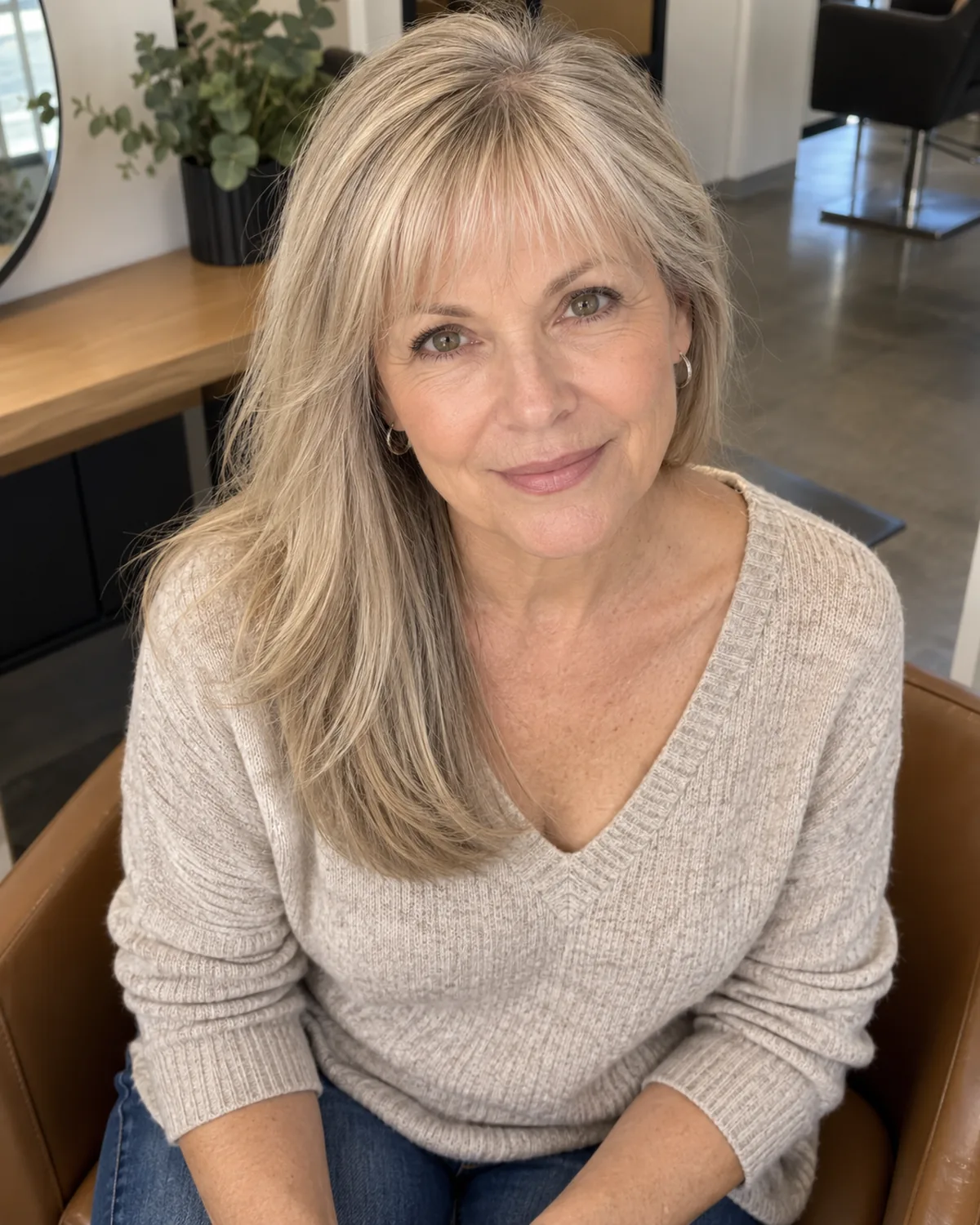
A fringe cut in an arc that follows the natural brow line — shorter at the centre, longer at the temples. The arch distributes the hair in a curve rather than a straight line, making fewer strands cover more forehead area. Works with oval and heart-shaped faces. Skip on round faces because the arc echoes the roundness and doubles it.
- Tell the stylist to follow your actual brow shape, not an idealised arc
- The temple sections of the arch should be long enough to blend into the side hair so the transition is smooth
- The arc creates a visible frame for the eyes — check from the front that it opens the face rather than crowding it
- If density is borderline, the arch is more forgiving than a blunt line because gaps at the sides are hidden by the longer temple pieces
10. Feathered Fringe With Volume at the Root
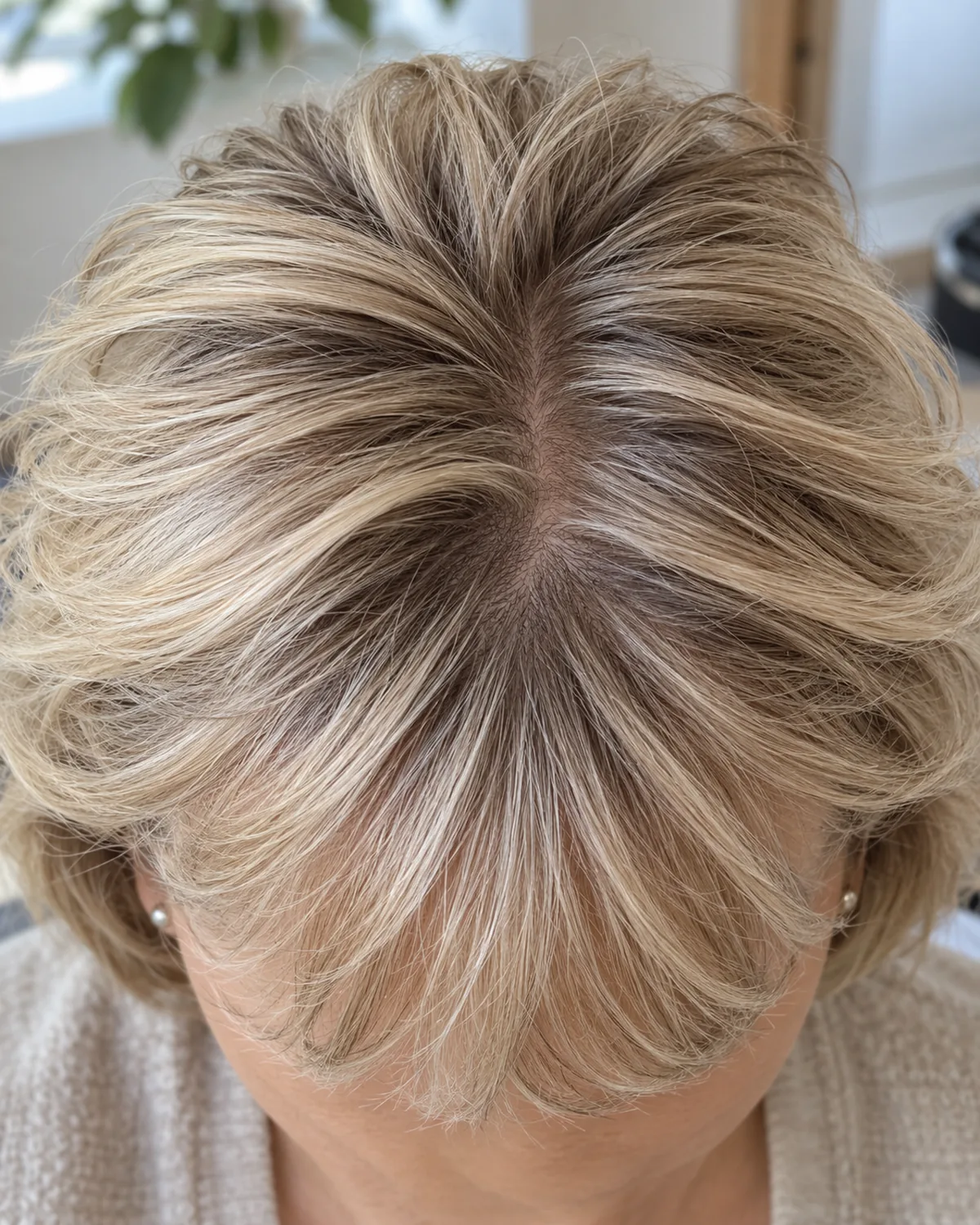
Bangs cut with feathered ends and styled with root lift at the forehead. The root lift creates air underneath the fringe, giving the illusion of thickness where there is mostly space. Works when hair responds to velcro rollers or a round brush and holds the lift past midday. Skip if hair collapses within an hour — flat feathered bangs look thinner than no bangs.
- Ask the stylist to show you how to roll the fringe section on a small velcro roller while you finish your makeup
- The feathered ends should be light enough to move but not so thin that they separate into individual wisps
- This style requires a daily two-minute investment — skip it if you want a fringe that works without styling
- If your hair responds well to root volume, also look at hairstyles for very fine hair over 50 for full-head options
11. Long Curtain Fringe Past the Chin

Face-framing pieces that extend past the chin and can be tucked behind the ear or pulled into a bun with the rest of the hair. They function as bangs when worn down and disappear when the hair is gathered. Works on fine hair at any density because the length distributes weight gradually rather than concentrating it at the forehead.
- Tell the stylist you want the pieces to reach past the chin so they have enough weight to stay put
- If you wear your hair up often, these pieces stay out and frame the face while the rest is gathered back
- Skip if you always tuck your hair behind your ears — permanently tucked, these are layers, not bangs
- The density cost is nearly zero because the section is narrow and the length keeps the weight distributed
12. Choppy Fringe on a Pixie
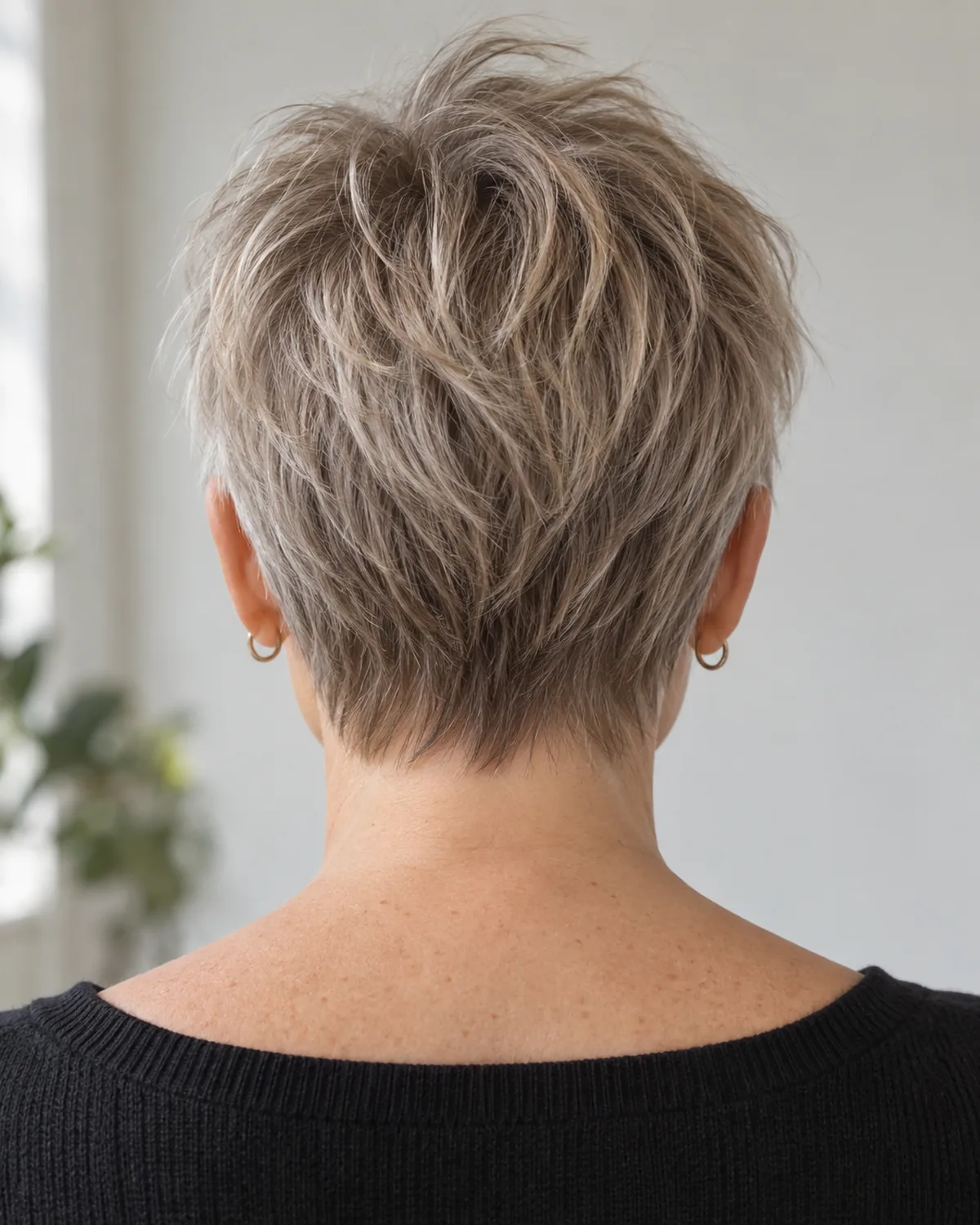
Short, uneven bangs on a pixie cut, razor-cut for a rough edge. The choppiness creates shadows on the forehead that read as density — the eye sees texture rather than counting individual strands. Works on fine hair with a pixie or very short crop. Skip if the pixie already has volume on top because choppy bangs plus crown volume creates visual noise above the brow line.
- Ask the stylist to razor-cut the fringe unevenly so no two pieces are the same length
- The chop should be subtle — dramatically uneven lengths read as a mistake rather than a style
- This pairs best with pixie cuts for fine hair over 50 where the short proportion matches
- A pixie fringe grows out fast — expect a trim every three to four weeks to keep the choppy shape
13. Asymmetric Side Fringe
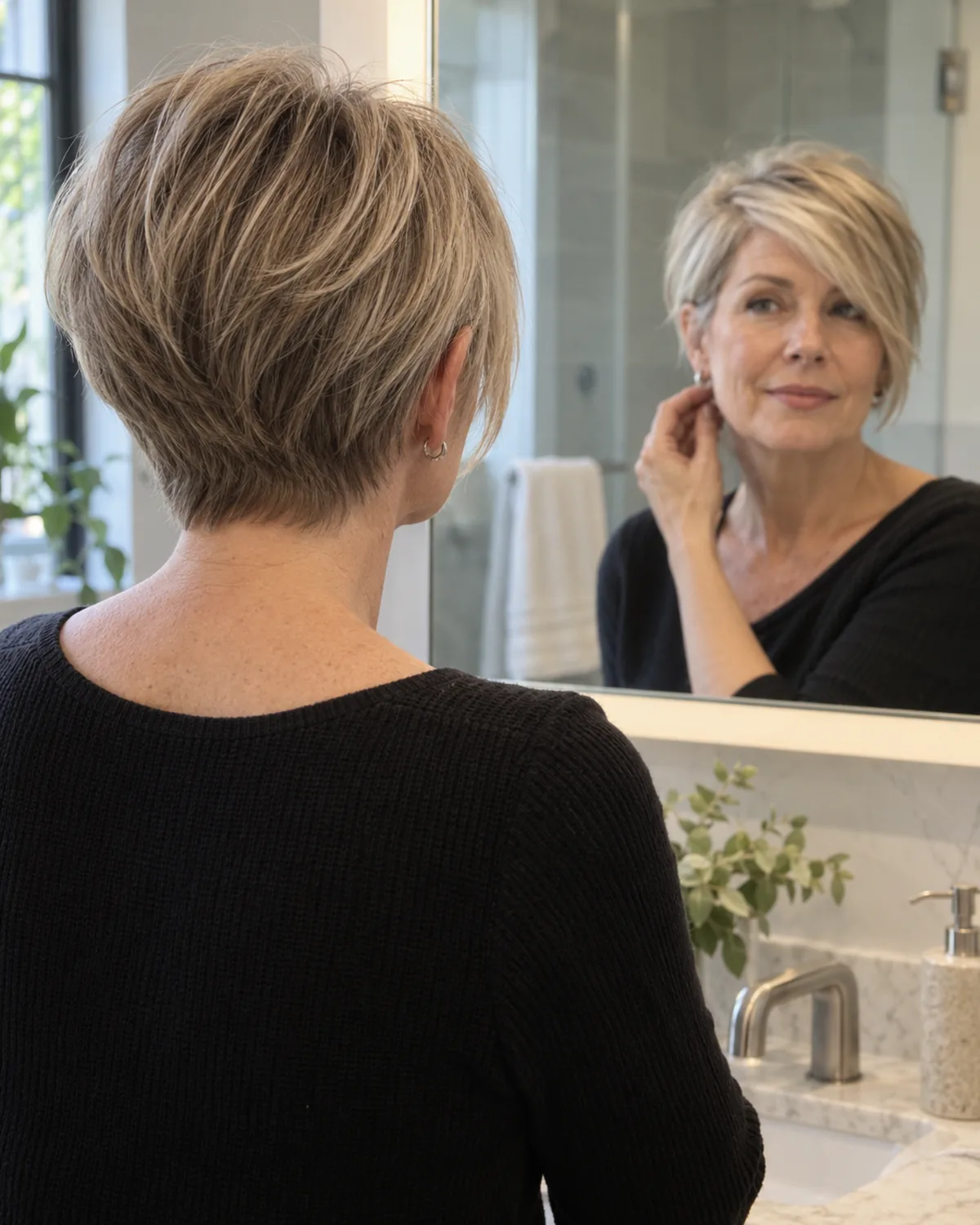
A fringe that is longer on one side and shorter on the other, creating a diagonal line across the forehead. The asymmetry breaks the horizontal expectation, so the eye follows the slope rather than scanning for thin spots. Works on most face shapes. Skip if you part your hair dead centre — the asymmetry fights the part and one side lifts.
- Tell the stylist which side should be longer based on where you naturally part your hair
- The diagonal should feel like a gentle slope, not a sharp drop — the difference between the two sides should be about an inch
- Check the fringe in a mirror from straight on because the asymmetry that looks right from one side can look lopsided from the other
- This style grows out gracefully because the long side simply becomes a side layer
14. Barely-There Fringe (See-Through Style)
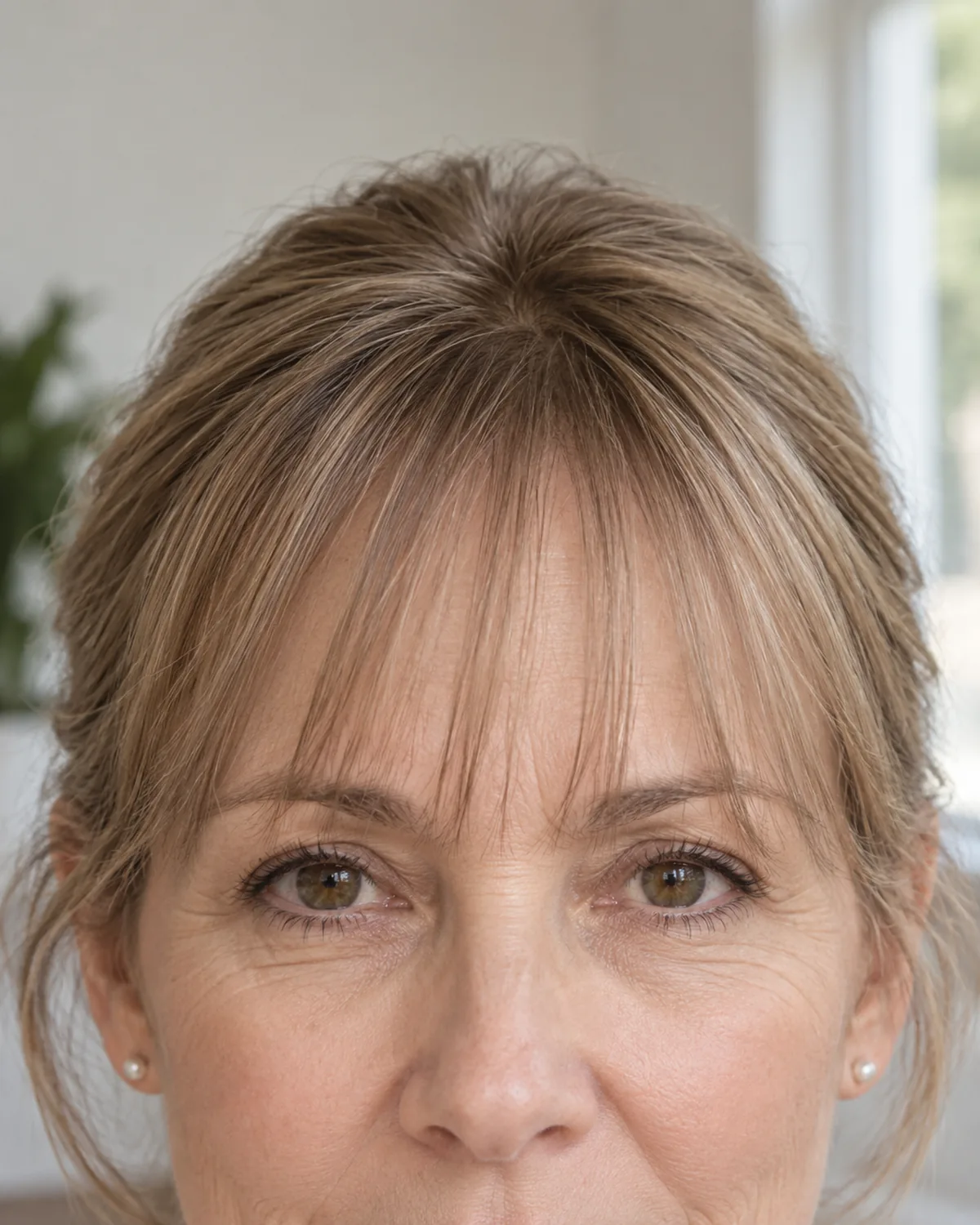
A very thin, intentionally see-through fringe where the forehead shows through the hair. The sparseness is the point — a few strands create a frame without pretending to be full. Works only if the forehead skin is even-toned and the hairline is clean. Skip if the forehead has sun spots or uneven pigmentation — the see-through effect magnifies them.
- Ask the stylist to take the thinnest possible section — this fringe needs fewer than ten strands per centimetre
- The forehead does the work here, not the hair — check your forehead skin under natural light before committing
- This is a style choice, not a density solution — do not confuse deliberately thin bangs with bangs that have gone thin
- If your easy thin-hair styles over 50 already frame the face, the see-through fringe adds a layer of detail without changing the silhouette
15. Layered Fringe Curving Outward
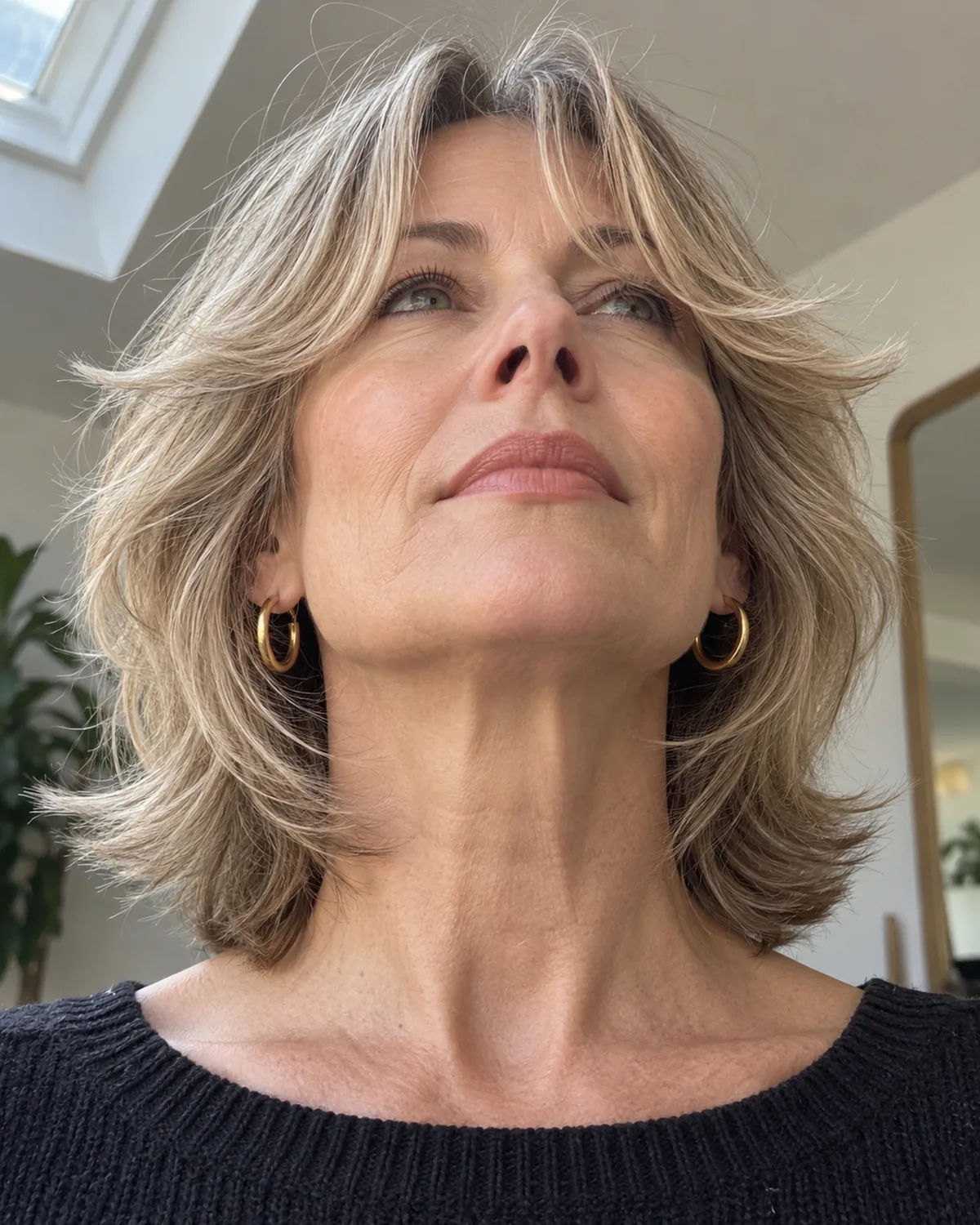
Bangs cut in layers and styled to curve outward and away from the face at the ends. The outward curve creates width and movement, making a small amount of hair occupy more visual space. Works on fine hair with a slight natural wave that holds a bend. Skip on very straight hair — the curve has to be forced with heat daily and collapses by afternoon.
- Ask the stylist to cut the layers so the outer pieces are slightly shorter, which encourages the outward flip
- A large-barrel round brush is the tool that creates this curve — ask for a demonstration before you leave the chair
- The outward direction is critical — curving inward creates a curtain effect that hides the forehead rather than framing it
- If your hair has any natural wave, this curve sets itself with a diffuser and holds without product
16. Soft A-Line Fringe

A fringe cut shorter at the centre and gradually longer toward the temples, forming a subtle A-shape. The longest pieces blend into the side hair, so the fringe looks partial rather than full. Works for readers who want a hint of bangs without committing the full forehead section. Skip if the temple hair is very thin — the A-line reveals it by drawing the eye outward.
- Tell the stylist to make the A-line subtle — a one-inch difference between centre and temples is enough
- The centre section should be thick enough to read as bangs from the front
- This is a good first-time fringe because the A-shape is easy to grow out — the temple pieces are already layer-length
- Check from the side that the shortest point does not sit above the eyebrows unless you specifically want micro bangs at the centre
17. Textured Clip-Back Fringe in Transition
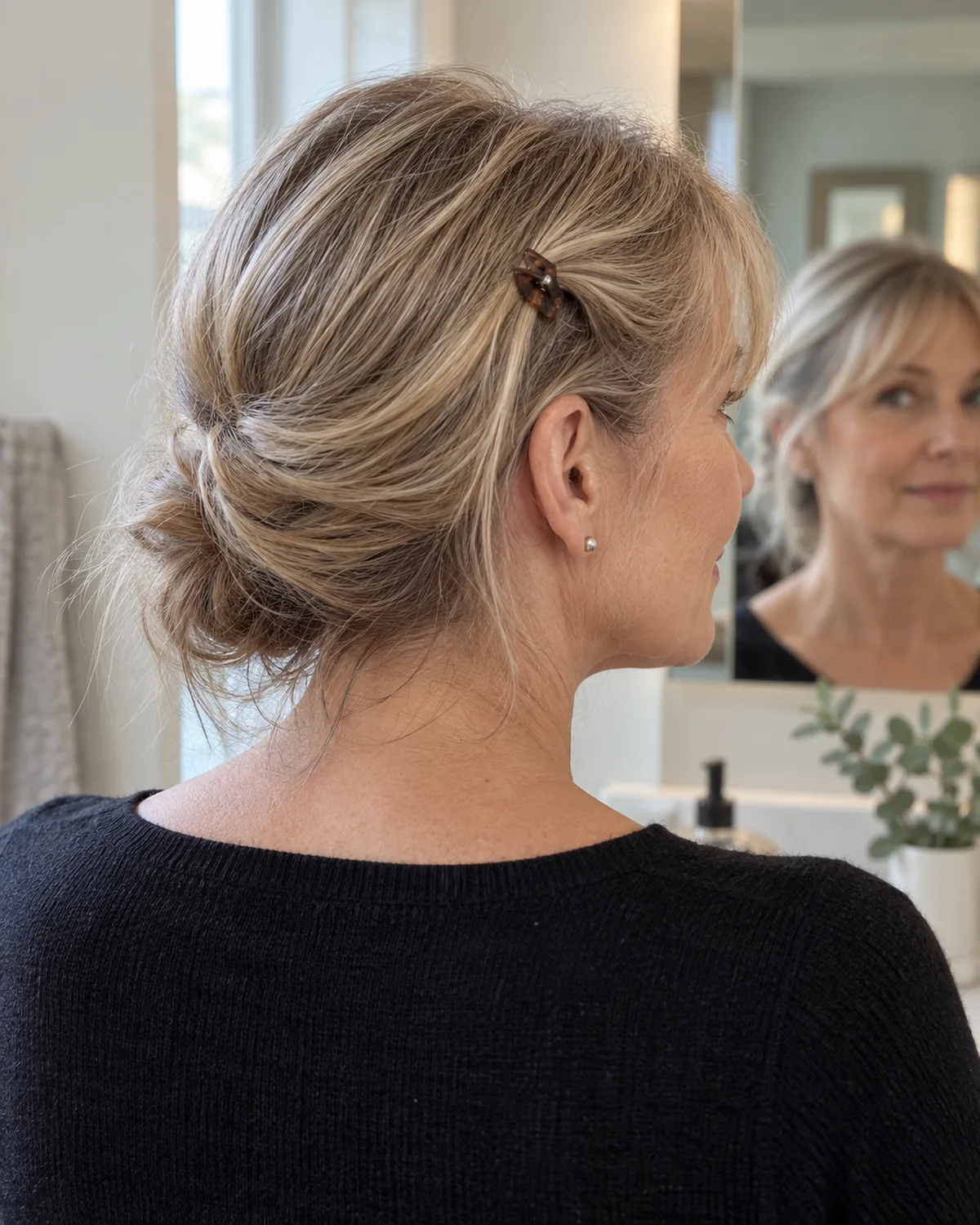
This is not a haircut — it is the exit strategy. Bangs being grown out, styled with a small clip at the temple to keep them off the face during the awkward stage. Every reader considering bangs needs to know what happens when she reverses. Works for anyone mid-grow-out. Skip if hair is too fine to hold a clip — it slides and the fringe falls back.
- Ask the stylist for a maintenance trim that blends the growing fringe into the side layers every six to eight weeks
- Use a plain clip that matches your hair colour so the accessory disappears
- The awkward stage lasts about three to four months for most fringes — shorter for wispy styles, longer for blunt cuts
- Knowing the exit plan makes the decision easier — if three months of clips sounds tolerable, the fringe is worth trying
The single most useful thing you can do before asking for bangs is hold a comb across your forehead where the stylist would section the fringe and look at what is left behind it. If the crown still has coverage, the fringe is a real option. If you can see scalp, choose one of the low-cost shapes — wispy, piece-y, tapered — that borrows a sliver instead of a slab.
Where the checkable claims come from
- Milady Standard Cosmetology — Milady / Cengage Learning
- How to Cut Bangs — Sam Villa Education — Sam Villa / Redken Education
- Hair Density and Hair Diameter — The Trichological Society
Keep this one
Save it for the appointment
Pin the image above to the board you actually open before a salon visit. This guide is written to be re-read, not read once.
Tonight, before you close this tab
- Pull your hair straight back and look at the forehead section — is there enough to spare?
- Hold a comb at the point where a stylist would section off the fringe — how much scalp shows behind it?
- Bring two photos to the salon, one of the bang shape you like and one showing your current density from above
- Ask the stylist to pin the fringe section forward before cutting so you can see the volume it will have