15 Wedding Hairstyles for Women Over 60 That Hold From Ceremony to Last Dance
Fifteen wedding hairstyles for women over 60, each judged by whether it holds through the full event, suits changing hair, and photographs well without constant touch-ups.
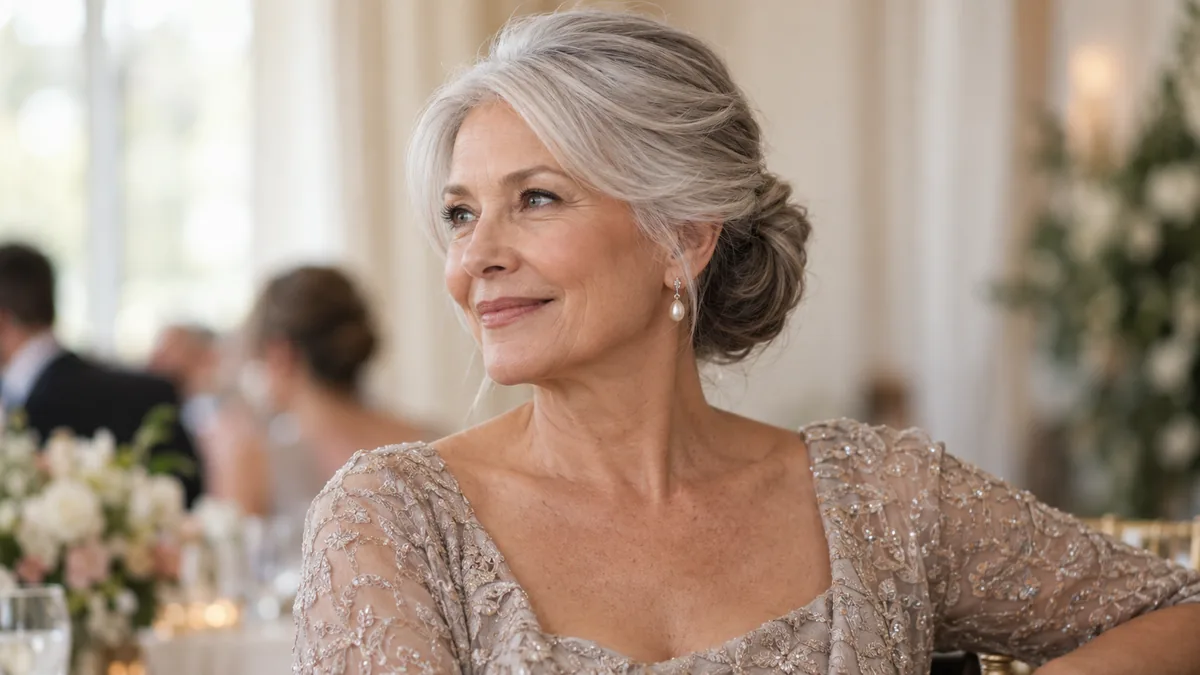
Booking an appointment soon? Save this page. It is easier to skim in the chair than to remember.
At a glance
Works
- A low chignon or rolled updo that keeps weight off the crown and temples — less tension on thinning areas, and the style holds for hours
- A deep side part or asymmetric sweep that flatters round and square faces without adding accessories
- A blowout or loose waves worn down — no pins, no pulling, and the style survives a full event if the hair holds a set
Depends
- A French twist on very thick hair — the twist bulges rather than lying flat, so it depends on how much bulk is gathered
- A half-up with curls on fine hair — the top section needs enough density to pin without showing scalp at the part
- A sculpted side sweep with invisible pins on very short hair — there is not enough length to reach across the head, and it reads as a comb-over
Skip
- Any updo that depends on fifty bobby pins and a can of hairspray to stay — if it needs an arsenal, it will not survive dancing
- Heavy spring-loaded clips on fine hair — they dent, pull, and leave marks
- A tight high bun on thinning hair — it exposes sparse temples and puts tension where the hair is weakest
A wedding is four hours minimum. Hair that looked right in the salon mirror at nine in the morning needs to still look right at the last dance.
After 60, that is a harder ask. Hair is thinner, grey is coarser, and styles that held through an afternoon now loosen by lunch. The hairstyle you choose has one job: look finished from the ceremony to the exit.
Every idea below is judged by hold time, face shape, and what it does with the hair you have now. Not a version of it that requires extensions, heavy product, or an hour with a curling iron before the car arrives.
1. Low Chignon With Soft Volume at the Crown
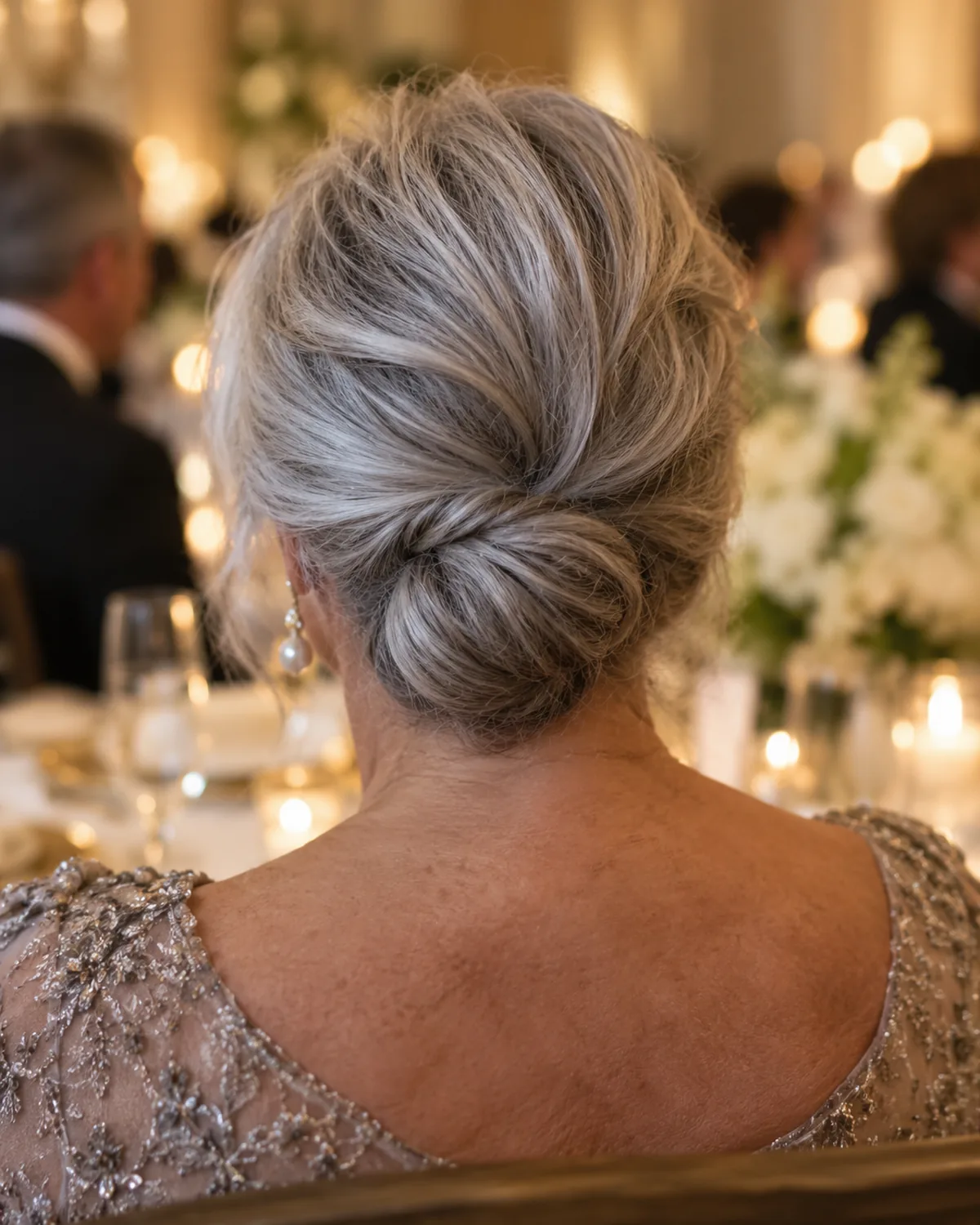
The low chignon sits at the nape, which means zero tension on the crown or temples where thinning shows first. The gathered knot holds its shape because the weight works with gravity rather than against it. Layers pulled gently forward at the crown before pinning add height without bulk.
- Works on medium to thick hair because the chignon needs enough density to form a knot that reads as full rather than pinched
- The low position keeps the style secure through hours of movement because a nape chignon does not slide down the way a mid-height bun does
- Skip on very fine hair unless a small clip-in piece or padding is placed inside the knot. Without internal bulk, a fine-hair chignon collapses into a flat twist
- Ask the stylist to leave the crown section loose before gathering so there is natural height at the front. Pulling everything tight from the crown makes the updo read as severe
- For related guidance on updos that work with changing hair density after 50
2. Side-Swept Waves Pinned Behind One Ear
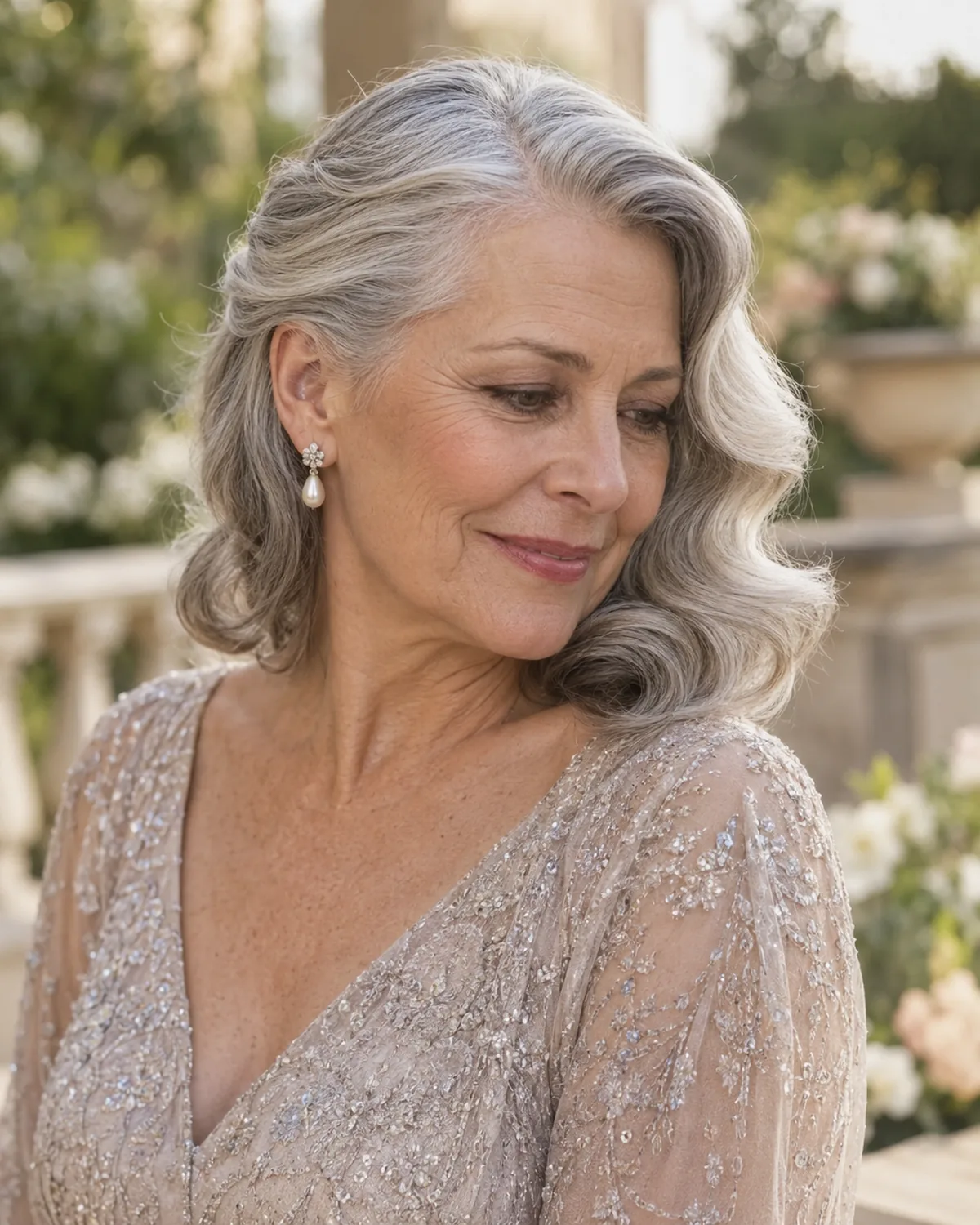
The waves are set large — think wide barrel, not tight ringlet — and then the whole mass is swept to one side and pinned behind the ear with hidden grips. The asymmetry creates a diagonal line across the face that flatters round and square shapes by breaking up the horizontal width.
- Works on shoulder-length and longer hair with some natural body; the waves need weight to hold the sweep to one side
- The hidden pins behind the ear keep the style anchored without visible hardware, which photographs clean from every angle
- Skip on very short or very curly hair — short hair will not hold the sweep across the face, and tight curls will not form the wide wave pattern this style needs
- A velvet grip or flat pin behind the ear is less likely to slip than a round bobby pin. Tell the stylist you need something that holds through dancing
- For related reading on how evening styles for women over 50 handle the same hold challenge
3. Textured French Twist
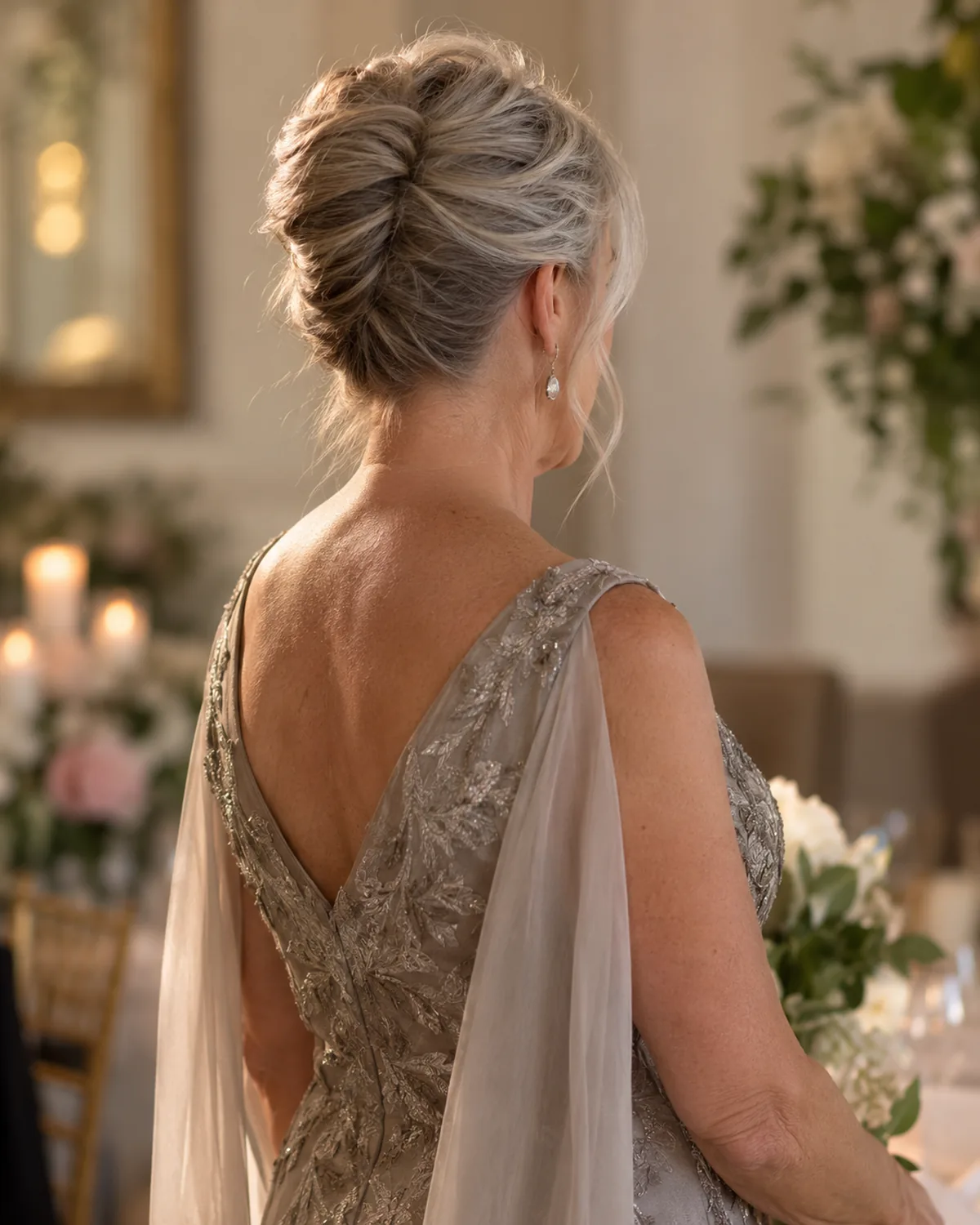
A slick French twist looks severe and ages the wearer. This version is deliberately loosened after pinning — pieces are pulled out at the crown and temple so the surface has texture instead of a helmet-smooth finish. The twist elongates the neck, and the gathered roll disguises sparse ends by folding them inside.
- Works on fine to medium hair because the roll wraps the thinner ends out of sight. The texture at the surface compensates for what is missing at the bottom
- The French twist is one of the most structurally secure updos: once pinned, it does not move. Four hours, six hours, it holds
- Skip on very thick curly hair — the bulk fights the roll and causes the twist to bulge at the back rather than lying flat against the head
- Ask the stylist to loosen the crown pieces after pinning, not before. If you loosen first and then try to pin, the twist will not hold its shape
- Tell them you want visible texture, not escaped hair. The difference is whether the loosened pieces frame the face symmetrically or just look like they came undone
4. Half-Up With Volume and Soft Curls
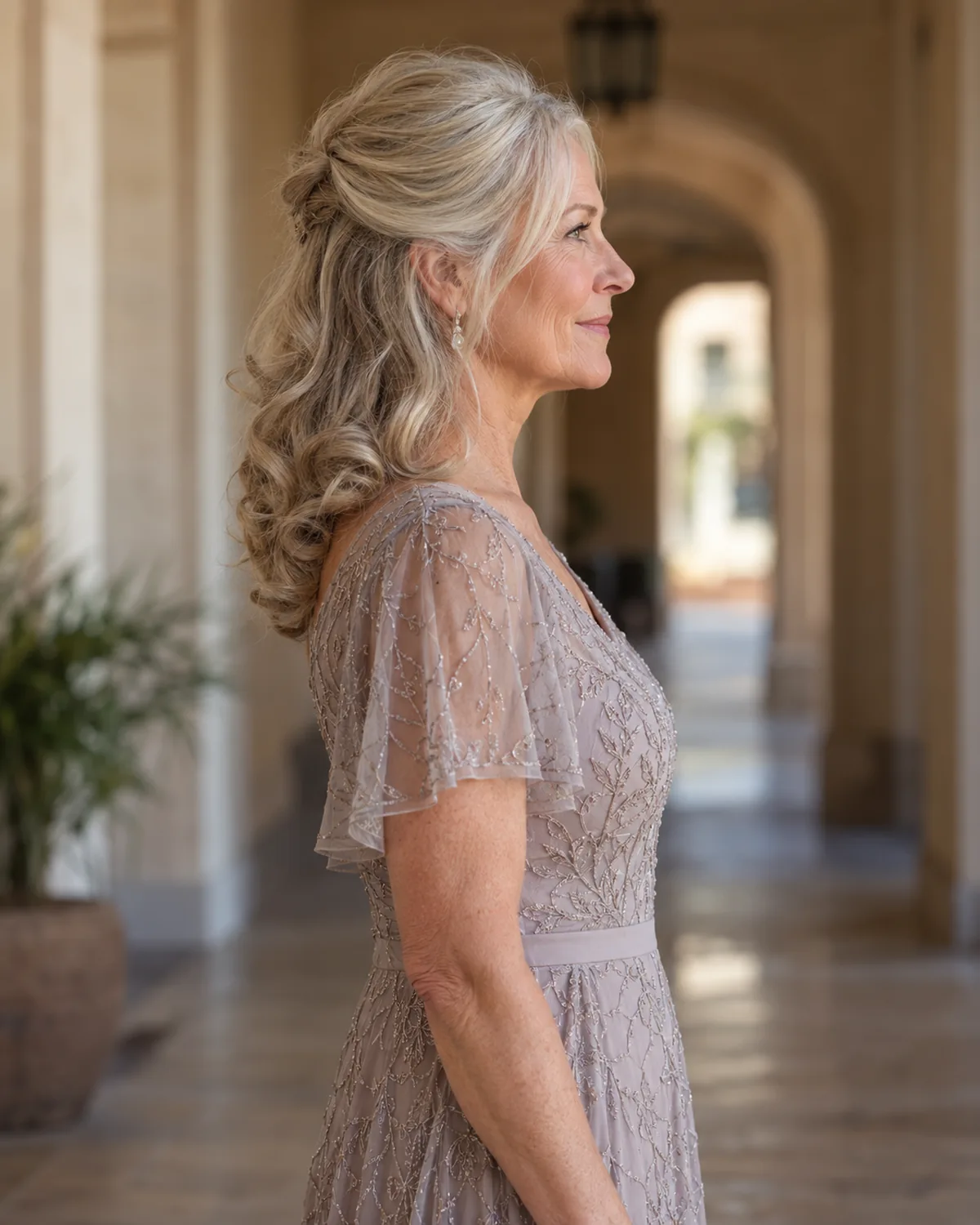
The top section is pulled back and pinned at the crown, creating a frame around the face. The rest falls in soft, set curls below the shoulders. The half-up structure lifts the face without the commitment of a full updo, and the loose curls below give the kind of movement that photographs well.
- Works on medium to long hair with enough density in both sections; the top needs enough to pin without showing scalp at the parting line
- The half-up reads as dressed without being formal, which makes it versatile across wedding roles — grandmother of the bride, guest, or the bride herself
- Skip on very fine short hair — the top section will not have enough hair to pin securely, and the loose curls below will fall flat within the first hour
- Ask the stylist to set the curls the day before if your hair does not hold a curl on its own. A day-old set with a light hold spray lasts longer than fresh curls on resistant hair
- The crown pin should sit high enough to create lift but low enough to feel secure. If you can feel it pulling, it is too high and it will loosen
Where to start
Find your situation, skip ahead
Your hair is fine or thinning and you want it up for the event without it looking sparse
Choose a textured French twist or a rolled updo at the nape — both disguise thin ends and add the illusion of density.
You have a bob or short hair and want to look occasion-ready without extensions or pins
Style the bob with a deep side part and volume, or add a small jewelled clip to a pixie — the cut is the style.
06 Soft Pixie With a Jewelled Clip08 Bob Styled With a Deep Side Part and Body
You want to wear your hair down and still look dressed for the event
A volume-boosted blowout or natural grey waves with a statement earring — let the hair speak and keep the accessories simple.
12 Volume-Boosted Blowout With Soft Bend15 Natural Grey Waves Worn Down With a Statement Earring
5. Sleek Low Ponytail With a Wrapped Base
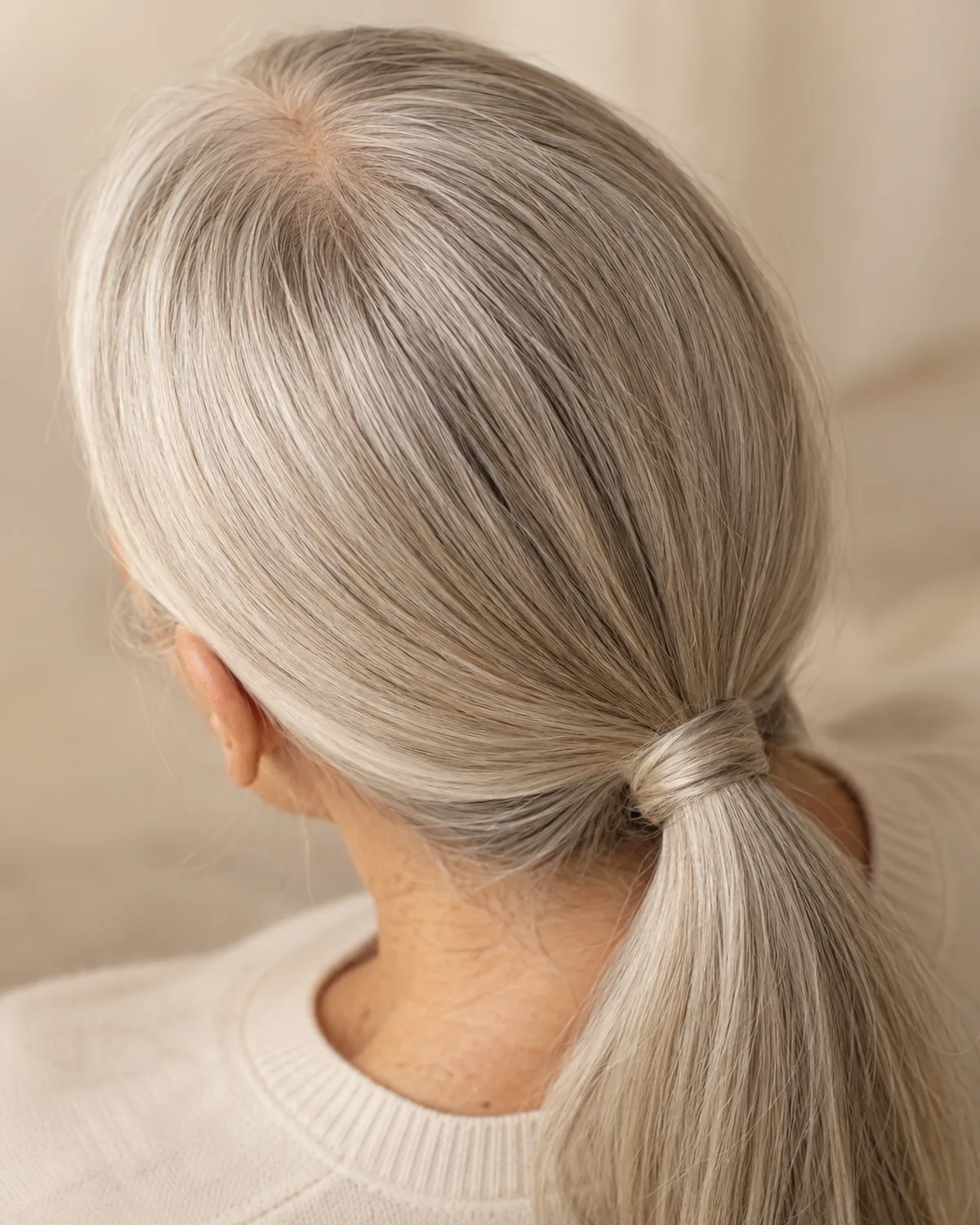
Clean, minimal, modern. The ponytail sits at the nape with a section of hair wrapped around the elastic to hide it. There is no ornament, no texture play. The style is in the precision of the line and the smoothness of the surface. The low position means no tension at the temples.
- Works on straight to wavy hair at shoulder length or longer; the wrap needs enough length to circle the elastic and tuck under
- The sleek surface requires hair that lies flat naturally or can be blown smooth. Any flyaway or frizz breaks the minimal line
- Skip on very curly hair unless the hair is blown straight first. The wrap will not lie flat on natural curl and the ponytail will not read as sleek
- Ask the stylist to secure the wrap with a pin underneath rather than an elastic over it. Doubled elastics create a visible bump under the wrapped section
- For related reading on how fine straight hair holds different styles after 50
6. Soft Pixie With a Jewelled Clip
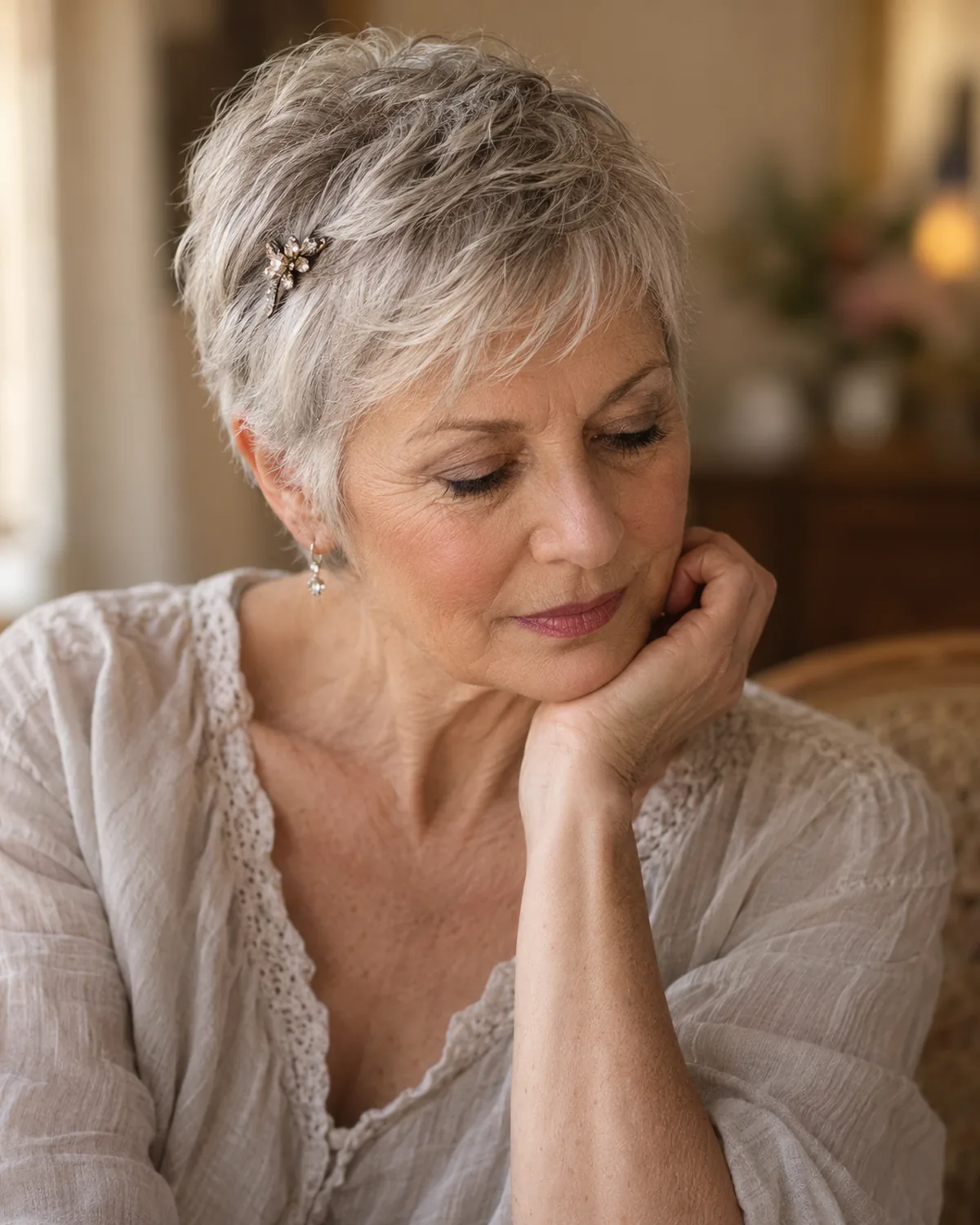
The pixie does the work. The clip is the event marker — a small decorative piece at the temple or behind the ear that says wedding without requiring the hair to do anything it does not already do. The cut stays everyday-wearable; the clip lifts it to occasion level.
- Works on any face shape because the pixie is already tailored to the wearer — the clip is an addition, not a structural change
- Choose a clip that is light and flat rather than heavy or spring-loaded — a strong clip on fine short hair leaves a dent, pulls strands loose, and shows the clip's mechanics rather than its design
- Skip if the clip is the only thing making the style feel event-ready and you would rather have the hair itself look different — in that case, this is not the right style, it is the right cut with the wrong expectation
- A single clip at the temple or behind one ear is enough — two clips or a headband on a pixie competes with the cut's simplicity
- For related guidance on pixie cuts for fine hair over 50 and what they can carry
7. Loose Updo With Face-Framing Tendrils
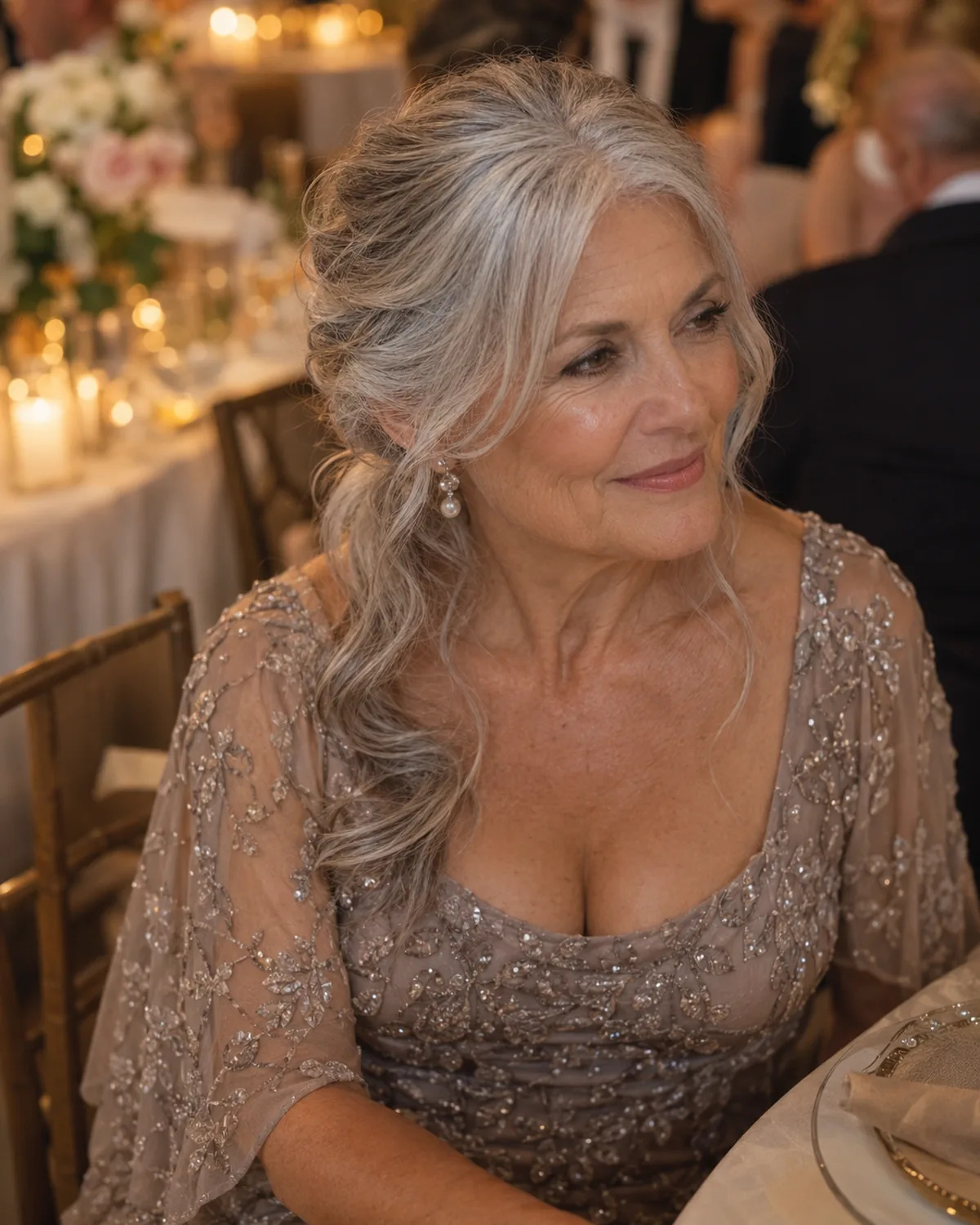
The hair is gathered loosely at the mid-back of the head — not as tight as a bun, not as structured as a chignon. A few soft pieces are left out around the face and at the nape. Those tendrils are doing real work: they soften the forehead line and disguise any thinning at the temples by keeping the hairline transition gradual.
- Works on medium-length hair with some natural wave — the wave gives the loose structure enough grip to hold without heavy pinning
- The face-framing pieces should look deliberate: symmetrical, roughly the same length on both sides, curling gently inward toward the face
- Skip on very straight fine hair — the loose structure will not hold without heavy product, and the tendrils will read as escaped hair rather than a deliberate choice
- Ask the stylist to leave the tendrils out before gathering the rest, not pull them out after — pulling from a finished updo weakens the pins and the structure shifts
- The loose updo holds best when the hair is not freshly washed — day-two hair has more grip and the texture helps the pins catch
8. Bob Styled With a Deep Side Part and Body

No pins, no accessories. The bob is blow-dried with a round brush for body and set with a deep side part. The event-ready quality comes from the volume and the precision of the part — the hair falls heavily to one side, creating asymmetry that photographs well and moves naturally.
- Works on straight and wavy hair with medium density — the deep part needs enough hair on the heavy side to look full, and the light side should not expose scalp
- The round-brush blowout gives the bob body that lasts through an event — once set, it does not need restyling
- Skip if the hair is thinner than medium — without enough density the deep part creates a visible line of scalp that draws the eye to what is missing
- Ask the stylist to set the part while the hair is still damp — a part set on wet hair and dried in position holds better than one combed in after the blowout
- For related reading on bob hairstyles for women over 50 and which face shapes they suit
9. Sculpted Side Sweep With Hidden Pins
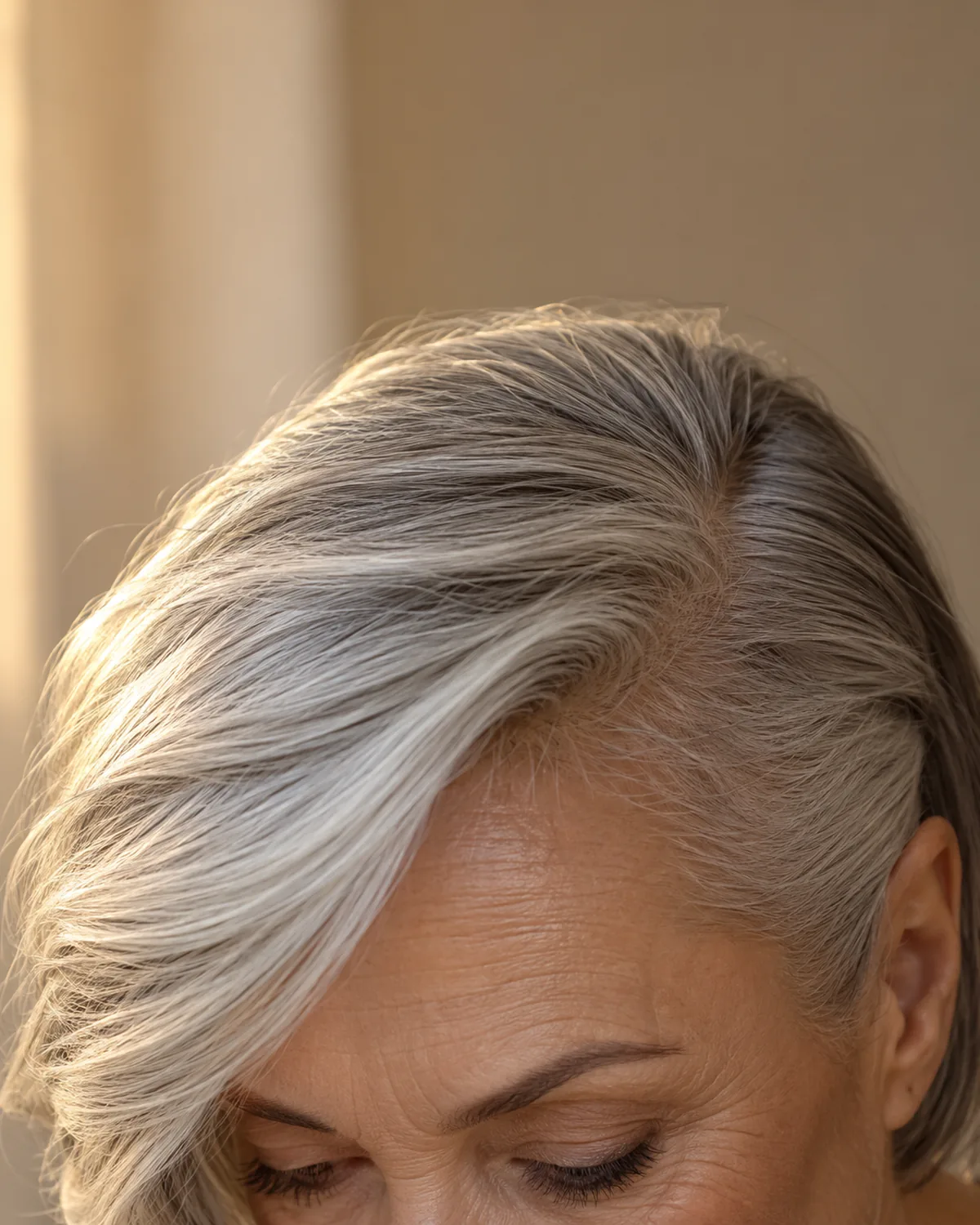
All the hair moves to one side. The opposite temple is sculpted close to the head with pins hidden under the swept section. The result is a dramatic asymmetric silhouette — one side has volume and movement, the other is clean and flat. This is a style that demands attention from every angle.
- Works on chin-length and longer hair with some natural hold — wave helps the swept side stay in position without constant adjustment
- The sculpted temple side creates a strong visual contrast that photographs as deliberate, not accidental — it reads as shaped, not just pushed aside
- Skip on very short pixie-length hair that cannot reach across the head — the sweep needs enough length to cover from one temple to the opposite side
- The hidden pins should be placed at the ear line and below, angled upward into the swept section — pins placed too high will show through the hair
- Tell the stylist you want the swept side to hold its shape through the event, not just the photograph — ask them to test whether the sweep stays after they shake your head gently during the trial
10. Wavy Lob With Tucked Sides
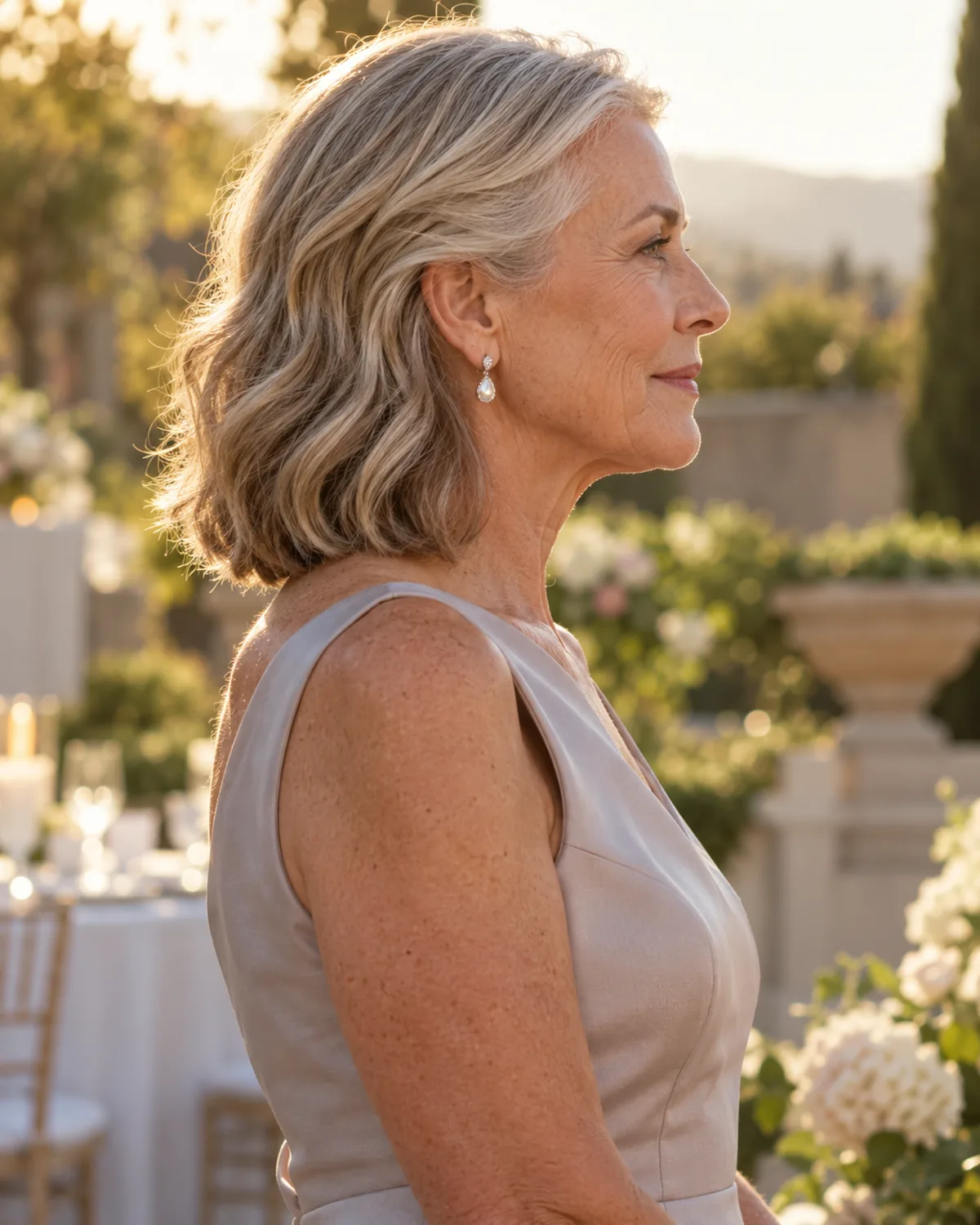
A lob set in loose waves with both sides tucked behind the ears. The tuck opens the face for photographs and shows any earrings clearly. The waves add body through the back and the lob length — just past the collarbone — keeps the style from reading as too casual for a wedding.
- Works on wavy and straight hair that holds a set — the waves should be loose enough to look effortless but defined enough to give the back movement
- The tucked sides stay in place better on hair with some natural texture — very slippery straight hair slides forward out of the tuck within the first hour
- Skip on very curly hair — the curls will spring up shorter than the lob line and the tuck behind the ears will not hold because the curl pulls the hair forward
- A small amount of ear-height product or a miniature pin behind the ear keeps the tuck in place for the full event — better to plan for it than to re-tuck every twenty minutes
- The lob is long enough to pull into an emergency updo if the weather turns — ask the stylist to show you a quick twist you can do with three pins if the wind picks up
11. Twisted Low Bun With a Decorative Comb
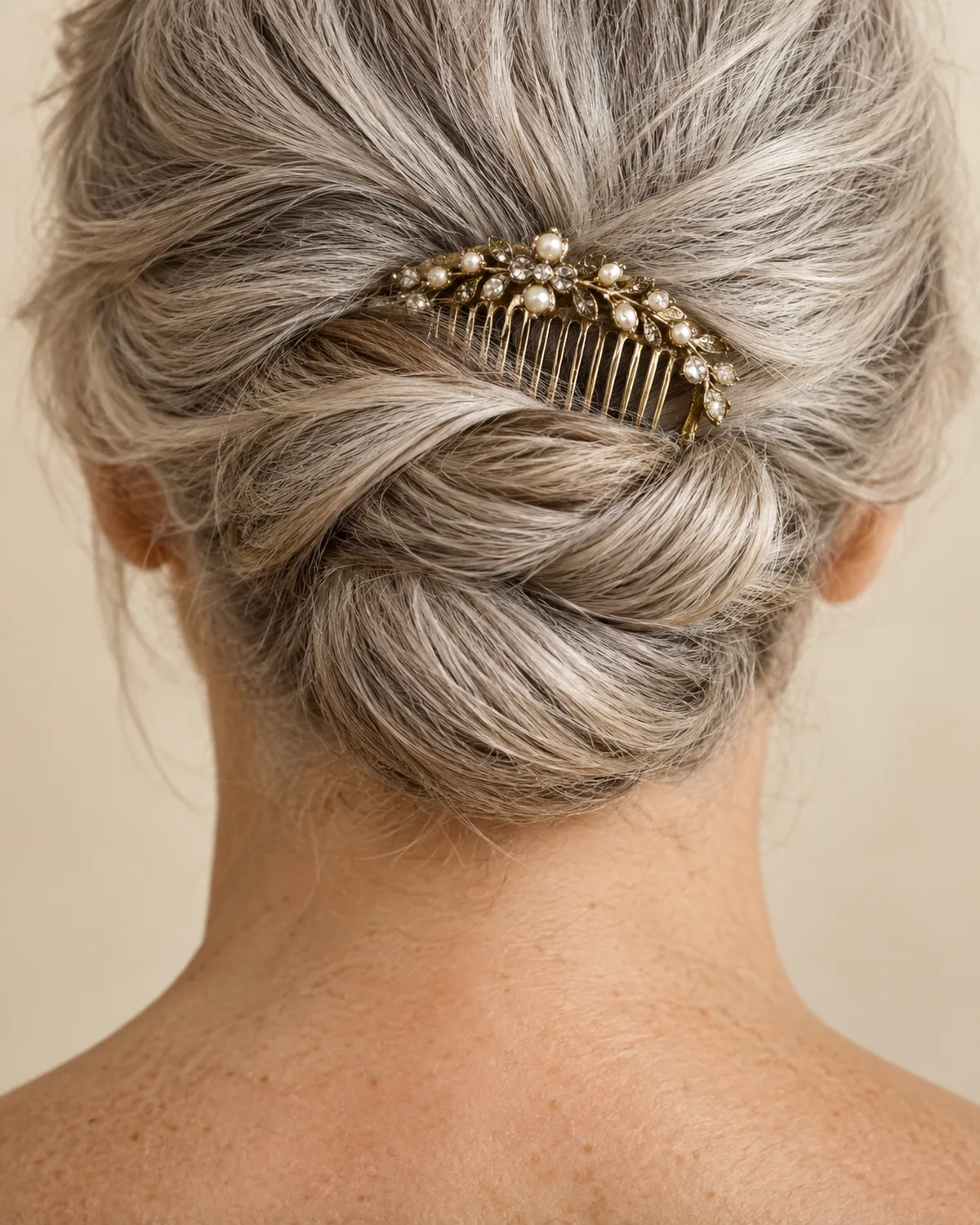
Hair twisted into a low bun at the nape with a decorative comb anchoring the top of the twist. The comb is not ornamental — it serves a structural role by distributing weight across the top of the twist so the bun does not droop as the hours pass. One piece of hardware doing two jobs.
- Works on medium to long hair because the twist needs enough length to form a full turn before pinning — too short and the bun is a nub
- The decorative comb should have at least three teeth and sit firmly enough that it does not wobble — a comb that slides is worse than no comb because it creates anxiety about whether the style is holding
- Skip on very fine short hair — the bun will be too small to anchor the comb, and the comb will visually overwhelm the amount of hair
- Ask the stylist to twist the hair in the same direction it naturally falls — twisting against the grain creates tension that loosens over time
- For related reading on how updos handle thinning and texture changes after 50
12. Volume-Boosted Blowout With Soft Bend
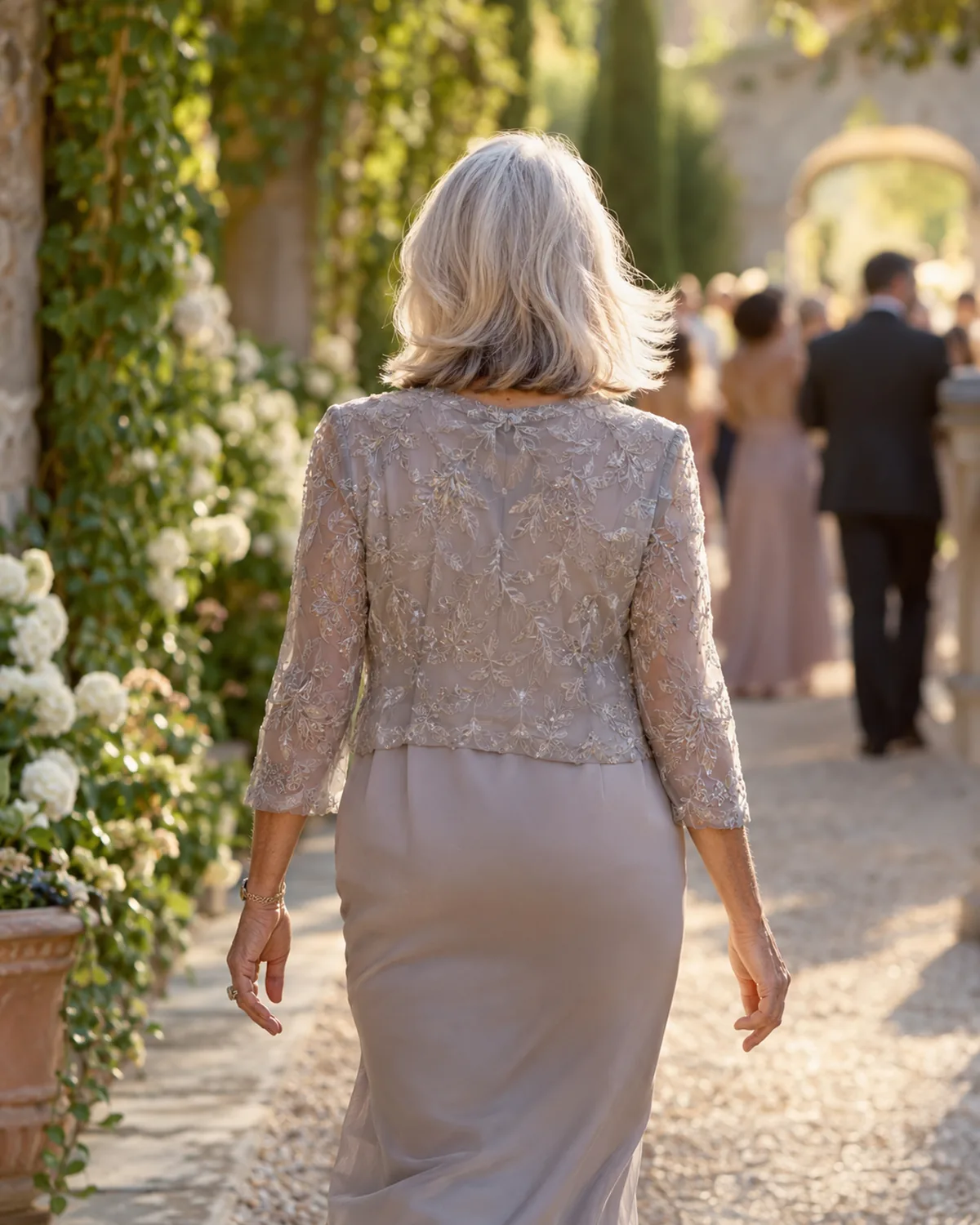
A professional blowout with root volume and soft inward bends at the ends. No pins, no gathering, no accessories. The style reads as polished hair worn down — the event quality comes from the volume at the roots and the controlled movement at the ends, not from any structural manipulation.
- Works on chin-length and longer straight to wavy hair — the blowout needs enough length for the round brush to create the bend at the ends
- The root volume is set with the round brush lifting each section at the base during drying — this hold lasts longer than volume from product alone
- Skip on very curly hair that will revert to its natural pattern before the event ends — this is a blowout, not a curl-friendly style, and humidity will undo it within two hours
- Ask the stylist to finish with a cool shot from the dryer — the cool air sets the cuticle and locks in the bend so it does not drop as the day warms up
- A blowout done the morning of the wedding by a professional should hold through the event without touch-ups if the hair is not naturally resistant to styling
13. Rolled Updo at the Nape
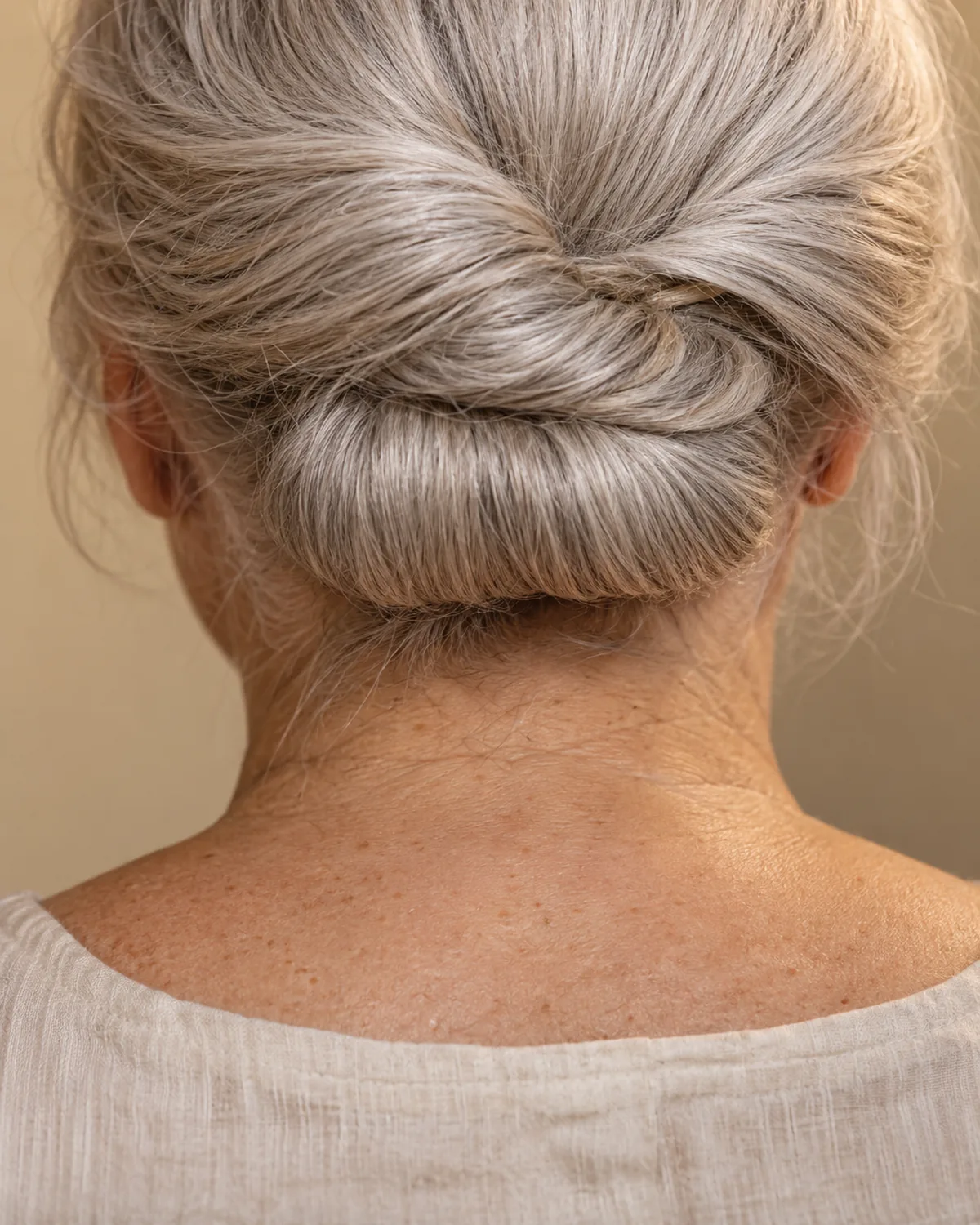
Hair rolled vertically from the bottom up and pinned at the nape, creating a horizontal roll that sits at the back of the neck. The ends are tucked inside the roll, hidden completely. From the front, the style is invisible — the hair simply disappears at the nape. Elegant, secure, and as close to maintenance-free as an updo gets.
- Works on shoulder-length and longer hair with any texture — the roll wraps the ends inside, so whether the hair is straight, wavy, or curly does not show
- The horizontal line at the nape is flattering because it creates a clean boundary between the hair and the neck — the eye reads it as deliberate architecture
- Skip on very short hair — there is not enough length to form the roll, and the ends will poke out rather than tuck inside
- The roll pins should point upward into the centre of the roll, not outward — outward-pointing pins work loose as the head moves and the roll unravels from the outside in
- For related reading on mother of the groom updos that need to hold through a long event
14. Soft Finger Waves on Short Hair
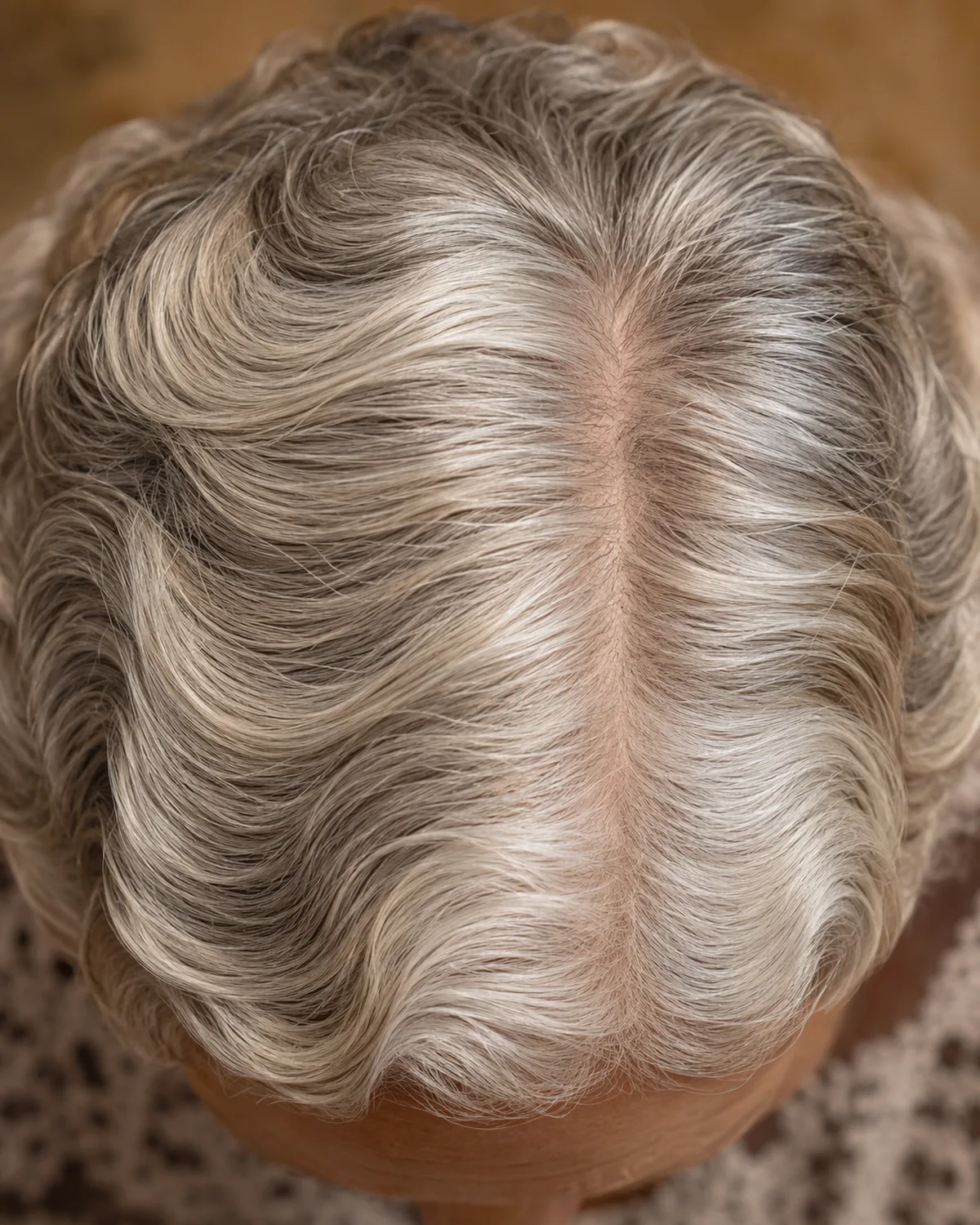
Short hair set in sculpted finger waves close to the head. The waves are moulded with the fingers and a comb while the hair is wet, then set in place — no heat tools, no pins. The result is a structured, photogenic pattern that references classic wave technique from the 1930s but sits softer on modern grey hair.
- Works on fine to medium straight hair — the waves need the hair to lie close to the head, and fine hair accepts the moulding more readily than thick or coarse hair
- The finger wave pattern adds visual texture to short hair that would otherwise read as flat for a wedding — it is the most overtly styled option on this list for short hair
- Skip on very curly or very thick hair — the waves need the hair to lie flat and follow the comb, and natural curl or bulk lifts the pattern off the head
- The set should be done with a strong-hold mousse applied to damp hair, then allowed to air-dry or sit under a bonnet dryer — blow-drying disrupts the wave pattern
- Tell the stylist you want soft waves, not rigid ridges — the difference is in how deeply the comb is pressed. Deep comb lines create a costume look; shallow lines give the same shape with more wearability
15. Natural Grey Waves Worn Down With a Statement Earring
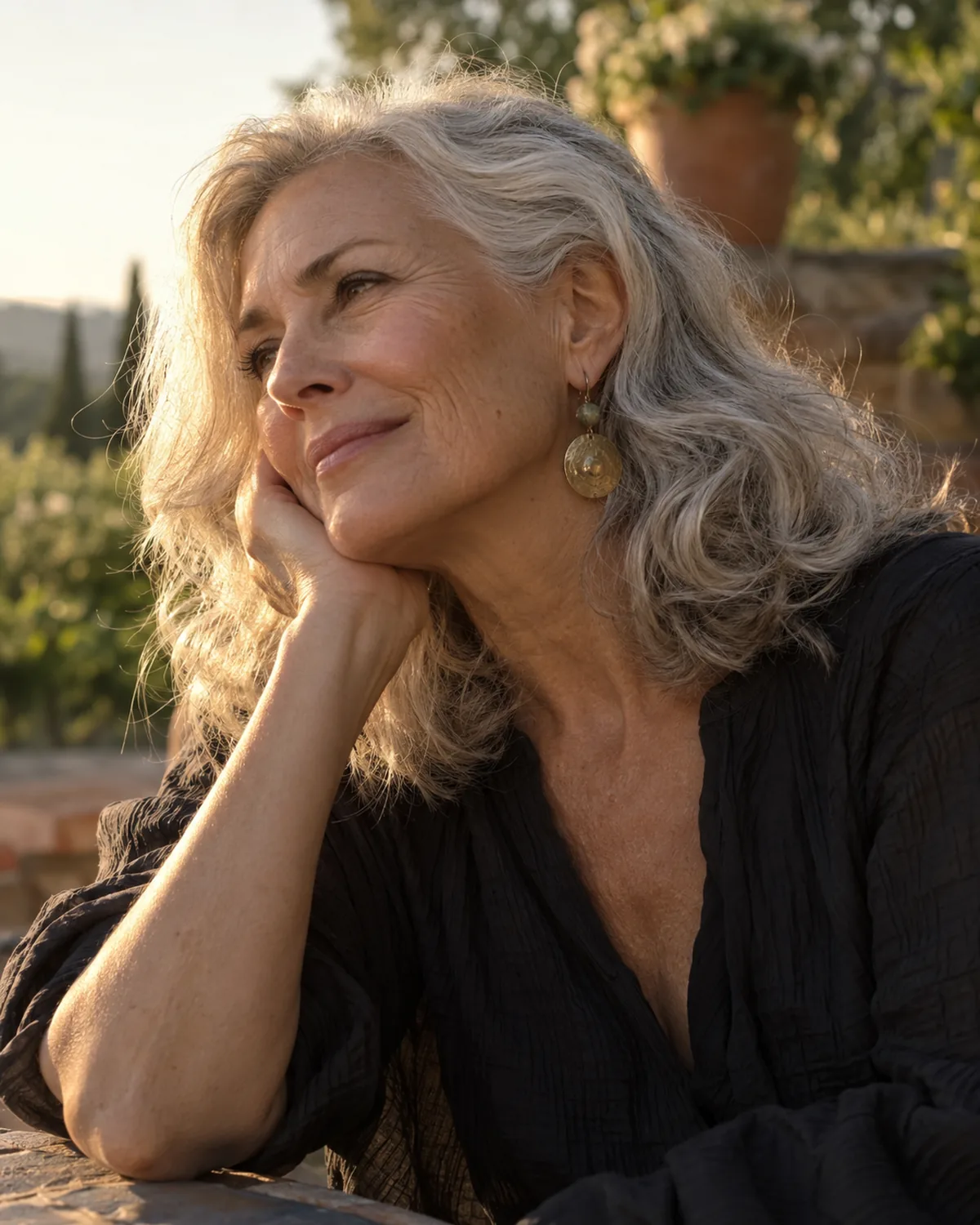
Shoulder-length or longer grey or white hair worn down in its natural wave pattern. The hair is the statement. No pins, no product-heavy styling, no structural manipulation — just clean, conditioned waves paired with a visible earring as the only accessory. The event quality comes from the confidence of wearing your hair exactly as it is.
- Works on wavy grey hair with good density — the natural wave provides movement and the density prevents the down style from reading as thin
- The statement earring is doing the work that a clip or comb does for the other styles — it signals that this is a considered choice for the event, not an everyday look
- Skip on flat fine hair that does not hold a natural wave — without movement, hair worn down at a wedding reads as unstyled rather than effortless, and no amount of earring compensates
- Condition the hair heavily the day before and do not touch it with heat — the goal is soft, hydrated waves that catch the light, not styled curls
- For related reading on how natural grey hairstyles work as a deliberate choice after 50
The right wedding hairstyle after 60 is not the one that looks best in the salon mirror at nine in the morning. It is the one that still looks right when someone pulls out a camera at ten at night. Book the trial, test the hold, and if the style does not survive four hours without intervention, try the next one on this list.
Where the checkable claims come from
- Hair Changes After Menopause — Harvard Health Publishing
- The Science of Hair Aging — International Journal of Trichology
- How to Choose Updo Styles for Mature Hair — Sam Villa
- Understanding Face Shapes and Hairstyle Choices — Byrdie
Keep this one
Save it for the appointment
Pin the image above to the board you actually open before a salon visit. This guide is written to be re-read, not read once.
Tonight, before you close this tab
- Book a trial appointment at least three weeks before the wedding — test whether the style holds for four hours without touch-ups
- Bring a photo of your outfit neckline so the stylist can judge how an updo or down style sits against the fabric
- Tell the stylist where your hair is thinnest and where it pulls or feels sore — these are the zones to avoid tension
- Decide now whether you want pins or not — some of these styles are pin-free, and knowing your preference narrows the list by half
- Ask whether the style works with your natural grey or requires colour treatment beforehand — plan the colour appointment separately if needed