15 Short Curly Gray Hairstyles Over 50 That Let the Curl and the Silver Work Together
Fifteen short curly gray hairstyles judged for women over 50. Each cut rated by whether it makes the curl and the silver look deliberate.

Booking an appointment soon? Save this page. It is easier to skim in the chair than to remember.
At a glance
Works
- A tapered pixie on medium-density curls because the taper keeps the sides clean while the crown curls show their full pattern
- A graduated bob on fine curly gray because the stacked weight pushes curl volume upward where fine hair needs it most
- A chin-length shag on thick curly gray because disconnected layers remove interior bulk without flattening the curl
Depends
- A blunt jaw-length bob only if curl density is high enough to hold a clean hemline without gaps showing through by afternoon
- Curtain bangs on a short curly cut only if the curl pattern stays consistent at bang length rather than going straight at the temples
- A lob on curly gray only if the hair is medium-to-thick because fine curly gray thins at collarbone length and the hemline disappears
Skip
- A wedge on thick curly hair because the stacked graduation adds volume at the nape where thick curls already push outward
- A close crop on wiry gray with straight patches because the crop has nowhere to hide inconsistent texture
- An undercut if you want all-over volume because it removes half the hair and the contrast between buzzed sides and curly top demands commitment
Short curly gray hair gets pulled in two directions. The curl wants volume and the silver wants light, and a cut that ignores either one ends up looking like neither was the plan.
These fifteen cuts are judged by one question: does this shape prove the curl and the silver belong together? Each idea lands on a verdict about who it suits, who should skip it, and what to say when you sit down in the chair.
A stylist who can see your curl pattern in person outranks anything written here. Bring one photo and one honest sentence about what you want the gray to do.
1. Silver Curly Pixie With Tapered Sides
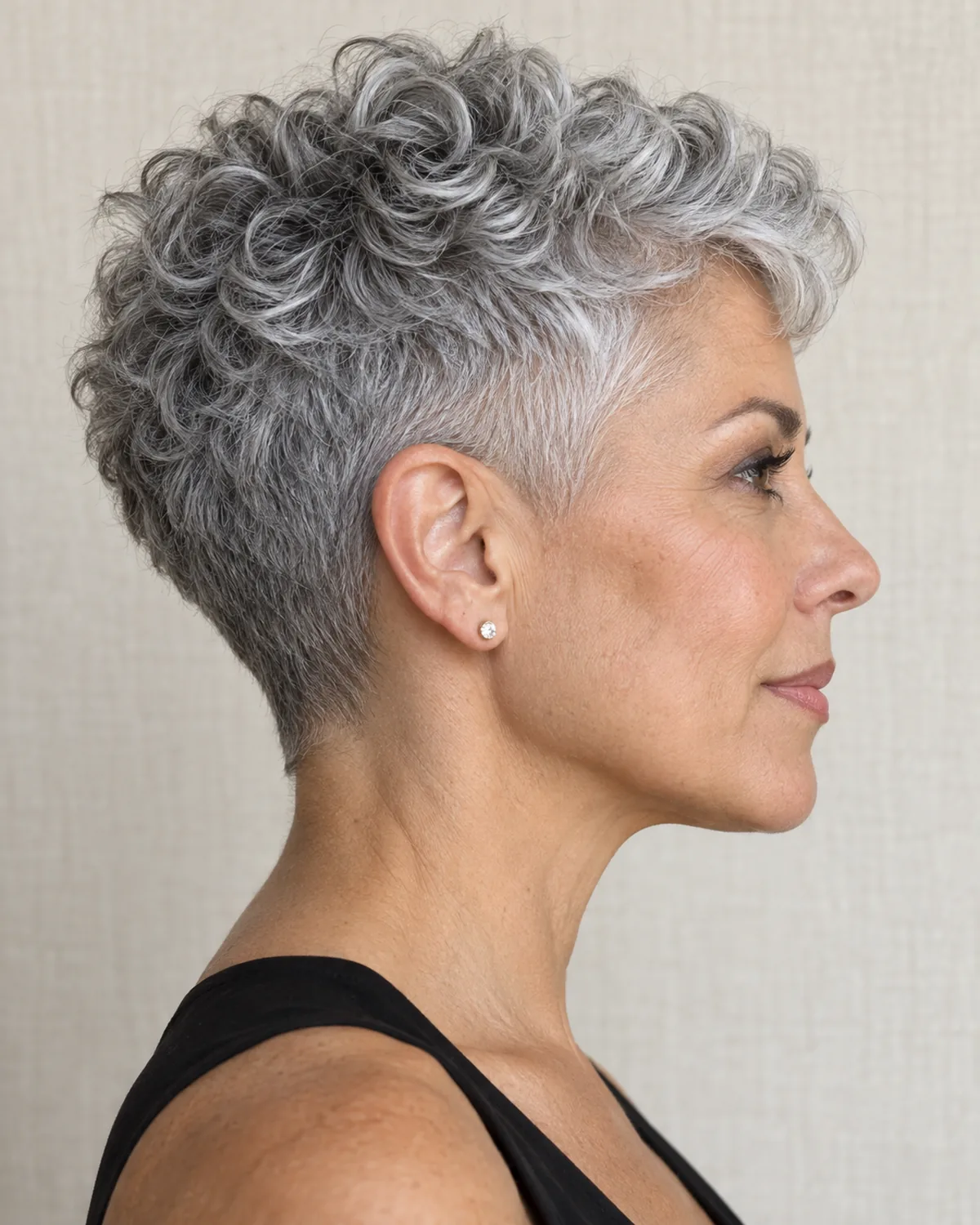
The taper does the work. Sides frame the ear while the crown keeps two to three inches of curl, and the contrast is what makes the silver read as a choice. Works on medium-density curls where the crown has enough volume to fill the silhouette. Skip if your curls are sparse at the temples because the taper will expose scalp.
- Ask the stylist to cut dry so the curl shows its true spring before anything gets removed
- Request enough length on top for each curl to complete one full rotation
- Keep the taper line gradual rather than sharp because a hard line on curly gray reads barber-shop rather than editorial
- Check whether your temple area has enough density to carry a close taper without showing skin patches
2. Graduated Curly Bob in Full Silver
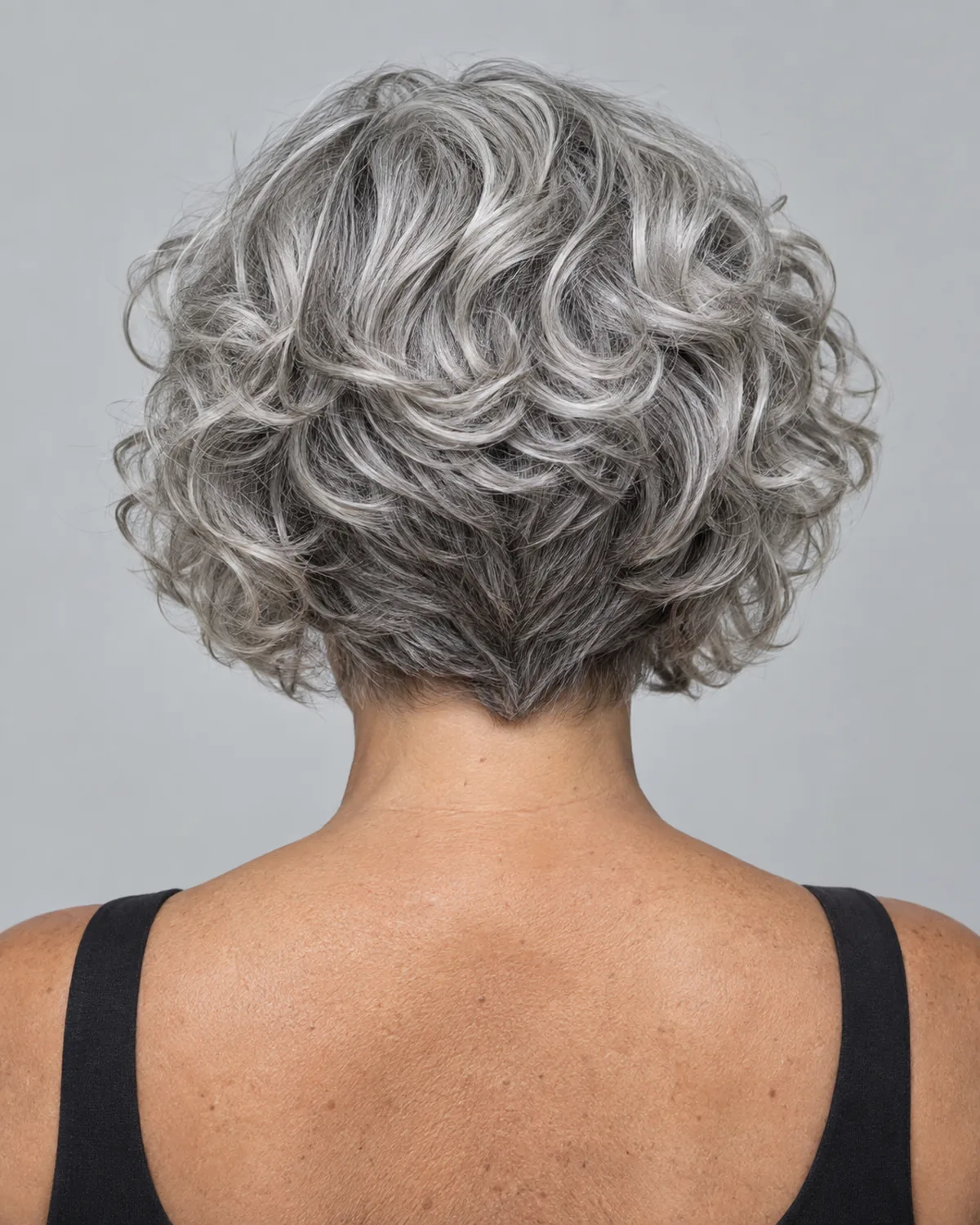
Graduation stacks weight at the nape and pushes curl volume upward. That lift is why this bob works on fine curly gray hair that reads flat from behind. The jaw-length perimeter keeps the front soft while the stacked back gives structure. Skip if curls are very tight because graduation on tight curls fans into a triangle.
- Tell the stylist you want the graduation concentrated at the nape, not carried up to the occipital bone
- Ask for a dry cut because wet graduation on curly hair will shrink to a different line once it dries
- Expect trims every six to eight weeks because the stacked layers lose their definition faster than a one-length cut
- Bring a photo showing the graduation from behind because most stylists default to a one-length bob unless you specify
3. Chin-Length Curly Shag With Silver Streaks

The shag removes interior bulk without flattening the curl at the perimeter. Disconnected layers starting at the cheekbone let thick curly gray hair breathe while the chin-length ends still read full. The heavy fringe hides a high hairline. Skip if hair is fine because disconnected layers on fine curls read wispy and the fringe will separate.
- Ask for the layers to start at the cheekbone so the disconnect happens where the eye catches it
- Request a dry cut and have the stylist verify each layer falls where it should when the curl bounces back
- Use this cut if your gray is still transitional because the layered texture hides the demarcation line between pigmented and silver sections
- Avoid razor-cutting the fringe on gray hair because the coarser post-pigment texture can fray at the ends
4. Cropped Curly Gray With a Soft Fade
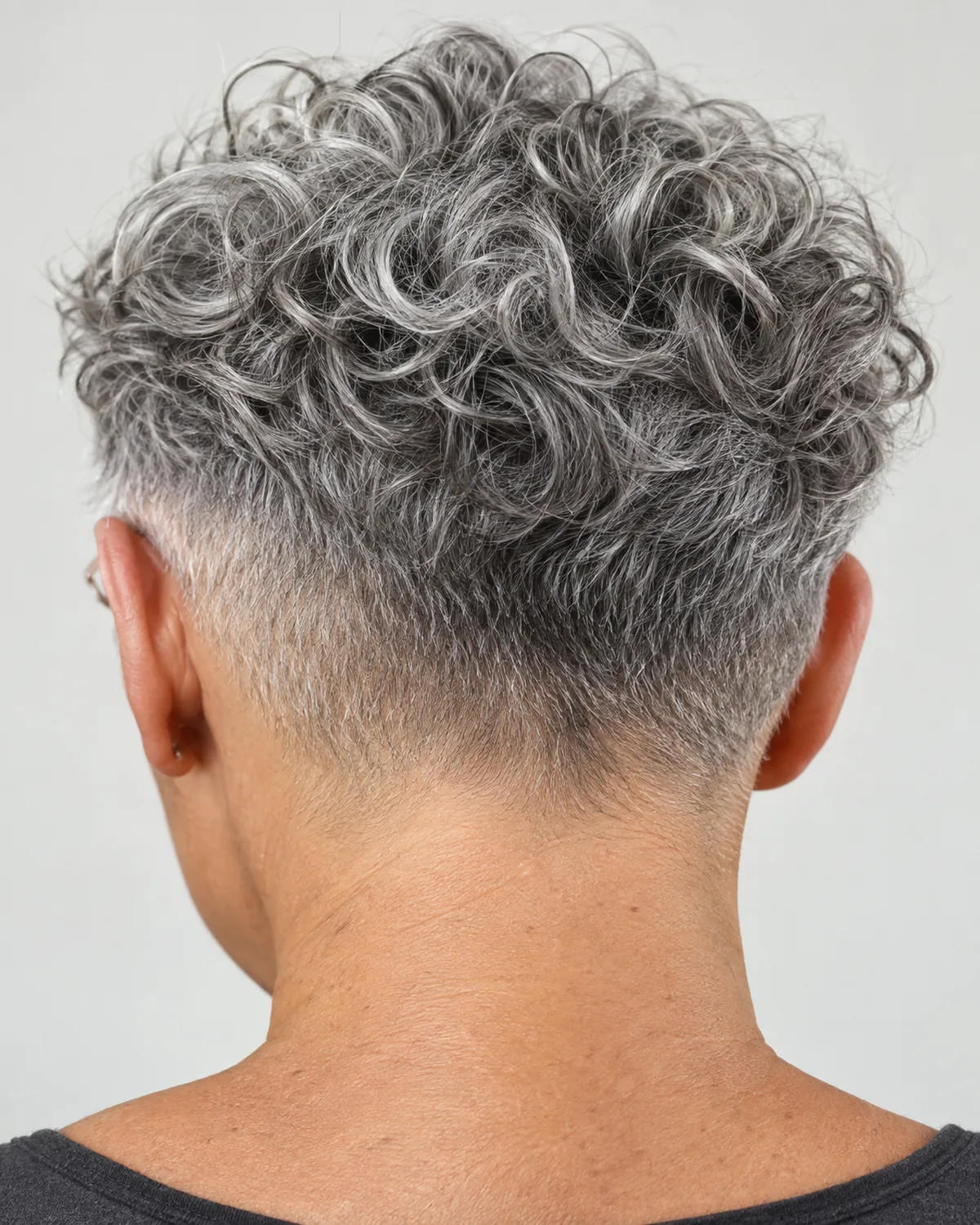
The lowest-maintenance option here. Curls on top sit at one and a half to two inches while the temples and nape fade to skin. The fade works regardless of curl density. Silver catches light differently at each curl length, giving the crop a dimension a uniform buzz would not have. Skip if you want volume because this cut removes it on purpose.
- Find a barber or stylist who fades regularly because not every salon stylist knows how to blend a fade
- Ask for a soft fade rather than a skin fade to keep the transition gradual
- Plan on a trim every three to four weeks because the fade grows out faster than any other cut on this list
- This pairs well with a short pixie approach if you are considering going even shorter
Where to start
Find your situation, skip ahead
Your gray is fully grown in and your curls are medium-density with a consistent pattern from root to tip
A tapered pixie or a graduated bob — both let the curl define the silhouette without fighting it.
01 Silver Curly Pixie With Tapered Sides02 Graduated Curly Bob in Full Silver
You are still growing out dye and have a visible line between silver roots and colored ends
A textured crop or a separation-styled crop hides the demarcation line better than a defined-curl cut.
14 Loose Curly Silver Crop With Texture Spray04 Cropped Curly Gray With a Soft Fade
Your curls are fine, you have lost density, and you want the cut to create the illusion of more hair
A silver wedge or a graduated bob — both stack weight to compensate for what fine curls cannot fill on their own.
5. Side-Swept Curly Silver Pixie
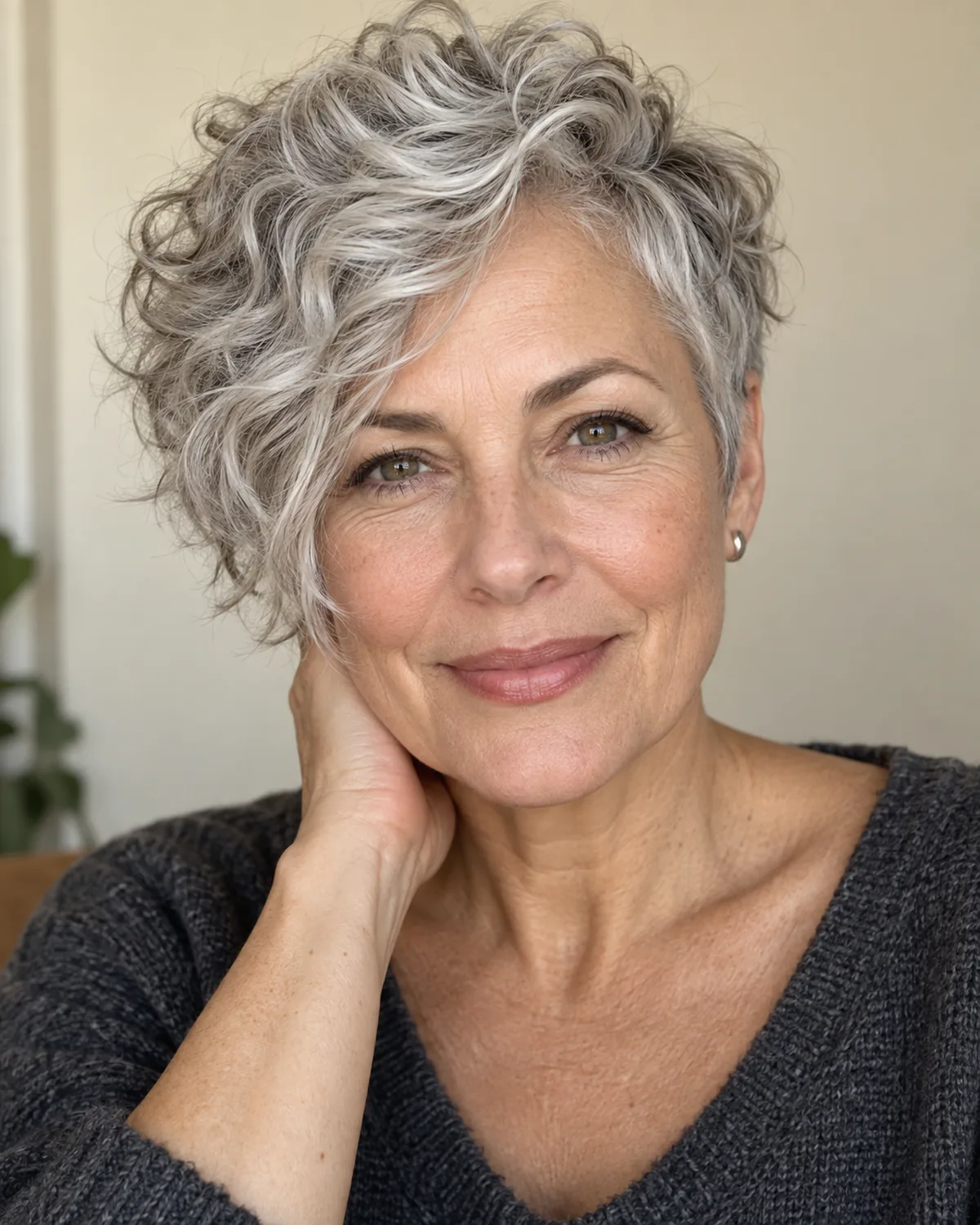
Asymmetry creates interest without volume tricks. One side stays longer and the curls sweep across the forehead, drawing the eye diagonally. Works on oval and heart-shaped faces where the diagonal elongates without adding width. Depends on forehead width for oblong faces because the swept curls can close a narrow forehead further.
- Ask the stylist to keep the longer side heavy enough that the curls hold their sweep rather than popping upward
- Cut the short side close to the ear so the asymmetry reads as deliberate
- Sleep on a silk or satin pillowcase because the swept side will flatten overnight on cotton and lose its direction
- If you are growing out a grey curly bob this is a strong intermediate destination
6. Natural Gray Curly Crop With Defined Edges
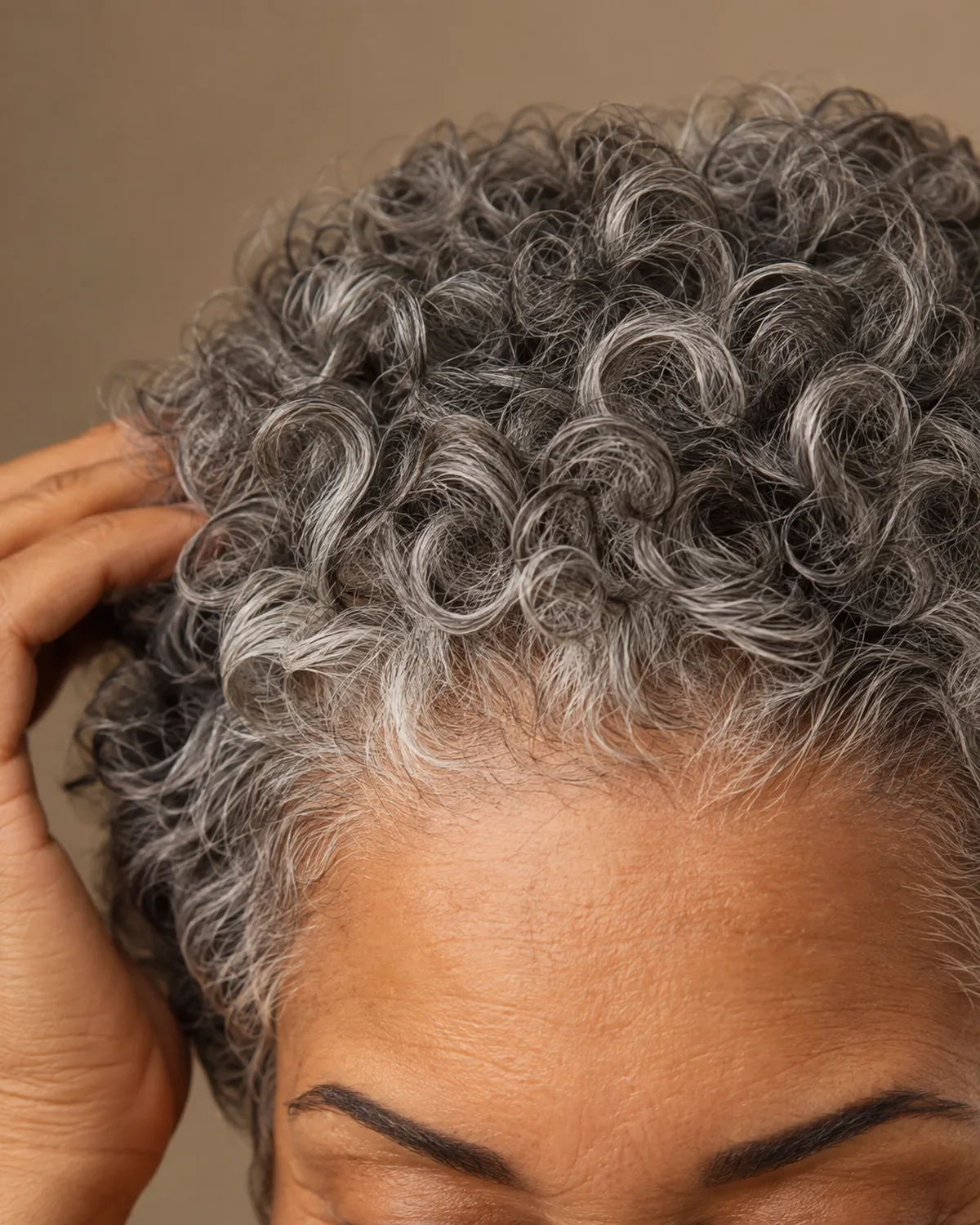
The shortest option here. One to two inches all over with crisp edges at the temples and nape. Those edges are what separate this from a simple grow-out. Works when the curl pattern is consistent enough to read as texture at this length. Skip if gray has gone wiry and straight in patches because the crop will show every inconsistency.
- Ask the stylist to line the edges with a trimmer so the shape reads sharp against the skin
- This cut reveals the curl pattern at its tightest so look at your roots to preview what one-inch curls will do
- Plan on maintenance every three weeks because the edges lose definition fast
- Consider whether your scalp is something you are comfortable showing because this length hides almost nothing
7. Layered Silver Lob With Curly Ends

Collarbone length is the outer edge of short for curly hair because shrinkage pulls it to the chin. Layers from the jawline prevent the ends from clumping flat. The length lets silver catch light across a wider surface than any pixie, which is why this lob on medium-to-thick curly gray looks dimensional. Skip if fine because the ends thin out and the hemline disappears.
- Tell the stylist the layers start at the jaw and work downward rather than starting at the crown
- Ask for a dry cut because the shrinkage factor on curly hair changes the effective length by twenty to thirty percent
- Check whether the collarbone length falls at a spot where your curls naturally want to flip or lie flat and choose the option your hair already does
- This length requires more product than any shorter option because the weight of the curl at collarbone length needs help holding shape
8. Voluminous Curly Gray Bob With Side Part

A one-length bob at jaw level parted to the side. The side part shifts root volume off-center, which works for round faces because the asymmetric volume elongates rather than widens. This bob depends on having enough curl density to hold a blunt hemline without gaps. Fine curls at jaw length separate by midday and show gaps between the strands that a blunt cut makes more visible, not less.
- Part the hair to the side before cutting and ask the stylist to check that both sides have enough volume to carry the shape
- Request a blunt cut at the jaw and no texturizing because texturizing removes the density that the one-length bob depends on
- If your curls are fine, consider the graduated version instead because the graduation compensates for density
- Avoid blow-drying this cut straight because the whole point is the curl volume and fighting it undoes the silhouette
9. Textured Curly Silver Pixie With Longer Crown
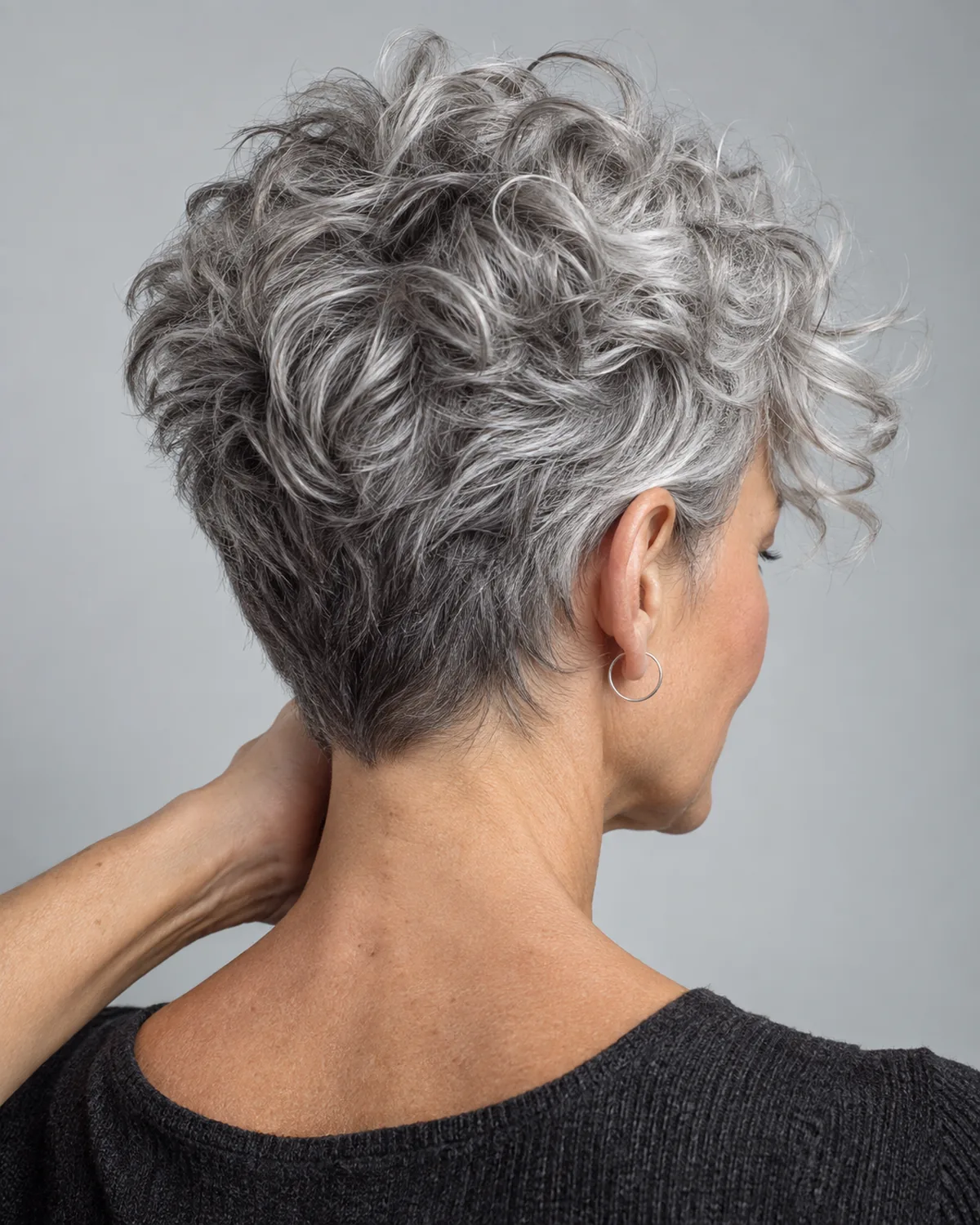
A pixie variant where the crown stays three to four inches while the back and sides are close-cut. The extra crown length lets curls show their full pattern, and the short back creates density by concentrating visual weight above the occipital bone. Works on fine-to-medium curls. Skip if coarse and thick because the crown pouf against close sides reads top-heavy.
- Ask the stylist to keep the crown length long enough for the curl to complete at least one full rotation
- The back should taper rather than end abruptly so the transition from short to long reads smooth
- This cut works as a destination when growing out a very short pixie because it adds crown height first
- Check from the side in a mirror because the crown-to-nape contrast is what makes this cut work and you need to see whether the proportions suit your head shape
10. Silver Curly Wedge
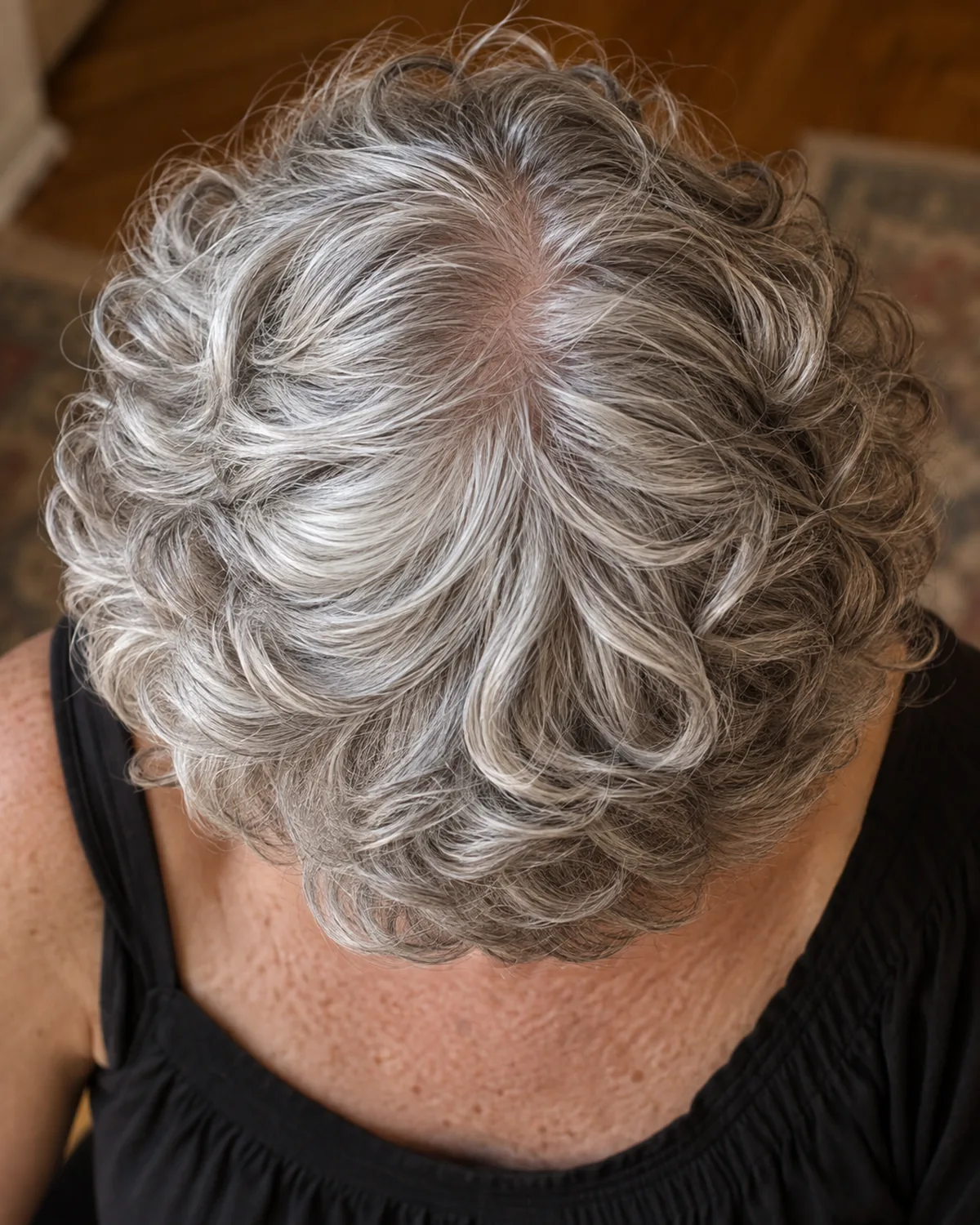
A stacked graduated cut shortest at the nape and fanning outward at the jawline. The wedge amplifies curl volume at the back, making it a workhorse for fine curly gray hair that reads flat from behind. On fine silver strands the graduation creates the illusion of twice the density. Skip if thick because the stacking adds volume where thick curly hair already has too much.
- Ask the stylist to keep the graduation tight at the nape and let the fan increase gradually
- This cut shows its shape best from behind so have the stylist hand you a mirror at the end to check the back
- Expect trims every five to six weeks because the wedge shape relies on precise lengths that grow out of alignment quickly
- If you have been considering a graduated bob but want more back volume, this is the more aggressive version of the same engineering
11. Gray Curly Pixie Bob (In-Between Length)

Neither pixie nor bob. Ear-length with a rounded shape. This is the reset cut for growing out a pixie because the curls are long enough to show pattern but short enough to hold shape without product. The rounded silhouette works on most face shapes because it does not pull the eye in any one direction. Depends on whether your curl pattern holds at ear length without frizzing into a halo.
- Ask the stylist to round the shape rather than square it because a squared pixie-bob on curly hair reads boxy
- If you are growing out color, this length removes most of the dyed ends in one appointment
- Use this as a test length before committing to a shorter pixie or a longer bob
- Check whether the curls at ear length lie close to the head or project outward because that determines whether the shape will stay rounded or balloon
12. Curly Silver Undercut With Soft Top
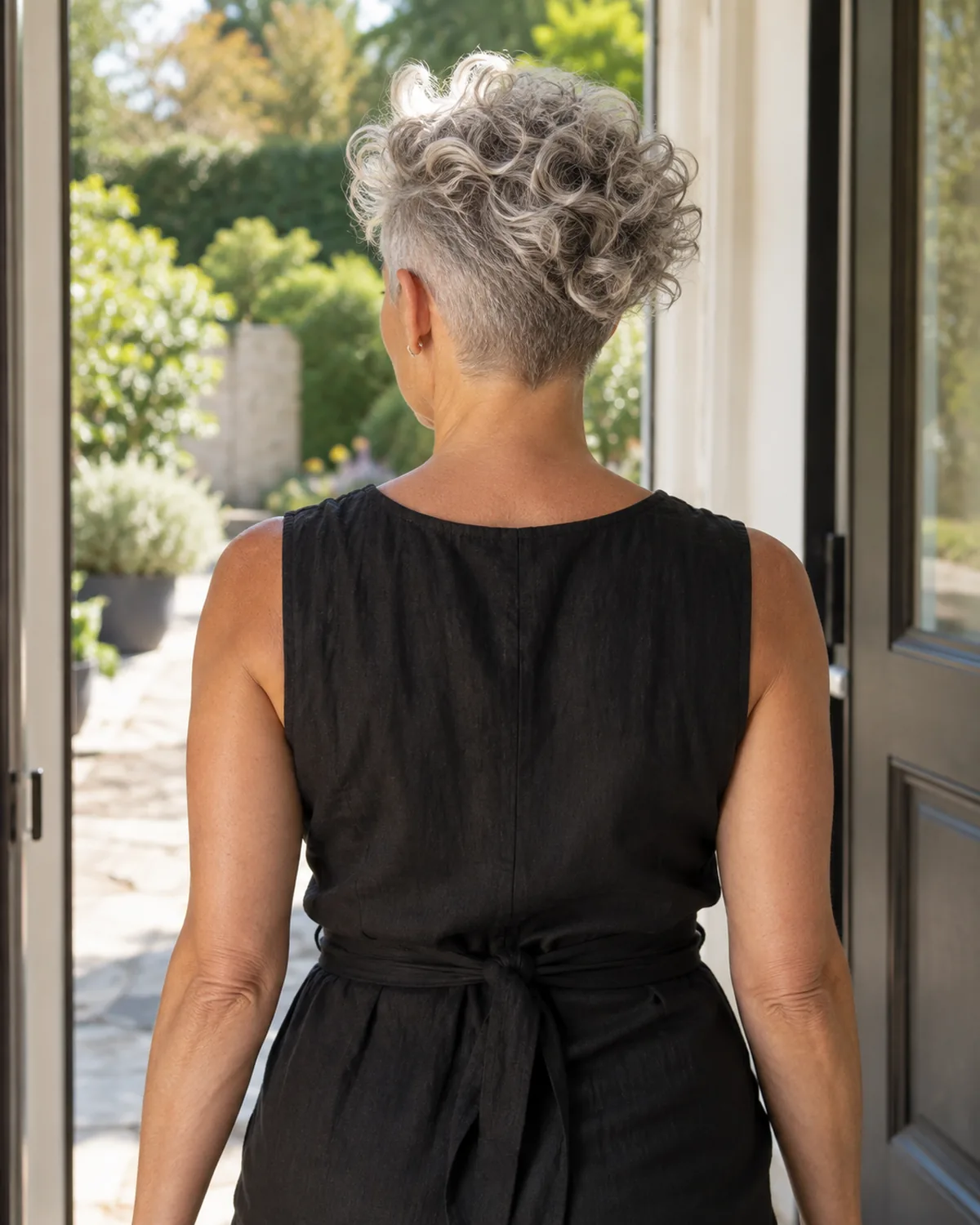
Sides and nape buzzed to a number two, curly top left at three to five inches. The contrast between buzzed silver and curly silver on top is what gives this cut its edge. Works when you want that contrast and accept the grow-out commitment. Skip if you rely on all-over volume because this cut removes half the hair.
- Find a stylist who has done undercuts on curly hair before because the transition zone between buzz and curl requires specific blending
- Ask how the grow-out will look at four weeks and six weeks before committing
- This is the most polarizing cut on the list so wear it for a reason rather than because it looked interesting on someone else
- The platinum silver guide covers how bright silver reads differently in high-contrast cuts like this
13. Short Curly Gray With Curtain Bangs
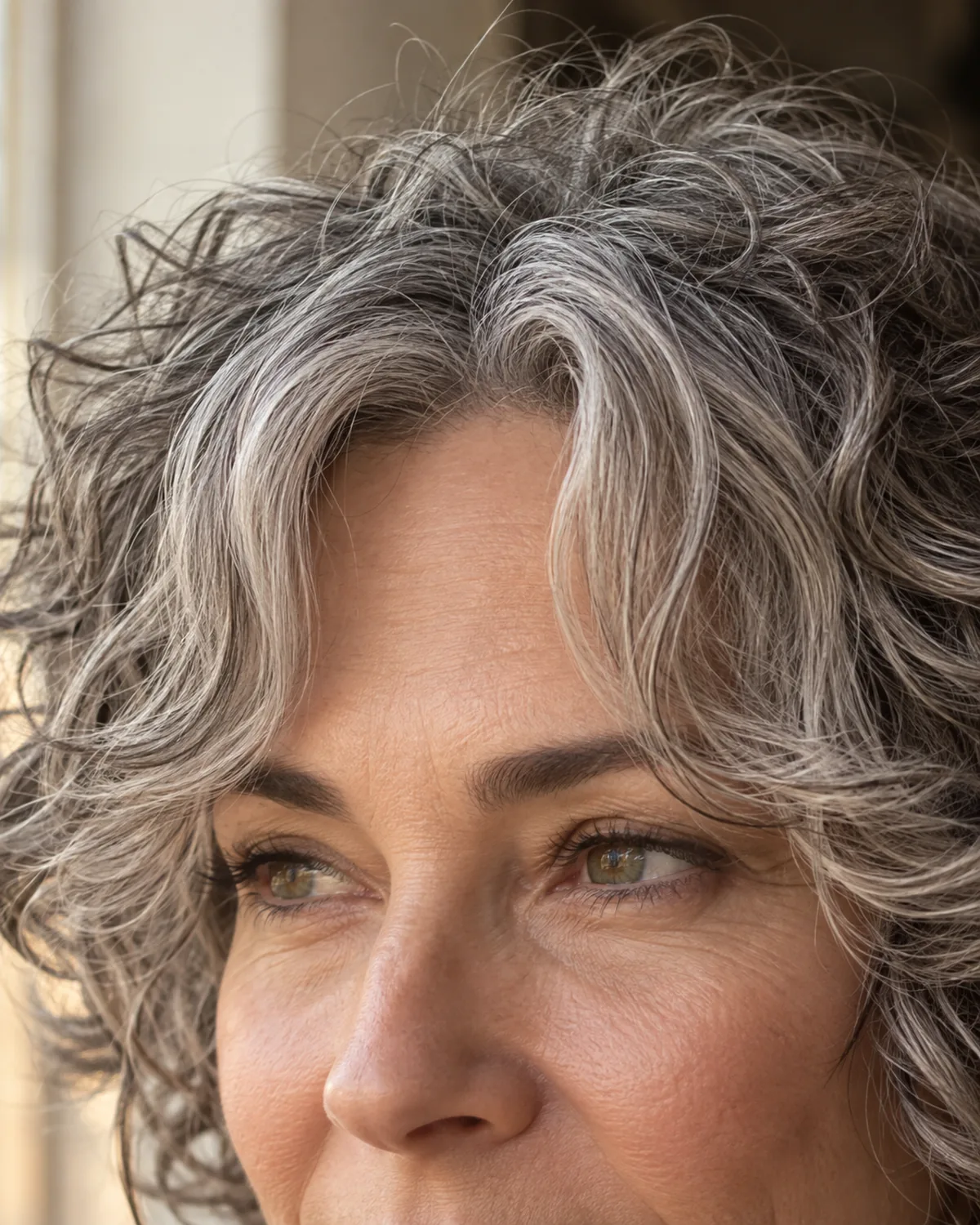
Curtain bangs on a jaw-length or shorter curly cut. The bangs camouflage a high or receding hairline, which becomes more common after fifty. Cut them dry and twenty percent longer than desired because curl shrinkage will pull them upward. Skip if curls are inconsistent at bang length because straight patches at the forehead read like a mistake next to curly sides.
- Ask the stylist to cut the bangs separately from the rest of the hair and to work with each curl individually
- Part the bangs in the center and check that both sides frame the face evenly rather than bunching to one side
- If you are considering bangs, read the bangs decision guide before your appointment
- Expect the bangs to need trimming more often than the rest of the cut because they sit at the tightest part of the curl's spring
14. Loose Curly Silver Crop With Texture Spray
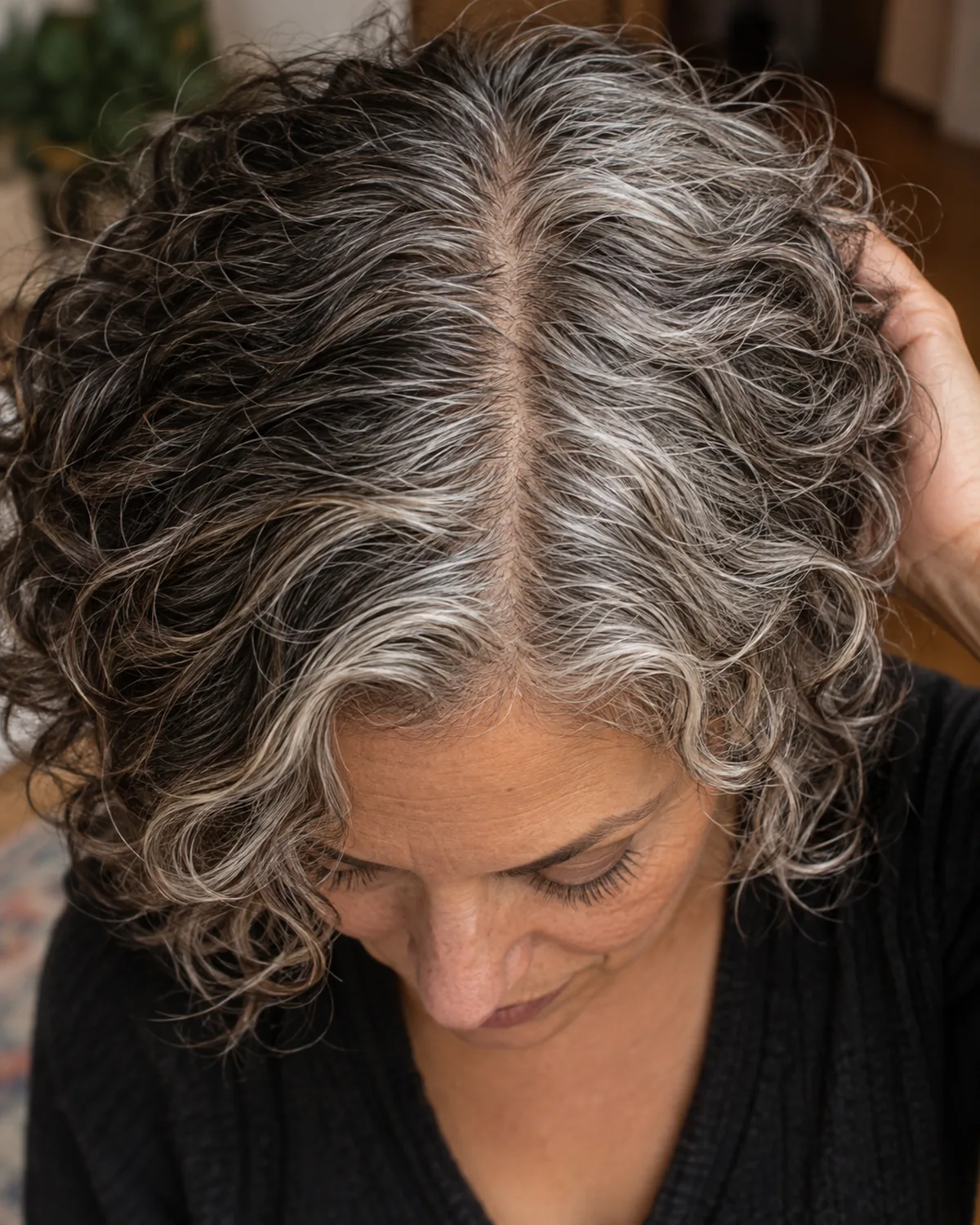
A crop at two to three inches styled for separation rather than definition. This cut looks best on salt-and-pepper transitional gray because the separation hides the demarcation line between pigmented and silver sections. The separated curls catch light at different angles, making the color mix read dimensional. Skip if gray is fully grown in because separation on uniform silver reads dusty.
- Use a sea-salt or texture spray on towel-dried hair and scrunch rather than diffuse
- Ask a stylist what toning options exist for your specific gray transition before committing to any product, and refer to what to ask before you book a color appointment
- This style works because it embraces the two-tone look rather than trying to blend it away
- Revisit this cut once the gray grows in fully because at that point a different styling approach will suit it better
15. Tapered Curly Gray Nape With Volume on Top
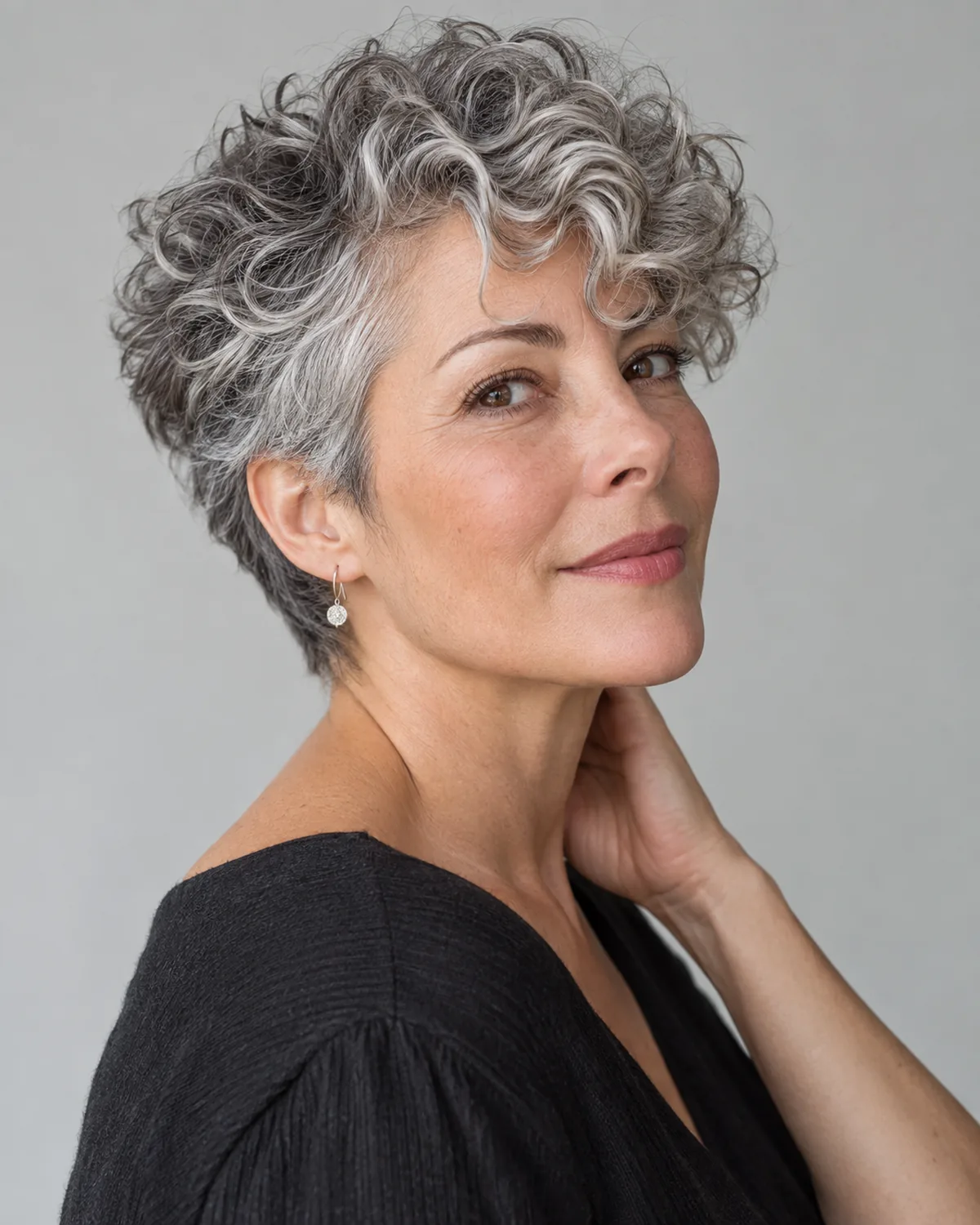
An elongated pixie with the longest curls at the forehead and a sharp taper into the nape. The silhouette is a soft triangle from the front and a clean line from the back. Works on oval, square, and heart-shaped faces. Skip if your face is round because the volume-on-top silhouette adds width at the crown where a round face already has it.
- Ask the stylist to keep the taper sharp at the nape and let the forehead curls fall naturally
- This cut requires the front curls to have enough body to hold height without excessive product
- Check the silhouette from the side because the triangle should taper smoothly from forehead to nape without any abrupt steps
- If you have a square jaw, the volume on top and the clean nape together can elongate the face in a way that face-shape specific cuts are designed to do
Gray hair after pigment loss often changes in diameter and texture. The curls you had at thirty may not be the curls you have now, and a cut that worked on pigmented curls might not land the same way on silver ones. Bring your actual hair to the appointment, not a memory of what it used to do.
Where the checkable claims come from
- Why Does Hair Change with Age? — American Academy of Dermatology
- Understanding Graduation and Layering — Sam Villa / Redken Education
- The Curly Girl Method: A Beginner's Guide — NaturallyCurly
- How to Tone Gray Hair — Matrix Professional
Keep this one
Save it for the appointment
Pin the image above to the board you actually open before a salon visit. This guide is written to be re-read, not read once.
Tonight, before you close this tab
- Twist a curl between your fingers and measure how much it springs back because that shrinkage percentage is the single number your stylist needs to cut the right length
- Part your hair where you normally do and look at the scalp exposure under bright light to see whether a taper at the temples will show too much skin
- Pull your hair to earlobe length in a mirror and see whether the curls hold a shape or frizz into a halo at that length
- Write down two words about what the gray does for you rather than two words about what it takes away and bring those words plus one photo from this list to your next appointment