15 Hairstyles for Long Faces Over 50 That Add Width Where It Counts
Fifteen hairstyles judged for long faces after 50. Each cut rated by whether it adds width at cheekbone height or accidentally elongates the face further.

Booking an appointment soon? Save this page. It is easier to skim in the chair than to remember.
At a glance
Works
- A chin-length bob with a side part because the horizontal hem and the diagonal part break the vertical line at two points
- Curtain bangs on most hair textures because they shorten the forehead without committing to a full straight-across fringe
- A shoulder-length shag with layers starting at the cheek because the texture breaks the vertical at multiple heights
Depends
- A layered bob that kicks outward at the cheekbones only if the hair has enough body to hold that outward kick without falling flat by midday
- A soft A-line bob only if the angle is kept subtle because too steep an angle lets the long front pieces hang straight down and re-create the curtain effect
- Wispy bangs paired with a medium-length cut only if they are cut thick enough to stay together rather than separate and leave gaps
Skip
- A centred high bun on a long face because it stacks height at the crown and makes the face read even longer
- Blunt bangs on curly hair because the curls shrink the fringe upward within hours and leave the forehead fully exposed
- A straight long bob with no wave because it hangs flat at the sides like curtains and adds vertical length instead of horizontal width
A long face is measured as noticeably longer than it is wide. The forehead is tall, the cheeks sit close together, and the chin narrows. After 50, volume loss at the temples and thinner sideburns can make the face read even longer than it once did.
The advice you hear most often is "add width." True, but incomplete. Where the width sits matters more than whether it exists. Width at the cheekbones shortens the face. Width at the crown adds more length.
A stylist who can see your face and your hair in person outranks anything written here. Bring the photo, point to where you want the volume, and let them adjust for your growth pattern.
1. Chin-Length Bob With Side Part

The blunt horizontal line at the chin is clearly visible here in profile. It creates a strong width mark right at the jaw, and the deep side part breaks the vertical centre line that a middle part would reinforce. The cut sits flat at the crown and lets the weight fall outward at chin level.
- One of the most reliable shapes for a long face because the horizontal hem plus diagonal part break the vertical in two places
- Skip if the chin is very narrow because a blunt line can box in a pointed chin instead of softening it
- Ask the stylist to keep the blunt edge sharp at the chin rather than texturizing the ends, because blunt is what creates the horizontal read
- A side part alone changes how a long face reads
2. Layered Bob With Volume at the Cheekbones
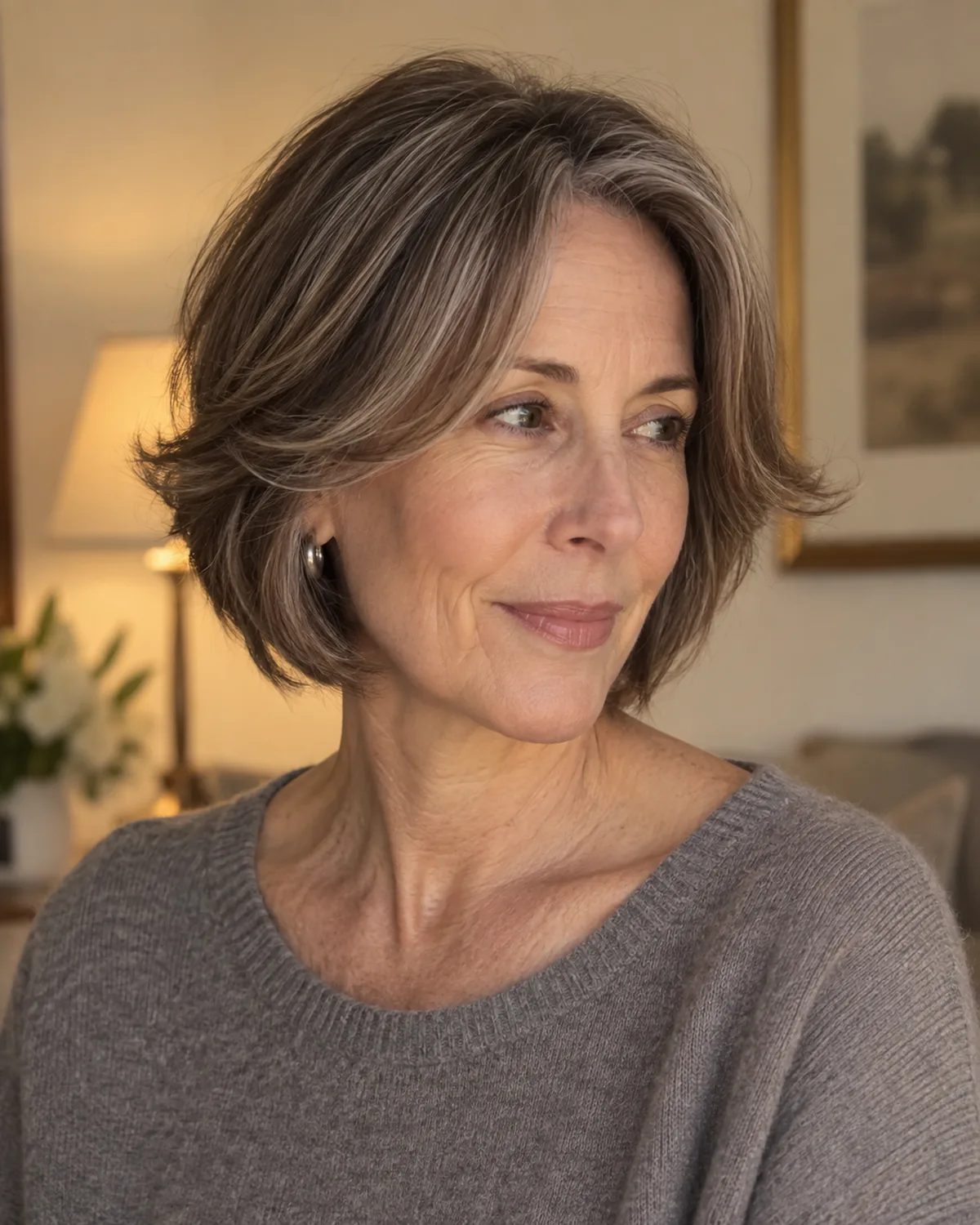
The layers in this image push outward right at cheekbone height. That outward kick is exactly where a long face needs width. The volume sits at the widest natural point of the face rather than at the crown or the jaw, which is why this cut reads balanced.
- The layers push width where a long face needs it most, at the cheekbones
- Depends on whether the hair has enough body to hold the outward kick, because limp fine hair may need a round-brush set to keep the shape
- Ask the stylist for face-framing layers that begin at cheekbone level rather than at the chin
- If the hair falls flat by noon, a velcro roller at the sides for ten minutes while you have coffee is enough to reset the kick
3. Curtain Bangs

Centre-parted and falling to cheekbone level, these curtain bangs shorten the visible forehead without the full commitment of a blunt fringe. The image shows the hair parting in the middle with each side sweeping outward, covering the upper third of the forehead while still showing some skin at the centre.
- Shortens the forehead reading without committing to a straight-across cut, so growing them out is easier
- Works on most hair textures because the centre part is forgiving
- Depends on how quickly the forehead gets oily because curtain bangs sit against the skin
- Ask the stylist to cut the longest pieces at cheekbone length and blend shorter pieces into the middle for a gradual reveal
4. Full Blunt Bangs to the Eyebrows
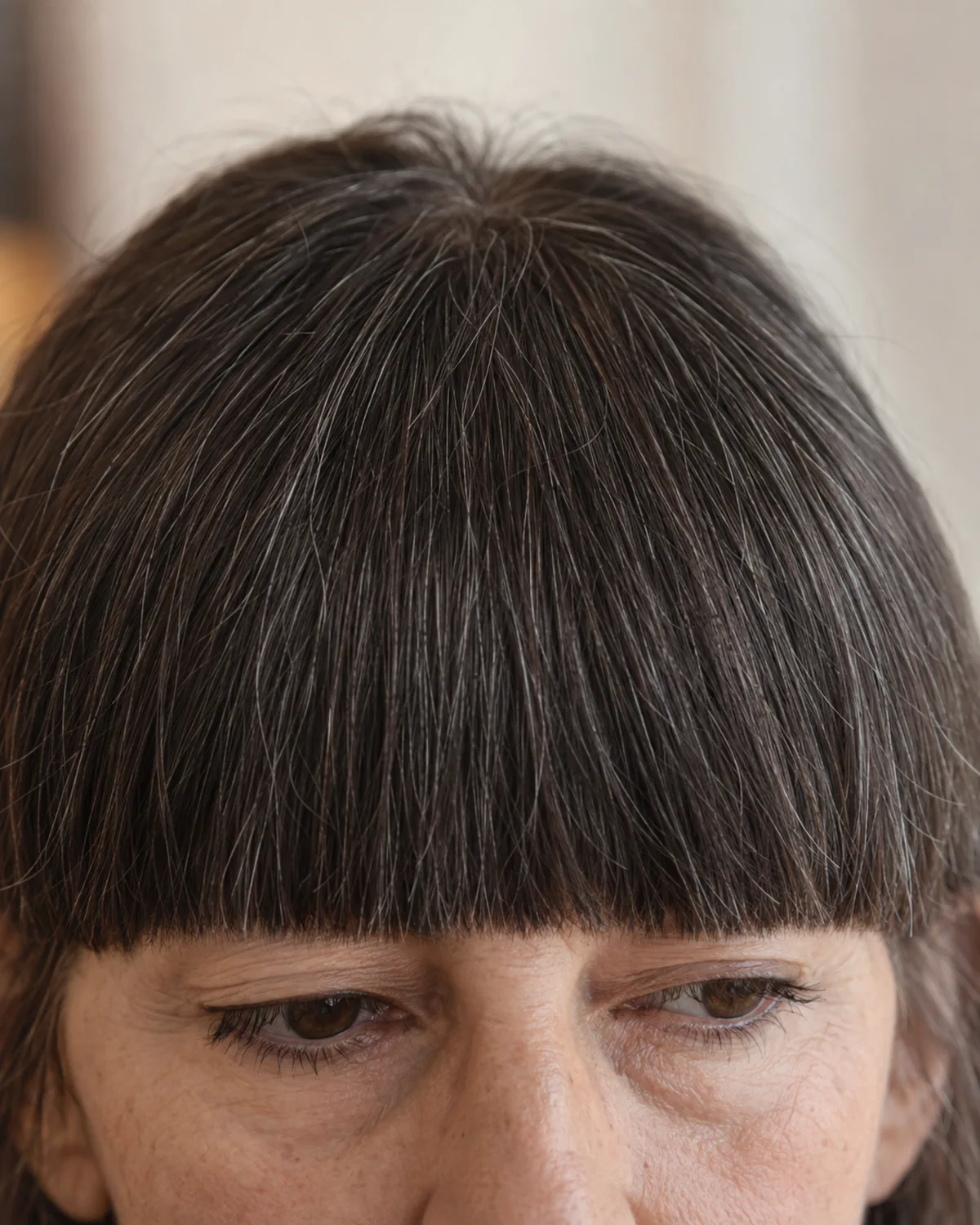
This tight crop isolates the horizontal line. The bangs sit dense and straight across at the brow, and the forehead above them disappears from view. The eye reads the face height from the fringe down, not from the hairline down, which is why blunt bangs are the single strongest shortening move.
- The most powerful single change for a long face because it removes an entire section of vertical height from view
- Skip if the hair is curly because curls shrink blunt bangs upward within hours and expose the forehead
- Ask the stylist whether they cut bangs dry or wet, because dry cutting on thick or wavy hair is more predictable for the final resting point
- Blunt bangs need a trim every three to four weeks to stay at the brow line
Where to start
Find your situation, skip ahead
Your face is long and your main concern is that your forehead looks tall
Start with bangs. Curtain bangs if you want flexibility, blunt bangs if you want the strongest shortening effect.
03 Curtain Bangs04 Full Blunt Bangs to the Eyebrows05 Side-Swept Bangs
Your face is long and you want more width at the cheeks and jaw without cutting bangs
A layered bob or shag that pushes volume outward at cheekbone height gives horizontal interruption without a fringe.
02 Layered Bob With Volume at the Cheekbones06 Shoulder-Length Shag With Layers Starting at the Cheek10 Layered Shoulder-Length Cut With Face-Framing Pieces
You want a low-maintenance shape that naturally reads wider on a long face
A chin-length bob with a side part or a wavy bob. The structure does the work, not the styling.
01 Chin-Length Bob With Side Part11 Wavy Bob at Ear-to-Chin Length07 Textured Lob With Soft Waves
5. Side-Swept Bangs

The diagonal sweep across the forehead covers height without the hard horizontal of blunt bangs. The image shows the fringe crossing from one side to the other, tucked behind the ear on the sweep side, breaking the long vertical reading of the face.
- Less dramatic than blunt bangs but still covers forehead height effectively
- Works on most textures and grows out more gracefully than a blunt fringe
- A good entry point if you are unsure about whether bangs are right for you
- Ask the stylist to cut the longest piece at cheekbone length so it blends into the rest of the hair as it grows
6. Shoulder-Length Shag With Layers Starting at the Cheek

Shot from above, the layer graduation is visible at three distinct heights: cheekbone, jaw, and shoulder. Each level creates its own horizontal break, and together they interrupt the vertical drop that a one-length cut would create. The textured ends move independently.
- The shag breaks the vertical line at multiple heights, which is why it works differently from a blunt one-length cut
- Depends on styling tolerance because a shag on thick hair is low-effort while on fine hair it needs product or it goes flat
- Ask the stylist to start the shortest layer at cheekbone height specifically, not at the chin
- Air-dries well on wavy or thick hair because the layers separate naturally
7. Textured Lob With Soft Waves
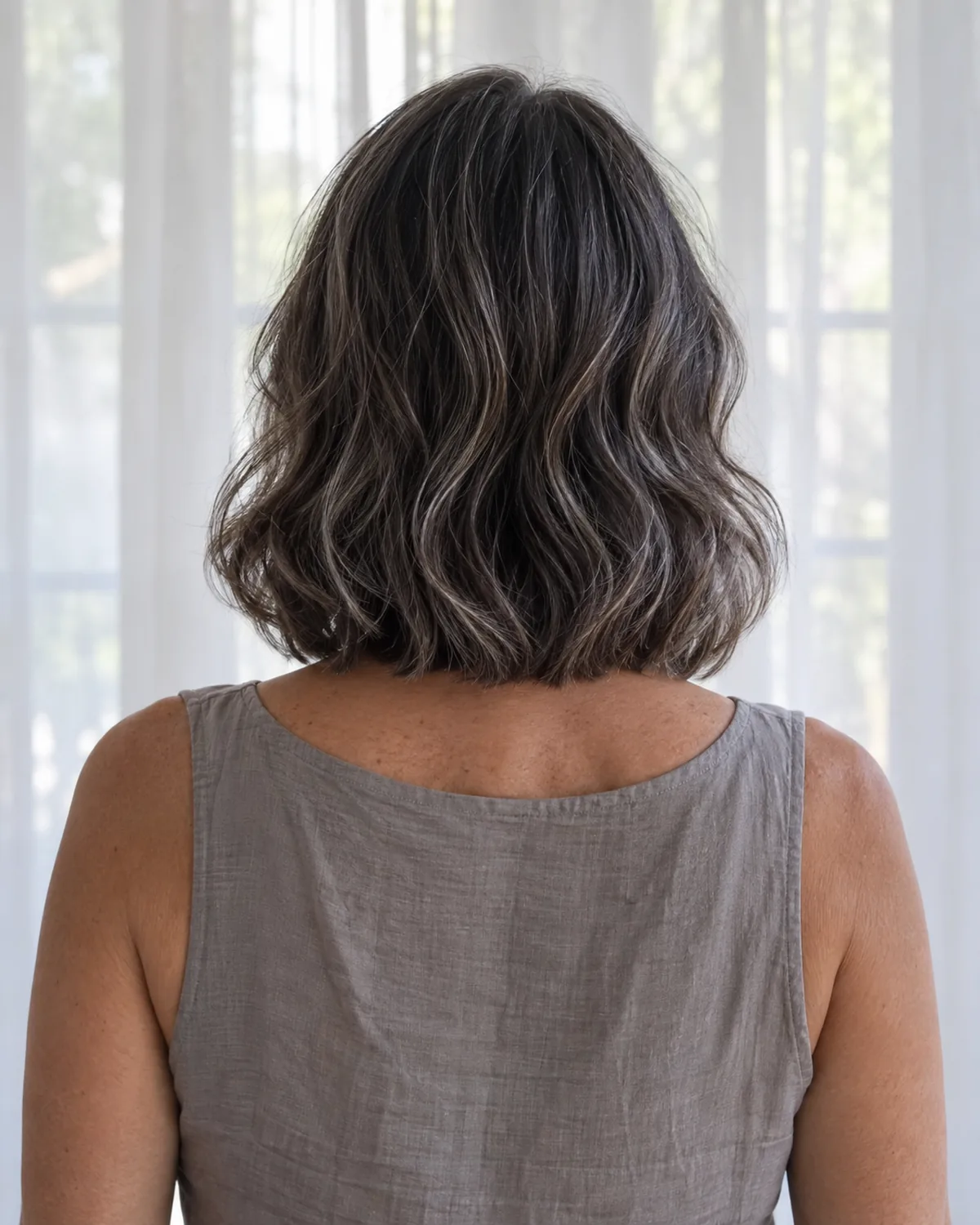
Seen from behind, the soft waves push the hair outward at the sides. The width they create against the shoulders is visible here. Without those bends the hair would hang straight down and read like curtains, adding length. The waves interrupt the drop.
- The waves push the hair outward at the sides and interrupt the vertical line
- Works well on medium-density hair because there is enough body to hold the bends
- Skip if you always air-dry stick-straight hair and will not style it because a straight lob hangs flat and adds length
- A single-barrel curl at the mid-shaft, alternating directions, is enough to set the wave for two days
8. Graduated Bob With Stacked Nape
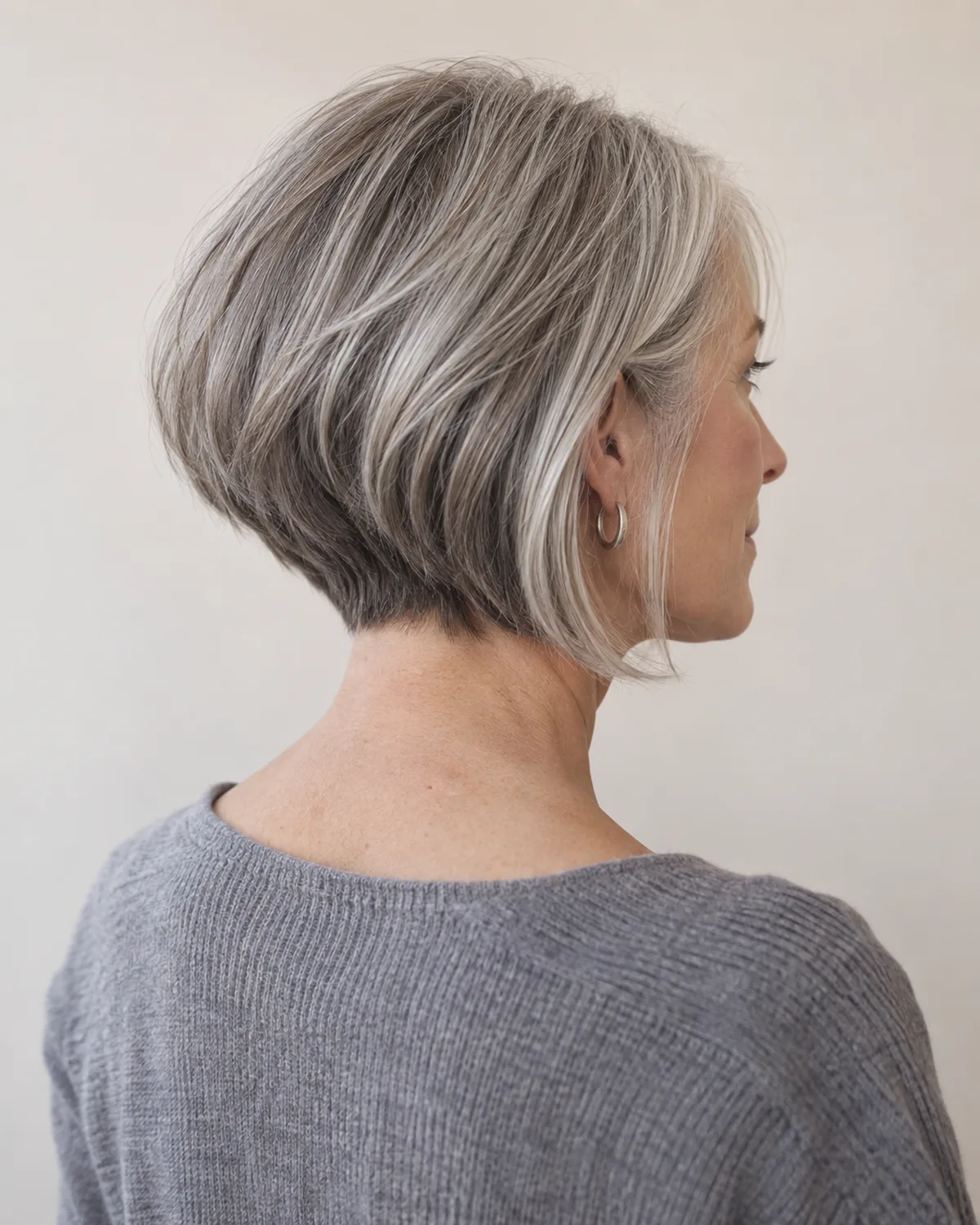
The graduation angle is clear from this back-three-quarter view. The hair is shortest at the nape where the layers stack outward, then angles longer toward the front. That diagonal line draws the eye sideways rather than up and down. The stacking at the nape gives the back of the head dimension.
- The angled line draws the eye horizontally instead of vertically
- Works well if the back of the head is flat because the stacking adds volume and shape there
- Depends on trim frequency because the graduation grows out faster than a one-length bob
- Ask the stylist to show you the back with a hand mirror before you leave so you can see the angle yourself
9. Pixie With Side-Swept Top
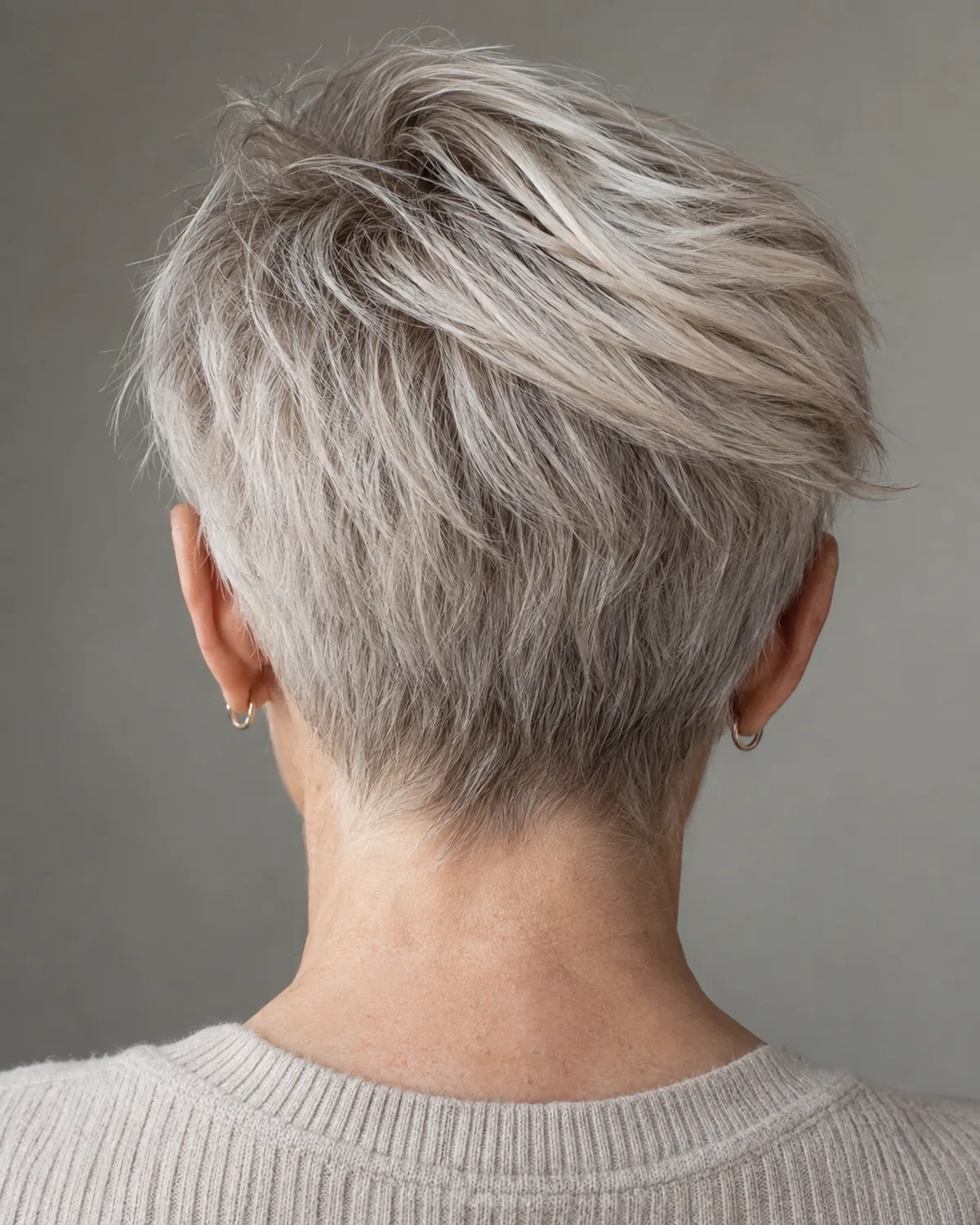
The tapered nape is close and clean, and the longer top section sweeps to one side at the crown. The asymmetry of the side-swept top creates a horizontal reading across the head that counteracts the vertical height of a tall forehead.
- The asymmetry creates a horizontal line across the top of the head that works against forehead height
- Skip on very long faces with a narrow chin because too little hair around the jaw can make the chin look even more pointed
- Ask the stylist to keep the top long enough to sweep to one side, because a buzzed-all-over pixie offers no directional line
- A finger-width of pomade or cream is enough to hold the sweep direction all day on short hair
10. Layered Shoulder-Length Cut With Face-Framing Pieces

Two face-framing layers are visible here: one at the cheek and one at the jaw. Together they add two horizontal breaks to the face, which is why this cut does more for a long face than a one-length shoulder cut. The layers kick slightly outward rather than lying flat against the face.
- The face-framing pieces at cheek and jaw add two horizontal breaks to a long face
- Works on most face shapes and hair textures, which makes it one of the safest options here
- Ask the stylist to pull the face-framing pieces forward and check that they sit at cheekbone and jaw height specifically
- If the layers lie flat instead of kicking out, a round brush under the ends while blow-drying is enough to set the direction
11. Wavy Bob at Ear-to-Chin Length
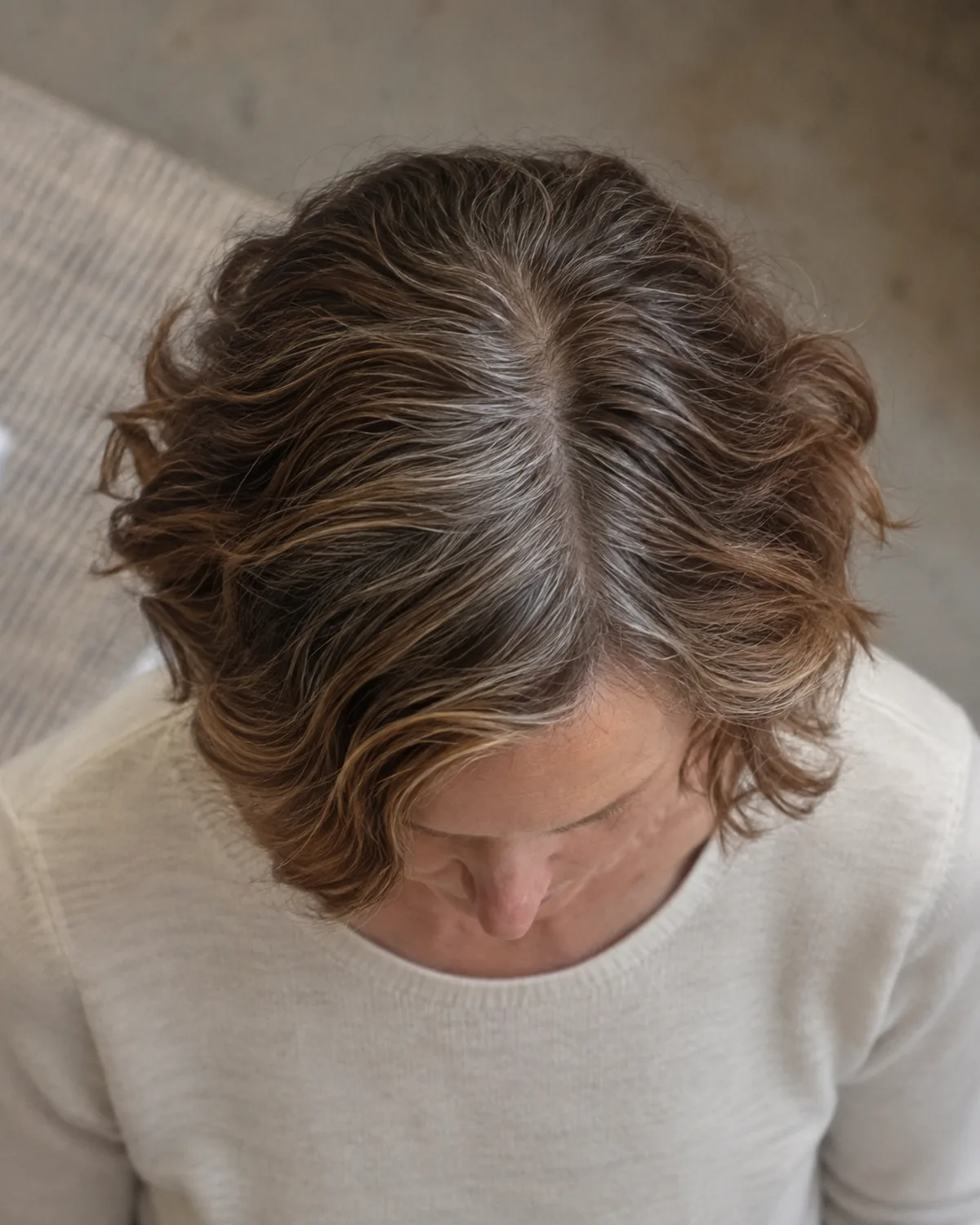
From above, the wave volume is visible pushing outward at the cheekbones. The shorter the bob, the more concentrated the width effect, because the hair has nowhere to fall but sideways. The natural wave holds the shape without styling.
- Waves push the sides outward at exactly the right height for a long face
- The shorter the bob, the more width it creates because the weight stays concentrated at the cheek
- Works if the hair holds even a slight natural wave
- Skip if the hair is pin-straight and you will not curl it because a straight chin-length bob hangs flat and offers no horizontal push
12. Soft A-Line Bob

The gentle A-line angle is visible in motion here: shorter at the back, longer toward the front. The angle keeps length around the face without pulling the eye downward. The key is that the angle is subtle. A steep A-line lets the long front pieces hang straight down and re-creates the vertical curtain effect.
- The subtle angle keeps length around the face without vertical pull
- Works on most textures because the angle does the work
- Depends on whether the stylist keeps the angle gentle because too steep undoes the benefit
- Ask for the front pieces to end at the chin or just below, not at the collarbone, to keep the width effect close to the face
13. Low Side Ponytail or Low Bun Pulled to One Side

The off-centre placement is visible from above: the bun sits to one side at the nape, and the part line sweeps diagonally. The asymmetry widens the face reading. A centred high bun would stack height at the crown, which is the last thing a long face needs.
- Side placement widens the face horizontally and is practical for days when the hair will not cooperate
- Skip a centred high bun because it adds height at the crown and elongates the face further
- Leave a few tendrils loose at the temples to soften the pull and add width at the sides
- No appointment needed for this one, which makes it a useful backup when a blowout falls flat
14. Wispy Bangs With a Medium-Length Cut

The see-through quality of these bangs is the point. They reduce forehead height without the density of a blunt fringe, and they look lighter and less dramatic. The image shows the bangs separating slightly at the forehead, which on fine hair is a feature rather than a deficiency.
- Wispy bangs reduce forehead height while looking lighter and less committed than blunt bangs
- Works well on fine hair because the wispiness is the design, not a failure of density
- Depends on how thin the stylist cuts them because too thin means they separate completely and stop covering
- Ask for the bangs to be cut into the existing hair rather than sectioned off as a separate block, so the blend is invisible
15. Half-Up Style With Volume at the Temples

The top section is pulled back loosely while the sides stay full and voluminous at the temples. The width at the sides is what makes this work for a long face. Pulling the top back does not add height because the pull is gentle and flat, not piled up.
- The volume at the sides adds width without covering anything and the flat pull-back avoids adding crown height
- Works best on medium-to-thick hair that naturally holds side volume
- On very fine hair the sides may fall flat and the half-up reads more height than width
- Pin the top section with a clip or two pins rather than an elastic, and keep the pull loose enough that the hair at the crown lies flat rather than lifting
Not every shape on this list will suit every texture, density, or growth pattern. The common thread is one structural question: does the cut put its widest point at cheekbone height? If it does, it is working for a long face. If the widest point is at the crown, it is working against one. Bring the photo. Ask the stylist where the volume will sit. That single question is worth more than any list.
Where the checkable claims come from
- Face Shapes and Hairstyles — Pivot Point International
- Understanding Graduation and Layering — Sam Villa / Redken Education
- Hair Types: Fine Hair — Philip Kingsley Trichological Clinic
- The Complete Guide to Bangs — L'Oréal Professionnel
Keep this one
Save it for the appointment
Pin the image above to the board you actually open before a salon visit. This guide is written to be re-read, not read once.
Tonight, before you close this tab
- Stand in front of a mirror and measure whether your face is noticeably longer than it is wide
- Part your hair on the side and check whether the diagonal break across your forehead changes how long your face reads
- Hold something flat horizontally at your cheekbones and notice that height is where volume helps a long face most
- Write down whether your biggest concern is forehead height or narrow cheeks or both because that decides bangs versus side volume versus both
- Bring two photos from this list to your next appointment and ask which shape works with your natural texture